







Abstract
Introduction
Autoimmune side effects can be detected during the use of BRAF/MEK inhibitor. Although its frequency, mechanism and importance are not known exactly, there are cases reported in the literature.
Case Report
We report a case of drug-induced vitiligo in a patient with metastatic conjunctival malignant melanoma who was treated with BRAF/MEK inhibition therapy.
Management and Outcome
In the case, vitiligo was controlled with topical treatments. Follow-up process of the patient has been continuing with no progression on month 12 of the current treatment.
Discussion
Although ICI-related autoimmune side effects and vitiligo have been described more frequently, vitiligo may also occur secondary to BRAK/MEK inhibition. This case also points out that cutaneous toxicity is manageable with no delay in treatment thanks to collaboration of dermatologists and oncologists.
Introduction
Conjunctival melanoma is a rare and aggressive tumor, which exhibits a tendency for regional and distant metastasis. 1 While surgical treatments are utilized for a localized disease, there is no standard treatment available for metastatic conjunctival melanoma. 2 The combined BRAF/MEK inhibitors significantly improving the prognosis in the treatment of metastatic skin melanoma could not be evaluated with randomized studies in these groups of patients since the conjunctival melanoma is rarely seen. 3 Nevertheless, targeted therapies are used by clinicians for the conjunctival melanoma, and there are cases with the diagnoses of metastatic conjunctival melanoma in the literature, showing prominent response to the BRAF/MEK inhibition.4,5
Some dermatological complications such as rash, dry skin, sensitivity to light, palmar–plantar erythrodysesthesia are frequently observed in patients with melanoma during the use of BRAF inhibitors (BRAFi) and MEK inhibitors (MEKi). 6 As these medications show an immune-mediated effect in addition to cytotoxic effect, immune-mediated side effects such as panniculitis, erythema, keratitis, vitiligo-like lesions, and sarcoid-like skin reactions can be caused. 7
The vitiligo is a rare autoimmune disease that gradually disrupts the melanocytes in the skin and causes a patchy depigmentation appearance, which is seen in patients with melanoma usually secondary to immune checkpoint inhibitors (ICI), and allows prediction for response to the treatment.8,9 The vitiligo has also been reported with BRAF/MEK inhibition; however, its frequency and significance are unremarkable contrary to the ICI. 10 In fact, the vitiligo was detected in 4 out of 52 patients in a study performed by Consoli, F. et al., in which the side effects occurring with BRAF and MEK inhibitors were evaluated. 11 Therefore, oncologists should be well aware of the cutaneous toxicity associated with these medications. 6
In this study, we present the development of vitiligo secondary to rarely seen side effects with BRAK/MEK inhibition in the patient with metastatic conjunctival melanoma. Informed consent/permission to publish the case report was obtained from the patient/family.
Case report
The 54-year-old male patient, who was being followed after the operation performed due to right conjunctival Spitz nevus in April 2019, presented with a complaint of swelling anterior to right ear persisting for 1 year in May 2022. Physical examination revealed a painless semi-mobile right preauricular mass measuring 2 cm in diameter. A T2W-hyperintense nodular lesion with prominent enhancement measuring 3 × 1.5 cm was detected in the right parotid gland in the Cervical magnetic resonance imaging (MRI) that was performed following an indication of malignancy in ultrasonography (USG). After fine needle aspiration cytology was reported as a neoplasm of uncertain malignant potential, surgery was planned. In May 2022, a right superficial parotidectomy was performed. The pathological analysis was consistent with intranodal malignant melanoma in the parotid gland and stated that it can be accepted as intranodal malignant melanoma of unknown primary if the primary focus cannot be detected. Positron emission tomography and computed tomography (PET/CT) scan and Cranial MRI did not reveal the primary focus of the disease or an additional metastatic lesion. Ophthalmologic, dermatologic, and gastrointestinal evaluations were carried out in detail. The whole body and mucosas were evaluated with dermoscopy. The skin biopsy performed from the papular lesion localized on the anterior surface of the right thigh came out in favor of dermatofibroma. The ophthalmologic evaluation revealed a pigmented lesion with irregular contours in heterogeneous color distribution at 10–11 o’clock in an area measuring 8–10 mm × 8–10 mm in diameter, involving the corneal limbal junction of the right eye and conjunctival area. Pigment seeding was observed in favor of tumor seeding in the periphery of the lesion and an approximately 10–15 mm distance. The clinical picture was evaluated in favor of melanoma at the surgical site. Afterwards, the patient's treatment was planned based on the current findings for the conjunctival malignant melanoma metastasized to the parotid gland. Molecular analysis revealed BRAF V600K somatic mutation. The patient was started on treatment with Dabrafenib at 2 × 150 mg + Trametinib at 1 × 2 mg in June 2022. As of month 3 of the treatment, hypopigmentation findings were detected in the frontal region of the patient. Therefore, consultation was requested from the Department of Dermatology. The lesions were painless and itchless. The patient did not have history of any autoimmune disease. We used Naranjo Algorithm Assessment to describe an adverse reaction. The final Naranjo score was 7. Following the evaluation performed with wood lamb by the Department of Dermatology, the lesions were observed to be consistent with vitiligo. After performing a punch biopsy procedure, the diagnosis of vitiligo was made. The vitiligo was categorized using NCI Common Terminology Criteria for Adverse Events as grade 1 Hypopigmentation or depigmentation covering <10% body surface area (BSA) with no psychosocial impact. Among the topical corticosteroids with moderate to high effect, mometasone furoate was recommended to be applied twice a day. No progression was identified in hypopigmented–depigmented skin areas of the patient. As systemic treatment successfully took place for melanoma and the side effect level is grade 1 as well as no psychosocial problem occurred, the current treatment continued. In the follow-up ophthalmologic examination, the lesions showed total response to the treatment on month 10 of the treatment in April 2023. PET/CT and Cranial MRI did not reveal evidence of new metastasis. Follow-up process of the patient has been continuing with no progression on month 12 of the current treatment.
Discussion
Melanoma-associated spontaneous vitiligo is a known phenomenon. 12 Most of the antigens recognized by the immune system are expressed by both melanoma cells and normal melanocytes. And, this explains why autoimmune reaction causing vitiligo may be seen in patients with melanoma. 13 The vitiligo and vitiligo-like depigmentations are observed as the first symptom of melanoma in some patients. 14 The vitiligo can also be seen secondary to medications in patients with melanoma. The drug-induced vitiligo develops in 7.5 months on average as of treatment initiation. It frequently occurs secondary to immunotherapy and is associated with the regression of tumors.10,15 The vitiligo secondary to BRAF/MEK inhibition, on the other hand, is reported less frequently in the literature. 11 Moreover, there is no clear evidence in favor of correlation between the vitiligo and efficiency of targeted therapy. 10 However, there are some studies in the literature that are stated to indicate positive prognosis. 11
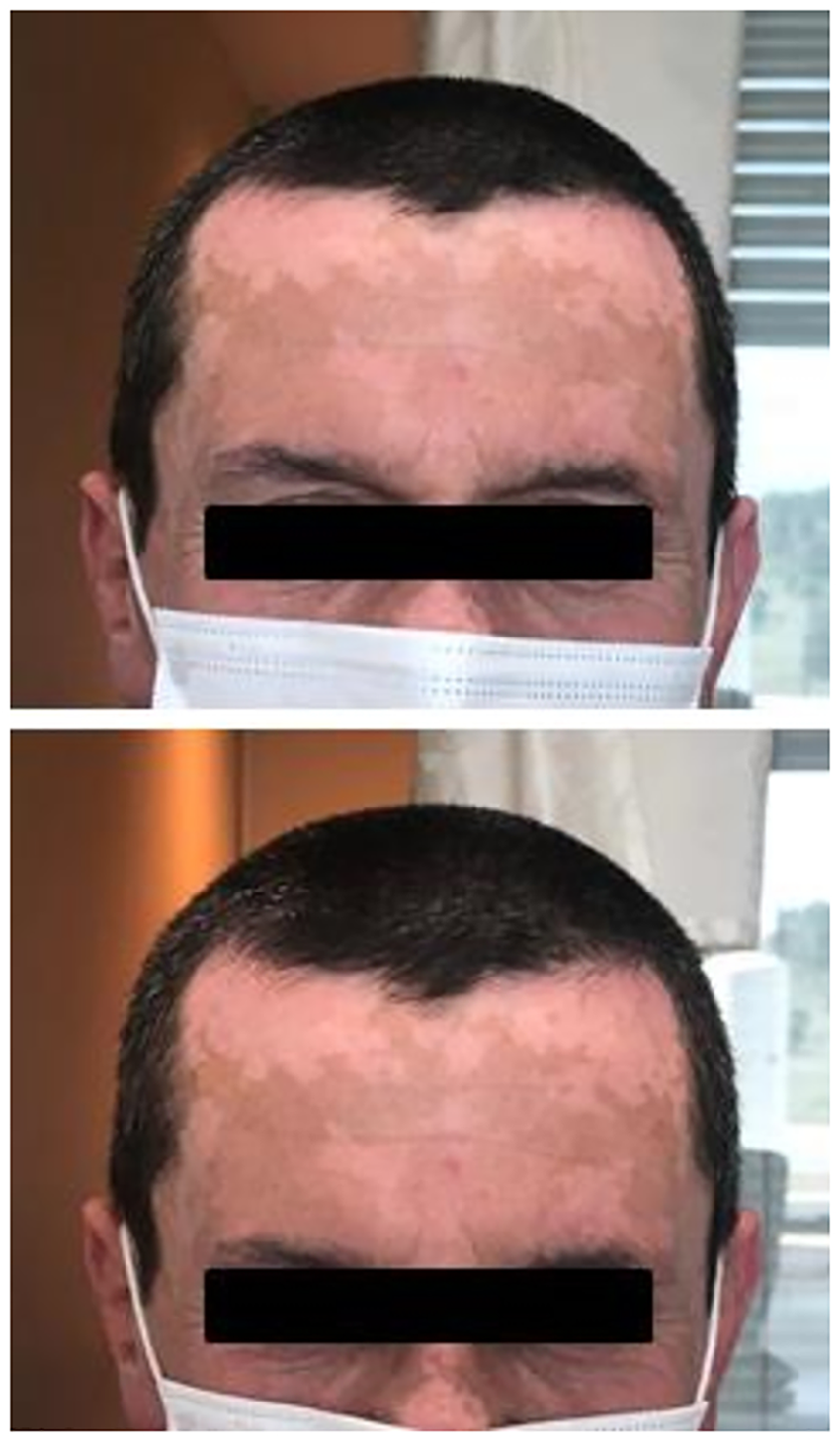
Pre-clinic and clinic evidences have revealed the immune-modulating effect of the targeted therapies in the microperiphery of tumor. 16 Treatment with BRAF + MEK inhibitor has been associated with increased expression of melanoma antigens and an increase in CD8+ T-cell infiltration. 16 In addition, a decrease in immunosuppressive cytokines [interleukin (IL)-6 and IL-8] has been observed concomitantly with BRAF + MEK inhibitor treatment. 16 In the study performed by James S Wilmott et al. increased intratumoral infiltration of CD8+ T lymphocytes following treatment with BRAF inhibitor was associated with regression in size of tumor and increased necrosis in biopsy specimens taken following the treatment. 17 These data explain that the side effects seen with BRAF/MEK inhibition may be immune-associated. Regression of tumor is seen with these mechanisms as a result of immune activation and cytotoxic CD8 T-cell response. 11 It has been emphasized in the study carried out by Francesca Consoli et al. that patients who develop immune-associated skin lesions during combination treatment with dabrafenib (D) and trametinib (T) have a higher response rate to the treatment and longer progression-free survival. 11 Our patient continues his treatment with total response on month 12. It has been a clinical picture indicative of likely positive prognosis of the vitiligo. Skin lesions did not psychologically affect the patient and progress to the level that will prevent the treatment. Topical treatments were sufficient. This also points out that cutaneous toxicity is manageable with no delay in treatment thanks to the collaboration of dermatologists and oncologists.
In the treatment of malignant melanoma, an increase was detected in cutaneous toxicity with the increase of use of ICI and BRAK/MEK inhibitors. 6 Even though autoimmune side effects including vitiligo with ICI are well-identified, vitiligo secondary to BRAK/MEK inhibition takes place in the literature as rare case reports and case series. In this study, the vitiligo that developed following the use of dabrafenib and trametinib in the patient with rarely seen metastatic conjunctival melanoma has been identified, who continues to the treatment on month 12 with complete response. This case has been reported to discuss that immune-associated side effects may also develop with BRAF/MEK inhibitors and may be associated with a positive prognosis.
Supplemental Material
sj-docx-1-opp-10.1177_10781552231189819 - Supplemental material for Case report: Drug-induced vitiligo during treatment with BRAF/MEK inhibitors in a patient with metastatic conjunctival melanoma
Supplemental material, sj-docx-1-opp-10.1177_10781552231189819 for Case report: Drug-induced vitiligo during treatment with BRAF/MEK inhibitors in a patient with metastatic conjunctival melanoma by Seray Saray and Pelin Hızlı in Journal of Oncology Pharmacy Practice
Footnotes
Authors’ contributions
SS designed the study; SS and PH collected the data; SS performed the analysis and interpreted the results; SS drafted the manuscript. All authors reviewed and approved the final version of the manuscript.
Declaration of conflicting interests
The author(s) declared no potential conflicts of interest with respect to the research, authorship, and/or publication of this article.
Funding
The author(s) received no financial support for the research, authorship, and/or publication of this article.

Supplemental material
Supplemental material for this article is available online.
References
Supplementary Material
Please find the following supplemental material available below.
For Open Access articles published under a Creative Commons License, all supplemental material carries the same license as the article it is associated with.
For non-Open Access articles published, all supplemental material carries a non-exclusive license, and permission requests for re-use of supplemental material or any part of supplemental material shall be sent directly to the copyright owner as specified in the copyright notice associated with the article.
