







Abstract
Introduction
Cardiovascular disease may develop in association with cancer treatment. Pharmacists are involved in the care of patients requiring cardio-oncology services, but the efforts made and the challenges experienced by pharmacists are unclear.
Methods
The 61 pharmacists affiliated with the Japanese Onco-Cardiology Society (JOCS) were surveyed through a Google Forms questionnaire about their efforts and challenges in cardio-oncology, as well as their education and research motivation.
Results
Twenty of the 61 pharmacists responded to the survey. The cardiovascular adverse events that required the most caution for 85% of respondents were cancer treatment-related cardiac dysfunction and heart failure. A particularly common specific approach of pharmacists was to suggest echocardiography and electrocardiography before and during treatment. Of the identified challenges in cardio-oncology, the lack of a follow-up system for late toxicity, and lack of pharmacists’ knowledge of cardio-oncology, were reported. Scientific conferences were the most used to learn about cardio-oncology. As requests for learning content, the respondents indicated that seminars for pharmacists in the fields of oncology and cardiovascular disease should be held and books should be produced, a study group of pharmacists established, and a platform for sharing information created. Ninety percent of respondents institutions were conducting cardio-oncology research. Additionally, all respondents were interested in pharmacist-initiated multicenter trials.
Conclusions
JOCS member pharmacists were found to be actively involved in the management of cardiotoxicity associated with cancer treatment. This study suggests that pharmacists’ activities contribute to the improvement of cardio-oncology.
Keywords
Introduction
Recently, the development of anticancer drugs has improved the outcome of cancer treatment and increased the number of cancer survivors.1–4 However, improved cancer survival has increased the prevalence of cardiotoxicity, and in some cancer groups death from cardiovascular disease exceeds that from the cancer itself.5–7 Against this background, cardio-oncology is becoming increasingly important and attracting a great deal of attention. 8
Anthracycline chemotherapy has been reported to cause myocardial damage and development of heart failure. 9 In addition, trastuzumab, a HER2-targeted therapy, also caused cardiomyopathy in some patients and a decrease in left ventricular ejection fraction. 10 Cardio-oncology is a field that focuses on the management of the cardiovascular toxicity associated with cancer therapies. 11 In Japan, the Japanese Onco-Cardiology Society (JOCS) was established in 2017 to collaborate with various health professionals and contribute to interdisciplinary or clinical practice. 12 Additionally, numerous international practice guidelines related to cardio-oncology have been published, contributing to the management of cancer related cardiovascular adverse events.13–16 Cardio-oncology recommends that healthcare professionals such as oncologists, cardiologists, pharmacists, and nurses work together to provide patient care. 12
Within cardio-oncology, pharmacists have many important areas of intervention, such as confirming anticancer drug dosing, establishing appropriate examination protocols, managing cancer treatment related cardiac dysfunction (CTRCD), and identifying drug-drug interactions. Pharmacists are expected to serve as a uniquely trained resource to address pharmacodynamic and pharmacokinetic interactions. 17 However, the current status of pharmacists interventions in cardio-oncology, the challenges pharmacists face, their educational content, and their willingness to research remains unknown.
Therefore, this study aimed to clarify the efforts, challenges, education, and research status of pharmacists in cardio-oncology in Japan, through a questionnaire survey.
Materials and methods
Study participants
The study was conducted among all 61 pharmacists in JOCS from October 11, 2024 to November 22, 2024, after obtaining ethical approval from the National Cancer Institute. All procedures performed in this study involving human participants were in accordance with the ethical standards specified by the Institutional Research Committee and the 1975 Declaration of Helsinki and its subsequent amendments, or comparable ethical standards. This study was approved by the JOCS Board of Directors prior to conducting the survey. Furthermore, this study was approved by the review committee of the National Cancer Center (Research Project No. 2024-112). After the questionnaires were sent out, participants were asked to confirm their consent to participate in the study before completing the questionnaires. Thereafter, participants who consented completed the questionnaire.
Data collection
A Google forms online questionnaire was used for data collection. It was sent to the participants by the JOCS office. The questionnaire had a total of 29 items, 17 were optional, and 12 were free text. The questionnaire items included those on the participants’ background such as years of experience as a pharmacist, years of activity in cardio-oncology, the institution they work at, and their efforts and challenges in the field of cardio-oncology, learning and educational methods, and research motivation and implementation status. Statistical analysis was not conducted in this study because the main purpose of the study was to identify the efforts made and challenges encountered in cardio-oncology practice in its current state.
Results
Respondents
Twenty (33%) of the 61 pharmacists to whom questionnaires were sent responded to the survey. The questionnaire content and responses are shown in Table 1. Regarding the background of the respondents, 85% had more than 10 years of experience as a pharmacist, and 90% had additional cancer-related qualifications from the Japanese Society of Pharmaceutical Health Care and Sciences, Japanese Society of Hospital Pharmacists, or Japanese Society of Pharmaceutical Oncology. Regarding their institutions, 20% were at university hospitals, 20% at cancer centers, 25% at designated cancer hospitals, 25% at general hospitals, and 10% at community pharmacy.
Details of survey questions and answers.
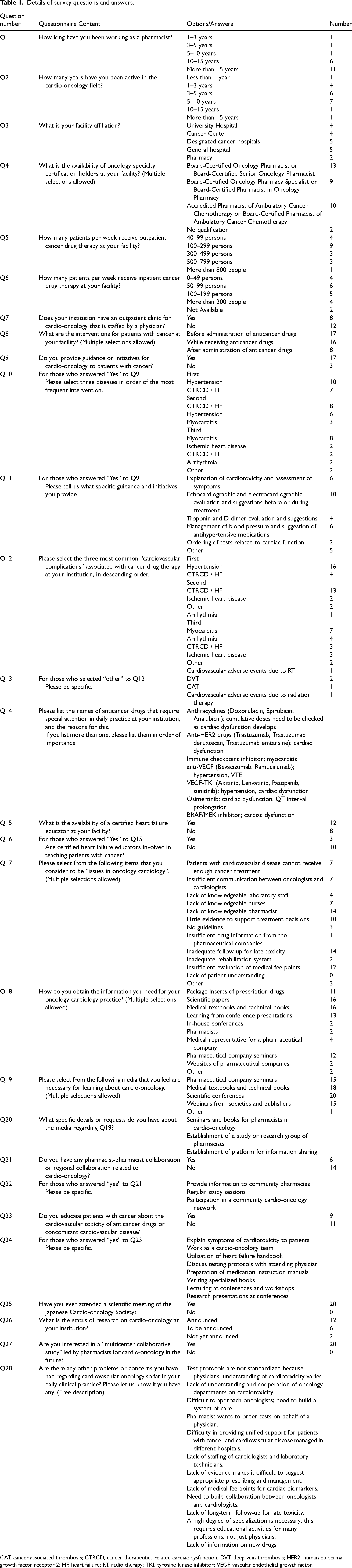
CAT, cancer-associated thrombosis; CTRCD, cancer therapeutics-related cardiac dysfunction; DVT, deep vein thrombosis; HER2, human epidermal growth factor receptor 2; HF, heart failure; RT, radio therapy; TKI, tyrosine kinase inhibitor; VEGF, vascular endothelial growth factor.
Efforts and challenges to cardio-oncology
Eighty-five percent of respondents provided some type of patient guidance or commitment to cardio-oncology. The most cardiotoxicity requiring intervention in anticancer therapy was CTRCD/ heart failure (HF) (Figure 1(a), Table 1; question 10). The second most common disease requiring monitoring and intervention was hypertension. The pharmacists’ most frequent specific approach was to suggest echocardiography and electrocardiography before and during treatment, other approaches included explaining the cardiotoxicity of anticancer drugs to patients, assessing symptoms, and blood pressure management, including daily blood pressure monitoring and suggesting antihypertensive medications to the physicians. The most cardiovascular complication observed in clinical practice was CTRCD/HF (Figure 1(b), Table 1; question 12). The second most common cardiovascular complication was hypertension. Anthracyclines were the most common anticancer drugs requiring clinical caution, followed by anti-HER2 drugs (Figure 1(c), Table 1; question 14). Clinical caution included the need to monitor cardiac function, since cardiac dysfunction occurs. Furthermore, immuno-checkpoint inhibitors are also associated with myocarditis, which requires caution.
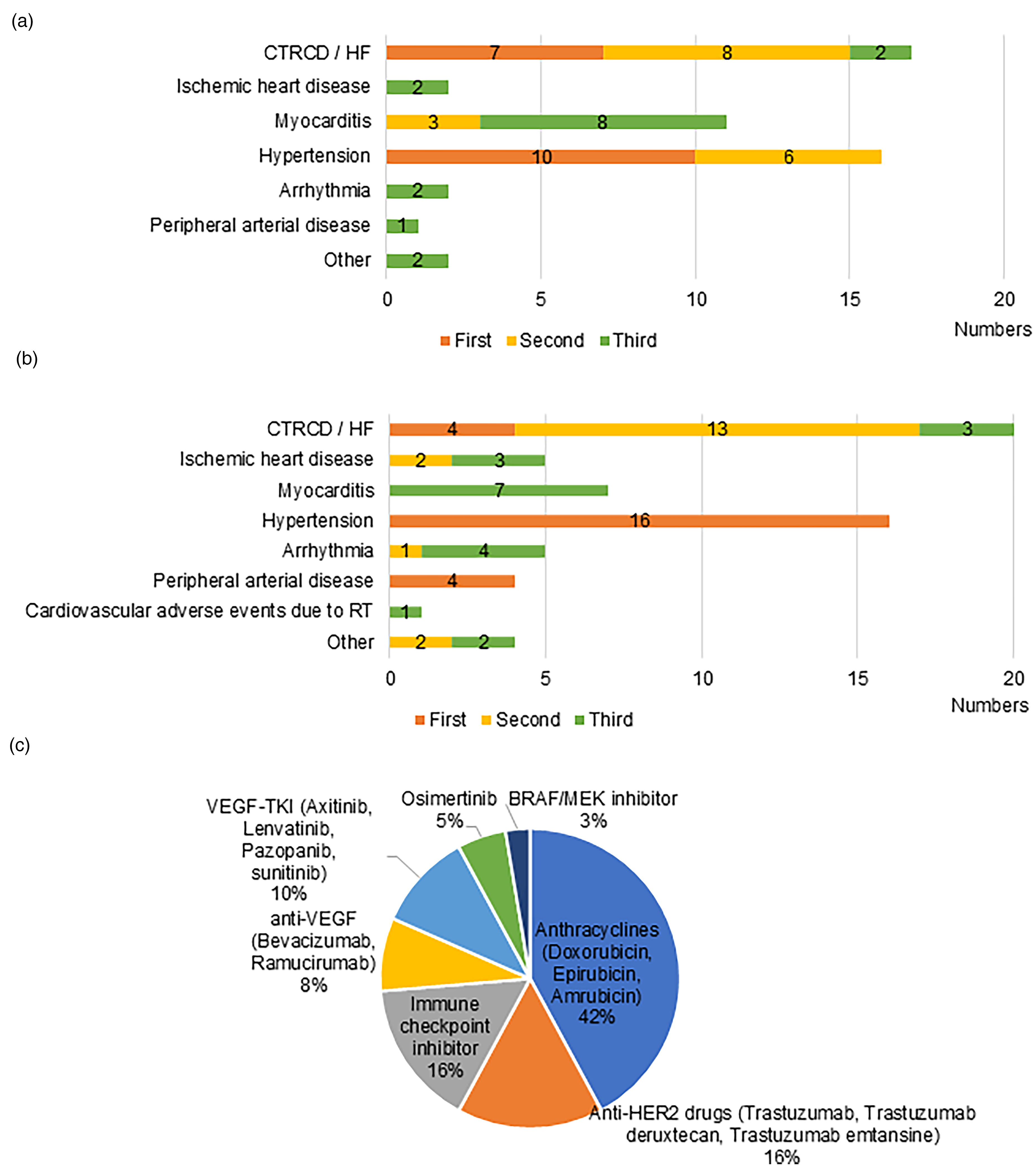
Cardiotoxicity and anticancer drugs to be aware of in clinical practice. (a) Cardiotoxicity requiring monitoring and therapeutic intervention in anticancer drug therapy (question 10); (b) diseases with a high incidence of cardiovascular complications associated with anticancer therapy (question 12); (c) anti-cancer drugs to monitor in clinical practice (question 14). CTRCD, cancer therapy related cardiac dysfunction; HER2, human epidermal growth factor receptor 2; HF, heart failure; RT, radiotherapy; TKI, tyrosine kinase inhibitor; VEGF, vascular endothelial growth factor.
Of the identified cardio-oncology challenges, the lack of a follow-up system for late toxicity and lack of pharmacists’ knowledge of cardio-oncology were most frequently indicated (Figure 2(a), Table 1 question 17). Additionally, collaboration between hospital pharmacists and community pharmacies was low at 30% (Table 1; question 21). Specific collaboration included providing patient information to community pharmacies and holding regular seminars.
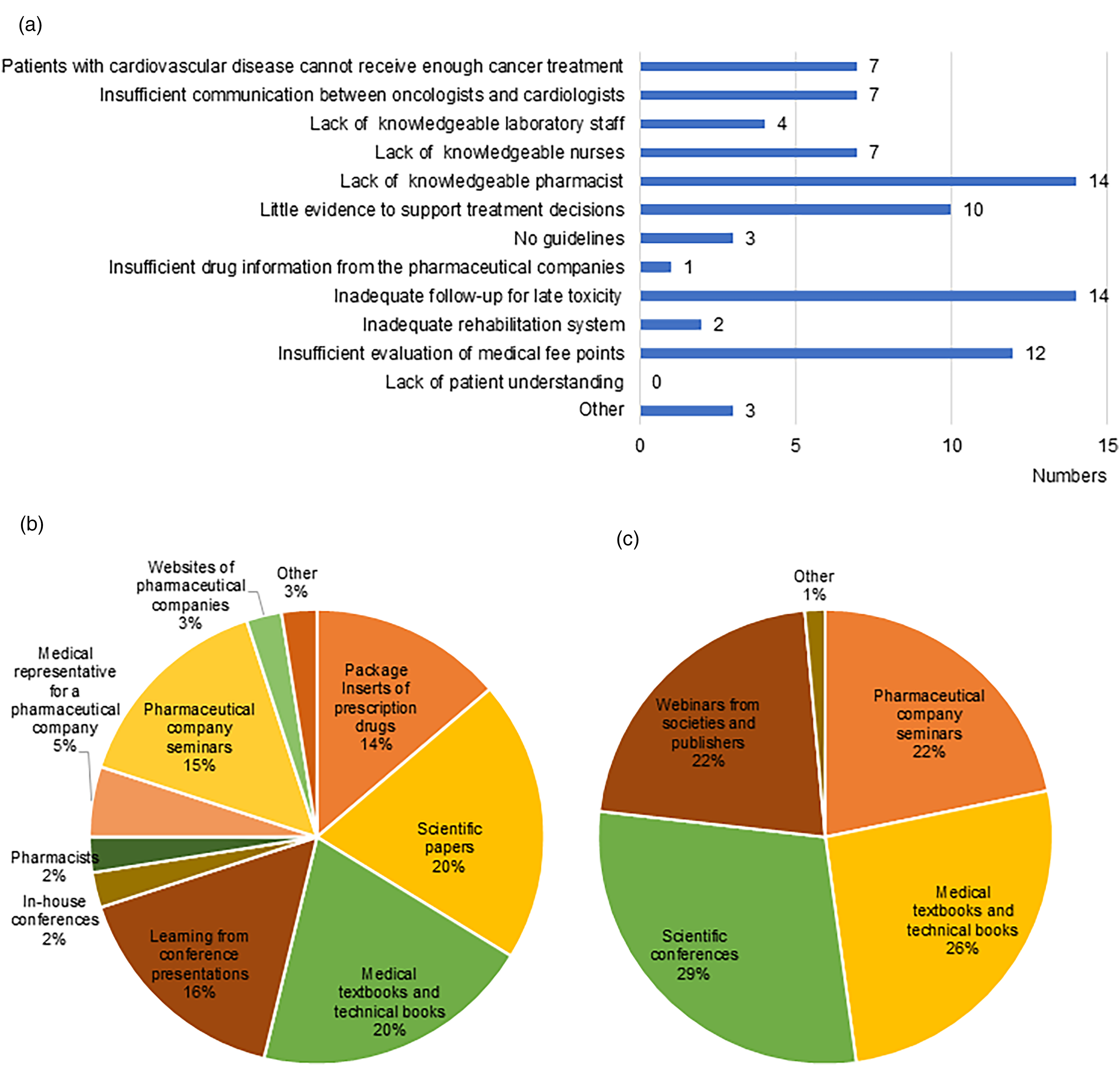
Challenges and resources in cardio-oncology. (a) Current challenges in cardio-oncology (question 17); (b) channels for obtaining information necessary for cardio-oncology practice (question 18); (c) sources of learning about cardio-oncology (question 19).
Education and research
Publications, medical textbooks, and technical books were the most common tools used to collect clinical information on cardio-oncology (Figure 2(b), Table 1; question 18). Scientific conferences were the most common tools used to learn about cardio-oncology, followed by medical textbooks and technical books, but demand was also seen for pharmaceutical company seminars and webinars from societies and publishers (Figure 2(c), Table 1; question 19). As requests for learning content, the respondents indicated that seminars for pharmacists in the fields of oncology and cardiovascular disease should be held and books should be produced, a study group of pharmacists established, and a platform for sharing information created. 45% of respondents engaged in some kind of activity leading to patient education regarding anticancer drug-induced cardiotoxicity or cardiovascular co-morbidity (Table 1; question 23). Specifically, to educate patients, a medication guidance manual on cardiotoxicity due to cancer treatment was developed and medication guidance was provided. In addition, education for health care providers leading to patient education included participation in the cardio-oncology team, writing professional books, and presenting at conferences. Ninety percent of the respondent institutions were conducting cardio-oncology research (Table 1; question 26). Additionally, all respondents were interested in pharmacist-initiated multicenter trials.
Cardio-oncology challenges
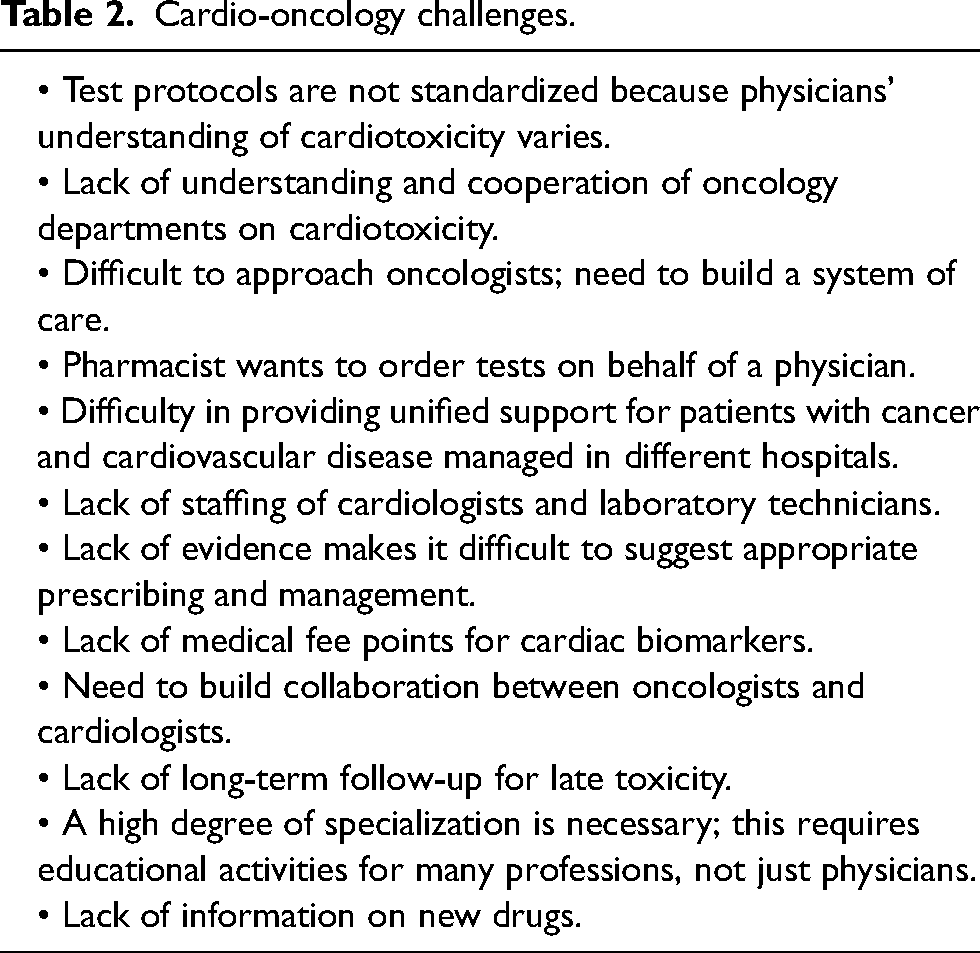
These are listed in Table 2. The main problems with cardio-oncology were related to the systems in the institutions and the lack of staffing. Specifically, the lack of standardized testing assessment protocols for cardiotoxicity caused to cancer treatment, lack of long-term follow-up system for late toxicity, lack of collaboration between oncologists and cardiologists, and lack of staff such as cardiologists and laboratory technicians were cited. As a personal problem, a lack of understanding among pharmacists, nurses, and patients was also reported. Furthermore, the lack of medical fee points for cardiac biomarkers, lack of information on new drugs, and lack of evidence made it difficult to provide appropriate cardiac monitoring and pharmacotherapy.
Cardio-oncology challenges.
Discussion
We conducted a questionnaire survey to determine the status of pharmacists’ efforts, challenges, education, and research on cardio-oncology in Japan. The results revealed that pharmacists affiliated with JOCS are committed to cardio-oncology and 85% of pharmacists provide some type of care to patients requiring cardio-oncology, as shown in the results of question 9. On the other hand, a variety of problems were reported, including organizational problems due to lack of clinic structure and staff, and personal problems such as lack of knowledge in cardio-oncology. Solving these problems and improving the content of future efforts may lead to better care for patients with cancer who need cardio-oncology services.
Currently, cancer and cardiovascular disease are the leading and second leading causes of death, respectively, in Japan. 12 Furthermore, cardio-oncology is expected to become increasingly important in Japan, where cancer and cardiovascular disease are prevalent due to the ageing population. Cardio-oncology expects pharmacists to play an active role within the team. In other countries, pharmacists serve as key members of cardio-oncology teams and help optimize drug therapy for cardiovascular adverse events associated with many cancer treatments.18,19 In contrast, in Japan the role of pharmacists in cardio-oncology care has not been clarified, and it was unclear what interventions and challenges exist in practice. This study revealed that not only physicians, but also pharmacists, provide cardio-oncology care by suggesting echocardiography and electrocardiography, managing blood pressure, ordering laboratory tests, and other cardiotoxicity management. Moreover, the survey identified challenges that require resolution, such as the lack of knowledge on cardio-oncology among pharmacists, the lack of collaboration between hospital and community pharmacies, and the lack of a long-term follow-up system. Therefore, we think that in the future, collaboration between oncologists and cardiologists and improvement of individual knowledge through seminars and scientific conferences, and collaboration between hospitals and community pharmacies led by pharmacists, will lead to improved patient care, including long-term follow-up.
In Japan, there is little content on cardio-oncology and no core curriculum. Therefore, pharmacists collect information from scientific conferences and publications on their own and link it to their clinical practice. In contrast, a core curriculum for cardio-oncology has been established in Europe, and education to improve expertise is being provided.18,20 Furthermore, in the United States, formal training for cardiology or oncology fellows interested in cardio-oncology was proposed by the American College of Cardiology Cardio-Oncology council. 21 To improve cardiovascular outcomes for patients with cancer, a concerted effort to transition knowledge of cardio-oncology guidelines into actual practice is crucial, as is education of medical professionals and patients. Therefore, along with the creation of such a practical curriculum, it is considered effective and necessary to educate pharmacists by holding seminars, developing textbooks, establishing pharmacist study groups, and building platforms for information sharing.
Cardio-oncology has a lack of evidence, and research is essential to advance the field. 22 In particular, research from a pharmacological perspective, and the development of evidence for pharmacist interventions, is needed. In a previous study of Lenvatinib for hypertension, we reported that blood pressure elevation began the day after lenvatinib initiation, indicating the need for close intervention. 23 The results suggest that early initiation of antihypertensive medications is important because rapid blood pressure elevation due to cancer treatment can lead to treatment discontinuation, and the content of the study suggested early therapeutic intervention. There are still many aspects of supportive care for cancer treatment that need to be studied, and evidence needs to be built. Fortunately, 90% of the respondents institutions in the study were already conducting research on cardio-oncology, and 60% had published papers or presented at conferences. Additionally, it was clear that all respondents were interested in multicenter studies, suggesting that large-scale studies that will actively build evidence can be conducted in future. In this study, various challenges were identified, including those with the clinical practice system, lack of evidence, and lack of long-term follow-up for late toxicity. By addressing these challenges one by one, we hope to improve cardio-oncology treatment in Japan and achieve better outcomes in cancer treatment.
This study has some limitations. The first, the low response rate (33%), the small sample size (n = 20) is a significant limitation of this study. This severely limits the generalizability of the findings. Second, the survey was conducted among pharmacists who are members of JOCS, making it likely that many respondents have a deep understanding and specialty in cardio-oncology. Therefore, a large-scale survey targeting not only members of the society, but many pharmacists, is needed in the future. However, until now, the status of pharmacists’ efforts and challenges has not been known, and the fact that this study clarified the efforts and challenges of pharmacists with a deep understanding of cardio-oncology provides useful information for future development.
Conclusion
The status of pharmacists’ efforts, challenges, education, and research on cardio-oncology in Japan was understood. We believe that by implementing the initiatives identified in this study at many institutions, and addressing the challenges one by one, we can provide better medical care to patients with cancer who need cardio-oncology care.
Footnotes
Acknowledgments

Author contributions
Y.S. and M.H. designed this study and provided critical revisions. Y.S was involved in the preparation of the dataset and figures. Y.S. and M.H. were involved in writing this manuscript. All authors gave final approval of the version submitted.
Consent to participate
After the questionnaires were sent out, participants were asked to confirm their consent to participate in the study before completing the questionnaires.
Consent for publication
Not applicable.
Data availability statement
The data that support the findings of this study are available from the corresponding author on reasonable request.
Declaration of conflicting interests
The authors declared no potential conflicts of interest with respect to the research, authorship, and/or publication of this article.
Ethical considerations
This study was approved by the review committee of the National Cancer Center (Research Project No. 2024-112).
Funding
The authors received no financial support for the research, authorship, and/or publication of this article.