







Abstract
Background
Treatment of cancers with Systemic Anticancer Therapy (SACT) is increasingly complex due to rising numbers of medicines and the need for management of novel adverse reactions. To manage this complexity, electronic decision support systems have been developed to support clinicians delivering SACT to patients. These systems ideally provide health professionals with accurate and up-to date information in a timely manner, reducing administrative demand at hospital levels, allowing for increasing standardisation of care and ultimately improving outcomes for patients. In Ireland a national SACT regimen e-library is maintained by the National Cancer Control Programme, which aims to promote safe, effective and standardised cancer care. The aim of this study was to understand the utility and appropriateness of the regimens from a clinical end user perspective.
Method
This study adopted a survey methodology to explore the perceived value and utility of this e-library from the perspective of health professionals delivering cancer care in Ireland.
Results
Health professionals perceive the national SACT regimen library to be useful and valuable when delivering care, with respondents suggesting a high level of integration into clinical work flows. However, uncertainty was observed regarding the governance structures that underpin the maintenance of the library.
Conclusion
The regimen library supports a high standard of increasingly standardised patient care, with areas identified for improvement in terms of clinical stakeholder engagement in governance and content development.
Keywords
Introduction
Delivery of high quality Systemic Anticancer Therapy (SACT) services is becoming increasingly challenging due to the growing prevalence of cancer (globally and nationally), 1 advancing age of patients, and an ever-expanding choice of treatments each with multiple potential drug-related adverse effects. These challenges, related to complexity of care and service capacity, have resulted in the increasing adoption of electronic decision support systems to support the delivery of SACT across multiple health systems. 2 Appropriately designed systems can provide up-to-date, robust and accurate information to clinicians at the point of care, may be developed and maintained centrally to reduce local maintenance burdens, and furthermore can result in greater standardisation of care with ultimately better outcomes for patients.3,4
Management of SACT regimens historically has been conducted at individual hospitals often utilising simple word processing tools. This approach entails substantial duplication of effort across sites, as well as poor standardisation of care. To centralise this work and provide electronic access to information some jurisdictions have developed national or state level SACT regimen e-libraries such as eviQ in Australia, BC Cancer in Canada and The National Comprehensive Cancer Network in the United States.5–7
An Irish national SACT regimen e-library has been developed and maintained in Ireland by the National Cancer Control Programme (NCCP), a clinical programme within the Health Service Executive (HSE). 8 The remit of the NCCP is to work with health service providers to prevent and treat cancer; and increase survival and quality of life for those who develop cancer, by converting knowledge gained through research, surveillance and outcome evaluation into strategies and actions. 8
The national e-library was initially developed as a recommendation of a 2014 Medical Oncology Safety Review Report. The report recommended that hospitals have access to a suite of SACT regimens to support safe, evidence-based and cost-effective cancer treatment for all Irish cancer patients. 9 SACT regimens are written under the guidance of medical consultants involved in the treatment of patients with cancer with input from nursing staff, pharmacists and other healthcare professionals. These regimens are publicly available via the Health Service Executive website (https://www.hse.ie/eng/services/list/5/cancer/profinfo/chemoprotocols/).
NCCP is furthermore in the process of rolling out the National Cancer Information System (NCIS), a clinical information system that will be available in all publicly funded hospitals in Ireland that provide SACT services, in collaboration with hospital teams and HSE eHealth. Part of the NCIS functionality supports the prescribing of SACT and supportive medications. The NCCP National SACT Regimens are now included in NCIS as order sets thereby forming a critical component of SACT delivery workflow in hospitals that are utilising NCIS.
Maintaining a national regimen library in both web based (NCCP National SACT Regimen) and electronic (NCIS) forms is resource intensive. It is therefore essential that these regimens are appropriate for the needs of the clinical users.
Aim
The objective of this study is to understand the utility and appropriateness of the regimens from a clinical end user perspective. This will improve understanding of the value, usage and content utilisation of the NCCP National SACT regimens as well as develop an understanding of how to improve the usability and content of the regimens.
Methods
Setting
In Ireland SACT treatment is delivered in 26 public hospitals. These consist of 9 designated cancer centres and 17 satellite centres. Although the majority of SACT activity occurs in these cancer centres, SACT is also delivered in several private hospitals. Community pharmacies also play a key role in the delivery of SACT regimens and supportive care by dispensing prescriptions for SACT medicines on the foot of prescriptions written by hospital oncology and haematology teams.
Survey
A 16-question survey was developed in collaboration with clinical and academic colleagues. Survey questions were designed to explore the perspectives and beliefs of healthcare professionals regarding the NCCP SACT library in terms of perceived value, accessibility, utility, governance and frequency of use. The survey was assessed for face and content validity, as well as clarity and relevance, by NCCP staff [Available in Supplemental Material]. Questions included five demographic questions outlining the professional background of the participants, eight Likert Scale based questions where participants signalled their level of agreement with statements related to the utility and perceived value of the NCCP SACT regimens, two questions exploring how frequently participants accessed the regimens through the web and NCIS routes, and one question exploring which elements of the SACT regimens the participants used. A facility for free text entry was provided with each question and participants were encouraged to utilise them to outline their thoughts in response to each question. A survey link was distributed via NCCP distribution groups to clinicians involved in the management of SACT and was open for 8 weeks in February and March 2024. Email recipients were also encouraged to further distribute the survey link to colleagues also involved in the provision of SACT. Inclusion criteria for this study was Healthcare Professionals working in cancer care.
As this study is exploratory and descriptive in nature a formal sample size calculation was not undertaken. Furthermore, given data collection was undertaken using an open survey with a snowball recruitment strategy sample size calculation is difficult.
Data analysis
Survey responses were subjected to descriptive statistics for presentation in table and graphical formats. Free text responses were analysed using an inductive qualitative content analysis approach by authors GC and FS. Themes were developed through an iterative process of open and axial coding with final themes arrived at through discussion between researchers. GC is the information chief pharmacist at the NCCP with experience as a pharmacist in oncology, haematology and community settings. FS is an academic pharmacist with experience in qualitative research methods and in community pharmacy practice.
Results
230 responses were received to the survey, with a participation rate of 230/258 (89%) and completion rate of 215/230 (93%), the 230 surveys that included answers to the first question were included in the final analysis. Respondents were from a range of disciplines with the predominate responders being nurses (n = 78), hospital pharmacists (n = 73) and doctors (n = 55). Other respondents included community pharmacists (n = 12) and hospital pharmacy technicians (n = 3). Response rate was difficult to calculate given the complexity in assessing the population of clinicians providing cancer services.
The majority of respondents listed their primary place of work as an Irish Designated Cancer Centre (n = 138) followed by Irish Satellite Cancer Centre (n = 66). There were fewer responses from private hospitals (n = 5) and community pharmacies (n = 12) with one respondent currently working outside the state.
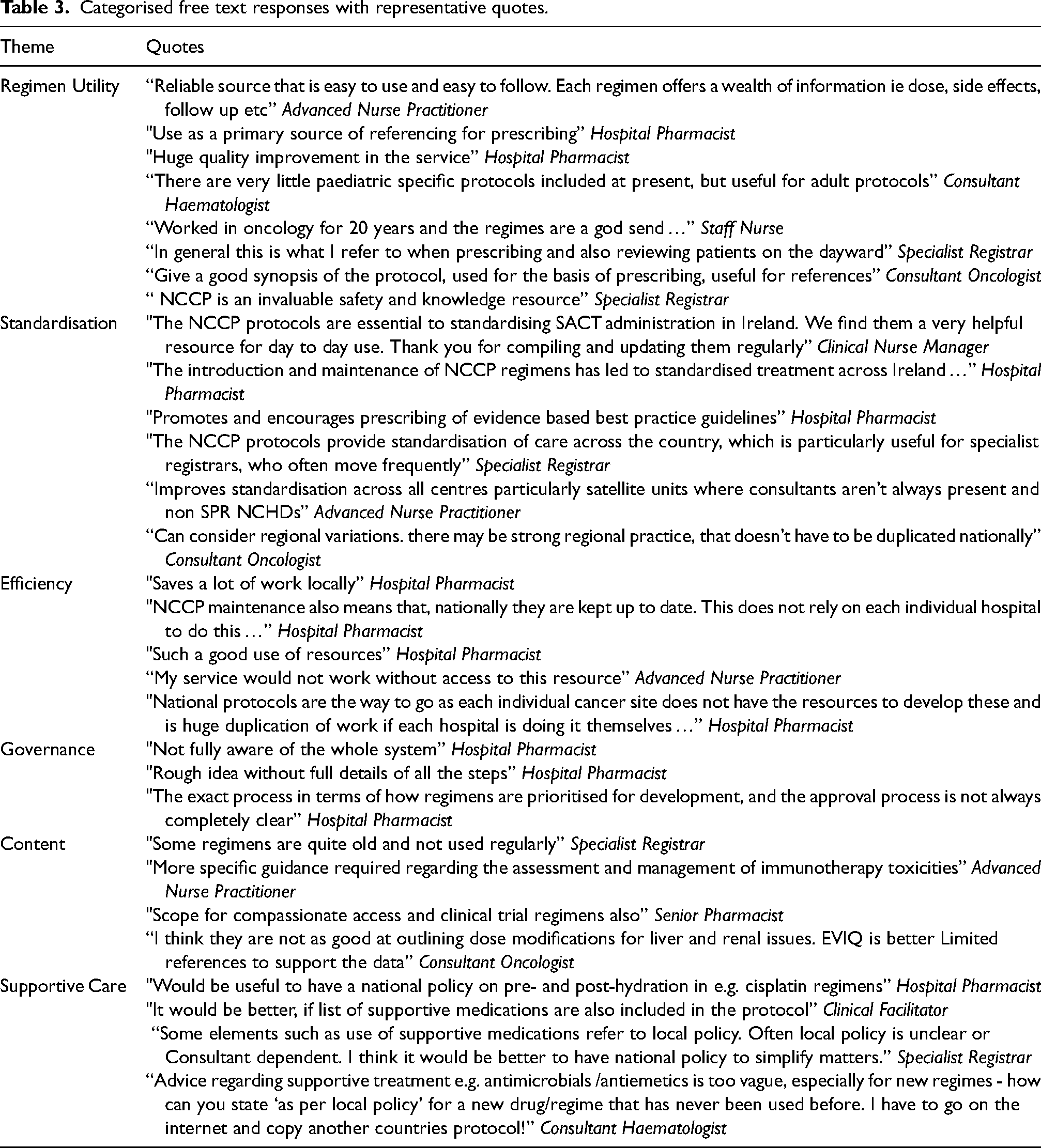
A majority of respondents were in strong agreement that the NCCP National SACT Regimens were a useful resource (95.6%) and that their development is a valuable use of resources (96.5%). A strong majority also strongly agreed or agreed with statements that the regimens should remain publicly available to health professionals (98.2%) and that SACT regimens should continue to be developed and provided at a national level (96.9%). Most respondents strongly agreed or agreed with the statements “The NCCP National SACT Regimens support my practice” (91.7%) and “the NCCP National SACT Regimens contain sufficient information to support my practise” (85.2%). Similarly, a majority (93.0%) agreed or strongly agreed with the inclusion of the National SACT Regimens in the NCIS. See Table 1 for all responses.
Lower levels of agreement were observed for the statement “I am aware of the governance process for NCCP National Regimens”. 60.1% of participants expressed strong agreement or agreement, with 18.9% expressing neither agreement nor disagreement and 21% expressed disagreement or strong disagreement.
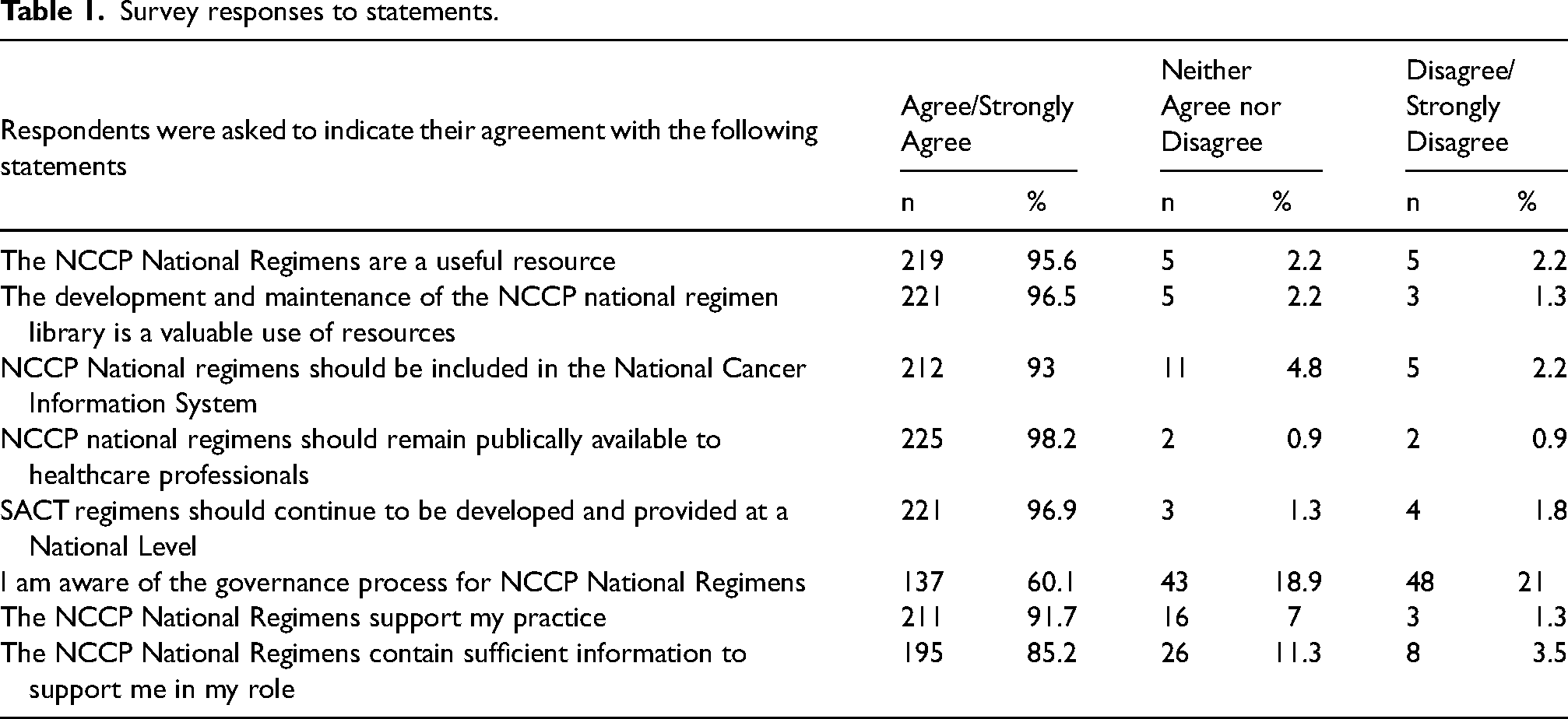
Most respondents reported they access the regimens on the website at least twice weekly (70.6%) with 39.3% accessing them every day or more often, see Table 2. Only 2.2% of respondents had never accessed the regimens. Several participants expressed unawareness of the existence of the national SACT e-library in the free text comments for this question.
Only respondents that indicated they had used NCIS were asked to indicate how often they accessed NCCP National SACT Regimens using NCIS. Of the 127 respondents to this question most reported accessing the regimens at least weekly (71.7%). The proportion of respondents who reported never accessing regimens in NCIS was higher than those who reported never accessing them on the NCCP website (13.3% versus 2.2%).This suggests a cohort of respondents who use non-medication management functionality in NCIS or perhaps do not utilise the regimen information in NCIS.
Reported utilisation of the different sections of the SACT regimens’ is presented in Figure 1. Large numbers of participants reported using each section of the SACT regimens (range 100–180 respondents), with the exception of sections not containing clinical information; Prescriptive Authority (65 reported users) and References (62 reported users).This suggests the contents of the regimens are widely acceptable with low redundancy, however the non-clinical information is less frequently utilised.
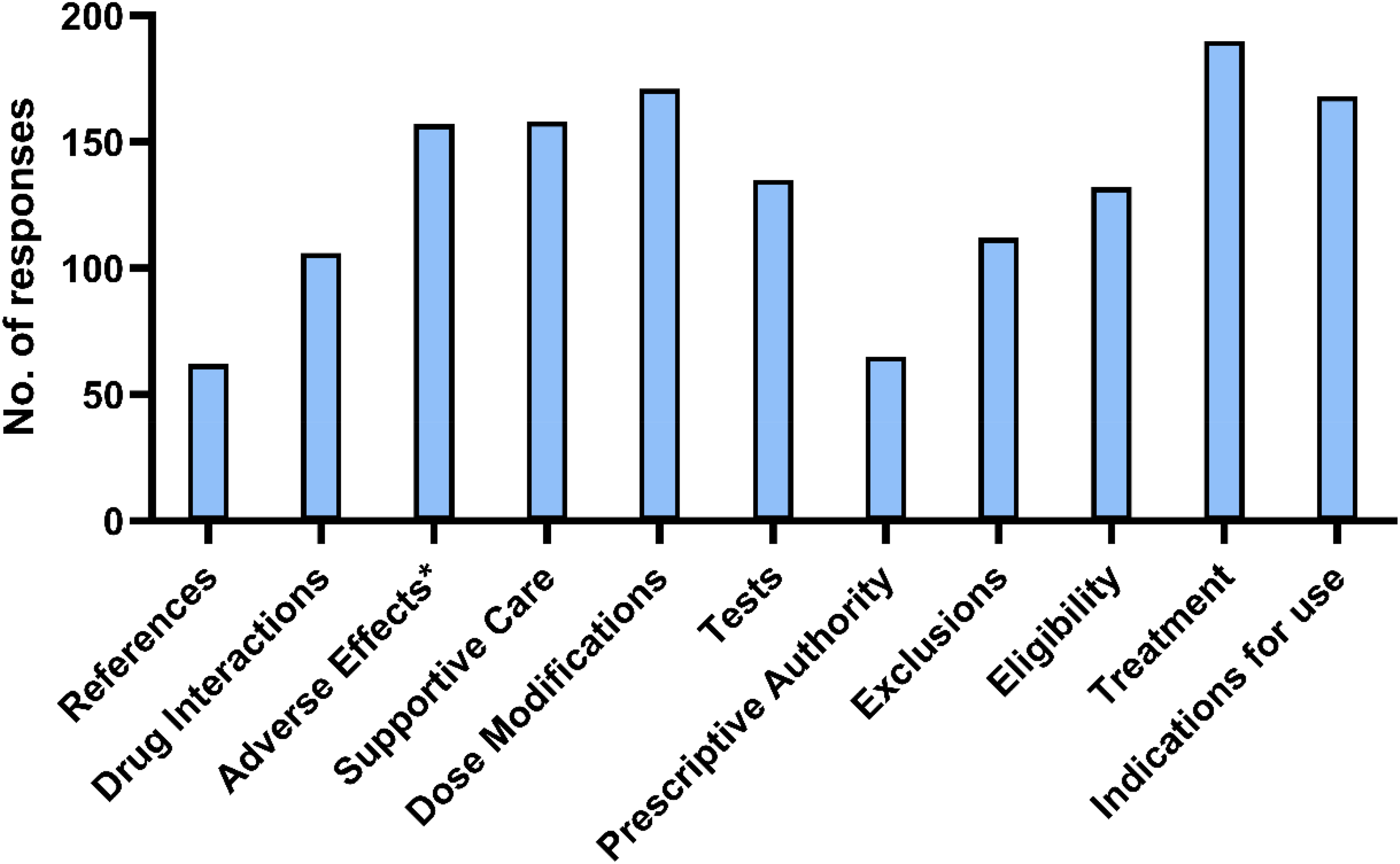
Number of responses that reported using different sections of the NCCP protocols contained in the e-library in response to the question “what sections of the NCCP National SACT Regimens do you use (SELECT ALL THAT APPLY)”. * Includes Regimen Specific Complications.
Free text comments
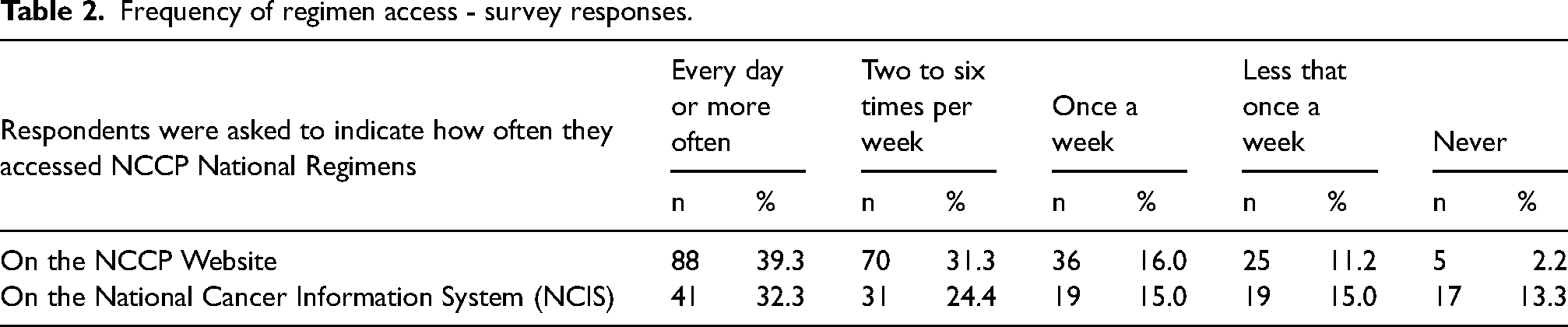
The following themes were derived from analysis of free text responses to the survey; Regimen Utility, Standardisation, Efficiency, Governance, Content and Supportive Care.
Utlity
A number of comments positively described the utility of the NCCP National Regimens. Several respondents indicated that the regimens are vital for the management of patients and their service, and have improved patient care.
“Reliable source that is easy to use and easy to follow. Each regimen offers a wealth of information ie dose, side effects, follow up etc” – Advanced Nurse Practitioner
Standardisation
Many respondents outlined a belief that the national SACT regimens have driven a process of standardisation of patient care and their belief that this has been a positive development for both patients and health professionals working in cancer care.
“The NCCP protocols provide standardisation of care across the country, which is particularly useful for specialist registrars, who often move frequently” - Specialist Registrar
Efficiency
Many respondents regarded the development and maintenance of the SACT regimen library as representing an efficient approach, particularly when compared to prior approaches where individual hospitals would maintain internally developed SACT regimens resources.
“NCCP maintenance also means that, nationally they are kept up to date. This does not rely on each individual hospital to do this, again this is time and resources that hospitals do not have currently while attempting to keep up with the increase in patient numbers” - Hospital Pharmacist
Governance
Participants expressed a lower level of knowledge regarding the governance of the NCCP SACT e-library. In particular participants mentioned a lack of knowledge regarding the processes that underpin the prioritisation, development and review/approval of regimens.
“The exact process in terms of how regimens are prioritised for development, and the approval process is not always completely clear” - Hospital Pharmacist
Content and supportive care
Many respondents noted the content of the regimens. In many cases respondents expressed a desire for additional specific information to be included, for example compassionate access and clinical trial regimens, paediatric regimens and stability information for drugs. Some respondents also noted that not all regimens used locally were included in the National Library. Others expressed concerns as to the how current the regimens were kept up to date and the need to ensure that information in the regimens keeps pace with developments in clinical practice.
The most commonly requested additional content noted by participants was related to supportive care medications. The inclusion of specific supportive care medication is challenging in some cases due to lack of direct evidence and the requirement for consensus, this is particularly difficult when trying to gain consensus for nationally available regimens.
Themes identified with illustrative quotes are collated in Table 3.
Survey responses to statements.
Frequency of regimen access - survey responses.
Categorised free text responses with representative quotes.
Discussion
Statement of key findings
This study represents the first formal analysis of the opinions of clinical users regarding the utility and appropriateness of NCCP National SACT Regimens in Ireland. The results demonstrate that clinical users regard the regimens as a useful resource that represents an appropriate use of healthcare resources and that supports healthcare providers in the delivery of high-quality care to patients. Further to these, several free text responses suggested that the regimens are currently strongly integrated into clinical workflows in practice.
Strengths and weaknesses
The current study represents a robust and reliable measure of the attitudes of clinicians working in cancer care in Ireland towards the SACT regimen e-library. Given the diversity of roles and locations it is difficult to quantify exactly the numbers of clinicians working in cancer care, however, based on self-reporting across the various sectors it is estimated there are approximately 1200 clinicians working in public hospitals providing SACT services. Based on this, 230 responses, can be considered an adequate and representative response rate, comparable to similar survey studies. 10 The relatively balanced number of responses from doctors, nurses and pharmacists further suggests these results to be robust and representative.
It should however be noted the results presented are based upon self-reported participant data, with the potential for the introduction of response biases including social desirability bias, acquiescence bias, recall bias and non-response bias. Further to this, the cross-sectional design of the current research captured the attitudes of participants at a single timepoint and does not capture potential changes in perception of the SACT regimen e-library over time, which may have implications for understanding the long-term utility and effectiveness of the library.
Interpretation
Computerised support systems need to be relevant and up to date, save clinical time, include end-user involvement in development and be integrated into the clinical workflows to be successful. 11 Langton and colleagues undertook a quality assessment of several publicly available cancer regimen resources using the “Appraisal of Guidelines for Research and Evaluation” (Agree-II) instrument and found that they broadly met these criteria. 11 The NCCP National SACT Regimens were not included in this analysis however several findings from our study and the nature of the regimens suggest that they are of similar quality to international comparators. By these criteria our study found that clinical users frequently point to the efficiency and standardisation gains associated with the regimens, also with their inclusion in the NCIS the regimens can be seamlessly embedded into the clinical workflow. Indeed, it may be useful to directly explore the specific impact of SACT library centralisation of workflow efficiency in future iterations of this survey, or indeed directly in clinical practice through time-in-use studies or similar research approaches.
From an end-user involvement perspective, all NCCP National SACT regimens are developed with a robust governance process that involves review and final approval by groups of Consultant Oncologists and Haematologists. Feedback on the published regimens is also strongly encouraged and leads to a constant review and improvement process. However, it is notable that survey respondents were less likely to agree with the statement that they understood the governance process for the regimens. This represents an opportunity for the NCCP to give more clear information to end users as to the governance process for regimen development.
A high proportion of respondents reported that the regimens supported their practise (91.7%), however several free text responses from participants suggested the inclusion of further information in the regimens and in the SACT library more broadly. Responses referred to the need for additional regimens, particularly for unlicensed, compassionate access and clinical trial regimens. Indeed, with the advent of the National Cancer Information System whereby regimens are utilised as electronic order sets in day-to-day clinical practice the necessity of a comprehensive library of SACT regimens becomes ever more acute. Similar findings in relation to regimen availability were made by Loke and colleagues in a survey of the eviQ national regimen e-library in Australia. 10 They noted that reasons underpinning delays in the publication of novel SACT regimens are complex, but include lack of licencing and funding approval, limited data and experience with newer and rarer treatments and reliance on specialist clinicians volunteering their time to review regimens. Within the context of the current study, the NCCP faces similar challenges when developing novel regimens. To address these challenges, NCCP and its clinical partners have recently updated processes for the preparation of national SACT regimens including the decoupling of funding requirement for regimen publication as well as a specific process for NCIS for compassionate access and clinical trial regimens. These measures will hopefully address some of the concerns raised by participants in this study.
Standardisation is a well-recognised process for improving patient safety and outcomes in health care and other industries 12 and is also recognised as a key component for successful implementation of electronic health systems.13,14 Indeed, standardisation of care was one of the key drivers for initiating the development of the NCCP National SACT regimens. 9 Speaking to this, many participants expressed a need for additional standardised care to be included in the regimens, particularly regarding recommendations for supportive care medications such as anti-emetic and anti-microbial drugs. Although the value of standardised care is clear it is challenging to standardise all elements of care, including supportive medicines for SACT. 15 Brunner and colleagues describe their experience of implementing a large-scale Electronic Health Record (EHR) in the United States. They describe in detail the complexities around gaining consensus for standardising clinical practice and propose five key steps in this process 1. Understanding existing practises and variances in that practise 2. Identifying best evidence for ideal practise 3. Ensuring any proposed change to practise are applicable and practical 4. Communicating the new practises to all affected employees include justification for the changes and 5. Evaluating the impact of these changes. To achieve standardisation requires significant time and resources. One of the challenges in standardising supportive care for SACT regimens relates to point 2 and identifying best evidence and ideal practise. In many cases the evidence for a particular supportive care strategy is not as strong as the evidence for the SACT medications themselves. Specifically, for antiemetics there are several international guidelines that give suggested antiemetic treatments based on the emetogenicity of medications in the SACT regimen, but in most cases, there is a choice between specific medicines and applicability to multi-day or oral/parenteral combination regimens can be complex.16,17 Where there are choices or direct applicability is unclear a consensus opinion is required, this is particularly complex and time consuming when a national agreement is required. The NCCP have sought to standardise some elements of supportive care specifically for NCIS, for example antiemetics for solid tumour regimens, however these have proven difficult and required considerable resources from NCCP as well as valuable time from clinical colleagues. But it is hoped that as NCIS becomes more widespread and embedded in clinical practise more elements, such as antiemetics, can be standardised.
The lowest agreement to the statements in the current survey related to respondents understanding of the governance of the NCCP National SACT Regimens. One of the key factors underpinning the success of computerised support systems is involvement of end-users in development. 11 As such, the NCCP process for regimen development relies heavily on clinical feedback and all regimens are finally approved by consultant physicians. However, it is interesting to note that despite the lack of awareness as to the governance of the regimens most clinicians still found the regimens a high quality and valuable resource for supporting their practise. It is paramount that end-user involvement continues so that the regimen resource can be maintained, therefore the NCCP will make a concerted effort to communicate the regimen development process to clinical stakeholders.
Further research
This study has provided helpful data to support the continued development and management of the NCCP National SACT Regimens. The overall positive response is encouraging and strongly suggests that resources should continue to be utilised to provide this function at a national level. It also provides useful feedback on areas for improvement relating to regimen content and communication to clinical users around governance. Further research focusing on the needs of cancer clinicians in the community may be of benefit in the future.
Conclusion
The regimen library supports a high standard of increasingly standardised patient care, with areas identified for improvement in terms of clinical stakeholder engagement in governance and content development. Healthcare organisations should consider the development of collaborative and accessible SACT Regimen Libraries that are available as electronic order sets. This assists in the provision of standardised care while also utilising digital healthcare as a platform for information sharing.
Supplemental Material
sj-docx-1-opp-10.1177_10781552251367356 - Supplemental material for Improving cancer care through electronic libraries: A survey of health professionals’ experiences with Ireland's systemic anti-cancer therapy regimen library
Supplemental material, sj-docx-1-opp-10.1177_10781552251367356 for Improving cancer care through electronic libraries: A survey of health professionals’ experiences with Ireland's systemic anti-cancer therapy regimen library by Grant Carroll, Fabian F Sweeney, Clare Meaney, Anne-Marie DeFrein, Michaela J Higgins, Maccon M Keane, Amjad Hayat and Patricia Heckmann in Journal of Oncology Pharmacy Practice
Footnotes
Author contributions
All authors contributed to the study conception and design. Material preparation, data collection and analysis were performed by GC, FS, CM and PH. The first draft of the manuscript was written by GC and FS and all authors commented on previous versions of the manuscript. All authors read and approved the final manuscript.
Dataset availability
The datasets generated during and/or analysed during the current study are available from the corresponding author on reasonable request.
Declaration of conflicting interests
The authors declared no potential conflicts of interest with respect to the research, authorship, and/or publication of this article.
Ethics
Ethical approval for this study was obtained from the Health Services Executive Ethics Committee for Midlands Area and Corporate Division (approval no. RRECB0923GC). Respondents were asked to give informed consent and indicate they met inclusion criteria in the first questions of the survey. Negative answers prevented further participation.
Funding
The authors received no financial support for the research, authorship, and/or publication of this article.

Supplemental material
Supplemental material for this article is available online.
References
Supplementary Material
Please find the following supplemental material available below.
For Open Access articles published under a Creative Commons License, all supplemental material carries the same license as the article it is associated with.
For non-Open Access articles published, all supplemental material carries a non-exclusive license, and permission requests for re-use of supplemental material or any part of supplemental material shall be sent directly to the copyright owner as specified in the copyright notice associated with the article.
