







Abstract
Background:
The psychiatric nursing field faces challenges in recruiting, training, and retaining educated nurses. A Work-Learning Program (WLP) within an academic-practice partnership may address these issues.
Aim:
This study evaluated the feasibility of implementing a WLP for psychiatric nurses to support academic and career development.
Method:
A feasibility, post-test-only study was conducted at a state psychiatric hospital. A WLP was developed through an academic-practice partnership, incorporating mentorship, a dedicated learning space, and academic resources. The feasibility outcomes included nurse engagement with WLP components, academic and career achievements, evidence-based practice adoption, employment retention, and program costs.
Results:
Eight nurses were enrolled, four in a Registered Nurse to Bachelor of Science in Nursing (RN to BSN) program and four in a Doctor of Nursing Practice (DNP) program. The participants reported high engagement and perceived the WLP as beneficial. Academic completion rates were 80% (RN to BSN) and 100% (DNP). Career advancements included promotions and salary increases. Evidence-based practice adoption was demonstrated through capstone and doctoral projects on clinical initiatives and scholarly activities. Employment retention was high, with 87.5% of nurses remaining employed for at least 6 months post-completion. The affiliated health care organization covered 18 credits per year in tuition for both cohorts, provided additional pay for academic time for RN to BSN students, and allocated $10,000 per cohort for WLP needs.
Conclusions:
Findings suggest that implementing a WLP is feasible and effective for supporting psychiatric nurse academic and career development and fostering evidence-based practice. The study highlights the value of a WLP within an academic-practice partnership in enhancing psychiatric nursing skills and workforce stability, ultimately contributing to improved patient care.
Introduction
As increasing recognition is placed on the association between nursing education and improved patient outcomes, health care organizations continue to seek ways to support the educational and professional career development of their nursing workforce (Graebe et al., 2022). Advanced nursing education is associated with improved patient outcomes, including lower hospital readmission rates, decreased mortality rates, and diminished risks for adverse events (Audet et al., 2018; Haegdorens et al., 2019; Porat-Dahlerbruch et al., 2022). Additionally, access to educational advancement opportunities is often associated with heightened job satisfaction, contributing to adequate staffing ratios and improved patient outcomes (Cho et al., 2020; Heidari et al., 2017; Marufu et al., 2021). Moreover, nurses with Bachelor of Science in Nursing (BSN) degrees more frequently endorse greater job satisfaction as compared to those with associate degrees (ADNs), further emphasizing the importance of nursing education, staff retention, and patient outcomes (Heidari et al., 2017; Rambur et al., 2005). Similarly, Doctor of Nursing Practice (DNP) degrees have been linked to higher levels of job satisfaction (Bush & Lowery, 2016) and better patient outcomes driven by the advanced clinical training and leadership skills that enable them to contribute effectively to clinical decision-making, policy development, and system-level improvements in care quality (Edwards et al., 2018; Melander et al., 2024). As health care organizations increasingly recognize the link between nursing education and excellence in care quality, it is crucial to support the educational advancement of the nursing workforce.
In response to these national trends, health care organizations preferentially hire nurses with greater educational preparation, aligning with recommendations by the Institute of Medicine that 80% of the nursing workforce hold at least a BSN (Institute of Medicine Committee on the Robert Wood Johnson Foundation Initiative on the Future of Nursing, 2011). These recommendations are also endorsed by the American Nurses Credentialing Center’s Magnet Recognition Program, which recognizes health care organizations with a commitment to nursing excellence and patient care. In fact, 41.1% of hospitals and other health care organizations require new hires to have a BSN, while 84% of employers express a strong preference for BSN program graduates (American Association of Colleges of Nursing Research Brief, 2023). In addition, the DNP degree is also increasingly recognized as a crucial component in advancing nursing practice and leadership within health care organizations (Johansen, 2023). Thus, endeavors to promote BSNs and DNPs through academic-practice partnerships offer health care organizations an opportunity to support educational attainment, career advancement, and professional development for the nursing workforce (American Association of Colleges of Nursing, 2016; Bradley & Bitton, 2022).
Despite the acknowledgment of mental and behavioral well-being as a health priority, a significant challenge for the psychiatric nursing field has been recruiting, training, and retaining educated nurses compared to other nursing fields (Adams et al., 2021). According to the 2022 National Nursing Workforce report, registered nurses (RNs) specializing in psychiatric, mental health, or substance abuse only accounted for 2.5% of the U.S. nursing workforce (Smiley et al., 2023). Although the proportion of RNs entering the workforce holding a BSN is increasing, with 45.4% of RNs having a BSN as their first degree entering the workforce (American Association of Colleges of Nursing, 2024), psychiatric nurses are still as likely to have an ADN (45%) as a BSN (42%). Furthermore, approximately 12% of advanced practice psychiatric RNs currently hold a DNP (American Psychiatric Nurses Association, 2022), indicating that doctoral preparation remains limited in the psychiatric nursing specialty. Therefore, there is a need for increased support for advanced education in psychiatric nursing.
Academic-practice partnerships have emerged as an effective model to address the educational and professional development needs of the nursing workforce by enabling nurses to advance their education while continuing to work (Adams et al., 2021; Valente & Wright, 2007). Within academic-practice partnerships, models of addressing the educational and professional development needs of the nursing workforce include the incorporation of Work-Learning Programs (WLPs), which are intended to recruit and retain nurses by offering tuition assistance, mentorship opportunities, and structured career progression pathways (Attenborough et al., 2019; Bruno et al., 2024; Owens et al., 2021; Pullan & Lorbergs, 2001). In the psychiatric nursing field, few WLPs have been developed and evaluated to assess their effectiveness in advancing nurses' educational and professional development needs. As health care organizations increasingly recognize the value of such WLPs, their implementation may promote the advancement and retention of skilled psychiatric nurses, ultimately contributing to the overall goal of improving mental health care delivery.
Given the potential of academic-practice partnerships to bolster educational and professional development among psychiatric nurses, the purpose of this study was to investigate the feasibility of a WLP to advance education, support staff development, and improve evidence-based practice/research outcomes. Specifically, among nurses in a state psychiatric hospital, we examined the following outcomes:
(1) Program engagement.
(2) Academic and career achievements.
(3) Evidence-based practice adoption.
(4) Employment retention.
(5) Costs associated with the program.
Method
Design and Sample
This study used a post-test-only design to evaluate a WLP. A convenience sampling was used to recruit nurses from a state psychiatric hospital with Magnet recognition in the southeastern United States. The goal was to support nurses going back to school while maintaining their full-time employment. We recruited nurses by distributing an online survey to assess interest and eligibility. The first cohort consisted of nurses enrolled from August 2017 to August 2019 who held an ADN and wanted to complete their BSN, while the second cohort was comprised of BSN-prepared nurses enrolled from May 2020 to May 2024 interested in completing their DNP. The BSN cohort eligibility criteria were: (1) RNs with ADN degrees from an accredited university, (2) employed full-time at a state psychiatric inpatient hospital, (3) provided direct patient care, and (4) admitted to a university College of Nursing RN to BSN program. The DNP cohort eligibility criteria were: (1) BSN degree from an accredited university, (2) employed full-time at a state psychiatric inpatient hospital, and (3) admitted to a university College of Nursing DNP program. The affiliated College of Nursing offered a master-level program (i.e., master’s in clinical leadership), but no WLP participants opted for this program. Participants were excluded from the WLP if they did not meet all eligibility criteria.
Intervention
The WLP was developed within the context of an academic-practice partnership among Eastern State Hospital (the state psychiatric hospital), UK HealthCare (the affiliated health care organization), and the University of Kentucky College of Nursing (the affiliated College of Nursing). For both the RN to BSN and DNP cohorts, approval to develop the WLP was obtained from the relevant executive leadership and management teams of the affiliated institutions. During WLP development, a steering committee, including representatives from the academic-practice partnership, met to provide expertise on resources available to students within the university and on value-based outcomes that could support WLP success.
The WLP initiative incorporated several key evidence-based components of a university living learning program (Billett, 2020; Inkelas et al., 2006) and tailored them to support nursing staff in their educational pursuits while maintaining full-time employment. The elements were: (1) a dedicated space at work for learning (including textbooks, laptops, and access to printing at no charge), (2) mentorship and training to help students transition from work to school, (3) engagement in “check-in” and shared study sessions to create a sense of belonging, (4) a dedicated program coordinator, and (5) resources such as tuition assistance, course materials, refreshments, and branded apparel (see Figure 1).
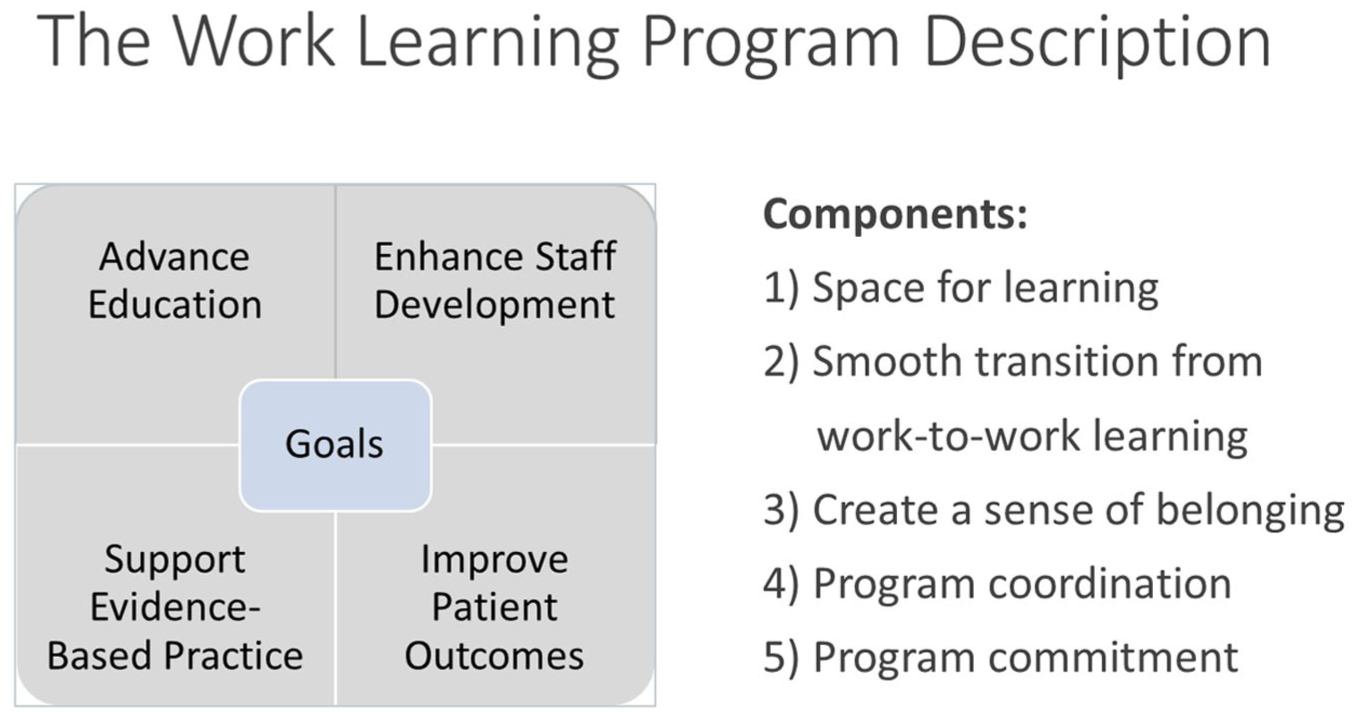
Work-Learning Program Description.
At the inception of the WLP, an orientation was held during which participants received a branded jacket and met with faculty members, the peer mentor, and other WLP students. In addition, WLP students were provided with 1-hour training sessions each semester (held during lunch time) specific to academic content (e.g., academic writing, research design, literature review, statistical analyses, and dissemination of findings). The sessions were held virtually and recorded, allowing WLP students to access training content as needed throughout the program. Moreover, peer tutoring was provided in-person weekly (ranging from 15 minutes to 1.5 hours) in the WLP room, with additional tutoring sessions available upon request for guidance on academic topics and writing sessions. For the RN to BSN program cohort, peer tutoring was provided by a single peer mentor, a graduate of the BSN program at the affiliated College of Nursing. The peer mentor received regular supervision from the program coordinator and WLP faculty to support their mentorship of the students. For the DNP cohort, peer mentorship was provided by a single student who was enrolled in the PhD program of the affiliated College of Nursing. Participants in the DNP cohort received primarily academic writing support (e.g., manuscript reviews and assignments) and DNP project support (e.g., consultation on evidence-based practice, research study designs, and statistical analysis). The DNP cohort peer mentor also received regular supervision from the project coordinator and the WLP faculty to address any mentorship issues that might arise. The peer tutors for both cohorts were co-enrolled in all courses with the WLP students and had access to all course materials and lectures, allowing them to provide timely and course-specific support.
WLP participants were further supported to submit their research or evidence-based practice projects for presentation at academic and professional conferences. Whether a student submitted a research or evidence-based practice project was based on the student’s choice of final project as a requirement of their academic program. The time span for this intervention was four semesters for the RN to BSN cohort and eight semesters for the DNP cohort. Upon graduation, a ceremony was held at the state psychiatric hospital where the WLP students received a certificate of program completion, and a scrub jacket (RN to BSN students), or a white coat (DNP students) with their credentials.
Ethical Consideration
As this project was part of a staff improvement initiative conducted at a psychiatric hospital, it was determined to be a program evaluation. It did not require additional Institutional Review Board (IRB) approval, per institutional guidelines.
Data Collection
To examine outcomes related to the WLP, several data sources were required. Participants were primarily administered surveys to rate components of the program. To assess the feasibility of the WLP, we examined outcomes related to program engagement, academic and career progress, evidence-based practice adoption, employment retention, and program costs.
Ratings of WLP Components
To determine WLP engagement, the research team developed a survey to assess the usefulness of WLP components. Specifically, participants were asked to indicate “On a scale of 0 being ‘not at all beneficial’ to 5 being ‘extremely beneficial,’ to what extent do you anticipate that the following components may enhance your experience in your DNP program through the WLP opportunity.” Participants were prompted to indicate a rating based on a description of each WLP program component and its associated resources. For example, for the smooth transition from work to work/school section, participants were asked to indicate how beneficial this component would be based on the description:
There will be dedicated faculty mentorship (2 hours) once per month upon request during the semester which will be open to all WLP students in addition to regular faculty office hours. Bridge Learning, which involves learning from the experiences of current/former students, will be available through peer tutoring. Specifically, there will be a peer tutor dedicated to assist in statistics/methods and academic writing.
Utilization of WLP Program Components
We further assessed the extent to which students used each component of the WLP as follows:
(1) Space for Learning: Use of the furnished study space at the work institution at least once per semester (yes vs. no); 2 hours per week of paid study time for RN to BSN students (yes vs. no).
(2) Smooth Transition from Work to Work Learning: Utilization of the 2 hours of faculty mentorship per month (yes vs. no), peer tutoring or mentorship for coursework and academic writing at least once per semester (yes vs. no); attending the offered training seminars either in person or virtually (yes vs. no). For the RN to BSN cohort, the designated peer tutor held weekly 1-hour open office sessions throughout each semester during convenient times for all students. These sessions provided students with drop-in academic support, including assistance with writing, course assignments, and general academic navigation. Students were also encouraged to communicate with the tutor outside scheduled sessions, and they frequently received assistance with topics. All WLP participants were also invited to attend structured seminar sessions developed in collaboration with faculty from the affiliated College of Nursing. The sessions were offered virtually and recorded to maximize accessibility for students balancing full-time employment with academic responsibilities.
(3) Creating a Sense of Belonging: “Check-in” meetings at least once per semester (yes vs. no), attending collaborative study time at least once per semester (yes vs. no), and showcasing student projects during a dedicated event at least once per academic year (yes vs. no).
(4) Providing Program Coordination and Direct Student Support: All WLP activities were managed by the WLP program coordinator (yes vs. no).
(5) Program Commitment: Use of 6 credit hours of coursework per semester (yes vs. no) and offered continued employment at the work institution upon degree completion (yes vs. no).
Academic and Career Achievement
Academic achievements were based on whether participants completed their program (yes vs. no) and the frequency of scholarly dissemination activities (i.e., presentations/publications). Career achievements were evaluated based on whether participants had any advancement in their career (i.e., a promotion/pay increase, yes vs. no).
Evidence-Based Practice Adoption
Evidence-based practice adoption was determined by the types of nursing-led evidence-based practice activities initiated by students at the state psychiatric hospital. These activities were not compulsory; rather, they were potential outcomes of participating in the intervention.
Employment Retention
Employment retention was determined by whether the participant remained employed at the psychiatric hospital for 6 months upon completion of their program.
Program Costs
The reported costs associated with the program included any funds received to support the WLP operation and students, tuition benefits, and additional student support to promote academic success during their program.
Statistical Methods
We used SPSS version 30 software to conduct descriptive statistics of frequency and means with standard deviations. No missing values and no subgroup analyses were performed.
Results
WLP Engagement
Program Participation
From a total pool of ADN-prepared RNs, 49 of 66 (75%) were employed full-time and provided direct patient care. Of these 49, 11 were eligible for the WLP, and four (36.4%) were admitted to the RN to BSN program at the University of Kentucky College of Nursing and were enrolled in the RN to BSN WLP cohort (see Figure 2 for details). Moreover, five BSN-prepared nurses who worked full-time at the hospital completed a pre-program survey to determine interest in a doctoral cohort in the WLP. Of those five, four nurses (80%) were accepted into the DNP program at the University of Kentucky College of Nursing and became the DNP WLP cohort (see Figure 3 for details). Most participants were female (75%) in both cohorts, and white (75% for the RN to BSN cohort; and 100% for the DNP cohort).
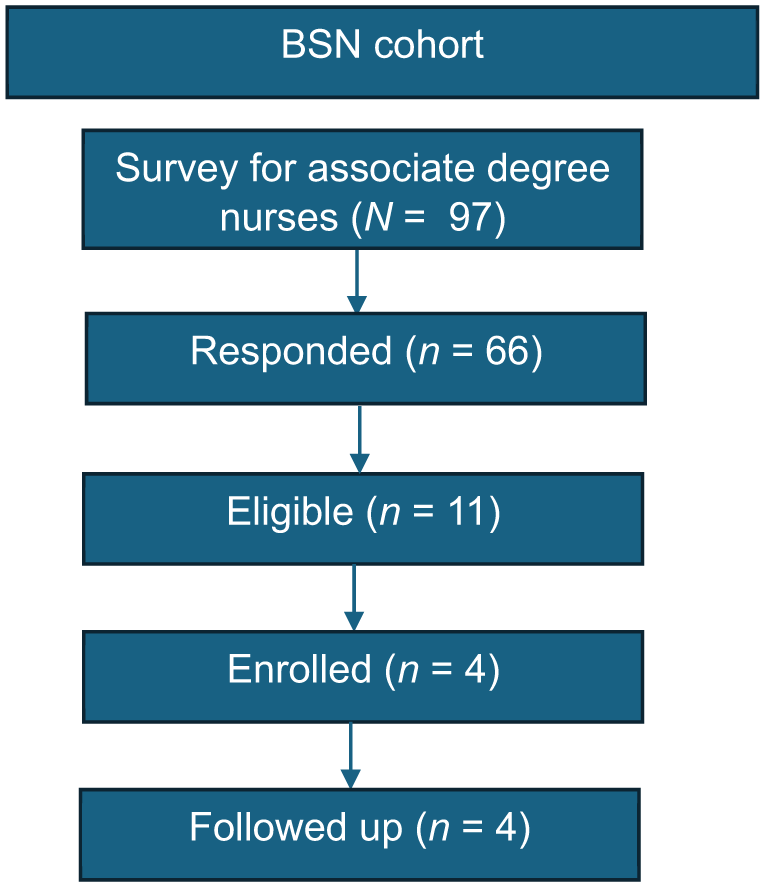
Bachelor of Science in Nursing (BSN) Participant Flow.
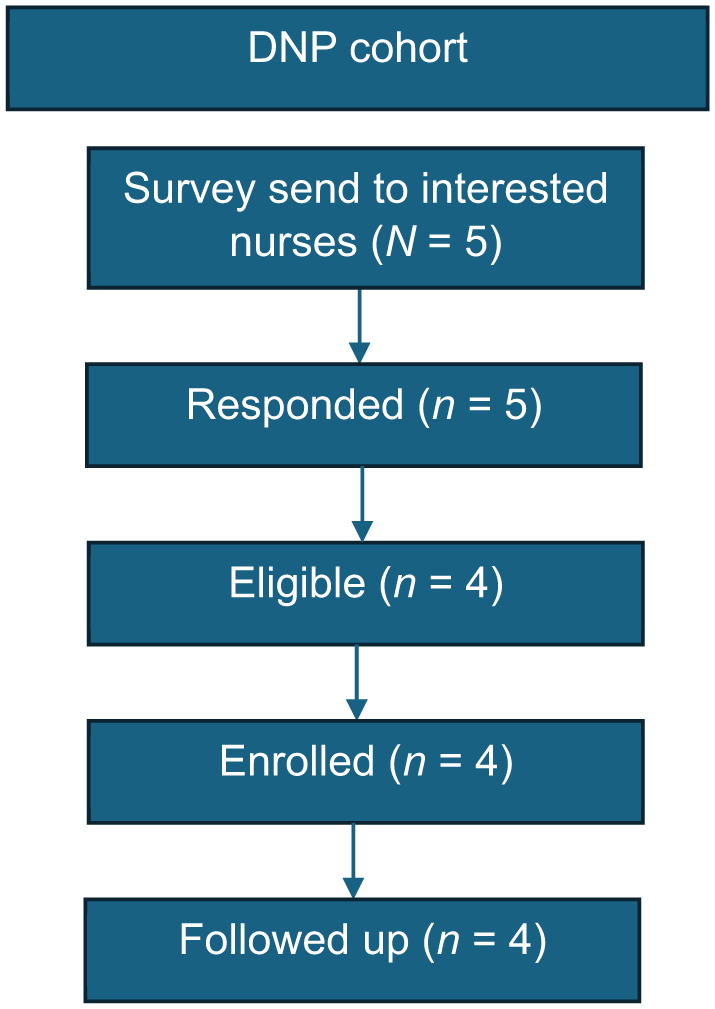
Doctor of Nursing Practice (DNP) Participant Flow.
Ratings of WLP Components
Based on the feedback from the BSN cohort, we added this element to assess the WLP component in the subsequent DNP cohort (n = 4). Across the six assessment periods, survey response rates varied. Full participation (100%) was achieved at Timepoints 1, 2, and 6, with all four students completing the surveys. Timepoint 3 had the lowest response rate, with only one student (25%) responding. Response rates for Timepoints 4 and 5 were 75%, with three out of four students completing the surveys.
Participants endorsed high ratings in the pre-program survey across all WLP components: Space for Learning (M = 4.2, SD = 0.8), Smooth Transition from Work to School/School to Work (M = 3.8, SD = 1.3), Create a Sense of Belonging (M = 4.2, SD = 0.8), Program Coordination (M = 4.4, SD = 0.6), and Program Commitment (M = 4.8, SD = 0.5). The mean scores across the program semesters for Space for Learning ranged from 3.2 (SD = 2.5) to 4.3 (SD = 0.58); the mean scores for Smooth Transition from Work to School/School to Work ranged from 3.0 (SD = 0.0) to 4.3 (SD = 0.5); the mean scores for Create a Sense of Belonging ranged from 4.0 (SD = 0.0) to 5.0 (SD = 0.0); and the mean scores for Program Coordination ranged from 4.0 (SD = 0.0) to 5.0 (SD = 0.0). Of note, scores for “Space for Learning” declined in the Spring of 2021.
Utilization of WLP Components
The results of the utilization of WLP components by each component are as follows:
(1) Space for Learning: All RN to BSN and DNP cohort students (100%) used the furnished study space at least once per semester, and three of the RN to BSN students (75%) utilized the 2 hours per week of paid study time.
(2) Smooth Transition from Work-to-Work Learning: Among the RN to BSN cohort, three (75%) utilized the 2 hours of faculty mentorship per month. In addition, these three RN to BSN students and all DNP students engaged in peer tutoring or mentorship for coursework and academic writing at least once per semester (100%), and attended training seminars, either in-person or virtually (100%). The DNP students also utilized the 2 hours of faculty mentorship for individualized mentorship regarding DNP projects and student papers.
More specifically, among the RN to BSN cohort, three of four students (75%) consistently attended the weekly 1-hour drop-in sessions with the peer mentor for academic assistance. Among them, one student also engaged regularly through email with the peer mentor, seeking support with assignments. For the DNP cohort, weekly in-person drop-in sessions were not held due to COVID-19 restrictions at the time and student preference for virtual communication. However, all four students (100%) initiated and maintained regular contact with the peer mentor via email and audio-video meetings throughout the program. Students requested support in a variety of scholarly activities, including research instrument development, IRB application preparation and revisions, developing professional presentations, and revising their scholarly work (e.g., student manuscripts). In addition, all DNP students either attended or viewed recordings of the academic seminars, including “Selecting and Designing your Doctorate of Social Work (DSW)/DNP Project” and “Scientific Writing” held by the lead faculty, and “Designing Online Research Surveys” led by the peer tutor.
(3) Creating a Sense of Belonging: All students (100%) participated in “check-in” meetings at least once per semester, and three out of four DNP students (75%) regularly collaborated with their peers during dedicated study times. Two student showcases were held, with all students demonstrating their projects.
(4) Providing Program Coordination and Direct Student Support. The WLP program coordinator successfully managed and coordinated all activities throughout the program (100%).
(5) Program Commitment. Three of four (75%) of BSN cohort students used the 6-credit-hour benefit, and all (100%) of the DNP cohort used the 18-credit-hour per year benefit for their respective programs of study. All students (100%) in both BSN and DNP cohorts were promoted at the state psychiatric hospital upon degree completion.
Academic and Career Achievement
Of the four students enrolled in the RN to BSN cohort, three (75%) successfully earned their BSN and received increased compensation consistent with BSN-level qualifications. Moreover, one graduate (25%) was promoted from a floor nurse to a nurse manager during the program.
The DNP cohort had a 100% completion rate, with three students (75%) engaged in scholarly dissemination through professional conferences or peer-reviewed publications after program completion. In total, students contributed to seven conference presentations and one peer-reviewed publication. Three students presented at a national psychiatric nursing conference, accounting for four presentations across the 2024 and 2025 annual meetings. These students also presented at a local practice and research conference sponsored by the academic-practice partnership. In addition, one student (25%) published as a first author in a peer-reviewed journal based on their DNP project. Among the graduates, 50% reported career achievements after graduation. One graduate (25%) became a nurse manager during the program, while another graduate (25%) was later promoted to a leadership position.
Employment Retention
The RN to BSN cohort had a 100% employment retention rate 6 months after graduation. The DNP cohort had a 75% employment retention rate at 6 months after graduation.
Evidence-Based Practice Adoption
All students in the RN to BSN cohort completed a capstone project that examined strategies for incorporating evidence-based practices into their work. Student topics included methods to decrease staff and patient injury, tailored therapeutic approaches for people living with severe mental illnesses, and nursing shortages and patient outcomes. One of the BSN students was accepted to present their research findings at a national psychiatric nurses’ association conference during their graduation year.
Moreover, all DNP students completed their doctoral projects, which included exploring the impact of nurse recruiters on staff shortages and nurse manager satisfaction in psychiatric facilities, improving engagement and structural empowerment through shared governance programs, evaluating employee recognition programs for nurse retention, and assessing the effects of educational training on reducing seclusion and restraint among front-line nurses and providers. Also, three of the DNP students were accepted to present their research findings at a national psychiatric nurses’ association conference during their graduation year.
Costs
Tuition assistance of up to 18 credit hours per year was provided as a benefit of full-time employment by the affiliated health care organization. The affiliated health care organization also covered personnel costs for: (1) a part-time director to deliver all aspects of the WLP, (2) a designated professor from the College of Nursing who dedicated 1 hour per week for mentorship, and (3) a peer tutor who dedicated 2 hours per week. In addition, $10,000 per cohort was allocated for WLP needs (e.g., peer tutoring, refreshments, furnishings for the dedicated study space, academic presentations, branded scrub jackets, and a graduation ceremony) by the affiliated health care organization (for the RN to BSN cohort) and the affiliated state psychiatric hospital (for the DNP cohort). Moreover, students in the RN to BSN cohort were paid up to an additional 2 hours of work time per student per week by the affiliated state psychiatric hospital for academic activities. This time was paid at 1.5 times the hourly pay, given that it was in addition to the students’ 40-hour work week. The average ADN pay rate with shift differential was used to estimate the additional worked time.
Discussion
The purpose of this study was to examine the feasibility of a WLP in terms of program engagement, educational and career achievement, adoption of evidence-based practices, employment retention of nurses working at a state psychiatric hospital, and associated costs. Our findings demonstrate that the WLP was both feasible and effective in accomplishing the objectives in our cohorts. The results align with current recommendations, which endorse enhancing the nursing workforce and subsequent practice by supporting higher education and career development (Audet et al., 2018; Graebe et al., 2022; Haegdorens et al., 2019; Porat-Dahlerbruch et al., 2022). By supporting the educational and professional development of nurses through the WLP, our study contributes valuable insights into strategies that health care organizations can implement to increase adoption of evidence-based practices, improve staff retention, and support scholarly clinical activities.
Program engagement was a critical indicator of the feasibility of the WLP, with students consistently reporting positive perceptions of the usefulness of each program component. Although participant ratings on WLP component scores were generally high, declines were observed in the “Space for Learning” component in the spring of 2021 and in the “Smooth Transition from Work-to-Work Learning” component in the spring of 2022. The declines in the “Space for Learning” component may have been due to challenges during COVID-19, when the hospital implemented stricter precautions amid the rise of more contagious strains of the virus. In addition, the lower scores on “Smooth Transition from Work-to-Work Learning” may reflect a challenge in the growth of the WLP, as a new DSW cohort was added to the program in addition to a DNP cohort. As the focus of the current study was on the nurse participants, the ratings of the DSW students were not included, but their inclusion in the WLP may have affected these ratings. Nevertheless, these are speculations at best, and a more robust understanding of the reasons for the observed reductions in scores in the WLP components (at those specific times) would require qualitative assessments to better determine causative factors.
Regarding Space for Learning, the WLP provided students with a dedicated study space within their work environment, reducing logistical barriers for nurses who balance full-time employment with academic pursuits. Such dedicated learning spaces within the health care setting may serve as a symbol of organizational support (Gruppen et al., 2019), thereby improving job satisfaction and employment retention among the nursing workforce. Regarding the Smooth Transition from Work to School/School to Work, structured transitional support mechanisms (e.g., scheduled study times, mentorship, and peer tutoring) were embedded to help the WLP students navigate their dual roles. Mentorship resources are crucial to address the specific challenges, especially for new nurses experiencing role shifts as they manage both their academic and clinical roles (Gularte-Rinaldo et al., 2023; Hallaran et al., 2023). Regarding Create a Sense of Belonging, the WLP offered team-building activities, study groups, and mentorship opportunities, helping students form bonds with both peers and mentors. Promoting social integration and support within educational programs is associated with increased student motivation and commitment to completing their program (Tinto, 2017), which may be especially important among non-traditional learners such as working nurses. Finally, regarding Program Coordination, a dedicated program coordinator played a central role in ensuring that all aspects of the WLP were available to students and in maintaining communication with WLP students and academic faculty. Such coordination is critical in helping students navigate their program of study, allowing them to focus on their academic and clinical responsibilities (Robertson et al., 2021). Hence, health care organizations can consider adopting structured learning environments and transitional support systems, such as a WLP, to support the professional development of their nursing workforce.
The outcomes of our study indicate that the WLP contributed to participants' academic and career achievement, demonstrating its feasibility in facilitating professional advancement among nurses. For the RN to BSN cohort, we observed a 75% completion rate with three out of four students earning their BSN and receiving pay commensurate with their educational experience. Similarly, the DNP cohort demonstrated a 100% completion rate, with all participants completing their DNP program. Notably, some graduates from both cohorts obtained managerial and director positions during or upon completing their programs, highlighting the crucial role that advanced education plays in preparing nurses for leadership. As nurses strive for opportunities to continue professional development throughout their careers, health care organizations may promote workforce development by facilitating academic-practice initiatives that offer structured support and resources (Hakvoort et al., 2022).
The adoption of research- or evidence-based practices among the WLP students was another key outcome. The RN to BSN cohort completed capstone projects examining practical strategies to incorporate research or evidence-based practices into their work settings, while the DNP cohort further advanced evidence-based practices through their doctoral projects, including the development and implementation of a quality health care intervention. In addition to enhancing the clinical skills and knowledge of WLP students, they also contributed to advancing research and evidence-based practices at their state psychiatric hospital through the dissemination of findings (e.g., at professional conferences). The WLP activities align with the growing emphasis on preparing nurses with advanced competencies to improve clinical outcomes by applying research and best practices (Haegdorens et al., 2019).
The WLP also supports continued employment. Overall, we observed an 87.5% retention rate (i.e., graduates remained employed at the state psychiatric hospital for at least 6 months) among those who completed the WLP, a significant accomplishment as compared to the national retention rate of 79.3% (NSI Nursing Solutions, 2024), suggesting that educational and career advancement programs may reduce staff turnover rates. Our findings are consistent with existing literature, which suggests that nurses who are provided with academic and career development opportunities experience greater job satisfaction and are more likely to remain with their health care organization (Marufu et al., 2021; Pressley & Garside, 2023). By investing in workforce education, health care organizations can build a more stable, committed nursing staff, ultimately improving patient care and organizational outcomes.
Finally, the successful implementation of our WLP required financial investments from an existing academic-practice partnership, which addressed upfront costs and maintenance of the WLP. For instance, tuition assistance was available to full-time employees as a benefit to alleviate the financial strains of returning to school, which is often a barrier for nurses who seek higher education (Schwarz & Leibold, 2014; Skillman et al., 2022). Moreover, a key component of the WLP's success was ensuring adequate personnel to support its objectives. Allocating funds for program personnel enabled staff to immediately address student needs (e.g., assistance with scholarly writing, development of research components, and doctoral project development) to support their success. Thus, implementing WLPs can require significant financial investments in tuition assistance/reimbursement and personnel support. Although the costs of implementing WLPs may require a significant financial investment, health care organizations should consider the long-term benefits to their operational costs and overall clinical outcomes. For instance, in this study, the adoption of research- or evidence-based practices was a key outcome, and a recent review of the literature found that adopting such practices can improve patient outcomes and return on investment (Connor et al., 2023). However, given the variations in resources available in different settings, it may be important to consider external funding options (e.g., educational or workforce development grants or donations) for long-term viability. In addition, we recommend involving alumni in ongoing programming to support future cohorts (e.g., alumni as mentors and program supports) may be an important aspect of strengthening the sustainability of such WLPs.
Of note, the academic-practice partnership is a foundational element of the WLP, and establishing such a partnership can vary in complexity depending on the existing relationship between health care organizations and educational institutions, as well as organizational priorities. Some of these complexities posed challenges during implementation. For example, from the academic partner (i.e., College of Nursing), the main challenges included providing faculty time to be engaged in the WLP needs and 1-hour workshops/lectures. For the hospital system, the main challenge was determining the logistical aspects of supporting the salaries of the faculty members dedicated to the program (i.e., the hospital system provided approximately 10% of the salary reimbursement for the program leader). For the psychiatric hospital, the key challenges were determining how to reimburse staff time during the WLP (i.e., WLP students were paid for an additional 2 hours during the week for time spent on coursework), providing the necessary dedicated space for students (i.e., the dedicated learning space), and hospital space to accommodate the College of Nursing staff (i.e., faculty, peer mentor, and program coordinator) engaged in the WLP. Despite such challenges, forming a new partnership can be feasible, particularly when both parties share a commitment to workforce development, education, and improving patient care outcomes. Given the positive outcomes in our study, we recommend implementing future studies to further evaluate the effectiveness and scalability of the WLP model in different institutions. Moreover, we recommend conducting a follow-up study with a larger, more diverse sample to enable statistical comparisons and broader generalizability. We further recommend extending the study period to allow for a more comprehensive understanding of long-term outcomes, including career progression, retention, and impact on patient care.
This study has several limitations that should be acknowledged. First, the primary outcome measures used to evaluate the study were investigator-developed and lacked established reliability or validity, potentially affecting the study's internal validity. This is an ongoing challenge observed in training program evaluation studies, as has been acknowledged in a recent systematic review (Shewchuk et al., 2023). Recommendations include the need for more rigorous, standardized measures to evaluate the outcomes of training programs (Jacob et al., 2020).
Second, we did not examine measures of program fidelity beyond participant engagement. For training programs, measures of program fidelity should include assessments of adherence, dosage, intervention delivery quality, participant responsiveness, and program differentiation (An et al., 2020). Future studies should incorporate such measures to strengthen the program's evaluation.
Third, the sample sizes were small for both cohorts and may not accurately represent the characteristics of the national nursing workforce, limiting generalizability. Another issue affecting generalizability is that the study was conducted at a single state psychiatric hospital, which may not reflect the experiences of nurses in different specialties, work settings, or geographic locations. In addition, we conducted this study within a health care organization that already had an existing academic-practice partnership, which facilitated the ease of the WLP implementation. This may further limit the generalizability and applicability to other organizations without an academic-practice relationship.
Finally, data on WLP component ratings among the BSN cohort were not collected, which may introduce a selection bias (related to only having DNP cohort ratings) and limit the ability to evaluate WLP components across different educational levels fully. In fact, it was after the completion of the BSN cohort that an examination of the WLP components was recommended as part of the WLP implementation. In terms of dedicated space at work, all participants utilized the study room at some point (both BSN and DNP students). However, we did not track how often participants came in to use the room on their own time. For mentorship and training to help students transition from work to school, participants were provided 2 hours per month of faculty mentorship. These sessions were not mandatory and were offered based on student availability; however, we did not keep track of how many students attended. Furthermore, although team-building activities and study sessions were not mandatory, they involved lunches, impromptu get-togethers, and self-directed study sessions in the dedicated space. For the dedicated program coordinator, this component was a core feature of the program. Finally, for the resources (i.e., tuition assistance, course materials, refreshments, and branded apparel), all participants received all resources. Future research should monitor all parts of the intervention closely so researchers can better assess whether it was implemented as intended (i.e., with high fidelity).
Conclusion
The findings from our study indicate that it is feasible to implement a WLP at a state psychiatric hospital to support academic and career achievements, evidence-based practice adoption, and employment retention among nurses. For health care organizations, investing in WLPs not only strengthens the nursing workforce but also supports organizational goals by promoting job satisfaction, preparing their nurses for leadership positions, improving evidence-based practices, and enhancing patient care outcomes. Although there are initial and ongoing costs associated with WLP implementation, these costs may be a worthwhile investment, as they can help health care organizations enhance the quality of care delivered by their nursing workforce and foster a culture of continuous learning and improvement. Overall, the WLP is a viable framework for enhancing workforce development and improving health care delivery.
Footnotes
Acknowledgements
Advancing effective and innovative strategies to support academic and career achievements, evidence-based practice adoption, and strong nursing employment retention through a state psychiatric hospital’s academic-practice partnership would not be possible without the support of UK HealthCare’s Vice President for Hospital Operations, Colleen Swartz, DNP, MSN, MBA, RN, NEA-BC, FNAP.
Author Contributions
All authors contributed to the conception or design of the study or to the acquisition, analysis, or interpretation of the data. All authors drafted the manuscript, or critically revised the manuscript, and gave final approval of the version that was submitted for publication. All authors agree to be accountable for all aspects of the work, ensuring integrity and accuracy.
Declaration of Conflicting Interests
The authors declared no potential conflicts of interest with respect to the research, authorship, and/or publication of this article.
Funding
The authors did not receive financial support for the research, authorship, or publication of this article.
