







Abstract
This study investigated the relationship between health information-seeking behavior (HISB), digital health literacy, and fear of COVID-19 among Greek nursing staff during the pandemic. Utilizing a cross-sectional design grounded in Wilson's Model of Information-Seeking Behavior, a structured questionnaire was administered to 120 licensed professionals at a regional general hospital. The primary objective was to examine how informational needs and literacy levels correlated with psychological responses, specifically the fear of the virus. Results indicated that nursing staff were highly motivated to seek information regarding COVID-19 treatments and patient protocols. Younger and less experienced staff favored official sources, such as journals and formal training. While overall levels of fear of COVID-19 were generally low, significant variations emerged based on demographics; male staff and those aged over 51 reported higher anxiety. Furthermore, fear of COVID-19 was found to be negatively correlated with satisfaction with available information. These findings emphasized the necessity of empowering digital health literacy and tailoring informational resources to mitigate fear and enhance professional preparedness during public health crises.
Keywords
Practice and Education, Policy, Professional Development, Future Research
Health-care institutions should prioritize strengthening nurses’ digital health information literacy through targeted training to ensure they can identify and utilize official sources, which directly improves the quality and safety of patient education. National health authorities should develop regulated communication strategies and campaigns to combat misinformation (“infodemics”), providing information in comprehensible language tailored to specific professional groups. Support systems and information resources should be tailored to demographic and experiential variations, as younger nurses and those in supervisory roles demonstrate distinct information-seeking needs and source preferences. There is a need for large-scale, randomized studies across diverse geographic regions to further examine the underlying links between health-care professionals’ digital literacy, psychological factors like fear, and their clinical response to public health crises.
Nurses comprise the largest percentage of health-care professionals globally, accounting for approximately 59% of the health workforce (World Health Organization [WHO], 2020). Besides assisting their patients, they tend as well to patients’ relatives in accessing and evaluating the information they receive, contributing to providing quality health-care services, all the while enhancing equitable access to internet resources (Kostagiolas et al., 2018). Nurses’ ability to handle nursing information adequately is crucial for the successful application of systematic clinical information and the refinement of patient safety in computerized environments. Nurses ought to promote acceptance and usage of information technology to empower the capabilities of their profession (Brown et al., 2020; Farzandipour et al., 2021; Wu et al., 2023).
Over the previous years, the emergence of a novel virus that mainly affects the respiratory system has created new information needs to address the viral infection triggered. Officially, COVID-19 was rendered a pandemic, leading consequently to an upsurge in internet searches and in the relevant information circulated; this upsurge was referred to as an “infodemic” (Cuan-Baltazar et al., 2020; Espina & Spracklin, 2022). Timeliness and accuracy of information about the virus were fundamental in mitigating further spread and in combating the disease itself, both for the public and for the scientific community (Hua & Shaw, 2020). For the public, the internet has been acknowledged as the most popular source of information regarding the causes of the disease and patients’ intervention models (National Research Council [US] Committee on Enhancing the Internet for Health Applications: Technical Requirements and Implementation Strategies, 2000). In addition, traditional mass media channels, such as television, newspapers, or radio, comprise important information sources, while people obtained information as well through their friends or relatives and health-care professionals. However, repeated exposure to information was found to increase stress and uncertainty (Garfin et al., 2020).
Several studies highlighted the questionable quality of nonscientific health information circulated through numerous websites and social media outlets such as Twitter and YouTube (Espina & Spracklin, 2022; Kouzy et al., 2024; Li et al., 2020; Shimizu, 2020). COVID-19, as a newly emerging disease, was characterized by the lack of available information about it, leading social media to become the dominant information source not only for the public but also for health-care professionals (Glasdam et al., 2022). A worldwide survey found that 61% of health-care professionals, including nurses and physicians, used social media as their primary information source (Bhagavathula et al., 2020). Therefore, when navigating the internet, nurses need to be able to select from a wide range of information sources and critically assess their reliability as well as the accuracy of the arguments presented (Barzilai & Zohar, 2012; Chitha et al., 2022; Zigdon et al., 2020).
According to Amit Aharon et al. (2021), until 2020, only a few studies had focused on nurses’ information-seeking behavior, consistently showing that health-care practitioners experience many difficulties in evaluating websites. An evaluation of internet search behaviors among a cohort of 20 nurses in the Netherlands showed that they perceived information as complete and relevant only if it supported their existing practices rather than considering the level of source expertise, while a study in Israel concluded that nurses with high self-perceived knowledge within a given domain tended to retrieve health information from more credible websites compared to nurses with low knowledge who more frequently based their knowledge on websites with questionable credibility (Barnoy et al., 2011; Verhoeven et al., 2010).
An online survey via Facebook studied the correlation between respondents’ information sources and their confidence in coping with the disease (Wang et al., 2020). Health-care professionals were found to favor the internet as their main information source, followed by traditional sources and formal educational courses. The courses increased their confidence in dealing with the pandemic, as opposed to the uncertainty that led to physical and mental exhaustion (Wang et al., 2020). A corresponding study by Ko et al. (2020) investigated the correlation between information sources and mental wellbeing, observing that health-care professionals attending formal online courses manifested enhanced mental wellbeing, while the misinformation circulated through the internet inflicted confusion and chaos (Ko et al., 2020).
Bhagavathula et al. (2020) explored health-care professionals’ knowledge about COVID-19, revealing deficits, yet highlighting their positive stance toward prevention and transmission; 61% of those who participated in the study reported using social media as an information source, whereas 33% used governmental websites. Similar were the results of a study by El-Moshed et al. (2021) investigating nurses’ understanding of and preparedness for the COVID-19 pandemic. More than 80% of the participants were knowledgeable about this imminent threat, acknowledging their risk of infection; half relied on websites from governments and international organizations for information. These findings indicate that the relevant updates published by health authorities had a positive effect on health-care professionals’ level of knowledge. Additionally, the significant gap between the amount of available information and the depth of professionals’ knowledge, particularly about the transmission and incubation period of the virus, was contrary to their inaccurate knowledge regarding administration of antiviral medications and/or vaccinations (Bhagavathula et al., 2020).
Tran et al. (2020) investigated the coverage of information sources health-care professionals accessed and the consequences of their application. They reported that while a high percentage of participants were aware of clinical and pathological characteristics of COVID-19 (76%–82%), awareness of responsibilities of individuals and communities for the prevention and control of COVID-19 (65%) and socioeconomic consequences of COVID-19 (69%) was significantly lower. Additionally, Amit Aharon et al. (2021) found that nurses’ knowledge of preventive behaviors was significantly higher than that of the general public. Given the importance of evaluating information's reliability, these authors proposed empowering information literacy skills and encouraging the spread of scientific knowledge about COVID-19 (Amit Aharon et al., 2021).
A study by Elsayed et al. (2025) among 386 nurses in 52 Egyptian hospitals during the COVID-19 pandemic investigated their underlying information needs as a way of enhancing preparedness planning. In this study, 44% of participants reported seeking information to increase their knowledge in dealing with the pandemic, while 76% were most likely to rely on internet websites such as those of the World Health Organization (WHO), the Egyptian Ministry of Health, and the Centers for Disease Control and Prevention (CDC). Structural barriers to information-seeking were identified, with “lack of time” being the most prominent (48%) (Elsayed et al., 2025).
This study investigated the health information-seeking behavior of nursing staff and its relationship to the fear of COVID-19. Specifically, we examined how information needs, source selection, and digital health literacy levels interacted with the psychological impact of the pandemic. By applying Wilson's Model of Information-Seeking Behavior, this research sought to provide a comprehensive understanding of how professional information management can influence fear levels in a hospital setting.
Theoretical Framework
The theoretical analysis was based on Wilson's behavioral framework, which supports individuals’ engagement in information-seeking behaviors to satisfy their information needs (Wilson, 2006). It was as well-informed on three theories concerning information-seeking behavior: the stress-coping theory that explains why some needs not lead to information retrieval, the risk-reward theory that unriddles from which sources the individual makes the most use of, and the social learning theory, that presents self-efficacy guiding the user toward the desired results (Wilson, 1997).
Within the context of this study, information-seeking is linked to information literacy, along with fear derived from pandemic management due to information deficits. Nurses manifest specific information needs and make use of traditional or digital sources to address them, while several psychological, environmental, and demographic barriers among others, impede them from meeting said needs. Figure 1 depicts the theoretical implications of this study: nurses present with information needs concerning pandemic management, including, signs and symptoms of the disease, potential treatment regimens and the treatment itself, disease prevention through vaccination, and linkages with underlying comorbidities. These needs urge individuals to select one or more information sources through which they attempt to satisfy their needs. These sources can be official and credible, such as academic or state institutions’ websites, or unofficial and less reliable, such as social media outlets, mass media channels, and search engines. The way in which information will be retrieved is anticipated to be affected by various barriers, lack of time, restricted information literacy skills, and access restrictions. Eventually, a positive or negative outcome in the satisfaction of the need will be attained.
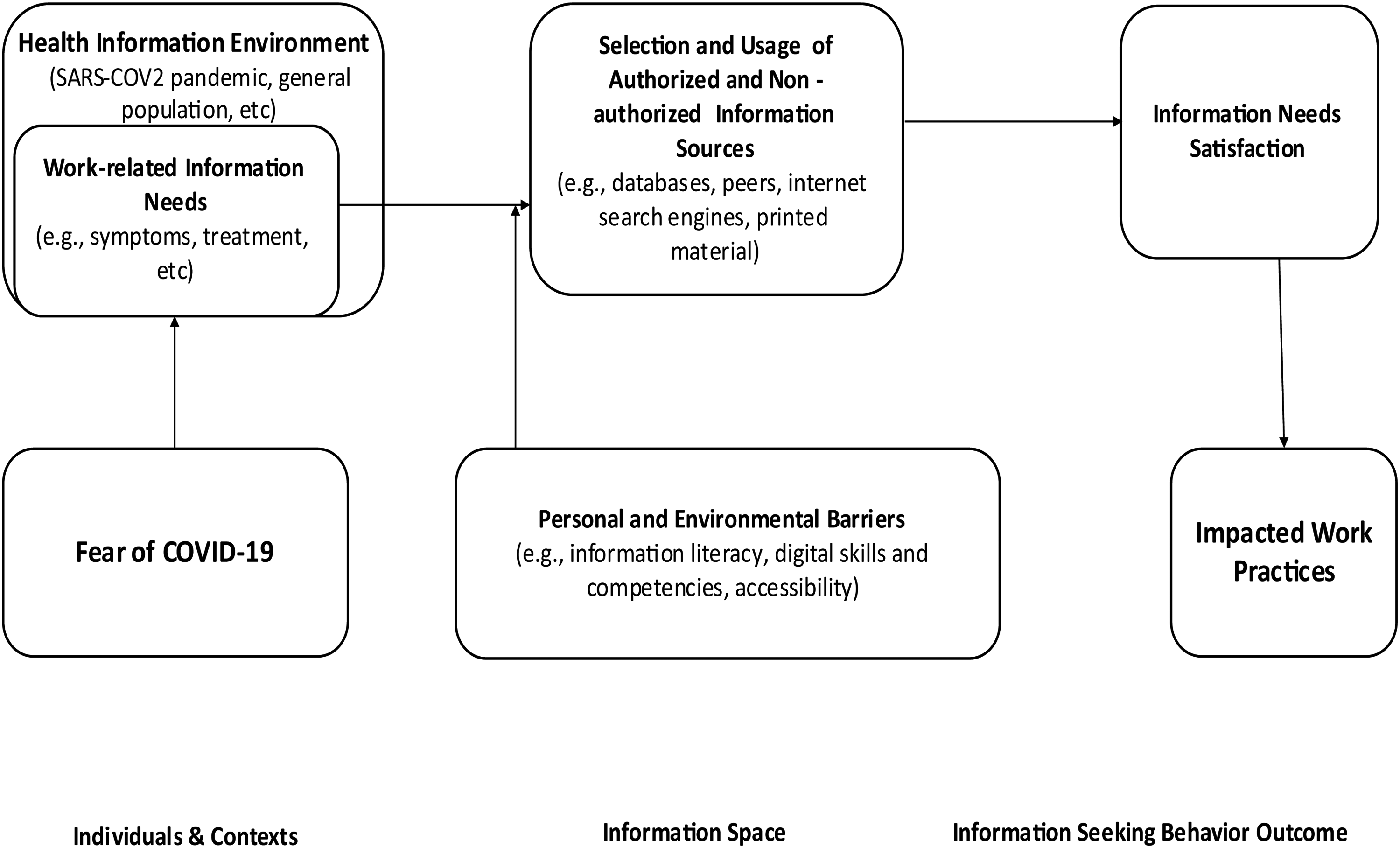
Adaptation of Wilson's Model of Information-Seeking Behavior (2006).
Table 1 details our adaptation of Wilson's Model of Information-Seeking Behavior (2006) to the study's population. The items involved in Wilson's model dimensions (portrayed in Table 1) to the information-seeking were obtained by exploring previous studies (Amit Aharon et al., 2021; Kostagiolas et al., 2021; 2018; Norman & Skinner, 2006). In addition to the health information-seeking behavior constructs detailed in Table 1, another three questionnaire dimensions were included, that is, demographics (sex, age, marital status, education level, employment status, and working area/workplace/work experience), nurses’ digital health information literacy levels (eHEALS-the knowledge of work-related information available on the internet through various sources, how to retrieve useful pieces of it while finding the answers they seek or use their skills to evaluate the information obtained that is), and fear of COVID-19.
Questionnaire Dimensions and Measurement Items.
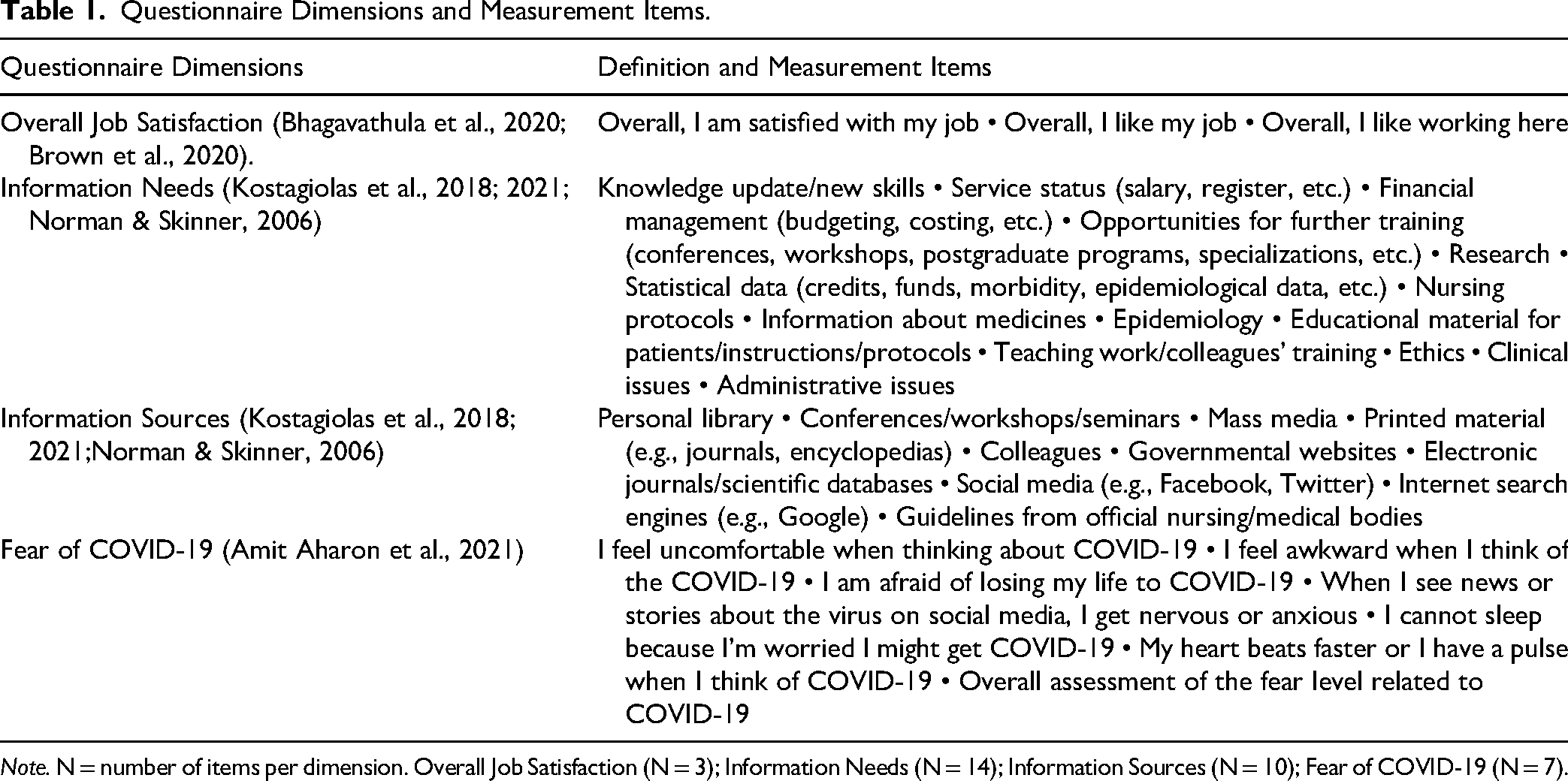
Note. N = number of items per dimension. Overall Job Satisfaction (N = 3); Information Needs (N = 14); Information Sources (N = 10); Fear of COVID-19 (N = 7).
Methods
Study Design
This cross-sectional survey examined the information-seeking behaviors of 120 nursing staff members working in a secondary-level regional general hospital in Greece (Katerini General Hospital). This facility provides specialized medical and nursing care to the local prefecture. The survey took place in February 2021.
Sampling was administered via an online survey platform. The researcher, a member of the hospital's nursing staff, distributed the questionnaire to peers with no hierarchical relationship. Participation was restricted to staff active during the study period; therefore, the only exclusion criteria applied was being on long-term leave or secondment to other health-care services. A total of 120 individuals completed the survey (100 women and 20 men).
Questionnaire Development and Data Analysis
The research tool consisted of four distinct sections. A five-point Likert scale was used to measure the frequency of various information needs (14 items), the satisfaction levels of information source deployment (10 items), and fear of COVID-19 (7 items). To ensure the suitability of the survey, Bartlett's test of sphericity (p < .005) and the Kaiser–Meyer–Olkin index (value of 0.6 or above) were calculated. Scale reliability was assessed using Cronbach's alpha. Exploratory factor analysis (EFA) was employed, using principal component analysis (PCA) and varimax orthogonal rotation to group variables for each construct.
Statistical analysis was performed using SPSS version 27.0. Descriptive statistics reported demographics (frequencies, valid percentages, median, and mode). Normality was assessed via Kolmogorov–Smirnov and Shapiro–Wilk tests (p < .05), which indicated that the variables did not follow a normal distribution. Consequently, nonparametric tests, including the Mann–Whitney U test, Kruskal–Wallis H-test, and Dwass–Steel–Critchlow–Fligner (DSCF) test for post hoc pairwise comparisons, were applied. Finally, Pearson's coefficient investigated correlations among variables related to the fear of COVID-19.
Ethical Considerations
The study received approval from the hospital's Scientific Council (Approval Number: 19591/22-12-2020). Potential participants were informed that their responses would be anonymized and used solely for research purposes. They were also notified that participation was voluntary and that they could withdraw from the survey at any point without penalty. Anonymized data were secured in a password-protected cloud environment, accessible only to the research team. The dataset will be kept for 5 years following the completion of the survey.
Results
Demographics of Participants
Table 2 summarizes the demographic characteristics of the participants: 120 nurses out of the 256 working at Katerini General Hospital completed the questionnaire (Response rate: 46.86%). Participants were mostly female (83.3%), aged 41 to 50 years (47.5%) and married (69.2%). Regarding education, 45.0% held a technical degree and 31.7% had completed high school.
Demographic Characteristics of Participants.
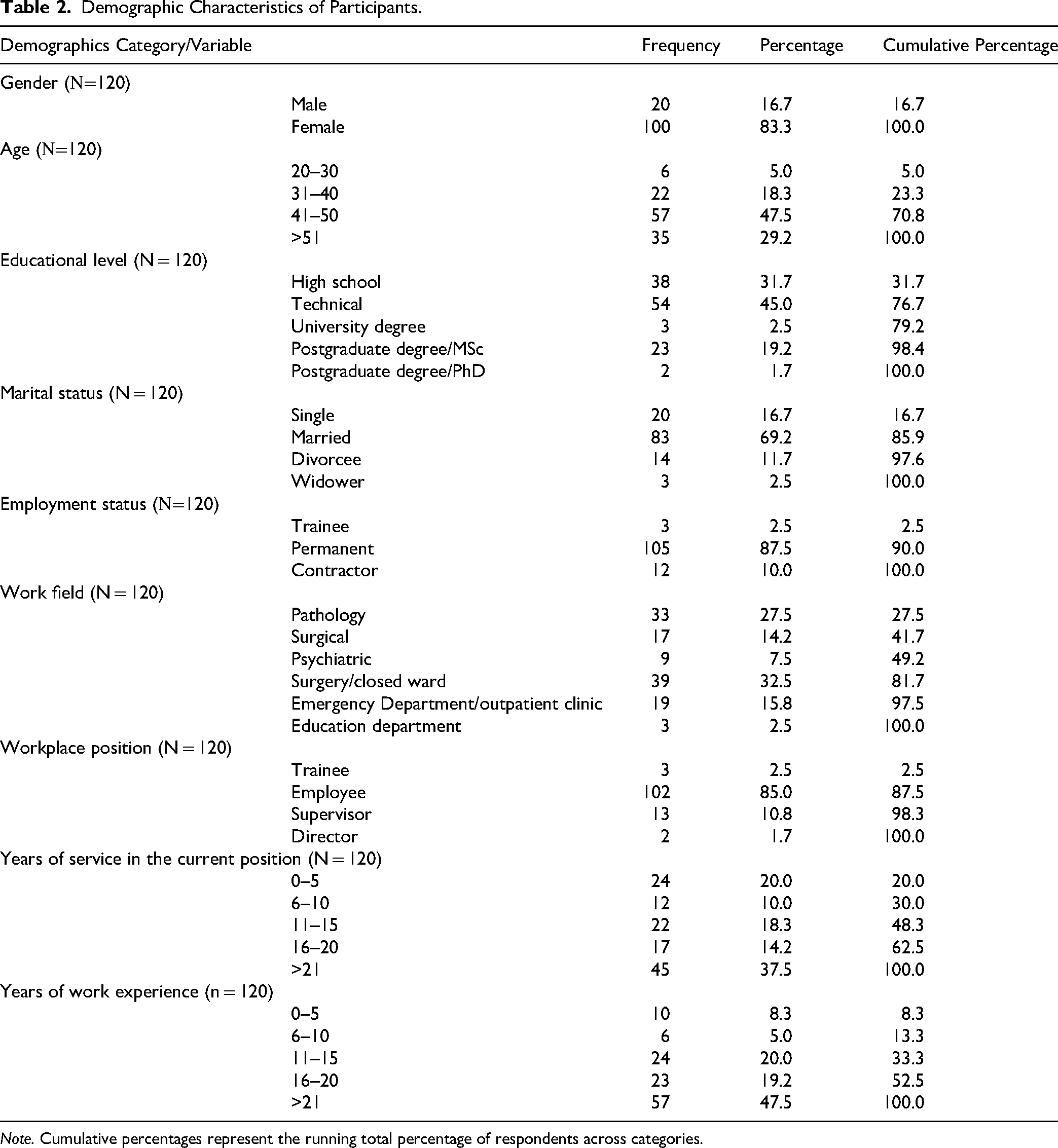
Note. Cumulative percentages represent the running total percentage of respondents across categories.
Job Satisfaction
Regarding overall job satisfaction (Table 3), 45% of participants reported being satisfied with their work, and 20.8% reported being very satisfied (Median = 4). The Kruskal–Wallis test indicated a significant difference among educational level groups, H(4) = 11.89, p = .018. Post hoc pairwise comparisons revealed a marginally significant difference between university graduates (mean rank = 108.00) and high school graduates (mean rank = 49.28), W = 3.775, p = .059.
Participant Ratings of Overall Job Satisfaction (N = 120).

Note. Participants rated their overall job satisfaction on a five-point Likert scale (1 = dissatisfied, 2 = rather dissatisfied, 3 = neither satisfied nor dissatisfied, 4 = satisfied, 5 = very satisfied). Values represent frequency and percentage.
Nurses’ Information Needs
Nurses’ information needs (Table 4) revolved mainly around “Information about medicines” and “Educational material for patients/Instructions/Protocols” (Median = 4), with the former showing a significant association with employment status, H(2) = 7.62, p = .022, as the “Permanent” group (mean rank = 82.67) expressed greater interest than the “Trainees” (mean rank = 57.33), W = 3.53, p = .033. Furthermore, “Teaching work/Colleagues’ education” was found to be significantly associated with workplace position, H(3) = 20.98, p < .001, with “Supervisors” (mean rank = 89.54) showing greater interest than “Employees” (mean rank = 54.69), W = 5.005, p = .002. Similarly, the same pair was found to differ significantly concerning “Administrative issues,” H(3) = 13.74, p = .003, with “Supervisors” indicating greater engagement with them (mean rank = 88.38) compared to “Employees” (mean rank = 57.07), W = 4.452, p = .009. “Clinical issues” were found to be significantly associated with overall years of experience, H(4) = 13.41, p = .009. Specifically, a significant difference was observed between those with 11 to 15 years of experience (mean rank = 43.67) and those with more than 21 years (mean rank = 67.26), W = 3.947, p = .042, as well as a marginal difference compared to those with 0 to 5 years (mean rank = 81.00), W = –3.831, p = .053.
Frequency of Seeking Information to Meet Information Needs (N = 120).
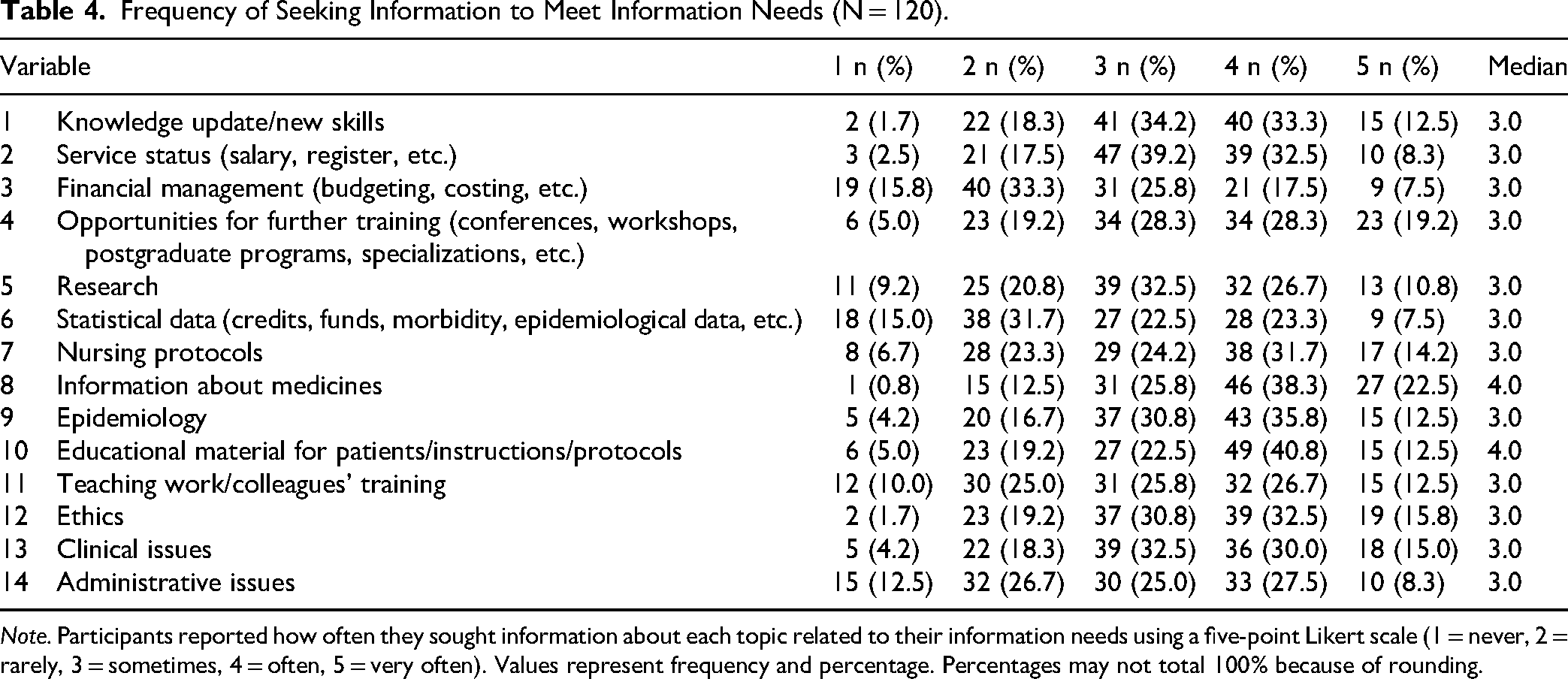
Note. Participants reported how often they sought information about each topic related to their information needs using a five-point Likert scale (1 = never, 2 = rarely, 3 = sometimes, 4 = often, 5 = very often). Values represent frequency and percentage. Percentages may not total 100% because of rounding.
Satisfaction with Information Sources
Table 5 portrays satisfaction levels associated with the information sources listed in the questionnaire. The variables “Electronic journals/Scientific databases,” “Internet search engines (e.g., Google),” and “Official protocols and guidelines” were rated as the most satisfying, with median scores ranging from 3.5 to 4. A Kruskal–Wallis H-test indicated significant differences of “Conferences /Workshops/Seminars” among “Years of overall experience” groups, H(4) = 9.58, p = .048 while post hoc pairwise comparisons showed that professionals with 0 to 5 years of experience reported significantly higher satisfaction (mean rank = 90.25) than those with >21 years (mean rank = 56.69), W = −4.078, p = .032. No other pairwise comparisons reached statistical significance. However, for the same pair of overall experience groups—representing the two ends of the overall experience scale—post hoc comparisons also revealed significantly higher satisfaction among professionals with 0 to 5 years of experience regarding specific sources of information. These included “Colleagues,” H(4) = 12.72, p = .013; W = –4.378, p = .017; “Electronic Journals/Scientific Databases,” H(4) = 10.18, p = .037; W = –4.175, p = .026; and “Printed Material,” H(4) = 12.46, p = .014; W = –4.144, p = .028. The corresponding mean ranks for the 0 to 5 years group were 90.75, 89.95, and 81.5, respectively, compared to 56.45, 55.21, and 54.71 for the >21 years group. Furthermore, those aged 20 to 30 appeared significantly more satisfied with “Conferences/Workshops/Seminars” than all three older age groups, H(3) = 11.03, p = .012. Their mean rank was 103.50, compared to 60.34 for the 31 to 40 age group (W = –4.378, p = 0.029), 57.46 for the 41 to 50 age group (W = –4.506, p = .008), and 58.17 for those over 51 years (W = –4.563, p = .007). No statistically significant differences in satisfaction were found among any of the study's grouping characteristics regarding the use of “Social Media,” “Search Engines (e.g., Google),” or “Personal Library” as sources of information.
Participant Satisfaction With Information Sources and Overall Satisfaction With Information (N = 120).
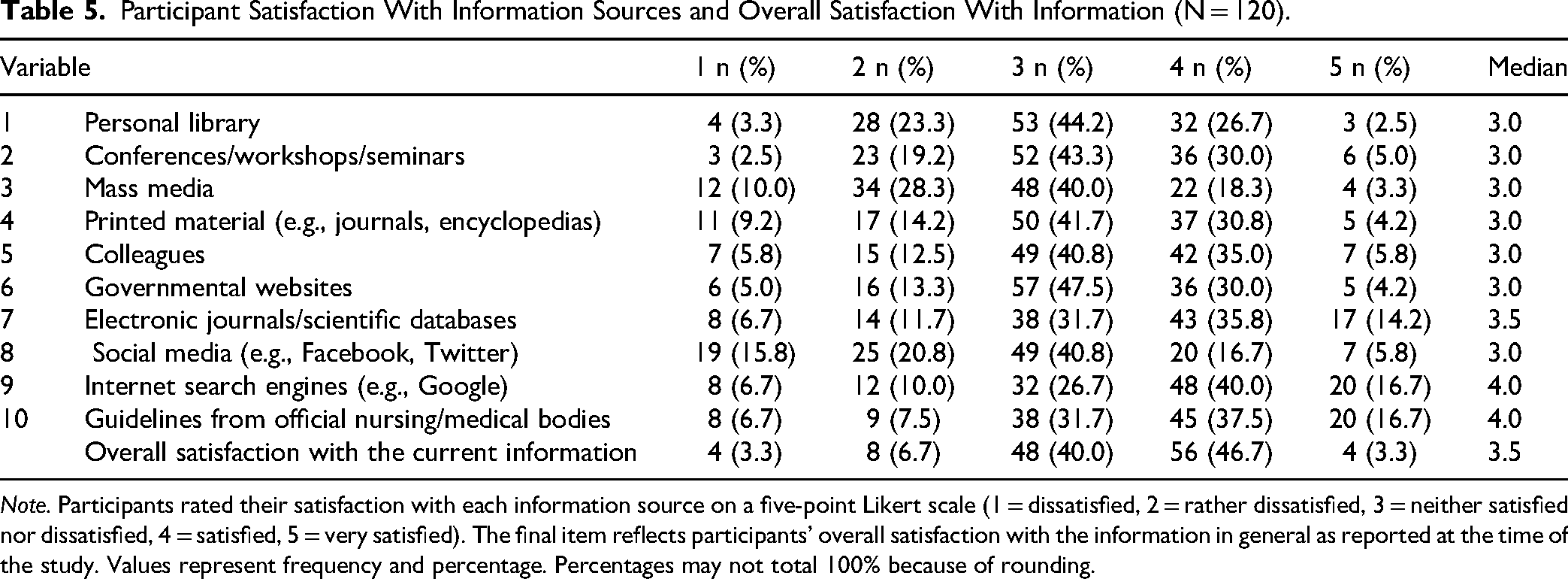
Note. Participants rated their satisfaction with each information source on a five-point Likert scale (1 = dissatisfied, 2 = rather dissatisfied, 3 = neither satisfied nor dissatisfied, 4 = satisfied, 5 = very satisfied). The final item reflects participants’ overall satisfaction with the information in general as reported at the time of the study. Values represent frequency and percentage. Percentages may not total 100% because of rounding.
Fear of COVID-19
Table 6 depicts fear of COVID-19 descriptives, showing that fear levels were generally moderate to low, with item-specific medians of 2 or 3 on a five-point Likert scale. It is worth noting that the overall median across all fear-related items was 2, indicating that participants tended to report infrequent experiences of fear. At the item-specific level, a Mann–Whitney U test showed that men reported “feeling more awkward when thinking about the virus” (mean rank = 74.18) than women (mean rank = 57.77), U = 727, p = .038. A Kruskal–Wallis H-test revealed that participants with 16 to 20 years of overall experience reported feeling more “afraid of losing their lives” (mean rank = 75.63) compared to those with 1 to 5 years of experience (mean rank = 38.50), H(4) = 10.29, p = .036; W = 4.290, p = .024. The overall “Fear of COVID-19” was found to deviate among the five “years in current work placement” groups, H(4) = 10.40, p = .034 (mean ranks = 45.19, 67.71, 71.00, 71.18, 57.31). While no pairwise comparisons reached significance, differences between the 0 to 5 years group versus the 11 to 15 (p = .065) as well as the 16 to 20 years (p = .084) groups approached significance.
Frequency of Fear-Related Reactions to COVID-19 (N = 120).
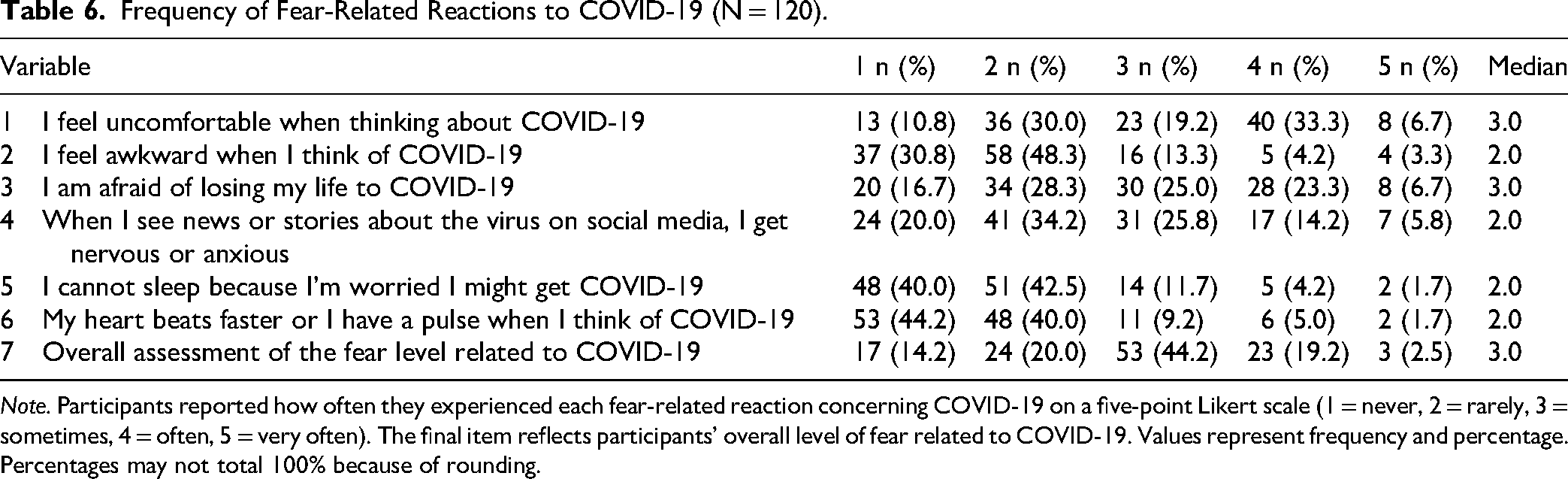
Note. Participants reported how often they experienced each fear-related reaction concerning COVID-19 on a five-point Likert scale (1 = never, 2 = rarely, 3 = sometimes, 4 = often, 5 = very often). The final item reflects participants’ overall level of fear related to COVID-19. Values represent frequency and percentage. Percentages may not total 100% because of rounding.
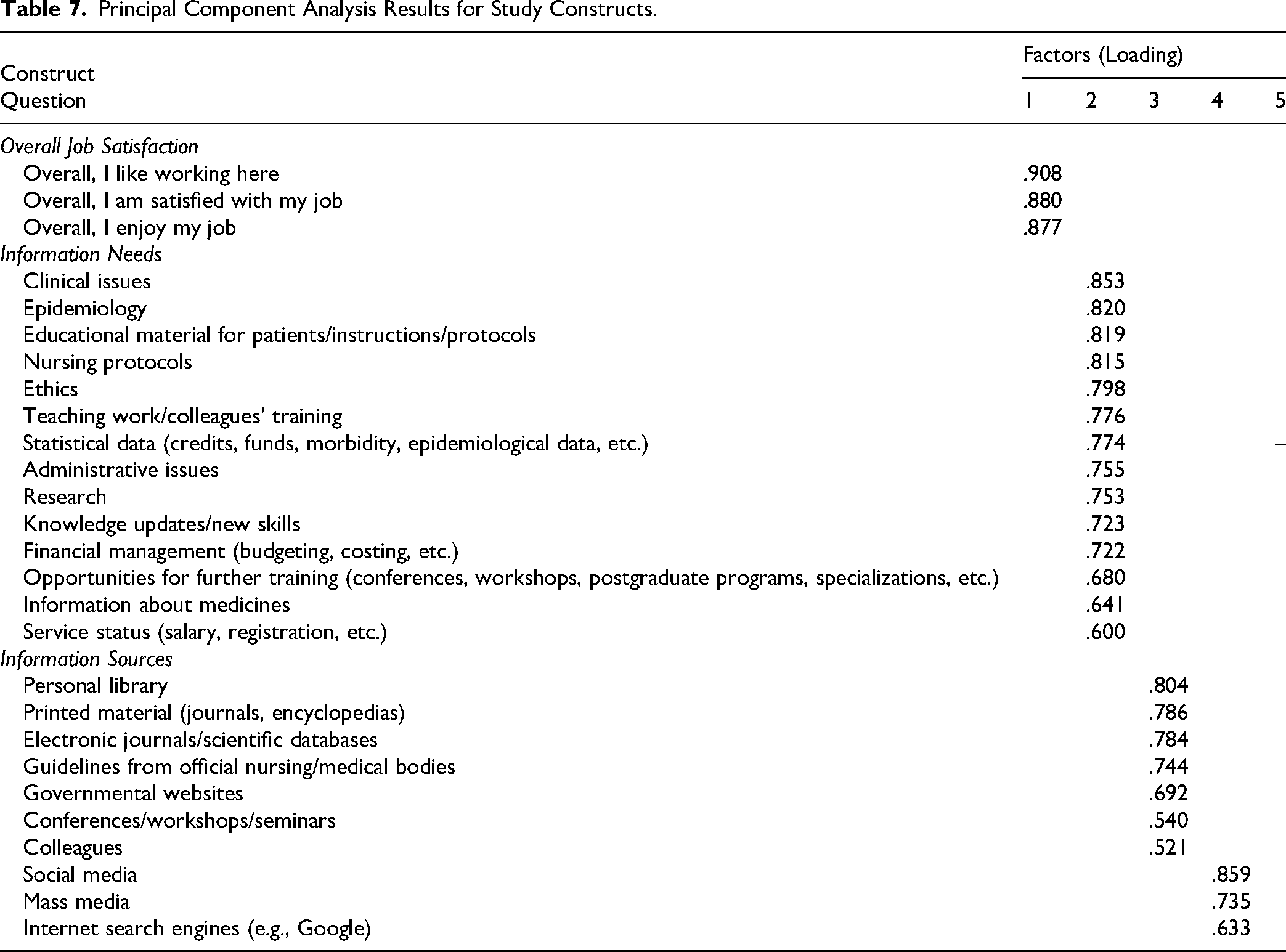
Following the PCA with the varimax orthogonal method, the variables under study were grouped into constructs. “Overall Job Satisfaction” comprised a construct incorporating three components: “Overall, I like working here,” “ Overall, I like my job,” and “Overall, I’m satisfied with my work,” with Cronbach's alpha coefficient value of .865. Another construct that emerged was “Work Related Information Needs” formulated by the items “Clinical issues,” “Epidemiology,” “Educational material for patients/Instructions/protocols,” “Nursing protocols,” “Ethics,” “Teaching work/Colleagues’ training,” “Statistical data,” “Administrative issues,” “Research,” “Knowledge update/ New skills,” “Financial management,” “Opportunities for further training,” “Information about medicines,” and “Service status” with a Cronbach's alpha coefficient calculated at .941.
Information sources (10 items; Cronbach's alpha = .899) composed two constructs: “Authorized Information Sources” and “Not Authorized Information Sources.” The former consisted of seven items: “Personal library,” “Printed material” (e.g., journals, encyclopedias), “Electronic journals/scientific databases,” “Guidelines from formal nursing and medical institutions,” “Governmental websites,” “conferences/workshops/seminars,” and “Colleagues” with a Cronbach's alpha coefficient value of .894. The latter included the remaining three items: “Social media” (e.g., Facebook and Twitter), “Mass media,” and “Internet search engines (e.g., Google)” with a Cronbach's alpha coefficient value of .759. As presented in Table B4, the elements “I cannot sleep because I'm worried I might get COVID-19,” “I'm afraid of losing my life to COVID-19,” “My heart beats faster, or I have a pulse when thinking about COVID-19,” “When I see news or stories about COVID-19 on social media I get nervous or anxious,” “I become awkward when thinking about COVID-19,” “I feel uncomfortable when thinking about COVID-19,” and “Overall assessment of fear level in relation to the Covid-19 pandemic” with a Cronbach's alpha coefficient value of .870.
Bivariate Correlations
Table 7 describes the bivariate correlations between the factors emerging from EFA and the overall satisfaction with the information currently available. According to Pearson's correlation coefficient, “Overall satisfaction with current information” is positively related to “Job Satisfaction” (r = .400 **), “Work-related Information Needs” (r = .346**), “Authorized Information Sources” (r = 446**), “Non-Authorized Information Sources” (r = .589**), and negatively with “FCOVID” (r = −.209**). The negative correlation of “Non-Authorized Information Sources” with “Years of experience” (r = −.273**) and “Years in the current position (r = −.214**) is rather interesting, similarly to “Job Satisfaction” positively correlated with “Work Related Information Needs” (r = .422**), “Authorized Information Sources” (r = .383**), and “Non-Authorized Information Sources” (r = .510**). The positive correlation of “Work Related Information Needs” to “Authorized Information Sources” (r = .411**) and “Non-Authorized Information Sources” (r = .443**) presents as well intriguing.
Principal Component Analysis Results for Study Constructs.
Discussion
In this study, we investigated the health information-seeking behavior of nurses during the COVID-19 pandemic and its relation to the fear of COVID-19. Nurses’ information needs primarily reflected their double role of catering to and accommodating their respective patients’ needs while educating them on their disease. Preferences for information sources varied by demographics; younger and less experienced nurses favored academic and scientific publications, while official protocols and guidelines were more valued by contractors and PhD holders. Fear of COVID-19 was generally low, though men and older sample subjects (>51 years) exhibited higher levels of anxiety. Statistical analyses highlighted significant correlations, with job satisfaction positively linked to work-related information needs and the use of both formal and informal information sources. Conversely, informal sources showed a negative correlation with years of experience. These findings emphasize the need to tailor resources to demographic and experiential variations, ensuring that nurses are equipped with the tools to meet their information and professional needs.
The strengths of our study lie in its robust methodological framework and theoretical grounded in Wilson's Model of Information-Seeking Behavior which offers a comprehensive lens for examining nurses’ information-seeking behaviors during the COVID-19 pandemic. The inclusion of a well-designed and validated questionnaire, featuring four distinct sections and established scales with high reliability. Cronbach's alpha coefficients ranging between .759 and .941, ensured the accuracy and consistency of findings. Additionally, the deployment of advanced statistical techniques, including EFA and Pearson's correlation coefficient, facilitated the identification of meaningful patterns and relationships among variables. Furthermore, the focus on digital health information literacy and the fear of COVID-19, alongside work-related information needs, addressed essential dimensions of pandemic response, paving the way for informed interventions and policy improvements. This rigorous approach strengthened the validity and utility of the study's conclusions.
The findings of this survey are consistent with others from corresponding studies, as the overall job satisfaction recorded was rather high, 45% (Blanco-Donoso et al., 2022). The high satisfaction rates were combined with personnel's perceptions about the value, impact, and contribution of nurses’ work to society amid the COVID-19 pandemic. Their information needs were mainly related to the treatment of this emerging disease, concerning parameters such as medication, educational material, and instructions/protocols for patients. In addition, in dedicated research on evidence-based nursing practice, it was noted that nurses’ needs for evolving clinical practices and disease management issues correspondingly (Bourgault et al., 2022;Wang et al., 2020).
Regarding the satisfaction levels of information sources use, our findings highlight the excessive deployment of official and governmental websites as well as internet search engines. According to literature, official websites and social media monopolized the interest of information sources during the pandemic (Bhagavathula et al., 2020; Bourgault et al., 2022; Elsayed et al., 2025). However, there has been identified an important difference among the studies conducted prior to January 2021 that attributed higher usage to social media as information sources and acknowledged official websites as secondary information sources (Bhagavathula et al., 2020; Huynh et al., 2020; Sarria-Guzmán et al., 2021), whereas in the studies conducted after January 2021, official websites comprise the predominant source of information. This difference might be due to the fact that after the initial stages of the pandemic, knowledge derived from formal evidence-based practices was regarded as of major importance.
Comprehending the characteristics of the different information sources assists health-care professionals in developing transparent and efficient information systems that consequently increase the public's confidence in pandemic management (Wang et al., 2020). The internet rendered information about COVID-19 more accessible, especially for those living in isolation due to the established restriction measures, as the official websites of public health organizations constitute information sources of the highest quality (Hernández-García & Giménez-Júlvez, 2020). With the internet being the primary information source about the virus, the risk of misinformation spreading about its origin and harmfulness is increased (Tangcharoensathien et al., 2020). Health-care professionals is important to consider how well-informed they stand so that they are in a position to inform and educate the public adequately (Bastani & Bahrami, 2020).
Concerning the “Fear of the virus,” most participants manifested moderate levels, mainly dependent on their gender (men) and age (>51 years old). Moderate levels of “Fear of the virus” across nurses have been observed in analogous studies that additionally underline age's effect (Alnazly et al., 2021; Labrague & de Los Santos, 2021; Moussa et al., 2021). The association between gender and fear of COVID, has been supported by findings that as well highlighted men being more prone to fear (Alnazly et al., 2021) while contradicting others (Moussa et al., 2021) of women being more susceptible. This discrepancy might be explained by the distinct psychosocial responses and coping mechanisms both genders demonstrate.
Wilson's Model of Information-Seeking Behavior (2006) adapted in this study explains the positive correlations among the overall satisfaction from the information currently available, job satisfaction, information needs, and information sources (Figure 1). It becomes apparent that the fear of the virus triggers work-related information needs (e.g., medication, instructions for the patients, etc.). These needs are met using official and unofficial sources of information, acquiring satisfaction, that consequently lead to positive work outcomes, such as performing ones’ duties when under moderate levels of fear toward the virus.
These findings indicate the need for novel policy measures in addition to the ones aiming at mitigating the COVID-19 pandemic. On a practical level, it is considered important to develop strategies for nurses to identify information sources (Zamanzadeh et al., 2021) along with interventions for preventing and responding to unprecedented situations, such as the concurrent pandemic. At a political level, it is suggested to develop strategies to combat misinformation and ignorance: Campaigns targeting specific professional groups, pieces of information offered in a comprehensible language, information regulation through official bodies (Sagan et al., 2021; Sarria-Guzmán et al., 2021).
Limitations
While the sample size was sufficient for providing data regarding this specific hospital, it pertained solely to a single Greek regional hospital. Therefore, generalized conclusions concerning the nursing staff could not be drawn. Furthermore, although the response rate (46.86%) was substantial for a study of this nature, it is possible that respondents possessed stronger feelings, either positive or negative, regarding the study variables than those who did not participate, potentially affecting the representativeness of the findings.
Conclusions
This survey was informed by Wilson's Model of Information-Seeking Behavior and was conducted amid the COVID-19 pandemic. The survey results support the interrelations between nurses’ health information-seeking behaviors and the levels of fear of COVID-19, as most of the nurses in our study favored official and credible digital health information sources while presented with low levels of fear. This association between fear of COVID-19 and the information sources that are deployed to satisfy nurses’ information needs suggests the potential underlying implications among health-related information-seeking behaviors, digital health literacy levels, and health-care professionals’ response to the pandemic outbreak. As the information needs of the nurses in the sample mainly revolved around parameters of their daily duties, the extent of their work-related information needs correlated positively with official information sources and negatively with the fear of COVID-19.
This study, as well as others of similar nature, highlights the importance of nurses’ digital health information literacy levels. Strengthening nurses’ digital health information literacy capabilities while empowering them in acquiring additional ones appears now imperative as a way of cultivating health-care personnel's potential to combat future public health crisis. With health-care professionals, and especially nurses, well-informed, patients would be consequently able to enjoy health-care services of higher quality in an effective, efficient, and safer way.
Footnotes

Funding
The authors received no financial support for the research, authorship, and/or publication of this article.
Declaration of Conflicting Interests
The authors declared no potential conflicts of interest with respect to the research, authorship, and/or publication of this article.