






Abstract
Background
With the growing integration of artificial intelligence (AI) tools like ChatGPT in education, it is essential to understand how nursing students perceive and utilize such technologies. Their knowledge and attitudes can influence how effectively these tools are used in academic and clinical settings. This study aimed to assess the level of knowledge regarding ChatGPT among nursing students, identify and rank perceived benefits and barriers, and determine associations between knowledge and sociodemographic variables.
Methods
A descriptive cross-sectional survey was conducted among 244 nursing students at Sum Nursing College, Bhubaneswar, Odisha, India, using a structured sociodemographic and background data questionnaire, a rating scale for perceived benefits of AI, and a checklist to identify barriers to use of AI. Knowledge levels were categorized based on median scores; associations with demographic variables were analyzed using the chi-square test.
Results
Of 244 participants, 53.7% had poor knowledge of ChatGPT, while 46.3% demonstrated good knowledge. Enhancing student creativity was ranked as the top benefit (77.2%), followed by clarification of doubts and influence on nursing knowledge. The most significant barrier reported was affecting cognition and thinking ability (62.3%). Significant associations were found between knowledge levels and age, geographical location, and socioeconomic status, while gender was not significantly associated.
Conclusion
More than half of the nursing students had limited knowledge about ChatGPT, despite recognizing its potential benefits. There is a need for targeted educational strategies to improve digital literacy, address ethical concerns, and encourage responsible use of AI in nursing education.
Implications for Practice, Research, or Policy
ChatGPT can be used to supplement learning, especially in areas like drug calculations, clinical case scenarios, and evidence-based practice summaries. Future research should compare traditional learning aids with AI-assisted learning in nursing education. Additional studies could explore how nursing students at different academic levels (undergraduate vs postgraduate) perceive and utilize ChatGPT.
The rapid evolution of artificial intelligence (AI) has introduced a wide array of digital tools designed to simulate human-like cognitive processes, significantly altering the landscape of education, health care, and communication(Bajwa et al., 2021). Among these innovations, Chat Generative Pre-trained Transformer (ChatGPT), developed by OpenAI, stands out as a transformative tool capable of generating coherent, contextually appropriate, and human-like responses to user inputs (Dwivedi et al., 2023). Built on a sophisticated language model with 175 billion parameters, ChatGPT is trained on vast datasets and can respond to queries, provide explanations, translate languages, and assist in writing tasks (Dwivedi et al., 2023; Ray, 2023). Its ability to engage in meaningful dialogue and offer immediate feedback makes it particularly useful in academic environments where access to timely and accurate information is critical (Burgess et al., 2020). The onset of the COVID-19 pandemic catalyzed digital transformation in education. With institutions compelled to adopt remote learning modalities, the integration of AI tools into online learning platforms became increasingly necessary (Matsieli & Mutula, 2024).
This shift not only reshaped instructional delivery but also introduced novel technologies to support both teaching and learning (Bajwa et al., 2021; Matsieli & Mutula, 2024). ChatGPT emerged as a powerful assistant during this period, with students and educators using it to clarify concepts, compose assignments, solve problems, and even simulate real-time tutoring experiences (Dwivedi et al., 2023). As remote and hybrid education models continue to evolve, the role of AI-based platforms like ChatGPT in education is expanding significantly (Salih et al., 2025). In the field of nursing education, characterized by the need for high-level cognitive skills such as critical thinking, problem-solving, and clinical reasoning, the potential applications of ChatGPT are particularly noteworthy (Kucukkaya et al., 2024; Sharifi Kelarijani et al., 2024).
Nursing curricula often include complex theoretical content and demand a strong understanding of medical terminologies, patient care procedures, ethical standards, and decision-making frameworks (Sharifi Kelarijani et al., 2024). ChatGPT, when used effectively, can support students by breaking down intricate medical concepts, offering case-based learning support, assisting with evidence-based literature reviews, and fostering self-directed learning (Naamati-Schneider, 2024). Additionally, its ability to simulate clinical scenarios through dialogue-based interaction can help students develop patient communication skills and clinical judgment (Javaid et al., 2023).
Despite its advantages, the integration of ChatGPT in academic settings, particularly in nursing education, raises several concerns. One primary challenge is maintaining academic integrity, as the accessibility and capabilities of ChatGPT can be misused to complete assignments, generate plagiarized content, or bypass the learning process (Dwivedi et al., 2023; García-López et al., 2025; Sharifi Kelarijani et al., 2024). This misuse may hinder the development of independent thinking, creativity, and original academic expression. Institutions must address these risks by implementing integrity policies, training faculty on AI use, and incorporating AI literacy into the curriculum to guide students on ethical and effective usage (García-López et al., 2025; Vungh & Brian, 2025).
Another pressing concern is the potential overreliance on AI tools. Students may become dependent on ChatGPT for learning tasks, reducing their ability to critically analyze and synthesize information independently (Zhai et al., 2024). This is particularly important in nursing, where clinical decisions have direct implications for patient care outcomes (Kucukkaya et al., 2024). While ChatGPT can be a supplementary educational aid, it should not replace the core principles of experiential learning, hands-on practice, and human judgment that are fundamental to the nursing profession (Gonzalez-Garcia et al., 2025). Ensuring that students maintain a balanced approach to AI use, leveraging it for guidance while cultivating critical thinking, is essential (Zhai et al., 2024). There is also a disparity in access and digital literacy among students, especially in resource-limited settings. Not all nursing students have equal access to reliable internet services, digital devices, or the technical knowledge required to effectively use ChatGPT (Gonzalez-Garcia et al., 2025). These barriers can result in inequitable learning experiences and limit the widespread adoption of AI tools in nursing education. Moreover, concerns related to data privacy, algorithmic bias, and the validity and accuracy of ChatGPT-generated information must be addressed to safeguard the quality and integrity of educational outcomes (Bajwa et al., 2021; Jiang, 2024).
However, academic communities and professional bodies are beginning to explore strategies for the responsible use of AI in education. Rather than imposing outright bans, many experts advocate for AI-integrated pedagogies that train both students and educators to harness the benefits of ChatGPT while being mindful of its limitations. The present study was undertaken to explore the level of awareness, perceived benefits, and challenges experienced by nursing students in using ChatGPT as an educational tool. As AI continues to shape the future of learning, it becomes increasingly important to understand how nursing students perceive and utilize such tools in their academic journey. This study aims to provide empirical data that can inform educators, curriculum developers, and policymakers about the integration of AI in nursing education. By identifying patterns in usage, perceived effectiveness, and obstacles faced by students, the research offers a foundation for developing evidence-based strategies to incorporate AI ethically and effectively into nursing curricula.
Methods and Materials
Study Design
This cross-sectional survey was designed to explore nursing students’ knowledge of, and the benefits and barriers related to, the use of ChatGPT in nursing education. A questionnaire was developed based on informal interviews with nursing students who had prior experience using ChatGPT and on discussions with educators interested in the academic implications of generative AI. In addition, a focused review of relevant literature was conducted to identify common themes and validated items related to ChatGPT's educational utility, particularly within nursing and other health-care domains.
Development of Measuring Instruments
Data were collected using structured, self-developed instruments designed in accordance with the objectives of the study and an extensive review of the literature. The instruments assessed sociodemographic characteristics, knowledge about ChatGPT, and benefits and barriers to its use in nursing education. Tool development involved blueprint preparation, expert consultation, group discussions, and finalization of the instruments.
Content Validity (Expert Validation). Content validity of the instruments was established through expert validation by a panel of seven experts drawn from the fields of nursing education, nursing research, and research methodology. The experts reviewed the instruments to evaluate relevance, clarity, simplicity, and appropriateness of each item in relation to the study objectives. Their roles included assessing content adequacy, ensuring conceptual alignment, and recommending modifications to improve clarity and comprehensiveness. The Content Validity Index (CVI) was calculated for each tool and demonstrated excellent validity: 0.87 for the sociodemographic proforma, 0.92 for the knowledge questionnaire, 0.90 for the rating scale on benefits, and 0.88 for the checklist on barriers. Necessary modifications were incorporated based on expert feedback. The sociodemographic and background data questionnaire was exempted from CVI assessment as it consisted of factual information.
Reliability. Reliability of the structured tools was established prior to the main study using appropriate reliability testing methods. The reliability coefficients were 0.84 for the knowledge questionnaire, 0.81 for the rating scale on perceived benefits, and 0.79 for the checklist on barriers, indicating good internal consistency. Reliability testing was not applicable to the sociodemographic and background data questionnaire.
Description of Tools
Sociodemographic and Background Data Questionnaire. This questionnaire was used to collect baseline information, including age, course and year of study, gender, nationality, religion, geographical location, socioeconomic status, availability of a smartphone, internet accessibility, awareness of ChatGPT, and frequency of ChatGPT usage.
Questionnaire on Knowledge of ChatGPT. A structured questionnaire consisting of 10 multiple-choice questions was used to assess nursing students’ knowledge regarding the use of ChatGPT in education. Each correct response was awarded one point, with higher scores indicating better knowledge.
Questionnaire on Benefits of Using ChatGPT. A structured 10-item questionnaire was used to assess perceived benefits of ChatGPT in nursing education. Responses were recorded on a 5-point Likert scale ranging from Strongly Disagree (0) to Strongly Agree (4), with higher scores indicating greater perceived benefits.
Tool 4: Checklist on Barriers to Adoption of ChatGPT. A structured 8-item checklist with dichotomous response options (Yes/No) was used to assess perceived barriers to adopting ChatGPT in nursing education. Each “Yes” response was scored as one and “No” as zero, with higher scores indicating greater perceived barriers.
The questionnaire was created electronically and was pretested among the research team for usability, feasibility, clarity, and technical functionality. Minor revisions were made based on team feedback to improve question framing and ease of completion.
Participants and Sampling
Participants were selected using a convenience sampling method. The survey invitation was sent to Bachelor of Science in Nursing (B.Sc Nursing) and General Nursing and Midwifery (GNM) students enrolled at SUM Nursing College, Bhubaneswar, Odisha, India. Invitations were disseminated via class-wide messaging groups and in-person classroom announcements. The survey link included an explanation of the study's purpose, voluntary nature, anonymity of responses, and the expected time to complete the survey.
The inclusion criteria for participation were:
Current enrollment as a nursing student (B.Sc or GNM) at SUM Nursing College Experience using ChatGPT in an educational context Ability to understand and respond to the survey in English Willingness to provide verbal consent to participate
Exclusion criteria included students who declined to provide consent or were unavailable during the data collection period. No incentives were provided to encourage participation.
Data Collection
Data were collected between August 2024 and November 2024. Data were collected using an online survey form, tools description condensed in the “Methods” section and cross-referenced with the instrument subsection. Clear instructions regarding completion of the tools were provided, and participants were encouraged to respond honestly based on their own perceptions and experiences. Clarifications were provided wherever necessary to ensure proper understanding of the items.
Confidentiality and anonymity of the participants were maintained throughout the study. Each submission was automatically saved to a secure folder accessible only to the research team. The survey was anonymous, and no personally identifiable information was collected to maintain confidentiality and data privacy.
The researchers introduced themselves to the participants and explained the purpose of the study, procedures involved, and expected outcomes. The researchers were not involved in the academic teaching or evaluation of the participants
Data Analysis
All survey responses were recorded on a spreadsheet and subsequently imported into statistical analysis software, Statistical Package for the Social Sciences (SPSS), version 25. For further evaluation, descriptive statistics, including frequencies and percentages, were used to summarize the demographic data, knowledge scores, and perceived benefits and barriers. For the knowledge section, total scores were categorized into two levels: poor knowledge and good knowledge for comparative analysis. Responses to Likert-scale items on perceived benefits were analyzed to determine trends in agreement levels. Barriers were summarized using frequency counts for each selected item.
Ethical Considerations
The study was approved by the Siksha ‘O’ Anusandhan University (Approval No: SOADU/SNC/IRB/471/2025). Administrative permission was secured from the heads of the selected institution prior to data collection. Written informed consent was obtained from all participants after explaining the purpose of the study and data collection procedures.
Results
Sociodemographic Characteristics and Background Data of Study Participants
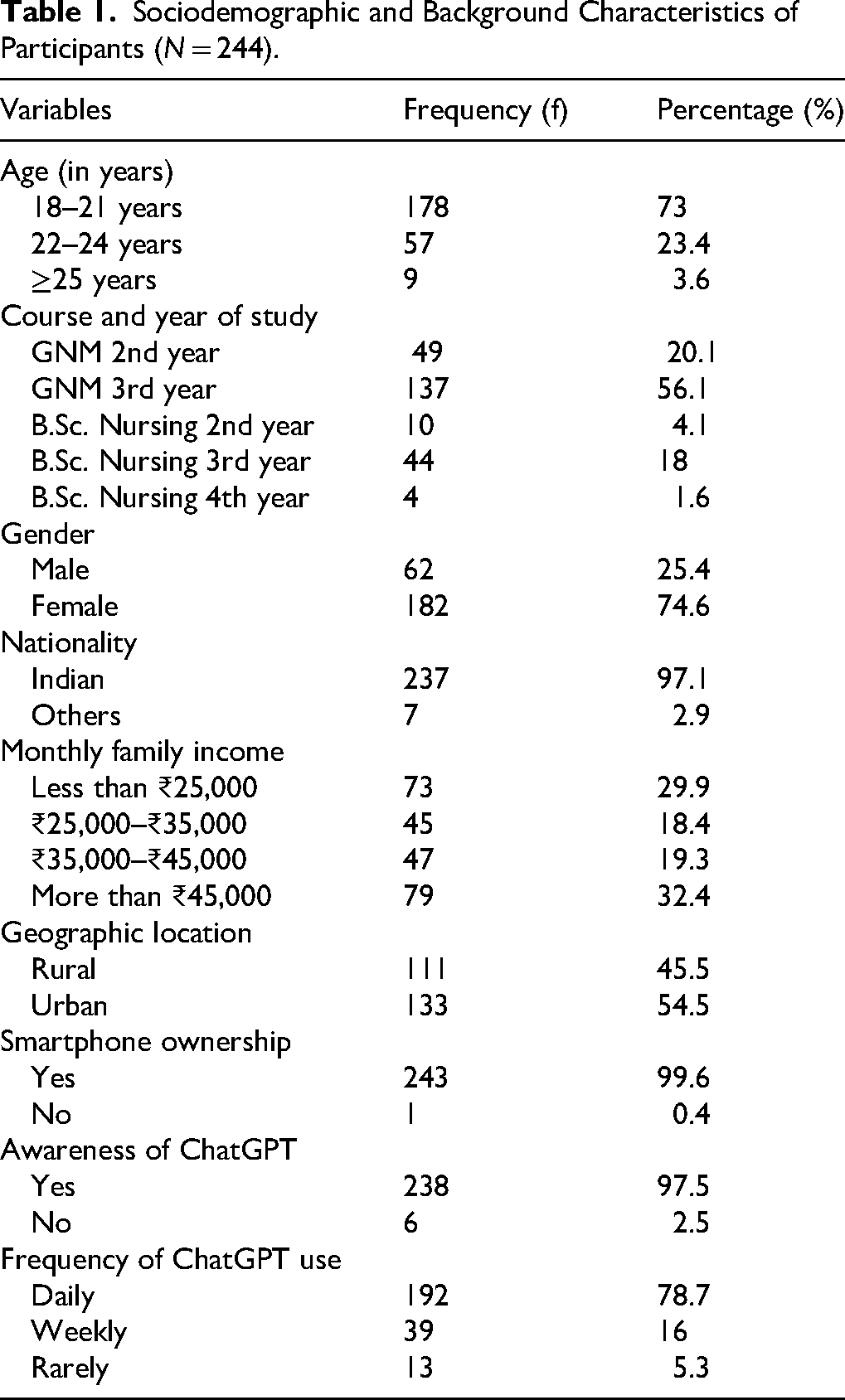
A total of 244 nursing students from the B.Sc. Nursing and GNM programs participated in the study out of 312 eligible students, resulting in a response rate of 78.21%. The majority of participants (73.0%) were 18–21 years of age. Most students were enrolled in the GNM 3rd year (56.1%). Female students constituted a larger proportion (74.6%) compared to males (25.4%). See Table 1 for participants’ sociodemographic variables and background data.
Sociodemographic and Background Characteristics of Participants (N = 244).
Level of Knowledge Regarding ChatGPT Use
Participants’ knowledge levels were categorized based on the median value of correct responses. A median score of ≤4 indicated poor knowledge; >4 indicated good knowledge (see Figure 1).
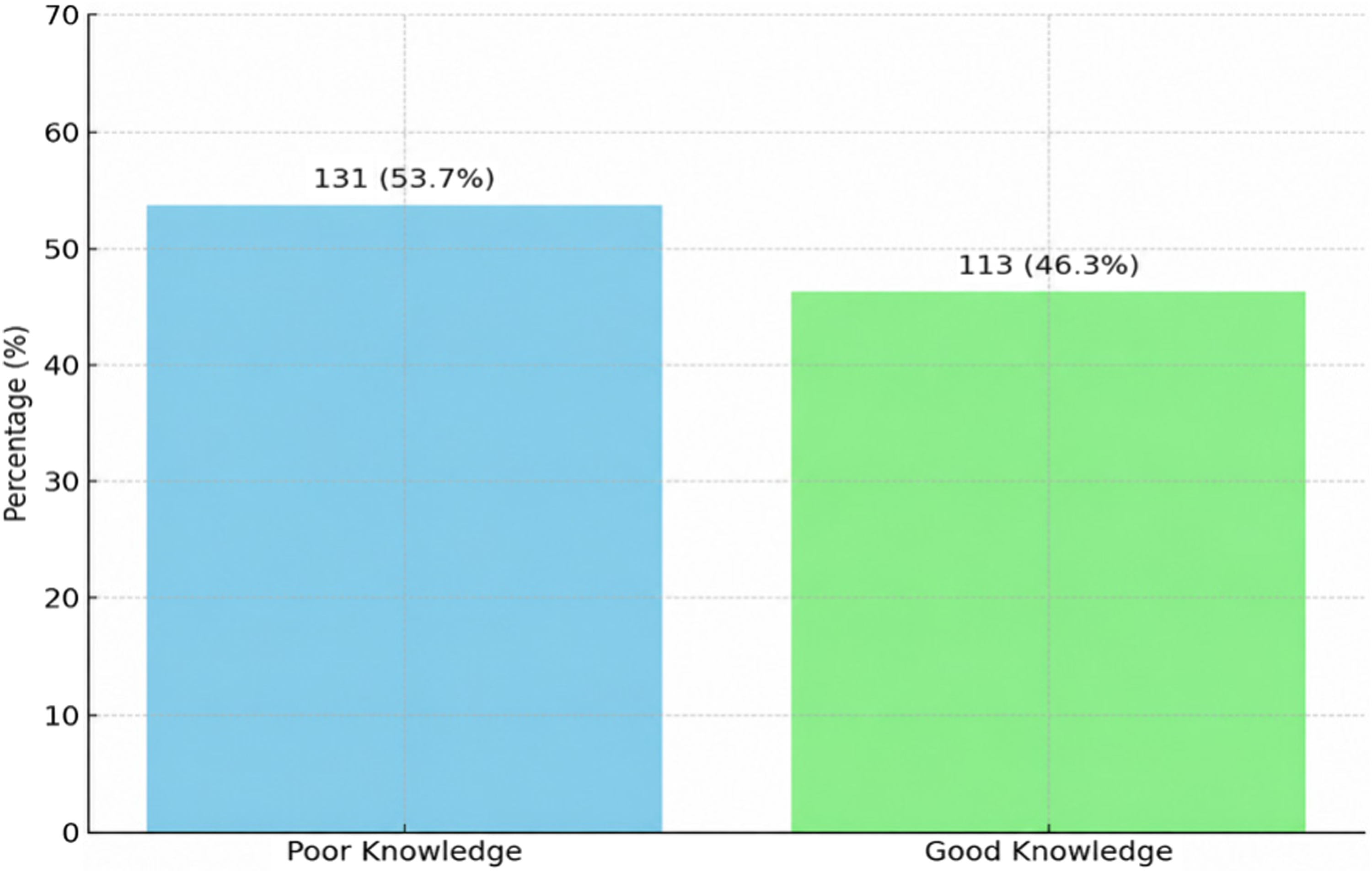
Level of knowledge regarding ChatGPT use (N = 244).
Knowledge Areas Related to ChatGPT Use
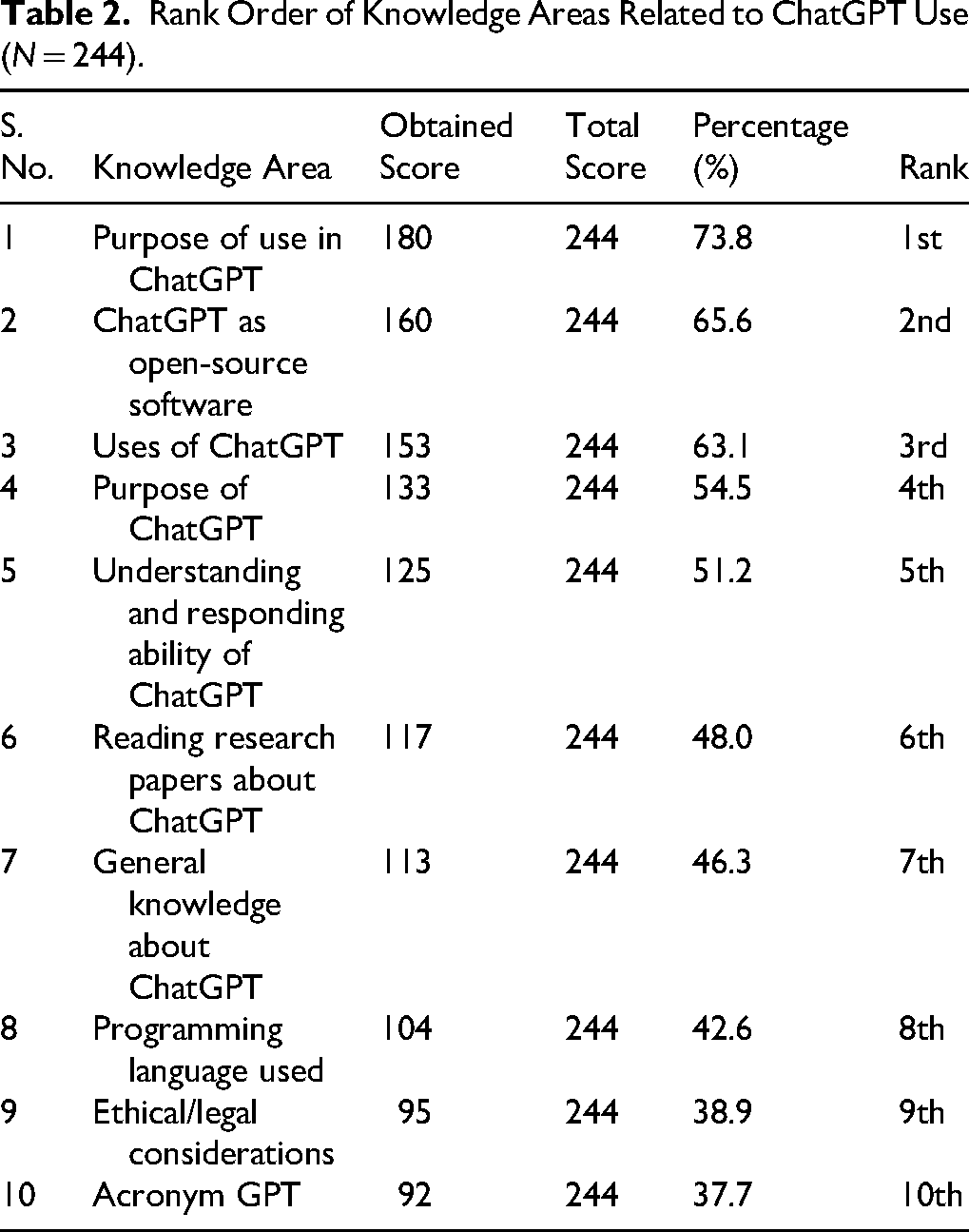
Participants demonstrated the highest level of knowledge regarding the purpose of using ChatGPT (73.8%), followed by understanding that it is open-source software (65.6%) and its various uses (63.1%). However, knowledge about the acronym GPT (37.7%) and ethical/legal considerations (38.9%) was comparatively low (see Table 2).
Rank Order of Knowledge Areas Related to ChatGPT Use (N = 244).
Perceived Benefits of ChatGPT Use
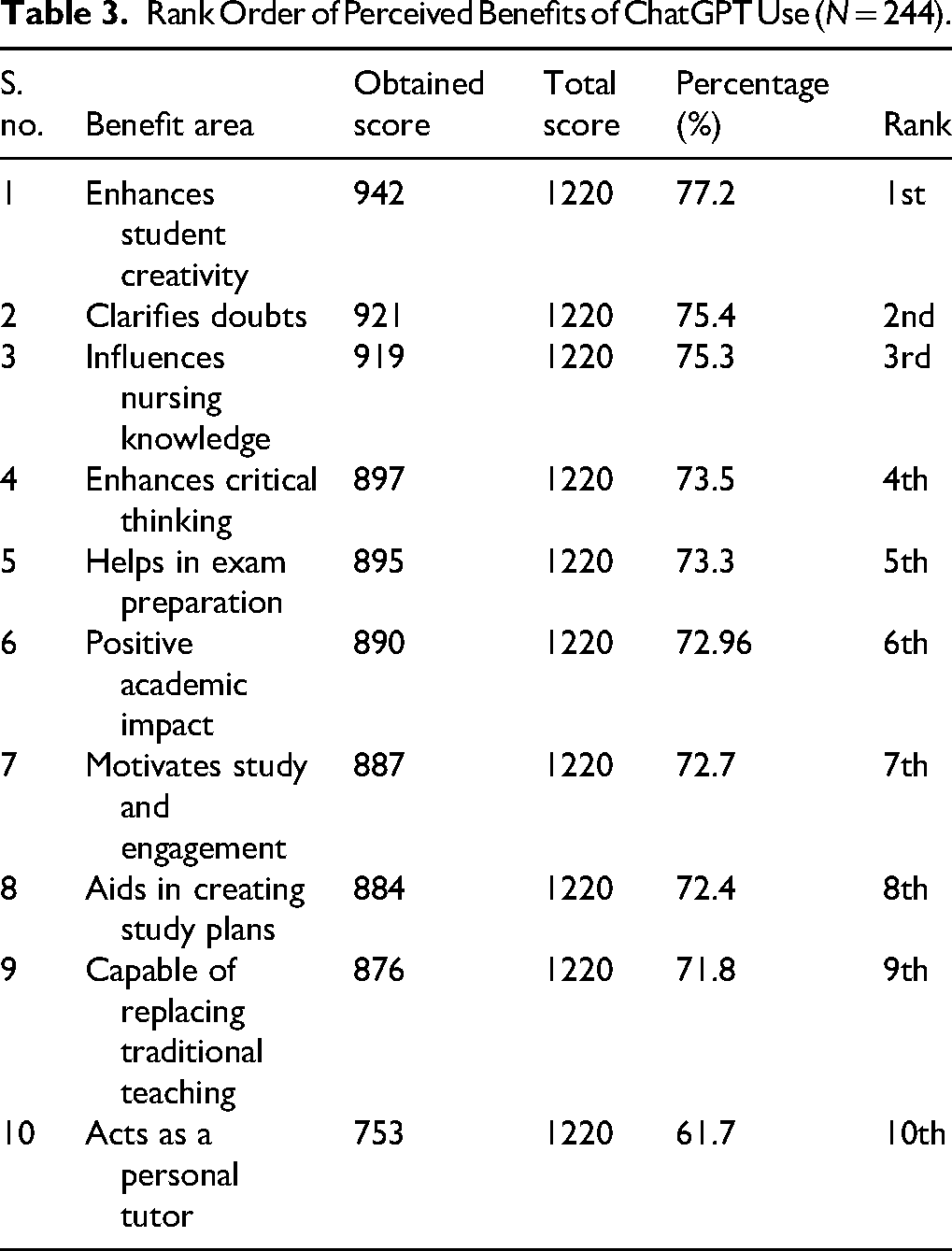
Students perceived the highest benefit of ChatGPT as enhancing creativity (77.2%), followed by its usefulness in clarifying doubts (75.4%) and influencing nursing knowledge (75.3%). Other notable benefits included enhancing critical thinking (73.5%) and helping in exam preparation (73.3%). The benefit ranked lowest was ChatGPT's role in acting as a personal tutor (61.7%) (see Table 3).
Rank Order of Perceived Benefits of ChatGPT Use (N = 244).
Barriers to ChatGPT Use
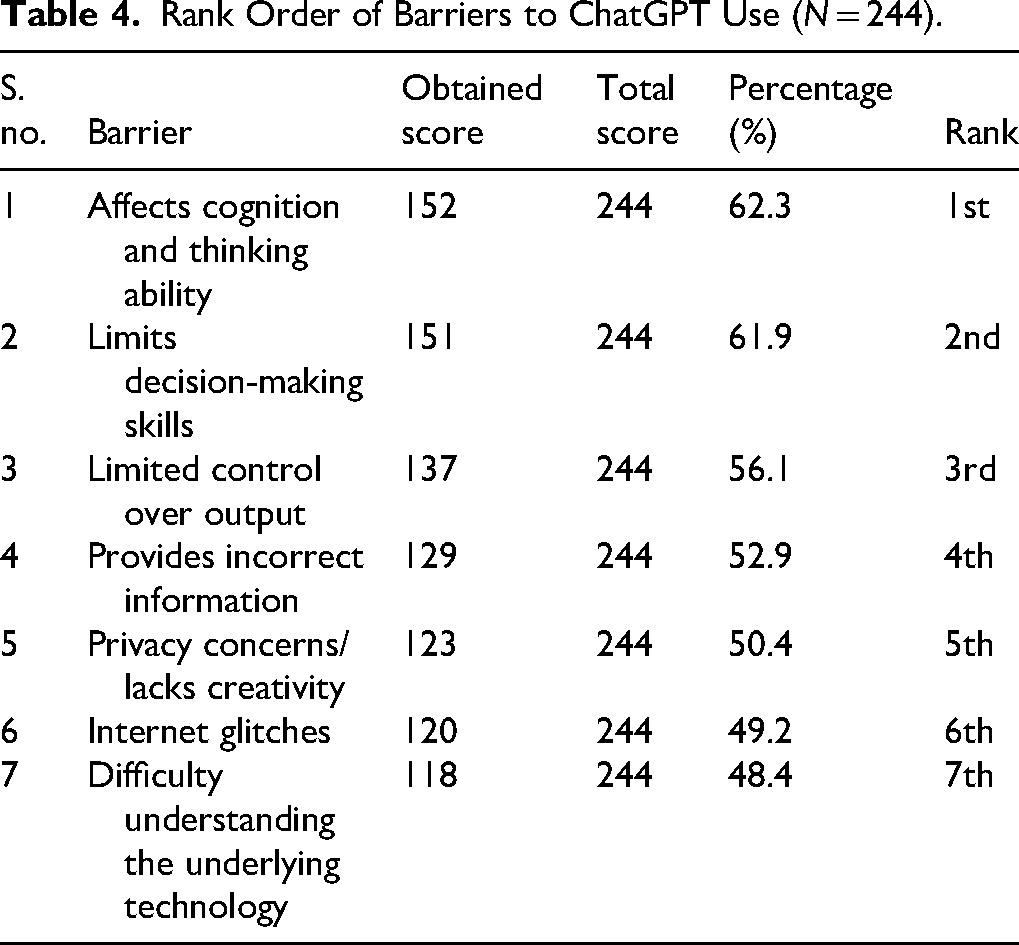
The most commonly reported barrier was that ChatGPT affects cognitive and thinking ability (62.3%), followed by concerns that it limits decision-making skills (61.9%) and has limited control over output (56.1%). Other significant barriers included inaccuracy of information (52.9%), privacy concerns (50.4%), and internet-related issues (49.2%) (see Table 4).
Rank Order of Barriers to ChatGPT Use (N = 244).
Discussion
The current study aimed to assess nursing students’ knowledge, perceived benefits, barriers, and demographic factors related to using ChatGPT in nursing education. Our findings reveal that, while many students recognize the potential benefits of ChatGPT, significant gaps in knowledge exist, particularly concerning its technical and ethical aspects. These gaps underscore the importance of addressing both educational and ethical concerns when integrating such technologies into nursing curricula. A total of 244 nursing students from the B.Sc. Nursing and GNM programs participated in the study out of 312 eligible students, yielding a response rate of 78.21%, which supports adequate representation of the target population and strengthens the credibility of the study findings. The study found that more than half of the nursing students (53.7%) exhibited poor knowledge of ChatGPT, which aligns with prior research indicating that students often lack understanding of new technologies, particularly AI applications (Abdelhafiz et al., 2024). In comparison, only 46.3% demonstrated good knowledge, suggesting that there is a substantial knowledge gap in terms of students’ understanding of how ChatGPT works, its capabilities, and limitations. This finding mirrors those of previous studies that identified insufficient awareness and understanding of AI tools among educational users, particularly in higher education (Jaiswal, 2023).
The results also indicated that younger students, those from urban areas, and students from higher socioeconomic backgrounds had better knowledge of ChatGPT. These findings align with the literature, which highlights that factors such as access to technology, internet connectivity, and digital literacy can influence how well students engage with AI tools (Musyaffi et al., 2024). Moreover, the low knowledge scores in areas like the acronym of GPT, the ethical and legal considerations of AI, and the programming language used by ChatGPT are concerning. These gaps suggest a need for more structured and comprehensive educational programs that cover not only the functionality of AI tools but also the ethical implications and underlying technologies (Salih et al., 2025).
Nursing students recognized several benefits of ChatGPT, with most respondents highlighting its potential to enhance creativity and clarify doubts. In line with the existing literature, AI tools like ChatGPT can foster creative thinking and encourage students to engage critically with the material, thereby enhancing academic outcomes (Essel et al., 2024). Other key benefits noted in this study included improving academic performance and helping students prepare for exams, aligning with similar findings in education-focused research (Wang et al., 2024). However, it is important to note that while these benefits are promising, the overreliance on ChatGPT might reduce face-to-face interactions, collaborative learning, and other vital cognitive skills (Ray, 2023). As evidenced by some systematic reviews, the overuse of AI tools might discourage students from engaging in active learning processes, which could ultimately hinder the development of critical thinking and clinical decision-making skills, both of which are essential in nursing education (García-López et al., 2025; Wang et al., 2024).
While the benefits of ChatGPT are evident, the study also identified several barriers to its use. The most commonly reported barrier was its potential to affect cognition and decision-making. Concerns about AI tools replacing critical thinking and problem-solving abilities are not new (Jo, 2024; Ray, 2023). Evidence suggests that overreliance on AI could inhibit cognitive development, particularly in fields like health care where decision-making is critical (Vungh & Brian, 2025). Another key barrier identified was privacy concerns, with students expressing anxiety over the potential misuse of personal data when interacting with AI tools. This reflects the growing concern about data privacy and security in educational technologies, an issue that has been widely discussed in the literature (Alshahrani et al., 2024). Students also mentioned technical glitches and the possibility of incorrect information being provided by ChatGPT as significant barriers to its use, a concern that echoes findings from similar studies where the accuracy of AI-generated content is questioned (Dwivedi et al., 2023; Gonzalez-Garcia et al., 2025).
One of the major ethical concerns regarding the use of ChatGPT in nursing education is its potential to replace human interaction and reduce the development of essential interpersonal skills in nursing practice (Wang et al., 2023). Nurses must engage in critical thinking, empathy, and ethical decision-making, all of which are challenging to replicate in an AI-driven environment. Furthermore, the data privacy and confidentiality of student interactions with ChatGPT raise significant ethical questions. Given that ChatGPT collects and processes data during interactions, there is a risk that sensitive personal information could be inadvertently exposed or misused, creating potential breaches of privacy (Gonzalez-Garcia et al., 2025; Jiang, 2024). Another ethical issue involves the accuracy and reliability of AI-generated information (Ray, 2023; Wang et al., 2023). As AI tools like ChatGPT rely on data from the internet, they are susceptible to misinformation, bias, and outdated information. In a clinical setting, this could lead to the dissemination of inaccurate health information, ultimately affecting patient care outcomes (Bajwa et al., 2021). The ethical responsibility of ensuring that students use reliable, evidence-based sources must be emphasized when integrating AI tools into nursing education.
Specialized AI tools beyond ChatGPT are increasingly supporting nursing and medical students in their learning process. Tools such as NurseQuizAI help students convert lecture notes into NCLEX-style questions, flashcards, and personalized study plans, improving exam preparation. Nursify AI is designed specifically for nursing education and provides summaries, flashcards, virtual patient scenarios, and charting practice to link theory with clinical skills. Mindgrasp AI assists students by simplifying complex study materials into easy-to-understand notes and quizzes, enhancing retention. The AI-enhanced platforms such as Quizlet generate adaptive practice tests and flashcards for effective revision. Notion AI supports academic organization by helping students summarize lectures and manage assignments. Together, these tools create a supportive learning environment that improves understanding, efficiency, and clinical reasoning in nursing education.
Limitations
Several limitations should be considered when interpreting the results of this study. First, the study was conducted at a single institution (SUM Nursing College, Bhubaneswar, Odisha), which may limit the generalizability of the findings to other nursing schools or countries with different educational contexts. The study employed a convenience sampling technique with a total sample size of 244 participants, which may introduce selection bias. However, the high response rate strengthens the sample representativeness and enhances the credibility of the findings. Additionally, the study relied on self-reported data, which could be subject to social desirability bias or inaccuracies in participants’ understanding of ChatGPT. The study also did not account for the impact of various AI training programs or educational interventions that could potentially influence students’ knowledge and usage of ChatGPT.
Implications for Nursing Education and Practice
This study provides valuable insights into the potential and challenges of integrating ChatGPT into nursing education. First, there is a need for comprehensive training programs to bridge the knowledge gap among nursing students. These programs should not only focus on the technical aspects of ChatGPT but also address the ethical implications of using generative AI in clinical settings. Furthermore, nursing educators should emphasize the responsible use of ChatGPT, highlighting its benefits while also discussing its limitations and the importance of critical thinking in nursing practice. Given the barriers identified, nursing educators should consider providing students with clear guidelines on using ChatGPT, particularly concerning privacy issues and information accuracy. Training students to evaluate AI-generated content critically will be essential to ensure that they do not rely solely on these tools for clinical decision-making.
Conclusion
In conclusion, while ChatGPT holds significant potential to enhance nursing education by fostering creativity, clarifying doubts, and improving academic performance, its integration into the curriculum must be handled with care. Addressing the knowledge gaps, ethical concerns, and barriers to usage identified in this study is crucial for maximizing the benefits of ChatGPT while minimizing potential risks. As nursing education continues to embrace digital tools, it is essential to strike a balance between technological innovation and the development of core competencies in clinical practice.
Footnotes
Acknowledgments
The authors appreciate and acknowledge SUM Nursing College and Siksha ‘O’ Anusandhan (SOA) University, Bhubaneswar, Odisha, for providing timely technical and material support and their consistent assistance in completing this review on schedule.
ORCID iDs

Ethics Approval
Ethics approval was sought and approved by the Siksha ‘O’ Anusandhan (SOA) University, Bhubaneswar, Odisha, Ethics Committee (Approval No: SOADU/SNC/IRB/471/2025).
Author Contribution(s)
Funding
The authors received no financial support for the research, authorship, and/or publication of this article.
Declaration of Conflicting Interests
The authors declared no potential conflicts of interest with respect to the research, authorship, and/or publication of this article.