







Abstract
Pedophilic interest is a central risk factor for sexual offending against children. Multiple measures exist to assess pedophilic interest, and the present study aims to provide validity evidence for three of these measures in a sample of men convicted of sexual offenses. The association between a phallometric test for pedophilic interest, the Screening Scale for Pedophilic Interest (SSPI), and the sexual deviance factor of the Violence Risk Scale–Sexual Offense (VRS-SO) version was examined in a sample of 261 men who participated in sexual violence reduction services. The association between these measures and sexual recidivism, both as sole predictors and while controlling for static risk, was also assessed. The second aim of the study was to examine the validity of different methods for modeling the distribution of pedophilic interests, using phallometric test scores, based on the findings in recent taxometric research. The measures generally showed a positive and moderate relationship with each other and predicted sexual recidivism. However, the SSPI did not significantly predict sexual recidivism, and when controlling for static risk, only the VRS-SO Sexual Deviance factor significantly predicted this outcome. Modeling phallometric test scores continuously and trichotomously produced significant associations with sexual recidivism; however, only a trichotomous model with two levels remained predictive after controlling for static risk. The results are broadly supportive of measures of pedophilic interest and underscore the importance of appropriately modeling the latent structure of pedophilic interest.
Pedophilic interest connotes a sexual attraction to prepubescent children and is a main risk factor for the initiation of sexual offending against children (Seto, 2018). Meta-analytic research has identified pedophilic interest as having one of the strongest predictive relationships with sexual recidivism in men convicted of sexual offenses against children (SOC; Hanson & Morton-Bourgon, 2005; McPhail et al., 2019). Given the relative theoretical and clinical importance of pedophilic interest, most treatment programs provide specialized interventions to help men manage their arousal to children (R. J. McGrath et al., 2010) and a majority of risk instruments that include dynamic risk factors assess for pedophilic interest (or broader paraphilic interests) to evaluate risk for future sexual violence (Hanson & Morton-Bourgon, 2009).
Measures of Pedophilic Interest
Validating measures of pedophilic interests is an important task for applied forensic research. Because pedophilic interest is theorized to contribute to the initiation of sexual offending against children, valid measures are expected to differentiate men who have and men who have not committed SOC. Furthermore, one of the main tasks of clinical forensic work is the evaluation of sexual recidivism risk, and valid measures of pedophilic interest should have a predictive association with future sexual offending by men who have been convicted of sexual offenses. Several measures of pedophilic interest have been developed and tested in samples of men with sexual offense histories. Here, we provide an overview of three measures of pedophilic interest.
Phallometric Tests of Pedophilic Interest
Phallometric testing for sexual arousal to children is frequently employed as a measure of pedophilic interest in men. There is variety in the procedures used during phallometric tests (differences in stimulus presentation modality, method of measuring changes in penile arousal, methods of transforming raw phallometric data, etc.) and this lack of standardization has presented a problem for the validation of phallometric tests for pedophilic interest (Marshall & Fernandez, 2000). However, recent meta-analytic research has shown that most phallometric procedures differentiate men who sexual offend against children from other samples and phallometric test scores from most procedures predict sexual recidivism (McPhail et al., 2019). Other meta-analytic research indicates that phallometric test scores are related to viewing time measures of pedophilic interests (r = .25; Schmidt et al., 2017). However, few examinations have established whether pedophilic interest, as measured by phallometric testing, has incremental predictive power beyond measures of static risk. Such validity of research would provide evidence that phallometric test scores provide unique prediction of sexual recidivism to established actuarial risk assessment tools.
Screening Scale for Pedophilic Interest (SSPI)
The SSPI is a brief screening instrument to assess for pedophilic interest (Seto & Lalumière, 2001). Validity research has generally found that the SSPI has a significant, if small to moderate, relationship with sexual recidivism in samples of men convicted of sexual offenses (Eher et al., 2015; Helmus et al., 2014; Seto et al., 2004, 2017). However, other research has not found the SSPI to predict sexual recidivism and to not add incremental predictive validity beyond static risk, as measured by Static-99R (Canales et al., 2009; Moulden et al., 2009; Seto et al., 2017), or pedophilic interest, as measured by the Diagnostic and Statistical Manual of Mental Disorders (Eher et al., 2015). Other validity research indicates that the SSPI is associated with phallometric (r = .34; Seto & Lalumière, 2001), viewing time (r = .21; Schmidt et al., 2017), and implicit association test measures of pedohebephilic interests 1 (r = .28; Babchishin et al., 2013).
Violence Risk Scale–Sexual Offense (VRS-SO) Version
The VRS-SO is a sexual offense risk assessment instrument that measures static risk factors, dynamic risk factors, and treatment change of the dynamic risk factors (Wong et al., 2003–2017). Factor analytic research has found three correlated dimensions underlying the VRS-SO dynamic risk items: sexual deviance, criminality, and treatment responsivity factors (Beggs & Grace, 2010; Olver & Eher, 2019; Olver et al., 2007, 2018). The sexual deviance factor comprises five items: sexually deviant lifestyle, sexual compulsivity, offense planning, sexual offending cycle, and deviant sexual preference; this lattermost item constitutes a measure of deviant sexual interest that encompasses sexual attraction to children. Validity research has found that men with unrelated child victims and men with unrelated child and adult victims score higher on the sexual deviance factor compared with men with adult victims and men with related child victims (Canales et al., 2009; Olver & Wong, 2006) and that this domain predicts sexual recidivism (Beggs & Grace, 2010; Olver et al., 2007). A significant, positive relationship has also been found between sexual deviance factor scores and other measures of pedophilic interest, such as phallometric tests of pedophilic interest and the SSPI (Canales et al., 2009).
Latent Structure of Pedophilic Interests
Recent taxometric studies have produced support for three distinct latent structures in pedophilic interest (McPhail et al., 2018; Schmidt et al., 2013; Stephens, Leroux, et al., 2017), which in turn have implications for the measurement and conceptualization of pedophilic interest. Taxometric analysis is a set of procedures that empirically tests whether a psychological construct is better characterized as a latent dimension or a latent taxon (or comprised multiple latent taxa; Ruscio et al., 2006; Waller & Meehl, 1998). Pedophilic interest, across these recent taxometric analyses, has been found to be better characterized as a dimension (Stephens, Leroux, et al., 2017), a taxon (i.e., dichotomously distributed; Schmidt et al., 2013), 2 and two ordered taxa (i.e., trichotomously distributed; McPhail et al., 2018). The divergence in findings may be attributable to differences in measures used (e.g., behavioral and self-report measures in Stephens et al.; viewing time, implicit association test, and self-report measures in Schmidt et al.; and phallometric testing used in McPhail et al., 2019) or in the samples. Measurement properties and sampling methods can have marked effects on the result of taxometric analyses (Ruscio et al., 2006). Another potential cause of this divergence in results is that trichotomous latent structure may characterize pedophilic interest, and such polytomous latent structures can produce differing results across data sets (R. E. McGrath, 2008; Walters et al., 2010). Furthermore, although taxometric procedures excel at differentiating dimensional from taxonic latent structure, these procedures perform less adequately in identifying number of latent taxa (R. E. McGrath & Walters, 2012).
Given this state of affairs in research examining latent structure in pedophilic interest, an additional way to further our understanding is to test the validity of different latent structural models to evaluate which model(s) are supported. The underlying assumption of such validity research, and indeed of latent structural research itself (Ruscio et al., 2006), is that a better match between a construct’s latent structure and how measures of the constructs are operationalized in research will produce more valid results. For instance, reducing a latent dimension into a dichotomous measure will artificially reduce the variance in the measure, markedly reducing statistical power (Cohen, 1983; MacCallum et al., 2002) and attenuating relationships between measures (Ruscio & Ruscio, 2002). Hence, a operationalization that assigns individuals to groups, when latent structure is dimensional, would be inappropriate and lead to a mismatch between operationalization and latent structure. Conversely, accurate classification in the context of latent taxa will improve the match between latent structure and how the construct is operationalized in research will lead to stronger relationships between taxon membership and external correlates (Ruscio & Ruscio, 2002). Modeling observable data to more closely fit latent structure is predicted to improve validity research by reducing measurement error, improving statistical power, and clarifying statistical relationships between constructs.
The same assumptions hold true for using latent structural research to inform how we model pedophilic interest. Using an operationalization of pedophilic interest (i.e., continuous, dichotomous, or trichotomous operationalizations) that most closely matches latent structure is predicted to lead to improvements in identifying associations between pedophilic interest and important correlates, outcomes (e.g., sexual recidivism), and developmental antecedents. Past research has provided indirect or partial tests of the predictive validity of different methods of operationalizing pedophilic interest. These studies provide either indirect tests because latent structure was not explicitly considered by the researchers or partial tests because the researchers only tested one or two operationalizations of pedophilic interest in the same sample. Research operationalizing pedophilic interests using a dichotomous model has typically found that pedophilic interest is not predictive of sexual recidivism in men convicted of SOC (Eher et al., 2010; Moulden et al., 2009; Stephens et al., 2017; Wilson et al., 2011). These studies operationalize pedophilic interests by grouping a sample into pedophilic and nonpedophilic men. By contrast, research using a trichotomous operationalization of pedophilic interests finds preferential and/or exclusive pedophilic interest to be a strong predictor of sexual recidivism (Beier, 1998; Eher et al., 2010, 2015; McPhail et al., 2018). In those studies, pedophilic interest is operationalized by grouping samples either into three groups (i.e., nonpedophilic, nonpreferentially or nonexclusively pedophilic, and preferentially or exclusively pedophilic) or into two groups (i.e., nonpedophilic are grouped with nonpreferentially/nonexclusively pedophilic and preferentially/exclusively pedophilic being a separate group). Most studies in a recent meta-analysis modeled pedophilic interest continuously and found overall support for an association between pedophilic interest and sexual recidivism (McPhail et al., 2019). In all, these lines of research provide support for a multi-taxa model of pedophilic interest as well as support for the criterion-related validity of a dimensional model.
Present Study
Validating measures of pedophilic interests is an ongoing task for applied forensic research. To contribute to the ongoing validation of measures of pedophilic interest, the present study examines the convergent and predictive validity of three measures of pedophilic interest by (a) replicating and extending the findings reported in Canales et al. (2009) using a larger sample than was available to those researchers and (b) subjecting measures of pedophilic interest to a more severe validity test by assessing whether the measures of pedophilic interest predict sexual recidivism over and above an established static risk instrument. Incremental validity analysis is important to establish whether a dynamic risk factor, such as pedophilic interest, provides information about an person’s risk to reoffend beyond static risk. Such information is important because this bolsters the argument that clinicians assess for pedophilic interest in addition to static risk measures, which are generally easy and quick to score and implement in clinical practice.
Given the emerging, and conflicting, results regarding the latent structure of pedophilic interest, the present study will test the validity of latent structural models derived from recent taxometric analyses of pedophilic interests. This aim will build on existing work to provide a further test of the latent structure that best operationalizes pedophilic interest.
Method
Participants 3
The present sample included 261 men convicted of sexual offenses who underwent assessment and treatment services at the Regional Psychiatric Centre in Saskatoon, Canada. The men had participated in the Clearwater Program, which was a high-intensity treatment program for federally incarcerated men convicted of sexual offenses. The sample comprised 91 men who had been convicted of only sexual offences against individuals below the age of 14 years and 170 men who had been convicted of any sexual offenses against individuals above the age of 14. The sample was 35.5 years of age at release (SD = 9.8) and had 1.0 (SD = 1.5) prior convictions for sexual offenses and 1.3 prior convictions for nonsexual violent offenses (SD = 1.9).
Measures of Pedophilic Interest and Procedure
Phallometric testing
Phallometric testing was conducted using a mercury-in-rubber strain gauge to measure changes in men’s penile circumference during the presentation of slides of naked or partially naked individuals. There were different age categories of individuals depicted in the slides (i.e., 5- to 10-year-old children; 12- to 15-year-old children; and 18 and older adults) across both sexes. Each slide was presented for 2 min and slides were presented in a random order. There were no accompanying audio descriptions presented during the slide presentations. For the present study, changes in penile tumescence during presentation of six slides depicting 5- to 10-year-old children (i.e., three slides depicting females and three slides depicting males) and three slides depicting adult females were used in the analyses.
In the present study, percent full erection (PFE) responses to slides depicting 5- to 10-year-old children were used as a measure of pedophilic interest. The PFE metric was computed by dividing the maximum amount of circumferential change during a given slide presentation by the baseline reading of full erection. In cases where a baseline reading of full erection was not possible, the maximum circumferential change was divided by 30 (Becker et al., 1992; Howes, 1995; Hunter & Goodwin, 1992). The average PFE to six prepubescent child, three male child, and three female child slides were computed and used in the analyses (for the individual slides, Spearman-Brown = .66, .86, and .90, respectively). A Pedophilic Index, based on ipsatized scores, was also used in the current research. Ipsatized or z-scores were computed for each of the slide stimuli men were exposed to. The scores represent the standardized difference of the level of arousal an individual experienced during the presentation of a slide from the overall average arousal the individual experienced over all stimulus trials. The Pedophilic Index was computed by subtracting the largest z-score to adult stimuli from the largest z-score to child stimuli. An index assessing interest in female and male children was also computed, in which the largest z-score to adult stimuli was subtracted from the largest z-score to female child and male child stimuli, respectively. These indices provide a measure of relative arousal to children compared with adults, with greater index scores indicating more interest in children. The current sample underwent phallometric testing as part of a routine assessment prior to beginning treatment. For further details of the phallometric testing procedure, see Canales et al. (2009).
SSPI
The SSPI is a four-item measure of sexual interests in children based on victim characteristics in men convicted of SOC (Seto & Lalumière, 2001). The SSPI consists of four dichotomous items: any male victims (scored 0 = no or 2 = yes), any victims less than 12 years of age, more than one child victim, and any extrafamilial victim (all of which are scored 0 = no, 1 = yes). Total SSPI scores range from 0 to 5. The SSPI is related to phallometrically assessed sexual interest in children (r = .27, n = 145; Seto et al., 2004) and to sexual recidivism (area under the receiver operating curve [AUC] = .69, n = 130, Seto et al., 2004; AUC = .62, n = 365, Helmus et al., 2014). The internal consistency of the SSPI was .78 in the present sample. Detailed victim data provided from Olver et al. (2007) were recoded into the four SSPI items using the SPSS recode command function.
VRS-SO
The VRS-SO is a clinician-rated risk assessment tool designed to predict sexual recidivism and monitor treatment change in adult males convicted of sexual offenses (Wong et al., 2003–2017). Both static and dynamic risk factors are measured on the VRS-SO, with the dynamic risk factors being represented by three underlying dimensions, including a sexual deviance factor, as previously noted. All items are rated on a 4-point ordinal scale, with scores ranging from 0 to 3 (i.e., from a risk factor being absent to being present for an individual). Scores on the sexual deviance factor range from 0 to 15 and the items can be rated across multiple time points (e.g., pre- and posttreatment). The sexual deviance factor items include sexually deviant lifestyle, sexual compulsivity, offense planning, sexual offending cycle, and deviant sexual preferent (for item descriptions, see Canales et al., 2009). VRS-SO Sexual Deviance factor ratings were obtained from Olver et al. (2007). The Sexual Deviance factor score was found to have acceptable interrater reliability for the pretreatment and posttreatment scores on a sample of 35 randomly selected cases, coded by two trained raters, in Olver et al. (2007): single-measure intraclass correlation coefficient [ICC] = .72 and .73, respectively.
Static-99R
Static-99R is a 10-item static empirical actuarial risk assessment tool designed to assess risk for sexual recidivism in adult males adjudicated for sexual offenses (Hanson & Thornton, 2000; Helmus, Thornton, et al., 2012). Items on Static-99R are readily scored using information from archival sources (e.g., criminal records). The range of scores on Static-99R is −3 to 12, with higher scores indicating higher risk. Static-99R has demonstrated robust predictive accuracy for sexual recidivism (average AUC = .70 in a recent meta-analysis; N = 8,055; Helmus, Hanson, et al., 2012). File reviews (n = 88) have found high reliability of Static-99 scores between community supervision officers and expert ratings (i.e., two coders; ICC = .91; see Hanson et al., 2007). Static-99R scores were obtained from converted Static-99 ratings from Olver et al. (2007), who also found satisfactory interrater reliability for Static-99R scores (ICC [single measure] = .82) from the sampling of cases double coded for VRS-SO interrater reliability.
Sexual recidivism
Sexual recidivism in the sample was defined as a conviction for a new offense incurred postrelease that was sexual in nature or was rated to be sexually motivated after a review of offense details (e.g., a homicide offense was judged to be a sexual homicide based on review of police documents). We chose criminal conviction as the criterion variable in the present study, given the lengthy follow-up, that low base rates were not an issue, and the greater level of certainty afforded that the accused committed the criminal act in question. Sexual recidivism data were retrieved from the Canadian Police Information Centre (CPIC) and were coded as either present or absent and provided from Olver et al. (2018). Interrater reliability was not available for the recidivism data. The average postrelease follow-up time for the sample was 12.2 years (SD = 6.4, min = 0.1, max = 25.5) while the overall sexual recidivism rate in the sample was 29.2%.
Analytic Plan
The following analyses were conducted to examine the convergent and predictive associations of the three aforementioned measures of pedophilic interest as follows.
Convergent validity in measures of pedophilic interest
Zero-order correlations between the measures of pedophilic interest were performed in the full sample and a sample restricted to men who had committed SOC below the age of 14. Percentage of shared variance among the measures of pedophilic interest is also reported in text (i.e., percent shared variance = [r2] × 100). Cohen’s (1988) guidelines for the interpretation of correlation magnitudes between two continuously measured variables were employed, in which values of .10, .30, and .50 correspond to small, medium, and large effects, respectively.
Predictive validity in measures of pedophilic interest
To examine the association between the measures of pedophilic interest and sexual recidivism, the first set of analyses calculated the area under the receiver operating curve (AUCs) and Harrell’s C for the measures of pedophilic interest. An AUC represents the probability that for two randomly selected individuals, one who recidivated and one who did not recidivate, the measure of pedophilic interest will correctly classify the recidivist as having a higher score on the measure. Harrell’s C provides a similar estimate; however, C represents the probability that the higher scoring individual will reoffend before the other individual. 4 The interpretive heuristics for AUCs were used to interpret the magnitude of the effect size estimates, such that values of .56, .64, and .71 are considered to be small, moderate, and large effects, respectively (Rice & Harris, 2005). Given past meta-analytic research, we anticipated these predictive effect sizes to be between .60 and .64 in magnitude (Hanson & Morton-Bourgon, 2005; McPhail et al., 2019). AUCs and Harrell’s C are considered statistically significant (at p < .05) when the attending 95% confidence intervals for not include .50.
Second, Cox regression survival analysis was employed to examine the prediction of sexual recidivism over time. Scores on each measure of pedophilic interest were initially entered into individual regression analyses as a predictor of sexual recidivism, controlling for follow-up time. Cox regressions generate a hazard ratio (eB), which represents the change in relative risk of the outcome (i.e., sexual recidivism) occurring for each one unit change on the predictor variable; values above 1.0 indicate a positive association.
In subsequent analyses, Static-99R was entered as a predictor, followed by scores on a given measure of pedophilic interests to examine their unique and incremental associations with outcome. This resulted in separate two-step regression analysis being conducted for each measure of pedophilic interest. One caveat to this is that for measures not showing a univariate relationship to sexual recidivism, as evidenced by a nonsignificant AUC or Harrell’s C, a regression analysis was not conducted for the measure. In addition to the individual eB values assigned to model predictors evaluate significance, the change in the model (χ2-change) indicates whether incremental improvement in the prediction of sexual recidivism has been obtained from the Static-99R-only model. This statistic provides an indication of the incremental validity of the measure of pedophilic interest included in the two-step model.
Predictive validity in latent structural models of pedophilic interest
To test the performance of different latent structural models of pedophilic interest, PFE phallometric test scores were used and mapped onto the results of a recent taxometric study (McPhail et al., 2018). The phallometric tests scores were then entered as predictors in separate Cox regression analyses. To capture the three models presented in recent taxometric studies, the latent structural models used in the analyses were a continuous, a dichotomous, and two trichotomous latent structural models of pedophilic interest. For the continuous latent structural model, PFE scores (ranging from 0 to 100) were entered as a predictor into a Cox regression model. For the dichotomous model, the PFE cut score of 14.5, generated on the present sample by McPhail et al. (2018) which differentiated between the nonpedophilic (n = 207) and pedophilic taxa (n = 54), was used to categorize the sample into two groups. This dichotomous predictor variable was then entered into a Cox regression model. For the dichotomous model, eB can be interpreted as the relative change in hazard rate in those who are pedophilic compared with those who are not. The change is quantified as the hazard rate in the pedophilic group divided by hazard rate in the nonpedophilic group.
For the first trichotomous model, two PFE cut scores of 14.5 and 40, also generated on the present sample by McPhail et al. (2018), were used to categorize the sample into three separate groups (ns = 207, 40, and 14). This three-group predictor variable was then entered into a Cox regression model and analyzed as an ordinal variable. The eB in this analysis can be interpreted as the change in hazard rate between adjacent groups on the three-point variable. For the second trichotomous model, the PFE cut score that differentiated between the first and second pedophilic taxa in McPhail et al. (2018; PFE = 40) was used to categorize the sample into two groups (ns = 247 and 14). 5 This two-group predictor variable was then entered into a Cox regression model, with eB values interpreted as the change in hazard in sexual recidivism between the two groups. 6
In composing each model, the average PFE score across female and male prepubescent child stimulus trials, the average PFE score across female child stimulus trials, and the average PFE score across male child stimulus trials were used in separate analyses. As with the above Cox regression analyses, two series of analyses were conducted. In the first set of analyses, the pedophilic interest variable resulting from each latent structural model was entered as the sole predictor; in the second set of analyses, Static-99R was entered in the first step, followed by the measure of pedophilic interest in the second step.
Results
Convergent Validity of Measures of Pedophilic Interest
Zero-order correlations between the measures of pedophilic interest are provided in Table 1. 7 The relationships between the phallometric responses were large and significant, for both the full sample and the SOC sample, and the amount of shared variance between phallometric measures of pedophilic interest ranged from 29% to 86%. The phallometric measures generally showed moderate and significant associations with the other measures of pedophilic interest and shared between 6% and 26% variance with these measures. The exception was the percent full erection metrics’ associations with the SSPI, which showed moderate and significant associations with phallometric measures in the full sample (6%–21% shared variance), while in the SOC sample, the associations with the child and female child stimulus responses were small and nonsignificant (shared variance of 6% and <1%, respectively). In the SOC sample, there was a moderate and significant association between the SSPI and the percent full erection measure of male-oriented pedophilic interest (shared variance = 17%); this relationship may be stronger owing to the SSPI having an item assessing the presence of male victims in the sexual offense history. 8 The VRS-SO sexual deviance factor scores showed moderate and significant associations with the phallometric measures and SSPI.
Correlations Among Measures of Pedophilic Interest.
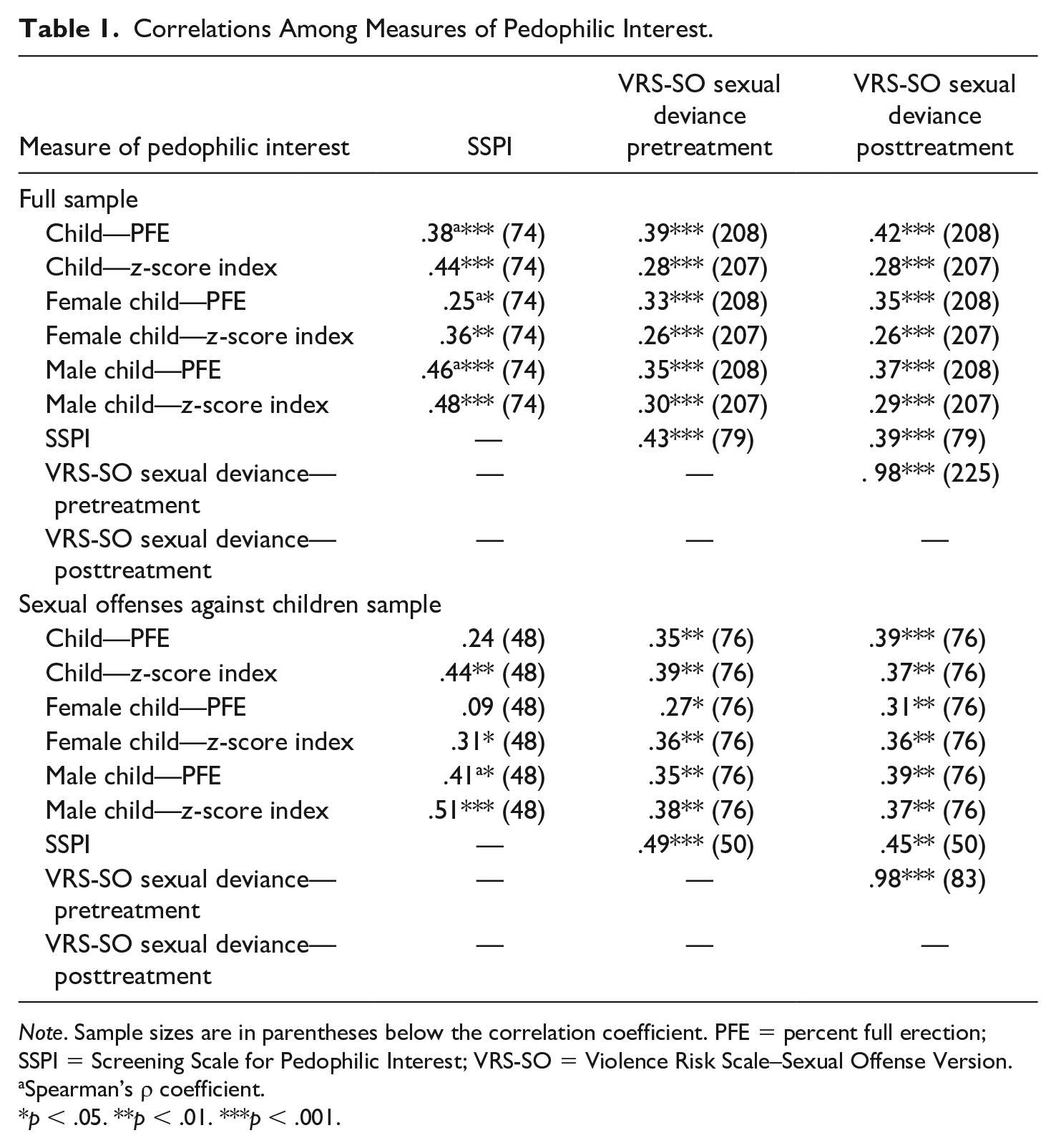
Note. Sample sizes are in parentheses below the correlation coefficient. PFE = percent full erection; SSPI = Screening Scale for Pedophilic Interest; VRS-SO = Violence Risk Scale–Sexual Offense Version.
Spearman’s ρ coefficient.
p < .05. **p < .01. ***p < .001.
Predictive Validity in Measures of Pedophilic Interest
The percent full erection measures of arousal to children and female children showed small to moderate and significant associations with sexual recidivism in both the full sample and the SOC sample (Tables 2 and 3). The percent full erection measure of arousal to male children showed a small, nonsignificant association with sexual recidivism in the full sample, while the association was moderate and significant in the SOC sample. Only the female child z-score index was associated with sexual recidivism and this finding was limited to the SOC sample. The SSPI had small, nonsignificant associations with sexual recidivism in both the full and SOC samples. The VRS-SO sexual deviance factor scores showed small to large, significant associations with sexual recidivism. The pattern of results suggests that in the full sample, associations were small (i.e., all AUCs < .64), whereas in the SOC sample, the associations were moderate to large (i.e., AUCs between .64 and .72). The same pattern was found when each measure of pedophilic interest was entered into separate Cox regression models.
Predictive Accuracy of Measures of Pedophilic Interest for Sexual Recidivism.
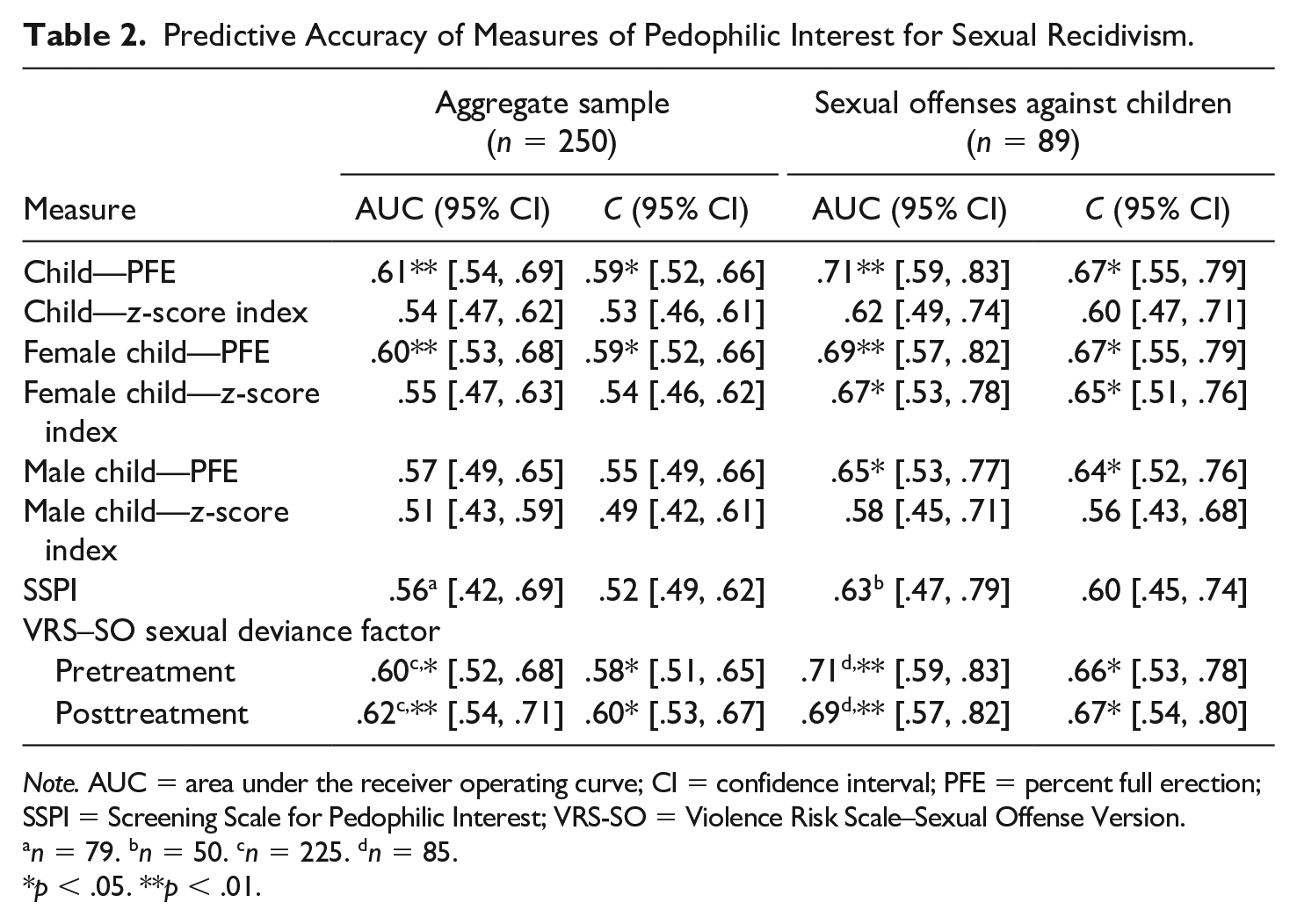
Note. AUC = area under the receiver operating curve; CI = confidence interval; PFE = percent full erection; SSPI = Screening Scale for Pedophilic Interest; VRS-SO = Violence Risk Scale–Sexual Offense Version.
n = 79. bn = 50. cn = 225. dn = 85.
p < .05. **p < .01.
Prediction of Sexual Recidivism Using Survival Analysis Across Measures of Pedophilic Interest.
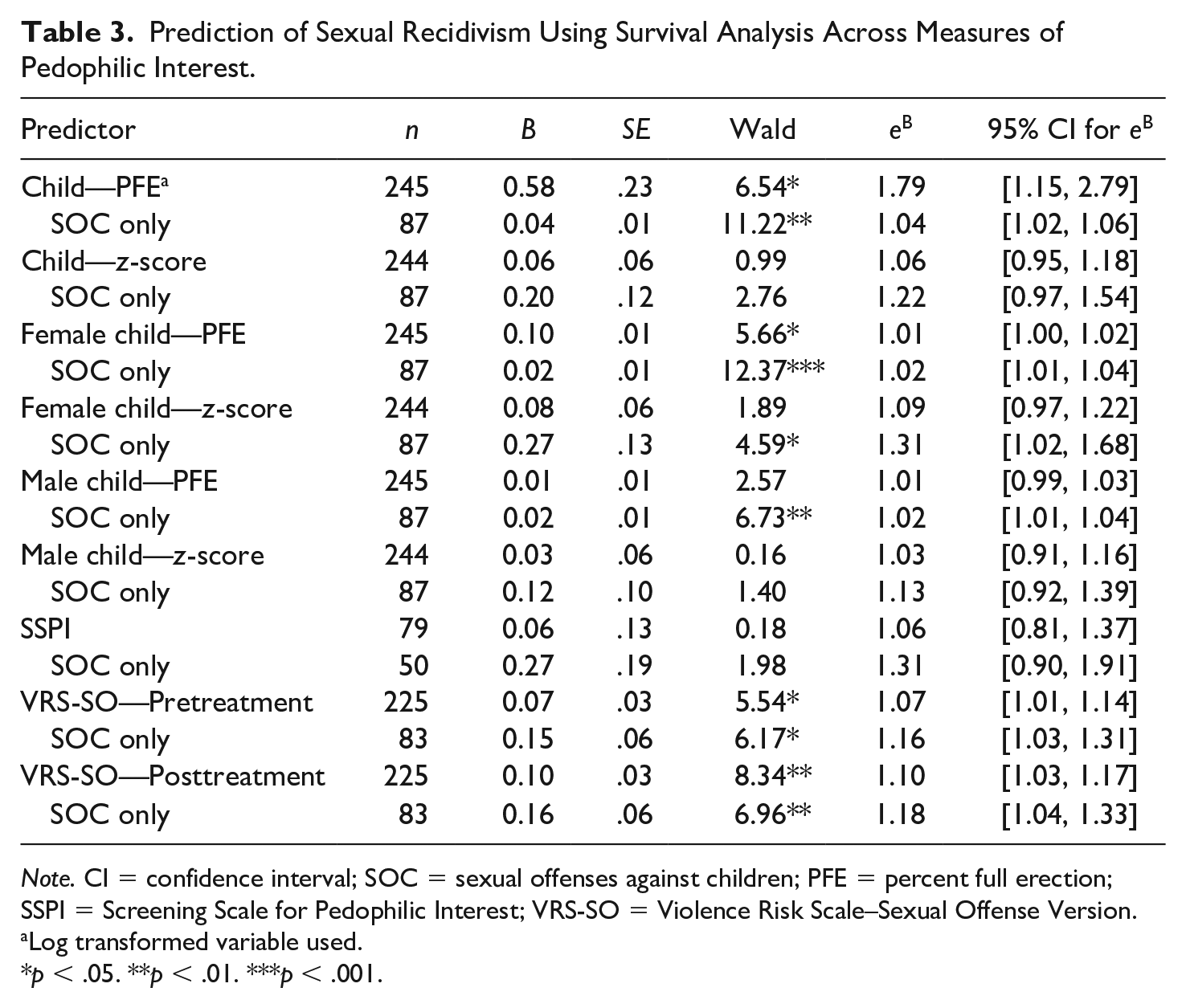
Note. CI = confidence interval; SOC = sexual offenses against children; PFE = percent full erection; SSPI = Screening Scale for Pedophilic Interest; VRS-SO = Violence Risk Scale–Sexual Offense Version.
Log transformed variable used.
p < .05. **p < .01. ***p < .001.
In the incremental validity analyses controlling for Statc-99R scores, the SSPI (both samples) and the phallometric measures of interest in boys (total sample) were not included, given that they did not have significant associations with sexual recidivism. In the full sample, only VRS-SO sexual deviance posttreatment scores predicted incrementally beyond Static-99R, and in the SOC sample, only the z-score phallometric measure of female-oriented pedophilic interest predicted incrementally to Static-99R (Table 4). No other measures of pedophilic interest significantly and incrementally predicted sexual recidivism, although this interpretation may warrant consideration of possible Type II error, given the magnitude of the hazard ratios and several nonsignificant results at p < .10.
Incremental Contribution for Measures of Pedophilic Interest to the Prediction of Sexual Recidivism.
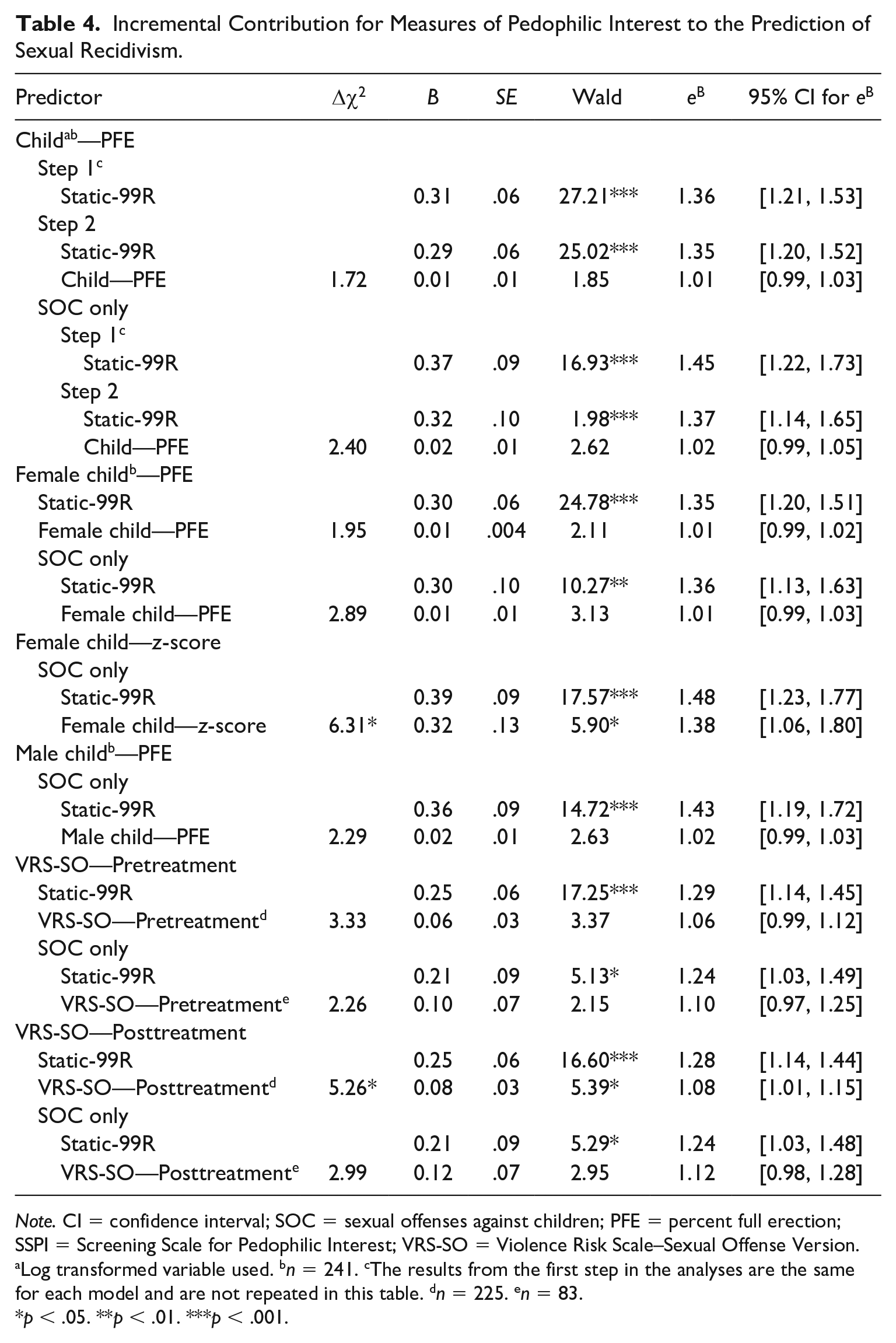
Note. CI = confidence interval; SOC = sexual offenses against children; PFE = percent full erection; SSPI = Screening Scale for Pedophilic Interest; VRS-SO = Violence Risk Scale–Sexual Offense Version.
Log transformed variable used. bn = 241. cThe results from the first step in the analyses are the same for each model and are not repeated in this table. dn = 225. en = 83.
p < .05. **p < .01. ***p < .001.
Predictive Validity in Latent Structural Models of Pedophilic Interest
Cox regression results for the association of phallometric test scores, using different latent structures to model scores, with sexual recidivism in the total sample and sexual offender against children sample are presented in Table 5. Across interest in both sexes and interest in female and male children, the continuous model was significantly predictive of sexual recidivism, whereas the dichotomous model was not associated with sexual recidivism. The three-level trichotomous model predicted sexual recidivism, but only in the SOC sample and for interest in both sexes and male children. The two-level trichotomous model predicted sexual recidivism consistently in the SOC sample.
Prediction of Sexual Recidivism Using Survival Analysis Across Three Models of Pedophilic Interest.
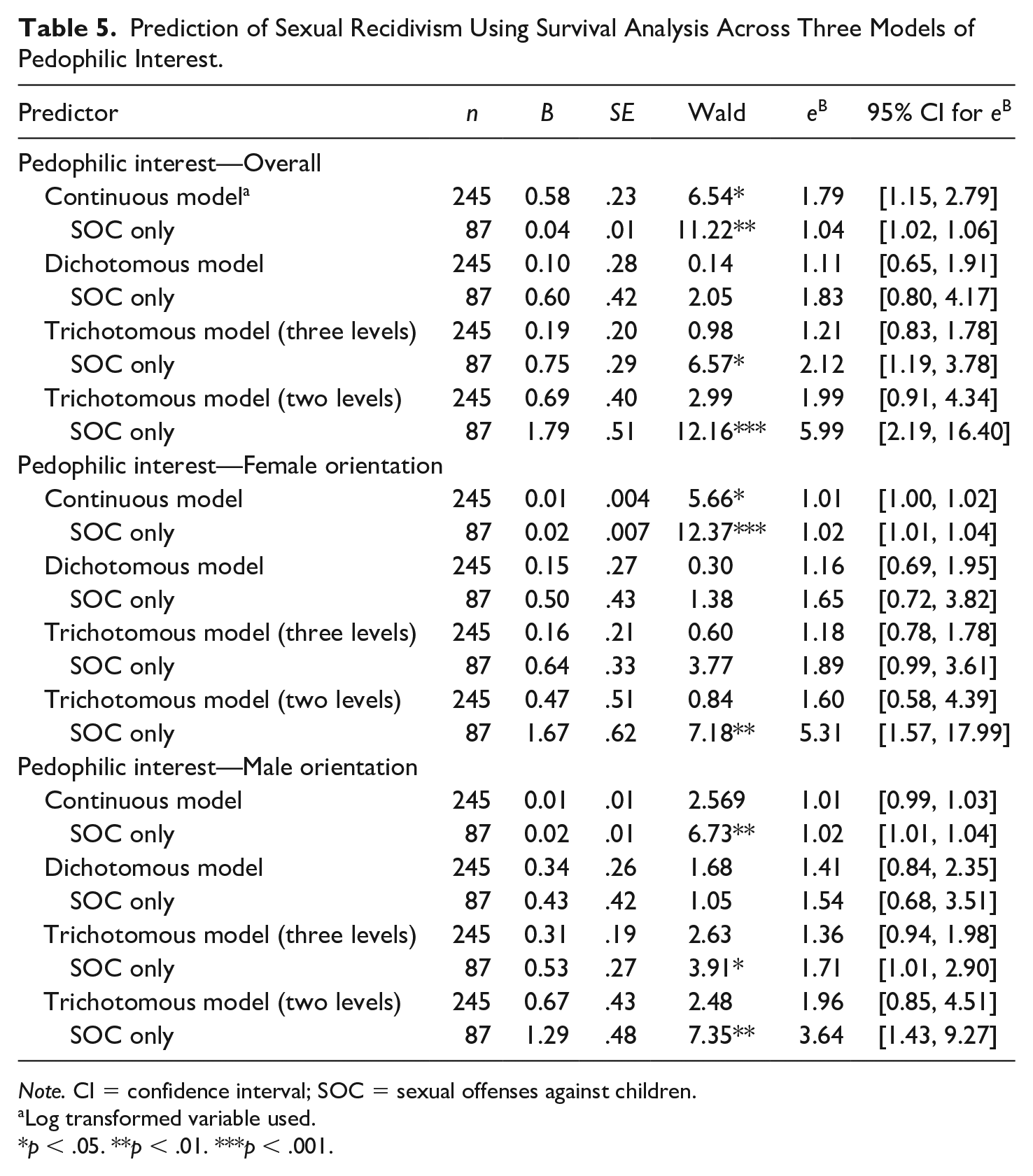
Note. CI = confidence interval; SOC = sexual offenses against children.
Log transformed variable used.
p < .05. **p < .01. ***p < .001.
The ability of latent structural models of pedophilic interest to add incremental predictive power when controlling for static risk was tested next (Table 6). The trichotomous model for sexual interest in both sexes of children combined, using two levels (i.e., preferentially pedophilic men vs. nonpreferentially pedophilic and nonpedophilic men 9 ), was a significant predictor of sexual recidivism, after controlling for Static-99R, in the SOC sample. The preferentially pedophilic men had over 3 times the relative risk of sexually reoffending compared with the other men in the SOC sample, with the recidivism rates being markedly different (75% vs. 24%). The continuous model for female-oriented pedophilic interest did continue to predict sexual recidivism when controlling for Static-99R scores, whereas the overall child and male-oriented pedophilic interest did not. No latent structural model of arousal to male children predicted sexual recidivism when controlling for Static-99R scores.
Incremental Contribution for Three Models of Pedophilic Interest of the Prediction of Sexual Recidivism Using Survival Analysis.
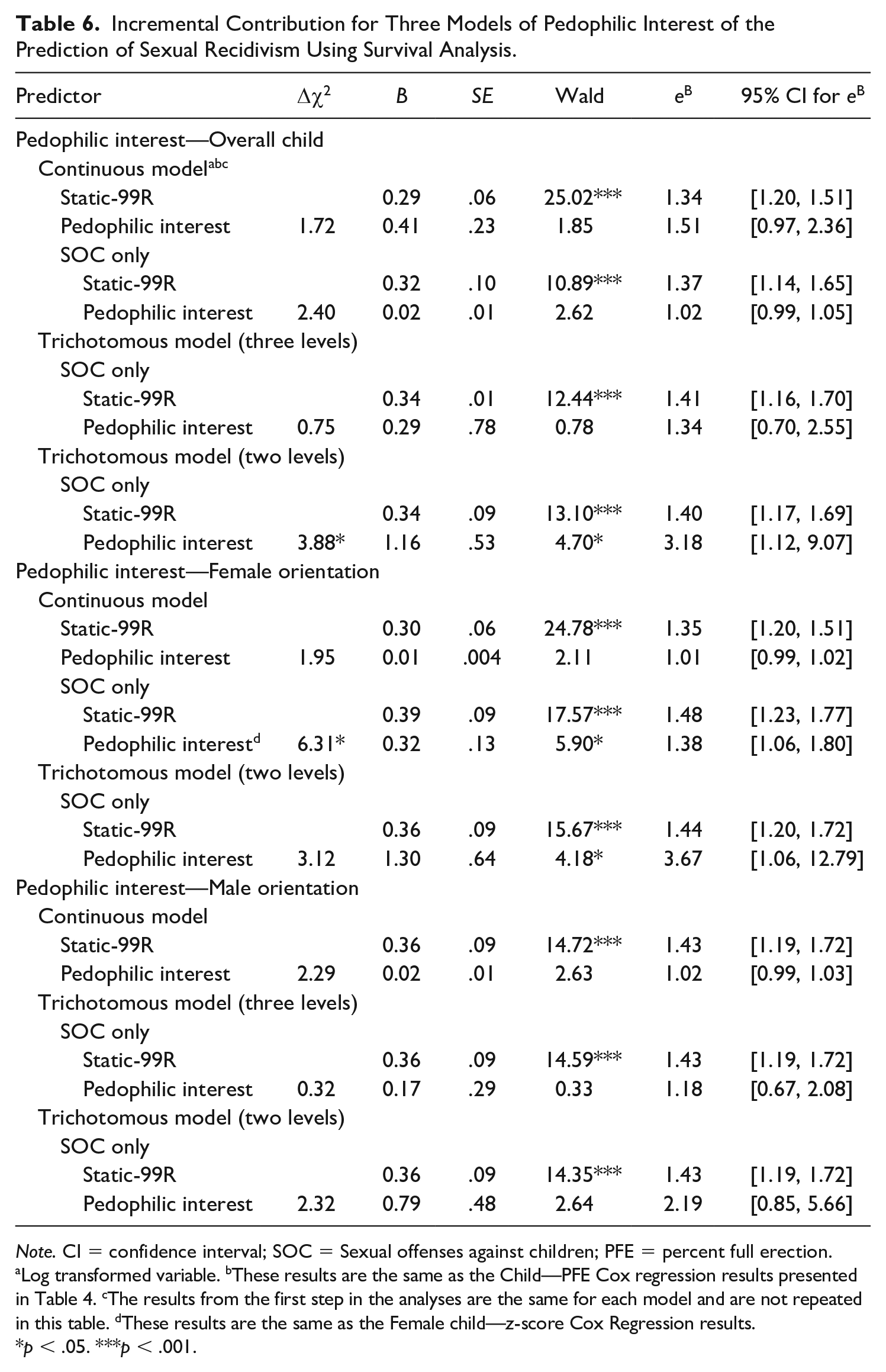
Note. CI = confidence interval; SOC = Sexual offenses against children; PFE = percent full erection.
Log transformed variable. bThese results are the same as the Child—PFE Cox regression results presented in Table 4. cThe results from the first step in the analyses are the same for each model and are not repeated in this table. dThese results are the same as the Female child—z-score Cox Regression results.
p < .05. ***p < .001.
Discussion
The present study examined validity in measures of pedophilic interest in a sample of incarcerated men. There was support for phallometric and VRS-SO measures as assessing similar constructs; there was less support for the SSPI as a measure of pedophilic interest, as this measure showed a somewhat more inconsistent pattern of relationships with the phallometric measures. A similar pattern of results emerged when the associations between the measures of pedophilic interest and sexual recidivism were examined. Phallometric testing and the VRS-SO showed consistent predictive associations, whereas the SSPI was not significantly related to sexual recidivism.
The present results provide validity support to the VRS-SO sexual deviance factor, extending the results of Canales et al. (2009) in a larger sample. The moderate correlations between the VRS-SO sexual deviance scores and phallometric testing support this factor of the VRS-SO capturing pedophilic interests. A somewhat different pattern was observed for the association between the SSPI and phallometric testing. Specifically, the SSPI was moderately correlated with relative measures of pedophilic interest. In contrast, the correlation between the SSPI and the absolute measure of pedophilic interest (i.e., percent full erection scores) did not reach statistical significance. This nonsignificant result is not consistent with past research examining the relationship of the SSPI with phallometric testing (Seto & Lalumière, 2001); however, the overall magnitude of the relationship is relatively similar in both studies. In interpreting the absolute magnitude of these correlations with phallometric testing, the VRS-SO sexual deviance factor and the SSPI may be thought of as proxies for pedophilic interests. The SSPI provides behavioral proxies of pedophilic interests, whereas the VRS-SO sexual deviance factor itself assesses a broader range of risk-relevant constructs than pedophilic interest.
The VRS-SO sexual deviance scores consistently predicted sexual recidivism, and when subjected to a stringent validity test, the VRS-SO sexual deviance posttreatment score, but not the pretreatment score, was associated with sexual recidivism after controlling for static risk. This likely reflects the fact that the posttreatment score is (a) a more proximal measure of risk, (b) based on more complete information, and (c) adjusted to reflect changes in the construct from treatment or other change agents. These results provide further evidence to the growing body of research supporting the validity of these factor scores as being meaningfully related to recidivism outcomes (Beggs & Grace, 2010; Canales et al., 2009; Olver & Wong, 2006).
The SSPI was generally not associated with sexual recidivism. The extant literature examining the predictive validity of the SSPI has produced mixed findings and the present finding contributes to the mixed support. For instance, in a large sample (n = 590), Brouillette-Alarie et al. (2018) did not find an association between the SSPI and sexual recidivism (Harrell’s C = .50). However, given the state of the science regarding the predictive validity of the SSPI, a meta-analytic estimate may resolve this inconsistency or identify factors that moderate this relationship.
Testing different methods of operationalizing latent structure of pedophilic interest, as measured by phallometry, showed that how pedophilic interests are operationalized has implications for the validity of test scores. There was no evidence to support grouping men into those who are pedophilic and those who are not pedophilic. There was some evidence to support a continuous model of pedophilic interest; however, this operationalization generally did not predict above static risk. The exception being when a relative measure of phallometric responding to prepubescent female children (i.e., a z-score-based female pedophilic index). There was somewhat more support for operationalizing pedophilic interests trichotomously; however, within this model, the two-level trichotomous model performed consistently across analyses, whereas the three-level trichotomous model did not. The results also suggest that pedophilic interests, when operationalized trichotomously, provide unique information beyond considerations of static risk. This is an important consideration, as few psychologically meaningful risk factors have been examined in terms of their ability to add unique information to static risk. A notable limitation in the current study that limits the strength of this interpretation is that the sample size for the preferentially pedophilic men was small (i.e., n = 6). Despite the small sample size, the incremental validity estimate provided by the two-level trichotomous model (eB = 3.18, 95% confidence interval [CI] = [1.12, 9.07]) was similar to the incremental validity estimate in past research (eB = 3.99, 95% CI = [1.37, 11.67]; Eher et al., 2015). Although these results are interesting and speak to the potential implications of a trichotomous model, the small sample size limits the confidence we can have that these results will replicate.
These latent structure results are consistent with the past body of research using different methods of operationalizing pedophilic interest. One limitation of the extant literature is that past studies provide a partial or indirect test of different latent structural models of pedophilic interest. That is, much of the past research has used one or two methods of operationalizing pedophilic interests and has provided various validity tests of that operationalization. For instance, Moulden et al. (2009) examined whether a dichotomous operationalization of pedophilic interest predicted sexual recidivism, whereas Wilson et al. (2011) examined both dichotomous and trichotomous operationalizations. This is not a limitation of these studies per se, as the authors were not necessarily attempting to test latent structural models and taxometric results were unavailable to these researchers. However, the present analyses provide a unique contribution to our understanding of which latent structural models provide more optimal operationalizations of pedophilic interest. The present results expand the previous findings and provide further evidence that preferentiality of pedophilic interest is a valid indicator of sexual recidivism risk.
Limitations
The present study did not include the revised version of the SSPI, the SSPI-2. The SSPI-2 has been found to have improved psychometric properties and to correlate with phallometric measures of pedophilic interest to a somewhat stronger degree than the original scale. We would anticipate that the inclusion of an item regarding child pornography offending would improve the relationship between the SSPI and the other measures used in this study, given the evidence that men who access online child sexual exploitation materials tend to be more pedophilic (Seto et al., 2006). The present data set did not allow for the scoring of the SSPI-2 due to the lack of a variable assessing child pornography offending. As a result, the validity of the SSPI presented in this study may be somewhat attenuated from the validity estimates the SSPI-2 may produce in a similar sample.
A further limitation is that pedophilia diagnosis was not available in this sample, negating our ability to examine the sensitivity and specificity of the VRS-SO sexual deviance factor for diagnosis. As well, we were unable to assess the correlation between VRS-SO-assessed sexual deviance and diagnosis, which would have contributed novel findings to existing research showing a correlation between the VRS-SO static, dynamic, and total score and exclusive pedophilia diagnosis (Eher et al., 2015). This set of analyses would provide further evidence for the VRS-SO sexual deviance factor as capturing pedophilic interest.
Finally, as the PFE cut scores for the trichotomous model were generated from the present study sample, this increases the possibility that the present results from taxon-based analyses may not be generalize to other samples. As such, future research should replicate and extend this work to identify optimal cut scores for multiple taxa. In addition, we were unable to identify the number of participants in the sample for whom a baseline reading of percent full erection was unavailable for which an estimate of percent full erection was used instead.
Conclusion
The three measures of pedophilic interests examined had varying degrees of validity support. Phallometric measures and the VRS-SO sexual deviance factor score were shown to have consistent convergent validity evidence and relatively stable associations with sexual recidivism. The SSPI had less validity support, with the most notable being a lack of association between SSPI scores and sexual recidivism.
Pedophilic interest is a robust predictor of sexual recidivism (McPhail et al., 2019), whereas recent research shows that there is not always a stable relationship (Stephens et al., 2017). One potential explanation for the variation in results is that different studies use different methods to operationalize the latent structure of pedophilic interest. The present study examined the validity of different operationalizations and found the most support for a trichotomous latent structure that grouped men into those with preferential pedophilic interest and those with nonpreferential pedophilic interest or no pedophilic interest. These results are consistent with past research that has considered preferentiality or exclusivity of pedophilic interests. Future research should replicate these validity tests and tests of latent structure in measures of pedophilic interest to improve confidence that preferentiality of pedophilic interest is important to consider. Larger sample sizes are required for such research, especially as pedophilic interest is more generally a risk factor within SOC samples and the base rate of preferential pedophilic interests within SOC samples is low.
Supplemental Material
Supplemental_table_2020-01-05 – Supplemental material for Convergent and Predictive Associations of Three Measures of Pedophilic Interest
Supplemental material, Supplemental_table_2020-01-05 for Convergent and Predictive Associations of Three Measures of Pedophilic Interest by Ian V. McPhail, Mark E. Olver, Terry P. Nicholaichuk and Andy Haynes in Sexual Abuse: A Journal of Research and Treatment
Footnotes
Authors’ Note
The authors take responsibility for the integrity of the data, the accuracy of the data analyses, and have made every effort to avoid inflating statistically significant results.
Declaration of Conflicting Interests
The author(s) declared the following potential conflicts of interest with respect to the research, authorship, and/or publication of this article: The second author received financial reimbursement for providing training on the Violence Risk Scale–Sexual Offense (VRS-SO).
Funding
The author(s) disclosed receipt of the following financial support for the research, authorship, and/or publication of this article: This research was supported by a Joseph-Arman Bombardier Canadian Graduate Scholarship awarded by the Social Sciences and Humanities Research Council of Canada. The funding source had no input into the research or the present manuscript.

Supplemental Material
Supplemental material for this article is available online.
Notes
References
Supplementary Material
Please find the following supplemental material available below.
For Open Access articles published under a Creative Commons License, all supplemental material carries the same license as the article it is associated with.
For non-Open Access articles published, all supplemental material carries a non-exclusive license, and permission requests for re-use of supplemental material or any part of supplemental material shall be sent directly to the copyright owner as specified in the copyright notice associated with the article.
