







Abstract
Introduction
Scorpion envenomation in the Amazon causes variable clinical manifestations. Data on these incidents, as well as on the demand, distribution, and use of antivenoms for treatment, are still limited in the literature. This study describes the epidemiology of scorpion envenomation and antivenom coverage in the Legal Amazon area from 2010 to 2020.
Methods
Data on scorpion sting victims, such as sex, age, circumstances of the incident (including location and time), and severity of the case, were obtained from an open health data system called the Notifiable Diseases Information System. The data on antivenom use to treat scorpion stings in each Amazonian state was estimated from consolidated data from the Strategic Inputs Information System.
Results
From 2010 to 2020, 62,388 people were envenomed by scorpions in the Legal Amazon area, resulting in 118 deaths (a fatality rate of 0.19%). The regular distribution of antivenom by the Brazilian Ministry of Health resulted in the allocation of 109,276 vials to the region. However, only 62.2% (of the regional antivenom stockpile 67,994 vials) was used. The state of Pará recorded the highest number of deaths from scorpion stings (33% of total deaths) and the highest use of antivenom per year (∼2705 vials over the 10-y period). Tocantins presented the highest incidence rate, with 119 cases per 100,000 inhabitants.
Conclusion
Although the availability of antivenom in the Legal Amazon between 2010 and 2020 exceeded actual demand, this was not enough to prevent the deaths of 118 victims of scorpion stings. These fatalities primarily affected demographic groups without referral units in their regions and point to critical failures in the spatial distribution of emergency medical services. Rural communities at risk of animal envenomation in the Amazon need timely treatment, a crucial condition for saving lives.
Introduction
Projections for future trends warn of an increase in the number of scorpion sting cases in Brazil.1–3 Scorpion envenomation in Brazil affects both urban and rural areas,1,3 including geographically isolated Amerindian communities. 4 Scorpion stings induce symptoms ranging from mild to severe, including fatal cases.5–7 The toxins injected by these animals trigger an inflammatory response mediated by the elevated production of cytokines.7,8
In Brazil's Southeast region, 85,090 people were treated for scorpion stings in 2022. 5 In the same year, the number of such incidents in the Legal Amazon was 10,473, and the case fatality rate in the region was the highest of the year. 5 [The Legal Amazon (Amazônia Legal) is an administrative and planning area of Brazil, established to promote the socioeconomic development of the region, encompassing the states of Acre, Amapá, Amazonas, Mato Grosso, Pará, Rondônia, Roraima, Tocantins, and the western part of Maranhão.] In Brazil, 5 of the 8 medically important scorpion species occur in the Amazon rainforest: Tityus apiacas, Tityus obscurus, Tityus silvestris, Tityus metuendus, and Tityus strandi.9–11 In the southeast region, where T. serrulatus is primarily responsible for incidents, envenomation by this species predominantly causes autonomic symptoms, characterized by intense sweating, vomiting, tachycardia, and cardiac arrhythmia.5,6 In contrast, the Lower Amazon region (2°26’27.4”S, 54°42’57.9”W), in Pará, harbors species such as T. obscurus, which produce venom with neurologic activity (Figure 1A).8–11
Patients stung by T. obscurus typically report an “electric shock” sensation throughout the body, suggesting significant local variations in the clinical presentation of scorpion envenomation. 8 In addition to toxinologic differences, research on incidents involving venomous animals in the Amazon region has reported a significant disparity in the number of referral hospitals between the states of the north and southeast regions of the country. 12 The state of São Paulo (southeast), where the antivenom for scorpion stings is produced, has 231 referral units (data updated on September 17, 2025), approximately half the total number of referral units in the Legal Amazon. 12 The small number of health units in high-risk areas for scorpion stings, such as the Amazon, primarily affects rural communities that rely exclusively on the Unified Health System for medical emergencies.
Among the Brazilian states with the highest incidence of scorpion stings in 2022, Rondônia (12°16’31.3”S, 62°29’516.4”W), located in the northern region, had the highest mortality rate (0.34%) in the country. 5 This type of scorpion incident in the state highlights the need to expand therapeutic coverage through referral services.7,8 In the Amazon region, territories where the incidence of scorpion stings is critical face challenges such as reduced coverage by referral units, 12 a shortage of medical professionals, and large geographic distances between communities and hospitals, which hinders timely treatment.5,10–11 These challenges have persisted in the region for decades and are most significant among rural families vulnerable to neglected tropical diseases in areas far from capital cities. 13
In this study, we describe the epidemiology of scorpion stings in the Legal Amazon area, covering the period from 2010 to 2020. We calculated case fatality and incidence rates per 100,000 inhabitants based on open health data. Aspects such as the spatial distribution and the proportion of antivenom stock used in each state affected by scorpion stings are discussed, including the problem of scorpionism in the Lower Amazon region of Pará. In this region of the Amazon rainforest, a distinct epidemiologic pattern of scorpion envenomation has been reported for the past 25 years, especially characterized by neurologic manifestations (Figure 1A).14–16
Methods
Study Area and Population
The territory of the Legal Amazon encompasses the states of Amazonas, Roraima, Rondônia, Acre, Pará, Amapá, Mato Grosso, Maranhão, and Tocantins and the western part of Maranhão. 17 The region's total population is ∼28 million inhabitants, including a diverse range of communities, both Amerindian and non-Amerindian. According to the 2022 Census. 17 the Legal Amazon is home to 868,400 Indigenous people, representing 51.23% of Brazil's total Indigenous population. 17 The region's climate is predominantly hot and humid, with average annual rainfall of ∼2300 mm. 18 The rainy season occurs between November and March, when monthly averages can exceed 300 mm. 18 In contrast, the dry season extends from June to November, with average monthly rainfall exceeding 100 mm.
Study Design and Data Sources
The Notifiable Diseases Information System (SINAN) (SINAN; https://portalsinan.saude.gov.br/) is a public database regulated by the Ministry of Health for reporting and investigating disease cases, including venomous animal stings/bites. To determine the epidemiologic profile of scorpion stings, we collected specific data on age, sex, time between the scorpion sting and hospitalization, and case severity. Data on the demand, distribution, and use of specific antivenoms for scorpion envenomation were extracted from the Strategic Inputs Information System (SIES; http://sies.saude.gov.br/senha.asp).19 This database is an online tool for managing, analyzing, monitoring, and moving strategic supplies: vaccines, serums, and immunoglobulins. 19 The data from this study are in the public domain and do not require approval by an ethics committee for disclosure.
Statistical Analysis
Incidence rates were calculated per 100,000 inhabitants using population estimates from the Brazilian Institute of Geography and Statistics (IBGE; https://www.ibge.gov.br/).17 Case fatality rates, expressed as percentages, were obtained from SINAN data for the period 2010 to 2020. Antivenom use rates were calculated by dividing the number of ampules used by the number of ampules distributed and multiplying the result by 100. Temporal trends in envenoming cases were analyzed using descriptive statistics. Finally, all graphs were generated using GraphPad Prism 8.0 (GraphPad Software Inc, La Jolla, CA).
Results
Epidemiology of Envenomation
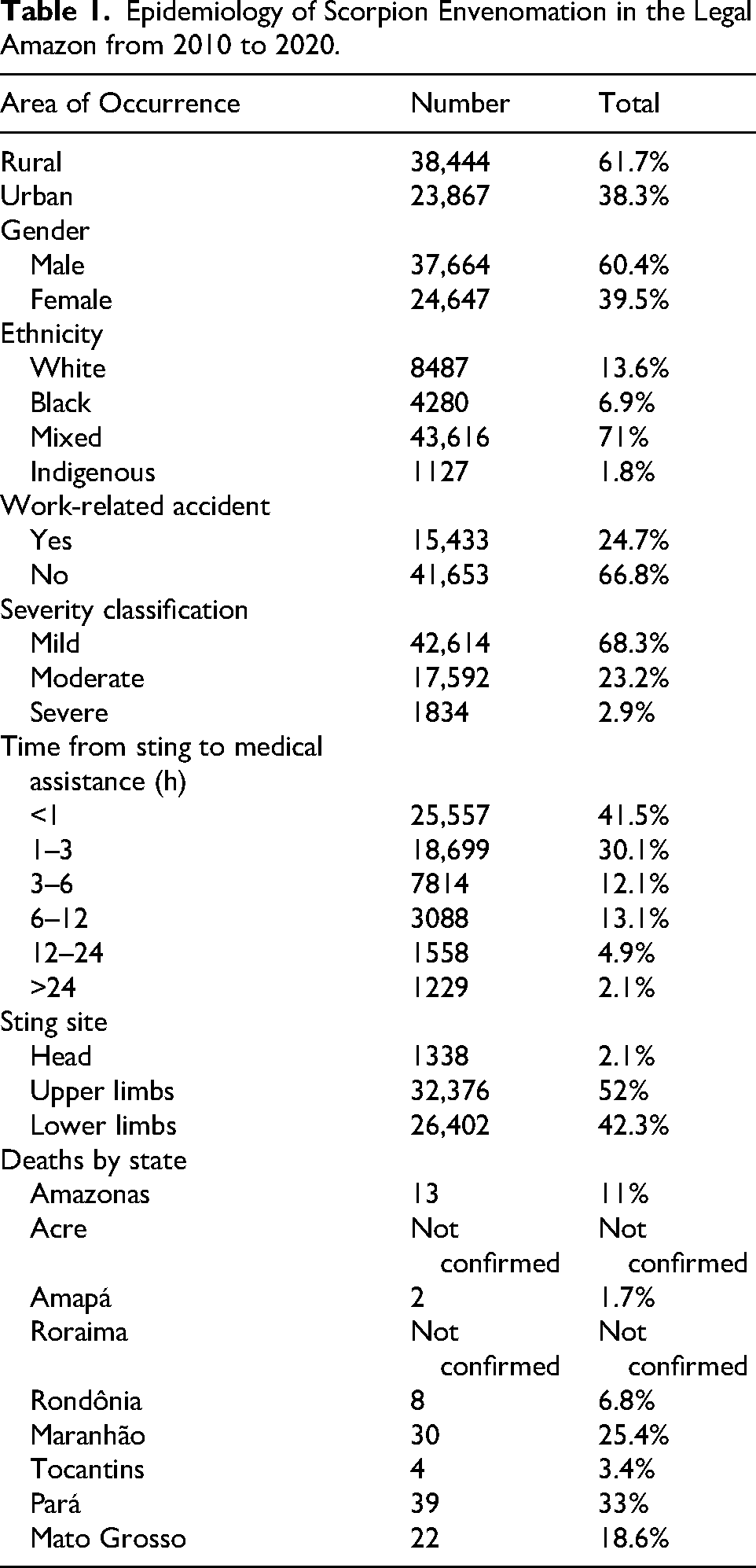
From 2010 to 2020, 62,388 people sought treatment for scorpion stings at referral centers in the Legal Amazon area (Table 1). The incidence rate in the region ranged from 18.6 to 119 cases per 100,000 inhabitants (Figure 2B). The demographic profile of the victims revealed that most were male (60.4%), with those who self-identified as mixed-race being the most affected, representing 43,973 cases (70.5%) (Table 1). Hospital treatment with antivenom was mainly administered to individuals aged 20 to 49 y (Table 2).
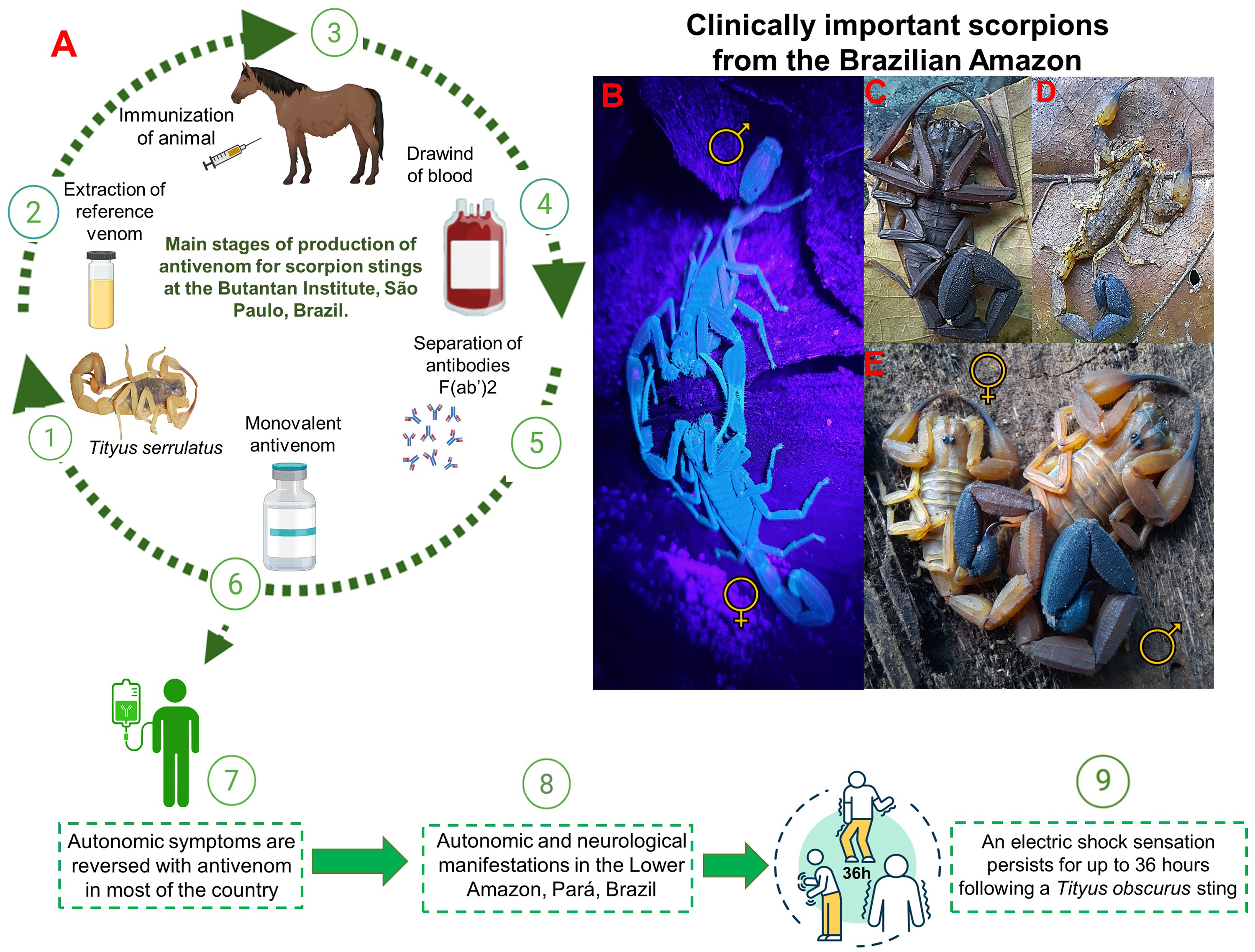
Schematic representation of scorpion antivenom production by the Butantan Institute, the largest manufacturer of immunobiologic agents in Brazil. The scheme includes (1) Tityus serrulatus as a reference species; (2) extraction of crude scorpion venom; (3) equine immunization with T. serrulatus venom; (4) collection of hyperimmune plasma; (5) enzymatic digestion and purification of the F(ab’)2 fragment; and (6) manufacture of monovalent antivenom with rigorous quality control (minimum neutralization: 1 mg of venom/mL). A, Critical limitation: This antivenom with antibodies against T. serrulatus toxins has reduced therapeutic efficacy against T. obscurus envenomation in the Lower Amazon, where patients typically suffer from persistent neurologic manifestations despite standard treatment. B, Amazonian species of medical importance: males and females of T. metuendus from the Manaus region (3°00’00.2”S, 60°03’05.6”W), Amazonas. C, A male T. obscurus from Santarém, Pará (2°27’05.1”S, 54°47’43.0”W). D, A male T. silvestris from Manaus (3°00’00.2”S, 60°03’05.6”W), Amazonas. E, Males and females of T. strandi from Manaus (3°00’00.2”S, 60°03’05.6”W). Photos of T. serrulatus by Denise Candido (A) and Jonas Martins (B–E).
Epidemiology of Scorpion Envenomation in the Legal Amazon from 2010 to 2020.
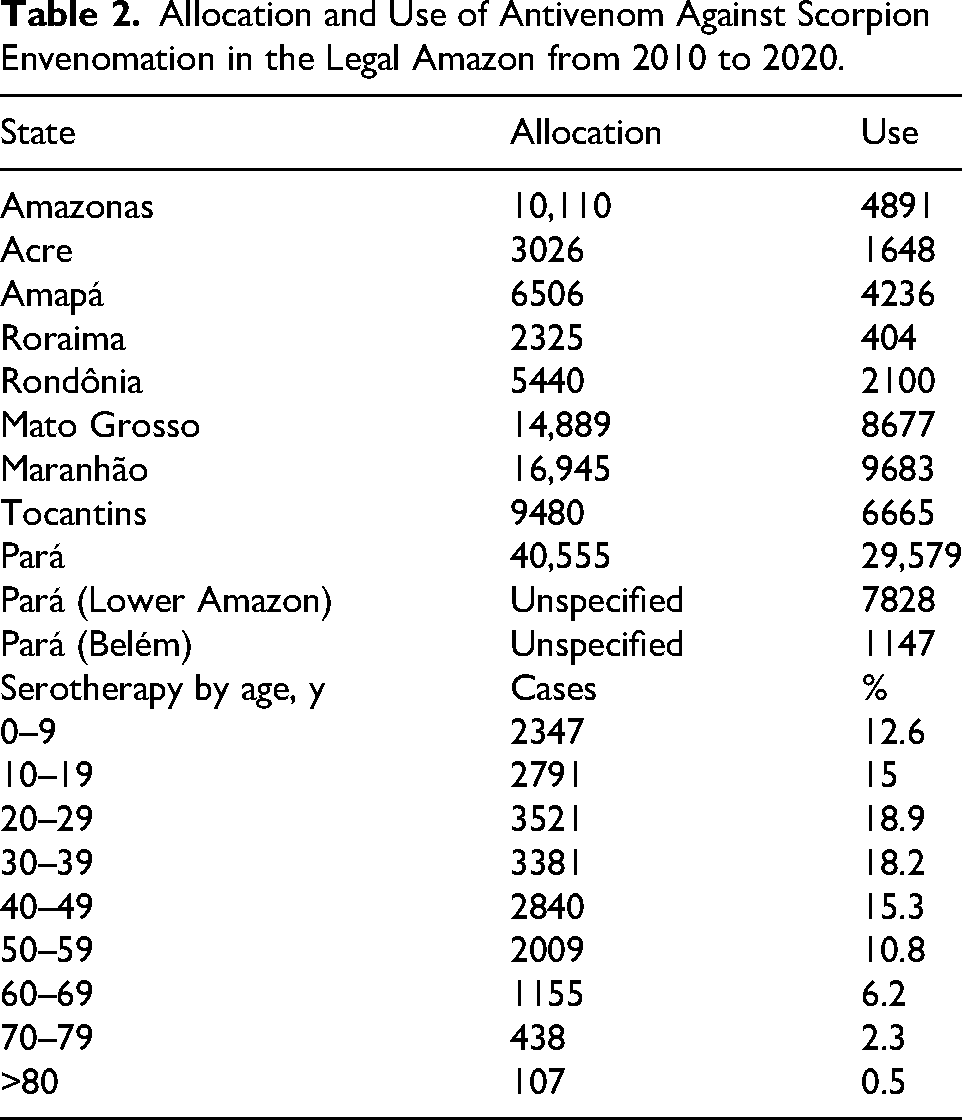
Allocation and Use of Antivenom Against Scorpion Envenomation in the Legal Amazon from 2010 to 2020.
Most scorpion incidents occurred outside the workplace (66.8%, or 41,653 cases), whereas 24.7% (15,433 cases) were related to work activities (Table 1). Regarding severity, when antivenom was necessary, 28.2% of cases (17,592) were classified as moderate and 3% (1834) as severe. The therapeutic itinerary of some scorpion sting victims in the Amazon region until reaching the hospital is presented in Figure 2A.
Our epidemiologic survey showed that 41.5% of the people stung by scorpions (n=25,557) in the Brazilian Amazon reached a referral center within 1 h of the accident (Table 1). In contrast, 9.5% sought hospital care between 6 and 24 h after the sting. Scorpion envenomation resulted in 118 deaths, of which 32 occurred in individuals under 14 y of age. Geographically, most deaths were concentrated in 3 states: Pará (39 cases; 33%), Maranhão (30 cases; 25.4%), and Mato Grosso (22 cases; 18.6%) (Table 1). Scorpion stings in Acre and Roraima, territories with distinct vegetation types, did not cause any deaths in the decade studied (Table 1). In these Amazonian states, incidents involving scorpions occurred mainly in the months of January, June, and October.
Tocantins had a critical incidence, with 119 cases per 100,000 inhabitants (Figure 2B). In this state, clinical records of scorpion incidents showed that 78% were classified as mild (8851 cases), 18.4% as moderate (2845 cases), and 0.8% as severe (91 cases). Our seasonal analysis of incidents in Tocantins suggests that the referral units in that region treated more people stung by scorpions between April and June and between September and December. These months coincide with the rainy seasons in the region. The highest concentration of envenoming cases (n=19,993) was confirmed in Pará, with an incidence of 24.6 cases per 100,000 inhabitants. The Xingu (3°14’28.8”S, 51°50’34.2”W) and Lower Amazon regions accounted for ∼62% of the cases reported in the state. These regions also showed the highest use of antivenom for the treatment of victims (Table 1).
Antivenom Therapy
A discrepancy between the allocation and use of commercial antivenom was observed in various states, such as Maranhão (Table 2), where 33 deaths from scorpion stings occurred during the study period. Although Maranhão received 16,945 ampules, only 9683 (57.1%) were effectively used for treatment. Pará significantly surpassed all other states in the Legal Amazon area in both the distribution of antivenom (40,555 ampules) and its effective use (29,579 ampules) (Table 2). A surprising finding emerged when comparing the Lower Amazon area in Pará, comprising only 13 municipalities, with some entire Amazonian states. This subregion alone, at the mouth of the Rio Tapajós, used 7828 vials of antivenom, exceeding the proportion of vials applied in the states of Amazonas, Acre, Roraima, Rondônia, and Amapá (Table 2).
The state of Tocantins experienced the highest number of scorpion envenoming cases, with an incidence rate of 119 cases per 100,000 inhabitants. Of the total number of antivenom ampules that arrived in the state from 2010 to 2020 (n=9480), 6665 vials were used. Regarding antivenom therapy by age group, young adults (20 to 29 y of age) were the group most affected by scorpion stings, representing 18.9% of clinical cases. Children and adolescents (0 to 9 y of age) accounted for 12.6% of clinical envenoming cases.
Discussion
Scorpion Envenomation
Public health data compiled by SINAN and IBGE were fundamental to identify Amazonian municipalities with incidences of scorpion stings. The 0- to 500-km graphic scale in Figure 2B allowed measuring the distances between risk regions, revealing regional epidemiologic patterns. The spatial distribution of incidence data showed well-defined epidemiologic clusters, mainly in the eastern portion of the Legal Amazon, including Pará, Maranhão, and Tocantins. This east-west gradient shows that critical incidence rates concentrated in Pará and Tocantins, requiring priority attention from public health authorities, whereas the lowest incidence rates were found in the western portion, including Amazonas and Acre (Figure 2B).
The distribution of scorpion incidents in the Amazon does not appear to be random (Figure 2B) but likely reflects different regional determinants. 20 The areas of high incidence in southern Pará, Tocantins, and Maranhão coincide with intense land-use transformation, where the expansion of livestock farming and logging generates ecologically unstable environments that may promote the dispersal of venomous animals toward human settlements (Figure 3).
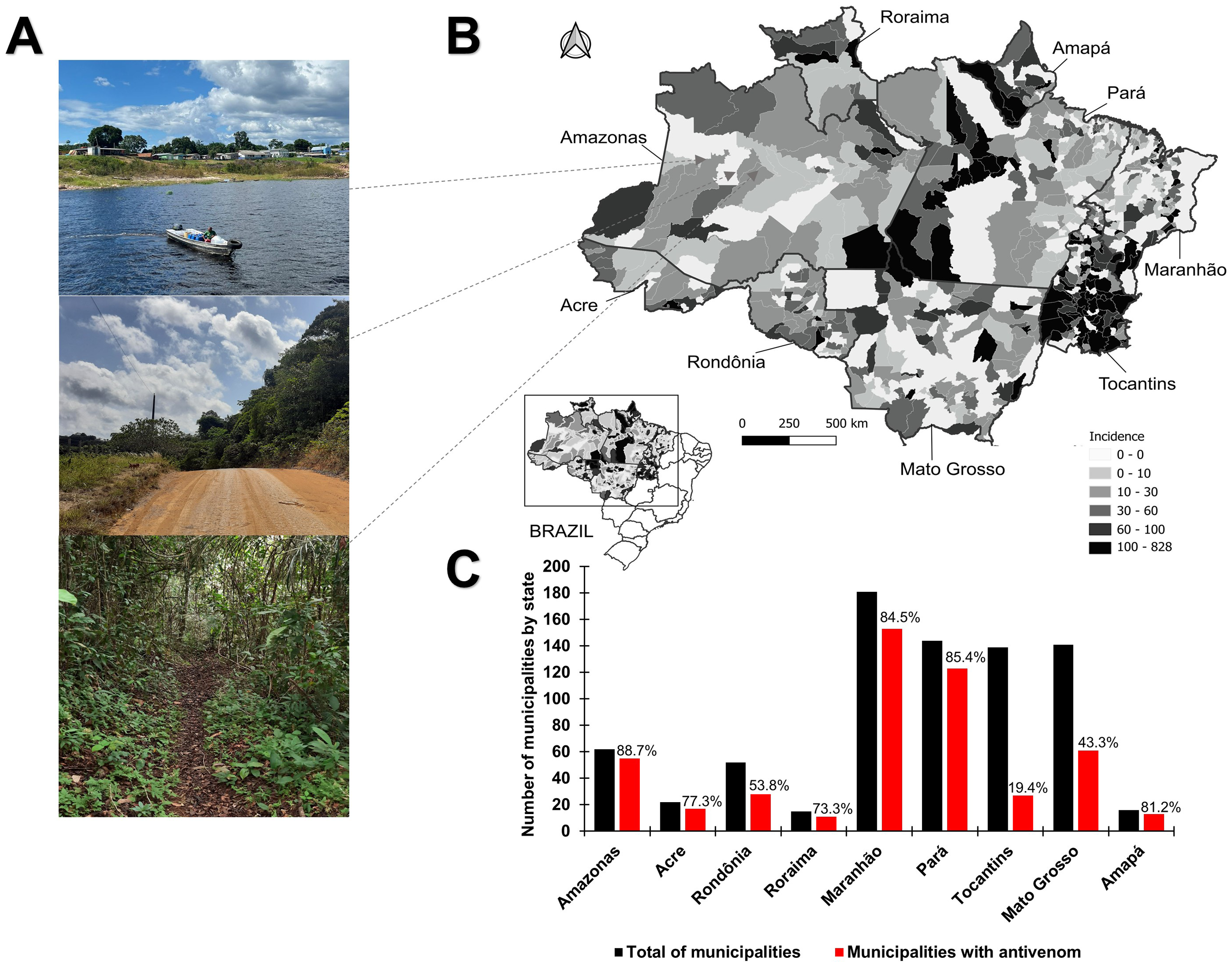
(A) Therapeutic journey of scorpion sting victims in rural Amazon. Patients may travel for hours by river (canoe/motorboat), unpaved roads, and forest trails to reach health centers; (B) Map showing the incidence of scorpion envenoming in the Legal Amazon in 2019. The map reveals a high incidence of scorpion stings (>100 cases/100,000 population) in Tocantins and Pará; (C) Antivenom coverage by Amazonian municipality. Map source: Brazilian Ministry of Health. (https://www.gov.br/saude/pt-br/assuntos/saude-de-a-a-z/a/animais-peconhentos/hospitais-de-referencia). Photos by Jonas Martins.
Tocantins in particular requires the regular distribution of antivenom and greater coverage of emergency medical services (Figure 2C). Several municipalities in this state exceeded the limit of 100 cases per 100,000 inhabitants, forming areas of high incidence in the region (Figure 2B). For example, in Palmas (10°14’59.3”S, 48°19’22.8”W), the capital, 354 cases were recorded in 2019 alone. States geographically close to Tocantins and with lower incidence, such as Maranhão and Pará, maintain the largest networks of referral units for the treatment of scorpion envenoming in the Legal Amazon. 12
The distribution of time to hospital care indicates that many reported envenomation cases occurred near urban centers (Table 1), facilitating faster access to healthcare. However, delays in seeking treatment may be related to long distances from health facilities, particularly in rural areas. 4 Additionally, some victims may initially resort to self-care or traditional healers without medical training, 10 further postponing adequate and definitive treatment.
In rural Amazon, the risks of scorpion stings are high, as demonstrated in the city of Barcelos (0°58’15.9”S, 62°55’20.8”W), Amazonas, where Tityus scorpions with undocumented venom potential were found in human settlements (Figure 3) (Figure 2). In Santa Isabel do Rio Negro (0°24’51.5”S, 65°00’57.9”W), also in Amazonas, subsistence activities such as cassava (Manihot esculenta) cultivation in Baniwa Indigenous communities exposes rural workers to scorpions hidden in the leaf litter and among the natural products harvested in the forests (Figure 4). Many of these rainforest areas exhibit high levels of human subsistence logging activity, which increases the likelihood of accidental encounters with venomous animals. 12

Abandoned residential lot in the center of the municipality of Barcelos (0°58’31.0”S, 62°55’33.0”W), Middle Rio Negro, Amazonas. The root system of a palm tree on the site harbored 12 specimens of Tityus sylviae, an animal described in 2005 with unknown toxic potential. The scorpions were previously collected by a local resident, preserved in 70% alcohol (yellow circle), and delivered to our team for taxonomic identification. Photos by Jonas Martins.
Antivenom Coverage in the Legal Amazon
Based on SIES data, we found that different states in the Legal Amazon received more batches of antivenom than necessary for the treatment of scorpion stings. The use of antivenom varied among the states (Table 2). For example, in 2010, Pará received 8400 vials, but only 3150 vials were used that year (data from the SIES archive), revealing a possible disparity between the amount allocated and the actual use of the antivenom. In total, Pará referral units administered >29,000 vials of antivenom specific for scorpion stings over these 10 y, whereas most other states used <10,000 vials each (Table 2).
In Tocantins, despite having the highest incidence of scorpion stings in this study (Figure 2B), antivenom coverage is the lowest in the region, with only 19.4% of municipalities having reference units (Figure 2C). Between 2010 and 2020, referral hospitals in Tocantins administered 6665 vials of anti-scorpion serum, representing ∼22.5% of the volume used in Pará (n=29,579) (Table 2). Clinical data from the municipality of Araguaína (7°11’33.2”S, 48°12’41.9”W) in Tocantins revealed that in 2019, most registered cases were classified as mild (84.7%). 21 Despite its relevance, scorpion envenomation in Tocantins lacks more in-depth preclinical, clinical, and epidemiologic studies as well as effective preventive measures to reduce exposure to scorpion stings.
In the Amazon, reference units are not distributed equitably. 12 There are >400 of them spread across the 9 states of the Legal Amazon, with the largest numbers in Pará (n=143) and Maranhão (n=109). 12 In border areas, such as between Pará and Tocantins, victims of scorpion stings can be treated in municipal hospitals, such as in the town of São Geraldo do Araguaia (6°23’35.1”S, 48°33’49.1”W).
The proportion of antivenom use in reference units decreased in 2010 and 2016, particularly in states with extensive river systems, such as Amazonas (data from the SIES archive). This reduction in the number of treatments can be explained in part by episodes of hydrologic drought in the Amazon Basin that occurred in 2010 and more recently in 2023 and 2024,23,24 which likely increased the geographic isolation of dozens of rural communities, hindering both the transportation of people to essential services and the distribution of hospital supplies, including antivenoms.
A total of 41,282 of the antivenom vials intended for scorpion stings in the Legal Amazon between 2010 and 2020 were not used (Table 2).The discrepancy between the distribution of antivenom (109,276 vials) and their use (67,994 vials) requires the National Department of Immunization to raise awareness among state health authorities about underutilization. Overestimated demand projections by state health departments, potentially based on pessimistic incident scenarios rather than historical utilization data, can lead to stockpiling that exceeds actual clinical needs. The National Immunization Program recommends that state health departments maintain accurate epidemiologic data on scorpion incidents. Losses due to expired antivenom should be accurately recorded on the SIES website. 19 Shortages of these essential medications in high-risk areas for scorpion envenoming increase the likelihood of death, whereas surpluses waste public resources.
Antivenom Coverage in the Lower Amazon
The state of Pará is composed of 144 municipalities, of which 13 are located in the Lower Amazon region. This region has 15 health units equipped to provide adequate care to victims of envenoming by venomous animals (Figure 5). These units have 2 types of anti-arachnid antivenom produced at the Butantan Institute: a specific formulation for scorpions (Figure 5A) and a polyvalent serum that neutralizes the toxins of both scorpions and 2 species of spiders of medical relevance. However, neither antivenom was developed specifically against the venoms of scorpion and spider species from the Amazon, 12 which poses a significant therapeutic challenge.

The traditional harvesting and processing of cassava (Manihot esculenta) in Baré indigenous communities (Upper Rio Negro, Amazonas, Brazil) highlight the risks of scorpion stings associated with subsistence activities based in the forest. (A) A 25-y-old Baré Indigenous woman carrying freshly harvested cassava from a plantation in a nonfloodable forest area. The yellow circle highlights the absence of protective footwear and gloves during labor activities. Dozens of cassava cultivation areas in the Amazon rainforest overlap with areas inhabited by scorpions of the genus Tityus. During the rainy season in the Amazon, different scorpions may hide in the plantations, increasing the risk of accidental contact; (B) Postharvest storage: baskets made of woven palm leaves (paneiros) containing cassava roots derived from forest. Paneiros can provide shelter for scorpion species such as T. silvestris; (C) An elderly Baré woman (65 y old) peeling cassava manually. The yellow arrows indicate her unprotected hands in direct contact with the product; (D) A man of the Baré Indigenous group grating cassava manually in a traditional kitchen with dim lighting. The yellow arrows highlight his unprotected hands and feet. Reduced visibility, combined with repetitive hand movements, increases the likelihood and reduces the perception of scorpions hidden in the environment; (E) An Indigenous person handling cassava starch (tapioca gum). Photos by Sandro Batista da Silva, reprinted with permission.
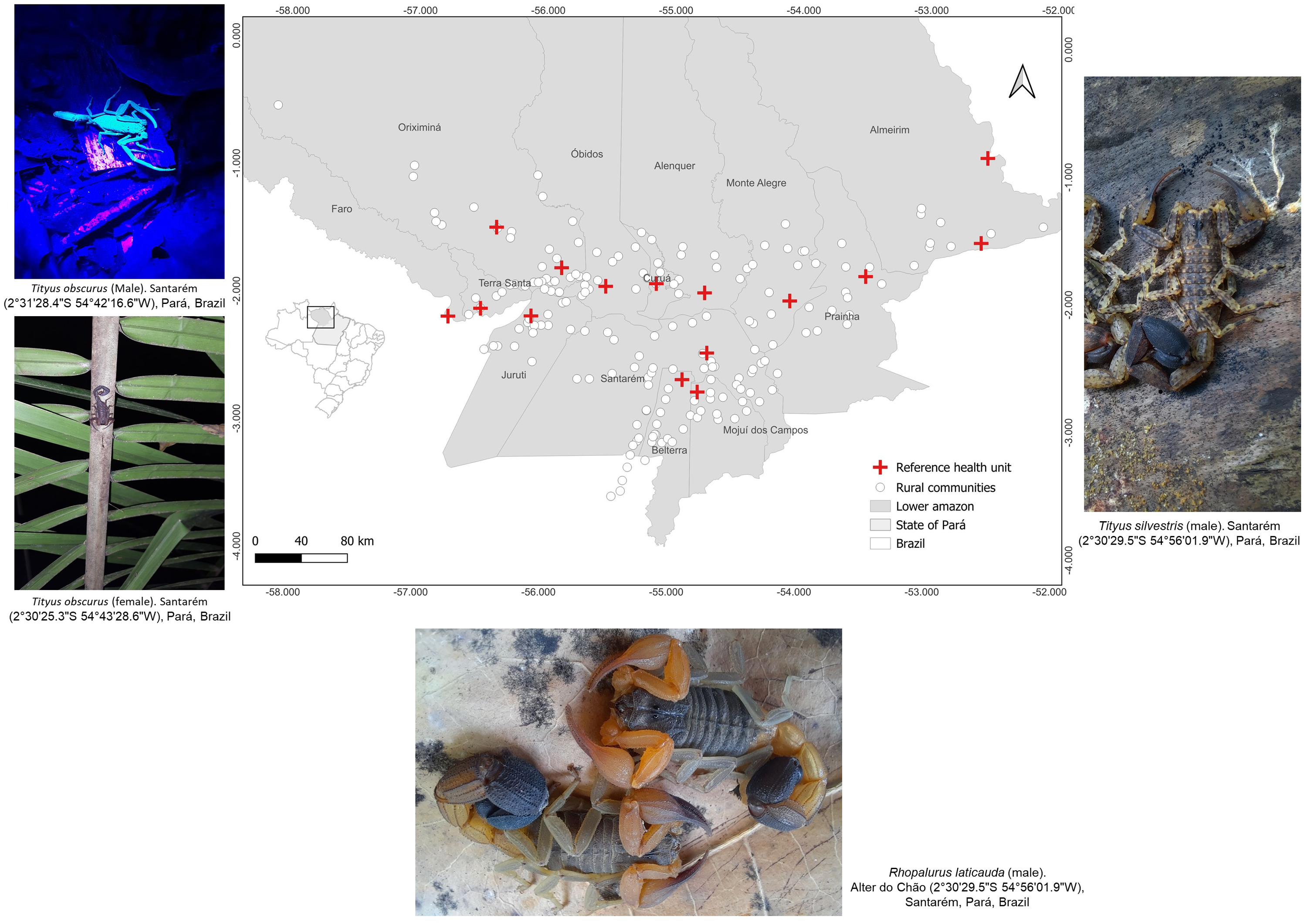
Spatial distribution of 15 reference units equipped for the treatment of venomous animal bites/stings in the Lower Amazon, Pará. Health units in the Lower Amazon administered 7828 ampoules (19.3% of the total in Pará), reflecting the importance of sufficient antivenom availability in this high-risk area. Photos show scorpion species found in Santarém: Tityus obscurus (left), Tityus silvestris (right), and Rhopalurus laticauda (below) (synonyms: Rhopalurus crassicauda and Rhopalurus amazonicus). Photos by Jonas Martins.
The scorpion T. obscurus in the Lower Amazon produces venom with neurologic activity (Figure 1A). The referral health unit in this region treats patients envenomated by this scorpion who have myoclonic movements, visual disturbances, ataxia, and peculiar sensations often described as “electric shocks” radiating throughout the body.10,15,22 Healthcare professionals observed refractory manifestations that persist for >36 h, even after administration of commercial antivenom (Figure 5).
From 2010 to 2020, large areas of Pará, where T. obscurus is responsible for human envenomation, such as the regions of Belém (1°27’21.9”S, 48°30’03.7”W) and the Lower Amazon (2°26’26.2”S, 54°42’55.4”W), showed different proportions of antivenom use. For example, the Lower Amazon used 19.3% of the total antivenom allocated in Pará (Table 2). The municipalities of Almerim (1°31’39.8”S, 52°34’38.4”W) and Santarém (2°26’26.2”S, 54°42’55.4”W), both located in the Lower Amazon region, used 3726 and 1508 vials, respectively. During the study period, entire states affected by scorpion stings, such as Amazonas, Amapá, Roraima, Rondônia, and Acre, used smaller quantities of antivenom than did the Lower Amazon region (Table 2).
Experimental evidence from the southeastern region of Brazil suggests that the commercial antivenom produced at the Butantan Institute neutralizes scorpion toxins of medical importance in the country. 10 However, clinical data from reference units in the Lower Amazon reported a reduced potency of the antivenom intended for that region.14–16,22 The neurologic effects of T. obscurus venom have not yet been confirmed in experimental animal models,25–27 creating a critical gap between clinical reality and laboratory research. This gap highlights the urgent need for improved experimental protocols that better reflect the true neurotoxic potential of the venom of this Amazonian scorpion.
Limitations
This study has some limitations. Our data were compiled from the SINAN, the primary source of information about incidents involving venomous animals in Brazil. However, SINAN data are fed with basic clinical information about scorpion sting cases. After more than 3 decades of operation, the system is still updated with incomplete data on incidents. For example, the database lacks information on comorbidities, use of popular therapeutic practices, and other factors that may compromise clinical progress and treatment outcomes. These gaps limit the understanding of scorpionism as a public health problem in the country.
In the Amazon region, members of rural communities frequently apply plant leaves and animal fat at the scorpion sting site as initial treatment. 10 However, data of this nature are generally absent from the SINAN form. A recent study suggests that this form, completed at health facilities, needs to be updated and should include fields, for example, for confirmation of the taxonomic identification of the specimens involved. 4 Due to the absence of these data, it was not possible to determine whether the incidents were caused by species with or without medical importance.
Furthermore, in rural Amazon, some factors hinder the capture of scorpions responsible for envenomation. Many sting cases occur in remote locations without electricity or in workplaces with poor lighting (Figure 3), making it difficult to visualize and capture the animal for identification. Our findings call attention to the severity of the scorpionism problem in the Legal Amazon area. We propose strategies to reduce the risk of fatal outcomes and suggest further studies to understand the magnitude of the problem.
Conclusion
Between 2010 and 2020, scorpion envenoming in the Legal Amazon area resulted in 118 deaths. Despite the adequate distribution of antivenom (109,276 vials), their use (62.2%) did not prevent fatalities. The high incidence of scorpion stings in the states of Pará and Tocantins requires priority health interventions, possibly including the redistribution of unused antivenom stocks and the expansion of referral units in remote areas. In Pará, the development of specific therapeutic protocols for T obscurus envenomation is essential because the venom of this animal has neurologic activity.
Footnotes
Acknowledgments
We thank Flávio Dourado of the Brazilian Ministry of Health for providing epidemiologic data and information on allocation and use of antivenoms.
Financial/Material Support
This study was supported by the Amazonas State Research Support Foundation (FAPEAM, POSGRAD 353/2023).
Author Contribution(s)
Declaration of Conflicting Interests
The authors declared no potential conflicts of interest with respect to the research, authorship, and/or publication of this article.
Funding
The authors received no financial support for the research, authorship, and/or publication of this article.