







Abstract
The orthogonal polynomial approach has been used to solve the guided wave propagation in structures for about 20 years, but was limited until now to one-dimensional structures, that is, structures with a finite dimension in only one direction, such as horizontally infinite flat plates and axially infinite hollow cylinders. This paper extends the orthogonal polynomial approach to two-dimensional structures, that is, structures with finite dimensions in two directions, with illustration on the multilayered rectangular rod. Through numerical comparison with the available results, the validity of the extended polynomial approach is illustrated. The dispersion curves and displacement distributions of various layered rectangular rods are obtained to show their guided wave characteristics.
Keywords
1. Introduction
As early as 1972, the orthogonal polynomial approach was developed to solve the line acoustic waves in homogeneous semi-infinite wedges [1]. After that, this approach was used to solve various wave and vibrational problems, from acoustic waves in wedges and ridges [1–3], to surface acoustic waves in layered [4,5] and inhomogeneous [6] semi-infinite structures. Later on, it was extended to investigate Lamb-like guided acoustic waves in multilayered [7] and functionally graded [8] finite-thickness plates.
The polynomial approach has one specificity: it directly incorporates the boundary conditions into the equations of motion by the device of assuming position-dependent material physical constants. The motion equations are then converted into a matrix eigenvalue problem thanks to an expansion of the independent mechanical variables in an appropriate series of orthonormal functions: this makes possible the semi-variational determination of the frequencies of modes and associated profiles. This orthogonal polynomial approach with automatically satisfied boundary conditions is not limited to only flat surfaces, but is capable of calculating the vibration modes of curved waveguides. It has been used to calculate axial waves [9] and circumferential waves [10] in anisotropic functionally graded cylinders. It has also been applied to calculate toroidal waves on the surface of spherical curved plates [11]. This polynomial approach has also been applied to piezoelectric-piezomagnetic composites to study the magneto-electric coupling [12]. Very recently, it has been extended to investigate the generalized thermoelastic waves [13] and viscoelastic waves [14] in multilayered and graded plates.
Although the polynomial approach is versatile in solving the wave problem, so far it can only deal with wave propagation in one-dimensional (1D) structures, that is, structures with a finite dimension in only one direction, such as horizontally infinite flat plates and axially infinite hollow cylinders. In this paper, an extension of the orthogonal polynomial approach is proposed to solve wave motion in a two-dimensional (2D) structure with illustration on a layered rectangular rod. Through numerical comparisons with available results, the validity of the extended polynomial approach is illustrated. The dispersion curves and displacement profiles of various layered rectangular rods are shown. In this paper, traction-free boundary conditions are assumed.
2. Mathematics and formulation of the problem
Consider an anisotropic N-layered rectangular rod that is infinite in the direction of wave propagation. Its width is d and its total height is h =
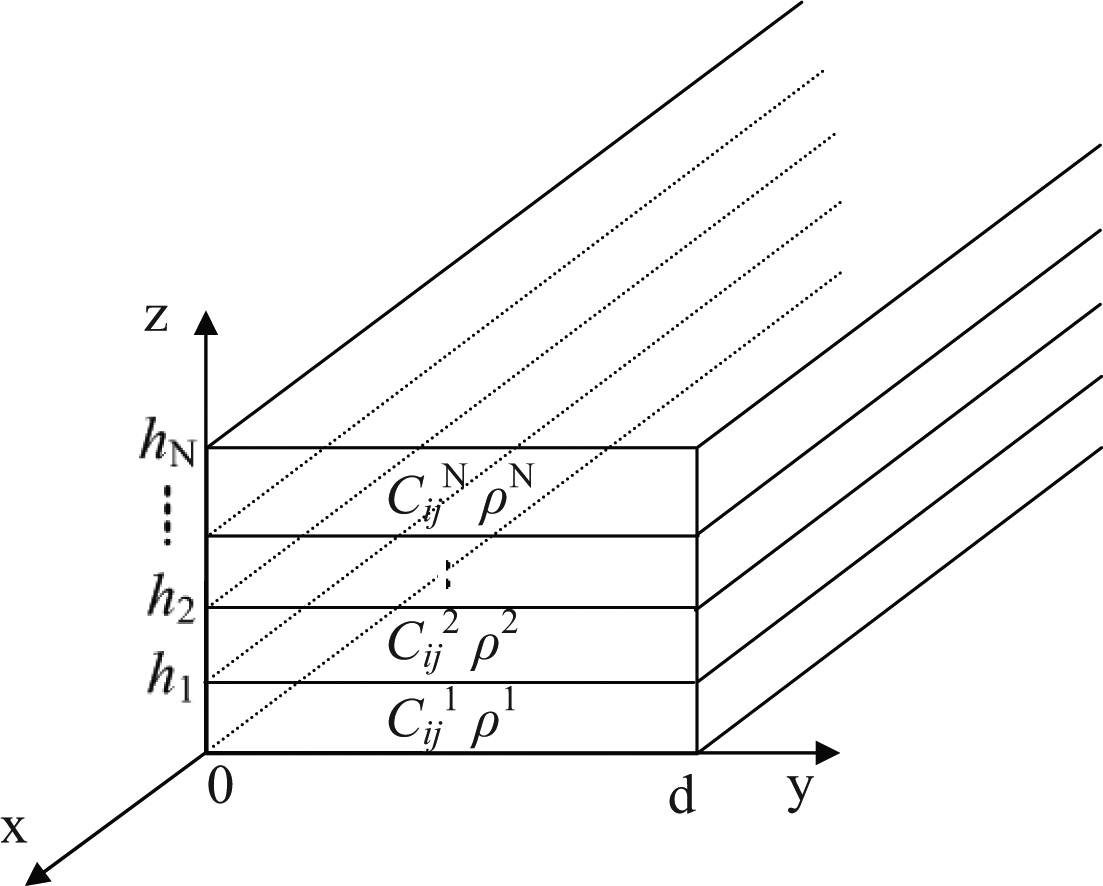
Schematic diagram of a multilayered rectangular rod.
For the wave propagation considered in this paper, the body forces are assumed to be zero. Thus, the dynamic equations for the rectangular rod are



where Tij and ui are the stress tensor and the elastic displacement vector, respectively;
The relationships between strains and displacements can be expressed as


where
By introducing the function


the stress-free boundary conditions (

where Cij are the elastic coefficients. Let us take
To meet the continuity conditions of the layered structure, its elastic constants are expressed as

where N is the number of the layers and

For a free harmonic plane wave propagating in the x direction in a rectangular rod, we assume the displacement components to be of the form



where U(y,z), V(y,z), W(y,z) represent the amplitudes of vibration in the x, y and z directions respectively. k is the magnitude of the wave vector in the propagation direction, and
Substituting Equations (2), (4), (6) into Equation (1) , the governing differential equations in terms of displacement components can be obtained:



where the comma followed by a space variable means a derivative with respect to that space variable.
To solve the coupled wave equations (7), U(y,z), V(y,z) and W(y,z) are all expanded into a double series of Legendre orthogonal polynomials:

where

with
Equations (7) are multiplied by



where
Equations (10) can be written compactly as

Equations (11) represent an eigenvalue problem. The eigenvalue
3. Numerical results
Based on the previous formulations, computer programs in terms of the extended polynomial approach have been written using Mathematica to calculate the dispersion curves and the displacement distributions for the layered rectangular bars.
3.1 Comparison with an available solution from the semi-analytical finite element method
Firstly, for validation, we calculated a two-layer, equal thickness, ±30° (with respect to the x-axis) fiber composite rectangular bar to make a comparison with available results from the semi-analytical finite element method [15]. The bar’s width-to-height ratio is d/h =2, with properties given by Equation (12). Figure 2 shows the corresponding dispersion curves, of which solid lines are from Taweel et al. [15], and dotted lines are obtained from the proposed polynomial approach. In Figure 2,

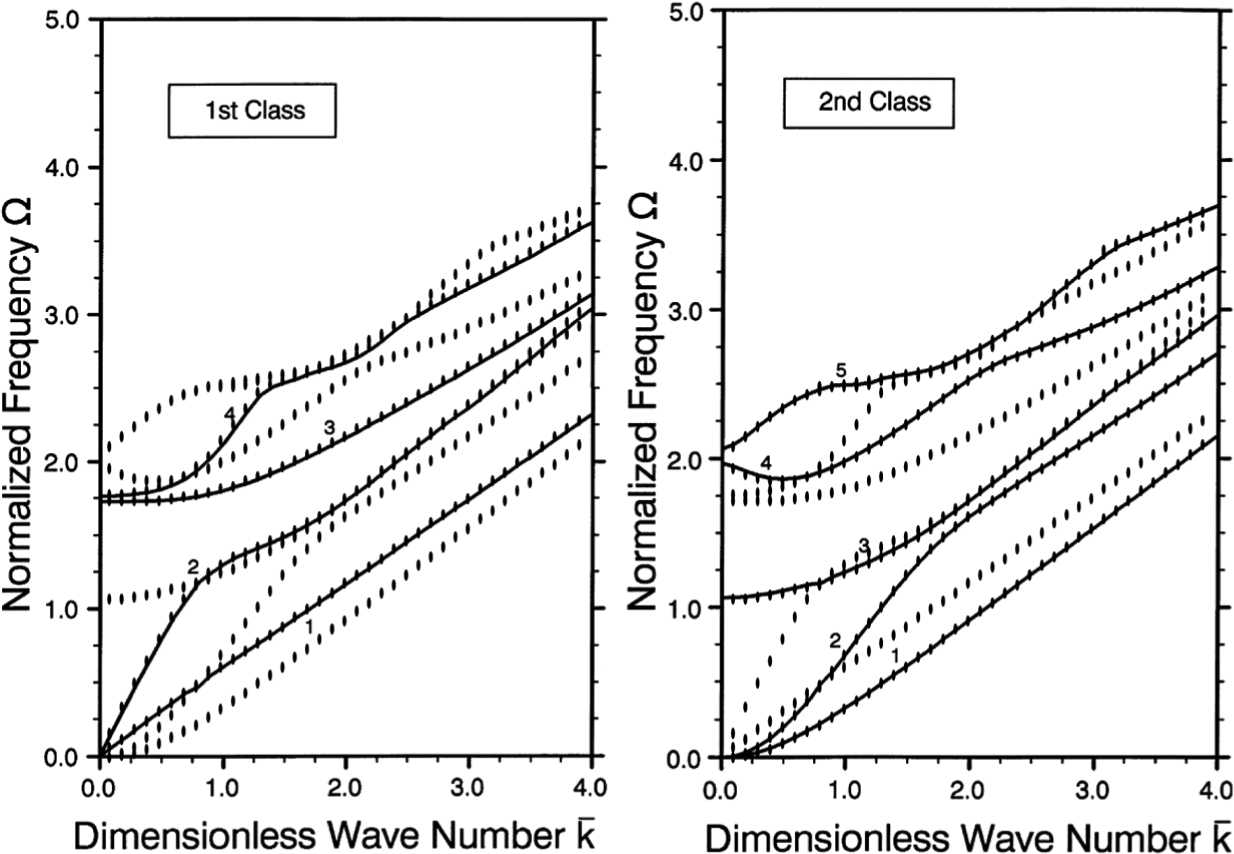
Dispersion curves for the two-layer, equal thickness, ±30° fiber composite rectangular bar; solid lines: the results from the semi-analytical finite element method [15], dotted lines: the authors’ results.
3.2 Guided waves in multilayered rectangular rods
This section takes the common ceramics-metal layered structures as examples to discuss the guided wave characteristics in multilayered rectangular rods.
Firstly, a sandwich rectangular rod that is composed of silicon nitride (N) and steel (S) is studied. The stacking sequence and thicknesses are S/N/S-1/1/1 (m) and the width-to-height ratio is d/h = 1. The obtained phase velocity dispersion curves are shown in Figure 3. In this figure, the dispersion curves of the first two modes are very close to each other. Figures 4–7 are the displacement distributions of the first four modes at kd = 3.3. Because of the symmetry of the structure in both material and geometry, the wave modes can be classified into four kinds of modes. For the first mode, the displacement in wave propagating direction (displacement u) is approximately symmetric about z = h/2 and is antisymmetric about y = d/2. These modes for which displacements are sym-z/asym-y are called quasi-flexural z (QFz) modes. The displacement u of the second mode is approximately sym-y/asym-z. It is a quasi-flexural y (QFy) mode. The displacement u of the third mode is approximately asym-y/asym-z. It is a quasi-torsion mode (QT mode). The displacement u of the fourth mode is approximately sym-y/sym-z. It is a quasi-extensional mode (QE mode). On the other hand, the displacement v of the QFz0 mode is approximately sym-y/sym-z and w is asym-y/asym-z; the displacement v of the QFy0 mode is asym-y/asym-z and w is sym-y/sym-z; the displacement v of the QT0 mode is sym-y/asym-z and w is asym-y/sym-z; for the QE0 mode, the displacement v is asym-y/sym-z and w is sym-y/asym-z. For higher modes, the approximately symmetric cases of the displacements are the same. Due to space limitation, displacement distributions of higher modes are not shown here.
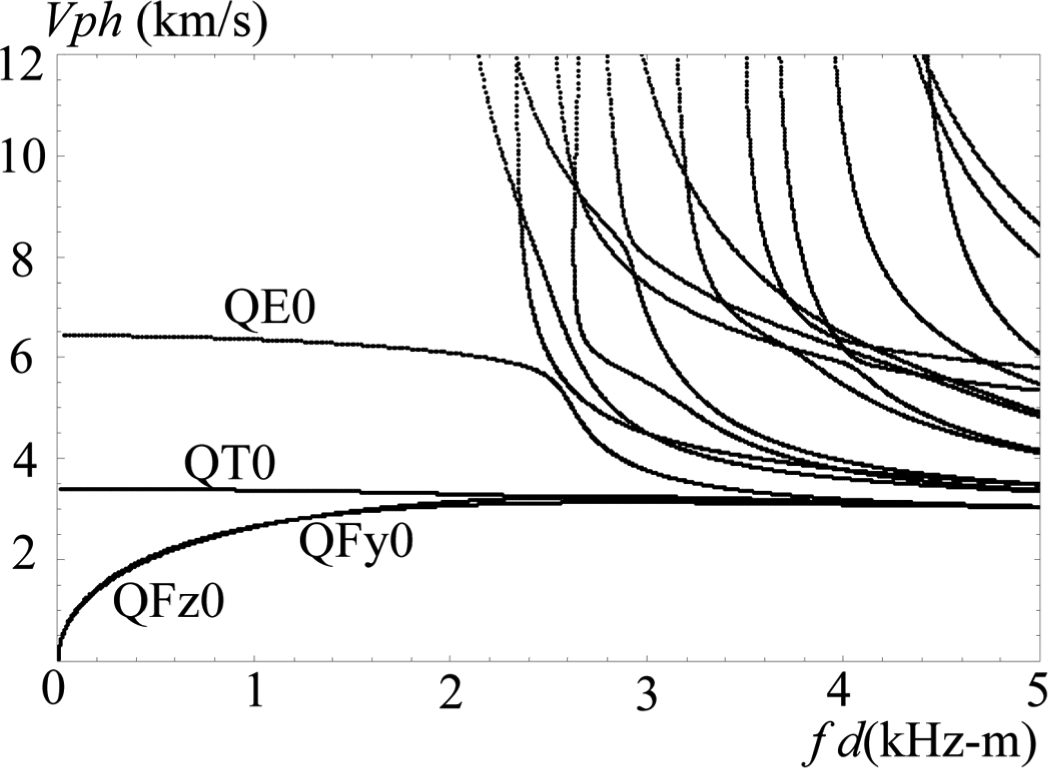
Phase velocity dispersion curves for the S/N/S-1/1/1 square rod.
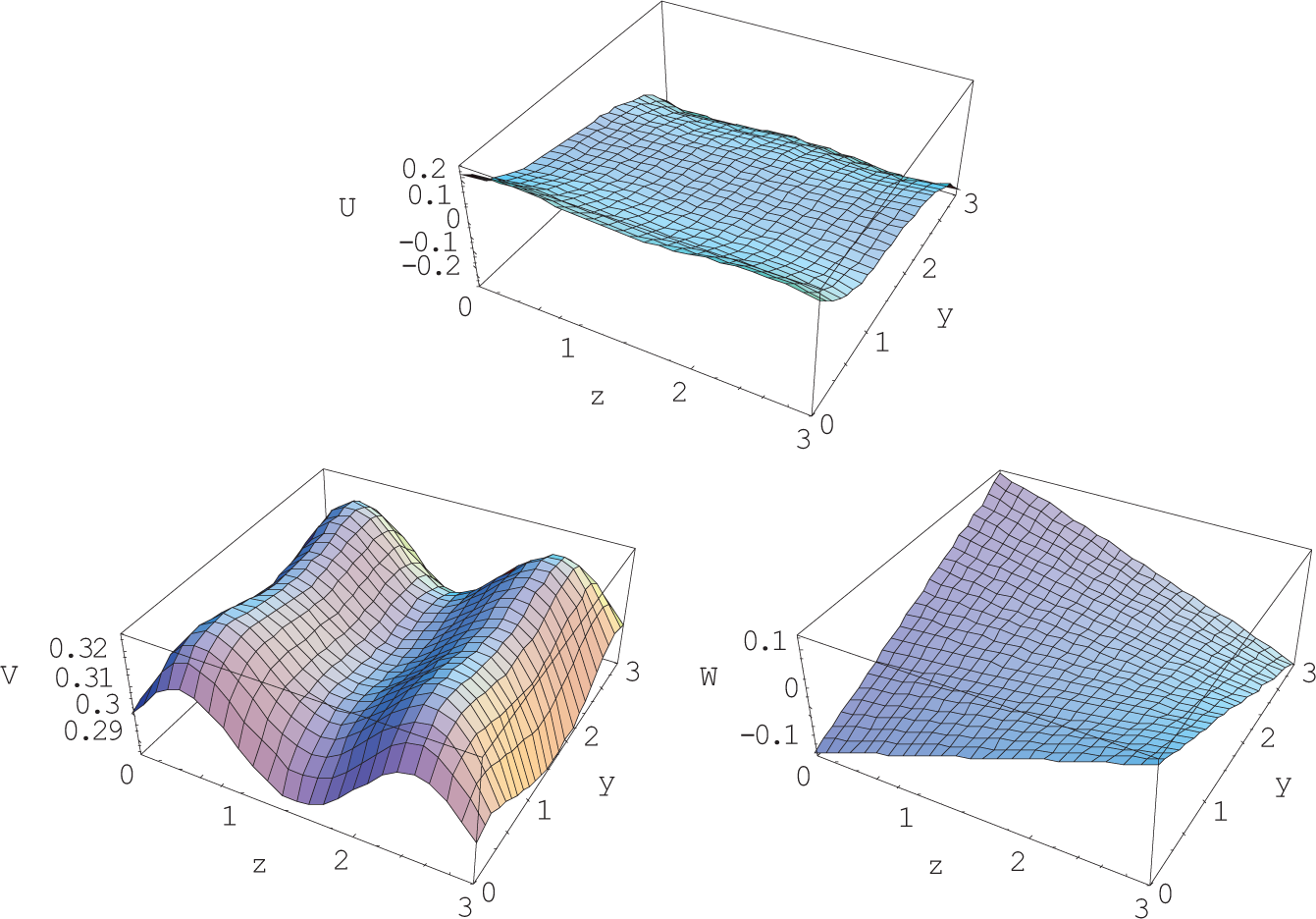
Displacement profiles of the first (Fz0) mode for the S/N/S-1/1/1 square rod at kh = 3.3.
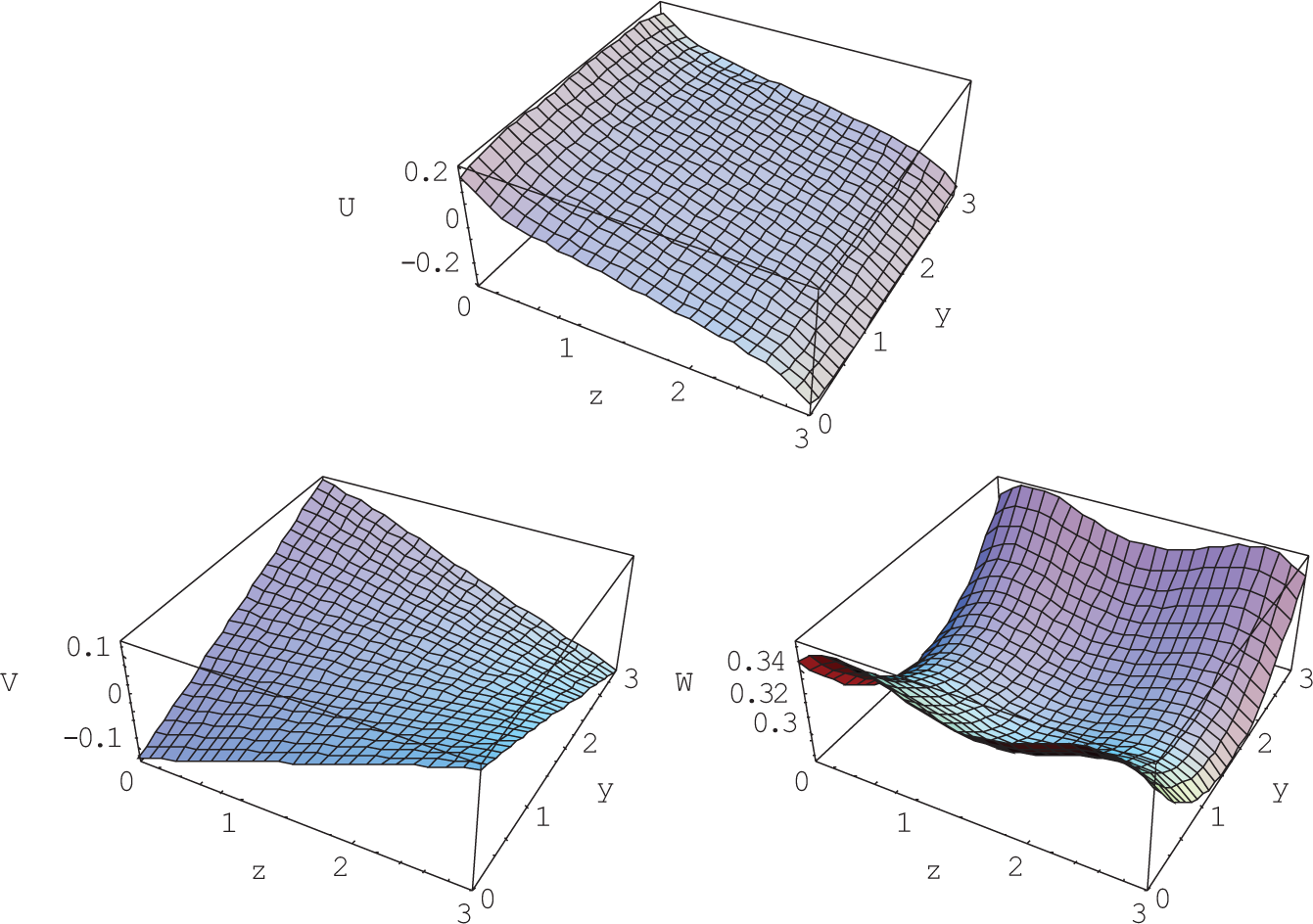
Displacement profiles of the second (Fy0) mode for the S/N/S-1/1/1 square rod at kh = 3.3.
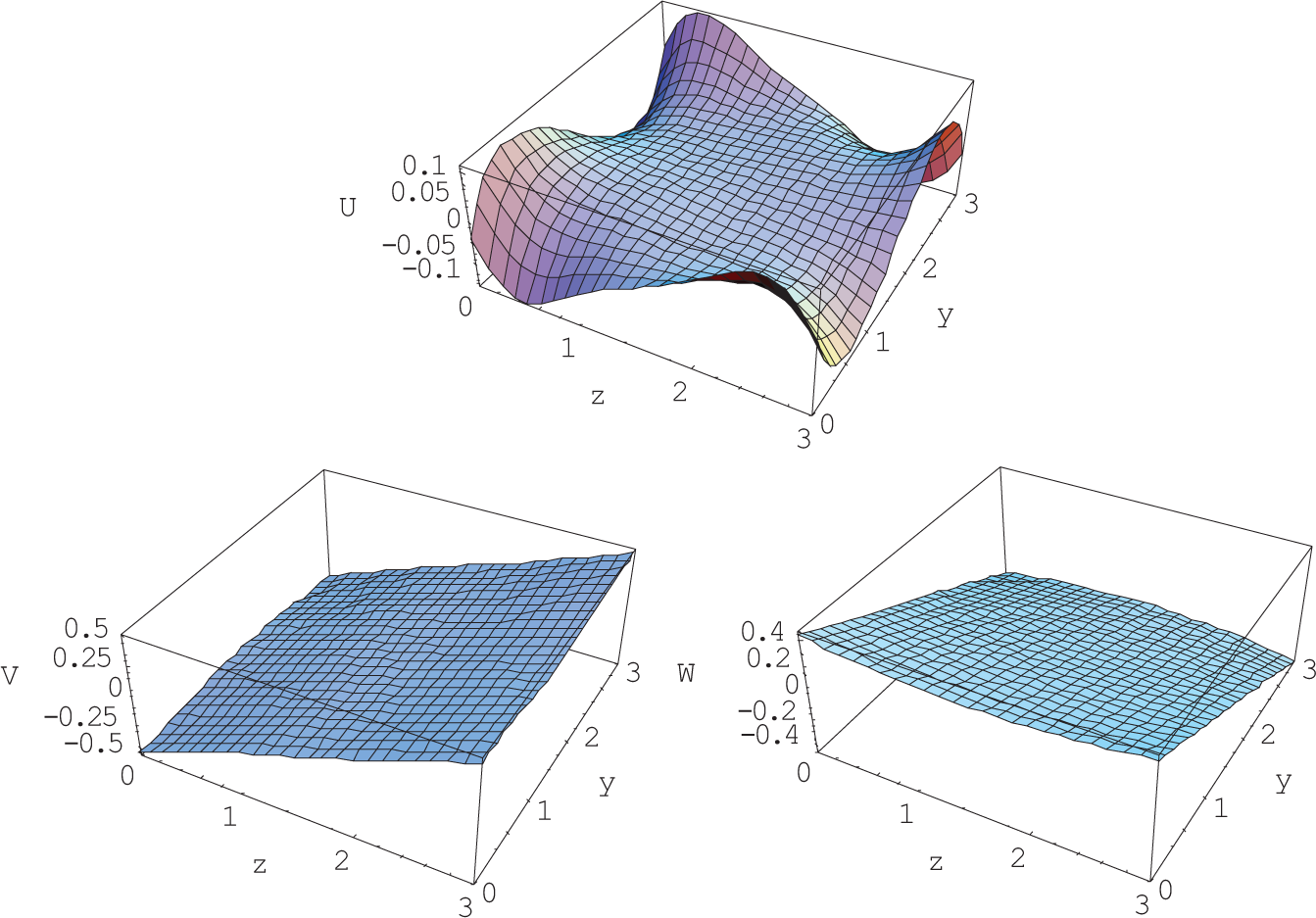
Displacement profiles of the third (T0) mode for the S/N/S-1/1/1 square rod at kh = 3.3.
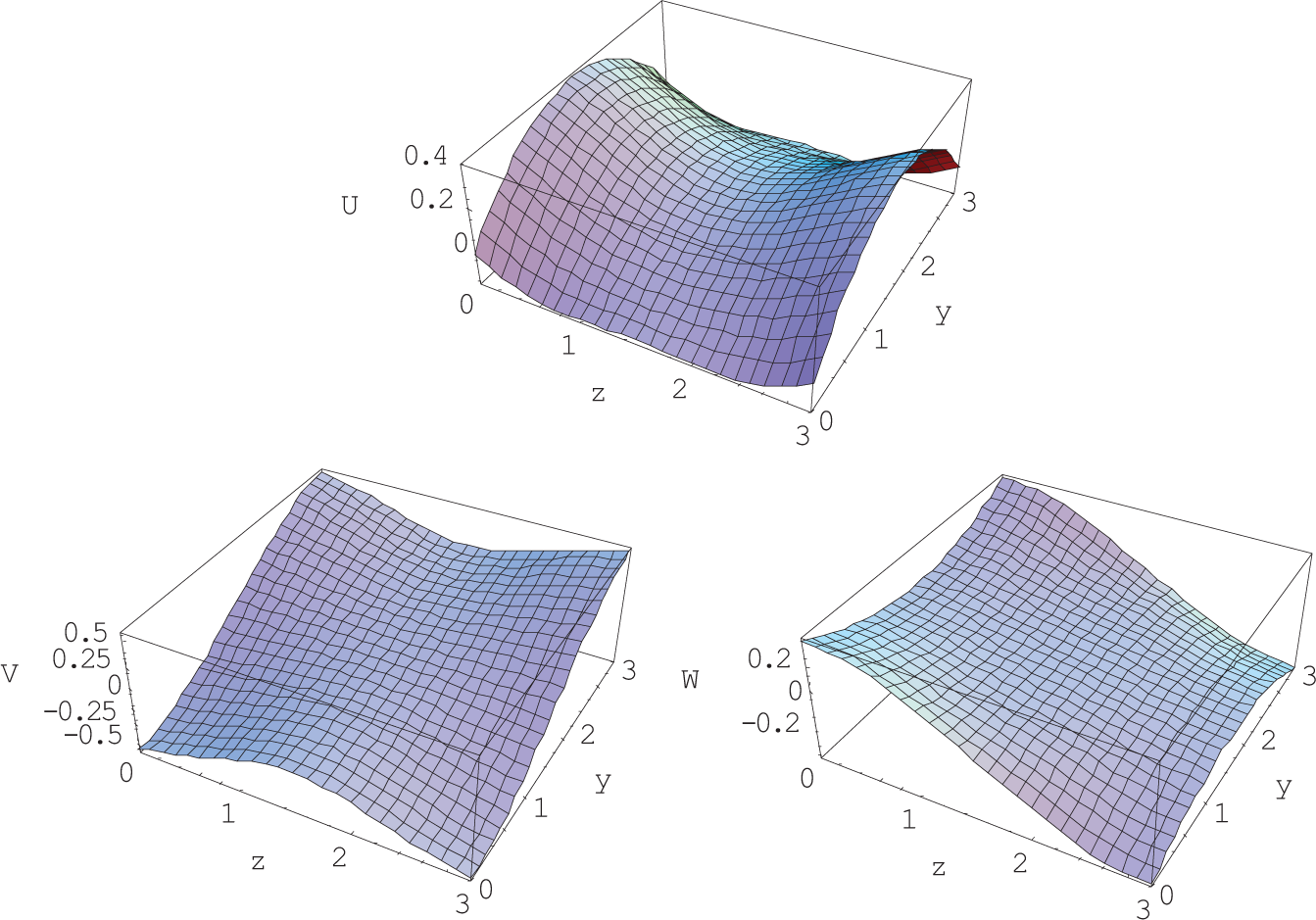
Displacement profiles of the fourth (E0) mode for the S/N/S-1/1/1 square rod at kh = 3.3.
Next, three other ceramics-metal layered rectangular rods are discussed. Their stacking sequences, thickness ratios and width-to-height ratios are (a) S/N/S-1/1/1-d/h = 2, (b) S/N/S-1/2/2-d/h = 1, (c) S/S/N-1/1/1-d/h = 1. The obtained phase velocity dispersion curves are shown in Figure 8. Comparing them with the rod S/N/S-1/1/1-d/h = 1, rod (a) has a different width-to-height ratio, rod (b) has a different volume fraction and rod (c) has a different stacking sequence. Obviously, the influences of the three factors are all significant. Furthermore, because the materials of rods (b) and (c) are not symmetric about the z = h/2 axis, their displacement distributions are symmetric or antisymmetric only about the y = d/2 axis but not about the z = h/2 axis. This is illustrated in Figure 9 for the displacement distributions of the first mode of rod (b) at kd = 5.5.
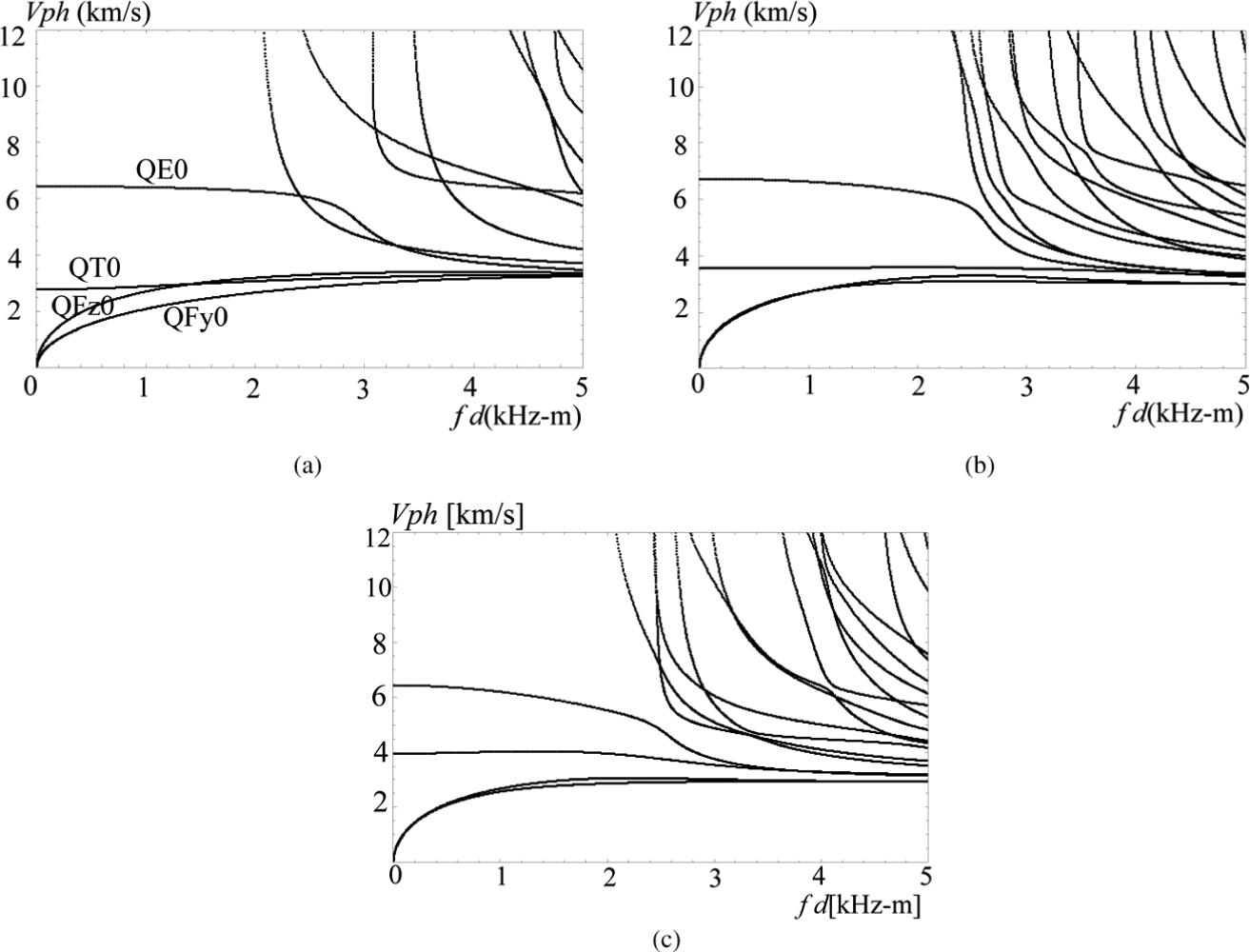
Phase velocity dispersion curves for various layered rectangular rods: (a) S/N/S-1/1/1-d/h = 2; (b) S/N/S-1/2/2-d/h = 1; (c) S/S/N-1/1/1-d/h = 1.
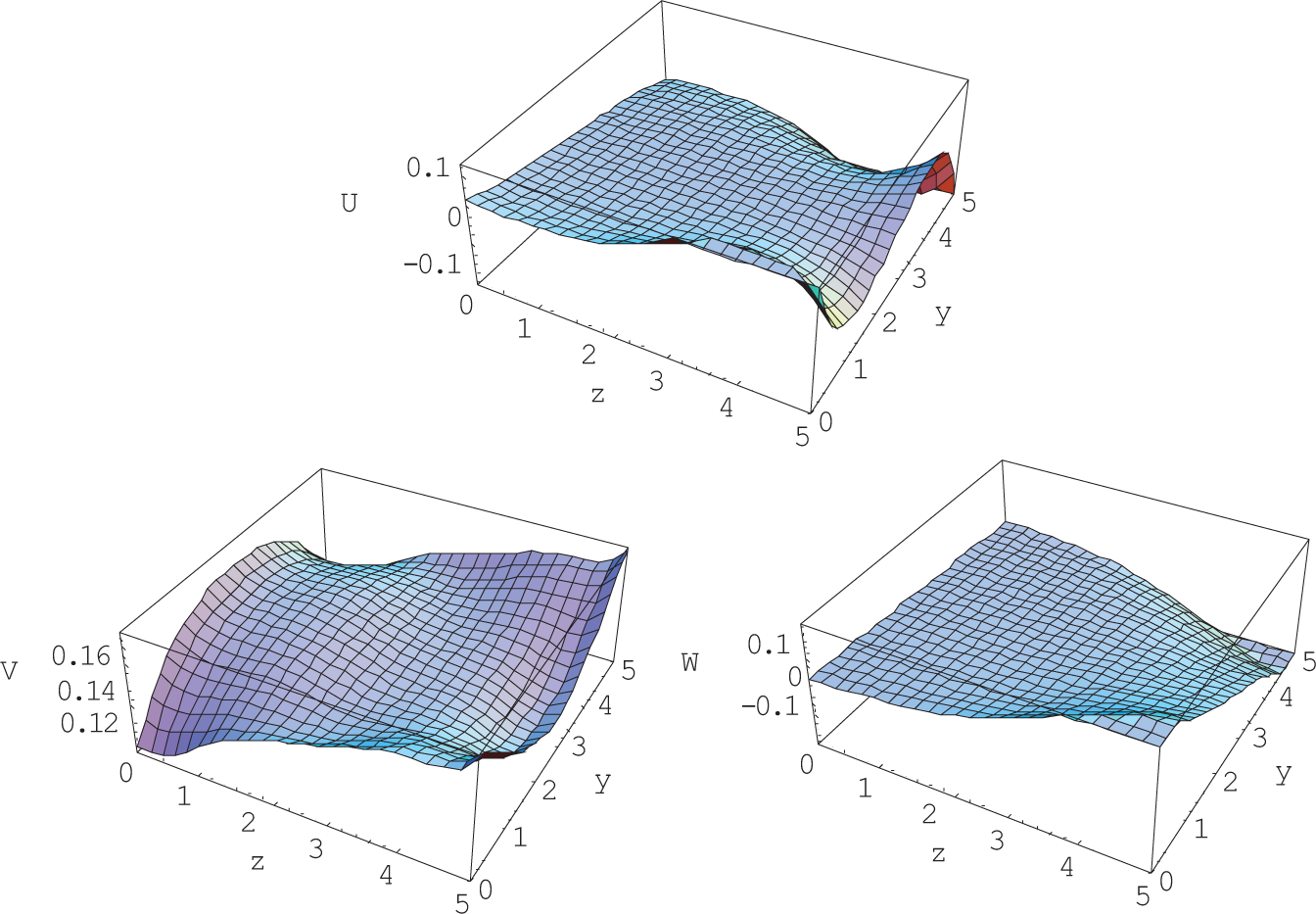
Displacement profiles of the first mode for the S/N/S-1/2/2 square rod at kd = 5.5.
Figures 10 and 11 give the displacement distributions of the first mode for the S/N/S-1/1/1 square rod and the S/S/N-1/1/1 square rod at a large wave number kd = 300. It can be seen that the displacements mainly distribute on the first and third layers for the S/N/S-1/1/1 square rod and on the first and second layers for the S/S/N-1/1/1 square rod. In sum, the displacements mainly distribute on the steel layer at large wave numbers. The reason lies in that the wave speed of the steel is lower than that of the silicon nitride, thus the high-frequency guided waves mainly propagate within the layer with the lower wave speed.
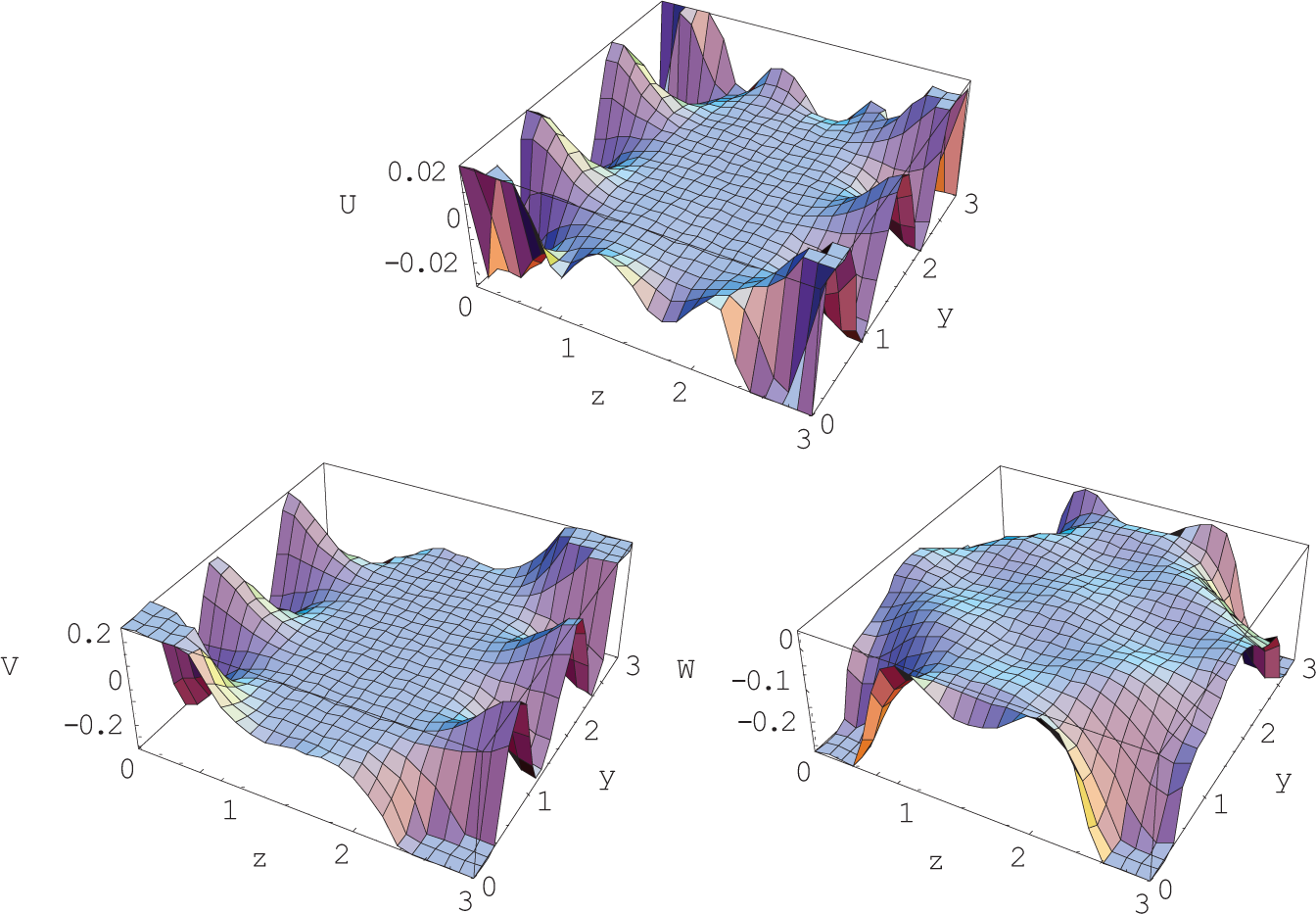
Displacement profiles of the first mode for the S/N/S-1/1/1 square rod at kd = 300.
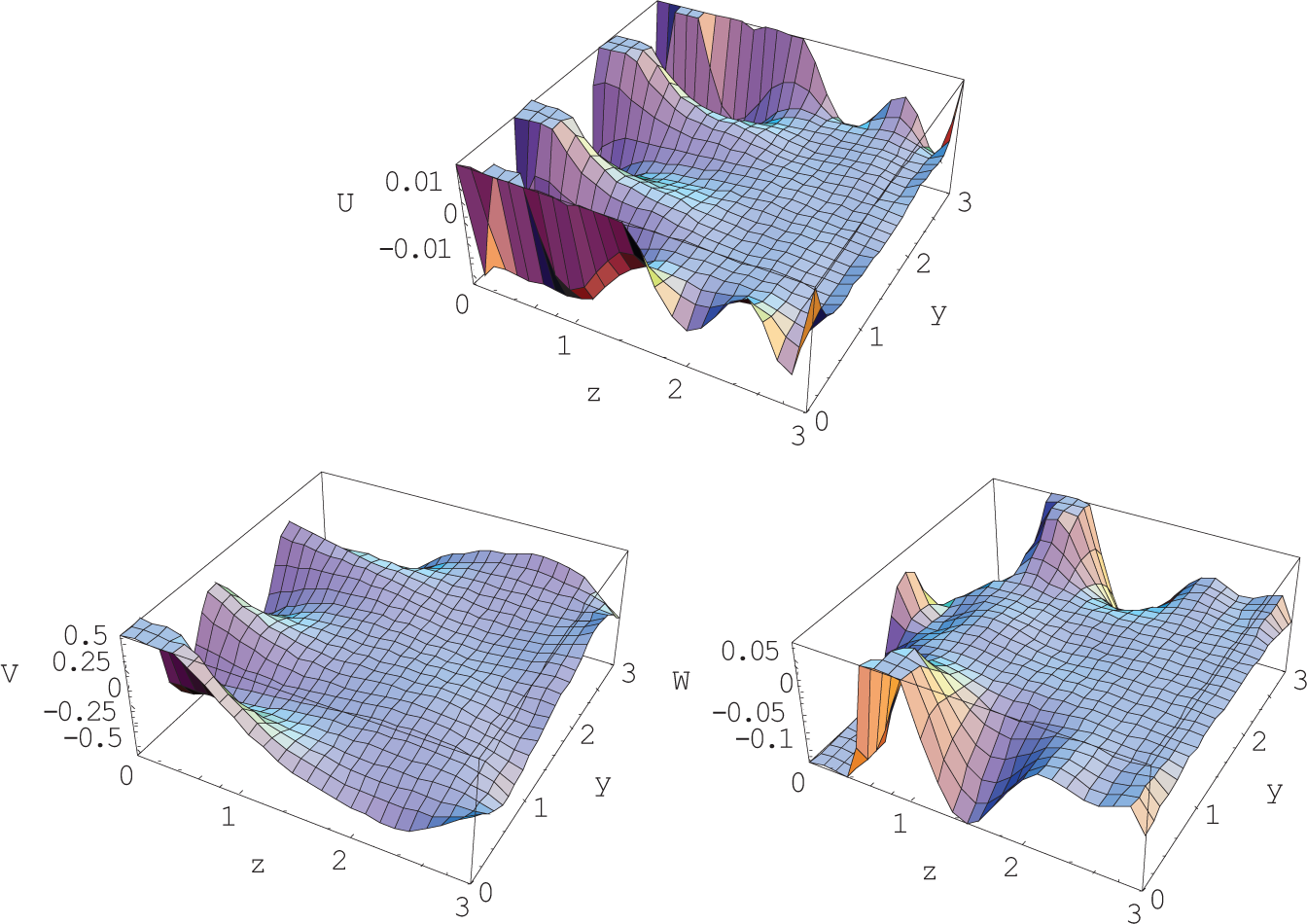
Displacement profiles of the first mode for the S/S/N-1/1/1 square rod at kd = 300.
4. Conclusions
This paper extends the orthogonal polynomial approach to solve wave propagation in a 2D multilayered rectangular rod. Through numerical comparison with available results, the validity of the proposed polynomial approach is illustrated. The dispersion curves and displacement distributions of various layered rectangular rods are obtained. According to the numerical analysis, we can draw the following conclusions:
numerical comparison on dispersion curves show that the extended orthogonal polynomial method can solve the guided wave propagation in multilayered rectangular rods;
width-to-height ratio, volume fraction and stacking sequence have all significant influences on the guided wave charateristics;
at large wave numbers, the guided wave displacements mainly distribute on the layer with lower wave speed;
other geometries could be dealt with thanks to appropriate position-dependent physical constants and space functions.
The material properties of the sandwich plate.

Units: Cij(109N/m2), ρ(103kg/m3).
Footnotes
Acknowledgements
Jiangong Yu gratefully acknowledges the support by the Alexander von Humboldt-Foundation (AvH) to conduct his research works at the Chair of Structural Mechanics, Faculty of Science and Technology, University of Siegen, Germany.
Funding
The work was supported by the National Natural Science Foundation of China (No. 11272115) and the Outstanding Youth Science Foundation of Henan Polytechnic University (No. J2013-08), China.