







Abstract
In this paper, we built a mathematical model to study the influence of the initial stress on propagation of longitudinal waves in a hollow infinite circular cylinder in the presence of an axial initial magnetic field. The elastic cylinder is assumed to be made of a tetragonal system material. The problem is described by the equations of elasticity, taking into account the effect of the initial stress and the electro-magnetic equations of Maxwell. This requires the solution of the equations of motion in cylindrical coordinates with the z-axis directed along the axis of the cylinder. The displacement components will be obtained by founding the analytical solutions of the motion’s equations. The frequency equations have been obtained in the form of a determinant involving Bessel functions. The roots of the frequency equation give the values of the characteristic circular frequency parameters of the first three modes for various geometries when the initial hydrostatic stress is compression or tension. These roots, which correspond to various modes, are numerically calculated and presented graphically. This study shows that waves in a solid body propagating under the influence of an initial stress can differ significantly from those propagating in the absence of the initial stress. The results of this research are used in analyzing the relationship between magnetic field, the initial stress and the frequency equation and could lead to discussions for using the magnetic field and the initial stress in ultrasound imaging.
Keywords
1. Introduction
Most cylindrical components, such as rods, wires, tubes, pipes and fibers, are manufactured by processes that induce transversely isotropic elastic properties in them. Modeling the propagation of waves in these components is important in various applications, including ultrasonic nondestructive evaluation techniques. With the advancement of space research, it has become necessary to obtain a deep insight in the behavior of materials, especially of the anisotropic ones that are so frequently used in missiles and other allied systems. Without taking into the consideration the effect of the magnetic field, the analysis of longitudinal wave propagation in an anisotropic and homogeneous circular cylindrical shell, according to the theory of elasticity, has been done by many authors [1–7]. Moreover, the propagation of harmonic waves, in circular cylinders that are made of isotropic or anisotropic materials, has been investigated and evaluated numerically, on the basis of the theory of elasticity, by Mirsky [8], Tsai [9] and White and Tongtaow [10]. Among many important problems that are considered in such studies, the problems of elastic wave propagation in the presence of a steady magnetic field have been investigated when the material is isotropic and homogeneous by Andreou and Dassios [11], Das and Bhattacharya [12], Gourakishwar [13], Paria [14] and Suhubi [15]. Some of the analogous results on magnetoelastic wave propagation problems, but in an anisotropic medium, were obtained by Abd-alla [16,17] and Datta [18]. General details and many references on these subjects may be found in monographs by Eringen and Suhubi [19], Eringen and Maugin [20], Auld [21], Moon [22] and Nowacki [23]. Owing to the variation of the elastic properties and due to the presence of initial stresses, the medium exhibits anisotropy as well. The wave velocities are considerably influenced by anisotropy in the earth’s crust and upper mantle, see also [24–26]. Yu and Tang [27] thoroughly discussed the dilatational and rotational waves in a magnetoelastic initially stressed conducting medium. De and Sengupta [28] investigated magnetoelastic waves in initially stressed isotropic media. Without going into the details of the papers investigating the propagation of waves in an initially stressed magnetoelastic and thermoelastic medium, we cite here a few publications [29–31].
Recently, the interaction of electromagnetic fields with the motion of a deformable solid has received greater attention by many investigators and it would be of interest for application to advanced metamaterials [32–34] for damage evaluation [35,36]. Therefore, many researchers have investigated the effect of the magnetic field on the wave propagation in anisotropic cylindrical materials; for example Barakati and Zhupanska [37] studied the effects of pulsed electromagnetic fields on the dynamic mechanical response of electrically conductive anisotropic plates. Dinzart and Sabar [38] presented numerical investigations into magneto-electro-elastic moduli responsible for the magneto-electric coupling as functions of the volume reaction and characteristics of the coated inclusions. In [39], the effect of stochastic perturbations is also considered in systems as resonant piezoelectric coupled with a host mechanical structure. Akbarov et al. [40] studied torsional wave dispersion in a three-layered (sandwich) hollow cylinder with finite initial strains. Chattopadhyay et al. [41] studied the propagation of horizontally polarized shear waves in an internal magnetoelastic monoclinic stratum with irregularity in lower interface. Tang and Xu [42] employed the method of eigenfunction expansion to solve the problems of transient torsional vibration responses of finite, semi-infinite and infinite hollow cylinders. Acharya et al. [43] investigated the effect of the transverse isotropy and magnetic field on the interface waves in a conducting medium subject to the initial state of stress of the form of hydrostatic tension or compression. Petrov et al. [44] focused on the nature of ferromagnetic resonance under the influence of acoustic oscillations with the same frequency as ferromagnetic resonance. Mol’chenko et al. [45] constructed a two-dimensional nonlinear magnetoelastic model of a current-carrying orthotropic shell of revolution taking into account finite orthotropic conductivity, permeability and permittivity. Abd-Alla and Abo-Dahab [46] studied the influence of the viscosity on reflection and refraction, see also [42], of plane shear elastic waves in two magnetized semi-infinite media. Selim [47] showed the effect of damping on the propagation of torsional waves in an initially stressed, dissipative, incompressible cylinder of infinite length. Dai and Wang [48] illustrated an analytical method to solve magnetoelastic wave propagation and perturbation of the magnetic field vector in an orthotropic laminated hollow cylinder with arbitrary thickness. Liu and Chang [49] investigated the interactive behaviors among transverse magnetic fields, axial loads and external force of a magnetoelastic beam with general boundary conditions. Abd-alla [50] studied the relaxation effects on reflection of generalized magneto-thermo-elastic waves.
The theory of magneto-thermoelasticity is concerned with the interacting effects of the applied magnetic field on the elastic and thermoelastic deformations of a solid body. This theory has aroused much interest in many industrial appliances, particularly in nuclear devices, where there exists a primary magnetic field; various investigations are to be carried out by considering the interaction between magnetic, thermal and strain fields. Analyses of such problems also influence various applications in biomedical engineering as well as in different geomagnetic studies. The development of the interaction of the electromagnetic field, the thermal field and the elastic field is available in many works, such as [51–56].
The study of wave propagation in a magnetoelastic media with additional parameters, such as rotation, electric field, anisotropy, porosity, viscosity, microstructure, temperature and other parameters, provides vital information about the existence of new or modified waves. Such information may be useful for experimental seismologists in correcting earthquake estimation [57–60].
Altenbach and Eremeyev [61,62] studied the influence of initial or residual stresses on the effective properties of thin-walled structures and its oscillations. Also, Placidi et al. [63] illustrated the variational formulation of pre-stressed solid–fluid mixture theory, with an application to wave phenomena; see also [64] for a different point of view. The phenomenon of magnetoelasticity can be used for control of stiffness and oscillations of solids and structures; see, for example, [65]. dell’Isola and his coworkers [66–70] investigated some problems about linear and nonlinear wave propagation in different hypotheses and it would be interesting to investigate this effect on recent and advanced microstructural materials, such as those investigated by Neff and his coworkers [71,72] for relaxed micromorphic media.
In this paper, we have built a mathematical model to study the effect of imposed magnetic field on longitudinal wave propagation in a hollow infinite circular cylinder under the influence of initial hydrostatic stress. The influence of the same magnetic field is studied in [73]. The cylinder is made of tetragonal system material, such as titanium dioxide (rutile). The displacement components are obtained by founding the analytical solutions of the motion’s equations. After applying suitable boundary conditions, the frequency equation is presented as a determinant with elements containing Bessel functions [74,75]. The numerical computations obtained the roots of frequency equations. In this study we illustrated the increasing imposed magnetic field on the hollow infinite circular cylinder, changing the thickness of the circular cylinder and changing the initial stress on the natural frequency of the hollow circular cylinder . Finally, the results are given in the form of graphics.
2. Formulation of the problem and basic equations
Longitudinal wave propagation in a circular cylinder of tetragonal elastic material of inner and outer radii, a and b, subjected to an axial magnetic field is considered. The cylinder is treated as a perfect conductor and the regions inside and outside the elastic material are assumed to be vacuum. We assume that waves are characterized by the displacement components in the radial and axial directions only. The displacement field, in this case, in cylindrical coordinates (r,

where
The equations of motion for a perfectly conducting homogeneous elastic solid under uniform magnetic field and under initial stress (hydrostatic tension or compression) are [38]

Maxwell’s equations may be written in Gaussian units as

where

where
Lorentz force

By substituting from Equation (3)1 and Equation (4)1 into Equation (5), we have

where
As is known, in a perfectly conducting medium the conductivity

where the operator ∇ is defined in terms of unit vectors of the cylindrical coordinates (
Now, Equation

Using (6) and (7) in (3), Lorentz force becomes

where

where we have also assumed the form (1) of the components of the displacement field.
The electro-magnetic field equations in vacuum are given by [14]

where the Laplace operator is defined by
The strain components are given in terms of the displacements by

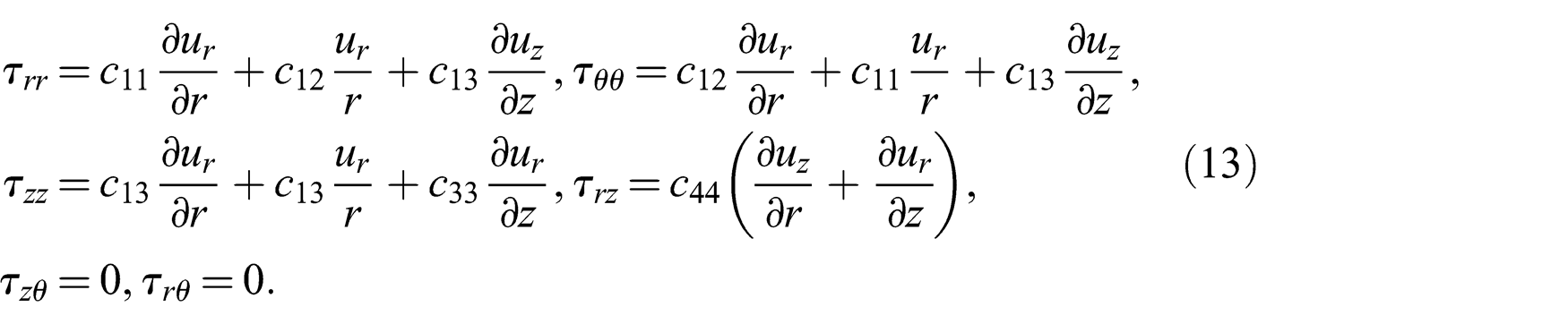
For a tetragonal elastic body, Piola stress tensor components are given in terms of five independent elastic constants as follows [3,4]:
For more details on constitutive laws of transversely isotropic material, the reader is referred, for example, to [76,77].
Substituting (12) into (2), using (9), (10) and (11), one may get the equations of motion in terms of the displacement components as


3. Solution of the problem
3.1. Harmonic solutions
We now consider the propagation of an infinite strain of sinusoidal waves along a hollow circular cylinder of infinite extent such that the displacement at each point is a sample harmonic function of

where


Equation (17) is consistent with (18) provided that

Eliminating

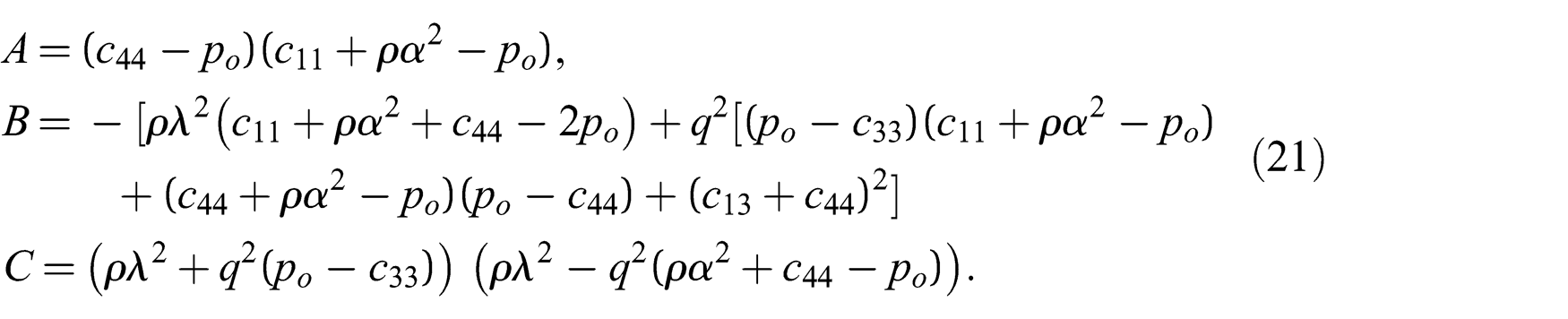
where
If

where

The general solutions of Equations (22) are

where
The displacement field may now be written as

where

3.2. Solution of electric field intensity in vacuum
The general solution of

where
The Maxwell’s stresses in the medium are

where
4. Boundary conditions
The boundary conditions for free motion require the total stress to be vanished and the electric field to be continuous on the surfaces r = a, b, that is,

where
Eliminating

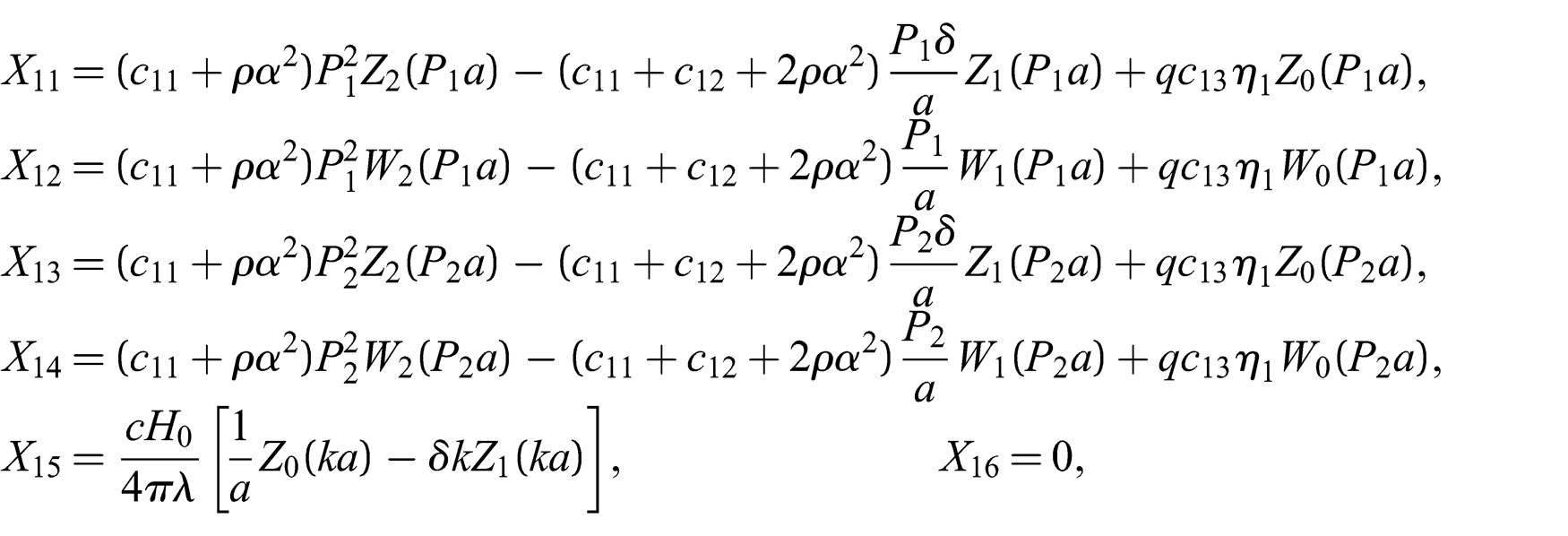
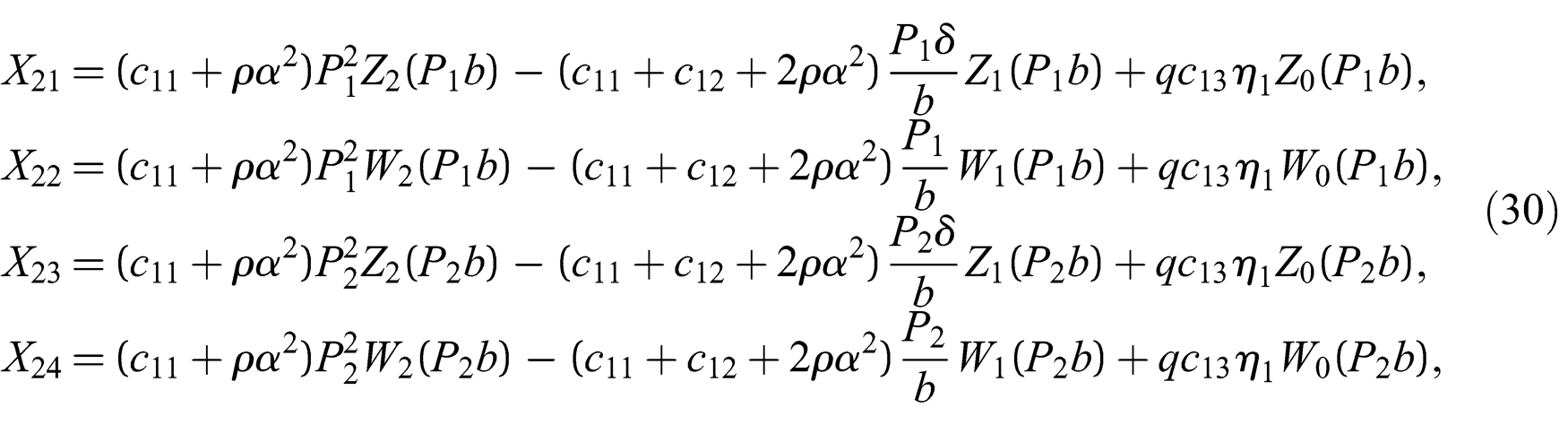
A non-trivial solution exists only when the determinant (29) is equal to zero, leading to which is the so-called the frequency equation (dispersion relation), where
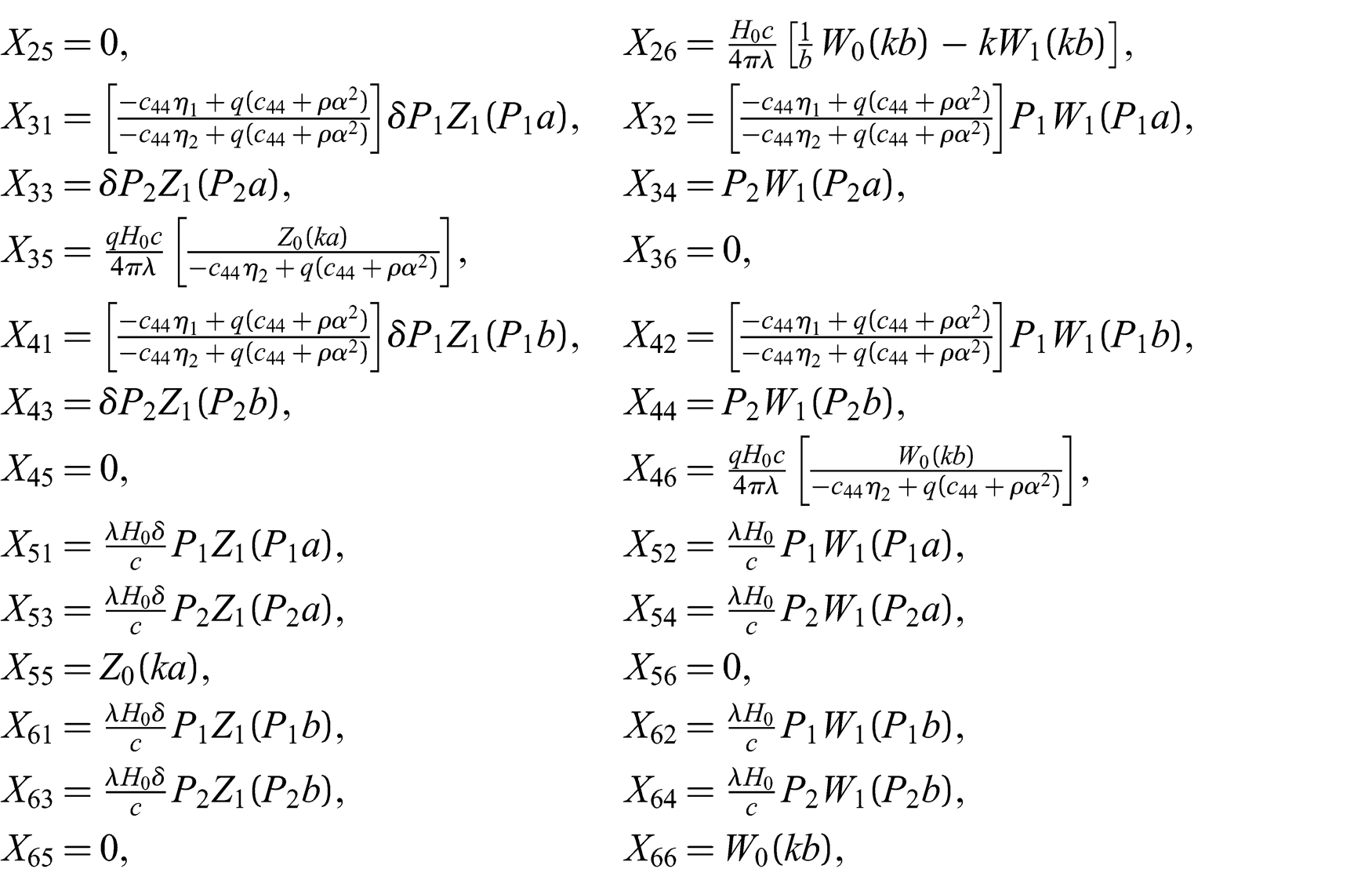
where
5. Radial and axial vibrations
As the wave number
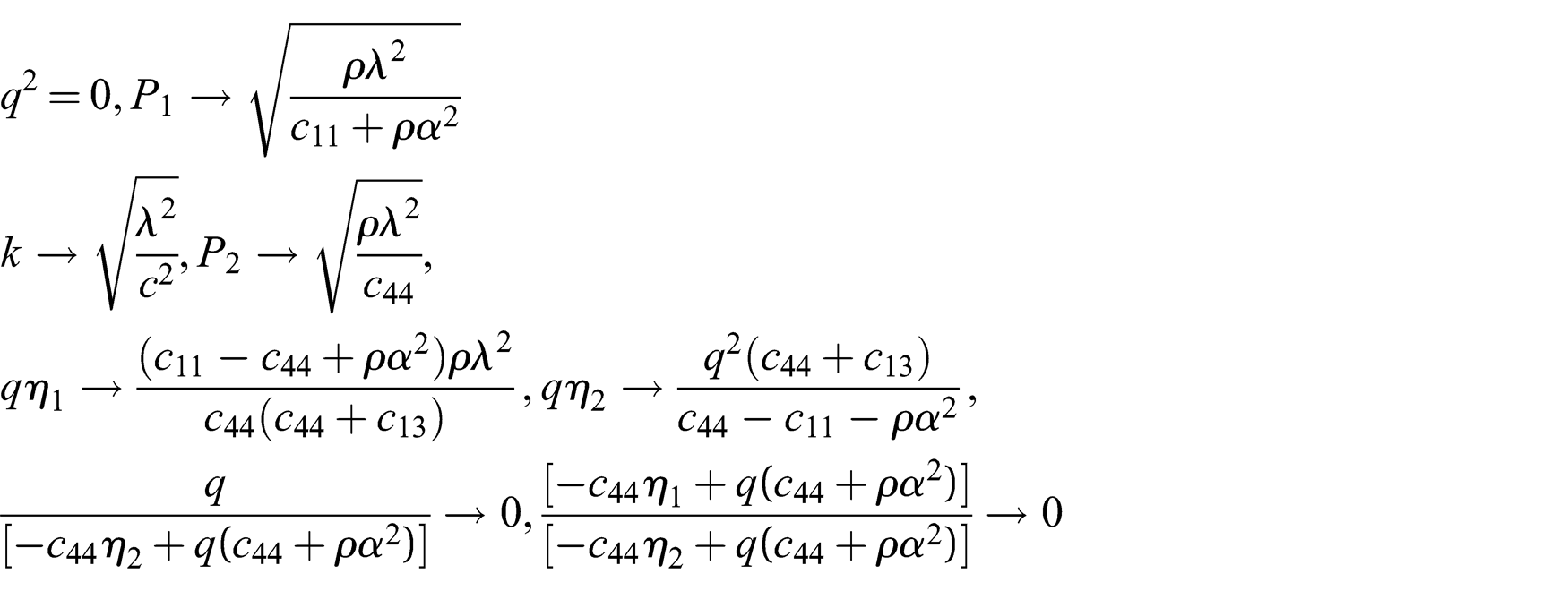
and the characteristic equation (29) may be written as the product of two determinants:

where

The elements
6. The numerical calculations
For numerical calculations, we consider the following transformations:
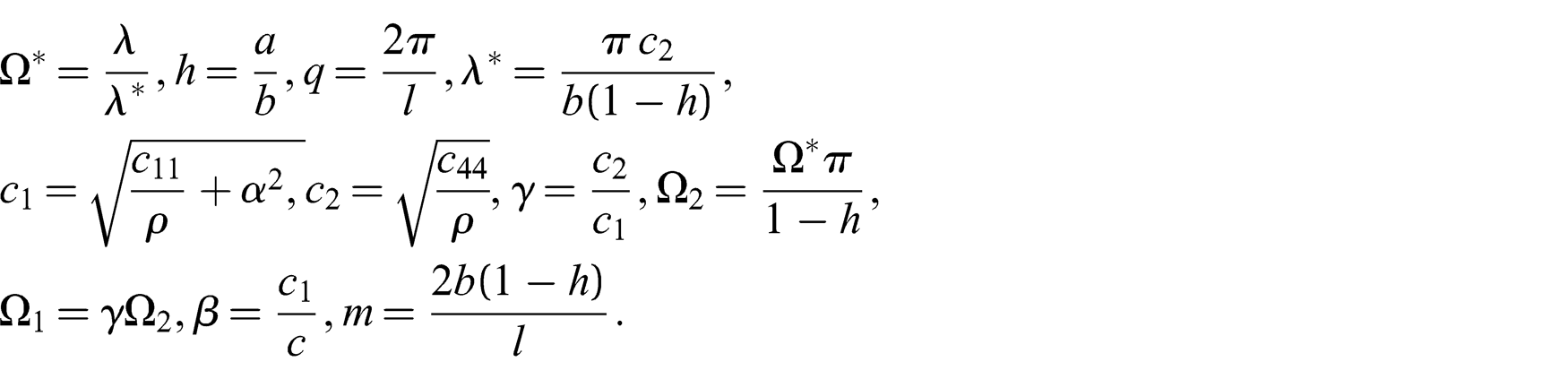
The calculations of the roots of the frequency equation (28) represent a major task and require a rather extensive effort for numerical computation. Calculations have been carried out for the case of titanium dioxide (rutile

Also, the density is
7. Discussion and conclusion
The non-dimensional frequency
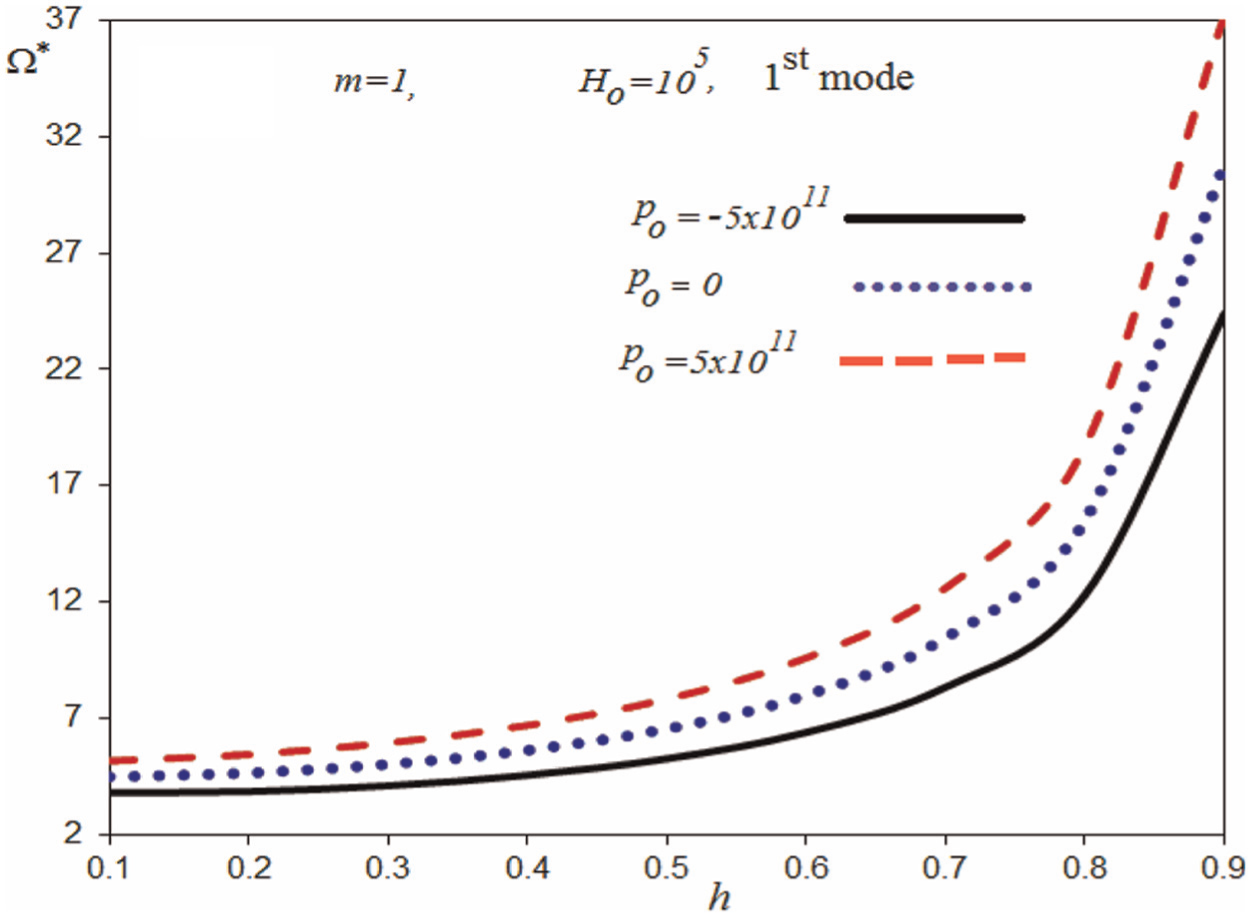
The first mode of dimensionless frequency W* for longitudinal vibrations versus different values of h = a/b, different values of po = (–5,0,5)′1011, Ho =105, m = 1.
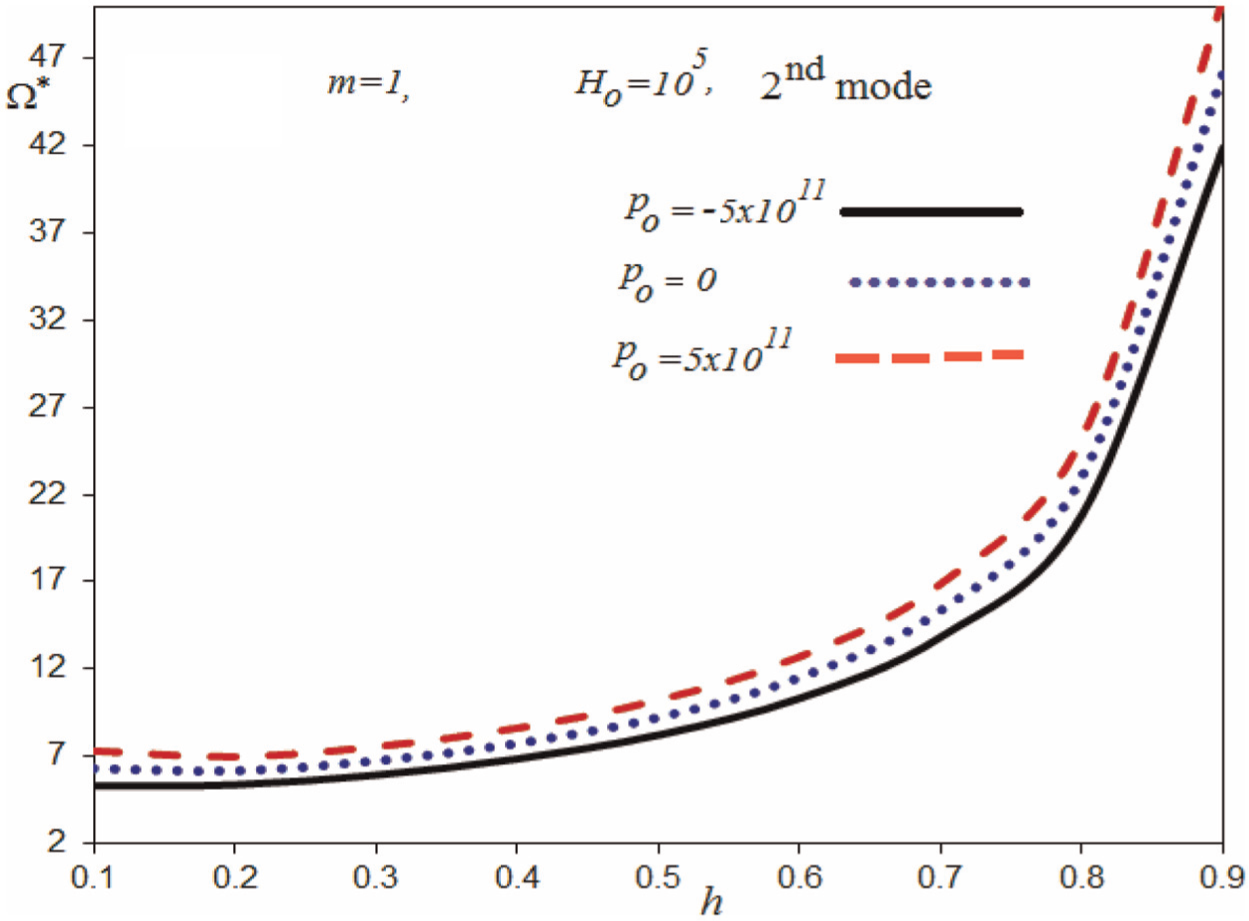
The second mode of dimensionless frequency W* for longitudinal vibrations versus different values of h = a/b, different values of po = (–5,0,5)′1011, Ho =105, m = 1.
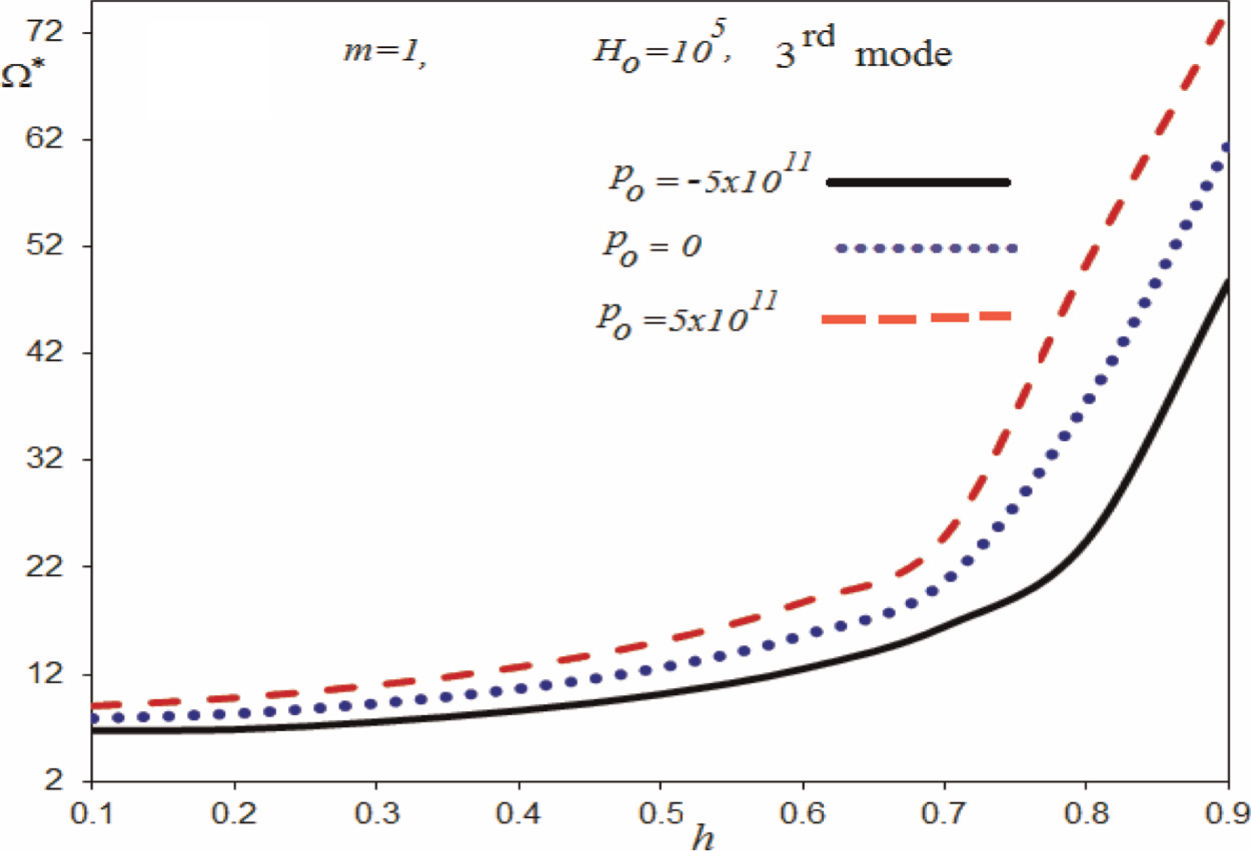
The third mode of dimensionless frequency W* for longitudinal vibrations versus different values of h = a/b, different values of po = (–5,0,5)′1011, Ho = 105, m = 1.
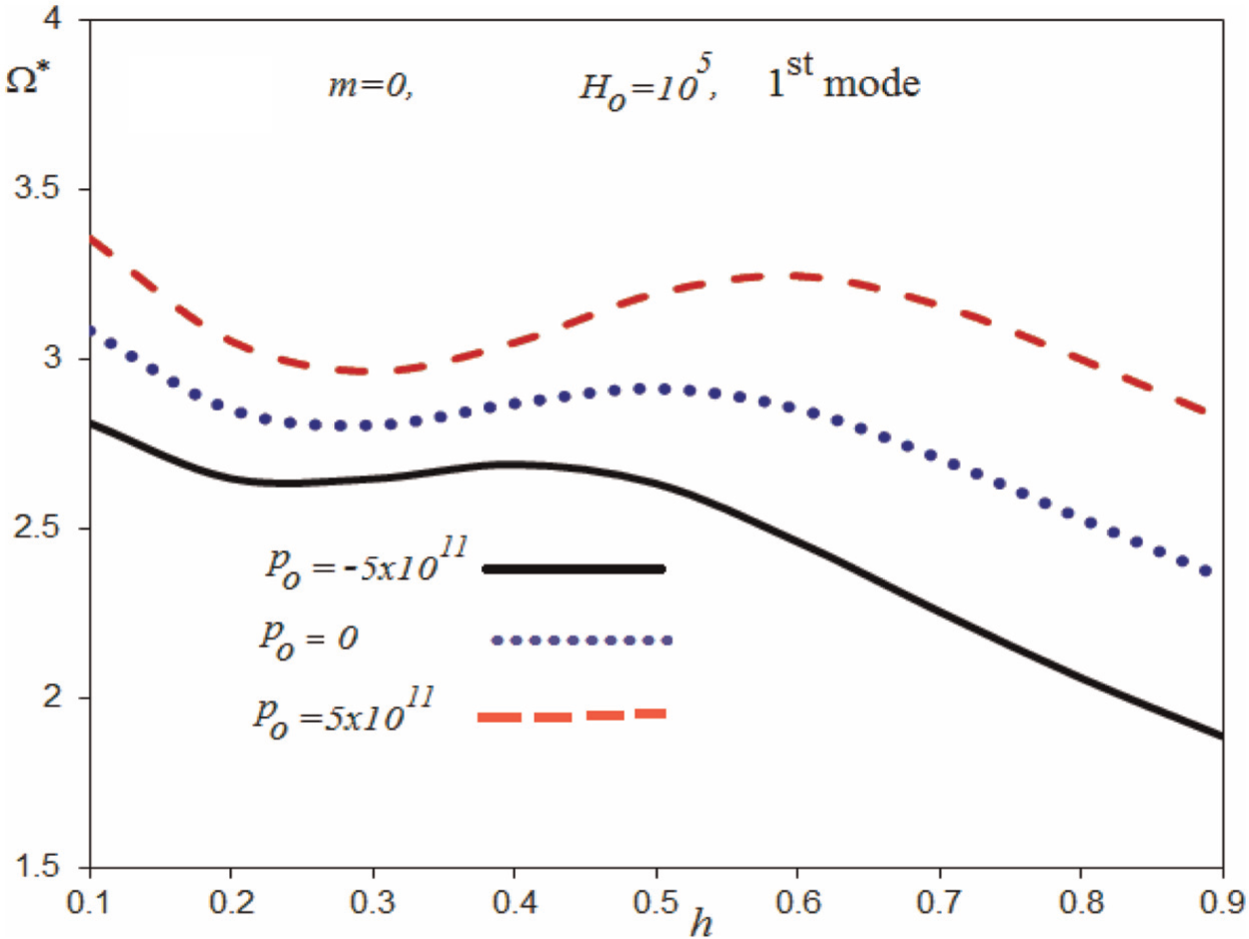
The first mode of dimensionless frequency W* for radial vibrations versus different values of h = a/b, different values of po = (–5,0,5)′1011, Ho =105, m = 0.
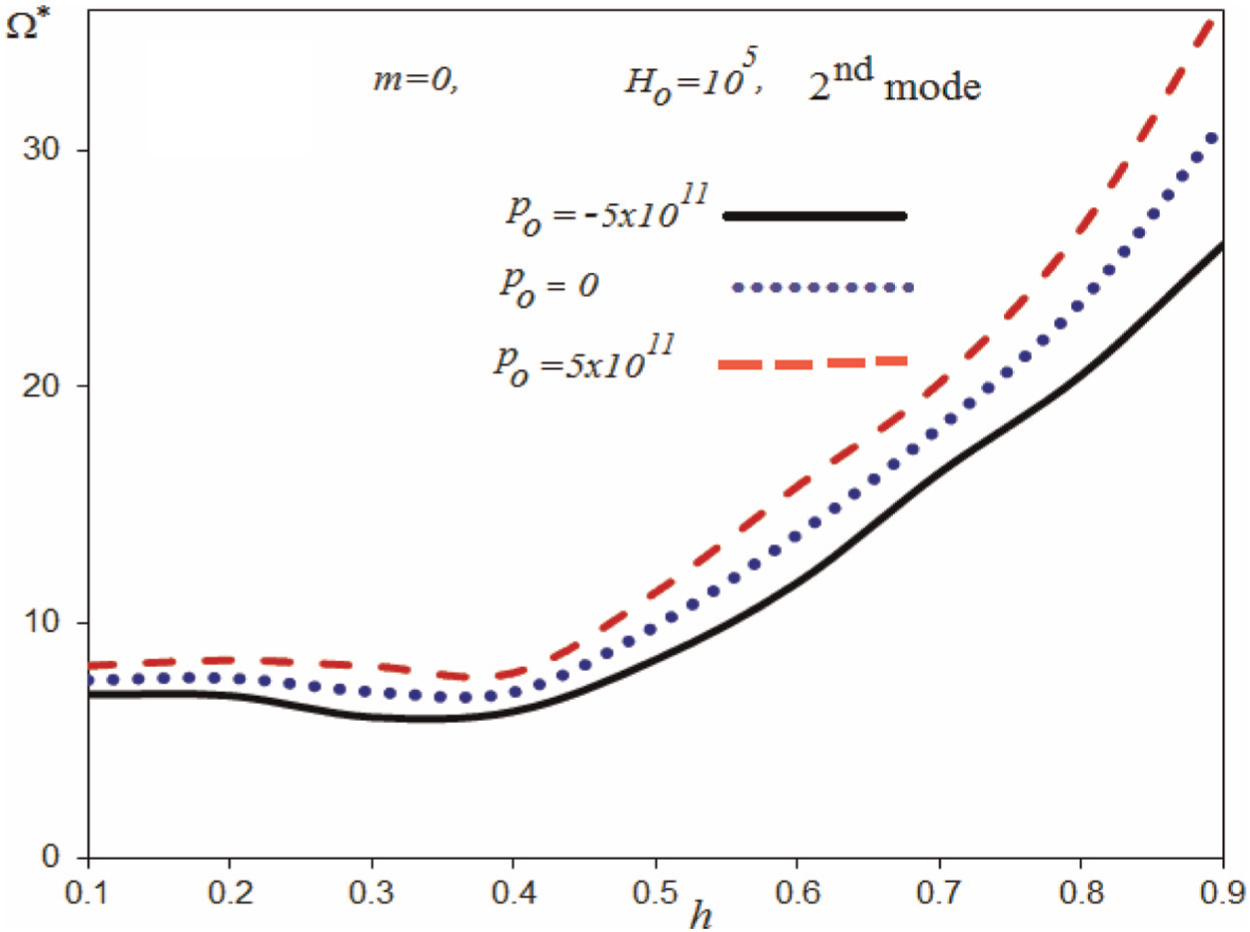
The second mode of dimensionless frequency W* for radial vibrations versus different values of h = a/b, different values of po = (–5,0,5)′1011, Ho =105, m = 0.
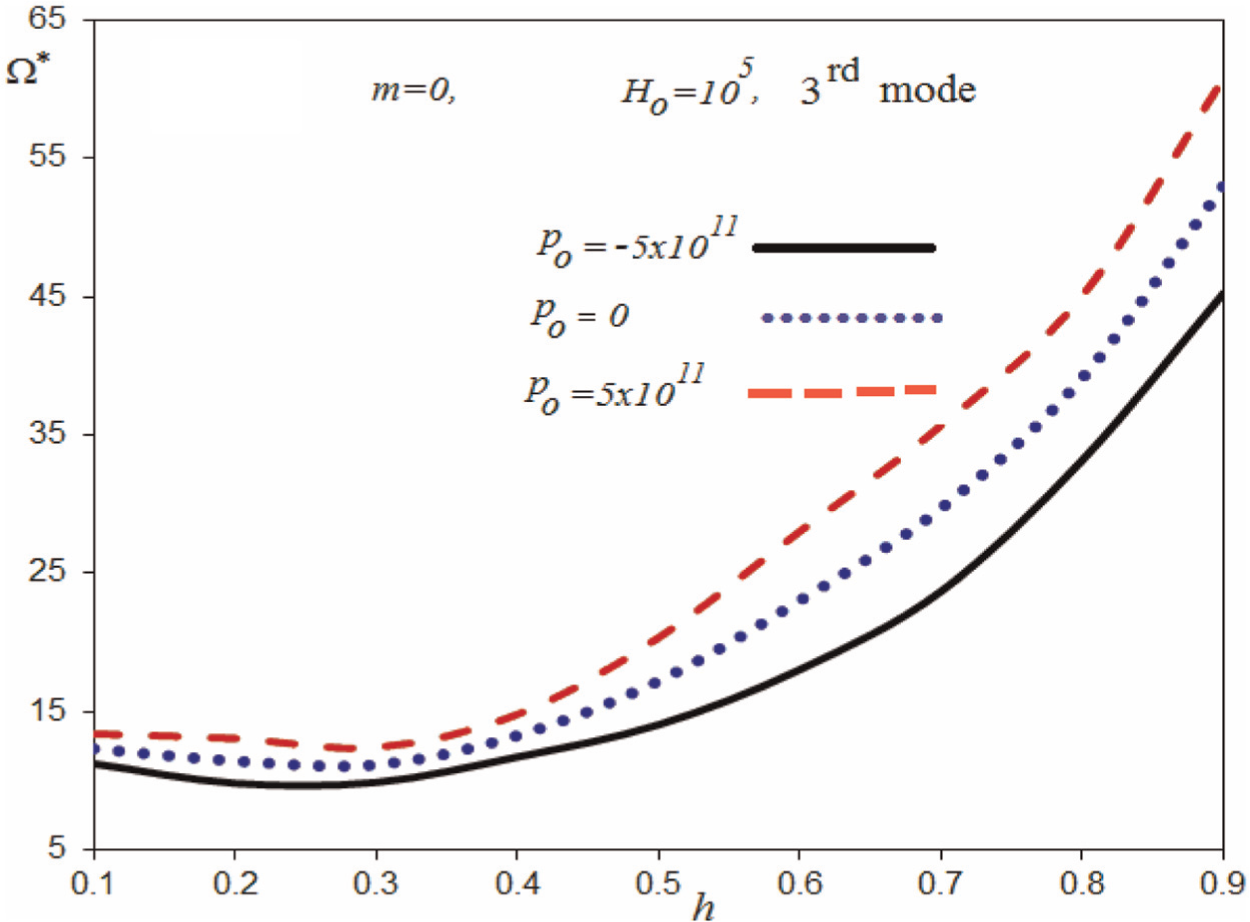
The third mode of dimensionless frequency W* for radial vibrations versus different values of h = a/b, different values of po = (–5,0,5)′1011, Ho =105, m = 0.
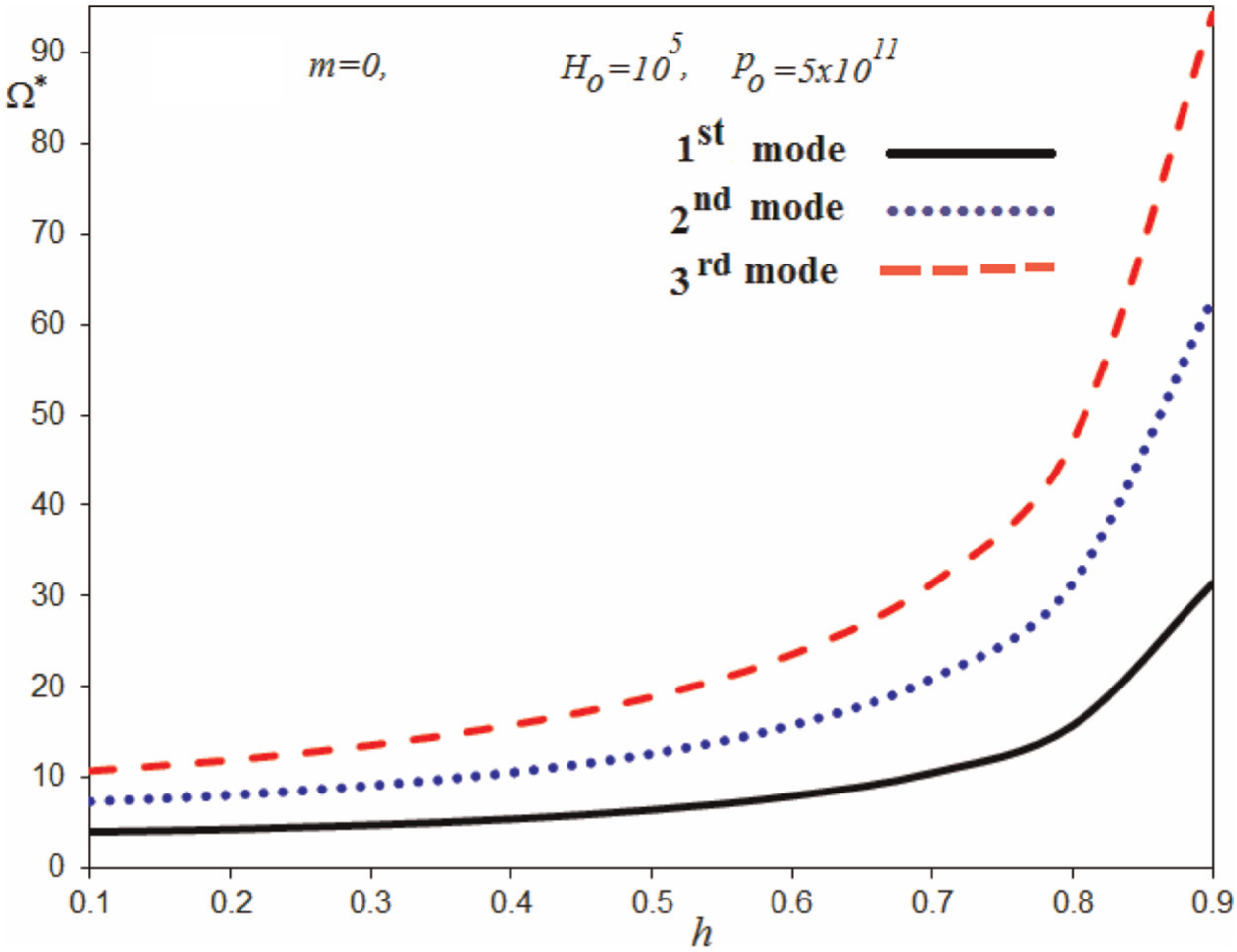
The first three modes of dimensionless frequency W* for axial vibrations versus different values of h = a/b for of Ho =105, when m = 0 and po = 5′1011.
The frequency equations (29), (32)1 and (32)2 are solved numerically, using "interval halving" iteration technique [78] for each pair (
It is obvious from the frequency equation (29) when m = 0 that it degenerates into two independent equations: (i) one of them is for uncoupled radial vibrations (which contain the radial displacement
Footnotes
Funding
This work was supported by the deanship of the scientific research of Jazan University, Saudi Arabia (Project No. 06/4/33). The first author would also like to acknowledge the Erasmus Mundus program for financial support for his visit at the International Telematic University Uninettuno.