







Abstract
The transient response of a functionally graded material (FGM) orthotropic strip with a piezoelectric coating weakened by multiple cracks is investigated. The system is subjected to out-of-plane mechanical and in-plane electrical loading. The properties of the nonhomogeneous substrate are assumed to vary exponentially along the thickness and the energy dissipation is modeled by viscous damping. In this study, the rate of the gradual change of the shear moduli, mass density, and damping constant are assumed to be same. At first, the transient response of a Volterra-type dislocation in an FGM orthotropic strip is obtained analytically. Imposing a distributed dislocation density on the crack surface and using the Fourier and Laplace integral transforms, the problem is reduced to a system of singular integral equations for a substrate weakened by multiple cracks in the form of Cauchy singularity; which are solved numerically to obtain the dynamic stress intensity factors at the crack tips. Finally, the effects of the geometrical parameters, material properties, viscous damping and cracks arrangement on the dynamic fracture behavior of the interacting cracks are studied.
Keywords
1. Introduction
In recent years, predicting the fracture behavior of the cracked structures such as smart material/composite coating-substrate systems during impact and crash events have attracted great attention in the engineering applications. Smart materials are often made as coated structures to improve the performance of the system. Great efforts have been made to study the static behavior of the smart materials by the researchers in recent years. Although most of the studies are related to the static or quasi-static conditions, the response of the cracks under dynamic loading is more important. Dynamic loadings are mainly categorized in two groups including harmonic loading and impact loading. Impact loads applied on the cracked structures lead to catastrophic failure of the system.
The dynamic response of a crack in a functionally graded material (FGM) layer between two dissimilar half planes under anti-plane shear impact loading was solved bay Babaei and Lukasiewicz [1]. They showed that the dynamic stress intensity factors (DSIFs) depend on the crack length and the material properties.
The transient DSIF of an interface crack between two dissimilar half-infinite isotropic viscoelastic bodies under impact loading was determined by Wei et al. [2]. They analyzed the DSIF during a small time-interval and the effects of the viscoelastic material parameters on the DSIF. Chen and Worswick [3] studied the transient response of two cracks in a half space under anti-plane shear impact loading. The effect of the geometry ratio and the depth of the crack on DSIFs were studied. Shul and Lee [4] considered the dynamic response of the subsurface interface crack in multi-layered orthotropic half-space subjected to an anti-plane shear impact loading. The effects of the geometric constants and material properties were discussed. Shul and Lee [5] also considered the dynamic response of a subsurface eccentric crack in a functionally graded coating layer on the layered half-space under an anti-plane shear impact loading. The nonhomogeneous parameter, geometric constants and the material properties were investigated on the normalized stress intensity factor (SIF). Zhang et al. [6] solved the anti-plane transient problem of a finite crack in an infinite FGM and explored the effects of the material gradients of the FGM on the transient DSIF and their dynamic overshoot corresponding with the static SIF. The transient in-plane problem was derived by Guo et al. [7] for a coating–substrate structure with a cracked functionally graded interfacial layer subjected to an impact load. By using the integral transform techniques, the boundary value problem reduced to a system of singular integral equations. Also, the influences of the material nonhomogeneity constant and the geometric parameters on the DSIFs were discussed. Chen [8] investigated the dynamic response of an electrically impermeable crack in a transversely isotropic piezoelectric material subjected to the pure electric load in mode III. The SIF, the mechanical energy release rate, and the total energy release rate were derived and expressed as a function of time for a given applied electric load. Yongdong et al. [9] studied the anti-plane transient analysis for two functionally gradient half-planes with a weak/infinitesimal-discontinuous interface. The effects of the nonhomogeneity parameters and the types of the discontinuity were studied on the SIF in mode III. A periodic array of cracks in an infinite FGM under transient mechanical loading was investigated by Wang and Mai [10]. The effect of the material nonhomogeneity on the crack tip intensity factors was discussed.
The above mentioned problems are restricted to one or two periodic cracks. However, to the best of the authors’ knowledge, the multiple cracks problem has not been studied in an FGM strip with piezoelectric coating under impact loadings. Following introduction in recent years of a powerful semi-analytical method called the distribution dislocation technique (DDT), the problem of the multiple cracks has been studied for out-of-plane and in-plane loadings based on the principle of the superposition. A brief review of relevant articles is given below.
Faal et al. [11] employed distributed dislocation technique to analyze an orthotropic strip having multiple cracks and cavities. The results were used to evaluate the SIFs of modes III. Mousavi and Fariborz [12] considered the elastodynamic analysis of multiple cracks in an FGM orthotropic layer with viscous damping. The effects of the excitation frequency and the material properties were studied on the DSIF. Monfared and Ayatollahi [13] considered the DSIF of multiple cracks in an orthotropic strip with FGM coatings under time-harmonic excitation. The influence of the angular frequency, crack lengths and material properties were investigated on the DSIF.
The DSIF associated with the crack tips was calculated by a numerical inverse Laplace scheme. Vafa et al. [14] used the Volterra-type screw dislocation technique and the Stehfest inversion method to simulate the dynamic response of FGM layers weakened by multiple cracks parallel to the boundary under anti-plane shear impact load.
According to the reviewed literature, there is not a promising investigation regarding the transient response of the several cracks in a nonhomogeneous substrate with piezoelectric coating. In this study, the transient problem of multiple cracks in a nonhomogeneous strip reinforced with piezoelectric coating under anti-plane mechanical and in-plane electrical loading is analyzed. The energy dissipation in the medium is exhibited by viscous damping. Using the distributed dislocation, Buckner’s principle and integral transform techniques in conjunction with the Stehfest inversion method, the integral equations are derived in the form of Cauchy singular kinds, and are solved numerically for the dislocation density on the cracks faces. These solutions are employed to determine the DSIFs of the multiple crack tips. Finally, the effects of the material properties, viscous damping, crack arrangements, and crack interactions on the DSIFs of the cracks are studied using different examples to demonstrate the advantage of this method.
2. Solution of dislocation
A piezoelectric coating of thickness
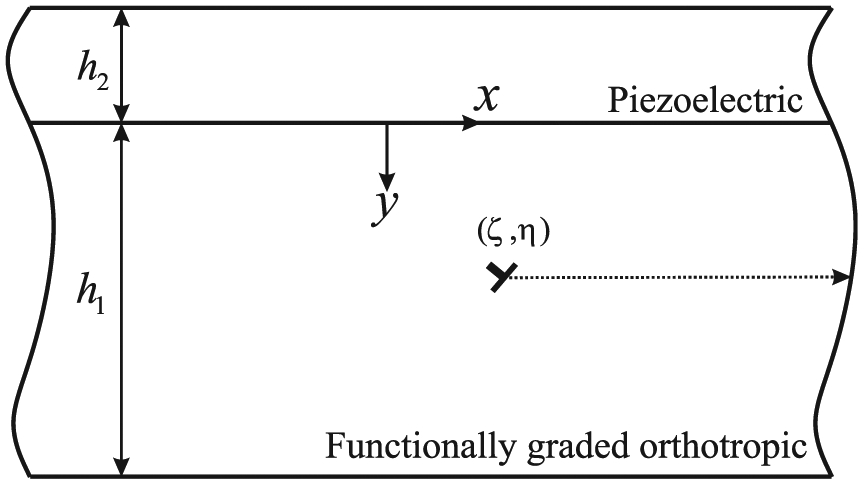
A functionally graded orthotropic strip reinforced with piezoelectric coating with a screw dislocation in the strip.
For anti-plane elastic field coupled with the in-plane electric field, the constitutive equation of the problem in coordinate system

where

where
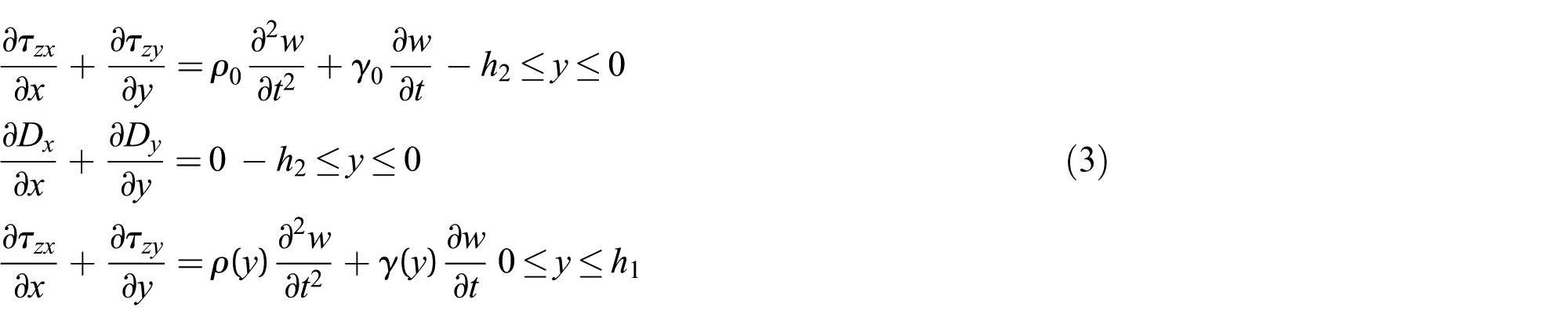
where
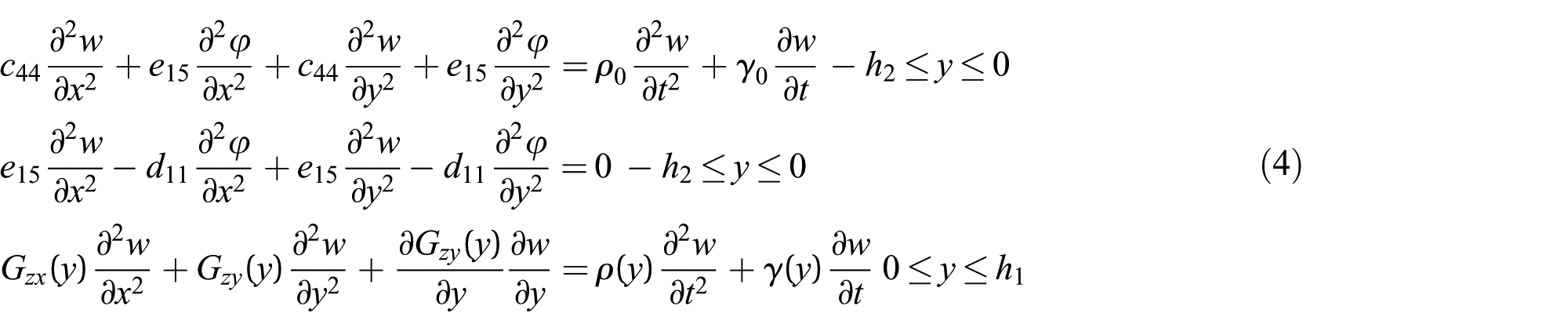
For the piezoelectric coating, all of the material properties are constant, which are denoted by the corresponding letter with subscript

where

In the above equations,

in which

The constitutive equation (1), in view of equation (7), leads to

However, in this work, it is not necessary to consider the electrical boundary conditions on the crack surface, because the functionally graded orthotropic strip has no electric properties under the electrical loads. Therefore, the electrical loads are supposed to be applied only in the piezoelectric layer and are not perturbed by the cracks. The conditions representing the screw dislocation, the perfect bonding conditions at the interface of two materials, and the traction-free and electrical displacement-free conditions on the outer boundary of the layers are represented as follows:
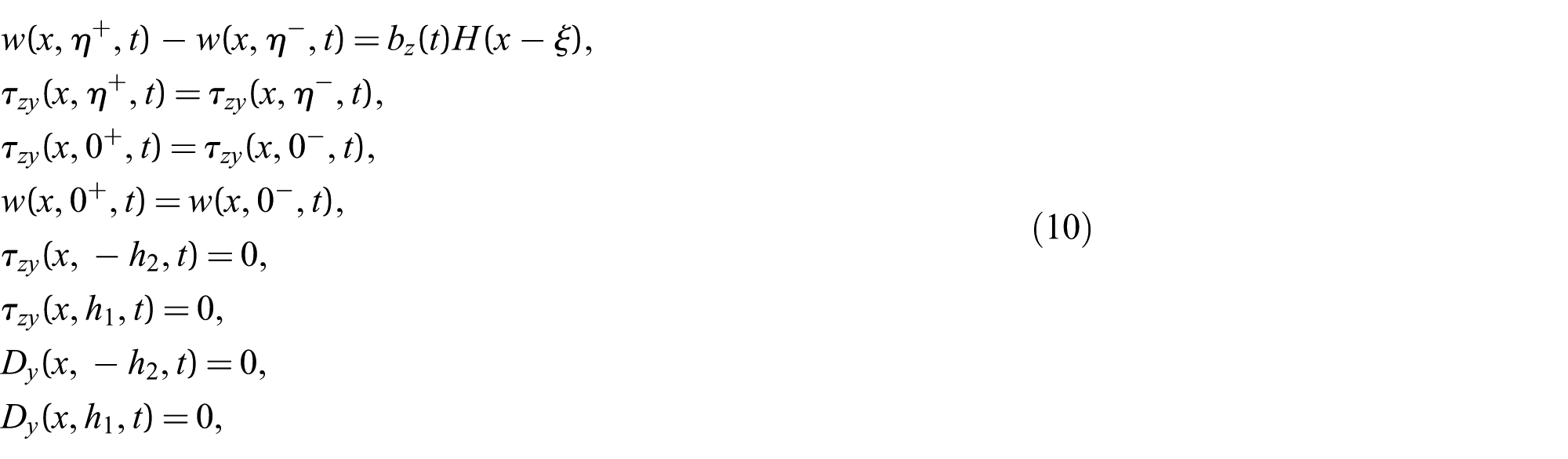
where
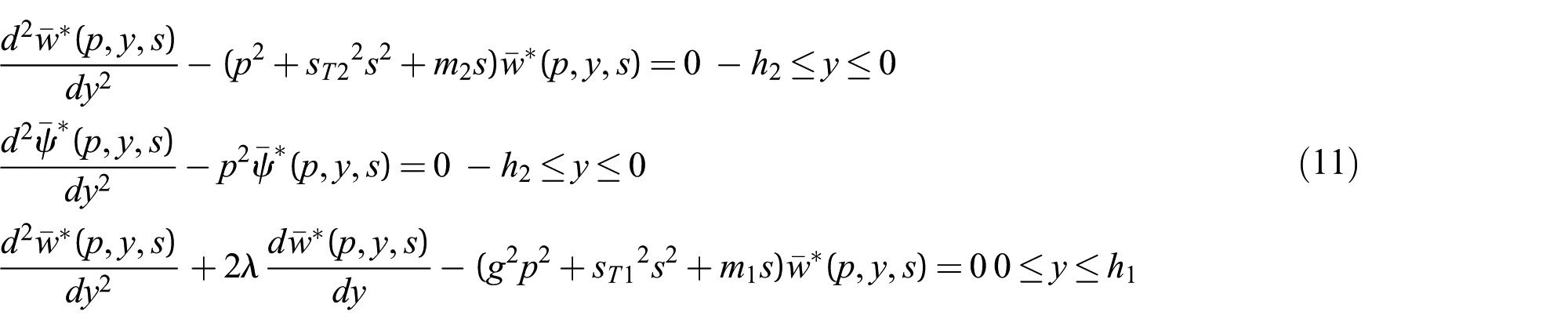
where

The general solutions of equation (11) for coating and substrate are derived as

where

The unknown coefficients in equation (13) are determined by applying the boundary conditions (10). The transformed anti-plane displacements

where
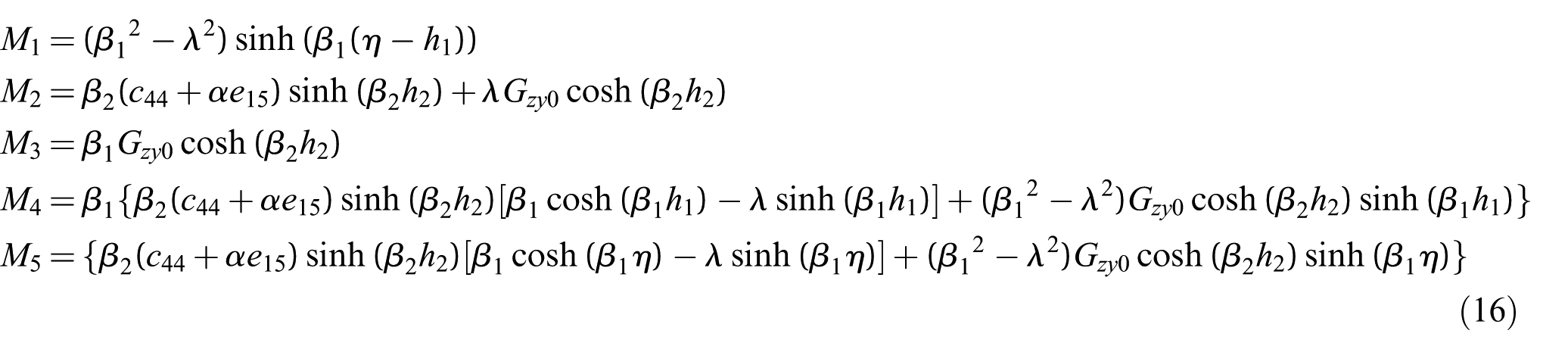
According to the inverse complex Fourier transform, equations (15) are written as

Based on the constitutive equations and equation (17), the components of the stress in the Laplace domain are obtained as follows:
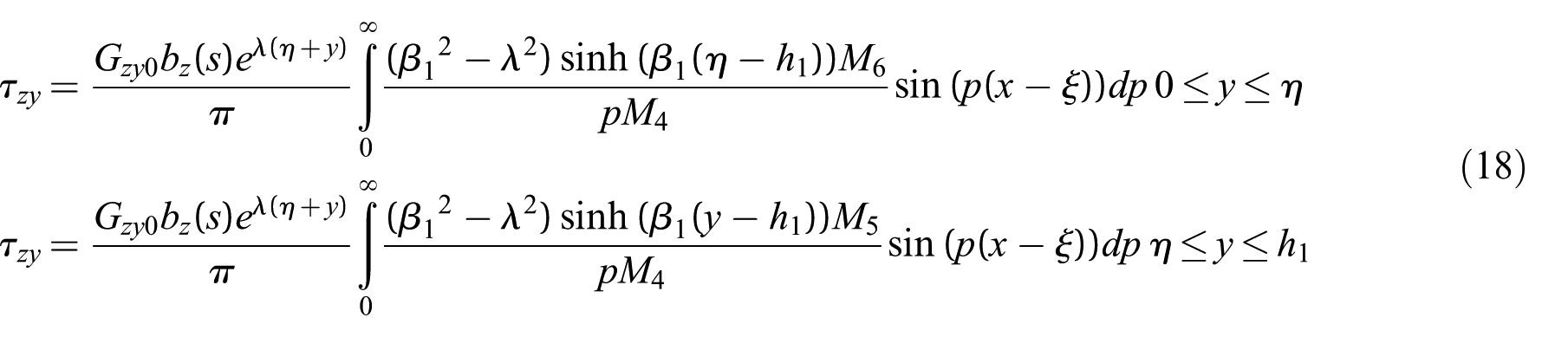
where

Because the kernels are expected to exhibit certain singular behavior, the singular behavior of the stress components is investigated by the asymptotic values of the integrands in equation (18) for
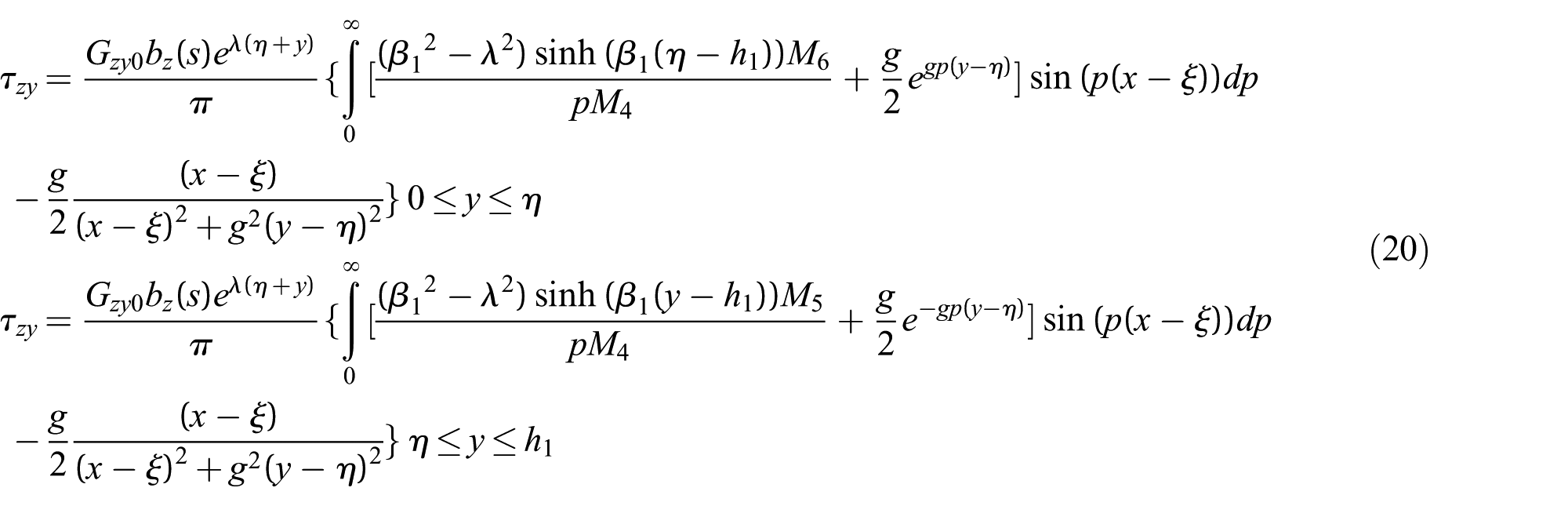
The stress component is obtained as Cauchy singularity kind at the dislocation location, which is a well-known characteristic of the stress fields caused by Volterra-type dislocations.
3. Nonhomogeneous substrate weakened by multiple cracks
Let N be the number of cracks in the nonhomogeneous substrate. The distributed dislocation technique has been used by several investigators for the analyses of the cracked bodies under mechanical loading [15]. The configuration of the cracks is expressed in a parametric form as

where

where
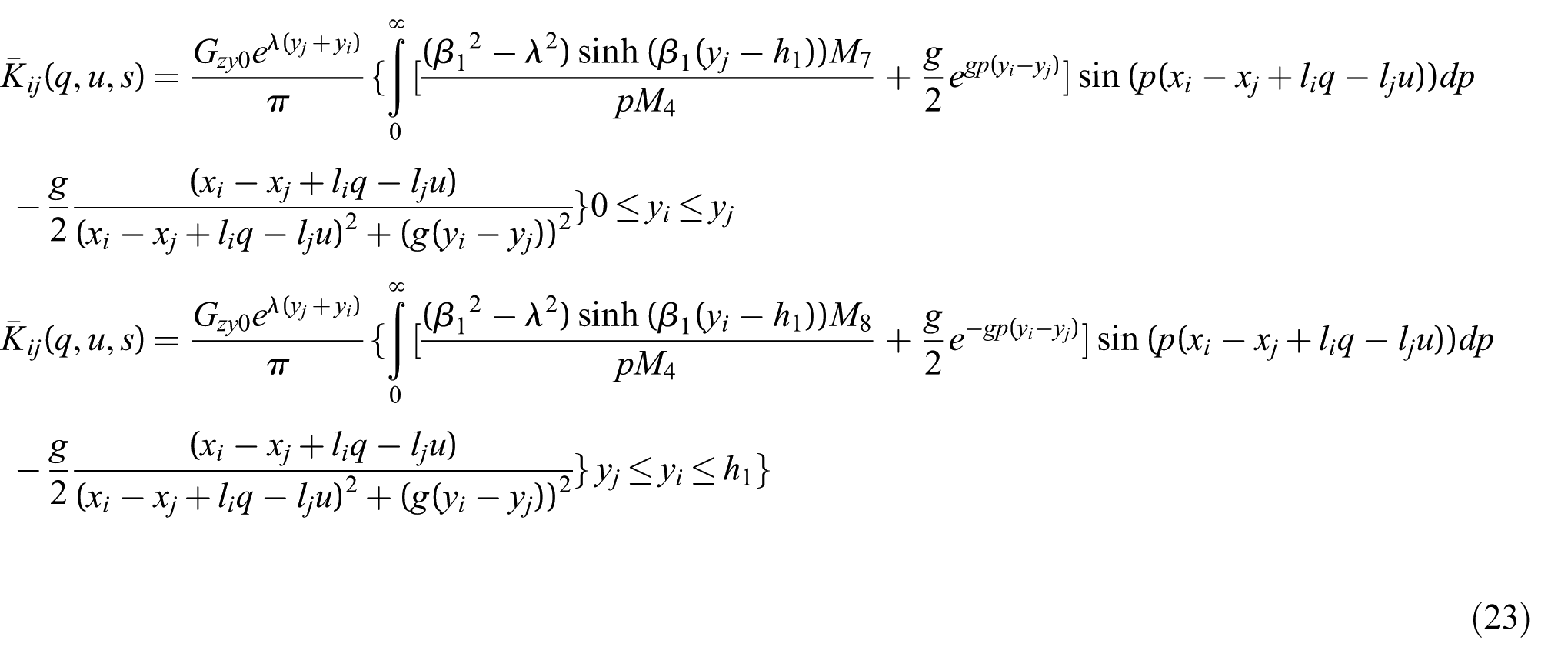
where

The crack opening displacement across the jth crack is represented using the definition of dislocation as

The displacement fields must be a single-valued parameter; and so, the following closure conditions for embedded cracks is employed

The numerical inversion of Laplace transform is carried out via Stehfest’s method [16] by introducing a time-dependent function

where

and [.] signifies the integral part of the quantity. From equation (27), the calculation of

The stress fields at the tip of an embedded crack behave like

Substituting equation (30) into equation (29) and applying the numerical technique expanded by Erdogan et al. [17] for the solution of singular integral equations, the resultant equations are solved. By using equation (27), the inverse Laplace transform of the solution yields to

The SIFs of the embedded cracks derived by Bagheri et al. [18] are

where L and R designate the left and right tips of the crack, respectively; and
4. Numerical solutions
In this section some examples are presented to demonstrate the applicability of the distributed dislocation technique to solve the problem of the orthotropic FGM strip with perfect piezoelectric coating with arbitrary number of cracks. This section is divided into two main parts. At first, the results are compared and verified and then, the effect of the parameters including the thickness of the piezoelectric coating, the orthotropic ratios, the damping coefficients and patterns of cracks on DSIFs are examined. In the all examples, the SIF is nondimensionalized by

The thickness of the substrate are assumed as
Figure 2 displays the effect of the thickness of the piezoelectric coating and damping coefficient on the non-dimensional SIFs versus
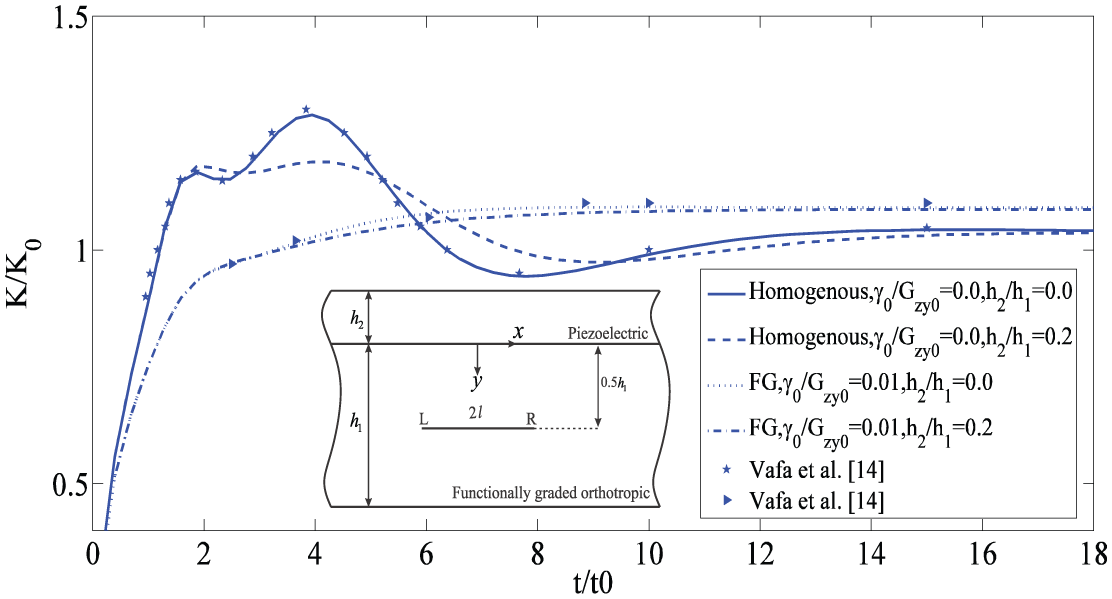
Dimensionless stress intensity factors for an embedded crack in an orthotropic FG layer without reinforcement and nonhomogeneous substrate with piezoelectric coating versus
The SIFs attenuate as the damping effects enhance. For the analysis of the orthotropic FG strip,
Furthermore, a central crack with length
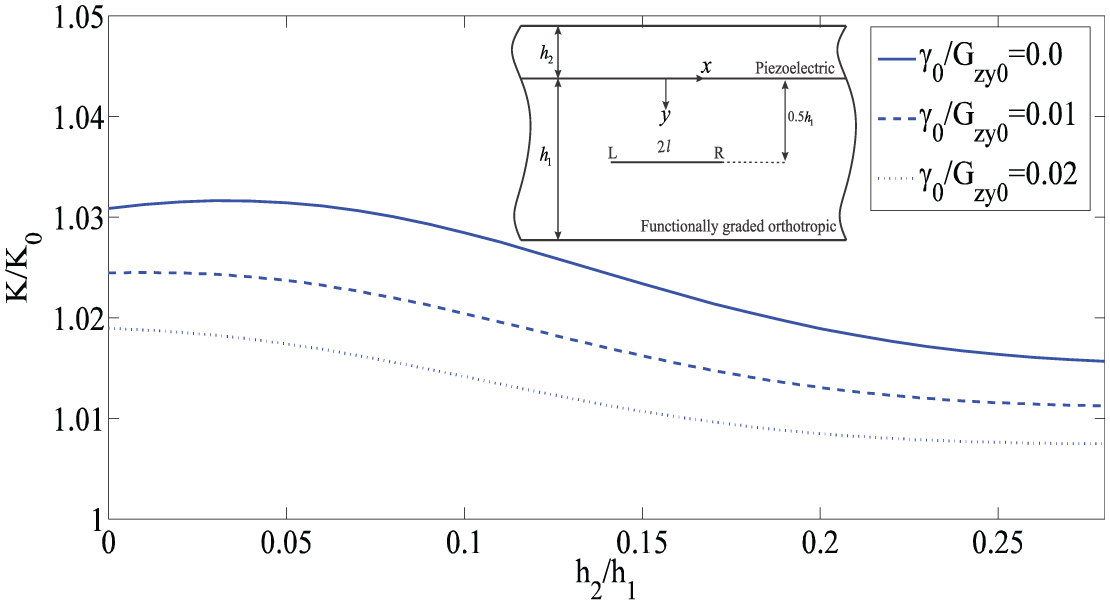
The variations of the normalized stress intensity factor of a central crack in the substrate versus
The effect of the dimensionless time on the behavior of the crack tips is plotted in Figure 4 for four orthotropic ratios (i.e. g). The material properties of the layers are
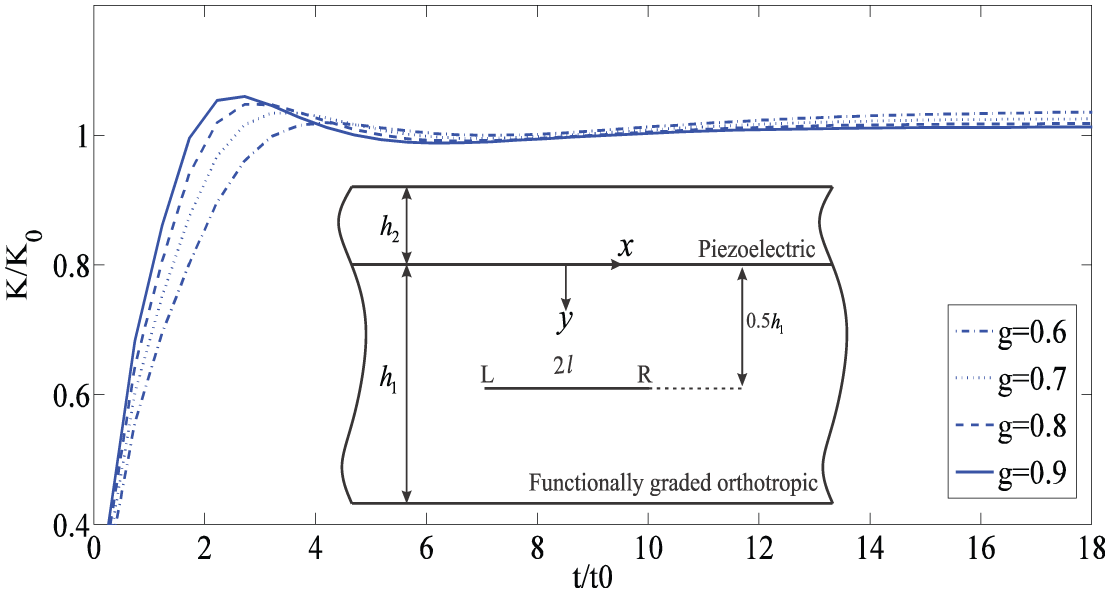
The variations of the normalized stress intensity factor of a crack versus
In the next example, two equal-length cracks which are parallel to the FG layer edge with length ratio
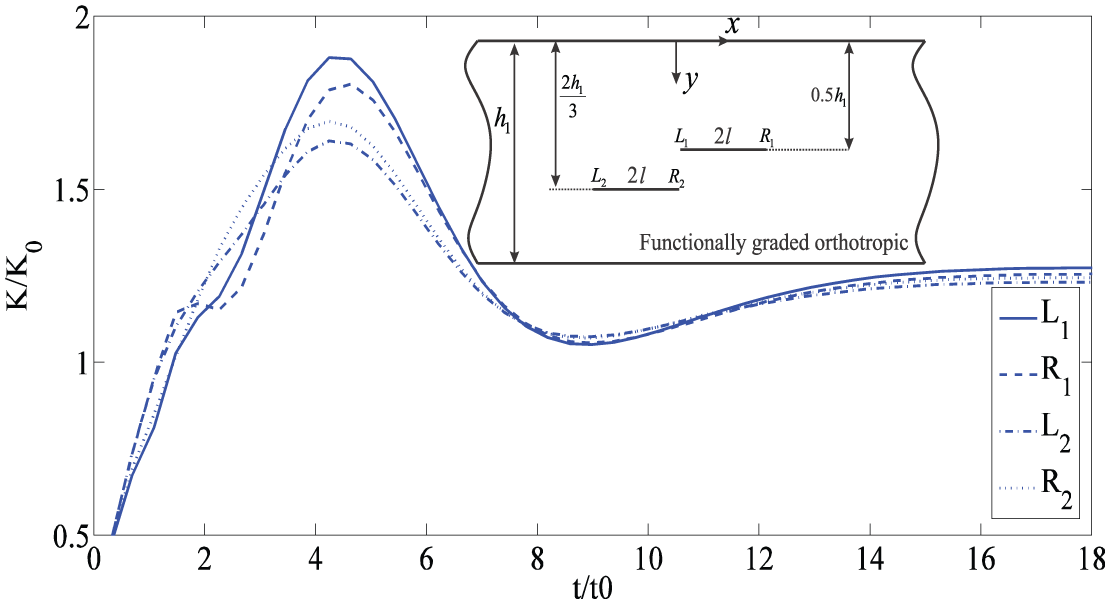
The variations of the normalized stress intensity factor for two cracks versus
In the next example, two equal-length cracks which are parallel to the layer edges with length ratio
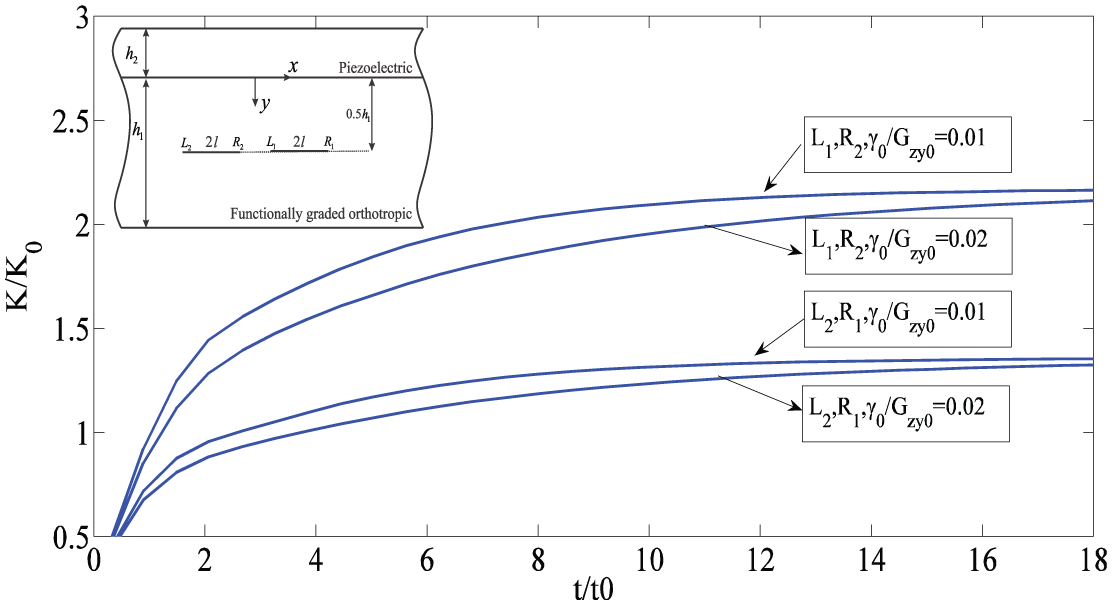
The variations of the normalized stress intensity factor for two cracks versus
In the next example, three equal-length cracks with length
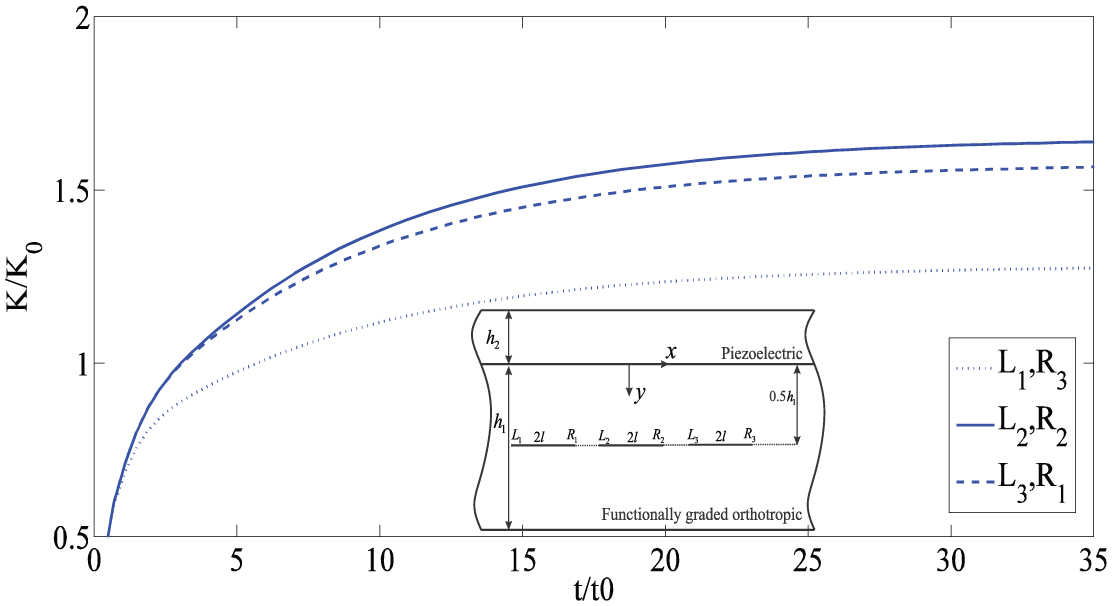
The variations of the normalized stress intensity factor for three equal length cracks versus
Figure 8 shows the variation of the normalized SIFs (i.e.
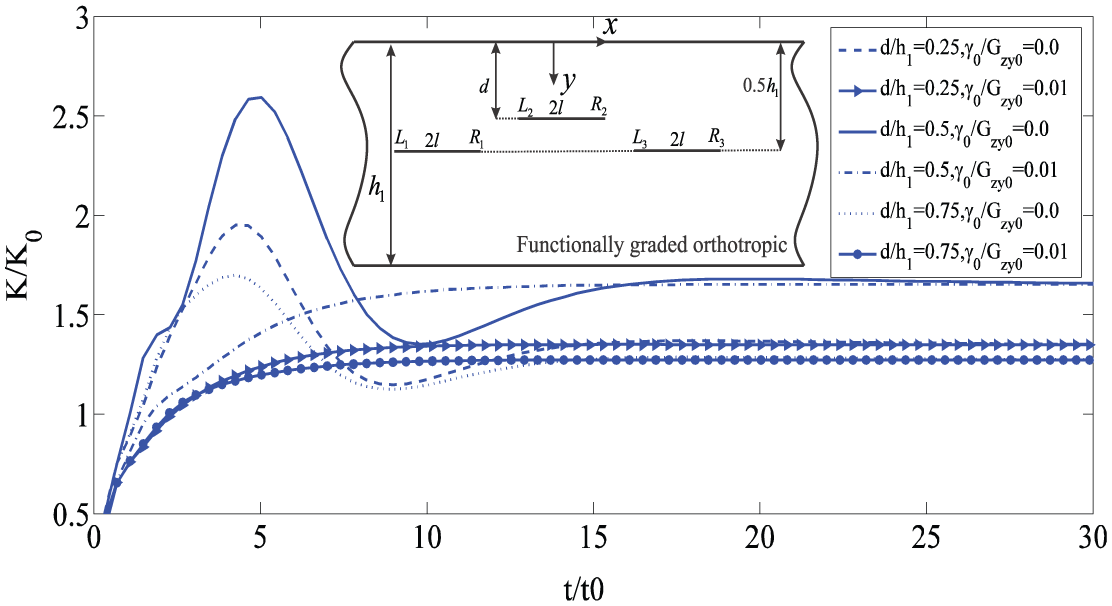
The variations of the normalized stress intensity factor for three equal length cracks versus
5. Conclusion
The transient response of a functionally graded orthotropic substrate with a piezoelectric coating weakened by multiple cracks is studied. The system is subjected to anti-plane mechanical and in-plane electrical loadings. Using the Fourier and Laplace transform methods, the associated boundary value problem is reduced to a system of singular integral equations for the Volterra dislocation density. The results are verified by considering a single crack in an FGM strip. The examples of the multiple cracks show that the DSIF at the crack tips increases by growing the crack length, decreases by growing the damping coefficient, and decreases by increasing the thickness of the coating. The results are in excellent agreement with the analytical solutions obtained by Vafa et al. [14]
Footnotes
Funding
This research received no specific grant from any funding agency in the public, commercial, or not-for-profit sectors.