







Abstract
In this study, the frictional moving contact problem for an orthotropic layer bonded to an isotropic half plane under the action of a sliding rigid cylindrical punch is considered. Boundary conditions of the problem include the normal and tangential forces applied to the layer with a cylindrical punch moving on the surface of the layer in the lateral direction at a constant velocity V. It is assumed that the contact area is subjected to the sliding condition where Coulomb’⣙s law is used to relate the tangential traction to the normal traction. Using the Fourier integral transform technique and Galilean transformation, the plane contact problem is reduced to a singular integral equation in which the unknowns are the contact stress and the contact width. The singular integral equation is solved numerically using Gauss–Jacobi integration formulae. Numerical results for the contact widths and the contact stresses are given as a solution.
1. Introduction
Contact mechanics studies have great importance in the field of tribology and have an impact on the design of components for industries, such as the automotive and aerospace industries. The usage of composite materials in these industries is getting higher and higher as the weight savings compared with the required stiffness are much better than conventional or isotropic materials. Some applications of coatings that might be treated as orthotropic will be given in the following discussion.
Thermal barrier coatings used in heat engine applications, often fabricated from zirconia or zirconia-based compound composites, are applied to the metal substrate to protect the engine from corrosion. These coatings are usually manufactured using a physical vapour deposition process. This manufacturing process introduces anisotropy and these coatings are usually modelled as orthotropic coatings [1]. Usually the failure mechanisms of these coatings are spallation and delamination [2].
Titanium alloys are also used in the automotive aerospace and shipping industries [3]. However, titanium alloys have low surface hardness and their tribological properties are poor. To improve the wear strength and enhance surface performance of these alloys, they are coated with nanostructured coatings [4] that might be treated as orthotropic.
Other applications of orthotropic coatings are the polytetrafluoroethylene coatings used in air-conditioning and refrigeration compressors [5]. These coatings offer significant improvement on the tribological performance of compressors and are usually modelled as orthotropic coatings.
Since the failure in the components occurs near highly stressed regions and these regions are commonly seen near contact regions, it is highly important to study the contact behaviour and accurately calculate the contact stresses.
There are a great many studies in the literature of the contact mechanics of isotropic materials, usually conducted under the assumption of quasistatic loading conditions. These studies include several different kinds of contact, such as fully sliding, partial slip, fretting, receding and tractive rolling. Since the scope of this study is limited to sliding contact, a brief literature review of the sliding contact problems related to orthotropic materials will be given.
In most of the literature on contact mechanics studies, the contact problem is modelled using the assumption that the inertial effects are negligible and therefore the problem can be treated as a quasistatic problem. However, there are problems that arise in practice in which the speed of one body relative to the other is quite large, and therefore the dynamic character of the contact problem must be considered [6]. The moving contact problem between rigid punches and an orthotropic half plane is solved by Zhou et al. [7–9] using the Fourier transform and the Galilean transformation. Punches with flat and cylindrical [7] or parabolic and triangular profiles [8] are assumed to move at a constant velocity on the surface of an orthotropic half plane. Çömez [10] studied the frictional dynamic contact problem of a rigid cylindrical stamp that moves on an isotropic layer at a constant velocity. The dynamic contact problem between flat or triangular punches and an isotropic layer bonded to the half plane is studied by Balci and Dag [11]. Çömez [12] investigated the frictionless contact problem of a functionally graded layer indented by a moving rigid cylindrical punch. The moving contact problem between the flat or cylindrical punches and the magneto-electro-elastic half plane is examined by Zhou and Lee [13, 14]. The stresses and displacements of an orthotropic half plane have been examined under a line load moving at a constant subsonic, transonic or supersonic velocity over its surface [15].
Although the moving contact problems of a monoclinic half plane have been investigated by Zhou and his coworkers, the moving contact problem of an orthotropic layer bonded to a half plane has not been studied [8]. To fill this gap in the literature, in this paper, the frictional dynamic contact problem between a rigid cylindrical punch and a half plane coated with an orthotropic layer is considered. Using the Fourier transform and Galilean transformation, general expressions for the stresses and the displacements for both the orthotropic layer and the isotropic half plane are derived. Applying the boundary conditions of the problem, a second-kind singular integral equation is obtained. Then, the singular integral equation is solved numerically using the Gauss–Jacobi integration formula.
2. Formulation of the problem
Consider the plane strain contact problem illustrated in Figure 1. An orthotropic layer of thickness h is bonded to an isotropic half plane. The loading is provided by a rigid cylindrical punch with radius R subjected to a concentrated normal force P and a tangential force Q. The punch moves on the layer in the X-direction at a constant velocity V. Friction between the layer and the punch is taken into account. The rectangular coordinates
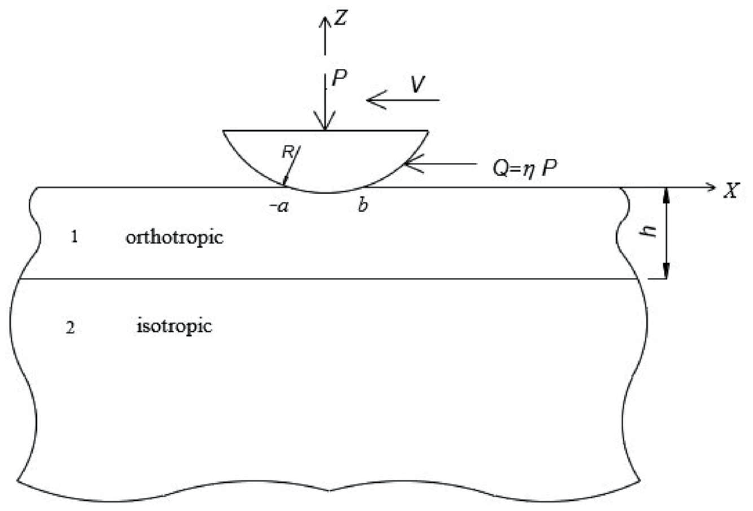
Geometry of the moving contact problem.
2.1. Displacement and stress expressions for the orthotropic layer
The wave equations of elastodynamics can be written as:



where
For the plane contact problem under consideration, Hooke’s law for the orthotropic layer can be written as:






Owing to constant speed, it is tractable to introduce Galilean transformation:

Substituting equation (3) into the wave equations and using Hooke’s law, the equations of equilibrium in terms of the displacements are obtained as:



Using the Fourier transform technique, the following expressions may be written:

where



The displacement components



where










Substituting equation (7) into equation (2), the stress components for the orthotropic layer can be obtained as:






where
3. Displacement and stress expressions for the isotropic half plane
The stress–strain relation for the isotropic half plane under plane strain conditions can be written as:






where



Solving equation (11) and using equation (5), the expressions of the displacements for the isotropic half plane can be obtained as:



where










The stress components for the half plane can be obtained by substituting equation (12) into equation (10), as:






where
4. Boundary conditions and the singular integral equation
In the coordinate system









where
On taking the Fourier transform of the boundary conditions given by equation (15), the unknowns


An additional condition may be written in the form of a derivative to eliminate rigid-body displacement and to ensure continuity of normal displacements, as:

Substituting unknowns

where






In the equation (18), in addition to the contact stress

5. On the solution of the singular integral equation
The contact stress



Thus, the singular integral equation may be expressed in the following form:

where



Similarly, the equilibrium condition (equation (20)) becomes

Equation (22) is of the second kind because of the presence of the first term in equation (22). The solution of the integral equation may be expressed as

where

Similarly, the equilibrium condition (equation (24)) can be written in a discretized form as

where



where



Equations (26) and (27) are to be solved simultaneously to determine the unknowns
Once the contact stress and contact areas are obtained, the surface stress components in dimensionless form can be computed using the following relations:


Similarly, the in-plane stress at the surface of the orthotropic layer can be expressed as

where







6. Numerical results
In this study, the moving contact problem for a graded orthotropic layer and isotropic substrate system is considered under dynamic loading conditions. To ensure the correctness of the formulation of the graded problem, the results of this study are validated with three different studies available in the literature. The first and second comparisons are made with the studies conducted by Guler [17] and Balci and Dag [18] for the contact problem between a rigid cylindrical punch and an isotropic coating or isotropic half plane in the static and moving punch cases, respectively. This validation was made possible by reducing the orthotropic material properties to the isotropic counterparts by choosing the following material properties:

Figure 2 shows the comparison of the results of this study with those of Guler [17] and Balci and Dag [18]. There is an excellent agreement between the results of this study and the benchmark study of Guler [17]. However, there is a discrepancy with the results of Balci and Dag [18] and Guler [17] on the distribution of contact pressure,
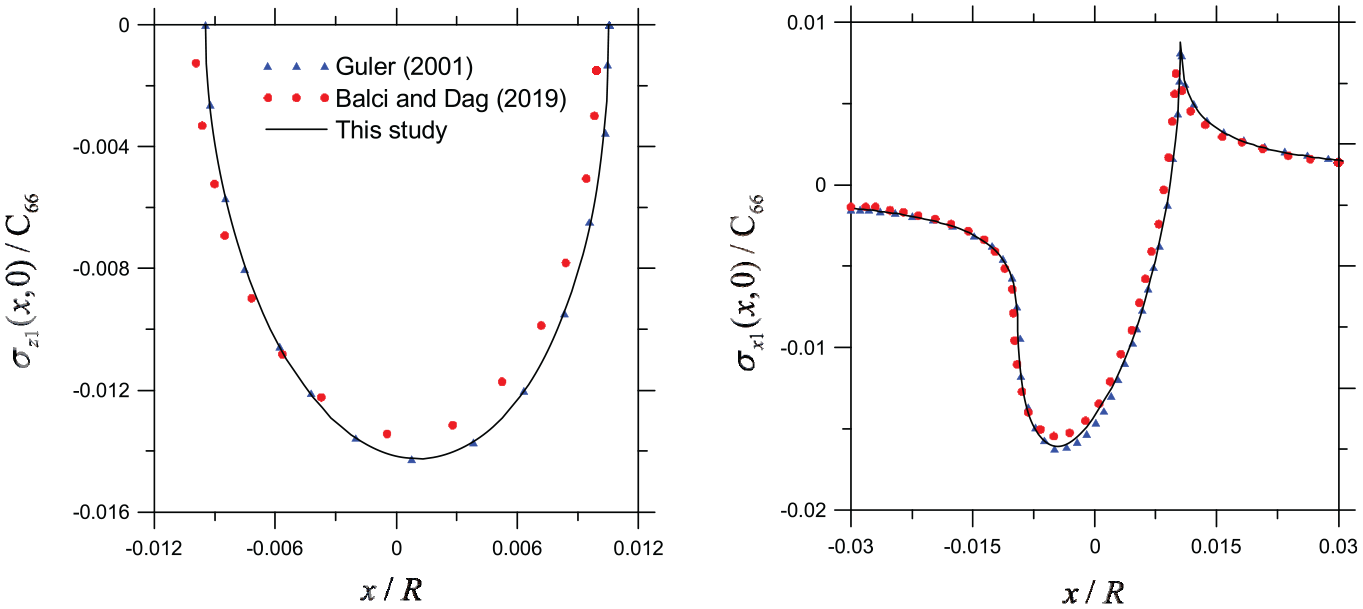
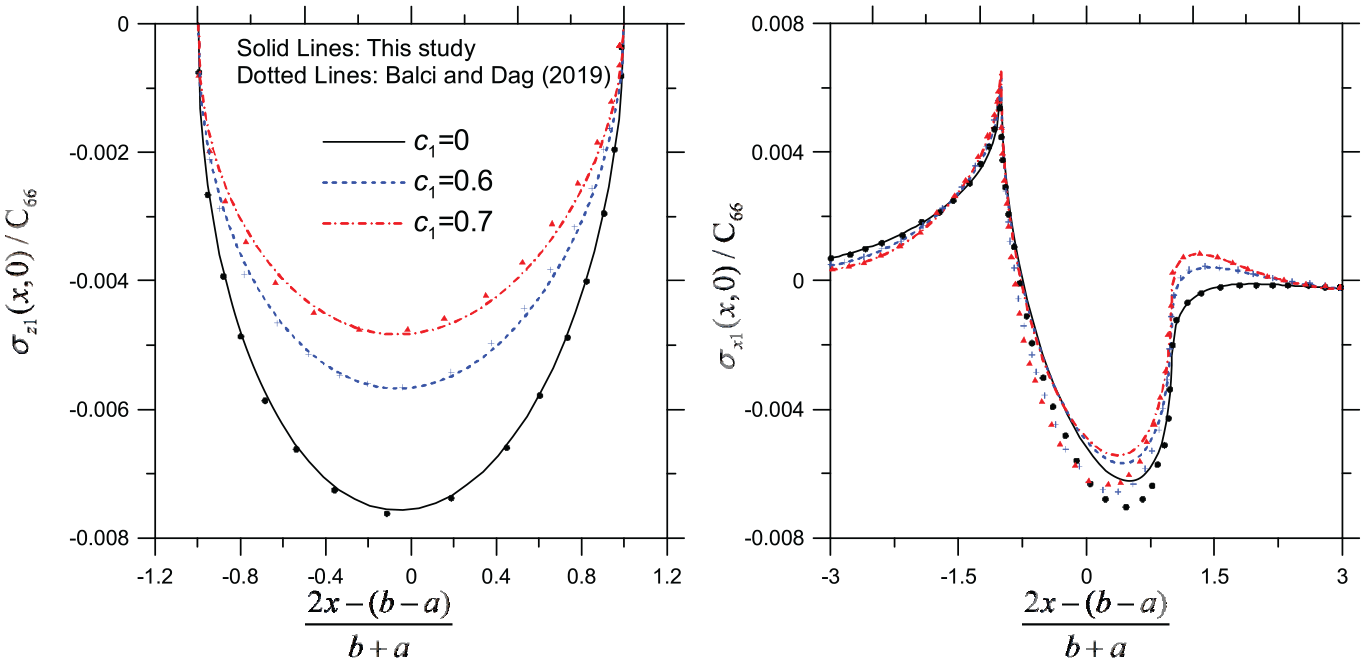
Comparison of moving contact problem stress distribution on the surface of the isotropic layer with results of Balci and Dag [18]
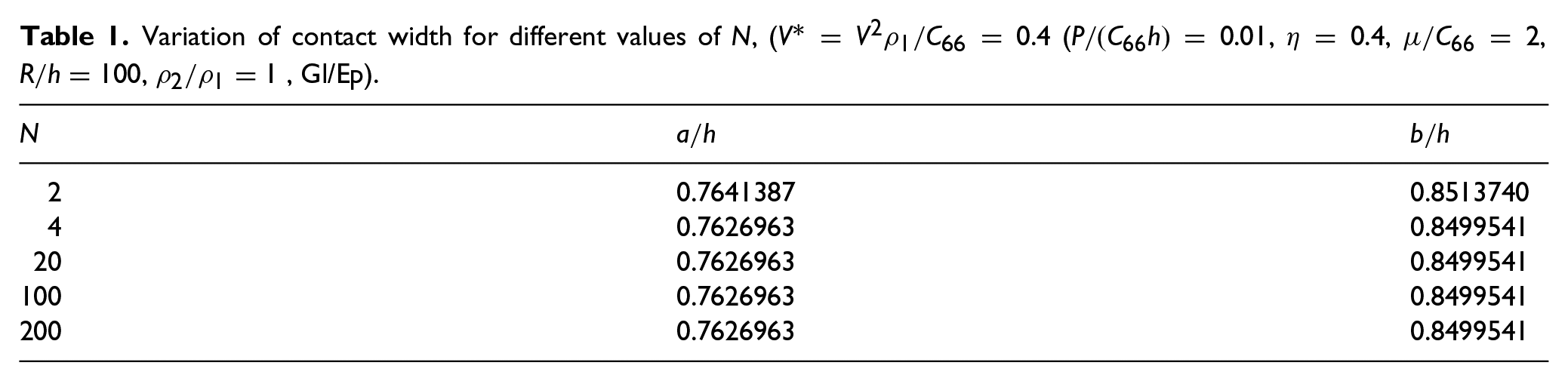
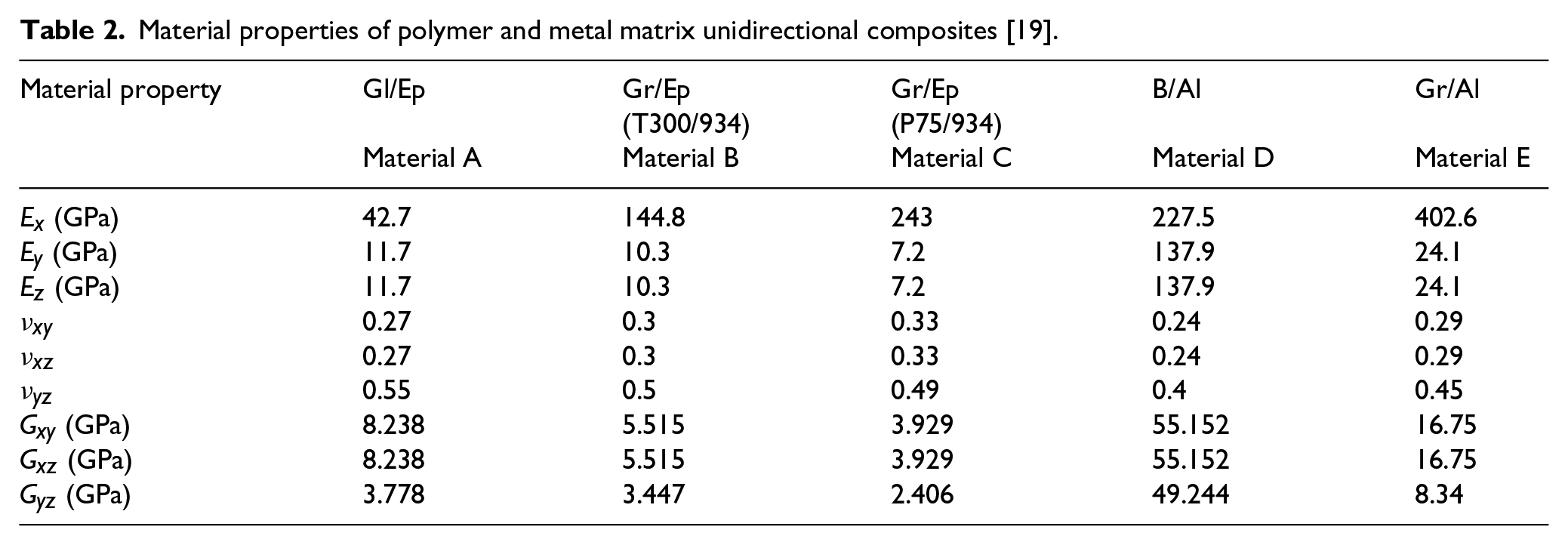
A convergence study was conducted to investigate the effect of the collocation point, N, as shown in Table 1 and Figure 4. Note that the material properties of polymer and metal matrix unidirectional composites used in the simulations hereinafter are obtained from Binienda and Pindera [19] and listed in Table 2. It can be seen from Table 1 that
Variation of contact width for different values of N,
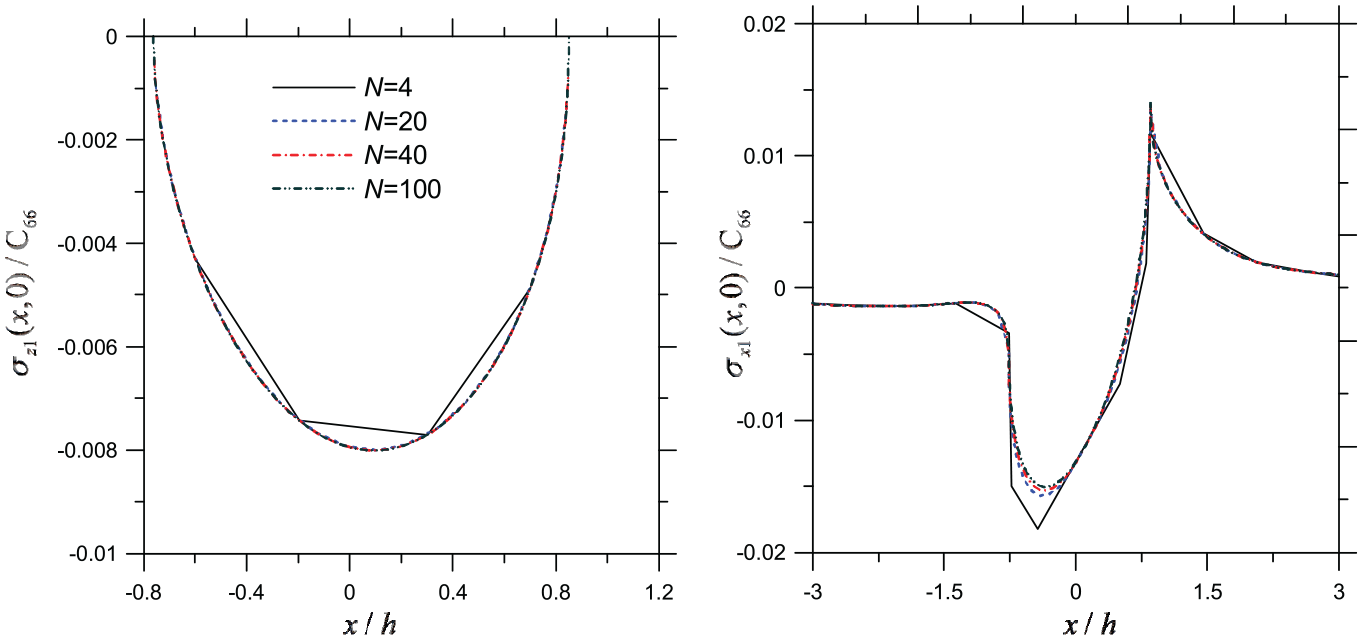
Effect of the collocation point, N, on the contact stresses (
Material properties of polymer and metal matrix unidirectional composites [19].
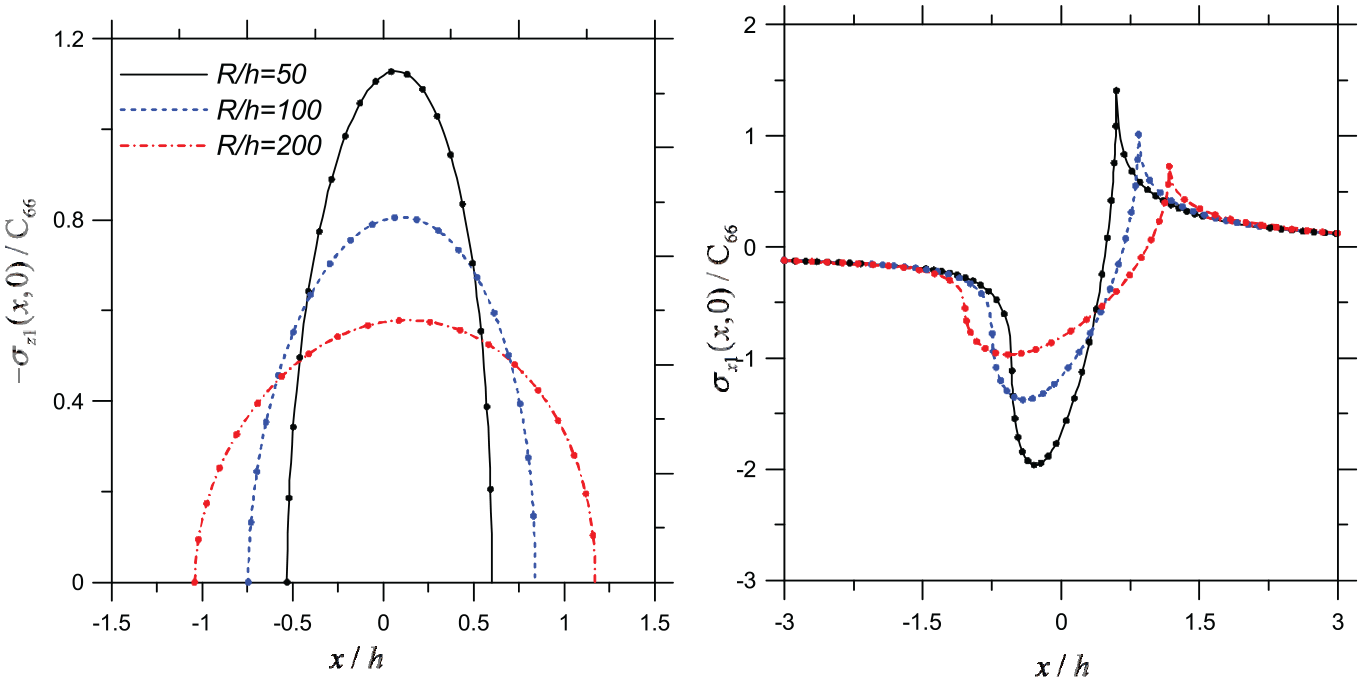
Comparison of the stress distribution on the surface of the orthotropic layer (solid curves) with results of Yilmaz et al. [20] (symbols)
We now present a parametric study to investigate the effect of several parameters on the contact stresses. For easier understanding of the results, herein, we define the following non-dimensional parameters for moving velocity:

for the applied external load,

for the stiffness ratio,

and for the density ratio,

where the Poisson ratios of the orthotropic layer and the substrate are each selected as
To capture the effect of the moving velocity of the contact and in-plane stress distribution, for different values of moving velocity,
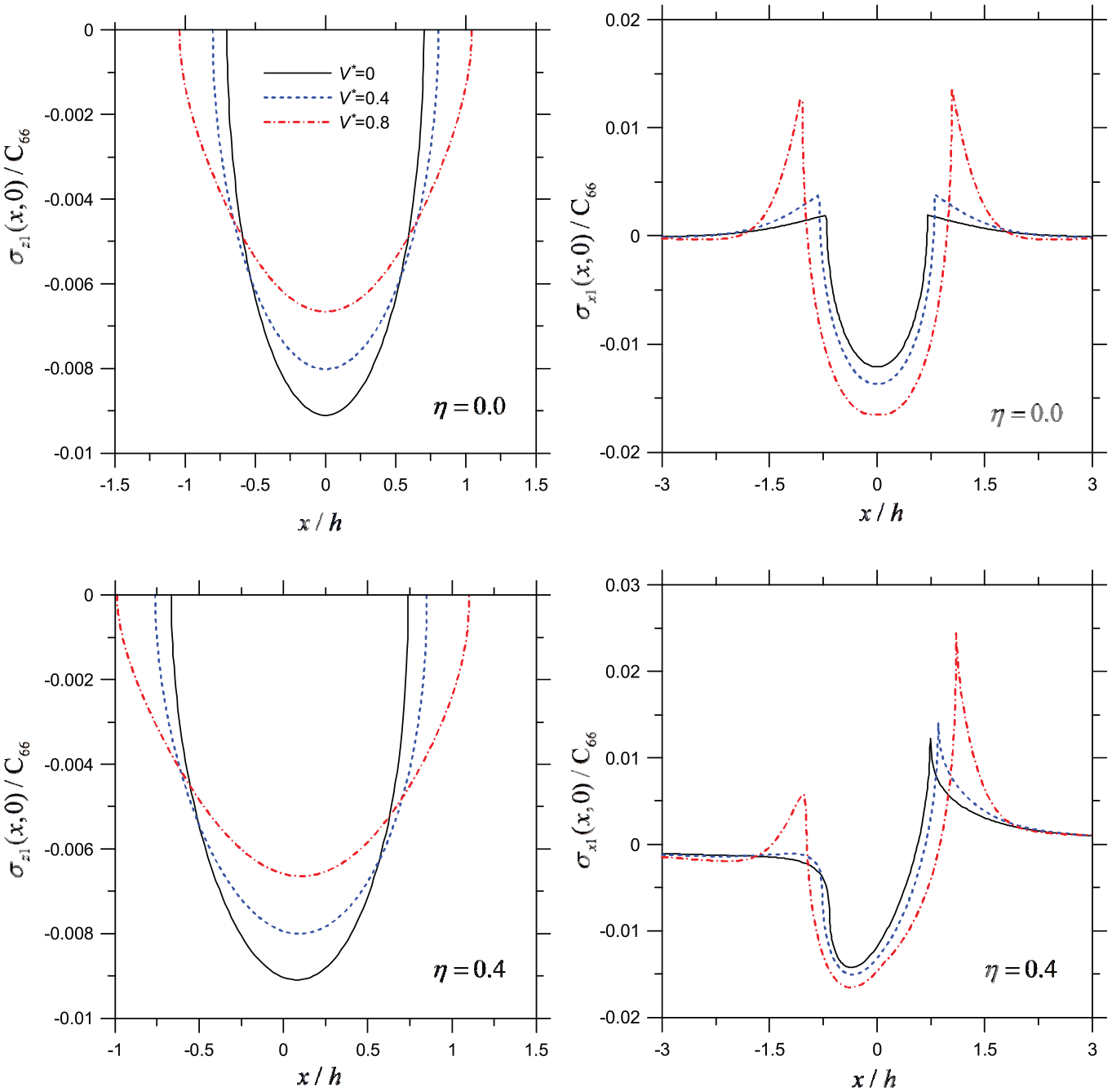
Contact stress and in-plane stress distribution for different values of moving velocity:
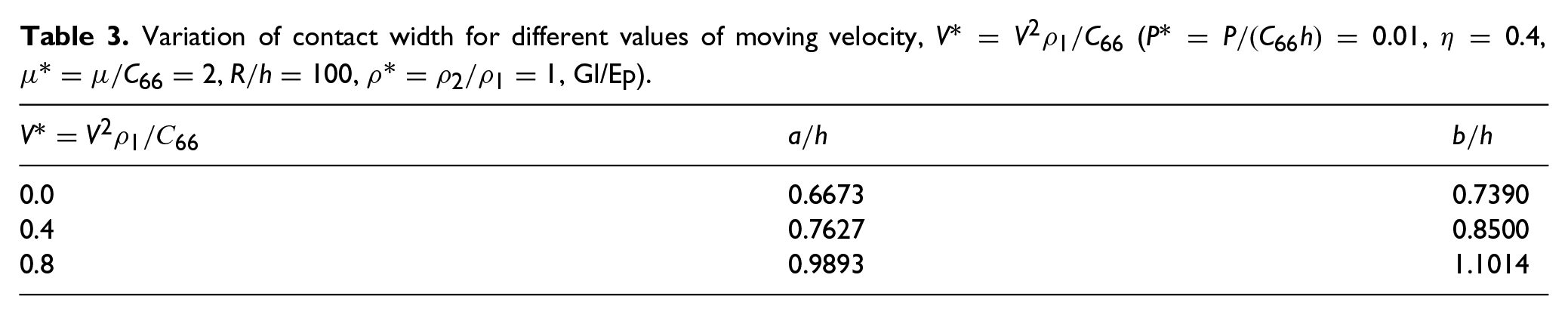
Variation of contact width for different values of moving velocity,
Variation of contact width for different values of friction coefficient,

Variation of contact width for different values of external load,

Variation of contact width for different values of punch radius,

Variation of contact width for different values of stiffness ratio,

Variation of contact width for different values of density ratio,

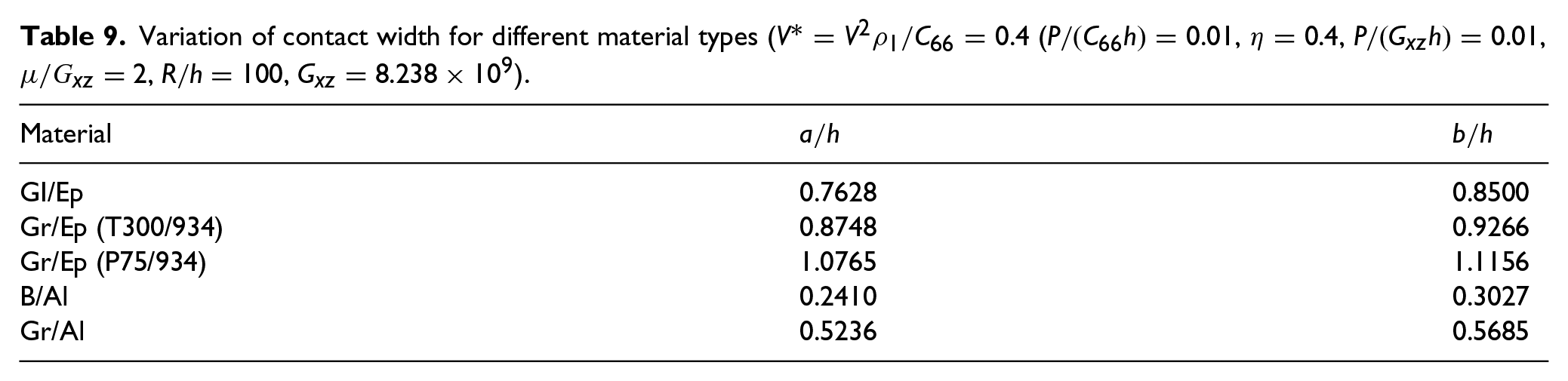
Variation of contact width for different material types
The coefficient of friction has a great effect on the tensile peak in the in-plane stress distribution observed at the trailing edge of the contact (see Figure 7). These peaks are usually responsible for crack initiation and subsequently lead to fatigue failure of the components. Note that for the frictionless case there are also tensile peaks at each end of the contact.
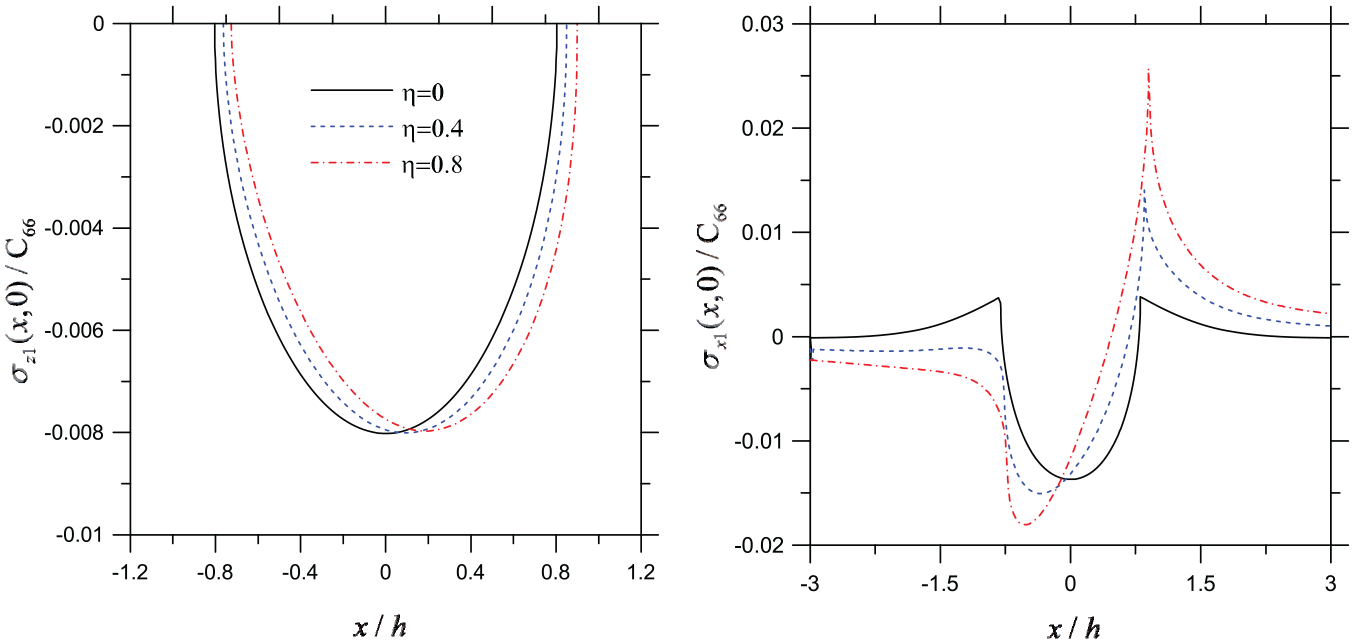
Contact stress and in-plane stress distribution for different values of friction coefficient,
The effects of the external load and the punch radius on the stress profiles are depicted in Figures 8 and 9, respectively. Both quantities have a similar effect, that is, as the load is increased both contact pressure and in-plane stress levels are also increased.
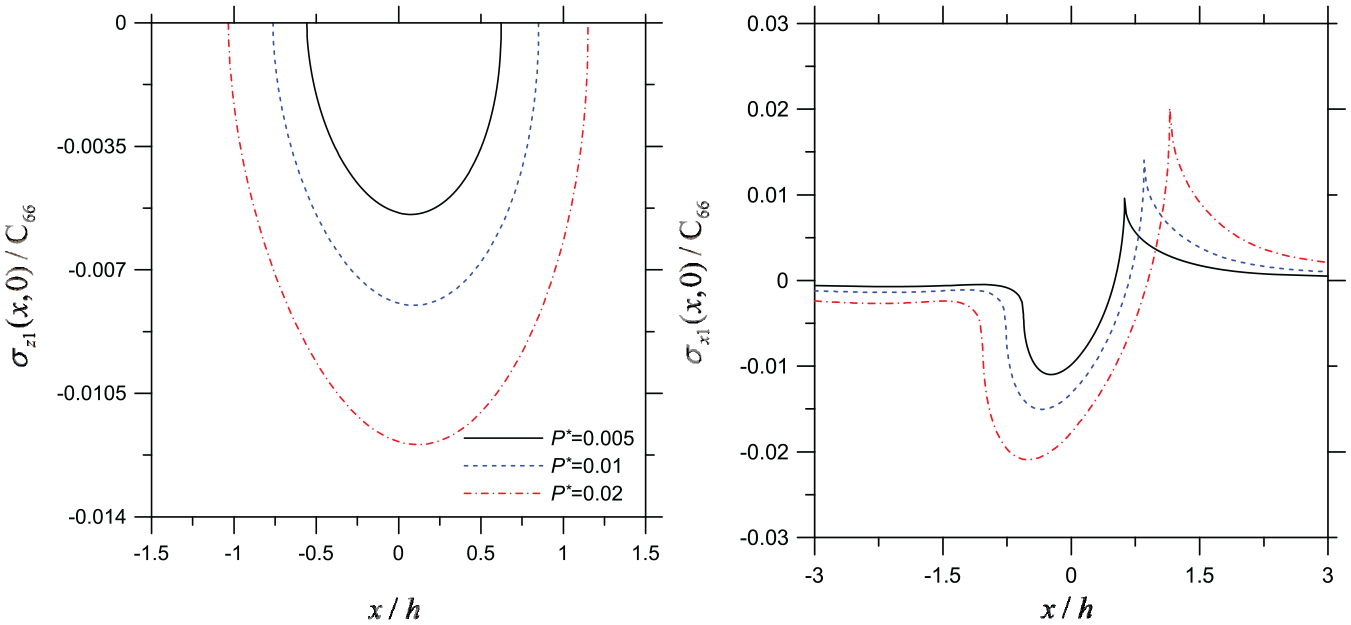
Contact stress and in-plane stress distribution for different values of the external load
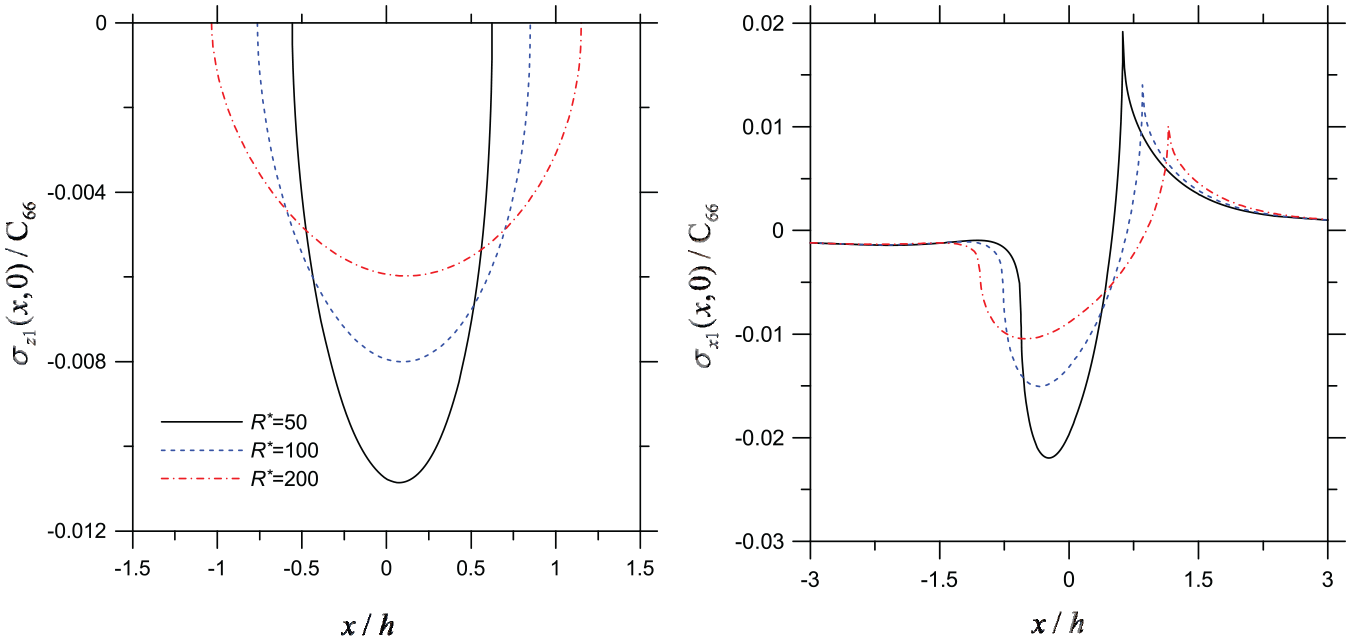
Contact stress and in-plane stress distribution for different values of punch radius
The effect of stiffness ratio,
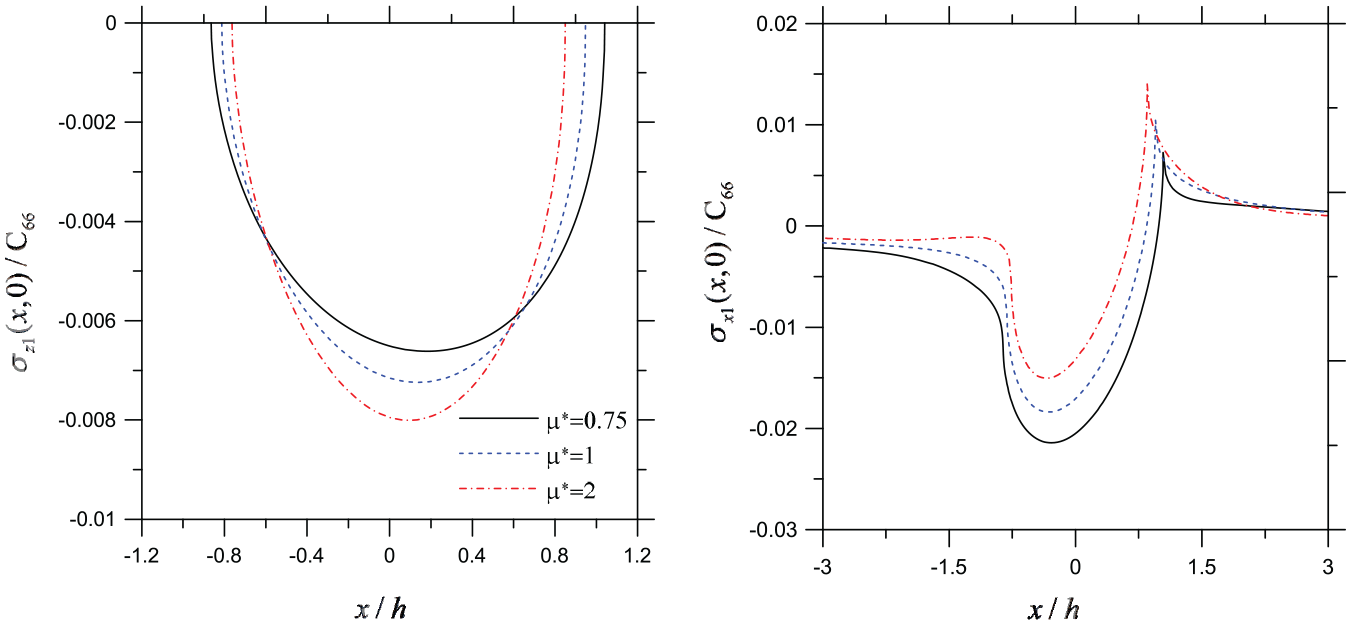
Contact stress and in-plane stress distribution for different values of the stiffness ratio
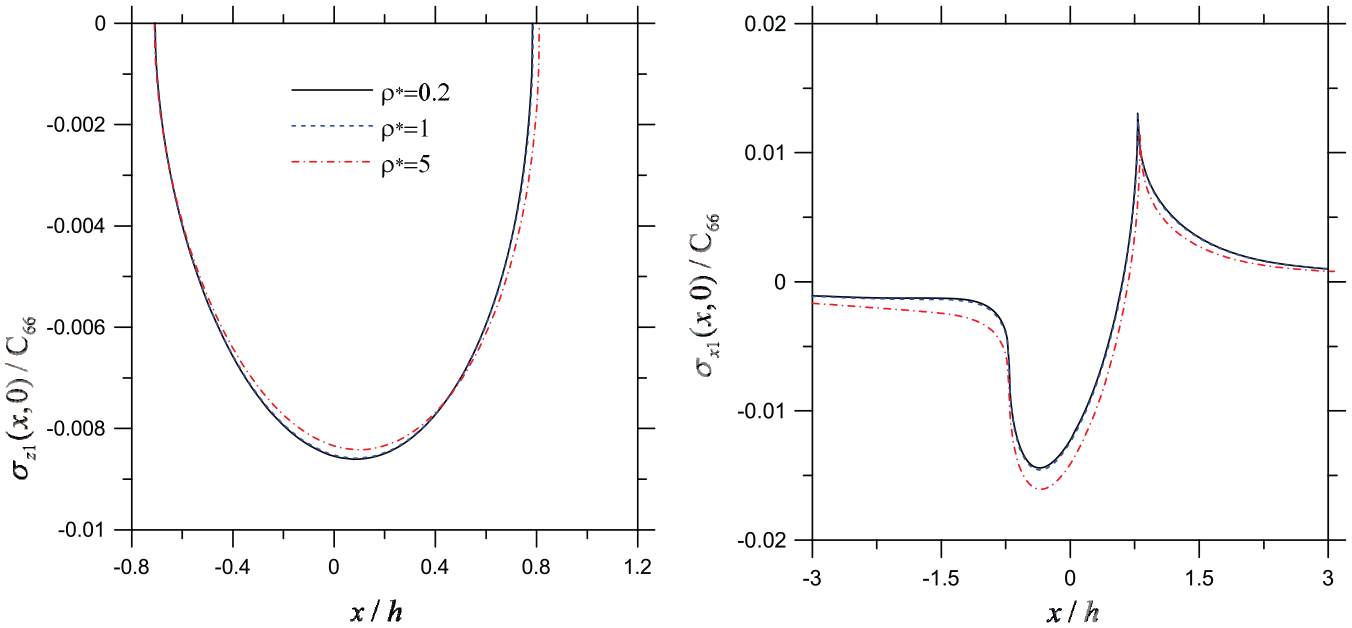
Contact stress and in-plane stress distribution for different values of density ratios
To investigate the dynamic contact problem of a moving rigid punch on composite materials, a further study was carried out. Three out of five of these composite materials are polymer (glass/epoxy, graphite/epoxy (T300/934) and graphite epoxy (P75/934)) and the remainder is metal matrix (boron/aluminium, graphite/aluminium). Their material properties are obtained from the study conducted by Binienda and Pindera [19]. The frictional contact stress distributions for these five different composite materials are given in Figure 12. Overall, the highest stiffness in the z-direction is observed in boron/aluminium (B/Al) (
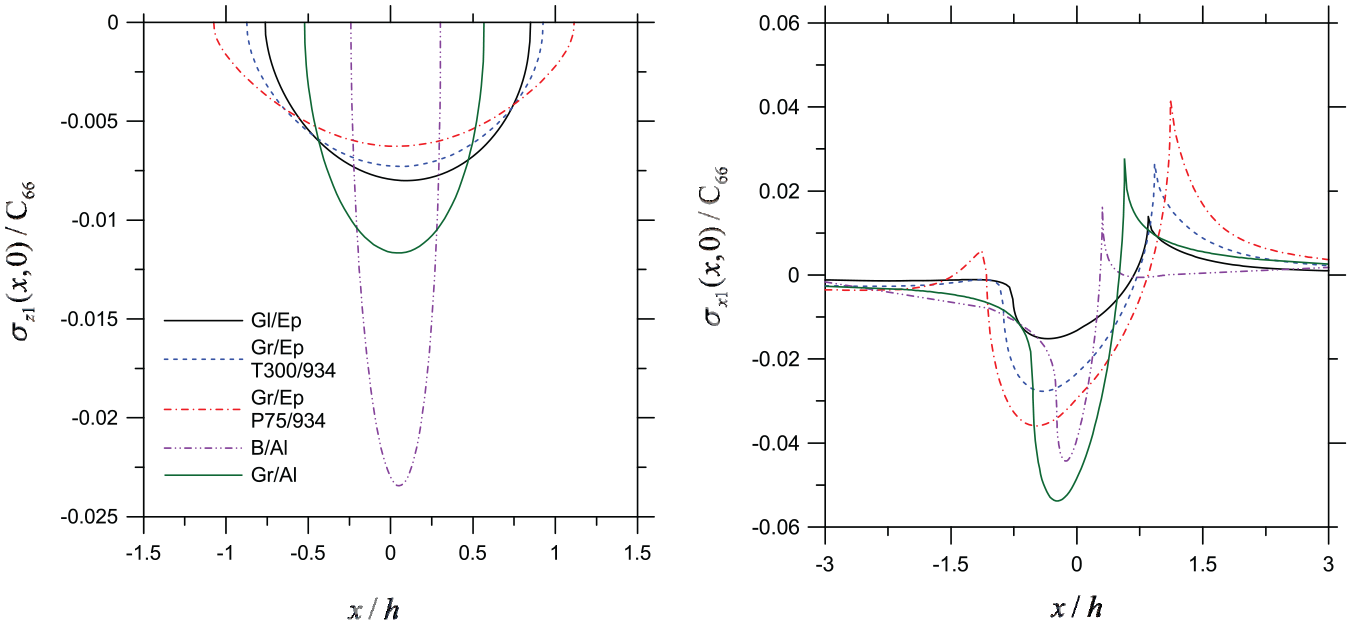
Contact stress and in-plane stress distribution for different material types (
Finally, the variation of the contact width with the external load,
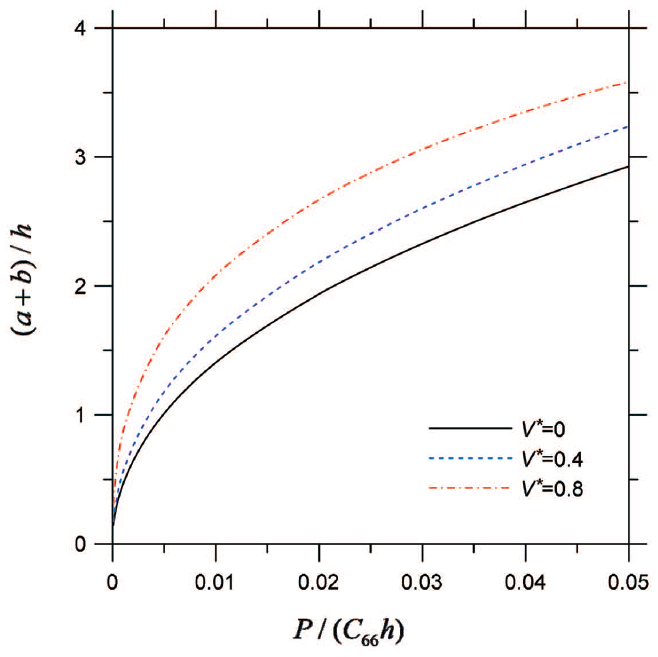
Variation of the contact width with the external load
7. Conclusions
In this study, the frictional dynamic contact problem between an orthotropic coating bonded to an isotropic substrate is considered in the framework of linear elasticity theory. The contact problem is solved under the boundary conditions and the plane contact problem is reduced to the singular integral equation of the second kind. Using Gauss–Jacobi integration formulae, the integral equation is solved numerically. Generated results include five different composite materials, of which three are polymer matrix and two are metal matrix. From this study, the following conclusions can be outlined.
When the punch moves faster, the contact stress decreases and the contact length increases. The effect of punch speed is much more pronounced for the in-plane stress distribution. There are tensile peaks at both ends of the punch for the frictionless case. However, the peaks at the trailing edge have larger magnitudes than those at the leading edge of the contact in the case of frictional contact. Tensile peaks seen in the in-plane stress distributions are important in terms of crack initiation.
Although the effect of the friction on the contact stress is slight, its effect on the in-plane stress is very significant.
Increasing the value of the stiffness ratio results in an increase in both contact stress and the in-plane stresses, as expected.
As the punch radius decreases, both contact and in-plane stresses increase.
