







Abstract
Adhesively bonded joints have widely been used in a number of engineering applications, owing to their improved mechanical performance as compared with other mechanical joining techniques, such as rivets or bolts. In this study, a theoretical solution of double-lap joints is established, with functionally graded adhesive and isotopic adherends, under harmonic loads. Assuming a parabolic distribution of the adhesive shear modulus along the overlap length, the analytical harmonic solution is expressed in terms of the solution of the nonlinear Heun differential equation. Furthermore, a two-dimensional finite-element model was developed to validate the analytical solution. We show that using softer adhesive at the edges of the bond line leads to less stress concentration. We also conclude that the adhesive’s shear modulus gradient along the bond line should be greater as the ratio of the adhesive’s shear stiffness to the adherends’ shear stiffness increases. An equation has also been established to determine the optimal shear modulus gradient in terms of the stiffness ratio.
Keywords
1. Introduction
Adhesively bonded joints have been used extensively in automobile, aircraft, marine, and civil engineering to bond structural components as they have several advantages, compared with other bonding techniques. Mainly, bonded joints offer the possibility of assembling dissimilar material. Moreover, they lead to the least stress concentration compared with other bonding methods. The use of adhesive joints yields lightweight structures that can reduce energy consumption in transportation vehicles.
Bonded joints are the most vulnerable regions in the structure, no matter what type of bonding is used. Adhesive bonding induces the least stress concentration. However, the joint’s stress concentration is sufficiently severe for it to be an important point of onset of failure. Several methods have been applied to reduce the stress concentration and to smooth the stress distribution in a lap joint. One of these methods involves geometrical modification by rounding adherend corners or by modifying the joint end with spew fillet. Raphael [1] was the first to propose the mixed adhesive idea, with the aim of reducing the adhesive joint stress concentration. This could be achieved by using a brittle adhesive in the middle of the overlap and a ductile adhesive at the ends. Marques and da Silva [2] reported that a dual-adhesive double-strap joint is as strong as a double-strap joint employing one stiff adhesive. Moreover, the former is much more flexible than the latter. Working with single-lap joints, da Silva and Lopes [3] have found that mixed (brittle–ductile) adhesive joints have superior strength over adhesive joints with only one adhesive, either brittle or ductile.
Nowadays, there is a strong trend toward using functionally graded materials [4, 5]. They are mainly used to achieve a high strength-to-weight ratio. The main idea of using these advanced materials is to vary the mechanical properties of the adhesive gradually along the overlap length, in order to enhance the joint’s performance and realize cost-effective and lightweight structures [6]. More precisely, a stiff and brittle adhesive is used in the middle of the bond line; then, the adhesive’s flexibility and ductility is gradually increased while moving toward the bond line extremities. The mechanical properties of the adhesive were graded using an induction heating technique [7] and graded mixing of carbon nanoparticles [8]. Several works have been devised to approach this problem either theoretically, experimentally, or numerically. The reader is referred to Durodola [9] for a more comprehensive state-of-the-art review. In this work, we are mainly interested in developing a closed-form solution to the response of a functionally graded double-lap adhesive joint to harmonic loads. Thus, only theoretical works will be briefly discussed here.
Theoretical models that were already developed for adhesive joints with a uniform adhesive [10] led to partial or ordinary differential equations with constant parameters. Since functionally graded adhesives are used, the adhesive’s shear modulus and Young modulus start to depend on the position along the bond line. The former partial or ordinary differential equations with constant parameters change to partial or ordinary differential equations with variable parameters. This makes solving these differential equations more complex.
Carbas et al. [11] were interested in single-lap joints with functionally graded adhesive. They used the shear-lag model [12]. To solve the differential equations, they expressed the normal stress in the substrates as power series of the axial coordinate. They considered function types for the variation of the adhesive’s shear modulus along the bond line. The results of this study show that varying the mechanical properties along the overlap will give a smooth stress distribution and low stress concentrations at the ends of the overlap. Also dealing with single-lap joints, Stein et al. [13] have provided a theoretical solution for a functionally graded adhesive layer based on the theoretical approach of Goland and Reissner [14]. Consequently, the study takes bending moments into consideration. Hence, the peel shear stresses are also considered in their theoretical model. To solve the differential equations with variable parameters, Stein et al. [13] have also expanded the solutions in terms of power or Taylor series. The theoretical approach can work with various types of adhesive joint, such as single-lap joints, T joints, corner joints, and L joints [15]. Several profiles have been considered for the variation of the adhesive shear modulus along the bond line. The cosine distribution was reported to yield the best uniform stress distribution [13]. Stein et al. [16] have presented a comparative study between four theories of single-lap joints. However, the solution was expressed as a power series each time. Stein et al. [17] also considered thermal stresses but using a homogenization procedure.
In this work, we are interested in developing a theoretical solution for a functionally graded adhesive double-lap joint. Closed-form theoretical solutions are of great importance, giving valuable insight into the most influential parameters and yielding a better understanding of the physical background. Volkersen [12] was the first to deal with closed-form solutions for adhesive joints. This was done by assuming that the adherend deformation occurs along the axial axis and that the adhesive is only deformed under a shear state. However, in this analytical model, the bending effect and the transverse force caused by the eccentric force in single-lap joints were not considered. Goland and Reissner [14] were the first to consider these effects. They introduced a transverse force factor (
In this work, we are interested in deriving the response of functionally graded balanced double-lap adhesive joints under harmonic loads. To the best of the authors’ knowledge this has never been undertaken before. Consequently, the theoretical developments will be undertaken based on the model of Tsai et al. [19] and assuming isotropic adherends. The extension of this work to orthotropic materials is not tedious. However, the examples that are considered here are limited to the case of isotropic materials. Indeed, the simple shear-lag model [12] and the improved shear-lag model [19] are the only methods that have been extended to include dynamic loads, as reviewed by Othman [25]. Sato [26] has derived an analytical model based on Volkersen’s study dealing with the impact loads of a semi-infinite adhesive joint. Gafar et al. [27] have solved Volkersen’s model for unbalanced single-lap joints under harmonic loads. Challita and Othman [28] have extended the improved shear-lag model of Tsai et al. [19] to provide the harmonic response of double-lap joints. Their study argued that the shear deformation of the adherends can be neglected if the axial stiffness of the adherends is much greater than the adhesive shear stiffness. This work was later improved by Almitani and Othman [29] to include damping of the adhesive and adherends. More recently, Challita [30] derived a theoretical–numerical solution to study the effects of voids on the natural frequencies of the adhesive joint. Wang et al. [31] also extended the model to account for peel stresses. Hazimeh et al. [32] also used the improved shear-lag model to obtain the stress response under impact loads at the adhesive layer edge. In comparison with the finite-element solution, their model has shown closer results than Sato’s model.
Therefore, the aim of this study is to derive an analytical solution for the harmonic response of balanced double-lap joints with functionally graded adhesives. This work can be used in future works for the optimization and design of this type of adhesive joint.
2. Theoretical model
2.1. Problem statement
The investigation of the dynamic response of the balanced double-lap joint and the adhesive’s shear stress distribution along the overlap joint will be established. As the double-lap joint is balanced, symmetry is considered and only half of the joint is studied, as shown in Figure 1. Furthermore, the analytical solution is based here on the work of Challita and Othman [28]. However, a major difference between this study and the study presented in [28] is the fact that the adhesive bond line will be considered as a functionally graded layer. Namely, the adhesive’s shear modulus is considered to be varying along the bond line, i.e., along the
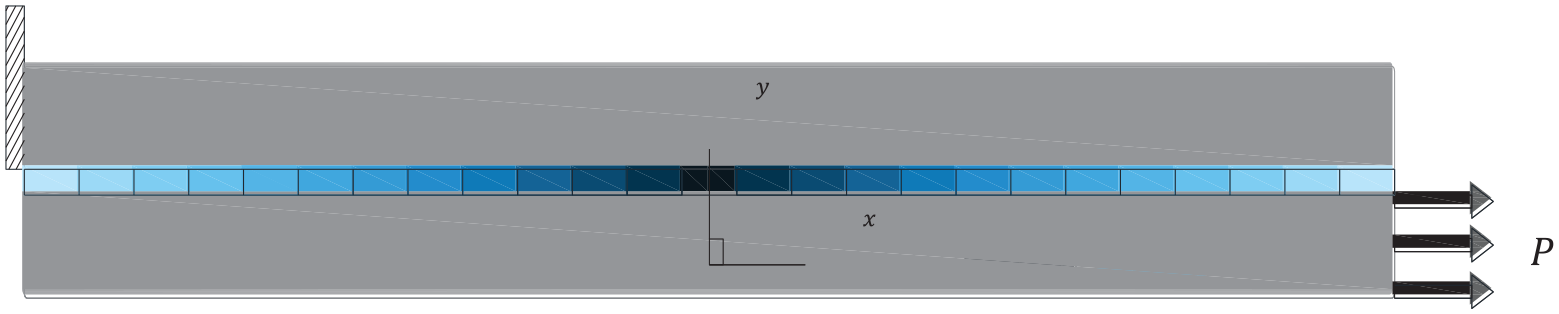
Adhesive shear modulus varying gradually along the
In this work, only the overlap region is modeled, for the sake of simplicity (Figure 1). The left edge of the upper adherend is assumed fixed, whereas the right edge of the lower adherend is subjected to a unit harmonic load. Moreover, the adherends and the adhesive kinematics are assumed to take effect only in the
2.2. Establishment of the differential equations
In this section, the procedure for obtaining the differential equation of the adhesive shear stress

and

where

and

where

and

where
Now, by applying the Newton’s second law on a

and

where
The adhesive’s behavior is assumed elastic. Moreover, the adhesive’s shear stress is assumed constant through the thickness. Hence, it can be expressed in terms of the displacements at the adhesive–adherend interfaces. Namely,

where
To obtain the differential equation governing the shear stress

This is a homogeneous second-order differential equation in terms of
Stein et al. [13] have argued that the cosine distribution of the shear modulus leads to the best smoothing of the stress concentration within the adhesive layer. Consequently, the adhesive’s shear modulus distribution is considered, in this work, as the second-order approximation of the cosine distribution. More precisely,

where
The dimensionless constant
If
If
If
Now to go forward with equation (10), we substitute it in equation (11). After simplification, we obtain

where

and
Equation (12) gives the governing differential equation of the shear stress

Solving equation (12) yields the shear stress
2.3. General solutions
Equation (13) is much simpler than equation (12). It is a homogeneous, ordinary, linear second-order differential equation having constant coefficients. The general solutions can be expressed as

where

The confluent Heun differential equation appears when two or more regular singularities coalesce to form an irregular singularity [36]. The regular singularities in equation (12) are

and the irregular singularity is

The general solution of equation (12) is established by using Maple. It can be written as

where


Using equations (9), (14), and (18), the displacements, at the adhesive–adherend interfaces

and

To obtain the average displacements of the adherends, equations (21) and (22) are substituted into equations (3) and (4). Then, the obtained equations are integrated along the y-axis. After simplification, the average displacement in the inner and outer adherends read

and

2.4. Boundary conditions
The four frequency-dependent functions
The left edge of the lower adherend is free. Then,
Similarly, the right edge of the upper adherend is free. Then,
The right edge of the lower adherend is subjected to the external harmonic load. Thus,
The left edge of the upper adherend is cantilevered. So,
Solving these four boundary conditions yields



and

where




and
Now, to match the cantilevered left end of the upper adherend we need to satisfy
3. Numerical model
The finite-element method has been increasingly used for examining the behavior of joints. Indeed, it provides accurate analysis and results. A numerical analysis of the balanced double-lap joint with functionally graded adhesive was carried out using ANSYS. Owing to symmetry, only half of the geometry is considered. The numerical modeling was used to study the validation of the proposed analytical model by comparing the numerical and theoretical responses to harmonic loads. The simulations were undertaken based on a two-dimensional finite-element analysis. The adhesive and the material of the adherends was considered to be isotropic. Defining the adhesive as functionally graded material was the main difficulty in the numerical approach, since ANSYS software cannot define the adhesive’s shear modulus as a function in terms of the axial coordinate, as defined in equation (11), i.e.,

To overcome this problem, the adhesive was divided into tiny segments to get a suitable distribution compared with the desired theoretical profile (Figure 1). More precisely, the adhesive was divided into
Shear modulus values along the overlap that satisfy the assumed shear modulus graded function: Go = 2 GPa.
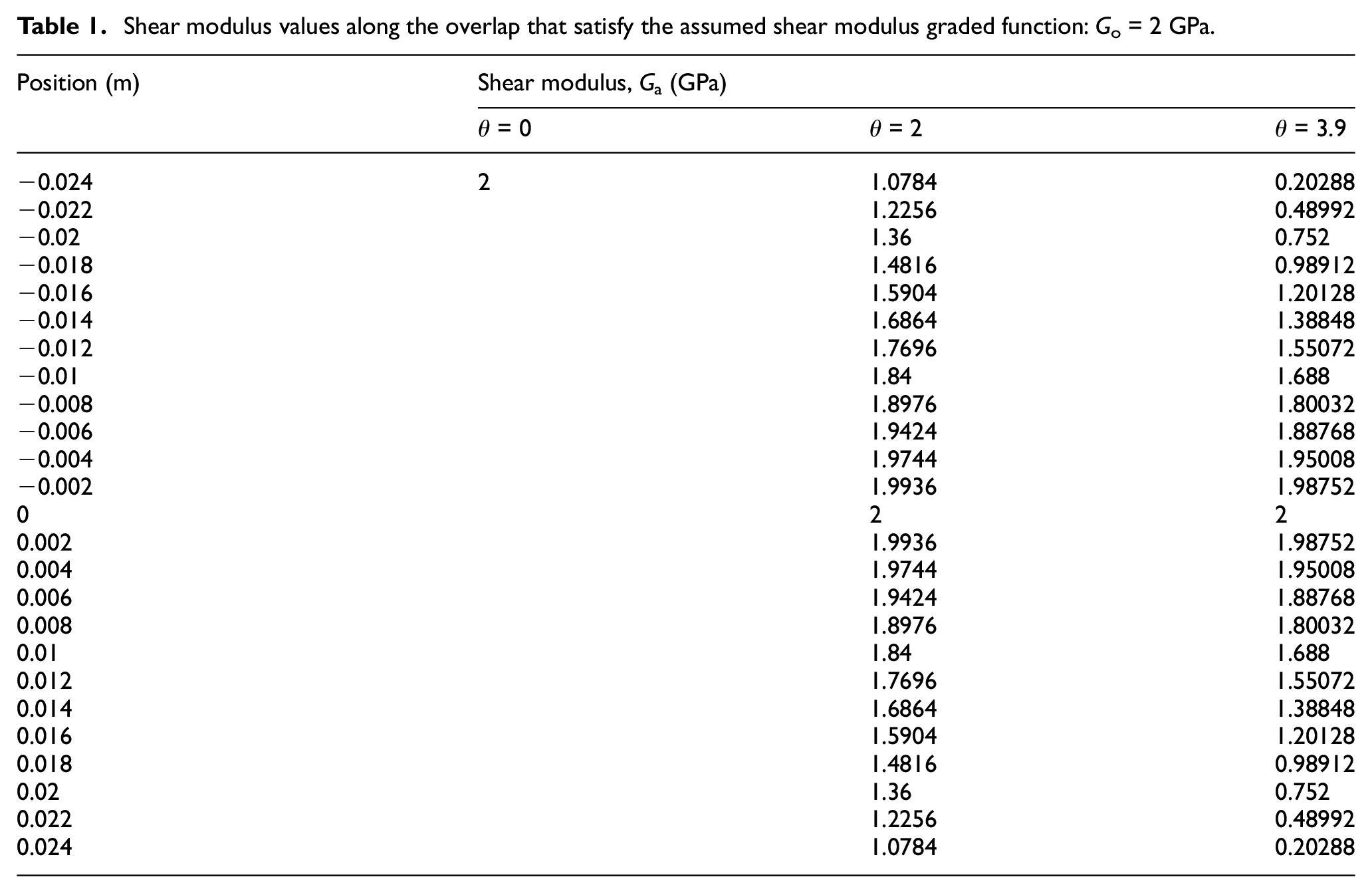
The element SURF153 was used for both adherends and adhesive. The two-dimensional plane-strain assumption was considered in this analysis. A mesh size of 0.25 mm was used (Figure 2). The left edge of the upper adherend was fixed. Also, a unit force was applied to the right edge of the lower adherend.

The two-dimensional finite-element mesh.
Regarding the geometry, the adhesive layer had a thickness of
4. Results and discussion
4.1. Validation
4.1.1. Case 1: Uniform adhesive
In this section, the adhesive is considered to be uniform or almost uniform. The main advantage of this case is that it is possible to compare the solution of Challita and Othman [28] with the current solution expressed in terms of confluent Heun functions. The constant shear modulus of the adhesive is a specific case of the functionally graded materials model. It can be achieved by considering
Figures 3 and 4 depict the results obtained using aluminum adherends and an (almost) uniform adhesive layer. Figure 3 shows the frequency response in terms of the displacement at the right edge of the lower adherent, i.e., where the harmonic load is applied. Figure 4 presents the frequency response in terms of the maximum adhesive shear stress. Figure 3(a) compares the current work frequency response with the frequency response obtained by Challita and Othman [28], whereas Figure 3(b) compares the current work’s frequency response with the one obtained using the finite-element method.
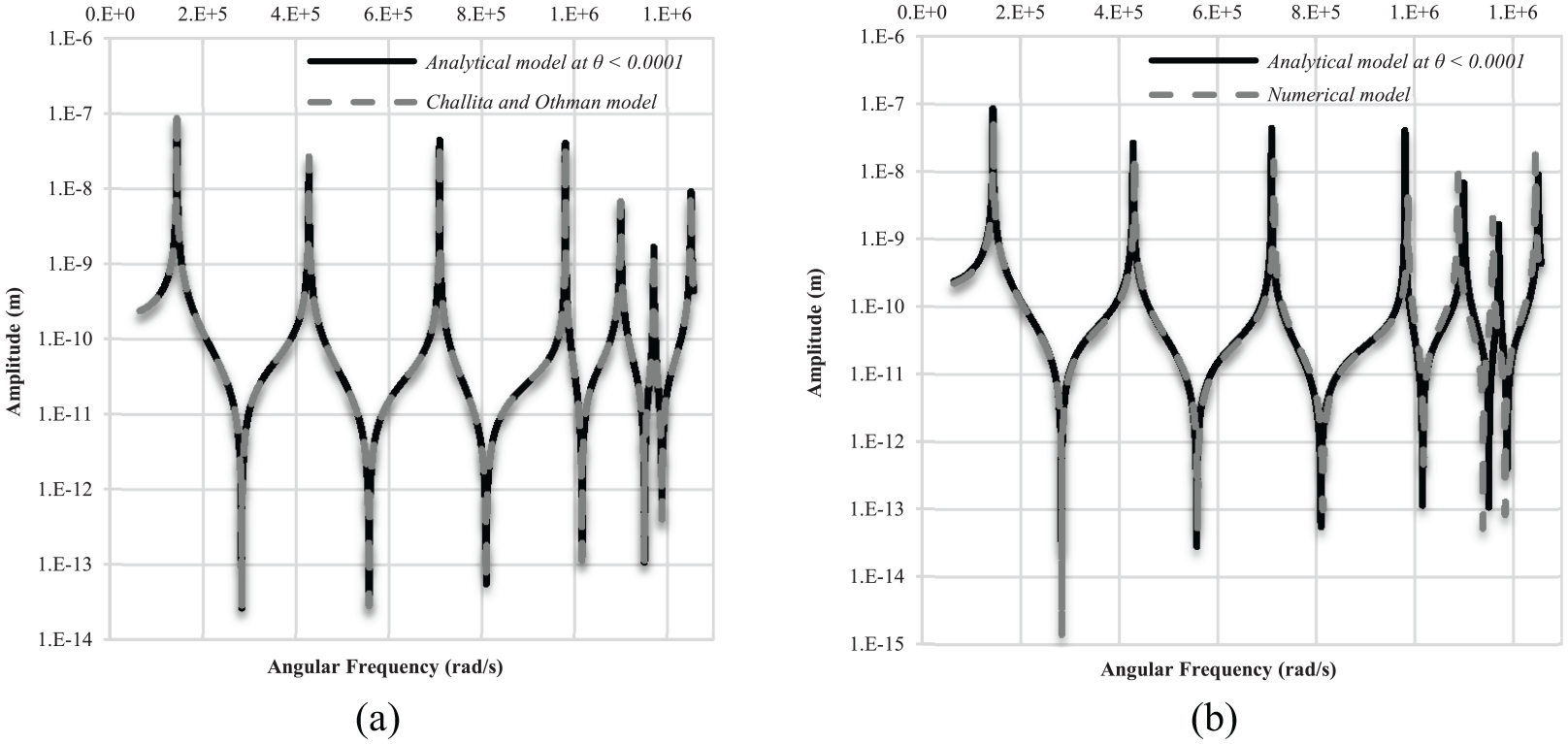
Displacement frequency response: (a) comparison between current work and Challita and Othman [28]; (b) comparison between current work and finite-element method.
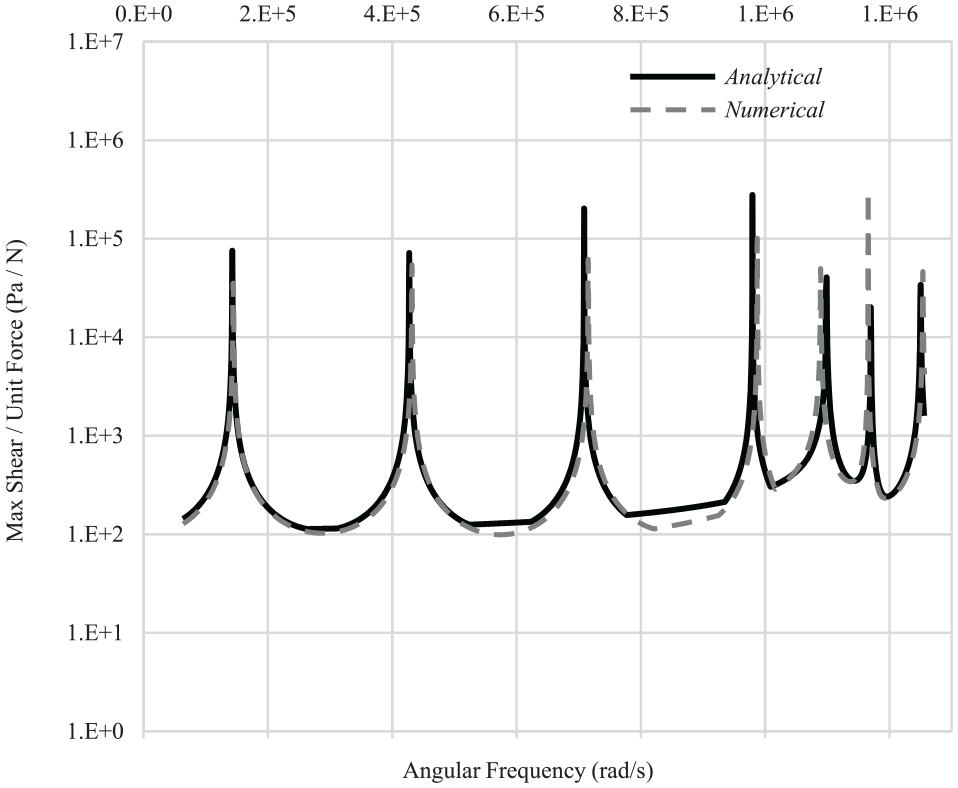
Maximum shear stress frequency response: comparison between current work and finite-element method (aluminum adherends).
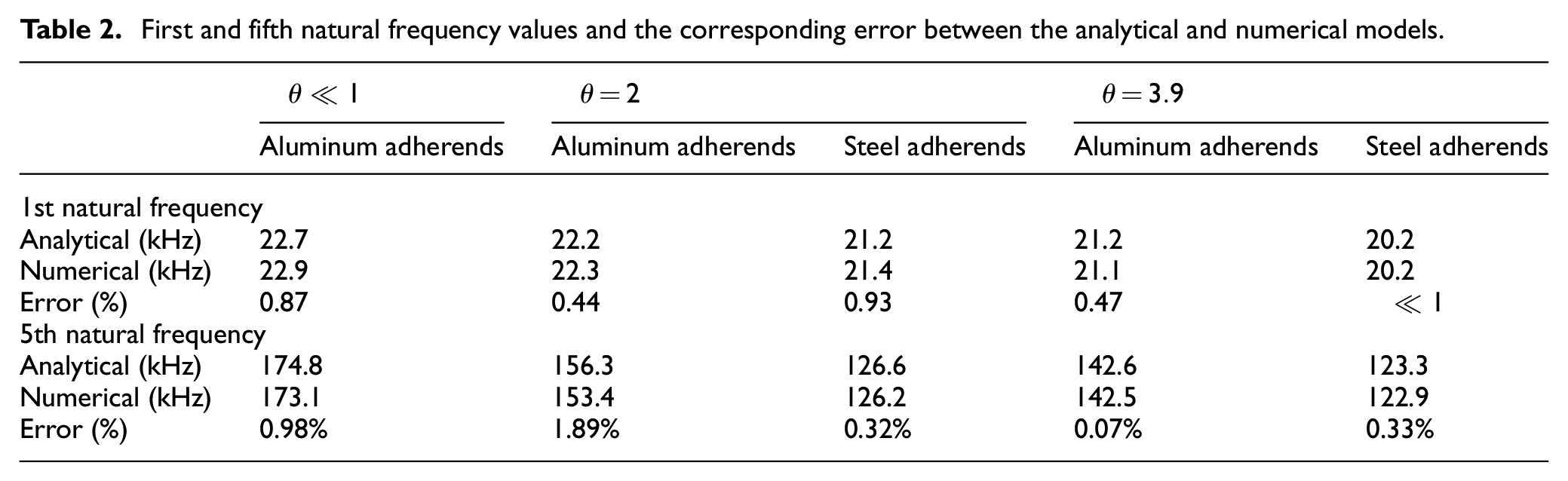
The current solution matches well with the analytical solution of Challita and Othman [28] and the finite-element solution. All natural frequencies are captured with excellent accuracy (Figure 3). For example, the first natural frequency is recorded at 22.7, 22.7, and 22.9 kHz by the current work, the solution of Challita and Othman [28], and the finite-element method, respectively. The mismatch is insignificant (Table 2). The theoretical maximum shear stress also approximates the studied frequency range with good accuracy (Figure 4). Similar results are observed with a steel joint with a uniform adhesive layer (Figure 5). The error is always less than 1% (Table 2).
First and fifth natural frequency values and the corresponding error between the analytical and numerical models.
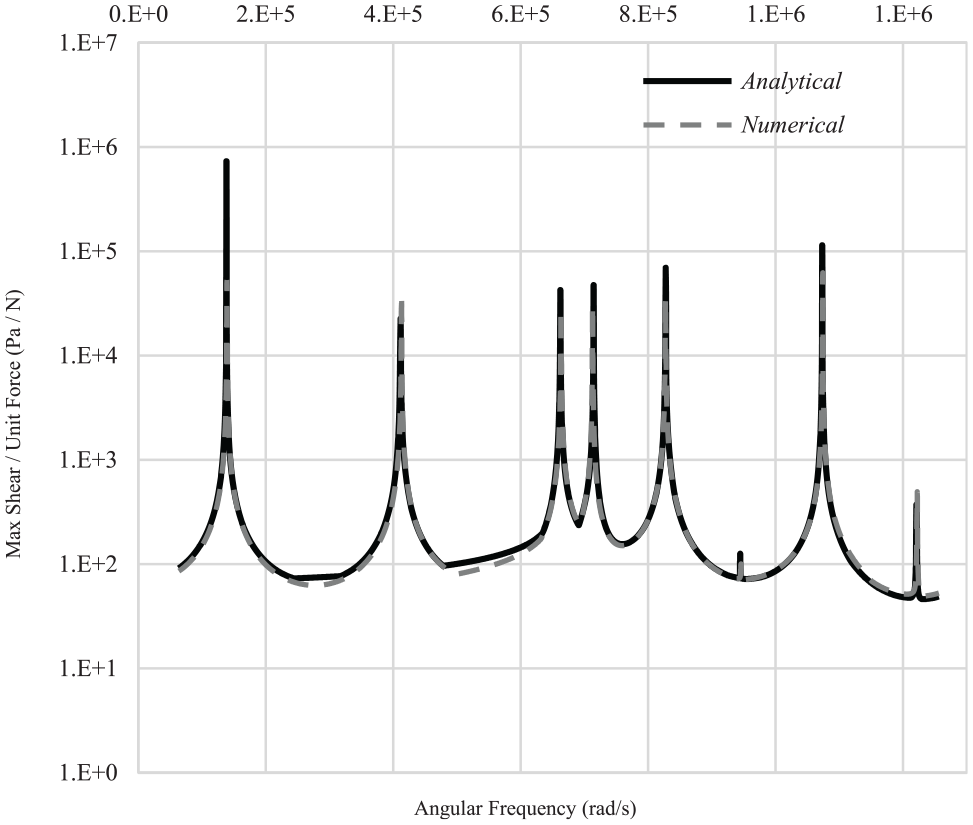
Maximum shear stress frequency response: comparison between current work and finite-element method (steel adherends).
4.1.2. Case 2: Functionally graded adhesive using moderate value of
In this section, we consider that
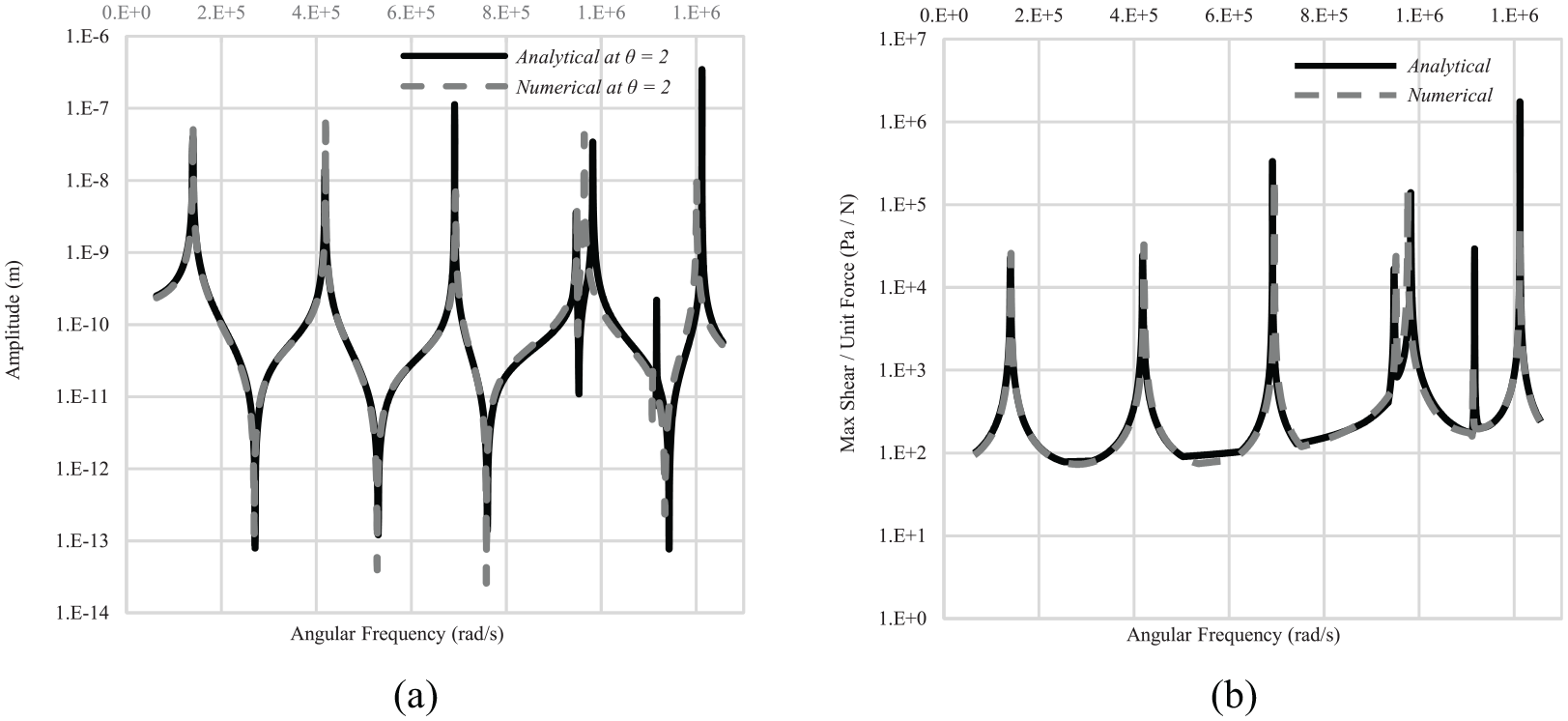
Comparison between analytical and numerical frequency responses of aluminum joint: (a) displacement frequency response; (b) maximum shear stress response.
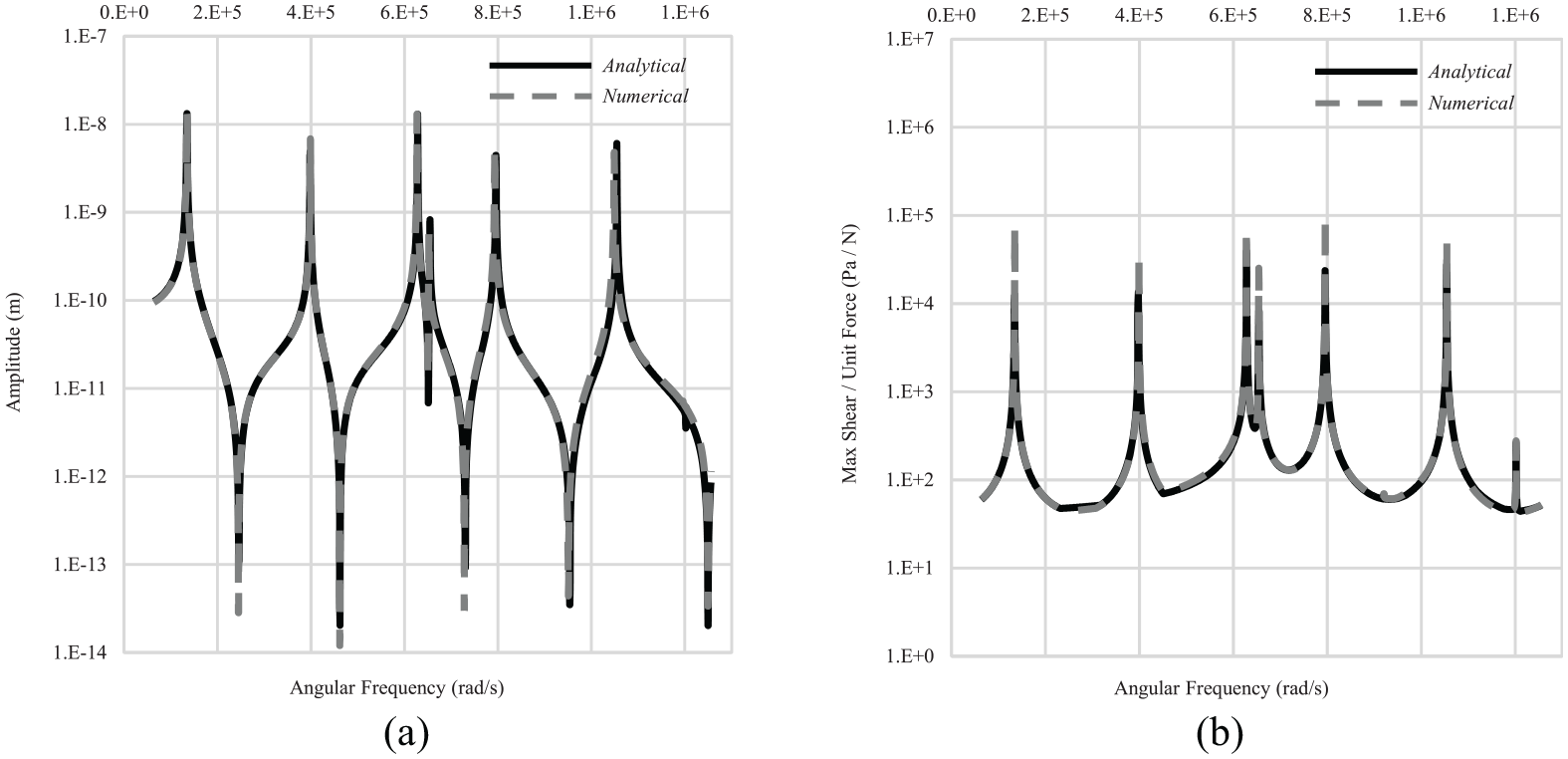
Comparison between analytical and numerical frequency responses of steel joint: (a) displacement frequency response; (b) maximum shear stress response.
As an effect of the functional grading of the adhesive
To check how well the theoretical model predicts the shear stress distribution in the adhesive layer, Figure 8 depicts a comparison between the finite-element model and the theoretical model based on Heun functions. The two models match, except at the edges of the adhesive layers. This is quite expected, as the theoretical model, which is based on the shear-lag assumption, does not account for the zero-shear stress boundary condition.
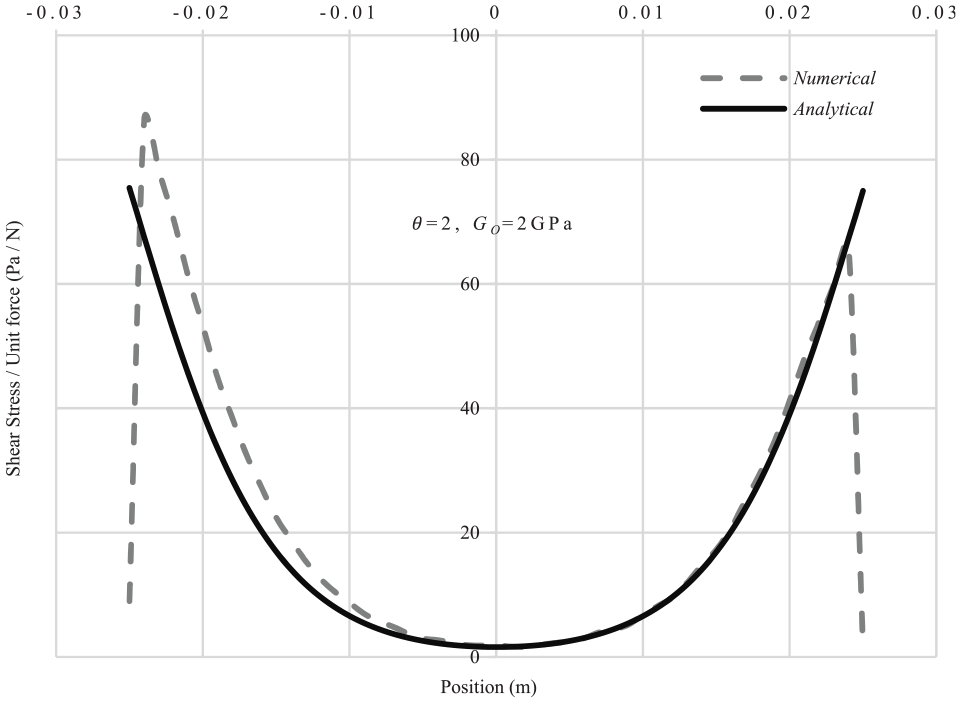
Shear stress distribution along the overlap region: comparison between analytical and numerical models.
4.1.3. Case 3: Functionally graded adhesive using high value of
In this section, we consider that
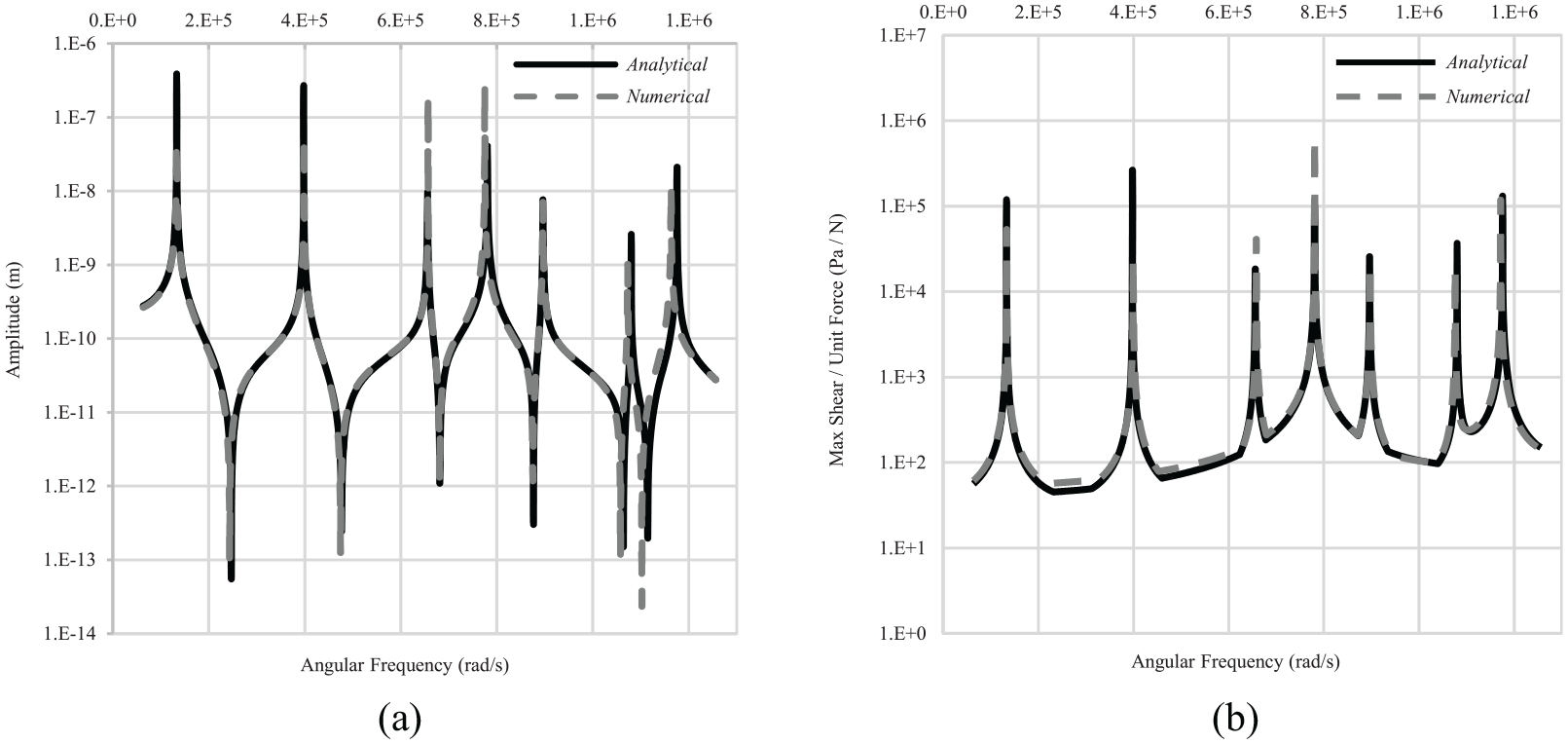
Comparison between analytical and numerical frequency responses of aluminum joint: (a) displacement frequency response; (b) maximum shear stress response.
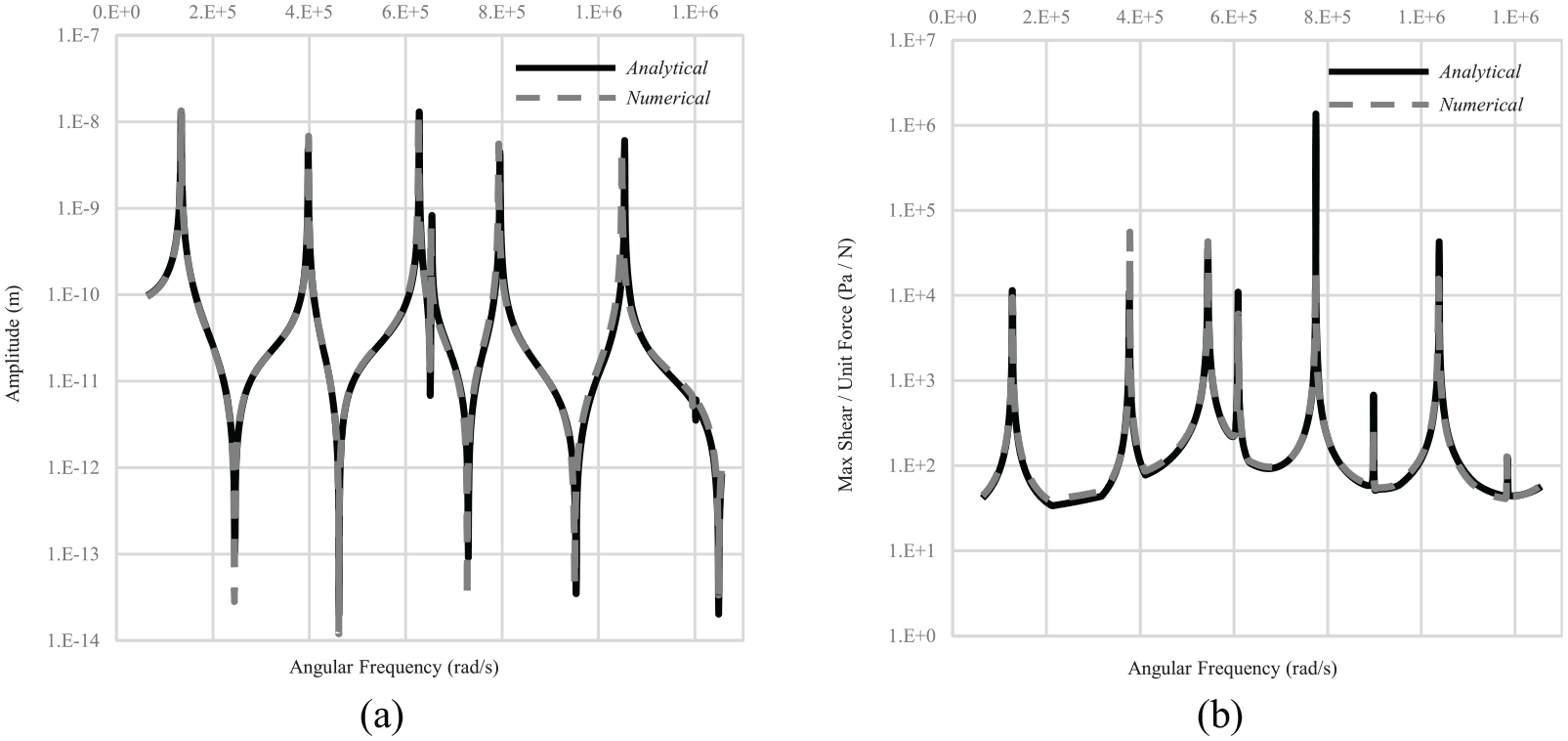
Comparison between analytical and numerical frequency responses of steel joint: (a) displacement frequency response; (b) maximum shear stress response.
In Section 4.1, a comparison between the theoretical model and finite-element model was made for several values of the parameter
4.2. Shear stress distribution
Next, we were interested in studying the effect of the functional grading of the adhesive on the shear stress distribution along the overlap. Changing
4.2.1. Aluminum adhesive joints
Figure 11 reports the effect of the parameter
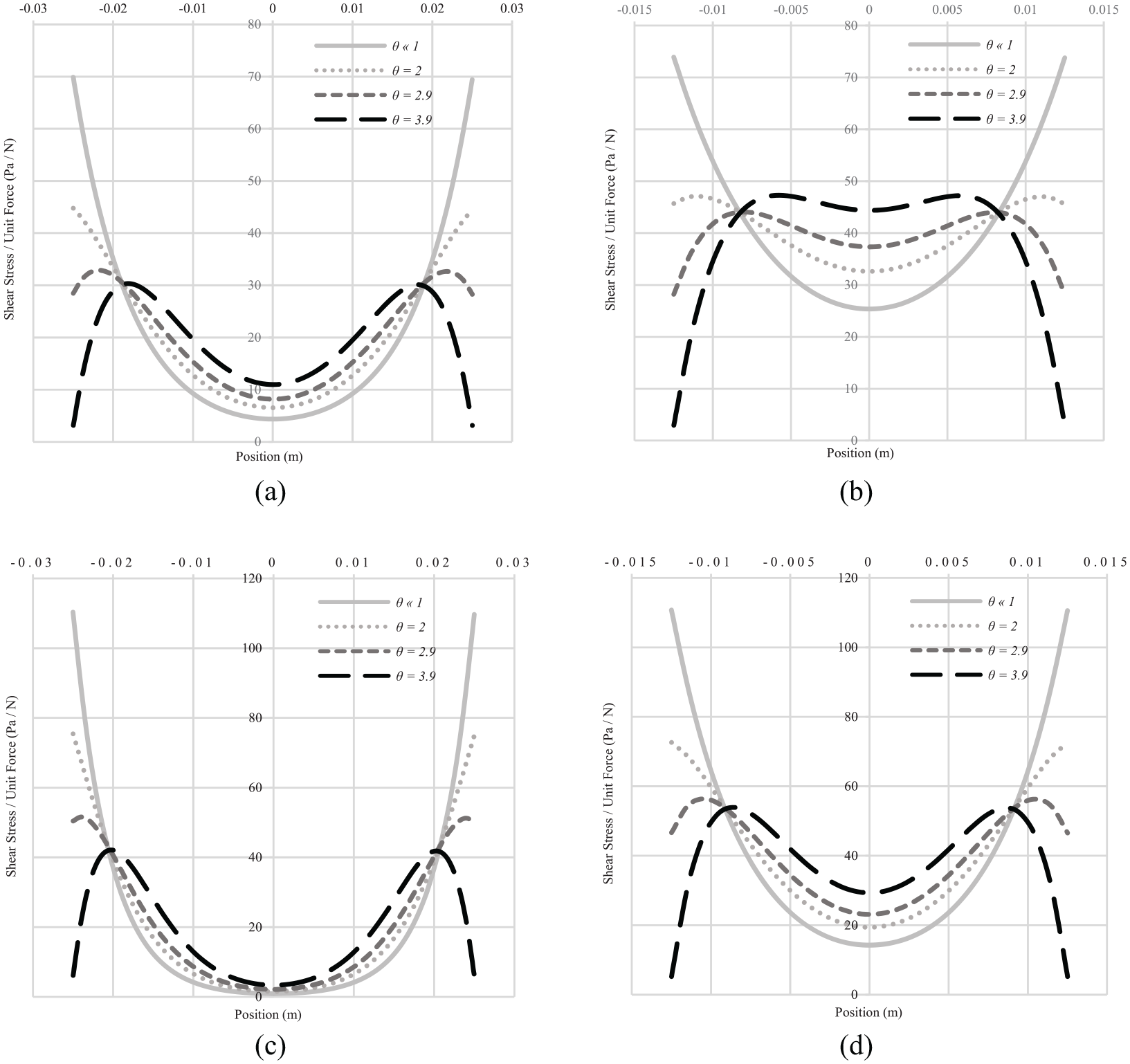
Shear stress distribution along the overlap for several values of
In the case of
In the case of
Figure 11(c), which was obtained by considering
In the last case, where
Figure 11 shows that for long overlap lengths (
4.2.2. Steel adhesive joints
Figure 12 reports the effect of the parameter
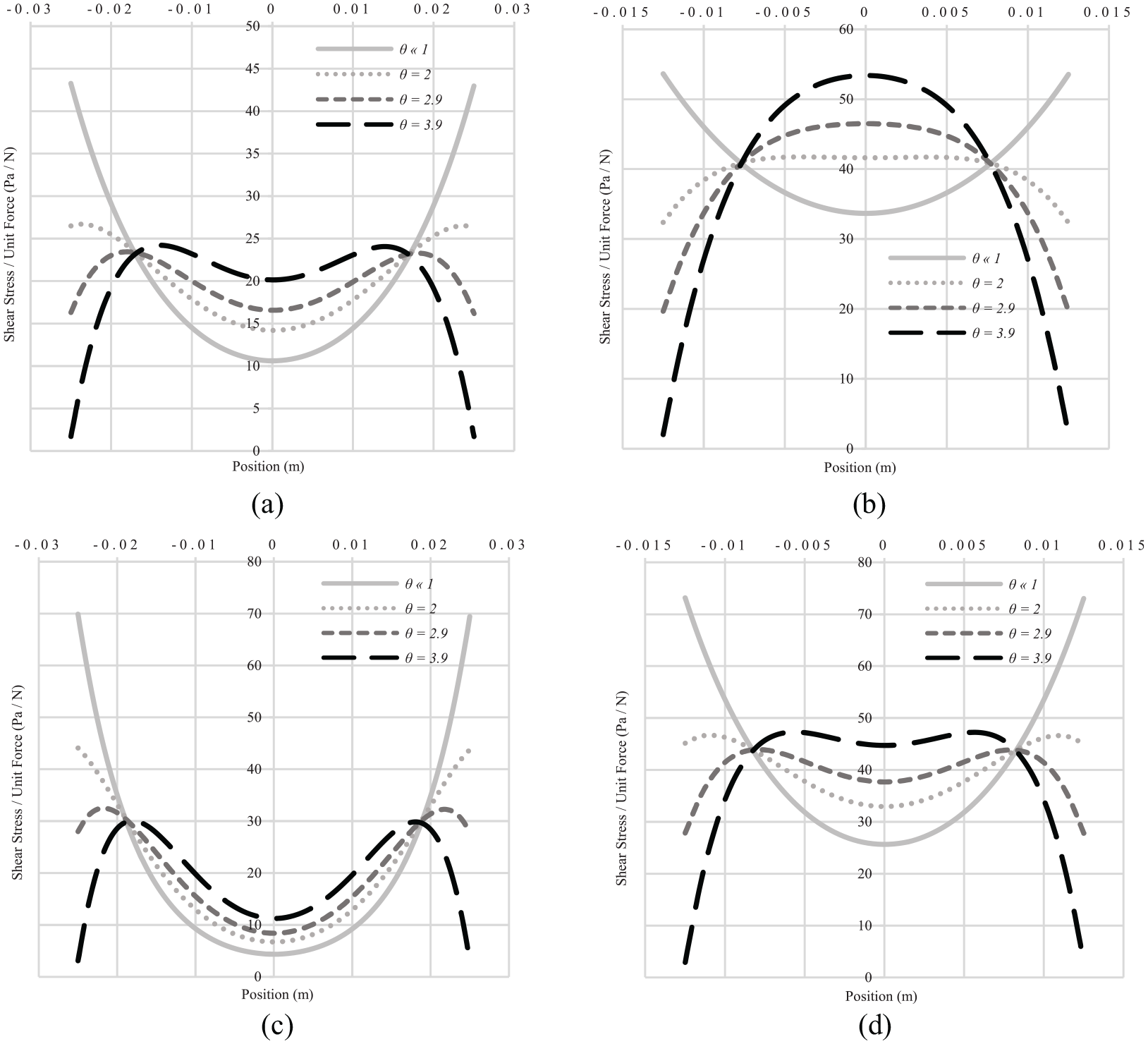
Shear stress distribution along the overlap for several values of
As for the aluminum adhesive joints, the points where the shear stress reaches its maximum value are moved from the edges toward the joint’s middle as the parameter
4.2.3. Discussion
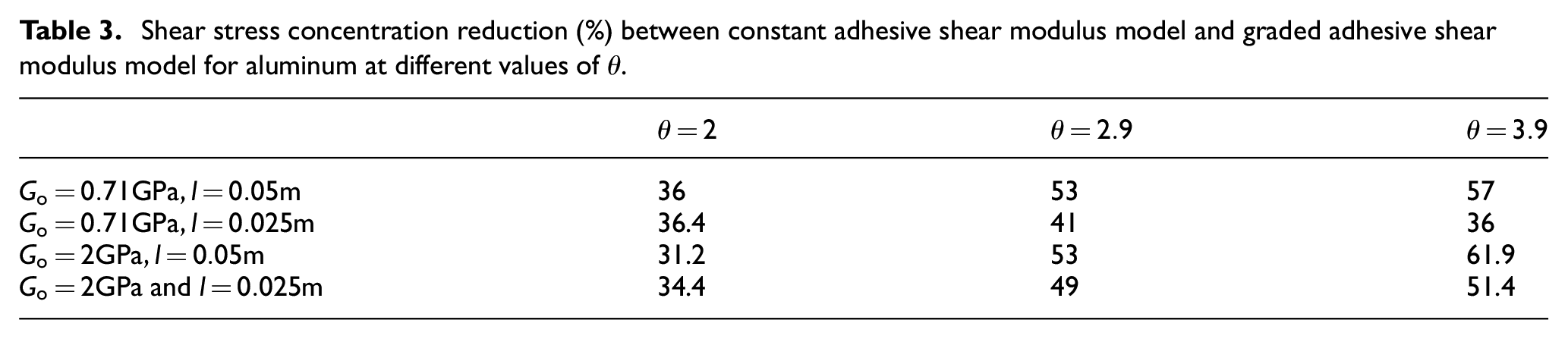
The shear stress distribution in a uniform adhesive joint is mainly governed by the ratio of adhesive shear stiffness to the adherends’ shear or compression stiffness. It is possible to improve the shear stress distribution using a functionally graded adhesive. Table 3 reports the reductions (expressed as percentages) obtained as a result of using functionally graded adhesive in aluminum adhesive joints. Improvements can be as high as 62% when
Shear stress concentration reduction (%) between constant adhesive shear modulus model and graded adhesive shear modulus model for aluminum at different values of θ.
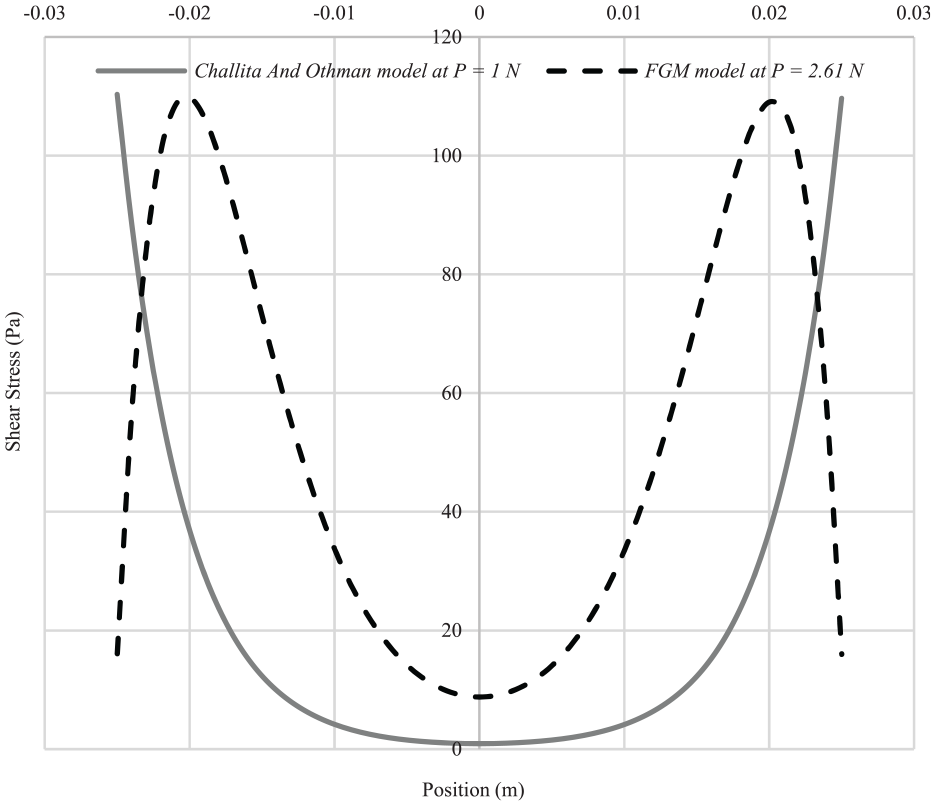
Adhesive shear stress concentration has same value in both models at different loads. FGM: functionally graded material.
Shear stress concentration reduction (%) between constant adhesive shear modulus model and graded adhesive shear modulus model for steel at different values of θ.
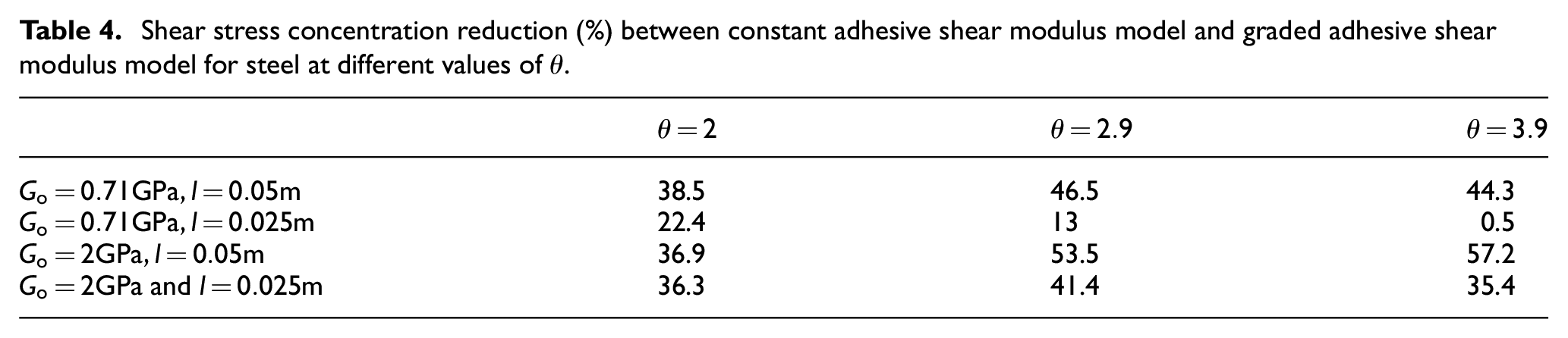
It is critical to note that the overlap’s length plays a major role in changing the reduction percentage of the shear stress concentration. Also, while maintaining the length of the overlap, changing the value of
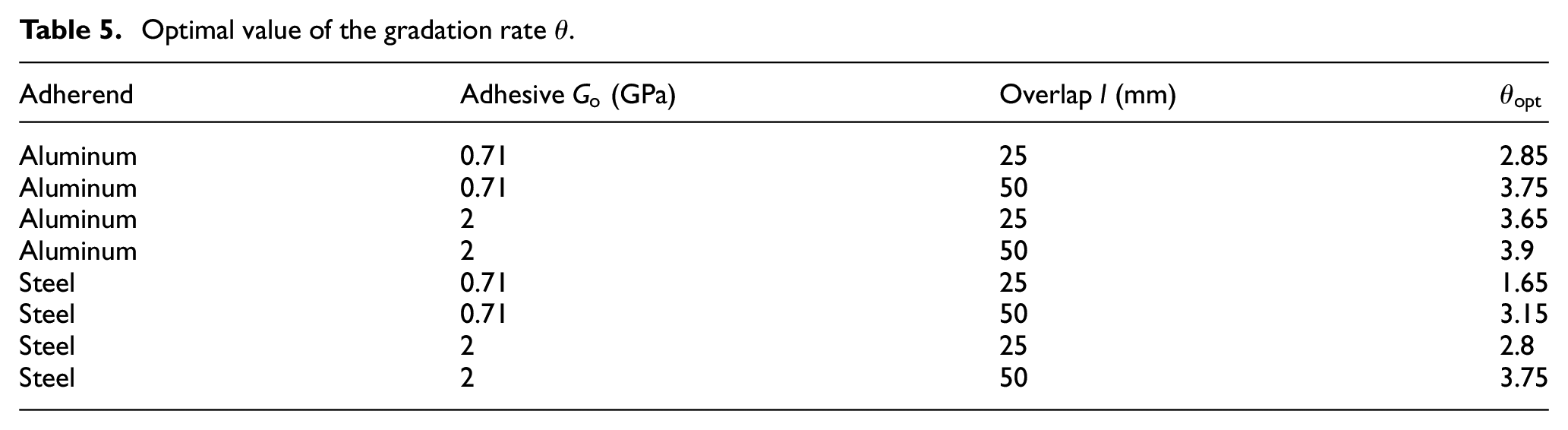
Functionally graded adhesives give a more uniform shear stress profile in the adhesive layer than uniform adhesives do. However, the extent of improvement is also dependent on the same ratio. For adherends much stiffer than the adhesive, the stress distribution is the least nonuniform. Using functionally graded adhesive moderately improves the shear stress distribution and reduces the maximum shear stress. However, there is also an optimal value of
Reducing the stiffness of the adherends or increasing the stiffness of the adhesive increases the shear stress nonuniformity and increases the maximum shear stress. Thus, great effort should be made to smooth the shear stress distribution. In this case, the least maximum shear stress is recorded for the largest value of
To emphasize the effect of the ratio of adhesive stiffness to adherend stiffness, more calculations were made for

where
Optimal value of the gradation rate
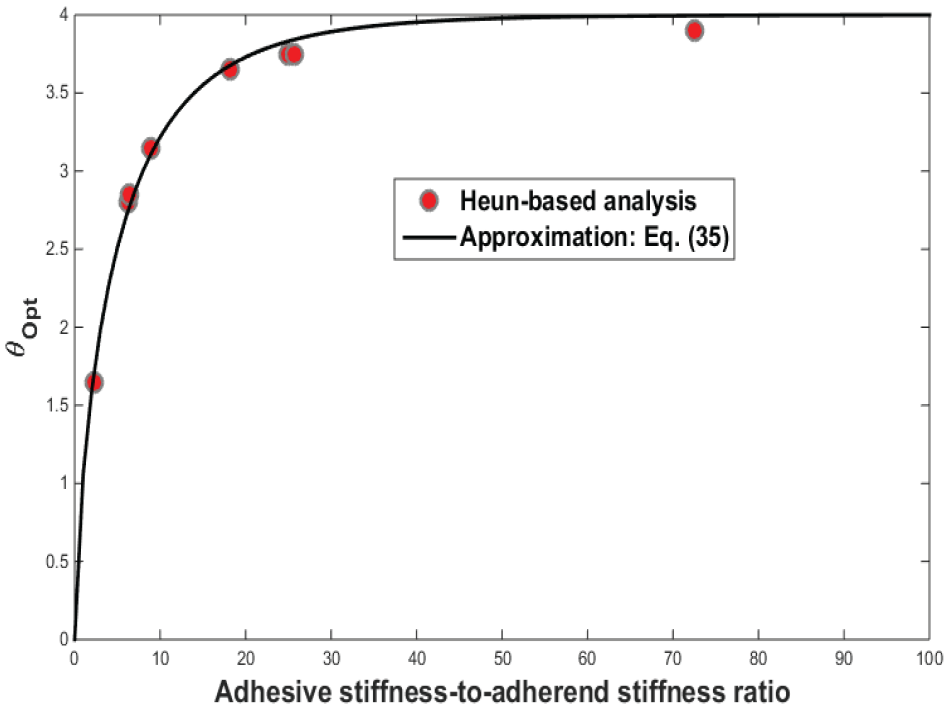
Variation of
