






Abstract
This paper investigates two axisymmetric thermoelastic contact problems of functionally graded materials (FGMs) with arbitrarily varying material properties. A rigid, insulated spherical punch slides/rotates on the surface of the FGM coating at a constant velocity. The primary novelty of this study lies in developing a comprehensive semi-analytical framework capable of evaluating the complex thermoelastic behaviors of FGM coatings with arbitrarily varying properties under both sliding and rotating frictional heating conditions. It is assumed that there is no coupling between the tangential stress and the normal stress, but the tangential stress on the surface cannot be ignored. The frictional heating is generated in the contact region by a sliding/rotating spherical punch. A homogeneous multi-layered model is employed to simulate the thermoelastic properties of FGM coatings. By making use of the transfer matrix method and the Hankel integral transform, the two axisymmetric thermoelastic problems are reduced to Cauchy singular integral equations, which are then numerically solved to obtain the normal contact stress, radial stress and surface temperature. The key findings demonstrate that (1) tailoring the coating gradient index and gradient type can effectively mitigate thermal stress concentrations under these frictional heating modes; (2) higher sliding or angular velocities significantly amplify the thermoelastic effects, leading to elevated surface temperatures and radial tensile stresses; and (3) the proposed arbitrary gradient model provides a more flexible and accurate tool for optimizing FGM coatings against surface failure in extreme thermal-mechanical environments.
Keywords
1. Introduction
As an important part of solid mechanics, contact mechanics mainly studies the stress and strain generated by the interaction of two objects under the action of an applied load. In 1882, Hertz [1] published the classic paper “On the contact of elastic solids,” thus laying the foundation for contact mechanics. The study of contact mechanics provides a fundamental framework for elucidating the friction and wear mechanisms at interacting interfaces. Functionally graded materials (FGMs), as an advanced type of composite material, have received increasing attention due to their superior properties and broad application prospects. When used as coatings or interfacial layers, they can reduce interface stress concentration, release thermal stress, enhance interface bonding strength and improve the surface properties of materials [2]. Many experimental and numerical results have shown that FGMs used as coatings can effectively resist contact deformation and contact damage [3–5].
In the field of contact mechanics, two-dimensional (2D) assumptions are often adopted by researchers to simplify mathematical analysis. Nevertheless, numerous practical contact problems cannot be simplified to 2D cases. Moreover, employing 2D approximations in contact analysis may introduce undesirable boundary effects. To accurately characterize the contact behavior of cylindrically symmetric structures, such as spherical indenters acting on layered media, it is necessary to consider the three-dimensional (3D) axisymmetric contact problem. For FGMs, the 3D axisymmetric contact problems have been extensively investigated. Giannakopoulos and Suresh [6,7] first studied the axisymmetric contact problems of a gradient half-space subjected to a concentrated load, spherical and conical indenters, in which the elastic modulus of the gradient half-space varies along the depth as a power function or an exponential function. Liu et al. [8,9] applied the linear multi-layered model to solve the axisymmetric contact and fretting problems of functionally graded coatings. In addition, Giannakopoulos and Pallot [10] considered the normal contact, the monotonic and oscillating sliding contact, as well as the tractive rolling contact of a rigid cylinder on a graded substrate whose elastic modulus varies along the depth as a power law function. Volkov et al. [11] investigated the axisymmetric contact problem of indentation of a circular indenter into a soft functionally graded elastic layer with arbitrarily varying properties. Kulchytskyi-Zhyhailo and Rogowski [12] considered the axially symmetric contact problem of pressing an absolutely rigid ball into an elastic half-space with an inhomogeneous coating.
It should be pointed out that the influences of thermal effects on the contact behavior of FGMs were not considered in the above studies. Actually, in engineering practice, many contact problems are closely related to heat, especially when considering friction, thermal contact damage is inevitable. The research on thermal contact behaviors for the homogeneous materials in the past several decades has shown that the heat generated by friction produces a significant thermoelastic deformation of the contact surface and hence affects the distribution of contact pressure [13–21]. For instance, Pauk and Zastrau [22] analytically investigated the 2D rolling contact problem involving frictional heating. The aforementioned works have demonstrated that the FGMs have the potential to reduce the mechanical contact damage at the contacting surface. Therefore, many studies have investigated the thermoelastic contact problems of FGMs and have some results demonstrated that FGMs have potential in providing better resistance to thermoelastic contact damage of structures [23–34]. Particularly under severe frictional heating conditions, the thermoelastic behaviors and failure mechanisms of FGM coatings have been widely investigated. Mao et al. [35] analyzed the thermoelastic instability of FGM coatings with arbitrarily varying properties, considering contact resistance and frictional heat. Furthermore, to capture realistic operating conditions, Balcı et al. [36] analyzed frictional contacts with heat generation by incorporating temperature-dependent material properties, and recently, they further evaluated the cracking mechanisms of functionally graded coatings induced by sliding frictional heating [37]. However, the existing theoretical research results are predominantly limited to 2D problems, and there are few studies on 3D axisymmetric thermoelastic contact problems. Kulchytsky-Zhyhailo [38] considered the axisymmetric contact problem with heat generation on a gradient half-space. Subsequently, Kulchytsky-Zhyhailo and his co-workers [39,40] presented the analytical solutions for the axisymmetric thermoelastic problem for a nonhomogeneous half-space and the 3D thermoelastic problem for an FGM-coated structure whose surface is heated in a circular/elliptically shaped area. Liu [41] analyzed the thermal conduction behavior of a 3D axisymmetric functionally graded circular plate under thermal loads on its top and bottom surfaces. Perkowski et al. [42,43] dealt with the axisymmetric heat conduction problem for an FGM-coated structure. Tokovyy and Ma [44,45] utilized the resolvent-kernel technique to obtain the analytical solutions of the 3D heat conduction and thermal stress problems and axisymmetric elasticity and thermoelasticity problems for an inhomogeneous layer with arbitrarily varying properties. By making use of the bilateral asymptotic method, Krenev et al. [46] studied an axisymmetric quasi-static contact problem between a circular punch and a nonhomogeneous elastic half-space. Recently, Yuan et al. [47] employed strain gradient and surface elasticity theories to examine the micro/nanoscale axisymmetric Hertzian contact problem, revealing a substantial enhancement in substrate stiffness that deviates noticeably from the predictions of classical Hertz theory. By considering axisymmetric contacts with diverse indenter geometries, Schek et al. [48] verified that simplified strain gradient elasticity can effectively capture size effects and eliminate the stress singularities inherent in classical continuum theories. Introducing static friction into axisymmetric contact problems, Hakobyan et al. [49] derived a closed-form analytical solution to quantify the influence of the friction coefficient on contact stresses and indenter displacements. Extending beyond conventional spherical or conical indenters, Jackson et al. [50] explored the fully plastic axisymmetric contact response involving spheroidal indenters, demonstrating that the bluntness of asperities plays a dominant role in determining the contact pressure distribution. By simulating the frictionless axisymmetric indentation of a piezoelectric semiconductor layer, Gao et al. [51] showed that the electro-mechanical contact response is significantly modified by the coupled effects of semiconducting behavior and size dependence. More recently, significant advancements have been made in evaluating the thermoelastic contact responses of arbitrary FGM structures. Volkov [52] analyzed the surface displacements of an FGM-coated half-space subjected to a circular heating area, explicitly accounting for the effects of an imperfect coating-substrate interface. Furthermore, Vasiliev et al. [53] presented an approximated analytical solution for the hot indentation of an FGM-coated thermoelastic half-space by a conical punch. In addition, the compliance functions associated with the static thermomechanical loading of thermal barrier coatings have been comprehensively evaluated by Vasiliev et al. [54]. Despite these recent advancements in evaluating thermoelastic response under static or applied thermal loads, the specific effect of frictional heating in 3D axisymmetric FGM contact problems remains largely unexplored.
In this paper, two axisymmetric thermoelastic contact problems of FGMs with arbitrarily varying properties are investigated. A rigid spherical punch slides/rotates on the surface of the FGM coating at a constant velocity. The frictional heat is generated at the interface between the coating layer and the rigid punch. The homogeneous multi-layered model is adopted to simulate the thermoelastic properties of the FGM coating. By using the transfer matrix method and the Hankel integral transform, the contact problem is reduced to Cauchy singular integral equations, which are then numerically solved to obtain the normal contact stress, radial stress and surface temperature. In engineering practice, evaluating these 3D axisymmetric thermoelastic responses is crucial for heavily loaded rotating or sliding mechanical components, such as thrust bearings, spherical joints and machine tool spindles. For these applications, reducing maximum surface temperatures and radial stresses is critical to mitigate contact damage. Therefore, the proposed framework provides a vital theoretical tool for optimizing FGM coatings against surface failure in extreme thermal-mechanical environments.
2. Formulations of two axisymmetric thermoelastic contact problems
Consider two axisymmetric thermoelastic contact problems as shown in Figure 1, where a rigid, insulated spherical punch is pressed into the surface of the FGM coating by a resultant normal force P to form a contact region
Sliding at a constant velocity V (problem 1);
Rotating at constant angular velocity ω (problem 2).
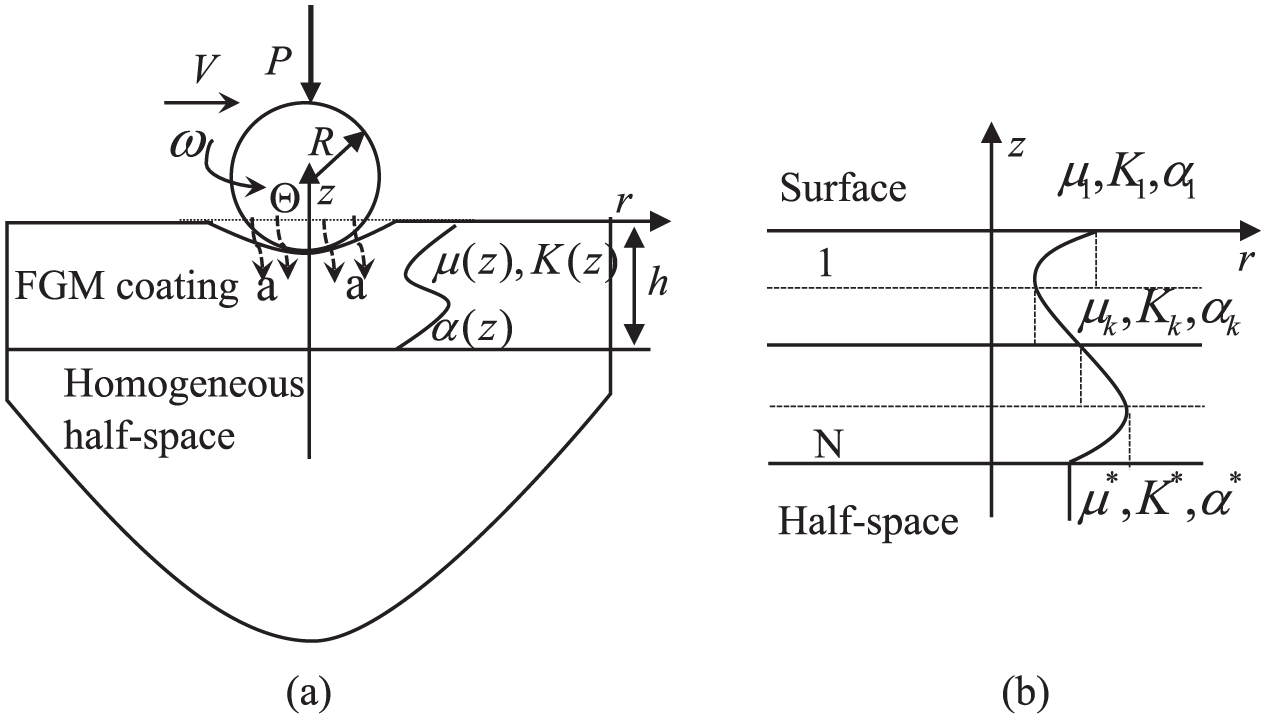
Schematic of axisymmetric thermoelastic contact problem for (a) an FGM-coated half-space under a rigid spherical punch and (b) a homogeneous multi-layered model for the FGM coating.
It is assumed that there is no coupling between the tangential stress and the normal stress, but the tangential stress on the surface cannot be ignored. The tangential stress is modeled following Coulomb’s friction law, that is,
In the contact region, all the friction-induced heat is conducted from the surface down to the inside of the structure. The area outside the contact region is traction-free and thermally insulated. The surface heat flux Q(r) is related to the friction coefficient f, the spherical punch radius R, the sliding velocity V and the angular velocity ω by [55]:


It should be noted that in equation (2) for the rotating punch, the surface heat flux is calculated using the constant radius of the spherical punch R, rather than the local radial coordinate r. This indicates that the sliding velocity is approximated by a characteristic maximum velocity
It is assumed in the following analysis that the spherical punch slides/rotates slowly, the thermoelastic processes are in steady-state, and there is no separation between the punch and the contact surface within the contact region.
The shear modulus
2.1. Temperature field
In the cylindrical coordinate system, the steady-state heat conduction equation for each sub-layer and the homogeneous half-space is given by:

where

where “^” indicates the Hankel integral transform, and s is the transform variable;

The solutions of equation (5) are as follows:

where


In the transformed domain, equations (7) and (8) can be written in matrix form as:


where

By solving equations (9) and (10), the unknown coefficient vector

with


By substituting equation (11) into equation (6) and applying the inverse Hankel transform, the temperature fields in the FGM coating can be obtained as:

with

2.2. Thermoelastic stress and displacement fields
The thermoelastic constitutive law for each sub-layer of the FGM coating and the half-space gives




In the absence of body forces, the equilibrium equations can be written as:


By substituting equation (13) into equations (14) and (15), the following partial differential equations for the displacement components of each sub-layer and the homogeneous half-space can be obtained:


By applying the Hankel integral transform, the displacement components can be written as:


Then, equations (16) and (17) can be expressed as:


By solving equations (20) and (21), the transformed displacement components of each sub-layer and the homogeneous half-space can be expressed as:




where




where

At each sub-layer of the FGM coating, the displacement and stress components are continuous at the interfaces


For the spherical punch, the boundary conditions at the FGM coating surface


where


where

with
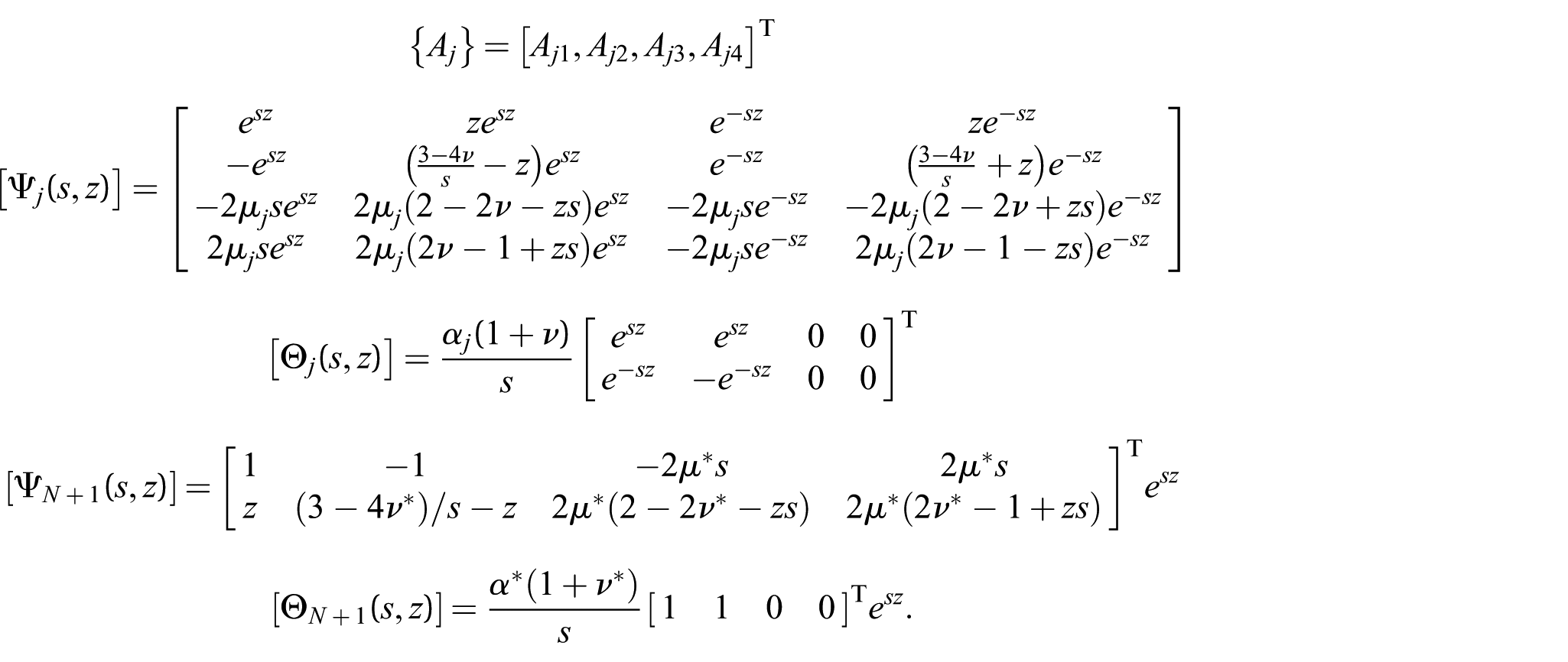
The recurrence relations (equations (28) and (29)) yield the unknown coefficients

where


with

where

with

where

with

Through the asymptotic analysis of the matrix

with

It is worth noting that the friction heat generated by a rigid spherical punch sliding/rotating on the FGM coating surface satisfies the relationship given in equations (1) and (2) in the contact region. Therefore, the displacement components of the FGM coating at


where
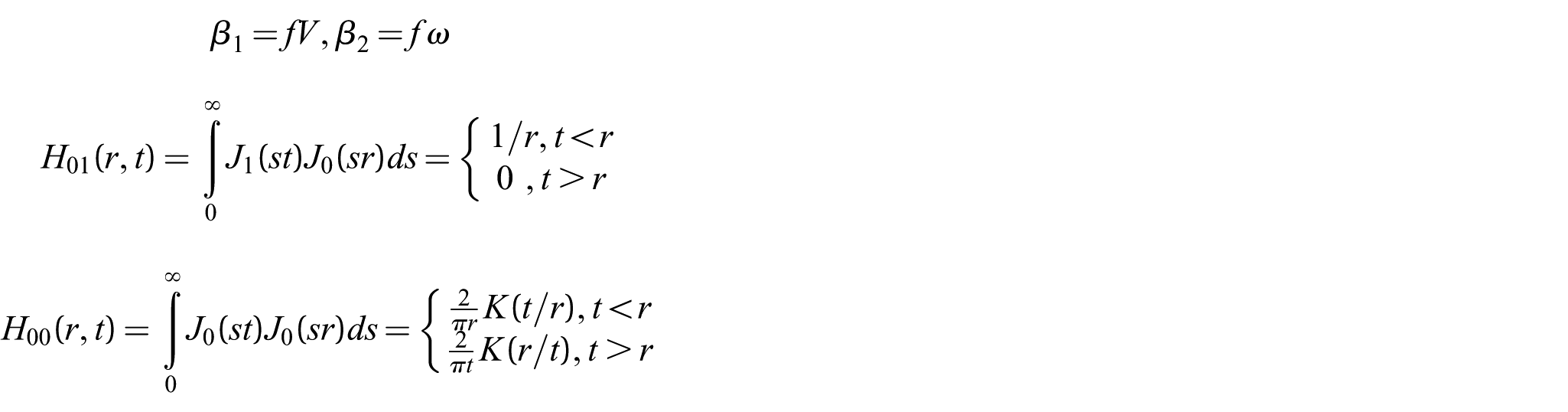
and the subscripts “
2.3. Singular integral equations
In this section, the displacement solutions in equations (34) and (35) are utilized to solve two axisymmetric thermoelastic contact problems for the FGM coating system as shown in Figure 1. The definition of the unknown surface contact stress

where
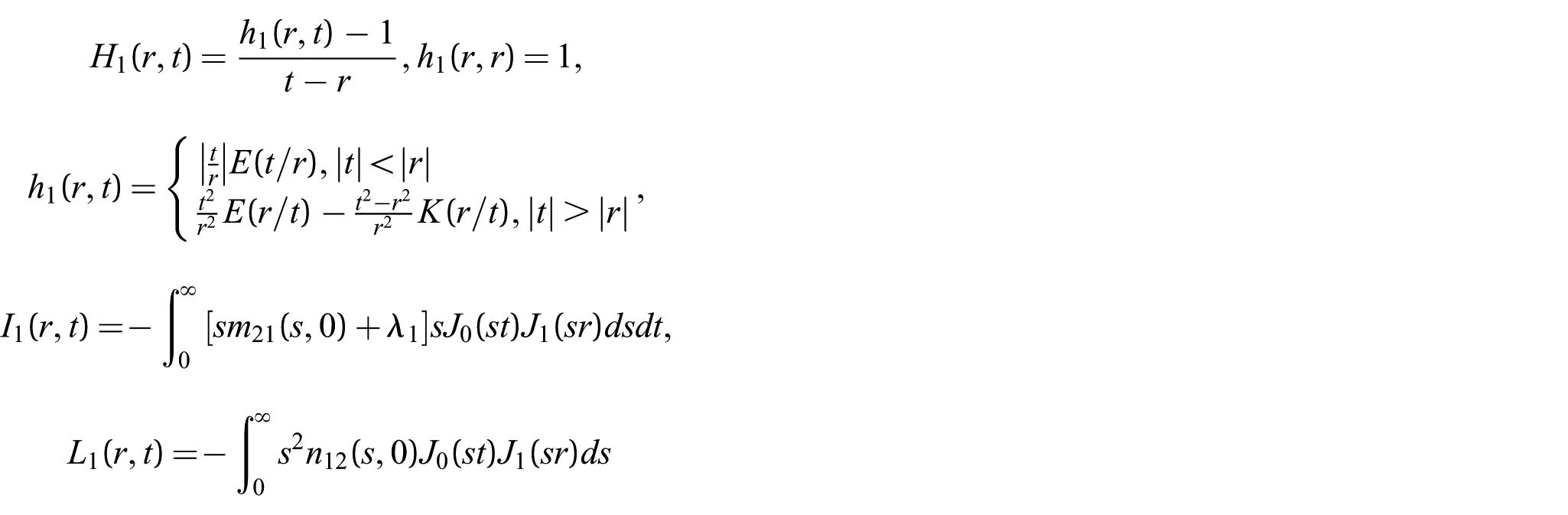
and E(.) is the complete elliptic integral of the second kind [56]. Equation (36) is the Cauchy singular integral equation for the unknown contact pressure

It can be shown that

Therefore, equation (37) can be rewritten as:

where

The following static equilibrium equation for the contact pressure

can be normalized as:

Since the contact pressure is smooth for the spherical punch at

To address a logarithmic singularity in the Cauchy singular integral equation (39), the method developed by Erdogan and Gupta [58] is adopted, with modifications to discretize equations (39) and (41) as:


where


The system of equations (43a) and (43b) contains N
M
+ 2 equations for the N
M
+ 1 unknowns
According to equation (12), once the contact stress


3. Numerical results and discussion
In this section, the numerical results of two axisymmetric thermoelastic contact problems of the FGM-coated structure are presented and discussed in detail. The thermoelastic material parameters of the coating and the half-space are continuous at the interface
Thermoelastic properties of a half-space [59].

The thermoelastic parameters of the FGM coating are assumed to vary along the thickness direction according to the following power law form:



where n is the gradient index of the coating.
3.1. Convergence and comparison studies
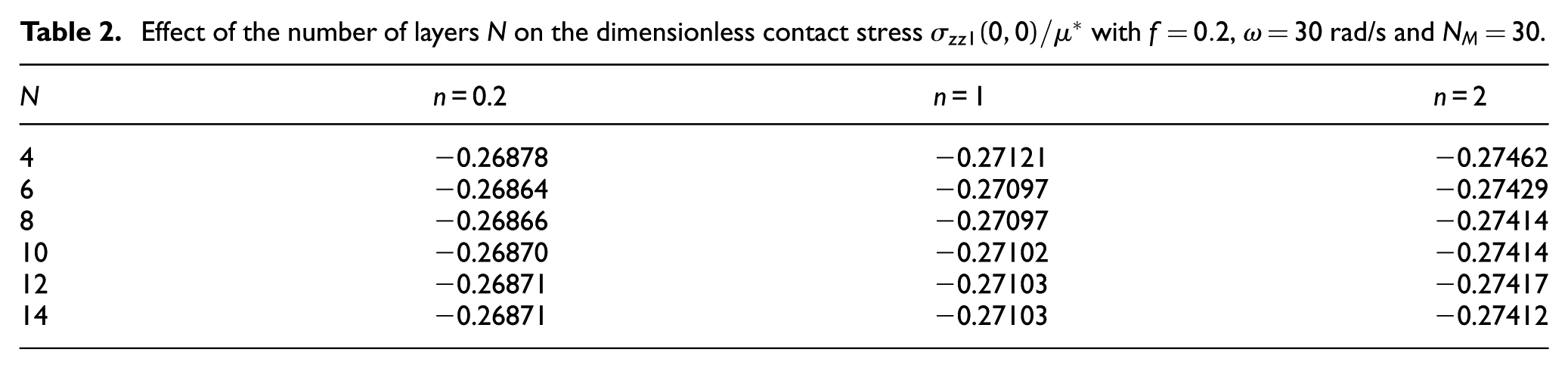
To simulate the thermoelastic parameters of the FGM coating with arbitrary variation using the multi-layered model, the rotating spherical punch is first adopted as an example to study the convergence of the number of sub-layers N. Table 2 lists the effect of the total number of layers (N) on the dimensionless contact stress
Effect of the number of layers N on the dimensionless contact stress
To verify the validity of the present model, material inhomogeneity and thermal effects are initially neglected. In this case, the present problem can be reduced to the axisymmetric contact problem of a homogeneous half-space. Figure 2 presents the normal contact stress of the axisymmetric contact problems with
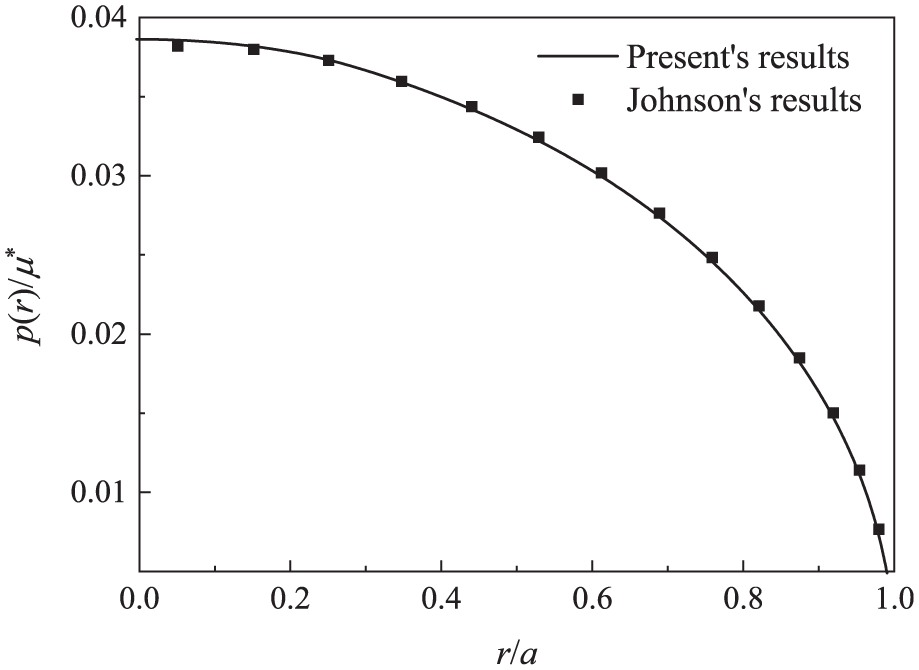
Comparison of the present results with Johnson’s results [60] for the dimensionless contact stress of a spherical punch.
If the thermal effect is ignored, the present problem reduces to the axisymmetric contact problem of an FGM-coated structure, where the material properties of the coating vary exponentially along the thickness direction. This problem was studied by Liu and Wang [8]. Figure 3 shows the comparison between the present results and the results of Liu and Wang for
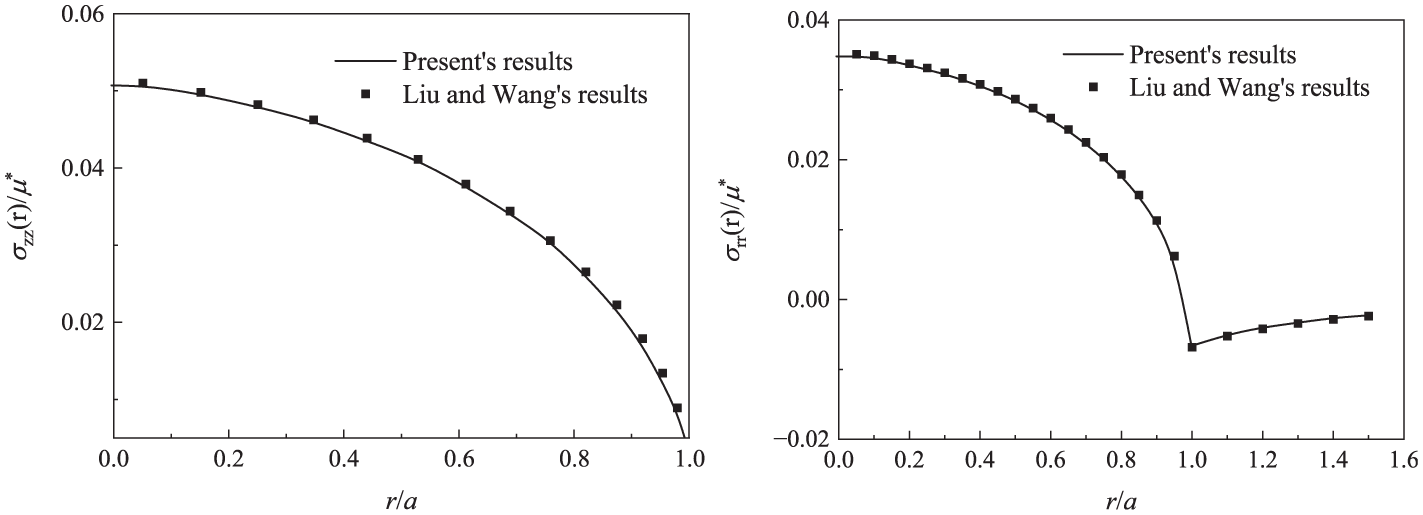
Comparison of the present results with Liu and Wang’s results [8] for the dimensionless contact stress of a spherical punch.
3.2. Thermoelastic contact analysis on problem 1 (sliding)
This subsection presents and discusses the numerical results for the sliding spherical punch (problem 1) in detail. Figure 4 presents the effect of gradient index n on the surface stresses for the sliding spherical punch. As shown in Figure 4(a), the maximum values of normalized normal contact stress
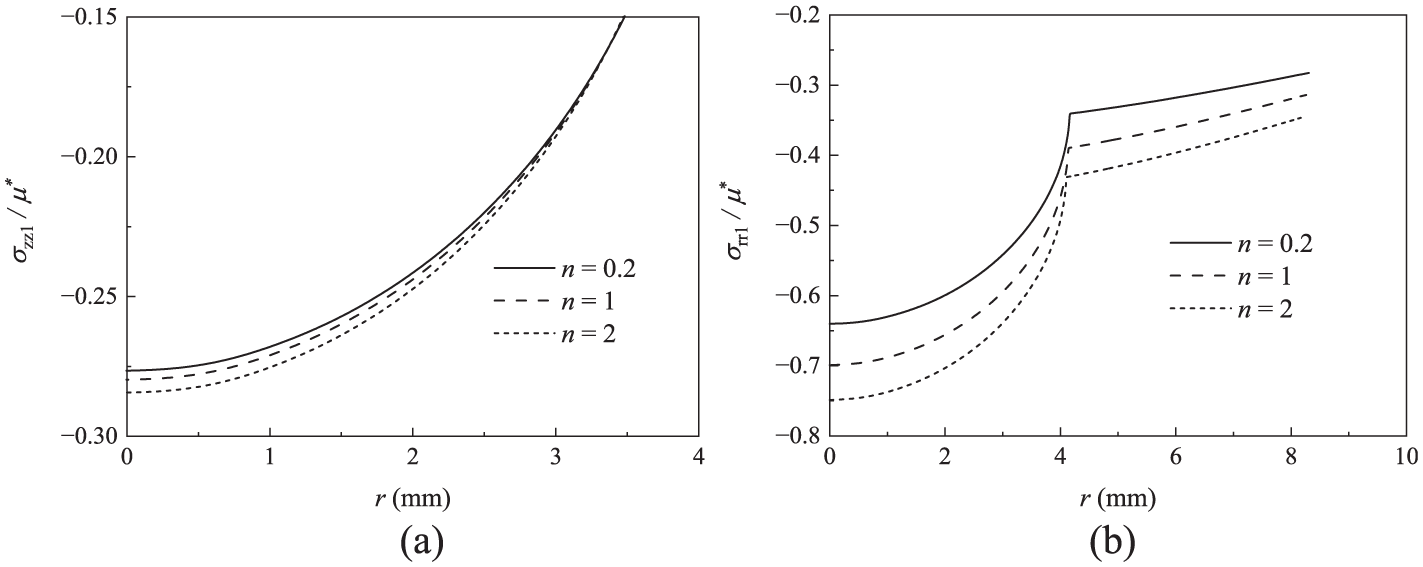
Surface stress distributions on the FGM coating by a sliding spherical punch for various n: (a)
The effect of the sliding velocity V on the surface stresses for the sliding spherical punch is shown in Figure 5. With an increase in the sliding velocity V, the maximum value of the normalized normal contact stress
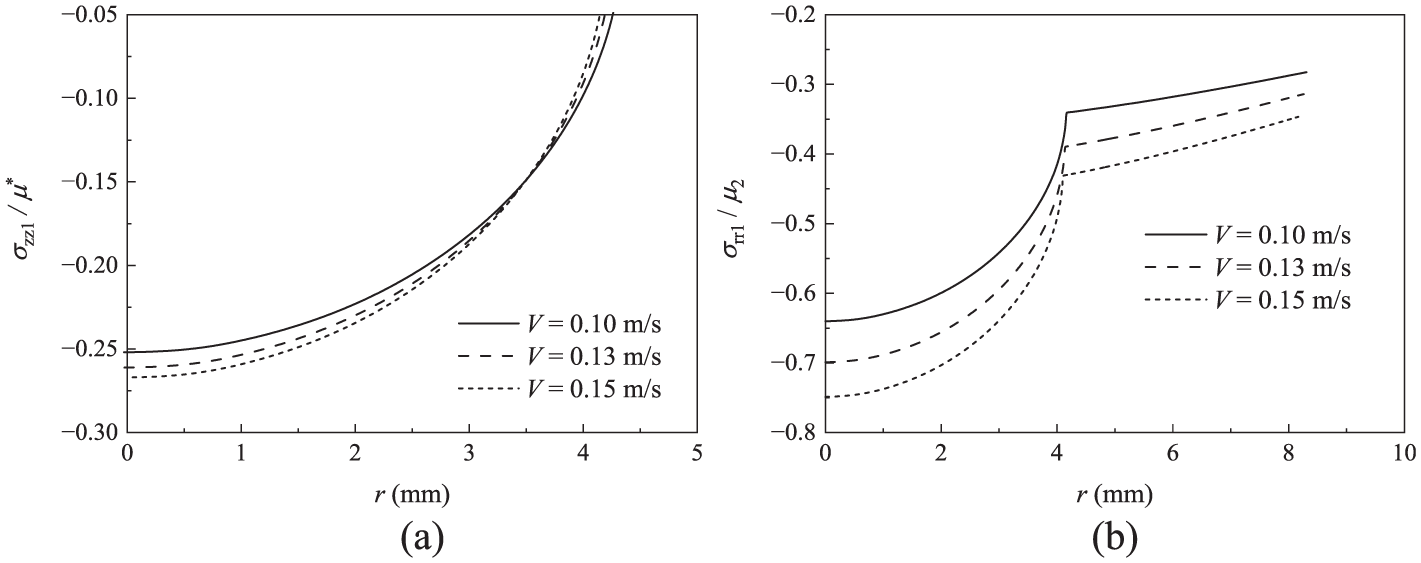
Surface stress distributions on the FGM coating by a sliding spherical punch for various V: (a)
Figure 6 presents the distributions of the dimensionless surface temperature
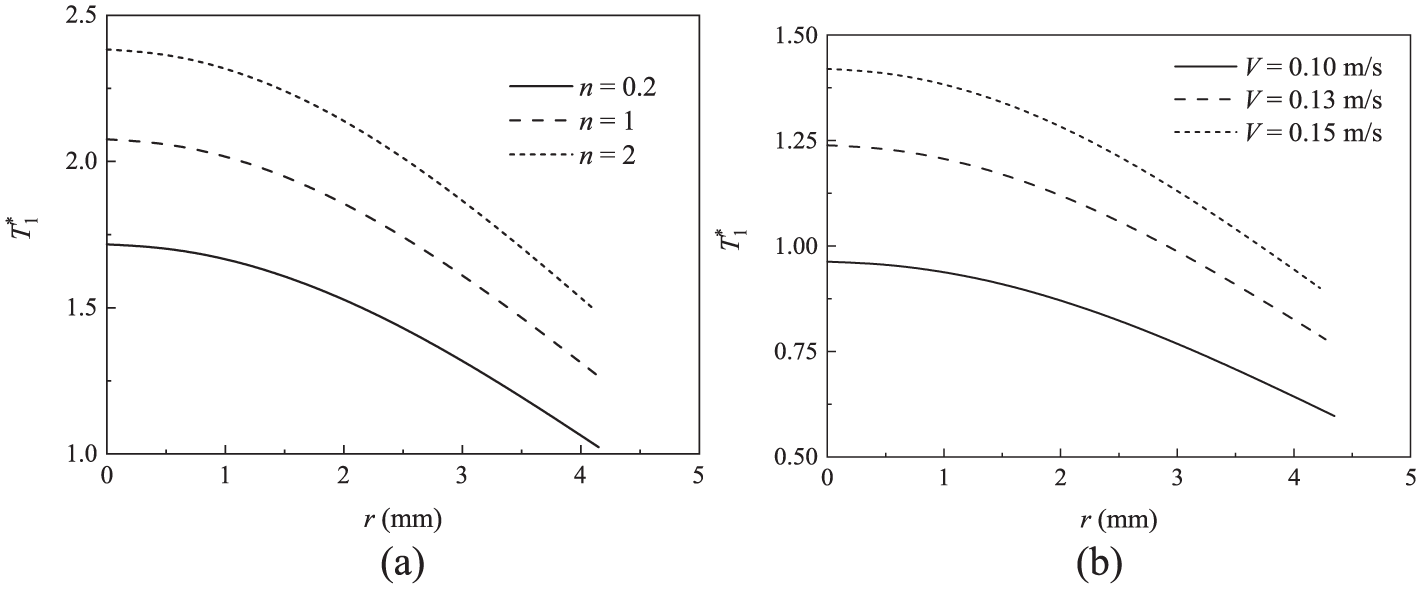
The effect of the (a) n with
3.3. Thermoelastic contact analysis on problem 2 (rotating)
The numerical results for the rotating spherical punch (problem 2) will be presented and discussed in detail in this subsection. Figure 7 presents the effect of the gradient index n on the normalized normal contact pressure
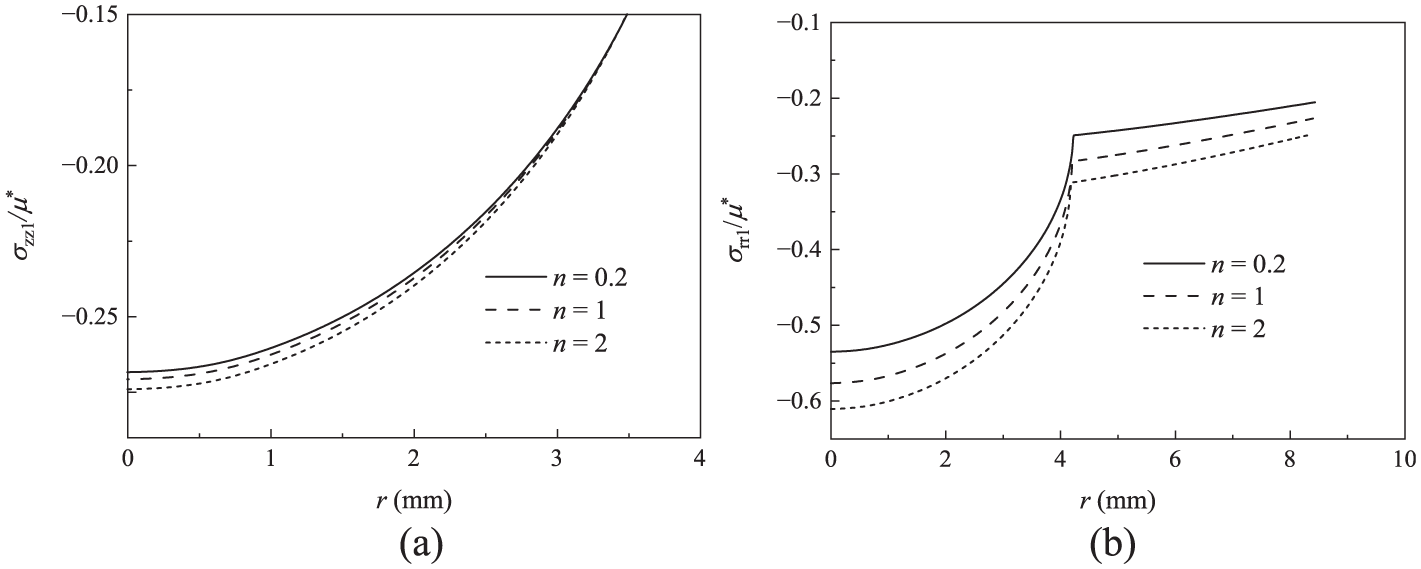
Surface stress distributions on the FGM coating by a rotating spherical punch for various n: (a)
The effect of the angular velocity ω on the surface stress distribution is presented in Figure 8. It is observed that the maximum value of the normalized normal contact stress
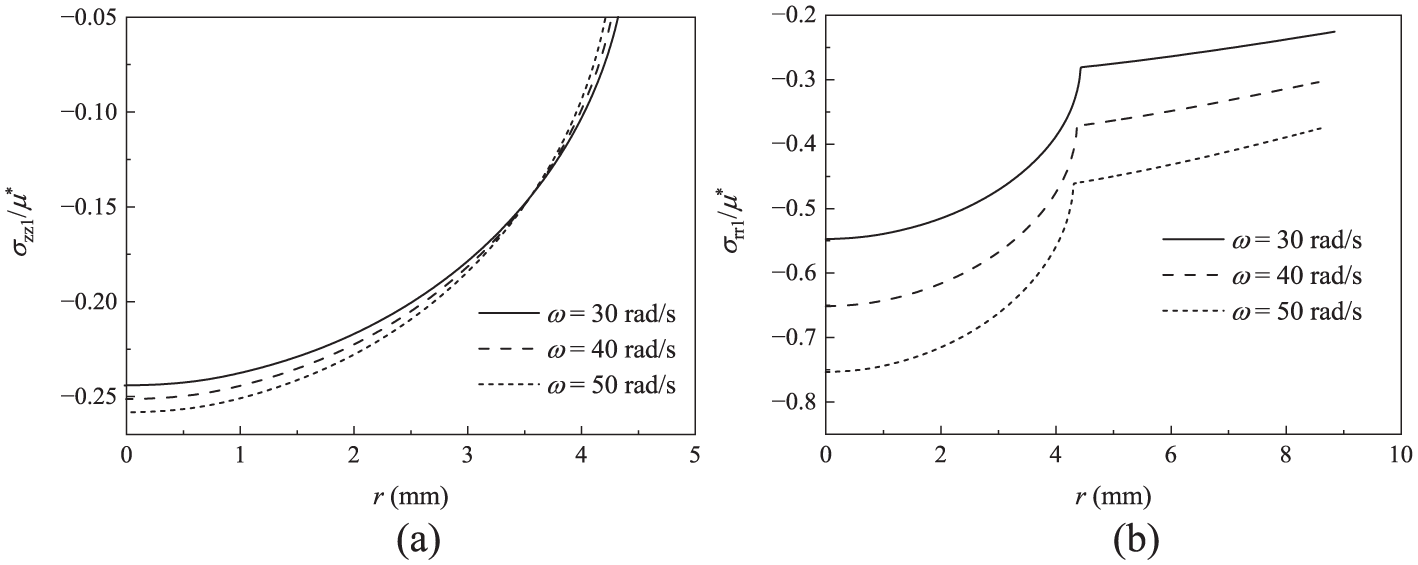
Surface stress distributions on the FGM coating by a rotating spherical punch for various ω: (a)
Figure 9 gives the distribution of the dimensionless surface temperature
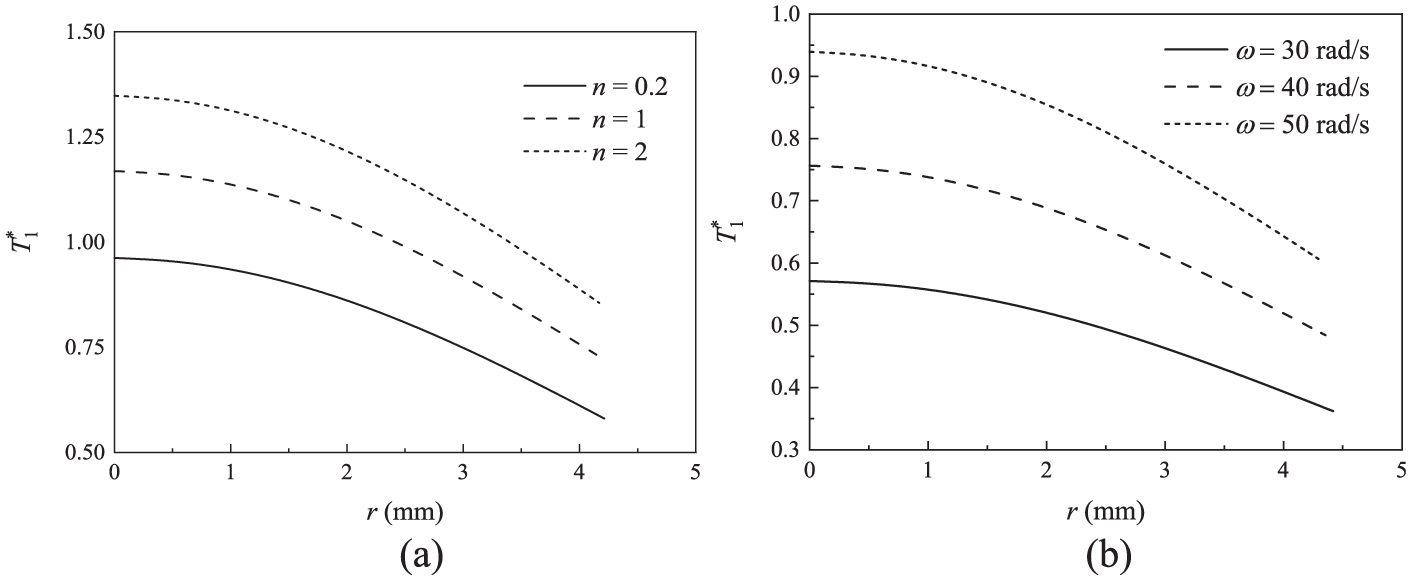
The effect of the (a) n with
3.4. Comparison results for different gradient types
To further explore the effect of the gradient type on mitigating the maximum radial stress and reducing the maximum surface temperature, three alternative distribution models (excluding the power law type) are examined in this subsection. In the first model, the thermoelastic parameters of the coating vary exponentially along the thickness direction:



In the second model, the parameters vary sinusoidally:



In the third model, the parameters follow a cosine form:



The maximum surface radial stress and surface temperature of the FGM coating for four different gradient types are compared and shown in Tables 3–6. They are the power law form (type 1), the exponential form (type 2), the sinusoidal form (type 3) and the cosine form (type 4), respectively. For simplicity, only the results for problem 2 (rotating) are presented here, as the findings for problem 1 (sliding) are similar.
The dimensionless maximum radial stress

The dimensionless maximum radial stress

The dimensionless maximum surface temperature

The dimensionless maximum surface temperature

Tables 3 and 4 list the effects of the friction coefficient ( f ) and angular velocity (ω) on the dimensionless maximum radial stress for four gradient types of the FGM coating. For all gradient types, the maximum radial stress increases with the increase in the friction coefficient and angular velocity. As shown in the tables, the maximum surface radial stress for type 1 (
Tables 5 and 6 list the effects of friction coefficient (f) and angular velocity (ω) on the dimensionless maximum surface temperature
4. Conclusion
This paper investigates two axisymmetric thermoelastic contact problems between a spherical punch and FGMs with arbitrarily varying properties. The homogeneous multi-layered model is used to simulate the thermoelastic properties of the FGM coating. The transfer matrix and the Hankel integral transform method are employed to convert the axisymmetric thermoelastic contact problem into Cauchy singular integral equations, which are then numerically solved to obtain the normal contact stress, the radial stress and the surface temperature, respectively. It is found that:
The homogeneous multi-layered model is effective in solving the axisymmetric thermoelastic contact problem of FGMs. Generally speaking, 10–14 sub-layers can ensure sufficient accuracy of the results.
For the power law type, the coating gradient index and the sliding velocity/angular velocity have a great influence on the distribution of the normal contact stress and radial stress of the contact surface. The results show that the distribution of surface stress can be altered by adjusting the gradient index of the coating, and, therefore, mitigate the thermoelastic contact damage.
The maximum surface temperature occurs around the center of the contact region for the sliding/rotating spherical punch. The distribution of the surface temperature can be altered by adjusting the gradient index of the coating or the sliding velocity/angular velocity.
By appropriately adjusting the gradient type of the coating, the maximum surface temperature and maximum radial stress can be effectively reduced. These findings provide practical guidance for the design of wear-resistant FGM coatings used in actual engineering conditions, particularly for heavily loaded rotating or sliding components like thrust bearings, spherical joints and machine tool spindles operating in extreme thermal-mechanical environments.
Footnotes
Appendix 1

Funding
The authors disclosed receipt of the following financial support for the research, authorship, and/or publication of this article: This work was supported by the National Natural Science Foundation of China (Grant No. 12172147).
Declaration of conflicting interests
The authors declared no potential conflicts of interest with respect to the research, authorship, and/or publication of this article.