






Abstract
This paper introduces a second-degree micromorphic continuum model for one-dimensional (1D) granular structures. The proposed framework aims to capture the mechanical behavior of materials with a distinct microstructure, such as granular rods or layered composites, by incorporating internal degrees of freedom. The kinematics are described by both macro-scale displacement and micro-scale deformation fields, where the micro-displacement within a representative line element (LE) is approximated by a third-order polynomial expansion. This approach introduces higher-order kinematic variables (micro-stretch and micro-curvature) and their gradients, accounting for non-local effects and size-dependent responses. The governing equilibrium equations and the corresponding boundary conditions (BCs) are obtained using the principle of minimum potential energy. The resulting system of sixth-order differential equations is solved using the state-space approach. A systematic investigation of 12 BC scenarios (Dirichlet and Neumann types) reveals the critical role of microstructural constraints in energy distribution. It is demonstrated that Dirichlet-type geometric clamping leads to pronounced boundary layers and energy localization peaks, whereas Neumann-type conditions promote field homogenization. The results highlight that micro-curvature and higher-order gradients are indispensable for predicting internal redistribution and potential failure zones in microstructured materials, providing a foundation for the design of architected metamaterials with tailored properties.
Keywords
1. Introduction
Materials with pronounced microstructure – such as granular media, geomaterials, layered composites, and architected metamaterials – exhibit mechanical responses that cannot be adequately captured by classical Cauchy elasticity. The classical theory assumes that a material point is structureless and that stresses depend solely on the first gradient of displacement. As a result, it fails to account for size effects, internal length scales, and microstructural interactions that become significant when the characteristic size of grains or layers is comparable to the macroscopic dimensions of the body. These limitations have been widely recognized in the literature on generalized continua and nonlocal theories [1–4]. In particular, experimental and theoretical studies have repeatedly shown that classical elasticity systematically underestimates stiffness at small scales, cannot reproduce dispersion curves observed in structured media, and fails to predict stress concentrations near interfaces in heterogeneous materials.
To overcome these deficiencies, several generalized continuum theories have been developed, including micropolar, micro-stretch, strain-gradient, and micromorphic models [1,3,5,6]. All these approaches share a common idea: the kinematics of a material point must be enriched to reflect the presence of an underlying microstructure. Instead of a single displacement field, additional internal variables – such as micro-rotations, micro-deformations, or higher-order gradients – are introduced to represent the relative motion and deformation of sub-structures within a representative volume element. Micropolar elasticity, in particular, provides an enriched kinematic description by introducing independent rotations and couple-stresses. The contributions of Nikabadze and Ulukhanyan to the theory of thin bodies and multilayer structures [7,8], as well as recent advances in deriving dispersion equations and wave velocities for micropolar media [9], demonstrated that these extended kinematic descriptions and proper formulation of interlayer contact conditions are essential for capturing boundary effects and scale-dependent behavior that are absent in classical elasticity. These findings highlight the necessity of continuum models that explicitly account for microstructural degrees of freedom.
A parallel and highly influential line of research is the granular micromechanics approach developed by Misra and co-authors, which derives micromorphic continuum models directly from grain-scale interactions [10–14]. In this framework, the internal variables of a micromorphic continuum are not introduced ad hoc but emerge as systematic averages of discrete particle motions and contact forces. As a result, micro-deformation modes, micro-rotations, and couple-stress effects acquire a clear physical interpretation and can be directly related to the geometry and topology of the granular assembly.
The general micromorphic theory of degree n proposed by Nejadsadeghi and Misra [15] provides a flexible continuum framework in which the micro-deformation field is approximated by a polynomial expansion of arbitrary order. In the present work, we adopt this general formulation as a conceptual basis but focus specifically on the second-degree micromorphic case. This second-degree specialization introduces micro-curvature and higher-order deformation modes, which are essential for capturing boundary-layer effects and internal bending mechanisms in granular rods.
The applicability of this higher-order micromorphic framework to granular structures was further demonstrated in the subsequent work of Nejadsadeghi and Misra [16], where the statics and dynamics of granular-microstructured rods were analyzed. Their results showed that internal length scales and higher-order micro-deformation modes lead to non-classical distributions of strain energy and a strong dependence of the response on BCs, even in nominally one-dimensional (1D) settings.
Most existing micromorphic models, however, are limited to first-degree approximations, which account only for linear micro-stretch. Such models cannot capture micro-curvature, micro-bending, or nonlinear deformation patterns within individual grains. This limitation becomes especially severe when the microstructure exhibits pronounced bending, twisting, or higher-order deformation modes, as is the case in granular chains, beam-like metamaterials, and pantographic structures. Higher-order micromorphic and generalized continua have also been extensively developed by Francesco dell’Isola and collaborators [17,18], who demonstrated that enriched kinematics with multiple internal variables and characteristic lengths are essential for capturing the behavior of metamaterials, pantographic structures, and architected lattices. Their studies on higher-order continua and internally constrained systems provide numerous examples where classical and first-order generalized models fail to reproduce experimentally observed stiffness, dispersion, and localization patterns, whereas higher-order micromorphic descriptions succeed. Their work provides strong evidence that higher-order gradients and micro-curvature terms are not optional refinements but necessary ingredients for accurately modeling materials with complex internal geometry [19–23]. In this sense, second-degree micromorphic models can be viewed as a minimal extension capable of capturing micro-curvature and internal bending modes while remaining analytically and computationally tractable.
Boundary layer phenomena are central to generalized continua. Near boundaries or interfaces, sharp variations in stresses and strains arise that classical elasticity cannot predict. These boundary layers are closely linked to the presence of internal length scales: when the characteristic size of the microstructure is not negligible compared to the structural dimensions, the influence of the boundary penetrates into the bulk over a finite distance, leading to non-uniform distributions of micro-deformation and energy. In micropolar, strain-gradient, and micromorphic models, the presence of additional kinematic fields and higher-order stresses naturally leads to localized deformation patterns near supports, interfaces, or material discontinuities [6,24]. Similar behavior appears in higher-order micromorphic models, where micro-curvature and higher gradients generate localized energy peaks that classical Cauchy elasticity cannot predict. Granular micromechanics-based micromorphic models likewise demonstrate boundary-layer formation and energy localization in granular rods and microstructured solids [25]. These results collectively indicate that the correct description of boundary layers in microstructured media requires both internal degrees of freedom and higher-order spatial derivatives in the constitutive framework.
Granular rods serve as a fundamental model system for studying the interplay between macro- and micro-deformations. They provide insight into the behavior of more complex two-dimensional (2D) and three-dimensional (3D) structures, including geomaterials, concrete, layered composites, and architected metamaterials. The works by Tan and Poh demonstrate that even in periodic layered structures, microstructural effects strongly influence wave propagation and static stress distributions [26,27]. From a modeling perspective, 1D granular rods offer a clean setting in which the impact of internal length scales, higher-order gradients, and BCs can be analyzed in detail without the additional complications of full 3D geometry [23,28–32]. This makes them an ideal testbed for assessing the capabilities and limitations of second-degree micromorphic theories and for identifying the regimes in which classical or lower-order models break down. Taken together, these developments across micropolar, strain-gradient, and higher-order micromorphic theories consistently indicate that internal rotations, micro-curvature, and higher-order gradients are indispensable for describing scale-dependent behavior, wave dispersion, and boundary-layer phenomena in microstructured solids.
In parallel to these developments, a complementary line of research has focused on the continuum modeling of 1D chain-like systems with internal resonators and architected microstructures. In particular, variational approaches to finite-length Maxwell–Rayleigh-type lattices have demonstrated how microstructural design and BCs influence dispersion properties and the emergence of frequency band gaps [33]. Furthermore, higher-order continuum formulations, including second-gradient models, have been successfully employed to describe wave dispersion and attenuation phenomena in microstructured materials [34]. Although these approaches are primarily developed in the context of wave propagation, they emphasize the fundamental role of internal degrees of freedom and higher-order gradients, which are also central to the present micromorphic framework.
In this work, we develop a second-degree micromorphic theory for 1D granular rods, extending the granular micromechanics-based framework of Nejadsadeghi and Misra [15,16]. Our primary focus is the analysis of boundary layers and energy localization under various types of BCs, including both classical (Dirichlet) and generalized (Neumann) constraints. We demonstrate that the second-degree micromorphic model accurately captures the redistribution of strain energy within the microstructure, including the emergence of localized deformation modes that cannot be described by lower-order theories. Special attention is paid to the role of BCs imposed on the micro-fields: by comparing different combinations of Dirichlet- and Neumann-type constraints at the macro- and micro-levels, we show how the choice of BCs controls the thickness of boundary layers, the intensity of energy localization, and the effective stiffness of the rod. The results highlight the importance of micro-curvature and higher-order gradients for the correct modeling of granular materials and provide a foundation for the design of new metamaterials with tailored mechanical properties. Moreover, the proposed framework offers a systematic way to connect discrete granular models with continuum descriptions of higher order, thereby contributing to the broader effort of developing multiscale models that remain predictive across a wide range of length scales.
2. Continuum framework: a micromorphic model of degree 2
2.1. Kinematic variables
Let us consider a 1D object of length L that possesses an underlying granular microstructure. This microstructure is envisioned as being composed of numerous grains, each characterized by its own random mechanical and inertial properties (henceforth referred to as a 1D granular rod), as depicted in Figure 1.
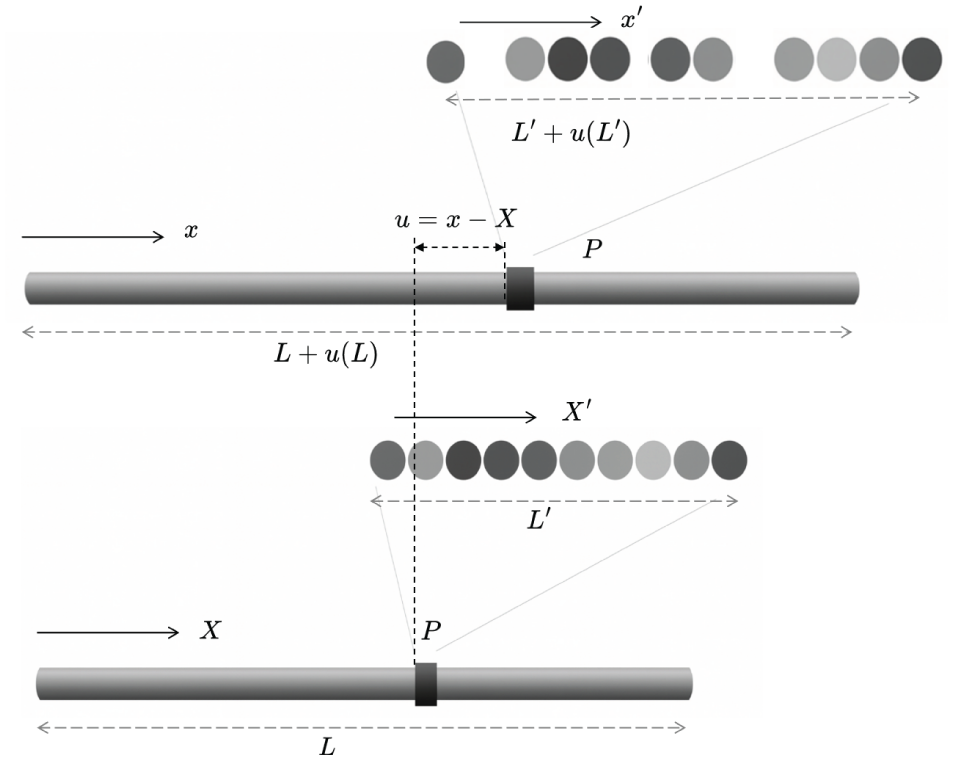
Schematic representation of a 1D granular structure in its reference and current configurations, illustrating macro- and micro-scale kinematics.
At the larger, macroscopic scale, the object can be treated as a continuum. Here, a material point P is identified by the macro-scale coordinate system X. We define X as the initial position of point P, and
Moving to a finer spatial resolution, the material point P is understood to represent a collection of grains, forming a line element (LE) with a characteristic length
The position of each individual grain within the LE is tracked using the micro-scale coordinate system

Central to the proposed framework is a micromorphic theory of degree 2. In this context, the micro-scale displacement

here,
In (2), the coefficients
By coherently combining the macro-scale displacement u with the micro-scale displacement

here,
2.2. Deformation measures and intergranular kinematics
To quantify the deformation state within the granular rod and subsequently formulate the constitutive laws, we introduce several relative deformation measures. These measures are designed to capture the intrinsic differences between the macro-scale displacement gradients and the micro-scale kinematic variables. For a micromorphic theory of degree 2, these are systematically defined as follows [1,2,12]:

In equation (4), differentiation is consistently performed with respect to the macro-scale coordinate system. The subscript
The terms introduced can be interpreted in the standard 1D setting as follows:
A key constitutive assumption for a micromorphic theory of degree 2 is made at this point: we assume that the highest-order relative deformation measure,
To construct the constitutive model from underlying grain interactions, it is essential to define the relative displacement between any two neighboring grains n and p, denoted

The terms on the right-hand side of (5) represent distinct physical contributions to

Equation (6) meticulously decomposes the intergranular relative displacement
Furthermore, we define the geometry moment measures
2.3. Constitutive equations
We now proceed to establish the correspondence between the kinematic measures and the various stress quantities. We postulate that the macro-scale deformation energy density, denoted by W, is a function of the continuum kinematic measures:
The macro-scale stress measures are defined as work-conjugates to these continuum kinematic measures. Specifically, they are expressed as:
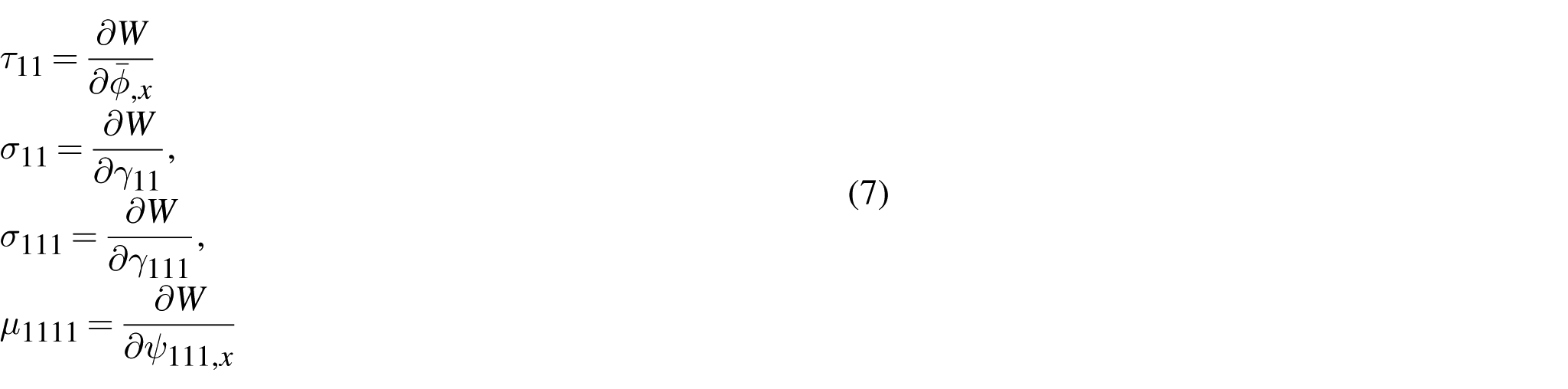
This macro-scale energy density W can be systematically derived through the homogenization of the micro-scale deformation energy. If

here, α represents all possible grain-pair interactions (and not only nearest neighbors) and is assumed sufficiently large to ensure the validity of the continuum approximation. The numerical value of α depends on the nature of grain-pair interactions and the grain arrangement.
In turn, the intergranular forces, which are the fundamental elements of the micro-scale interactions, can be defined as work-conjugates to the micro-scale kinematic measures introduced in (6). These forces are expressed as:

By substituting the relationship given in (8) into the stress definitions (7), and concurrently employing the definitions from equations (6) and (9), the macro-scale stress measures can be explicitly formulated. These expressions relate the macro-scale stresses to the averaged micro-scale forces and their corresponding geometry moments:

Equation (10) thus defines the macro-scale stress measures in terms of intergranular force measures and their associated geometry moments, where
To formulate the micro-scale constitutive equations, which link micro-scale kinematic measures to their conjugate intergranular force measures, we propose the following quadratic form for the micro-scale deformation energy

Based on equation (11), we identify sixteen distinct linear mechanisms contributing to the deformation of a grain pair in contact. Each mechanism is quadratic in form, where
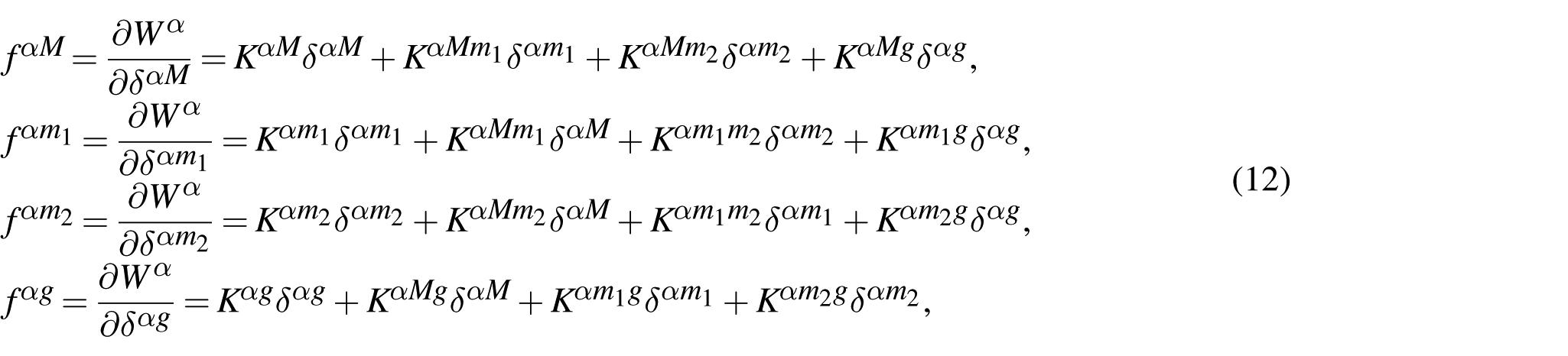
Finally, by substituting these expressions for the micro-forces (12) into the averaged definitions of the macro-stresses (10), we derive the macroscopic constitutive relations. These relations explicitly describe the linear elastic relationship between the macro-scale stresses and the kinematic variables for a degree 2 micromorphic rod:

where the macro-scale stiffnesses
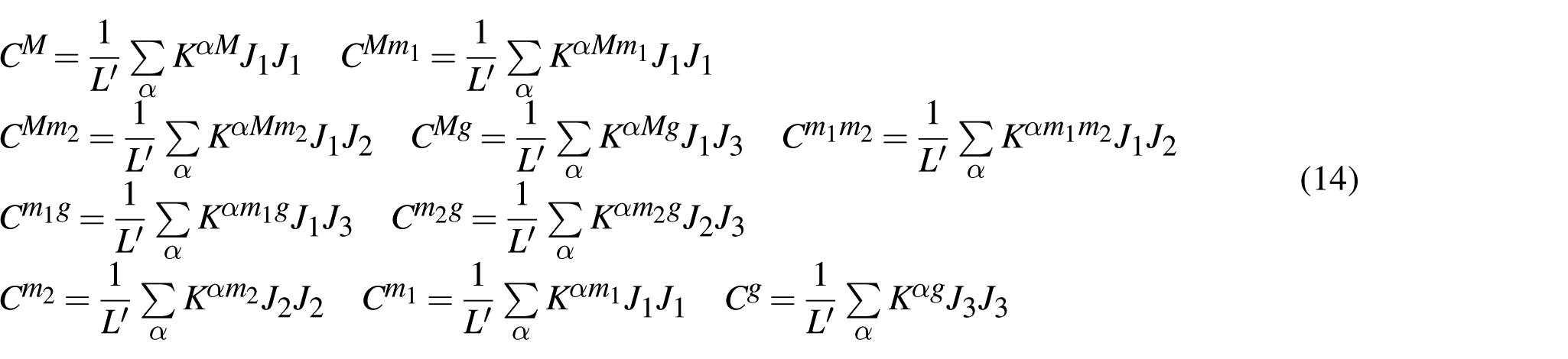
The superscripts in the macro-scale stiffnesses from (14) carry specific physical meanings. The superscript M denotes the stiffnesses related to macro-scale deformation, while
It is important to note that all stiffness measures defined in equation (14) naturally incorporate characteristic lengths. These multiple length scales are a direct consequence of the assumed kinematic field of grain motion within the LE. Consequently, for the analysis of static problems in this second-degree micromorphic model, the material behavior is characterized by several intrinsic static length scales, which will be explicitly defined as dimensionless parameters in subsequent sections dedicated to the dimensionless form of the equations.
3. Governing equations and BCs
3.1. Variational formulation
The principle of minimum potential energy is used to obtain the equilibrium equations for the 1D granular rod. This principle requires that the total potential energy of the system be minimized in equilibrium and is expressed as

where δ is the variation symbol,

Finally, the term

In (17), we define the external contributions:

3.2. Equilibrium equations in strong form
From the comprehensive variational statement in (18), the full system of equilibrium equations and the corresponding BCs can be rigorously derived.
Specifically, by applying the fundamental lemma of variational calculus, we obtain the strong form of the equilibrium equations. This is achieved by setting the coefficients of the arbitrary variations
The resulting strong form of the equilibrium equations for the kinematic variables

And the corresponding natural BCs, derived from the variational principle, are:

Substituting the constitutive equations, as detailed in (13), into this equilibrium system (19), and assuming that the macro-scale stiffnesses are spatially invariant (i.e., independent of the coordinate x), we obtain a coupled system of differential equations for the primary kinematic variables
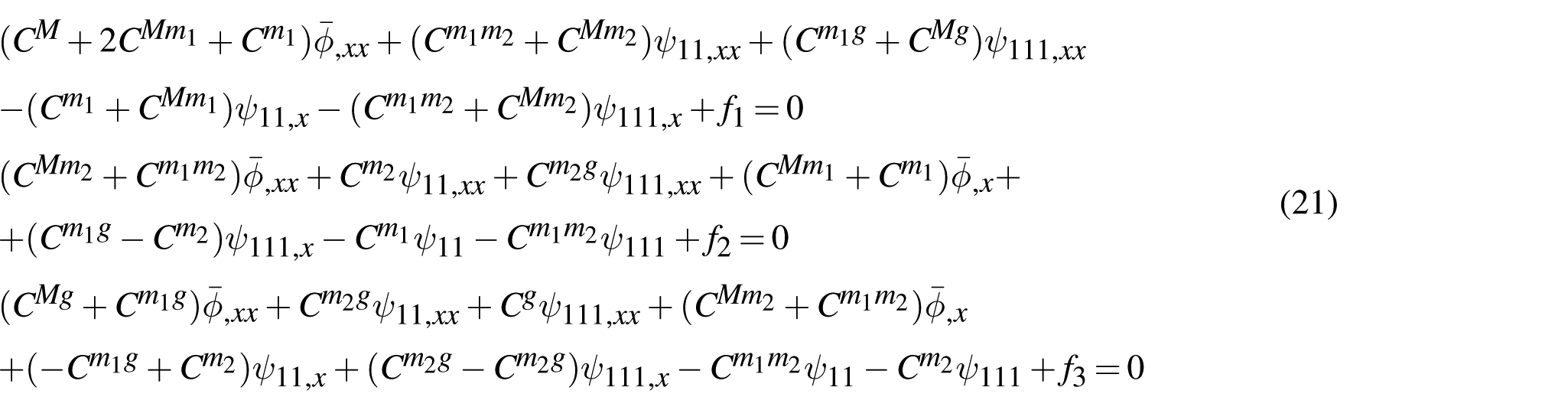
Similarly, the BCs in (20) are transformed by substituting the constitutive relations, yielding the explicit form:

To simplify the representation of this complex system, we introduce a set of coefficients based on the macro-scale stiffnesses:

Utilizing these newly defined coefficients, the system of differential equations (21) for the problem domain
The compact form of the equilibrium equations is:

And the compact form of the BCs is:

4. Solution for the static problem
4.1. Operator formulation
For a more compact and illustrative representation of the system of differential equations and BCs derived in the previous section, an operator form is employed. We introduce column vectors for the kinematic variables

Next, we define the differential operators


Using these introduced operators, the original system of differential equations (24) and BCs (25) for the problem domain


4.2. Dimensionless form of the governing equations
To simplify the analysis, reduce the number of independent physical parameters, and highlight size effects, it is advantageous to transform the governing equations into a dimensionless form. For this purpose, we introduce the following dimensionless variables:

The dimensionless spatial domain of the problem is, therefore, defined as

Using these transformations, we also define a set of dimensionless material parameters and characteristic length scales that inherently reflect the influence of the granular microstructure:

Furthermore, we introduce the dimensionless parameter n, defined as the ratio of the macroscopic rod length L to the characteristic length of the LE
These dimensionless parameters are crucial for understanding the system’s behavior. The parameters
By applying these dimensionless variables and parameters, the system of governing equations (24) and BCs (25) can be reformulated in a dimensionless form. The dimensionless equilibrium equations are given as:
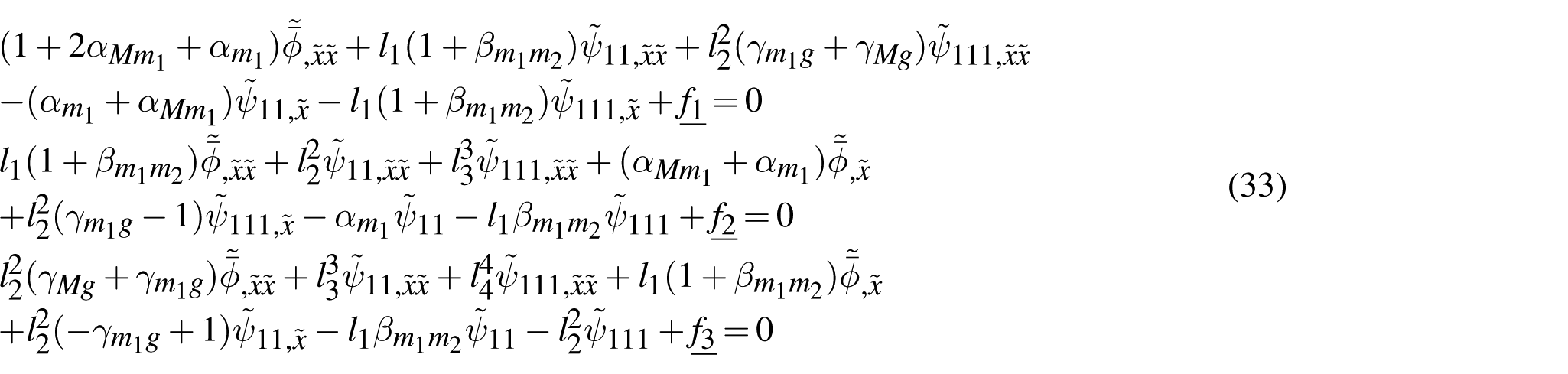
where
The dimensionless form of the BCs (34) is:

where
Finally, to fully characterize the material’s deformation, the total dimensionless displacement

here,
An important observation often overlooked in classical approaches concerns the potential size dependence of inclusion stiffness. In many traditional formulations, the material stiffness of inclusions is assumed to remain constant regardless of their size. However, in realistic scenarios, the stiffness properties of inclusions may depend on their characteristic dimensions and, consequently, on the scale parameter
5. Solution for the static problem
This section is dedicated to developing the analytical solution for the static deformation of the 1D granular rod, described by our second-degree micromorphic theory. While previous studies, such as [16], focused on a degree 1 micromorphic theory and employed methods like reducing the system to a single higher-order ordinary differential equation (ODE), our work presents a more generalized framework.
For the coupled system arising from our degree 2 micromorphic model, we utilize the state-space representation as a robust and systematic analytical approach. We will outline this method, discuss the fundamental conditions for the existence of a physically meaningful solution, and present the general solution. Specific case studies with various BCs will be explored in detail in the subsequent section.
5.1. Analytical solution using state-space method
The dimensionless equilibrium equations, previously derived in equation (33), constitute a set of three coupled second-order ODEs for
To simplify algebraic manipulations, we introduce a compact notation for the coefficients, which will be used in the subsequent representation of the system:
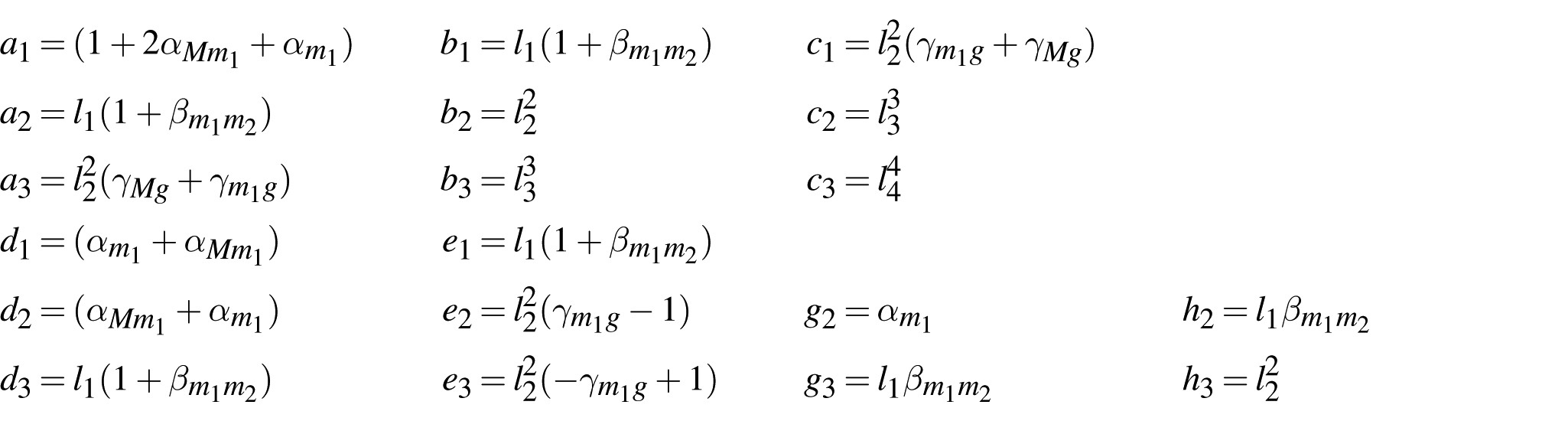
Using this simplified notation, the system of dimensionless governing equations can be succinctly rewritten as:

5.1.1. State-space formulation
For the analytical solution of this coupled system, we transform it into a system of first-order ODEs, known as the state-space form. We define six state variables, based on the kinematic fields and their first derivatives:

The state vector is

The system (36) can then be rearranged and expressed in the standard state-space form

Multiplying by

whose elements are denoted

The system matrix

5.1.2. General solution and conditions for existence
The general solution for the homogeneous system (
The eigenvalues
The homogeneous solution for the state vector is then given by
The existence of a physically meaningful and stable solution is fundamentally dependent on the material parameters, which are embedded within the stiffness coefficients

where

is the vector of dimensionless kinematic measures, and

For
The second principal minor

must be positive. This condition ensures the stability of macro-scale and first-order micro-scale deformations and notably matches the positive definiteness criterion for the degree 1 micromorphic model discussed in Nejadsadeghi and Misra [16].
The third principal minor

must also be positive. Expanding this determinant yields:
The fourth principal minor
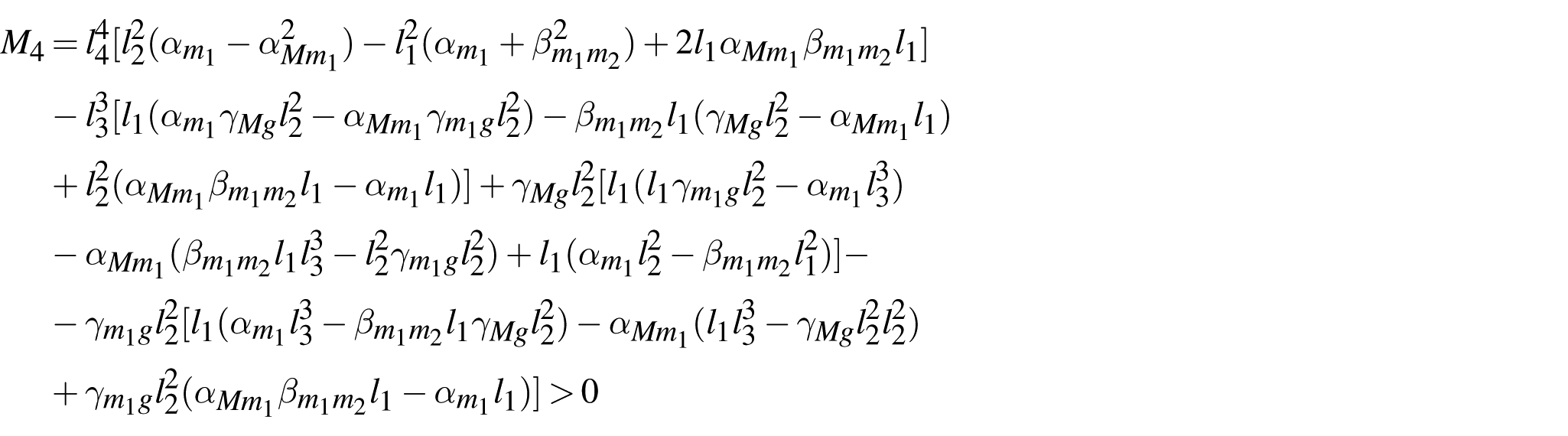
This explicit expression, while algebraically intricate, must hold true for the system to maintain overall stability and ensure physically meaningful results across all scales of deformation.
The material parameters must satisfy the positivity conditions associated with the micro-scale deformation energy (see (11)). These conditions ensure that the energy functional is bounded from below and that the resulting static boundary-value problem admits a physically meaningful solution. Violation of these requirements leads to loss of ellipticity of the governing operator, which may result in non-existence or non-uniqueness of the static solution. Furthermore, for the state-space representation to be well-defined, the coefficient matrix associated with the second derivatives in the governing equations (the submatrix
5.1.3. BCs and determination of constants
To uniquely determine the six integration constants
6. Static behavior analysis: numerical scenarios
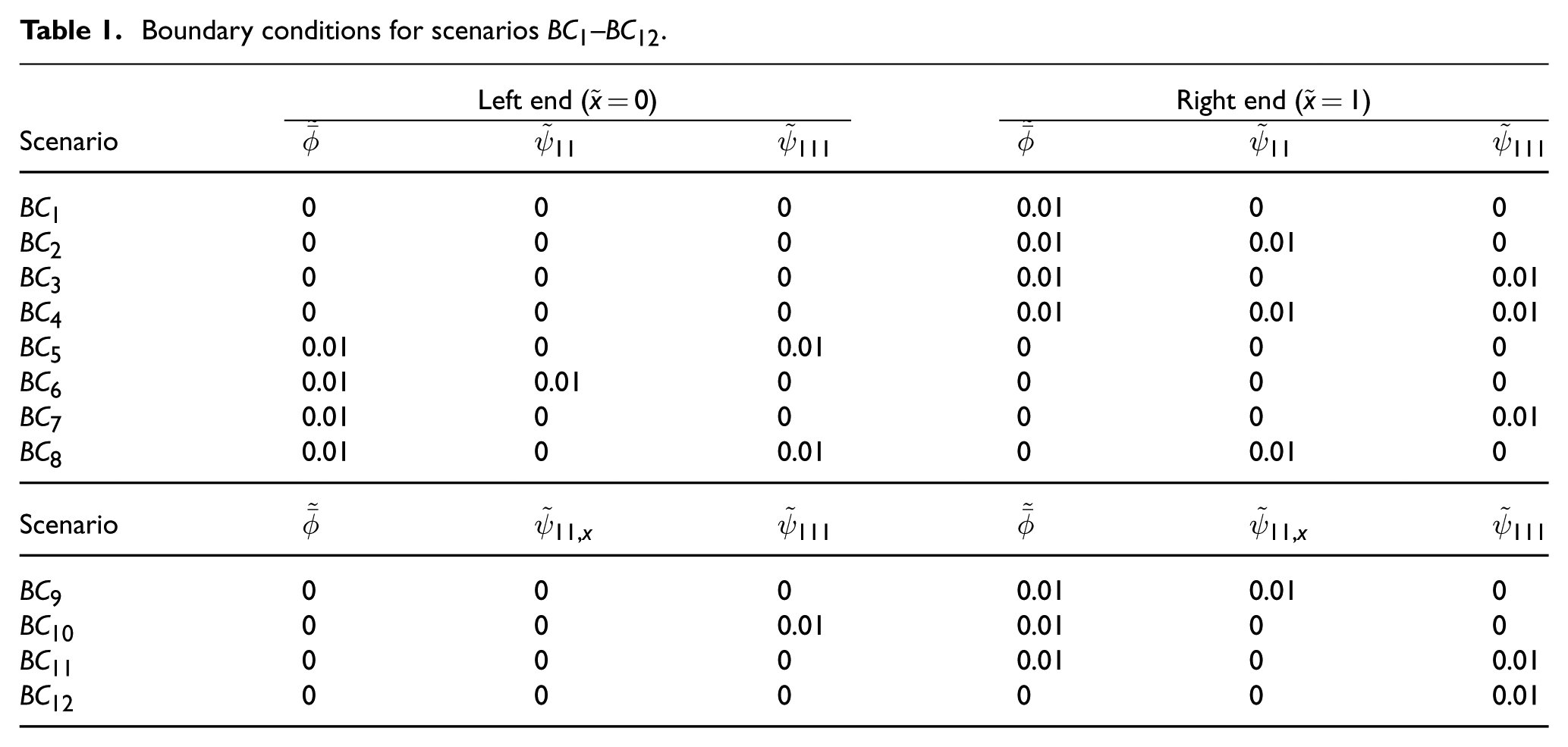
In this section, a systematic investigation is conducted into the impact of various
To maintain a consistent baseline for comparison, all numerical simulations utilize a uniform set of material and geometric parameters:
Boundary conditions for scenarios
6.1. Response to geometric BCs (Dirichlet-type)
In scenarios
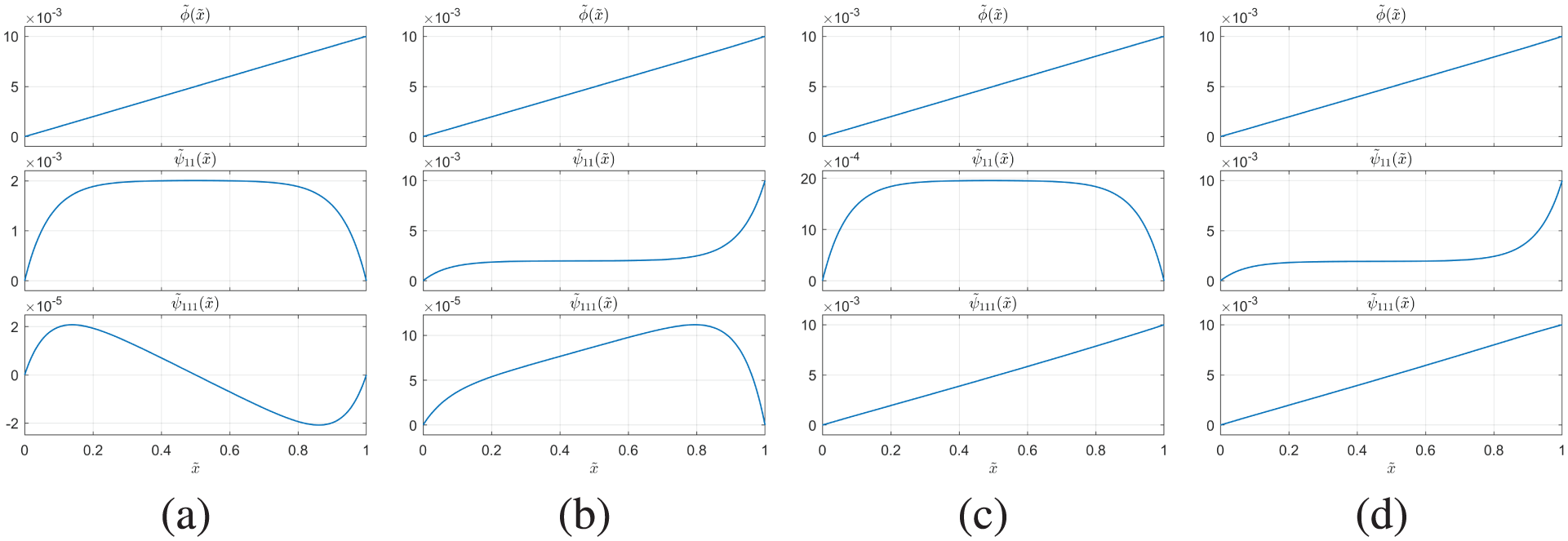
Profiles of dimensionless kinematic variables (
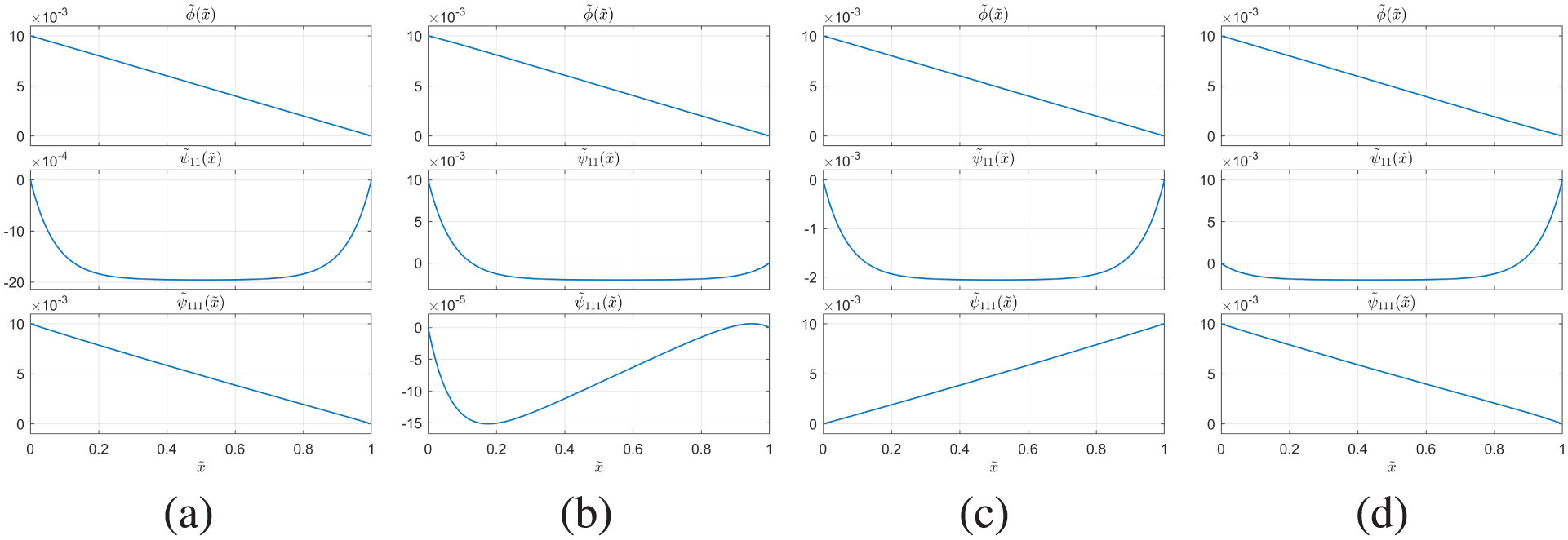
Profiles of dimensionless kinematic variables (
6.1.1. Symmetry and boundary layer formation
,
,
,
Scenarios
6.1.2. Asymmetry and energy concentration
,
,
,
When non-zero micro-deformation values are prescribed at a single boundary (e.g.,
6.2. Transition to Neumann-type BCs
–
The transition from fixing field values to fixing gradients (
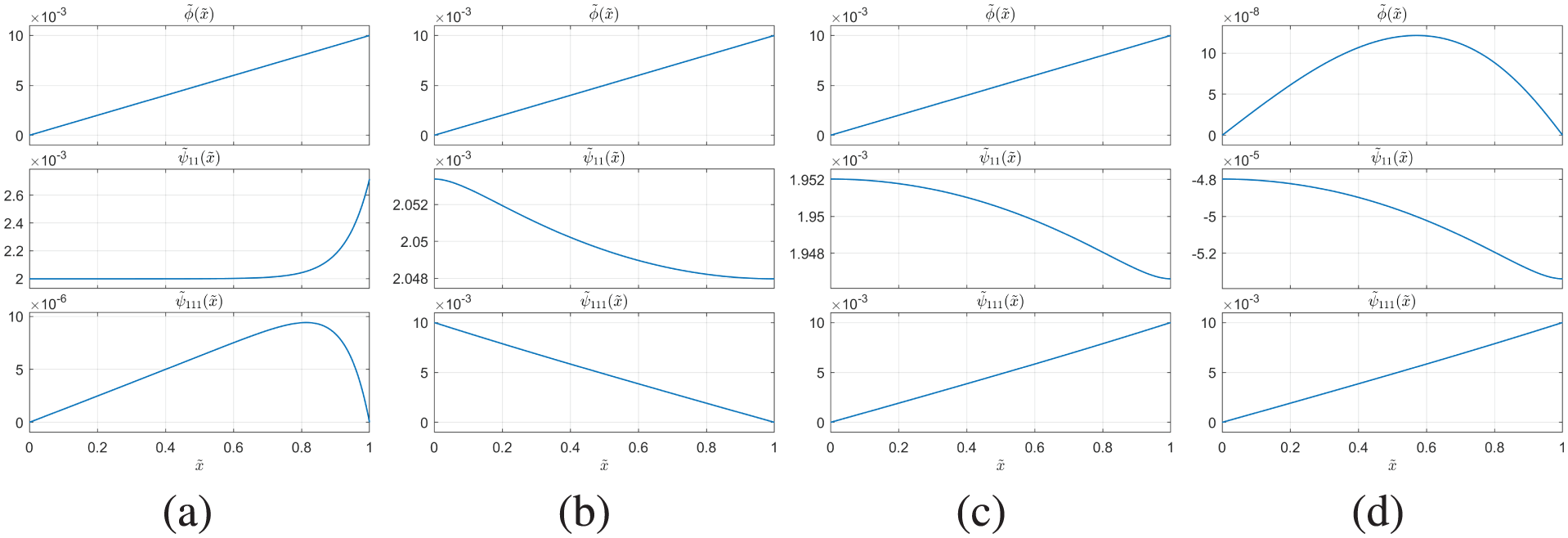
Profiles of dimensionless kinematic variables (
6.3. The limit case
: microstructural dominance
Scenario
6.4. Analysis of dimensionless strain energy density
The visualization of the strain energy density
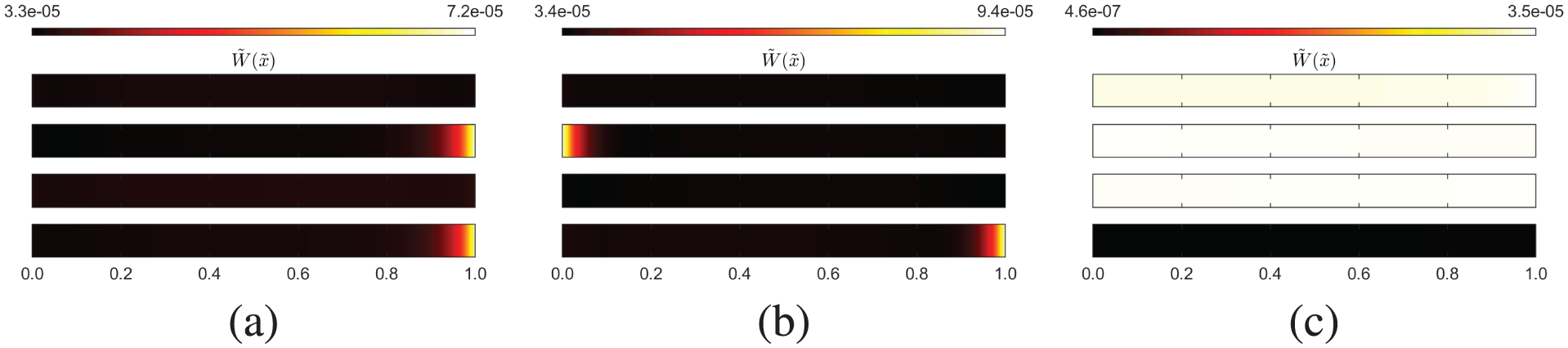
Distribution of dimensionless strain energy density
In contrast, Neumann scenarios (
6.5. Parametric analysis of macro- and micro-field nonlinearity
In the primary scenarios (
The results are presented in Figure 6. The left panels illustrate the profiles of (
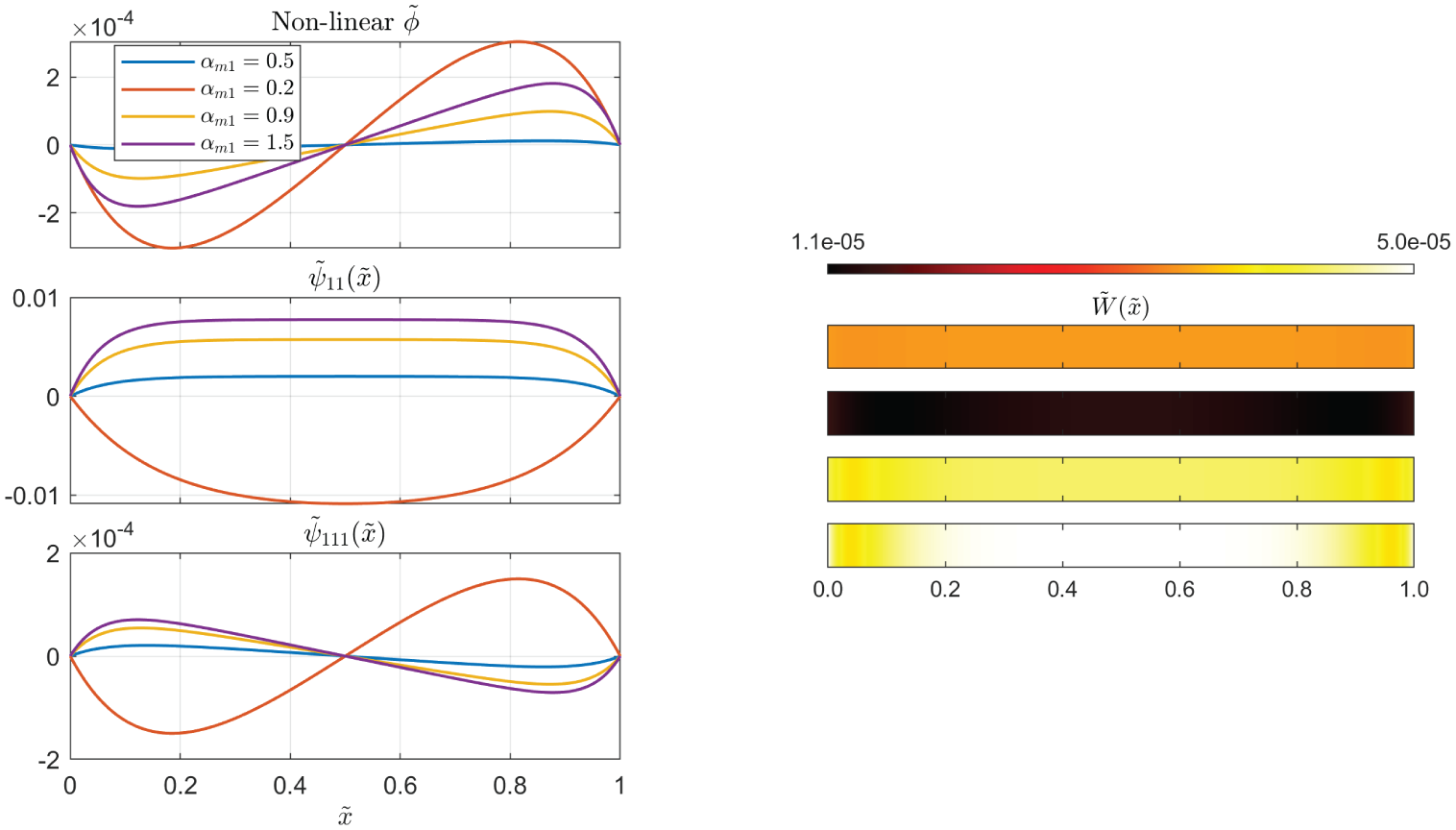
Parametric study of kinematic fields and strain energy density for varying coupling coefficient
The corresponding distributions of strain energy density
7. Conclusion
In this study, a detailed investigation into the static behavior of a 1D granular rod was conducted using a second-degree micromorphic continuum model. The inclusion of higher-order kinematic variables, micro-stretch (
The analysis of 12 numerical scenarios (
The scientific novelty of this work lies in the systematization of transition processes from macro- to micro-scales. The developed framework and energy maps provide a robust tool for the design of advanced composites and metamaterials where properties are tuned through purposeful microstructural modification.
The scientific novelty of this work lies in the systematization of transition processes from macro- to micro-scales. Crucially, the model also demonstrates the capacity to capture significant non-linearity in the macro-displacement field, directly influenced by microstructural coupling parameters, thus offering a richer description than classical continuum theories. The developed framework and energy maps provide a robust tool for the design of advanced composites and metamaterials where properties are tuned through purposeful microstructural modification.
Extension to dynamic loading and multi-dimensional settings will be addressed in future work.
Footnotes

Funding
The authors received no financial support for the research, authorship, and/or publication of this article.
Declaration of conflicting interests
The authors declared no potential conflicts of interest with respect to the research, authorship, and/or publication of this article.