Molecular Mechanism of Antitumor Effects of Quinoa Protein and Active Peptides 3
Clinical Effect of Chinese Medicine Combined with Tetrandrine on Coal Mine Workers' Pneumoconiosis 3
A Study of the Effectiveness of Clinical Interventions of Medicinal Plant Landscapes on Cognitive Functioning in Patients with Alzheimer’s Disease 4
Effect of Sports Dance Exercise Combined with Aripiprazole Medication Treatment on Clinical Symptoms of Children with Autism 5
The Application of Big Data in Medical Management: Taking Aspirin Medication Data as an Example 5
Analysis of the Therapeutic Effect of Sports Training Combined with Sodium Norepinephrine on Motor Function in Patients with Muscle Atrophy 6
Analysis of the Effect of Compound Xinnuomin and Other Antibiotics on the Treatment of Pneumoconiosis Caused by Recycled Concrete 7
Study on the Application Effect of Drug Coating in Skin Care Clothing …8
Study on the Polymorphism Analysis of Silent Information Regulatory Factor 1 Gene in Hypertension Induced Cerebral Hemorrhage 9
Effect of Omega-3 Fatty Acid Supplementation on Muscle Soreness and Anxiety in Tennis 9
The Mutual Influence Between Endogenous Microorganisms of Traditional Chinese Medicine Rhodiola Rosea and Host Plants 10
The Effect of Underground Rhizome Depth on the Diversity of Rhizosphere Microorganisms in Baishouwu 11
The Correlation Between Risk Decision-Making and Anxiety in the Economic Field 11
The Immune-Related Molecular Mechanism of Ischemic Stroke Was Elucidated by Bioinformatics Method 12
Research on Cost Management of Medical Collection Based on Value Chain 13
The Coordination of Medicine Supply Chain and Medical Facility Layout Planning in Public Health Emergencies 14
Application of Pharmaceutical Extracts in the Design of Medical Protective Clothing 14
Chinese Medicine Footbath for the Treatment of Work Fatigue of College and University Purchasing Personnel: An Experimental Study 15
The Influence of Medication Assisted Aerobics Training on the Physical Fitness and Shape Shaping of Female Students 16
Optimization of Internal Control for Medical Consumables Procurement in D Hospital Based on Financial Risk 17
Research and Application of Probability Statistics in Clinical Medical Image Evaluation 17
The Intervention Effect of Drug Therapy Combined with Multimedia Teaching on Training Anxiety of College Sports Majors 18
Research On the Intervention of Traditional Chinese Medicine Combined with English Video Interactive Teaching on Students’ English Learning Anxiety Disorder 19
The Role of International Law in The Development and Distribution of Infectious Disease Prevention and Control Drugs in Global Health Governance 20
Research on Internal Control of Drug Procurement in Hospital a Based-on SPD Mode 20
Research on the Effect of Positive Psychology and Drug Combination Therapy in Physical Education Teaching for College Students 21
The Impact of Applying Social Psychology on the Internationalization of Brand Image of Small and Medium sized Enterprise Companies 22
Effect of Celecoxib on Acute Tendinitis in Piano Players 22
Study on the Intervention of Traditional Chinese Medicine on the Psychological Disorder of College Students under Employment Pressure 23
Nursing Progress of Autologous Hematopoietic Stem Cell Transplantation for Multiple Myeloma 24
Drug Interaction Prediction Method Based on Multi Graph Convolution and Feature Fusion 24
The Importance of Preclinical Pharmacodynamic Evaluation in New Drug Development: A Case Study of Antidepressants 25
1 Molecular Mechanism of Antitumor Effects of Quinoa Protein and Active Peptides
Jing Su1, Xiaohong Yang2*
1Xinzhou Normal University, Xinzhou 034000, China;2Xinzhou People's Hospital, Xinzhou 034000, China
Objective: Plant-derived lectins, peroxidase and ribosome inactivating proteins can promote cancer cell death by blocking cell cycle and targeting programmed apoptosis pathway, indicating that grain-derived active proteins are expected to be developed as anti-tumor drugs. Consumption of quinoa can reduce the risk of chronic diseases such as hypertension, hyperglycemia, hyperlipidemia, and obesity, but its anti-tumor function has not been reported. In order to explore the anti-tumor effect of quinoa protein and active peptides and explore their functional value, the anti-tumor potential of quinoa protein was evaluated at the cellular level.
Methods: Fetal Human Colon cells DLD1 and fetal human epithelial cells (FHC) of logarithmic growth stage were added with 0.25% (w/v) trypsin and placed in an incubator at 37°C for digestion. After the cells were attached to the wall, quinoa protein of different concentrations was added, and then fetal human colon cells were treated with 5 multiple pores per gradient for 24 h. The cells in the petri dish were blown off with a pipette gun and transferred to a 15mL centrifuge tube, centrifuged at 1000 rpm for 5 min. After centrifugation, remove the supernatant with a pipette gun, add 3mL fresh medium, gently blow for 50 times, so that the cells are evenly distributed in the medium into a single-cell suspension, remove 20 μL from the medium and dilute to 200 μL, remove 20 μL from the medium and add it to the cell counting plate for cell count, and multiply the obtained data by 10 to obtain the cell concentration.
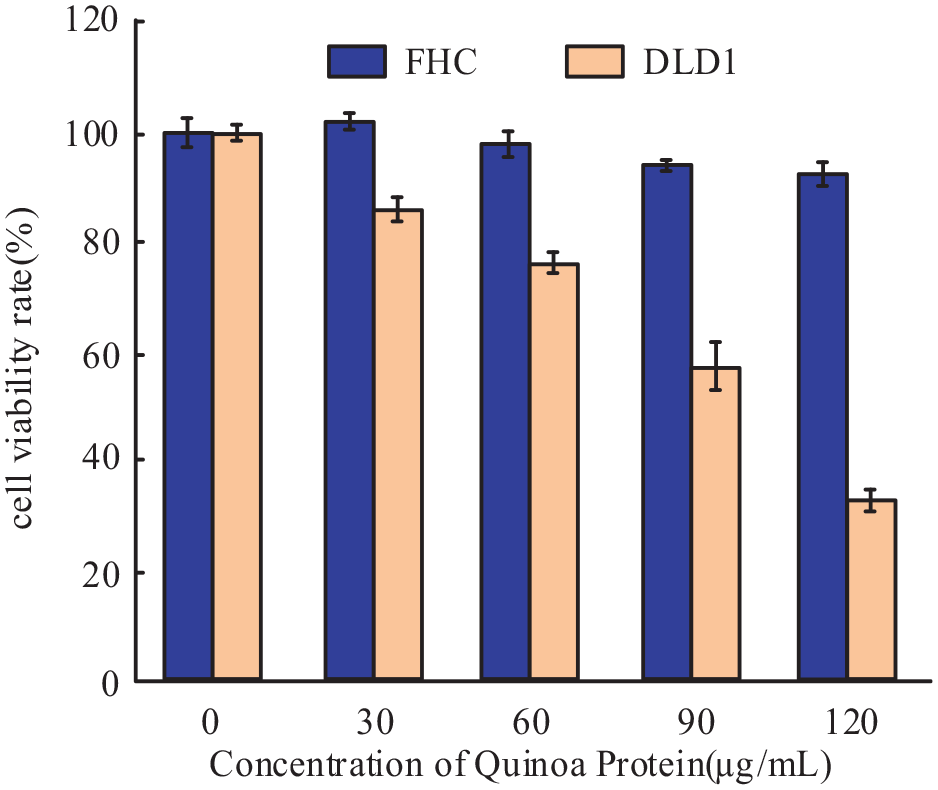
Results: Different concentrations of quinoa protein treated colon cancer cells DLD1 and normal colon epithelial cells FHC for 24h to detect cell survival rates, as shown in Figure 1. As can be seen from the figure, when the concentration of quinoa protein is 120μg/mL, the cell survival rate is reduced to 35%, indicating that quinoa protein can significantly inhibit the proliferation of two types of colon cancer cells in a concentration gradient dependence. Quinoa protein had no effect on the proliferation of normal colon epithelial cells FHC.
Effect of quinoa protein on tumor cell proliferation.
Conclusion: This study systematically evaluated the anti-tumor effects of quinoa protein at the cellular level, and revealed that quinoa protein can significantly inhibit the proliferation and cell migration of colon cancer cells and promote the apoptosis of cancer cells, but has no significant effect on the growth of normal cells.
Funding: No. 20220210.
2 Clinical Effect of Chinese Medicine Combined with Tetrandrine on Coal Mine Workers' Pneumoconiosis
Xiwei Li1*, Dianhua Chen2, Qinan Wang2
1Shanxi Datong University, Datong 037003, China;2Jinneng Holding Coal Industry Group Sitai Mine, Datong 037007, China
Objective: Pneumoconiosis is a systemic disease caused by a large amount of harmful dust in the occupational environment, which is common in coal miners, manifested as cough, chest pain, breathing difficulties and other symptoms, if not treated in time, may lead to lung function decline and even loss of ability to work. At present, pneumoconiosis is one of the most serious occupational diseases in China, and the prevention and control work faces great challenges. The traditional Chinese medicine treatment mainly focuses on strengthening spleen and tonifying lung, clearing lung and removing phlegm, promoting blood circulation and removing blood stasis. Tetrandrine is an alkaloid extracted from the Chinese medicine tetrandrine, which has anti-inflammatory and anti-fibrosis effects, can inhibit fibroblast proliferation, reduce pulmonary fibrosis and chronic inflammation. It is of great significance to study the curative effect of treating pneumoconiosis by combining Chinese medicine with tetrandrine.
Methods: In this study, 200 coal miners with different degrees of pneumoconiosis were selected, and the therapeutic effect was evaluated by pulmonary function score scale, focusing on the changes of pulmonary fibrosis, dyspnea, cough and chest pain, and lung function detection was used as an objective evaluation index. The experiment lasted for 3 months. The treatment group received traditional Chinese medicine combined with tetrandrine, and the control group received conventional treatment or simple Chinese medicine treatment, and the dosage was adjusted according to the condition. Results The data were expressed as mean ± standard error, and SPSS 23.0 software was used for statistical analysis. P<0.05 was considered to be statistically significant.
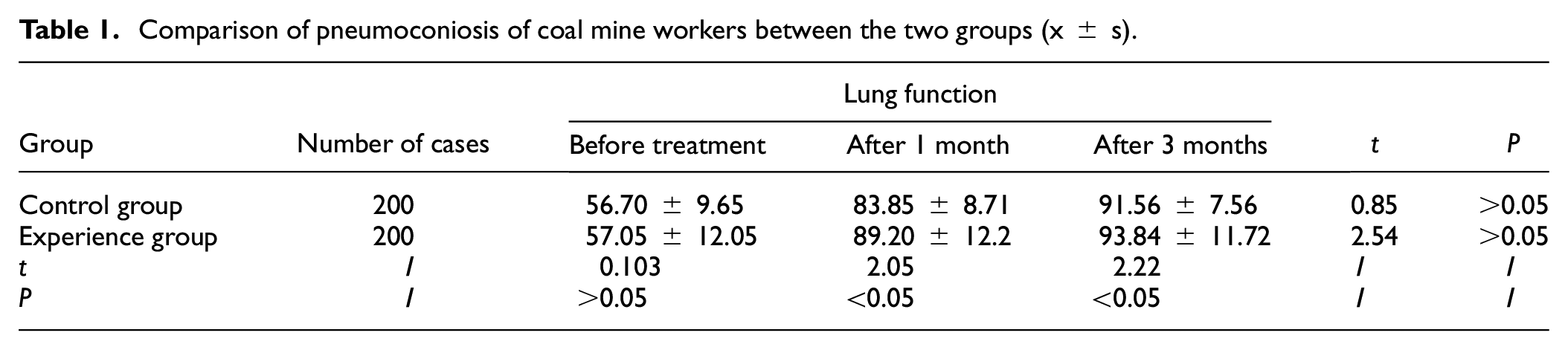
Results:Table 1 shows the clinical efficacy of Chinese medicine combined with Hanfangkametin in the treatment of coal mine workers' pneumoconiosis. As can be seen from Table 1, the lung function of coal miners was significantly improved (P<0.05), indicating that the experiments had statistical significance.
Comparison of pneumoconiosis of coal mine workers between the two groups (x ± s).
Group
Number of cases
Lung function
t
P
Before treatment
After 1 month
After 3 months
Control group
200
56.70 ± 9.65
83.85 ± 8.71
91.56 ± 7.56
0.85
>0.05
Experience group
200
57.05 ± 12.05
89.20 ± 12.2
93.84 ± 11.72
2.54
>0.05
t
/
0.103
2.05
2.22
/
/
P
/
>0.05
<0.05
<0.05
/
/
Conclusion: The treatment of pneumoconiosis with Chinese medicine combined with Hanfandrine has significant contribution and significance in clinical efficacy and symptom improvement. The combination of traditional Chinese and western medicine can provide more effective and safe treatment for coal miners, a high-risk occupational group.
3 A Study of the Effectiveness of Clinical Interventions of Medicinal Plant Landscapes on Cognitive Functioning in Patients with Alzheimer’s Disease
Bixiang Yang
Beijing Institute of Technology, Zhuhai 519088, China
Objective: The study was conducted to investigate how medicinal plant landscapes can improve treatment and cognitive function in patients. The study analyzed the changes in cognitive function of Alzheimer’s disease patients under the influence of different landscapes in a controlled experiment, and analyzed the results of the experiment in order to achieve the clinical intervention effect of medicinal plant landscapes on the cognitive function of Alzheimer’s disease patients.
Methods: Fifty patients with mild to moderate Alzheimer’s disease were recruited for this study and randomly divided into experimental and control groups, with 25 patients in each of the control and experimental groups. Patients in the experimental group were exposed to a landscape rich in medicinal plants in their daily lives, while the control group lived in an average landscape. The patients in both groups were subjected to standardized cognitive function tests such as Montreal Cognitive Assessment (MoCA) and Mini-Mental State Examination (MMSE) before and after the intervention and were assessed for mood and quality of life, respectively.
Results: The study intervention lasted for 12 weeks and the final score data was analyzed using SPSS statistical software. The mean cognitive assessment scores of the two groups of patients are shown in Table 1. As can be seen in Table 1, the patients in the experimental group showed a significant improvement in the use of MoCA and MMSE scores, where the difference between the two groups in the experimental and control groups before treatment was 0.7 points in the mean of the MMSE scores and 0.4 points in the mean of the MoCA scores. However, after the treatment there was a difference of 5.4 and 8.5 points in the mean values of the two groups, respectively. It can be seen that exposure to medicinal plant landscapes helps to enhance cognitive functioning in patients with Alzheimer’s disease.
Comparison of mean cognitive assessment scores of different patients before and after treatment.
/
Pre-treatment
Post-treatment
Cognitive rating
Experimental group
Control group
Experimental group
Control group
MMSE
16.8
17.5
17.2
22.6
MoCA
16.9
17.3
17.3
25.8
Conclusion: The medicinal plant landscape intervention has a positive impact on the cognitive function of Alzheimer’s patients, while the medicinal plant landscape also has a significant improvement effect on the mood and quality of life of Alzheimer’s patients. The study will further investigate the mechanisms and long-term effects of the intervention, and provide new ideas for the comprehensive treatment of Alzheimer’s disease.
4 Effect of Sports Dance Exercise Combined with Aripiprazole Medication Treatment on Clinical Symptoms of Children with Autism
Qingshan Wu*, Xuguo Liu, Jian Guan, Hui Yan
Binzhou Polytechnic, Binzhou 256603, China
Objective: Autism spectrum disorder is a common neurodevelopmental disorder in pediatrics, and has a very high comorbidity rate with other diseases. Current research suggests that aripiprazole can improve inattention and hyperactivity in autistic patients. However, it is often difficult to fully solve the problems of social disturbance, emotional expression and stereotyped behavior of autistic patients with simple drug treatment. In view of this, the study aimed to explore the combined effect of combining dancesport exercise with aripiprazole medication on clinical symptoms in children with autism.
Methods: Sixty children diagnosed with autism spectrum disorder were randomly assigned to two groups: a control group (which received aripiprazole alone) or a combination group (which added dancesport exercise to the medication). The main content of physical exercise includes balance beam, horse and mat exercise training programs to stimulate children's vestibular organs. Dance training includes rhythm exercises, movement coordination and emotional expression. It aims to promote the development of sensory integration, attention and social interaction in children with autism through the guidance of music and body movements. Dancesport exercises are performed three times a week, each lasting one hour. Children in both groups received 12-week treatment intervention, and Autism Behavior Checklist (ABC) and Childhood Autism Rating Scale (CARS) and Attention Deficit/Hyperactivity Rating Scale (ADHD-RS) were used to evaluate the clinical symptoms of the patients. A higher score on all three scales indicates more severe symptoms.
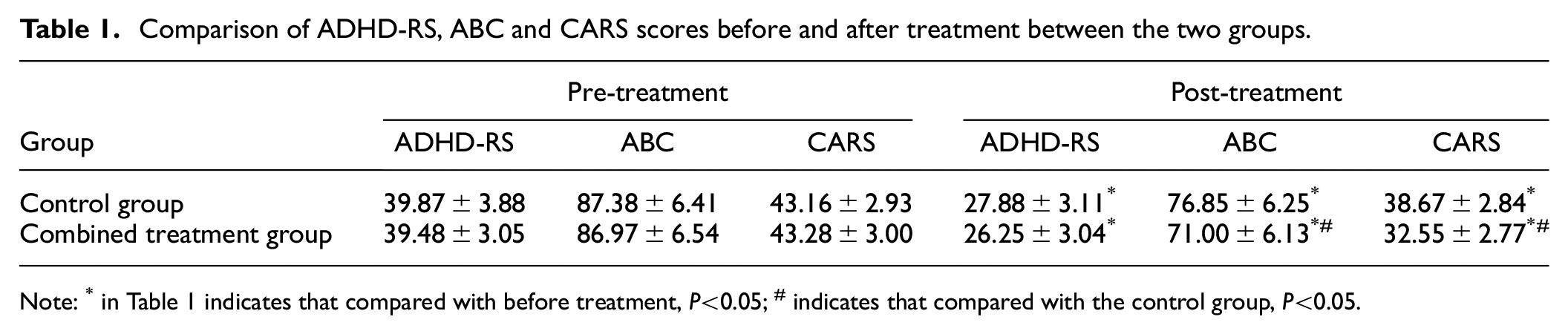
Results: As shown in Table 1, the scores of the three scales in both groups decreased significantly after treatment (P<0.05). The ABC scores and CARS scores of the combined treatment group were significantly lower than those of the control group (P<0.05).
Comparison of ADHD-RS, ABC and CARS scores before and after treatment between the two groups.
Note: * in Table 1 indicates that compared with before treatment, P<0.05; # indicates that compared with the control group, P<0.05.
Conclusion: Research has confirmed that sports dance exercise can effectively improve the clinical symptoms of autistic children, especially in social disorders, emotional expression and stereotypical behavior. Dancesport exercise combined with aripiprazole medication can more comprehensively alleviate the problems of hyperactivity, inattention, social disturbance and difficulty in emotional expression in autistic children. This treatment method provides more ideas for the treatment of autistic patients.
Funding: No. 23YJC880102; No. 2022057.
5 The Application of Big Data in Medical Management: Taking Aspirin Medication Data as an Example
Lin Zhu*, Xu Zhang
Suqian Zeda Vocational and Technical College, Suqian223800, China
Objective: The study aims to explore the application of big data technology in healthcare management, in particular by analyzing aspirin medication data to optimize drug use, improve patient outcomes, and reduce healthcare costs. With the help of data mining and analysis, we hope to provide more accurate scientific basis for medical decision-making.
Methods: Detailed data on aspirin use in a large hospital within one year were collected, including patients’ basic information (such as age, gender, etc.), dosage, frequency, duration of medication, and adverse reaction records. After that, Python was used for data cleaning and preprocessing, SQL was used for data storage and query, and finally Excel was used for data visualization analysis, and a logistic regression model was built to analyze the key factors affecting the effect of aspirin.
Results: The key factors of aspirin efficacy were analyzed by logistic regression model, as shown in Table 1. As can be seen from Table 1, the therapeutic effect of aspirin is affected by several factors. Among them, the coefficient of age is positive (0.02), and the P-value is 0.041, which indicates that the therapeutic effect of aspirin may be improved with the increase of age. In addition, the dose coefficient was positive and highly significant (0.001, P =0.001), indicating that the therapeutic effect of aspirin increased with the increase of dose. Finally, the coefficient of medication frequency was positive (0.05) and the P-value was significant (0.010), indicating that increasing medication frequency was helpful to improve the therapeutic effect of aspirin.
Analysis of factors influencing the effect of aspirin.
Factor
Coefficient
Standard error
P
95% confidence interval
Age
0.02
0.01
0.041
(0.00, 0.04)
Gender (Male)
-0.15
0.05
0.003
(-0.25, -0.05)
Dosage (mg)
0.00
0.00
0.001
(0.0006, 0.002)
Dosage frequency (times/day)
0.05
0.02
0.010
(0.01, 0.09)
Conclusion: Through big data analysis, this study revealed the complex mechanism of the effect of aspirin administration affected by multiple factors, and provided valuable insights for medical managers of precision medicine. Looking forward to the future, it is necessary to further broaden the data source and integrate more dimensions of medical information in order to comprehensively improve the level of intelligence and refinement of medical management. Despite the preliminary results of this study, more clinical evidence is needed to validate the effectiveness of aspirin medication strategies, and rigorous multi-center, large sample, long-term follow-up studies are needed to further explore its potential therapeutic mechanisms.
Funding: No. 2023SJYB2364.
6 Analysis of the Therapeutic Effect of Sports Training Combined with Sodium Norepinephrine on Motor Function in Patients with Muscle Atrophy
Zhen Wang
Yellow River Conservancy Technical Institute, Kaifeng475000, China
Objective: The use of sodium methoxam can directly deliver the drug to the cerebrospinal fluid surrounding the spinal cord, thereby improving motor function and altering the disease progression of Spinal Muscular Atrophy (SMA). However, the effectiveness of drug therapy varies among individuals, and long-term use may be accompanied by certain side effects. Sports training can enhance drug efficacy through aerobic exercise and strength training, further enhancing muscle function and improving patients' exercise ability and quality of life.
Methods: This study recruited 90 patients diagnosed with SMA and randomly divided them into three groups (Group A, Group B, and Group C), with 30 patients in each group. Group A received treatment with sodium methoxam combined with physical training; Group B only received treatment with sodium methoxam; Group C only receives sports training. A. Group C patients undergo 5 physical training sessions per week (aerobic exercise and strength training), each lasting 60 minutes. All participants were evaluated at baseline, after intervention, and during follow-up. The evaluation indicators included the Motor Function Measure (MFM) and the 6-Minute Walk Test (6MWT) to quantify the patient's motor ability and functional improvement.
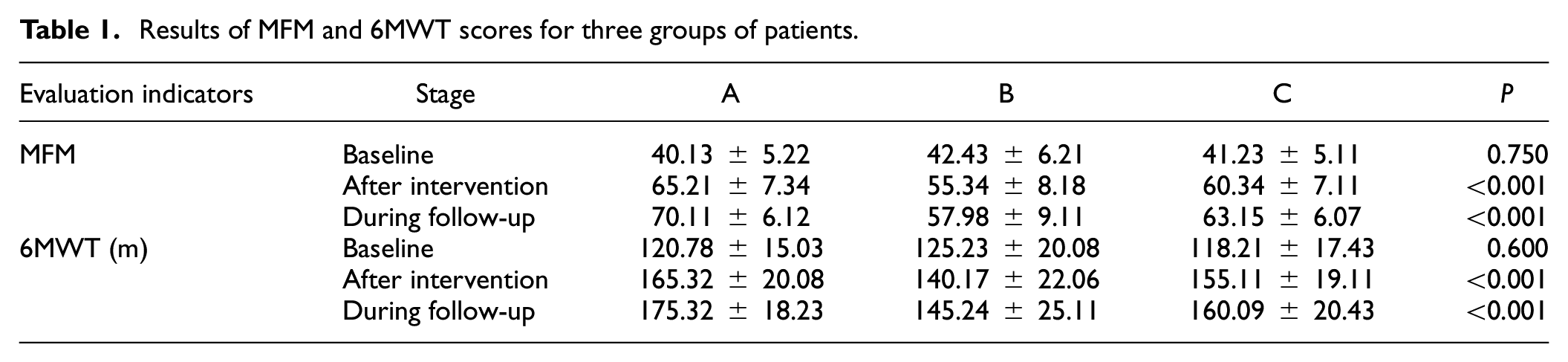
Results: The experimental results are shown in Table 1. In Table 1, the patients in Group A showed significant improvement in both MFM and 6MWT evaluation indicators, especially during the follow-up period. Compared to Group A, Group B and Group C also showed some improvement, but to a lesser extent. Therefore, the comprehensive treatment plan of combined sports training was significantly better than single drug treatment or sports training, proving its effectiveness in improving motor function and enhancing the motor function of SMA patients.
Results of MFM and 6MWT scores for three groups of patients.
Evaluation indicators
Stage
A
B
C
P
MFM
Baseline
40.13 ± 5.22
42.43 ± 6.21
41.23 ± 5.11
0.750
After intervention
65.21 ± 7.34
55.34 ± 8.18
60.34 ± 7.11
<0.001
During follow-up
70.11 ± 6.12
57.98 ± 9.11
63.15 ± 6.07
<0.001
6MWT (m)
Baseline
120.78 ± 15.03
125.23 ± 20.08
118.21 ± 17.43
0.600
After intervention
165.32 ± 20.08
140.17 ± 22.06
155.11 ± 19.11
<0.001
During follow-up
175.32 ± 18.23
145.24 ± 25.11
160.09 ± 20.43
<0.001
Conclusion: This study indicates that the treatment regimen of combining physical training with sodium norepinephrine significantly improves the motor function of SMA patients. Sports training enhances muscle function and improves patients' exercise ability and overall health status by strengthening drug efficacy. The combination therapy has shown significant advantages in improving motor function and provides important empirical evidence for optimizing the rehabilitation outcomes of SMA patients.
7 Analysis of the Effect of Compound Xinnuomin and Other Antibiotics on the Treatment of Pneumoconiosis Caused by Recycled Concrete
Jiaorui Wang, Guoping Xu*
Guilin University of Technology at Nanning, Nanning 530001, China
Objective: In recent years, with the significant increase in the number of construction projects in China, the occupational health issues of workers have also received increasing attention. The number of lung diseases caused by dust among workers exposed to the construction environment for a long time is gradually increasing. In order to evaluate the efficacy of antibiotics in the treatment of pneumoconiosis caused by recycled concrete, the study aims to understand the distribution of pathogenic bacteria in pneumoconiosis patients and their resistance to commonly used antibiotics, providing scientific basis and reference for treatment.
Methods: The study selected 651 patients with pneumoconiosis treated in a hospital between February 2021 and February 2023, of whom 324 had pulmonary infections. Conduct experimental identification of pathogenic bacteria in patients through a fully automated microbial identification system, and perform bacterial identification and susceptibility testing on antibiotics such as compound sulfamethoxazole, levofloxacin, and erythromycin. Finally, WHONET 5.6 software was used to statistically analyze the distribution of pathogens and the results of drug sensitivity tests.
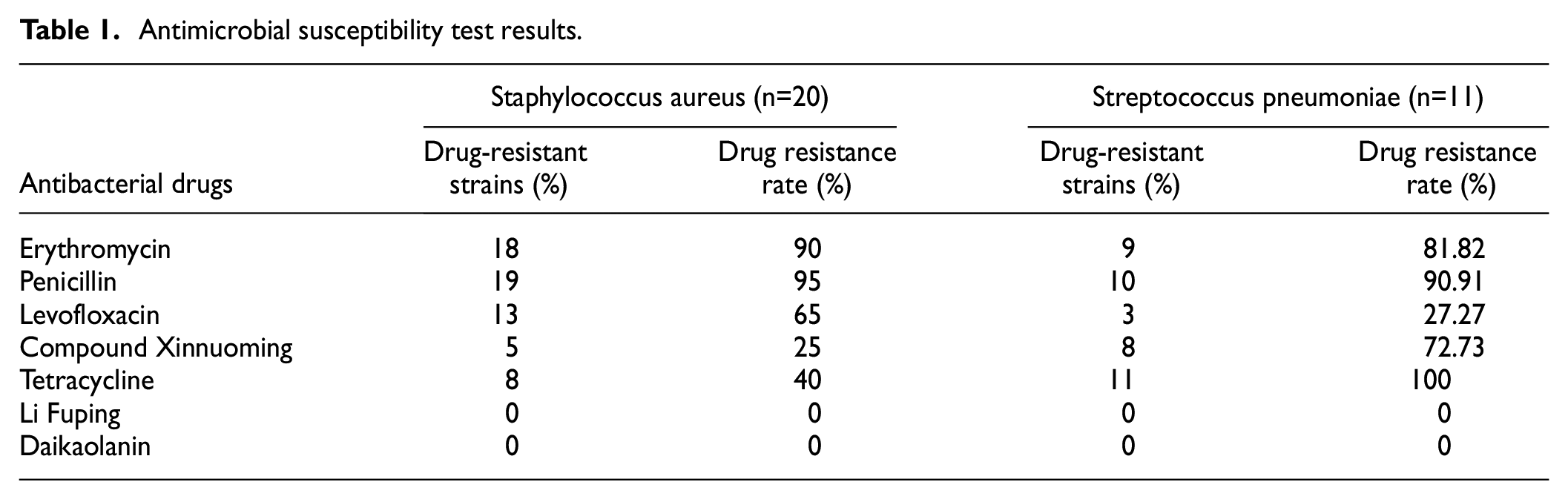
Results: The study selected 651 patients with pneumoconiosis treated in a hospital between February 2021 and February 2023, of whom 324 had pulmonary infections. Conduct experimental identification of pathogenic bacteria in patients through a fully automated microbial identification system, and perform bacterial identification and susceptibility testing on antibiotics such as compound sulfamethoxazole, levofloxacin, and erythromycin. Finally, WHONET 5.6 software was used to statistically analyze the distribution of pathogens and the results of drug sensitivity tests.
Antimicrobial susceptibility test results.
Antibacterial drugs
Staphylococcus aureus (n=20)
Streptococcus pneumoniae (n=11)
Drug-resistant strains (%)
Drug resistance rate (%)
Drug-resistant strains (%)
Drug resistance rate (%)
Erythromycin
18
90
9
81.82
Penicillin
19
95
10
90.91
Levofloxacin
13
65
3
27.27
Compound Xinnuoming
5
25
8
72.73
Tetracycline
8
40
11
100
Li Fuping
0
0
0
0
Daikaolanin
0
0
0
0
Conclusion: Patients with pneumoconiosis combined with lower respiratory tract infections are mainly susceptible to pathogenic bacteria such as Staphylococcus aureus and Streptococcus pneumoniae, and are generally sensitive to antibiotics such as erythromycin, penicillin, and tetracycline; It is more sensitive to compound sulfamethoxazole and levofloxacin, and highly sensitive to rifampicin and teicoplanin. During clinical treatment, sensitive drugs should be selected according to the specific situation of the patient for treatment. In summary, the analysis of the efficacy of antibiotics such as compound Xinnuoming in treating pneumoconiosis caused by recycled concrete provides an important basis for the rational use of antibiotics in treatment.
Funding: No. 2023KY0254.
8 Study on the Application Effect of Drug Coating in Skin Care Clothing
Zexu Mu
Qiqihar University, Qiqihar 161006, China
Objective: With the change of consumption concept, all kinds of health care and skin care clothing have developed rapidly and become popular products in the textile industry. Foreign countries started early in the development of health care clothing, and domestic in recent years has also achieved certain results, but the use of traditional medical resources to develop new functional textiles are still relatively few. Stone Needle, as a traditional therapy, has the effect of dredging meridians and regulating qi and blood. Therefore, drug coating clothing Needle Stone was designed based on medical theory, and its application effect on thermal comfort of human skin was discussed.
Methods: In this study, 82% viscose and 18% elastic polyester Polybutylene Terephthalate Blended Yarn (PBT) were selected to make fabric with different opening densities and drug coating treatment of stone needle to test the application effect of clothing. The experimental subjects were 30 experimenters, randomly divided into experimental group and control group, 15 in each group, and their baseline data were all P>0.0.5, indicating that the experiments were comparable. The experiment lasted for 5 days, the control group wore ordinary clothing, and the experimental group wore stone needle coating clothing. The participants' overall feeling scores ranged from 0 to 100, with higher scores indicating more intense feelings. The comfort was evaluated by questionnaire survey, and the data were analyzed by T-test. P<0.05 was considered statistically significant.
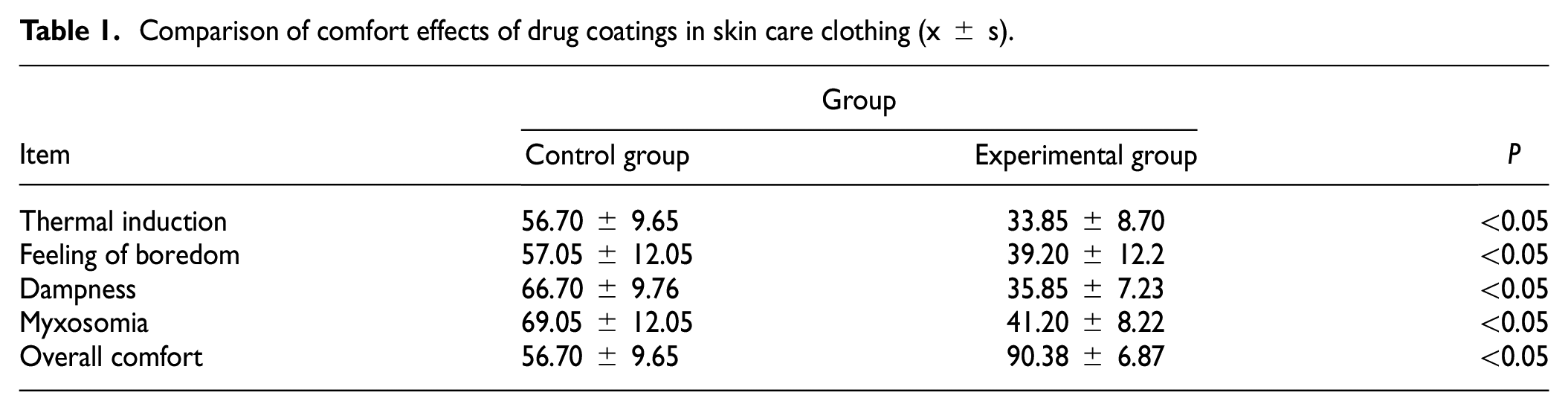
Results:Table 1 shows the use experience of coated clothing for the two groups of experimental personnel. As can be seen from Table 1, the experimental group showed better comfort scores in all indexes, and thermal sensation (33.85 ± 8.70) and overall comfort (90.38 ± 6.87) were both better than the control group, with P values less than 0.05, indicating that these differences were statistically significant.
Comparison of comfort effects of drug coatings in skin care clothing (x ± s).
Item
Group
P
Control group
Experimental group
Thermal induction
56.70 ± 9.65
33.85 ± 8.70
<0.05
Feeling of boredom
57.05 ± 12.05
39.20 ± 12.2
<0.05
Dampness
66.70 ± 9.76
35.85 ± 7.23
<0.05
Myxosomia
69.05 ± 12.05
41.20 ± 8.22
<0.05
Overall comfort
56.70 ± 9.65
90.38 ± 6.87
<0.05
Conclusion: The study showed that the experimental group wearing the clothing coated with stone needle was significantly better than the control group in heat, boredom, humidity, stickiness and overall comfort. The comfort improvement of stone needle coated clothing is helpful to improve the quality of life and promote the development of a healthy lifestyle.
Funding: No. 145309124.
9 Study on the Polymorphism Analysis of Silent Information Regulatory Factor 1 Gene in Hypertension Induced Cerebral Hemorrhage
Xiaoli Liu, Chenyang Li
Hancheng People's Hospital, Hancheng 715499, China
Objective: Cerebral hemorrhage is becoming more common these days, with a clear tendency toward younger victims. The underlying cause is the rising prevalence of risk factors, including smoking, drinking, and high blood pressure—of which high blood pressure is the most significant and prevalent. Among them, Silent Information Regulation Factor 1 (SIRF1) can regulate a variety of targets within mammalian cells, thus it has certain potential in the treatment of hypertensive intracerebral hemorrhage.
Methods: 240 patients with hypertensive intracerebral hemorrhage who received treatment at our hospital were selected as the research subjects. A health check was conducted in the early morning of the day after admission, and 5ml of peripheral venous blood, low-density lipoprotein cholesterol (indicator A), high-density lipoprotein cholesterol (indicator B), triglycerides (indicator C), and serum total cholesterol (indicator D) were collected. In addition, detection was performed at the rs2273773 and rs7069102 sites of SIRF1, and genomic DNA was extracted using a whole blood deoxyribonucleic acid (DNA) purification kit. Gene polymorphism analysis was completed using polymerase chain reaction restriction fragment length polymorphism detection method.
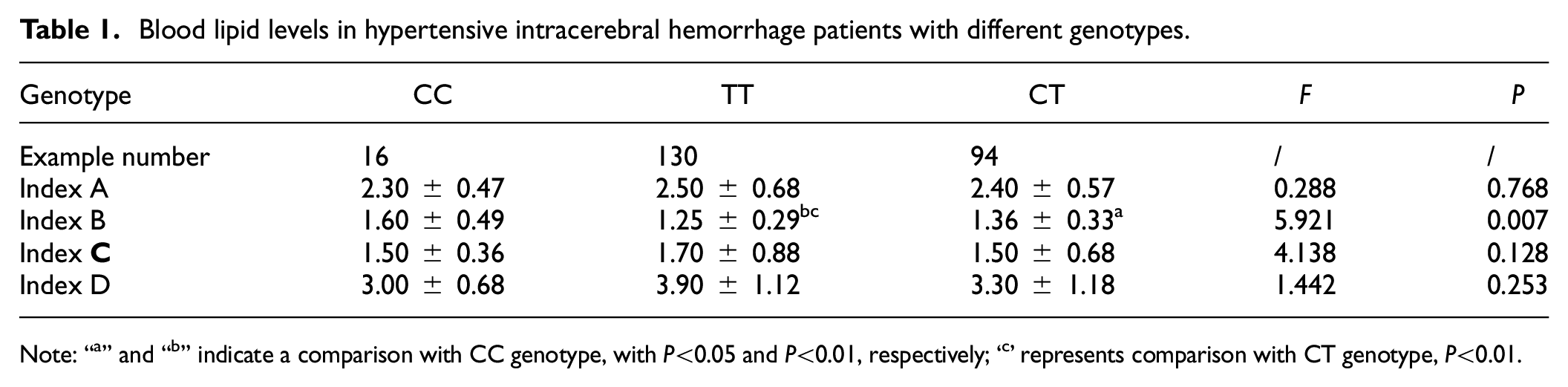
Results: To investigate the genetic mechanism of SIRF1 in patients with hypertensive intracerebral hemorrhage, three genotypes at the rs7069102 locus were compared, and the results are shown in Table 1. Table 1 shows that only the three genotypes of subjects with indicator 2 showed a significant decreasing trend in their levels, and the comparison difference was statistically significant (P>0.05). There was no significant difference in the comparison of the levels of other indicators (P>0.05).
Blood lipid levels in hypertensive intracerebral hemorrhage patients with different genotypes.
Note: “a” and “b” indicate a comparison with CC genotype, with P<0.05 and P<0.01, respectively; `c' represents comparison with CT genotype, P<0.01.
Conclusion: This study found that SIRF1 can induce the expression of ATP binding nuclear transporter 1 by regulating the SIRF1 liver X receptor alpha pathway, ultimately achieving the formation of indicator B. This indicates that SIRF1 can provide targeted rehabilitation treatment for patients with hypertensive intracerebral hemorrhage through specific sites.
10 Effect of Omega-3 Fatty Acid Supplementation on Muscle Soreness and Anxiety in Tennis
Chunlin Jin, Si Li*
Ningbo Tech University, Ningbo 315000, China
Objective: As an effective nutritional intervention, omega-3 fatty acid supplementation has gradually attracted attention in recent years in improving the recovery process of athletes. The study aims to explore the effects of omega-3 fatty acids on muscle soreness and anxiety levels in tennis players after high-intensity training, and try to reveal its potential mechanism in promoting sports recovery and psychological adjustment.
Methods: A total of 60 amateur tennis players aged between 18 and 30 years were recruited and randomly divided into an experimental group and a control group, with 30 people in each group. The experimental group supplemented 2 grams of omega-3 fatty acids daily during a 4-week training period, which was mainly derived from fish oil, while the control group received a placebo of the same appearance. All participants underwent physical fitness assessment before the study to ensure that the two groups were balanced in basic physical fitness and exercise habits. After the training, the participants assessed the degree of muscle soreness after high-intensity training using the Visual Analogue Scale (VAS), and the anxiety level was assessed using the Self-Rating Anxiety Scale (SAS). Data were analyzed using independent sample t-tests, with a significance level set at P<0.05.
Results: After 4 weeks of intervention, the average muscle soreness score of the experimental group was 3.2 ± 1.1 points, which was significantly lower than the 5.6 ± 1.2 points of the control group (P<0.01). This suggests that omega-3 fatty acid supplementation can effectively reduce post-exercise muscle soreness. In addition, in terms of anxiety scores, the SAS score of the experimental group was 42.3 ± 6.7 points, while that of the control group was 48.5 ± 7.1 points (P<0.05), indicating that the anxiety level of the experimental group was significantly lower than that of the control group. At the same time, the study found that participants who supplemented with omega-3 fatty acids also had significantly shorter recovery times after training, indicating their potential effect in improving muscle recovery.
Conclusion: Omega-3 fatty acids can not only improve the quality of athletes' training by reducing muscle soreness, but also provide psychological support to athletes and reduce anxiety. Therefore, athletes are advised to increase their diets rich in omega-3 fatty acids or consider using supplements to enhance their athletic performance and psychological adaptability. Future studies can further explore the specific mechanisms of action of omega-3 fatty acids and the effects of different doses on athlete performance.
11 The Mutual Influence Between Endogenous Microorganisms of Traditional Chinese Medicine Rhodiola Rosea and Host Plants
Qian Li*, Fang Li, Yan Chen
Chongqing University of Education, Chongqing 400067,China
Objective: The research aims to explore the mutual relationship between the endogenous microorganisms of traditional Chinese medicine Rhodiola rosea and the host plant. By isolating, cultivating, and identifying endogenous microorganisms in Rhodiola rosea, analyzing their effects on the growth and development of host plants, as well as the response of host plants to endogenous microorganisms, a scientific basis is provided for improving the yield and quality of Rhodiola rosea.
Methods: Isolate endophytic microorganisms from the roots, stems, leaves, and other parts of Rhodiola rosea, and cultivate them using different media to obtain pure bacterial colonies. Then, the endogenous microorganisms were identified through morphological observation, physiological and biochemical experiments, and molecular biology methods. Next, through pot experiments and greenhouse cultivation experiments, the effects of endogenous microorganisms on the growth and development of host plants, including plant height, ground diameter, leaf area, and other indicators, will be studied. Finally, the diversity of endophytic microorganisms in Rhodiola rosea was analyzed using high-throughput sequencing technology, and the functional genes of endophytic microorganisms were analyzed using bioinformatics methods.
Results: The endophytic microorganisms of Rhodiola rosea have a high diversity, mainly including bacteria, fungi, and actinomycetes. The number of endogenous microbial species and their impact on the growth of Rhodiola rosea are shown in Table 1. The total number of bacterial colonies is 178, which has a significant impact on the growth of Rhodiola rosea. It can increase the plant height by 14.3%, ground diameter by 19.1%, and leaf area by 9.4%; The total number of fungal colonies is 45, which also has a certain promoting effect on the growth of Rhodiola rosea. It can increase plant height by 5.7%, ground diameter by 7.9%, and leaf area by 6.3%; The total number of actinomycetes is 68, but their promotion effect on the growth of Rhodiola rosea is relatively weak, even reducing plant height by 1.3%, increasing ground diameter by 6.4%, and increasing leaf area by 5.2%. Overall, bacteria have the most prominent promoting effect on the growth of Rhodiola rosea, followed by fungi, and the impact of actinomycetes is relatively complex. The results indicate that endogenous microorganisms have a significant promoting effect on the growth and development of host plants, and some strains can significantly increase the yield and quality of Rhodiola rosea. Through analysis of functional genes, it was found that endogenous microorganisms may be involved in multiple physiological processes such as plant growth regulation, nutrient absorption, and disease prevention and control.
The number of endogenous microbial species and their impact on the growth of Rhodiola rosea.
Microorganism
Total bacterial count
Plant height (%)
Ground diameter (%)
Leaf area (%)
Bacteria
178
14.3
19.1
9.4
Fungus
45
5.7
7.9
6.3
Actinomycetes
68
-1.3
6.4
5.2
Conclusion: There is a close mutual influence between the endophytic microorganisms of Rhodiola rosea and the host plant. Endophytic microorganisms can promote the growth and development of Rhodiola rosea, and have a positive effect on the synthesis of its medicinal components. And Rhodiola can also affect the structure and composition of endogenous microbial communities.
12 The Effect of Underground Rhizome Depth on the Diversity of Rhizosphere Microorganisms in Baishouwu
Naiwen Zhang1, Yu Su2*
1Jiangsu Open University, Nanjing 210036, China;2Jiangsu Environmental Engineering TechnologyCo., Ltd., Nanjing 210000, China
Objective: Exploring the influence of underground rhizome depth on the diversity of rhizosphere microorganisms in Baishouwu, and gaining a deeper understanding of the changes in microbial communities in the growth environment of Baishouwu.
Methods: Select white head black plants with root and stem depths of 10cm, 15cm, and 20cm as the research objects. Using soil microbial isolation and cultivation technology, the microorganisms in the rhizosphere soil of Baishouwu were isolated. Using high-throughput sequencing technology to analyze the community composition of rhizosphere microorganisms. Measure the physical and chemical properties of soil at different root and stem depths, including pH value, organic matter content, nitrogen, phosphorus, and potassium content.
Results: The effect of underground rhizome depth on the rhizosphere microorganisms of Baishouwu is shown in Table 1. As the depth of the rhizome increases, the diversity of rhizosphere microorganisms in Baishouwu shows a trend of first increasing and then decreasing. At a root and stem depth of 15cm meters, microbial diversity reaches its maximum value, with a Shannon diversity index of 1.4 at this depth, significantly higher than at other depths. There are significant differences in the community composition of rhizosphere microorganisms in Baishouwu at different root and stem depths. The physical and chemical properties of soil also change with the depth of roots and rhizomes. At deeper root and stem depths, the soil pH is relatively low, and the organic matter content and nitrogen, phosphorus, and potassium content are relatively high. When the root and stem depth is 20cm, the soil pH value is 6.9, the organic matter content is 2.2%, and the total nitrogen content is 0.15%
Results of the influence of underground root depth on the Baishouwu
Project
10 (cm)
15 (cm)
20 (cm)
Shannon diversity index
1.4
2.7
1.6
Soil pH value
7.3
7.0
6.9
Organic matter content (%)
1.6
1.9
2.2
Total nitrogen content (%)
0.07
0.11
0.15
Conclusion: Within the range of 10-20 cm, as the depth of the rhizome increases, microbial diversity first increases and then decreases. The physical and chemical properties of soil at different root and stem depths can also change, thereby affecting the composition of microbial communities. Therefore, in the cultivation and management of Baishouwu, it is necessary to reasonably control the depth of roots and rhizomes, regulate soil physicochemical properties, promote the diversity of rhizosphere microorganisms, and improve the growth quality and yield of Baishouwu.
13 The Correlation Between Risk Decision-Making and Anxiety in the Economic Field
Tao Lu
Shaanxi Technical College of Finance and Economics, Xianyang 712000, China
Objective: Anxiety is a common emotion in daily life, while risk decision-making is closely related to people's daily lives. In order to explore the correlation between risk decision-making and anxiety in the field of economic investment, this study used Iowa game tasks to simulate real-life decision-making scenarios for analysis, in order to provide reference for controlling emotional factors in economic decision-making management in the economic field.
Methods: The study conducted behavioral experiments using Iowa game tasks to explore the correlation between risky behavior and anxiety. A total of 62 college students were recruited to participate in the experiment, including 31 males and 31 females. Prior to the experiment, an anxiety questionnaire survey was conducted among the participants, followed by a simulation of risk decision-making using an Iowa game task. This game task analyzes the decision-making behavior of participants in the face of long-term and short-term conflicts of interest through card profit games. Finally, Pearson product difference correlation analysis was used to analyze the correlation between the anxiety scores of the experimental group and their economic risk decision-making behavior.
Results: The correlation analysis between anxiety level and economic risk decision-making behavior is shown in Table 1. As shown in Table 1, the average risk aversion scores of the high anxiety group and the low anxiety group among male participants were 106.59 ± 26.05 points and 79.28 ± 33.87 points, respectively, t=2.64, R¹=0.45; The average risk aversion scores of the high anxiety group and the low anxiety group among female participants were 106.65 ± 27.13 points and 80.04 ± 29.44 points, respectively, t=2.37, R¹=0.41. Overall, it can be seen that participants with higher anxiety scores also have higher risk aversion scores in the Iowa game task.
Correlation between anxiety levels and economic risk decision-making behavior.
Note: * indicates P<0.05, and the difference is statistically significant.
Conclusion: The level of anxiety can affect an individual's risk decision-making behavior. Participants with higher levels of anxiety tend to make more conservative investment decisions, while those with lower levels of anxiety tend to make more aggressive investment decisions. In summary, exploring the correlation between risk decision-making and anxiety in the economic field can help decision-makers better control emotional factors, make wiser decisions, and provide reference for decision-making management in the economic field.
14 The Immune-Related Molecular Mechanism of Ischemic Stroke Was Elucidated by Bioinformatics Method
1Youjiang Medical University for Nationalities, Baise533000, China;2Affiliated Hospital of Youjiang Medical Universityfor Nationalities, Baise 533000, China;3Key Laboratory of Right River Basin CharacteristicEthnic Medicine Research in Guangxi, Baise 533000,China;4Guangxi Database Construction and ApplicationEngineering Research Center for IntracorporalPharmacochemistry of TCM, Baise 533000, China;5Binjiang Primary School of Youjiang, Baise 533000,China;*The corresponding author: Hongshen Zhang
Objective: Ischemic stroke is a common cerebrovascular disease, its pathogenesis is complex, involving many molecules and signaling pathways. In recent years, the role of immune response in ischemic stroke has been paid more and more attention. The aim of the study was to explore changes in immune-related molecules in patients with ischemic stroke using bioinformatics methods in order to reveal their underlying molecular mechanisms.
Methods: Blood samples and corresponding clinical data were collected from 50 patients with ischemic stroke and 30 healthy controls. Flow cytometry was used to detect the immune cell subsets in the samples, including T cells, B cells, monocytes and natural killer cells. At the same time, RNA sequencing technology was used to analyze the gene expression changes in the samples. Bioinformatics analyses, including gene ontology enrichment analysis, pathway analysis, and protein-protein interaction network construction, are used to identify key immune-related molecules and signaling pathways.
Results: Flow cytometry results showed that the proportion of monocytes in ischemic stroke patients increased from 4.5% to 7.2% in healthy controls, the proportion of natural killer cells increased from 16.3% to 22.1%, while the proportion of T cells decreased from 58.7% to 49.3%, and the proportion of B cells decreased from 8.9% to 6.1%. Ischemic stroke may be related to the abnormal activation and regulation of immune cells. Analysis of RNA-seq data revealed significant changes in the expression of genes associated with immune responses, including inflammatory factors, immune cell surface molecules, and immune signaling pathways. GO enrichment analysis showed that biological processes related to immune response, inflammatory response, and apoptosis were significantly enriched in patients with ischemic stroke. KEGG pathway analysis revealed abnormal activation of JAK-STAT, NF-κB, and T cell receptor signaling pathways in ischemic stroke. PPI network analysis further identified several key immunomodulatory molecules, such as STAT1, NFKB1, and CD86. These molecules are central to the PPI network, interacting with multiple immune-related molecules.
Conclusion: The study found significant changes in the proportion of immune cell subsets in patients with ischemic stroke, as well as significant changes in gene expression related to immune response. These changes involve multiple immune signaling pathways, including JAK-STAT, NF-κB, and T cell receptor signaling pathways. Therefore, this study reveals key changes in immune-related molecular mechanisms of ischemic stroke through bioinformatics methods, providing a new perspective for understanding the immune-related molecular mechanisms of ischemic stroke, and providing potential targets for developing new therapeutic strategies.
Funding: No. 20XJC850001.
15 Research on Cost Management of Medical Collection Based on Value Chain
Ruipeng Gu
Suzhou Vocational University, Suzhou 215000, China
Objective: With the rapid development of the pharmaceutical industry, the importance of cost management in drug collection is becoming increasingly prominent. The cost of drug collection directly affects the operational efficiency and profitability of enterprises, therefore, implementing effective cost management strategies has become an urgent need in the industry. This study is based on the value chain theory, aiming to deeply analyze the cost composition of pharmaceutical collection, identify key cost driving factors, and propose optimization management strategies to improve the efficiency and economy of drug collection.
Methods: The study adopts a combination of quantitative and qualitative methods, collects relevant data through literature analysis and empirical investigation, designs a questionnaire for pharmaceutical companies, and investigates their cost structure in the drug collection process, including specific expenditures in procurement, logistics, and storage. After the questionnaire was collected, SPSS software was used for statistical analysis of the data. Descriptive statistics and regression analysis were used to form a value chain model, which helped identify key factors affecting costs and provided a basis for subsequent management optimization.
Results: The experimental results indicate that there are significant differences in the total cost of drug collection among different enterprises. Enterprise A adopts value chain based pharmaceutical collection management, with a cost of 2.8 million yuan, of which procurement costs account for 1.5-million-yuan, logistics costs are 800000 yuan, and storage costs are 500000 yuan. Enterprise B adopts traditional collection methods, with a total cost of 3.5-million-yuan, procurement cost of 2-million-yuan, logistics cost of 900000 yuan, and storage cost of 600000 yuan. Enterprise C adopts traditional collection methods, with a total cost of 2.9-million-yuan, procurement cost of 1.8-million-yuan, logistics cost of 700000 yuan, and storage cost of 400000 yuan. This is due to different practices in procurement strategy, supply chain management, and inventory control. Enterprises with a high proportion of procurement costs generally lack long-term supplier relationships, resulting in price fluctuations and low procurement efficiency.
Conclusion: The value chain-based analysis method provides a new perspective for cost management in pharmaceutical collection. By identifying key cost factors, companies can take corresponding measures to reduce costs and improve competitiveness. Future research can further explore how to apply digital technology to cost management, achieve precise cost control, improve enterprise profits, and promote the sustainable development of the pharmaceutical industry.
16 The Coordination of MedicineSupply Chain and Medical FacilityLayout Planning in Public Health Emergencies
Daitian Liu1*, Yuan Hu1, Yueshu Yu2
1Changchun Urban Planning and Research Center(Changchun Institute of Urban Planning and Design),Changchun 130000, China;2Changchun Fire and Rescue Detachment, Changchun130000, China
Objective: In the event of a public health emergency, medical resources are limited, and the coordination between the pharmaceutical supply chain and the layout planning of medical facilities is crucial for the emergency response of the medical system. The study mainly explores the impact of the coordination degree between the pharmaceutical supply chain and the layout planning of medical facilities on the quality of medical services and emergency response capabilities, providing effective methodological references for the medical system to effectively respond to public health crises.
Methods: Analyze the pharmaceutical supply chain and medical facility layout in a certain region during the COVID-19 pandemic. The study collected the drug supply chain response time, drug inventory turnover rate, and medical facility distribution density of a hospital from January to March 2021. Analyze the average patient waiting time and medical resource utilization rate of the hospital under different combinations of drug supply chain response time, drug inventory turnover rate, and medical facility distribution density. Among them, the response time of the pharmaceutical supply chain is divided into three groups: the first group is less than 12 hours, the second group is 12-24 hours, and the third group is greater than 24 hours. The turnover rate of drug inventory is divided into three categories based on the number of turnover times: greater than 5 times, between 3-5 times, and less than 3 times. The distribution density of medical facilities is divided into greater than 10, 5-10, and less than 5 based on the number of medical facilities per square kilometer.
Results: The results showed that in the combination of "response time < 12 hours, inventory turnover rate > 5 times, distribution density > 10", the average waiting time of patients was only 15 minutes, and the utilization rate of medical resources reached 90.15%, indicating that the medical service quality was the best under this combination. Improving the coordination between the pharmaceutical supply chain and the layout of medical facilities can effectively enhance the quality of medical services and emergency response capabilities.
Conclusion: According to the patient waiting time and medical resource utilization rate obtained from different levels of coordination, it can be concluded that the coordination between the pharmaceutical supply chain and medical facility layout planning helps to build a flexible and efficient medical system, thereby improving the quality of medical services and emergency response capabilities.
17 Application of Pharmaceutical Extracts in the Design of Medical Protective Clothing
Zexu Mu
Qiqihar University, Qiqihar 161006, China
Objective: In the face of the urgent need for efficient, comfortable and safe protective equipment in modern medical environment, the application potential of pharmaceutical extracts in the design of medical protective clothing was explored to improve the comfort and functionality of protective clothing, and enhance its antibacterial and antiviral properties.
Methods: The study extracted active ingredients from the medicinal plant honeysuckle, Isatis root and forsythia, and evaluated the antibacterial and antiviral activities of these extracts through laboratory tests and clinical trials. Then, combining medical extracts with conventional medical protective materials was studied to design medical protective clothing. Finally, the study evaluated the performance of protective clothing through skin irritation tests, breathability tests and wearer comfort surveys.
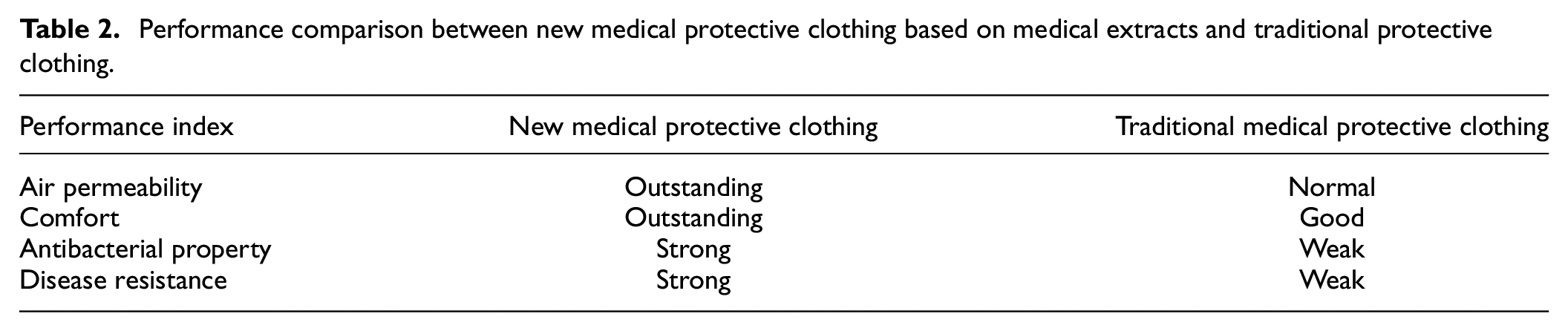
Results: The inhibitory effects of different pharmaceutical extracts on bacteria and viruses were shown in Table 1. According to Table 1, we can show that honeysuckle and forsythia performed better in antibacterial aspects, especially in honeysuckle, and the bacterial inhibition rate reached 95% forsythia had the best antiviral performance, with an inhibition rate of 85%, followed by honeysuckle. Honeysuckle performs well in both antibacterial and antiviral aspects, while forsythia performs best in antiviral aspects. The performance comparison table between the new medical protective clothing based on medical extracts and the traditional protective clothing is shown in Table 2. It can be seen from Table 2 that the new medical protective clothing is superior to the traditional medical protective clothing in all four key performance indicators, among which 90% of the test participants believe that the new medical protective clothing is superior to the traditional medical protective clothing in terms of comfort and functionality.
The inhibitory effects of different pharmaceutical extracts on bacteria and viruses.
Species of pharmaceutical extracts
Bacterial inhibition rate (%)
Viral inhibition rate (%)
Honeysuckle
95
82
Isatidis
85
75
Forsythia
90
85
Performance comparison between new medical protective clothing based on medical extracts and traditional protective clothing.
Performance index
New medical protective clothing
Traditional medical protective clothing
Air permeability
Outstanding
Normal
Comfort
Outstanding
Good
Antibacterial property
Strong
Weak
Disease resistance
Strong
Weak
Conclusion: Honeysuckle and forsythia are the extracts of choice when designing medical protective clothing because they have shown good results in inhibiting bacteria and viruses. Although Isatis root is slightly less effective than honeysuckle and forsythia in terms of antibacterial and antiviral effects, it can still be used as a secondary option, especially when cost-effectiveness is considered. The improved air permeability and comfort of the new protective clothing help to improve the work efficiency and job satisfaction of medical personnel, and reduce fatigue caused by long-term wearing discomfort. Enhanced antimicrobial and antiviral properties provide better protection for healthcare workers and reduce the risk of infection in healthcare Settings. Therefore, the effectiveness and application potential of pharmaceutical extracts in the design of medical protective clothing are known.
Funding: No. 145309124.
18 Chinese Medicine Footbath for the Treatment of Work Fatigue of College and University Purchasing Personnel: An Experimental Study
Fei Luo
Jiangsu Vocational College of Electronics andInformation, Huaian 223003, China
Objective: The foot is an important part of the human body's blood circulation, and traditional Chinese medicine footbath can promote blood circulation in the foot and then improve blood circulation in the whole body. However, the shadow effect of Chinese medicine footbath treatment varies in different populations. Therefore, the study aimed to investigate the therapeutic effect of Chinese medicine footbath on the work fatigue of university purchasing staff, as well as its possible mechanism of action.
Methods: Fifty purchasing staff from different universities were selected as study subjects and randomly divided into experimental group (25) and control group (25). The experimental group received traditional Chinese medicine footbath treatment, while the control group received conventional footbath. In the experimental group, footbaths consisting of a variety of herbs (mugwort leaves, mulberry leaves, angelica and peppermint, etc.) were administered once a day for 4 weeks. In the control group, ordinary warm water was used for footbath. Before and after the treatment, the fatigue level and physical condition of the two groups were assessed by questionnaires, fatigue scale scores, and blood biochemical index tests.
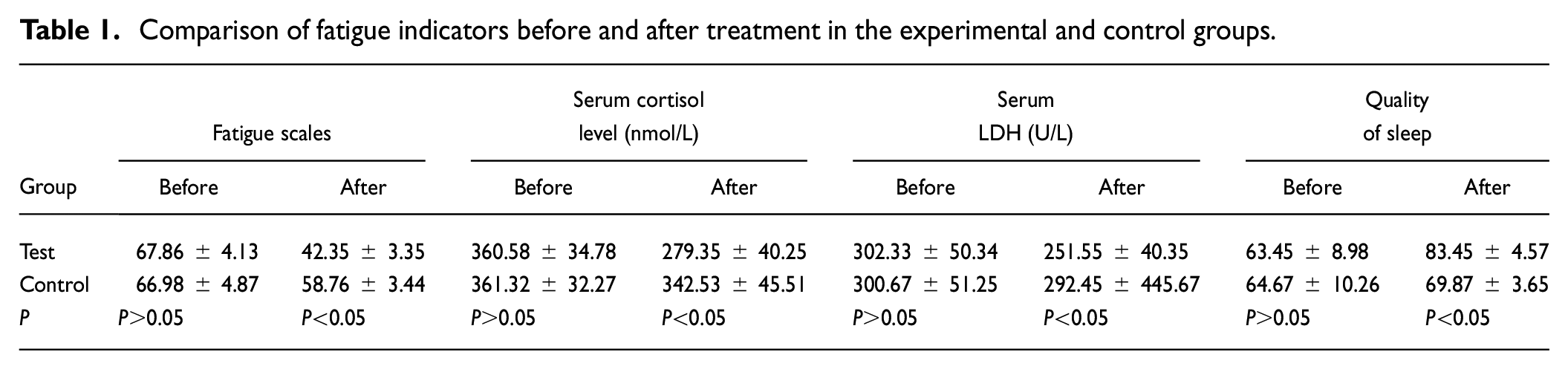
Results: The fatigue scale score of the experimental group decreased significantly after 4 weeks of treatment and was lower than that of the control group (P<0.05). The serum cortisol level in the experimental group was 279.35 ± 40.25 nmol/L after treatment, which was significantly lower than that before treatment (P<0.05). Serum Lactate Dehydrogenase (LDH) activity was elevated after treatment in the experimental group, and the difference between the change and the control group was statistically significant (P<0.05). The specific results are shown in Table 1.
Comparison of fatigue indicators before and after treatment in the experimental and control groups.
Group
Fatigue scales
Serum cortisollevel (nmol/L)
SerumLDH (U/L)
Qualityof sleep
Before
After
Before
After
Before
After
Before
After
Test
67.86 ± 4.13
42.35 ± 3.35
360.58 ± 34.78
279.35 ± 40.25
302.33 ± 50.34
251.55 ± 40.35
63.45 ± 8.98
83.45 ± 4.57
Control
66.98 ± 4.87
58.76 ± 3.44
361.32 ± 32.27
342.53 ± 45.51
300.67 ± 51.25
292.45 ± 445.67
64.67 ± 10.26
69.87 ± 3.65
P
P>0.05
P<0.05
P>0.05
P<0.05
P>0.05
P<0.05
P>0.05
P<0.05
Conclusion: Herbal footbaths are an effective method of relieving work fatigue among college and university procurement staff. It may help reduce physical and psychological tension by regulating the endocrine system and balancing hormone levels. Herbal footbaths may improve blood circulation and increase oxygen levels in the blood, providing more nutrients and energy to all parts of the body while helping to transport metabolic wastes.
19 The Influence of Medication Assisted Aerobics Training on the Physical Fitness and Shape Shaping of Female Students
Liqiong Yan
Shaanxi Institute of Mechatronic Technology,Baoji 721001, China
Objective: Fitness exercises can accelerate metabolism, burn excess calories in the body, help with weight loss and control, and shape a beautiful figure. In order to evaluate the effectiveness of drug assisted aerobics training, this study analyzed the effects of intervention on the physical fitness and morphological shaping of female students before and after intervention.
Methods: Sixty female students aged 18-22 were selected for the study and randomly divided into an experimental group and a control group, with 30 students in each group. Each group undergoes 3 sessions of aerobics training per week, each lasting 60 minutes, for a total of 8 weeks. Study the selection of bioelectrical impedance method to test body composition data. The experimental group took 10g of amino acid drug glutamine that meets safety standards and 15g of whey protein powder 30 minutes before each aerobics training session. The control group received the same aerobic exercise training, but without any medication assistance.
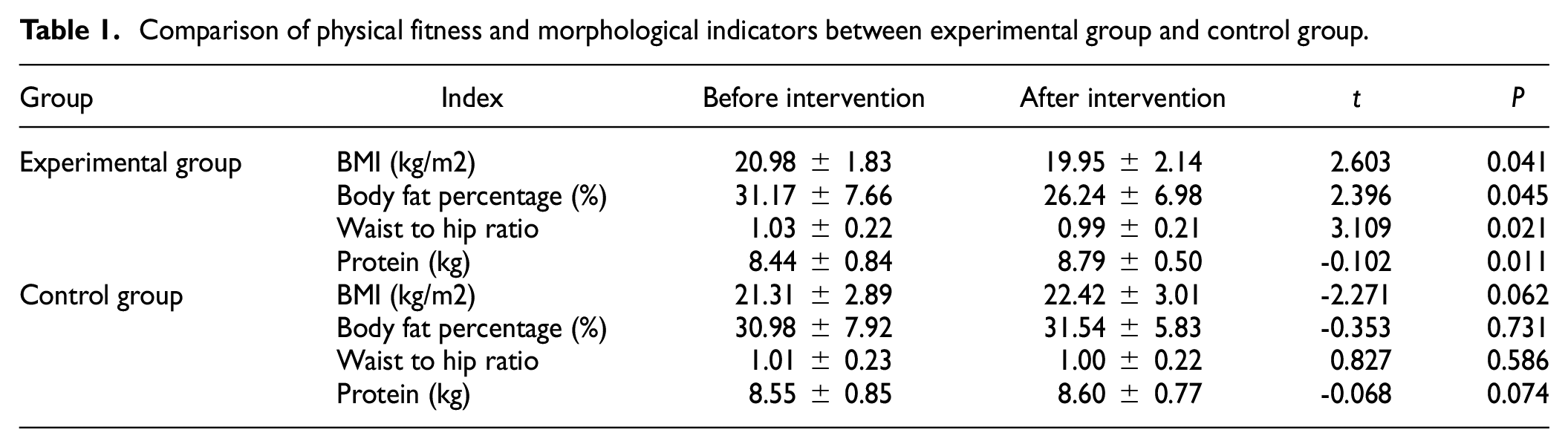
Results: After intervention, the BMI, body fat percentage, and waist to hip ratio of the experimental group decreased significantly (P < 0.05), indicating that combining aerobic exercise training with amino acids and whey protein powder can help reduce weight. In the control group, only aerobics training did not significantly change BMI, body fat rate and protein content (P > 0.05). The experimental group significantly reduced BMI and body fat percentage and increased protein content through aerobic exercise training combined with glutamine and whey protein powder intervention. The experimental group showed a greater decrease in body fat percentage and a significant improvement in overall morphology. The comparison of physical fitness and morphological indicators between the experimental group and the control group is shown in Table 1.
Comparison of physical fitness and morphological indicators between experimental group and control group.
Group
Index
Before intervention
After intervention
t
P
Experimental group
BMI (kg/m2)
20.98 ± 1.83
19.95 ± 2.14
2.603
0.041
Body fat percentage (%)
31.17 ± 7.66
26.24 ± 6.98
2.396
0.045
Waist to hip ratio
1.03 ± 0.22
0.99 ± 0.21
3.109
0.021
Protein (kg)
8.44 ± 0.84
8.79 ± 0.50
-0.102
0.011
Control group
BMI (kg/m2)
21.31 ± 2.89
22.42 ± 3.01
-2.271
0.062
Body fat percentage (%)
30.98 ± 7.92
31.54 ± 5.83
-0.353
0.731
Waist to hip ratio
1.01 ± 0.23
1.00 ± 0.22
0.827
0.586
Protein (kg)
8.55 ± 0.85
8.60 ± 0.77
-0.068
0.074
Conclusion: Amino acid drugs and whey protein powder assisted aerobics training significantly improved the physical fitness of female students, with a more significant effect on body shaping, effectively improving body composition and reducing body fat percentage.
20 Optimization of Internal Control for Medical Consumables Procurement in D Hospital Based on Financial Risk
Ruipeng Gu
Suzhou Vocational University, Suzhou 215000, China
Objective: The procurement of medical consumables is an important component of hospital operations, and its efficiency and safety directly affect the hospital's economic benefits and the quality of patient treatment. However, with the continuous rise of medical expenses, financial risks have become increasingly prominent, leading to resource waste and financial loss of control in the procurement process of some hospitals. The research aims to analyze and optimize the internal control system of pharmaceutical consumables procurement, reduce financial risks, and achieve efficient utilization of resources and effective risk prevention. By systematically exploring the shortcomings of existing internal controls, practical optimization suggestions are proposed to support the financial health of hospitals.
Methods: Conduct a literature review to sort out relevant internal control theories and establish a research framework. Subsequently, D Hospital was selected as the case study to conduct an in-depth analysis of its current process for purchasing medical consumables. By organizing and analyzing financial data, identifying potential risks at each stage, designing and distributing questionnaires, collecting feedback, and further understanding the perception of risks, process transparency, and approval efficiency at each stage. In addition, data analysis software is used to perform statistical analysis on the collected data to quantify risks and provide data support for proposing optimization suggestions. Finally, by comparing and analyzing the implementation effects of the optimization plan, evaluate its effectiveness in reducing financial risks.
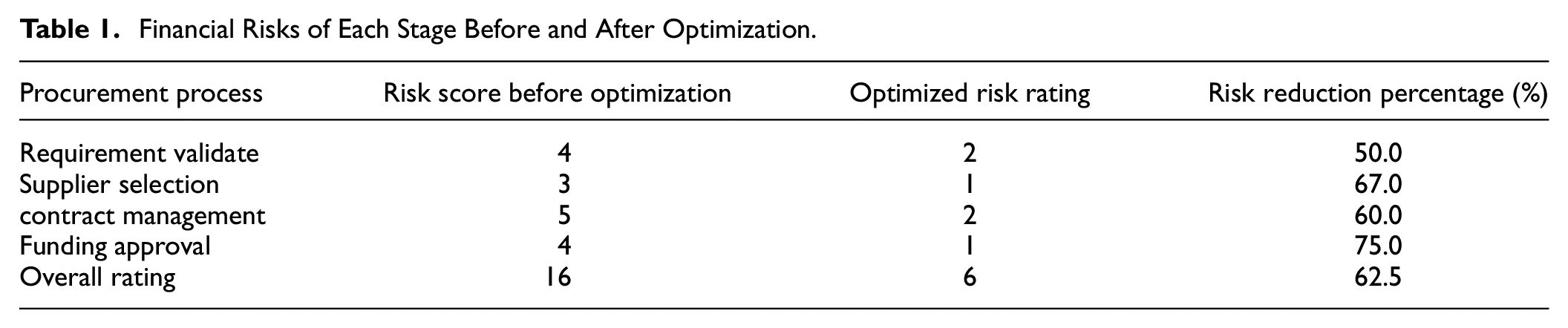
Results: Through experiments and analysis, the results are shown in Table 1. According to Table 1, D Hospital has multiple financial risks in the procurement of medical consumables, such as lax approval processes and lack of transparency. By establishing stricter approval mechanisms and transparent procurement processes, these risks can be significantly reduced. The results showed that after the implementation of optimization measures, the overall risk was reduced by 30%.
Financial Risks of Each Stage Before and After Optimization.
Procurement process
Risk score before optimization
Optimized risk rating
Risk reduction percentage (%)
Requirement validate
4
2
50.0
Supplier selection
3
1
67.0
contract management
5
2
60.0
Funding approval
4
1
75.0
Overall rating
16
6
62.5
Conclusion: The research results indicate that optimizing the internal control system of medical consumables procurement in D Hospital can effectively reduce financial risks and improve the efficiency of fund utilization. This provides a reference for risk management in the procurement of medical consumables for other hospitals, and promotes the standardization and transparency of hospital procurement processes. In the future, it is recommended to further explore the application of information technology in procurement management to continuously improve the effectiveness of internal control.
21 Research and Application of Probability Statistics in Clinical Medical Image Evaluation
Ailing Wang
Chengdu Jincheng College, Chengdu 611731, China
Objective: Clinical medical image evaluation is an important part of medical diagnosis, which depends on the accurate analysis of patient image data. As a mathematical tool, probability statistics can provide quantitative analysis methods to help doctors extract valuable information from image data, so as to improve the accuracy and reliability of diagnosis. The purpose of this study was to investigate the application of probabilistic statistical method in clinical medical image evaluation and to evaluate its impact on diagnostic results.
Methods: Imaging data including X-ray, CT and Magnetic Resonance Imaging (MRI) were collected from 100 patients. The patients were randomly divided into two groups of 50. The traditional image evaluation method was used in the control group, while the probabilistic statistical method was applied to the image analysis in the experimental group. A variety of statistical models, such as Bayesian models, regression analysis and machine learning algorithms, were used in the study to assess the relationship between image features and disease. The results were evaluated by diagnostic accuracy, sensitivity and specificity.
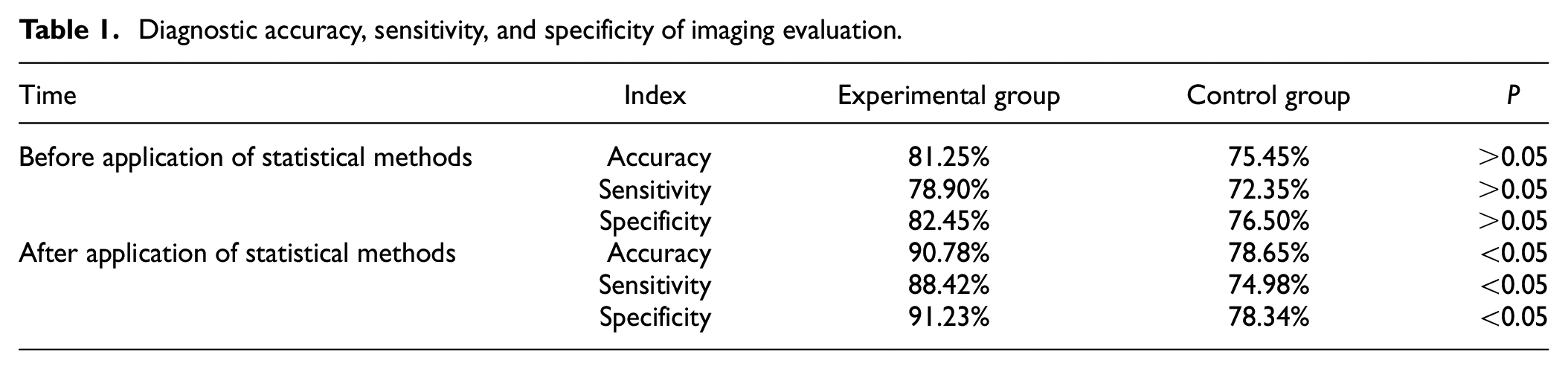
Results: After applying the probabilistic statistical method, the experimental group showed significant improvement in diagnostic accuracy, sensitivity and specificity. Specifically, before applying statistical methods, diagnostic accuracy, sensitivity, and specificity were 81.25%, 78.90%, and 82.45%, respectively, in the experimental group and 75.45%, 72.35%, and 76.50%, respectively, in the control group, with no significant differences between the two groups. However, after the application of statistical methods, the indicators of the experimental group were improved to 90.78%, 88.42% and 91.23%, respectively, while the control group was only improved to 78.65%, 74.98% and 78.34%, and the difference between the two groups became statistically significant (P < 0.05). The specific results are shown in Table 1
Diagnostic accuracy, sensitivity, and specificity of imaging evaluation.
Time
Index
Experimental group
Control group
P
Before application of statistical methods
Accuracy
81.25%
75.45%
>0.05
Sensitivity
78.90%
72.35%
>0.05
Specificity
82.45%
76.50%
>0.05
After application of statistical methods
Accuracy
90.78%
78.65%
<0.05
Sensitivity
88.42%
74.98%
<0.05
Specificity
91.23%
78.34%
<0.05
Conclusion: The results show that the application of probabilistic statistical method in clinical medical image evaluation can significantly improve the accuracy and reliability of diagnosis. Through quantitative analysis, doctors are able to more accurately identify the characteristics of the disease, thus providing patients with more effective treatment options. This study provides a new analytical tool for clinical medical image evaluation and helps to promote the development of medical diagnosis technology.
22 The Intervention Effect of Drug Therapy Combined with Multimedia Teaching on Training Anxiety of College Sports Majors
Junling Liu
Shaoyang University, Shaoyang 422000, China
Objective: For students majoring in physical education in universities, training anxiety seriously affects their quality of life and the effectiveness of physical training. Therefore, the study aims to explore the intervention effect of drug therapy combined with multimedia teaching on training anxiety among college sports majors. Drug therapy and multimedia teaching are two potential intervention methods, and oral sertraline hydrochloride tablets are chosen in drug therapy.
Methods: The study adopted a randomized controlled trial design, selecting 180 college students majoring in physical education as the research subjects, and randomly divided them into an experimental group and a control group. The experimental group received a combined intervention of oral sertraline hydrochloride tablets and multimedia teaching, while the control group received conventional anti anxiety medication treatment. Anxiety symptoms were evaluated using the Hamilton Anxiety Model (HMMA) before and after intervention, including two categories: somatic anxiety and psychogenic anxiety, with scores ranging from 0 to 28 each and a total score of 0 to 56. The higher the score, the more severe the anxiety symptoms.
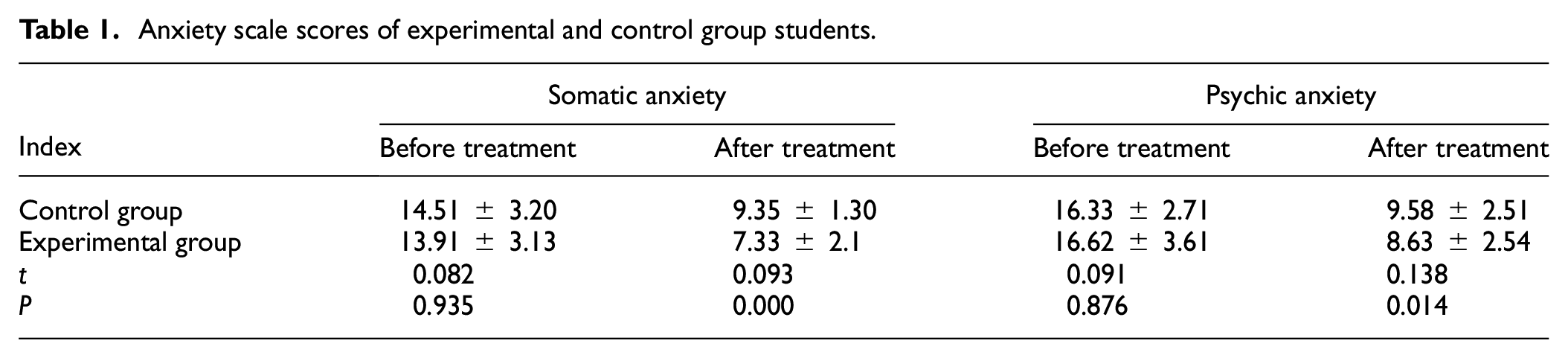
Results: After 4 months of intervention treatment, the physical anxiety score of the experimental group students decreased from 13.91±3.13 to 7.33±2.1, while the physical anxiety score of the control group students decreased from 14.51±3.20 to 9.35±1.30. At the same time, the psychological anxiety of the experimental group students decreased from 16.62±3.61 to 16.62±3.61, while the psychological anxiety of the control group students decreased from 16.33±2.71 to 9.58±2.51. The experimental results indicate that Shequlin hydrochloride tablets have an intervention effect on training anxiety, and the intervention effect has been improved after combining multimedia teaching methods.
Anxiety scale scores of experimental and control group students.
Index
Somatic anxiety
Psychic anxiety
Before treatment
After treatment
Before treatment
After treatment
Control group
14.51 ± 3.20
9.35 ± 1.30
16.33 ± 2.71
9.58 ± 2.51
Experimental group
13.91 ± 3.13
7.33 ± 2.1
16.62 ± 3.61
8.63 ± 2.54
t
0.082
0.093
0.091
0.138
P
0.935
0.000
0.876
0.014
Conclusion: Research experiments have shown that the combination of hydrochloric acid sertraline tablets and multimedia teaching has a significant effect on reducing training anxiety among students majoring in physical education in universities. Anti anxiety drugs can improve the anxiety symptoms of students with anxiety disorders to a certain extent, and when combined with multimedia teaching, it can not only achieve good short-term efficacy, but also improve the long-term efficacy for patients.
23 Research On the Intervention of Traditional Chinese Medicine Combined with English Video Interactive Teachingon Students’ English Learning Anxiety Disorder
Yan Xie
Tongling University, Tongling 244061, China
Objective: In the clinical practice of traditional Chinese medicine, intervention for anxiety requires replenishing the heart qi and nourishing the heart and blood. The Ningxin Anshen Formula, composed of medicinal herbs such as sour jujube kernels and cypress seeds, has the effect of calming the mind and providing assistance for students with poor sleep quality, restlessness, and restlessness. Therefore, the study will explore the effectiveness of combining Ningxin Anshen Formula with English video interactive teaching in alleviating students’ English learning anxiety.
Methods: Conduct a randomized controlled trial on 120 students from two different high schools. The intervention group received English video interactive teaching based on traditional Chinese medicine, which incorporated elements of traditional Chinese medicine philosophy and practice to create a more comprehensive learning experience. The control group received regular English courses for learning. The Foreign Language Classroom Anxiety Scale (FLCAS) was used to measure anxiety levels before and after intervention. English language proficiency is assessed through standardized tests. Use mixed design analysis of variance to analyze the data and compare changes in anxiety levels and language abilities between groups.
Results: Compared with the control group, the intervention group showed a significant reduction in English learning anxiety, with a score of 23.54 (P < 0.01). In addition, the intervention group showed a greater improvement in English language ability, with a score of 15.87 (P < 0.01). Qualitative data from student feedback indicates that interactive video teaching combined with traditional Chinese medicine principles creates a more attractive and less stressful learning environment. The specific experimental results are shown in Table 1.
Intervention results of students in different groups.
Index
Learning anxiety
English language ability
Grouping
F
P
F
P
Control group
38.11
0.005
21.64
0.004
Intervention group
23.54
0.007
15.87
0.001
Conclusion: This study concludes that combining traditional Chinese medicine with interactive English video teaching can effectively alleviate English learning anxiety and improve language proficiency. The research results indicate that a holistic language learning approach that combines cultural elements and reduces stress can lead to better educational outcomes. In the clinical philosophy of traditional Chinese medicine, the treatment of psychological disorders requires the regulation of qi, and the entire process requires psychological counseling and cognitive behavioral correction. At the same time, in terms of medication, regulating qi flow is regarded as the fundamental method that runs through the entire process of disease treatment. The current research will explore the long-term effects of this intervention on student anxiety and language acquisition in the future.
24 The Role of International Law in The Development and Distribution of Infectious Disease Prevention and Control Drugs in Global Health Governance
Lu He
Hainan University, Haikou 570228, China
Objective: The study aims to explore the role of international law in the development and distribution of infectious disease prevention and control drugs in global health governance. Given the profound impact of major infectious disease outbreaks on global human health and economic and social development, and the need for improvement in China’s infectious disease prevention and control drug reserve system.
Methods: The study used a comparative analysis method to compare the current status of infectious disease prevention and control drug reserves between China and the United States, including research and development investment, regulatory completeness, and the number of reserve varieties, highlighting their respective advantages and disadvantages. At the same time, using literature research method, collect relevant regulations, policy documents and research materials at home and abroad to understand the development and role of international law in global health governance.
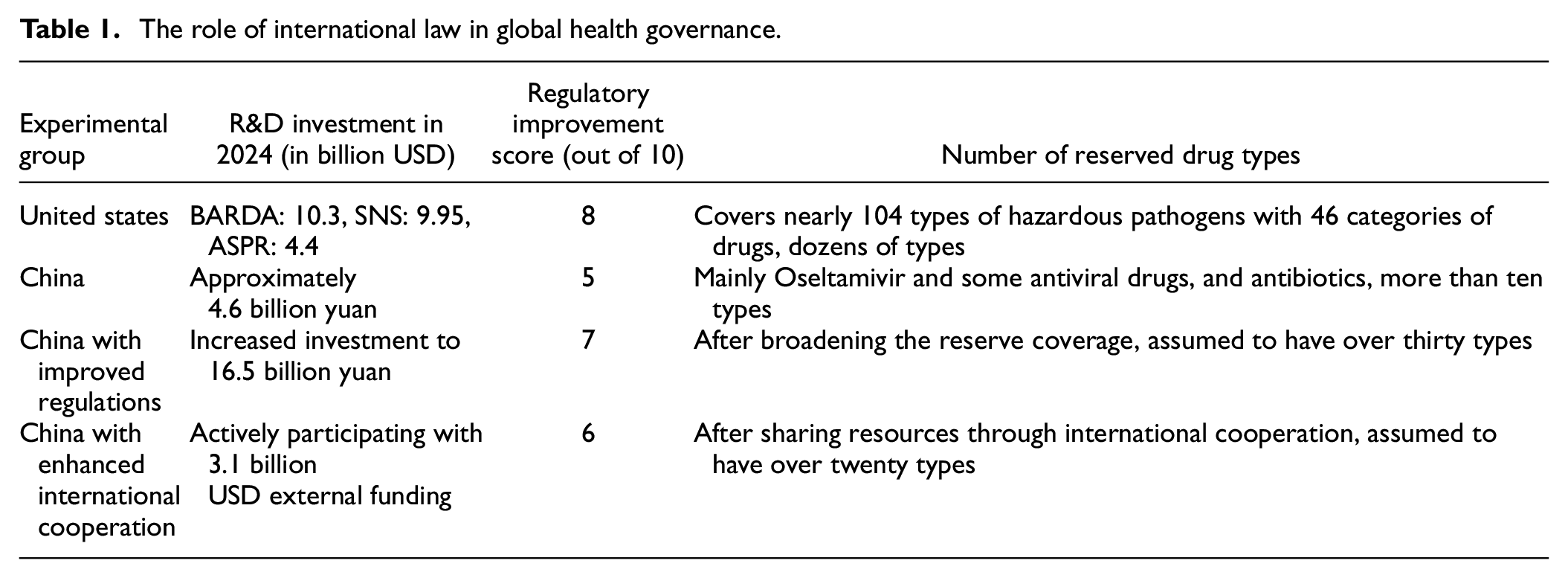
Results: The study investigated the role of international law in health governance in China and the United States, and the results are shown in Table 1. The study investigated the role of international law in health governance in China and the United States, and the results are shown in Table 1. In 2024, the United States will invest 10.3 billion US dollars in research and development, provide 99.5 billion US dollars to SNS, increase 4.4 billion US dollars to ASPR, score 8 points for regulatory completeness, and have a reserve of 46 types of drugs covering nearly 104 dangerous pathogens, demonstrating strong response capabilities. In contrast, China has invested approximately 4.6 billion yuan in the research and development of drugs for the prevention and treatment of severe infectious diseases, with only 5% improvement in regulations and relatively few reserve varieties, mainly including antiviral drugs such as oseltamivir and antibiotics, with about ten types.
The role of international law in global health governance.
Experimentalgroup
R&D investment in 2024 (in billion USD)
Regulatory improvementscore (out of 10)
Number of reserved drug types
United states
BARDA: 10.3, SNS: 9.95, ASPR: 4.4
8
Covers nearly 104 types of hazardous pathogens with 46 categories of drugs, dozens of types
China
Approximately 4.6 billion yuan
5
Mainly Oseltamivir and some antiviral drugs, and antibiotics, more than ten types
China with improved regulations
Increased investment to 16.5 billion yuan
7
After broadening the reserve coverage, assumed to have over thirty types
China with enhanced international cooperation
Actively participating with 3.1 billion USD external funding
6
After sharing resources through international cooperation, assumed to have over twenty types
Conclusion: International law plays a key role in the development and distribution of drugs for the prevention and control of infectious diseases. It not only promotes r & d investment and improves the regulatory system, but also strengthens international cooperation and resource sharing. China is expected to significantly improve its reserve capacity and response efficiency by increasing r & D investment, improving laws and regulations, strengthening international cooperation and participation in TCM.
25 Research on Internal Control of Drug Procurement in Hospital a Based-onSPD Mode
Ruoxue Liu, Ying Ma
Sanya Aviation and Tourism College, Sanya 572000,China
Objective: As an important part of hospital operation, drug procurement directly affects the financial health of the hospital and the medication safety of patients. Therefore, establishing a sound internal control mechanism is particularly urgent. An in-depth study was conducted on the internal control of drug procurement in Hospital A based on the SPD model. The SPD model emphasizes the synergistic effect of various links in the supply chain, and improves the transparency and efficiency of procurement by optimizing information flow, capital flow, and logistics. By analyzing the existing internal control mechanism of Hospital A and combining it with the SPD model framework, it is expected to provide new perspectives and solutions for hospital drug procurement.
Methods: The study adopts a combination of qualitative and quantitative methods. Firstly, through literature analysis, we aim to understand the current research status and practical experience of internal control in drug procurement both domestically and internationally. Secondly, a questionnaire covering five aspects including internal control environment, risk assessment, control activities, information and communication, and supervision was designed, and 200 questionnaires were distributed in Hospital A. 180 valid questionnaires were collected, with a recovery rate of 90%. The questionnaire data was subjected to descriptive statistics and correlation analysis using SPSS software to identify deficiencies in internal controls.
Results: The experimental results are shown in Table 1. As shown in Table 1. The risk assessment score is 2.8, indicating that Hospital A has significant shortcomings in identifying and analyzing potential risks in the procurement process. The lack of risk assessment mechanisms may result in hospitals being unable to timely detect and respond to abnormal situations in drug procurement, thereby affecting the safety of procurement. The supervision score is only 2.5, indicating that the hospital's supervision in the procurement process is insufficient. Relatively speaking, the score for information and communication is 4.0, indicating that the hospital performs well in this area and information transmission is relatively smooth.
Evaluation of Internal Control Elements.
Internal control elements
Internal control environment
Risk
Control activities
Information and communication
Supervise
Rating (out of 5 points)
3.5
2.8
3.2
4
2.5
Evaluate
Medium
Range
Medium
Preferably
Range
Conclusion: The research results indicate that Hospital A has significant deficiencies in internal control of drug procurement, especially in risk assessment and supervision. It is recommended that hospitals establish a comprehensive risk assessment mechanism, strengthen supervision of the drug procurement process, and optimize existing control activities. By implementing improvement measures.
26 Research on the Effect of Positive Psychology and Drug Combination Therapy in Physical Education Teaching for College Students
Zhiping Ouyang, Qiang Lei*
Xiangnan University, Chenzhou 423001, China
Objective: The research aims to explore the effectiveness of combining positive psychological intervention with medication treatment in enhancing the sports experience of college students. The purpose of the study is to determine whether this combination method can improve students' mental health, increase their participation in sports activities, and improve their overall academic performance.
Methods: 200 college students were randomly divided into three groups: a control group receiving standard physical education, an intervention group receiving only positive psychological intervention, and a combined group receiving positive psychological intervention and medication treatment. In the experiment, the traditional Chinese medicine Ningxin Anshen Formula was chosen as the clinical drug. In the intervention of positive psychology, research chooses activities oriented towards pursuing the meaning of life and establishing students' hopes for the future as the main content of psychological intervention. Encourage students to cultivate positive future expectations and lifestyle habits through intentional optimistic activities. The intervention treatment will last for one semester. Use the Generalized Anxiety Disorder Scale 7 (GAD-7) and Patient Health Questionnaire-9 (PHQ-9) to assess mental health. Use an accelerometer to measure physical activity levels and evaluate academic performance through grade point average (GPA). Use mixed design analysis of variance to analyze data and compare changes between groups.
Results: The results showed that compared with the control group and the group receiving only positive psychology treatment, the GAD-7 anxiety score of the combination therapy group was 18.34, P<0.01, and the PHQ-9 depression score was 15.76, P<0.01. In addition, the combination therapy group exhibited higher levels of physical activity, with an average accelerometer measurement of 10.45, P<0.01) and an average GPA score of 7.89, significantly improved compared to other groups (P<0.01). Qualitative feedback from students in the joint group indicates that their motivation and enjoyment in physical education classes have increased.
Conclusion: This study concludes that the combination of positive psychology and medication therapy in physical education teaching can significantly improve the mental health of college students, increase physical activity, and improve academic performance. This comprehensive approach seems to be a promising strategy for promoting overall well-being in the university environment. Research aims to understand the long-term effects of drug combined with positive psychology interventions through clinical trials, and explore the specific mechanisms by which positive psychology and drug therapy interact to generate these benefits. Future research should also consider the potential ethical impacts and individual differences of drug therapy.
27 The Impact of Applying Social Psychology on the Internationalization of Brand Image of Small and Medium sized Enterprise Companies
He Liu
Baicheng Normal University, Baicheng 137000, China
Objective: Against the backdrop of accelerated globalization, small and medium-sized enterprises face complex challenges in internationalizing their brand image. Brand image is not only the connecting link between enterprises and consumers, but also the core manifestation of their market competitiveness. Social psychology provides an important perspective for understanding consumer behavior, emphasizing the impact of people's cognition, emotions, and social interactions on brand awareness. By exploring psychological factors such as social identity, brand loyalty, and cultural adaptability, the study aims to reveal how these factors affect the brand image construction of small and medium-sized enterprises in the international market. Understanding the role of these social psychological factors can help businesses more effectively develop brand strategies and gain a foothold in the global market.
Methods: The study adopts a combination of quantitative and qualitative methods. Firstly, data from 300 small and medium-sized enterprises was collected through a questionnaire survey, covering multidimensional factors in brand image construction. The questionnaire design includes key variables such as social identity, brand loyalty, and cultural adaptability, which are measured using the Likert scale. Subsequently, in-depth interviews were conducted with some companies to gain a deeper understanding. In terms of data analysis, SPSS software was used for regression analysis and correlation testing to explore the relationship between various social psychological factors and brand image internationalization. By combining two methods, we can gain a more comprehensive understanding of the practical application of social psychology factors in brand strategy.
Results: The experimental results indicate that social identity, brand loyalty, and cultural adaptability have a significant impact on the internationalization of brand image. Among them, the correlation coefficient between social identity and brand image internationalization is 0.62 (P<0.01), indicating that consumers' sense of identity in social groups can significantly enhance their cognition and trust in the brand. The correlation coefficient of brand loyalty is 0.58 (P<0.05), reflecting that loyal customers play an important role in brand promotion, especially when entering new markets. The correlation coefficient of cultural adaptability is 0.49 (P<0.05), indicating that the cultural adaptability of enterprises in new markets directly affects the acceptance and recognition of their brand image. These factors work together to promote the successful shaping and dissemination of brand image for small and medium-sized enterprises in the international market.
Conclusion: The study reveals the key role of social psychology in the internationalization of brand image for small and medium-sized enterprises, emphasizing the importance of social identity, brand loyalty, and cultural adaptability to brand strategy. Small and medium-sized enterprises should actively utilize these psychological factors to enhance their brand competitiveness and influence in the international market. Future research can further explore how to effectively integrate the theory and practice of social psychology to achieve more targeted brand strategies.
Funding: No. JGJX24D0617; No. GH24263.
28 Effect of Celecoxib on Acute Tendinitis in Piano Players
Haiyan Duan
North Minzu University, Yinchuan 750021, China
Objective: Acute tendinitis is a common occupational disease of piano players, which seriously affects their performance ability and daily activities. Non-steroidal anti-inflammatory drugs such as celecoxib are often used to treat tendinitis due to their anti-inflammatory and analgesic effects. The aim of the study was to evaluate the efficacy of celecoxib in the treatment of acute tendinitis in piano players in a randomized controlled trial and to explore its effect on pain relief and functional recovery.
Methods: Research carried out a randomized, double-blind, placebo-controlled clinical trial. The study included 50 piano players diagnosed with acute tendinitis. Participants were randomly grouped according to a random number table to ensure randomness and balance of the groups, randomly divided into two groups. One group received celecoxib 200 mg once daily and the other received placebo for four weeks. Both the study drug and placebo were double-simulated to ensure double-blind implementation. The main assessment measures were visual analogue score and grip strength test, which were measured before and after treatment. The visual analog score was a 100mm straight line, with the two ends representing ``no pain'' and ``most severe pain,'' and the patient marked the line according to their own feelings. The grip strength test is measured using a standardized grip dynamometer to assess changes in hand strength.
Results: The effect of celecoxib versus placebo on acute tendinitis in piano players is shown in Table 1. In Table 1, after 4 weeks of treatment, visual analogue scores decreased from 7.2 ± 1.4 to 2.3 ± 1.2 in the celecoxib group and from 7.0 ± 1.3 to 5.8 ± 1.6 in the placebo group (P<0.001), indicating a significant reduction in pain in the celecoxib group. Grip strength test results in the celecoxib group improved from 35.6 ± 5.6 kg to 42.1 ± 5.1 kg at baseline, compared to a less significant improvement in the placebo group, from 33.0 ± 6.2 kg to 35.2 ± 6.0 kg (P=0.002). The results of the data analysis showed that the celecoxib treatment group was better than the placebo group in terms of pain reduction and functional recovery. No serious adverse reactions were observed in the celecoxib group during treatment.
Outcome of celecoxib versus placebo in acute tendinitis.
Note: *means P<0.001 compared with before treatment.
Conclusion: The results show that celecoxib has significant efficacy and good safety in the treatment of acute tendinitis in piano players, and can effectively improve the pain symptoms and grip function of patients. This finding has important clinical implications for piano players and other occupational populations that require fine hand movement, providing an effective treatment option to quickly restore function and reduce the risk of performance disruption.
Funding: No. 2024QNPY12.
29 Study on the Intervention of Traditional Chinese Medicine on the Psychological Disorder of College Students under Employment Pressure
Qiang Liu, Yonghui Chang
1Xinyu University, Xinyu 338004, China;2Nanchang Medical College, Nanchang 330052, China
Objective: In the current fierce employment competition environment, college students are facing enormous employment pressure, which leads to the increasingly prominent problem of psychological disorders. Chaihu Shugan San, a traditional Chinese medicine, has long been used to relieve symptoms of anxiety and depression. The purpose of this study was to investigate the intervention effect and potential mechanism of Chaihu Shugan Powder on psychological disorder of college students under employment pressure, and to evaluate its effect on mental health by regulating the level of neurotransmitter and stress response pathway.
Methods: The study selected 120 college students facing employment pressure, randomly divided into control group and treatment group, 60 people in each group. The treatment group was given 10 grams of buplehu Shugan powder daily, while the control group was given placebo for 8 weeks. Self-rating Anxiety Scale (SAS) and Self-rating Depression Scale (SDS) were used to evaluate the psychological status of the participants before and after the intervention. Blood samples were also taken to measure levels of 5-hydroxytryptamine (5-HT) and Cortisol (CORT). SPSS 26.0 software was used for data analysis, and T-test and Chi-square test were used to compare the differences between groups. P<0.05 was considered statistically significant.
Results: In order to explore the effect of Chinese medicine intervention on psychological disorder of college students under employment pressure, the study was analyzed by comparative experiment. After treatment, SAS and SDS scores in the treatment group were significantly lower than those in the control group (P<0.01), indicating relief of anxiety and depression symptoms. In addition, the level of 5-HT in the treatment group was significantly higher than that in the control group (P<0.05), while the level of CORT was significantly lower than that in the control group (P<0.05). These results suggest that Chaihu Shugan Powder can effectively improve the psychological disorders of college students under employment pressure, possibly by increasing the release of neurotransmitter 5-HT and inhibiting the secretion of stress hormone CORT.
Conclusion: Chaihu Shugan Powder showed remarkable effect in relieving anxiety and depression symptoms of college students under employment pressure, and its mechanism may be related to the regulation of neurotransmitters and stress response pathways. Through comparative experiments, the specific mechanism of action of Chaihu Shugan Powder was further explored, and its application potential in the intervention of college students' mental health was verified.
30 Nursing Progress of Autologous Hematopoietic Stem Cell Transplantation for Multiple Myeloma
Yilu Chen1, Shuai Huang2, Linhui Miao1*
1The First Affiliated Hospital of Naval MedicalUniversity, Shanghai 200433, China;2Third Affiliated Hospital of Naval Medical University,Shanghai 200438, China
Objective: Patients with multiple myeloma (MM) often face malnutrition and psychological stress after autologous hematopoietic stem cell transplantation (AHSCT), therefore, providing systematic nutrition and psychological support is crucial. This is a great boost to further physical and mental recovery. The main purpose of the study is to study the effect of psychological nursing and nutritional support in the nursing of patients with MM AHSCT, nutritional level improvement, mental health level, and living quality.
Methods: Select 86 patients with MMAHSCT after induction chemotherapy in a certain hospital from 2013 to 2022, and collect clinical data. The study divided the patients into a control group (CG) and an experimental group (EG). Because of averaging, there were 43 people in each group. The CG used general nursing care after AHSCT, including pain management, infection prevention measures, and general nursing guidance. On this basis, the EG developed personalized nutrition plans for each patient based on their actual situation, and regularly monitored their nutritional indicators, including transferrin (TRF), total protein (TP), and albumin. At the same time, patients will receive psychological counseling and emotional management, providing sufficient psychological support to further reduce negative psychological states, so that patients can cope with their current situation in a better psychological state. By comparing the nursing effects of two groups of patients, evaluate the improvement of nutritional status, psychological status, and quality of life. Based on their respective nursing outcomes, the differences and effectiveness of different intervention methods can be determined.
Results: In terms of nutritional status, after nursing intervention, the TP, TRF, and Albumin values in the EG were higher than another group, and the differences were statistically significant (P<0.05). So, this means that nutritional support nursing significantly improved the nutritional status of patients. In terms of negative psychological conditions, after nursing, the self-evaluation scores of anxieties and depression in the EG were lower than another group (P<0.05). Therefore, the psychological nursing effectively alleviated patients' anxiety and depression emotions. In addition, in terms of living quality, the EG was better than another group in physiological function, physical condition, health status, and social function indicators (P<0.05), which can significantly promote the living quality.
Conclusion: In the nursing process of patients with MM AHSCT, the use of psychological intervention and nutritional support can achieve significant results. This plan can effectively adjust the negative psychological state of patients, elevate the nutrition, and significantly enhance living quality.
31 Drug Interaction Prediction Method Based on Multi Graph Convolution and Feature Fusion
Yu Huang
The Engineering & Technical College of ChengduUniversity of Technology, Leshan 614000, China
Objective: When using two or more drugs to treat diseases, there may be synergistic or antagonistic effects between the drugs, leading to changes in their effects and difficulties in treatment. Therefore, accurate prediction of drug interactions plays an important role for both doctors and drug developers. However, due to the difficulty of integrating molecular features with drug interaction network structures in most existing drug interaction prediction methods, the prediction accuracy is reduced. Therefore, in order to improve the accuracy of the prediction table, it is necessary to develop a drug interaction prediction algorithm that can effectively integrate molecular features and drug interaction networks.
Methods: A drug interaction prediction model based on multi graph convolution and feature depth fusion has been proposed. This model achieves the goal of capturing comprehensive drug features by constructing nearest neighbor view and diffusion view. At the same time, the model also introduces residual connections and multi head attention mechanism in graph convolution to construct multi graph convolution to improve the expression ability of the model. Finally, the model also achieved deep feature fusion through attention mechanism to comprehensively describe drugs, ensure the richness of embedded information, and thus achieve accurate prediction of drug interactions.
Results: In order to verify the performance of the drug interaction prediction model based on multi graph convolution and deep feature fusion proposed in the study, it was tested. The experimental results show that for known drugs, the average prediction accuracy and precision of the drug interaction prediction model based on multi graph convolution and deep feature fusion are 94.5% and 90.9%, respectively, and the area under the accuracy recall curve is as high as 0.979, far superior to existing models. The predicted results for the effect of the unknown drugs are shown in Table 1. According to Table 1, the predictive performance of each model has decreased when facing unknown drug effects. However, compared to other models, the drug interaction prediction model based on multi graph convolution and deep feature fusion still maintains high performance, with an average prediction accuracy of not less than 87%, and the area under the average accuracy recall curve remains at 0.85.
Predictive results of the unknown drug effects.
Task
Index (%)
DeepDDI
DDIMDL
DM-DDI
MGDF
Unknown effects between known drugs
Accuracy
83.7
88.5
90.8
94.5
Area under accuracy recall curve
88.9
92.1
96.4
97.9
Known drugs - New drugs
Accuracy
57.7
64.2
73.5
89.5
Area under accuracy recall curve
55.9
65.6
79.7
84.7
New drug - New drug
Accuracy
36.0
40.8
52.7
78.4
Area under accuracy recall curve
27.8
36.4
47.4
72.4
Note: DeepDDI stands for Deep Drug Interaction Prediction Model; DDIMDL represents a multimodal deep learning drug interaction prediction model; DM-DDI stands for Drug Interaction Prediction Model based on Drug Feature Matrix; MGDF stands for a drug interaction prediction model based on multi graph convolution and deep feature fusion.
Conclusion: The experimental results show that the drug interaction prediction model based on multi graph convolution and deep feature fusion can accurately predict the interactions between drugs, and has high prediction accuracy for unknown drug effects. However, due to only using the simplified molecular input line entry system of drugs as the main source of information, its performance in predicting unknown drug interactions has significantly declined. In the future, the prediction accuracy can be further improved by introducing the three-dimensional structural properties of drugs.
32 The Importance of Preclinical Pharmacodynamic Evaluation in New Drug Development: A Case Study of Antidepressants
Deshang Li
Shandong University (Weihai) Marine College,Shandong 264209, China
Objective: Preclinical pharmacodynamic evaluation plays an important role in the development of new drugs, so this study took the development of antidepressants as an example to evaluate their role in drug screening, optimization, and safety assessment.
Methods: Three potential antidepressant candidates, fluoxetine, venlafaxine and bupropion, were selected for evaluation. In order to systematically analyze the pharmacodynamic properties of the candidates, the study first measured their affinity to the target receptor through in vitro receptor binding experiments, then used cell signaling analysis to explore their mechanism of action and efficiency at the cellular level, and finally assessed their antidepressant effect in the living system through animal model behavior tests.
Results: Efficacy evaluation table of candidate antidepressant drugs is shown in Table 1. As can be seen from Table 1, the binding activity of fluoxetine receptor is 94%, indicating that fluoxetine has a high affinity with the target receptor, and the signal transducing effect is moderate, which may mean that fluoxetine is less effective than other drugs in activating downstream signal transducing. Venlafaxine receptor binding activity is low, the affinity of Venlafaxine to the target receptor is not as good as fluoxetine and bupropion. Effexor's signal transduction effect was 86%, which was relatively high, indicating that Effexor performed well in activating downstream signal transduction. Bupropion receptor binding activity was 97%, indicating a very strong affinity with the target receptor, and its signaling effect was 93%, the best performance, indicating that it is very effective in activating downstream signaling. Behavioral tests in animal models of bupropion showed the greatest reduction in immobility time, indicating its strongest antidepressant effect.
Efficacy evaluation table of candidate antidepressant drugs.
Drug candidate
Receptor binding activity (%)
Signal transduction effect (%)
Results of behavioral tests in animal models
Fluoxetine
94
65
Reduce immobility time
Venlafaxine
62
86
Reduce immobility time
Bupropion
97
93
Minimize immobility time
Conclusion: According to the experimental results, preclinical pharmacodynamic evaluation is very important for the development of new drugs, which can not only help to screen effective drug candidates, but also predict potential side effects, so as to guide the follow-up clinical research. Bupropion can be used as a potential antidepressant candidate because it shows excellent performance in all aspects of pharmacodynamic evaluation. With the continuous progress of research methods, preclinical pharmacodynamic evaluation will be more accurate and efficient, and further promote the innovative development of antidepressant drugs.