







Abstract
Rumination syndrome is a functional gastrointestinal disorder marked by effortless postprandial regurgitation, typically occurring 10–15 min after meals. The condition, first noted in 1618, is now diagnosed by the Rome IV criteria through clinical symptoms in the absence of structural abnormalities. Diagnostic confirmation through high-resolution manometry reveals characteristic patterns of gastric pressurization and muscle coordination, while treatment primarily involves behavioral and medical therapies. This study evaluates the epidemiology, symptom profiles, time to diagnosis, and treatment outcomes for patients with rumination syndrome, with a focus on the impact of jejunostomy tube placement. A retrospective cohort study at Texas Tech University Gastroenterology Clinic reviewed charts of patients treated for rumination syndrome between July 2016 and February 2024. Outcomes assessed included the efficacy of jejunostomy tube placement in nutritional support and symptom improvement, in addition to behavioral therapy outcomes. Statistical analyses were conducted using STATA, with p < 0.05 considered significant. Among 133 patients (mean age 43.6 years, 78.2% female), 23 required jejunostomy tube (J-tube) placement. Patients with J-tubes had a significantly lower BMI (21.07 vs 28.13, p < 0.001) and experienced greater weight gain and symptom improvement compared to non-J-tube patients (100% vs 48.18%, p < 0.001). The average J-tube duration was 16 weeks, with an average weight gain of 38.8 pounds. This study highlights the efficacy of combined treatment approaches in managing rumination syndrome, particularly for patients requiring enteral nutritional support via jejunostomy tubes. This approach allows for weight stabilization and improved symptom management, facilitating long-term treatment adherence and quality of life improvements.
Introduction
Rumination syndrome is a functional gastrointestinal disorder characterized by effortless postprandial regurgitation. 1 This regurgitation occurs within 10–15 min after eating and is preceded by burping and belching. Patients may re-chew, re-swallow, or spit out the regurgitated food, depending on their social situation. 2 First described by an anatomist in 1618, rumination syndrome is now well-defined by the Rome IV criteria, with diagnosis based on clinical symptoms in the absence of structural disease.1,2 The time from symptom onset to diagnosis can range from months to years, due to a broad differential diagnosis. Consequently, many patients undergo invasive diagnostic tests and procedures.3,4
Rumination syndrome can be categorized as primary, often triggered by significant life stressors such as the death of a loved one, divorce, or personal or financial instability, or secondary, associated with conditioned vomiting. Differential diagnoses that may delay the identification of rumination syndrome include gastroparesis, characterized by delayed vomiting 2-6 h after a meal, and gastroesophageal reflux disease (GERD), which presents with nighttime reflux symptoms, which are absent in rumination. 1 Performing stationary esophageal manometry and impedance with the administration of a meal and monitoring postprandial regurgitation events has refined the diagnosis and allowed more accurate differentiation between rumination, regurgitation, and belching. 5
Diagnostic confirmation is achieved through high-resolution manometry with intragastric pressure and esophageal impedance measurement, which reveal elevated intragastric pressure and coordination with lower esophageal sphincter (LES) relaxation. Antroduodenal manometry and electromyography of abdominal muscles further support the diagnosis, with antroduodenal manometry showing increased pressure at the antrum, duodenum, and proximal jejunum following oral intake, indicative of a rumination event marked by abdominal muscle contraction, termed the “R wave.” 1 Postprandial high-resolution impedance manometry (HRIM) studies indicate that gastric pressurizations exceeding 30 mm Hg, combined with simultaneous relaxation of the lower and upper esophageal sphincters, are strongly linked to the backflow of ingested material into the esophagus and mouth, correlating with patient symptoms. 6 In addition, it has been proposed that this gastric reflux into the esophagus is preceded by an upward shift of the gastroesophageal junction into the thorax, creating a pseudo-hernia. 7 Recent data indicate that a somatic basis may contribute to the predisposition for rumination, as patients with this condition exhibit increased baseline tone in both abdominal and intercostal muscles, which can be improved through biofeedback training. 8
Rumination syndrome can also affect infants and may coexist with intellectual disabilities and psychiatric conditions such as schizophrenia and depression. 9 A thorough clinical history and physical examination are essential for accurate diagnosis. 10 Patients often describe repetitive regurgitation of recently ingested food and fluid, occurring within 10–15 min of eating, without preceding nausea or retching. 11 The regurgitation is effortless and “fountain like” and is preceded by burping and belching. 12 Even though the history of rumination syndrome is specific to the disease, many patients undergo esophagogastroduodenoscopy and barium swallow studies to rule out mucosal or obstructive causes for their symptoms, as the history may not always be accurate. 13
Treatment for rumination syndrome typically begins with patient education, habit reversal techniques, diaphragmatic breathing exercises, and medications such as tricyclic antidepressants (to address depression and anxiety as well as reduce gastric hypersensitivity) and baclofen (to decrease transient LES relaxations). 14 Diaphragmatic breathing and relaxation exercises aim to induce distraction so that the urge to belch and burp, leading to rumination, is suppressed. This approach substitutes the targeted behavior with a competing behavior that prevents the abdominal contractions necessary for regurgitation. Nutritional support is crucial to address vitamin deficiencies, dehydration, and electrolyte imbalances. For patients not yet responding to behavioral therapy and psychological medications who also become dehydrated and lose a substantial amount of weight, a temporary jejunostomy tube may provide enteral nutrition, bypassing the stomach. Nocturnal jejunostomy tube feedings help with weight gain, allowing patients to focus on breathing and relaxation techniques during the day as they attempt oral intake. The jejunostomy tube is typically clamped and removed within 3–6 months once significant progress is made. 1
This study aims to evaluate epidemiological factors, symptom profiles, time to diagnosis, and treatment outcomes for patients with rumination syndrome.
Rumination syndrome is a functional gastrointestinal disorder marked by effortless postprandial regurgitation, typically occurring 10–15 min after meals. If left untreated, it can result in marked weight loss, which leads to worsening nutritional status and patient condition.
This is the largest cohort of rumination syndrome patients that have been studied. We found that a laparoscopic jejunostomy tube can lead to weight gain, preserving the nutritional status of the patient, and helping them focus on therapies to improve rumination symptoms.
Rumination syndrome is a difficult diagnosis to make as the symptoms can overlap with other functional disorders.We present a McCallum Syndrome Assessment Tool (MSAT) based on the experience of our single center to help make this diagnosis easier for physicians. Also, further studies and guideline recommendations are needed where, after a certain amount of weight loss, a J-tube should be considered in these patients to preserve nutritional status and improve symptoms.
Materials and methods
This retrospective cohort study was conducted at an academic medical center at Texas Tech University Gastroenterology Clinic to investigate the treatment of rumination syndrome. The study involved a comprehensive chart review of patients diagnosed with rumination syndrome who received treatment between July 1, 2016, and February 29, 2024. Informed consent was obtained from each individual at follow-up visits or over the phone. Patients were followed up every 3–6 months, and if they missed their appointments, they were contacted over the phone. The primary aim of the study was to evaluate both the frequency and the efficacy of surgical jejunostomy tube placement for nutritional support, in combination with diaphragmatic breathing, relaxation therapy, and tricyclic antidepressants (TCAs). Data collected included demographic information, clinical characteristics, treatment interventions, and patient outcomes. A particular focus was placed on assessing whether the use of jejunostomy tube placement improved nutritional support while simultaneously allowing patients to focus on the treatment of their rumination syndrome and resulting in the resolution of their symptoms. The study also aimed to determine the impact of this combined treatment approach on symptom reduction and overall patient well-being. To minimize selection bias, all patients diagnosed with rumination syndrome during the study period were included. Diagnostic confirmation was based on consistent clinical criteria, and efforts were made to standardize data extraction from electronic health records. However, the retrospective design inherently limits control over potential confounding variables. As this was a retrospective study, no formal sample size calculation was performed. All patients diagnosed with rumination syndrome within the study period were included to maximize data capture. Of the total identified patients with rumination syndrome, those who declined consent were not included in the study. Statistical analyses, including descriptive and comparative techniques, were employed to assess the effectiveness of the interventions, with a special emphasis on the timing and outcomes associated with the use of the jejunostomy tube, diaphragmatic breathing, and TCAs.
Statistical analysis
This is a retrospective observational study, and the statistical analysis was exploratory in nature. For descriptive purposes, continuous variables were summarized by mean and standard deviation, and median, minimum, maximum, and discrete variables were summarized by frequency and proportion. Patients who refused consent were excluded from the analysis. Among the included participants, complete data were available for all key variables of interest. Follow-up data were obtained through chart review and direct patient contact. No imputation was performed for these cases, and analyses were conducted on available data only. To find the association between categorical variables, a Chi-squared test or Fisher’s exact test was used. To compare continuous variables between the two groups based on time to endoscopy, a t-test or Wilcoxon rank-sum test was used. A p-value of less than 0.05 was considered statistically significant, and STATA (Version 17) was used for all the statistical analyses. Logistic regression was used to find the association between the use of the J-tube and the improvement of symptoms.
Results
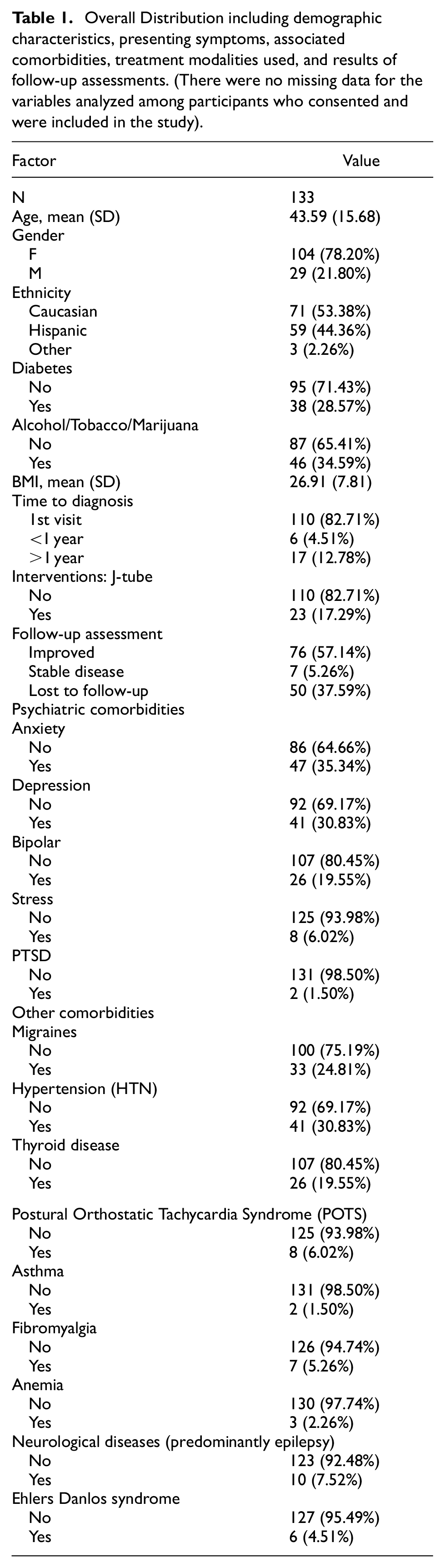
In our study, we analyzed the overall distribution of participants (n = 133) and compared characteristics between those with and without the need for a jejunostomy (J) tube. The average age of participants was 43.59 years (SD = 15.68), with a majority being female (78.20%). Ethnic distribution included 53.38% Caucasian, 44.36% Hispanic, and 2.26% other (Table 1). The mean BMI was 26.91 (SD = 7.81). It is also important to note that all patients in our study presented with epigastric abdominal pain, nausea, and vomiting. The majority of the patients (68%) presented with regurgitation of eaten food within 15 min and reported burping and belching right after eating meals, along with epigastric pain. Other patients (32%) reported only epigastric pain associated with vomiting episodes that were not associated with regurgitation, burping, or belching. Epigastric pain was demonstrated with Carnett’s sign, seen on contracting the abdominal muscles or straight leg raising, improving with a lidocaine patch. Most participants (82.71%) were diagnosed at the time of their first visit to our office, and all were taught how to perform diaphragmatic breathing interventions and relaxation techniques and were prescribed tricyclic medication (e.g., amitriptyline or nortriptyline).
Overall Distribution including demographic characteristics, presenting symptoms, associated comorbidities, treatment modalities used, and results of follow-up assessments. (There were no missing data for the variables analyzed among participants who consented and were included in the study).
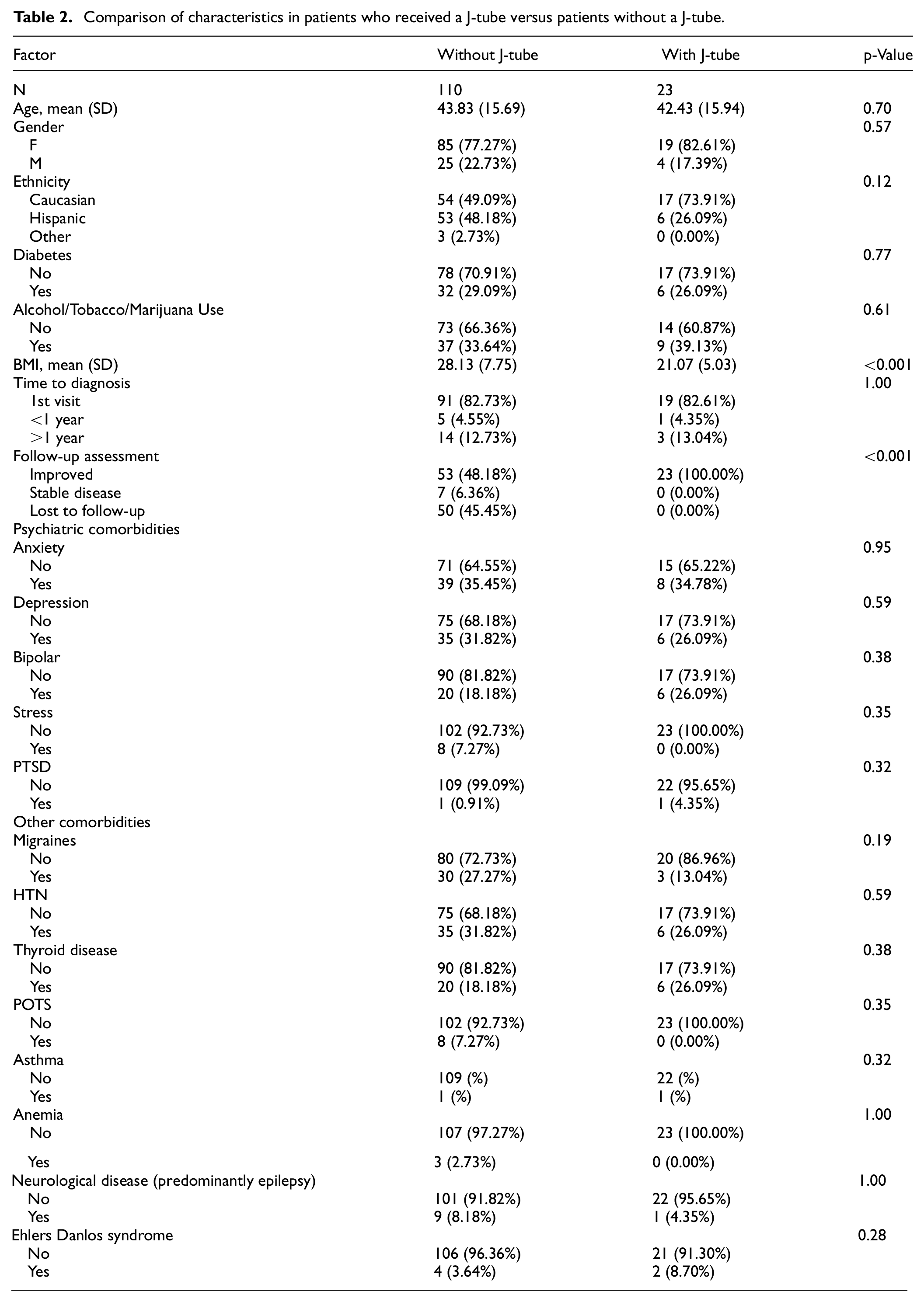
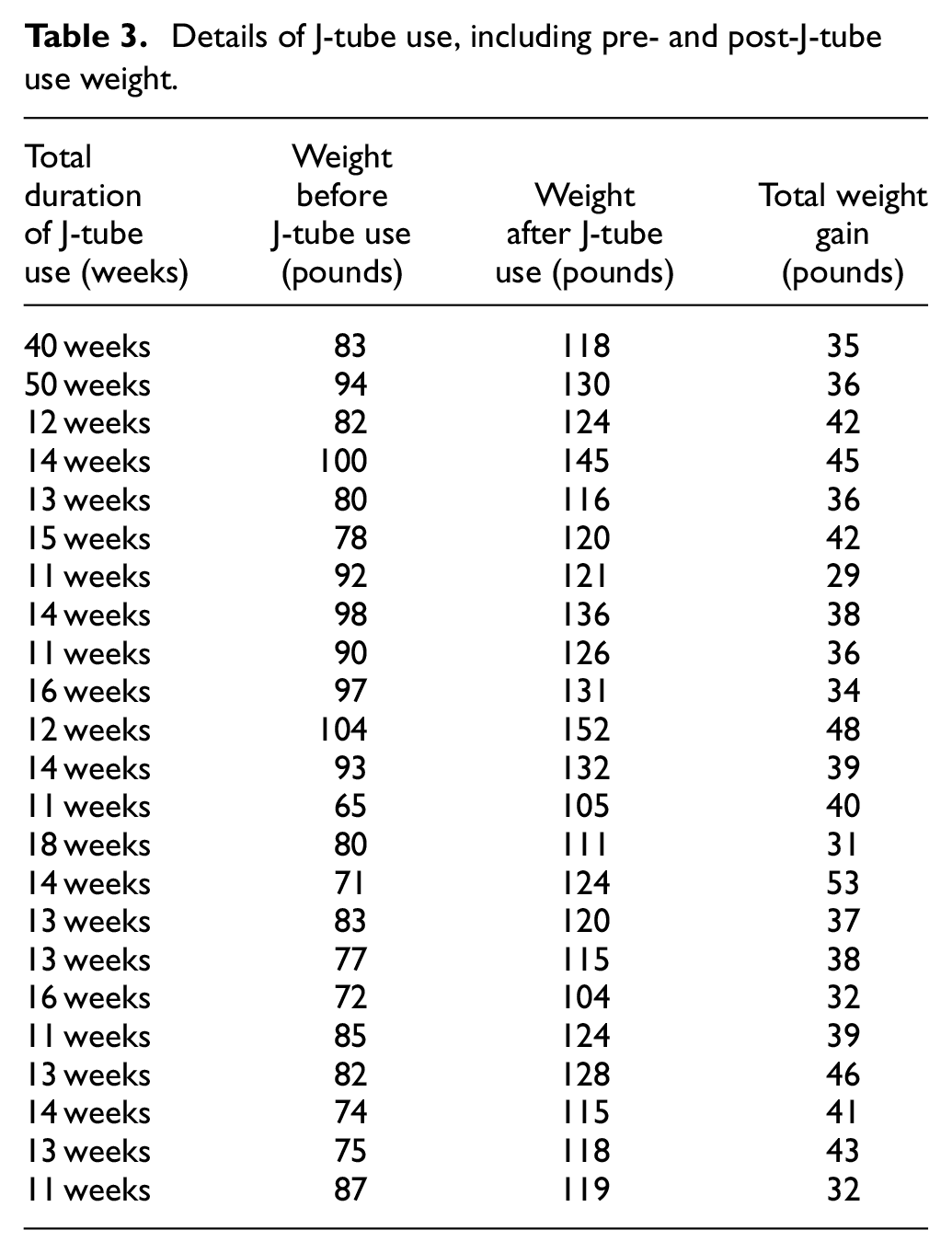
Comparing participants with (n = 23) and without (n = 110) J-tubes, the groups were similar in age (mean 42.43 vs 43.83 years), gender distribution, and ethnicity. Notably, participants with J-tubes had a significantly lower mean BMI (21.07 vs 28.13, p < 0.001). Follow-up assessments revealed that all participants withJ-tubes showed improvement, compared to 48.18% in the no J-tube group (p < 0.001). Improvement was assessed as weight gain and resolution of rumination symptoms. No significant differences were observed in the prevalence of anxiety, depression, bipolar disorder, or other medical conditions between the two groups (Table 2). Importantly, these findings highlight that the use of J-tubes provided essential nutritional support and hydration, allowing patients to maintain or gain their body weight while focusing on the treatment of their rumination syndrome. The J-tubes were used for an average of 16 weeks (SD = 9.43), the average weight gain after using the J-tube was found to be 38.8 pounds (SD = 5.78) (Table 3).
Comparison of characteristics in patients who received a J-tube versus patients without a J-tube.
Details of J-tube use, including pre- and post-J-tube use weight.
Discussion
Rumination syndrome is a distinctive condition characterized by recurrent postprandial, effortless regurgitation within 10–15 min of meal ingestion. In this syndrome, recently ingested food returns from the stomach to the oral cavity, where it is either re-swallowed or expelled like a “fountain.” 15 Epigastric pain is commonly a major complaint and is explained by contraction of the rectus adbominus muscle which induces rumination. The finding of epigastric tenderness and pain induced by tightening the rectus muscle is called “Carnett’s sign. In our study 100% of patients presented with epigastric abdominal pain.
Our study comprised a diverse patient population affected by rumination syndrome, spanning various age groups and socioeconomic backgrounds. The pattern we observed is that patients begin ruminating after experiencing a significant stressful event in life, including, but not limited to, personal, familial, or financial troubles. A previous retrospective study demonstrated that 14% of individuals with rumination syndrome had preceding psychological trauma. 16 In our study, we found that 80% of patients reported such triggers, followed by the onset of rumination syndrome. Often, these psychological triggers go unidentified during a physician visit, delaying the diagnosis of rumination syndrome. Another study showed that the average time to diagnosis for rumination syndrome is 21–77 months. 17 This delay can be due to the presenting symptom of vomiting not being linked to immediate post-meal intake. These patients often see multiple physicians without a clearly established diagnosis, adding further stress and worsening the rumination.18,19 In our study, 70.14% of patients were diagnosed at the first visit. Some patients referred to our clinic reported struggling with symptoms of rumination for years before receiving the correct diagnosis.
Psychological comorbidities, such as anxiety and depression, were prevalent in our study, further highlighting the importance of eliciting underlying psychological factors. In a series of 57 patients (95% female) with concomitant rumination syndrome and rectal evacuation disorder, 93% had at least one psychiatric comorbidity based on validated psychological assessments, while 61% were diagnosed with a major psychological disorder according to the Diagnostic and Statistical Manual of Mental Disorders, Fourth Edition (DSM-4). 20 Our study revealed that 75% of the patient population had coexisting psychiatric disorders. TCAs address the psychological aspects of depression and anxiety present in these patients. 21
Our study also found that higher rumination syndrome was dominated by females (77.6%), reconfirming findings from a recent Rome Foundation global epidemiological study, which reported a higher worldwide prevalence of rumination syndrome among women (3.1%) compared to men (2.5%). 22 Two recent studies retrospectively analyzed records of postprandial high-resolution manometry in individuals with gastroesophageal reflux disease (GERD) and observed manometric features of rumination syndrome in 20% of these individuals.23,24 Our study also found that 32.08% of patients had coexisting acid reflux. Rumination syndrome can be distinguished from GERD by the absence of episodes during sleep or after extended fasting. 25 However, with repetitive post-prandial regurgitation, gastric acid does contact the esophagus. Medications that reduce gastric acid, such as proton pump inhibitors, generally do not alleviate rumination symptoms; in fact, lack of response to reflux treatment is part of the diagnostic criteria in children. 26
Behavioral treatment for rumination involves relaxation and diaphragmatic breathing to counteract abdominal wall contraction. Phase 1 focuses on teaching these skills, while Phase 2 includes graded exposure to food accompanied by relaxation. 27 Rumination syndrome primarily affects quality of life through frequent regurgitation and social embarrassment, with around 40% of patients also experiencing weight loss. 28 Effective treatment of rumination syndrome hinges on establishing a strong therapeutic alliance with both the patient and their family. Building trust and rapport is essential, as successful management often spans several weeks and requires a firm commitment from the patient to engage fully with the treatment plan. Moreover, fostering confidence in the physician’s diagnosis and recommended approach can significantly enhance the patient’s adherence and receptiveness to the process, improving the likelihood of a positive outcome.
Using a jejunostomy tube (J-tube) for nutritional support is a relatively new approach to treating rumination syndrome. Our study demonstrated 100% symptomatic improvement (p < 0.01) and also weight gain within 3–6 months post-procedure after receiving a J-tube. The primary criterion for J-tube placement is weight loss. In our study, the average BMI of patients who received a J-tube was 21.07 (p < 0.01). The J-tubes were placed laparoscopically, and patients received nocturnal enteral nutrition through the tubes. After patients regained appropriate weight (mean = 40 pounds), the J-tubes were removed in an outpatient setting. The tubes were left in place for an average duration of 16 weeks. During this period, patients were able to focus on therapies for rumination syndrome, including diaphragmatic breathing and relaxation techniques, without becoming dehydrated or seriously malnourished. Common complications associated with J-tube placements were limited to skin irritation; none progressed to tube infection or sepsis.
Based on our study, we propose the development of the
McCallum syndrome assessment tool
Section 1: Core symptoms
•
(1 point) Frequent regurgitation of food during or within 15 minutes after meals. (0 points) No postprandial regurgitation occurs rarely.
•
(1 point) Frequent burping and belching after eating a meal (0 point) No burping or belching reported after a meal
•
(1 point) Regurgitation occurs effortlessly, without nausea or retching. (0 points) Regurgitation is accompanied by nausea or retching.
Section 2: Supporting clinical findings
•
(1 point) Symptom improvement with diaphragmatic breathing exercises. (0 points) No improvement or worsening of symptoms with diaphragmatic breathing.
•
(1 point) Normal findings on upper GI endoscopy, barium swallow, or other imaging modalities. (0 points) Presence of structural abnormalities that could explain symptoms.
Section 3: Differential diagnosis exclusion
•
(1 point) No nighttime regurgitation, no bitter/acidic tasting regurgitant (0 points) Nighttime regurgitation, bitter/acidic tasting regurgitant
Section 4: Behavioral and psychological assessment
(1 point) Symptom onset correlates with periods of significant stress or life events. (0 points) No clear correlation with stress or life events.
(1 point) Coexistence of psychiatric disorders commonly associated with rumination syndrome. (0 points) Absence of psychiatric comorbidities.
Section 5: Impact on quality of life
(1 point) Significant weight loss or nutritional deficiencies due to regurgitation. (0 points) No significant impact on weight or nutrition.
(1 point) Notable interference with daily activities or social functioning due to symptoms. (0 points) No significant impact on daily activities or social functioning.
Scoring and interpretation
4–6 points: Moderate likelihood of rumination syndrome; further testing recommended.
7–10 points: High likelihood of rumination syndrome; consider initiating treatment.
This scale is designed to assist clinicians in diagnosing rumination syndrome based on clinical criteria and supportive findings. The scale should be used in conjunction with a comprehensive clinical evaluation, including history, physical examination, and appropriate diagnostic testing. Future studies should aim to validate this scale in diverse patient populations to ensure its accuracy and reliability. This diagnostic scale can be a starting point for clinical use and research. It emphasizes key symptoms, exclusion criteria, and the role of supportive diagnostic tests.
Limitations
This study has several limitations inherent to its retrospective design, which limits the ability to establish causality and introduces the possibility of selection bias. The reliance on existing medical records means that data completeness and accuracy may vary, potentially impacting the robustness of the findings. In addition, the study was conducted at a single center in El Paso, which may limit the generalizability of the results to other populations or regions.
Conclusion
In conclusion, this retrospective analysis provides valuable insights into the treatment outcomes of patients with rumination syndrome in an academic medical center, particularly focusing on the use of jejunostomy tubes for nutritional support. The findings suggest that jejunostomy tube placement, when combined with diaphragmatic breathing and TCAs, significantly improved patient outcomes. Future prospective studies with larger sample sizes and long-term follow-up are warranted to confirm these findings and to further explore the mechanisms underlying the observed benefits.
Footnotes
Author contributions
This paper was conceptualized by SD, MJ, and RWM. The investigation and review of relevant data and articles were done by SD and MJ. Data analysis was done by SD. The original draft was written by SD and MJ. Review and editing were done by RWM. All authors discussed the findings described in the case and approved the final manuscript.
Declaration of conflicting interests
The author(s) declared no potential conflicts of interest with respect to the research, authorship, and/or publication of this article.
Funding
The author(s) received no financial support for the research, authorship, and/or publication of this article.
Informed consent
Patients were contacted for the study and consented individually
