







Abstract
The objective of this work was to study the effect of partial sodium replacement by potassium and packaging conditions on the physicochemical properties of smoked sea bass during cold storage. Sea bass fillets were salted with 100% NaCl (Na samples) or with 50% NaCl–50% KCl (Na:K samples), smoked, packaged under three different conditions (air, vacuum and modified atmosphere) and stored at 4 °C for 42 days. Physicochemical parameters, color and texture were periodically determined in the raw material and in smoked samples during cold storage. The smoking process led to a reduction in moisture, pH and aw values, and an increase in water holding capacity, ash and mineral contents. Smoked fish exhibited significant differences in color and texture as compared to fresh fish. The type of packaging had an effect on the pH, water holding capacity and texture. Samples in air exhibited the highest pH values and water holding capacity in these samples gradually decreased during storage. Textural parameters decreased during storage in samples packaged in vacuum and modified atmosphere. The pH of Na samples was initially higher than in Na:K samples, and this difference remained over the rest of the study. The type of salt did not affect the texture or other physicochemical parameters.
Introduction
Fish and fish product consumption is important for human health, mainly because fish lipids are well known to be rich in long-chain n − 3 polyunsaturated fatty acids, which play a vital role in human nutrition, disease prevention, and health promotion (Alasalvar et al., 2002). Fish muscle is also a good source of high quality protein, minerals and vitamins; however, it is highly susceptible to spoilage. For this reason, different processes such as salting, smoking or marinating have traditionally been used to prolong fish shelf-life.
To preserve fish products from spoilage, the main additive employed in fish processing is salt. The problem with the use of sodium chloride (NaCl) is that the dietary sodium intake is higher than recommended in developed countries. The current levels of sodium consumption in the form of NaCl have been associated with a greater likelihood of increased blood pressure, which in turn has been directly related to the development of cardiovascular and renal diseases (Chobanian et al., 2003; He and MacGregor, 2002; Whitworth et al., 2003). For these reasons, national and international bodies have set targets for a reduction in the sodium consumed in the diet (WHO/FAO, 2003; WHO, 2004).
The partial replacement of NaCl by potassium chloride (KCl) appears to be the best alternative to reduce sodium content in food products. Indeed both salts have similar properties and potassium intake has not been linked to the development of hypertension and cardiovascular diseases (Geleijnse et al., 2007). However, the use of KCl is mainly limited by its bitter and astringent taste (Reddy and Marth, 1991). Replacement of NaCl by more than 50% of KCl can detract from flavor intensity and produce bitter tastes (Hand et al., 1982); although, the replacement level can vary depending on the type of food product. To this end, numerous attempts have been made to develop acceptable low salt products using NaCl/KCl mixtures mainly in meat products (Gelabert et al., 2003; Gimeno et al., 2001; Muguerza et al., 2004; Ruusunen and Puolanne, 2005), in cheese (Katsiari et al., 2001), and in fish sauces (Sanceda et al., 2003). However, sodium replacement in fish products has only been studied for a few salted products, such as salted cod (Fuentes et al., 2009; Martínez-Alvarez et al., 2005; Rodrigues et al., 2005).
Smoking is a traditional method of preserving fish as it delays microbiological and oxidative changes, and also provides the product with a firmer texture and a traditional desirable smoky flavor. The ability of the smoking process to preserve fish is due to the synergistic action of salt incorporation, the preservative effect of smoke compounds, and dehydration. Sodium chloride in smoked fish not only contributes to increasing its shelf-life, but also influences its water holding capacity (WHC), fat binding, color, flavor and texture. To preserve the intrinsic features of the product for a long time, cold storage and an efficient system of packaging are needed. In this regard, vacuum and modified atmosphere packaging (MAP), in combination with refrigeration, have been shown to extend the shelf-life of fish and fish products by retarding microbial growth (Sivertsvik et al., 2002).
The aim of this work was to study the influence of NaCl replacement and packaging conditions on the physicochemical quality of smoked sea bass during cold storage.
Materials and methods
Raw material, processing and sampling
Aquacultured European sea bass (Dicentrarchus labrax L.) were purchased from a local market in Valencia (Spain). All fish specimens were headed, gutted and filleted, and two fillets were obtained from each fish. These fillets were then washed in running water and submitted to a previously defined smoking process consisting of three stages: dry salting, liquid smoke application and drying (Figure 1).
Experimental design of the treatments carried out with the raw material.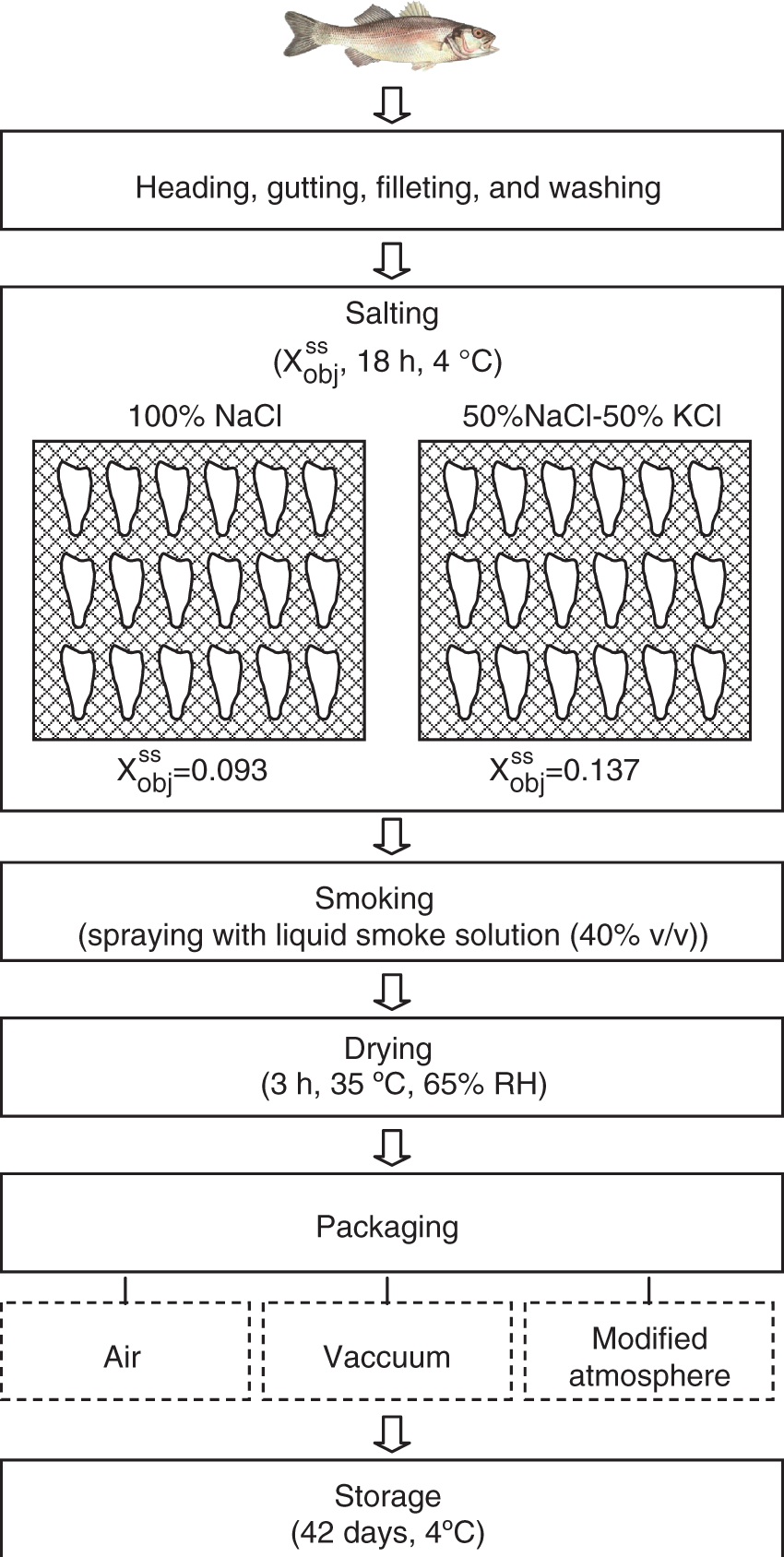
The fillets were randomly divided into two groups before the salting stage, one group was salted by covering the fish with NaCl (termed Na), and the other group with a mixture of NaCl:KCl:MgCO3 (0.9/1/0.1 w/w/w) (termed Na:K). MgCO3 was used as anticaking in order to keep the mixtures flowing freely. The salting and smoking conditions, as well as the proportion of sodium replaced by potassium were established in a previous study (Fuentes et al., 2010). All salts were supplied by Panreac Química SA (Barcelona, Spain).
Each group of samples (Na and Na:K) was randomly divided into three new batches, which were packaged under three different conditions: with air (A), in vacuum (VP) and in modified atmosphere (MAP) (70% CO2, 30% N2). All samples were stored at 4 °C for 42 days.
Raw material and smoked samples (Na and Na:K) at day 0 were analyzed for moisture, ash, chloride, sodium, potassium and magnesium contents, as well as pH, WHC, aw, texture and color parameters. During storage, moisture, pH, WHC, aw, texture and color of smoked samples were determined at 7-day intervals. Three different fillets were used at each sampling point and all the analyses were performed in triplicate (n = 9).
Methods
Physicochemical analyses
Moisture and ash contents were determined according to the AOAC methods 950.46 and 920.153 (1997), respectively.
Chloride content was determined after sample homogenisation in distilled water using an Ultraturrax T25 (IKA, Labortechnik, Staufen, Germany) at 9000 r/min for 3 min. Samples were made up to 100 mL and then centrifuged using a Medifriger BL centrifuge (JP Selecta, S.A., Barcelona, Spain), at 500 g for 5 min. An aliquot of the supernatant obtained was taken and titrated using Chloride Analyzer equipment (Sherwood 926, Cambridge, UK).
For sodium, potassium and magnesium, approximately 2 g of fish was reduced to ash and homogenised in 1 mL of hydrochloric acid (35% v/v Suprapur®, Merck, Darmstadt, Germany), filtered through a cellulose filter paper (Whatman no. 1, Whatman International Ltd., Maidstone, UK), diluted to an appropriate concentration for each elemental, and finally analysed by absorption spectrophotometry with a Perkin-Elmer spectrophotometer mod. 3100 (Norwalk, CT, USA).
The pH measurements were carried out using a digital pH-meter micropH 2001 (Crison Instruments, S.A., Barcelona, Spain) with puncture electrode (Crison 5231) in six different locations on the sea bass fillets. pH of liquid smoked solution was determined by using a combined electrode (Crison 5051).
WHC of fish muscle was determined by centrifugation at 500 g for 10 min at 10 °C, as proposed by Gómez-Guillén et al. (2000).
Water activity was assessed on minced samples with a water activity meter (GBX FAst/lab, Romans sur Isère Cedex, France).
Color measurement
Instrumental color analyses were performed with a Minolta Chroma Meter CM-3600d (Minolta, Osaka, Japan) with a D65 light source and a 10° observer. Data were expressed using the CIE 1976 L*a*b* system, representing lightness (L*), redness (a*) and yellowness (b*) Furthermore, the values of chroma (C*ab), which defines the saturation of color, and the angle of hue (h*ab) were obtained. Color measurements were made on the fillet location shown in Figure 2.
Schematic illustration of a sea bass fillet indicating where instrumental color (a) and texture (b) measurements were performed.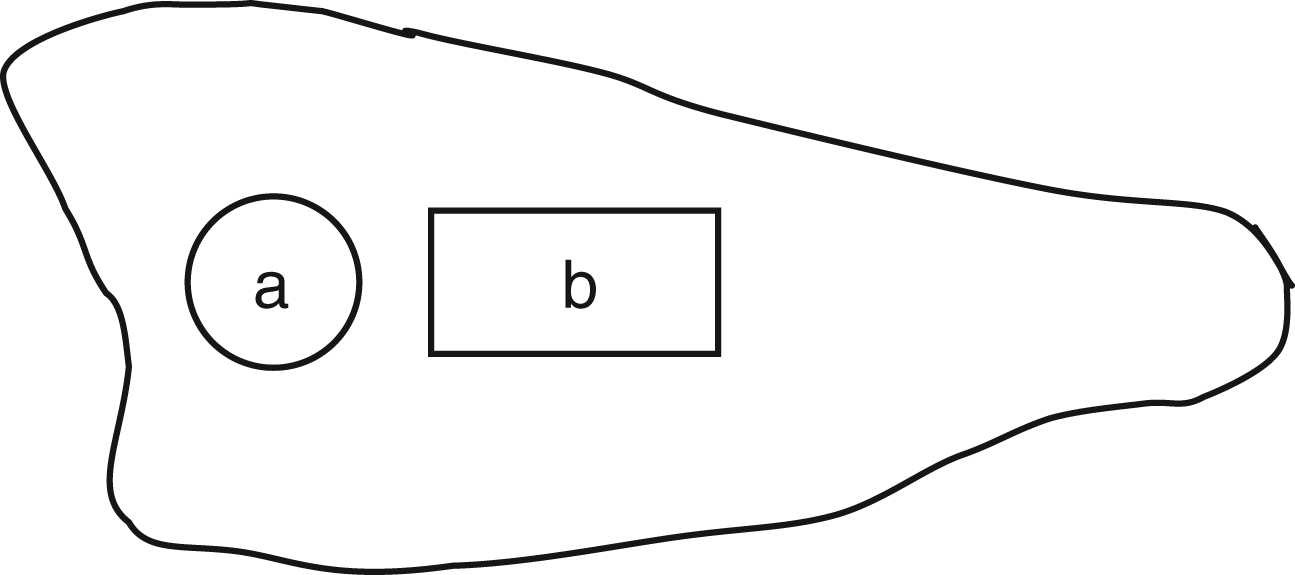
Texture measurement
Texture profile analysis (TPA) and a shear force test were performed on raw and smoked sea bass fillets, by using a Texture Analyser TA.XT2® (Stable Micro Systems, Surrey, UK) equipped with a load cell of 250 N. Samples were obtained by cutting out parallelepiped pieces (4 × 3 cm2) from the dorsal part of the fillet (Figure 2), the samples used for shear test being skinned. Measurement of samples was carried out at room temperature.
For TPA analysis a flat-ended cylindrical plunger (7.5 mm diameter) was employed. The plunger was pressed into the sample at a constant speed of 0.8 mm/s until it reached 50% of sample height, in order to simulate the jaw movement during mastication. The following parameters were quantified (Bourne, 1978): hardness, maximum force required to compress the sample; adhesiveness, area under the abscissa after the first compression; springiness, ability of the sample to recover its original form after deforming force was removed; cohesiveness, extent to which the sample could be deformed prior to rupture; gumminess, the force needed to disintegrate a semisolid sample to a steady state of swallowing (hardness × cohesiveness); chewiness, the work needed to chew a solid sample to a steady state of swallowing (springiness × gumminess).
For the shear force test, the texture analyzer was equipped with a HDP/BS Warner-Bratzler test cell (Stable Micro Systems), which sliced the samples perpendicularly to the muscle orientation at a constant speed of 100 mm/min, 90° angle inverted knife. The shear force was determined by the maximum force (N) recorded.
Statistical analysis
Data was reported as mean ± standard deviation (SD). Statistical treatment of the data was performed using the Statgraphics Plus software version 5.1 (Manugistics, Rockville, MD, USA). An analysis of variance (One-Way ANOVA) was conducted for each parameter evaluated to test if there were significant differences between fresh and recently smoked samples (salted with both types of salt). During the storage study, the data relating to each parameter were analyzed with a multifactor analysis of variance (ANOVA), considering the interactions amongst factors. The type of salt, packaging procedure, and time of storage were the factors, and the parameters were the variables. The least significant difference procedure was used to test for differences between averages at the 5% significance level.
Results and discussion
Effect of smoking process and partial sodium replacement
Physicochemical, color and textural parameters in fresh and recently smoked sea bass salted with 100% NaCl (Na) or 50% NaCl-50% KCl (Na:K) Values are mean ± SD (n = 9)
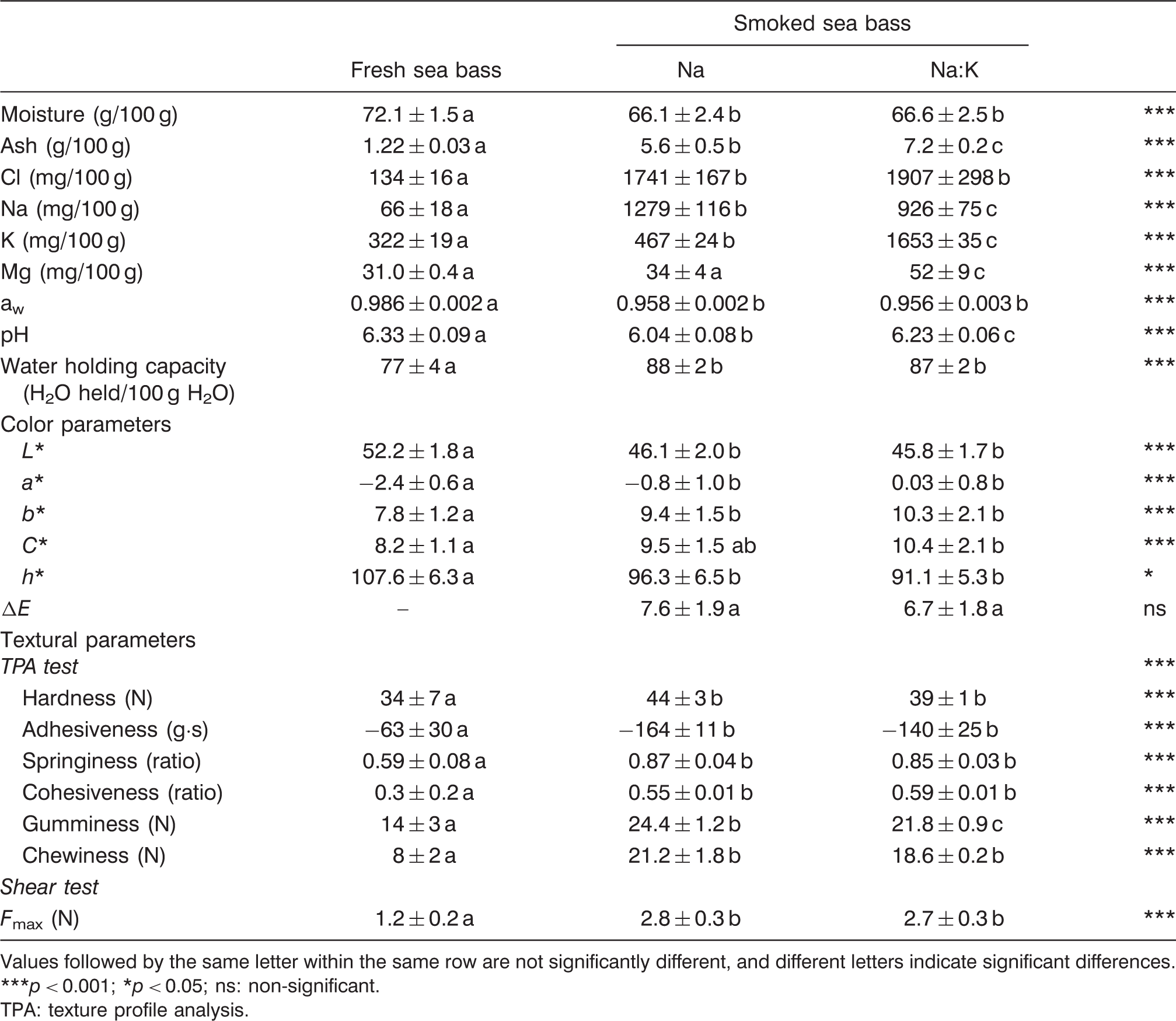
Values followed by the same letter within the same row are not significantly different, and different letters indicate significant differences.
p < 0.001; *p < 0.05; ns: non-significant.
TPA: texture profile analysis.
Moisture and aw were similar for Na and Na:K samples, since processing conditions were specifically established to achieve the same aw value in smoked sea bass regardless of the salt employed (Fuentes et al., 2010). With respect to healthy product aspects, this procedure can be used to reduce sodium content and increase potassium content. Although fish is not a good source of potassium compared to fruits and vegetables, 100 g of the new product would contribute to 35% of the recommended allowances (RDA) for adults (4.7 g; FNB, 2005), in contrast to 10% that would be contributed by the traditional product.
The initial pH value of the raw material was reduced after processing (Table 1). Hassan (1988) reported that the pH reduction after smoking is related to smoke acid absorption, moisture loss, and the reaction of phenols, polyphenols, and carbonyl compounds with protein and amino groups. In this case, the low pH value of the liquid smoke solution (2.33 ± 0.01) would also contribute to the decrease in pH. Moreover, Leroi and Joffraud (2000) indicated that pH is decreased in fish flesh by adding salt due to the increase in the ionic strength of the solution inside the cells. Na samples showed lower pH than Na:K samples, these differences could be due to the fact that salt composition affects the ionic strength of the intracellular solution.
The WHC was significantly lower in fresh sea bass than in smoked fish (Table 1). This could be due to the higher salt content in the smoked samples. Several authors (Akse et al., 1993; Goran et al., 2000) have studied the effect of salt processing on the meat and fish WHC, concluding that when salt content increases, WHC increases. The type of salt did not affect WHC values (Table 1).
Smoked sea bass fillets exhibited lower L* and h* values, and higher a*, b* and C* values than fresh fish (Table 1). These results are the same as those obtained by other authors (Cardinal et al., 2001). Partial sodium replacement had no significant effect on the color of recently smoked samples. The fact that no differences were found between Na and Na:K samples could be due to the important effect of liquid smoke application on fish samples, meaning that the possible differences could be reduced by the smoking process.
Textural parameters of fresh fish were similar to those reported by Periago et al. (2005) for farmed sea bass (Table 1). Smoking caused a considerable increase in all the textural parameters studied, as has been reported by different authors for other fish species (Birkeland et al., 2004; Gómez-Guillén et al., 2000; Regost et al., 2004; Sigurgisladottir et al., 2000). Some of these changes, such as the hardness or shear strength increase, are due to fish water loss during the smoking process. The type of salt employed did not affect the texture of smoked fillets.
Changes in the physicochemical properties of the smoked sea bass during cold storage
ANOVA F-ratio for each of the three factors, storage time t, sodium replacement S and packaging P and their respective interactions in the physicochemical, color and textural parameters
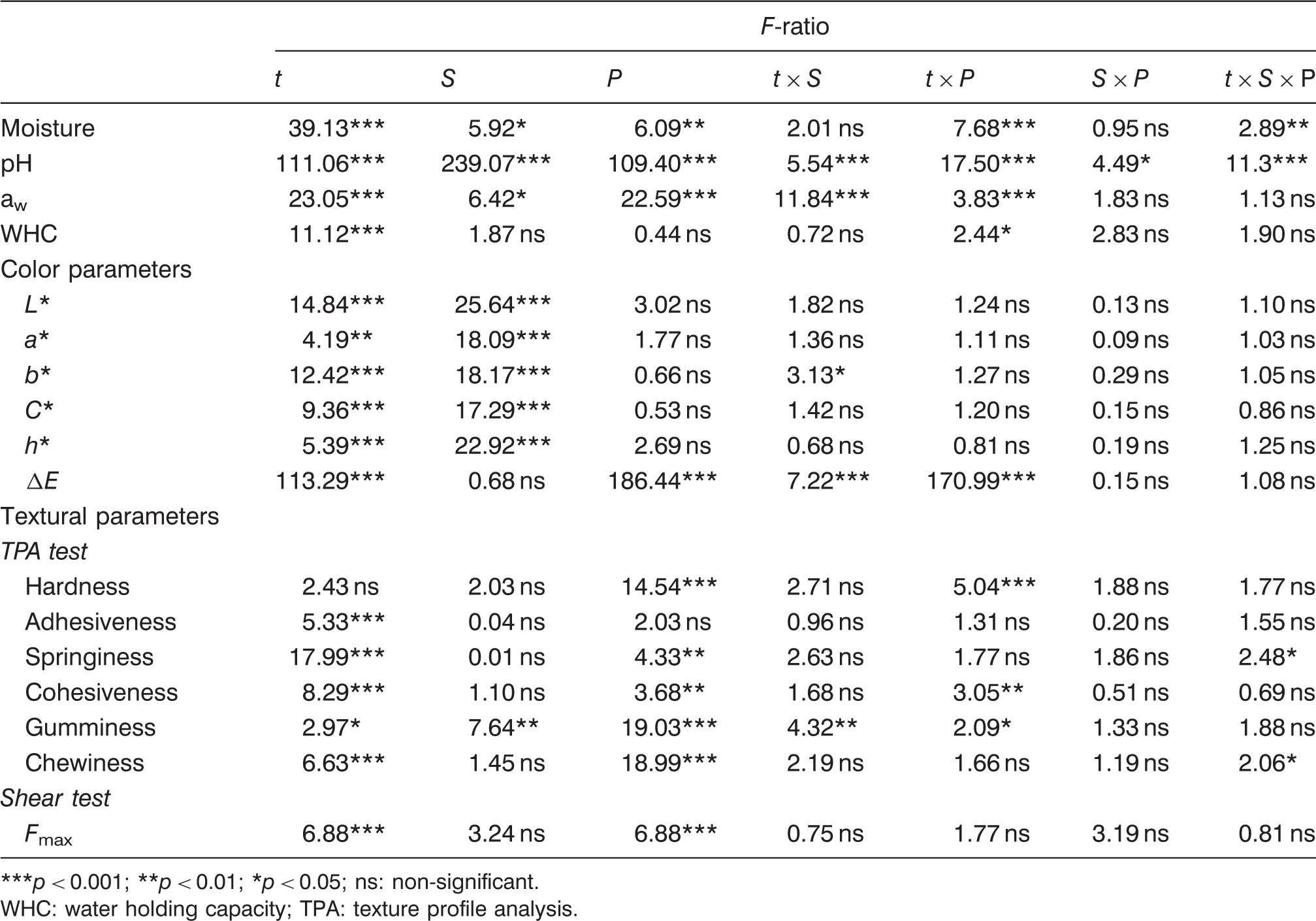
p < 0.001; **p < 0.01; *p < 0.05; ns: non-significant.
WHC: water holding capacity; TPA: texture profile analysis.
The initial differences found in pH between both types of salts remained present over the whole of the study, pH being of Na samples significantly lower (p < 0.001) throughout the 42 days of cold storage, independent of packaging (Figure 3). In general, pH of samples increased progressively during storage, mainly due to the production of basic compounds such as ammonia, trimethylamine, and other biogenic amines produced by fish spoilage bacteria (Boskou and Debevere, 2000; Goulas and Kontominas, 2007; Masniyom et al., 2002). Smoked fillets packaged in air exhibited the highest pH values throughout the entire storage period, while no differences were observed between VP and MAP.
Evolution of aw, pH and WHC in samples of smoked sea bass salted with 100% NaCl (Na) or 50% NaCl-50% KCl (Na:K) packaged in: air (◊ Na and ⋄ Na:K), in vacuum (▪ Na and □ Na:K), or in modified atmosphere (▴ Na and ▵ (Na:K) for 42 days storage at 4 °C. WHC: water holding capacity.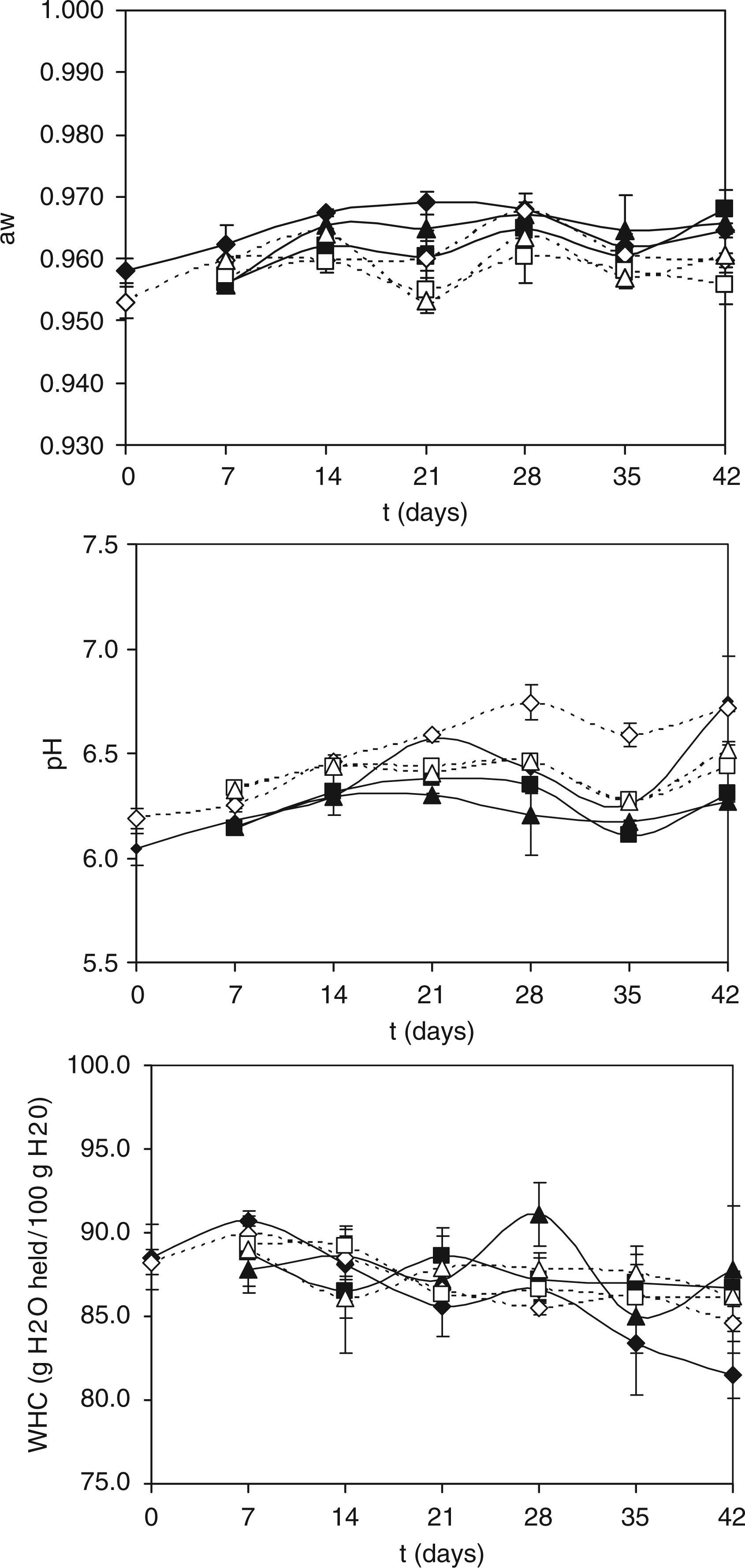
No significant differences in aw values were observed with regard to the type of salt, although in general Na:K samples showed the lowest values (Figure 3). This parameter was significantly affected by the storage time; however, no clear trend of the aw could be observed throughout the studied period.
Regarding WHC, no differences were observed depending on Na replacement. The WHC of smoked sea bass packaged in air gradually decreased during storage (Figure 3). However, this parameter was practically constant in samples packaged in VP and MAP, with no significant differences between the two types of packaging. The WHC measures the ability of muscle to retain water. The reduction observed in samples in air may be due to a protein denaturation throughout the storage, breaking down the muscle structure, which implies a loss of the intracellular water.
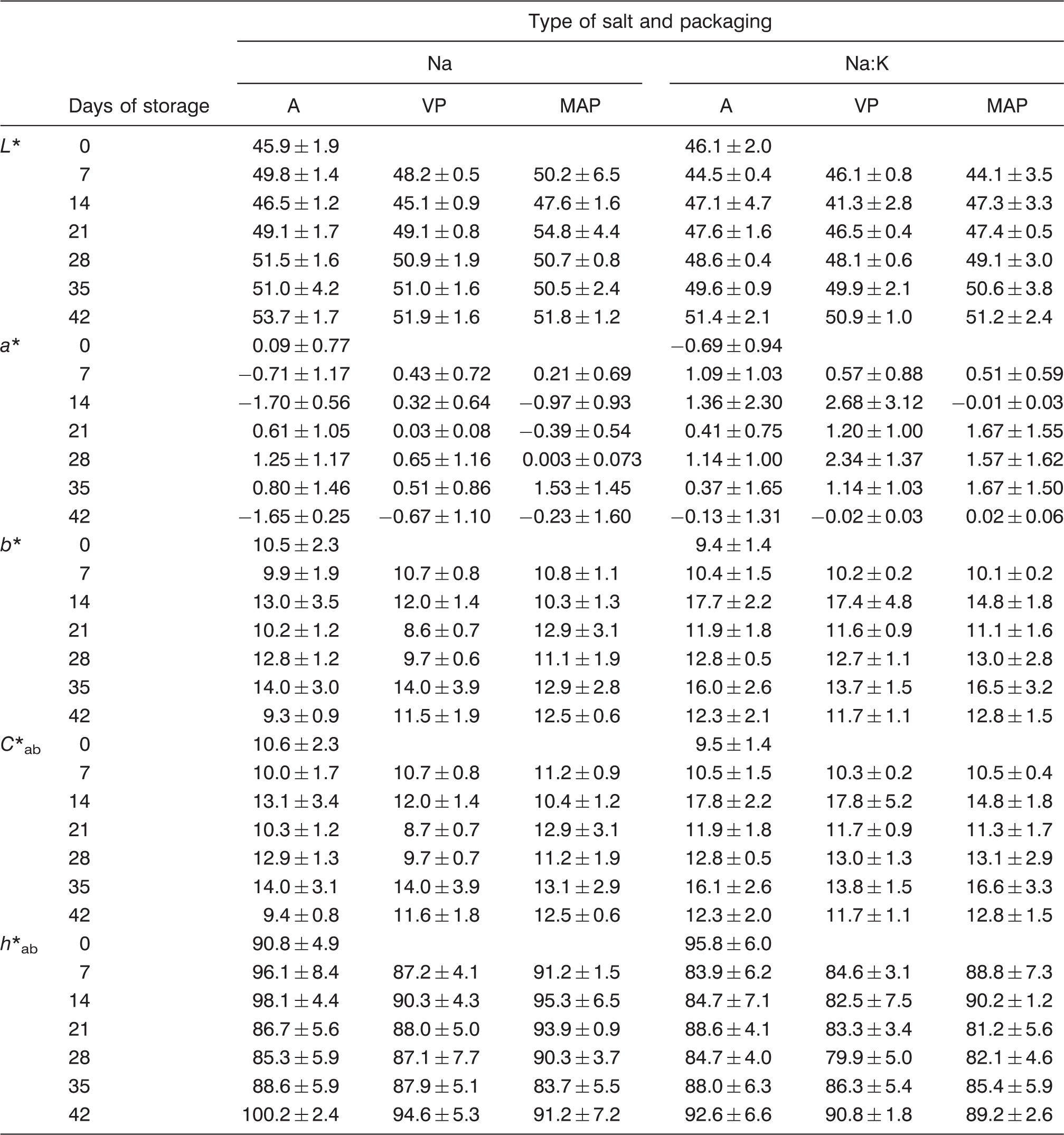
Color parameters of smoked sea bass salted with 100% NaCl (Na) or 50% NaCl-50% KCl (Na:K) packaged with air A, in vacuum VP, or in modified atmosphere MAP, for 42 days storage at 4 °C. Values are means ± SD (n = 9)
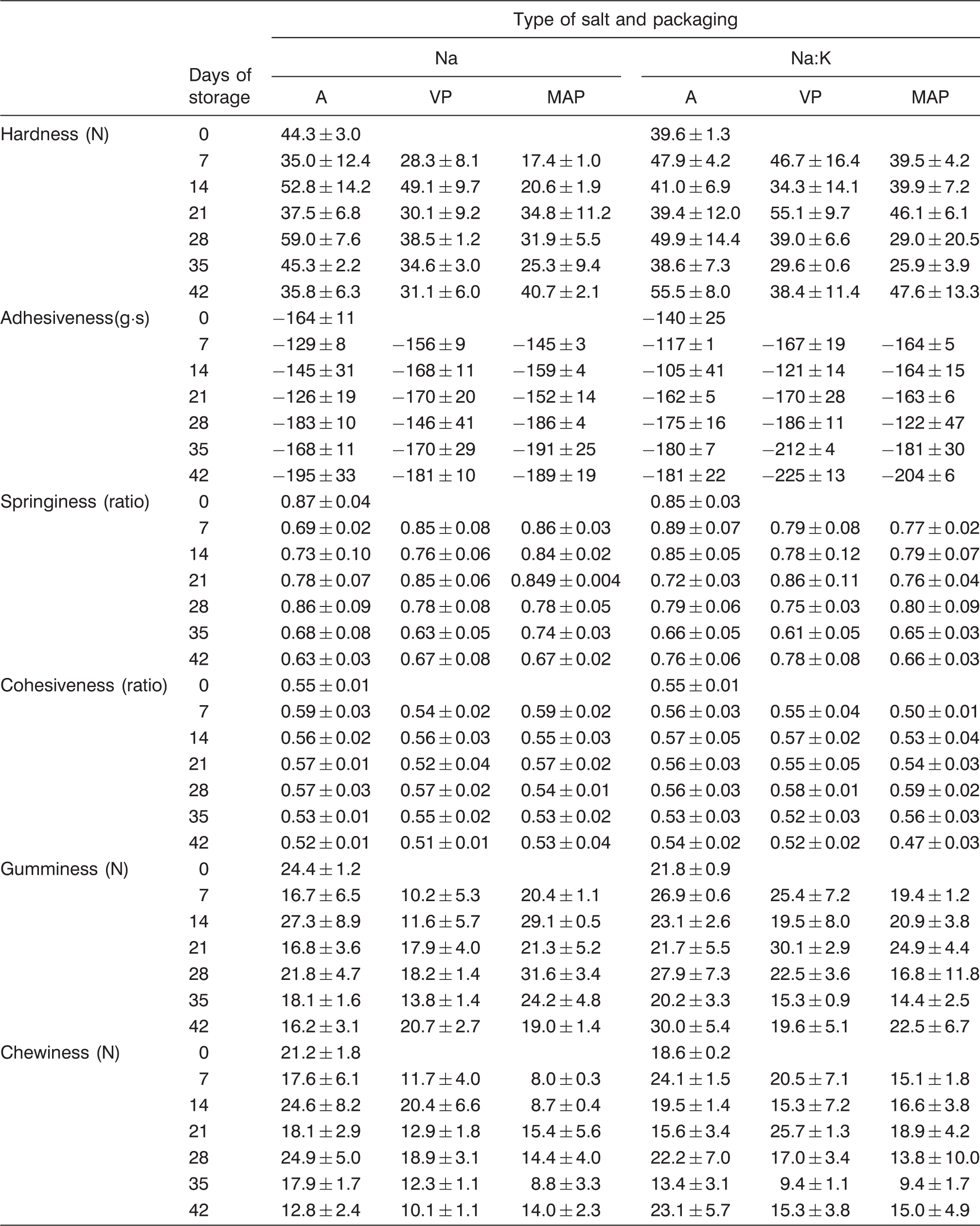
With regard to textural parameters, adhesiveness, springiness and cohesiveness were the most affected by storage time; while the packaging conditions had a greater effect on the hardness, gumminess and chewiness of fish samples (Table 2).
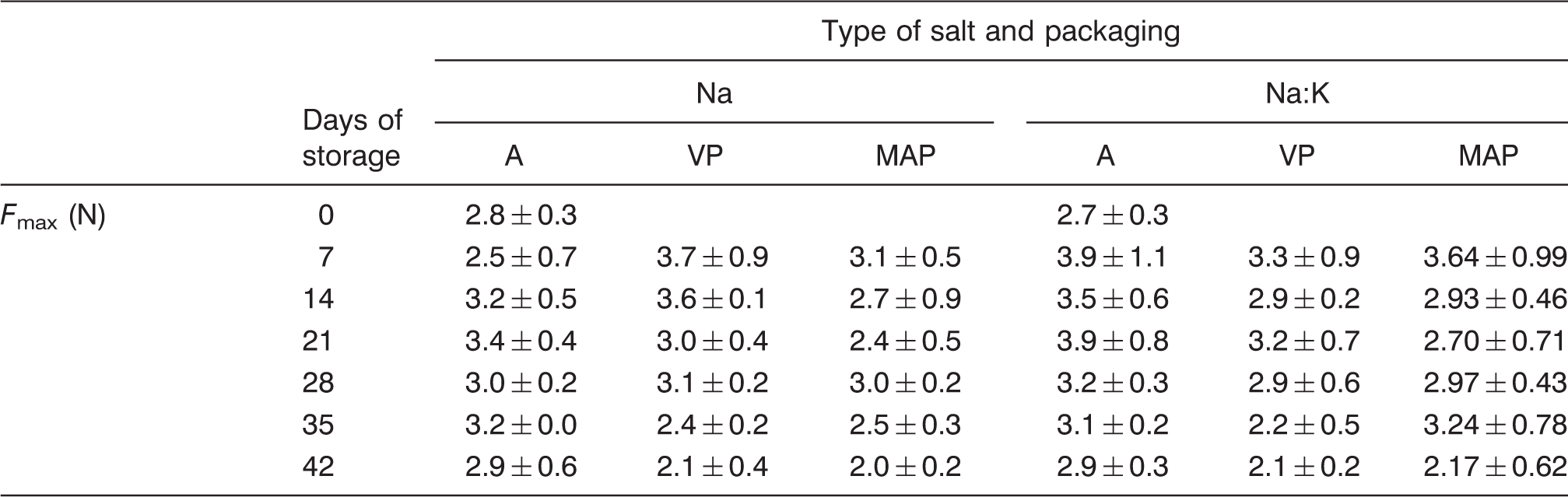
Textural parameters in samples of smoked sea bass salted with 100% NaCl (Na) or 50% NaCl-50% KCl (Na:K), packaged with air A, in vacuum VP, or in modified atmosphere MAP, for 42 days storage at 4 °C. Values are means ± SD (n = 9)
Conclusions
A reduction of approximately 30% of sodium is achieved by means of the procedure used in this study, which implies an increase in healthy aspects of the product not only resulting from reducing sodium content but also increasing potassium content. The smoking process implies changes in the physicochemical, color and textural parameters of sea bass. Salting and drying stages entail a reduction in the moisture, aw and pH values, and an increase in the WHC. The liquid smoke application leads to a change in the color of smoked samples as compared to fresh fish. The smoked sea bass have a firmer and more compact texture than unprocessed samples. The type of salt only affects pH and color, not having any effect on texture or other physicochemical parameters.
Vacuum and modified atmosphere packaging allow a higher stability in the pH and WHC values throughout the cold storage, as compared to air, with no differences between VP and MAP. However, some textural parameters decreased in samples packaged with oxygen reduction.
The Na partial replacement by potassium does not cause important changes in the physicochemical quality of smoked sea bass. A sensory and microbial study parallel to this study showed that this replacement does not affect the shelf life of the smoked fish (Fuentes et al., 2011). Therefore, this procedure is a good alternative for decreasing the risks associated with the high consumption of sodium, representing an increase in the added value of this product.
Footnotes
Funding
This work has been partially supported by Ministerio de Educación, Cultura y Deporte under FPU grant.
Acknowledgment
The revision of this paper was funded by the Universidad Politécnica de Valencia, Spain.