







Abstract
The objective of this study was to develop a quality index method for Engraulis anchoita stored in ice and to determine its shelf-life based on this quality index method and chemical indices such as total volatile bases and thiobarbituric acid-reactive substances. Besides, the chemical composition with emphasis on the polyunsaturated fatty acids content was determined. The results indicate that E. anchoita is a valuable protein source and lipid with important content of n-3 polyunsaturated fatty acids. The developed quality index method scheme was composed of 28 demerit points, divided into 4 parameters and 10 attributes. All attributes showed correlation with time of storage (R > 0.90). The quality index (QI) presented a linear relationship with storage (QI = 2.55x days in ice + 1.76; R2 = 0.98). In the shelf-life assessment-based quality index method, the rejection sensory point was observed after 7 days of storage due to the presence of unpleasant odours and deteriorated appearance. The total volatile basic nitrogen value remained below the upper limit of acceptability during the 10 days of ice storage. The evolution of thiobarbituric acid-reactive substances indicates lipids oxidation during the storage of anchovies. According to the results, the quality index method scheme developed for the E. anchoita stored in ice could be considered adequate to evaluate their freshness and to estimate its shelf-life.
Introduction
Engraulis anchoita is a small pelagic fish, which is found in the South Western Atlantic Ocean (SWAO), from Vitória (22 °S) in Brazilian waters to San Jorge Gulf (47 °S) in Argentine waters (Hansen et al., 2006; Pastous-Madureira et al., 2009). This pelagic specie is more abundant in cold and low-salinity waters, but also inhabits in regions of higher temperatures and salinity (8–23 °C; 14–35 g/L) such as the waters facing the south-eastern basin of Brazil. This specie represents a viable commercial alternative for this region due its high biomass values and the decline of demersal fishery (Hansen et al., 2006; Vas et al., 2007). In Argentina, the commercial exploitation of E. anchoita is seasonal. The highest catch occurs during spring time in coastal sectors of Buenos Aires Province, where massive spawning occurs (Pastous-Madureira et al., 2009). In the last years, catches were greatly increased, reaching 30,000 tons (SAGPyA, 2009). This species is mainly exported to European Union countries as ripened semipreserved anchovies by a salting and ripening process (Cabrer et al., 2002; Yeannes and Casales, 2008). A smaller proportion of it is used by the canning industry and has been started to be exported as marinated anchovies (Yeannes and Casales, 2008).
The chemical composition of fish varies between and within species depending upon several factors such as food availability, the season, localisation, sex and age (Akpınar et al., 2009; Exler et al., 1975; Görgün and Akpınar, 2007; Rueda et al., 1997; Shearer, 1994). This variation will influence the quality of the fish products and could be decisive in the yield and the application of technological processes (Huss, 1995; Stansby, 1967; Yeannes and Almandos, 2003). E. anchoita is a good protein source and lipids with high content of n-3 fatty acids, especially eicosapentaenoic acid (EPA, C20: 5n-3) and docosahexaenoic acid (DHA, C22: 6n-3) (Garcia-Torchelsen et al., 2009; Massa et al., 2009). These fatty acids play important roles in human health and nutrition (Sahena et al., 2009; Simopoulos, 2009; Valenzuela and Sanhueza, 2008). Great variations were reported in the fat content and fatty acids composition for this anchovy. These variations were related to the life cycle of the fish and to external factors like temperature, salinity and food availability (Chiodi, 1970; Garcia-Torchelsen et al., 2009; Massa et al., 2007, 2009).
Freshness is another important aspect to be considered in the fishing industry. After capture, there is a progressive decline in the sensory and nutritional quality of the fish due to intrinsic chemical and physical changes (called autolysis) and bacterial growth (Haard, 1992, Huss, 1995; Kyrana and Lougovois, 2002; Özogul et al., 2005; Surette et al., 1988). These processes generate different organic compounds affecting the quality of seafood (Haard, 1992; Howgate, 2010a; Huss, 1995; Özogul et al., 2006; Pedrosa-Menabrito and Regenstein, 1988; Sykes et al, 2009). The rates and patterns of changes depend on several factors such as species, spawning, feeding habits, temperature and water salinity, catching methods and storage conditions (Alasalvar et al., 2002; Ashie et al., 1996; Gill, 1990; Huss, 1995; Howgate, 2010a; Olafsdóttir et al., 2004). Biochemical, microbiological and sensory methods have been used to assess freshness and quality of fish during handling and storage (Huss, 1995; Koutsoumanis et al., 2002). Sensory evaluation is the most satisfactory method to determine the freshness and quality of fish and fish products, since it allows assessment of autolytic and microbiological changes (Alsalvar et al., 2002; Barbosa and Vaz-Pires, 2004; Connell, 1995; Howgate, et al., 1992; Howgate, 2010b; Huss, 1995; Hyldig and Green-Petersen, 2004).
The quality index method (QIM) has been introduced and widely studied as an alternative to others sensory methods traditionally used (Botta, 1995; Bremner, 1985; Costell, 2002; Sveinsdóttir et al., 2003; Sykes et al., 2009). The QIM is a fast and simple method to determine freshness in fishery products. Originally it was developed by researchers from the Tasmanian Food Research Unit (Bremner, 1985). This method is based on the objective evaluation of certain sensory parameters of raw fish (skin, eyes, gills, etc.) that significantly changes during degradation processes (Cardenas Bonilla et al., 2007; Hyldig and Green-Petersen, 2004; Ólafsdóttir et al., 1997; Sveinsdóttir et al., 2003). The set of descriptors of each attribute is assigned a demerit points range (0–3), which are in direct proportion to their importance in the deterioration pattern of the species. The demerit score awarded to each parameter are added together to give a total sensory score, called quality index (QI). In this way, a QI of zero is given for fresh fish and an increasingly higher score as the fish deteriorates. The objective is to obtain a linear correlation between QI and storage time in ice, which makes it possible to predict the remaining storage life (Cardenas Bonilla et al., 2007; Hyldig and Green-Petersen, 2004; Luten and Martinsdóttir, 1997; Martinsdóttir, et al., 2001; Sveinsdóttir et al., 2003). Other important characteristic of QIM is that it is developed for each species and fishery product, because it takes into account their particular characteristics. Therefore, it is necessary to develop specific QIM scheme for each specie and fish product. In the same way, is needed evaluate the applicability of the QIM for fish stored under different conditions (frozen–thawed, ice slurry, superchilling, modified atmosphere packaging, etc.). A list of the species for which QIM schemes have been developed was compiled by Barbosa and Vaz-Pires (2004), Hyldig and Green-Petersen (2004) and Cyprian et al. (2008), among other authors. QIM Eurofish team has developed a manual for the fish sector (Martinsdóttir et al. 2001), available in 11 languages. This manual contains QIM schemes for 12 fish species and information about how to use the QIM schemes. Also, more than 50 scientific publications are available on the website QIM Eurofish. So far, few QIM schemes have been developed with species of commercial interest of Latin-American: flounder, Paralichthys patagonicus (Massa et al., 2005); white croaker (Micropogonias furnieri) in ice stored (Massa et al., 2006; Teixeira et al., 2009) and common carp, Cyprinus carpio (Agüeria et al., 2007). So, the developments of QIM scheme for other important fish species from Latin America are needed to monitor and study their quality.
One of the principal chemical changes that occur in marine fish during spoilage is the production of volatile amines. These molecules are responsible for odour and flavour typical of fish with several days catch and they are commonly used as criteria for assessing the fish quality (Castillo-Yañez et al., 2007; El Marrackchi et al., 1990; Huss, 1995; Karungi, et al., 2004; Sikorski, 1990). The designation ‘volatile amines’ regroups mostly three molecules, ammonia, dimethylamine (DMA) and trimethylamine (TMA). DMA and TMA result from the degradation of trimethylamine oxide (TMAO), a naturally occurring compound in marine fish that plays an important role in the osmoregulation process. DMA is mostly produced by endogenous enzymes while TMA is formed by activity of specific spoilage bacteria (Etienne, 2005; Huss, 1995). DMA is present in low concentration in fish that is freshly caught, it can be used to monitor fish freshness and to evaluate the quality of frozen-stored products (Etienne, 2005; Howgate 2010c; Huss, 1995). TMA is an excellent spoilage index; is useful for objectively measuring the eating quality of various fishes especially on the medium-later phases of spoilage but it does not reflect the earlier stages of spoilage (Etienne, 2005; Howgate 2010c; Huss, 1995). Total volatile bases nitrogen (TVB-N) was one of the first chemical indexes applied to evaluate spoilage of fish (Dalgaard, 2000; Huss, 1995; Olafsdóttir et al., 1997). This index includes the most important nitrogenous volatile compounds that are present in fish under storage condition. The TVB-N level in fish that is freshly caught is between 5 and 20 mg N/100 g muscle and levels of 30–35 mg N/100 g muscle are considered the limit of acceptability for ice-stored cold water fish (Connell, 1995; Dalgaard, 2000, Etienne, 2005; Howgate, 2010c; Huss, 1995). The European Union has established the level ranging from 25 to 30 mg of TVB-N/100 g (EU, CEE/95/149).
During the ice storage of fish, significant changes also occur in the lipid fraction. The marine lipids comprise highly unsaturated fatty acids that are known to be prone to oxidation (Chaouqy et al., 2008; Church, 1998; Mazorra-Manzano et al., 2000; Xiong, 1994). In the advanced stages of oxidation, the breakdown of hydroperoxides generates low molecular weight carbonyl compounds and alcohol that lead to appearance of objectionable odours and colours (Aubourg et al., 2005, 2007; Chaijan et al., 2006; Sikorski, 1990). Therefore, it is important to determine the fatty acid profile to determine the degree of unsaturation and its susceptibility to oxidative rancidity. Several methods have been developed to assess lipid oxidation in foods. The thiobarbituric acid-reactive substances (TBARS) test is among the most widely used methods used to quantify lipid oxidation products and it is a simple and fast test (Nishimoto et al., 1985; Özogul et al., 2007; Papadopoulos et al., 2003; Tarladgis et al., 1960). The TBARS test determines the amount of malondialdehyde (MDA), a major secondary by-product of lipid oxidation. The determination of MDA in fish products has been widely studied, and significant correlations between the TBARS values and sensory assessment have been reported (Chaijan et al., 2006; Hoyland and Taylor, 1991; Undeland et al., 1999).
The aim of this study was to develop a QIM for E. anchoita during ice storage. Also, the freshness and remaining shelf-life for this specie during ice storage was estimated based on QIM scheme developed and chemical indices.
Materials and methods
Samples were collected during research cruise conducted by the INIDEP on board the RV ‘Oca Balda’ with a midwater trawl net. The study area included the coastal sector of Buenos Aires province between 38 °S and 41 LS during the months of October–November, period of commercial catch.
Methods
Sample preparation
For chemical composition analysis, the anchovies were placed in polyethylene bags; these were vacuum closed and frozen at −20 °C until further analysis. The sensory analysis was performed with adult individuals of commercial size (14–16 cm). These were stored in self-draining boxes and covered with ice (fish/ice ratio: 1:2). The boxes were stored in a refrigerated chamber (0–4 °C) and the melted ice was replaced daily. Anchovies were sampled immediately after being caught and then every 24 h during 10 days of storage. At each sampling time, six specimens were randomly chosen for sensory assessment and six for freshness chemical analysis.
Chemical composition
For the analysis of chemical composition whole anchovies were used. The samples were homogenised with Omni Mixer, Sorvall. Water content was determined by drying the samples at 105 ± 1 °C until constant weight was reached (AOAC, 1995). Ash content was determined in muffle furnace at 550 °C until white ashes were obtained. The proteins (%N × 6.25) were determined using the Kjeldahl method (AOAC, 1995). Total lipids were extracted using the method described by Bligh and Dyer and modified by Undeland et al. (1998). The lipid extracts were stored at −20 °C for fatty acid determination. All analyses were performed in triplicate. The results of each chemical component were expressed as g/100 g wet weight.
Fatty acid analysis
Lipids were saponified and derivatised to their methyl esters for fatty acid analysis (AOCS, 1990). The fatty acid methyl esters were analysed in a Shimadzu GC-17A gas chromatograph, equipped with FID and an electronic integrator. An Omegawax 320 fused silica capillary column (30 m × 0.32 mm ID, 0.25 µm phase film) was used. The oven program was 190 °C (2 min), 190–225 °C (2°C/min). The injector and flame-ionisation detector were held at 260 °C. The carrier gas was nitrogen at a flow of 25 mL/min. Identification and quantification were done by comparison with the retention times and peak areas of reference standard PUFA-1, Marine Source Supelco® Supelco Inc.). Retention times and peak areas were processed by Shimadzu® SMI Class – GC 10 software
Total volatile bases nitrogen
TVB-N was determined in acid extract of the anchovy fillet according to the reference method specified by the EU (CEE/95/149).
Lipid oxidation analysis
The lipid oxidation was determined in anchovy fillet by the TBARS index, according to Schmedes and Holmer method (1989) and modified by Tironi (2005). The TBARS number was expressed as milligram of malonaldehyde equivalents per kilogram of sample. The absorbance was determined by a spectophotometer (Shimadzu UV-1800) at 532 nm against a blank containing distilled water and TBARS solution.
Sensory evaluation
The methodology used to develop and evaluate the QIM scheme was based on the method earlier described by Martinsdóttir et al. (2001), Sveinsdottir et al. (2003) and Hyldig and Green-Petersen (2004). In order to design the QIM, the changes that occurred during ice storage of E. anchoita were observed and registered by three assessors with experience in seafood sensorial analysis. The observed changes were considered to design the preliminary QIM scheme. Furthermore, to obtain the most appropriate descriptors the sensory schemes available for other Engraulidae were discussed. The QIM scheme was developed based on the changes of several parameters and its attributes such as general appearance, colour and shape of eyes, colour and odour of gills and muscle and abdomen texture. For each attribute a set of descriptors was assigned with demerit points from 0 to a maximum of 3, where 0 represented optimal quality and a higher score indicated progressive deterioration of quality. Afterwards, training sessions were performed to familiarise the panel members with the developed sensory scheme.
Finally, to assess the freshness and shelf-life of E. anchoita in ice storage by QIM scheme application sessions were performed. These sessions were carried out by eight trained panellist. Six anchovies were evaluated by every evaluator in each of the different storage times. The scores for the parameters were added to give the total sensory punctuation: the quality index (QI). Sensory characteristics were used to define the time of rejection, based on refusal by all the assessors. This was considered ideal for this species because usually, marine products are safe within the sensory shelf-life especially for small-sized fish such as anchovies (Köse et al., 2008; Köse, 2010).
Statistical analysis
The results of chemical composition and fatty acid profile of anchovy are presented as mean value and standard deviation. Each component was analysed in triplicate. The mean values of TVB-N and TBARS were plotted separately against the storage time. To establish the final QIM scheme, the sensory data were submitted to a correlation analysis between the values of each parameter evaluated and time (in days). Then, a principal component analysis (PCA) was conduced to evaluate importance of each parameter during fish spoilage. A regression analysis was carried out between the QI and the storage time in ice. The uncertainty of prediction of days on ice from the QI was estimated using partial least-squares regression (PLS). The confidence level was 95% in every statistical test used. The analyses were done by using the statistical package STATISTICA 6.0 (Statsoft, Inc., Tulsa, OK, US).
Results and discussion
Chemical composition
The chemical composition of anchovy used in this study was 73.07 ± 1.40 g/100 g of water content, 17.78 ± 0.34 g/100 g of protein, 7.37 ± 1.93 g/100 g of lipids and 2.86 ± 0.18 g/100 g of ash. These values that are within the normal limits for this species (Massa et al., 2007, 2009, Garcia-Torchelsen et al., 2009), represent a good substrate for microbial growth. Several studies show that the fat content of E. anchoita presents wide variations during the year, is minimal during the summer months when the individuals are in post-spawning and maximal in autumn and spring where the spawning occurs (Yeannes and Casales, 1995). The lipids presented 31.01% of saturated fatty acids dominated by palmitic acid (C16:0) followed by myristic acid (C14:0). In the monounsaturated fatty acids fraction (41.75%), the major constituents were palmitoleic acid (C16:1), oleic acid (C18:1) and docosaenoic acid (C22:1). The content of polyunsaturated fatty acids was 28.94%, with eicosapentaenoic acid (C20:5n-3, EPA) being the most important and docosahexaenoic acid (C22:6n-3, DHA). The n-3 fatty acids content was 24.02% of the total fatty acids. The results are similar to those described by Massa et al. (2007) for this species and are in agreement with the data presented by other cool deep-sea fish oil such as menhaden cod sardine and anchovy (Karakoltsidis et al., 1995; Saglik and Imre, 2001; Shamsudin and Salimon, 2006). The highly unsaturated fatty acids present in this species, makes it very susceptible to oxidative rancidity. The importance of maintaining the nutritional quality of this species is implicit in several studies showing that EPA and DHA fatty acids may help to lower the risk of chronic diseases such as heart disease, cancer and arthritis (Pamela, 2001; Sahena et al., 2009; Weaver and Holub, 1988). In addition, these oxidative processes may affect sensory and technological characteristics of this product.
Sensory evaluation
During the preliminary sessions, the changes in sensory parameters for E. anchoita stored in ice were examined. The parameters that presented the most significant changes were: general appearance, eyes, colour and odour of gills, dorsal texture and abdominal aspect. Immediately after capture, the E. anchoita presented a bright appearance with dark blue iridescence in dorsal surface and a silver colour in the ventral area. During the spoilage process, the skin lost its iridescence and showed the torn muscle mainly in the abdomen (Figure 1). The eyes changed from a convex shape with transparent cornea and black shining pupil to sunken eyes, opaque cornea and grey distorted pupil. The gills initially bright red with a characteristic ‘seaweed’ smell changed to grey-brown colour with strongly unpleasant odours. The opercula were silver-shiny colour at the beginning of the storage and a progressive increase of bloodiness was observed during spoilage (Figure 1). The texture was determined according to Martinsdóttir et al. (2001) by finger pressing the muscle and observing how the flesh recovered. During the first day of storage, the anchovies were in rigor-mortis state. After the resolution of rigor-mortis, the muscle was relaxed again and later the flesh became soft due to muscle autolysis and due to the action of microbial enzymes (Gill 1995; Nielsen 1995). One of the main problems affecting the anchovy during storage was bursting of the abdominal tissue (belly bursting) caused by rapid autolytic degradation. This change that was described in other anchovies (Hernández-Herrero et al., 2002; Pons-Sanchez Casado, 2006) is related to stomach content and feeding at the time of capture. All these parameters and their attributes were taken into account in developing the QIM scheme. Each attribute was assigned at least three descriptors with their appropriate score (demerit points). The final QIM scheme developed for E. anchoita constituted of 4 parameters and 10 attributes with a total of 28 demerit points (Table 1). All attributes of QIM scheme showed an increasing linear with time of ice storage (R > 0.90). Other characteristics, such as mucus in surface external and gills, were excluded by a low correlation with storage time (R = 0.58 and 0.68, respectively).
General appearance of Engraulis anchoita stored in ice. Sensory quality index method scheme for Engraulis anchoita stored in ice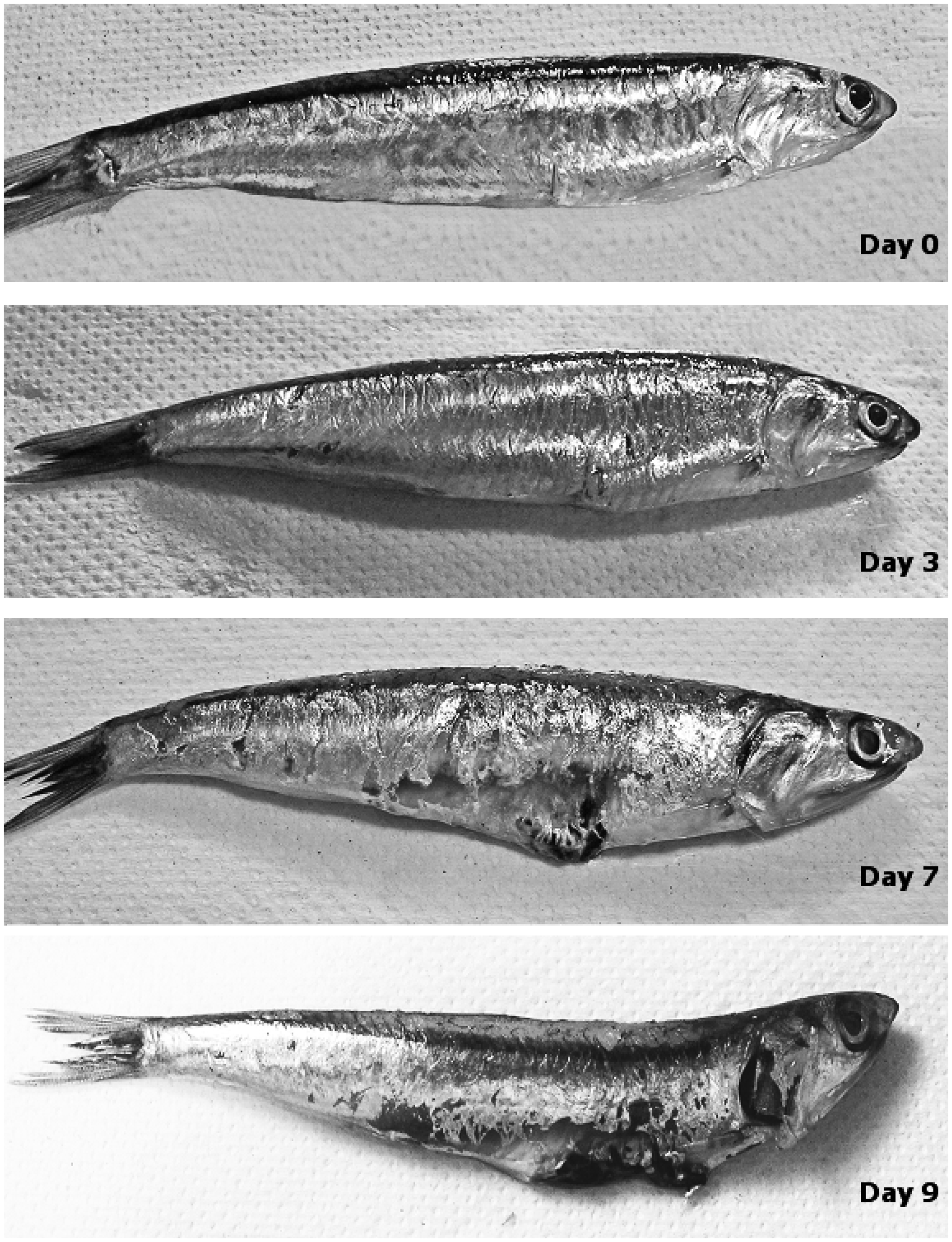
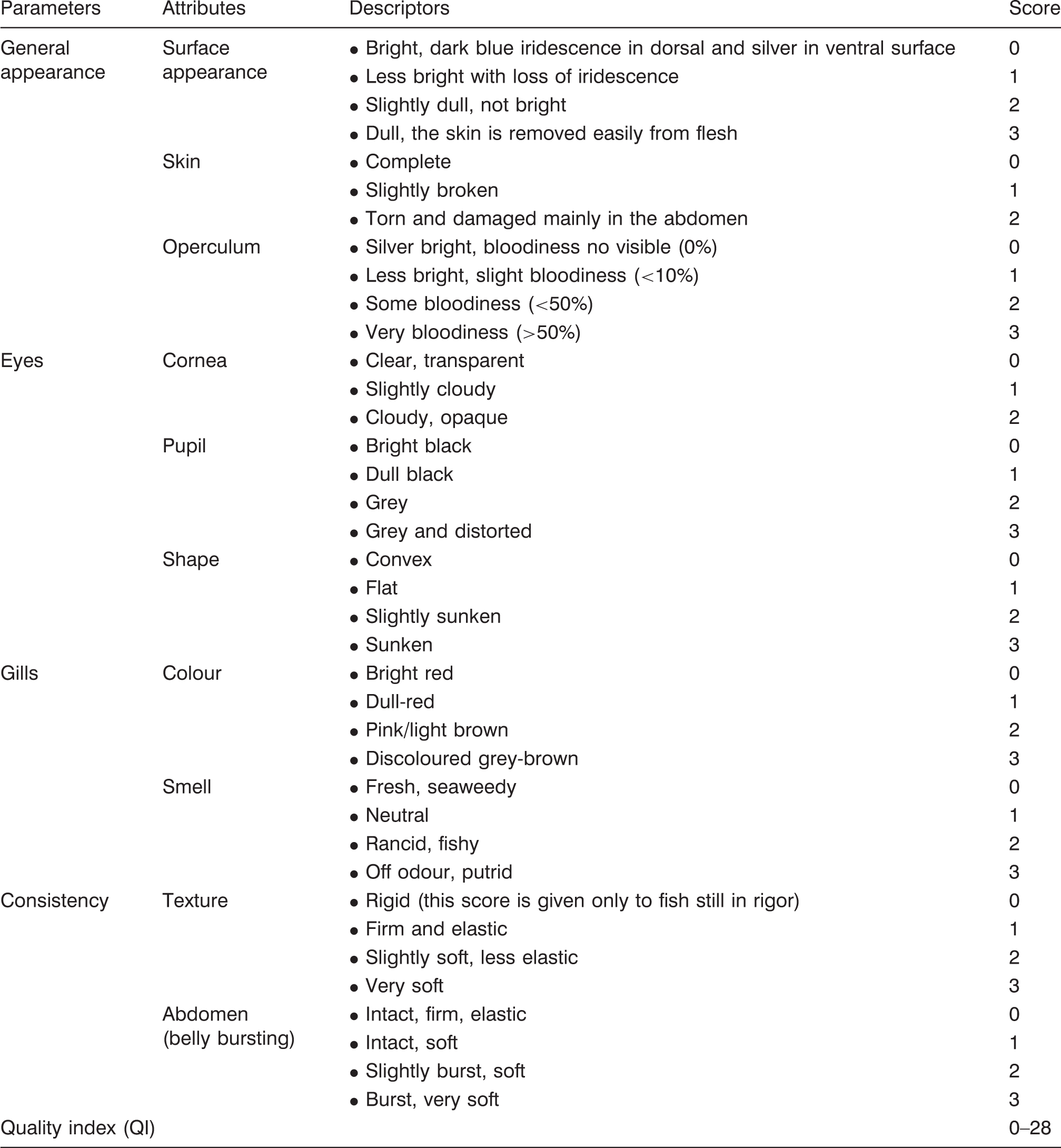
The fillet aspect was omitted in this QIM scheme because their evaluation was laborious and destructive to the sample. But this is an important parameter to be analysed if products, such as marinated anchovy fillet, are manufactured. The fresh anchovy fillet was firm with translucent and bright appearance with a red centreline, which originates mainly by the blood remnant from arteries and veins cut during the filleting. During storage in ice, the flesh softens and loses its brightness. The centreline becomes brown in colour by the autoxidation of oxyhemoglobin into methaemoglobin. This fact is in accordance with Jensen (2001) and Sivertsen et al. (2009), who also mentioned that autoxidation rate of haemoglobin increases with storage temperature and varies between species.
PCA was performed to obtain a better understanding of how the quality sensory parameters of E. anchoita change with time of storage in ice (Figure 2). All parameters presented highly correlated with the PCA analysis. The first component (PC1) explained most of the variations (93.48%) whereas the second component (PC2) contributed with 2.91%. The most important parameters for PC1 were storage time (0.993), pupil of eyes (0.995), texture of dorsal muscle (0.986) and belly bursting (0.984). For PC2, cornea of eyes (0.28) and gills smell (0.21) were parameters that most contributed. The parameters of quality measured contributed to more than 96.39% of the total information given by QIM scheme developed for E. anchoita.
Loadings in PCA of Engraulis anchoita data including all quality parameters assessed in the QIM scheme (only the right side of the graph is displayed).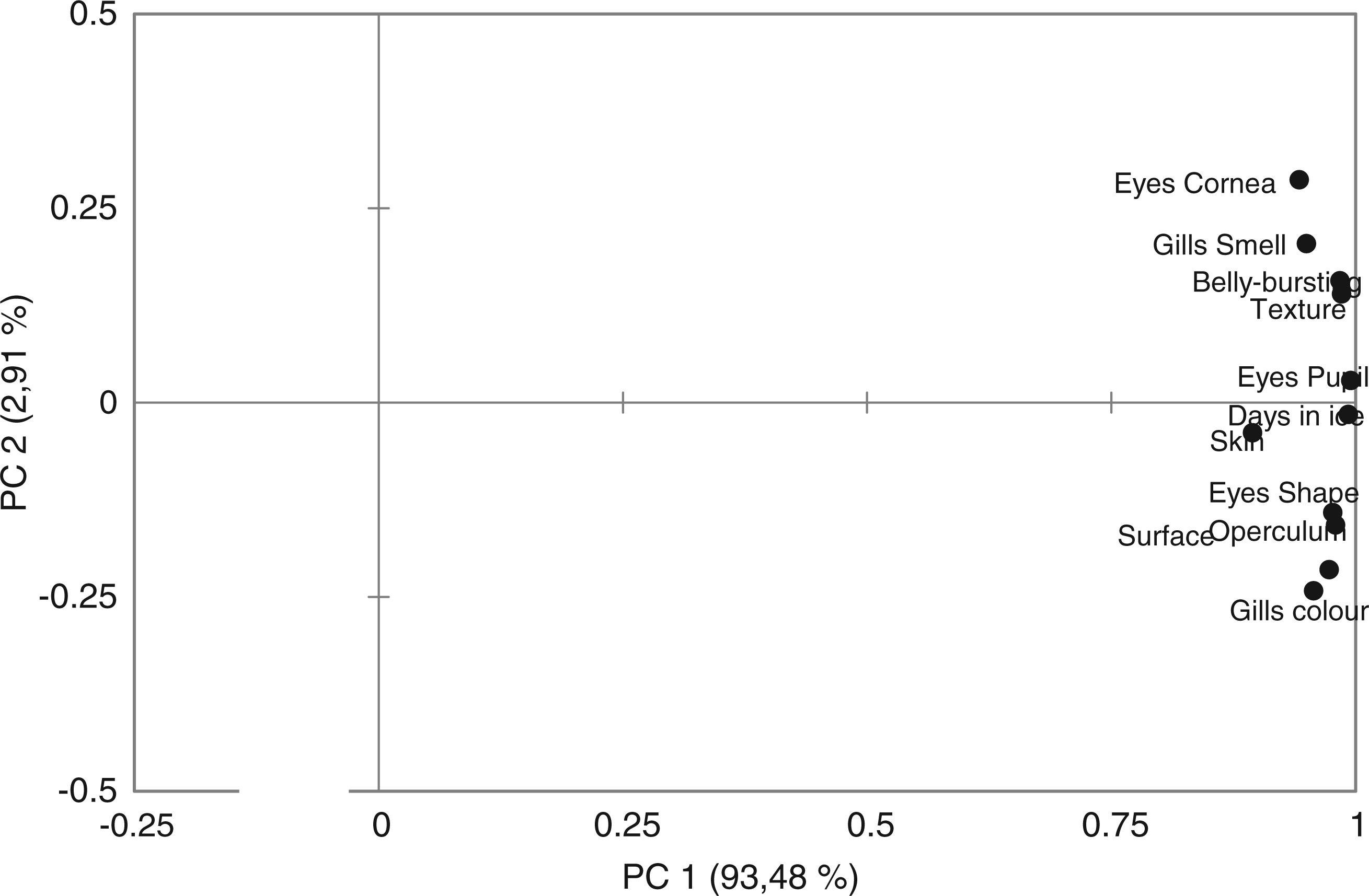
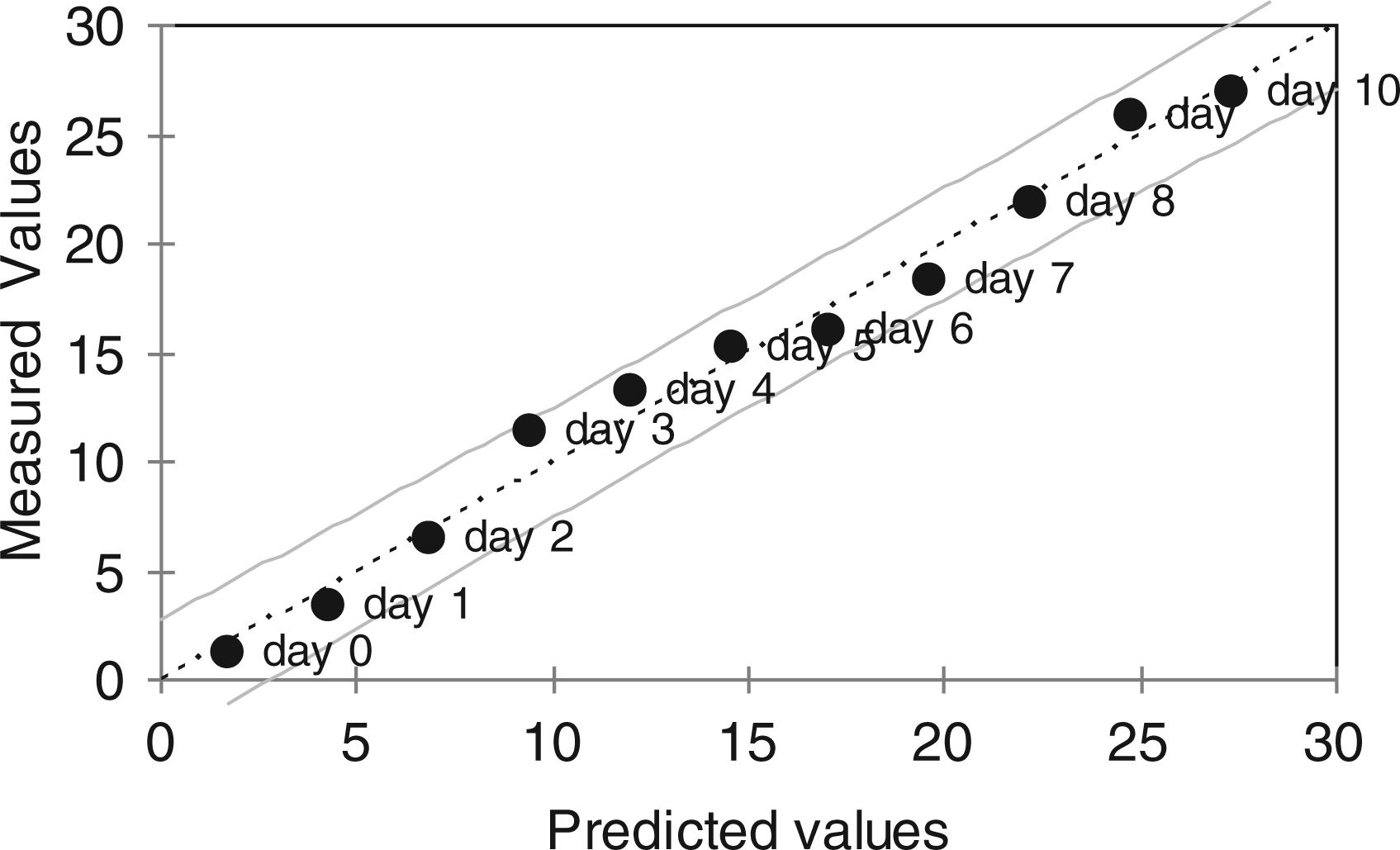
The total sum of scores evaluated according to this scheme was presented as the QI. This index linearly increased with the storage time in ice, which showed that the attributes gradually deteriorated with time (Figure 3) Its evolution was represented by the equation QI = 2.55x + 1.76, with x = days in ice; r2 = 0.985). The analysis of partial least square regression (PLS) indicated that the regression model proposed presented a standard error of estimate = 1.044; p < 0.001 (Figure 4). This result indicates that the storage time could be estimated with an accuracy of ±1 day.
Quality index (QI) of Engraulis anchoita in ice storage. (•) Average and standard deviation for each point of QI. (—) Lineal correlation: Y = 2.5576x + 1.7495, R2 = 0.98; R = 0.992. PLS regression model of the 28 demerit points. QIM scheme measured vs. predicted values (limits of the regression: 95% confidence).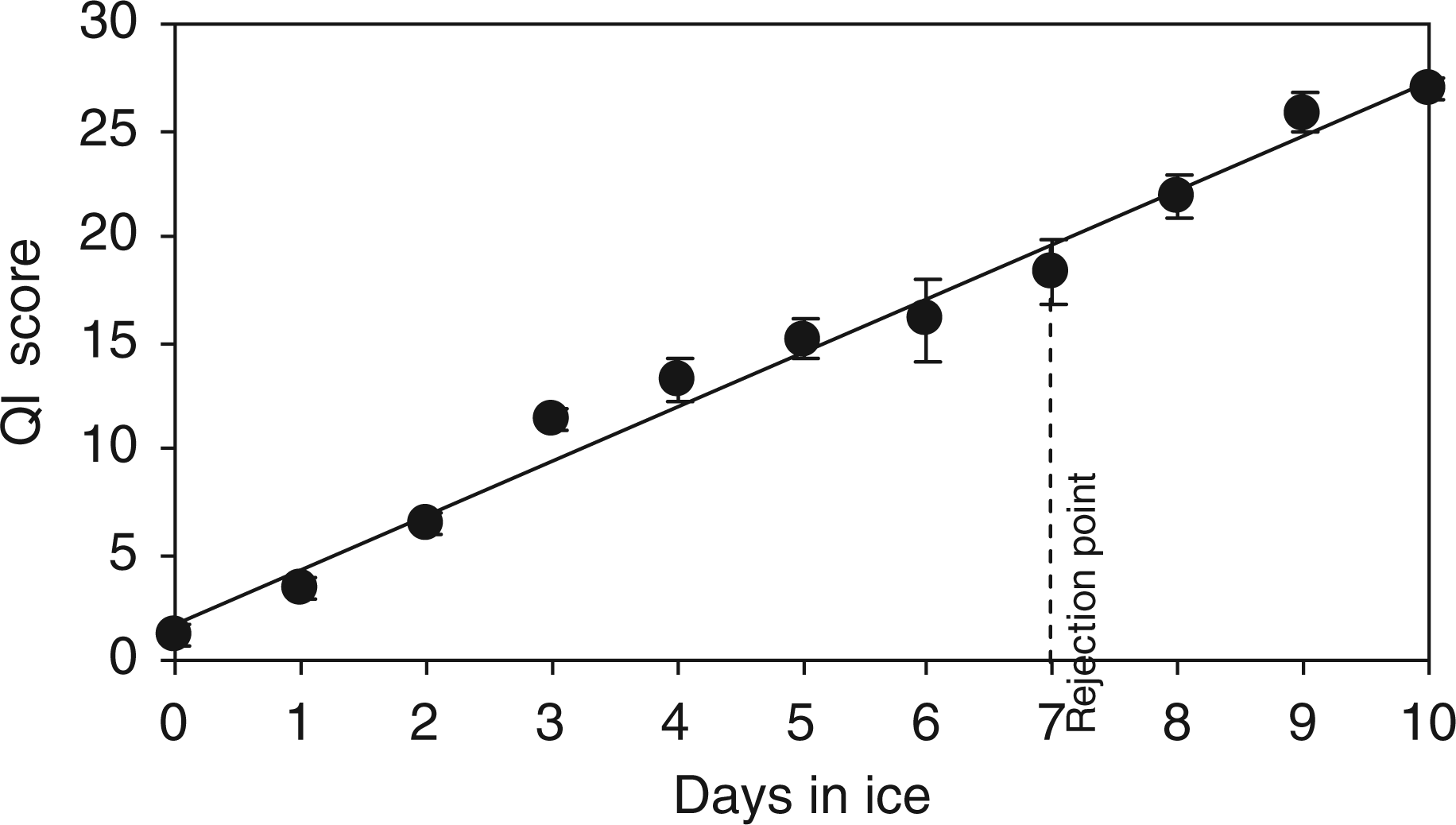
Shelf-life study
To estimate the shelf-life of E. anchoita stored in ice the QIM scheme that was developed and chemical indices such as TVB-N and TBARS that usually are measured to follow the spoilage pattern were used. In sensorial analysis, the evaluators found that the anchovy remains in excellent state during the first day of storage and retained its freshness up to the third day (QI < 12) and maintained good condition up to sixth day in ice. A score of 18 demerit point was considered as the acceptability sensory limit for E. anchoita in ice. This sensory rejection point was obtained after 7 days of storage, mainly due to the presence of unpleasant odours and deteriorated appearance (dull pigmentation and bursting of belly). As was mentioned, the QI curve obtained by regression model can be used to predict storage time in ice and remaining shelf-life of fresh fish (Alasalvar et al., 2001; Huidobro et al., 2000; Kyrana et al., 1997).
The changes in TVB-N of anchovies stored in ice are shown in Figure 5. At the beginning of storage, TVB-N value was 18.43 ± 0.89 mg/100 g flesh. The TVB-N values remained without significant differences during the first 5 days of storage (p > 0.05) and then started to increase exponentially up to 30.09 ± 1.02 mg/100 g on day 10 of storage. The determination of TVB-N is one of the chemical indexes widely applied for the evaluation of the freshness of fish (El Marrakchi et al., 1990; Krzymien and Elias, 1990). TVB-N values remained constant during autolytic degradation and then increased exponentially; this probably coincided with onset of spoilage and the logarithmic phase of microbial growth. This behaviour was described in several marine species stored in ice (Huss, 1995). The level of TVB-N in fish that is freshly caught is generally between 5 and 20 mg N/100 g muscle, depending on the species, size and feed among others factors, and levels of 30–35 mg N/100 g muscle are considered as the limit of acceptability of fish stored in ice (Castro et al., 2006; Connell, 1995; Huss, 1995). Although in this work TVB-N values remained below the upper limit of acceptability during the 10 days of ice storage, sensorial assessment indicated the rejection point on day 7 of the study.
Changes in the TVB-N of Engraulis anchoita muscle during ice storage. (▪) Average and standard deviation for each day. (—) Quadratic equation (y = 0.16x2 − 0.38x + 18.07; R2 = 0.99).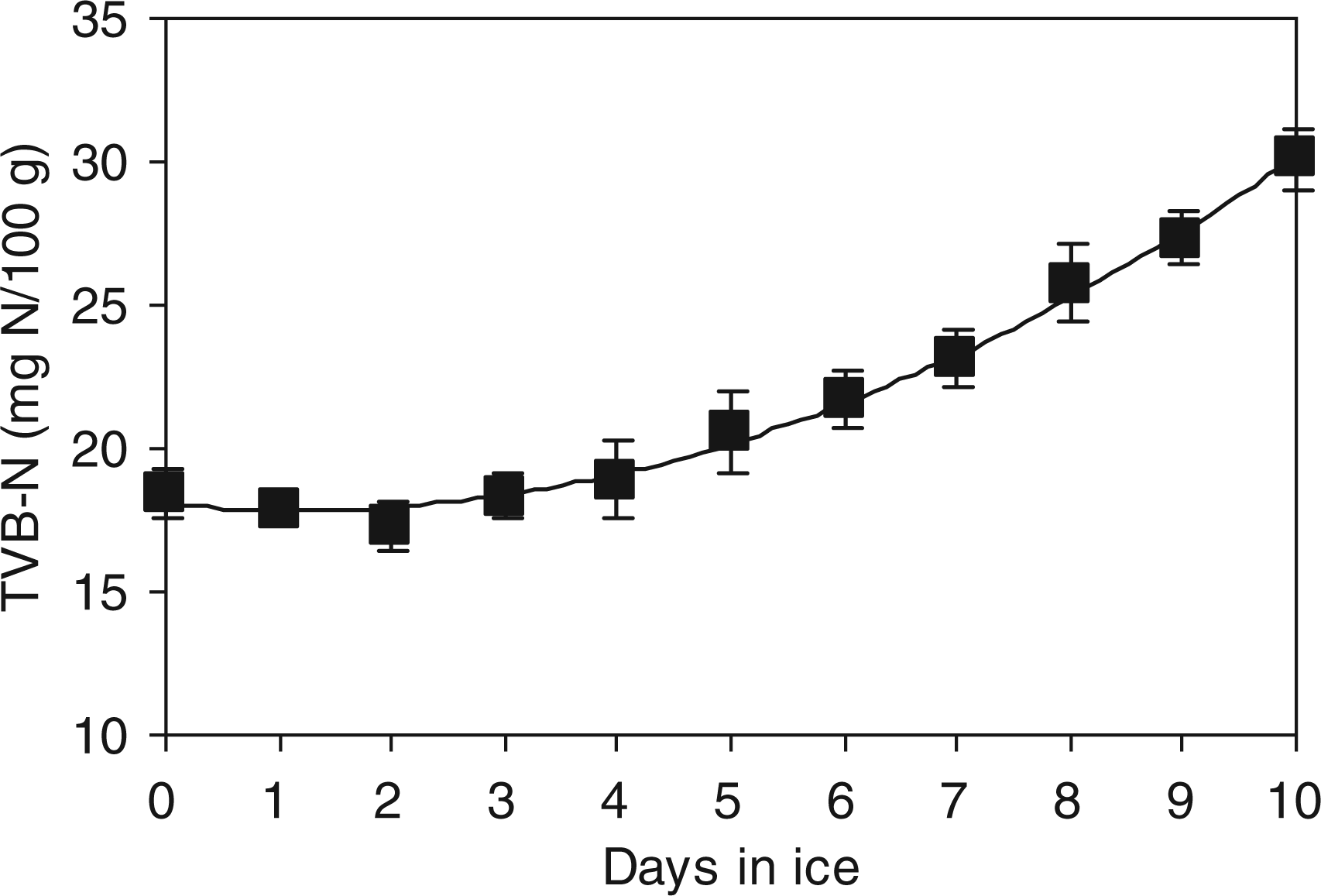
The highly unsaturated lipids present in E. anchoita are prone to hydrolytic and oxidative reactions during storage and processing. This should be taken into consideration because in advanced stages of oxidation low-molecular-weight carbonyl compounds and alcohols are generated, which may lead to the appearance of objectionable odours as well as alterations in texture, colour and nutritional value of the products (Ólafsdóttir et al., 1997; Sikorski 1990). Considering the lipid content in E. anchoita (7.37 ± 1.93%), it was assumed that lipid oxidation could cause an important impact in the overall quality of this fish during the storage period. In this study, the initial value of TBARS was 1.66 ± 0.05 mg malonaldehyde/kg muscles (Figure 6). This index significantly increased to 1.92 ± 0.21 mg malonaldehyde/kg on day 2 of storage and then remained without changes until the seventh day. Finally, TBARS values again showed a significant increase reaching 2.94 ± 0.18 mg malonaldehyde/kg at the end of storage. It has been suggested that TBARS values less than 5 mg malonaldehyde/kg is indicative of good quality of the fish, with 8 mg malonaldehyde/kg being the limit value for consumption (Schormüller, 1969, Huss, 1995). According the described results, the limit value of TBARS for consumption was not reached in the study period. It is important to note that according to Aubourg (1993), TBARS values may not reveal the actual rate of lipid oxidation, since malonaldehyde may interact with other fish components. Such components may be amines, nucleosides and nucleic acid, proteins, amino acids of phospholipids, and other aldehydes, which are end products of lipid oxidation. Also, this interaction varies with fish species. Several studies indicate that it is difficult to set limits for TBARS values without previous studies of fat content, processing and storage conditions (Beltran and Moral, 1990; Fey and Regenstein, 1982; Liston et al., 1963).
Changes in the TBARS of Engraulis anchoita muscle during ice storage. (▴) Average and standard deviation for each day. (—) Quadratic equation (y = 0.017x2 − 0.05x + 1.77; R2 = 0.93).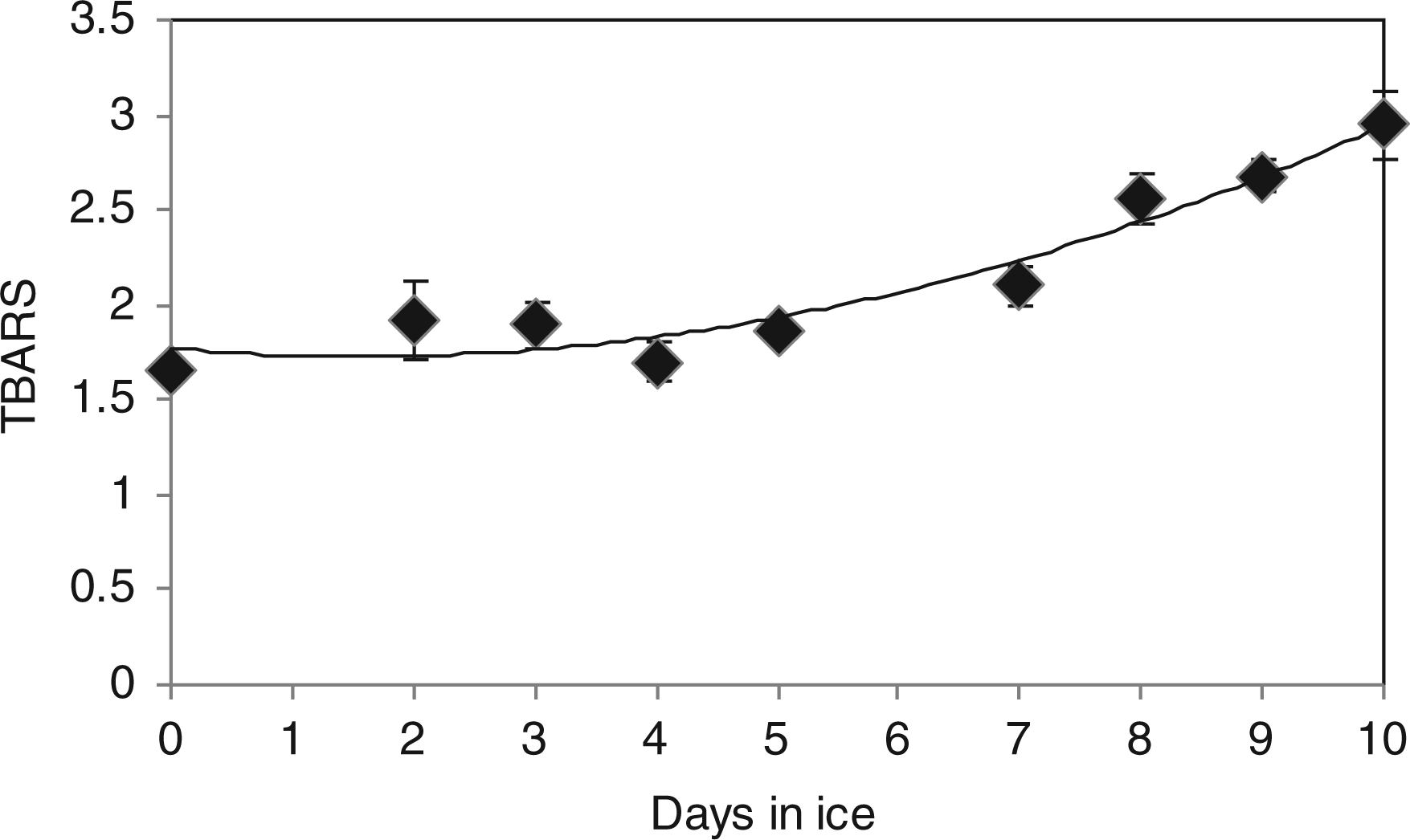
The TVB-N index in E. anchoita during ice storage remained unchanged until fourth day and then presented an exponential increase, indicating microbial growth. The TBARS showed a similar pattern, which indicates an induction period in the oxidation process and subsequent increase of lipid oxidation. Although these parameters show the loss of freshness of this species, they are particularly sensible after the fourth day of storage. These results are consistent with observations in other fish species (Connell, 1995; Howgate, 2010c; Huss, 1995). The sensorial changes were clearly noticeable indicating the freshness of this species all along the stored time in ice and determining their shelf-life.
Conclusions
The scheme sensory (QIM) developed for E. anchoita during ice storage was satisfactory for evaluating the freshness and to determine its commercial shelf-life. The QI presented a linear relationship with storage time; this suggested that QI could be used as objective system of quality assessment. Under the analytical conditions of this study, the TVB-N value remained below the upper limit of marketing acceptability and TBARS values showed the evolution of lipid oxidations. According to the sensorial assessment the sensory rejection point was on day 7 of storage.
Footnotes
Funding
We thank the Consejo Nacional de Investigaciones Científicas y Técnicas (CONICET- PIP 5052), Instituto Nacional de Investigación y Desarrollo Pesquero (INIDEP) and Universidad Nacional de Mar del Plata (UNMdP - 15/G264) for their financial support.