







Abstract
Soy-based beverages are presented as healthy food alternatives for human nutrition. Cassava (Manihot esculenta, Crantz) starch is relatively inexpensive, widely available in Brazil and is broadly used by the food industry due to its desired properties that result from pasting. The objective of this study was to develop soy-based beverages with good sensory quality using native cassava starch as a stabilizer and maintaining the nutritional value that makes this product a functional food. The developed formulations featured a range of cassava starch and soybean extract concentrations, which were tested in a 22 experimental design with three central points. The results of sensory analysis showed that the studied variables (cassava starch and soybean extract concentrations) did not have a significant effect with respect to a 5% probability level. When considering the apparent viscosity, on the other hand, the variables had a significant effect: the increase in soybean extract and cassava starch concentrations caused an increase in the viscosity of the final product. The profile of isoflavones in the tested formulations was similar to the profiles reported in other papers, with a predominance of the conjugated glycosides over the aglycone forms.
INTRODUCTION
As a food, soybean presents a healthy nutritional profile (Anjum et al., 2006). This legume is mainly used as a source of edible oil as well as a protein for human and animal nutrition (Monteiro et al., 2004).
In Brazil, the recent growth in the non-alcoholic beverages market that includes bottled mineral water, soft drinks, fruit juices and soybean-based beverages is related to the fear of excessive obesity and health problems (Abir, 2009).
Soybean is a good source of proteins, fiber, unsaturated lipids, vitamins, minerals and phytochemicals (Dewell et al., 2006). Several scientific papers highlight the importance of soybean for human nutrition, relating its protein consumption to reduced cholesterol levels (Anderson et al., 1995; Brandsch et al., 2006; Song et al., 2003). Soybean seeds are also sources of isoflavones, phenolic compounds very similar to human estrogen (Haron et al., 2009; Karan et al., 2006). There are scientific studies that report that soybean or its isoflavones have protective effects against some types of cancer, hormone-related diseases, menopause symptoms and osteoporosis (Clerici et al., 2007; Kokubo et al., 2007).
The thermal treatments that are used to process soybean-based beverages result in the dissociation, aggregation and denaturation of proteins. The changes in protein aggregation reflect on their solubility as well as their water-binding capacity (Poppo et al., 2000).
In ideal or Newtonian fluids, when a shearing stress is applied, the fluid continues to flow normally, even after the stress is removed, and the material does not recover elastically (Mcclementes, 1999); in other words, the viscosity is not affected by the shear stress variation. All the fluids that do not exhibit this ideal behavior are classified as non-Newtonian (Schramm, 2006), which includes starch-thickened beverages (O’Leary et al., 2010). The viscosity of non-Newtonian fluids is commonly dependent on the shear rate.
Starch, a biopolymer made of the polysaccharides, amylose and amylopectin, is a very popular ingredient in the food industry due to its low cost and ease of production in high amounts from cereals, legumes, roots and tubers (Habitante et al., 2008). The size and shape of its granules usually vary between sources (Franco et al., 2001).
Cassava starch (Manihot esculenta, Crantz) possesses special properties such as adhesiveness at low temperatures, low pasting temperature, low amylose content and a low tendency for syneresis when compared to other commercial starches (Moore et al., 2005). The apparent viscosity of aqueous dispersions increases with the increase in starch content (Che et al., 2008). The world production of cassava roots, flour and starch reached 242 million tons in 2009. The main producers of cassava roots were Nigeria (45 million tons), Thailand (30.1 million tons) and Brazil (26.6 million tons; Abam, 2010).
Soybean beverage, also known as soymilk, may be produced from dried water-soluble soybean extract (30.81% protein, 19.85% lipids and 45.79% carbohydrates in dry matter) diluted to 10% (w/v) in drinking water (Silva et al., 2007). These authors produced a dried water-soluble soybean extract after husking and bleaching soy seeds in a 0.25% NaHCO3 solution (one part of soybean seeds to three parts of solution). After this step, the cotyledons were ground in boiling water, and the mixture containing 11.0% solids was homogenized twice before being spray-dried in a pilot spray drier. Silva et al. (2007) also evaluated the chemical composition of two dried water-soluble soybean extracts available in the Brazilian market and found their chemical composition to be 14.67% and 43.33% protein, 7.3% and 15.0% lipids and 63.33% and 28.0% carbohydrates, respectively.
Considering the chemical properties of cassava starch and its availability and low cost in the Brazilian market as well as the technologies employed for beverage production, this study was carried out to develop soybean-based beverages with good sensory and nutritional quality in accordance with the commercial products of the Brazilian market using native cassava starch as a stabilizer and thickening agent.
MATERIALS AND METHODS
Materials
The employed ingredients were native cassava starch, sodium chloride, sucrose, vanilla and milk flavor, which were bought in a local market; soybean extract (Provesol FB®), which is a proteic extract that is produced from an aqueous emulsion of peeled seeds (cotyledons) and thermally treated to eliminate microorganisms and antinutritional factors, was acquired from Olvebra® (Eldorado do Sul, Rio Grande do Sul, Brazil). The soluble fraction was concentrated and spray-dried. Maltodextrin (Mor-rex 1910®) from corn starch (Corn Products Brasil, Balsa Nova, Paraná, Brazil) was also used to prepare the soy-based beverage formulations.
Methods
Experimental design and formulations
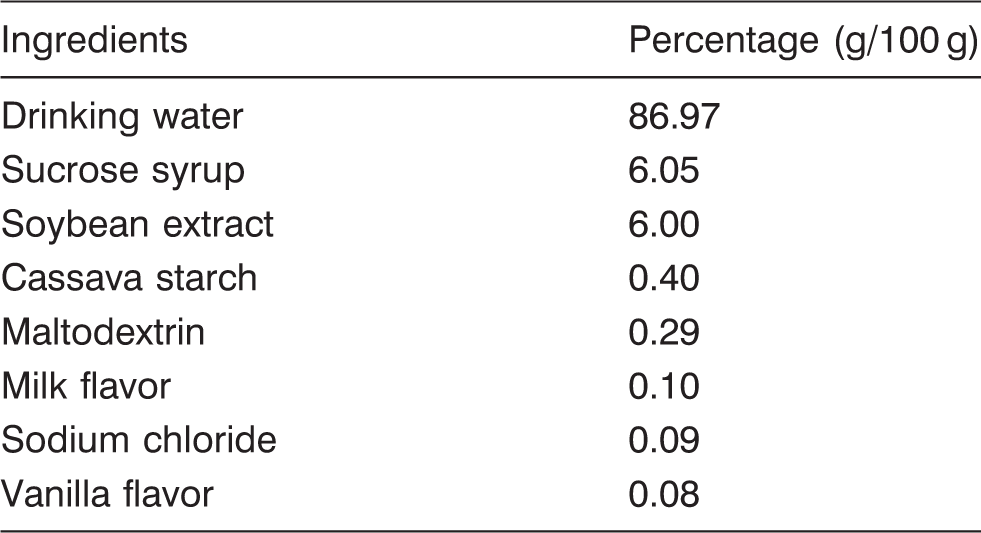
Composition of the central point of the developed formulations
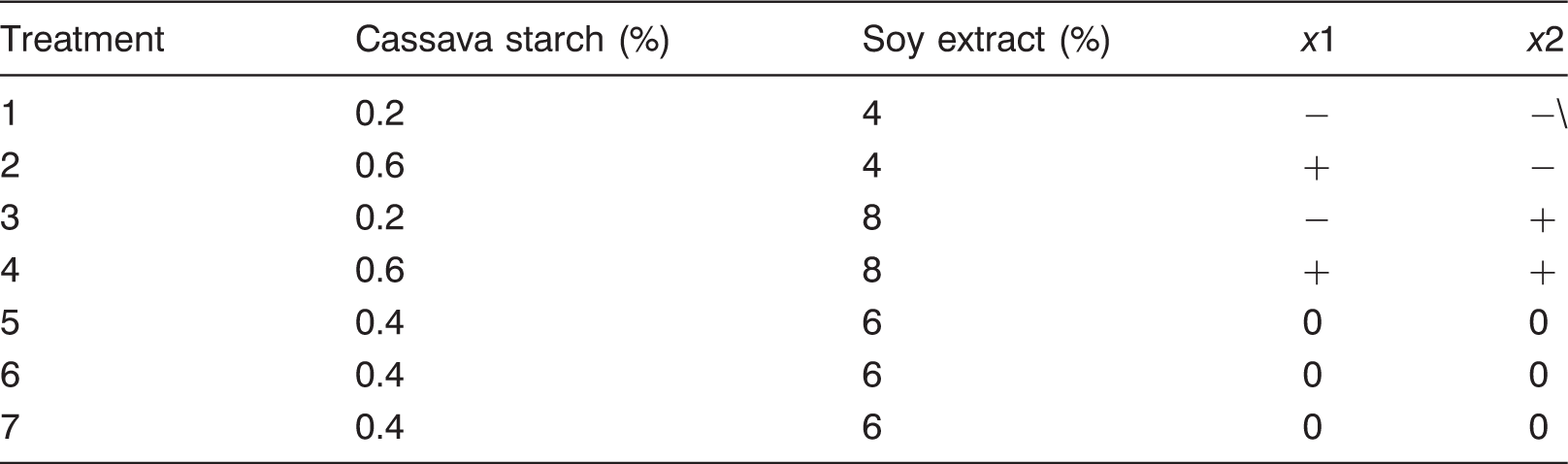
Experimental design: with three repetitions at the central point effect of cassava starch and soybean extract on sensory analysis and on apparent viscosity
The developed formulation was based on the research work carried out by Rodrigues and Moretti (2008).
At first, all the solid ingredients were mixed (soybean extract, sodium chloride, sucrose, maltodextrin and cassava starch). Then, the mixture was transferred to a container with a total volume of water of approximately 20% that would be used for beverage production; the temperature of the water was room temperature (around 20 °C). The mixture was completely homogenized for 10 min. The homogenized emulsion was then transferred to another container, the volume of which was completed with the remaining drinking water followed by an additional 10 min of homogenization. The sample was thermally treated (65–70 °C/30 min) and continuously homogenized to facilitate the heat exchange. After this period, the product was cooled to 25–30 °C, and milk and vanilla flavorings were added. Cooling proceeded until 4 °C, and the product was stored in plastic flasks under refrigeration until formulation analysis.
The formulations were soybean-based beverages identified as possessing original flavor (vanilla and milk flavors) and the characteristics of the product known in Brazil as soymilk (Callou et al., 2010) without the addition of fruit pulp, fruit flavor or colorants.
Physicochemical characterization
The protein (Kjehldal method), mineral residue by incineration (ash), total dry extract (oven at 105 °C), soluble solids (Atago 2.1 refractometer), lipid (Soxhlet method) and total carbohydrate (Anvisa, 2003) contents were determined. The pH values were also measured (Mettler Toledo Seveneasy PHS-20 potentiometer (Greifensee, Switzerland). All the assays, including the sample preparation, were made following the Instituto Adolfo Lutz (2005) proceedings and methods.
The isoflavone contents of the different formulations were also analyzed. The extracts were made with 70% (v/v) ethanol and 0.1% acetic acid, as described by Carrão-Panizzi et al. (2002). The extracts were separated and modified following the method described by Berhow (2002) with high-performance liquid chromatography (HPLC; Waters, model 2690, with automated sample injector). The column was a RP ODS C18 (YMC Pack ODS-AM column) measuring 250 × 0.4 mm2 and featuring a particle size of 5 µm. For isoflavone separation, a binary linear gradient was used with the following mobile phases: (1) methanol with 0.025% trifluoracetic acid (TFA) (solvent A) and (2) ultrapure deionized water with 0.025% TFA (solvent B). The initial elution condition was 20% solvent A, which reached a concentration of 100% after 40 min, returned to a concentration of 20% at 41 min and remained under this condition until completion at 60 min. The total analysis time for each sample was 60 min. The mobile phase flow rate was 1.0 mL/min, and the temperature during the analysis 25 °C. To detect the isoflavones, a photodiode array (Waters, model 996) was used at a wavelength of 260 nm. To identify the peaks corresponding to each isoflavone, daidzin, daidzein, genistin and genistein standards (Sigma) were used after being dissolved in methanol (HPLC grade) in the following concentrations: 0.00625; 0.0125; 0.0250; 0.0500 and 0.1000 mg/mL. To quantify the 12 isoflavone forms by external standardization (peak areas), the standards were used; the molar extinction coefficient of each isoflavone was used to calculate the molar extinction coefficient of the other forms (malonyl and acetyl). The assays were made in the Laboratory of Physicochemical Analysis of the Empresa Brasileira de Pesquisa Agropecuária (Embrapa/CNPSO) (Londrina-PR, Brazil).
Rheological analysis
The rheological behavior of the beverages was evaluated with a Brookfield rotary viscometer, model LDVII+PRO (maximum torque of 673.7 dyne cm). The average apparent viscosity was measured at 8 °C, and the viscometer velocity was ramped from 50 to 200 RPM; samples were measured for 30 s at each velocity. Other data, including torque percentage and shear rate, were determined using the viscometer and calculated by the software Wingather for Windows 2.2 (Brookfield Engineering Laboratories, Middleboro, MA, USA). To calculate the consistency and fluidity indices, a power-law model was considered (Schramm, 2006). Spindle 18 and a small sample adaptor with a 15-mL capacity were used (model SC4-45Y) along with a coupled thermostatic bath (Nova Ética, model 521-2D, Vargem Grande Paulista, São Paulo, Brazil).
Sensory analysis
The produced formulations were subjected to acceptance sensory analysis using a five-point hedonic scale (5 = liked very much to 1 = disliked very much). The evaluated attribute was the global acceptance of the beverages. The samples were served in white disposable cups and coded using random three-digit numbers. The sensory tests involved 50 untrained tasters above the age of 18. The amount served in each cup was 200 mL.
Statistical analysis
The results of physicochemical determinations were statistically analyzed using Statistica version 5.0 (Statistica for Windows, 1995), which included the analysis of variance (ANOVA) F-test and the Tukey test (p ≤ 0.05) to discriminate the results.
RESULTS AND DISCUSSION
Physicochemical characterization of the formulations
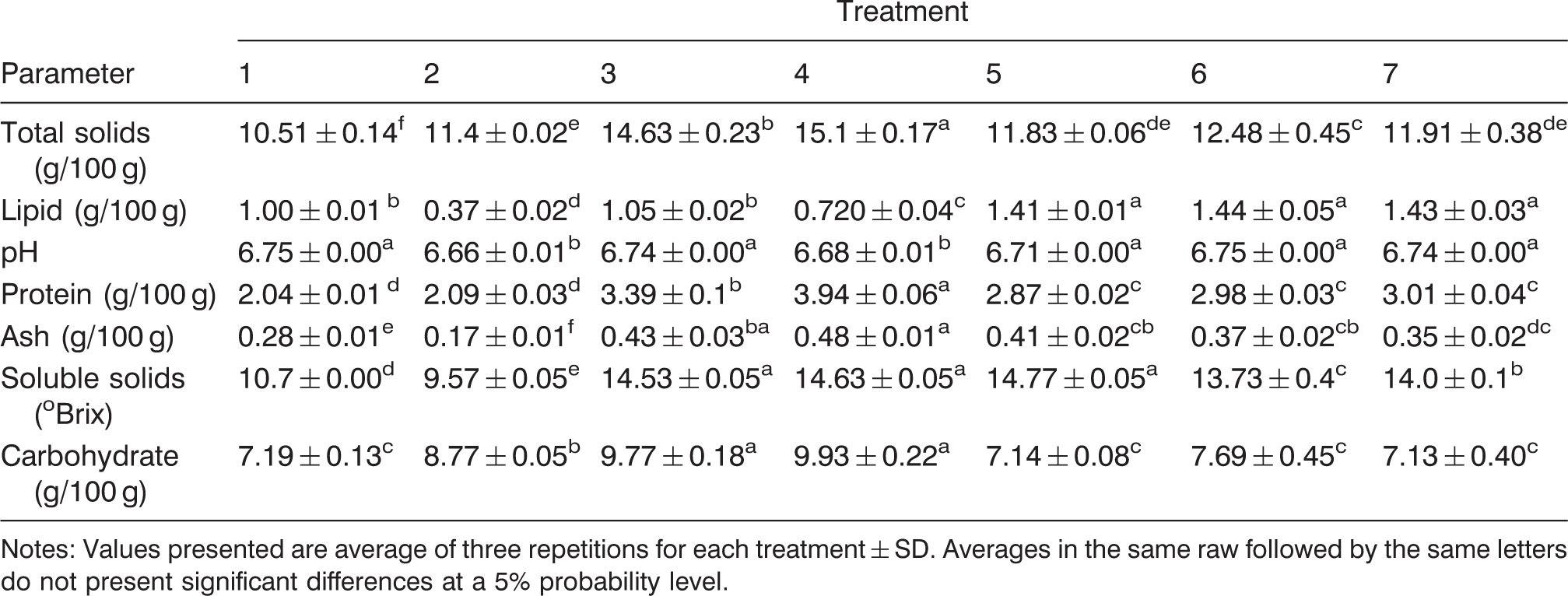
Physicochemical characteristics of the developed beverages
Notes: Values presented are average of three repetitions for each treatment ± SD. Averages in the same raw followed by the same letters do not present significant differences at a 5% probability level.
The pH variations seem to be associated with the amount of starch added to the formulations. In other papers, the pH range of similar soybean beverages ranged from 6.65 to 6.78 (Osthoff et al., 2010), and after 12 months of storage, the pH increased to 7.06, values close to those found by Achouri et al. (2007) (6.6–7.4) and Villegas et al. (2008) (6.76–7.64).
As expected, the total solids values were higher in the beverages that had the higher concentrations of soybean extract (treatments 3 and 4). Treatment 1, which had the lowest soybean extract concentration (4%), had the lowest total solids value at a probability level of 5%.
The lipid concentrations of the central point were higher compared with the other treatments. Treatments 1 and 4 had lipid contents that did not allow for establishment of the expected relation with the concentration of soybean extract used for their production, though the values were similar to those found by Rodrigues and Moretti (2008), who reported an average value of 0.61% for a soybean-based beverage with added peach pulp.
In the formulations containing the highest amounts of starch, lower lipid concentrations were detected. This behavior may be related to the lipid extraction method employed (Soxhlet). Eskins et al. (1996) produced highly stable mixtures of oil and starch (Fantesk®) by jet-cooking. Using scanning electron microscopy, the researchers observed the micro-encapsulation of oil in the water/starch matrix in small droplets 1–10 µm in diameter, with the formation of an amylose/lipid complex, which was possibly due to the presence of monoglycerides from the partial de-esterification of triglycerides promoted by high temperatures and the shear effect of jet-cooking. According to Fanta and Eskins (1995) and Fanta et al. (2009), the amylose content of the starch employed for Fantesk® production affected the amount of extracted oil; in solutions prepared with soybean oil and regular and waxy corn starches, eight extraction cycles removed more than 50% oil, whereas in solutions made of soybean oil and high-amylose corn starch, eight extraction cycles resulted in only 14% extracted oil.
The protein concentration was higher for the treatments made with the higher soybean extract contents (treatments 3 and 4), and the expected positive relationship between soy extract and protein content was confirmed. Felberg et al. (2004) found an average protein concentration of 2.69% for a soybean-based beverage produced from soybean extract.
The mineral residue (ash content) of the treatments from the central point did not differ from each other at a 5% probability level.
Sensory analysis of the developed formulations
Average values of the sensory analysis for the developed beverages

Notes: Values presented are average of 50 tasters for each treatment; averages followed by the same letters in the same line show that there is no significant difference at a 5% probability level.
Table 4 shows that treatment 1 differed, at a 5% probability level, from all the others, exhibiting the worst evaluation. Considering the fact that treatment 2 had the same concentration of soybean extract, it is not possible to directly correlate the content of this ingredient with the sensory acceptance of the beverage.
Sucrose is added to improve the sensory acceptance of many foods, increasing the sweetness of the final products and masking the undesirable ‘green bean flavor’ of soybean (Favaro-Trindade, 2001). The amount of sugar used was the same for all treatments (6.05%), as presented in Table 1.
Jaekel et al. (2010) studied mixed drinks made with different proportions of soybean and rice extracts and concluded that those formulations with higher levels of soybean extract had the best sensory acceptance. In this article, formulations 3 and 4 received the highest sensory grades of 3.52 and 3.64, respectively (Table 4). Considering the five-point hedonic scale (5 = liked very much to 1 = disliked very much), these grades represent acceptances of 70.4% and 72.8%. As cited by Gularte (2002), a minimum acceptance of 70% indicates that products may be considered acceptable by a sensory panel.
Rheological behavior of the developed formulations
As shown in Figure 1, except for the three repetitions of the central point, all treatments differed from each other. Treatments 3 and 4, which had the highest amounts of soybean extract, the highest total solid values and highest protein and soluble solids contents, were the samples that presented the highest apparent viscosity values; treatment 4 also had the highest level of cassava starch. In contrast, treatment 1 presented the lowest apparent viscosity value and had the lowest soybean extract and cassava starch concentrations in its formulation. The central point treatments had higher soybean extract concentrations but lower apparent viscosities than treatment 2, which featured a higher amount of cassava starch than the central point treatments. In this case, the amount of starch in the treatment 2 should be responsible for the viscosity increase.
Apparent viscosity values at different shear rates.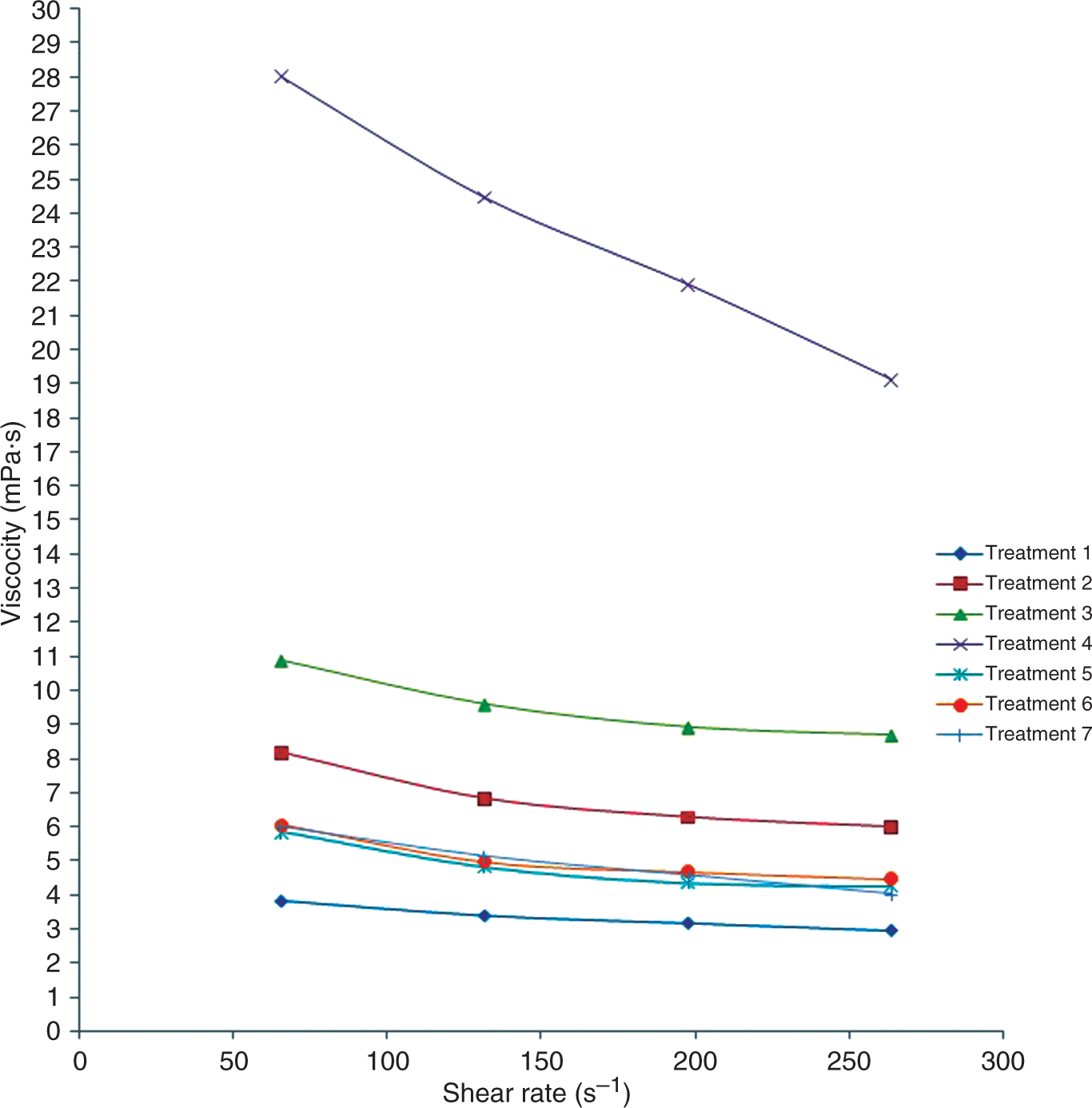
Treatment 1, which had the lowest total solids content in the final product, also presented the lowest apparent viscosity value. In a study conducted by Rodrigues et al. (2003), the differences in the rheological behavior of soybean-based beverages were directly related to the total solids content found in the product due to its main raw material (soybean extract, soybean flour or soybean protein isolate).
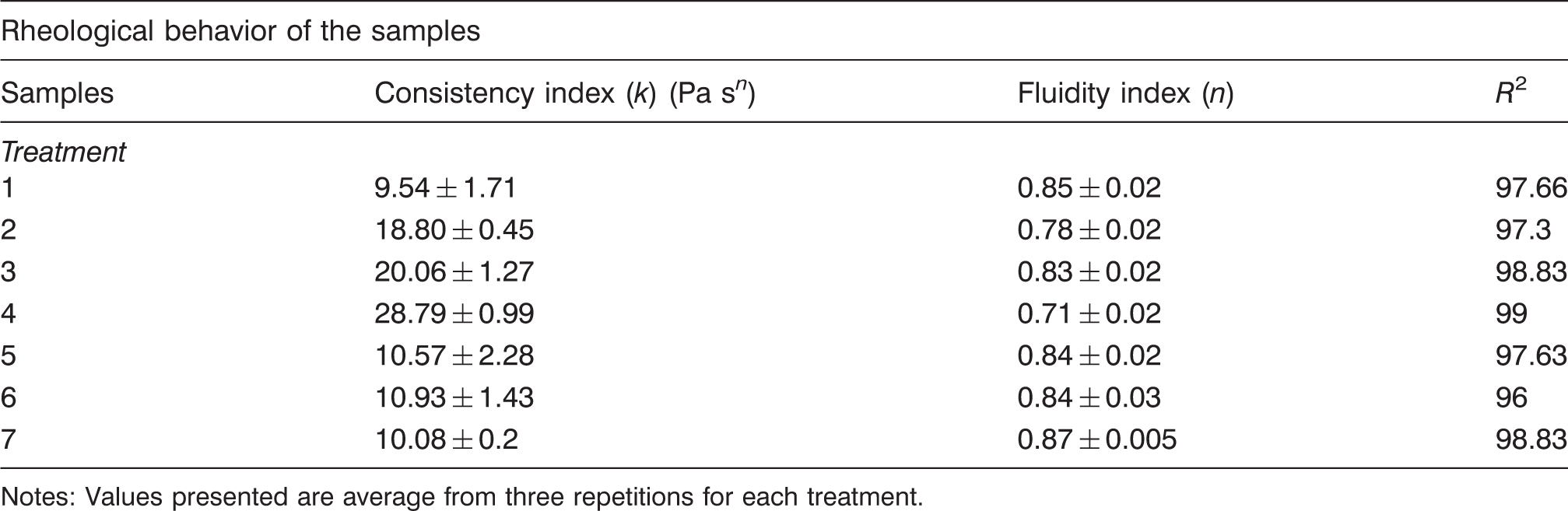
As shown in Figure 1, it is possible to conclude that the developed formulations presented non-Newtonian behavior due to the fact that the viscosity decreased with the shear rate.
Consistency index, fluidity index and determination coefficient (R2) for all treatments at 8 °C
Notes: Values presented are average from three repetitions for each treatment.
Isoflavone analysis of the developed beverages
Isoflavone profile and content in the dried soybean extract (mg/100 g)
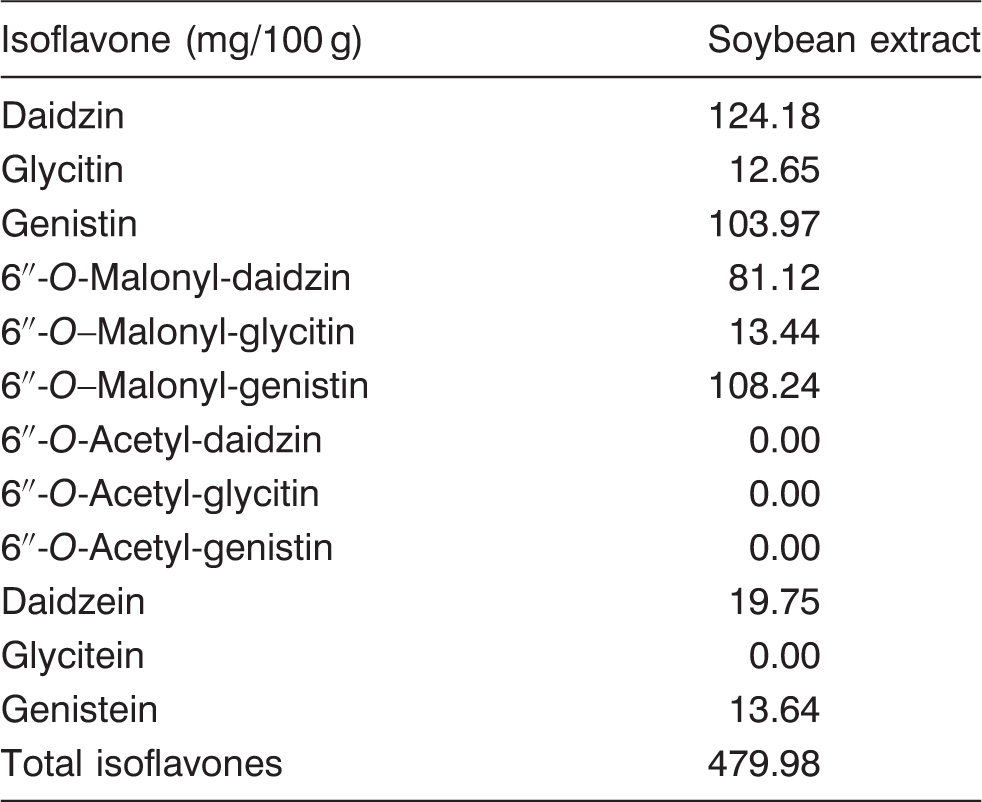
The results given in Table 6 are higher than those reported by Rodrigues and Moretti (2008) (225.65 mg/100 g) and Setchell and Cole (2003), who measured the total isoflavone content in textured soybean protein (245.0 mg/100 g).
Isoflavone profile in the developed soybean-based beverages (mg/L)
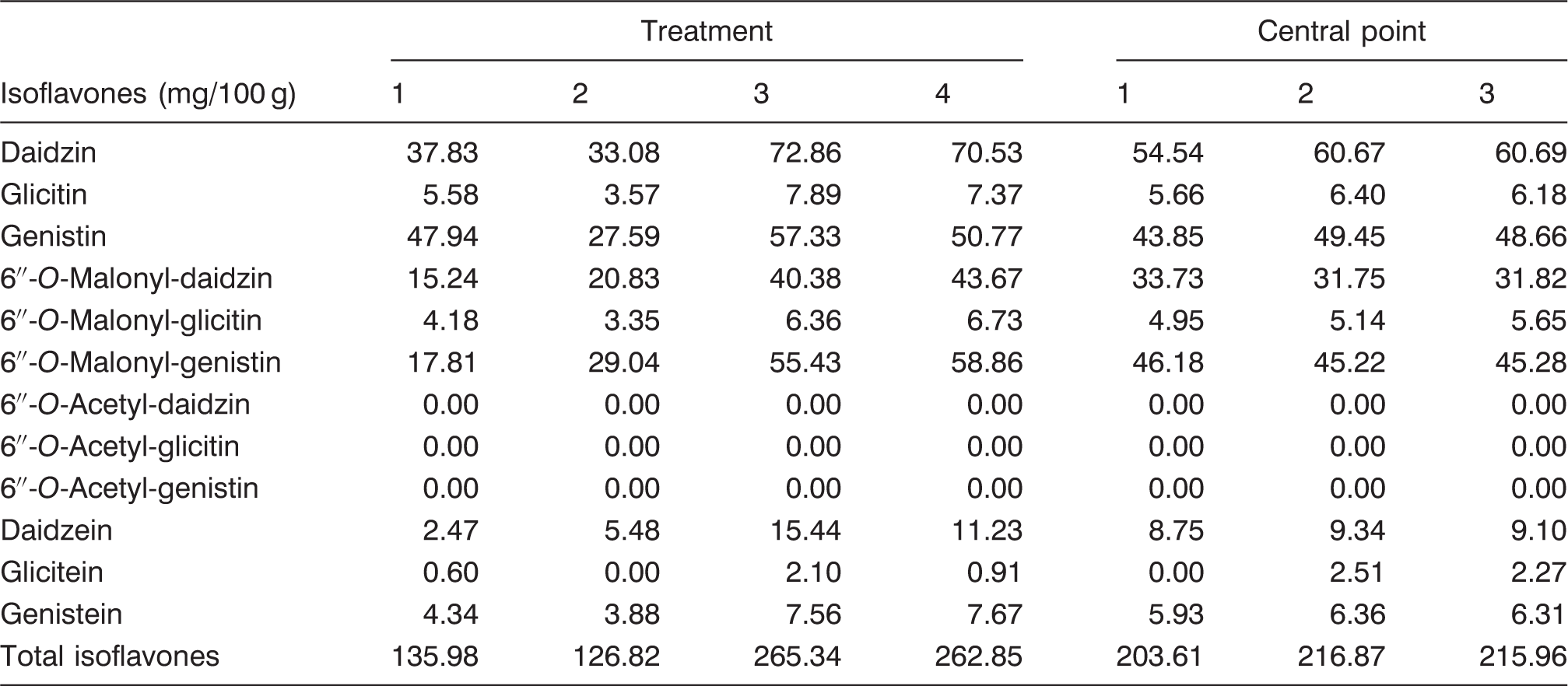
Treatments 3 and 4, which had the highest amounts of soybean extract in their formulations, presented the highest isoflavone contents. As expected, formulations 1 and 2 presented lower isoflavone levels, and the formulations of the central points exhibited intermediary values. Rodrigues and Moretti (2008) measured the total isoflavone content of a soy-based beverage with added peach pulp and found an average value of 85.8 mg/L. In another soy-based beverage made from soybean extract and without the addition of fruit pulp, Genovese and Lajolo (2002) found a value of 82.9 mg/L for the total isoflavone content. Similar values were also reported by Setchell and Cole (2003) in a research study that included the evaluation of more than 40 brands of soy-based beverages (soy milk drinks) commercially available in Australia and the USA.
Genovese and Lajolo (2002) reported that soy beverages produced from soy extracts also had a predominance of glycosidic isoflavones.
The isoflavone profiles of the produced beverages show that the aglycone forms (daidzein, glicitein and genistein), which are directly absorbed by the human gut, are present in lower amounts than the β-glycoside and malonyl glycoside forms, both of which are not directly absorbed by the human gut. Aglycone isoflavones are absorbed faster and in higher amounts than the glycosidic forms (Izumi et al., 2000). The acetyl form was not detected in any treatment. The isoflavone profile presented in Table 7 should be related to the method of processing the main raw material (soybean extract). The high content of the β-glycoside forms followed by that of the malonyl forms and a small amount of the aglycone forms suggest that the raw material was processed in a way that caused the partial inhibition of the β-glycosidases.
As described by Lui et al. (2003), protein concentrates produced by acid treatments present reduced β-glycoside and increased aglycone forms, and heating promotes the conversion of malonyl to acetyl glycoside. The fermentation of soybean products such as miso and tempeh produce increased aglycone contents due to enzymatic action that ruptures the β-glycoside form; in other soybean products such as soy meal, tofu and protein concentrates, the predominant forms are conjugated β-glycosides (Wang and Sporns, 2000).
Experimental design
Effect of the studied factors in a 22 complete factorial (four assays and three central points, producing a total of seven assays) experimental design on global sensory acceptance

The results showed that under these experimental conditions, the variables soybean extract and cassava starch concentrations did not have a significant effect according to a 5% confidence level in the sensory evaluation. On the other hand, if only the effect is analyzed, both the cassava starch and soybean extract concentrations may be considered to have contributed positively to the sensory evaluation grade.
Effect of the studied factors in a 22 complete factorial (four assays and three central points, producing a total of seven assays) experimental design on viscosity

ANOVA of the 22 complete factorial (four assays and three central points, producing a total of seven assays) experimental design on the viscosity

The results shown in Table 10 present a larger Fcalculate than (F3;3;0.05 = 9.27), and it was possible to draw the response surface (Figure 2).
Response surface effects of the concentrations of soybean extract and cassava starch on the viscosity of the products.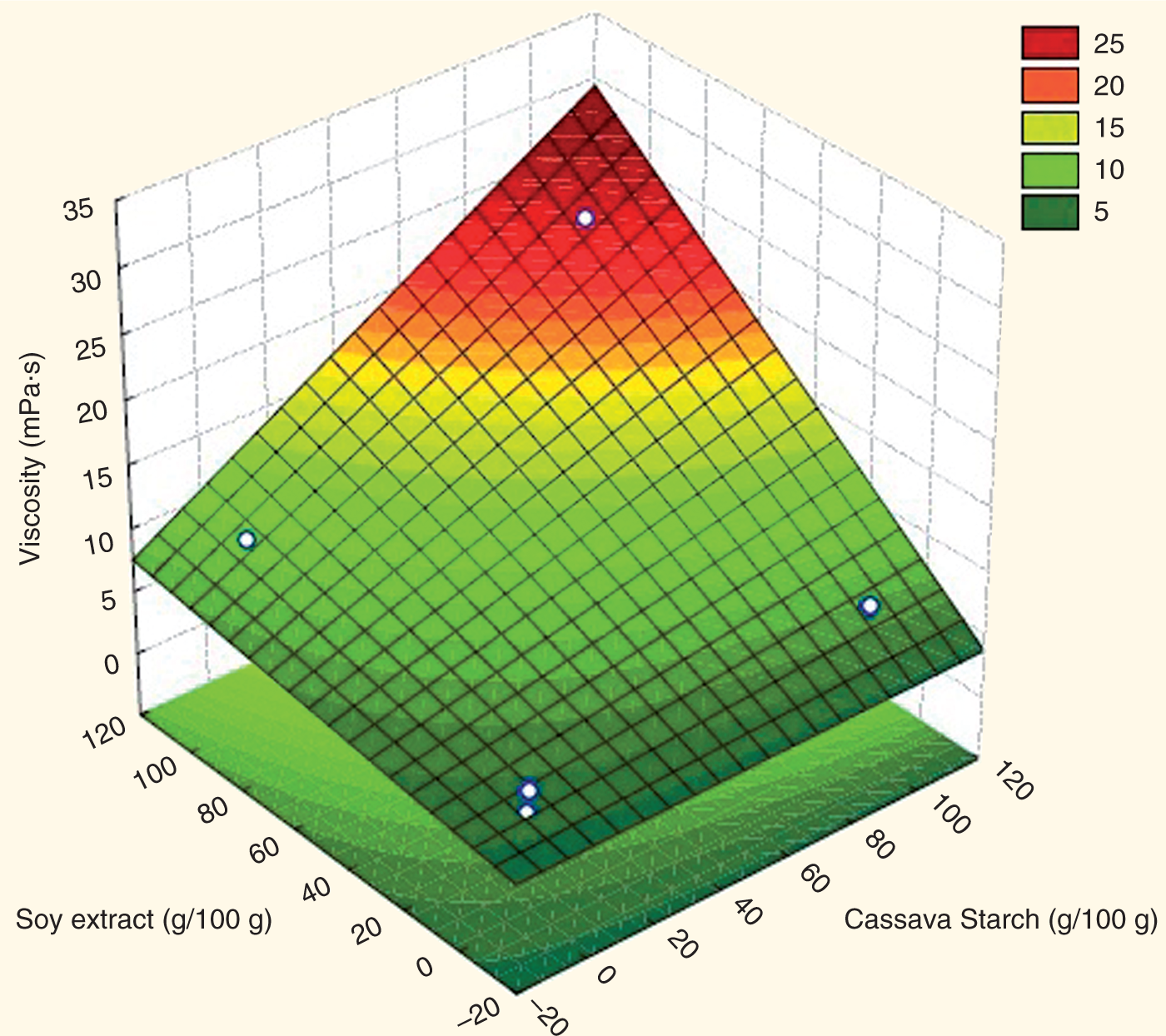
Considering the range studied, as shown in Figure 2, it is possible to clearly observe that as the concentrations of the soybean extract and cassava starch increase in the formulations (treatment 4), the beverage viscosity also increases. In treatments 2 (in which only the starch concentration was high) and 3 (in which only the soybean extract was high), it is also possible to note a positive effect regarding the increase in viscosity. In the central point formulations (treatments 5, 6 and 7) and in the formulation with the lowest concentrations of both soybean extract and cassava starch (treatment 1), the lowest viscosity values were detected.
CONCLUSION
Native cassava starch was successfully employed without any negative effects in the production of soy-based beverages. Small amounts of added cassava starch (0.4% and 0.6%) were enough to increase the beverages’ viscosities.
The physicochemical characteristics of the developed formulations show that the concentration of total solids in the final product as well as the levels of protein, mineral residue, soluble solids and total isoflavones were dependent on the amount of soybean extract used for their production. The beverages made with 6% and 8% soybean extract presented at least 2.87% proteins in the final product. The results of the global sensory acceptance test show that only the treatment that had the lowest concentrations of both soybean extract and cassava starch presented a significant difference when compared to the other formulations, indeed receiving the lowest grade. The other treatments did not differ significantly (p < 0.05), and it was not possible to establish a relationship between the concentrations of the two ingredients tested and the sensory preference of the tasters.
The beverages made with higher concentrations of soybean extract and cassava starch had higher viscosities and consistency indices and lower fluidity indices. In all treatments, the beverages had fluidity indices (n) lower than 1, which is typical for non-Newtonian fluids with slightly pseudoplastic behavior, with fluidity indices ranging from 0.71 to 0.87.
The isoflavone profiles of the developed formulations were similar to those reported in other studies regarding soy-based beverages with a predominance of conjugated glycosides over the aglycone form. As expected, in this study, it was possible to show that the amount of soybean extract used for beverage production was the only variable responsible for the total isoflavone content in the final product.
Footnotes
Funding
The authors are grateful to National Council for Scientific and Technological Development (CNPq) and to Fundação Araucária de Apoio ao Desenvolvimento Científico e Tecnológico do Paraná for financial support.