







Abstract
The fermentative ability of five autochthonous Saccharomyces cerevisiae strains (XG1, XG2, XG3, XG4 and XG5) and their influence on the chemical composition and sensory properties of Treixadura wines were evaluated. The inoculated strains have successfully led and completed the fermentations. Wines obtained from different yeasts showed significant differences in total and volatile acidity. Regarding volatile compounds, significant differences among wines were found for acetates, ethyl esters, acetoin, 1-hexanol, and fatty acids. Wines from spontaneous fermentation and those made with yeasts XG3 and XG4 were clearly separated through principal component analysis. Chemical composition influenced sensory properties of wines, especially at the olfactory level. Different connotations of fruity notes predominated depending on the strain. The wine from strain XG4 was the most appreciated by panelists. Our results confirmed that autochthonous S. cerevisiae strains are useful tools in winemaking because they allow obtaining singular wines from a given variety.
Introduction
The production of quality wines is a complex process that involves meticulous practices from both viticulture and oenological aspects. The first allows obtaining grapes of optimum sanitary and maturation characteristics. Then, winemakers transform the juice obtained from these grapes into wine following the appropriate fermentation procedure according to the final type of wine required.
In a spontaneous fermentation, the conversion of sugar from must to alcohol and several other secondary compounds is carried out by the yeast species present in the must (Dubourdieu et al., 2006; Fleet and Heard, 1993; Swiegers et al., 2005). Studies on yeast population succession during spontaneous fermentations showed that non-Saccharomyces yeasts are present in the first stages of fermentation until about 5% of alcohol is reached. Then, they are substituted by Saccharomyces strains that are better fermenters and more tolerant to alcohol. The influence of yeasts, especially those strains leading the fermentation, on the aroma and sensory properties of wine has been widely reported (Dubourdieu et al., 2006; Egli et al., 1998; Henick-Kling et al., 1998; Herraiz et al., 1990; Lambrechts and Pretorius, 2000; Lema et al., 1996; Swiegers et al., 2005). Consequently, a common practice among winemakers is the use of commercial yeasts, which guarantee a correct fermentation process and a given final wine quality; however, they can mask wine typicality. In this sense, most authors agree with the use of autochthonous local yeast strains. These strains have been isolated from a specific area and they are well adapted to the environment and must conditions, hence contributing to wine personality (López et al., 2007; Pérez-Coello et al., 1999; Regodón et al., 1997).
Vitis vinifera cv. “Treixadura” is recognized as one of the most important white grapevine cultivars in Galicia (NW of Spain). Several studies carried out on the volatile composition of wines from this variety revealed that secondary aroma compounds have an important contribution to the wine final aroma (Falqué et al., 2001, 2002). These compounds include higher alcohols, acetates, ethyl esters and acids, among others, which are produced by yeasts during alcoholic fermentation (Swiegers et al., 2005). Despite this, little information is available concerning the role of yeast strains on the aromatic and sensory characteristics of Treixadura wines.
In the Estación de Viticultura e Enoloxía de Galicia (EVEGA), the genetic diversity of Saccharomyces cerevisiae strains in spontaneous fermentations of must from different grapevine varieties was studied, and several yeast strains were isolated and characterized (Blanco et al., 2006). In addition, the oenological potential of the most frequent strains in Treixadura fermentations was tested in microvinifications (Cortés and Blanco, 2011). The results of these studies confirmed the role of yeast strains on wine characteristics and their potential for wine diversification. Recently, we observed that most of these major strains were commercial yeasts that had been previously used in the experimental cellar of EVEGA and became resident in the winery (Blanco et al., 2011). These data evidenced that further research was needed in order to find local yeast strains with the appropriate oenological traits and able to improve the properties of wines from Treixadura.
Therefore, in the current study, the fermentative ability of five autochthonous S. cerevisiae strains and their influence on aromatic and sensory characteristics of Treixadura wines were evaluated. Furthermore, the performance of these yeasts was compared with spontaneous fermentations.
Materials and methods
Yeast strains and culture media
Characteristics of the Saccharomyces cerevisiae strains used in this study
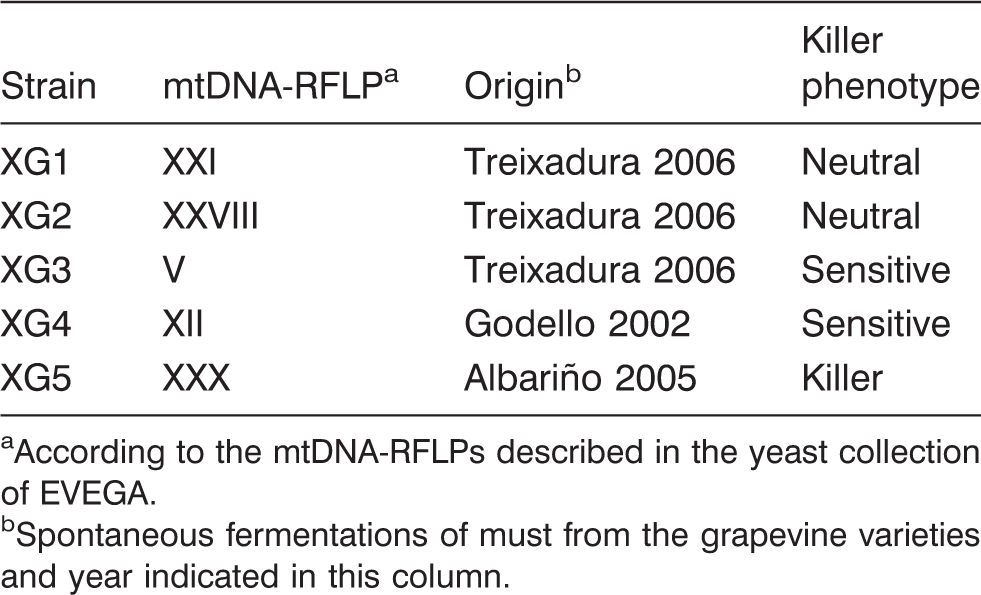
According to the mtDNA-RFLPs described in the yeast collection of EVEGA.
Spontaneous fermentations of must from the grapevine varieties and year indicated in this column.
Fermentations
Grapes from Treixadura, harvested during the 2008 vintage, were crushed and pressed for juice extraction. During grape processing 50 mg/L of SO2 were added to avoid oxidation and for microbiological control. After 24 h of cold settling, the must was randomly distributed into twelve 35 L stainless steel tanks. Must characteristics were the following: 198.8 g/L of reducing sugars, 7.7 g/L of total acidity (as tartaric acid) and a pH of 3.2. Fermentations were performed at 18 °C in a cold room following the standard protocols for white wines. The assays were carried out in duplicate using five yeast strains (Table 1); therefore, each yeast strain was inoculated in two tanks at a final concentration of 106 cells/mL. In the two remaining tanks no yeasts were added, allowing spontaneous fermentation (Esp). The development of alcoholic fermentation was monitored by daily measurement of density and temperature. When the fermentation had finished, the wines were racked to a new tank and sulphited (25 mg/L of free SO2). Finally, after a 2-month cold stabilization, the wines were bottled and stored until analysis.
Microbiological control
Samples for yeast isolation were taken at the end of fermentation (density 1000 g/L) to control whether the inoculated strain had led the fermentation. Spontaneous vinifications were also sampled at middle fermentation (density 1030 g/L) for microbiological control. All samples were collected in sterile tubes, adequately diluted in sterile water and spread on WL Nutrient Agar (Scharlau Microbiology, Barcelona, Spain). The plates were incubated at 28 °C for 48 h. Then, 20 colonies from each sample were randomly selected and isolated on YPD for further characterization.
Yeast strains were characterized by mtDNA restriction profiles as described by Querol et al. (1992). Total yeasts DNA was digested with the restriction endonuclease Hinf I (Promega) and the fragments obtained were separated by electrophoresis on a 0.8% (w/v) agarose gel in 1X TAE buffer (Sambrook and Russel, 2001). After staining with ethidium bromide (0.5 µg/mL), the DNA pattern bands were visualized under UV light and photographed with a Gelprinter Plus system (TDI).
Chemical analysis
Basic parameters of wines (alcohol content, residual sugars, pH, titratable and volatile acidity, tartaric, malic and lactic acids) were determined by Fourier transform infrared spectrometry (FTIR) using a WineScan FT120 analyzer (FOSS Electric) calibrated according to the official methods for wine analysis (EC Regulation 479/2008). In addition, free and total sulphur dioxide were determined using official methods (EC Regulation 479/2008).
The concentration of major volatile compounds was determined by gas chromatography (CG-FID) following the method of direct injection proposed and validated by Peinado et al. (2004). Acetates of higher alcohols, fatty acids and their ethyl esters were extracted (liquid–liquid extraction) and determined as described by Lema et al. (1996).
Sensory analysis
Sensory evaluation of wines was performed by fourteen panelists with experience in tasting wines from Galicia. A descriptive scorecard including qualitative and quantitative attributes as proposed by Odello et al. (2007) was used. The descriptors considered were specifically chosen for Galician white wines and scaled from 0 (not present) to 9 (most intense). Samples of wine (30 mL) coded with random numbers were served in clear tulip-shaped glasses. Data were processed using Big Sensory Soft 1.02 (Centro Studi Assagiatori).
Statistical analyses
One-way ANOVA was used to check the differences on basic wine parameters and volatile compounds taking into account the yeast as factor. Tukey HSD test was used to separate means at α = 0.05. These analyses were carried out using SPSS 15.0 for Windows. Principal component analysis (PCA) was used to separate the wines produced with different yeasts according to their volatile composition. PCA was carried out using XLSTAT 2010 (Addinsoft).
Results and discussion
Fermentative ability of autochthonous yeasts
Figure 1 includes the fermentation curves of the autochthonous S. cerevisiae strains considered and the genetic analysis to control their implantation. All strains showed similar fermentation kinetics, starting fermentation one day after inoculation, except the spontaneous processes. The latter delayed three days to begin, as expected; however, once they began, the fermentation rate was similar to those of the inoculated processes. All strains allowed obtaining dry wines with less than 2 g/L of reducing sugars, but XG5 yielded wines with a slightly higher sugar content.
Fermentation curves and mtDNA-RFLPs analyses of Treixadura fermentations with different Saccharomyces cerevisiae strains: (a) XG1, (b) XG2, (c) XG3, (d) XG4, (e) XG5 and (f) spontaneous fermentations (Esp). For gel figures 1a to 1e: line 1 – control strain; lines 2–6: different colonies isolated from the corresponding fermentation; M – molecular weight marker 1 kb (Promega). For gel figure 1f: lines 1, 3, 4 and 6 – profile XV, line 2 – profile XXI, line 5 and 9 – profile XVIII, line 7 – profile IX, line 8 – profile XXII. Error bars represent standard deviation.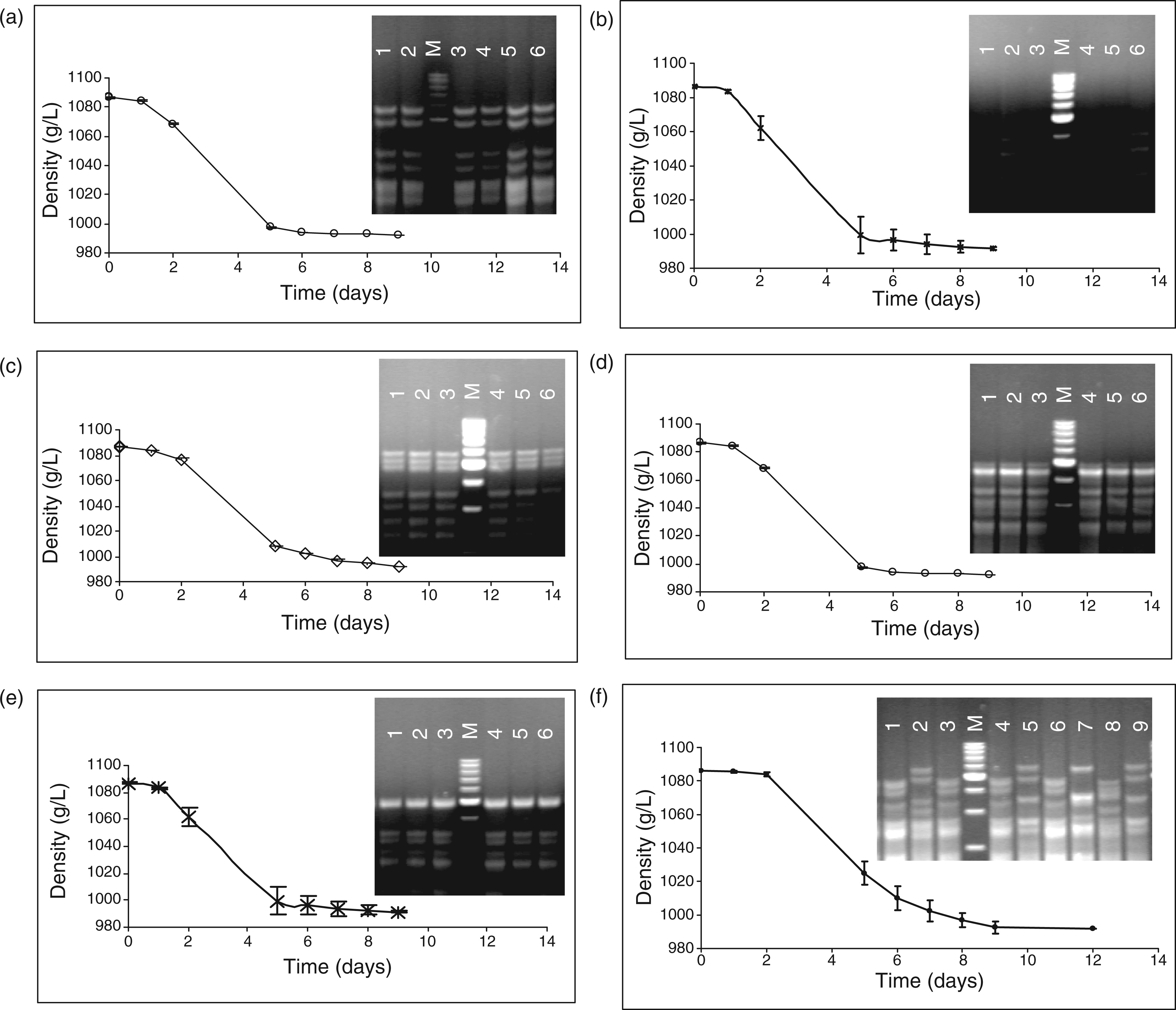
The mtDNA-RFLPs analysis of a representative number of yeast isolates from each fermentation showed that all the inoculated strains, despite their killer phenotype, were able to overgrow the natural yeast population of the must and dominated the vinification process (Figure 1). The prevalence of strains sensitive or neutral to killer toxins during fermentation have already been described (Epifanio et al., 1999), and confirmed that the killer character is not essential for winemaking, although it constitutes an extra tool to guarantee the yeast implantation (Van Vuuren et al., 1992).
Genetic analyses also revealed the presence of nine different mtDNA profiles, thus nine different strains in the spontaneous fermentations. Some of these profiles are shown in Figure 1(f). From them, the dominant strain was S. cerevisiae XV with a frequency of 53%. Strains XVIII and XXII showed frequencies higher than 15%; therefore, their contribution to the final wine characteristics might be relevant. The remaining strains appeared at frequencies less than 5% and their influence in wine properties may be considered negligible. The tested inoculated strains did not appear in the spontaneous processes, except three isolates of XG1.
Chemical composition of wine
Basic chemical parameters of wines from Treixadura must after fermentation with different autochthonous S. cerevisiae strains
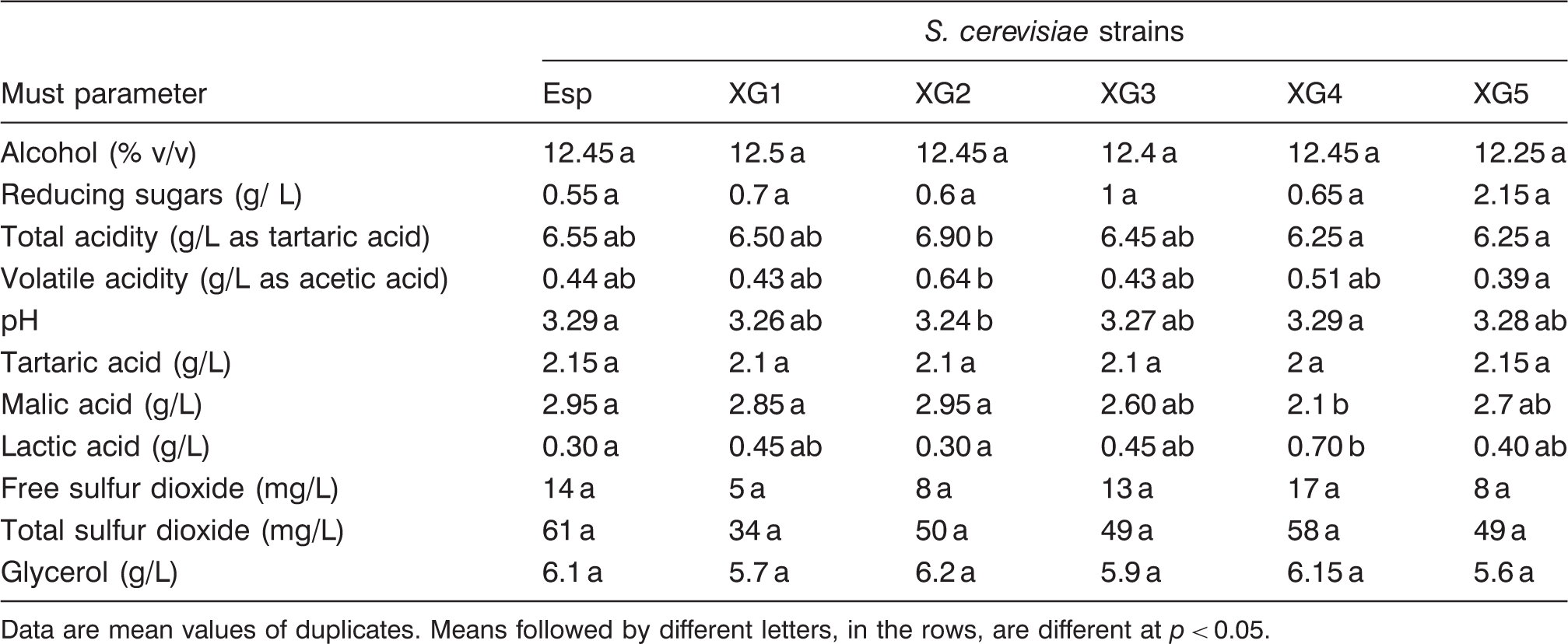
Data are mean values of duplicates. Means followed by different letters, in the rows, are different at p < 0.05.
Volatile composition of wine
Concentration of volatile compounds (in mg/L) in wines from Treixadura made with different yeast strains
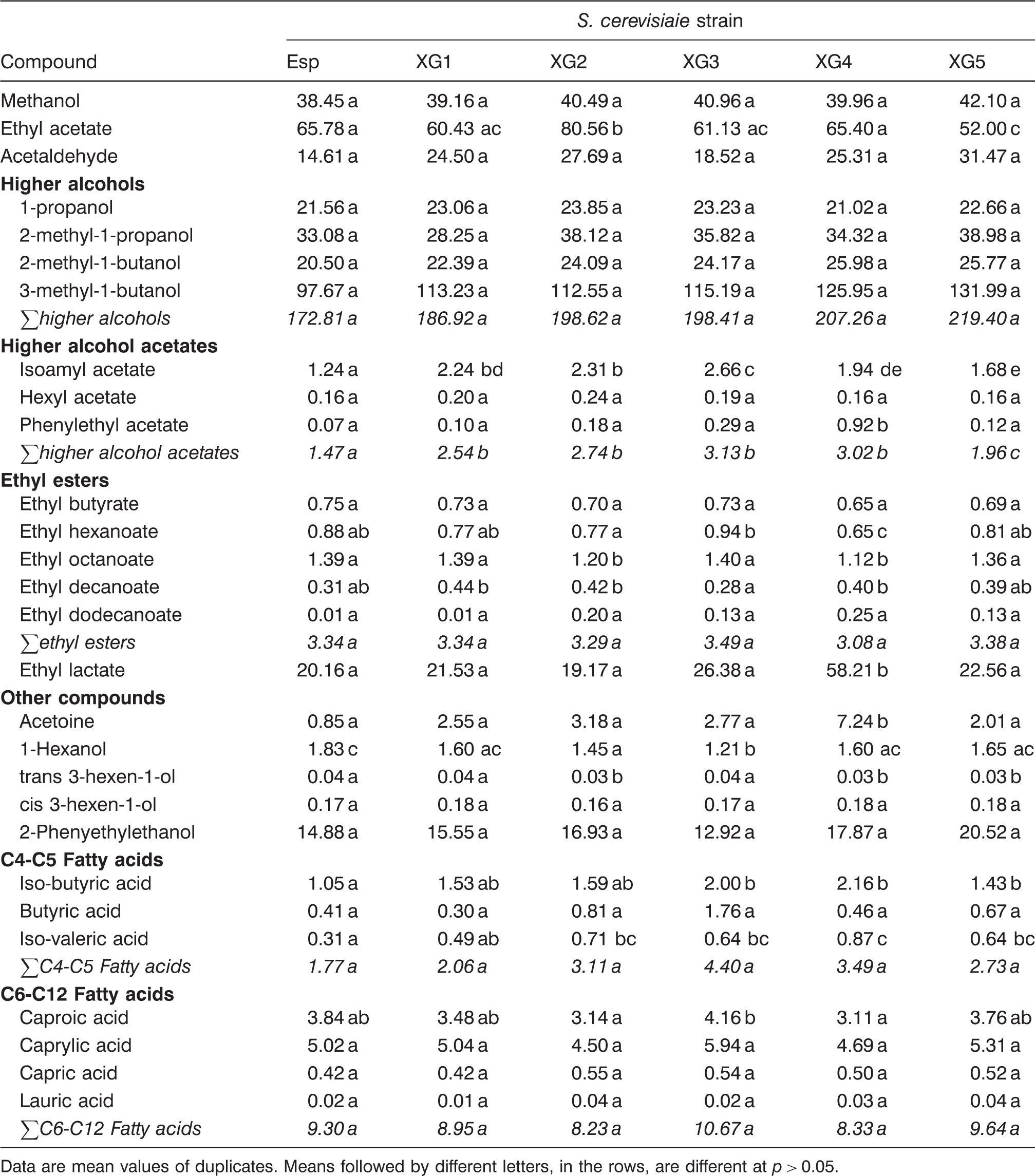
Data are mean values of duplicates. Means followed by different letters, in the rows, are different at p > 0.05.
The content of acetates was significantly different among wines. Ethyl acetate, quantitatively the most important compound of this group, gives pleasant aroma at low concentrations (50–80 mg/L) and contributes to wine complexity; however, at higher values (150–200 mg/L) it gives “acetic nose” character to wine (Lambrechts and Pretorius, 2000). In addition, ethyl acetate is related to acetic acid and, therefore, with volatile acidity. All wines from this study presented a content of ethyl acetate within the range considered positive to wine. The highest concentration of ethyl acetate was obtained with strain XG2, which also showed the highest value of volatile acidity (Table 2). XG5 wine presented the lowest amount of ethyl acetate, whereas the remaining wines showed values between XG2 and XG5, but in all cases higher than those previously described for Treixadura wines (Cortés and Blanco, 2011; Falqué et al., 2002). Regarding higher alcohol acetates, spontaneous fermentation and XG5 yielded lower concentrations than the other strains. Isoamyl acetate, which imparts banana aroma, showed significant differences among all wines (Table 3); therefore, it could contribute to sensory differences between these wines. Finally, wine from XG4 had a concentration of phenylethyl acetate significantly higher than the other wines. This compound provides floral notes to wine aroma (Gómez-Míguez et al., 2007). Since acetates are responsible for fruity odor, the differences found at chemical level could have an effect on the sensory profile of wines.
Ethyl esters constitute an important group of chemicals that impart fruity and floral notes affecting aroma of wine. They are produced by yeasts during fermentation as secondary products of sugar metabolism (Lambrechts and Pretorius, 2000). The studied wines showed similarity in the total content of ethyl esters, but significant differences were appreciated for individual compounds (Table 3). Thus, XG4 wine presented the lowest content of ethyl hexanoate and ethyl octanoate and the highest level of ethyl decanoate; on the contrary, XG3 produced wines with the highest concentration of ethyl hexanoate and ethyl octanoate and the lowest content of ethyl decanoate. Regarding the ethyl lactate content, quantitatively the most important of the determined esters, it was significantly higher in wines from XG4 strain. The later compound is related to malolactic fermentation (Henick-Kling et al., 1993) and the results confirmed the fact that a partial MLF has occurred with strain XG4. The values of acetoine for wines from XG4 also support this fact. When compared to previous studies about the effect of different yeasts on Treixadura wines (Cortés and Blanco, 2011), the use of autochthonous strains enhanced the production of wines that showed differences in their ester profile and, therefore, in their sensory properties.
Similarly to esters, no variations were detected for the total amount of fatty acids, although statistically significant differences were found for Iso-butiric acid, Iso-valeric acid and caproic acid. These molecules are originated from metabolism of fatty acids by yeasts and bacteria and may contribute negatively (rancid, cheese notes) to wines (Lambrechts and Pretorius, 2000; Swiegers et al., 2005). Spontaneous fermentations produced the lowest amount of C4-C5 fatty acids, and XG4 the highest (Table 3). However, the concentration of caproic acid was higher in wines from XG3 and lower in XG2 and XG4. Despite these differences, the amount of fatty acids detected was below or close to their odor threshold to be appreciated at sensory level; nevertheless, they could have a contribution to the general equilibrium of wine (Lambrechts and Pretorius, 2000).
Among the other quantified compounds, the wines presented differences in hexanol content, which was higher in the spontaneous fermentations. However, it is well known that hexanol origin is prefermentative and its concentration is more related to enzyme action than to the yeasts employed during fermentation (Pérez-Coello et al., 1999). This data may indicate that native yeasts are more respectful with varietal composition.
Finally, despite the values of 2-phenylethanol did not differ significantly among strains; the content was over its odour threshold (Swiegers et al., 2005), with strain XG5 reaching the highest value. Phenylethanol provides pleasant floral notes to wine (rose) (Aznar et al., 2001) and may have an influence in the sensory profile of the wines. The concentrations of this odorant were similar to those previously described for spontaneous processes (Falqué et al., 2002) but lower than the values obtained for inoculated fermentations of Treixadura (Cortés and Blanco, 2011).
Principal components analysis
Higher alcohols, phenylethanol and most volatile compounds presenting significant differences among wines were considered for PCA. The first two principal components, PC1 and PC2, explained approximately 69% of the variance (Figure 2). The distribution of wine samples (5 yeast strains and one spontaneous fermentation × 2 replicates) in the coordinates system defined by PC1 and PC2 components displayed a clear separation between wines from spontaneous fermentations and those made with strains XG3 and XG4 (Figure 2(b)). Spontaneous wines were on the negative side of PC1 associated with hexanol, whereas wines made with XG4 were in the opposite part of PC1 and distinguished by significant higher concentrations of phenylethylacetate, ethyl lactate, and acetoine, related to MLF (Figure (2)). Wines from XG3 strain constituted the third clearly separated group, plotted in the fourth quadrant characterized by a higher content of isoamylacetate and fatty acids and lower content of hexanol and phenylethanol. However, wines from XG1, XG2 and XG5 were not clearly differentiated in the PCA plot although certain trends can be observed. Thus, wine made with XG5 showed a higher content of 2-phenylethyletanol and a lower amount of acetates and ethyl lactate. These results are in agreement with those reported by several authors; who distinguished wines from spontaneous fermentation and wines from inoculated processes (Egli et al., 1998; Lema et al., 1996; Nurgel et al., 2002; Varela et al., 2009; Vilanova and Sieiro, 2006).
Principal component analysis (PCA) of Treixadura wines produced with different yeast strains. Score plot for the first two components. (a) Projection of the variables on the factor plane: Act – acetoine, Cap Ac – caproic acid, Et Dec – ethyl decanoate, Et Hex – ethyl hexanoate, Et Lac – ethyl lactate, Et Oct – ethyl octanoate, Hex-1 – hexanol, IsmAte – isoamylacetate, IsoBut – Iso-butyric acid, IsoVal – Iso-valeric acid, 2MeBut – 2-methyl-1-butanol, 3MeBut – 3-methyl-1-butanol, PheAte – phenylethyl acetate, PheEt – 2-phenylethanol, Pro – 1-propanol. (b) Projection of the cases on the factor-plane.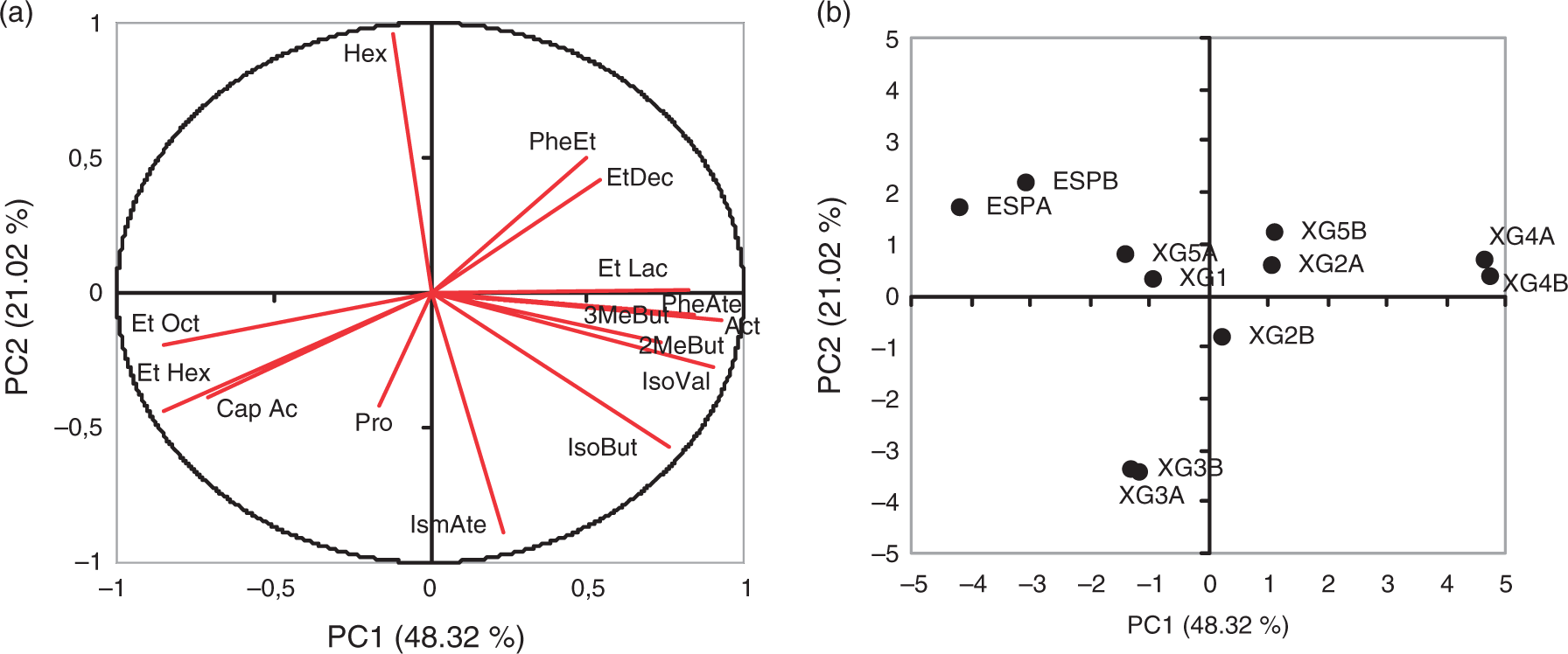
Sensory evaluation
The sensory analysis of wines revealed that the best punctuation, from a global quality point of view, was achieved by wine from XG4; however, wine from the spontaneous fermentation had less acceptance among tasters (Figure 3(a)). Despite the fact that chemical composition of wine influences its sensory properties (Lambrechts and Pretorius, 2000; Swiegers et al., 2005), the panelists did not found noticeable differences in wine mouth attributes (Figure 3(b)). Moreover, the perception of certain characteristics as acidity did not correlate to chemical data; for example, acidity perception was higher in wine made with XG3 but XG2 (that presented the highest value of total acidity) showed the lowest punctuation for this attribute. These results indicated that the chemical differences observed were not enough to be detected at sensory level. Figure 3(b) also showed that most appreciated wines (XG4 and XG2) were more balanced in mouth.
Sensory analysis of Treixadura wines fermented with different autochthonous S. cerevisiae strains. (a) Global punctuation of the wines tasted; (b) Sensory profile of gustatory attributes and relevant aroma descriptors of these wines.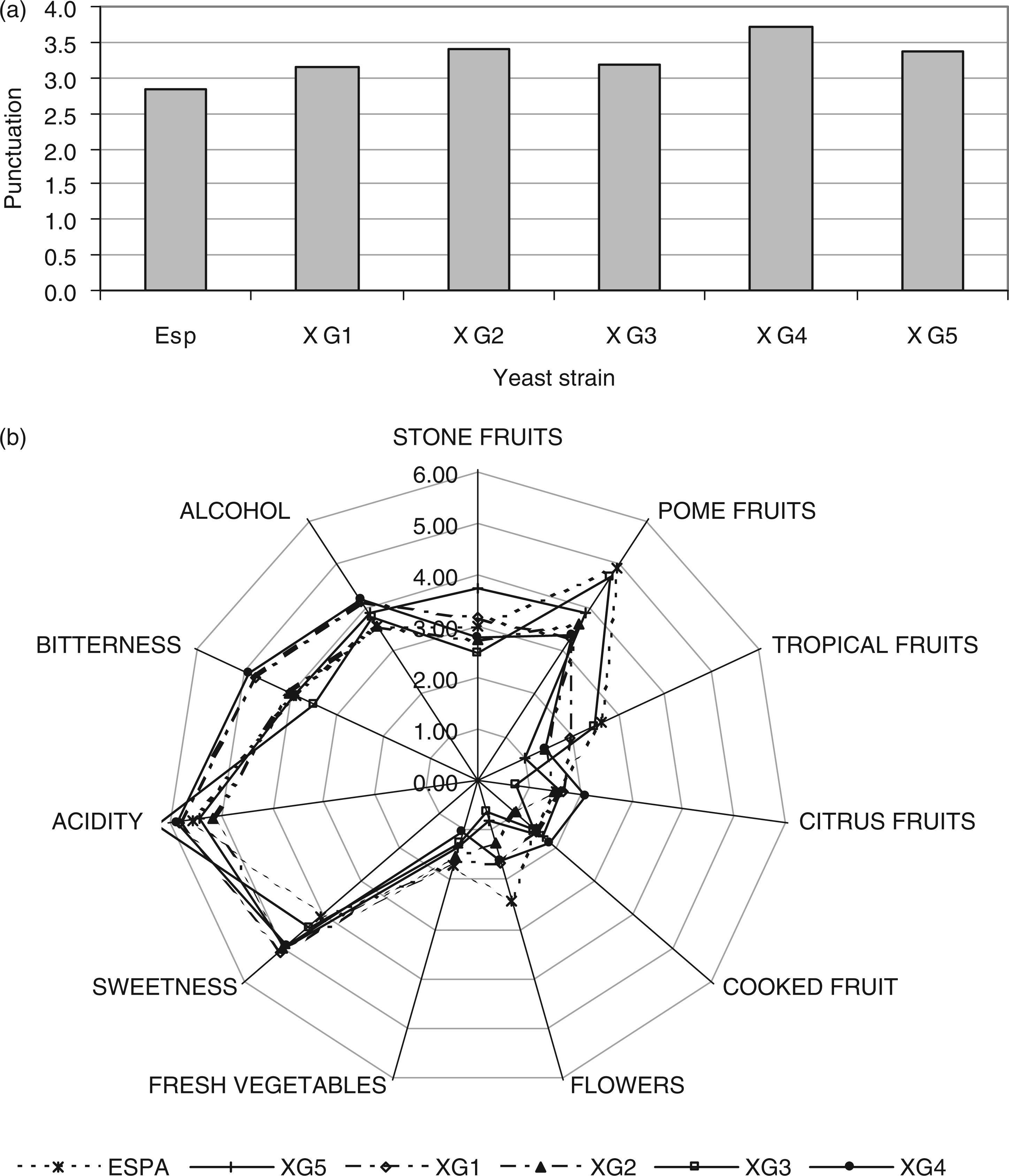
Regarding aroma, dominating descriptors that showed higher intensity and allowed differentiation between wines are represented in Figure 3(b). Most of them were related to the fruity character of wines, in agreement with those differences observed at the chemical level, although certain floral and vegetable connotations were also detected, but with a lower intensity. Thus, wines from spontaneous fermentation and XG3 reached the highest punctuation of pome and tropical fruits, whereas wine from XG5 presented notes of stone fruits. On the other hand, the wine obtained with XG4, the most appreciated one, did not stand out in any of these descriptors. The results indicated that the panelists appreciated more the overall impression and balance among wine aroma components than the high intensity of a given component.
Taking all the results together, we can conclude that the evaluated autochthonous yeast strains were good fermenters and their implantation during fermentation indicated that they were well adapted to winery conditions and to Treixadura must characteristics. Furthermore, the differences on chemical and sensory properties of wines indicated that these yeasts allowed obtaining Treixadura wines with singular characteristics. In particular, S. cerevisiae XG4 stood out at chemical and sensory level. The use of this strain, which have favored the development of malolactic fermentation, resulted in a wine with enhanced sensory properties. Therefore, the autochthonous yeast XG4 is recommended to improve the aroma of wines from Treixadura.
Footnotes
Funding
This work was financed by grant 08TAL002505PR from Xunta de Galicia. P. Blanco was supported by doctor INIA-CCAA contract, financed by the European Social Fond.
Acknowledgments
J.M. Mirás-Avalos thanks Xunta de Galicia for funding his contract within the framework of the “Parga Pondal” program.