







Abstract
A statistical methodology, combining Plackett–Burman design with Box–Behnken design, was applied to optimize the oil extraction process from olive pomace using hexane as solvent. Plackett–Burman design was used in the first step to evaluate the effects of five independent variables on the oil extraction yield. Temperature of extraction, time of contact, solvent-to-solids ratio and moisture content of the olive pomace were identified as significant independent variables and were further optimized by using response surface methodology based on Box–Behnken design. The optimized conditions to maximize the yield were as follows: extraction temperature at 33 ℃, contact time at 10 min, solvent-to-solids ratio at 3.5 mL/g and moisture content at 13%. The experimental value of the yield (5.98%) at these optimum conditions was found in perfect agreement with the value predicted by model (5.80%).
Introduction
The olive oil industry generates huge amounts of waste, both solid and liquid, which represent an important environmental problem in Mediterranean areas (Caputo et al., 2003; Rozzi and Malpei, 1996). These wastes are both pollutant and toxic due to their high organic load and noxious phenolic compounds, respectively. Thus, they affect the soil quality (Kavvadiasa et al., 2010; Paredes et al., 1987), pollute the rivers and underground waters (Boukhoubza et al., 2008) and create odour nuisance when disposed into the soil (Rana et al., 2003). Olive pomace is the solid waste whose production is estimated to be 80% of the total olives processed for olive oil extraction. It still retains a certain quantity of olive oil and mainly consists of vegetable water and pieces of skin, pulp and pit of the olive fruit. In many Mediterranean countries, olive pomace is usually used for the solvent extraction of residual oil, animal feed supplement, energy production or disposed on field. However, its economic interest is primarily due to residual oil it contains and that can be recovered in solvent extraction plants.
The wet olive pomace must be dried quickly to 5–10% moisture content for extraction of oil that it holds. This grade of olive oil, named crude olive pomace oil, is often used in soap making, because of the high content of unsaponifiable matters that it contains. It is also commercialized for human consumption after refined and blended with a proper amount of virgin olive oil. Oil thus obtained is classified as “olive-pomace oil”. However, the extraction of this oil, as one knows, is affected by many independent variables related to the extraction process (Meziane et al., 2008, 2009). Thus, it is difficult to search for the main independent variables and to optimize them for such extraction process as several independent variables are involved.
The first step in process optimization is screening of significant independent variables, followed by estimation of optimal levels of these independent variables. The traditional method of experimentation used for optimizing a multivariable system is based on the “one-factor-at-a-time” technique in which one factor is studied while keeping all other factors constant (Meziane et al., 2008). This classic experimentation turns out to be much less efficient than one that systematically varies all of them (Meziane et al., 2009). Indeed, being single dimensional, it is extremely laborious and time-consuming. In addition, such method often does not guarantee determination of optimal level of each independent variable and is unable to detect interactions between two or more independent variables. Response surface methodology enables evaluation of the effects of many independent variables and their interactions on response variables. Today, this statistical method is widely applied in food industry, and more particularly for optimization of extraction processes of food and medicinal products (Banik and Pandey, 2008; Da Trindade Alfaro et al., 2009; Kaur et al., 2008; Tan et al., 2009).
There are few studies reported in literature on the use of statistical designs for oil extraction from olive pomace. In the previous work (Meziane et al., 2009), two-level full factorial design was employed to evaluate the effect of the independent variables: size of particles, temperature of extraction, time of contact and solvent-to-solids ratio, on the oil extraction by ethanol 96.0%. De Lucas et al. (2002, 2003) studied the supercritical CO2 extraction of olive husk oil. The authors have used two-level full factorial design and full central composite design to study the effects on extraction yield and oil quality of some operational variables.
In this study, response surface methodology was applied in order to optimize the yield of extracted oil from olive pomace by hexane. Firstly, Plackett–Burman experimental design was used to screen and evaluate the most significant independent variables affecting the oil extraction yield. Subsequently, the independent variables that had significant effects were then optimized by Box–Behnken experimental design.
Materials and methods
Olive pomace
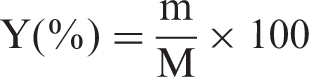
Fresh wet olive pomace used was obtained from a local production unit of olive oil. The sample collected contained 46.5 ± 0.6% moisture (wet basis) and 7.8 ± 0.2% oil (dry basis). The average size of particles of the sample was 1.78 ± 0.06 mm. For the purposes of the study, three different moisture samples were prepared: 26.0 ± 0.4%, 17.5 ± 0.3% and 9.0 ± 0.1% (wet basis). Drying of the samples was conducted at room temperature (25–30 ℃) by spreading the olive pomace of 1 to 2 cm in thickness on a flat surface. The moisture content of each sample was determined by keeping a sample of 10 g in an oven at 103 ± 1 ℃ until constant weight. The dried samples were then sealed in plastic boxes and placed in a freezer for preservation. All tests were carried out in triplicate.
Extraction procedure
Batch extraction experiments were conducted in a jacketed glass extraction cell of 600 mL capacity, equipped with a three-necked ground lid. The neck of the middle was used to agitate the mixture with a mechanical shaker, a condenser was fitted in one of the two side necks to avoid solvent losses and the third neck was used to pour the solvent in the cell and also to control temperature. The extraction cell was placed on an elevator. For each extraction test, the solvent was heated to the extraction temperature and poured into the cell containing the sample heated at the same temperature. The solid–liquid separation was carried out under reduced pressure. The miscella was distilled under vacuum, and the residue was dried at 103 ± 1 ℃ for 15 min followed by cooling in a desiccator and weighing. The cycle of drying, cooling and weighing was then repeated until the difference between two consecutive weights was smaller than 10 mg. For each experiment, the weight of the sample submitted to extraction and the stirring velocity were fixed to 50 g and 300 r/min, respectively. The High purity liquid chromatography (HPLC) grade hexane and glacial acetic acid used, in all oil extraction experiments, were Prolabo products (Fontenay S/Bois, France).
Experimental design and statistical analysis
Plackett–Burman (PB) design and the response values
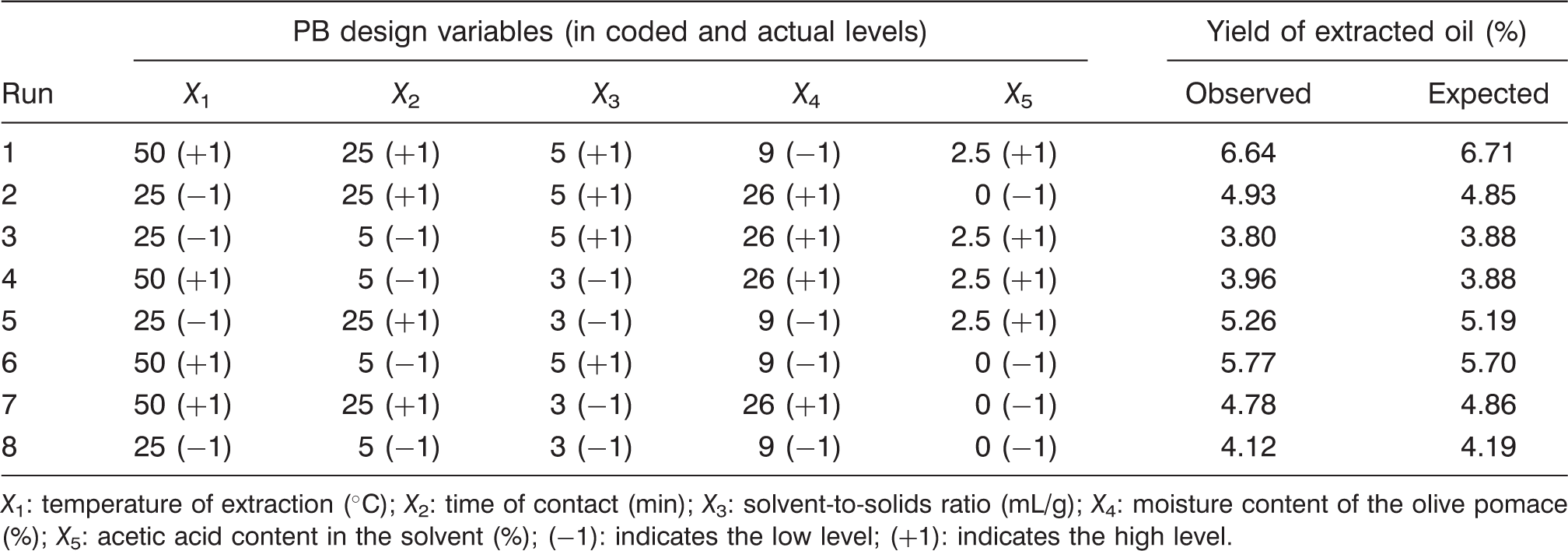
X1: temperature of extraction (℃); X2: time of contact (min); X3: solvent-to-solids ratio (mL/g); X4: moisture content of the olive pomace (%); X5: acetic acid content in the solvent (%); (−1): indicates the low level; (+1): indicates the high level.
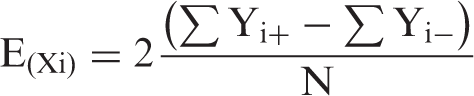
The effect (EXi) of each variable on the yield was calculated using the following equation:

Box–Behnken (BB) design and the response values
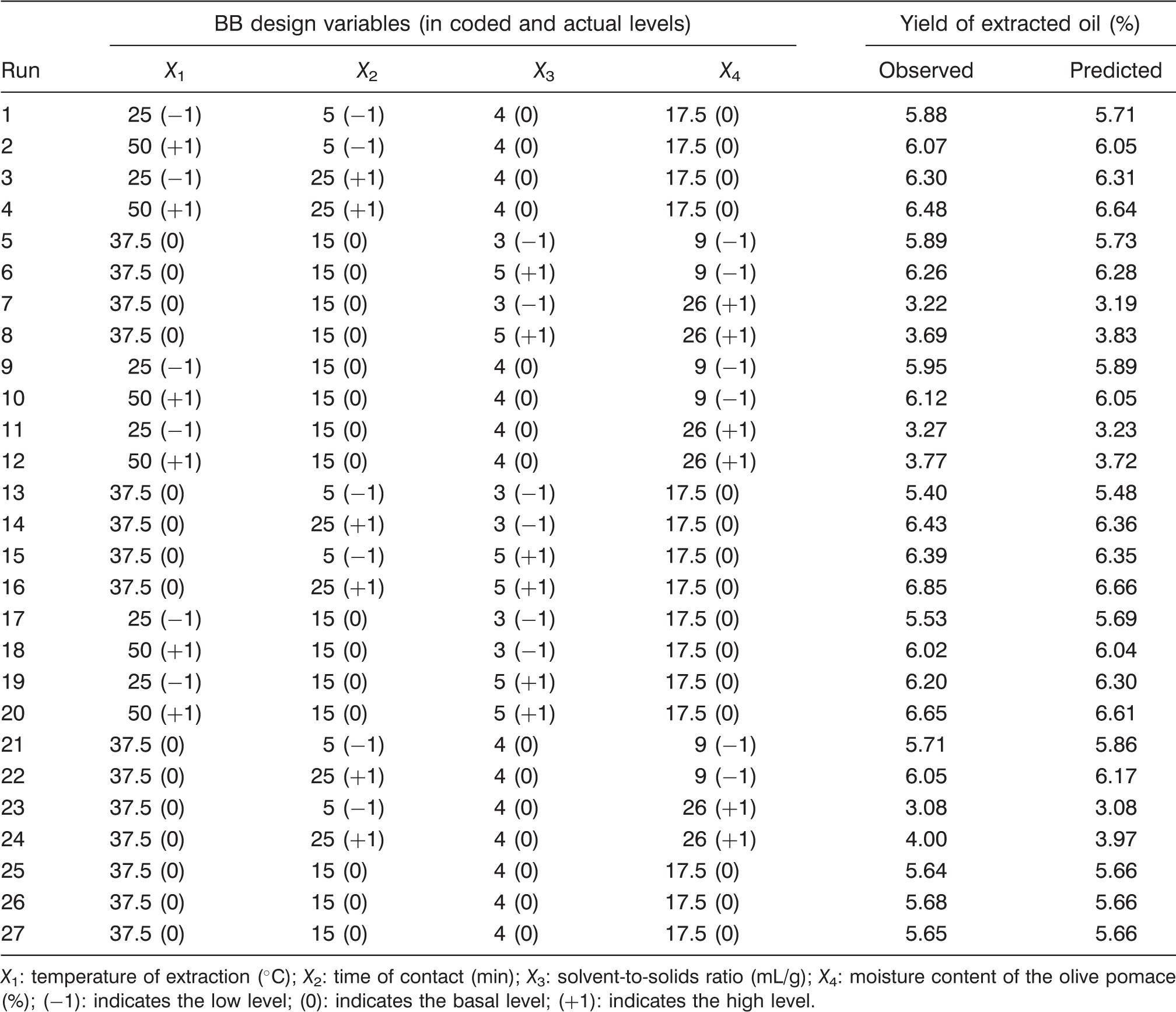
X1: temperature of extraction (℃); X2: time of contact (min); X3: solvent-to-solids ratio (mL/g); X4: moisture content of the olive pomace (%); (−1): indicates the low level; (0): indicates the basal level; (+1): indicates the high level.
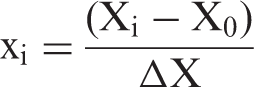
The independent variables were coded according to the following equation:
The statistical software package MODDE 6.0 (Umetrics AB, Emea, Sweden) was used for regression and graphical analysis (response surface and contour plots) of the data obtained. The optimal values of the selected independent variables were obtained by solving the regression equation. The procedure involved equating the derivatives to zero and then solving the resulting equation system.
Results and discussion
Screening of significant variables using a Plackett–Burman design
The experimental and predicted yields, along with the Plackett–Burman experimental design, are shown in Table 1. In the range of the examined levels of variables, the data indicate that the yield of the oil extraction varies from 3.96 to 6.64%, indicating a wide variation of the yield in the eight trials.
Results of regression analysis for PB design
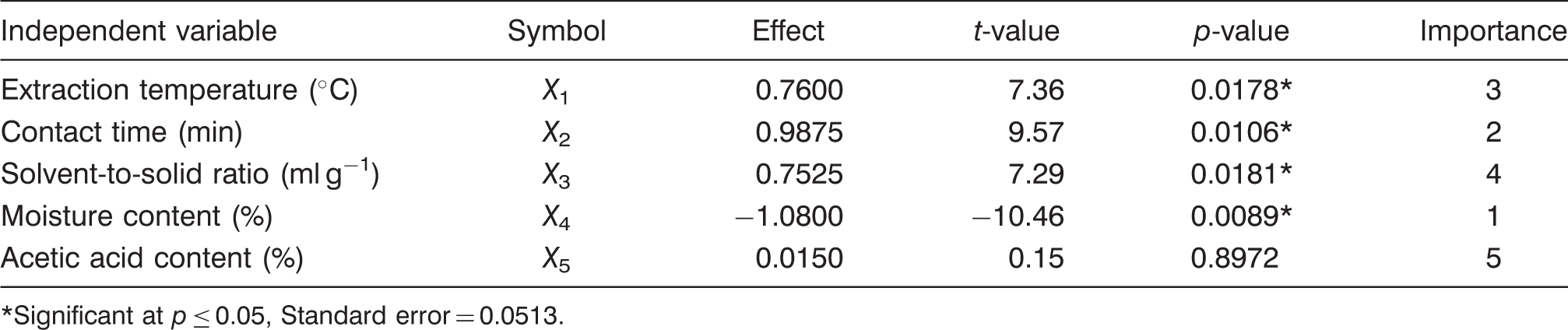
Significant at p ≤ 0.05, Standard error
Optimization of significant variables using a Box–Behnken design
Results of regression analysis for BB design
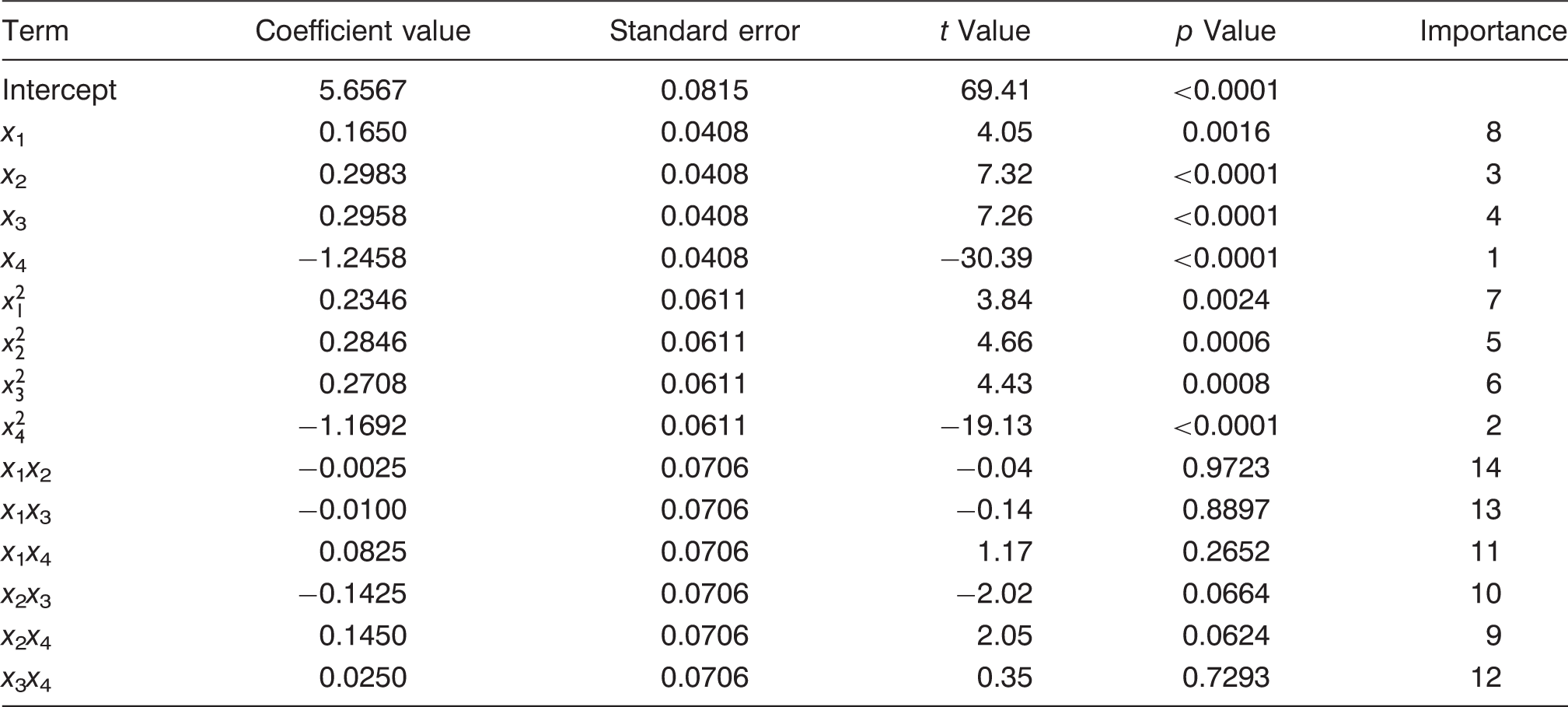
By applying multiple regression analysis on the experimental data, the following second-order polynomial equation was found to explain the yield of oil extraction from olive pomace by only considering the significant terms:
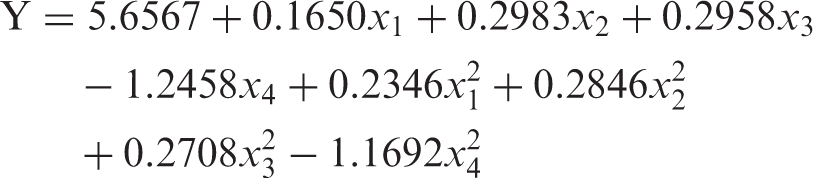
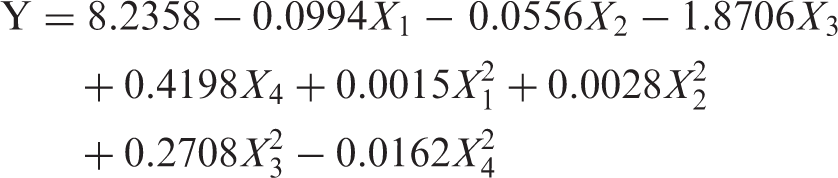
The regression equation was then optimized from equations derived by differentiation of the quadratic model given by Equation (5) to get the optimal values of x1, x2, x3 and x4, which were found as follows: −0.3517, −0.5242, −0.5462 and −0.5328, respectively. The actual values determined from Equation (4) were temperature of extraction at 33 ℃, time of contact at 10 min, solvent-to-solids ratio at 3.5 mL/g and moisture content of the olive pomace at 13%. The experiment was then carried out at these optimum conditions. The experimental yield of oil extraction at this optimum level was 5.98%, whereas the calculated yield with these optimal values using the quadratic model was 5.80%, indicating an excellent agreement between them.
Figures 1–3 show the response surface and contour plots of oil extraction yield from olive pomace of all the pairwise combinations of the three most influential variables (time of contact, solvent-to-solids ratio and moisture content), while keeping the other two at their center point levels. Figure 1 depicts response surface and contour plots of the effects of the two variables inherent to oil extraction process. As seen, these two variables demonstrated a linear increase on the response. High amounts of extracted oil were obtained at high values of the independent variables. Note that the same observation was found for the other interaction effects of variables, namely extraction temperature-contact time and temperature–solvent-to-solids ratio on the studied response.
Response surface and contour plots for the effects of extraction time (X2) and solvent-to-solids ratio (X3) at constant temperature (37.5 ℃) and moisture content (17.5%) on yield of the oil extracted from olive pomace.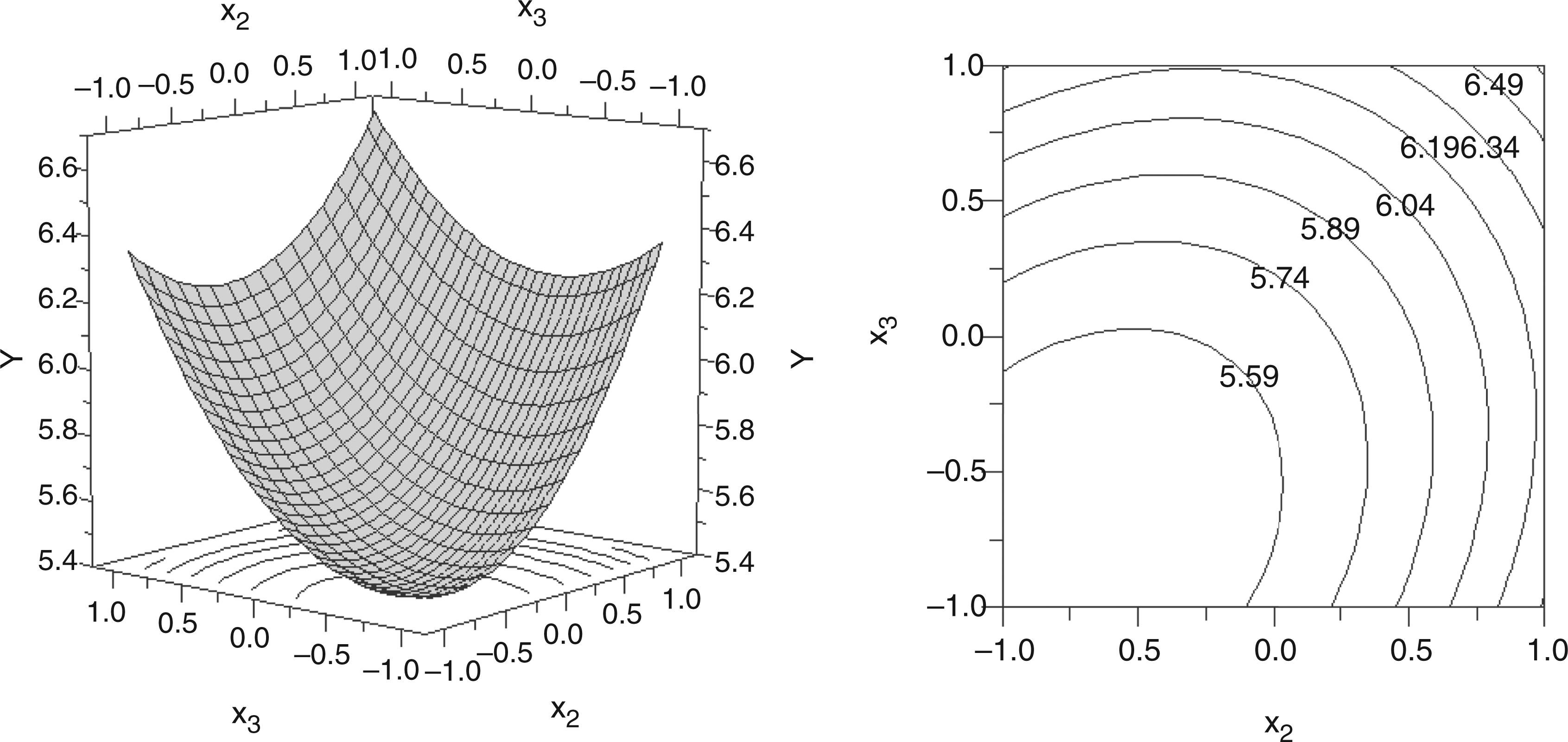
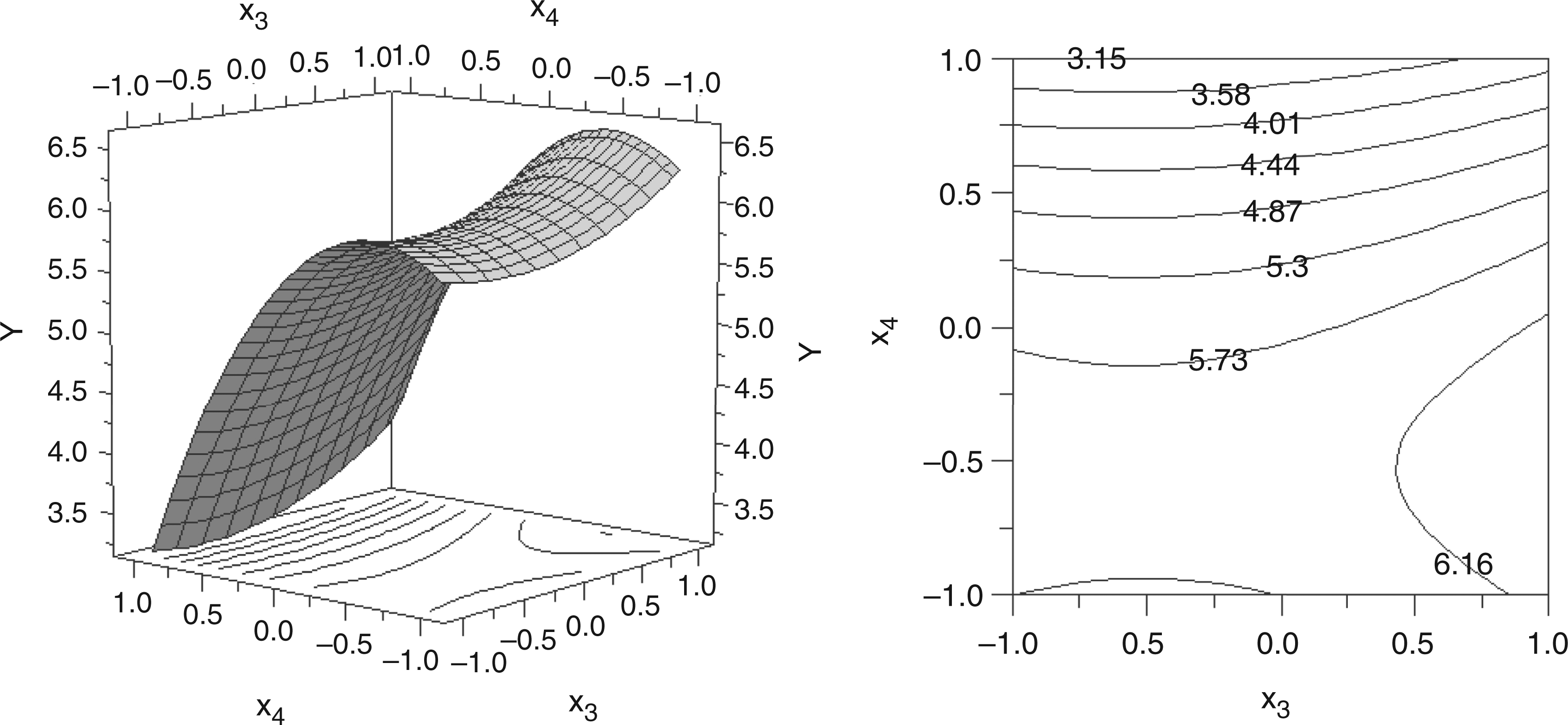
The response surface and contour plots of the combined effects of moisture content of the sample and both variables of extraction process on the response are represented in Figures 2 and 3. In both figures, the oil yield increased significantly as the moisture content of the sample decreased. They also indicated that high values of contact time and solvent-to-solids ratio have led to high yields of olive pomace oil when moisture content value was between about 12.0% and 14.0%. The same phenomenon was also found with the interaction effects of moisture content and extraction temperature on the yield. These results showed that moisture content had a pronounced influence on the extraction process of olive pomace oil. Indeed, it is know that high moisture content can effectively slow down the action of the extraction solvent. But on the other hand, an intense drying can lead to contraction of the cell membranes making more difficult the solvent extraction process.
Response surface and contour plots for the effects of extraction time (X2) and moisture content (X4) at constant temperature (37.5 ℃) and solvent-to-solids ratio (3 ml/g) on yield of the oil extracted from olive pomace. Response surface and contour plots for the effects of solvent-to-solids ratio (X3) and moisture content (X4) at constant temperature (37.5 ℃) and extraction time (15 min) on yield of the oil extracted from olive pomace.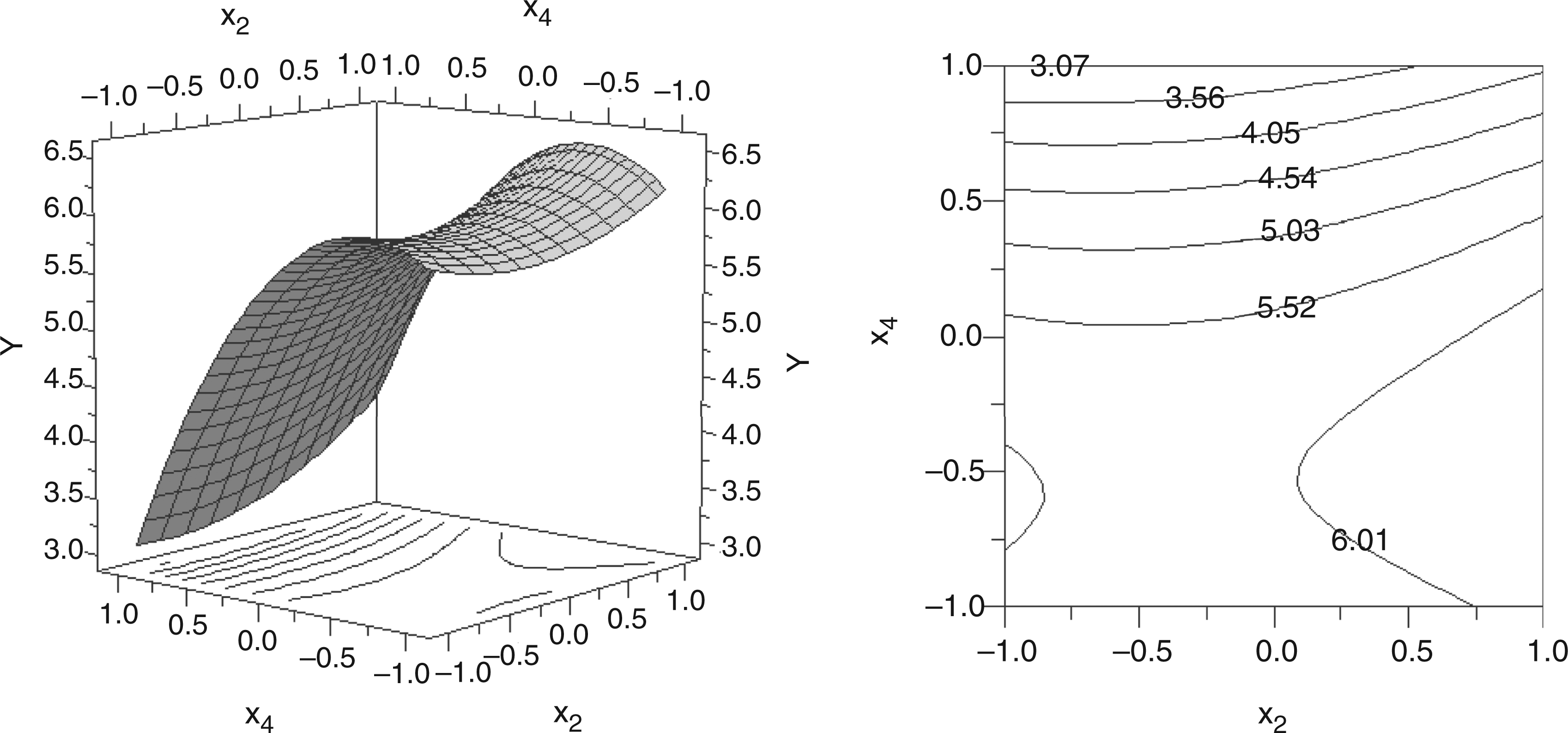
Conclusions
Statistical analysis using response surface methodology based on Box–Behnken design appears to be an appropriate tool to optimize the solvent extraction process of oil from olive pomace. Results obtained by Plackett–Burman experimental design showed that time of contact, temperature of extraction and solvent-to-solids ratio were positively significant independent variables, whereas moisture content of the olive pomace was negatively significant. Among them, moisture content was the most influential parameter. A quadratic model based on Box–Behnken design was then developed using experimental data with a determination coefficient of 0.9872. The value of predicted yield by this model (5.80%) was in good agreement with the experimental value (5.98%) obtained by extracting oil from olive pomace under the optimum conditions. These results provide useful data for large-scale extraction of oil from olive pomace.
Footnotes
Funding
This research received no specific grant from any funding agency in the public, commercial, or not-for-profit sectors.