






Abstract
Peel pitting is a disorder occurring mostly during postharvest storage at non-chilling temperatures in different varieties of citrus fruit and consists in collapse of flavedo and albedo tissues that may affect oil glands. It has been demonstrated that during postharvest, sharp variations in water potential of cells from flavedo and albedo are sufficient to provoke fractures in cell walls from external albedo resulting in tissue collapse. However, morphology and composition of cells and cell walls in flavedo and albedo varies during fruit maturation and this may affect water flow through the different fruit peel layers and susceptibility of fruit to develop peel pitting. In this paper, we have studied the influence of the stage of maturation in the susceptibility of Navelina orange to develop peel pitting. Except in mature-green fruit, peel pitting increased with maturation after transferring fruit from 45% to 95% relative humidity and was also more severe as more dehydrated was the tissue before transference. Also, differences in water potential of fruit maintained at 45 or 95% relative humidity increased as fruit matured, suggesting that tissue reduces the ability of water adjustment during maturation. In this sense, only mature-green fruit flavedo was able to recover water potential when transferred from 45 to 95% relative humidity. Ethylene production upon transfer from low to high relative humidity increased only in mature tissue and was rapid and transient, and before initial symptoms of peel pitting. Flavedo and albedo water potential (ψw) was substantially reduced during fruit maturation. As lower was the ψw of freshly harvested fruit, minor variations were observed by changes in the storage relative humidity and higher the induced damage. Therefore, the increasing susceptibility of Navelina fruits to develop peel pitting with fruit maturation may be related to a reduced ability to regulate peel evapotranspiration and osmotic adjustment during postharvest storage.
Introduction
In citrus fruit, the physiological disorder known as non-chilling peel pitting, rind-staining or rind-breakdown is a peel blemish occurring mostly during postharvest in different varieties of Navel oranges, tangerines and grapefruit (Alferez et al., 2005). Peel pitting consists in collapse of flavedo and albedo tissues that may affect oil glands. In advanced stages of the disorder, oil glands may break and oil content being released to intercellular spaces, oxidizing and turning bronze in color (Agusti et al., 2001, Alquezar et al., 2010). Evidences accumulated over last years indicate the involvement of peel water status in the origin and development of the disorder. During postharvest, sharp variations in relative humidity (RH) provoked alterations in water potential of cells from flavedo and albedo and fractures in cell walls from external albedo were evident, resulting in tissue collapse (Alferez et al., 2010; Alquezar et al., 2010). This assumption is further supported by the effects of postharvest treatments that alleviated (Porat et al., 2004) or aggravated (Alferez et al., 2005, 2010) the incidence of rind staining by modifying water relations of the fruit. Hence, morphological features of flavedo and albedo cells and how they are related to peel water status appear to determine susceptibility to develop peel pitting. Morphology and composition of cells and cell walls in flavedo and albedo varies during fruit maturation (Storey and Treeby, 1994) and this may affect water flow through different fruit peel layers. During fruit growth, albedo develops quickly by extensive cell division and later, after cessation of cell division, the tissue undergoes cell separation, enlargement and differentiation before the fruit changes color (Storey and Treeby, 1994). In general, physiological disorders such as peel pitting or albedo breakdown occur after color set (Alferez and Burns, 2004; Lafuente and Zacarias, 2006) when albedo is characterized by very large intercellular spaces forming air cavities that confer spongy texture to the tissue (Storey and Treeby, 1994). Besides, epicuticular waxes change also in composition during fruit maturation modifying cuticle permeability (El-Otmani and Coggins, 1985; Zaragoza et al., 1996). Influence of the rootstock on the incidence of peel pitting in Navel oranges has been also demonstrated (Zacarias et al., 2000) and related to the transpiration and cuticle water permeability (Agusti et al., 2003). Secretion of epicuticular waxes increased during fruit maturation as well as cracking of the outer layer of wax, making the flavedo more prone to increase in water loss, reduction in water potential and susceptible to rind staining (Sala et al., 1992). In this regard, applying commercial waxes have been shown to be involved in the disorder to some extent (Alferez et al., 2010; Petracek et al., 1998) but waxing the fruit after periods of dehydration have been shown to modify normal water relations and intensified the incidence of the disorder (Alferez et al., 2010) Together these data suggest that susceptibility of oranges to peel pitting may be largely dependent on altered water relations and that differential postharvest responses are likely to be due to the maturation stage of the fruit.
One of the problems associated with peel pitting in fruit of susceptible varieties is the unpredictability and erratic incidence observed in different countries, with high variability between orchards, harvest time, season to season, etc. (Agusti et al., 2001; Petracek et al., 1995, 1998). Therefore, a challenge to determine potential causes of the disorder and control treatments is the ability to reproduce experimentally the symptoms under controlled postharvest conditions. We have developed an experimental system in which rind staining could routinely and consistently be reproduced in fruits of Navel oranges (Alferez et al., 2003), Marsh grapefruit (Alferez and Burns, 2004) and Fallglo tangerines (Alferez et al., 2005). These postharvest conditions were based on maintaining fruit under low RH for prolonged periods to induce a high evapotranspiration rate before changing storage conditions to high RH to achieve a sharp variation in water, osmotic and turgor potentials. Fluctuations on environmental RH during the season are common conditions among citrus growing regions in the world (Agusti et al., 2001; Alferez et al., 2005) and the reproducibility of these storage conditions allow designing parallel experiments in different geographical areas and also to study the physiology of citrus fruit in response to alteration of water conditions (Alferez et al., 2003, 2010). We have observed that changes in RH during postharvest storage were associated with a marked increase in respiration and ethylene production, which appears to be wound-related responses (Alferez et al., 2003). Interestingly, exposure of Navel fruit to exogenous ethylene for few days reduced incidence of the damage (Cajuste et al., 2007) and contrary, a pre-treatment with the ethylene action inhibitor 1-MCP accelerated and increased severity of the disorder (Estables et al., 2009), suggesting that the ethylene is part of the fruit defense response to cope with postharvest stress conditions inducing peel pitting.
In this work, we hypothesized that changes in peel water status during natural fruit maturation may be a prevailing factor for the susceptibility to develop postharvest peel pitting in Navelina oranges. To address this objective, we have evaluated the susceptibility of Navelina oranges at four maturation stages to develop the disorder by changes in the RH during postharvest storage. Influence of fruit maturation on the incidence of peel pitting, rate of weight loss and ethylene production were studied in relation to the changes in flavedo and albedo water potential of fruit exposed to different HR regimes during storage at non-chilling temperatures.
Materials and methods
Plant material and storage conditions
Fruit from Navelina (Citrus sinensis, L Osbeck) oranges were harvested from adult trees grafted onto citrange Carrizo (Poncirus trifoliata x Citrus sinensis) rootstock. Trees were located in a commercial orchard in Lliria (Valencia, Spain) and subjected to standard watering and cultural conditions. Fruits were harvested at four different maturation stages, according to their external color: mature-green (MG, average a/b Hunter ratio of -0.69 ± 0.07), breaker (Br, a/b = 0.09 ± 0.02), mature colored (C1, a/b = 0.72 ± 0.09) and full mature (C2, a/b = 1.17 ± 0.11). Harvest was carried out approximately at 1-month interval from the beginning of October to January. Color of the peel was measured in three locations around the equatorial plane of the fruit with a Minolta CR-330 using at least 10 fruit per treatment (Rodrigo et al., 2003). Fruits were uniform in size and free of peel defects and after harvest were immediately delivered to the laboratory and randomly classified as follows: per storage condition 3 replicate lots of 30 fruits were used to determine changes in peel pitting damage, weight loss and ethylene production during storage. In addition, one lot of 80 fruit per condition of storage was used to determine changes in water potential in flavedo and albedo tissue during storage. Fruits were stored up to 28 d at 20 ℃ at 45% or 95% RH. Other two sets of three replicated lots were maintained for 7 or 14 d at 45% RH prior to transference to 95% RH. The rate of weight loss was determined periodically by weighting replicate samples of fruit subjected to the different storage conditions.
Estimation of peel pitting index
Fruits were inspected for the intensity and extension of damage and rated on a scale from 0 (no damage) to 3 (severe damage). Results were expressed as peel damage index that was calculated according to the formula:
Σ (Peel damage scale (0–3) × number of fruit within each class)/total number of fruit.
Determination of ethylene production
Ethylene production was determined by incubating 3 replicates of 3 fruits each into 1.7-L flasks that were hermetically sealed and maintained at the storage temperature (20 ℃). After 3 h of incubation, 1 mL air samples from the headspace of the flasks were taken with a hypodermic syringe and injected into a gas chromatograph (Perkin Elmer Autosample) equipped with a flame ionization detector and a 1 m × 2 mm activated alumina column (80/100 mesh). Nitrogen was used as carrier gas and the temperature of the column was maintained at 140 ℃.
Water potential measurement in flavedo and albedo tissue
To measure flavedo and albedo water potential, 5 mm disks from the equatorial region of the fruit were excised by a cork borer. Disks of 1–2 mm thick flavedo were sliced from the albedo portion and placed into a sample chamber (C-2, Wescor Inc. Logan, UT) connected to a psychrometer swicthbox (PS-10) and to a dew point microvoltimeter (HT-33T). Measurements were performed following the entire procedure previously described (Alferez et al., 2003). Water potential measurements were done in flavedo and albedo of fruits stored 7 days at 45 or 95% RH or 24 h after transference from low to high RH. For each water potential measurement at least 3–4 fruits and 6–9 replicate disks were used.
Statistics
Values for water potentials are given as the mean of at least three replicate samples ± SD. Data were subjected to one-way analysis of variance with Statgraphics Plus 5.1 Software (Manugistics, Inc.). Mean separation was performed with LSD test. Differences at p < 0.05 were considered significant.
Results and discussion
To address the influence of fruit maturation on the susceptibility of Navelina oranges to develop non-chilling peel pitting, we stored Navelina fruit at 20 ℃ under low or high HR regimes and also transferred dehydrated fruits to high RH since these experimental conditions have been previously shown to be efficient and reliable provoking peel pitting not only in orange (Alferez et al., 2003; Alquezar et al., 2010) but also in grapefruit (Alferez et al., 2004, 2010) and tangerine fruit (Alferez et al., 2005). Navelina fruits were harvested at four maturity stages, mature-green (MG), breaker (Br), orange-colored fruit from December (C1) and bright-orange fruit at January (C2). These stages were selected to cover the whole maturity process, from early harvesting to over maturation, since commercial harvest of Navelina oranges under standard Mediterranean conditions used to be between December and January (Agusti, 2000).
The rate of weight loss was monitored periodically over 4 weeks and it is shown in Figure 1. As expected, the rate of weight loss in fruit stored at 45% RH was much higher than that of fruits stored at 95% RH. Fruits at the four maturation stages lost between 8 and 10% of their initial weight after 4 weeks storage at low RH. During the first week of storage at 45% RH, the rate of weight loss in MG and Br fruit was higher than in colored fruits, but the difference was abolished at the end of the experiment. Transferring fruit from 45% to 95% RH after 7 or 14 days reduced the rate of weight loss to make it parallel to that of control fruit maintained continuously at 95% RH. At the end of the storage period, final weight loss of fruit transferred from low to high RH was intermediate to that of fruit maintained at constant RH. Interestingly, the rate of weight loss in fruit stored under high RH was progressively reduced with maturation and consequently increased the difference between fruit stored at 45% and 95% RH. Whereas in mature-green fruit stored 4 weeks at 95% RH weight loss was 5.9%, in C1 and C2 fruits were 4.0 and 2.8%, respectively (Figure 1). The marked difference in transpiration under high RH as fruit mature suggest a progressive decrease in water content in peel tissues, originating greater resistance to evapotranspiration. During storage at low RH, the difference in vapor pressure deficit (VPD) between peel tissues and the surrounding environment would be so high that evapotranspiration rate would not depend on the maturation stages and in consequence, no important differences in the rate of water loss were observed when comparing the different maturation stages (Figure 1). By contrast, in a near water-saturated atmosphere (95%), VPD in a less mature fruit with higher water content would be probably bigger than in a more mature fruit with lower water content, and may explain the difference observed between fruits at different maturation stages under these high RH conditions. These results are in agreement with previous observations indicating that resistance to gas diffusion, including water vapor, rise as peel dry and increase tissue ability to retain water content (Ben-Yehoshua, 1969, 1987).
Changes in weight loss in Navelina orange fruit harvested at four maturity stages and stored at 20 ℃ and 45% (○) or 95% (□) RH for up to 27 days and in fruit transferred to 95% RH after 7 (•) and 14 (▪) days storage at 45%. MG: mature green fruit with a Hunter ratio a/b = –0.69; Br: breaker fruit, a/b = −0.09; C1: mature colored fruit, a/b = 0.72 and C2: full colored fruit, a/b = 1.17. Values are the mean ± SD of 30 fruits.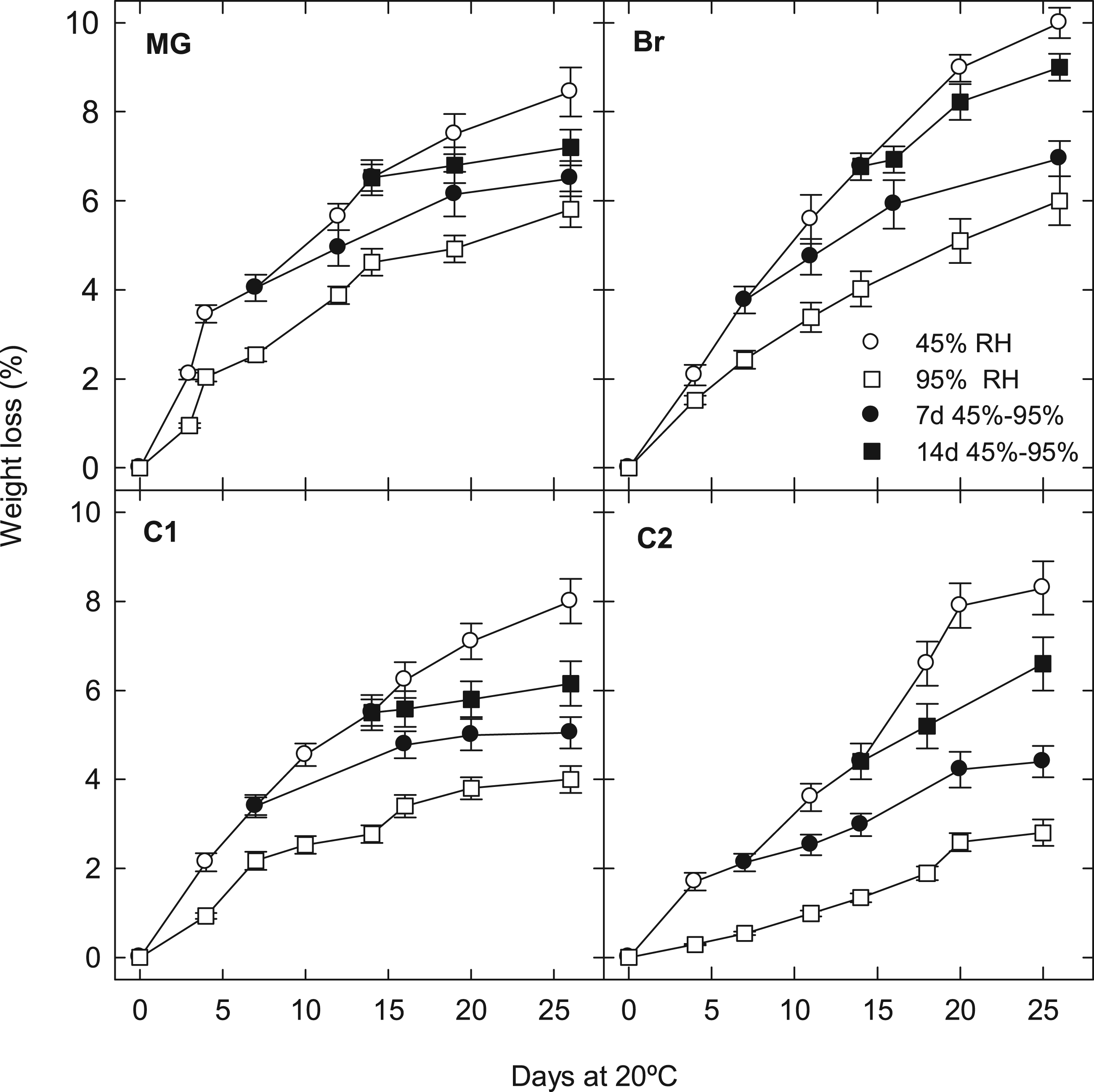
Incidence and severity of peel pitting was also dependent of the maturation stage of the fruit (Figure 2). Peel damage was negligible (less than 0.5) in MG fruit irrespective of the RH and time of storage. However, the incidence of damage in fruit transferred from 45 to 95% RH increased with the stage of maturation and it was also more severe as more dehydrated was the fruit before transference (Figure 2). In more mature fruits (C2), peel pitting index increased to a value around 2 (medium damage) after transference and more rapidly in fruits stored for 14 days at 45% than in those stored 7 days. It should be mentioned that in fruits of the different maturation stages maintained at constant RH, the incidence of damage was lower than in fruits subjected to changes in RH. In BR or C2 fruits stored immediately after harvest at 95% RH, peel pitting index was around 1 (Figure 2). These results agree with previous observation in orange fruit, indicating that the environmental conditions at harvest may be critical for the development of damage after harvest and that moderate dehydration in the field may influence the ability of the fruits to develop peel damage after storage at high RH (Alferez et al., 2003; Alquezar et al., 2010). It is likely that the resistance of mature-green fruits of Navelina orange to develop peel damage by changes in the RH may be related to the morphological and structural features of the flavedo and albedo cells of the peel that changed progressively as the fruits mature. Immature peel cells appear compact and spherical, and the albedo is a mesh of connecting cells forming a spongy structure filled of intercellular space (Storey and Treeby, 1994). This spongy structure is flexible and may be easily adaptable to the morphological alterations imposed by the changes in RH during storage, that are known to induce variations in cell turgor pressure (Alferez et al., 2010). As the peel tissues mature, flavedo change in color and albedo cells adopt a lobulated morphology, intercellular spaces increase and cell walls change their composition and increase rigidity (Storey and Treeby, 1994). An ultrastructure analysis by cryo-scanning electron microscopy revealed that albedo cells of mature Navelate fruits become amorphous and compacted after dehydration, and normal spongy structure was not recovered after transfer to high RH. Moreover, transference from low to high RH also provoked fractures in the walls of lobulated cells in the external albedo (Alquezar et al., 2010). Besides, the amount of epicuticular waxes and their composition changed during fruit maturation, becoming rich in alkanes, which make the fruit surface more susceptible to cracking (El-Otmani et al., 1985; Sala et al., 1992). This natural barrier, however, may be changed by processing, altering then the water flux between the peel tissue and the surrounding atmosphere and making the fruit prone to develop pitting during postharvest (Alferez et al., 2010; Alquezar et al., 2010).
Peel damage index in Navelina orange fruit harvested at four maturity stages and stored at 20 ℃ and 45% (○) or 95% (□) RH for up to 27 days and of fruit transferred to 95% RH after 7 (•) and 14 (▪) days storage at 45%. MG: mature green fruit with a Hunter ratio a/b = −0.69; Br: breaker fruit, a/b = −0.09; C1: mature colored fruit, a/b = 0.72 and C2: full−colored fruit, a/b = 1.17. Values are the mean ± SD of 30 fruits.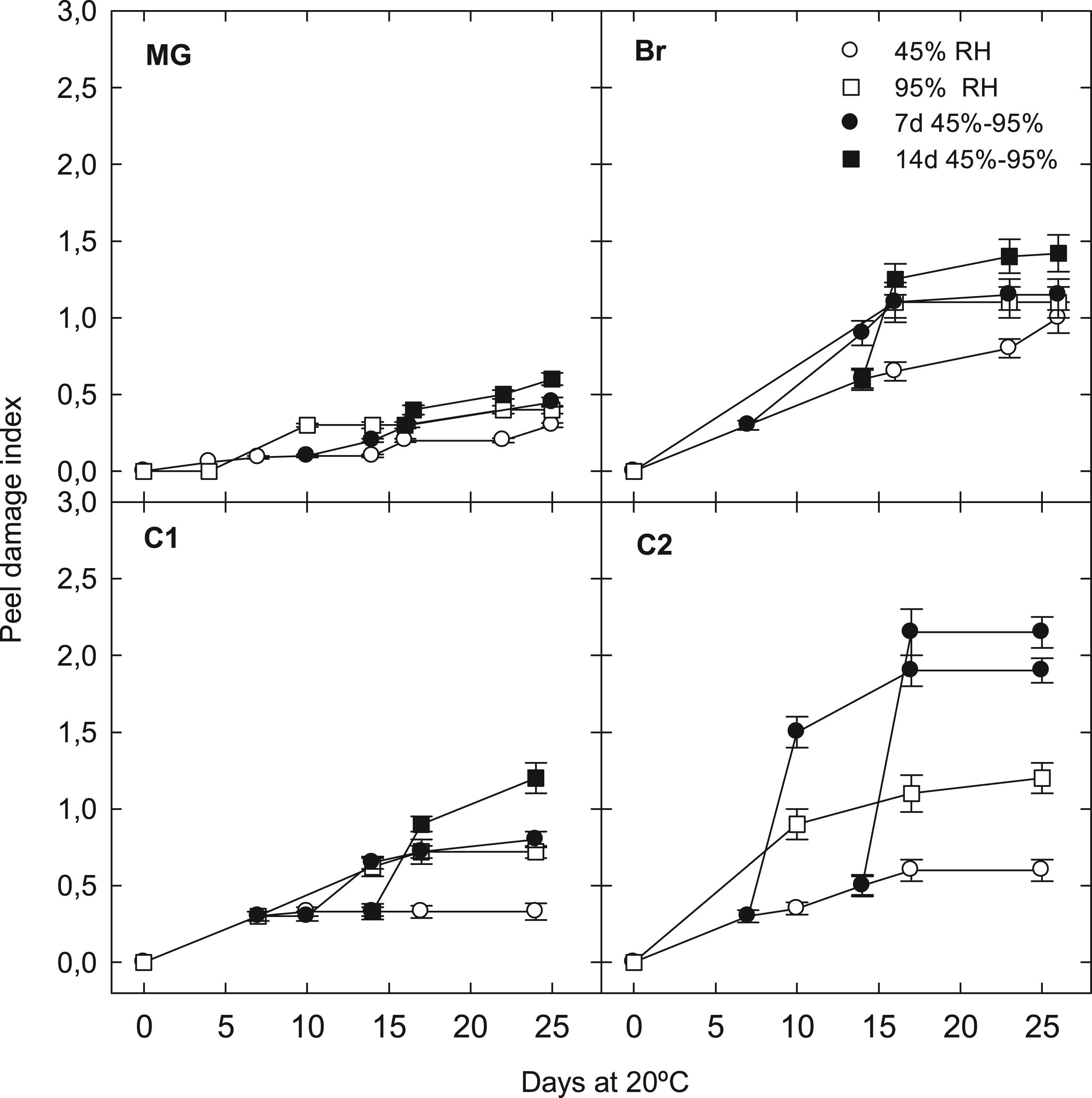
Ethylene production was very low and remained nearly constant ( ≈ 0.03–0.05 nL g−1 h−1) during fruit storage at both 45 and 95% RH for up to 25 days and irrespective of the maturation stage (Figure 3). Transfer of mature-green or breaker fruit from 45% to 95% RH did not induce significant changes in ethylene production. In contrast, ethylene production increased by 4-fold in C1 fruits (a/b = 0.72) or by 5 - to 7-fold in mature C2 fruits (a/b = 1.17) after transference, depending on the dehydration degree. These increases were transient as maximum ethylene production was attained 24–48 h after transference and by day 3–5 the rates were similar to those of fruits maintained at constant RH (Figure 3). Induction of ethylene production upon transfer from low to high RH occurred only in mature tissue after change in water potential and before initial visible symptoms of peel pitting, suggesting that the activation of ethylene synthesis may be an early response to these stress conditions. We have previously suggested that this increase in ethylene biosynthesis may be due to sudden changes in cell wall turgor or cellular damage derived from water content adjustment (Alferez et al., 2003). This hypothesis was further confirmed by microscope observations of tiny cracks and injuries in the ultrastructure of albedo lobulated cells as a consequence of peel compaction by dehydration (Alquezar et al., 2010). The fact that transient increase in ethylene production upon transfer was more acute as fruits matured (Figure 3), similarly to the increase in peel damage (Figure 2), but not in green tissues which possess better ability to adjust water status, supports this idea. The involvement of ethylene in the protection to rind staining in Navel oranges has been suggested, as an exogenous application of the gas for 4 days has been shown to reduce incidence of the blemish (Cajuste and Lafuente, 2007) and inhibition of its action by 1-MCP exacerbated peel pitting (Estables et al. 2009).
Ethylene production of Navelina orange fruit harvested at four maturity stages and stored at 20 ℃ and 45% (○) or 95% (□) RH for up to 27 days and of fruit transferred to 95% RH after 7 (•) and 14 (▪) days storage at 45%. MG: mature green fruit with a Hunter ratio a/b = −0.69; Br: breaker fruit, a/b = −0.09; C1: mature colored fruit, a/b = 0.72 and C2: full colored fruit, a/b = 1.17. Values are the mean ± SD of 3 replicate samples of 3 fruit each.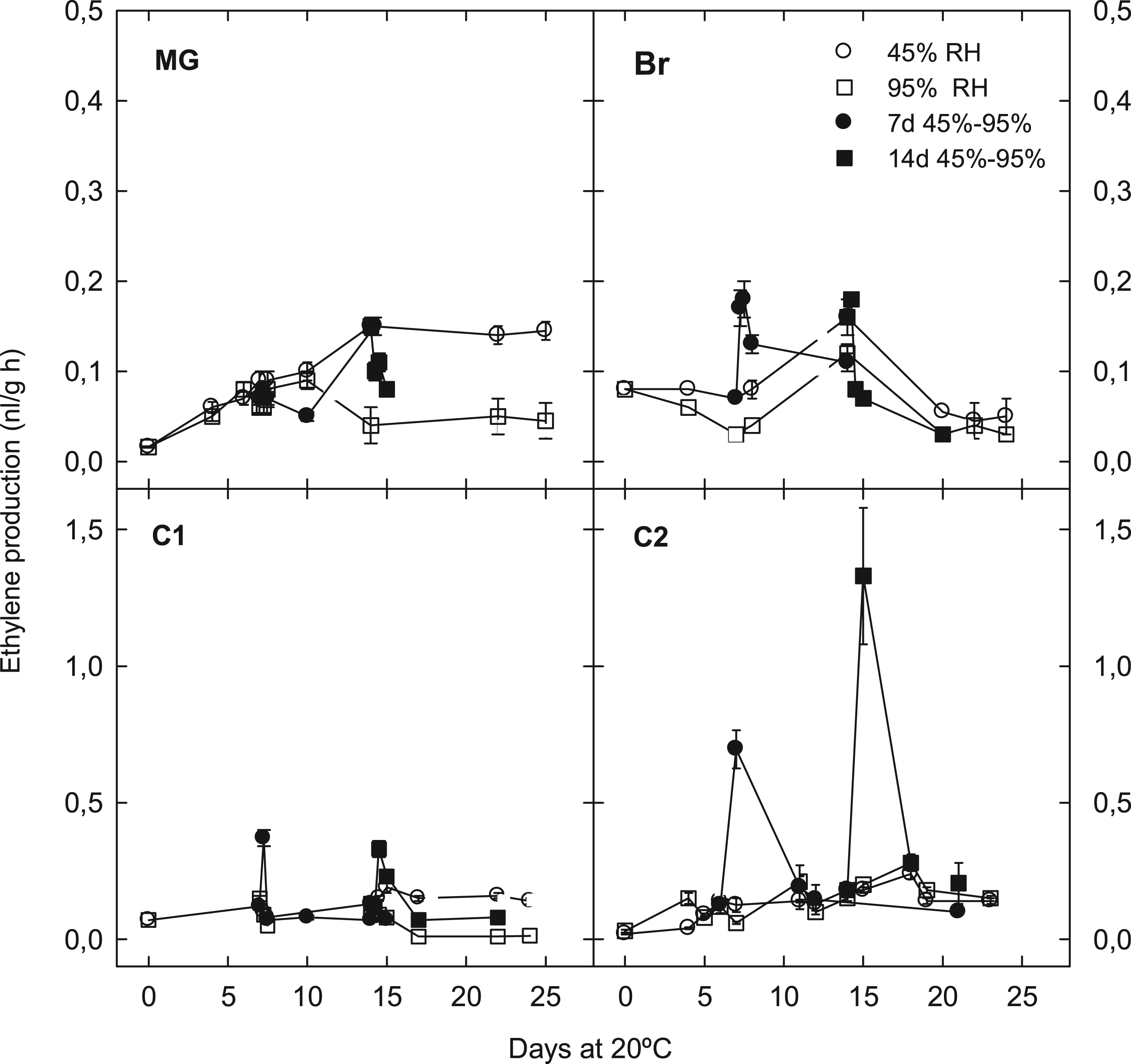
Variation in water potential (ψw) was monitored in flavedo and albedo from Navelina orange fruit at different stages of maturation. In flavedo and albedo tissue of freshly harvested fruit, ψw decreased considerably with the stage of maturation, further confirming our statement above that the tissue undergoes progressive dehydration as matures, despite to be attached to the tree under normal irrigation regimen. A graphical relationship between the decrease in ψw of flavedo and albedo and the changes in peel color during fruit maturation has been represented in Figure 4. ψw experienced a more abrupt decline in albedo than in flavedo, as over-mature fruits from January had ψw values in albedo and flavedo that were 69% and 49%, respectively, lower than those of mature-green fruits. This reduction in ψw with maturation is consistent with the differences observed in the rate of water loss during postharvest storage (Figure 1), supporting the concept that as peel fruit senesces it becomes progressively dryer and increases the resistance to gas diffusion and water loss by transpiration (Ben-Yehoshua, 1969).
Relationship between external fruit color (▵) and variations in flavedo (○) and albedo (•) water potential during maturity of Navelina orange fruit.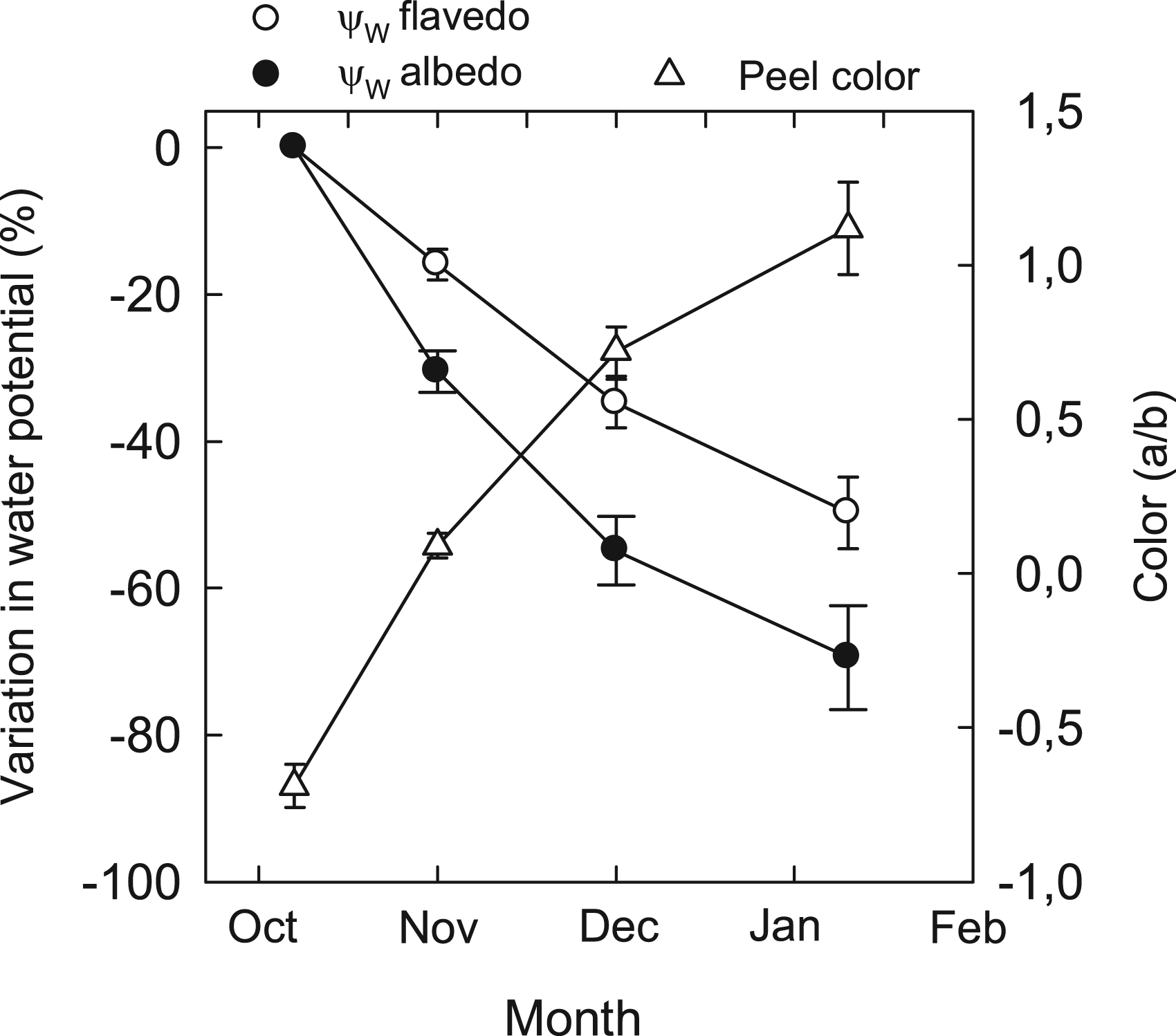
Storage of fruit for 7 days at 45% RH produced in general a significant reduction of ψw in flavedo and to a lesser extent in albedo. Under high RH, ψw remained nearly unchanged in both tissues, indicating prevention of water loss (Figure 5). ψw was also measured 24 h after fruits were transferred from 45 to 95% RH, since we have observed a wave in the changes of ψw with a minimum 24–48 h after the shift in RH (Alquezar et al., 2010). In agreement, 24 h after the transfer of HR, ψw in flavedo and albedo of breaker fruit were lower than before transfer, indicating water stress probably due to the flow of water and the water adjustment within the peel tissues. Interestingly, in tissues of both C1 and C2 colored fruits, transference of dehydrated fruit to high RH did not produce a recovery in ψw (Figure 5). Since initial ψw was very low, it is likely that these tissues have a reduced ability for appropriate water adjustment. It should be noted that these fruits experienced major differences in the rate of water loss between 45 and 95% RH and also developed higher peel damage after transference from low to high RH (Figure 2). These results integrate water potential of peel tissue with susceptibility to develop peel pitting in orange fruits. The progressive reduction in water potential during maturation may originate a lower ability for osmotic adjustment and to regulate the changes in water status imposed by alterations in the HR during postharvest storage, which would be conditions provoking cell damage and peel pitting.
Water potential of flavedo (upper panels) and albedo (lower panels) of Navelina orange fruit harvested at four maturity stages and stored at 20 ℃ and 45% (□) or 95% (▪) RH for 7 days, and 24 h after transferred from 45 to 95% RH (▪). MG: mature green fruit with a Hunter ratio a/b = −0.69; Br: breaker fruit, a/b = −0.09; C1: mature colored fruit, a/b = 0.72 and C2; full colored fruit, a/b = 1.17. Values are the means ± SD of 3–6 replicate samples.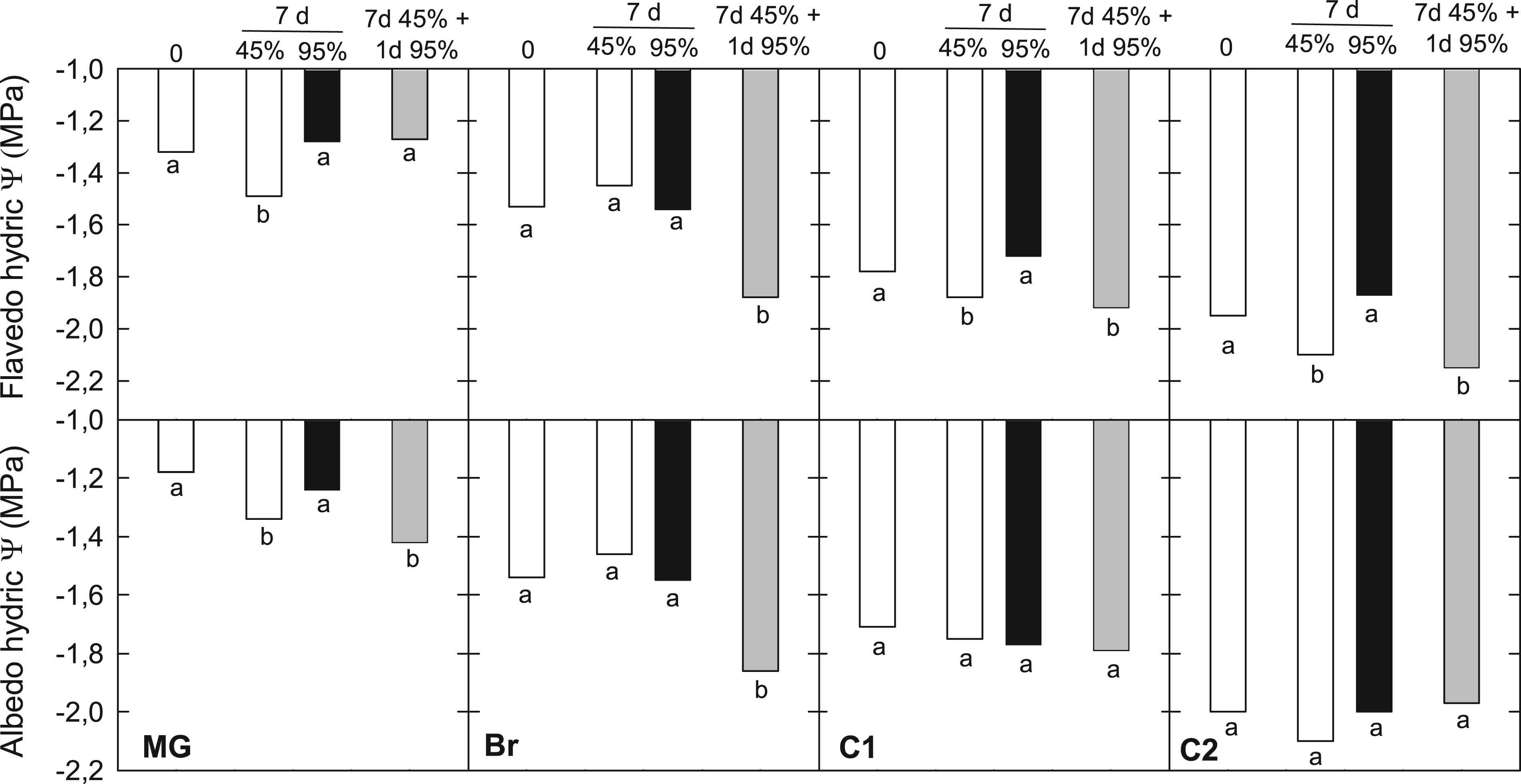
Conclusions
In this study, we demonstrated that the susceptibility to develop peel pitting in Navelina oranges increased with fruit maturation. As fruit matured, the rate of transpiration was progressively reduced, and the effect was more patent in fruits stored continuously under high RH. Incidence of peel pitting was provoked by transferring dehydrated fruit from 45% to 95%RH and was also associated with a rapid increase in ethylene production. Activation of ethylene biosynthesis was transient and may be a consequence tissue damage induced by the changes in environmental RH. During fruit maturation, water potential of both flavedo and albedo decreased. Mature fruit with lower initial water potential displayed minor variations in water potential by changes in the storage RH and were also prone to develop higher peel damage. Collectively, these results suggest that the increasing susceptibility of Navelina fruit to develop peel pitting with fruit maturation may be related to the changes in morphology and structure of flavedo and albedo cells, and that the progressive reduction in water potential of these tissues would reduce their ability to regulate peel evapotranspiration and osmotic adjustment during postharvest storage.
Footnotes
Funding
Financial support of research grants from Generalitat Valenciana (GC-CAPA 00-15; PROMETEO/2010/010) and Ministerio de Ciencia e Innovacion (AGL2009-11558) is gratefully acknowledged.
Acknowledgements
We thank Mr. Miguel Sabater for allowing us the use of Navelina fruit from his commercial orchard. Fernado Alferez is the recipient of a Ramon y Cajal contract (Ministerio de Ciencia e Innovación and Fondo Social Europeo).