







Abstract
The main objective of this study was to evaluate the effect of muscle type and frozen storage on the quality of restructured meat preparations from undervalued Iberian muscle to make use of meat from a high-quality and natural pig production system. The effect of two muscle types (i.e. white-glycolytic (W) and red-oxidative (R)) and frozen storage (lasting 0, 30, 60 and 90 days) on quality characteristics were assessed. Significant differences were found between the W and R Iberian restructured preparations in most physicochemical and some colour, texture and sensory traits, and in the fatty acid profile and oxidative measurements, suggesting that the R muscles are more suitable; however, the microbial contamination should be reduced. Frozen storage reduced but did not eliminate the initial microbial contamination, and it enhanced some quality traits in the Iberian restructured preparations, i.e. increased a* values, cohesiveness and juiciness and decreased adhesiveness and pastiness, without negatively affecting any parameter. Thus, frozen Iberian restructured preparations are recommended to be commercialized. In addition, the implementation or revision of Hazard Analysis and Critical Control Point is recommended to reduce microbial contamination.
Keywords
Introduction
Iberian pig breed characterizes by its adipogenic nature, accumulating higher fat quantity in comparison to other white pig breeds. In addition, differences between Iberian and white pigs in feeding (acorn and grass vs. concentrates, respectively) and breeding system (extensively vs. intensively, respectively) are also of importance. These aspects lead to different characteristics in meat and meat products between these two pig breeds.
Meat and meat products from Iberian pigs are highly rated by consumers because of their unique sensory features, including particular, intense flavours and marbling, their high content of monounsaturated fatty acids (MUFAs; Ventanas et al., 2005) and they reach high prices in the market. Dry-cured ham and loin are the most demanded Iberian products; however, the consumption of fresh Iberian meat pieces, namely “solomillo”, “secreto”, “presa” and “pluma”, has increased in the last few years. Nevertheless, some Iberian carcass muscles are undervalued, which could be processed into restructured value-added and palatable Iberian preparations at reasonable costs.
A variety of restructured meats have been successfully marketed worldwide for the last 30 years (Chen et al., 1992; Schmidt et al., 1986; Serrano et al., 2006; Shafit and Williams, 2010). Meat restructuring involves the assembly of meat pieces into a cohesive product through the formation of gels. Alginate systems are used most often in restructured meat preparations (Chen et al., 1992; Esguerra, 1995). Fat content influences the gel formation and hence the texture of the restructured preparations (Cofrades et al., 1997). In addition, scientific evidence (Karlsson et al., 1993; Koch et al., 1995) indicates that muscle characteristics, especially fibre type, may be an important source of variation in quality parameters of meat, such us visual appearance, texture traits, lipid content and biochemical characteristics (Cava and Andrés, 2001).
Because restructuring meat is a process that involves the manipulation of various carcass parts into newly structured forms and may thus influence the microbial population of the preparations, it is necessary to follow good sanitation practices. The microbiological quality of these restructured meats is dependent mainly on the initial bacterial numbers and species present, the temperature, pH, moisture, water activity and the availability of nutrients (Al-Sheddy, 1995).
Meat restructured preparations are often stored at freezing temperatures to extend their shelf-lives during purchasing and distribution (Serrano et al., 2006; Sheard, 2002). Although freezing meat generally reduces bacterial numbers, it does not completely eliminate the microorganisms that are initially present. Freezing and frozen storage can cause changes in physical (e.g. drip loss and texture modifications), chemical (e.g. lipolysis and fatty acid (FA) oxidation, protein denaturation and aggregation, changes in colour) and sensory properties of the meat, which could reduce the quality and shelf-life of the meat products. Such changes depend on the characteristic and storage conditions of the raw meat (Carballo and Jiménez, 2001).
According to data reported by Sheard (2002), many studies focused on restructured meat have used beef as the main ingredient (Boles and Sand, 1998; Farouk and Swan, 1997; Serrano et al., 2006), but other meat species have also been studied, including pork, lamb (Al-Sheddy, 1995; Dimitrakopoulou et al., 2005), chicken, turkey and scallops (Cofrades et al., 2011; Shafit and Williams, 2010; Suklim et al., 2004). Nevertheless, to the best of our knowledge, no studies have been conducted on restructured meat from Iberian pig.
Therefore, this work was undertaken to investigate the ease of producing Iberian restructured meat preparations from undervalued meat pieces, given that they are affected by the muscle type and duration of frozen storage. In addition, the microbiological quality of the Iberian restructured meat preparations was evaluated. The development of this type of product would encompass using undervalued muscle meats and assembling them into a low-price meat preparation from a natural and high-quality pig production system.
Material and methods
Experimental design
Two types of Iberian restructured meat preparations differing in their redness were produced with undervalued muscle meat from (i) the belly of the pig carcass (white muscles, W), which are predominantly glycolytic and (ii) the head and ribs (red muscles, R), which are principally oxidative (Cava and Andrés, 2001). Muscles from 300 Iberian pigs were trimmed of visible fat and connective tissue and cut into strips (approximately 5 × 4 × 20 cm), following the standard processing methods of the Iberian meat industry. Seventy kilograms of each batch were prepared and stored at 0–2 ℃ during 24 h. A mixture consisting of sodium chloride, corn starch, lactose and dextrose (2 g kg−1 meat), a commercial preparation containing calcium sulphate (E-516), sodium alginate (E-401) and pentasodic triphosphate (E-451i; ANVISA; 25 g kg−1 meat), ascorbate (1 g kg−1 meat) and sodium citrate (1 g kg−1 meat) dissolved in mineral water (0.2 l kg−1 meat), were added to the lean meat and kneaded for 5 min at 0–2 ℃. Following this step, the meat was stuffed into 10 × 55 cm (diameter × length) tubular collagen casings from Fibran (Fibran, S.A., Girona, Spain), obtaining restructured pieces (n = 40 for each batch, R and W) of approximately 1.6 kg, and kept at 0–2 ℃ for 24 h. The restructured pieces were then vacuum-packed and kept at −20 ℃ for 0, not frozen (n = 10, fresh meat), 30 (n = 10), 60 (n = 10) and 90 (n = 10) days. After these storage periods, the Iberian restructured preparations were thawed for 24 h at 3–4 ℃ and sliced (8 mm thickness) for analyses. Each piece was analysed in triplicate.
Physicochemical characterization
Moisture and protein were determined according to the Association of Official Analytical Chemists (AOAC, 2000; references 935.29 and 984.13, respectively). The pH was measured using a pH meter (Crison MicropH, Barcelona, Spain), following the ISO 2917 (1999) methodology. The intramuscular fat content was analysed gravimetrically with chloroform/methanol (2:1, vol/vol), according to the method described by Pérez-Palacios et al. (2008). Myoglobin and haeme iron were determined using the method described by Hornsey (1956) with slight modifications. Ten grams of ground samples were homogenized with acetone (40 ml), distilled water (4 ml) and hydrochloric acid 35% (1 ml) and kept in the dark at refrigeration during 12 h. After then, the homogenate was filtered through paper Whatman no. 5 and finally the filtrated was measured using a spectrophotometer (U-2000 UV VIS scanning spectrophotometer, Hitachi, Tokyo, Japan) at 640 nm. The water holding capacity (WHC) was assessed following the paper press method described by Grau and Hamm (1957), and it is expressed as percentage of non-retained water.
Colour analysis
Instrumental colour was measured across the surface of the slices from the two Iberian restructured meat products evaluated. The following colour coordinates were determined: lightness (L*), redness (a*) and yellowness (b*) using a Minolta CR-300 colorimeter (Minolta Camera Corp., Meter Division. Ramsey, NJ, USA) with illuminant D65, a 0° standard observer and a 2.5 cm port/viewing area. The colorimeter was standardized before use with a white tile having the following values: L* = 93.5, a* = 1.0 and b* = 0.8. Three colour determinations were averaged for each sample.
Texture analysis
Texture analysis was performed in a TA XT-2i Texture Analyser (Stable Micro Systems Ltd., Surrey, UK). For determination of the texture profile analysis, uniform portions of the restructured meat were cut into 1 cm3 cubes. Samples were axially compressed to 50% of their original height with a flat plunger 50 mm in diameter (P/50) at a crosshead speed of 2 mm/s through a two-cycle sequence. The following texture parameters were measured from the force–deformation curves (Bourne, 1978): Hardness (N) is maximum force required to compress the sample (peak force during the first compression cycle); adhesiveness (Nxs) is the work necessary to pull the compressing plunger away from the sample; springiness (dimensionless) is the time that elapses between the end of the first compression and the start of the second; cohesiveness (dimensionless) is the extent to which the sample could be deformed before rupture (A2/A1, A1 being the total energy required for the first compression and A2 the total energy required for the second compression); chewiness (N) is the work needed to chew a solid sample to a steady state of swallowing (hardness × cohesiveness × springiness).
FA methyl esters preparation and analysis
FA methyl esters (FAMEs) from obtained lipid tissues were prepared by trans-esterification in presence of sodium metal (0.1 N) and sulphuric acid in methanol (Sandler and Karo, 1992). FAMEs were analysed by gas chromatography (GC), using a Hewlett-Packard HP-5890-II gas chromatograph, equipped with an on-column injector and a flame ionization detector. Separation was carried out on a polyethylene glycol capillary column (60 m long, 0.32 mm id, 0.25 mm film thickness; Supelcowax-10; Supelco, Bellafonte, PA, USA) maintained at 230 ℃ for 60 min. Injector and detector temperatures were 230 ℃. The carrier gas was helium at a flow rate of 0.8 ml/min. Individual compounds were identified by comparing their retention times with those of standards (Sigma, St. Louis, MO, USA).
Measurement of lipid oxidation
Thiobarbituric acid-reactive substances (TBARS) were measured by following the extraction method described by Salih et al. (1987). Samples (2.5 g) of the two Iberian restructured meat products tested were homogenized for 2 min with 7.5 ml of 3.86% perchloric acid and 0.5 ml of butylated hydroxytoluene. Tubes were kept in ice to avoid heat degradation. This homogenate was filtered and centrifuged (3 min, 3500 rpm). The supernatant (2 ml) was mixed with 2 ml of 97% 1,1,3,3-tetraethoxypropane (TEP; Sigma Aldrich, St Louis, MO, USA). Immediately, the mixture was heated to 90 ℃ for 30 min, cooled and centrifuged again (2 min, 3500 rpm). Absorbance was measured at 532 nm and 600 nm on a spectrophotometer (HitachiU-2000, Tokyo, Japan). The measurement at 600 nm is considered contamination and it was subtracted to the other measurement to obtain the final absorbance. The concentration of malonaldehyde was calculated from a standard curve (0.057–0.85 µg MDA ml−1), which was developed simultaneously with the samples using solutions of TEP. TBARs were expressed as mg MDA kg−1 sample.
Microbiological analyses
To quantify the microorganisms present in the Iberian restructured meat preparations and their survival during frozen storage, 10 g of the internal sample without casing were homogenized for 2 min in 90 ml sterile 0.1% peptone broth in a Stomacher (IUL Instruments, Barcelona, Spain). Appropriate dilutions were made with 0.1% peptone broth; 1 ml or 0.1 ml was plated onto the culture media using different growth conditions to detect different types of microorganisms according to Internal Organization for Standardization (ISO). Specifically, total counts were made on plate count agar (PCA, Oxoid, Unipath, Basingstoke, UK) incubated at 30 ℃ for 72 h (ISO 4833-1:2003); total psychrotrophic microorganisms were counted on PCA incubated at 4 ℃ for 10 days (ISO 17410: 2001); Enterobacteriaceae were counted on Violet Red Bile Glucose Agar (VRBGA, Oxoid) incubated at 37 ℃ for 24 h (ISO 21528-2:2004); lactic acid bacteria, on MRS Agar (Oxoid) incubated in anaerobic conditions at 30 ℃ for 48 h (ISO 15214:1998); Bochotrix thermosphacta, on STAA agar (Oxoid) incubated at 25 ℃ for 48 h (ISO 13722:1996); Pseudomonas spp., on Pseudomonas base agar (Oxoid) at 25 ℃ for 48 h (ISO 13720:2010); and coagulase-positive Staphylococcus aureus on Baird-Parker agar (Oxoid) incubated at 37 ℃ for 48 h (ISO 6888-2:1999).
The presence of pathogenic microorganisms such as Listeria monocytogenes, Salmonella spp., Yersinia enterocolitica and Escherichia coli O157:H7 was also investigated following the ISO11290-2: 2004, 6579: 2002, 10273:2003 and 16654:2001 protocols, respectively.
Sensory evaluation
Fourteen trained panellists participated in the evaluation. Fifteen sensory attributes (brown colour, brightness, oiliness, cohesion, hardness, chewiness, pastiness, juiciness, flavour intensity, acid, bitter, metallic, sweet, salty, umami; ISO 5492:2008) of the restructured preparations were analysed. The analyses were carried out in tasting rooms with the conditions specified in the UNE regulation (Norma UNE, 1979). All sessions were conducted at ambient temperature in a room equipped with white fluorescent lighting. The software used to record the scores in the sessions was FIZZ Network (version 1.01: Biosystemes, Couternon, France). The Iberian restructured meat preparations were cut into 0.8 cm thick slices with a slicing machine and grilled, with neither salt nor oil addition, at 165 ℃ for 45 s on each side. The slices were served hot on plates to the panellists. The panellists evaluated the different attributes using a quantitative–descriptive analysis, performed on a non-structured scale of 0–10. Restructured preparations were analysed in 20 sessions. Four samples were randomly presented to the panellist and analysed in each session. In each session, the average of each sample was recorded.
Cooking loss was estimated by weighing the slices before and after cooking; the results were expressed as weight loss (%).
Statistical analysis
Data were analysed by a one-way analysis of variance (ANOVA) using the General Linear Model in the multi-variant mode, including physicochemical, texture and colour parameters, FA percentage, MDA values, microbiological counts, sensory attributes and cooking loss. Tukey’s test was used to identify significant differences (p < 0.05) during different periods of frozen storage. Analyses were done by using the SPSS package (v.15.0).
Results and discussion
Physicochemical, colour and texture parameters
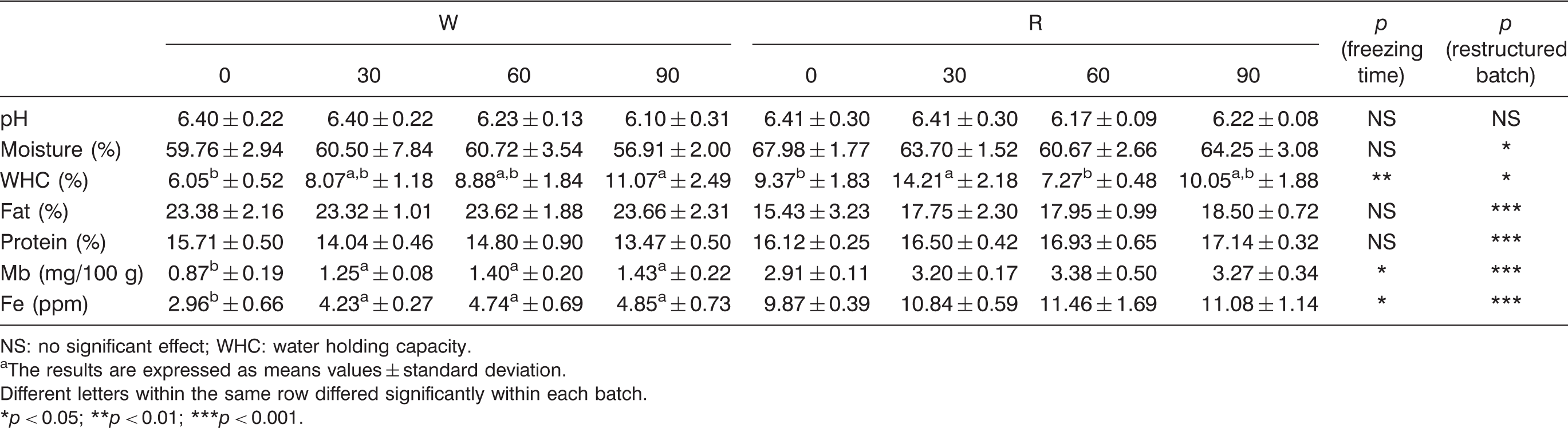
Results on physicochemical analysis of Iberian restructured meat preparations from white (W) and red (R) muscles at different times of frozen storage. a
NS: no significant effect; WHC: water holding capacity.
The results are expressed as means values ± standard deviation.
Different letters within the same row differed significantly within each batch.
p < 0.05; **p < 0.01; ***p < 0.001.
Frozen storage significantly influenced the WHC, myoglobin and iron levels, especially in the W restructured preparations, with lower levels in the fresh restructured preparations than in the frozen restructured preparations. Syed Ziauddin et al. (1993) also found the decrease of WHC when freezing buffalo meat. These changes in the WHC could be due to the freezing and thawing of the meat, damaging the cells and increasing drip losses. Besides, the time of frozen storage also led to the differences in WHC, which decreased with the time of frozen storage in W samples, probably caused by the formation of higher ice crystals with the time of frozen storage. However, R restructured meat preparations did not follow the same trend. Samples frozen during 30 days showed the lowest WHC, and finding the highest WHC in R samples frozen during 60 days.
Frozen samples stored for 30, 60 and 90 days showed similar values in most physicochemical parameters. In agreement with these results, studies have reported no significant effect of freezing different pork and beef muscles on pH and lipid content (Bañón et al., 1999; Pérez-Palacios et al., 2011; Sakata et al., 1995). However, in white and Iberian ham, a lower moisture content was obtained in frozen-thawed samples (Bañón et al., 1999; Pérez-Palacios et al., 2011).
Instrumental colour parameters of Iberian restructured meat preparations from white (W) and red (R) muscles at different times of frozen storage. a

NS: no significant effect.
The results are expressed as means values ± standard deviation.
Different letters within the same row differed significantly within each batch.
p < 0.05; **p < 0.01; ***p < 0.001.
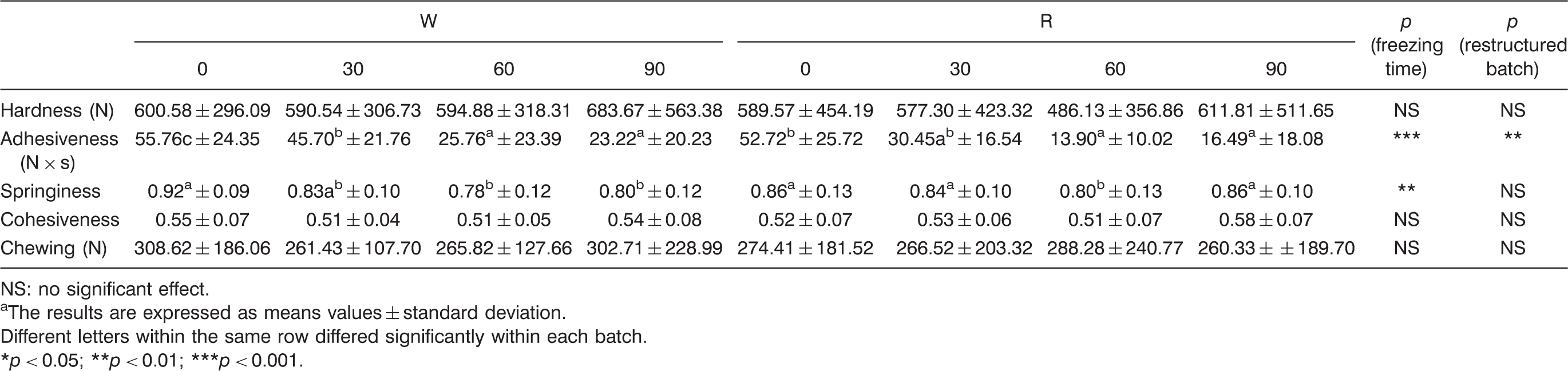
Texture profile analysis of Iberian restructured meat preparations from white (W) and red (R) muscles at different times of frozen storage. a
NS: no significant effect.
The results are expressed as means values ± standard deviation.
Different letters within the same row differed significantly within each batch.
p < 0.05; **p < 0.01; ***p < 0.001.
FA profile and lipid oxidation
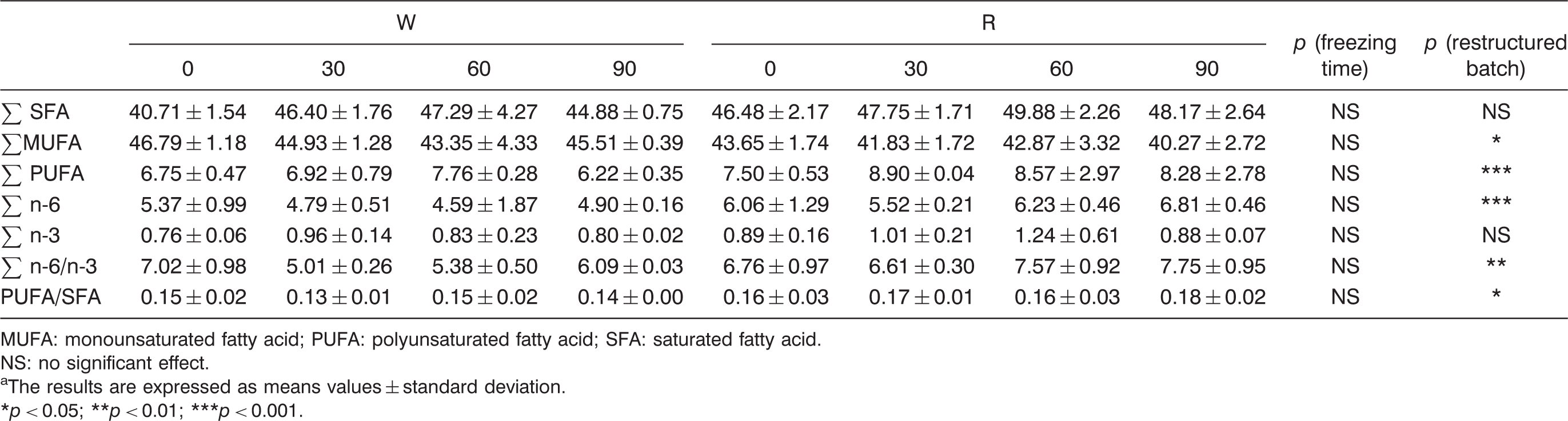
Fatty acid profile of Iberian restructured meat preparations from white (W) and red (R) muscles at different times of frozen storage. a
MUFA: monounsaturated fatty acid; PUFA: polyunsaturated fatty acid; SFA: saturated fatty acid.
NS: no significant effect.
The results are expressed as means values ± standard deviation.
p < 0.05; **p < 0.01; ***p < 0.001.
The data on lipid oxidation in the W and R Iberian restructured preparations during different periods of frozen storage are shown in Figure 1. Higher TBARs were obtained in W than in R (p = 0.004), indicating a lower degree of oxidation in the Iberian restructured preparations from red, oxidative muscles than in white, glycolytic muscles. These findings are not in agreement with those described in previous studies, which reported a higher tendency for oxidative muscles to undergo oxidative deterioration than glycolytic muscles (Alasnier et al., 2000; Morcuende et al., 2003). However, other authors reported that muscles with a high proportion of oxidative fibres tend to accumulate higher antioxidant content (i.e. α-tocopherol and total phenolics) than glycolytic muscles (Lauridsen et al., 1999; Tejerina et al., 2012), which could explain the results obtained in this study. Another reason behind the higher TBARs values in the W restructured meat preparations might be the higher fat content in these samples.
Lipid oxidation (expressed as mg malonaldehyde kg−1 muscle) of Iberian restructured meat preparations from white (♦) and red (▪) muscles at different times of frozen storage.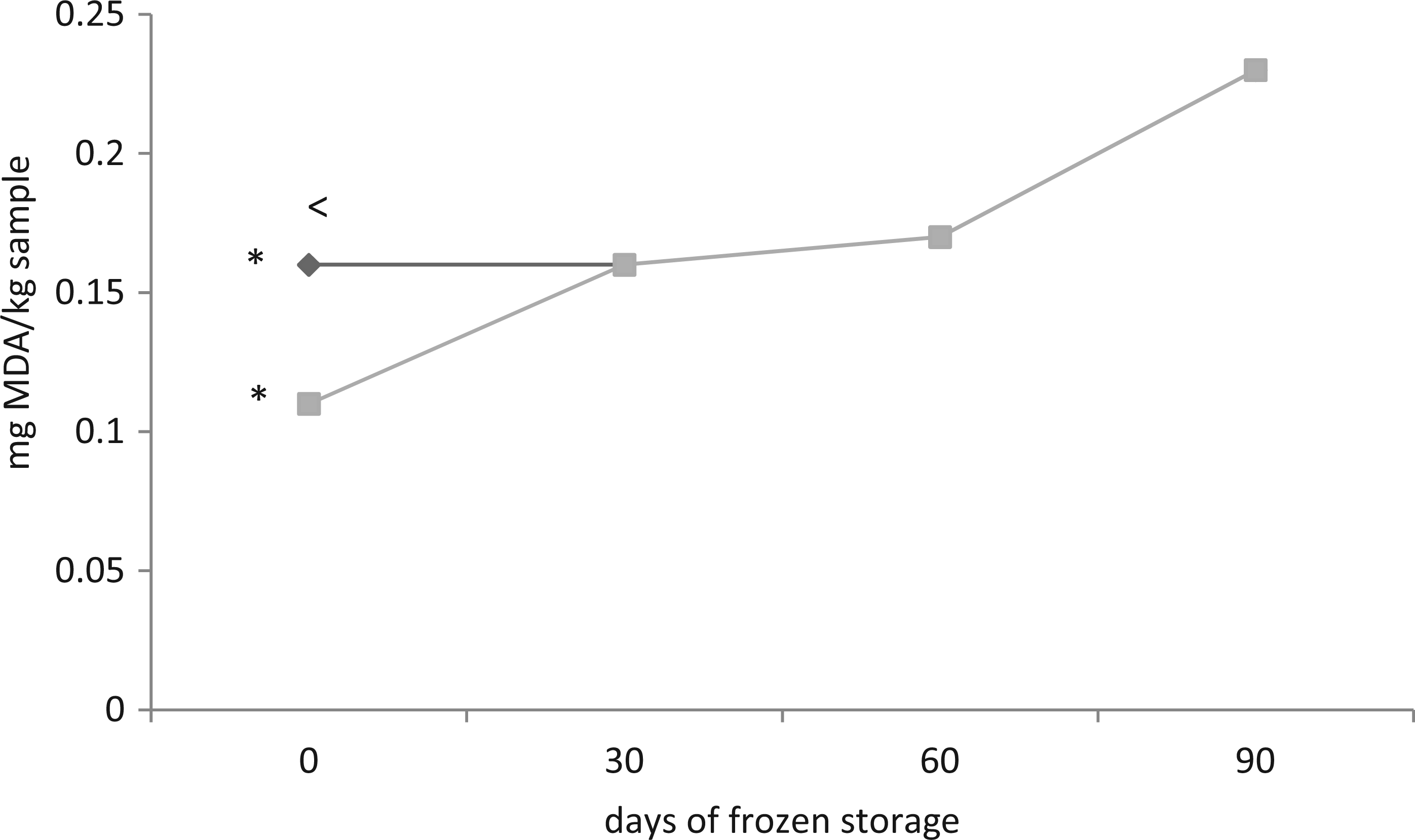
As observed in Figure 1, TBARs significantly increased (p = 0.046) from 0 to 30 days of frozen storage in the R restructured preparations, whereas it was constant in the W preparations. This fact could be explained by the higher polyunsaturated FA content in the R than in the W samples; these FA are highly prone to oxidative degradation thereby increasing the oxidative measurements (Nawar, 1996). In both W and R restructured preparations, TBARs were similar after 30 (0.16 mg MDA kg−1 sample) and 60 (0.17 mg MDA kg−1 sample) days of frozen storage but significantly increased after 90 days (0.23 mg MDA kg−1 sample). Nevertheless, these values were not high enough to negatively impact the sensory quality, as reported by Witte et al. (1970) and Wrolstad et al. (2005). Motilva et al. (1994) and Pérez-Palacios et al. (2009) also observed the effect of freezing on lipid oxidation in pig muscles.
Microbiological analyses
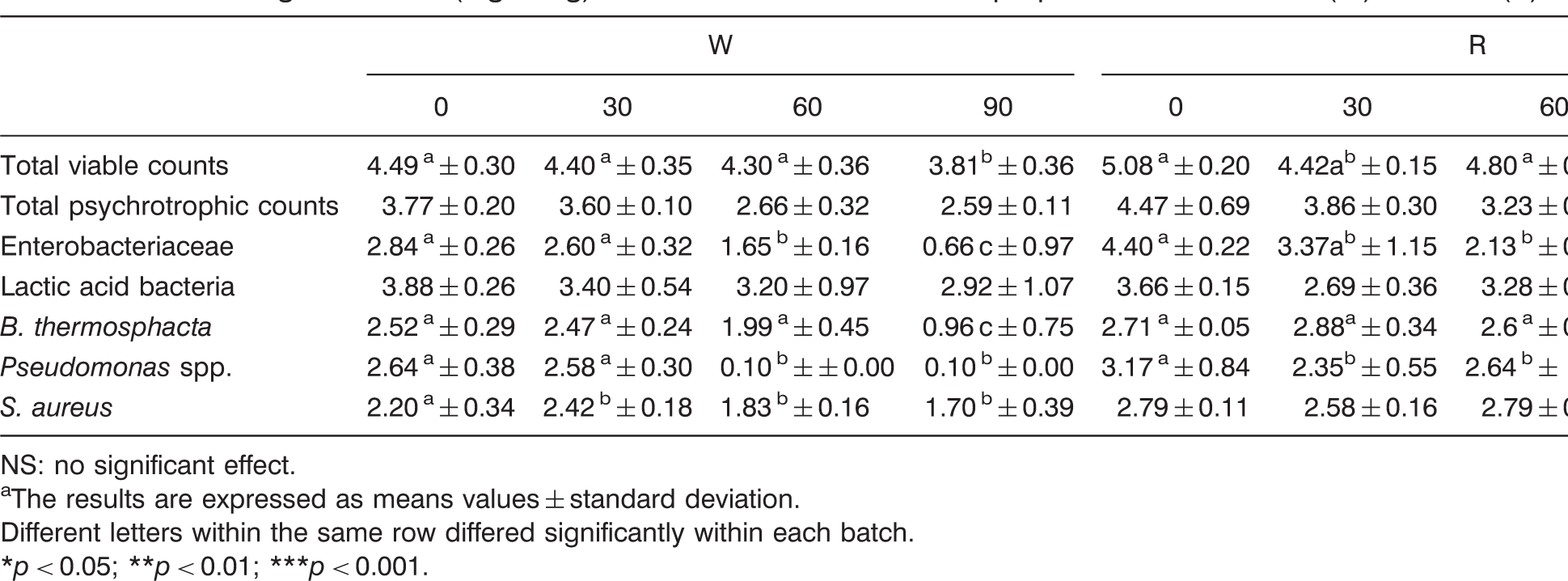
Microbiological counts (log cfu/g) of Iberian restructured meat preparations from white (W) and red (R) muscles at different times of frozen storage. a
NS: no significant effect.
The results are expressed as means values ± standard deviation.
Different letters within the same row differed significantly within each batch.
p < 0.05; **p < 0.01; ***p < 0.001.
No pathogenic microorganisms, i.e. E. coli O157:H7 and Salmonella spp., were detected in any of the tested samples. Y. enterocolitica was detected in the fresh restructured preparations, but was affected by freezing temperature, disappearing during frozen storage. However, L. monocytogenes, which was detected in the fresh preparations, remained viable after 2 months of frozen storage in the W Iberian restructured preparations and after 3 months in the R Iberian restructured preparations (data are not shown). Thus in industrial conditions of preparations of these products may exist a hazard of contamination with L. monocytogenes that could be controlled increasing hygienic measures during the extraction and subsequent manipulation of the muscles. In addition, only the commercialization of the frozen product is recommended to avoid any microbial growth and to destroy some of the microorganisms. Although these restructured preparations will be cooked before consumption, thereby eliminating any pathogens, it would be desirable to follow strict hygienic practices during the dissection of muscles from the carcass and the subsequent processing conditions. In addition, the implementation or revision of Hazard Analysis and Critical Control Point (HACCP) becomes necessary to reduce the health risk associated with these foodborne pathogens.
Sensory analyses
The results on the quantitative–descriptive sensory analyses of the cooked W and R Iberian restructured preparations during different periods of frozen storage are shown in Figure 2. Although there were significant differences in some sensory attributes, all analysed batches had reasonable scores, which were similar to those reported in pork and beef restructured steaks (Marriot et al., 1998; Reverte et al., 2003); this result notes the suitability of producing Iberian restructured preparations from undervalued muscles and storing them at freezing temperatures. Compared to the R samples, W obtained significantly higher brightness values, which is in concordance with the instrumental colour results and may be due to the higher fat content in the W samples. In fact, it has been reported that the intramuscular fat levels positively affect the brightness (Ruiz-Carrascal et al., 2000). In addition, brightness has been related to an accelerated glycolysis and denaturation of mainly sarcoplasmic muscle proteins, which also could explain the obtained results. Cohesiveness was higher in the R than in W preparations after 30 and 60 days of frozen storage; however, it was similar between both preparations in the fresh samples and after 90 days of frozen storage, indicating the capacity of the muscle type to form gels during short periods of frozen storage. With respect to the effect of frozen storage on the sensory attributes, the results showed statistically significant differences in some visual and texture attributes, whereas no flavour attributes were significantly affected. Cohesiveness and juiciness increased with the duration of frozen storage, whereas pastiness had higher values in the fresh samples than in the frozen restructured preparations, which suggests a positive effect of frozen storage on these sensory characteristics. Moreover, in the W samples, brightness was lower after 90 days of frozen storage than in the other batches, probably due to a loss on moisture, as reported by Ramírez et al. (2004). Data reported by Serrano et al. (2006) showed no effect of frozen storage on the sensory quality of restructured beef steak. In addition, there were no significant differences in cooking losses (data no shown) as a function of muscle type or duration of frozen storage, which agreed with the results reported by Serrano et al. (2006) in restructured beef steak.
Sensory analysis of Iberian restructured meat preparations from white (W) and red (R) muscles at 0 (♦), 30 (▪), 60 (▴) and 90 (X) days of frozen storage.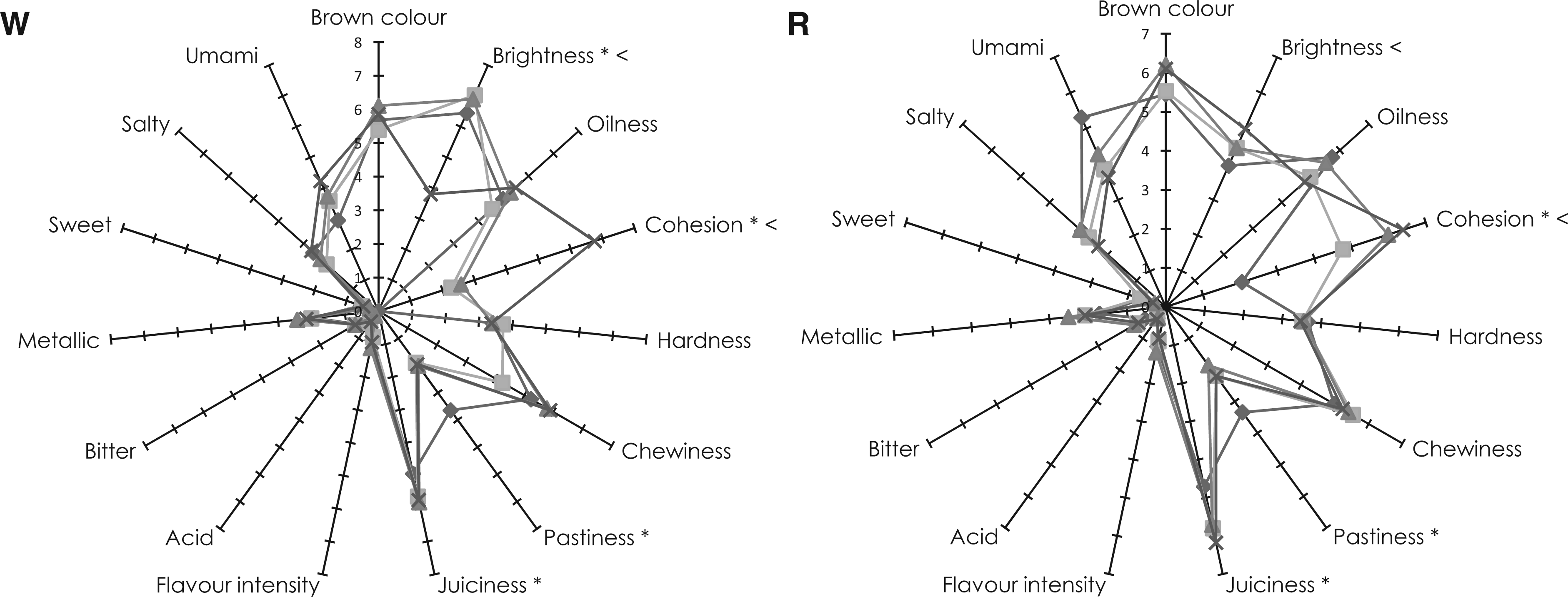
Conclusions
This study demonstrated the suitability of manufacturing restructured meat preparations from undervalued Iberian muscles; the red-oxidative muscles were better than the white-glycolytic muscle in their nutritional, colour, texture and sensory aspects. The commercialization of these frozen preparations is suitable because freezing reduces the initial microbial contamination and improves some of the colour, texture and sensory traits without negatively affecting any parameter. In addition, the implementation and revision of HACCP is recommended to minimize the microbial contamination.
Footnotes
Funding
Authors acknowledge funding provided by project IDI-20070424 from the Spanish CDTI (Centro para el Desarrollo Tecnológico Industrial).
Conflict of interest
None declared.