







Abstract
This work aimed at evaluating the effects of sous-vide cooking parameters, such as time and temperature and their interactions, on textural attributes of ‘Mondial Gala’ and ‘Granny Smith’ apple cultivars. For this, different response surface methodology-based models were developed. This methodology proved a suitable means for the assessment of changes in textural parameters and cell wall modifications during the processing of apples. ‘Mondial Gala’ fruit displayed better aptitude for the preservation of textural properties after high-temperature processing conditions and were therefore apparently more suited to sous-vide cooking than ‘Granny Smith’ apples. Pectin methylesterase activity levels in ‘Mondial Gala’ apples were enhanced at mild temperatures and pectins in this cultivar displayed a lower degree of methylation. Therefore, the establishment of calcium-mediated linkages between cell wall polymers might have been favoured in ‘Mondial Gala’ apples, thus reinforcing tissues and improving the preservation of textural attributes, in comparison to ‘Granny Smith’ samples.
Introduction
Apples are the most common fruit consumed in Europe, both as fresh fruit and as processed product, which illustrates its great economic and nutritional relevance. From a consumer’s point of view, apple texture represents a major quality trait (Brookfield et al., 2011). However, this attribute is susceptible to alteration by industrial processing, and particularly after thermal treatments. A number of studies have pointed out that thermal treatments modify the structural, mechanical and surface properties of apple products (Anantheswaran et al., 1985; Kim et al., 1993). The kinetics of thermal degradation of apple texture has been previously studied, and it has been reported that time and temperature significantly altered fruit hardness, cohesiveness and chewiness, and that the degree of these modifications was dependent on the apple cultivar assessed (Daillant-Spinnler et al., 1996).
In order to preserve fruit textural attributes during and after thermal processing, several strategies such as the selection of cooking-resistant raw material, the optimisation of cooking parameters or the use of soft cooking techniques can be envisaged. Sous-vide cooking represent one such alternative, which consists on cooking the raw material under controlled conditions of temperature and time inside heat-stable vacuum pouches. Subsequently, cooked products are preserved under chill conditions (0–4 ℃) until further processing or consumption. Throughout the last 10 years, sous-vide cooking has emerged as an alternative technique to boiling or water immersion treatments and is being extensively adopted by food industrials and catering services to provide healthy, ready-to-serve meals with preserved organoleptic quality, enhanced safety, improved health-promoting properties and extended shelf-life, the conditions during processing and the absence of oxygen in the pack being mild (Baldwin, 2012). Thus, sous-vide cooking of fruits, firstly, may help overcome consumers perception of processed fruit as unhealthy and old fashioned, and on the other hand, to represent a new market to exploit for the food industry.
Some studies have focused on the beneficial effects of sous-vide cooking on overall quality and perishability of meat- and fish-based foodstuffs (Picouet et al., 2011; Roldán et al., 2015; Shakila et al., 2012). Other works have also addressed the impact of this cooking technique on the physico-chemical properties of vegetable-based commodities such as green bean pods (Phaseoulus vulgaris L.), carrots (Daucus carota L.), and Brussels sprouts (Brassica oleracea var. gemmifera L.) (Chiavaro et al., 2012; Iborra-Bernad et al., 2013), but those focusing on fruit-based products remain scarce. To our knowledge, no published studies have studied the combined effects of temperature and time during sous-vide cooking on the textural attributes and related biochemical changes in the final product.
During thermal processing, apple fruit texture is modified mainly due to the breakdown of cell membranes and the alterations and disassembly of cell walls, resulting both from enzymatic and non-enzymatic modifications in pectin structure and composition (Waldron et al., 2003). A main structural component of pectin in plant cell walls is homogalacturonan, a linear chain of α-(1-4)-linked galacturonic acid residues, which is partially methyl esterified (Levesque-Tremblay et al., 2015). Softening of plant tissues upon exposure to high temperatures has been mainly attributed to the β-eliminative depolymerisation of pectin. This chemical reaction is highly dependent on the degree of methylation (DM), highly methylated pectin being more susceptible to β-elimination than pectin with low DM (Kunzek et al., 1999). For apples, the extent of texture modifications induced by thermal processing has been demonstrated to be cultivar-dependent (Bourles et al., 2009), and this observation was suggested to arise from genotype-related dissimilarities in the mechanisms underlying cell wall modifications during the cooking process, but no further research has been carried out to confirm this hypothesis.
The structural and metabolic complexity of plant tissues hinders a reliable elucidation of these mechanisms, and no well-established conclusions have been agreed to date. In order to expand the understanding of sous-vide cooking impacts on texture of fruit products, therefore, research models should include the assessment of textural attributes and cell wall-related modifications. In this work, two apple cultivars with contrasting textural properties (‘Mondial Gala’ and ‘Granny Smith’) were subjected to sous-vide cooking under different conditions in order to monitor textural modifications in response to the procedure. The response surface methodology (RSM) was used to describe the relationship between system response (fruit mechanical resistance) and the factors considered (time, temperature). Additionally, changes induced during the process in cell wall composition and associated biochemical mechanisms were studied.
Materials and methods
Plant material
Apples (Malus × domestica Borkh.) from the cultivars ‘Mondial Gala’ and ‘Granny Smith’ were harvested at commercial maturity according to the usual standards for each cultivar (based on colour, starch regression, soluble solids content (SSC) and titratable acidity (TA)) in the experimental station ‘La Morinière’ (Loire Valley, France). At harvest, average firmness (N), SSC (%) and TA(g malic acid/L) values for ‘Mondial Gala’ apples are 76.5 ± 6.14, 11.5 ± 0.5 and 3.9 ± 0.3, correspondingly. For ‘Granny Smith’, these values were 71.6 ± 5.69, 11.2 ± 0.3 and 7.2 ± 0.4. The size of apples ranged from 70 to 75 mm diameter in both cultivars. Before further processing and owing to logistics reasons, raw material was cold-stored (4 ℃) for 7 days at most. During this storage period, no significant changes were observed in firmness, SSC and TA values if compared to harvest (data not shown). Prior to cooking, defect-free fruits were washed, peeled, cored, vacuum-sealed (−0.1 MPa) into thermo-resistant pouches (polyamide/polyethylene; 30 × 40 cm; 80 µm thickness). Cooking was carried out by immersion in water in an Auriol type A-5B-E-V (model 50 I 3BE) autoclave at atmospheric pressure. Each pouch contained 10 fruit placed so that optimal heat exchange was allowed. For each cultivar, three pouches were set apart of cooking and served as control. At the end of cooking, pouches were immediately cooled to ambient temperature by submersion in ice water prior to further analysis.
Experimental design
Three-factor a , five-level central composite design used for RSM.
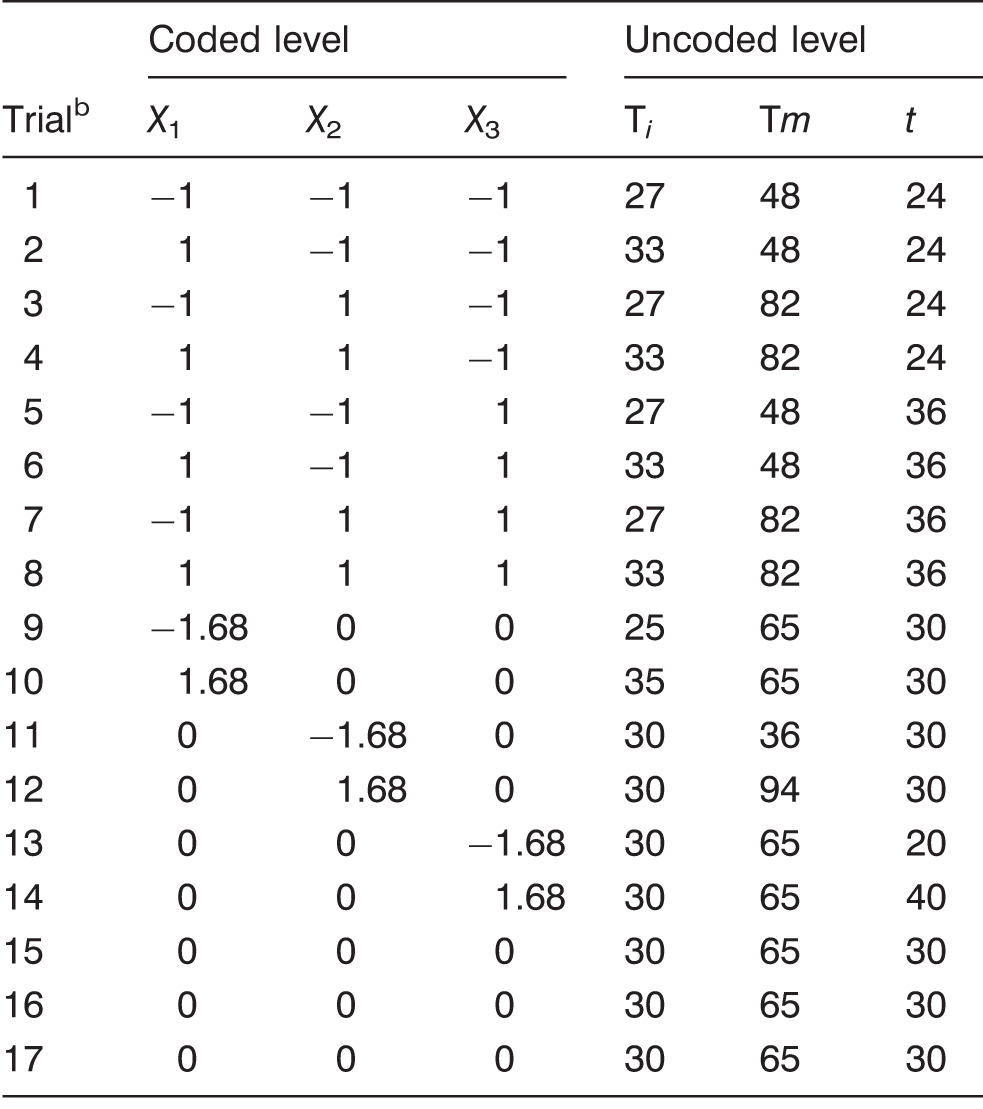
Independent variables: X1 and T i , initial temperature of water (℃); X2 and T m , maximum temperature of water or setting temperature (℃); X3 and t, time of remaining at maximum (set) temperature (min).
Experimental trials were carried out randomly.
Texture analysis
After each cooking/cooling trial, the mechanical properties of apples were analysed by double compression test performed with a universal testing machine (MTS Synergy 200 H; MTS Systems, Créteil, France). Ten fruits randomly selected from the three cooked pouches were analysed for each trial. Briefly, apple slices (2-cm height) obtained from a transversal cut of cooked fruit were compressed twice with a 20% deformation of their height at 20 mm min−1 with a 2.5 mm diameter round flat tip. Two measures were made on each fruit slice, and different force–deformation curves were obtained. For each force/deformation curve, two parameters were calculated from the first compression cycle: the hardness, which is related to the first compression maximum force (H1; expressed in N), and the energy associated (WH1; expressed in N mm), which corresponds to the positive area obtained in the curve. Results related to the second compression are not presented, since in apples cooked at low temperatures the elastic limit of apple tissues was exceeded during this compression and rendered data not exploitable.
Cell wall materials
Samples of flesh tissue were taken from apples cooked in different pouches (five fruits per pouch), stored at −80 ℃, freeze-dried, mixed and powdered before analyses. The extraction of cell wall materials (CWM), as alcohol insoluble materials, was carried out according to Renard (2005a), with some modifications. In brief, 3 g of freeze-dried tissue were suspended in 20 mL ethanol (70% v/v) in a 75-mL column equipped with a 20 µm pore size filter. After agitation for 10 min, the mix was vacuum filtered. The retentate was rinsed twice with ethanol (80% v/v), and 8–10 times with ethanol (60% v/v), until no soluble sugars were detected in the filtrate by the phenol-sulphurique acid procedure (Dubois et al., 1956). The resulting retentate was washed thrice with 20 mL ethanol (96% v/v) and thrice with 10 mL acetone. Subsequently, the residues were freeze-dried for 24 h and weighed. The yield of CWM was expressed as % (w/w) of fresh weight (FW). All extractions were done in triplicate. For further fractionation, CWM (200 mg) from each replicate were extracted sequentially with 0.05 M ammonium oxalate (pH 5) and 0.05 M NaOH as described previously (Renard, 2005b), and the two fractions obtained (Oxal-sf and NaOH-sf, subsequently) were considered to be representative loosely bound and covalently bound pectin, respectively. Each fraction was intensively dialysed (mol. wt. cut-off 12,000 Dalton) against distilled water, lyophilised and weighed. Yields are expressed in % (w/w) of CWM. For further analysis, CWM, ammonium oxalate- and NaOH-soluble fractions were hydrolysed with sulphuric acid as previously described (Ortiz et al., 2011a). Uronic acid content in the hydrolysate was measured by the m-hydroxydiphenyl method (Blummenkrantz and Asboe-Hansen, 1973), with some modifications (Ortiz et al., 2010), using galacturonic acid as a standard, and expressed as % (w/w). The DM was determined in the CWM fraction. For this, methanol was determined according to Klavons and Bennett (1986), and DM was calculated as molar ratio (%) of methanol to uronic acid content.
Pectin methylesterase activity
A 10% (w/v) tissue homogenate was prepared by homogenising 100 mg of freeze-dried apple flesh in an extraction buffer prepared according as previously explained (Ortiz et al., 2011a). Pectin methylesterase (PME: EC 3.1.1.11) activity was measured as according to Hagerman and Austin (1986), and the reaction mixture contained the enzyme extract, apple pectin and bromothymol blue prepared as described previously (Ortiz et al., 2011b). One unit (U) of PME activity was defined as the decrease of one unit of A620 min−1. Total protein content in the crude extracts was determined with the Bradford (1976) method, using BSA as a standard. All analyses were done in triplicate, and the results were expressed as specific activity (U mg−1 protein).
Statistical analysis
Results were fitted to second-order polynomial equation (1) using “Statgraphics Centurion XVI” software (StatPoint Technologies Inc., Warrenton, VA, US)

Results and discussion
Influence of multivariate factors on textural attributes of sous-vide cooked apples
Maximum force (H1) and first compression energy (WH1) values from compression test and yields of insoluble cell wall materials (CWM) and of pectin-enriched CWM fractions isolated from the flesh tissue of sous-vide cooked apples.
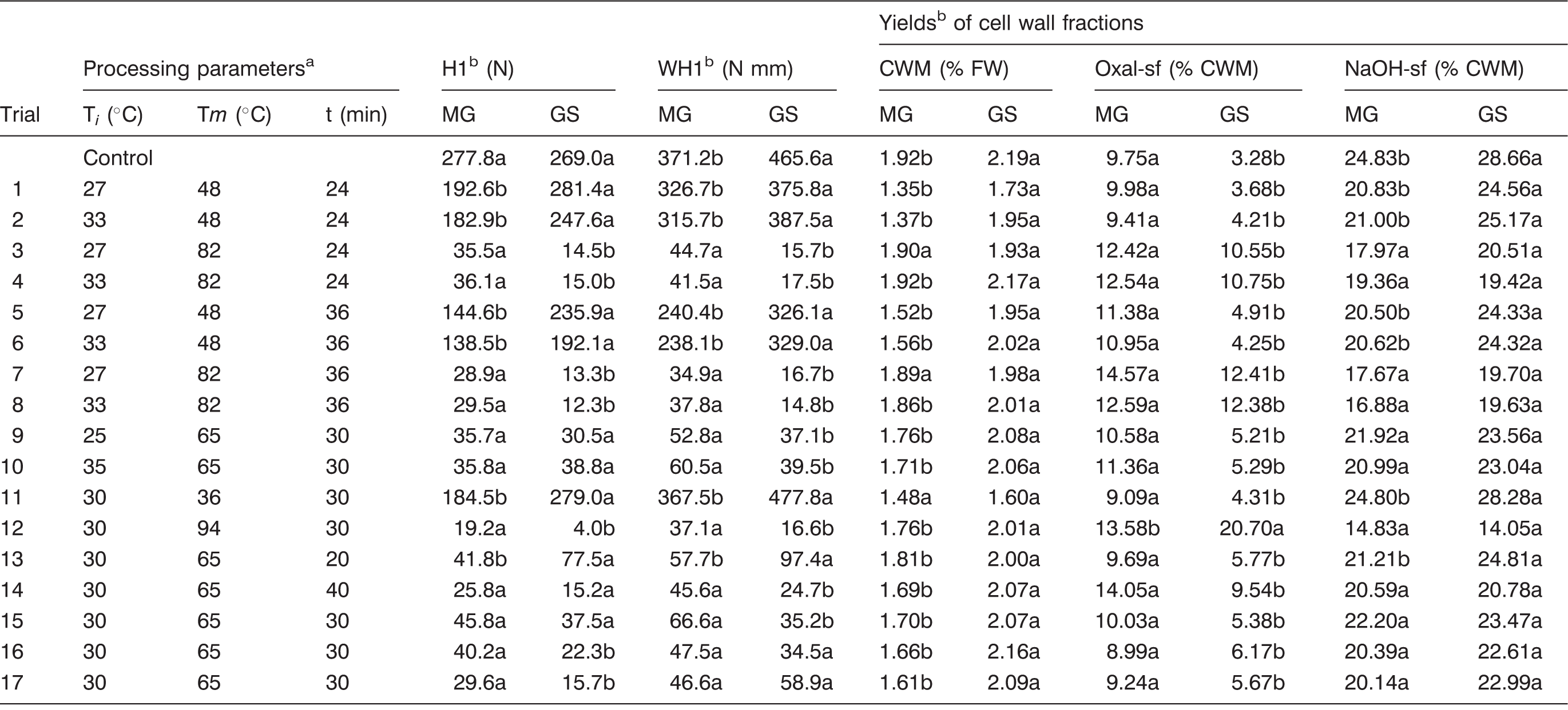
MG: Mondial Gala; GS: Granny Smith.
Independent variables: X1 and T i , initial temperature of water (℃); X2 and T m , maximum temperature of water or setting temperature (℃); X3 and t, time of remaining at maximum (set) temperature (min).
Values represent means of 20 (H1 and WH1) or three (yields of fractions) replicates. For each measured parameter, data followed by different letters within a row are significantly different at p ≤ 0.05 (LSD test).
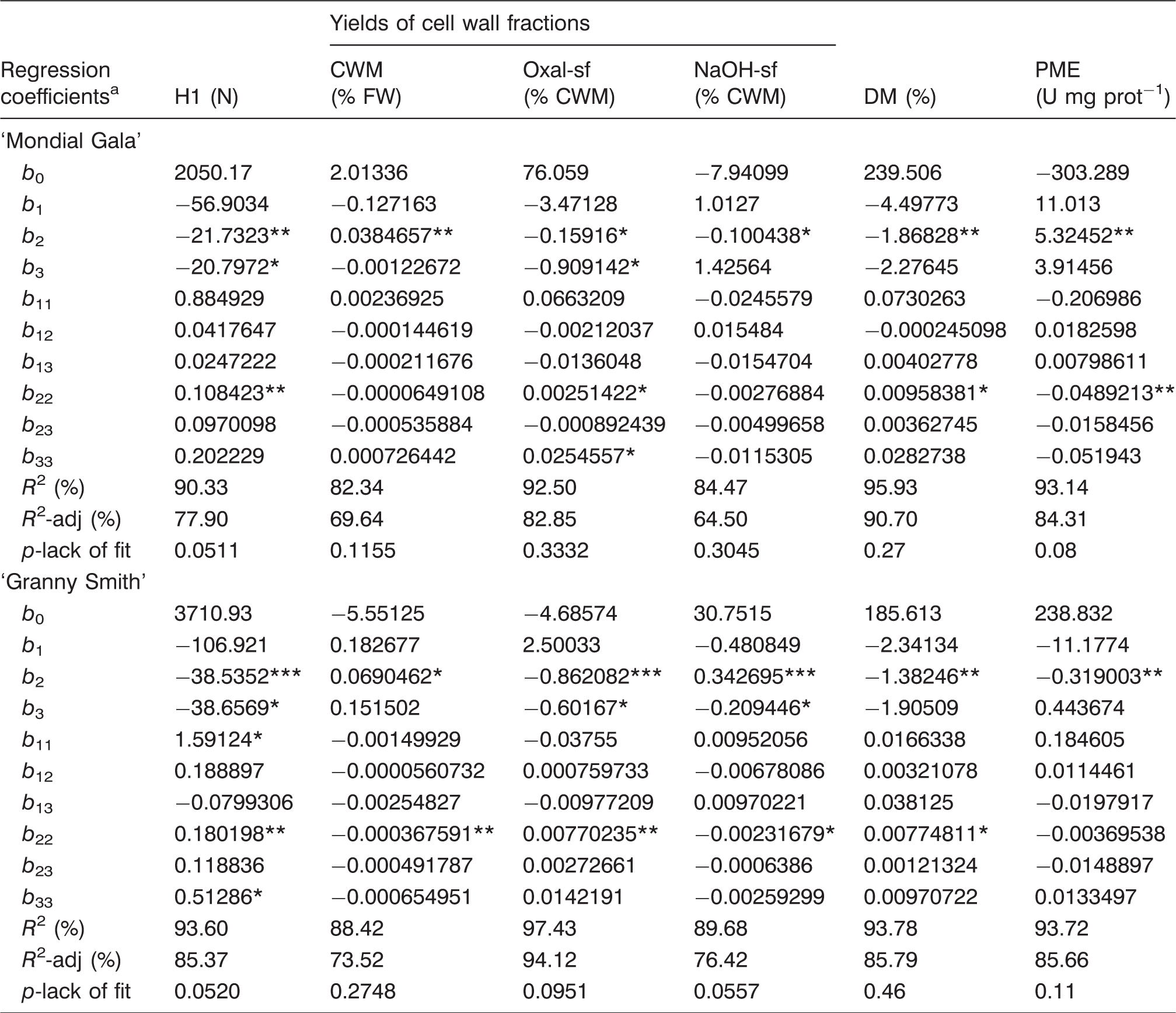
To better estimate the textural changes occurring during vacuum cooking of samples, data obtained from compression tests were used to develop regression models by means of RSM. The regression coefficients for the second-order polynomial equations corresponding to H1 are shown in Table 3. The statistical analysis indicates that the models developed were adequately descriptive of H1 values, displaying R2 coefficients of 90.33 and 93.60 for ‘Mondial Gala’ and ‘Granny Smith’ apples, respectively. Actually, it is commonly accepted that the goodness of models is satisfactory if R2 > 70% (Granato et al., 2014). Moreover, the values of the adjusted regression coefficients (R2 = 77.90% for ‘Mondial Gala’ and R2 = 85.33% for ‘Granny Smith’) were also acceptable, and the p values associated to lack of fit, higher than 0.05, reinforced the models’ goodness. In these models, the linear effects of Tm (X2) and time of cooking (X3) were significant and negative, indicating better preservation of fruit hardness at lower temperature and processing time, as it was expected. Furthermore, the quadratic effect of Tm was also significant for both ‘Mondial Gala’ and ‘Granny Smith’ cultivars. Accordingly, the rate of fruit softening at high Tm values declined progressively (Figure 1(a) and (e)). For ‘Granny Smith’, in addition, the quadratic effects of Ti and setting time (t; X3) were also significant (Table 3).
Response surface plots showing the effect of cooking temperature (T
m
; X2) and time (time; X3) on the maximum force associated to first compression (H1) and yields of CWM, Oxal-sf and NaOH-sf obtained from the flesh tissue of sous-vide cooked ‘Mondial Gala’ ((a) to (d), respectively) and ‘Granny Smith’ ((e) to (h), respectively) apples. Initial temperature of water (T
i
; X1) is fixed at the central point (30 ℃). Estimated regression coefficients of the fitted second-order polynomial equation for selected compression test parameters, yields of insoluble cell wall materials (CWM) and of pectin-enriched CWM fractions in the flesh tissue of sous-vide cooked apples. Subscripts: 1 = initial temperature of water (℃); 2 = maximum temperature of water or setting temperature (℃); 3 = time of remaining at maximum temperature (min). Significant at 0.05 level. **Significant at 0.01 level. ***Significant at 0.001 level.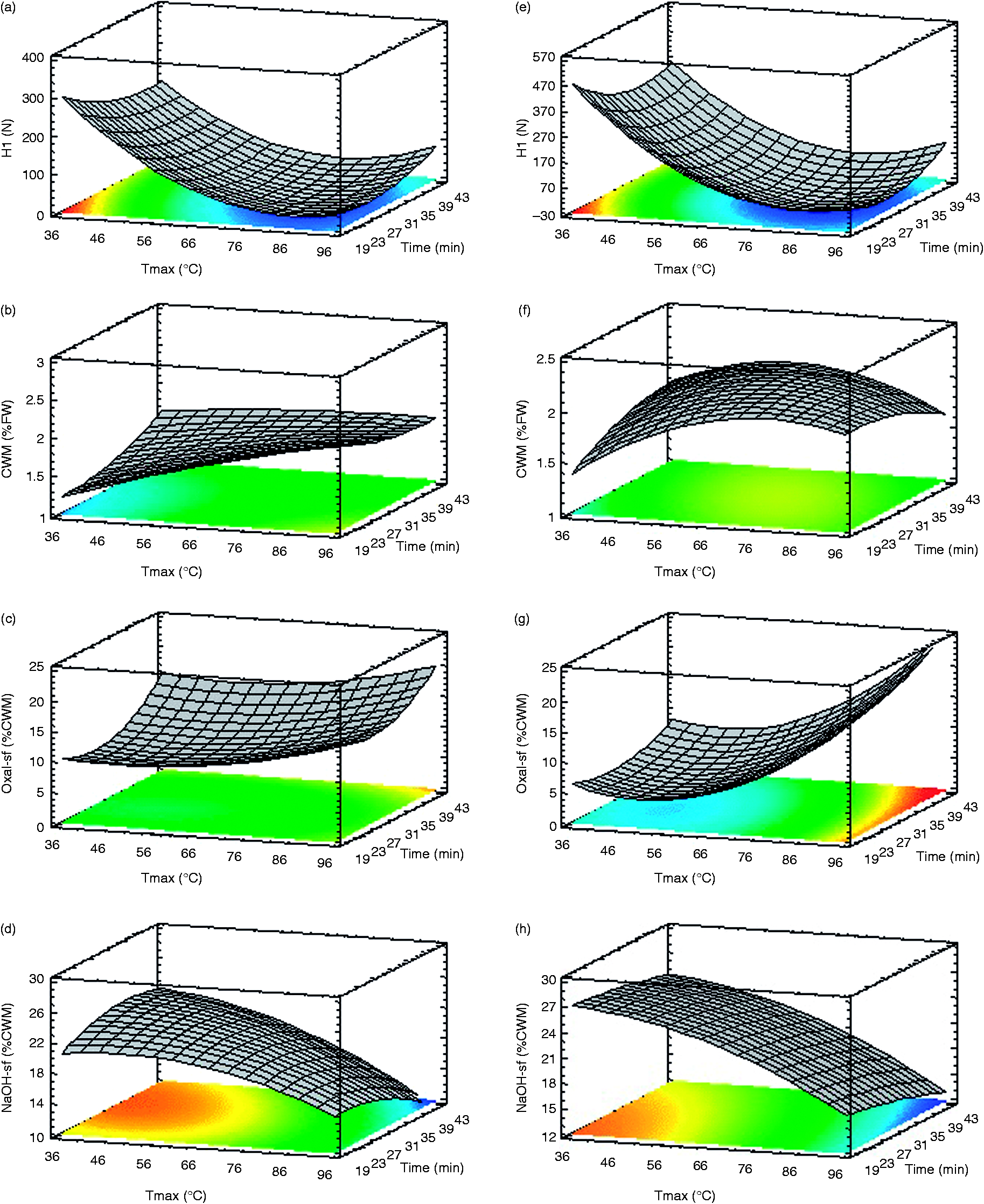
Influence of multivariate factors on cell wall properties of sous-vide cooked apples
Since texture modifications during thermal processing of plant-based products arise in part from cell wall disruption (Christiaens et al., 2011; Waldron et al., 2003), CWM were extracted from sous-vide cooked apples. As shown in Table 2, the yields of CWM obtained from flesh tissue of ‘Mondial Gala’ fruit were generally lower than those recovered from ‘Granny Smith’. As to ‘Mondial Gala’ apples, the highest CWM yields were obtained in fruit cooked at Tm = 82 ℃, whereas for ‘Granny Smith’ they corresponded mainly to apples cooked at Tm = 65 ℃. For both cultivars, CWM-related regression models showed adequate fitting parameters, being R2-adj = 69.64 and 73.52 in ‘Mondial Gala’ and ‘Granny Smith’, respectively (Table 3). Similarly to H1, the linear effect of Tm was significant in CWM-related models developed for both cultivars. For ‘Granny Smith’, the quadratic effect of Tm (X2) was also significant. Contrarily, neither the linear nor the quadratic effects of time were significant in the CWM-related models for any of both cultivars, contrarily to the observations for H1 values (Table 3).
As regards the response surface plots obtained, there was no parallelism between H1 and CWM regression models in any cultivar (Figure 1). These plots showed that, contrarily to H1, CWM yields did not drop with increasing setting temperatures (Tm). Therefore, the modifications in the composition and linkages between cell wall polysaccharides, rather than the total amount of CWM, may be a critical factor influencing texture alterations during sous-vide cooking of apples, as also suggested for cold-stored, intact apples (Ortiz et al., 2011c). Similar conclusions were obtained in previous works on other thermally processed plant products such as carrots or broccoli (Brassica oleracea L.) (Christiaens et al., 2011; De Roeck et al., 2010).
CWM recovered from cooked apples were further fractionated, and the yields of the pectin-enriched fractions obtained are shown in Table 2. In general, the yields of Oxal-sf, which represent the fraction enriched in non-covalently (loosely) bound pectins, were higher in ‘Mondial Gala’ than in ‘Granny Smith’ samples. The only exception was detected for Tm = 94 ℃, where the contrary was observed. The yields of NaOH-sf, which stand for the content of covalently-bound pectins in the cell walls, were similar among cultivars when the setting temperature was 65 ℃ or higher, with a few exceptions. For the rest of the samples (Tm ≤ 48 ℃), NaOH-sf yields in ‘Mondial Gala’ apples were lower than those in ‘Granny Smith’, thus suggesting that the NaOH-sf contents might be a key factor influencing H1 values in samples cooked at low or mild temperatures (Tm ≤ 48 ℃).
The yields of NaOH-sf in samples from both cultivars were generally lower with increasing Tm values, whereas the inverse was observed for Oxal-sf yields (Table 2). It is well established that heating usually increases the water- and oxalate-soluble fractions while decreasing the acid- and alkali-soluble fractions (Kunzek et al., 1999). Moreover, these trends were also observed on the response surface plots (Figure 1). The regression models corresponding to Oxal-sf content (‘Mondial Gala’ and ‘Granny Smith’) and NaOH-sf (‘Granny Smith’) revealed that both the linear and quadratic effects of Tm (X2) and the linear effect of time at Tm were significant (Table 3). For ‘Mondial Gala’, in contrast, only the linear effect of Tm impacted NaOH-sf significantly. These findings, together with the cultivar-to-cultivar differences observed in terms of mechanical properties of sous-vide cooked apples (Table 2), support the above hypothesis and suggest that texture changes in plant-based products might have arisen from modifications in cell wall structure and composition, rather than from changes in total CWM amounts, yet through different mechanisms depending on the cultivar.
The cell wall structural and chemical changes that lead to textural modifications in vegetable tissues include depolymerisation and solubilisation of pectic polymers involved in cell-to-cell adhesion, as well as readjustments of their associations (Goulao and Oliveira, 2008). The depolymerisation of pectic polysaccharides may arise in part from the rupture of the linkages between the neutral sugar-rich side-chains attached to rhamnosyl residues in the rhamnogalacturonan backbones (Brummell and Harpster, 2001). Provided that such linkages help connecting covalently the rhamnogalacturonan backbone to other cell wall polymers such as cellulose and xyloglucans (Agoda-Tandjawa et al., 2012; Caffall and Mohnen, 2009), the removal of these side-chains might facilitate pectin solubilisation. According to the obtained data (Table 2) and the response surface plots associated to the models (Figure 1), the depolymerisation of covalently bound pectic polysaccharides, as indicated by lowered NaOH-sf yields, augmented with increasing cooking temperatures (Tm) and may thus have contributed not only to the loss of firmness (Table 2) but also to the general increase in the yields of Oxal-sf. The yields of Oxal-sf were higher in ‘Mondial Gala’ than in ‘Granny Smith’ apples when cooked at Tm values≥ 65 ℃. At these setting temperatures conditions, in turn, a better retention of textural attributes, as reflected by H1 values, was observed in ‘Mondial Gala’ fruit (Table 2). Therefore, changes in both the content and properties of Oxal-sf might play a major role in the preservation of textural properties of apples after being exposed to sous-vide cooking at Tm ≥ 65 ℃.
Uronic acids content (% w/w) in Oxal-sf and NaOH-sf fractions from cell wall materials obtained in the flesh tissue of sous-vide cooked apples.
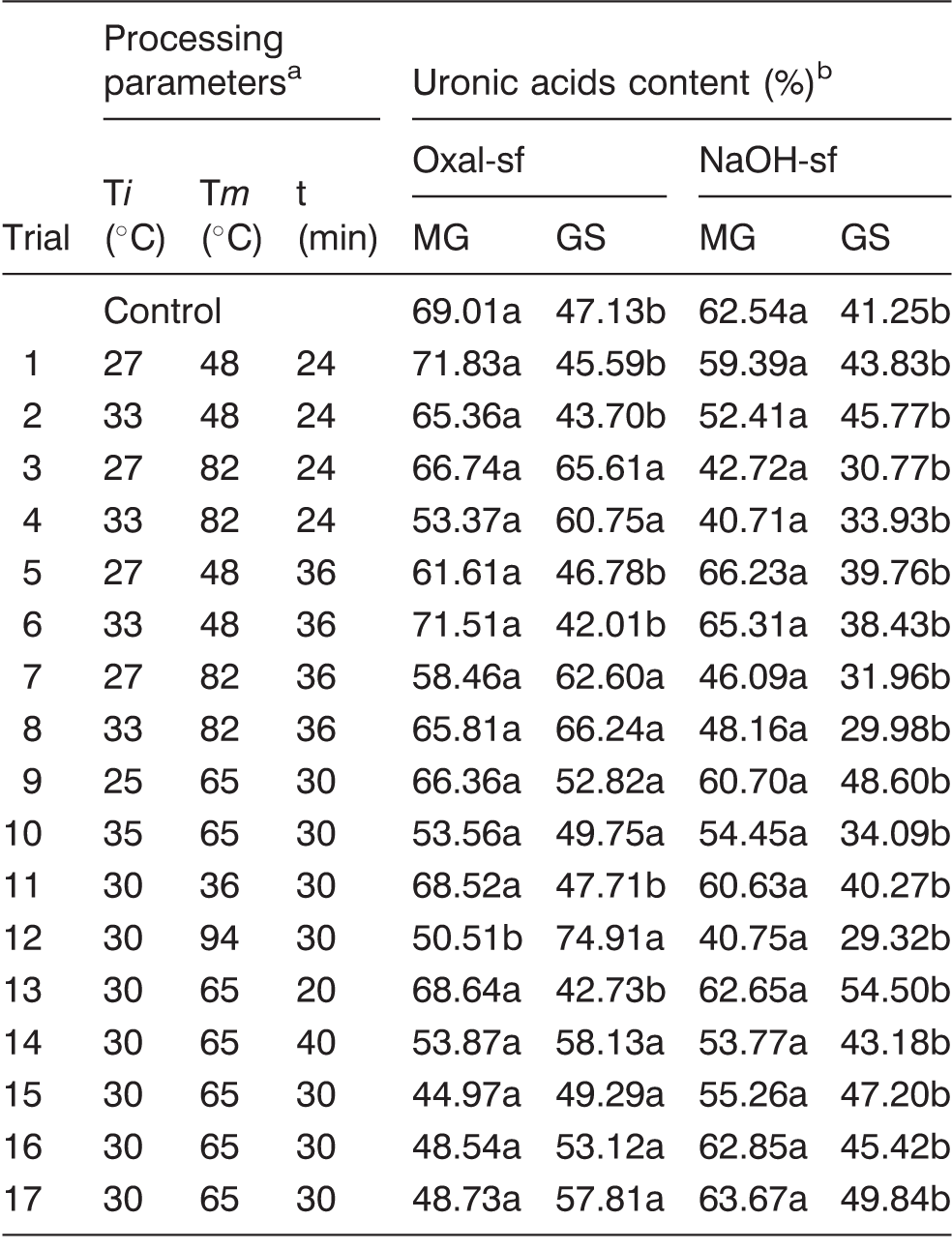
MG: Mondial Gala; GS: Granny Smith.
Independent variables: X1 and T i , initial temperature of water (℃); X2 and T m , maximum temperature of water or setting temperature (℃); X3 and t, time of remaining at maximum (set) temperature (min).
Values represent means of three replicates. For each measured parameter, data followed by different letters within a row are significantly different at p ≤ 0.05 (LSD test).
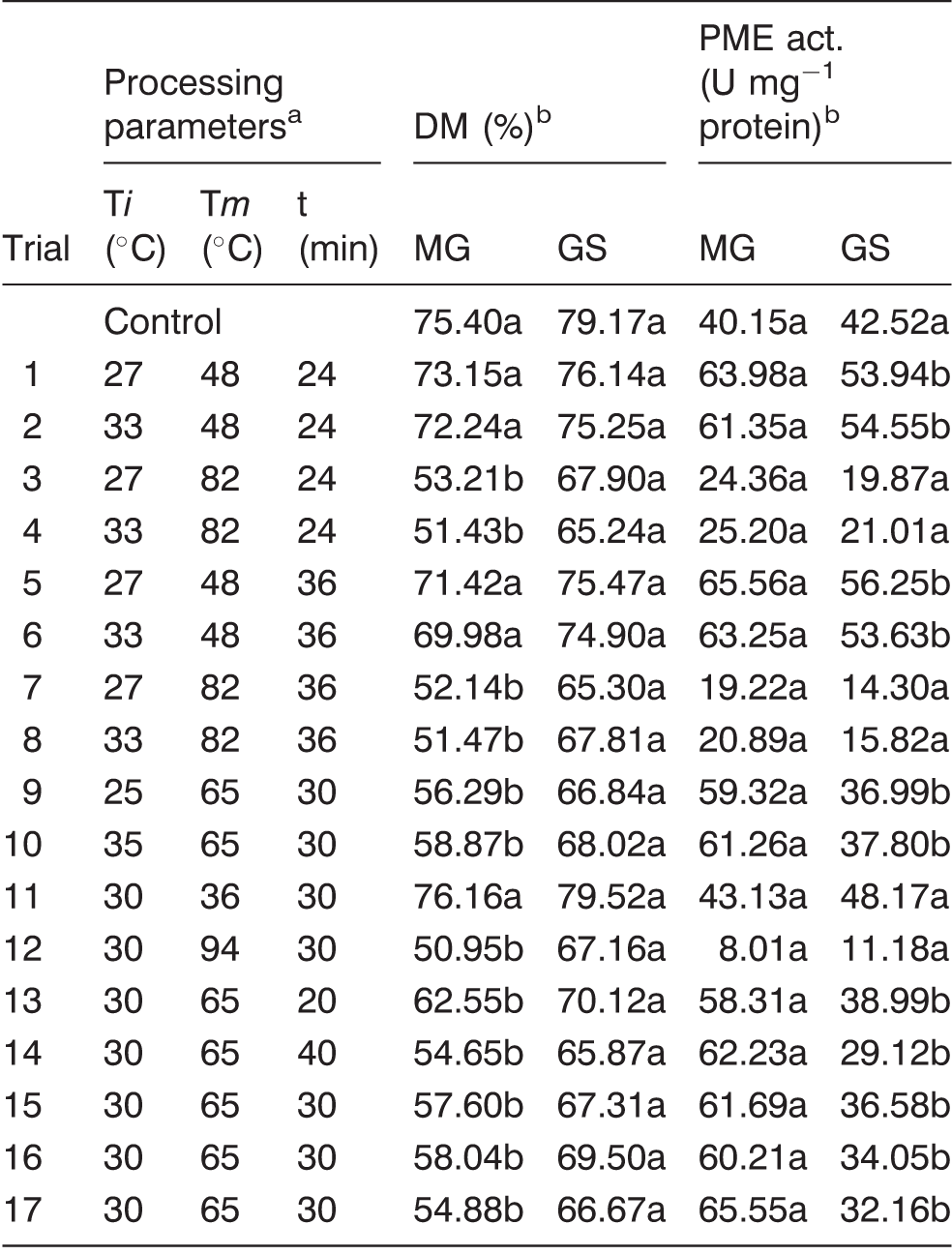
In this work, PME activity in the flesh tissue of sous-vide cooked ‘Mondial Gala’ and ‘Granny Smith’ apples was assessed in all samples, and the results showed that when cooked at intermediate setting temperatures (Tm = 48–65 ℃), PME activity levels in ‘Mondial Gala’ samples were up to two-fold higher than those in ‘Granny Smith’ fruit (Table 5). Contrarily, no differences were observed between cultivars when cooked at higher temperatures (Tm ≥ 82 ℃). According to the developed regression models (R2-adj = 84.31 and 85.66 for ‘Mondial Gala’ and ‘Granny Smith’, respectively), Tm was the only variable having significant effects on PME activity (Table 2). As shown in the corresponding response surface plots (Figure 2), the highest PME activity levels in ‘Mondial Gala’ apples were detected when cooking at around 65 ℃, whereas this enzyme activity progressively decreased in ‘Granny Smith’ samples when increasing cooking temperatures. Therefore, the observed lower DM of pectins in ‘Mondial Gala’ apples cooked at Tm ≥ 65 ℃ (Table 5), might partly arise from enhanced PME activity, in comparison to ‘Granny Smith’ fruit. Along with a higher Oxal-sf yields (Table 2), it might account for better texture preservation in sous-vide cooked ‘Mondial Gala’ apples at cooking temperatures analogous to those applied in the industry (Tm ≥ 65 ℃) (Table 2). Actually, thermal treatments of some plant-based products at mild conditions (generally within the range of 50 to 70 ℃) have also proved to stimulate the catalytic action of PME and, accordingly, to prevent excessive softening (Anthon and Barrett, 2006; Guillemin et al., 2008; Ni et al., 2005).
Response surface plots showing the effect of cooking temperature (T
m
; X2) and time (time; X3) on the degree of methylation (DM) of CWM and PME activity in the flesh tissue of sous-vide cooked ‘Mondial Gala’ ((a) and (b), respectively) and ‘Granny Smith’ ((c) and (d), respectively) apples. Initial temperature of water (T
i
; X1) is fixed at the central point (30 ℃). Degree of methylation (DM) of insoluble cell wall materials (CWM) fraction and pectin methylesterase (PME) specific activities in the flesh tissue of sous-vide cooked apples. MG: Mondial Gala; GS: Granny Smith. Independent variables: X1 and T
i
, initial temperature of water (℃); X2 and T
m
, maximum temperature of water or setting temperature (℃); X3 and t, time of remaining at maximum (set) temperature (min). Values represent means of three replicates. For each measured parameter, data followed by different letters within a row are significantly different at p ≤ 0.05 (LSD test).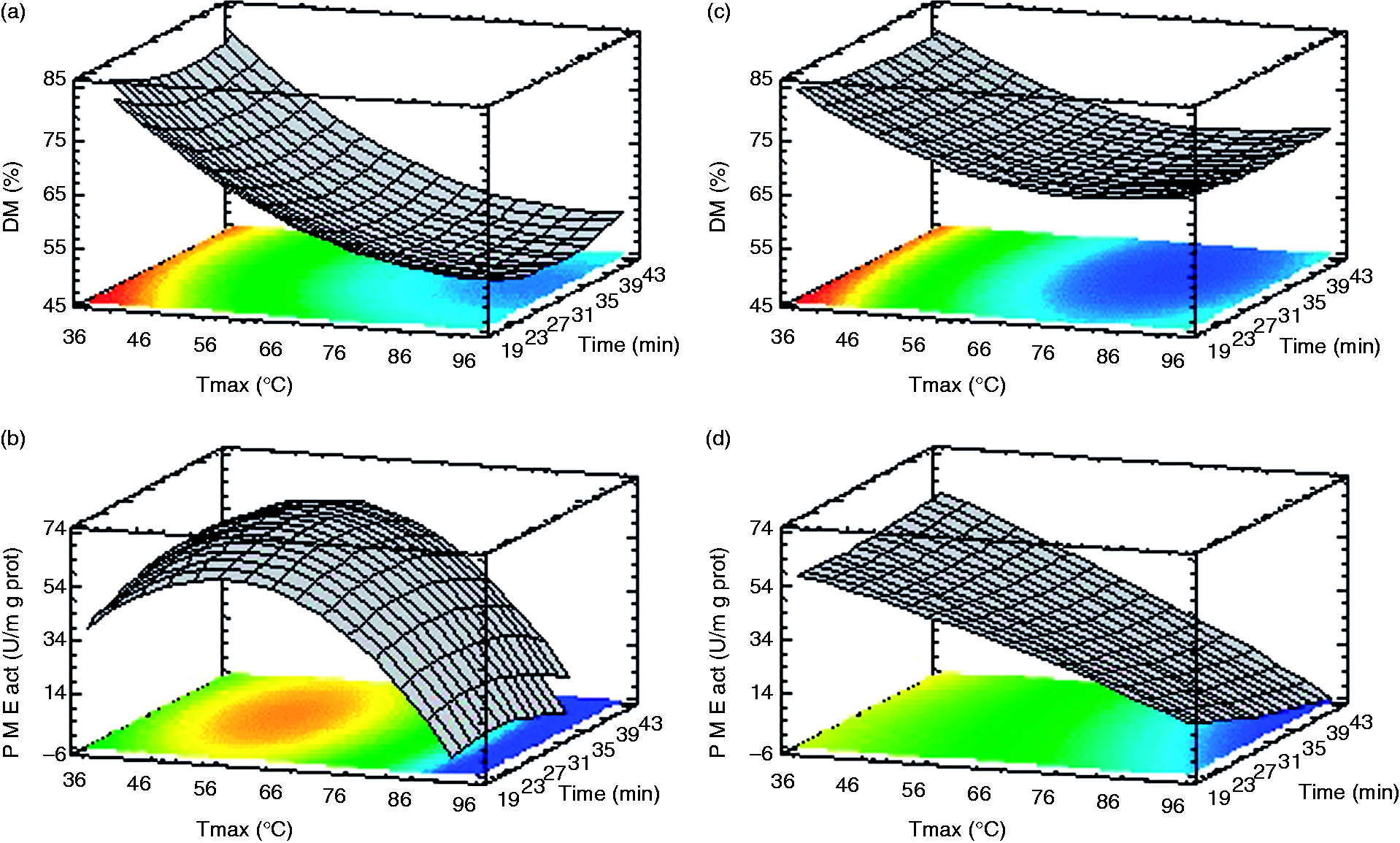
Conclusion
RSM has proved a suitable tool for the evaluation of changes in textural parameters and in related cell wall modifications during sous-vide cooking of ‘Mondial Gala’ and ‘Granny Smith’ apples. In both cultivars, overall decrease in mechanical resistance may have arisen from depolymerisation of covalently bound pectins present in the cell walls. Still, texture alterations were more dramatic in ‘Granny Smith’ than in ‘Mondial Gala’ apples when the temperature of cooking was higher than 65 ℃, which point at this latter cultivar as a more appropriate raw material for sous-vide cooking than ‘Granny Smith’. Contrarily to ‘Granny Smith’ samples, PME activity levels in ‘Mondial Gala’ apples were enhanced at mild cooking temperatures and, as a result, pectins in this cultivar displayed a lower DM. Therefore, the establishment of calcium-mediated linkages between cell wall polymers might have been favoured in ‘Mondial Gala’ apples, thus reinforcing tissues and improving the preservation of textural attributes, in comparison to ‘Granny Smith’ samples. However, in addition to PME-mediated cell wall alterations, other mechanisms underlying cell wall modifications may also show cultivar-to-cultivar variation, so further research aimed at deepening the comprehension of textural modifications arisen from thermal processing of fruits should involve additional enzyme activities and a more detailed consideration of the changes occurring in the cell walls.
Footnotes
Declaration of conflicting interests
The author(s) declared no potential conflicts of interest with respect to the research, authorship, and/or publication of this article.
Funding
The author(s) disclosed receipt of the following financial support for the research, authorship, and/or publication of this article: This study has been carried out with the financial support from the ‘Conseil Régional des Pays de la Loire’ of France. Partial financial support from the ‘Ministerio de Ciencia e Innovación’ of Spain (AGL2010-14801/ALI project) is also gratefully acknowledged.