







Abstract
Molds are one of the most important spoilage organisms on cheese which can lead to economic loss as well as raising public health concerns due to the production of mycotoxins. This study investigates the use of ɛ-polylysine as natural antimicrobial to inhibit fungal growth. The minimal inhibitory concentrations and minimal fungicidal concentrations of ɛ-polylysine were determined against Penicillium roqueforti, Penicillium nordicum, and Penicillium solitum. Then, polylysine was tested as surface antimicrobial for the preservation of mozzarella slice cheese inoculated with these Penicillium spp. and stored in plastic trays during 25 days. The minimal inhibitory concentrations calculated for the three fungi tested were of 60 mg/l whereas the minimal fungicidal concentrations detected were of 125–10,000 mg/l. The shelf life observed for the control experiments was of 15 days, and just using the ɛ-polylysine at 0.00625, 0.0125, and 0.025% was evidenced a shelf life increment in comparison with the control of 1–3 days.
Practical applications
ɛ-Polylysine is active against the Gram-negative bacteria as Escherichia coli and Salmonellae, which are difficult to control with other natural preservatives., and this compound has been used generally as a food additive in Japan, Korea, and USA. Considering the positive results obtained in the study, this compound could be used for the production of antimicrobial biofilms, applied as separator slices in the sliced cheese production, to prevent the growth of the mycotoxigenic fungi Penicillium spp., contributing to reduce the use of the synthetic preservatives in dairy industry.
Introduction
Many food preservation systems, such as heat treatments and addition of chemical preservatives, are used to reduce the risk of outbreaks of bacterial food poisoning and food spoilage (Periago and Moezelaar, 2001). However, some of these systems can have undesired effects, which are against the food industry’s and consumer’s demands, who desire fresher, additive-free, and more natural tasting food products while maintaining microbiological safety and stability (Barberis et al., 2018). There has been an increasing interest in the development of effective natural antimicrobials as food preservatives.
ɛ-Polylysine (ɛ-PL) is a naturally occurring food-grade antimicrobial peptide that is produced by fermentation of the microorganism Streptomyces albulus. Molecularly, ɛ-PL is a homopolymer consisting of
The antimicrobial ability of ɛ-PL is highly dependent on its cationic nature, because ɛ-PL is thought to function by absorbing onto negatively charged cell surfaces of microorganisms through electrostatic interactions where it promotes cell membrane disruption (Chang et al., 2010).
Cheese is very susceptible to the growth of mold, which makes it unsuitable for sale and consumption. Some of these spoilage molds on cheese may also produce mycotoxins, which could have serious consequences on consumers’ health (Northolt et al., 1980). The growth of mold on cheese is largely contributed by mold’s ability to grow at refrigeration temperature, low oxygen concentrations, low pH, and low water activity. Various techniques have been applied to inhibit mold growth on cheese, such as pasteurization of milk modified atmosphere packaging and other treatments such as the use of chemical preservatives: sorbates, propionate, and natamycin (Ledenbach and Marshall, 2009; Stephanie et al., 2018). However, these techniques do not show complete effectiveness as the ideal gas composition in MAP may vary from different varieties of cheese and may lead to flavor defect during storage (Todaro et al., 2018). Therefore, there is a significant interest to develop natural preservatives to enhance or replace chemical treatments, and also an extensive contamination of food and drinks with mycotoxins is the main problem over the world since they can also compromise the safety of food and feed supplies and adversely affect health in humans and animals (Rubert et al., 2011).
The aims of this study were to study (a) the quality and purity of a food ingredient containing ɛ-PL; (b) the antifungal activity of the ɛ-PL against Penicillium roqueforti, Penicillium nordicum, and Penicillium solitum, three normal cheese fungal contaminants; and (c) the shelf life extension of sliced mozzarella cheese treated with a surface application of the ɛ-PL and contaminated with Penicillium spp.
Materials and methods
Chemicals
Deionized water (<18 MX cm resistivity) was obtained from a Milli-Q Millipore water purification system (Massachusetts, EE.UU). Buffered peptone water, potato dextrose agar (PDA), and potato dextrose broth (PDB) were obtained from Oxoid (Madrid, Spain). The ɛ-PL was obtained from Bainafo (Henan, China) and the mozzarella cheese slices were obtained from Arla Foods (Madrid, Spain). This mozzarella without chemical preservatives has a composition in proteins of 25 g/100 g, fat 22 g/100 g, carbohydrates 1 g/100 g, and sodium 0.56 g/100 g. The strain of Penicillium camemberti CECT 2267, P. roqueforti CECT 2905, Penicillium digitatum CECT 2954, P. nordicum CECT 2320, Penicillium chrysogenum CECT 2668, Penicillium commune CECT 20767, and P. solitum CECT 20818 were obtained from the Spanish Type Culture Collection (CECT, Valencia, Spain). These microorganisms were maintained in sterile glycerol at −80 ℃. Then, they were recovered in PDB broth at 25 ℃ for 48 h prior to use. Ammonium persulfate and tetramethylethylenediamine for the polymerization of polyacrylamide gels, dithiothreitol (DTT), and sodium dodecyl sulfate (SDS) were obtained from Sigma Aldrich (St Louis, EE.UU). The molecular weight standard is 10–250 kDa; 40% acrylamide/2% Bis-acrylamide solutions were obtained from BioRad (Hercules, California).
Molecular mass estimation
Purity and molecular mass of the antimicrobial peptide were analyzed by sodium dodecyl sulfate-polyacrylamide gel electrophoresis (SDS-PAGE) as described by El-Ghaish et al. (2010) using a 12% (w/v) separating gel and 4% stacking gel. SDS-PAGE is carried out in the presence of an anionic detergent SDS and with DTT at 95 ℃ for 5 min (denaturing conditions) and without denaturing agents. Gels were stained with Coomassie blue R-250. The molecular mass of the purified protein was evaluated by comparing its electrophoretic mobility to those of known marker proteins run on the same gel. The adsorbed proteins were tryptically digested and the resulting peptides were analyzed by MALDI-TOF.
MALDI-TOF analyses
Samples were dissolved in 0.1% (v/v) TFA and concentrated using the ziptip C18 pipette tips (Millipore, Billerica, MA). Peptide solution was mixed with the same volume of a-cyano-4-hydroxycinnamic acid matrix and spotted on a MALDI plate. MALDI-MS and MALDI-MS/MS were performed on an Applied Biosystems 4700 Proteomics Analyzer with TOF/TOF ion optics (Applied Systems, Foster City, CA). The mass spectrometer was operated in positive ion reflector mode with five spots of standard (ABI 4700 calibration mixture) for calibration. Mass spectra were obtained from each spot using 500 shots per spectrum. Tandem mass spectra were acquired by accelerating the precursor ions to 8 keV, selecting them with the timed gate set to a window of 3 Da, and performing CID at 1 keV. Gas pressure (air) in the CID cell was set at 0.2 mTorr. Fragment ions were accelerated to 14 keV before entering the reflector. The mass spectral data were submitted to a database search using the MASCOT program (Matrix Science, version 2.1) (He et al., 2018).
Antifungal activity tests
Fungal inhibition was evaluated by the action of the ɛ-PL under the different strains of Penicillium. Ten microliters of ɛ-PL resuspended in PDB with a concentration of 100 µg/ml were added to the plaque containing PDA and fungal spores. Plates were maintained at 25 ℃ for three days (Varsha et al., 2014). After the fungal growth was carried out, the measurement of the inhibition halo diameter is considered positive for antifungal activity halos larger than 15 mm (Castlebury et al., 1999).
Determination of Minimum inhibitory concentration and minimum fungicidal concentration (MIC-MFC)
The assay was performed in 96-well sterile microplates (Fothergill, 2012). A volume of 100 µl of ɛ-PL in PDB with final concentrations from 20 to 10,000 µg/ml was added in the wells. Each well was inoculated with 100 µl of a 5 × 10⁴ spores/ml suspension in PDB of the mycotoxigenic fungi. The negative control consisted of inoculated medium without any treatment. The plates were incubated at 25 ℃ for three days. The MIC was defined as the lowest concentration of the ɛ-PL, where the fungi did not show any visible growth. Four replicates of each microassay were carried out.
For the determination of the MFC, after determining the MIC, the concentrations corresponding to the inhibitory and to higher concentrations were subcultured on PDA plates. After three days of incubation at 25 ℃, MFC readings were made, being the MFC the lowest extract concentration in which a visible growth of the subculture was prevented.
Cheese preparation and inoculum
Fresh mozzarella slice cheese, without chemical preservatives (20 g slice approximately, in plastic tray), was purchased directly from a supermarket in the city of Valencia on the first day of their shelf life. The cheese, which was not artificially contaminated, was assessed at the beginning of the test to determine the total fungal counts on PDA and confirm the absence of fungal contaminants.
The cheese slices, cut in sterile conditions (4 × 7 cm), were introduced in plastic trays of 6 × 10 cm dimensions; were inoculated with 200 µl of a suspension containing 1 × 10⁵ spores/ml of P. roqueforti, P. nordicum, and P. solitum; and were treated with a superficial spreading of 0.00625, 0.0125, and 0.0250% of sterile water solutions of ɛ-PL. Each fungal strain was inoculated individually and the experiments were carried out with n = 9. Conidial concentration was counted with a Neubauer chamber. The control group did not receive any antimicrobial treatment and only treated with aqueous sterile solution. All plastic trays were closed hermetically and incubated at 4 ℃ during 25 days.
The shelf life of the cheese treated with the ɛ-PL was monitored using the mold environmental challenge method indicated by Dal Bello et al. (2007). The trays were examined for mold growth during the 25-day storage period at an average temperature of 4 ± 2 ℃. When cheese slices showed any visible signs of mold growth, recorded in days, shelf life was terminated.
Statistical analysis
The statistical analysis was performed using the software ezANOVA version 0.98. The differences between the groups were analyzed with one-way ANOVA followed by the Tukey HSD post hoc test for multiple comparisons. The level of significance considered was p ≤ 0.05.
Results and discussion
ɛ-PL characterization
To understand the stability of the material provided and also the purity of the ingredient, the ɛ-PL molecular weight was studied from one hand through SDS-PAGE, and on the other hand with the MALDI-TOF mass spectrometry to study the amino acid sequence of the peptide. Figure 1 shows the SDS-PAGE separation of the ɛ-PL in denaturized and no denaturized conditions, where it is possible to observe for these two modalities of analysis a band of the ɛ-PL with a coincidence of the molecular weight around 4500 Da, that is the molecular weight described in literature of this bioactive compound.
SDS-PAGE separation of ɛ-PL from the ingredient used for the antimicrobial test on the mycotoxigenic fungi studied. The separation was carried out in duplicate in a—denaturized and b—no-denaturized conditions Labeled bands were further in-gel digested with trypsin before identification of peptides by MALDI-TOF.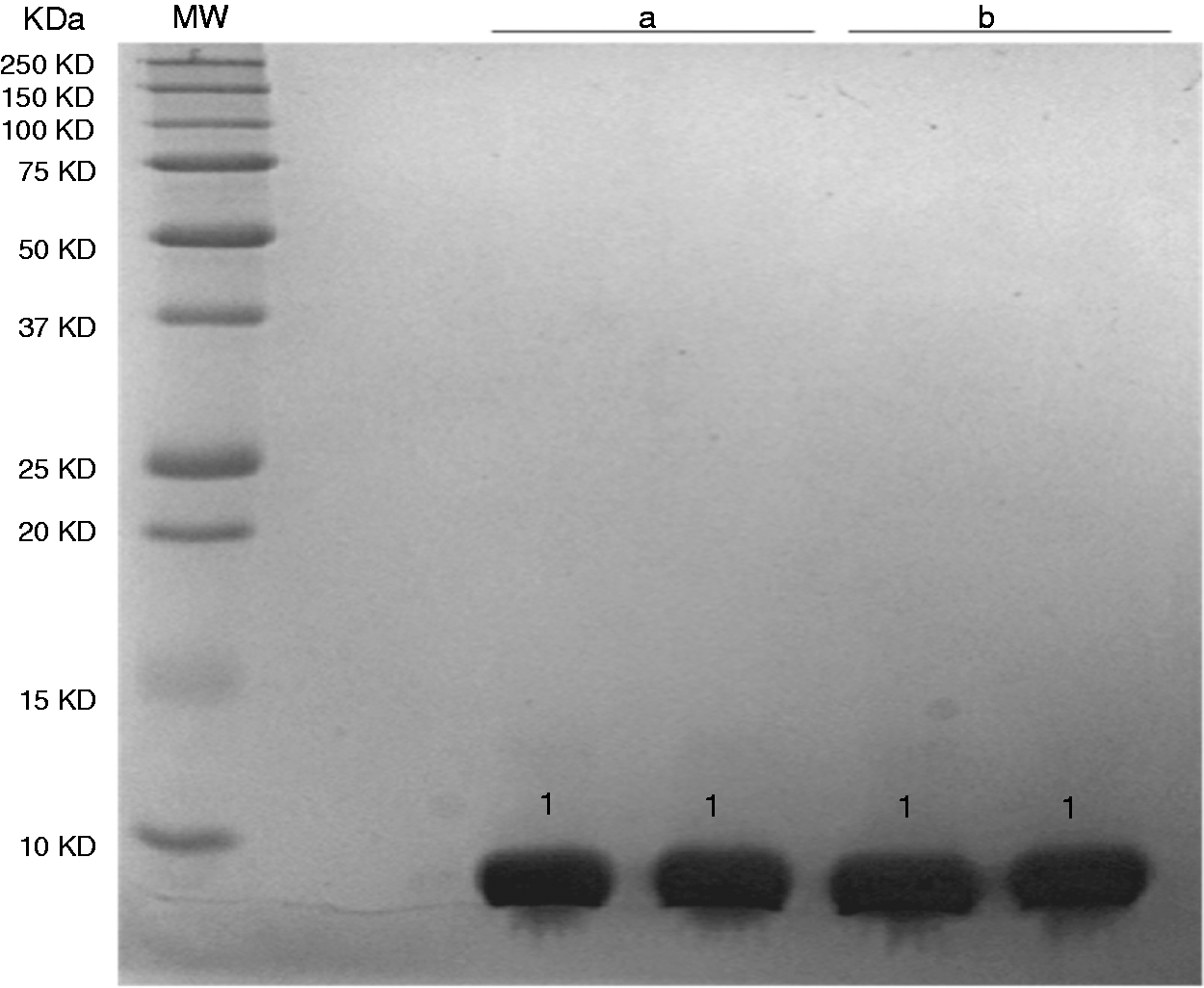
Figure 2(a) shows the MALDI-TOF spectra of the ɛ-PL band isolated by SDS-PAGE; in the spectra, it is possible to observe a fragment m/z = 4503.3369 that corresponds to the molecular weight detected for the ɛ-PL and also were described two patterns of molecular charge and, in particular, doubly and mono-charged ions, respectively. Figure 2(b) shows the MALDI-TOF/TOF spectra of a fragment of 1019 Da originated by the SDS-PAGE band digested with trypsin. As is evidenced in the spectra there are several fragments with a difference in m/z of the 128 Da, that is exactly the molecular weight of the lysine, the principal component of the antimicrobial peptide studied. The SDS-PAGE analysis of the ingredient in combination with the MALDI-TOF mass spectrometry characterization permits the complete characterization of the compound and also to conclude that the ingredient employed was composed effectively of a pure lysine polymer.
(a) MALDI-TOF spectra of the digested band (ɛ-PL contained in the antimicrobial ingredient) with trypsin isolated by SDS-PAGE separation and (b) MALDI-TOF/TOF spectra of the fragment with an m/z of 1019.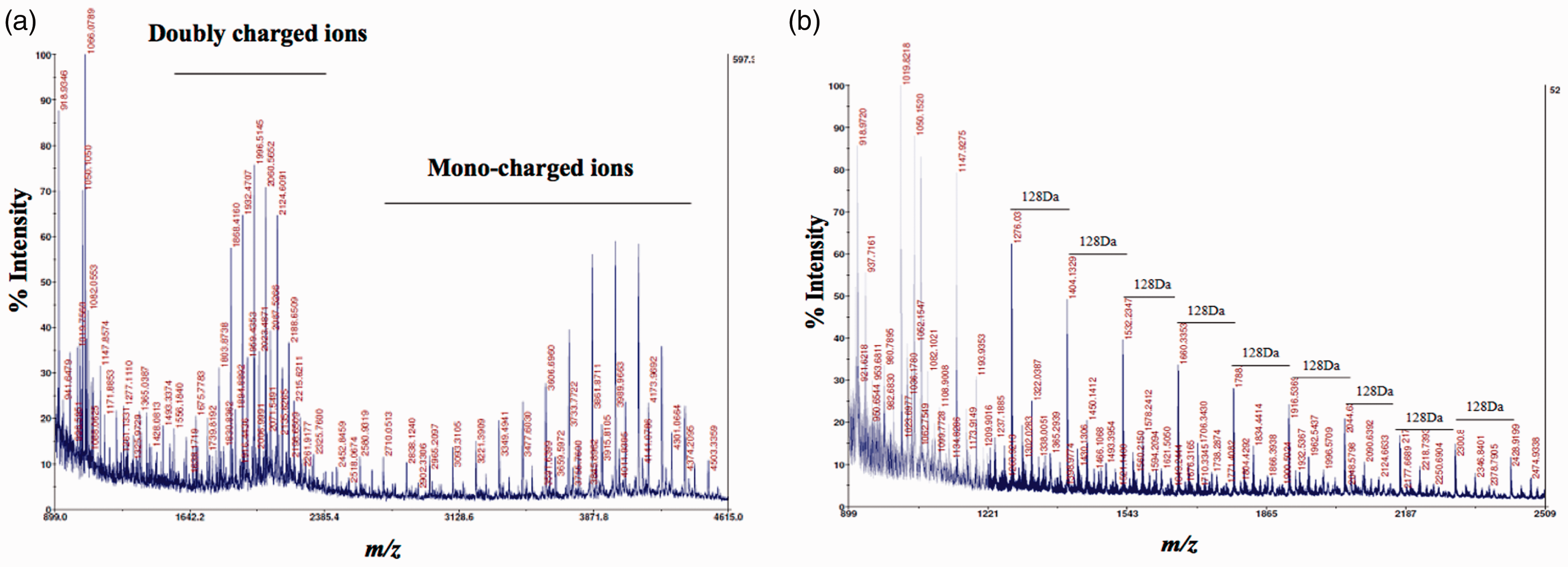
Antifungal activity of the ɛ-PL in solid and liquid medium
Antifungal activity evidenced by ɛ-PL (mg/l) on seven strains of Penicillium spp. Calculation of antifungal activity: 8 mm diameter clearing zone (+), 10 mm diameter clearing zone (++), and more than 10 mm diameter clearing zone (+++).
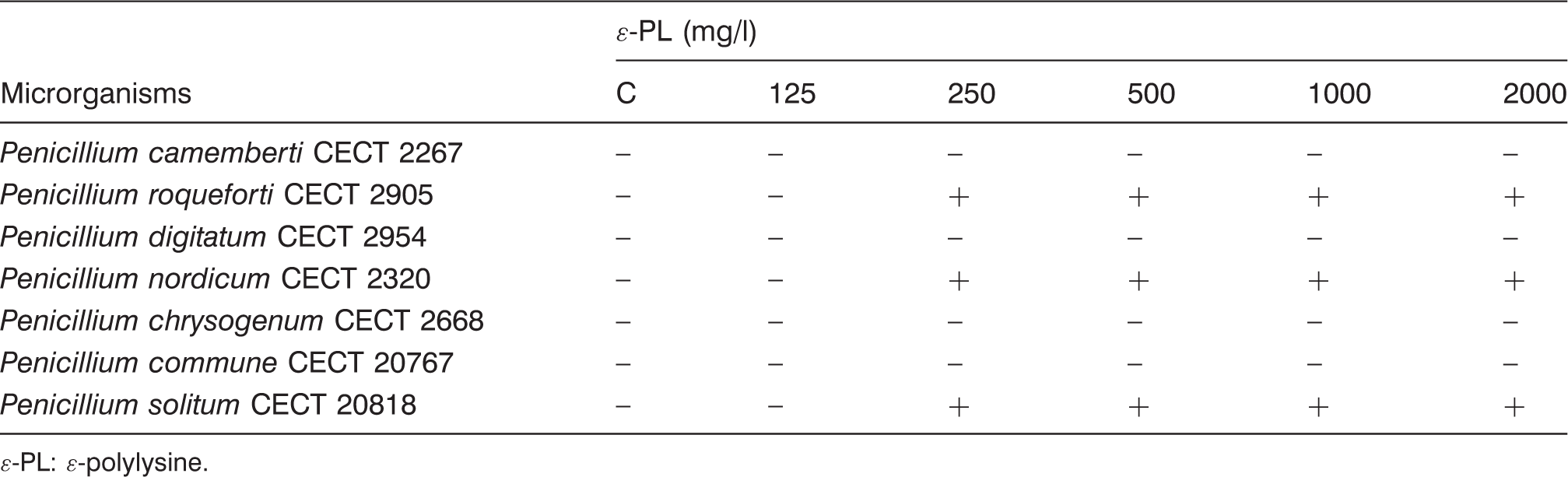
ɛ-PL: ɛ-polylysine.
Zhang et al. (2015) evaluated the antimicrobial activity of starch/ɛ-PL composite films prepared by combining 4% (w/v) gelatinized cornstarch and varying the level of ɛ-PL. These composite films exhibited effective inhibition against E. coli and B. subtilis; films containing 2% (w/w) ɛ-PL effectively suppressed the growth of the tested microbes (P < 0.05). The starch/ɛ-PL films showed a low inhibitory effect on Aspergillus niger.
Hyldgaard et al. (2015) evaluated the antimicrobial potential of ɛ-PL and isoeugenol individually and in combinations against a selection of Gram-negative strains in vitro. All combinations resulted in additive interactions between ɛ-PL and isoeugenol toward the bacteria tested. The killing efficiency of different ratios of the two antimicrobial agents was further evaluated in vitro against Pseudomonas putida. Subsequently, the most efficient ratio was applied to a raw turkey meat model system, which was incubated for 96 h at spoilage temperature. Half of the samples were challenged with P. putida, and the bacterial load and microbial community composition was followed over time. CFU counts revealed that the antimicrobial blend was able to lower the amount of viable Pseudomonas spp. by one log compared to untreated samples of challenged turkey meat, while the single compounds had no effect on the population. However, the compounds had no effect on Pseudomonas spp. CFU in unchallenged meat.
Shelf life improvement of mozzarella sliced cheese
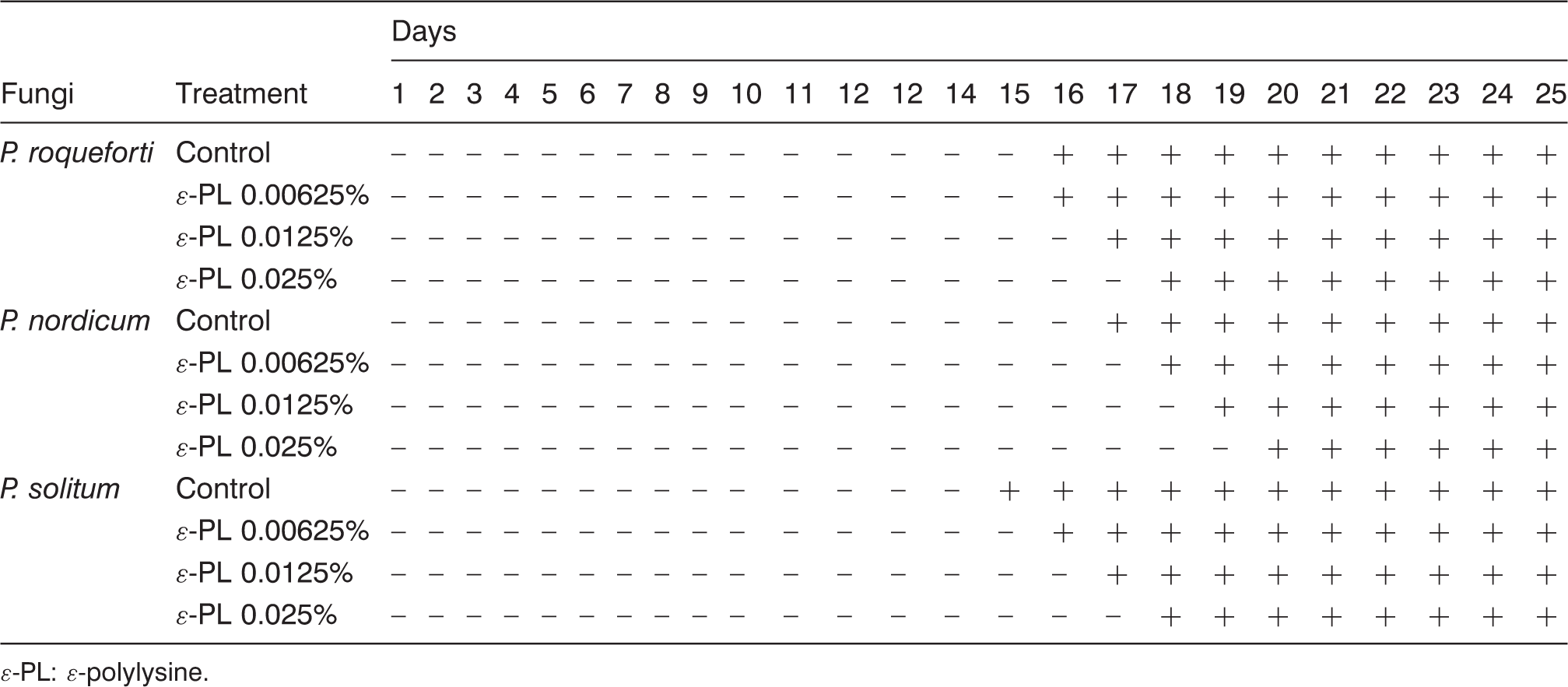
In this study the shelf life extension of mozzarella sliced cheese contaminated with three strains of Penicillium spp. has been evaluated using a natural antimicrobial compound as the ɛ-PL. Table 2 shows the shelf life monitored in days of the cheese slices treated with three different concentrations of the ɛ-PL and in particular of 0.00625, 0.0125, and 0.025%. In particular, on P. roqueforti, the shelf life observed for the control experiments was of 15 days, and just using the ɛ-PL at 0.0125 and 0.025% was evidenced a shelf life increment in comparison with the control of one and two days, respectively. On P. nordicum (Figure 3), the shelf life extension observed in the mozzarella cheese control experiment was of 16 days, whereas using the three concentrations of the bioactive compounds ɛ-PL the shelf life extension observed was of one, two, and three days, respectively. Analyzing the data of the shelf life extension of the mozzarella cheese contaminated with P. solitum, the control experiment presented a visible fungal growth at 15th incubation day, whereas the treated samples with ɛ-PL evidenced an increment of the shelf life of one, two, and three days, respectively, proportionally to the concentration of the antifungal compound used.
Mozzarella cheese slices contaminated with P. nordicum and treated with ɛ-PL at 19 days incubation (b) 0.00625%, (c) 0.0125%, and (d) 0.025%, in comparison with (a) the control experiment. Shelf life monitored in days, of the cheese slices treated with three different concentrations of ɛ-PL and contaminated with P. roqueforti, P. nordicum, P. solitum, in comparison with a control carried without any antimicrobial treatment. ɛ-PL: ɛ-polylysine.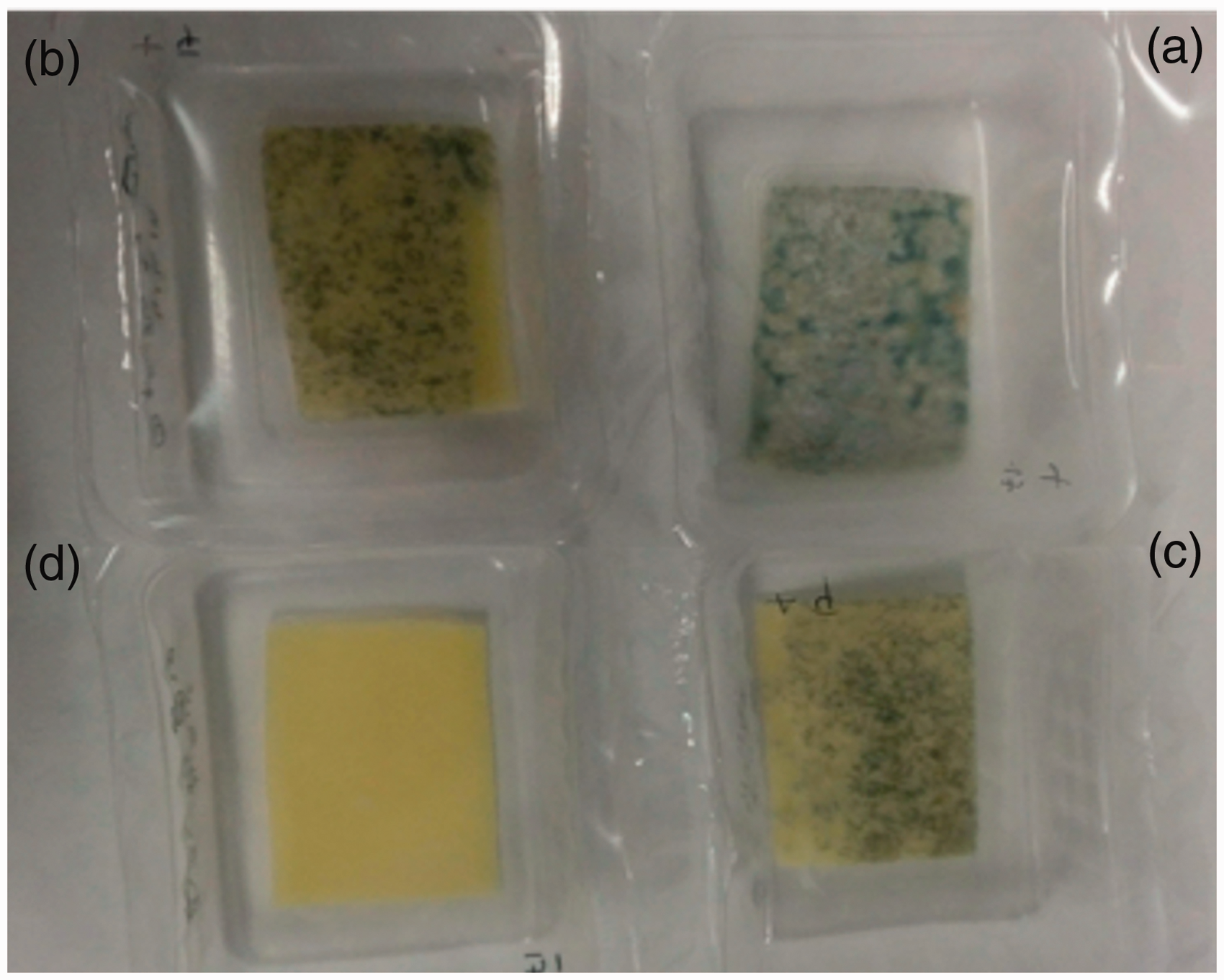
For the first time in this study, the application of the ɛ-PL included as bioactive additive for the reduction of the fungal growth of Penicillium spp. strains on mozzarella cheese was studied, whereas the antimicrobial activity, in the scientific literature there are several studies that describe the application of natural bioactive compounds in the reduction of the fungal growth and mycotoxins reduction on cheese and other food products.
Luz et al. (2017) investigated the use of ɛ-PL to inhibit fungal growth and to reduce aflatoxins (AFs) production in bread. Antifungal activity of starch biofilms with different concentrations of ɛ-PL was determined in solid medium against Aspergillus parasiticus (AFs producer) and Penicillium expansum. Then, biofilms were tested as antimicrobial devices for the preservation of bread loaf inoculated with A. parasiticus CECT 2681 and P. expansum CECT 2278. Shelf life and AFs content were examined. Biofilms with concentrations of ɛ-PL less than 1.6 mg/cm2 showed no fungal growth inhibition in solid medium, while the antifungal activity of the films with greater than 1.6 mg/cm2 of ɛ-PL was dose dependent. The shelf life of bread inoculated with A. parasiticus was increased by one day with the use of films containing 1.6–6.5 mg ɛ-PL/cm2, while shelf life of bread tainted with P. expansum was increased by three days with 6.5 mg ɛ-PL/cm2. AFs production was greatly inhibited by ɛ-PL biofilms (93–100%).
Takahashi et al. (2012) studied the synergistic effect of paired antimicrobial combinations against Listeria monocytogenes growth in ready to eat (RTE) seafood was tested. L. monocytogenes (102 CFU/g) and a mixture of two different antimicrobials (nisin and lysozyme, nisin and ɛ-PL) were inoculated into minced tuna and salmon roe, and incubated at 10 or 25 ℃ for seven days and 12 h, respectively. Among four different combinations tested, two combinations including nisin showed strong antilisterial effect in RTE seafood. These two combinations (nisin and ɛ-PL, nisin and lysozyme) reduced L. monocytogenes in number first and maintained the low cell number for a long period of time. This growth control method toward L. monocytogenes is useful in RTE seafood where heating or controlling pH or water activity is not practical.
Moschonas et al. (2012) studied the antimicrobial activity of caprylic acid (CAA), carvacrol (CAR), ɛ-PL, and their combinations for reduction of Salmonella contamination in not-RTE surface-browned, frozen, breaded chicken products. Fresh chicken breast meat pieces were inoculated with Salmonella spp. and mixed with distilled water or with CAA, CAR, and ɛ-PL as single or combination treatments of two or three ingredients. Total reductions of inoculated Salmonella in untreated surface-browned, breaded products after frozen storage were 0.8–1.4 log CFU/g. In comparison, single treatments of CAA (0.25–1.0%), CAR (0.3–0.5%), and ɛ-PL (0.125–1.0%) reduced counts by 2.9–4.5, 3.4–4.4, and 1.4–2.3 log CFU/g, respectively, depending on concentration. Pathogen counts of products treated with two- or three-ingredient combination treatments (0.03125–0.25% CAA, 0.0375–0.3% CAR, and/or 0.5% ɛ-PL) were 0.4 to at least 3.3 log CFU/g lower (depending on treatment) than those of the untreated controls. The antimicrobial activity of two-ingredient combinations comprised of 0.125% CAA, 0.15% CAR, or 0.5% ɛ-PL was enhanced (P < 0.05) when applied as a three-ingredient combination (i.e. 0.125% CAA + 0.15% CAR + 0.5% ɛ-PL).
Conclusion
The use of ɛ-PL in different concentrations could inhibit the growth of P. roqueforti CECT 2905, P. nordicum CECT 2320, and P. solitum CECT 20818 (spoilage) in mozzarella cheese slices packaged in plastic trays hermetically sealed, indicating potential for the control of spoilage molds on cheese products. In addition, it can become an alternative to synthetic compounds providing a new perspective to decrease fungal contaminants and prolong the shelf life of foods.
Footnotes
Declaration of conflicting interests
The author(s) declared no potential conflicts of interest with respect to the research, authorship, and/or publication of this article.
Funding
The author(s) disclosed receipt of the following financial support for the research, authorship, and/or publication of this article: This research was supported by the Ministry of Economy and Competitiveness (AGL2016-77610R) by the Project Prometeo (2018/126) of Generalitat Valenciana, by the pre PhD program of the University of Valencia “Atracción de Talentos” (4690/4690) and by the PhD program of the Spanish Ministry of Education, Culture and Sports (FPU17/06104).