







Abstract
Effects of high hydrostatic pressure (100, 200, and 400 MPa) and soaking solution (citric acid, calcium chloride, ascorbic acid, and distilled water) on proximate composition, polyphenols, anthocyanins, β-carotene, and antioxidant activity of white, orange, and purple fleshed sweet potato flour were investigated. Total polyphenol content was increased in sweet potato flour of Jishu 98 (white) at 200 MPa with ascorbic acid and Pushu 32 (orange) at 0.1 MPa with ascorbic acid treatment (0.51 and 0.83 mg gallic acid equivalent/g dry weight, respectively), but was decreased in Xuzishu No. 3 (purple) in both high hydrostatic pressure and soaking solution treatments. Total anthocyanin content was declined in all treated sweet potato flour. Nevertheless, high hydrostatic pressure with citric acid, calcium chloride, and distilled water significantly increased the β-carotene content in Pushu 32. Correlation analysis between total polyphenol content, total anthocyanin content, and antioxidant activity suggested that polyphenols are the most pivotal antioxidant in sweet potato flour. High hydrostatic pressure and soaking solution treated sweet potato flour could be potentially utilized in food with acceptable nutritional values.
Keywords
Introduction
Most developing countries are facing the problem of increasing population and huge food supply within limited cultivated land. This increasing demand encouraged the scientists to consider new underutilized plant for human, especially the areas where staple crops are difficult to cultivate due to insufficient supply of water (Motsa et al., 2015). Sweet potato shows positive attributes, such as short production cycle, adaptability to marginal conditions, versatility in term of flesh texture, color, and taste (Bovell-Benjamin, 2007). China is the largest sweet potato grower that produced approximately 72 million metric tons (FAOSTAT, 2017). Four types of sweet potatoes with purple, yellow, orange, and white flesh are commonly grown in China, which reveals completely different chemical composition (Tang et al., 2015). Depending on the flesh color, sweet potato is rich in anthocyanins, β-carotene, polyphenols, dietary fiber, and minerals.
Sweet potato has been widely used in the food industry in different product formulation, particularly starchy and other allied products. The major processing problem of sweet potato is browning that resulted from enzymatic and non-enzymatic reactions. Non-enzymatic browning mainly occurred due to the reducing sugars and amino acids at high temperature during Maillard reaction, while enzymatic browning is attributed to the oxidation of phenols by polyphenol oxidases and peroxidases which are associated at low temperature (Graham-Acquaah et al., 2014). In order to overcome the problem of changes on physicochemical properties and nutritional quality which occur during the sweet potato flour (SPF) processing, some soaking solution has already been adopted, such as salt, citric acid, sodium metabisulfite, etc. as well as different dehydration methods, e.g. fluidized bed drying, solar drying, sun drying, and drum drying (Haile et al., 2015; Kuyu et al., 2018; Ruttarattanamongkol et al., 2016). Most of the previously used methods significantly affect the quality of SPF. Therefore, it becomes necessary to investigate appropriate processing techniques with minimal effect on quality degradation of SPF.
In recent years, high hydrostatic pressure (HHP), a non-thermal processing technology, has gained enormous attention in the food industry, due to that it could alter the structure of biopolymers, avoid color loss, inactivate endogenous enzymes, etc., and there were no harmful effects on the foods (Liu et al., 2013; Peng et al., 2016; Stolt et al., 2001). HHP has been already utilized for the production of numerous commercial foods, such as fish, seafood, cooked meats, fruit juices, and vegetables (Rastogi et al., 2007). Some studies have demonstrated that HHP could increase the antioxidant activity in purple waxy corn kernels (Saikaew et al., 2017), smoothies (Andrés et al., 2016), strawberry and blackberry purées (Patras et al., 2009b), sweet potato nectar (Wang et al., 2012), tomato and carrot purées (Patras et al., 2009a). Similarly, numerous researches have been conducted to elucidate that the HHP could improve the nutritional composition in Prosopis chilensis seed (Briones-Labarca et al., 2011) and Cape gooseberry pulp (Vega-Gálvez et al., 2014). However the effectiveness of HHP application depends upon the processing condition (pressure, time, temperature, and pH) and particular food form (complete, small pieces, juices). However, limited information about the effects of HHP combination with different soaking solutions on the nutritional composition and antioxidant activity of SPF is currently available.
In the present study, the effects of HHP (100, 200 and 400MPa) and soaking solutions (citric acid, calcium chloride, ascorbic acid) on proximate composition, total polyphenol content (TPC), anthocyanins, β-carotene and antioxidant activity of SPF were investigated, thus to provide useful information on effective utilization of HHP and its combination with a soaking solution in the quality enhancement of SPF.
Materials and methods
Materials
Sweet potato with varieties of Pushu 32 (orange) and Jishu 98 (white) were supplied by Institute of Grain and Oil Crops, Hebei Academy of Agricultural and Forestry Sciences (Hebei, China). Sweet potato with variety of Xuzishu No. 3 (purple) was supplied by Baoji Academy of Agricultural Sciences (Shanxi, China). The citric acid, calcium chloride, ascorbic acid, petroleum ether, sulfuric acid, potassium sulfate, sodium carbonate, ethanol, sodium acetate, potassium chloride, acetone, sodium acetate, ferric chloride, and hydrochloric acid were analytical grade and were purchased from Chinese Pharmaceutical Group (Beijing, China). Folin–Ciocalteu reagent, gallic acid, β-carotene, methanol–acetonitrile, 2,2-diphenyl-1-picrylhydrazyl,
HHP treatment with soaking solution
Sweet potatoes were washed with tap water to remove soil and dirt, peeled, and cut into slices. Fresh sweet potato slices (250 g) were packed in a vacuum sealed flexible Nylon/LLDPE pouch (16 cm diameter and 25 cm length). HHP was performed using HHP machine (model HHP.L3-600/0.6; Huatai Senmiao Engr. & Tech. Ltd Co., Tianjin, China). The water was utilized for the temperature control as well as pressure transfer medium. The vacuum-packed sample was subjected to 100, 200, and 400 MPa for 6 min at 25 ℃, and the compression rate was 5 MPa/s. Subsequently, these slices were dipped into distilled water, citric acid (1%, w/v), calcium chloride (1%, w/v), and ascorbic acid (1%, w/v) for 15 min at room temperature, respectively, drained, and then dried in hot air oven (LJ-101, Guangdong LIK Industry Co., Ltd, Guangdong, China) at 60 ℃. The dried slices were milled using a blender (GRT-06B, Yongkang Tiange Electric Co., Ltd, Zhejiang, China) and sieved through a 0.45 mm sieve mesh size for further use.
Proximate composition
Moisture (method 925.09), crude fiber (method 991.43), crude fat (method 920.39) and ash (method 942.05), and crude protein (method 955.04) contents were checked according to AOAC official methods (2000). Starch contents were analyzed using Megazyme Assay Kits (Megazyme Int., Wicklow, Ireland). Minerals analysis was performed by the procedure previously described by Sun et al. (2011). Carbohydrate contents were calculated according to the following equation = 100 − (crude protein + crude fiber + crude fat + ash).
TPC
TPC was analyzed using the Folin–Ciocalteu method reported by Sun et al. (2014a). Extraction of SPF (1 g) was carried out with 20 ml of 70% ethanol subjected to ultrasonic (SK2200H, Shanghai Kudos Ultrasonic Instrument Co., Ltd, Shanghai, China) wave treatment for 25 min at 50 ℃. Afterward, all samples were centrifuged (GL-21M, Shanghai Lu Xiangyi centrifuge instrument Co., Ltd, Shanghai, China) at 5000 × g for 10 min to collect the supernatant. Then the above procedure was repeated twice. Sample extract 0.5 ml (10-fold diluted) and 1.0 ml of Folin–Ciocalteu reagent were mixed and kept in dark place for 25 min. Subsequently, 2.0 ml of Na2CO3 (10%, w/v) was mixed and kept again for 25 min. Absorbance was monitored at 736 nm in a UV–Vis spectrophotometer (Hitachi, Japan). A gallic acid equivalent (GAE) calibration curve was used for TPC quantification. TPC was presented as milligram GAE equivalents per gram on a dry weight (mg GAE/g DW).
Total anthocyanin content (TAC)
TAC was quantified using a spectrophotometric pH-differential method illustrated by Lee et al. (2005). Briefly, 1 g SPF was extracted with 15 ml of 90% (v/v) ethanol through ultrasonic wave treatment for 1 h at 50 ℃. Subsequently, the sample was centrifuged at 7000 × g for 10 min to collect the supernatant. An aliquot of 0.5 ml extract was diluted with 10 ml of 0.4 M sodium acetate buffer (pH 4.5) and 10 ml of 0.025 M KCl buffer (pH 1.0), respectively. Absorbance of each sample was monitored at 520 and 700 nm, respectively, in a UV–Vis spectrophotometer (Hitachi, Japan). TAC was presented as cyanidin-3-glucoside equivalents (mg/g DW).
β-carotene content
β-carotene was analyzed according to the method illustrated by Trancoso-Reyes et al. (2016) and performed by using HPLC system (Shimadzu, Kyoto, Japan) with column C18 (150 mm × 4.6 mm; 5 µm particle size) and UV detector (SPD-10A). The mobile phase was methanol–acetonitrile (90:10, v/v) with a flow rate of 1 ml/min at 25 ℃. The injection volume was 20 µl and the detection was accomplished at 450 nm. The quantification was carried out using β-carotene standard curve created from different concentrations. The results were presented as microgram of β-carotene per gram of sample on a dry weight (µg/g DW).
Antioxidant capacity
DPPH radical scavenging activity. DPPH radical scavenging activity of SPF was analyzed according to the method elaborated by Brand-Williams et al. (1995) with minor modifications. The 0.1 mmol/ DPPH stock solution was prepared in 70% ethanol, and the working solution was obtained by diluting the stock solution with ethanol to achieve an absorbance of 0.70 ± 0.02 using the spectrophotometer. The extract that was used for TPC (150 µl) and 3.0 ml of working solution was mixed and kept in dark place for 25 min. Absorbance was monitored at 517 nm through a UV–Vis spectrophotometer (Hitachi, Japan). The results were presented as milligram ascorbic acid equivalents per gram of sample on a dry weight (mg AAE/g DW).
Ferric reducing antioxidant power (FRAP). FRAP assay was carried out using the procedure illustrated by Benzie and Strain (1996) with minor modifications. The working solution was obtained by mixing 25 ml of 300 mM acetate buffer, 2.5 ml of 20 mM FeCl3·6H2O, and 2.5 ml of 10 mM TPTZ (in 40 mM HCl) solution, and then warmed at 37 ℃ for 30 min prior to analysis. The extract that was used for TPC (150 µl) and 3 ml of working solution was mixed, and left in the dark place for 30 min. Absorbance was monitored at 593 nm, and results were presented as microgram Trolox equivalents per gram of sample on a dry weight (µg TE/g DW).
ABTS assay. ABTS assay was carried out according to the procedure ascribed by Arnao et al. (2001) with minor modification. A stock solution of 7 mM ABTS was mixed with 2.45 mM potassium sulfate and kept in the dark place at 4 ℃ for 24 h before the analysis. The stock solution was diluted with ethanol to attain the absorbance 1.0 ± 0.02 at 734 nm. An aliquot of extract that was used for TPF (150 µl) was mixed with 3.0 ml of working solution and left for 25 min. Absorbance was monitored at 734 nm in a UV–Vis spectrophotometer (Hitachi, Japan). Results were presented as mg AAE/g DW.
Statistical analysis
All treatments were carried out in triplicate. Results were presented as mean ± standard deviation. Data were analyzed through SAS (v. 5.1 SAS Institute Inc., Cary, NC, USA). P < 0.05 was declared as a statistical significance. Pearson correlation coefficient was applied to investigate the relationship between total polyphenol, anthocyanins, and antioxidant activities.
Results and discussion
Changes in proximate composition
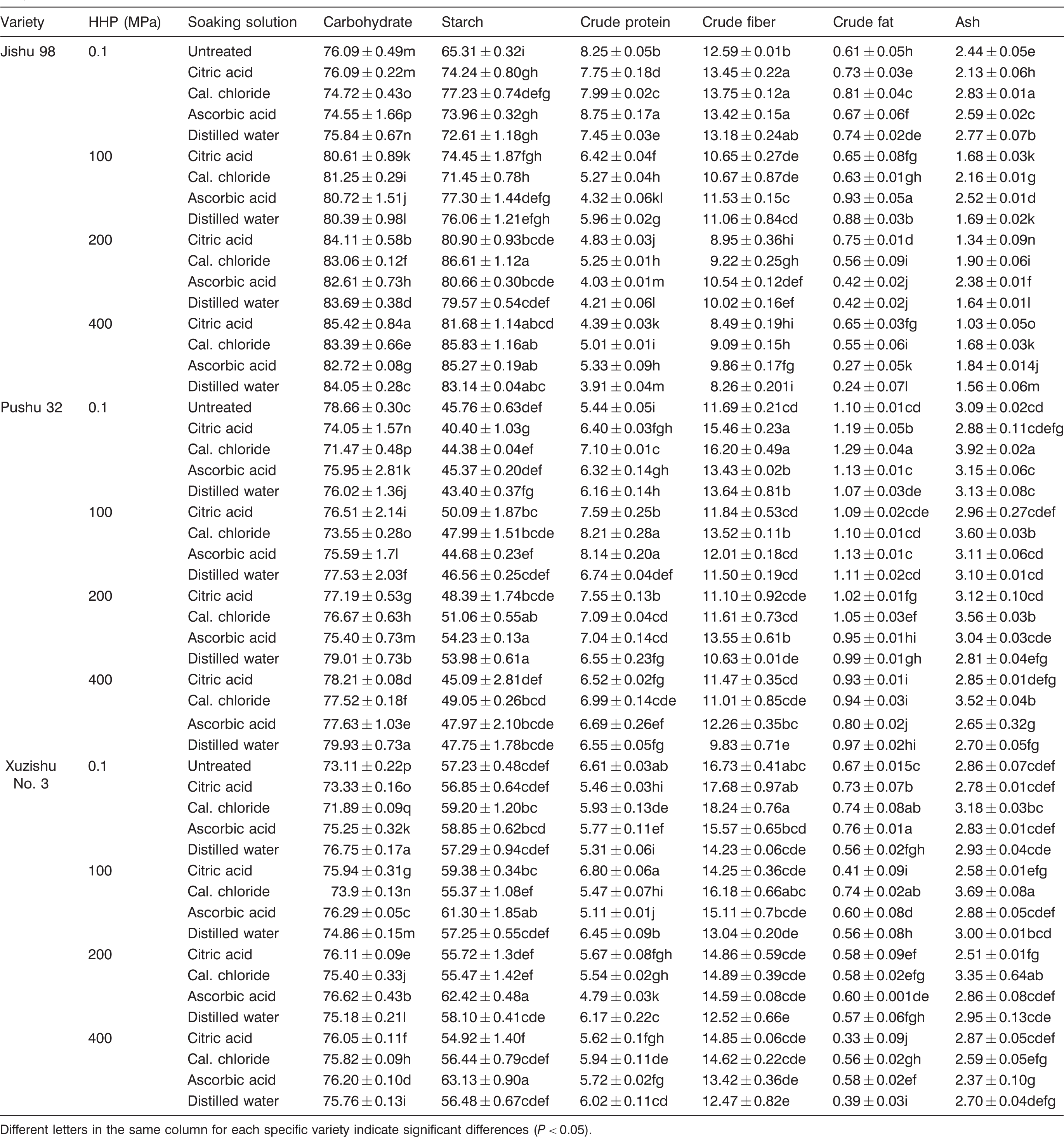
Proximate composition in Jishu 98, Pushu 32, and Xuzishu No. 3 sweet potato flour influenced by high hydrostatic pressure (HHP) and soaking solution (%, DW).
Different letters in the same column for each specific variety indicate significant differences (P < 0.05).
Starch content of untreated Jishu 98 was 65.31 g/100 g DW, which exhibited a slight decrease with soaking solution of calcium chloride, ascorbic acid, and distilled water, but was significantly increased after HHP and soaking solution treatment (P < 0.05). In the case of Pushu 32, starch content of untreated SPF was 45.76 g/100 g DW, which presented a high value of 54.23 g/100 g DW at 200 MPa with ascorbic acid. For Xuzishu No. 3, starch content of untreated SPF was 57.23 g/100 g DW, which increased up to 63.13 g/100 g DW at 400 MPa with ascorbic acid. The results range obtained in this study exhibited resemblances with the findings of Olatunde et al. (2016). Briones-Labarca et al. (2011) also found that starch in Granny Smith apple was increased corresponding to progressive pressure.
Crude protein content in Jishu 98 decreased significantly compared to the untreated one, except that at 0.1 MPa with ascorbic acid (P < 0.05). Crude protein content in Pushu 32 after HHP and soaking solution treatment increased significantly compared to the untreated one, while those in Xuzishu No. 3 decreased except that at 100 MPa with citric acid. The decrease in crude protein contents might be attributed to an increase in moisture content that exhibited dilution effect on other components of HHP treated samples (Vega-Gálvez et al., 2014).
Crude fiber content in Jishu 98, Pushu 32, and Xuzishu No. 3 increased by the application of four kinds of soaking solutions at 0.1 MPa, while exhibited a decreasing trend after HHP treatment with soaking solutions compared to the untreated ones (freeze-dried SPF) (P < 0.05, Table 1). It might be due to that HHP solubilized some polysaccharides, such as hemicellulose and pectin (Wennberg and Nyman, 2004). As observed from the above-mentioned parameters, the proximate composition in all these three varieties exhibited a non-linear trend which might be attributed to different sensitivity of each nutritional constituent corresponding to various treatment applications. Stability and instability of the bioactive compound varying might be due to distinct molecular structure changes induced by chemical and enzymatic reaction corresponding to different treatment (Mahadevan and Karwe, 2016).
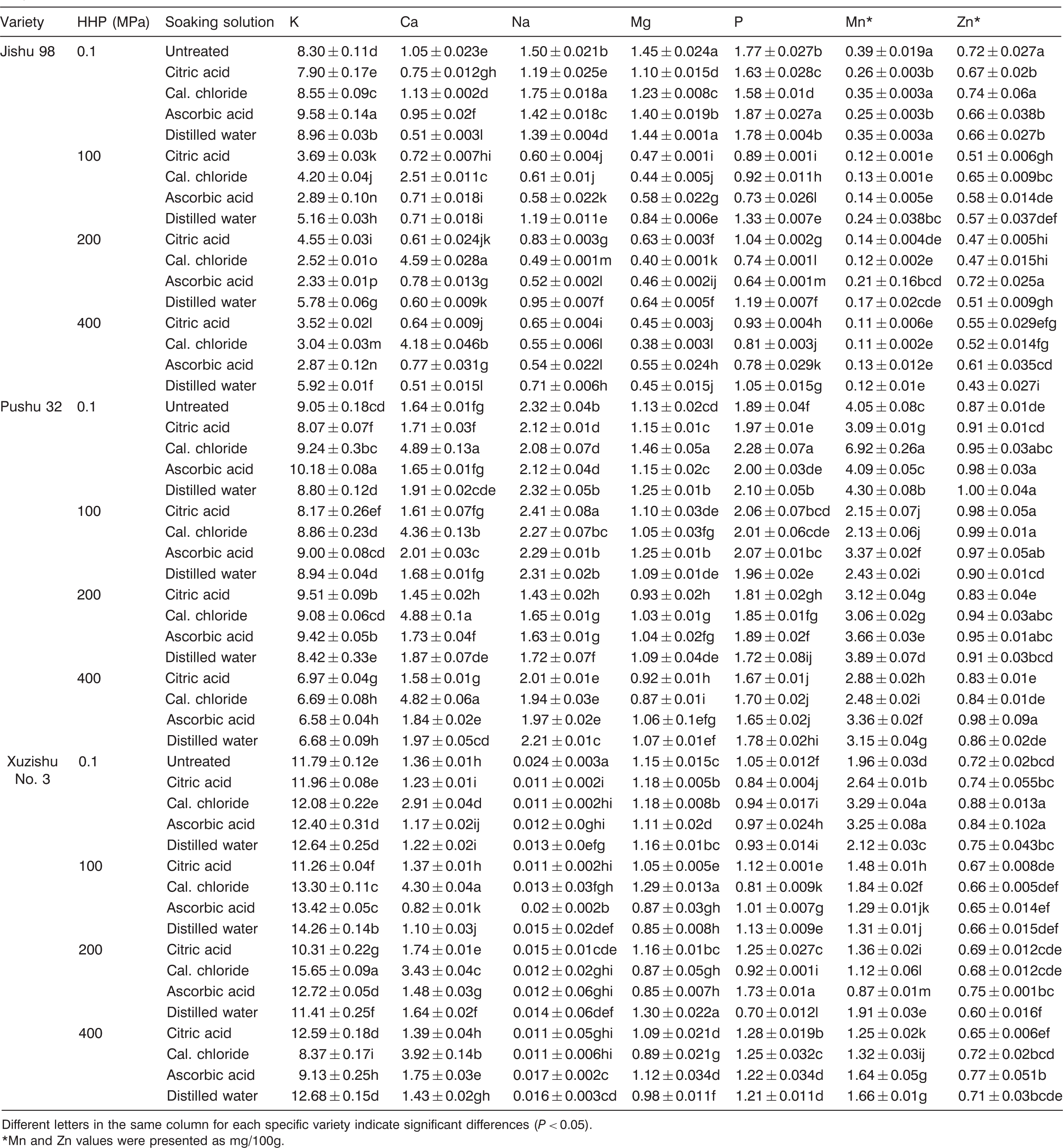
Crude fat contents in Jishu 98 and Pushu 32 were increased at 100 MPa but decreased at 200 and 400 MPa as compared to the untreated ones, except that in Pushu 32 after 0.1 MPa with distilled water and 100 MPa with citric acid treatment. For Xuzishu No. 3, treatments of 0.1 MPa with citric acid, 0.1 MPa with calcium chloride, 0.1 MPa with ascorbic acid, and 100 MPa with calcium chloride increased crude fat content as compared to the untreated ones, while other treatments decreased it. Crude fat contents range obtained in this study was in coincidence with the previous findings (Kuyu et al., 2018). Ash content in Jishu 98, Pushu 32, and Xuzishu No. 3 declared irregular changes after HHP treatment with soaking solution when compared to the untreated ones (Table 1). Vega-Gálvez et al. (2014) indicated that ash content in Cape gooseberry pulp decreased after HHP treatment. In addition, ash was found more predominant in calcium chloride soaking samples (Table 1). Current outcomes were in agreement with the findings reported by Osim et al. (2010). Lyimo et al. (2010) reported that loss of nutrient composition in sweet potato during processing depended on varieties, as some varieties are more tolerant to certain processing techniques than others.
Changes in mineral contents
Minerals contents in Jishu 98, Pushu 32, and Xuzishu No. 3 sweet potato flour influenced by high hydrostatic pressure (HHP) and soaking solution (mg/g, DW).
Different letters in the same column for each specific variety indicate significant differences (P < 0.05). *Mn and Zn values were presented as mg/100g.
TPC
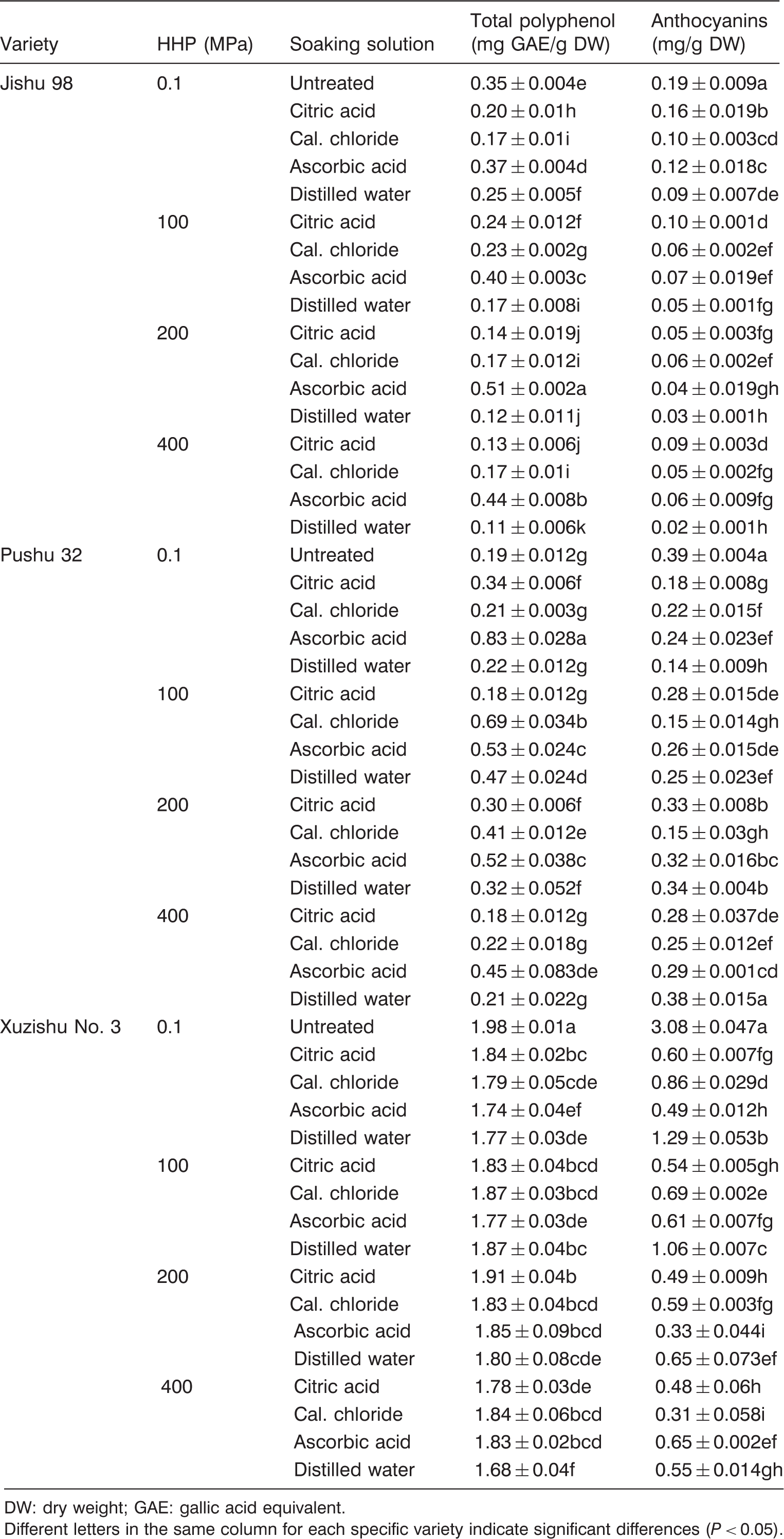
Total polyphenol, anthocyanins in Jishu 98, Pushu 32, and Xuzishu No. 3 sweet potato flour influenced by high hydrostatic pressure (HHP) and soaking solution.
DW: dry weight; GAE: gallic acid equivalent.
Different letters in the same column for each specific variety indicate significant differences (P < 0.05).
TAC
TAC of SPF as influenced by HHP and soaking solution is presented in Table 3. TAC in untreated Jishu 98, Pushu 32, and Xuzishu No. 3 was 0.19, 0.39, and 3.08 mg/g, respectively. A significant decrease in TAC in three varieties was observed after all processes as compared to the untreated ones (P < 0.05). In fact, TAC is a kind of naturally water-soluble pigment, so that its concentration was drastically decreased during soaking solutions and HHP with soaking solutions (Table 3). Current study findings were consistent with the report by Saikaew et al. (2017). Reque et al. (2014) indicated that abrupt decline of TAC might be attributed to oxidation and condensation of anthocyanin pigments with phenolic compounds. Similarly, loss of TAC might be explained that a temperature more than refrigeration caused oxidative degradation of ascorbic acid that creates many reactive components, which may reduce the anthocyanin contents (Movahed et al., 2016).
β-carotene content
β-carotene content of SPF with variety of Pushu 32 as influenced by HHP and soaking solution is shown in Figure 1. β-carotene of the untreated sample was 82.33 µg/g DW. β-carotene was increased by soaking solution of ascorbic acid but was decreased with citric acid and calcium chloride as compared to the untreated one. HHP with soaking solution increased β-carotene content significantly as compared to the untreated one (P < 0.05). In addition, HHP at 100, 200, and 400 MPa with citric acid, calcium chloride, and distilled water increased β-carotene content as compared to those at 0.1 MPa with the same soaking solution, but HHP with ascorbic acid decreased it significantly (P < 0.05). The increase of β-carotene might be attributed to HHP that induced denaturation of the carotenoid-binding protein, thus inducing the efficient release of carotenoids. HHP might also induce membrane disruption of chromoplast where carotenoids are located, thus enhancing its extraction (Zuluaga et al., 2016). Current results range is consistent with our previous study about the impact of different cooking methods on orange fleshed sweet potato, which presented that β-carotene was in the range of 19.15–152.09 µg/g DW (Kourouma et al., 2019).
β-carotene of orange SPF (Pushu 32) treated by different HHP and soaking solutions. Different letters above the bars indicate significant differences (P < 0.05).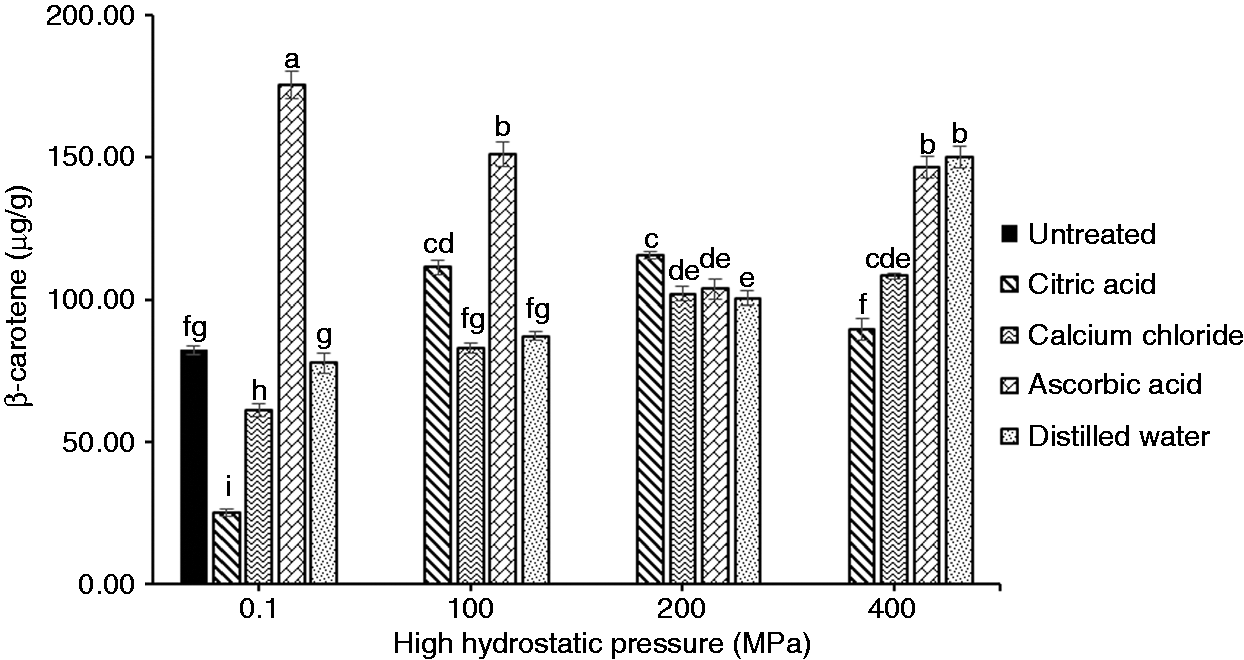
Antioxidant activities
Antioxidant activities in Jishu 98 (white), Pushu 32 (yellow), and Xuzishu No. 3 (purple) sweet potato flour influenced by high hydrostatic pressure (HHP) and soaking solution.
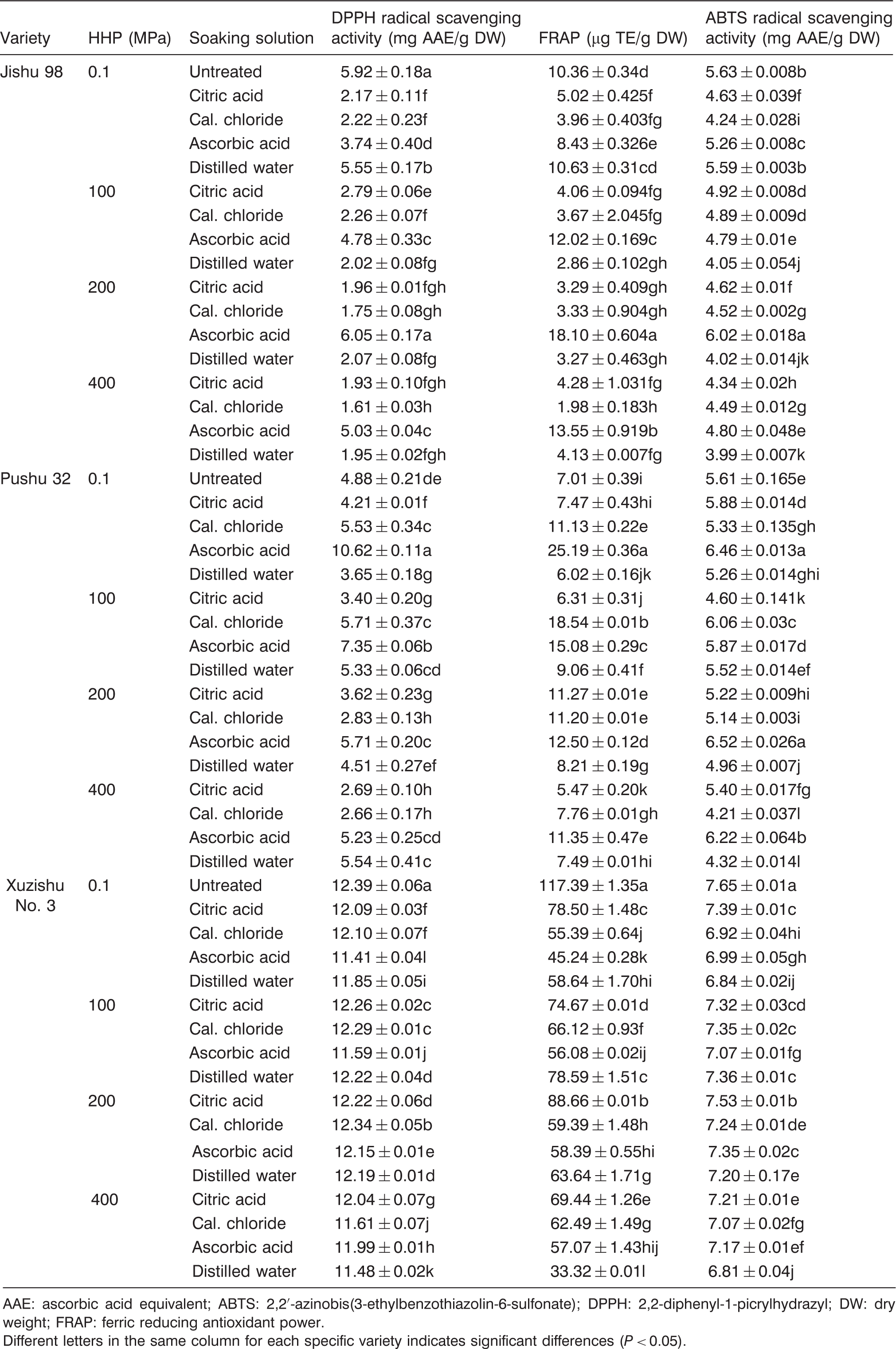
AAE: ascorbic acid equivalent; ABTS: 2,2′-azinobis(3-ethylbenzothiazolin-6-sulfonate); DPPH: 2,2-diphenyl-1-picrylhydrazyl; DW: dry weight; FRAP: ferric reducing antioxidant power.
Different letters in the same column for each specific variety indicates significant differences (P < 0.05).
The correlations between antioxidant activity (DPPH radical scavenging activity, FRAP, and ABTS) and TPC and TAC are shown in Figure 2(a) to (f), respectively. The linear correlation coefficient between TPC with DPPH radical scavenging activity, FRAP, and ABTS in Jishu 98, Pushu 32, and Xuzishu No. 3 was 0.9654, 0.9475, and 0.9207, respectively (p < 0.0001). There were positive correlation coefficients between antioxidant activity and TPC. Similarly, Sun et al. (2014b) also demonstrated that TPC was mainly responsible for antioxidant capacity in sweet potato leaves. In addition, the linear correlation coefficient between TAC with DPPH radical scavenging activity, FRAP, and ABTS in Jishu 98, Pushu 32, and Xuzishu No. 3 was 0.6055, 0.7568, and 0.5929, respectively (p < 0.0001). It was obvious that anthocyanins also exhibited a positive correlation with antioxidant activity. Similarly, comparable results were described by the previous author who evaluated the effects of HHP on strawberry and blackberry purées and concluded that anthocyanin content and antiradical power declared a positive significant correlation (R = 0.64; P < 0.05) (Patras et al., 2009b). Therefore, TPC could be mainly responsible for the antioxidant capacity in SPF.
(a) The linear correlation coefficient between DPPH and total polyphenol of Jishu 98, Pushu 32, and Xuzishu No. 3 SPF (R = 0.9654; p < 0.0001). (b) The linear correlation coefficient between FRAP and total polyphenol of Jishu 98, Pushu 32, and Xuzishu No. 3 SPF (R = 0.9475; p < 0.0001). (c) The linear correlation coefficient between ABTS and total polyphenol of Jishu 98, Pushu 32, and Xuzishu No. 3 SPF (R = 0.9207; p < 0.0001). (d) The linear correlation coefficient between DPPH and anthocyanins of Jishu 98, Pushu 32, and Xuzishu No. 3 SPF (R = 0.6055; p < 0.0001). (e) The linear correlation coefficient between FRAP and anthocyanins of Jishu 98, Pushu 32, and Xuzishu No. 3 SPF (R = 0.7568; p < 0.0001). (f) The linear correlation coefficient between ABTS and anthocyanins of Jishu 98, Pushu 32, and Xuzishu No. 3 SPF (R = 0.5929; p < 0.0001).
Conclusion
In conclusion, white, orange, and purple fleshed SPFs with varieties of Jishu 98, Pushu 32, and Xuzishu No. 3 are excellent sources of carbohydrate, protein, fiber, minerals, and polyphenols, with orange fleshed ones rich in β-carotene and purple fleshed ones high in anthocyanins. Understanding SPF can help human beings to enhance nutrition intake, while the processing would affect the quality of SPF, thus this work must consider appropriate processing techniques for SPF. The results presented here clearly demonstrated that HHP and soaking solution could make the components of SPF quite different from that of the untreated ones. In this study, TPC was increased in SPF of Jishu 98 at 200 MPa with ascorbic acid and Pushu 32 at 0.1 MPa with ascorbic acid but was decreased in Xuzishu No. 3 (purple). TAC was decreased in all treated SPFs. HHP with citric acid, calcium chloride, and distilled water significantly increased β-carotene content in Pushu 32. Correlation analysis between TPC, TAC, and antioxidant activity indicated suggested that antioxidant activity of SPF can be mainly attributed to polyphenols.
Footnotes
DECLARATION OF CONFLICTING INTERESTS
The author(s) declared no potential conflicts of interest with respect to the research, authorship, and/or publication of this article.
Funding
The author(s) disclosed receipt of the following financial support for the research, authorship and/or publication of this article: The authors gratefully acknowledge the earmarked fund for China Agriculture Research System (CARS-10-B21). We also thank the National Key R&D Program of China (2016YFE0133600).
ORCID iDs
Tai-Hua Mu https://orcid.org/0000-0002-1308-0121 Miao Zhang 