







Abstract
Apple peel, a food industry by-product, is rich in fibre, polyphenols and minerals, and is a potentially attractive ingredient for bakery products. To evaluate the effect of wheat cookies enrichment with apple peel powder six types of cookies with increasing apple peel powder percentage (0%, 4%, 8%, 16%, 24% and 32%) were produced. The traits analysed were: pasting parameters; chemical properties (moisture, ash, lipid, protein, fibre and total polyphenols content); antioxidant capacity (2,2-diphenyl-1-picrylhydrazyl and ferric reducing antioxidant power methods); physical attributes (width, thickness, volume and CIE lab colour); and sensory characteristics (external appearance, internal structure, texture, odour, taste and aroma). Statistical analysis included analysis of variance followed by Fisher's least significant difference test (p < 0.05). The apple peel powder-enriched cookies had significantly higher moisture, ash, lipid, fibre, total polyphenols and antioxidant capacity than the control bread wheat cookies. The addition of apple peel powder did not modify the physical characteristics and improved the sensorial quality of the products. The addition of 24% apple peel powder gave the cookies with the best overall quality.
Introduction
Every year the food industry produces millions of tonnes of by-product waste that could be used as a source of high-quality components (e.g. proteins, fibres, polysaccharides, antioxidants, aromatic compounds, etc.) for the preparation of innovative foods, pharmaceutics, cosmetics and other products (Lauková et al., 2016; Socaci et al., 2017).
Apple (Malus domestica Borkh) is widely grown in temperate climates all over the world; 4.9 million hectare were planted with apple trees in 2017, producing over 83 million tonnes of fruits (Food and Agriculture Organization (FAO), 2019). About 18% of world total production is processed into drinks, syrups, jams, purees, etc. (Rabetafika et al., 2014), generating a vast amount of by-products whose disposal may lead to environmental problems and adds extra costs to the food manufacturers.
Apple industrial waste, mainly pomace from the juice and cider industry or peel from the preparation of canned apples, sauces, purees, dried rings, etc., has been proposed as a commodity, suitable to generate high added value by-products (Rabetafika et al., 2014). Compared to the pomace, the peel is richer in lipids, ash and soluble dietary fibre (Rabetafika et al., 2014), as well as in flavonoids (Rupasinghe et al., 2008; Wolfe and Liu, 2003; Wolfe et al., 2003) and phenolic acids (Rabetafika et al., 2014). Phenolics and dietary fibre exert a positive influence on the prevention of several diseases (Hidalgo et al., 2018; Mendoza-Wilson et al., 2016; Rupasinghe et al., 2008) and have a positive effect on human health (Dahl and Stewart, 2015; Henríquez et al. 2010). Furthermore, from a technological perspective, the dietary fibre increases water and oil holding capacity, emulgation and gel forming (changing texture, colour and aroma of foods), stabilises products with high content of fats and emulsions (increasing their shelf life; Karovičová et al., 2015), and lowers the energy of the final products (Lauková et al., 2016).
The increased sensibility and interest of the consumers in the nutritional quality of foods and their potential benefits on the human health has led to a strong demand for functional products, rich in natural antioxidants and dietary fibre (Rupasinghe et al., 2008). Baked products, popular, ready-to-eat and consumed on a daily basis, are an ideal target for nutritive improvement (Martins et al., 2017). While some information is available on the addition of apple peel to muffins (Rupasinghe et al., 2008, 2009) or of apple pomace to cookies (Lauková et al., 2016), no information on the utilisation of apple peel to improve the nutritional quality of cookies is available. The exploitation of apple peel as an ingredient of healthy foods can bring considerable benefits to human health (Chen et al., 1988); additionally, the use of this by-product would provide to the apple industry an efficient and environment-friendly solution for waste disposal (Rupasinghe et al., 2008).
Aim of our research was therefore to study the effect of the addition of dry apple peel powder (APP) in different quantities (0%, 4%, 8%, 16%, 24% and 32%) on the physico-chemical, nutritional and sensorial characteristics of wheat cookies.
Materials and methods
Materials
The type-550 white wheat flour used for cookies manufacturing was produced by the Sofia Mel mills (Sofia, Bulgaria). The APP was prepared from apples of Idared, a variety with red peel, tart and juicy white flesh. The apples were harvested in 2017 in Razgrad Province (43°32′00″ N, 26°31′00″ E), Bulgaria. After careful washing, the apples were manually peeled; the peels were blanched in hot water for 30 s to stop enzymatic darkening, washed and dried for 48 h at 60 ℃ in a UFE 500 oven (Memmert GmbH, Schwabach, Germany). The dried peels were finely ground (size < 0.5 mm) with an IKA MF10 grinder (IKA®-Werke GmbH & Co. KG, Staufen, Germany) and stored in sealed bags at 4 ℃ until cookies manufacturing. All the other ingredients were obtained from shops in Razgrad (Bulgaria).
Cookies preparation
Cookies were prepared according to method 10-50D (American Association of Cereal Chemists (AACC) International, 2000), with minor modifications. The control cookies were prepared from 100 g bread wheat flour, 33.0 g glucose solution (5.93 g/L), 2.5 g baking soda, 2.1 g salt, 64 g butter and 36.0 mL water, while in the enriched cookies 4%, 8%, 16%, 24% and 32% of the flour was replaced by equal amounts of APP. The percentages used were chosen based on literature review information (e.g. Rupasinghe et al., 2008), preliminary tests and previous experience with other by-products' powders. The ingredients were kneaded for 300 s with an electronic mixer (Stand Mixer ELITE STM-0248, Timetron Bulgaria, Sofia, Bulgaria). The dough was stored in a refrigerator at 8 ℃ for 30 min, then flattened to 18 mm with a rolling pin and cut with a die cutter (internal diameter: 44 mm). The cookies were baked for 10 min at 205 ℃ in an АEG BES351110M oven (AEG, Bulgaria), cooled at room temperature for 30 min and stored at −20 ℃ until analysis. Six types of cookies were produced: control (100% wheat flour) and enriched with increasing percentages (4%, 8%, 16%, 24% 32%) of APP. Two sets of 10 cookies were prepared for each flour or mixture.
Pasting properties of raw materials
Pasting properties of flour and mixtures were examined using a Micro Visco-Amylo-Graph (Brabender OHG, Duisburg, Germany) according to Nakov et al. (2018). The following parameters were determined: peak viscosity, breakdown, setback and final viscosity. The measurements were performed in duplicate; the results are presented in Brabender Units (BU).
Chemical characteristics
The moisture of flour, APP and baked cookies was evaluated according to method 6540:1980 (International Standard Organisation, 1980). Ash content was assessed according to method 5984:2002 (International Standard Organisation, 2002). Protein content was determined as in Maehre et al. (2018). Lipid content was measured gravimetrically after Soxhlet extraction of the acid hydrolysed sample (method 136, International Association for Cereal Chemistry (ICC), 1995). Fibre content was assessed as detailed in method 32-07.01 (AACC International, 2000). Total carbohydrate content was computed by difference.
Total polyphenol content and antioxidant activity
Total polyphenols content was determined on methanol extracts with the Folin-Ciocalteu method according to Slinkard and Singleton (1977) and expressed as mg gallic acid equivalent (GAE)/100 g dry matter (DM). The antioxidant capacity was tested using the 2,2-diphenyl-1-picrylhydrazyl (DPPH) radical cation following Brand-Williams et al. (1995), and the ferric reducing antioxidant power (FRAP) as described by Benzie and Strain (1996); the results are reported in µg trolox equivalent (TE)/g DM.
Cookies physical characteristics
Cookie width was measured as the average of five cookies, and cookie thickness was measured as the average of five stacked cookies, following method 10-50D (AACC International, 2000); both measurements are in millimetres. The volume was computed from the width and thickness parameters, considering the cookies as cylinders. Two replicates of each measurement were performed. The colour of the cookies in CIE L* a* b* system was assessed with a Chroma Meter CR-400 colorimeter (Konica Minolta, Tokyo, Japan) with the use of illuminant D65 on two sets of five random cookies.
Cookies sensory analysis
Sensory analytical tests, aimed at objectively evaluating the characteristics of the cookies, were performed at the University of Ruse “Angel Kanchev” – Branch Razgrad, using the methodology first described by Popov-Raljić et al. (2005). Twenty trained assessors participated (14 females and 6 males, aged 21 to 32 years) in the sensory analysis. The assessors were trained according to the guidelines given in the International standard ISO 8586 (International Standard Organisation, 2012) and selected according to three criteria: having a once for the short dough cookies, eating cookies at least once a month, and having interest in participating in the study. Informed consent from the participants was obtained, according to the guidelines on Ethics and Food-Related research defined by the European Union (Alfonsi et al., 2012). External appearance, internal structure, texture, odour, taste and aroma were scored from 1 to 5, where 1 is extreme dislike and 5 is extreme like; the final quality score was computed as the average of the five traits scored.
Statistical analysis
Analysis of variance (ANOVA) and Fisher's least significant difference (LSD) test at p < 0.05 were performed with the softwares XLSTAT 2017 (Addinsoft Inc., Long Island City, NY) and Office Excel 2013 (Microsoft, Redmond, WA).
Results and discussion
Flour and apple peel powder composition
Composition (mean ± standard deviation) and antioxidant activity (DPPH and FRAP methods) of white bread wheat flour and apple peel powder
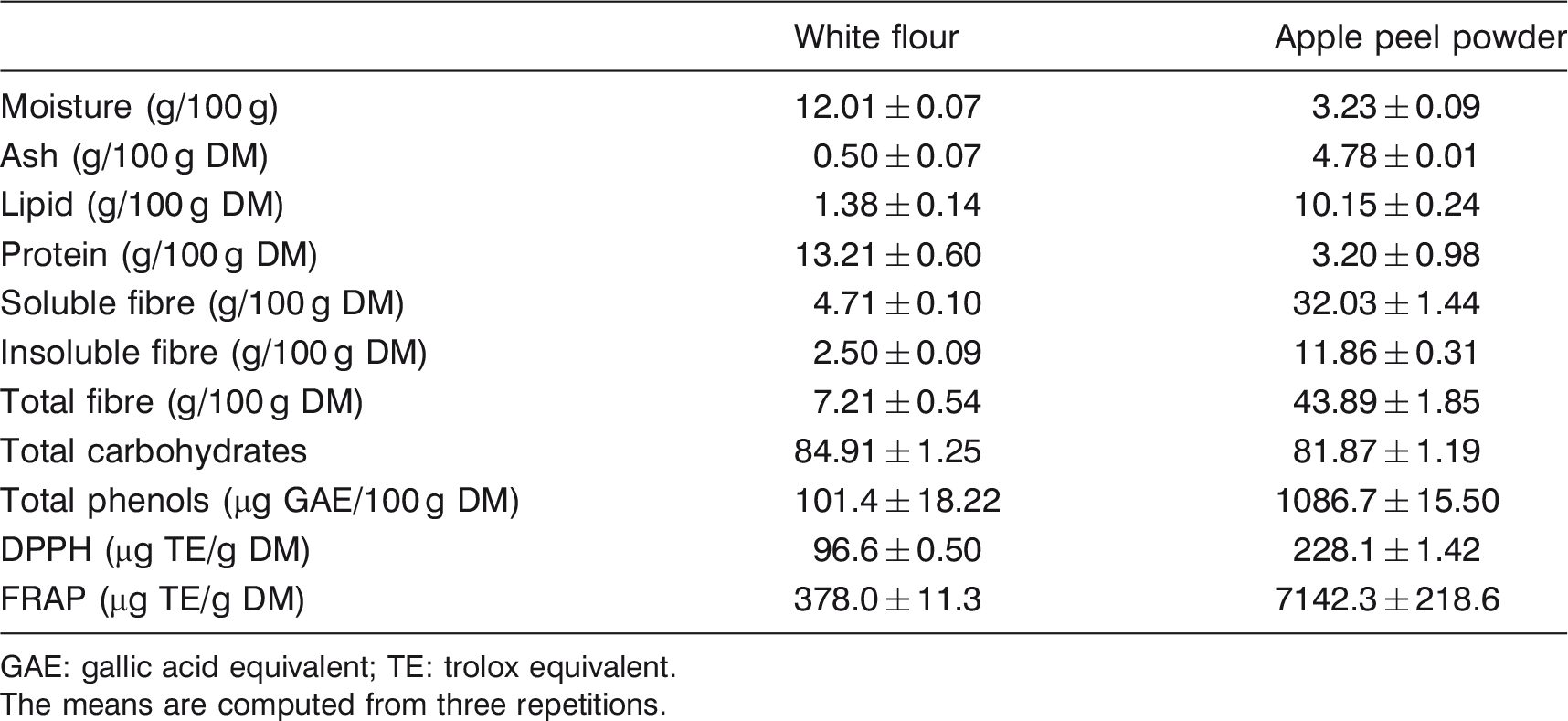
GAE: gallic acid equivalent; TE: trolox equivalent.
The means are computed from three repetitions.
Pasting properties
Mean values (±standard deviation) of the pasting parameters of the six mixtures
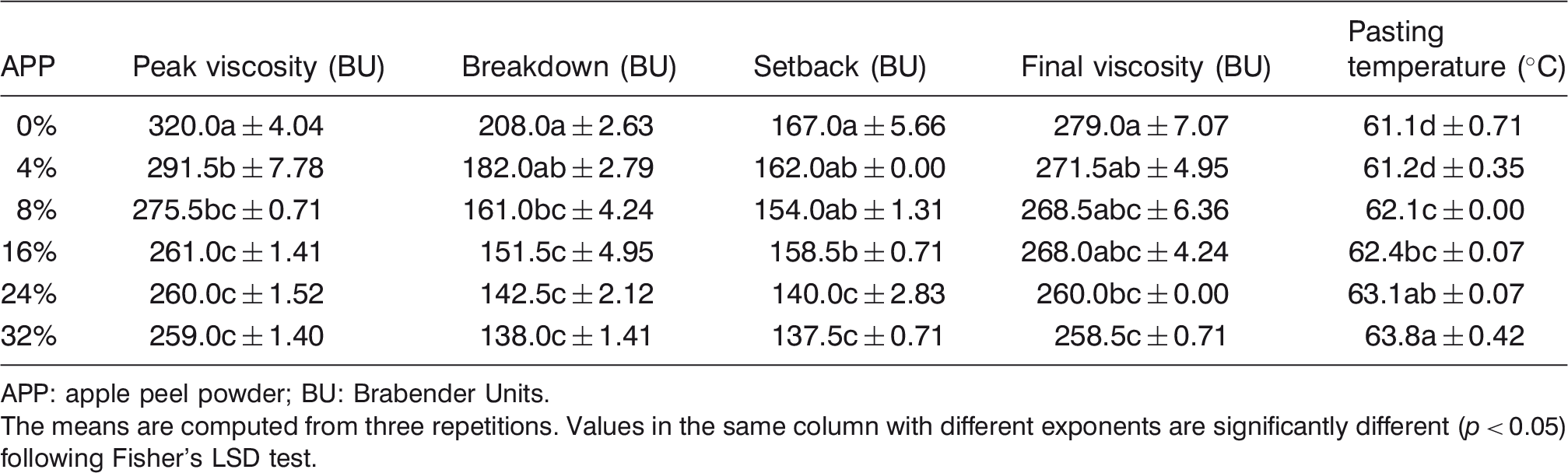
APP: apple peel powder; BU: Brabender Units.
The means are computed from three repetitions. Values in the same column with different exponents are significantly different (p < 0.05) following Fisher's LSD test.
Physical characteristics
Mean values (±standard deviation) of the physical characteristics of the six cookie types
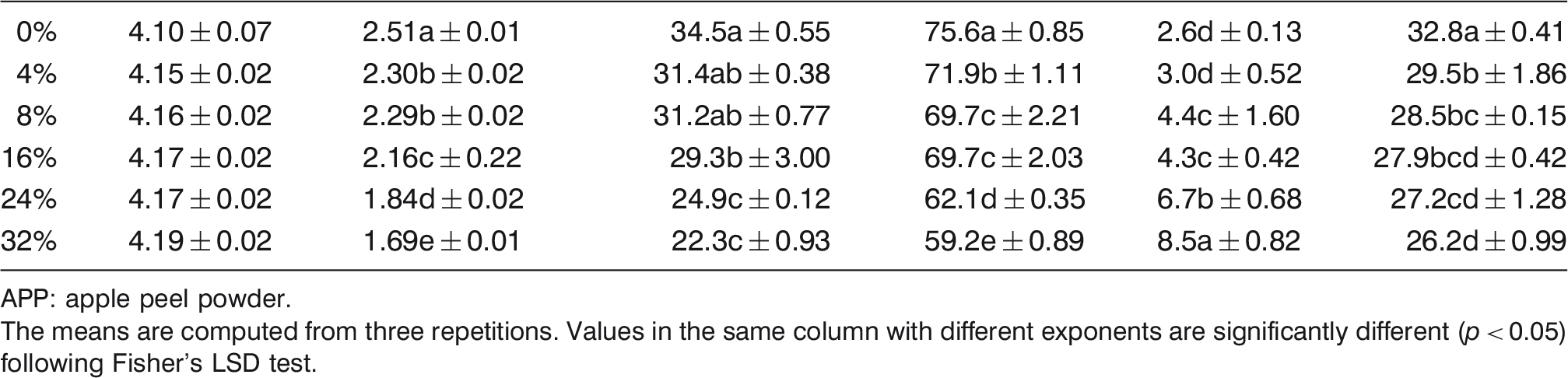
APP: apple peel powder.
The means are computed from three repetitions. Values in the same column with different exponents are significantly different (p < 0.05) following Fisher's LSD test.
Baking affected the colour of the cookies, as shown by the results reported in Table 3 and by the images in Supplementary Figure 1.
Moisture (a), ash (b), lipid (c) and protein (d) content of the six cookie types. I: control (100% white wheat flour); II: 4% APP; III: 8% APP; IV: 16% APP; V: 24% APP; and VI: 32% APP. APP: apple peel powder. The bars indicate the standard deviations. Different letters indicate significant differences (p ≤ 0.05) among samples.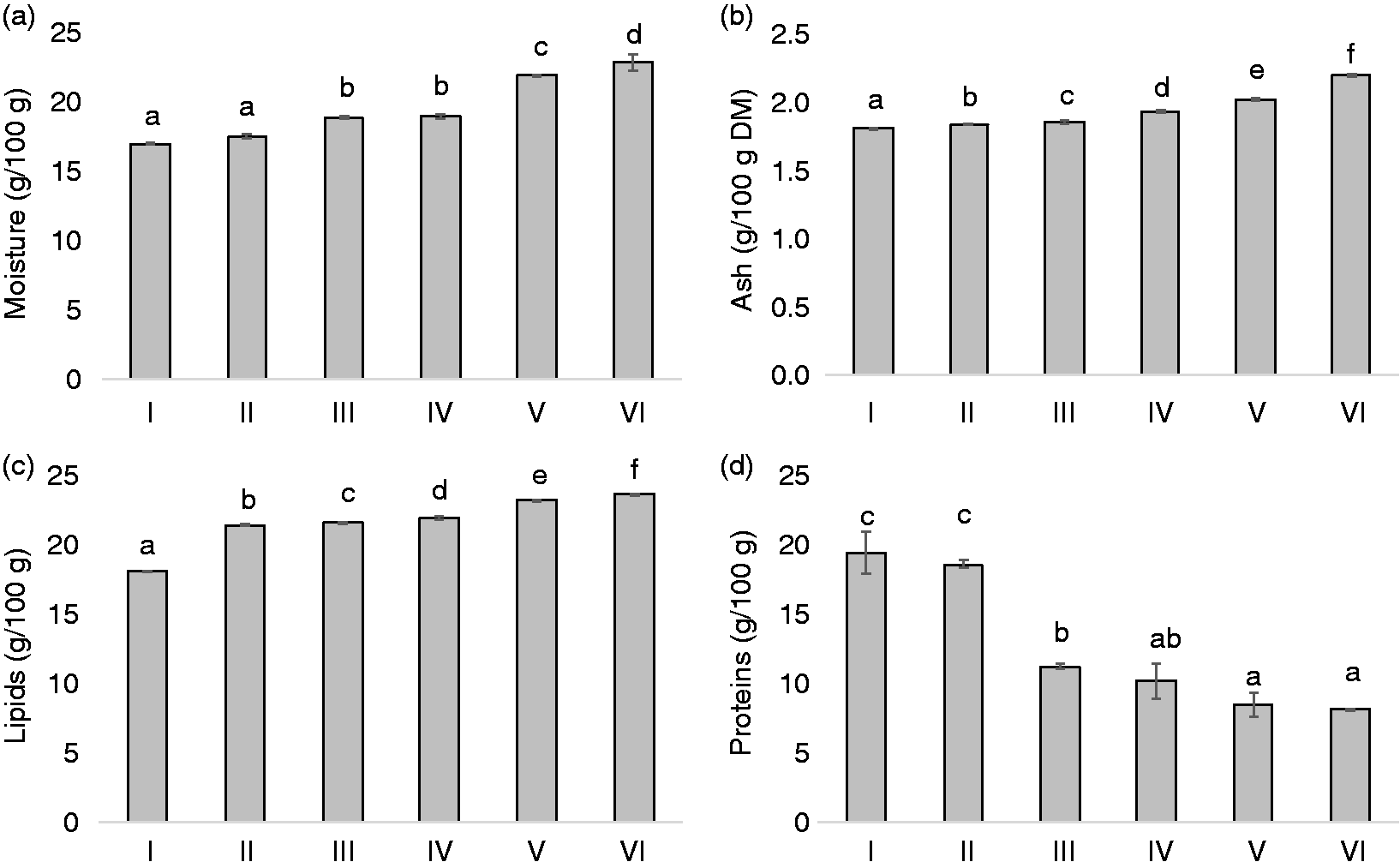
The control cookies, prepared with 100% bread wheat white flour, were the most luminous (L* = 75.6) and the samples became darker with increasing APP additions; in fact, the cookie with 32% APP had the lowest L* (59.2). The b* parameter followed a similar pattern: the control had the highest score (32.8), while the increase of APP in the cookies led to b* as low as 26.2 in the 32% APP-enriched sample, indicating a decline of the yellowish tinge of the cookies. Conversely, the a* values increase with the addition of APP, denoting a change from greenish to magenta hues. The addition of food industry by-products such as APP, apple pomace or sour cherry cake has a darkening effect on bakery products (Mir et al., 2017; Rupasinghe et al., 2009; Tumbas Šaponjac et al., 2016), possibly because these ingredients are darker than the wheat flour and/or, being rich in polyphenols, favour enzymatic darkening reactions (Mir et al., 2017). Recently, Pasqualone et al. (2019) reported a similar darkening in cookies after the addition of phenolic-rich acorn flour and attributed it to effect of polyphenoloxidase on the phenolic compounds.
Chemical characteristics
The ANOVA for moisture, ash, lipid, protein and fibre content showed significant differences between cookie types. Figure 1 depicts some chemical parameters of the different samples. The moisture content (Figure 1(a)) was low in the control (17.0%), and progressively grew with the increase in APP content, reaching 22.9% in cookies with 32% APP. This trend is probably linked to the strong water binding properties of apple fibre (Chen et al., 1988) and has been observed by other authors (Rupasinghe et al., 2008; Sudha et al., 2007). The ash content is shown in Figure 1(b); the cookies without APP had the lowest content (1.81%) and the addition of APP significantly increased (+21%) ash concentration, as reported for muffins by Rupasinghe et al. (2008). The lipid content of the cookies is shown in Figure 1(c). The control had the lowest concentration (18.1 g/100 g DM); adding APP increased it, up to 23.61 g/100 g DM in products with 32% APP, corresponding to a +30% variation. Different lipids are added in cookies manufacturing because they improve dough plasticity, air retention, appearance and taste, but apple peel is particularly rich in unsaturated galactolipids and phospholipids (Wang and Faust, 1992). The protein content (Figure 1(d)) showed a drastic reduction (−58%), from 19.37 g/100 g DM in the 100% white bread wheat flour cookies to 8.09 g/100 g DM in the 32% APP cookies. Proteins concentration and quality are other relevant quality determinants in cookies, as during baking they coagulate and strengthen the gluten structure. A protein content decrease in muffins after the addition of APP is reported by Rupasinghe et al. (2008) and was attributed to the substitution of wheat flour with the fibre-rich apple peel.
Dietary fibre content is depicted in Figure 2(a). In the control cookies, the soluble component represented the majority (57.9%) of total fibre. A steady increase in total fibre was recorded with the APP enrichment of cookies, passing from 2.2 g/100 g DM (control) to 10.4 g/100 g DM (32% APP); interestingly, the soluble fraction showed a stronger raise (from 2.3 to 7.8 g/100 g DM) than the insoluble fraction (from 0.9 to 2.5 g/100 g DM), and in the cookies with the highest APP addition represented 73% of the total fibre. An analogous trend was reported by Rupasinghe et al. (2008) in muffins: their total fibre rose from 1.3 to 7.6% DM after the incorporation of up to 24% APP and the soluble fibre fraction increased more than the insoluble fraction. The samples with 4 and 8% APP can be characterised as ‘fibre source’, while the samples with 16%, 24% and 32% APP can be labelled as ‘high fibre source’ products according to Regulation (EC) No 1924/2006 (2006) of the European Parliament on Nutrition and Health Claims Made on Foods.
Fibre (a), carbohydrates (b), total phenolic content (TPC; c) and antioxidant capacity (DPPH and FRAP methods; d and e, respectively) of the six cookie types. I: control (100% white wheat flour); II: 4% APP; III: 8% APP; IV: 16% APP; V: 24% APP; and VI: 32% APP. APP: apple peel powder. The bars indicate the standard deviations. Different letters indicate significant differences (p ≤ 0.05) among samples.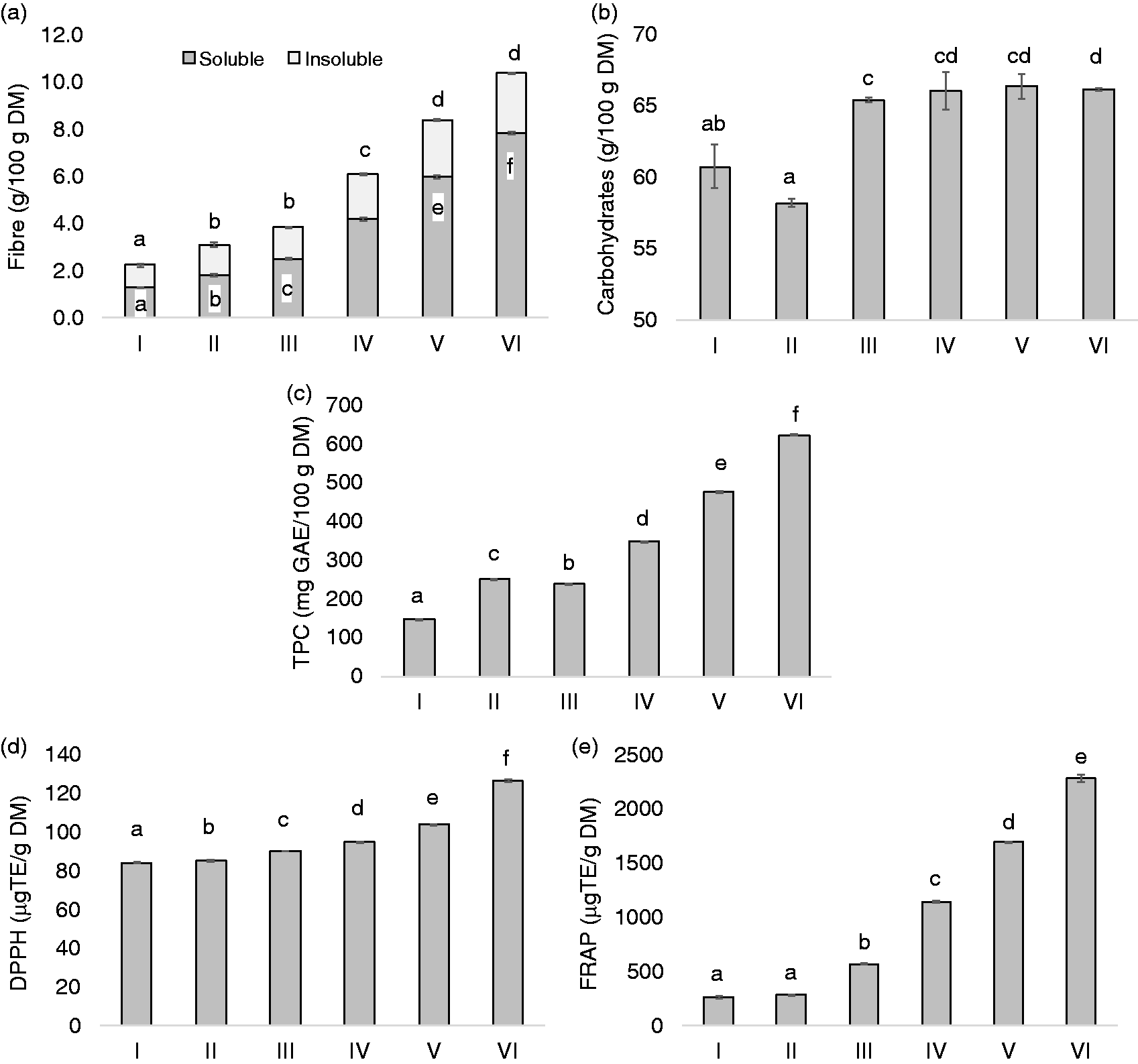
Overall, the total carbohydrate concentration passed from 60.7 g/100 g DM in the control to 66.1 g/100 g DM in the 32% APP-enriched cookies; however, the increase was in digestible fibre, which, compared to starch, has lower energetic value (FAO, 2003), helps to control the glycaemic index (Alongi et al., 2019) and increases satiety (Burton-Freeman et al., 2017; Ye et al., 2015).
Total polyphenols content and antioxidant capacity
The ANOVA for total polyphenols content and antioxidant capacity (not presented) showed significant differences between cookie types. The total polyphenols content in the control (Figure 2(b)) was 146.15 µg GAE/g. Even a small addition (4%) of APP increased TPC content (250.6 µg GAE/g), and the cookies with 32% APP reached a TPC content of 622.12 µg GAE/g. Fresh apples (110–357 mg/100 g), and fresh apple peels (309–589 mg/100 g) are a good source of polyphenols (Wolfe et al., 2003); variety, ripeness, growing area, weather and management conditions modify their content and composition, but the polyphenols contained in apples are among the best natural antioxidants (Mendoza-Wilson et al., 2016). Thus, the utilisation of apple peel as an ingredient in sweet food products like cookies and muffins is an efficient and easy way to improve their nutritional characteristics and salutistic effects. The antioxidant capacity (Figure 2(c) and (d)), determined with the DPPH and FRAP radicals, was lowest (84.3 µg TE/g DM and 264 µg TE/g DM, respectively) in the APP-less control cookies. The increase of APP content led to a strong increase in the antioxidant capacity, up to 126.7 µg TE/g DM (DPPH) and 2280.9 µg TE/g DM (FRAP) in cookies with 32% APP. Rupasinghe et al. (2008) found that APP significantly increased both polyphenols content and antioxidant capacity in muffins. Similarly, Hidalgo et al. (2018) reported a similar sharp increase in TPC content (from 79.8 to 153.7 mg GAE/kg DM) and in FRAP antioxidant capacity (from 2.0 to 8.5 mmol TE/kg DM, i.e. from 508 to 2133 mg TE/g DM) after the addition of microencapsulate beetroot pomace extracts to bread wheat water biscuits. Thermal treatment during manufacturing can influence polyphenols composition and antioxidant capacity of the products; for example, low moisture and high temperature (around 200 ℃) favour the transformation of quercetin into other compounds (Zhang et al., 2014), while thermal treatments release bound phenolic acids from cell walls (Zielinski et al., 2001), improving their bioavailability.
Sensory characteristics
Sensory characteristics are often the main reason to choose a product (Nakov et al., 2017). The results of the sensory analysis carried out on the six cookie types are shown in Figure 3(a). In general, the addition of APP improved the aroma and the taste of the cookies without penalising internal structure, odour and appearance; in fact, only for texture the control formulation outscored the APS-enhanced cookies. The addition of 24% APP gave the best results for appearance, internal structure, texture and (together with 16% and 32% APP cookies) taste, arguably the most important factor to consider when creating a new food product (Rupasinghe et al., 2008). Overall, the 24% addition of APP gave the best cookies (Figure 3(b)), with an average score of 4.4 out of 5. Sudha et al. (2007), performing a sensory analysis on muffins prepared with the addition of 8%, 16% and 24% apple pomace, concluded that replacing wheat flour with up to 20% apple pomace did not worsen the products and gave a pleasant fruity flavour.
Sensory analysis traits results (a) and overall quality (b) of the six cookie types. I: control (100% white wheat flour); II: 4% APP; III: 8% APP; IV: 16% APP; V: 24% APP; and VI: 32% APP. APP: apple peel powder. The sensory traits (y axis) vary from 1 (very poor) to 5 (excellent). The bars indicate the standard deviations. Different letters indicate significant differences (p ≤ 0.05) among samples.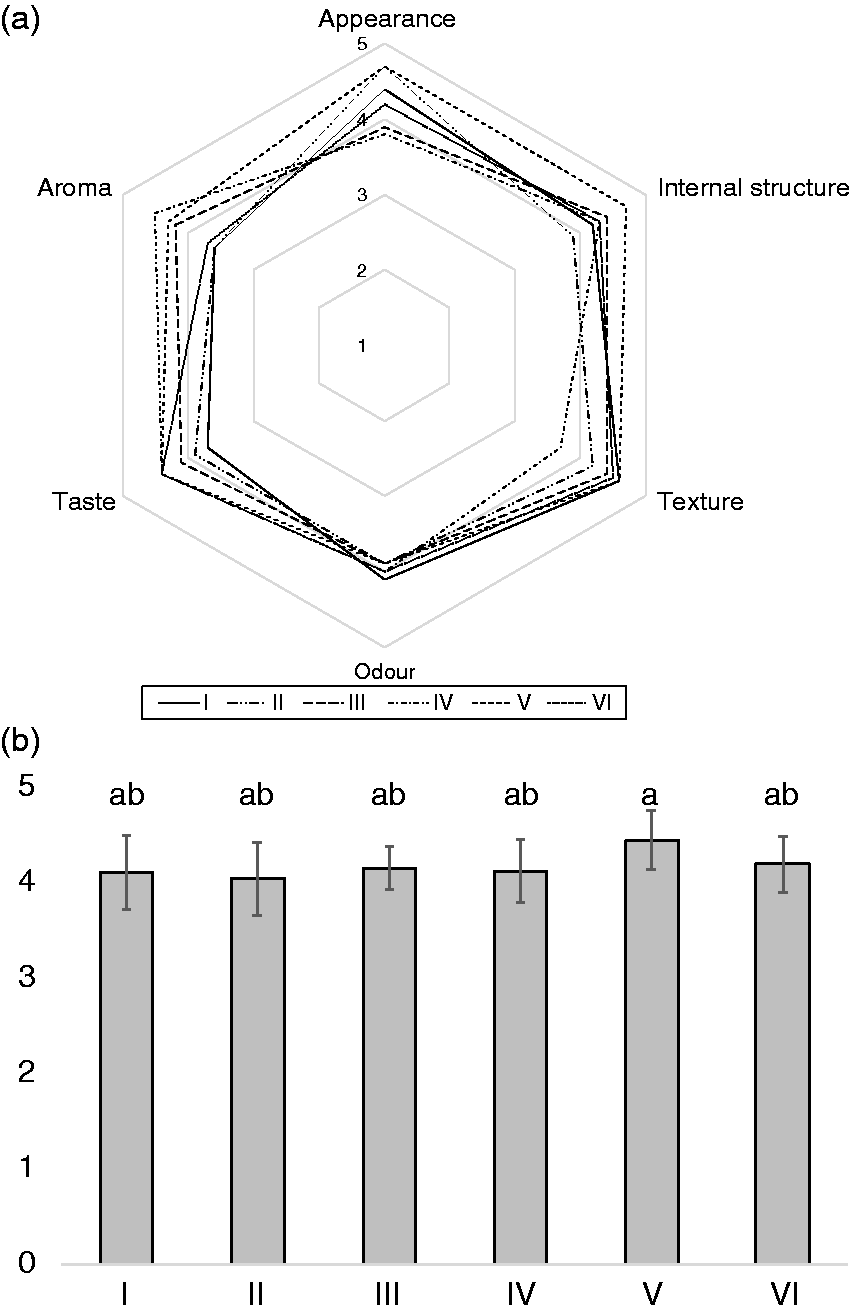
Conclusions
Apple peel is an underutilised food industry by-product, and its disposal can be difficult and expensive. Nevertheless, apple peel is rich in fibre, polyphenols and minerals, making it a potentially attractive ingredient for bakery products. Our research demonstrated that APP-enriched cookies had higher moisture, ash, lipid, fibre, total polyphenols and antioxidant capacity than the control cookies. Given the high fibre content, APP cookies can be characterised as ‘fibre source’ and ‘high fibre source’ products according to European Community Regulation No 1924/2006 (2006). Furthermore, the addition of APP did not worsen the physical characteristics of the products and helped to improve their sensorial quality. Overall, the addition of 24% APP gave the cookies with the best combination of physical, chemical and sensorial qualities. APP can be considered a valuable source of polyphenols and dietary fibre for the manufacturing of new bakery products with functional and nutraceutical properties; additionally, its utilisation will contribute to alleviate environmental concerns associated with its disposal.
Supplemental Material
FST917282 Supplemental Material - Supplemental material for Influence of apple peel powder addition on the physico-chemical characteristics and nutritional quality of bread wheat cookies
Supplemental material, FST917282 Supplemental Material for Influence of apple peel powder addition on the physico-chemical characteristics and nutritional quality of bread wheat cookies by Gjore Nakov, Andrea Brandolini, Alyssa Hidalgo, Nastia Ivanova, Marko Jukić, Daliborka Koceva Komlenić and Jasmina Lukinac in Food Science and Technology International
Footnotes
Declaration of conflicting interests
The author(s) declared no potential conflicts of interest with respect to the research, authorship, and/or publication of this article.
Funding
The author(s) received no financial support for the research, authorship, and/or publication of this article.

SUPPLEMENTAL MATERIAL
Supplemental material for this article is available online.
References
Supplementary Material
Please find the following supplemental material available below.
For Open Access articles published under a Creative Commons License, all supplemental material carries the same license as the article it is associated with.
For non-Open Access articles published, all supplemental material carries a non-exclusive license, and permission requests for re-use of supplemental material or any part of supplemental material shall be sent directly to the copyright owner as specified in the copyright notice associated with the article.
