







Abstract
Berry fruits are well recognized for health-promoting constituents due to their properties of free radical scavengers which confer antioxidant activity against cellular oxidation reactions. Elderberry fruit contains one of the highest levels of anthocyanins. The objective of this work was to evaluate the storage stability of total monomeric anthocyanins, cyanidin-3-glucoside (one of two major anthocyanins in elderberry), and color parameters in freeze-dried elderberry encapsulated with a low proportion of different carriers (Maltodextrin, Capsul™, Promitor ™, and κ-carrageenan). Encapsulated samples were stored at two different water activities (aw) 0.10–0.20 and 0.43 at 38 ℃ for 90 days and evaluated for the content of monomeric anthocyanins, cyanidin-3-glucoside, color parameters, and physical characteristics. Freeze-dried powders remained free-flowing during storage at 38 ℃ with aw 0.12–0.20, but agglomeration occurred at aw = 0.43. Total anthocyanins and color parameter a* (redness) remained unchanged during storage at the lower aw. Glass transition temperatures (Tg) were determined and mostly correlated with observed physical phenomena. The powders had a very high total monomeric anthocyanin contents as high as 13 mg/g (cyanidin-3-glucoside). The addition of encapsulants in low proportions allowed the researchers to obtain elderberry powders with a very high concentration of total monomeric anthocyanins. aw plays a key role in all stability parameters studied.
Introduction
The growing trend to consume healthy food generates demand for functional foods which contain bioactive compounds. Berry fruits such as blueberry, elderberry, cassis, cranberry, and raspberry among others have high polyphenol content and are well recognized for health-promoting constituents due to their properties of free radical scavengers which confer antioxidant activity against cellular oxidation reactions (Busso Casati et al., 2019; Prior et al., 2016; Sidor and Gramza-Michałowska, 2015). There has also been an increased interest in the development of food colorants from natural sources as alternatives to synthetic dyes. Berry fruits are mainly rich in anthocyanins which are of great interest to the food industry. The color pigments from elderberry have very high anthocyanin content and can be used in many food commodities and beverages as coloring agents (Murugesan and Orsat, 2011).
Nevertheless, due to their low stability in environmental conditions during processing and storage, introducing anthocyanins into foods is challenging. Microencapsulation is an efficient way to introduce such compounds and is usually performed by spray drying or freeze-drying (Mahdavi et al., 2014). Typical biopolymers available for microencapsulation include natural gums (arabic gum, alginates, carrageenans, etc.), proteins (dairy proteins, soy proteins, gelatin, etc.), and carbohydrates (maltodextrins and cellulose derivatives). Maltodextrin is probably the polymer most extensively used as a wall material in encapsulation. Freeze-drying is a promising approach for encapsulating berry extracts, as it uses low temperatures. Unlike other encapsulation methods, such as spray drying which can form particles where the active substance is encased by an outer shell coating, freeze-drying produces particles where the bioactive compound is dispersed and embedded throughout the polymeric matrix (Gibbs et al., 1999; Mahdavi et al., 2014).
In berry fruits, low-molecular-weight sugars such as fructose, glucose, sucrose and organic acids (i.e. citric, malic) constitute a major proportion of the solids; pectin substances are also present (Vulić et al., 2008). They have low glass transition temperature (Tg) and are very hygroscopic in their amorphous state; therefore, the dry product becomes sticky easily (Muzaffar et al., 2015). On spray drying of these food materials, the powder particles stick to one another and to the walls of the dryer, leading to operational problems and low product yield. In freeze-drying, there is also difficulty in drying these sugar-rich products (Muzaffar et al., 2015). The stickiness phenomenon in spray drying or the caking phenomenon in storage is analogous to collapse in freeze-drying. Collapse occurs when the viscosity of the structural material is reduced to its critical level at which it cannot support its weight, and this usually leads to incomplete dehydration (Bellows and King, 1973).
To overcome this problem, ingredients having high Tg value (such as maltodextrin) must be added before encapsulation via spray or freeze-drying in order to obtain suitable dried powders from juices. The proportion of the encapsulant agent to fruit solids used is important in obtaining free-flowing dried powders. However, the introduction of the wall materials (or carriers) alters the strength of the natural flavor, color, and taste of the resulting powders. Normally, the amount of encapsulating agents added before drying is between two and four times the amount of solids in the fruit, but much higher fractions have been reported (Busso Casati et al., 2019; Franceschinis et al., 2014; Gagneten et al., 2019; Ratti, 2009).
Recently, Busso Casati et al. (2019) evaluated the effect of the freeze-drying process on the levels of bioactive compounds and color parameters as well as their stability during the storage of encapsulated freeze-dried berries. A mixture of maltodextrin and arabic gum was used as an encapsulant for blueberry, blackcurrant, elderberry, and maqui berry pulps.
The color pigments from elderberry have high anthocyanin content and are higher than in other berries (Busso Casati et al., 2019). The elderberry’s anthocyanin belongs to the category of cyanidin anthocyanins—cyanidin-3-sambubioside and cyanidin-3-glucoside being the two major anthocyanins in elderberry contributing with around 85% to the total anthocyanins present in the fruit (Murugesan and Orsat, 2011).
The objective of this work was to evaluate the storage stability at 38 ℃ of total monomeric anthocyanins, cyanidin-3-glucoside, and color parameters (CIELab) in freeze-dried elderberry pulp encapsulated with Maltodextrin, Capsul ™, Promitor ™, and κ-carrageenan. A relatively low addition of encapsulants was used to obtain the elderberry based powders. Physicochemical properties of the obtained freeze-dried systems were analyzed.
Materials and methods
Samples
Elderberry (Sambucus nigra) pulp was provided by a producer from El Bolsón area, Río Negro (Argentina). It was obtained from fruits of the same harvest year (2018) and harvested with a similar maturation degree. The pulp was obtained from fruit blanched in water (80 ℃, 3 min), crushed and peeled in an industrial pulper, packed in plastic pouches, pasteurized (85 ℃, 15 min), and frozen at −18 ℃. Elderberry pulp was characterized by an average content (± standard error) of 10.7 ± 0.1 soluble solids (°Brix) and pH 3.80 ± 0.01.
Freeze-drying and encapsulation procedure
Elderberry pulp was mixed with different encapsulating agents: Maltodextrin DE10 (MD), Promitor ™ (P) which is a corn-based soluble fiber, Capsul™ (C) a modified food starch derived from waxy maize, and κ-carrageenan (κ-C) at a ratio of 4% and 8% for MD, P, and C and 2% for κ-C. The mixtures were poured onto an aluminum tray and frozen at −20 ℃ for 24 h. Then they were freeze-dried at room temperature (22 ± 3 ℃) in a FIC-LI-I-E300-CRT freeze-dryer (Buenos Aires, Argentina) operated with a freezing plate and condenser at −40 ℃ and a vacuum of 100 µm Hg during 40 h. The freeze-dried product was milled to obtain a powder which was fractionated in sterile, hermetic flasks and stored at −18 ℃ until use.
Storage conditions
Freeze-dried systems of elderberry + encapsulating agents (MD, P, and C at 4% and κ-C at 2%) were stored in darkness at 38 ℃ for 90 days in two conditions: in hermetically sealed containers and open small flasks equilibrated at aw 0.43. At selected times, two samples were removed to take measurements. A temperature of 38 ℃ was selected because it is usually recommended in accelerated shelf-life studies of foods that are to be marketed at ambient temperature (Labuza, 1982).
Alcoholic extracts
Samples of powder were reconstituted with distilled water to obtain the same °Brix of the original suspensions (11.8° Brix for elderberry + κ-C and 14.2° Brix for the rest of the systems). Five grams of freeze-dried reconstituted samples were extracted twice in 20 mL ethanol: HCl 0.1 N (85:15) (Busso Casati et al., 2019). The supernatants obtained after centrifugation (15 min, 4000 r/min for each extraction) were mixed and utilized for measurements of total monomeric anthocyanins, color parameters, and HPLC assay. Results were expressed by gram of powder system.
Reagents
Maltodextrin dextrose equivalent 10 (MD) was from Productos de Maíz SA, Buenos Aires, Argentina; Promitor™ was from Tate & Lyle, London; Capsul™ from Ingredion Argentina SRL, Buenos Aires, Argentina; and κ-carrageenan from Saporiti SACIFIA, Buenos Aires, Argentina, were used for encapsulation of freeze-dried elderberry pulps. Ethanol and chlorhydric acid used as solvents for juice extraction were from Biopack, Buenos Aires, Argentina. Folin–Ciocalteu reagent was purchased from Merck KgaA Darmstadt, Germany. HPLC standard was obtained from Sigma-Aldrich, USA. Gallic acid used for phenolic standard curve was obtained from Anedra, Buenos Aires, Argentina. All chromatographic solvents were of HPLC grade and the purity of the reagents used was p.a. or similar.
Methods
Physicochemical properties
Total soluble solids content was evaluated in °Brix with a manual refractometer Atago N2 (Tokyo, Japan), pH was measured at 25 ℃ using a Hanna HI 8424 instrument (Hanna Instruments Inc., Woonsocket, RI, USA).
Water activity was determined using an electronic dew-point water activity meter Aqualab TE (Decagon Devices, Pullman, WA). The equipment was calibrated with saturated salt solutions in the water activity range of interest (Favetto et al., 1983).
Glass transition temperatures (Tg) of each freeze-dried system were determined by differential scanning calorimetry (DSC) using a TA Instrument Q2000 calorimeter (New Castle, England). The instrument was calibrated with indium (156.6 ℃). All measurements were performed at a heating rate of 10 ℃/min. Hermetically sealed 40 µL medium pressure pans were used (an empty pan served as a reference). Thermograms were evaluated using Q2000 V24.11 program. The determinations were performed in the following freeze-dried powders: elderberry + 4% and 8% of MD, P and C, respectively, and elderberry + 2% κ-C, following equilibration at aw 0.113.
Monomeric anthocyanin content
Total monomeric anthocyanin content (TMA) was determined on alcoholic extracts based on a pH-differential spectrophotometric method reported by Giusti and Wrolstad (2001). The maximal λ considered was 510 nm. TMA content was calculated as cyanidin-3-glucoside per g of product (MW: 449.2 g mol−1 and ɛ: 26 900 l cm−1 mol−1).
Analysis of cyanidin-3-glucoside content by HPLC
HPLC analyses were performed on elderberry extracts with an Agilent 1260 series HPLC system according to the method reported by Hager et al. (2008). The injection volume was 20 µl of juice extract. The separation was achieved on a reverse-phase C18 Gemini® 150 × 4.6 mm; 5 µ column. Detection was performed using a diode array detector. Two solvents were used during the analysis. Solvent A: distilled water/formic acid (95/5) and solvent B: methanol. A constant flow of 1 mL/min was applied with a linear gradient elution profile. An external calibration curve of cyanidin-3-glucoside (cy-3 G) was used for quantification, in the range 10–100 µg/mL. The content of total anthocyanins (TA) and the major compound (cy-3 G) were analyzed by absorption at 515 nm and the results expressed in mg of cyanidin equivalents per liter of berries’ pulp (mg cy-3 G/l). The sample was prepared in duplicate and then analyzed.
Color measurements
The color of the extracts obtained from the reconstituted powder systems was analyzed using a Minolta Spectrophotometer CM-600 d (Konica Minolta Observer), with D65 illuminant and an observer angle of 2°. The calibration was done against standard black and white tiles. Color measurements were performed by applying samples (1 mL) in plastic white containers. CIELab parameters (CIE 1976 L* a* b*) were L* for lightness, a* for redness, and b* for yellowness.
Data analysis
Replicates of each sample were analyzed. All the physicochemical parameters studied were determined at least in triplicate (duplicate for Tg measurements) and the average of the measurements was reported. The retention of cy-3-glucoside quantified by HPLC during storage was evaluated by analysis of variance (ANOVA) test using Infostat v.2017 (Universidad Nacional de Córdoba, Argentina) (Di Rienzo et al., 2017). Means comparisons were carried out by Student Newman-Keuls (SNK) test.
Results and discussion
Characteristics of elderberry powders with different encapsulating agents
Some characteristics of elderberry pulp freeze-dried powders using different encapsulating agents.
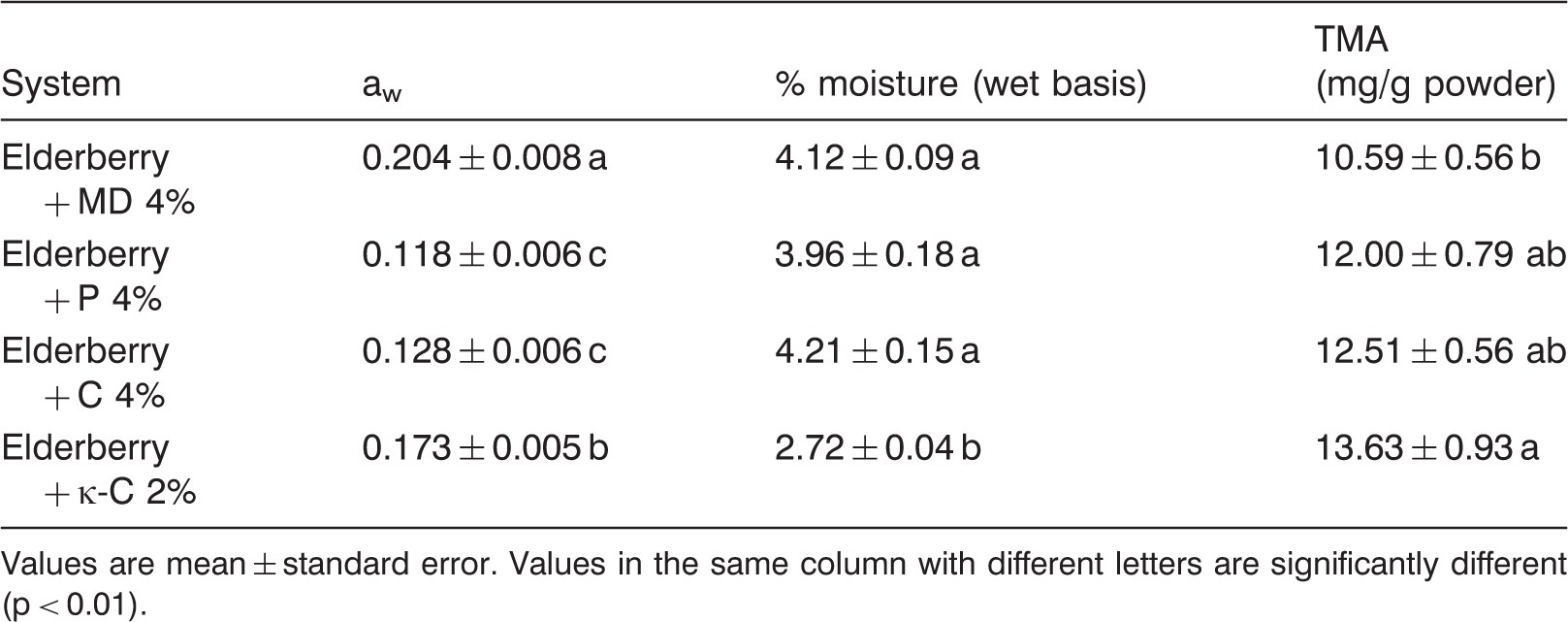
Values are mean ± standard error. Values in the same column with different letters are significantly different (p < 0.01).
Table 1 also shows the monomeric anthocyanin content (mg/g powder) in elderberry powders encapsulated with different materials. It should be noted that elderberry encapsulated with 2% of κ-carrageenan seems to have a higher anthocyanin content as compared to others, and this can be attributed to the lower amount used (2 %) which attenuates the “dilution” due to encapsulant addition. The average anthocyanin content in present elderberry samples is 12.1 mg/g; this value is higher than that recently reported by Busso Casati et al. (2019): 1.72 mg/g for freeze-dried encapsulated elderberry pulp of the same growing area, but mixed with a higher amount of encapsulant (MD + arabic gum). They used 2.12 g encapsulant/g soluble solids versus 0.41 g encapsulant/g soluble solids of fruit pulp used in present work. In general, other authors reported the use of higher levels of encapsulating agents related to the solids of fruit: Gibbs et al. (1999) reported values of around 4.0 g encapsulant/ g juice for spray drying, Franceschinis et al. (2014) used a ratio of 7.36 for spray drying and 2.76 for freeze-drying of blackberry. Gurak et al. (2013) used a ratio of 3.51 g encapsulating agent/ g fruit solids for freeze-drying of concentrated grape juice. This shows that in general high percentages of encapsulants are used, which greatly reduces the anthocyanin content in the powder obtained and could be a non-beneficial aspect for the development of ingredients intended as source of bioactive compounds.
Figure 1 shows the DSC thermograms of freeze-dried elderberry powders obtained with different encapsulants and percent of encapsulants, equilibrated at aw = 0.113. As mentioned earlier, ingredients having high Tg value (among other factors) must be added before encapsulation via spray or freeze-drying in order to obtain suitable dried powders. Maltodextrin DE10 is by far the most used wall material in encapsulation of bioactive substances, although starch-based materials (i.e. Promitor ™, Capsul TM) have also been reported for encapsulation (Li, 2014).
DSC thermograms of freeze-dried elderberry powders using different encapsulating agents and levels of addition (%) and equilibrated at aw = 0.113: (a) Elderberry + Maltodextrin, (b) Elderberry + Promitor™, (c) Elderberry + Capsul™, and (d) Elderberry + κ carrageenan. ______, encapsulant 4%; - - - - -, encapsulant 8%. Arrows indicate Tg (midpoint) determined at 4% (Tg1) and 8% (Tg2) encapsulating agents.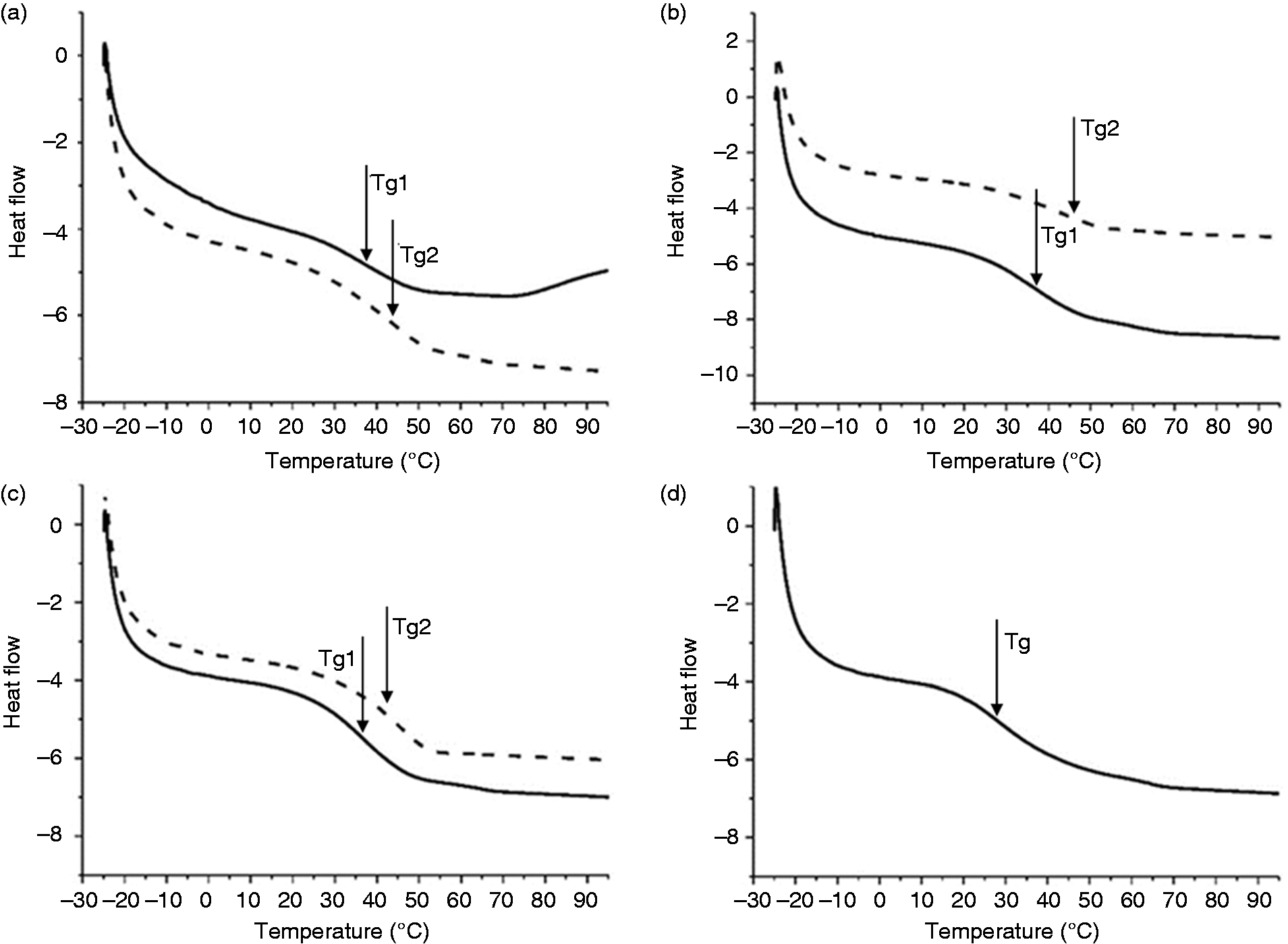
The glass transition temperatures of maltodextrin DE10 at various moisture contents have been widely reported (Roos, 2010); for example, at 5 % moisture it is 84 ℃ (Roos and Karel, 1991). Mitsuiki et al. (1998) determined the glass transition temperature of κ-carrageenan at various moisture contents and values were similar to that of wheat starch and at 5 % moisture content Tg = 150 ℃. Pai et al. (2015) reported a value of 171 ℃ for Promitor ™ but they did not indicate at which moisture content (anhydrous or with some moisture) Tg was determined.
The glass transition temperature of a mixture of each encapsulant (MD, P, C, and κ-C), water and dry solids present in elderberry (glucose, fructose, sucrose, various organic acids) is very difficult to predict. The well-known Gordon and Taylor equation (equation (1)) is used to calculate the Tg of a binary mixture of solids and water, and it reads (Roos, 1995):

Glass transition temperature (onset and midpoint values) of freeze-dried elderberry encapsulated with different wall materials at various levels of addition (%) and equilibrated at aw = 0.113.
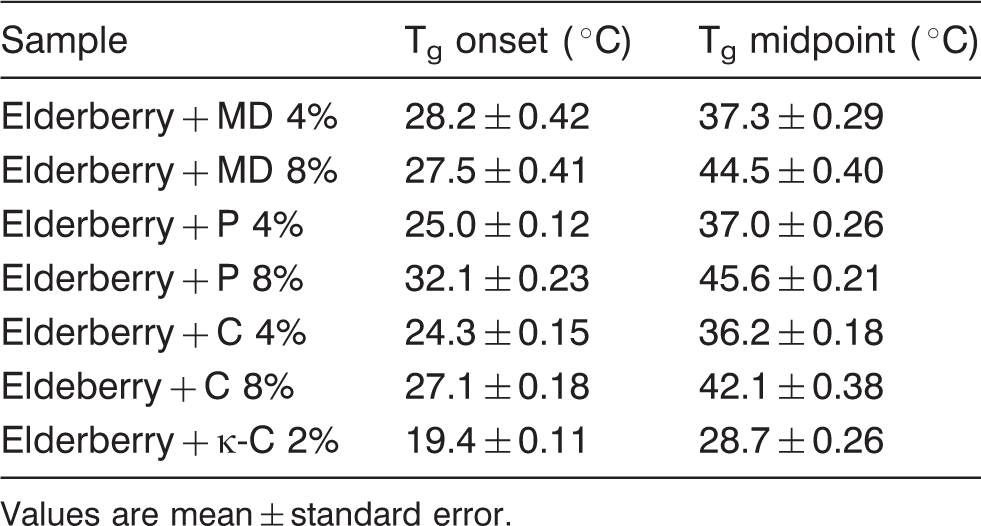
Values are mean ± standard error.
In berry fruits, low-molecular-weight sugars such as fructose, glucose, and sucrose and organic acids (citric, malic) constitute an important proportion of dry matter of the solids (Khalloufi et al., 2000; Veberic et al., 2009), so they have a low glass transition temperature. The Tg of freeze-dried elderberry without encapsulants was not measured here. However, it can be approximated from literature results. Khalloufi et al. (2000) reported the Tg (onset and middle values) for freeze-dried blueberry, raspberry, and blackberry equilibrated to aw = 0.113. Values reported (Tgmid) were, 15.6, 22.0 and 20.0 ℃ for blueberry, raspberry, and blackberry, respectively. It can be assumed that the Tg of freeze-dried elderberry (equilibrated at aw = 0.113) may be included in that range of values because its chemical composition is similar. Since these values are not enough to avoid stickiness and caking problems in storage, the addition of a high molecular weight encapsulant is mandatory.
As a compromise between a high Tg but reducing the incorporation of encapsulant, an addition of 4 % (for MD, P, and C) and 2% for κ-C was selected for the storage studies in regard to total anthocyanin stability, color parameters, and cyanidin-3-glucoside content.
Stability of elderberry powders during storage
Figure 2 shows the evolution of monomeric anthocyanins content (mg/g powder) in freeze-dried elderberry systems stored at 38 ℃ in hermetically sealed containers (aw in the range 0.12–0.20) or equilibrated at aw 0.43.
Evolution of monomeric anthocyanins content (mg/g powder) in freeze-dried elderberry systems stored at 38 ℃ in hermetically sealed containers (aw in the range 0.12–0.20) or equilibrated at aw 0.43: (a) Elderberry + MD, (b) Elderberry + P, (c) Elderberry + C, and (d) Elderberry + κ-Carr.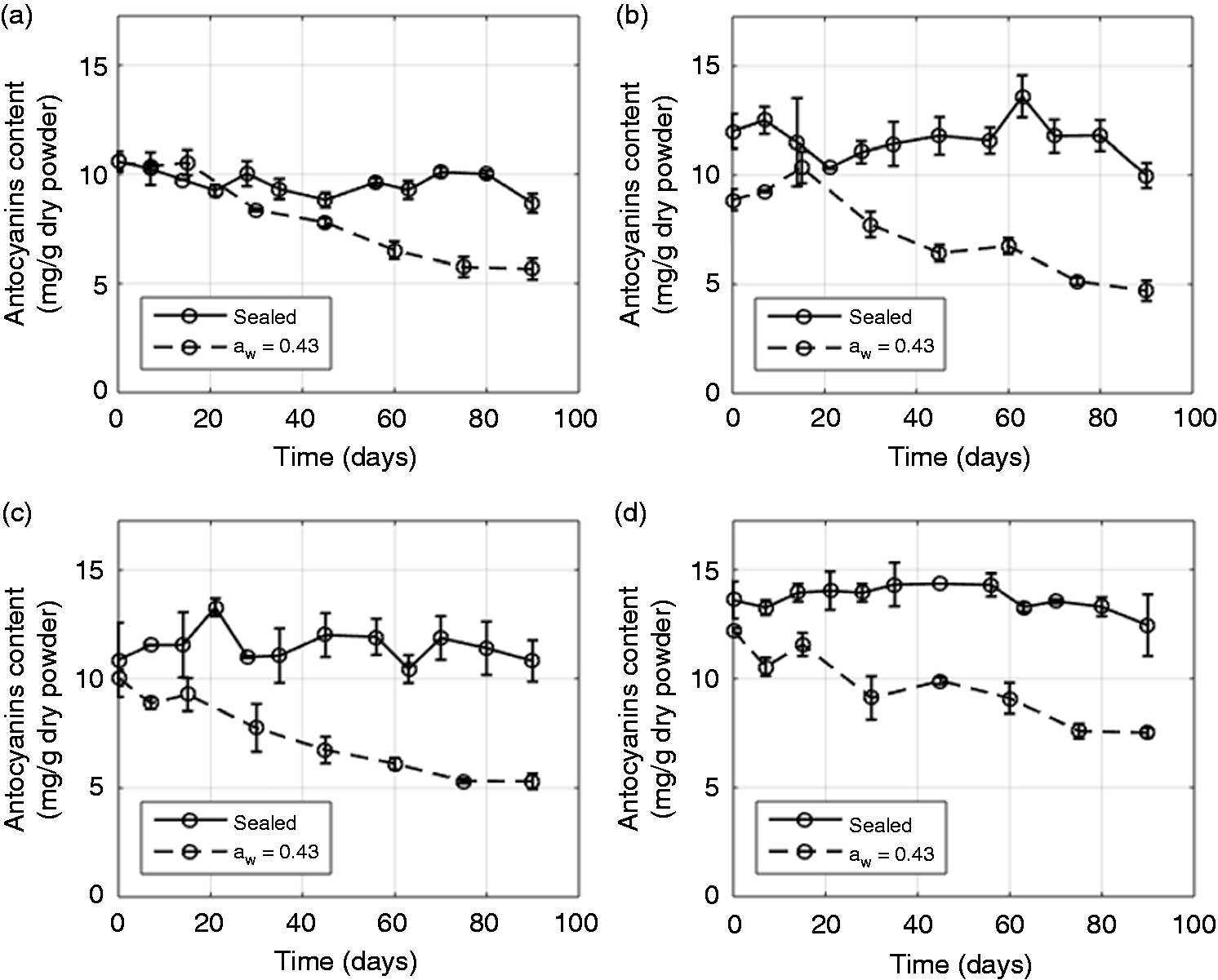
Overall, at very low water activity (0.12–0.20), the anthocyanin content in all systems studied is fairly well preserved throughout 90 days of storage at 38 ℃. Systems with maltodextrin and Capsul™ showed a small decrease which amounted to 10% at the end of storage while systems with Promitor™ and κ-carrageenan remained almost constant. All powders were free-flowing after storage, i.e. no agglomeration, stickiness or caking was observed. It is known that structural changes in amorphous food powders are time dependent phenomena and a function of (T–Tg) where T is storage temperature and Tg is the glass transition temperature (Roos, 1995; Roos and Karel, 1991). Since measured Tg values for elderberry systems encapsulated with MD, Capsul ™, or Promitor™ (Table 2) were very close to storage temperature (38 ℃), the observed physical behavior of powders agreed with glass transition theory. It is interesting to note that elderberry encapsulated in 2% κ-carrageenan also remained free-flowing in spite of the low value (T-Tg) = −10 ℃ (Table 2). Roos (2010) noted that although in general stickiness occurred when the glass transition temperature of the product was lower than the observation temperature, it seemed that differences in flow behavior occurred as a result of composition. He concluded that more studies are needed to establish the effects of food components and water content on the glass transition, particle flow, and stickiness of powders.
When aw of the samples is increased to 0.43, a clear decrease in anthocyanin content is observed in all systems during storage. About 65% loss of anthocyanin is observed for MD, Capsul ™, and Promitor ™ systems, but the loss reduced to 40 % for κ-carrageenan. Powder agglomeration was observed at this higher aw and this was expected due to the well-known effect of moisture on Tg.
The effect of increasing aw on anthocyanin content in encapsulated freeze-dried biomaterials stored at 38 ℃ is well documented in the literature. Rocha-Parra et al. (2016) showed that an increase of aw from 0.11 to 0.58 greatly enhanced the losses of total anthocyanins in an encapsulated freeze-dried red wine powder. Similar results were reported by Galmarini et al. (2013) also for stored red wine powder encapsulated in maltodextrin. Alvarez Gaona et al. (2017) found that total anthocyanins in spray-dried encapsulated red wine decreased steadily during storage, and increasing RH% enhanced the losses. Tonon et al. (2010) studied anthocyanin stability of spray-dried açai (Euterpe oleracea Mart.) juice produced with different carriers and found that increase of aw resulted in higher degradation. This was attributed to the higher molecular mobility, which allows easier oxygen diffusion, thus accelerating the oxidation reactions. In short, it may be said that the protective effect of low aw on anthocyanins stability may be attributed to the limited molecular mobility and diffusion rates associated with the low moisture content of systems (Galmarini et al., 2013).
Cyanidin-3 glucoside content (mg/g powder) in freeze-dried elderberry systems before and after storing for 90 days at 38 ℃ in hermetically sealed containers (aw 0.12–0.20) or at aw = 0.43.
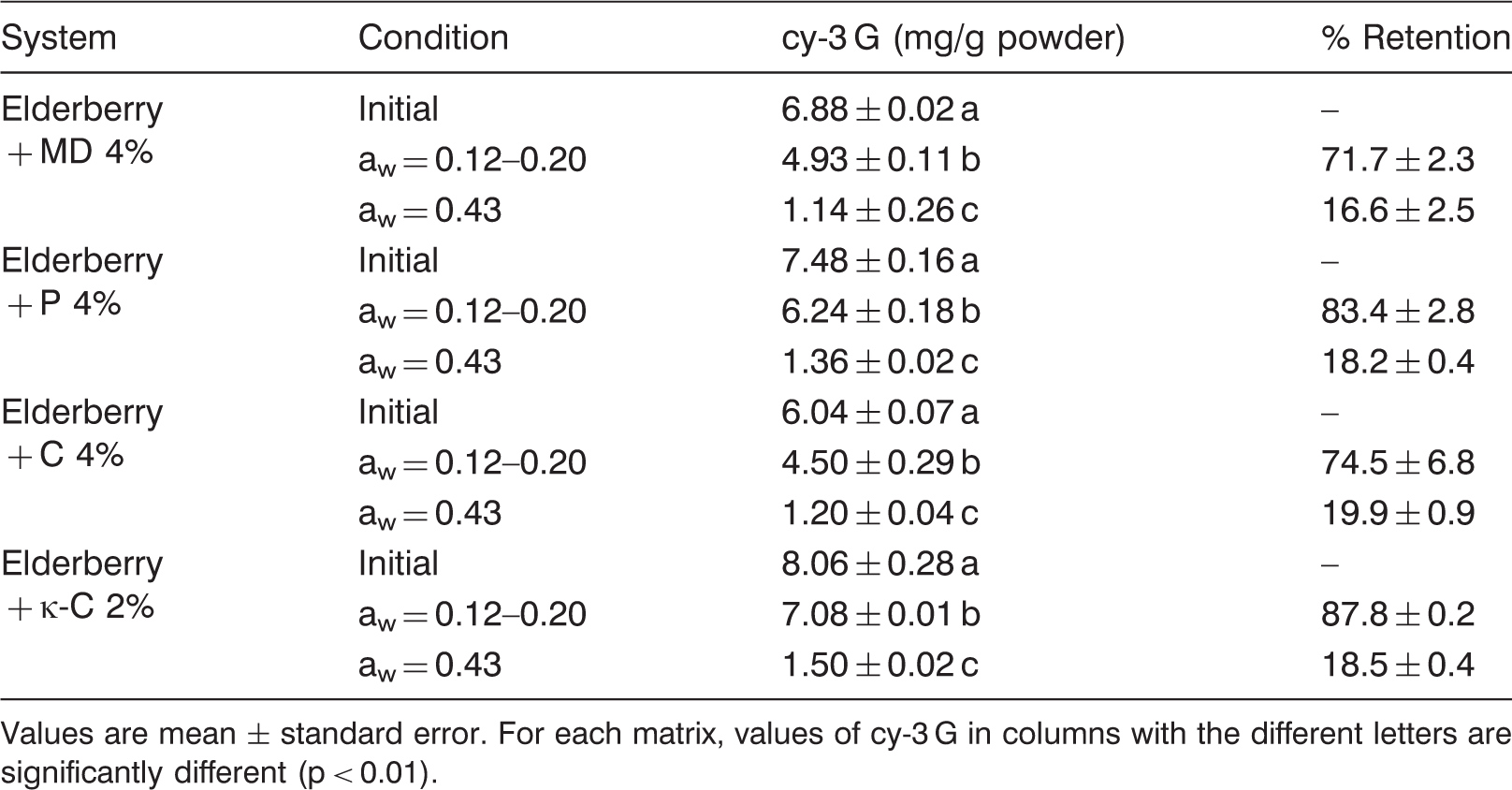
Values are mean ± standard error. For each matrix, values of cy-3 G in columns with the different letters are significantly different (p < 0.01).
The effect of the matrix nature was not significant and no interaction between these factors was observed (p > 0.05). As shown in Table 3, the retention of cy-3-glucoside amounts to 72–88% in any systems kept at low aw stored at 38 ℃. Again, the best retention is provided by system of κ-carrageenan. However, when aw is increased to 0.43, the retention fell dramatically to about 17–19% for all systems.
Figure 3 shows the evolution of color parameters for reconstituted freeze-dried elderberry systems after the storage of powders in hermetically sealed vials (aw = 0.12–0.20). It can be seen that parameter a* (redness) remained almost constant during all storage periods and this is in agreement with the data shown before on the stability of monomeric anthocyanin content (Figure 2) and also cy-3-glucoside content (Table 3). Sanchez et al. (2015) also reported that parameter a* for freeze-dried encapsulated cherry juice (aw = 0.10) remained constant over 60 days storage at 38 ℃.
Evolution of color parameters (L*, a*, and b*) for reconstituted freeze-dried elderberry systems after storage of powders in hermetically sealed vials at 38 ℃: (a) Elderberry + MD, (b) Elderberry + P, (c) Elderberry + C, and (d) Elderberry + κ-C.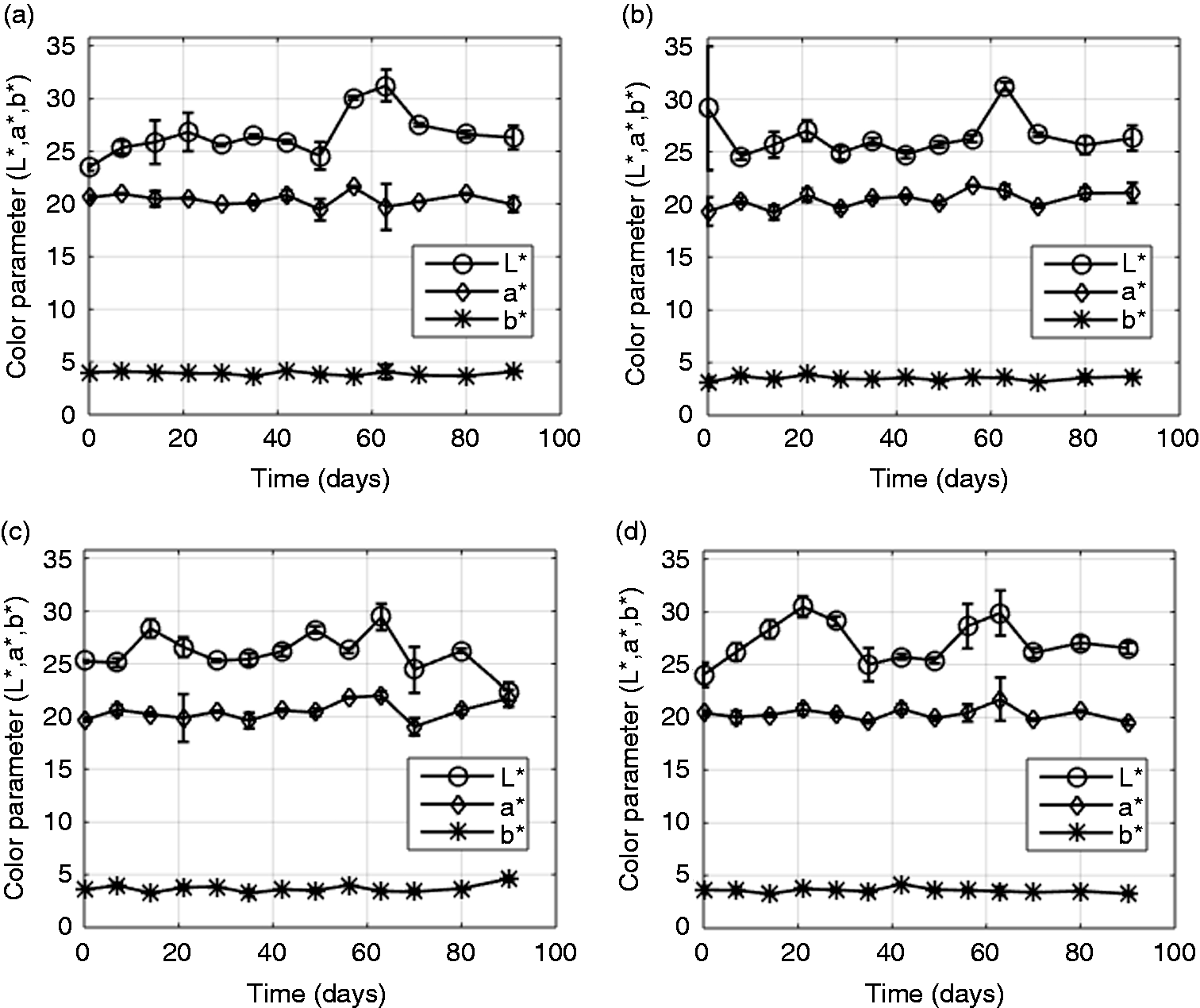
Figure 4 compares color parameters (L*, a*, b*) at initial time and after 90 days of reconstituted freeze-dried elderberry samples equilibrated at aw = 0.43. It is observed that in all systems at aw = 0.43, the parameter a* (redness) decreased and b* (related to brownish color) increased after storage.
Comparison of color parameters (L*, a*, and b*) at initial time and after 90 days of reconstituted freeze-dried elderberry (E) + encapsulating agents equilibrated at aw = 0.43.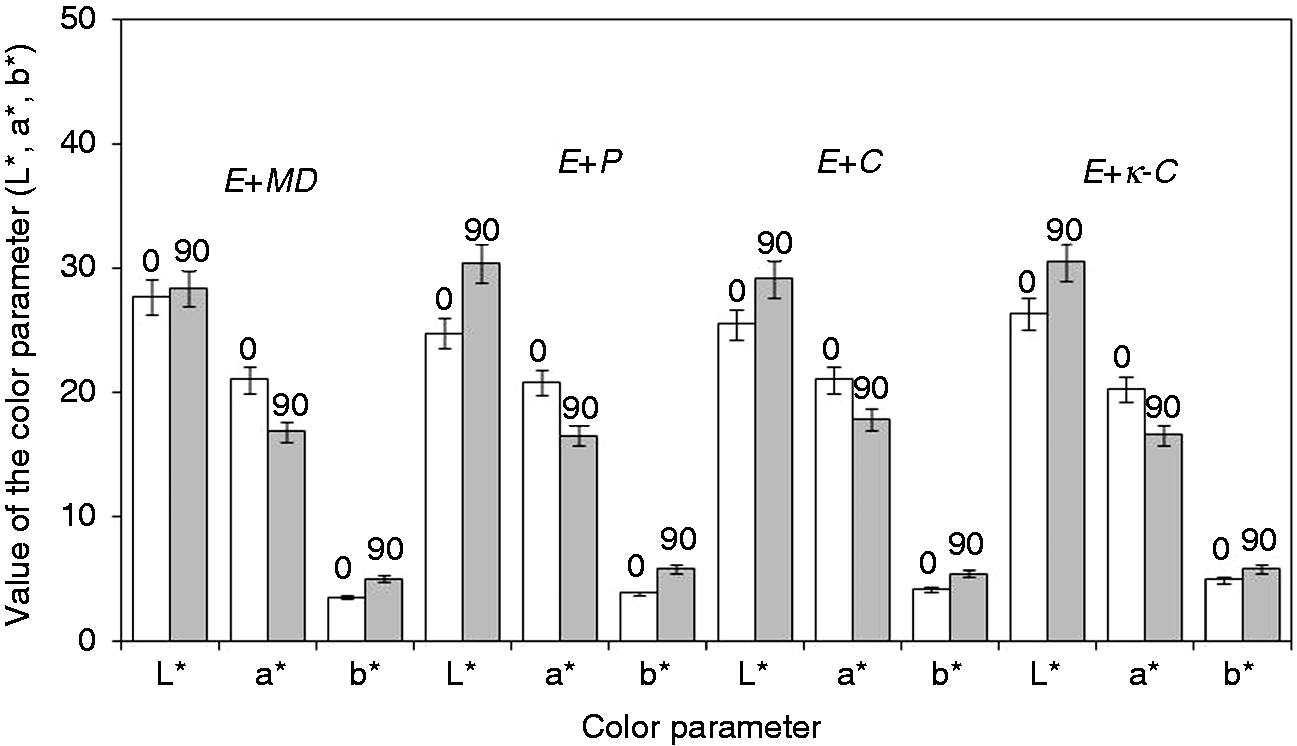
As can be seen in Figures 2 and 4, the relative reduction of the color parameter a* is less intense than the loss of content of total monomeric anthocyanins (Figure 2) or cy-3 G. It is possible that compounds formed in these reactions would retain the red color despite a decrease in cy-3 G molecules and other anthocyanins present, so the phenomena are less visually observable or by color measurement. This may be attributed to copigmentation which is a non-covalent interaction between monomeric anthocyanins and colorless copigments and which has been reported to stabilize the colored anthocyanins delaying the color shift or loss (Davies and Mazza, 1993; Rein, 2000).
Conclusion
The addition of low percentages (2–4%) of different encapsulating agents allowed the researchers to obtain encapsulated freeze-dried powders of elderberry pulp having an important concentration of anthocyanins. Water activity plays a key role in all stability parameters studied.
These powders when having aw 0.12–0.20 remained free-flowing when stored at 38 ℃ during 90 days. At this aw, total monomeric anthocyanins and cyanidin-3-glucoside contents remained very high showing a little decrease in compound levels. The red color parameter a* also remained almost constant (or with a little decrease in the level) during storage.
When aw was increased to 0.43, a clear decrease in total monomeric anthocyanins and cy-3 G was observed. Physical changes (agglomeration) also occurred in the powders stored at 38 ℃. Measured Tg values mostly agreed with the observed behavior of the flow properties of these freeze-dried powders.
Footnotes
Acknowledgements
We are grateful to Frutas del Sur Andino S.A. (Río Negro, Argentina) for donating the fruit pulp used in this study.
Author contributions
RB and JC designed and planned the experiments and supervised the work. RB, VS, GS, FM and PL performed measurements, processed the experimental data and performed the analysis. RB and JC drafted the manuscript and designed the Figures and Tables. All authors discussed the results and commented on the manuscript. RB and JC wrote the manuscript with support from VS, GS, FM and PL.
Declaration of conflicting interests
The author(s) declared no potential conflicts of interest with respect to the research, authorship, and/or publication of this article.
Funding
The author(s) disclosed receipt of the following financial support for the research, authorship, and/or publication of this article: The authors are grateful to Pontificia Universidad Católica Argentina and ANPCyT (project PICTO UCA 2017-0071) for financial support.
