







Abstract
Rice noodles have been manufactured in the food industry using different extrusion methods, such as traditional and modern extrusions, which affect the noodle structure and qualities. Therefore, the effects of the extrusion process on qualities of rice noodles using the same blend of rice flour and crosslinked starch were evaluated. In this study, a capillary rheometer was used as an alternative approach to simulate the traditional extrusion method in which the noodles are obtained by continuously pressing the pregelatinized noodle dough through a die. For modern extrusion, a twin-screw extruder was employed to obtain the noodles in a one-step process. The optimal range of moisture content used in the formulation was studied. Upon cooking, the noodles showed a decrease in cooking time and cooking loss with increasing moisture content in the formulation. All cooked noodles showed comparable tensile strength, but those extruded by a twin-screw extruder had substantially greater elongation. Scanning electron micrographs revealed that the noodles prepared using the extruder had a denser starch matrix, while those obtained from a capillary rheometer showed the aggregation of starch fragments relevant to the existence of starch gelatinization endotherm from differential scanning calorimetry. This indicated that the extrusion process using the twin-screw extruder provided a more uniform starch transformation, i.e., more starch granule disruption and gelatinization, thus giving the noodles a more coherent structure and better extensibility after cooking. The obtained results suggested that different thermomechanical processes used in the noodle industry gave the extruded rice noodles different qualities respective to their different microstructures.
Keywords
Introduction
Rice noodles are one of the popular types of noodles widely consumed in Asian countries. They contain no gluten, low allergen and low-fat contents, and have great digestibility (Barbiroli et al., 2013). Due to the lack of gluten, the qualities of rice noodles are primarily determined by the physicochemical properties of rice starch, which contributes to the structural formation of starch network (Sandhu et al., 2010; Wu et al., 2015).
In the industrial preparation, rice noodles can be manufactured by two different extrusion processes involving high temperature, pressure, and shear forces (Wu et al., 2015; Li et al., 2021). Traditional extrusion requires the preparation of pregelatinized dough by mixing RF with water in the presence of heat. Then, the pregelatinized dough is pressed manually or hydraulically through a die to produce a rice noodle strand (Li et al., 2021). The manufacture of traditional rice noodles has been considered time-consuming and laborious (Charutigon et al., 2008; Tong et al., 2015; Wu et al., 2015). However, modern extrusion using a single-screw or twin-screw extruder is currently adopted due to its continuous process, high productivity, and short processing time (Charutigon et al., 2008; Wu et al., 2015; Kraithong and Rawdkuen, 2020). Hydrated or dry RF and water are fed into the extruder and heated, then the noodle strand is extruded through a die. This continuous process allows the formation of starch network due to starch gelatinization inside the extruder, and obtains extruded noodle strands (Wang et al., 2014). Although both extruded noodles are produced commercially and found to have similar size and shapes (Li et al., 2021), limited data on the differences between them are available.
The main ingredients used to prepare extruded rice noodles include rice flour (RF) and water. However, the use of native flours and starches resulted in poor qualities of extruded rice noodles due to their susceptibility to the high-temperature and high-shear processing conditions in extrusion process (Charutigon et al., 2008; Obadi and Xu, 2021). To improve qualities of gluten-free noodles, crosslinked starch has been used since it can resist structural breakdown during extrusion (Delcour et al., 2000; Charutigon et al., 2008). Charutigon et al. (2008) prepared extruded rice noodles using a single-screw extruder, however pure rice noodles had undesirable sticky texture. Therefore, crosslinked modified starch and monoglyceride were added to reduce the stickiness and improve qualities of the noodles.
The aim of this study was to investigate the effect of different extrusion methods, i.e., traditional and modern extrusion processes, on the properties of extruded rice noodles prepared from a blend of RF and crosslinked starch. For the study, a capillary rheometer was employed as an alternative method to imitate traditional rice noodle extrusion. The pregelatinized noodle dough was prepared similarly to traditional extrusion, and then compressed by a piston through a heated barrel and extruded out of a die of a capillary rheometer to obtain a rice noodle strand. In the case of modern rice noodle extrusion, a twin-screw extruder was employed. The obtained noodles of similar appearance from both extrusion methods were investigated for noodle qualities such as cooking and textural properties. Physicochemical properties and microstructure were also examined to explain the qualities of extruded noodles. This study can be useful to provide information for food manufacturers on the influence of extrusion methods on qualities of rice noodles.
Materials and methods
Materials
Rice flour (RF) was obtained by grinding the polished rice grains (Indica cultivar, Supan Buri 60) purchased from a local market, using a pin mill (Alpine, Augsburg, Germany), and passing through a 100-mesh sieve to obtain the flour with particle size less than 150 μm. RF had 26.61 ± 0.63% amylose (Megazyme amylose/amylopectin assay kit, Megazyme International, Ireland), 7.14 ± 0.01% protein (modified method based on AOAC, 2012) and 0.85 ± 0.01% fat content (AOAC, 2012). Crosslinked tapioca starch (CTS) was kindly provided by Tapioca Development Co., Ltd (Thailand).
Pasting properties
Pasting characteristics of RF and CTS samples were obtained using a Rapid Visco Analyzer (RVA: RV4 Newport Scientific Instruments & Engineering, Australia) according to the standard method No. 162 recommended by the International Association for Cereal Science and Technology (ICC, 1996). A sample of 2.5 g (12 g/100 g moisture basis) was mixed with 25 mL of deionized water and stirred at 960 r/min to form slurry. The test was performed as follows. The initial temperature was set and held at 50 °C for 1 min at 160 r/min, ramped up to 95 °C at a heating rate of 0.2 °C/s, then held at 95 °C for 210 s, and finally cooled down to 50 °C at a cooling rate of 0.18 °C/s. The measured pasting parameters included pasting temperature, peak viscosity, peak time, trough and final viscosities. From these parameters, breakdown was calculated from the difference between peak and trough viscosities. Setback from trough and setback from peak viscosities were calculated from the difference between final and trough viscosities, and final and peak viscosities, respectively. The tests were done in three replications.
Preparation of RF/CTS noodles using a capillary rheometer
Firstly, the RF and CTS blend with the respective weight ratio of 80 and 20 was prepared by dry mixing at low speed using a dough mixer (KV-05, Kittiwattana, Thailand). The ratio was chosen based on the best extensibility and non-stickiness of cooked noodles in preliminary experiments. The blended flour (100 g) was mixed with hot water (∼90 °C) in the dough mixer at a mixing speed of ∼150 r/min for 60 s to promote partial gelatinization of the starch. The partially cooked flour was then kneaded manually to form a dough. To obtain a homogeneous and non-sticky dough, the optimal dough moisture content was found to be in the range of 40−47% wb. The dough was allowed to rest at 25 °C for 30 min before being loaded into the heated barrel of a capillary rheometer (Rosand RH2200, Malvern Instruments, UK) at 90 °C, which was close to the conclusion temperature of gelatinization endotherm of RF as determined by differential scanning calorimetry (DSC). After that, the rheometer piston was brought into contact with the dough. The heated dough was allowed to equilibrate at that temperature for 0.5 min. Subsequently, the piston compressed the heated dough at the speed of 100 mm/min along the barrel to flow through a circular die (2-mm diameter and 32-mm length) to obtain extruded RF/CTS noodles. For each formulation, the extrusion experiments were performed twice on two separated dough samples. To reduce the moisture loss especially at the noodle surface, all noodles after extrusion were kept in a closed plastic container of 85% equilibrium relative humidity at 25 °C for 3 h before analysis of cooking and textural qualities. For thermal and microscopic characterizations, extruded noodles were dried at 40 °C in an oven (Memmert universal oven UF260, Memmert GmbH + Co.KG, Schwabach, Germany) until obtaining a moisture content of less than 10% wb.
Preparation of RF/CTS noodles using a twin-screw extruder
A modern extrusion method of RF/CTS noodles was investigated using a co-rotating twin-screw extruder (Berstorff ZE 25 × 33 D, Berstorff, Hannover, Germany). The screw diameter (D) was 25 mm, and the total configured screw length (L) was 33D (L/D = 33:1). All conveying screw elements were used to provide low shearing process. The extruder barrel was segmented into 7 sections. The extruder barrel temperature was set at 30, 50, 70, 90, 70, 60, 50 °C from the first feeding zone to the last zone, and the die temperature was set at 40 °C.
The blended flour of RF/CTS (weight ratio of 80:20) was combined with water at 25 °C to obtain a hydrated flour with a 15% wb moisture content, which was subsequently kept tight in a polyethylene bag overnight to create equilibrium humidity. This pretreatment is to allow good mixing between the hydrated flour and water injected into the extruder. The hydrated flour was fed into the first zone of the extruder at a rate of 4.4 kg/h, then water was injected into the second barrel at various feed rates to investigate the suitable range of feed moisture content used for noodle preparation. Screw speed was maintained at 100 r/min. The noodles were extruded via a circular die with a diameter of 1.5 mm. Preliminary experiments showed that the noodles extruded from the twin-screw extruder were substantially larger in size than those obtained from the capillary rheometer using the same die diameter. As a result, in the twin-screw extrusion, a smaller die diameter (1.5 mm) was used to prepare noodles with comparable dimensions from both procedures, ensuring that the noodle characteristics were unaffected by the size of the noodles. The extrusion experiments were repeated twice on two separated sets of hydrated flour. Finally, extruded RF/CTS noodles from the twin-screw extruder were subjected to the same procedures as noodles obtained from the capillary rheometer for further analysis.
Expansion ratio
The radial expansion ratio of extruded noodles was calculated from the ratio of the cross-sectional area of the noodles to that of the die (Tiga et al., 2021). The diameter of the noodles was measured with a digital caliper on eight pieces of noodles.
Cooking qualities
The cooking qualities of extruded noodles were determined (AACC International, 2000, Method 66–50). The cooking time was determined at every 15-s interval during cooking in deionized water by pressing the cooked noodles between two glass plates. The time required for the disappearance of the white core of noodle strands is considered the optimal cooking time (OCT). The test was performed in duplicate on two independent extruded noodles.
Water absorption and cooking loss were determined by two different samples. Each sample was measured in triplicate. After cooking at the OCT, cooked noodles were rinsed with deionized water (25 °C) and drained for 5 min. Both cooking and rinsing water were collected and then evaporated in an oven at 100 °C to a constant weight. Cooking loss was calculated as the weight ratio of dry residue to noodles before cooking, express in percentage. Water absorption was measured as the weight increase of noodles before and after cooking, also expressed as a percentage (Bonomi et al., 2012).
Textural properties
The texture of cooked noodles was determined by tensile properties using a universal testing machine (INSTRON 5943, UK) equipped with a load cell of 10 N and tensile rigs. A strand of cooked noodles was wound two or three times around the parallel rollers of the machine. The upper arm was adjusted to move apart from the lower arm at a crosshead speed of 3.0 mm/s and the distance between the two rigs was 50 mm. The tensile strength and elongation at break were determined. The test was measured at 25 °C and was repeated at least 10 times for each sample.
Differential scanning calorimetry
Thermal characteristics of RF, CTS and noodles were investigated using a differential scanning calorimeter (DSC 822e, Mettler Toledo, Schwerzenbach, Switzerland). Dried noodles were ground and sieved through 100 mesh. The ground sample (6 mg, dry basis) was weighed directly into a medium pressure crucible (stainless steel, 120
Scanning electron microscopy
The surface and cross-sectional microstructures of dried noodles were investigated using a scanning electron microscope (SEM, Hitachi 3400, Hitachi, Japan). Samples were glued on an aluminum stub using a double-sided adhesive tape. The as-prepared specimen was gold-coated prior to SEM analysis at an accelerating voltage of 10 kV.
Statistical analysis
Experimental results were subjected to statistical analysis using the commercial SPSS 11.5 (SPSS Inc., Chicago, IL) computer program. Data were averaged and mean comparisons were evaluated using the least significant difference (LSD) technique at 95% confidence. A statistical difference at p < 0.05 was considered significant.
Results and discussion
Pasting properties
Pasting properties of starches can be used to evaluate their applicability as raw materials in noodle preparation. Table 1 showed pasting properties of raw materials used in this study. During heating process, RF exhibited higher values of pasting temperature and peak time, and lower values of peak and breakdown viscosities as compared to CTS. Low pasting temperature and high peak viscosity of CTS sample indicated that it swelled more easily during the heating process. Pasting is the combined effect of swelling and rate of disruption of the starch granules (Batey, 2007), thus implying a different degree of granule swelling and breakdown in both samples. Moreover, the presence of protein and other components in RF could contribute to the lower rate of absorption and swelling of rice starch granules. The study by Barak et al. (2013) reported that flours with higher protein content required more time to reach peak viscosity, and peak viscosity showed negative correlations with protein content. Upon cooling, CTS showed significantly higher final and setback viscosities. Setback viscosity from trough indicates a tendency to starch retrogradation (Raina et al., 2007) and setback viscosity from peak describes the gelling ability of the starch. Collado et al. (2001) mentioned that a high gel viscosity and a large retrogradation were the properties needed for preparation of starch noodles. The difference in the pasting profile of RF and CTS could be explained by the different granule genotypes which contribute to granule rigidity, extent of amylose leaching from the granule, content of amylose and other components, starch granule crystallinity and the degree of crosslinking modification (BeMiller and Whistler, 2009; Shukri et al., 2021; Tiga et al., 2021).
Pasting properties of rice flour (RF) and crosslinked tapioca starch (CTS).
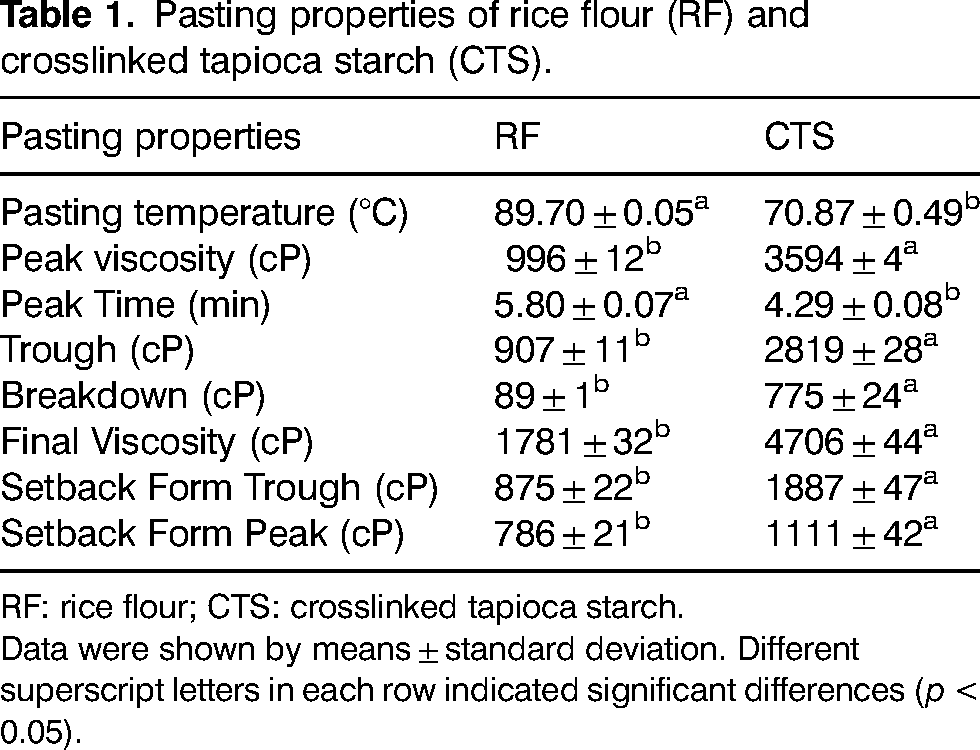
RF: rice flour; CTS: crosslinked tapioca starch.
Data were shown by means ± standard deviation. Different superscript letters in each row indicated significant differences (p < 0.05).
Effect of preparation methods on qualities of extruded RF/CTS noodles
To simulate traditional extrusion using a capillary rheometer, RF/CTS blended flour was mixed with hot water at a range of dough moisture content of 40−47% wb to form a cohesive dough. Hot water was used for partial gelatinization of starch to enhance dough binding characteristics. An excess amount of hot water resulted in a sticky dough, while a small amount of water provided a hard and crumbly dough, which was difficult to extrude continuously. Table 2 shows the properties of RF/CTS noodles extruded at 90 °C using a capillary rheometer. The moisture content of the extruded noodles was found to be lower than that of noodle dough. The greatest reduction in moisture content was observed in the noodles extruded at the lowest dough moisture content. Abecassis et al. (1994) explained that the moisture content of the extruded pasta was lower at lower feed moisture content, which was partly attributed to the increase in pressure drop at the die exit, thus facilitating the water evaporation. The study by Ditudompo et al. (2016) also found that an increase in feed moisture content resulted in a greater moisture retention in the cornstarch extrudate. Our results showed that all noodles expanded after exiting the die. As the dough moisture content increased from 40 to 47% wb, the expansion ratio decreased from 1.30 to 1.17. This finding was consistent with the results of Singh et al. (2007), and Jongsutjarittam and Charoenrein (2014), who reported that extrusion with a high moisture content in the feeding materials decreased the expansion of the extruded product. Expansion occurs due to the pressure difference between the die and the atmosphere. Since water acts as a plasticizer, dough with high moisture content tends to have lower viscosity than that with lower moisture content during extrusion (Dautant et al., 2007; de la Pena et al., 2014). Therefore, the pressure difference was smaller for the high moisture content dough, leading to a less expanded product (Singh et al., 2007; Jongsutjarittam and Charoenrein, 2014).
Properties of extruded RF/CTS noodles by a capillary rheometer.
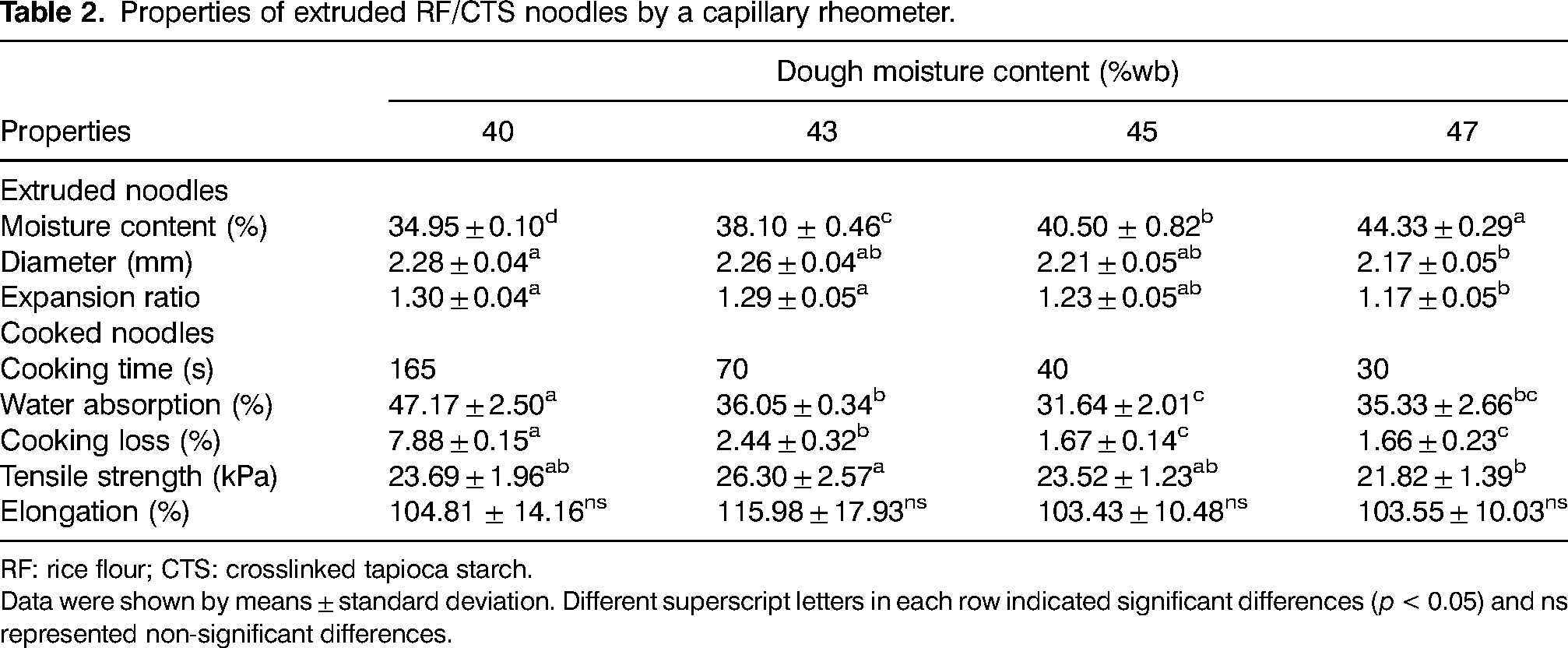
RF: rice flour; CTS: crosslinked tapioca starch.
Data were shown by means ± standard deviation. Different superscript letters in each row indicated significant differences (p < 0.05) and ns represented non-significant differences.
After cooking, the results showed that increasing the dough moisture content provided the extruded noodles with a shorter optimal cooking time, and thus a lower cooking loss. The longest cooking time was found in noodles prepared at the lowest dough moisture content (40% wb), and consequently, the largest cooking loss (∼7.88%) was observed. Optimal cooking time is the time taken to complete the gelatinization of starch, until the central opaque core in the noodle strand disappears. In this study, noodles were prepared at 90 °C which allowed starch gelatinization to a certain extent depending on the amount of dough moisture content. Thus, a dough with a high moisture content could provide noodles with enhanced starch gelatinization, requiring a short time for optimal cooking and resulting in low cooking loss. The study by Wojtowicz and Moscicki (2009) showed that the increased amount of dough moisture content enhanced the degree of starch gelatinization of the extruded (precooked) pasta, and therefore gave the pasta a low solid loss upon cooking. Water absorption of noodles indicates the ability of starch and protein to swell in water during the cooking process (Detchewa et al., 2016). Table 2 showed that increasing the moisture content of the noodle dough tended to reduce the water absorption of extruded noodles. This tendency was explained by Wojtowicz and Moscicki (2009) because of the increased degree of starch gelatinization of the extruded pasta, thus limiting the swelling of gelatinized starch granules. Cooked noodles prepared with 43% wb dough moisture content showed the highest average values of tensile strength and elongation. Lower tensile strength and elongation of cooked noodles prepared with lower dough moisture content (40% wb) could be attributed to long of cooking time and high cooking loss, which deteriorated the integrity of the cooked noodles (Bouasla et al., 2017). However, increasing dough moisture content up to 47% wb was found to significantly decrease the noodle strength. It is worth mentioning that the dough formulation of high moisture content reflects the low amount of solid ingredients, which may weaken the strength of the swollen gelatinized starch matrix. Wojtowicz and Moscicki (2009) revealed that dough moisture content and process conditions influenced the cooking and texture qualities of extruded pasta due to the different degrees of starch gelatinization, thus affecting the internal structure of the prepared pasta.
In the case of twin-screw extrusion, moisture content of the feed materials was adjusted by the water feed rate in the process. It was found that as the feed moisture content was up to 40% wb, the extruded noodles became sticky, thus becoming difficult to handle. Table 3 shows properties of noodles extruded at the range of feed moisture contents of 32–38% wb. A lower feed moisture content resulted in dry and hard noodles with a large expansion. The diameters of noodles obtained from the twin-screw extruder were in the range of 2.35−2.42 mm, slightly larger than the ones (2.17−2.28 mm) extruded using the capillary rheometer (see Table 2). Likewise, noodles prepared by the twin-screw extruder had a reduced moisture content and an increased expansion ratio as the feed moisture content decreased. Bouasla et al. (2017) explained that an expanded structure was caused by starch gelatinization. During twin-screw extrusion, shear force mechanically disrupted starch granules, and allowing for faster water transport into the internal starch molecules. This would result in a uniform starch gelatinization in the extruder, and consequently induced product expansion. After cooking, noodles prepared with high moisture content showed low values of cooking time, cooking loss and water absorption. At 32% wb feed moisture content, the noodles had the lowest moisture content (25.93%), the longest cooking time and the largest cooking loss. The cooking loss of non-gluten containing noodles was explained as mainly due to the leaching of lightly bound gelatinized flour particles from the surface of noodles, and it may be dependent on the gelatinization level of starch and the strength of the intermolecular starch network within the noodles (Marti et al., 2010). Since the tensile properties indicated how noodle strands resisted breakdown upon tension (Seib et al., 2000), the cooked noodles prepared from 32% wb feed moisture content were easily broken as observed from the lowest elongation. As feed moisture content increased to 34% wb, much shorter cooking time and lower cooking loss, although insignificantly different, were observed in the prepared noodles. Additionally, the noodles showed an increased tensile strength and an almost twice increase in elongation as compared to the ones using 32% wb feed moisture content. However, upon increasing the feed moisture content from 34% to 38% wb, the increased elongation was noticeably observed with the decreased tensile strength, implying that the cooked noodles had better stretchability while requiring less tensile force. This characteristic corresponds to the material being soft, but ductile (Berthaume, 2016).
Properties of extruded RF/CTS noodles by a twin-screw extruder.
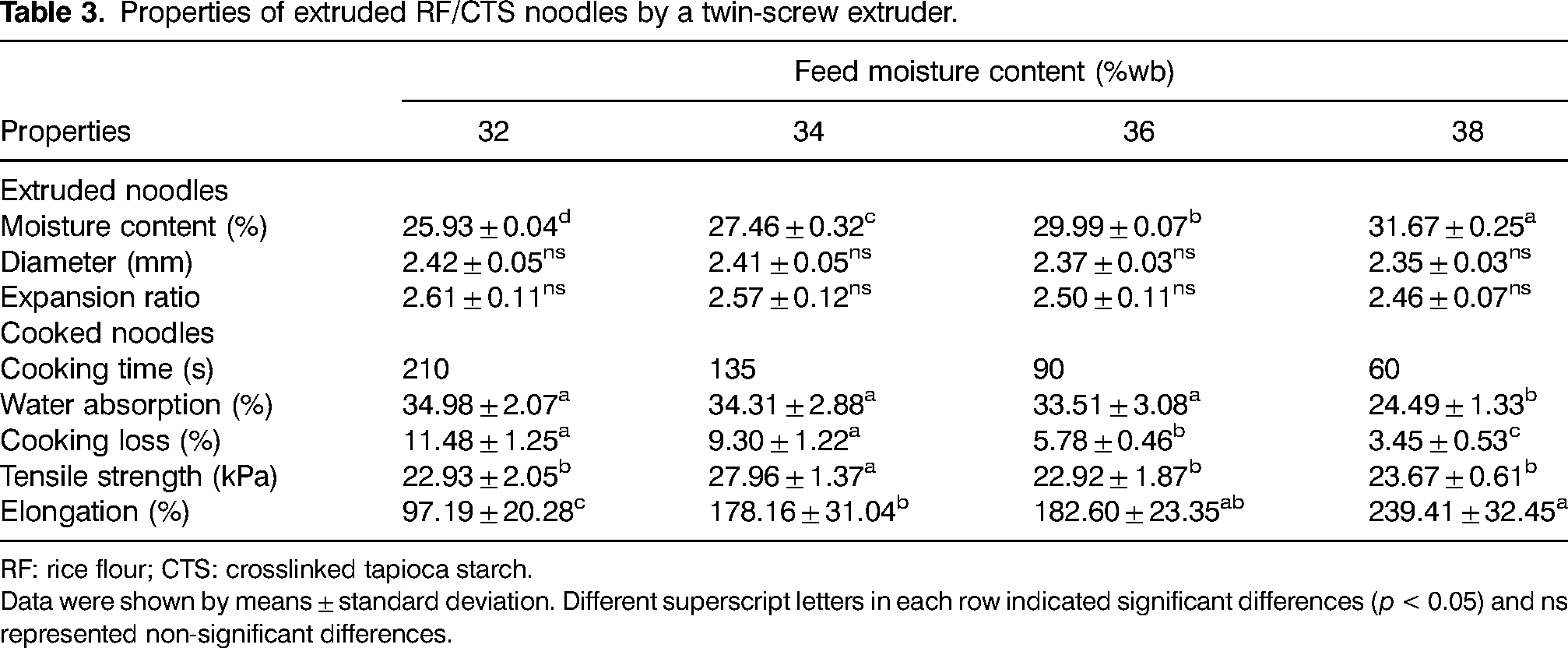
RF: rice flour; CTS: crosslinked tapioca starch.
Data were shown by means ± standard deviation. Different superscript letters in each row indicated significant differences (p < 0.05) and ns represented non-significant differences.
The correlation between moisture content used in the formulations of both extrusion processes and noodle properties is shown in Figure 1. It was clearly seen that the same tendency to cooking properties was observed in both processes, although a lower feed moisture content was employed in the noodle extrusion from a twin-screw extruder. Low moisture content in the feed formulations resulted in noodles with long cooking time and high cooking loss. Cooked noodles from both processes had equivalent tensile strength across the range of moisture content employed in the formulations. Interestingly, unlike noodles extruded from a capillary rheometer, noodles extruded from a twin-screw extruder had significantly greater extensibility as increasing feed moisture contents. The reason might be attributed to the different degree and the uniformity of starch transformation (i.e. fragmentation, gelatinization, the formation of amylose and lipid complex, etc.) which affecting microstructure, and thus the texture of cooked noodles. Lai and Kokini (1991) reported that operating conditions of extrusion such as temperature, shear force, pressure and moisture content, influenced mechanical disruption and starch transformation. A capillary rheometer used a piston to compress the noodle dough along the hot barrel through to a capillary die, whereas the rotation of screws inside a twin-screw extruder provided more disruption of starch granules due to more mechanical shear force. As a result, water penetration into the interior structure of disrupted granules was improved inside the extruder, allowing for more uniform starch transformation. The amount of moisture in the formulation was also an important factor in the degree of starch transformation during extrusion. Increasing the amount of moisture tended to increase degree of starch gelatinization of the broken granules during the extrusion process in a twin-screw extruder (Lai and Kokini, 1991; González et al., 2007; Ek et al., 2020). Wojtowicz and Moscicki (2009) revealed that the starch gelatinization and coherent structure of extruded pasta were affected by a combination of temperature, moisture content, and shear forces during extrusion. On the other hand, in case of a capillary rheometer, an increased moisture content within the study ranges did not improve elongation of cooked noodles, probably due to the lack of screw rotation to create a uniform starch gelatinization of the noodle dough inside the heated barrel.
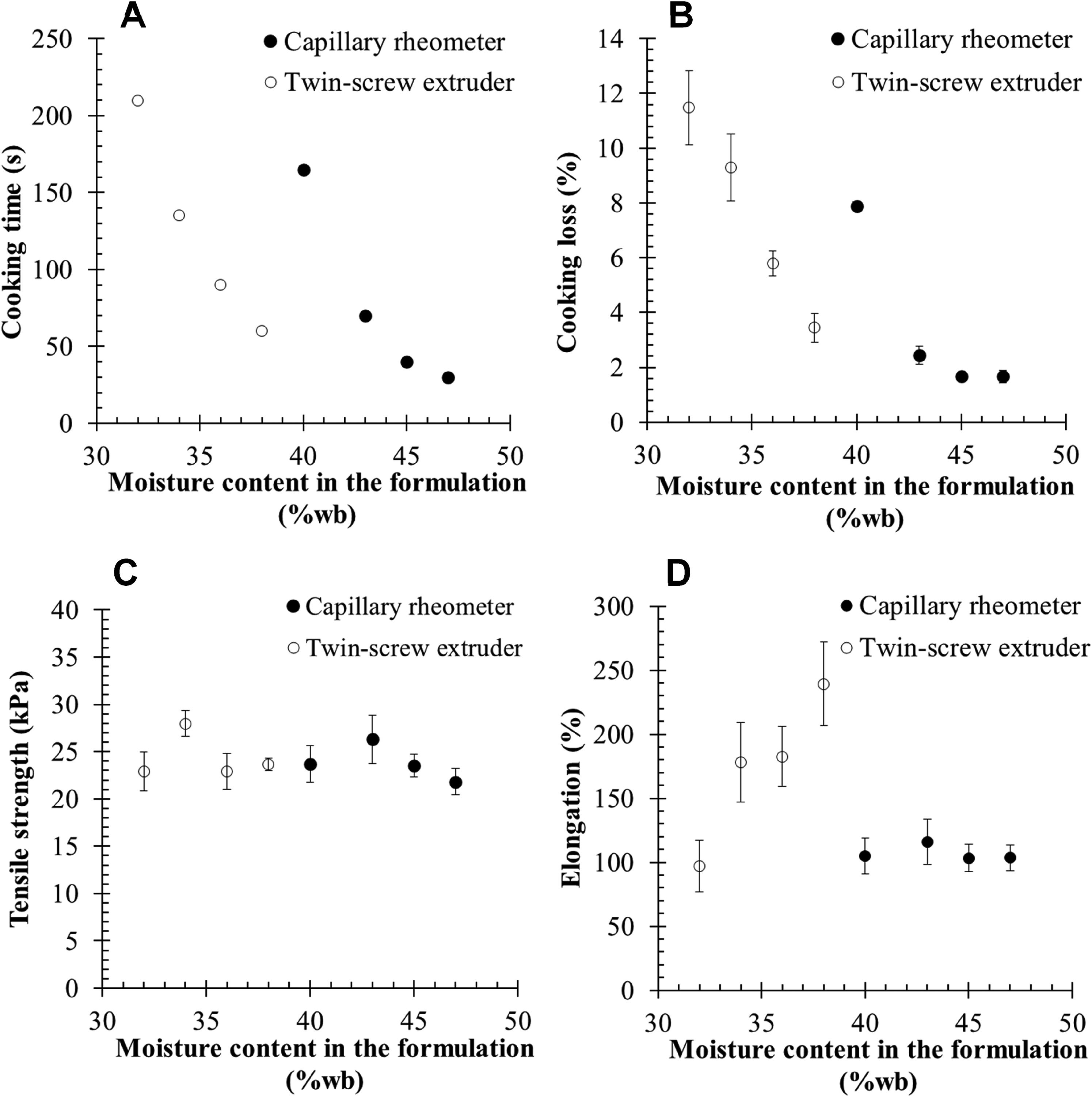
Correlation between properties and moisture content employed in the formulation of RF/CTS noodles extruded from capillary rheometer and twin-screw extruder
Microstructures of extruded RF/CTS noodles
Noodles prepared from a capillary rheometer at 45% wb dough moisture content and from a twin-screw extruder at 38% wb feed moisture content were selected for microstructure analysis because they showed desirable cooking qualities, i.e., low cooking time and cooking loss, a comparable tensile strength, but noodle elongations were significantly different. The appearance of both extruded noodles before and after cooking was similar (Figure 2). Under SEM observation, both uncooked noodles showed the same rough surface (Figure 3), but a relatively different cross-sectional microstructure (Figure 4). From a capillary rheometer, large agglomerates of starch fragments distributed within a matrix of cooked starch were easily visible (Figure 4A1 and 4A2). It indicated that some starch particles did not fully gelatinize during processing, resulting in starch fragments being entrapped in an amorphous matrix of gelatinized starch. In contrast, Figure 4B1 and 4B2 showed a dense matrix with streak lines, which was previously reported in a twin-screw extrusion of RF (Jongsutjarittam and Charoenrein, 2014), and was explained due to the alignment of starch components (i.e. amylose and amylopectin) during shear stress in the extruder (González-Soto et al., 2007). The dense matrix could be attributed to the effect of the extrusion-cooking process in a twin-screw extruder, which caused more starch gelatinization and retrogradation, and thus a coherent structure (Wang et al., 1999; Wójtowicz and Mościcki, 2009; Wójtowicz, 2011; Bouasla et al., 2017). This observed microstructure could correspond to the high extensibility of the cooked noodles obtained from a twin-screw extruder. However, less particle fragmentation embedded in an amorphous matrix was observed in Figures 4B1 and 4B2, which could be from incomplete cooking of some starch particles possibly due to the operating conditions in the extruder (Barron et al., 2002).
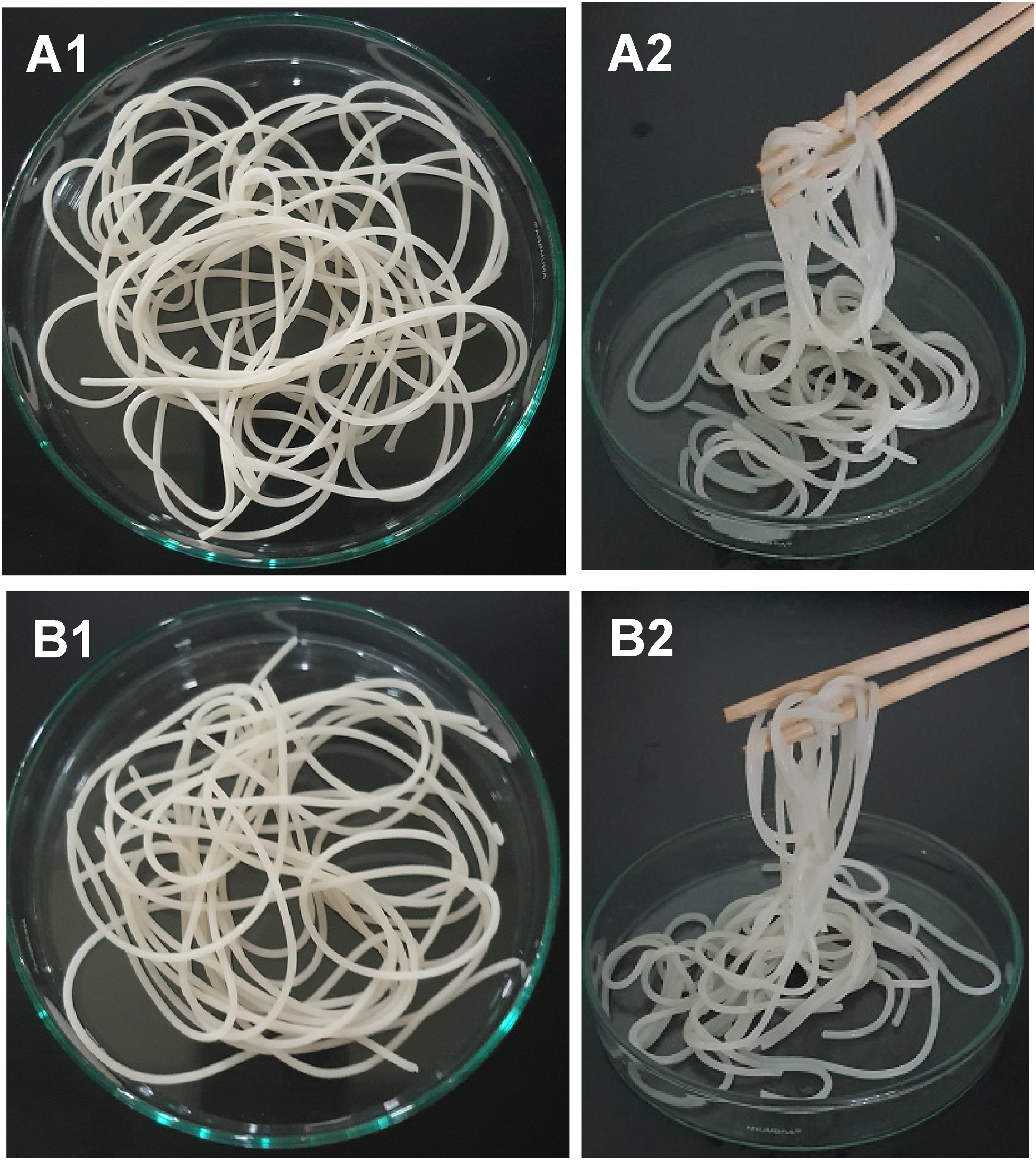
Appearance of uncooked (1) and cooked (2) RF/CTS noodles from capillary rheometer (A) and twin-screw extruder (B).
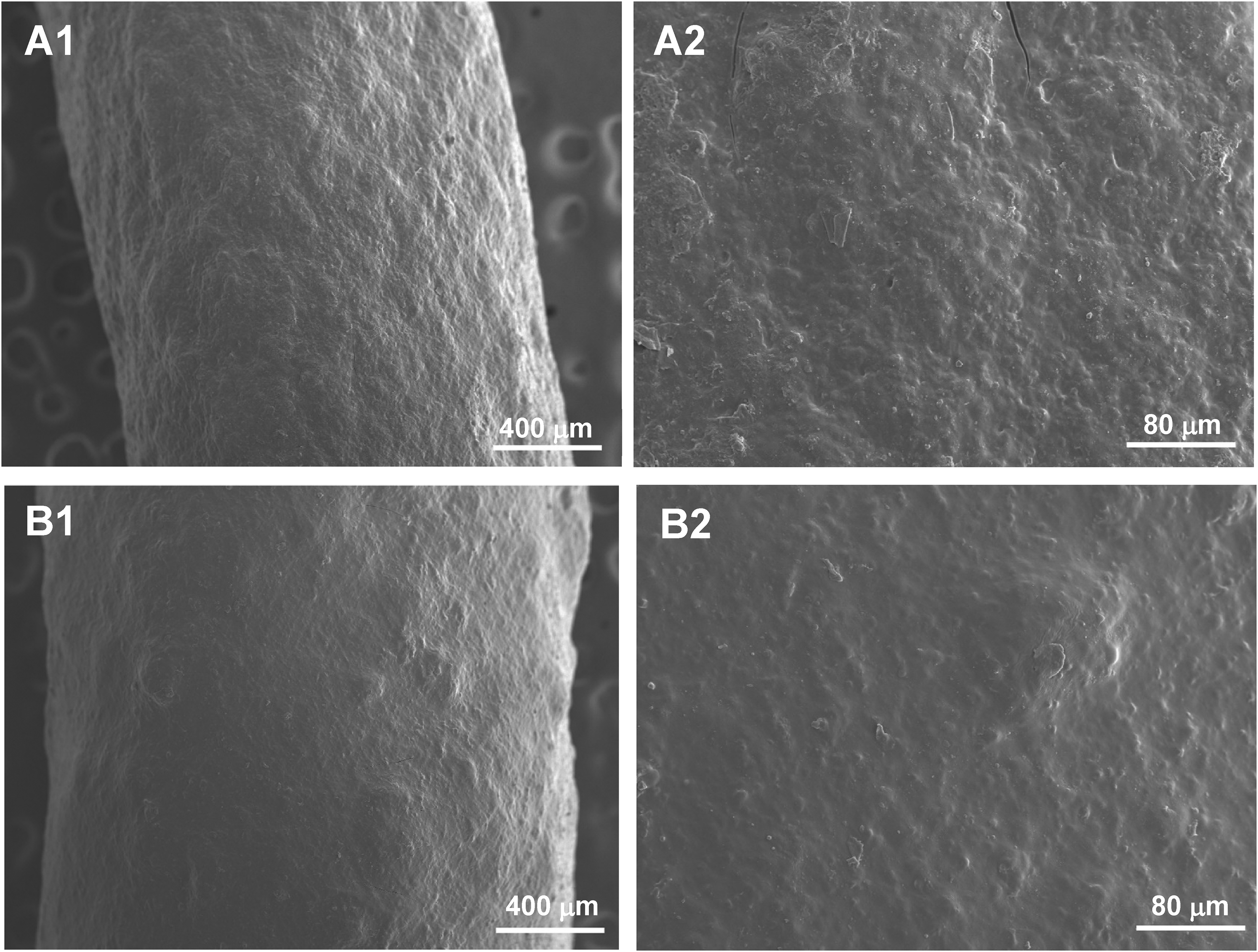
Surface scanning electron micrographs of uncooked RF/CTS noodles extruded from capillary rheometer (A) and twin-screw extruder (B).
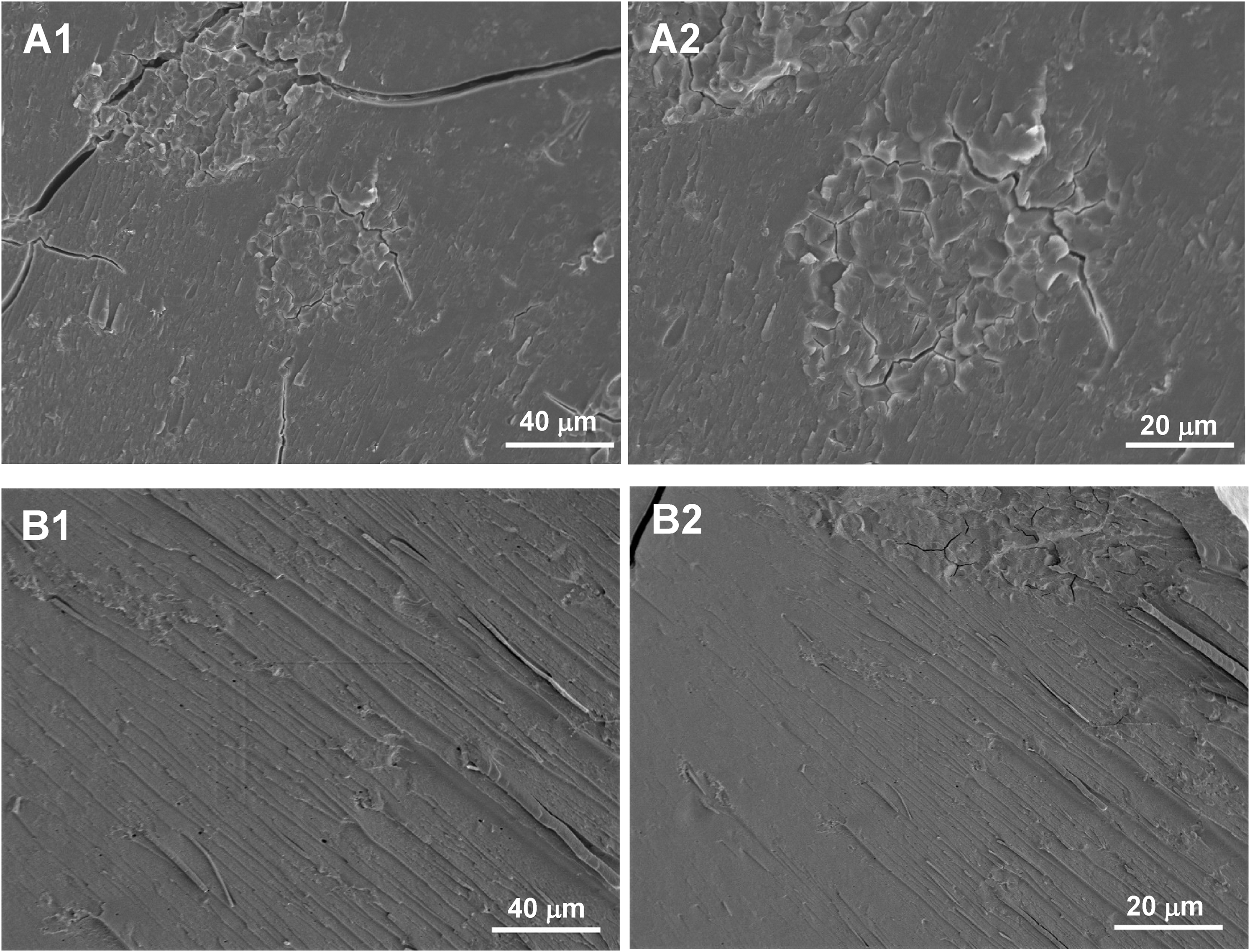
Cross-sectional scanning electron micrographs of uncooked RF/CTS noodles extruded from capillary rheometer (A) and twin-screw extruder (B).
Thermal properties of extruded RF/CTS noodles
DSC thermograms of RF, CTS, and RF/CTS noodles are shown in Figure 5. Transition temperatures (onset, TO; peak, TP; and conclusion, TC) and melting enthalpy (ΔH) are summarized in Table 4. For RF, an endothermic transition was found in a bimodal peak with a TP of 69.18 and 78.62 °C and a melting enthalpy of starch gelatinization (ΔHG) of 6.25 J/g. The appearance of a biomodal peak was explained due to the starch granule architecture, starch composition, and the degree of crystallinity (Cappa et al., 2016). Moreover, it could involve the energy required to denature rice protein (Ju et al., 2001). Beyond the gelatinization temperature, an additional endothermic peak was observed at 98.97 °C because of the melting of the amylose-lipid complex (Hagenimana et al., 2006; Xie et al., 2009; De Pilli et al., 2011; Cappa et al., 2016). In the case of CTS, one gelatinization endotherm was observed at TP,G = 66.65 °C with a higher melting enthalpy of starch gelatinization (ΔHG of CTS = 12.39 J/g) than RF due to the higher total starch content.
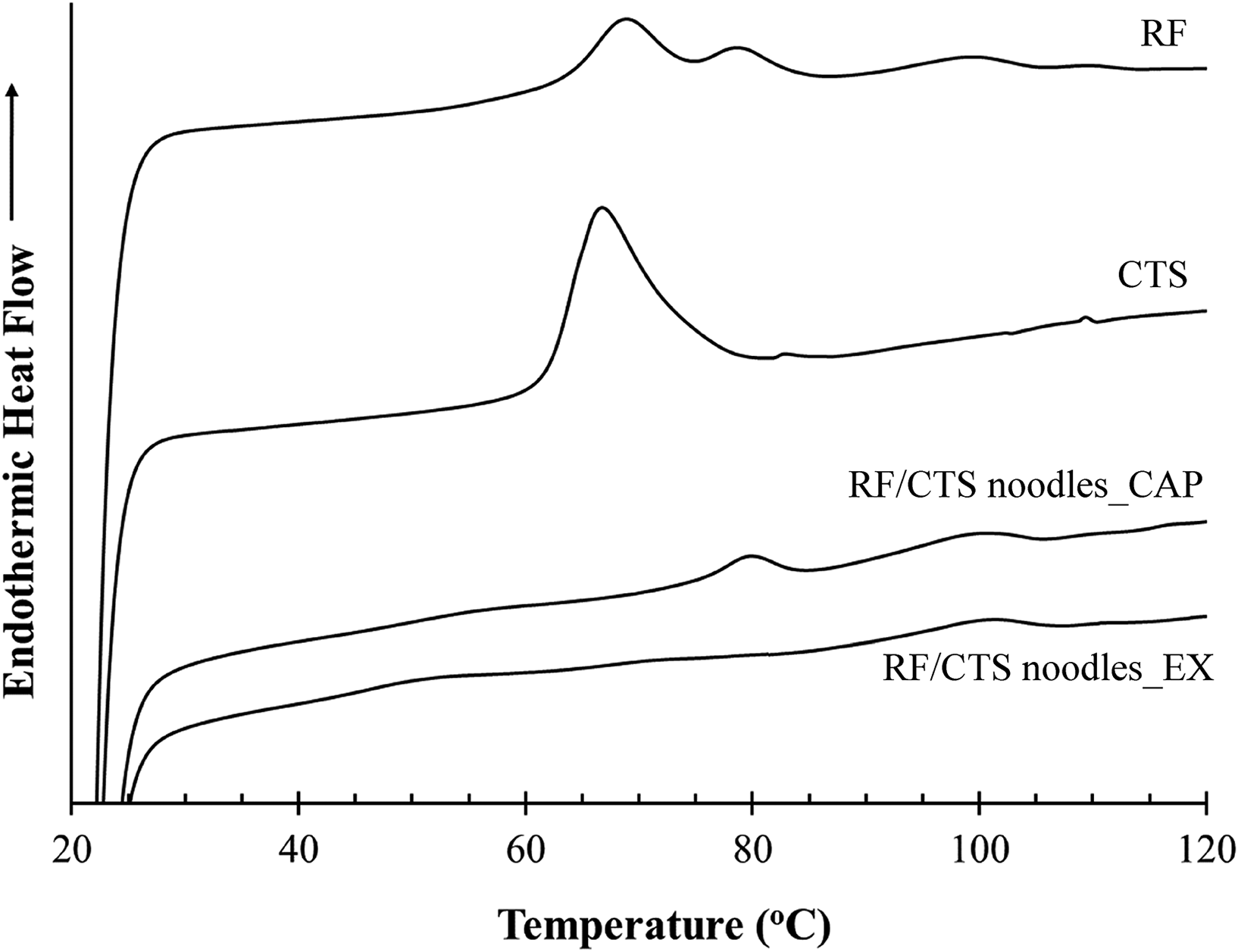
DSC thermograms of RF, CTS, and RF/CTS noodles extruded from capillary rheometer (RF/CTS noodles_CAP) and twin-screw extruder (RF/CTS noodles_EX), respectively.
Thermal properties of RF, CTS, and RF/CTS noodles extruded from a capillary rheometer and a twin-screw extruder.
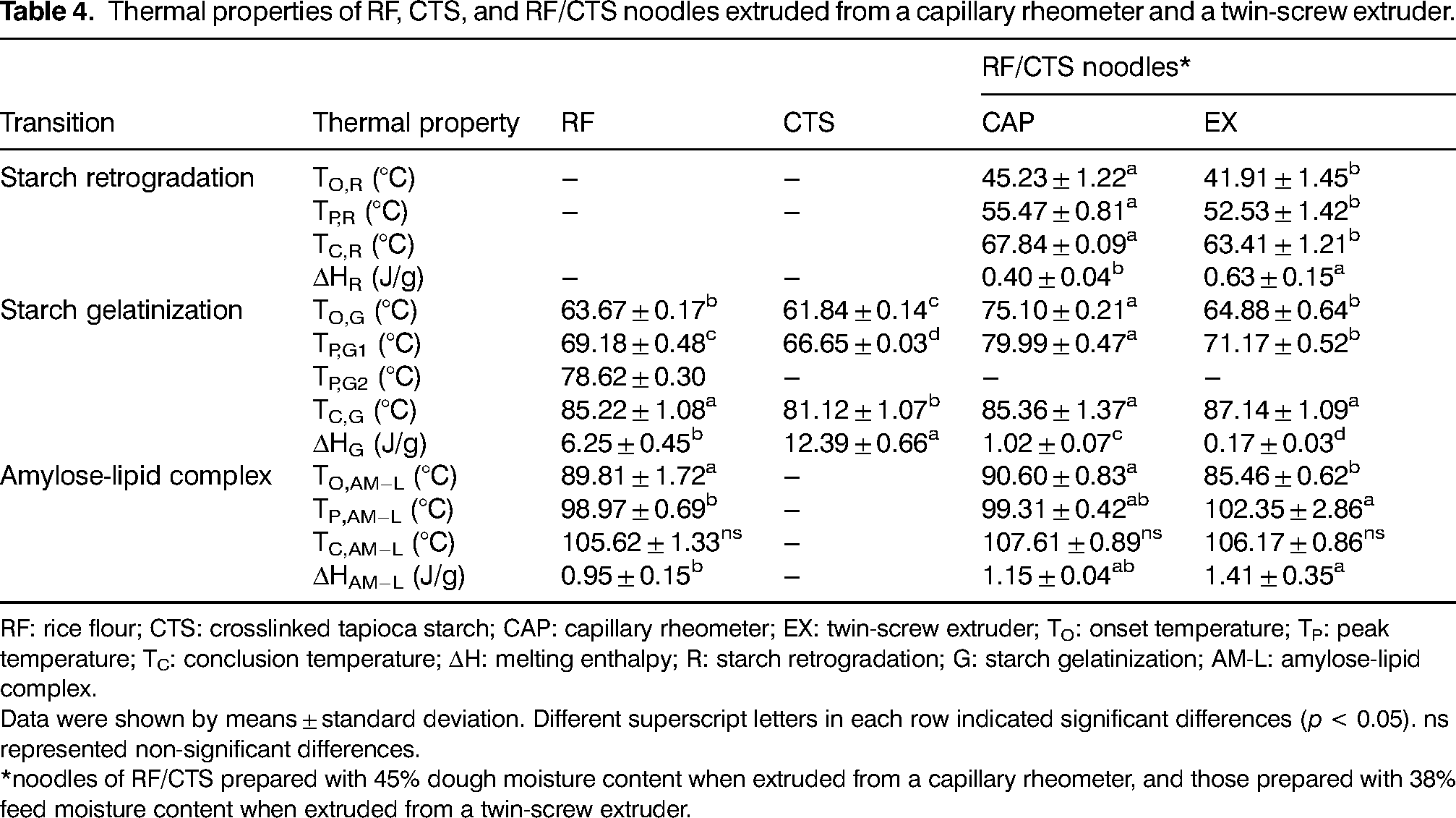
RF: rice flour; CTS: crosslinked tapioca starch; CAP: capillary rheometer; EX: twin-screw extruder; TO: onset temperature; TP: peak temperature; TC: conclusion temperature; ΔH: melting enthalpy; R: starch retrogradation; G: starch gelatinization; AM-L: amylose-lipid complex.
Data were shown by means ± standard deviation. Different superscript letters in each row indicated significant differences (p < 0.05). ns represented non-significant differences.
*noodles of RF/CTS prepared with 45% dough moisture content when extruded from a capillary rheometer, and those prepared with 38% feed moisture content when extruded from a twin-screw extruder.
Due to the different microstructure observed in noodles extruded from different extrusion methods (as seen in Figure 4), DSC experiments were thus carried out in noodles extruded from a capillary rheometer (at 45% wb dough moisture content) and a twin-screw extruder (at 38% wb feed moisture content). The obtained thermograms showed three endothermic transitions. The first transition at TP,R ∼ 53−55 °C was found in both noodles with a small melting enthalpy. The appearance of this transition corresponded to melting of recrystallized starches (Karim et al., 2000; Lu et al., 2009), thus indicating the retrogradation behavior of the noodles (Marti et al., 2011). The onset temperature of recrystallized starches (TO,R) in noodles was found to be lower than the onset gelatinization temperature (TO,G) of the unextruded RF and CTS due to less perfect crystallites of retrograded starches (Iturriaga et al., 2010). Upon further heating, DSC thermograms of both noodles showed a second endothermic peak with a smaller gelatinization endotherm than their unextruded raw materials. Noodles extruded from the capillary rheometer displayed a larger melting enthalpy (1.02 J/g), whereas the ones extruded from the twin-screw extruder had a very relatively small peak (ΔHG ∼ 0.17 J/g). The remaining gelatinization peak indicated that some starch granules/fragments could retain their crystalline structure after extrusion (Menegassi et al., 2011), depending on extrusion conditions and the type of starch employed. This observed peak corresponded to the existence of starch fragments as confirmed by SEM (Figure 4).
Furthermore, the melting peak of the amylose-lipid complex was observed at ∼100 °C (Cappa et al., 2016) in both extruded noodles, with a significantly larger melting enthalpy of the amylose-lipid complex (ΔHAM−L) in comparison to that of RF. It indicated that both extrusion processes induced the formation of the amylose-lipid complex, in which extrusion through a twin-screw extruder gave a larger melting enthalpy of the amylose-lipid complex. This could be attributed to more mechanical stress in extruder damaged double helix structure of amylose, thus facilitating the interaction between amylose and lipid (Bhatnagar and Hanna, 1994). More starch gelatinization, retrogradation, and amylose-lipid complex in noodles prepared from a twin-screw extruder could strengthen the structure of starch matrix, and consequently increase noodle extensibility.
Conclusions
This work attempted to investigate different extrusion methods on the properties and microstructure of extruded RF noodles incorporated with 20% CTS. The extrusion process, which involves the continuous compression of the pregelatinized noodle dough through a die, similar to the traditional rice noodle extrusion, was carried out using a capillary rheometer. A twin-screw extruder was used to prepare the noodles according to modern extrusion. Extruded noodles obtained from both methods showed the same appearance. All noodles showed a decrease in cooking time and cooking loss as moisture content in the formulations increased. In terms of texture, cooked noodles from both methods possessed tensile strength in comparable ranges, but noodles extruded from the twin-screw extruder had much higher elongation at break. An increased noodle stretchability was attributed to the rotation of screws during extrusion in the twin-screw extruder which allowed more uniform mixing, thus more starch transformation, i.e., starch gelatinization and starch retrogradation. This was confirmed by a denser and more coherent microstructure of the noodles. In contrast, microstructure and thermal analyses of the noodles extruded from a capillary rheometer showed the remaining starch fragments and an incomplete starch gelatinization, therefore resulting in a weaker starch network. Therefore, to obtain noodles with good extensibility, this study revealed that extrusion using a twin-screw extruder was more desirable than traditional extrusion. The most preferable parameters for rice noodle processing using this type of twin-screw extruder in the study were found to be 38% wb feed moisture content, 100 rpm screw speed, and a maximum barrel temperature of 90 °C to ensure the best properties of the cooked rice noodles with a homogeneous and compact internal structure.
Footnotes
Acknowledgements
This study was granted by the National Metal and Materials Technology Center (MT-B-58-POL-07-548-I). The authors are grateful to Mr Worapol Pengpinij (Institute of Food Research and Product Development, Kasetsart University) for providing technical assistance for the twin-screw extruder.
Declaration of Conflicting Interests
The author(s) declared no potential conflicts of interest with respect to the research, authorship, and/or publication of this article.
Funding
The author(s) received no financial support for the research, authorship and/or publication of this article.
