







Abstract
This study investigated the application of black cumin meal (BCM) obtained from cold-pressing Nigella sativa seeds in bread baking. The effect of BCM on bread rheological traits and its nutritional value were investigated. Zeleny sedimentation, falling number, Farinograph, and Extensograph values in flour mixed with BCM (2.5%, 5%, 7.5%, and 10%) were evaluated. In addition, mineral content, protein, fat, thymoquinone, and crude cellulose contents in bread were investigated. Zeleny sedimentation and falling number values decreased with the increase in BCM in the flour samples. The water absorption, development time, stability, and softening degree values of the dough measured in the Farinograph device did not show a statistically significant difference in the flour with the BCM mixture compared to the control sample. The energy value and extensibility determined in the Extensograph device decreased with the increase in the amount of BCM in the flour. The amount of protein and crude fiber in bread increased with the increase in the amount of BCM. It was noted that there were significant increases in Fe, Ca, Mg, K, and Zn levels with the increase in BCM. Meanwhile, thymoquinone was not found in the bread samples containing BCM. The results revealed that the nutritional values of BCM-mixed bread are rich in protein, minerals, and cellulose.
INTRODUCTION
Bread is one of the most widely consumed foods in the world. Efforts to enrich bread with nutrients and turn it into a functional product are increasing daily. In developing countries, grain products are consumed more. People living in these countries do not have enough earnings for a balanced diet. Since other grain products, especially bread, are economical, easily obtainable, and widely consumed food, their enrichment will play an essential role in society's balanced and healthy nutrition (Hobbs et al., 2014; Cavalcante et al., 2016; Le Loan et al., 2021; Kim et al., 2022).
Today, the increase in the time people spends in business life, the decrease in their physical activities and the adverse effects of their eating habits have led to an increase in diseases. In parallel with the increase in “fast food” type food consumption in nutrition, the decrease in the dietary fiber ratio and the increase in the glycemic index lead to increases in chronic diseases. Studies have shown that high-fiber food lowers the glycemic index and reduces heart disease risk (Hu et al., 2009; Kendall et al., 2010; Hager et al., 2011; Suri et al., 2021).
With the increase in consumer awareness, the interest in functional food is also increasing. Bread is rich in carbohydrates and is, therefore, a good source of energy. However, it does not have good protein, vitamins, minerals, essential fatty acids, and dietary fiber. For this reason, studies on enriching these missing nutrients have been increasing. The research uses mixtures prepared from plant-based and protein-rich products in bread and other bakery products (Bastos et al., 2014; Diana et al., 2014; Indrani et al., 2015; Le Loan et al., 2021; Raj and Dash, 2022). Studies investigated the rheological structure and quality of bread by adding spices such as linseed, black cumin, turmeric, and ginger in bread making (Lim et al., 2011; Balestra et al., 2011; Marpalle et al., 2014; Osman et al., 2015; Sayed-Ahmad et al., 2017; Sayed Ahmad et al., 2018; Coşkun et al., 2021). It has been observed that these mixtures increase functional traits and have positive or negative effects on sensory properties (Burnaz et al., 2018).
Black cumin (Nigella sativa L.), a seed spice of Mediterranean origin, spreads widely from West Asia to the north of India. The used part of black cumin is the seeds (Malhotra, 2004; Ramadan, 2021). The seeds contain essential oil (0.5–1.6%), fixed oil (35.6–41.6%), protein (22.7%), amino acids, reducing sugar, fiber, alkaloid, organic acid, tannin, and resin (Baytop, 1963; Ramadan, 2007, 2021). Black cumin seeds add flavor to the production of some foods such as paste, pastry, cheese, pickles, and bakery products (D'Antuono et al., 2002; Cheikh-Rouhou et al., 2007; Osman et al., 2015; Różyło et al., 2021). In addition, black cumin seed components are functional and used to prepare cosmetic and dietary supplement products. Since black cumin seed has a sharp taste, it has also found use in coffee, tea, bread, and salads (Bulca, 2014; Bashir et al., 2021; Kour and Gani, 2021). It is reported that black cumin is widely used in Turkey, especially in bakery products such as bread, buns, biscuits, and some cheese varieties such as Tulum and Cottage cheese (Akgul, 1993; Bashir et al., 2021).
Black cumin has been used for many years, especially for wellness and treating various diseases (Ramadan, 2021). Findings about black cumin, studies on thymoquinone and therapeutic properties of phytochemicals in black cumin attracted the attention of modern medicine and accelerated research on this subject (Aslan, 2019). Black cumin seeds and their bioactive components showed antitumor (Mbarek et al., 2007), antibacterial (Nayak and Lexley, 2006; Halawani, 2009), anti-inflammatory (Salem, 2005), antioxidant (Salem, 2005; Kar et al., 2007; Çakmakçı and Çakır, 2011), immunomodulatory (Kaya et al., 2003; Şener, 2008), gastroprotective (antiulcer) (Kanter et al., 2005), antidiabetic (Erdem, 2021), hepatoprotective (Ahmad et al., 2013) antihistaminic (Salem, 2005; Şener, 2008), antihypertensive (Canan et al., 2018), antihyperlipidemic (Çakmakçı and Çakır, 2011), antihyperglycemic (Bachhawat et al., 2011), and anticholesterolemic (Sultan et al., 2009) traits.
The current study used cold-pressed black cumin (Nigella sativa L.) meal (black cumin meal [BCM]) to investigate its effect on dough quality and the nutritional value of bread. Nigella sativa meal is obtained at the end of the cold-pressed black seed oil production and is rich in dietary fiber and minerals. Due to the lack of nutrients in white bread and the tendency to increase the glycemic index, it is aimed to produce functionally rich bread by mixing BCM with white flour in specific proportions. In addition, the level of transition of thymoquinone, which is an essential functional component in terms of human health, from black cumin to bread was investigated.
MATERIALS AND METHODS
Cold-pressed BCM was obtained from Ovena company (Esenyurt, Istanbul, Turkey), which produces cold-pressed oil. Wheat flour, water, vegetable oil, and salt required for the bread trials were obtained from the local market (Balikesir, Turkey).
Black cumin meal was added to the flour by displacement of 2.5, 5.0, 7.5 and 10.0%. These rates were determined by reference to similar studies (Osman et al., 2015; M Abo-Taleb and E Rizk, 2022) and by preliminary experiments in the laboratory. Accordingly, the calculated BCM of missing flour was weighed for each sample. In preparing the flour-BCM mixture (100 g), 2.5, 5.0, 7.5 and 10.0 g of BCM were mixed with 97.5, 95.0, 92.5 and 90.0 g of flour, respectively. Weighting in flour and BCM mixture was made on dry matter. Black cumin meal-free flour was used as a control sample.
Physicochemical and rheological analyzes
Wet gluten and gluten index (AACC 38–12) and falling number were calculated according to AACC 56-81b (Anon., 1990). The Zeleny sedimentation test was performed according to Özkaya and Kahveci (1990). Farinograph analyses, water absorption, dough development time, stability, softening degree of flour, and BCM mixtures were carried out according to AACC 54-21 (AACC, 2000). Extensograph analysis, dough resistance to extension, extensibility, maximum resistance, and energy values were determined according to AACC 54-10 (AACC, 2000). For determining Farinograph and Extensograph properties, a 300 g flour mixture was taken as a basis.
Bread making and chemical analysis
The bread was made from bread flour and flour with BCM added by modifying the AACC 10-10 method (AACC, 1990). Accordingly, based on 100 g flour, the dough mixture was prepared using 3% yeast, 1.5% salt and water, as much as the water absorption value obtained in the Farinograph. Doughs are kneaded until a mature dough is obtained, rested at 30 °C at 80–90% relative humidity, and baked at 230 °C for 25 min. One hour after the bread came out of the oven, they were cooled and put in polyethylene bags (Elgün et al., 2001). Bread moisture analysis was carried out following the AACC 44-19 method (AACC, 2000). Ash determination was carried out according to AACC 08-01, crude oil analysis according to AOAC (1990), and protein determination using the Kjeldahl method (AACC 46-12). Crude cellulose analysis was carried out according to Crampton and Maynard (1983). Extraction of the desired component from the samples for thymoquinone analysis was performed according to Burnaz et al. (2018). Extracts from BCM, flour-BCM, and bread samples used for thymoquinone analysis were performed according to Kıralan et al. (2014). After the bread samples were sliced, they were dried and milled in the laboratory mill to prepare them for analysis. It was stored in airtight plastic bags at refrigerator temperature (4–5 °C) until analysis.
For mineral analysis, approximately 0.5 g of the sample was weighed. Then, 5 mL of concentrated HNO3 was added to the samples, and solubilization was carried out with the CEM brand MARS 6 model microwave solubilization system within the scope of the program specified below. Then, solubilized samples were diluted to 25.0 mL with distilled water and prepared for analysis, and the determination of the indicated analytes was performed by inductively coupled plasma optical emission spectrometry (ICP-OES).
Microwave solubilization program
Power 400 W, Pressure 800 psi, temperature 200 °C, time to reach desired temperature 20 min, waiting time at desired temperature 15 min, CEM Mars 6 microwave solubilization system (Matthews, NC, USA), and Perkin Elmer 7300 DV ICP-OES (Waltham, MA, USA) (Tokay and Bağdat, 2022).
Statistical analysis
The samples were analyzed with two replications, and the difference between the means was determined using analysis of variance, and the level of difference between samples was made using Duncan's test, one of the Multiple Comparison tests.
RESULTS AND DISCUSSION
Analysis of flour-BCM mixture
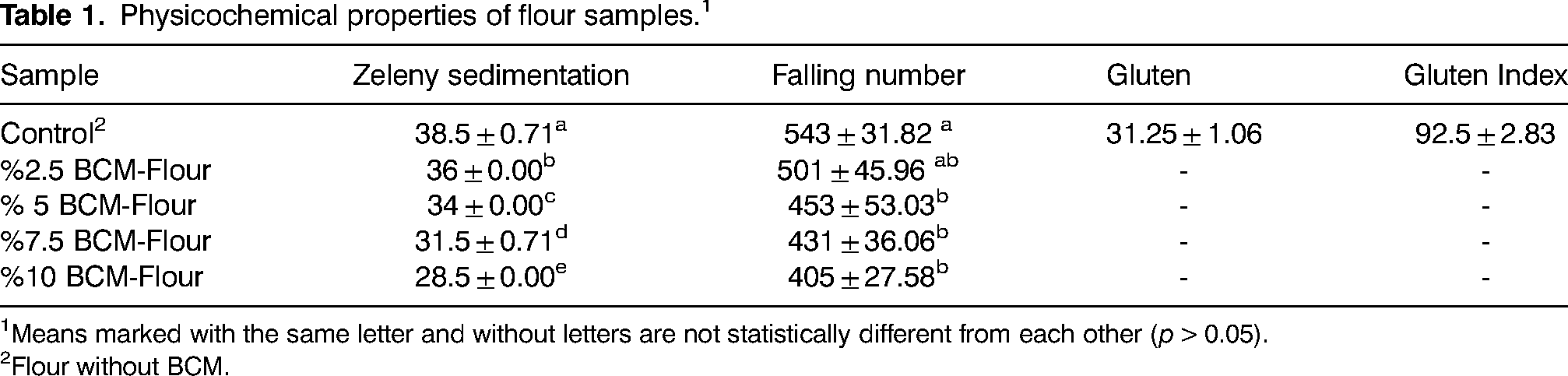
The Duncan test results of physicochemical, Farinograph, and Extensograph analyses of the flour-BCM mixture are given in Tables 1 and 2. For determining bread quality, parameters such as gluten amount, gluten index, Zeleny sedimentation, and falling number should be examined (Gooding et al., 2003). In Table 1, the results of the physicochemical traits of the flour and flour-BCM mixture are given. There was a decrease in sedimentation and falling number values with the increase in the amount of BCM in flour.
Physicochemical properties of flour samples.1
Means marked with the same letter and without letters are not statistically different from each other (p > 0.05).
Flour without BCM.
Duncan Multiple Comparison test of Farinograph and Extensograph values in dough prepared from flour with the addition of BCM.1
The Zeleny sedimentation value gives an idea about the amount and quality of gluten. A study determined that the Zeleny sedimentation values decreased with adding fibers to the flour in powder form (Duran et al., 2004). Parallel to this study, it was determined that the decrease in the sedimentation value in Table 1 was due to the fibers in BCM. The falling number value measures the amylase activity in flour and is defined as the time for the viscosity of the starch in the flour to fall with the effect of α-amylase (Ünal, 1991). It is noted that the falling number values decrease with the increase in the amount of BCM (Table 1), and this is because the starch molecules affected by the enzyme show a more homogeneous distribution in the BCM, increasing the enzyme's surface area. The enzyme activity increases as the substrate surface area increases (Kong et al., 2003). Therefore, gluten and gluten index values cannot be analyzed in flour containing BCM. The results of the Zeleny sedimentation and the falling number of flour samples were statistically significant (p < 0.05). Therefore, BCM caused a decrease in sedimentation value. It has been shown that BCM reduces the bread value of the flour, and as a result, the bread volume is visibly affected (Figures 1 and 2).
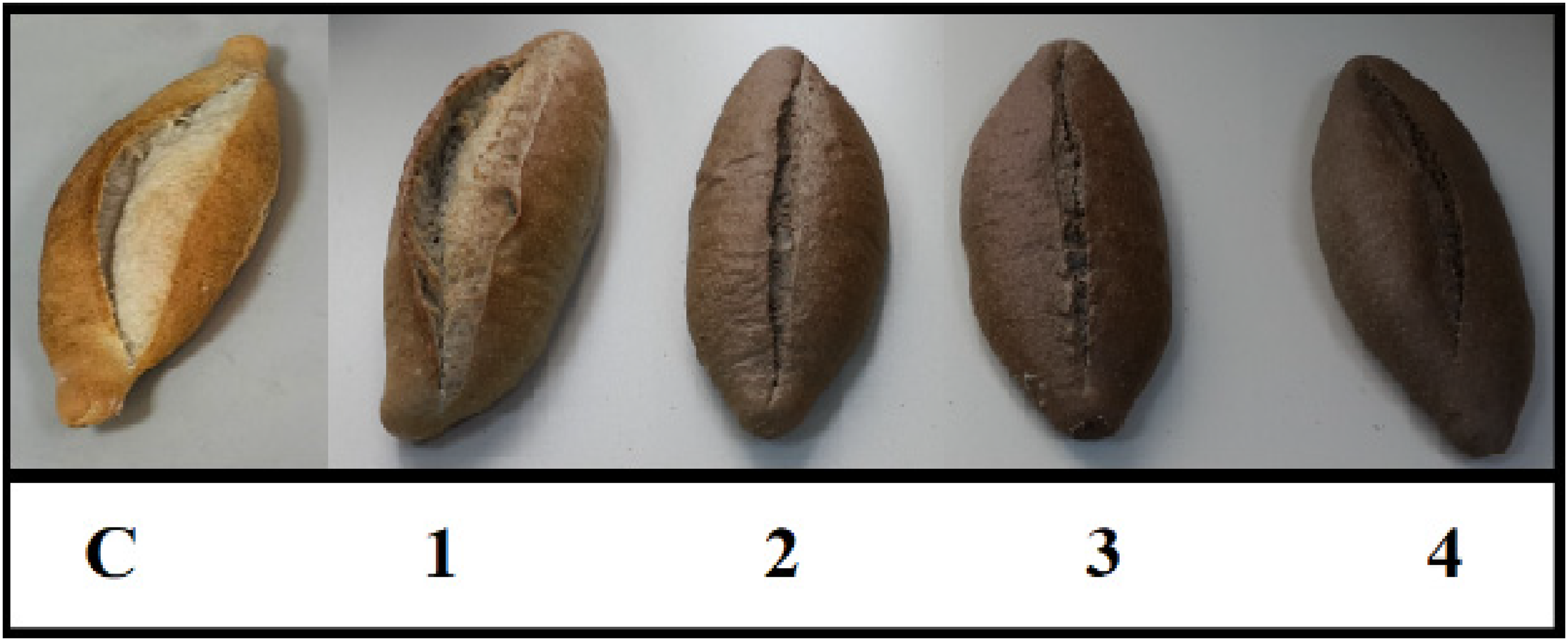
Whole bread with different proportions of BCM.
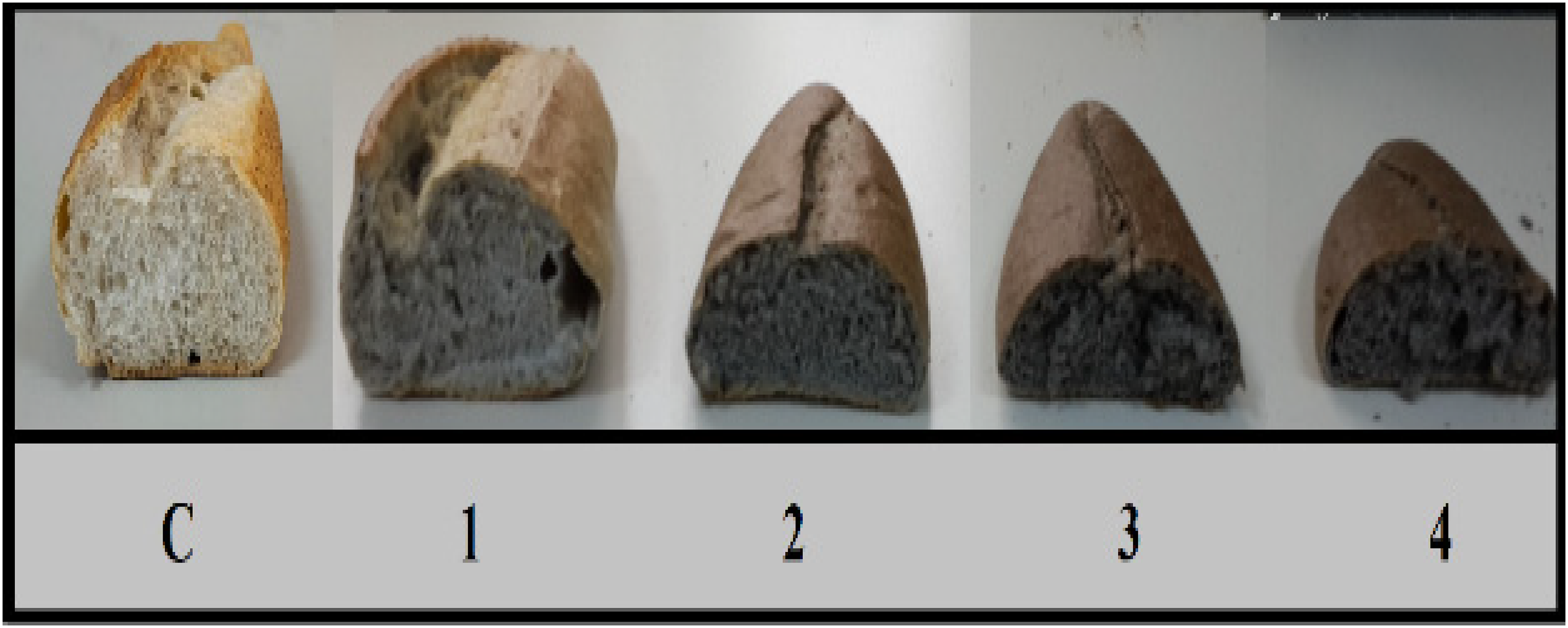
Bread containing BCM in different proportions, the pore structure examined by cutting it in the middle.
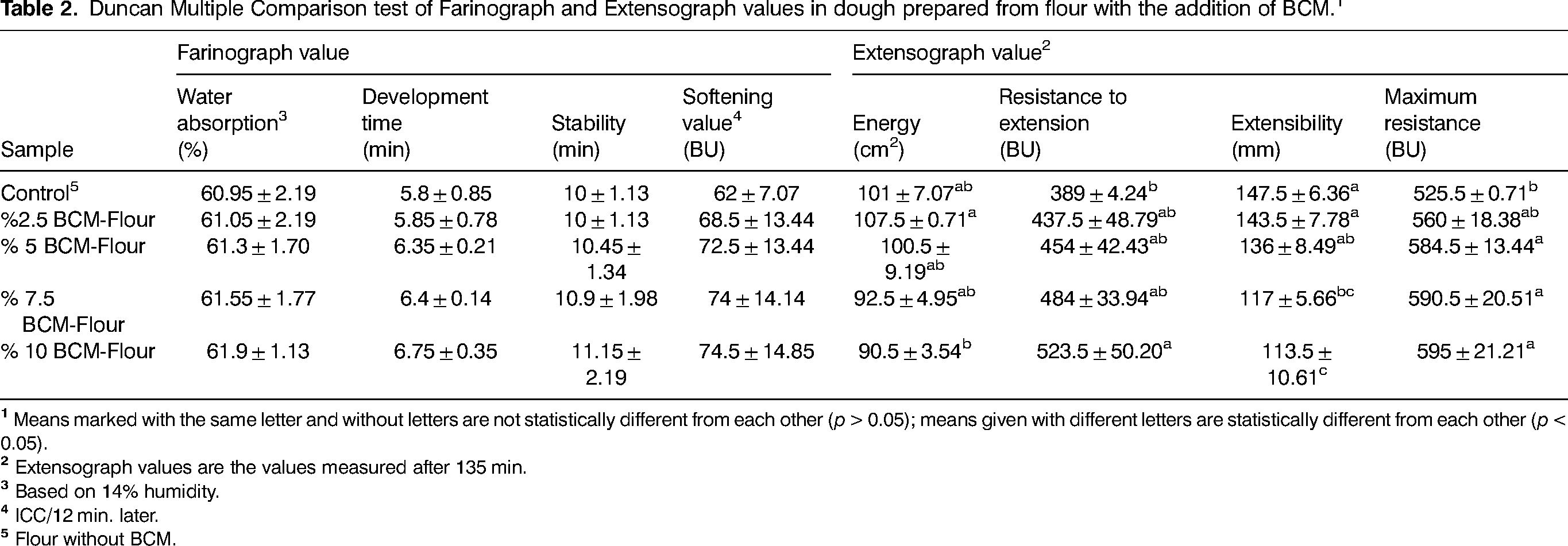
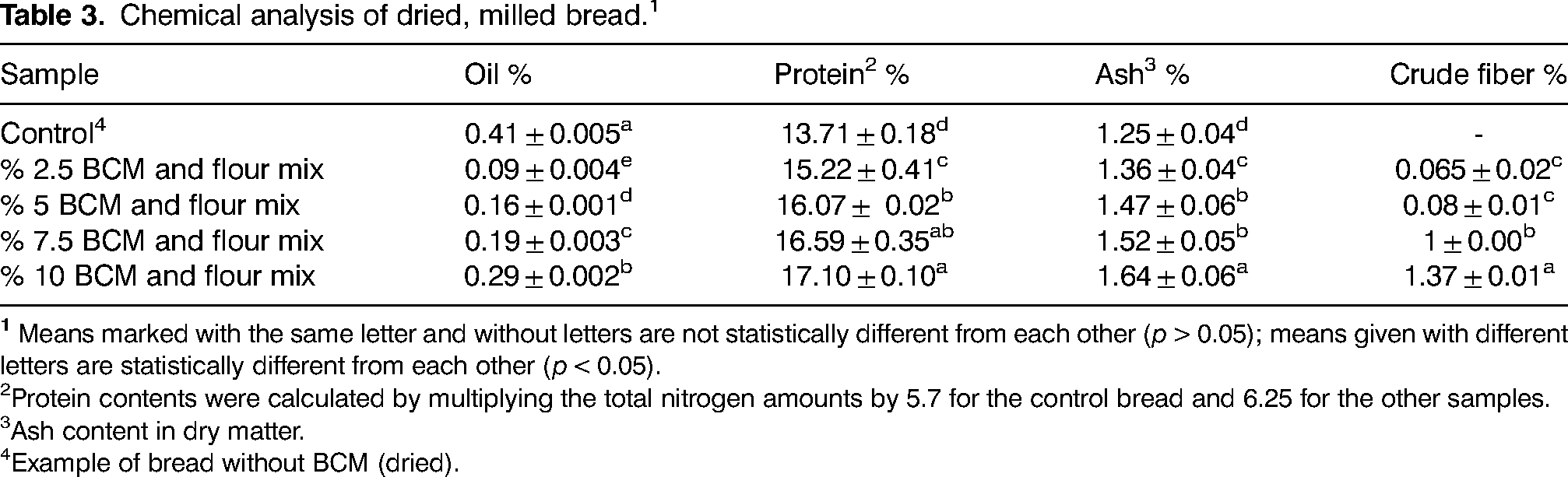
Results of Farinograph and Extensograph values in dough prepared from flour with BCM are given in Table 2. Farinograph analyses give an idea about the dough's water absorption, development time, stability, and softening degree that reflects the consistency of the dough (Stojceska and Butler, 2008). Farinograph analyses observed that water absorption, development time, stability, and softening degrees increased with the increase of BCM. However, it was determined that these values did not differ significantly (p > 0.05) within flour samples (Table 2). Meanwhile, the result showed that BCM addition had no significant effect on farinograph values. Therefore, the increase in Farinograph values is thought to be due to increased cellulose and protein content (Table 3). A study conducted with broad bean flour stated that increased broadband flour increased water absorption, dough stability, and development time, and this was due to the increase in protein content (Abdel-Kader, 2000). The protein values in Table 3 confirm this idea. Similar studies have shown that the increase in dietary fiber and/or cellulose in flour as a result of the addition of fiber-containing additives causes an increase in Farinograph values, such as the softening degree of water absorption (Chen et al., 1988; Sosulski and Wu, 1988; Sudha et al., 2007; Erdoğan, 2010; Erdemir, 2015; M Abo-Taleb and E Rizk, 2022).
Chemical analysis of dried, milled bread.1
Protein contents were calculated by multiplying the total nitrogen amounts by 5.7 for the control bread and 6.25 for the other samples.
Ash content in dry matter.
Example of bread without BCM (dried).
Regarding Extensograph analysis, changes in the rheological traits of the dough are measured at different times (45, 90 and 135 min). Depending on the time, rheological changes occur in the dough due to the biochemical activity or the ingredients added to the flour (Miś et al., 2012). The Extensograph (135 min) results of the dough obtained from the mixtures are given in Table 2. The results showed a statistically (p < 0.05) significant difference between dough resistance to extension, extensibility, maximum resistance, and energy values in dough prepared from flour and BCM mixture. According to the data, it was noted that the addition of BCM significantly affected the rheological behavior of the dough. The energy value and extensibility ability decreased with the increase in the amount of BCM in the flour. Similar results have been shown in the studies conducted, with increased flour fiber and decreased energy values and extensibility (Bilgiçli et al., 2007; Gül, 2007; Erdoğan, 2010).
The higher the energy value in the dough, the higher the dough's fermentation tolerance and suitability for processing (Gül, 2007). Therefore, it is concluded that the suitability for processing and fermentation tolerance of the dough obtained with the increased amount of BCM are negatively affected. It is thought that this negativity could be eliminated with antioxidant additives. In his study, Gül (2007) concluded that adding antioxidants positively affects the energy and extensibility of products with high bran and cellulose content. With the addition of BCM, the extensibility of the dough decreased, and the maximum resistance value increased (Table 2). It is thought that the BCM adversely affects the gluten network, thus restricting the extensibility of the dough and reducing its elasticity. In addition, due to the high water binding capacity of the cellulosic substances in the pulp, gluten cannot bind enough water, and the elastic property of the dough cannot fully develop. In a similar study, the maximum resistance value of the mixtures containing apple pomace powder increased as the amount of additive increased, but the extensibility decreased (Erdoğan, 2010). In another study, bread doughs were prepared with broad bean paste powder at different rates (0, 2, 4, 6, 10 and 15%). It was determined that the dough resistance increased, and the dough extensibility decreased as the broad bean paste powder was added (Erdemir, 2015). The low energy of the dough causes the gas-holding capacity of the dough to be low (Elgün et al., 2012). The fact that the bread volume was low in the dough mixed with the addition of BCM supports this finding (Figures 1 and 2). In Figure 2, it is seen that the volume of the bread sample with 10% BCM content is lower than the other samples.
Bread analysis obtained from flour and BCM mixture
The results of bread chemical analyses are given in Tables 3 and 4. Bread obtained from flour samples was dried and turned into bread crumbs, wherein oil, ash, nitrogen, crude cellulose, and mineral values were analyzed. Bread samples numbered C, 1 (2.5% BCM-flour), 2 (5% BCM-flour), 3 (7.5% BCM-flour), and 4 (10% BCM-flour), as seen in Figures 1 and 2. As observed in the figures, the increase in BCM showed a noticeable difference in the shape and volume of the bread. It is observed that there is a significant decrease in bread volume in particular. The values of oil, protein, ash, and cellulose were statistically significant (p < 0.05) between the samples (Table 3). Significant increases were observed in all results. The increase in bread, especially in terms of protein and crude fiber, shows that bread has a nutrient-rich content. Similar studies found that the nutritional value of bread with different pulp and bran additives increased and that the bread was enriched in terms of fiber, minerals, and protein (Chen et al., 1988; Hayıt and Gül, 2020; M Abo-Taleb and E Rizk, 2022). A study was conducted in which wheat flour was added to quinoa flour in different proportions. In this study, bread volume decreased when the amount of quinoa flour was used by more than 15% (Morita et al., 2001). In their study, Iglesias-Puig et al. (2015) stated that quinoa flour could be used in bread making due to its dietary fiber, mineral, protein, and healthy lipid content.
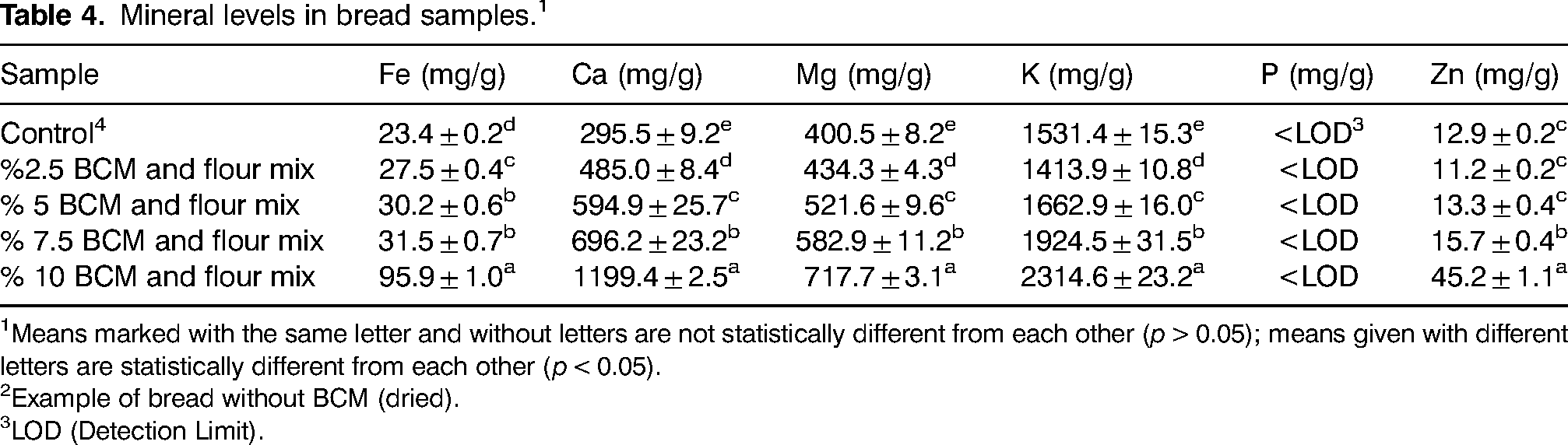
Mineral levels in bread samples.1
Means marked with the same letter and without letters are not statistically different from each other (p > 0.05); means given with different letters are statistically different from each other (p < 0.05).
Example of bread without BCM (dried).
LOD (Detection Limit).
The results of mineral levels in dried, milled bread samples are given in Table 4. It was observed that there were statistically significant differences (p < 0.05) between samples within iron (Fe), calcium (Ca), magnesium (Mg), potassium (K), and zinc (Zn) values. The phosphorus (P) amount remained below the detection limit (LOD). In all samples, it is noted that BCM adds value to the bread in terms of minerals that are important in human nutrition. Compared to the control bread, the amounts of Fe, Ca, Mg, K, and Zn increased significantly as the amount of BCM increased. Bread made from processed flour is insufficient in minerals and dietary fiber. Studies for enriching bread with fibers, minerals, and other nutrients are becoming increasingly important. Mixtures made from nutrient-rich food, mostly of vegetable origin, enrich bakery products (Indrani et al., 2015; Cavalcante et al., 2016; Giritlioğlu and Dizlek, 2018; M Abo-Taleb and E Rizk, 2022). It has been determined that BCM-mixed bread is an important mineral source. Especially in the bread of 10% BCM mixture, there was a significant increase in other minerals except for phosphorus.
The increase in mineral amount and cellulose in the bread caused noticeable differences in the volume and pore structure of the bread samples (Figures 1 and 2). It was observed that the sample that provided the closest shape and volume to the control sample was sample number 1. It is understood that the reason for the difference in shape and volume in the samples is the result of the increase in the amount of BCM and the decrease in the elongation ability and energy value of the Extensograph properties. The increase in BCM had a negative effect on the pore structure, shape, and volume of the bread. It was determined that sample number 4 (with 10% BCM) was the bread sample with the highest BCM amount and the lowest volume. In studies where food rich in minerals and fiber was added to the bread at different rates, results recorded that the bread volume decreased compared to the control bread. The results showed that the volume values decrease as the fiber content increases (Erdoğan, 2010; Anıl, 2002; Hançer et al., 2022).
CONCLUSION
The current study used BCM as vegetable waste and added it to the bread formulation. Results showed that the nutrient content changed positively, and the rheological traits of the dough were affected. Although there was no statistically significant difference in Farinograph values, Extensograph values changed significantly. The increase in the amount of BCM decreased the bread's workability and shapeable property by decreasing the bread dough's extensibility and increasing its resistance to extension. This situation adversely affected the appearance of the bread at the end of fermentation and baking in the oven. However, increases in minerals, protein, and fiber (raw cellulose) content indicate a nutritional improvement in bread. Thymoquinone, one of the nutrients naturally found in black cumin, was not found in BCM and bread samples. It is thought that the amount of thymoquinone, an essential component, can be increased by increasing the level of oil remaining in the pulp, and therefore, it will be an essential factor in enriching the bread with nutrients. Another functional product will be brought to the market by regulating the shapeability of the BCM-bread with supportive additives and fortifying its nutritional content with thymoquinone, a powerful natural antioxidant. The bread sample containing 2.5% BCM gave the best physical appearance and showed remarkable differences in nutrient content (protein, fiber, and minerals) compared to the control bread. In future studies, this study should be supported by organoleptic and shelf life analyses and studies for enrichment of bread in terms of nutrients by adding different functional components should increasingly continue.
Footnotes
DECLARATION OF CONFLICTING INTERESTS
The author(s) declared no potential conflicts of interest with respect to the research, authorship, and/or publication of this article.
FUNDING
The author(s) disclosed receipt of the following financial support for the research, authorship, and/or publication of this article: This work was supported by the Balikesir University Scientific Research Projects Unit (research project 2019-039). We thank Tellioğlu and Madak flour factories for supporting our study.
