






Abstract
This is a visual representation of the abstract.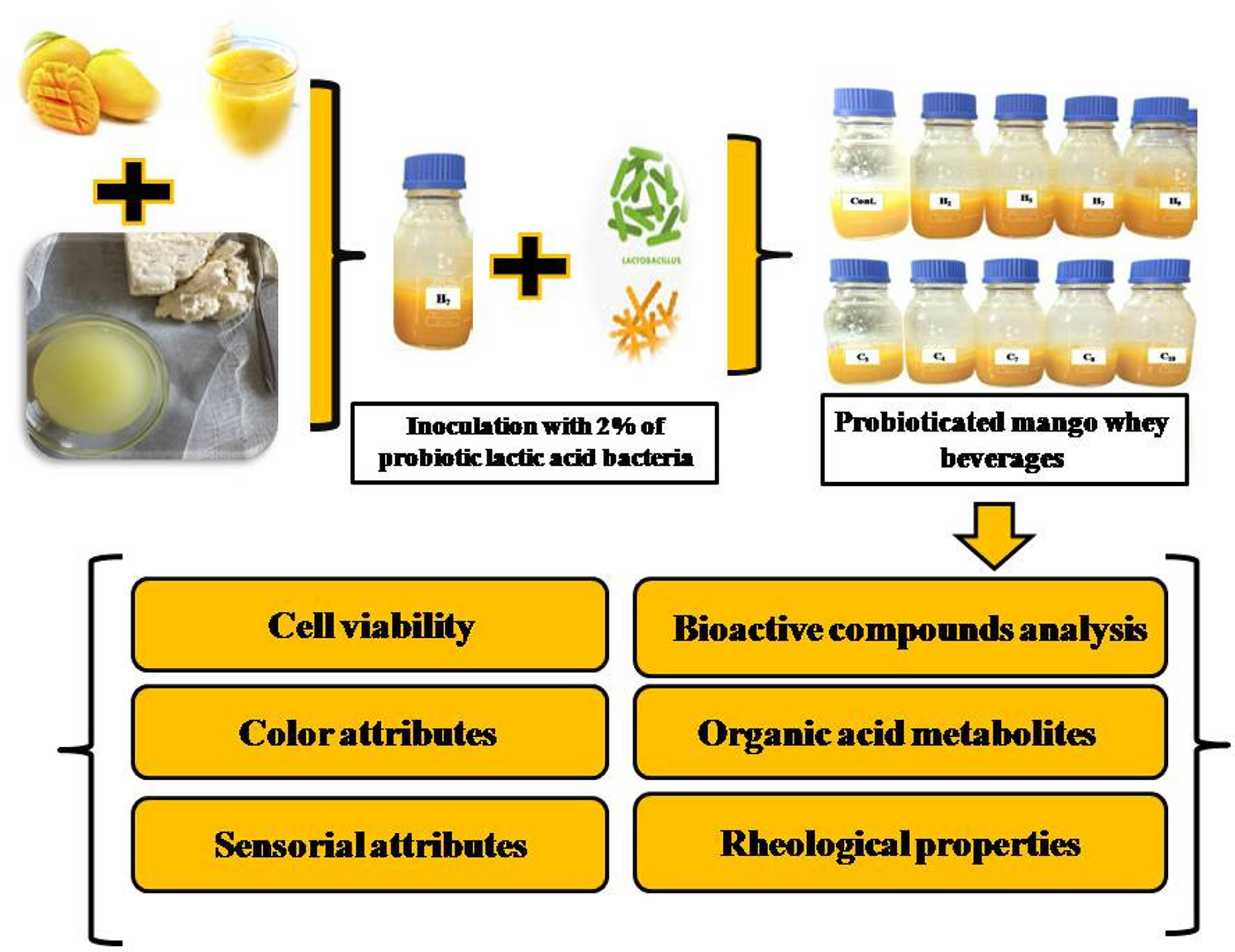
The objective of this study was to enhance the value of dairy byproducts including cheese whey through developing fermented whey beverages using novel isolated lactic acid bacterial strains from human and cow milk. Nine formulations of a fermented whey mango beverage were carried out and compared to non fermented whey supplemented with mango juice on day one or after 10 days of cold storage. Chemical and physicochemical properties, viscosity, antioxidant activity, organic acids profile, and microbiological parameters were evaluated. No significant differences (p ≥ 0.05) were observed in the chemical composition; whereas significant differences (p ≤ 0.05) were observed in pH. Concentration of total phenolic content was ranged from 51 to 125.02 mg GAE/g, while antioxidant activity was significantly increased in fermented whey beverages by C3 strain (86.7%) compared to control sample (60.52%). Organic acid metabolites especially lactic and acetic acids were present in large amounts in all the fermented whey samples. Furthermore, the fermented whey mango beverages provided a favorable environment for the growth of probiotic bacteria; the bacterial count during the storage period exceeded 7 logs CFU/ml, which was significantly higher than the minimum therapeutic dose, and did not fall below 7 until the end of the period. Sensorially, the addition of probiotic strains C4, C8, H7 and H9 significantly (p ≤ 0.05) improved the final product's structural qualities, color and sensory acceptance. Overall, the mango beverage has a high potential for being a profitable novel dairy product with several nutritional and bioactive benefits.
Keywords
Introduction
Due to the continuous growth of the dairy industry sector, significant amounts of by-products are produced, the most common of which is whey (Ahmed et al., 2023; Lu et al., 2014). In the absence of sustainable practices, whey is regarded as the most significant environmental pollutant in the dairy industry, which is disposed of as sewage water (Sakhale et al., 2012). It is crucial to direct whey management toward a cost-effective and sustainable method of utilization by directing it into the production of novel valuable products, as the disposal of whey also represents a significant loss of potential nutrients and energy (Alane et al., 2017; Joshi et al., 2020). The substantial nutritional potential of whey and its associated health benefits have led to around 50% of leftover whey being repurposed to create value-added products in the food and chemical industries (Chavan et al., 2015). In this sense, a number of researches have been conducted to identify viable, ecologically sustainable solutions for whey use, rather than merely disposing of it in the field. Various methods have been implemented in an effort to convert a substantial quantity of whey into valuable products that are suitable for use as sustenance, including concentration and/or fractionation, dehydration, or hydrolysis. Nonetheless, considering that all these procedures are very costly, necessitate sophisticated technology, and do not achieve complete utilization of raw materials, the most cost-effective method of whey processing is the manufacture of functional fermented whey-based beverages. As whey have a weak texture and poor mouth feel, numerous procedures have been developed for improving their characteristics, aiming to enable its more comfortable utilization in human nutrition. So, the inclusion of fruit juices, prebiotics like inulin or heat-treated yeasts into beverages leads to the additional development of formulations and the creation of novel beverage products that meet sensitive consumers demands related to the pleasant taste of products (Barat and Ozcan, 2017; Elshaghabee et al., 2021). Researchers are initiating the development of novel probiotic products that are derived from whey in response to the increasing consumer demand for health benefits (Dinkçi et al., 2023; Nedanovska et al., 2022; Oliveira et al., 2022). In this regard, development of fermented whey beverages seems to be the exceedingly easiest and economical solution for the utilization of dairy byproducts in human nourishment. Additionally, Whey has been established as an optimal medium for the growth of lactic acid bacteria (LAB) and probiotic microorganisms, since whey serve as an exceptional supply of nutrients and lactose that can enhance the growth of fermentative microorganisms. In addition, LAB are able to modify the profile of bioactive compounds and some physical-chemical and sensory characteristics besides to reduce lactose content and extend the shelf life by increasing acidity or producing bacteriocins (Daba and Elkhateeb, 2020; Wu et al., 2021) Based on these facts, the present investigation was designed to formulate a functional fermented beverage from whey and mango juice containing potential probiotic lactic acid bacterial strains previously isolated from Egyptian human and cow milk with an emphasis on Physico-chemical, functional and sensorial qualities, storage stability, and probiotic lactic acid bacteria viability.
Materials
Tested beverages were prepared from sweet whey that originated from mozzarella cheese production, obtained from the dairy science department, Faculty of agriculture, Cairo University. The obtained whey was cooled to 5 ± 2 °C, transported to the laboratory, and used for beverage production. Mango juice was prepared from fresh Awisi mango Mangifera indica which were collected from the experimental and research station, Faculty of Agriculture, Cairo University, Giza, Egypt. The ripe mangoes were scrubbed with hot water (55 °C), then the mangoes were sliced into small pieces (5 cm) using a sterile knife after the peel and seeds were removed by mango peeling machine. The juice was extracted aseptically with a juice extractor (model TRK-74, Turbora, Thailand) and was refined by passing it through a muslin cloth and was kept under refrigerated condition (4 ± 1 °C) for further use. Sugar (sucrose) was obtained from the local market, Giza, Egypt. The homogeneity of sugar was determined by visual inspection and the solubility test. All chemicals were purchased from Sigma-Aldrich (Egyptian Int. Center for Imports, Cairo, Egypt).
Methods
Probiotic lactic acid bacterial culture
The probiotic Lactic acid bacterial culture were Enterococcus faecium C3 PP091953, Pediococcus pentosaceus C4 PP101248, Enterococcus durans C7 PP091954, Lacticaseibacillus rhamnosus C8 PP101249 and Enterococcus hirae C10 PP091955 were previously isolated from cow milk while Enterococcus mundtii H2 PP101251, Enterococcus faecium H7 PP091959, Enterococcus durans H9 PP091959 and Enterococcus hirae H5 PP091957 were previously isolated from human milk. Strains were screened for DNase, coagulase activity, hemolysis capacity, and antibiotic resistance. None of the strains exhibited DNase and coagulase activities; all strains had a negative effect on blood agar plates and were sensitive to different kinds of antibiotics. The results demonstrated that the human and cow milks can be considered as a reservoir of bacteria with potential for use as probiotic cultures. For the activation, 0.1 g of each strain was added to 9.9 mL of de Man Rogosa Sharpe (MRS) and m17 broth medium and then incubated at 37 °C for 24 h to obtain viable counts approximately log 8 CFU/mL. Activated starter culture was inoculated in sterilized skim milk medium (10%, w/v, Himedia, India) and reactivated at 37 °C until coagulation. The inoculum count was adjusted at OD600 = 0.1 (108 CFU/mL) using spectrophotometer. This culture was used as inoculums to the blends fermentation.
Preparation of mango juice
Mango juice was prepared according to Tanwar et al. (2022) with some modifications. Fresh Awisi mango (Table S1) were collected, cleaned, peeled, and then cut into pieces and blended in a Moulinex blender (Model 721, Moulinex, France). The mango juice was filtered through a muslin cloth. 800 ml of mango juice was stirred in a water bath, heated to 80 °C for 10 min, and then let cool to room temperature and kept cool at a temperature of 4 °C until use.
Preparation of whey-mango beverage
Nine different beverages formulation were prepared as shown in Figure 1 by different blends of mango juice, whey and probiotic Lactic acid bacterial strains coded as C3 and H7 mango whey beverage fermented by Enterococcus faecium, C4 Pediococcus pentosaceus, C7 and H9 Enterococcus durans, C8 Lacticaseibacillus rhamnosus, C10 and H5 Enterococcus hirae, and H2 was Enterococcus mundtii, C (whey mango beverage without fermentation), considered as the control sample), and all have 4% sugar. Whey was heated to 80 °C for 10 min, and then cooled to 37 °C, followed by inoculation and incubation as shown in Figure 1. The prepared beverages were filled into a sterilized glass bottles Figure S1 and stored at 5 ± 2 °C for 10 days. The chemical, physicochemical, rheological, microbiological, antioxidant activity, total phenolic content, organic acid profile, color and sensory attributes were carried out. This procedure was used three times to make a fermented mango whey beverage to assess the repeatability of the features of the finished product.
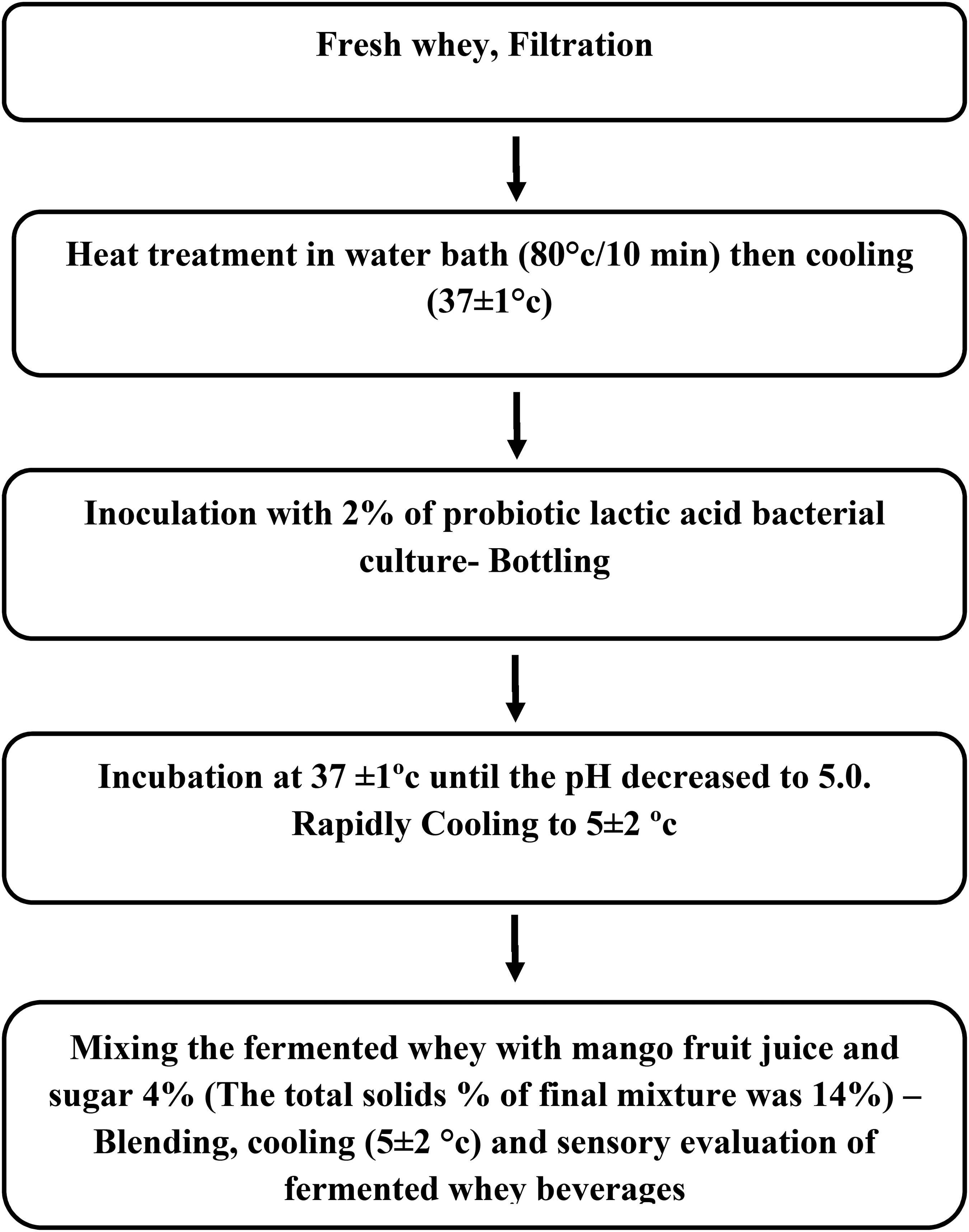
Technological scheme for the production of fermented whey beverages with the addition of mango juice.
Chemical and physicochemical characteristics
According to AOAC (2016), the following values were determined: total solids, total amount of carbohydrates, fat, and pH at day1 and after 10 days of cold storage.
Determination of total phenolic content (TPC)
The water soluble extracts for total phenolic (TPC) and antioxidant activity were produced in the manner described by Salehi et al. (2023).The TPC of whey beverages is calculated using the Folin-Ciocalteu reagent and represented in milligrams of Gallic acid equivalents (GAE)/100 g.
Radical scavenging activity (RSA %) assay
The DPPH method proposed by Wibawanti and Arifin (2018) was utilized to calculate the amount of radical scavenging activity. Briefly, the Water soluble extract (WSE) was prepared according to Shori et al. (2013). One ml of WSE was mixed with 0.1 mmol/l DPPH (1 ml) dissolved in 95% ethanol. The mixture was shaken and kept at room temperature for 30 min. The absorbance of the resulting solution was measured at517 nm. Distilled water was used as a blank instead of the sample. Ascorbic acid (0.2 mmol/l) was used as a positive control. The scavenging activity was calculated using the following equation: DPPH radical scavenging activity (%) = (A0−As)/A0 × 100
Where A0 is the absorbance at 517 nm of blank - As is the absorbance at 517 nm of WSE.
Characterization of organic acid profile
The HPLC analyses were carried out at 26.7 °C and the column guide was (Phenomenex, USA catalogue, 2014/ 2015). Organic acids were separated by HPLC Knauer, Germany, flow rate was set at 0.6 mL/min, UV detector set at 214 nm, column oven temperature kept constant at 65 °C, Rezex@ column was used for organic acids analysis, and the mobile phase was 0.005 M H2SO4 data integration by Clarity Chrom software 2.2.6.
Rheological properties of fermented whey beverages
The apparent viscosity of fermented beverage samples was determined at 25 °C utilizing a Brookfield viscometer (Brookfield Engineering Laboratories, USA) equipped with a ULA spindle running at 10 rpm, as described by Hassan et al. (2022).
Microbial analysis of fermented whey-based beverages
The fermented whey beverage samples were microbiologically examined for mold, and yeast counts, as well as coliform groups, using Standard Methods for the Examination of Dairy Products. Probiotic Lactic acid bacteria were counted using the Elkot et al. (2022) method, and the findings were presented as a log number of colony-forming units per mL (Log CFU/mL).
Color attributes determination
A Minolta colorimeter (Model CR-400, Konica Minolta Sensing, Inc., Osaka, Japan, observer angle 10°, determining head hole 8 mm, certified on a white standard L* (100 = white; 0 = black), a* (+, red; −, green), and b* (+, yellow; −, blue) was used to assess color characteristics. The values are the means of three assessments (Elsayed et al., 2022).
Sensory assessment
A general untrained staff (males and females) with age ranging from 23 to 36 years initially appraised the acceptability of fermented whey beverages through an organoleptic evaluation. The objective was to determine whether or not these beverages were acceptable. The second stage was performed by 10 well trained panelists from the staff members of the Dairy Science Department, Faculty of Agriculture, Cairo University to identify some characteristics, like appearance, flavour, texture, mouth feel, and overall acceptability. Prior to the evaluation, all participants were informed of the standard sensory evaluation procedures and were able to cleanse their palates with distilled water. Samples of fermented whey beverages were taken out of the refrigerator and randomly labeled one hour before measurement to reach room temperature (25° C). All the fermented whey samples were evaluated within a random order in its high-density polyethylene plastic cups. The panelists were also asked to list any defects as reported by Komes et al. (2017).
Statistical analysis
The acquired results were represented as the mean ± SD of three replicates of each parameter and subjected to one-way analysis of variance ANOVA, with Duncan's a variety of ranging tests employed to evaluate the effect of different strains of lactic acid bacteria (LAB) and storage time. The threshold for significant differences was set at (p ≤ 0.05). The Mstat program (ver.4c, 1989) was used for all analyses.
Results and discussion
Chemical and physicochemical properties of whey mango beverages
Data in Table 1 shows some chemical properties of different fermented whey mango beverages. The percentage of total solids, total carbohydrates and fat contents remained constant during ten days of cold storage. Levels of total carbohydrates, and pH values Figure 2 in control samples were higher than other treatments due to whey fermentation by different lactic acid isolates. Concerning changes in level of pH, a slight decrease in pH values was observed at the end of cold storage Figure 2 between different fermented whey-mango beverages. No significant (p ≥ 0.05) changes in pH values of different fermented whey mango beverages during cold storage were observed. Our results are in accordance with results obtained by Tanwar et al. (2022) and Zaman et al. (2023) which showed the stability of chemical composition and level of pH of whey – mango and whey sugar cane beverage samples. On the other hand, fermentation of whey enriched with 10% papaya pulp by L. paracasei and L. acidophilus resulted in a significant change in levels of pH, titratable acidity and lactose during ten days of cold storage period (Bahnas et al., 2019).
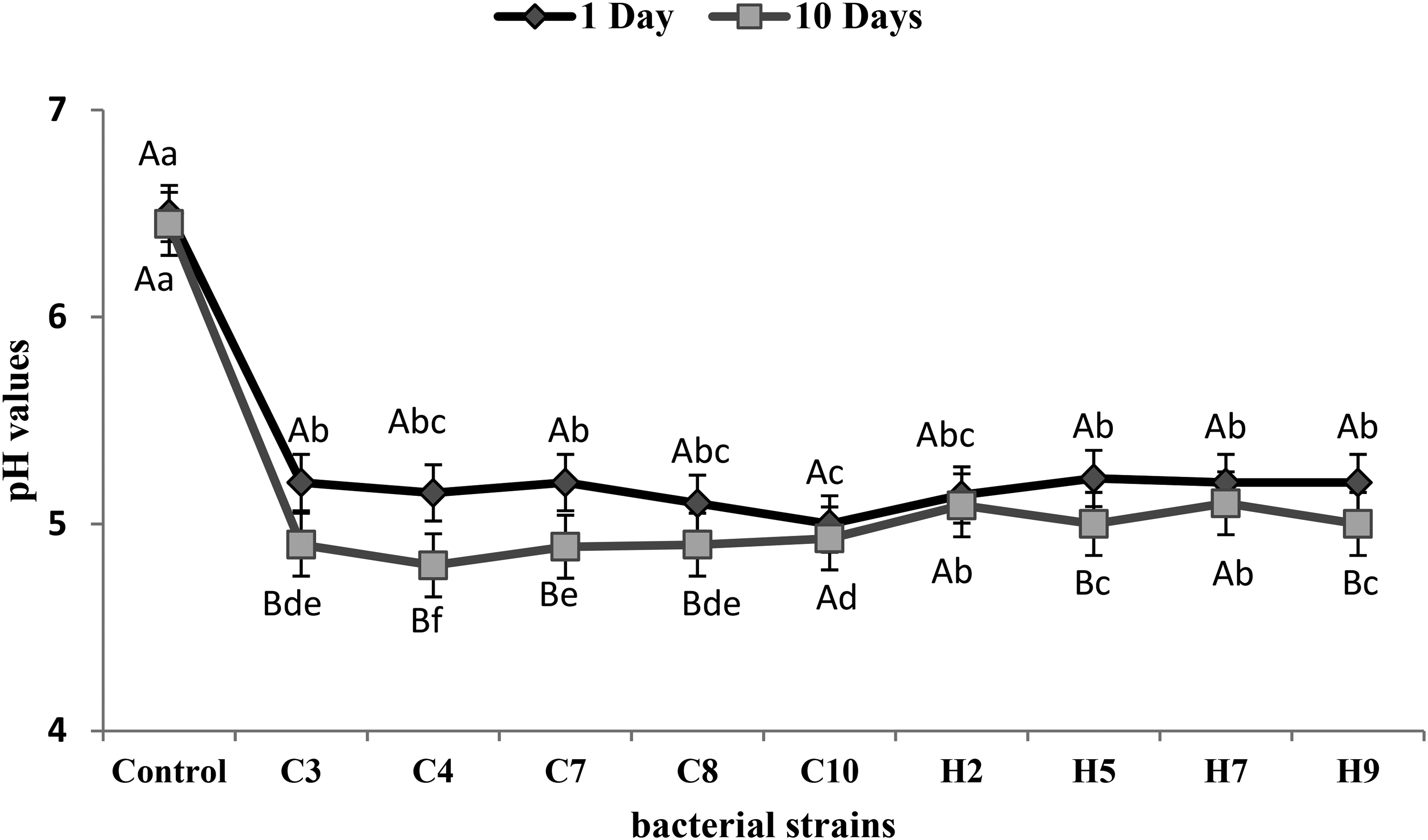
Average pH values at Day1st and after 10 days of cold storage at 5 ± 2 °C for fermented whey mango beverages; values of each parameter assigned identical letters do not vary significantly. C: Cow milk, H: human milk;C3and H7 mango whey beverage fermented by Enterococcus faecium,C4 Pediococcus pentosaceus, C7 and H9 Enterococcus durans, C8 Lacticaseibacillus rhamnosus, C10 and H5 Enterococcus hirae, and H2 was Enterococcus mundtii, Control (whey mango beverage without fermentation). Means with different letters for the same formulation indicate statistically significant differences (p < 0.05).
Chemical properties of fermented whey mango beverages during cold storage period (10 days at 5 ± 2 °C).
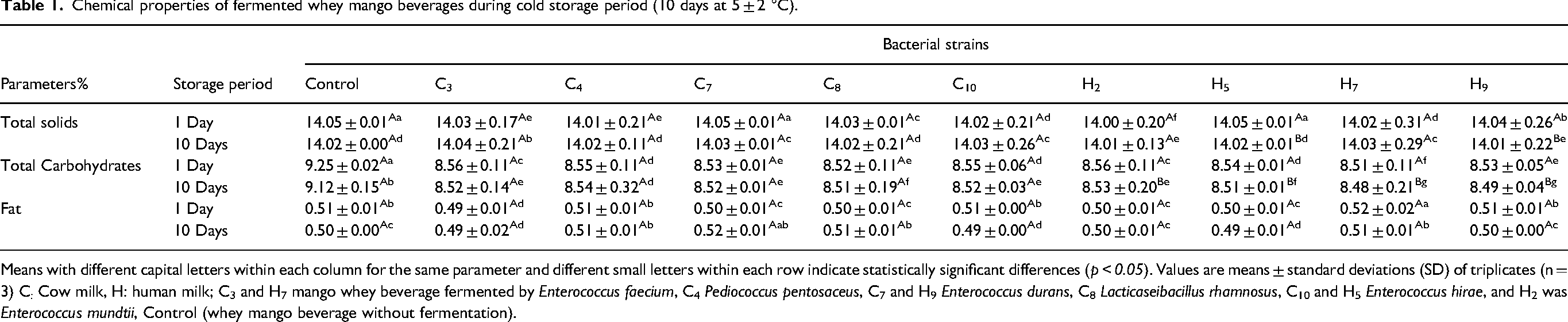
Means with different capital letters within each column for the same parameter and different small letters within each row indicate statistically significant differences (p < 0.05). Values are means ± standard deviations (SD) of triplicates (n = 3) C: Cow milk, H: human milk; C3 and H7 mango whey beverage fermented by Enterococcus faecium, C4 Pediococcus pentosaceus, C7 and H9 Enterococcus durans, C8 Lacticaseibacillus rhamnosus, C10 and H5 Enterococcus hirae, and H2 was Enterococcus mundtii, Control (whey mango beverage without fermentation).
Determination of total phenolic content (TPC)
Total phenolic content of fermented whey mango beverages is shown in Figure 3. Control sample had the lowest value of TPC being 51 mg GAE/g while the highest TPC value was observed in C3 sample 125.02 mg GAE/g. The increase in total phenolic content in whey beverages fermented by LAB isolated strains compared to control sample may be due to the conversion of polyphenolic compounds to other compounds with lower molecular weight by hydrolases of LAB. In particular C samples (beverages fermented by strains isolated from cow milk) had the higher TPC than H samples (beverages fermented by strains isolated from human milk). The difference in the levels of phytochemicals after fermentation with various LAB strains may be due to their individual response and ability to produce more hydrolytic enzymes. Wu et al. (2021) stated that Phenolic content is generally increased by enzymatic reactions during fermentation. β- glucosidase is responsible for the hydrolysis of glycosidic bonds during fermentation, resulting in the release of phenolic glycosides. These results confirmed that LAB can enhance the phenolic composition of fermented whey beverages and provide some reference for future nutritional studies on fermented beverages.
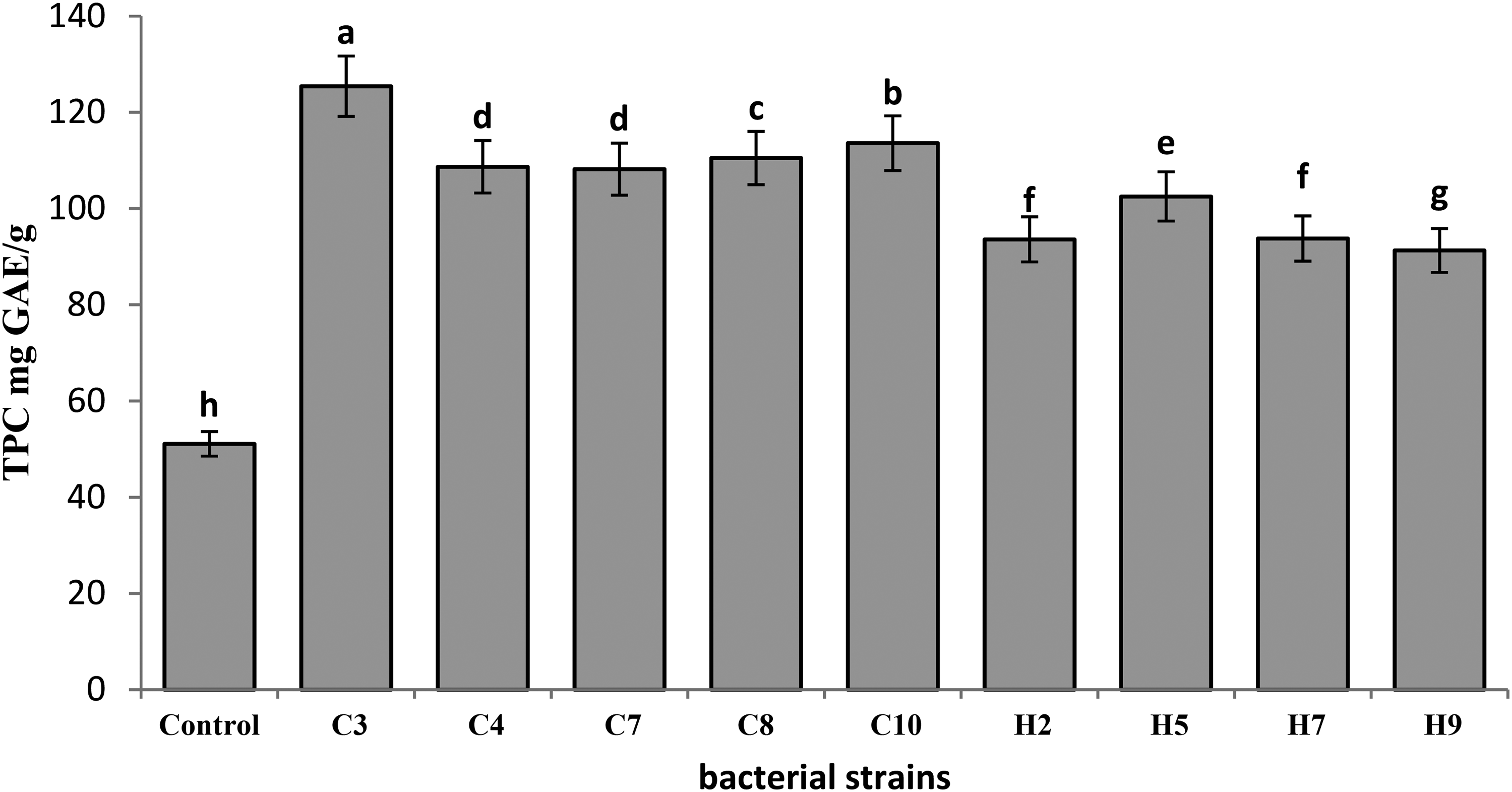
Total phenolic content of different fermented whey mango beverages, Data are means ± SD; values of each parameter assigned identical letters do not vary significantly. C: Cow milk, H: human milk; C3and H7 mango whey beverage fermented by Enterococcus faecium,C4 Pediococcus pentosaceus, C7 and H9 Enterococcus durans, C8 Lacticaseibacillus rhamnosus, C10 and H5 Enterococcus hirae, and H2 was Enterococcus mundtii, Control (whey mango beverage without fermentation). Means with different letters for the same formulation indicate statistically significant differences (p < 0.05).
Radical scavenging activity (RSA %) assay
One of the targets of this study was preparing functional product supplemented with antioxidants from natural sources (mango fruit and whey). In mango fruit pulp, Polyphenols and flavonoids are secondary metabolites in plants and are widely distributed in fruits and vegetables. Phenolic compounds and flavonoids are major groups of compounds contributing to antioxidant activity in fruits. Thus, the antioxidant activities of fermented whey mango beverages were studied using DPPH radical scavenging activity Figure 4. DPPH scavenging is one of the most important indicators in determining the antioxidant activity of LAB in vitro. All treatments demonstrated DPPH scavenging activity rate in the range of 68.01–96.71% while the control sample (non fermented) scored 60.52%. Among all tested strains C3 exhibited the significant highest DPPH scavenging activity while H2 had the significant (P < 0.05) lowest value (68.01%). This difference was not due to using different species but was related to the heterogeneity of each strain. The DPPH scavenging activities of the strains in our study were much higher than those of the strains obtained by Liu et al. (2020), Zeng et al. (2021), and Zhao et al. (2021). While, similar trend of values was reported by Sady et al. (2013) in organic acid whey beverage. The control sample exhibits antioxidant activity 60.52% and this might be due to incorporation of mango juice in whey, which had higher phenolic content. Furthermore, whey has antioxidant activity, which includes chelating of transition metals by serum albumin and lactoferrin (an ion binding glycoprotein) as well as free radical scavenging activity by amino acids such as tyrosine and cysteine. As a result, the antioxidant capacities of these lactic acid bacteria isolates indicated that they could be very useful in food fermentation (Sarmadi and Ismail, 2010).
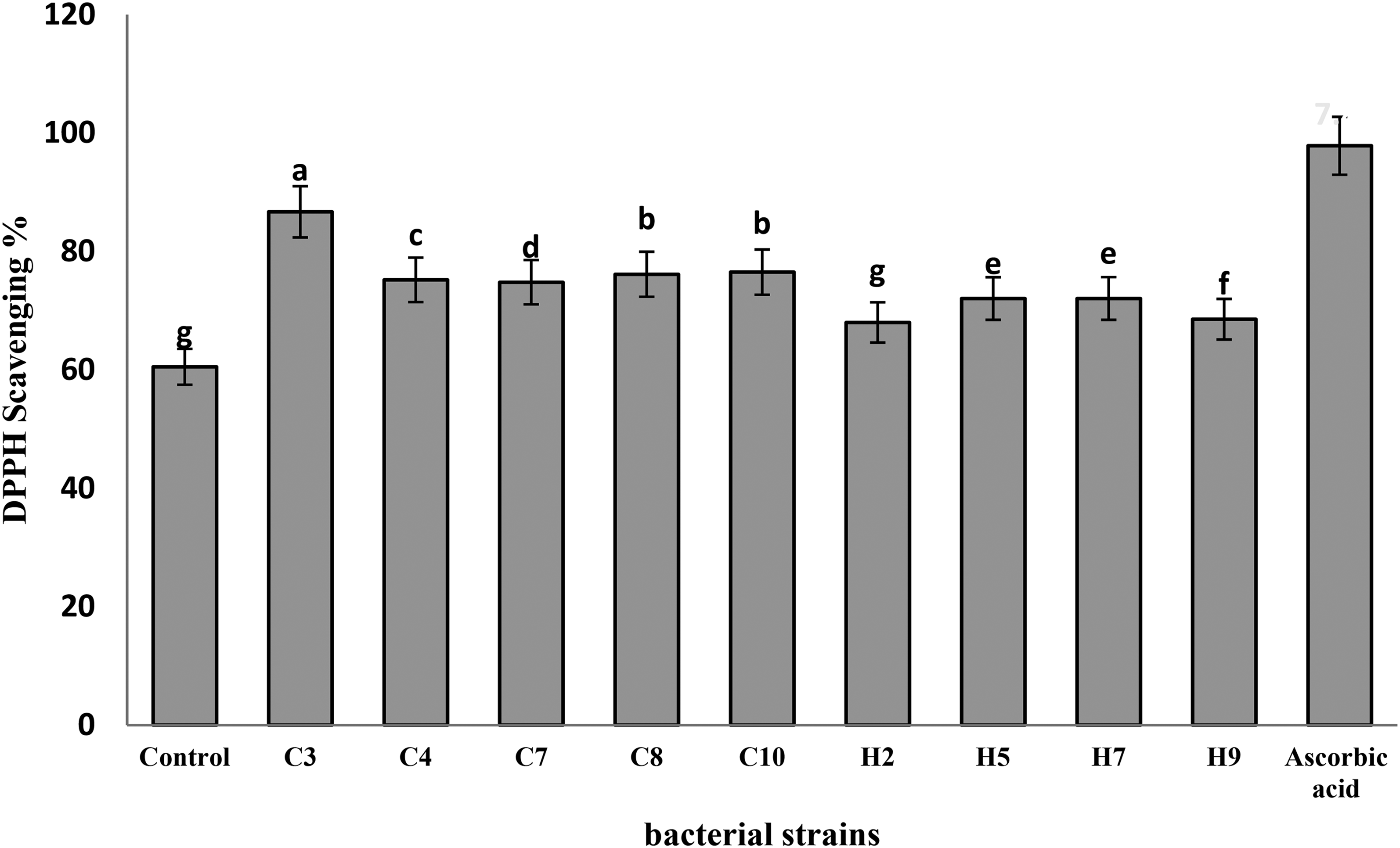
DPPH radical scavenging activity of fermented whey mango beverages, methyl alcohol was used as blank. And ascorbic acid was a control. Data are means ± SD; values of each parameter assigned identical letters do not vary significantly C: Cow milk, H: human milk; C3and H7 mango whey beverage fermented by Enterococcus faecium,C4 Pediococcus pentosaceus, C7 and H9 Enterococcus durans, C8 Lacticaseibacillus rhamnosus, C10 and H5 Enterococcus hirae, and H2 was Enterococcus mundtii, Control (whey mango beverage without fermentation). Means with different letters for the same formulation indicate statistically significant differences (p < 0.05).
Organic acids profile
Identification of organic acids as one of the important components produced by lactic acid bacteria strains was conducted to understand the mechanisms of action behind antimicrobial and therapeutic characteristics of these bacteria and their ability for producing specific organic acids. Thus, the production of some organic acids such as lactic, acetic, formic and propionic was investigated Figure 5. Results showed that lactic and acetic were present in large amounts in all the fermented whey samples. Among the tested strains, lactic acid bacteria isolated from cow milk produced the highest concentration of lactic, and acetic acids, whereas the least values of these acids were produced by lactic acid bacteria isolated from human milk. In addition, Lacticaseibacillus rhamnosus C8 produced the highest levels of propionic, butyric and oxalic acids Figure S2. Due to the beneficial properties on human health of butyric acid reported in literature (Coppola et al., 2022), Lacticaseibacillus rhamnosus C8 could be a useful strain in the development of dairy products with functional properties. Variations in the content and composition of organic acids among the isolated strains could be attributed to the variations in the genetic makeup and metabolic pathways among these strains. Similarly, previous reports indicated that lactic acid is the main organic acid that produced by homofermentative LAB (da Costa et al., 2018; Zalán et al., 2010). The findings of this study indicated that the presence of LAB in food matrix plays a crucial role in controlling spoilage and/or pathogenic microorganisms through the production of organic acids. However, it is important to note that organic acids may not be the sole contributing factors since LAB may also produce a variety of antimicrobial compounds including bacteriocins, hydrogen peroxide, carboxylic acid, and reuterin (Stoyanova et al., 2012).
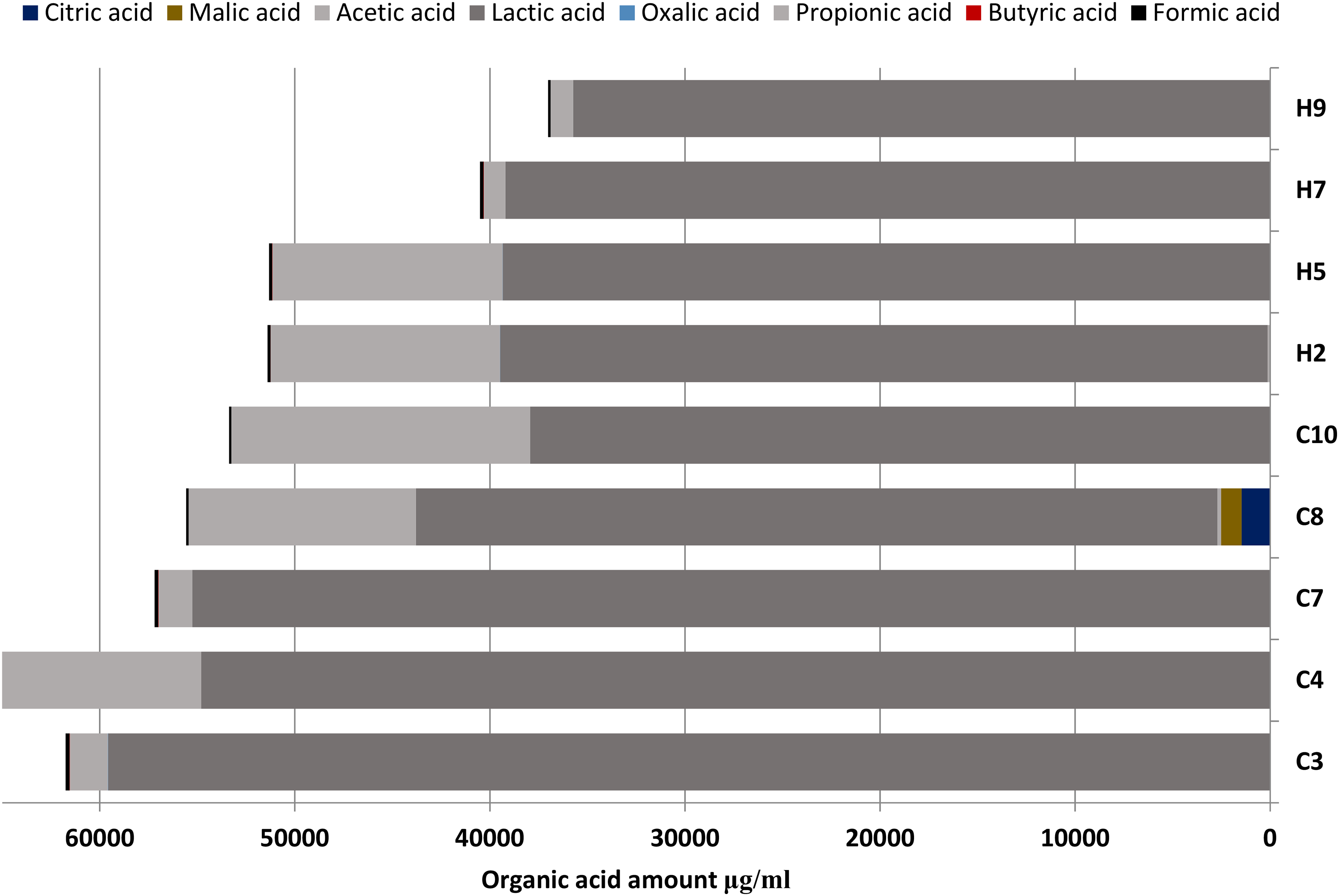
Depicts organic acids produced by LABs isolated from human and cow milk C: cow milk, H: human milk; C3and H7 mango whey beverage fermented by Enterococcus faecium,C4 Pediococcus pentosaceus, C7 and H9 Enterococcus durans, C8 lacticaseibacillus rhamnosus, C10 and H5 Enterococcus hirae, and H2 was Enterococcus mundtii, control (whey mango beverage without fermentation).
Viscosity of fermented whey mango beverages
Viscosity is one of the most important characteristics in beverage as it reflects the richness of the product and one of the product quality parameters. It depends on the solids content, type and concentration of additives as well as the fermentation condition like time, temperature and LAB used (Akpinar et al., 2015). Viscosity value of fermented whey mango beverages by lactic acid bacteria isolates during cold storage period is shown in Figure 6. At day one the apparent viscosity of all treated samples (C3 to H9) was higher than that of control which may be due to the development of acidity and the bacterial strains metabolites. Regarding the effect of storage period, viscosity values of all samples significantly increased while those of C8, C10, and H7 significantly decreased during 10 days of storage. Between treatments, H2 scored the lowest value (217.6 cP) for viscosity while, H5 reported the highest value (398.3 cP) as shown in Figure 6 which shows the dependence of viscosity on the type of strains. While the control sample was recorded the lowest value 213.7 cP. The overall rise in viscosity of all samples may be attributed to the elevated fiber content in mango fruits. Furthermore, mango juice contains pectin, which serves as a gelling agent for the product. While the differences between fermented mange beverages were strain dependent and might be due to the ability of LAB to produce exopolysaccharides (EPS) that have high thermal stability, which improves the structure of whey beverage by increasing its viscosity compared to control sample.
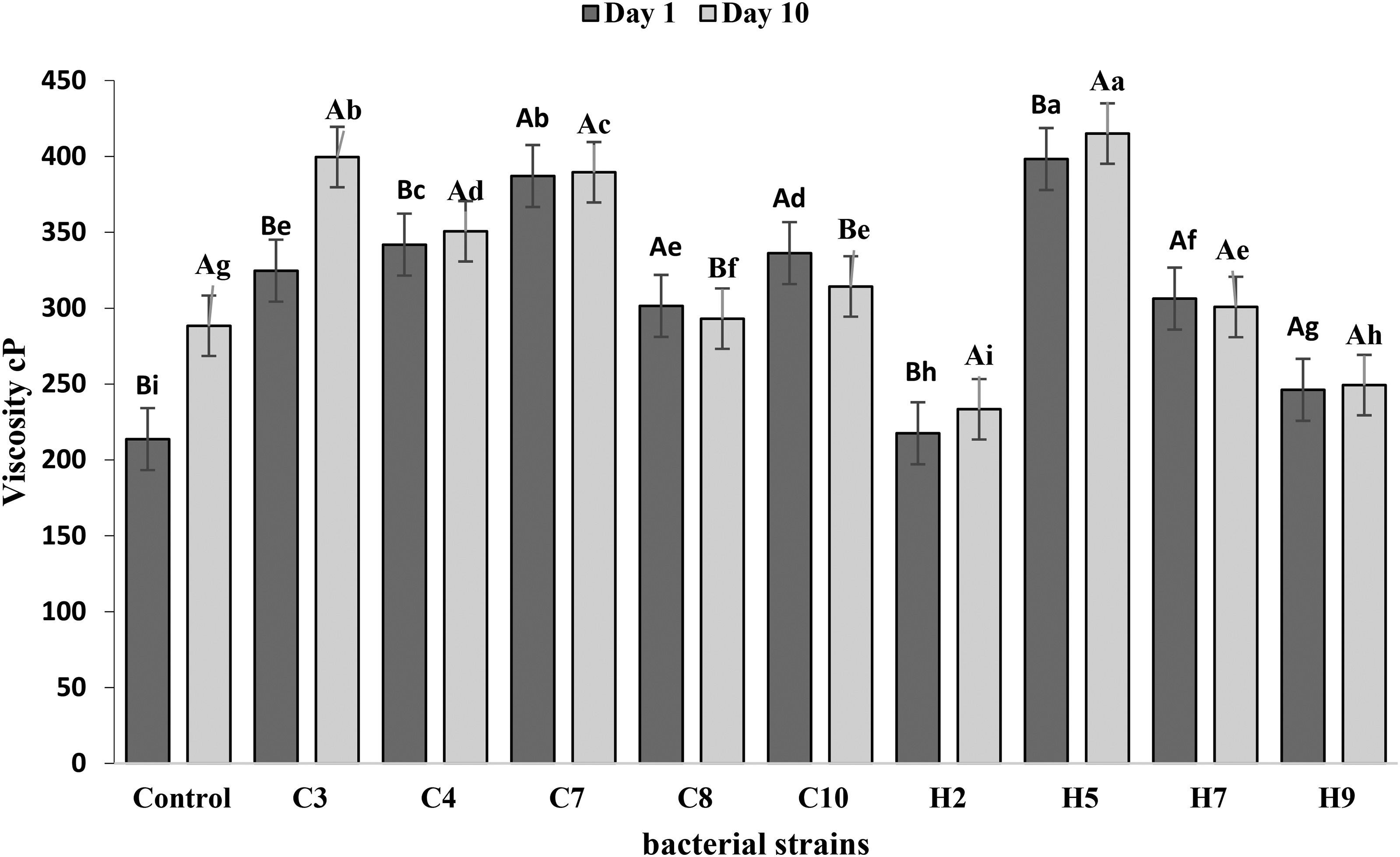
Mean values of viscosity at Day1st and after 10 days of cold storage at 5 ± 2 °C for fermented whey mango beverages. C: Cow milk, H: human milk; C3and H7 mango whey beverage fermented by Enterococcus faecium,C4 Pediococcus pentosaceus, C7 and H9 Enterococcus durans, C8 Lacticaseibacillus rhamnosus, C10 and H5 Enterococcus hirae, and H2 was Enterococcus mundtii, Control (whey mango beverage without fermentation). Means with different letters for the same formulation indicate statistically significant differences (p < 0.05).
A steep decrease in viscosity of C8, H7 and C10 was observed during storage at 5 ± 2 °C. It was reported that the viscosity of fermented whey beverage during storage time may decreases or increase over time due to the rearrangement of protein and protein-protein contacts (Izadi et al., 2014) and the presence of different strains results in the production of acids at different rates and concentrations, which affects the viscosity of the product, making viscosity a culture-dependent trait as reported by Oktavia et al. (2016).
Microbiological analysis and cell viability
Health promoting benefits of probiotic bacteria depend on live bacteria counts and the counts of live probiotic bacteria should be not less than 6 logs CFU/g to obtain probiotic effects (Mendoza et al., 2007). The Probiotic starter culture cell counts during storage are shown in Figure 7. As shown the storage period and strains had a significant (P ≤ 0.05) influence on viable probiotic cells with exception of H5. Strains C4, C7, H2 and C10 showed a decrease in the viable cell count during cold storage while strains C8 and H7 showed an increase in their viable cell count. Counts remained very similar (over 7 logs CFU / g) during storage time for C3. These different trends in viability of probiotic starter culture during storage may be due to the difference in probiotic strain. Additionally, the increase of cell viability during storage may be due to the positively influence of mango fruit addition. It is well-known that plant polyphenols leading to viability enhancement of probiotic strains (Thilakarathna and Vasantha Rupasinghe, 2019). The stability of the bacterial culture throughout the storage period is shown in Figure 7 and log 8 (CFU/g) did not decrease to less than 7 until the end of the storage period. Therefore, the strains were alive and active and showed their functional and probiotic potential even on the 10th day. The obtained results also illustrated that no growth of either yeast, molds and coliform in all fresh and stored fermented whey samples, This could be attributed to the hygienic conditions during manufacture and the role of probiotic starter inhibiting effect as they produce a range of antimicrobial compounds which could inhibit numerous Gram-positive and Gram-negative bacteria and also other microbes.
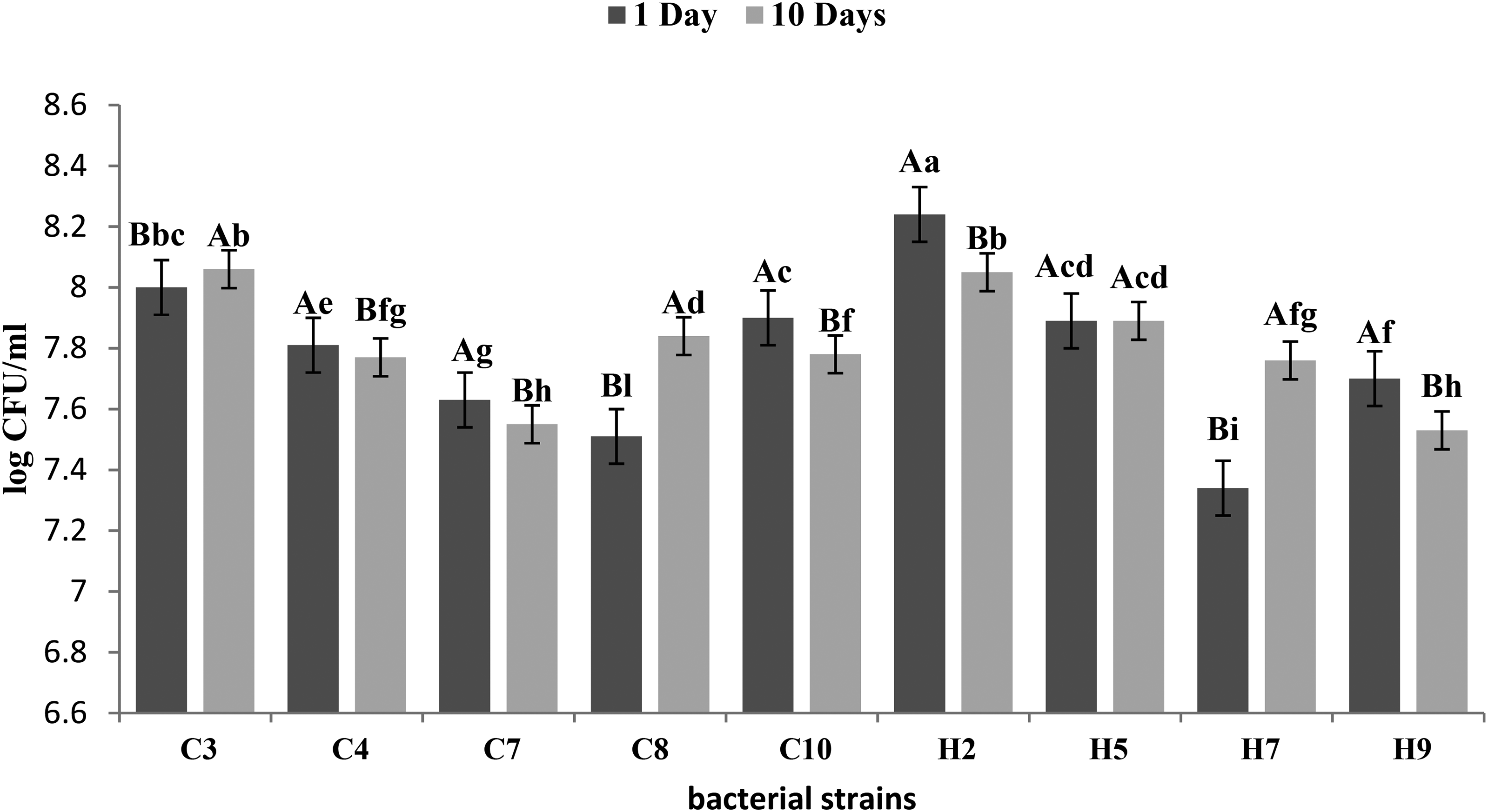
Probiotic starter culture cell counts in fermented whey mango beverage at Day1st and after 10 days of cold storage at 5 ± 2 °C. C: Cow milk, H: human milk;C3and H7 mango whey beverage fermented by Enterococcus faecium,C4 Pediococcus pentosaceus, C7 and H9 Enterococcus durans, C8 Lacticaseibacillus rhamnosus, C10 and H5 Enterococcus hirae, and H2 was Enterococcus mundtii, Control (whey mango beverage without fermentation). Means with different letters for the same formulation indicate statistically significant differences (p < 0.05).
Color measurement
The external color was assessed by recording lightness (L*), greenness (-a*), yellowness (b*), chroma (C*), and hue angle (h). Lightness (L*) value of fresh ranged from .4803 to 57.52 as shown in Table 2. The results obtained indicated that fermentation by strains H2, H5, H7, and H9 caused a modest reduction in L scale, producing a darker product in comparison to strains C3, C4, C7, C8, and C10 at day one. After 10 days of cold storage there were no significant differences in beverages color of control and those fermented by C10, H5 and H7. Greenness/Redness (a*) for fresh beverages was ranged from 7.00–7.88, while after 10 days of cold storage the (a *) values in all treatments increased. The red colored of mango was characterized with higher anthocyanins with cyanidin-3-O-monoglucosides and peonidin-3-O-glucosides as the major anthocyanins as reported by Karanjalker et al. (2018). The same trend was observed in Yellowness b* values. The control sample recorded the lowest value. This phenomenon same like research found by Moreira et al.(2017) who prepared mango juice with addition of probiotic Lactobacillus rhamnosus GG and had scale color a* and b* higher than mango juice without addition probiotic. The cold storage period had a ppositive effect on chroma (C*), and hue angle (h).These results indicated that the addition of LAB strains to mango whey beverage caused slightly changes in color attributes, but these changes were not significant enough to adversely affect the overall color appearance of the product. On the other hand, the presence of proteins in the whey used is essential for enhancing consumer color acceptance and these findings align with the results reported by (Gab-Allah and Shehta, 2020; Jawarska et al., 2014; Liutkevicius et al., 2016)
Color parameters of fermented whey mango beverages during the storage period (10 days at 5 ± 2 °C).
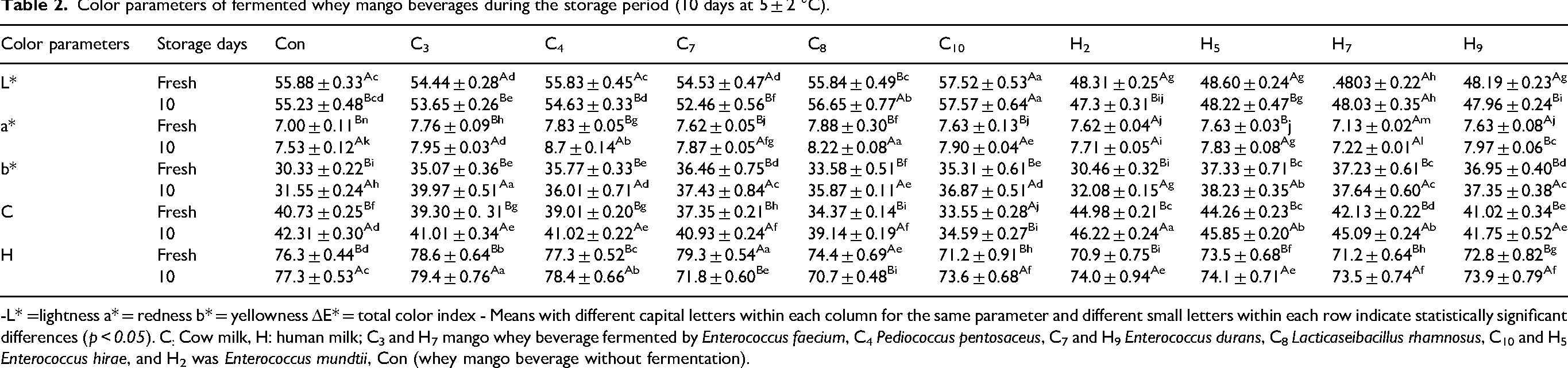
-L* =lightness a* = redness b* = yellowness ΔE* = total color index - Means with different capital letters within each column for the same parameter and different small letters within each row indicate statistically significant differences (p < 0.05). C: Cow milk, H: human milk; C3 and H7 mango whey beverage fermented by Enterococcus faecium, C4 Pediococcus pentosaceus, C7 and H9 Enterococcus durans, C8 Lacticaseibacillus rhamnosus, C10 and H5 Enterococcus hirae, and H2 was Enterococcus mundtii, Con (whey mango beverage without fermentation).
Sensory evaluation
Color, flavor, consistency, sweetness and overall acceptability of whey mango beverages (control and treated samples) have been evaluated and the data is presented in Figure 8 (A and B). C4, C8, H5, H7 and H9 gained the highest overall acceptability scores either at day one or after 10 days. Throughout refrigerated storage, there were no significant reductions in sensorial attributes of all samples. After ten days, no sediments were observed while there was a slight change in the color of all samples. Generally, samples H2, H5, H7 and H9 were preferred by most of the panelists.
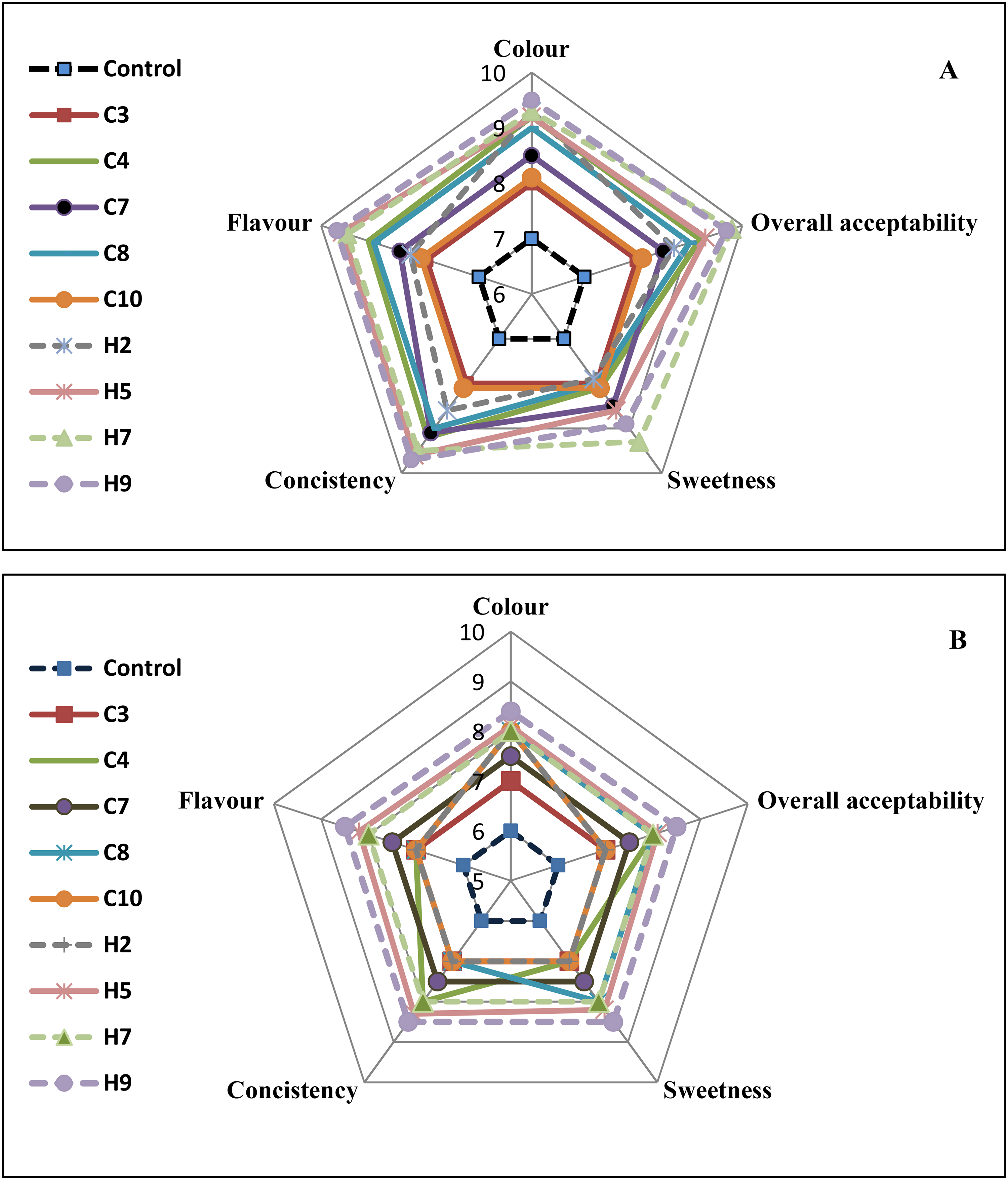
A hedonistic scale of different fermented whey mango beverage, (A) Day1st, (B) after 10 days of cold storage at 5 ± 2 °C, C: cow milk, H: human milk; C3and H7 mango whey beverage fermented by Enterococcus faecium, C4 Pediococcus pentosaceus, C7 and H9 Enterococcus durans, C8 lacticaseibacillus rhamnosus, C10 and H5 Enterococcus hirae, and H2 was Enterococcus mundtii, control (whey mango beverage without fermentation).
Conclusion
This work proposed a strategy for enhancing the sustainability of cheese whey as food by fermenting it with a novel probiotic strain. The results of this study suggested that whey is considered a good medium for the growth of probiotic bacteria in the presence of mango juice. High TPC and antioxidant activities were observed in the fermented beverages by Enterococcus faecium C3. On the other hand, it could be hypothesized that the fermented whey mango beverages by Enterococcus hirae C10 and H5, Enterococcus mundtii H2, Lb. rhamnosus C8, and Pediococcus pentosaceus C4, as a potential starter cultures, could be a fascinating product for beverage industries by giving the benefits of bioactive elements present in both fruit and fermented whey with the best sensory qualities. Overall, our findings suggested that utilization of different LAB isolates from either human or cow milk with adding fruits to whey supplements could be a viable alternative for creating nutritious whey beverages and could be recommended for consumption. In conclusion, to use this beverage at a commercial scale, more research on shelf life, optimizing process conditions, quality improvement using stabilizer and packaging, and a clinical trial is required for benefits to human health.
Supplemental Material
sj-docx-1-fst-10.1177_10820132251358987 - Supplemental material for Development and evaluation of functional whey Mango beverage enriched with novel probiotic bacteria isolated from Egyptian human and cow milks
Supplemental material, sj-docx-1-fst-10.1177_10820132251358987 for Development and evaluation of functional whey Mango beverage enriched with novel probiotic bacteria isolated from Egyptian human and cow milks by Fawzia HR Abd Rabo, Fouad MF Elshaghabee, Amira M Abdel-maged and Ashwak Abdel-moneim Hassan in Food Science and Technology International
Footnotes
Acknowledgement
Cairo University Research Park (CURP) and food safety and quality assurance lab FSQC were acknowledged for their aid in analyses of organic acid profile in different whey samples.

Author contributions
Funding
The authors received no financial support for the research, authorship, and/or publication of this article.
Declaration of conflicting interests
The authors declared no potential conflicts of interest with respect to the research, authorship, and/or publication of this article.
Supplemental material
Supplemental material for this article is available online.
References
Supplementary Material
Please find the following supplemental material available below.
For Open Access articles published under a Creative Commons License, all supplemental material carries the same license as the article it is associated with.
For non-Open Access articles published, all supplemental material carries a non-exclusive license, and permission requests for re-use of supplemental material or any part of supplemental material shall be sent directly to the copyright owner as specified in the copyright notice associated with the article.
