






Abstract
This study investigated the effects of soaking time and temperature on the physical properties of black peanut kernels (BPK), a Taiwanese native peanut species. Results revealed that higher soaking temperatures and longer durations increased the water absorption rate and the moisture content of BPK. After soaking, the activation energy, enthalpy, and Gibbs free energy were positive, indicating that BPK was temperature-sensitive and capable of absorbing energy from its surroundings. Following steamed softening, the hardness of BPK decreased as soaking time and temperature increased. Specifically, BPK pre-soaked at 25 °C or 40 °C for 8 h and then steamed softening at 121 °C for 20 min (F0 = 12) achieved a hardness of 4.68 and 4.87 × 10⁵ N/m2, respectively, meeting the easy-chewing standard (< 5 × 10⁵ N/m2) based on Taiwan's Eatender guidelines. However, increasing the steamed softening temperature to 124 °C for 11, 16, and 20 min (with F0 values of 5, 10, and 15, respectively) did not further soften BPK. In conclusion, pre-soaking BPK at 25 °C for 8 h and then steamed softening it at 121 °C for 20 min successfully developed a ready-to-eat and easy-to-chew product for older adults.
Introduction
Peanut (Arachis hypogaea Linn.), a widely consumed legume globally, is cultivated for its edible seeds. Peanuts are a rich source of plant-based protein, unsaturated fat, and complex carbohydrates, all of which have been shown to provide significant health benefits (Arya et al., 2016). Several bioactive compounds, including arginine, resveratrol, phytosterols, phenolic acids, and flavonoids, have been identified in peanuts, which contribute to some biological activities for humans, such as regulation of blood sugar, anti-inflammation, anti-cancer, and weight management (Arya et al., 2016). In Taiwan, multiple peanut varieties can be found and classified based on their place of origin and skin color. One notable endemic variety is the black peanut, known as Tainan No. 16, which is distinguished by its purple-black skin. The skin of black peanuts has received increasing attention due to its high anthocyanin content. Anthocyanins derived from black peanut skin have been demonstrated to exhibit radical scavenging ability, protection against ultraviolet irradiation-induced oxidative damage, inhibitory potential on digestive enzymes (α-amylase, pancreatic lipase, and α-glucosidase), and strong antiadipogenic effects (Li et al., 2019; Peng et al., 2019). Despite these health benefits, the texture of peanuts, including crunchiness, firmness, and granularity, can be challenging for older adults, especially those with chewing or swallowing difficulties.
Soaking is vital in determining the water absorption rate and capacity of grains and legumes before dehulling and cooking. Different soaking conditions have been shown to influence water absorption properties across various grain and legume species, including rice, sorghum, barley, beans, and chickpeas (Kashiri et al., 2012; Montanuci et al., 2013; Shafaei et al., 2016; Shittu et al., 2012). The extent of water absorption in legumes during soaking is primarily affected by immersion time and soaking temperature. Previous studies have indicated that pre-soaking could decrease the hardness of cooked legumes but increase water absorption, contributing to the softening of chickpeas’ texture (Deshpande and Bal, 2001; Gandhi and Bourne, 1991). Therefore, understanding the water absorption in legumes during soaking is crucial, as it directly impacts the quality of the final product (Turhan et al., 2002). Wet autoclaving, a hydrothermal processing method that involves high-pressure saturated steam, is widely used to modify the texture of leguminous foods. The steamed softening treatment, also known for its sterilization effect due to high-temperature conditions, significantly reduces the hardness and cohesiveness of legumes, resulting in improved palatability and digestibility (Khrisanapant et al., 2021).
The global challenge posed by the rapidly growing aging population requires immediate attention. The rapid increase in the aging population presents a pressing challenge that demands urgent action. In Taiwan, the proportion of individuals over 65 is projected to exceed 20% by 2026, indicating that Taiwan will transition into a super-aged society (Shih et al., 2022). In addition to the natural process of aging, some diseases, such as stroke, dementia, neurodegenerative diseases, and oropharyngeal cancer, are significant contributors to swallowing difficulties in older adults (Sura et al., 2012). To comply with the needs of older adults, texture-modified foods are designed to meet their nutritional requirements and preserve the taste and appearance of the original food through various processing techniques (Cichero et al., 2017; Raheem et al., 2021).
This study optimized pre-soaking and steamed softening conditions to develop ready-to-eat and easy-chewing black peanut kernels (BPK) for older adults. The impacts of different soaking times and temperatures on water absorption rates and moisture content were evaluated. Thermodynamic parameters, including enthalpy (ΔH), entropy (ΔS), and Gibbs free energy (ΔG), were also calculated. Finally, the hardness of BPK was measured using a texture profile analyzer after various soaking conditions followed by steamed softening.
Materials and methods
Peanut kernels collection and soaking experiment
Fresh BPK samples (Figure 1, left panel) were provided from Yu Shuen-Feng Peanut Tourism Factory (Chiayi, Taiwan) and stored at −20 °C until use. Before soaking, the beakers and distilled water were warmed in a water bath at 25 °C and 40 °C or stored in a refrigerator at 4 °C to reach the desired temperatures. The initial weight and moisture content of BPK samples were measured using an analytical balance (PIONEER™, Parsippany, USA) and a moisture analyzer (FD-600, California, USA), respectively. About 50 g of BPK samples were placed into a 250 mL beaker and soaked in distilled water at the desired temperatures for durations ranging from 15 min to 8 h. After soaking, the BPK samples were collected, the surface moisture was dried off, and the samples were reweighted. The moisture content (wet basis) at specific soaking times was calculated using equation (1), where Mmeasured (t) represents the measured moisture content at a given soaking time, M0 is the initial moisture content (%), W0 is the initial weight of BPK samples, and Wt is the weight at specific soaking times.

The appearance of black peanut kernels (BPK). The left panel is the BPK samples without any treatment. The right panel is the BPK samples pre-soaked at 25 °C for 8 h and then steamed at 121 °C for 20 min.
Peleg (1988) proposed an empirical, two-parameter, and non-exponential model to simplify the water absorption process in agricultural products. The Peleg equation is given by equation (2), where M(t) is the moisture content at a specific soaking time, M0 is the initial moisture content, K1 is the Peleg rate constant (h/%), K2 is the Peleg capacity constant (1/%), and t represents the specific soaking time. Equation (2) can be transformed into a linear form, as shown in equation (3). The values of K1 and K2 are obtained from the linear regression of the plot of t / (Mt-M0) versus time, where K1 is the intercept on the ordinate and K2 is the slope of the line. As t approaches infinity, the equilibrium moisture values (Meq) can be calculated by equation (4). The performance of the Peleg model was evaluated based on the coefficient of determination (R2) between the soaking times and the plot of t / (Mt-M0) against time. To assess the accuracy of the Peleg model, predicted values were compared to the measured values at various soaking temperatures, and the R2 was calculated. The mean relative percentage deviation modulus (E) was computed using equation (5), where Mexp is the experimentally observed moisture content; Mpre is the predicted moisture content; n is the number of observations. The chi-square analysis (X2) was conducted to evaluate the goodness of fit between observed and predicted moisture content using equation (6).
Calculation of thermodynamic parameters
The Peleg model constant K1 is analogous to a diffusion coefficient and is used to describe the temperature dependence of the reciprocal in the Arrhenius equation in equation (7) (Sopade et al., 1992). In this equation, Kref represents the reference hydration constant at a reference temperature, Ea is the activation energy (kJ/mol); R is the universal gas constant (8.314 J/mol/K), and T and Tref denote the soaking and reference temperatures, respectively. To minimize the colinearity between Kref and Ea, Tref set to 23 °C, the average experimental soaking temperature.
Upon linearization, equation (6) is transformed into equation (8). When Ln(1/K1) is plotted against [(1/Tref)-(1/T)], a straight line with a slope of Ea/R is obtained, from which the Ea and the temperature sensitivity of the constant can be determined.
The values of Ea are further used to calculate various thermodynamic parameters, including enthalpy (ΔH), entropy (ΔS), and Gibbs free energy (ΔG), based on Eqs. (9)–(11) (Sanchez et al., 1992). In these equations, R is the universal gas constant (8.314 J/mol/K), LnKref is the y-intercept obtained from linear regression for the calculation of Ea, Kb is the Boltzmann's constant (1.38 × 10⁻²³ J.K–1), hp is the Planck's constant (6.626 × 10⁻³⁴ J.s), and T is the absolute temperature (K).
Steamed softening condition and determination of hardness
Steamed softening was performed using an experimental high-pressure water-spray rotary retort (Chin Ying Fa Mechanical Ind. Co. Ltd, Changhua City, Taiwan). The process was conducted at retort temperatures of 121 °C and 124 °C. The come-up time, defined as the time required to reach the set temperature, was recorded as 11 min using temperature data loggers. The F0 value, representing the cumulative lethality of the thermal process, was calculated by integrating the time-temperature relationship and determining the lethality rate based on a comparison between the dynamic temperature at each steaming point and the reference microbial lethal temperature (Simpson et al., 2015). In the first part, BPK samples were pre-soaked at different temperatures (4 °C, 25 °C, and 40 °C) for varying durations (15 min-8 h) before steaming at 121 °C for 20 min, achieving an F₀ value of 12 (Figure 2A). In the second part, BPK samples were pre-soaked at 25 °C for 8 h and then subjected to steamed softening under different conditions. The steamed softening parameters were adjusted to achieve target F0 values of 5, 10, and 15 at an elevated temperature of 124 °C. To attain these F0 values, the total heating times, including come-up and steaming times, were set to 22, 27, and 31 min, respectively (Figure 2B).
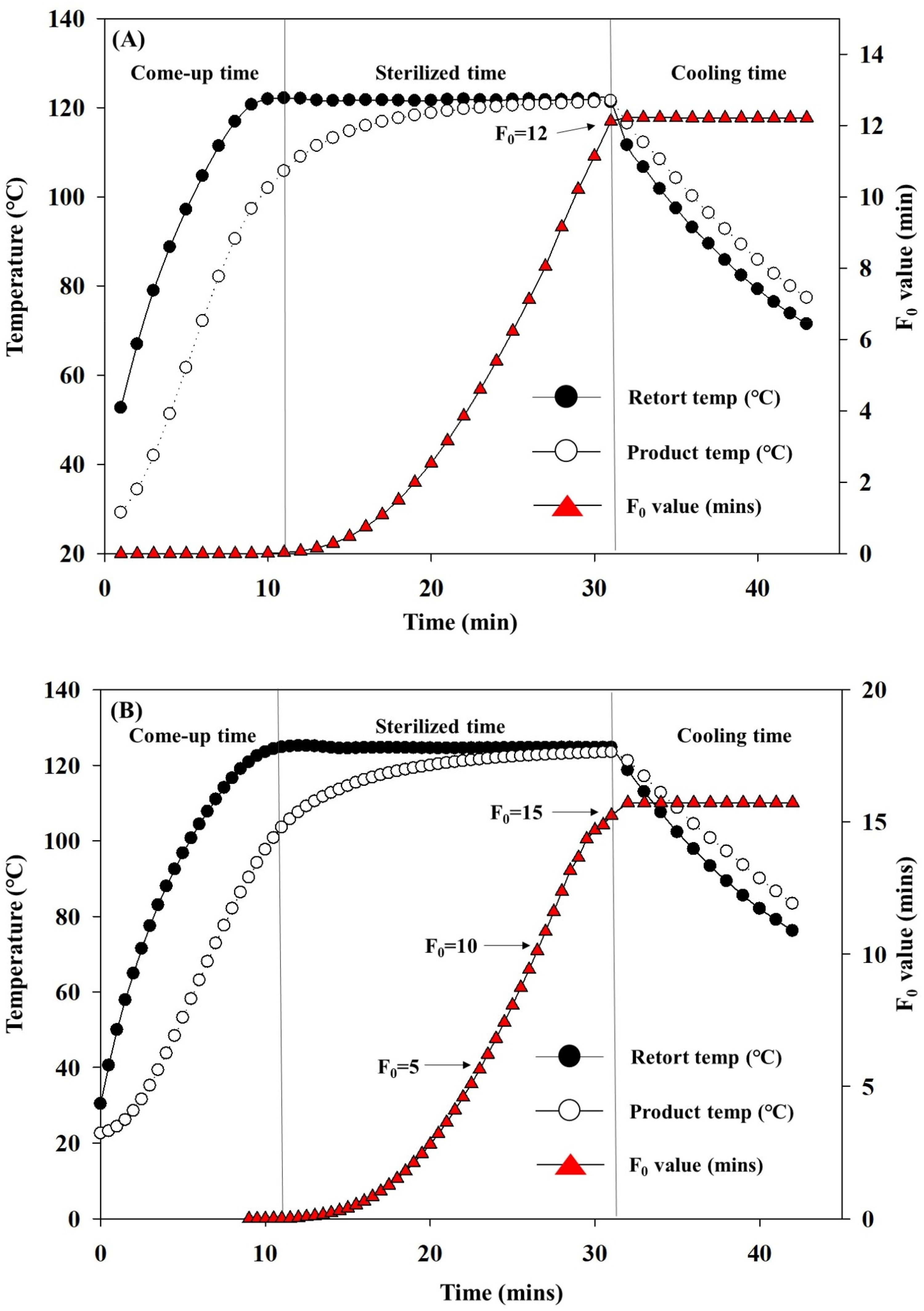
The thermal processing parameters over time, including temperature profiles and the accumulated sterilized value (F0). The x-axis represents the time (minutes), while the left y-axis denotes temperature (°C), and the right y-axis is the F0 value (minutes). The process is divided into three phases: come-up time (11 min), where temperature increases; steaming time, where the temperature is maintained; and cooling time, where the temperature decreases. (A) Steaming at 121 °C for 20 min with the F0 value of 12; (B) Steaming at 124 °C for 11, 16, and 20 min with the F0 values of 5, 10, and 15, respectively.
The hardness of BPK samples was measured using a TA.XTplus Texture Analyser (Stable Micro System, Godalming, UK). After sterilization, BPK samples were placed in a container with a diameter of 40 mm and filled to a height of 15 mm. A 20 mm diameter cylindrical probe (P/20) was used to compress the samples twice at a speed of 10 mm/sec, with a clearance of 5 mm. The equipment recorded the force during the compression to generate the texture analysis profile. The hardness was calculated from the obtained profiles using the built-in software provided by the supplier.
Statistical analysis
Data were expressed as mean ± standard deviation (SD) from three independent experiments. Statistical analysis was performed using XLSTAT (Addinsoft: Paris, France, 2017) by the one-way ANOVA followed by Fisher's least square difference test in comparing differences among groups. The Chi-square test was used to evaluate the goodness of fit between the observed and predicted moisture content at various soaking times and temperatures. A P value of less than 0.05 is considered statistically significant.
Results and discussion
Effects of soaking conditions on water absorption rate and moisture content in BPK
The initial moisture content of BPK was approximately 16% (Figure 3A). The highest water absorption rate was observed within the first hour at all soaking temperatures (Figure 3A). However, no significant changes in moisture content were detected between 6 and 8 h of soaking, indicating that the moisture content reached saturation at 8 h. Similar trends have been reported in various agricultural seeds, including sorghum (Kashiri et al., 2012), milled rice (Yadav and Jindal, 2007), bean (Shafaei et al., 2016), and chickpea (Shafaei et al., 2016).
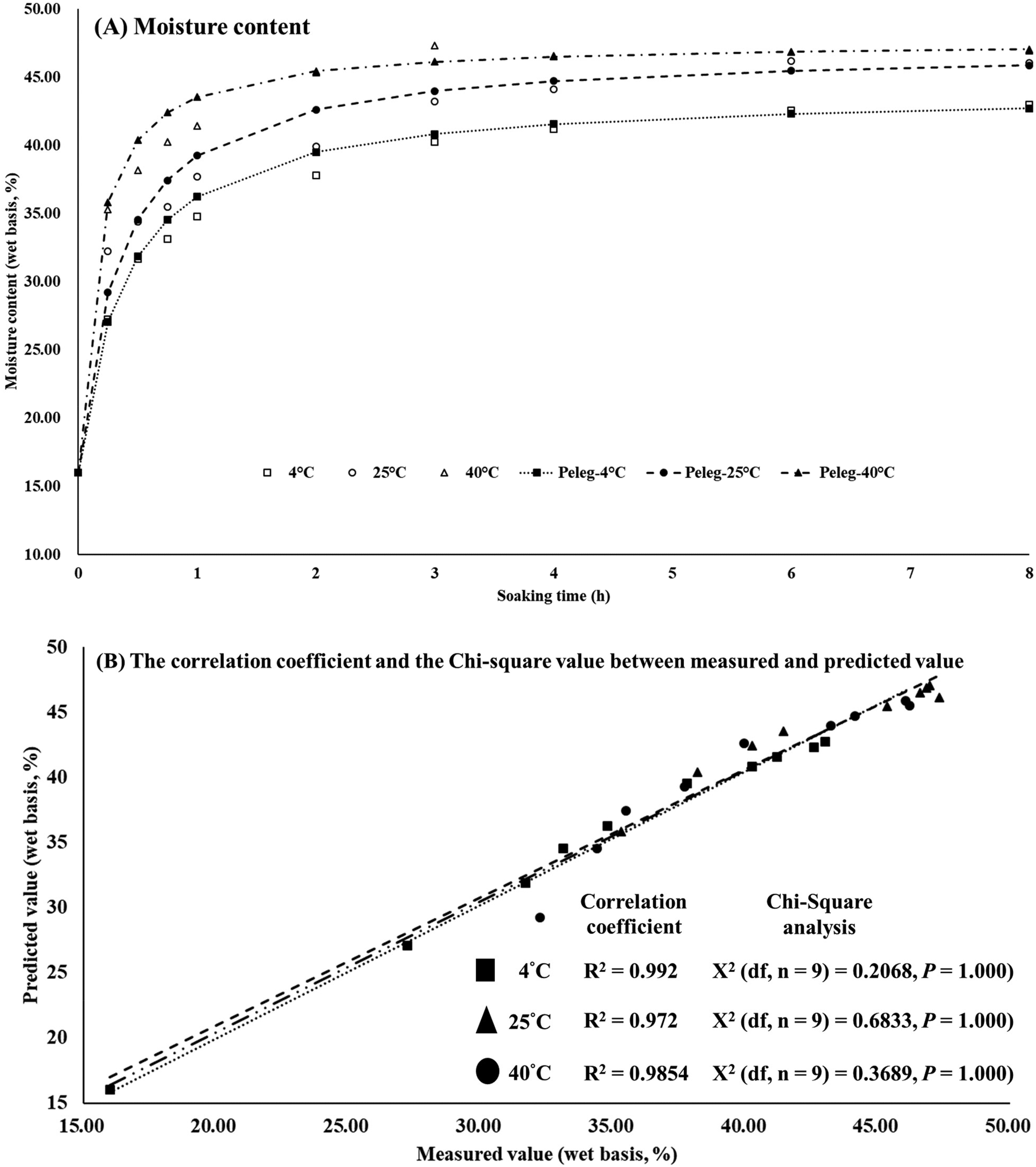
(A) Effects of diverse soaking times and temperatures on moisture content in black peanut kernels. (B) The correlation coefficient and chi-square analysis between the experiment's measured value and the Peleg model's predicted value at different soaking temperatures in black peanut kernels.
The water absorption rate and the equilibrium moisture content of BPK increased with higher soaking temperatures (Figure 3A and Table 1), consistent with previous findings in various bean samples (Shafaei et al., 2016). Chiang et al. (2009) have demonstrated a positive correlation between soaking temperature and water absorption rate in peanuts, but their study explored different peanut species and a higher soaking temperature range (30–70 °C). Warm water soaking is commonly employed to decrease soaking duration, as elevated temperatures enhance moisture diffusivity and hydration rates (Kashaninejad et al., 2009; Khazaei and Mohammadi, 2009). These findings suggest that higher temperatures enhance water diffusivity in BPK, resulting in a softer texture.
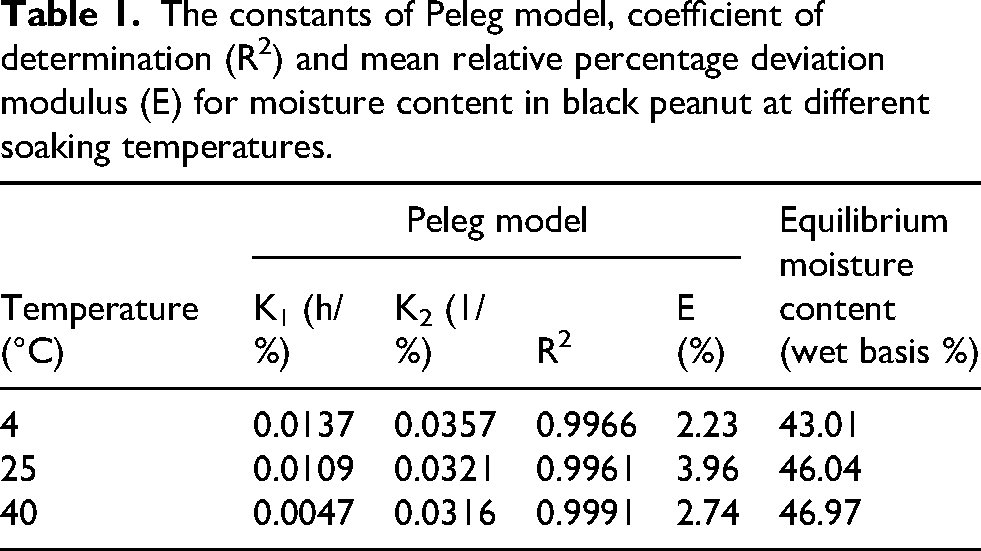
The constants of Peleg model, coefficient of determination (R2) and mean relative percentage deviation modulus (E) for moisture content in black peanut at different soaking temperatures.
The Peleg model
The Peleg model is widely recognized for its ability to predict water absorption kinetics using short-duration experimental data. This model effectively forecasted the equilibrium moisture content and characterized the hydration behavior of various agricultural products, including grains, potato, barley, chickpeas, corn, and adzuki beans within soaking (Botelho et al., 2013; Jideani and Mpotokwana, 2009; Montanuci et al., 2013; Oliveira et al., 2013; Ranjbari et al., 2013; Salimi Hizaji et al., 2011; Vasudeva et al., 2010). The key parameters of the Peleg model, including K₁ (Peleg rate constant), K₂ (Peleg capacity constant), coefficient of determination (R²), and mean relative percentage deviation modulus (E), are shown in Table 1 and Figure 4. The calculated R2 values exceeded 0.9, while E values remained below 10% across different soaking temperatures, indicating that the Peleg model had a strong predictive ability for moisture content in BPK. The high correlation (R² > 0.95) between the predicted and measured moisture content across different soaking temperatures, in conjunction with a low Chi-square value (X²) and a P value of 1.000, validates the predictive ability of the Peleg model (Figure 3B). The relatively low X2 suggests minimal deviation between the observed and predicted values, while the P value of 1.000 confirms that these differences are not statistically significant. These findings indicate that the Peleg model provides a close fit to the experimental data and can effectively represent the soaking behavior observed in this study.
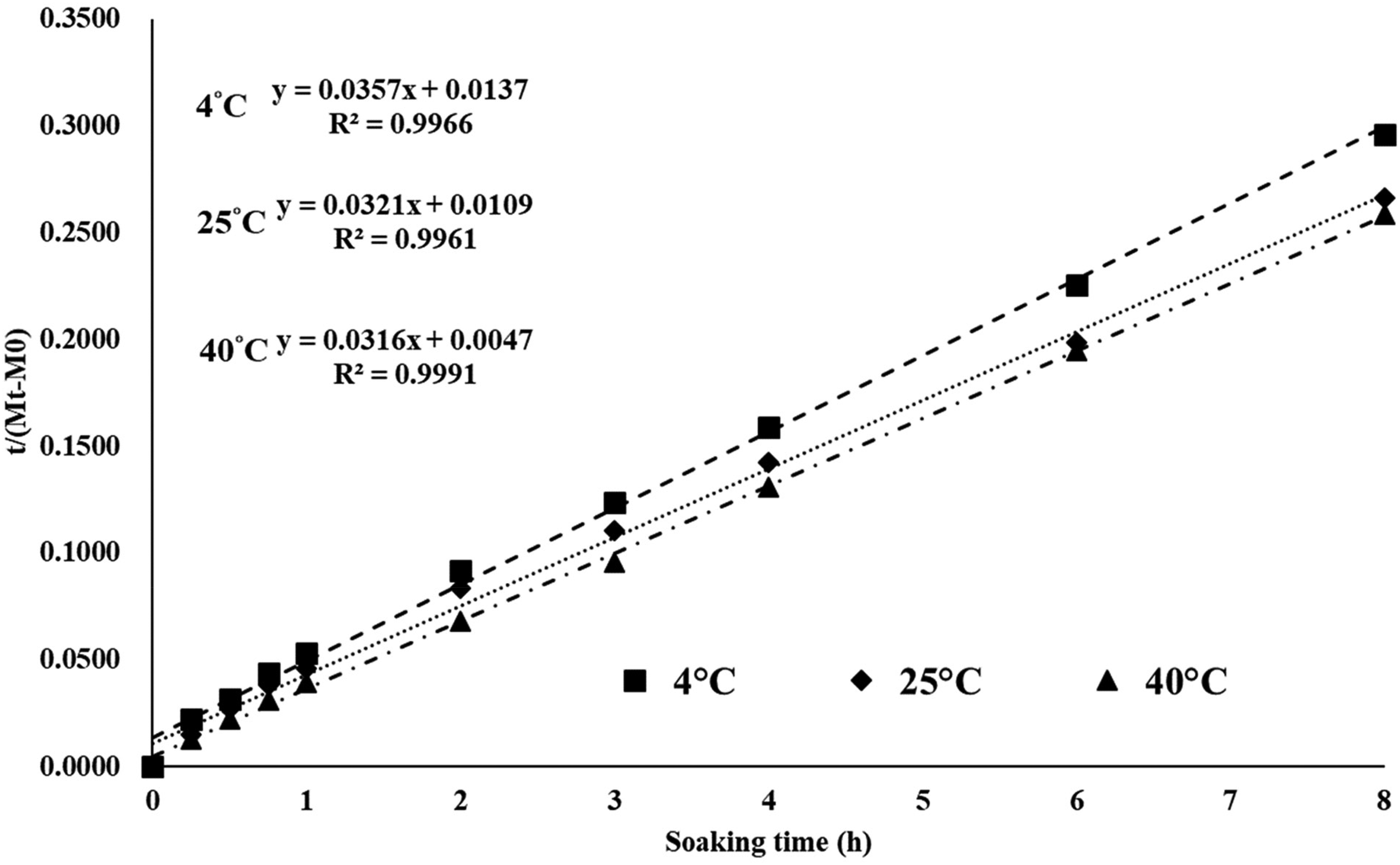
Regression of t/(Mt-M0) versus soaking time (t) in black peanut kernels.
The Peleg constant K1 decreased linearly with increasing temperature in peanuts, indicating that higher temperatures enhanced water transfer (Table 1). In addition, the calculated K1 value of constant K1 is associated with the initial water absorption rate. A higher initial water absorption rate and greater temperature sensitivity were observed in BPK (Figure 3A). The soaking process induced the formation of pores and cracks, facilitating increased water transfer through the seed structure (Ranjbari et al., 2011).
The Peleg constant K2 is associated with the maximum water absorption ability (Peleg, 1988). It is influenced by seed species and the loss of soluble solid materials during soaking (Abu-Ghannam and McKenna, 1997). Results revealed that the calculated K2 value reduced with increasing soaking temperature (Table 1), indicating that water absorption capacity increased at higher temperatures (Figure 3A). Similar findings have been reported in chickpeas (Sayar et al., 2001), soybeans (Toma et al., 2001), and beans (Abu-Ghannam and McKenna, 1997).
Effects of different soaking conditions on thermodynamic properties in BPK
As shown in Figure 5, a plot of Ln(1/K1) against [(1/Tref)-(1/T)] produced a linear relationship with a slope corresponding to Ea/R in BPK. The calculated Ea in BPK was 20.176 kJ/mol (Table 2). A positive Ea value indicated that the peanut kernels absorbed energy during soaking, facilitating moisture uptake and volume expansion. As the soaking time prolonged, the cotyledon cells of peanut kernels gradually deteriorated, leading to an enhanced water absorption rate, as evidenced using scanning electron microscopy (Chiang et al., 2009).
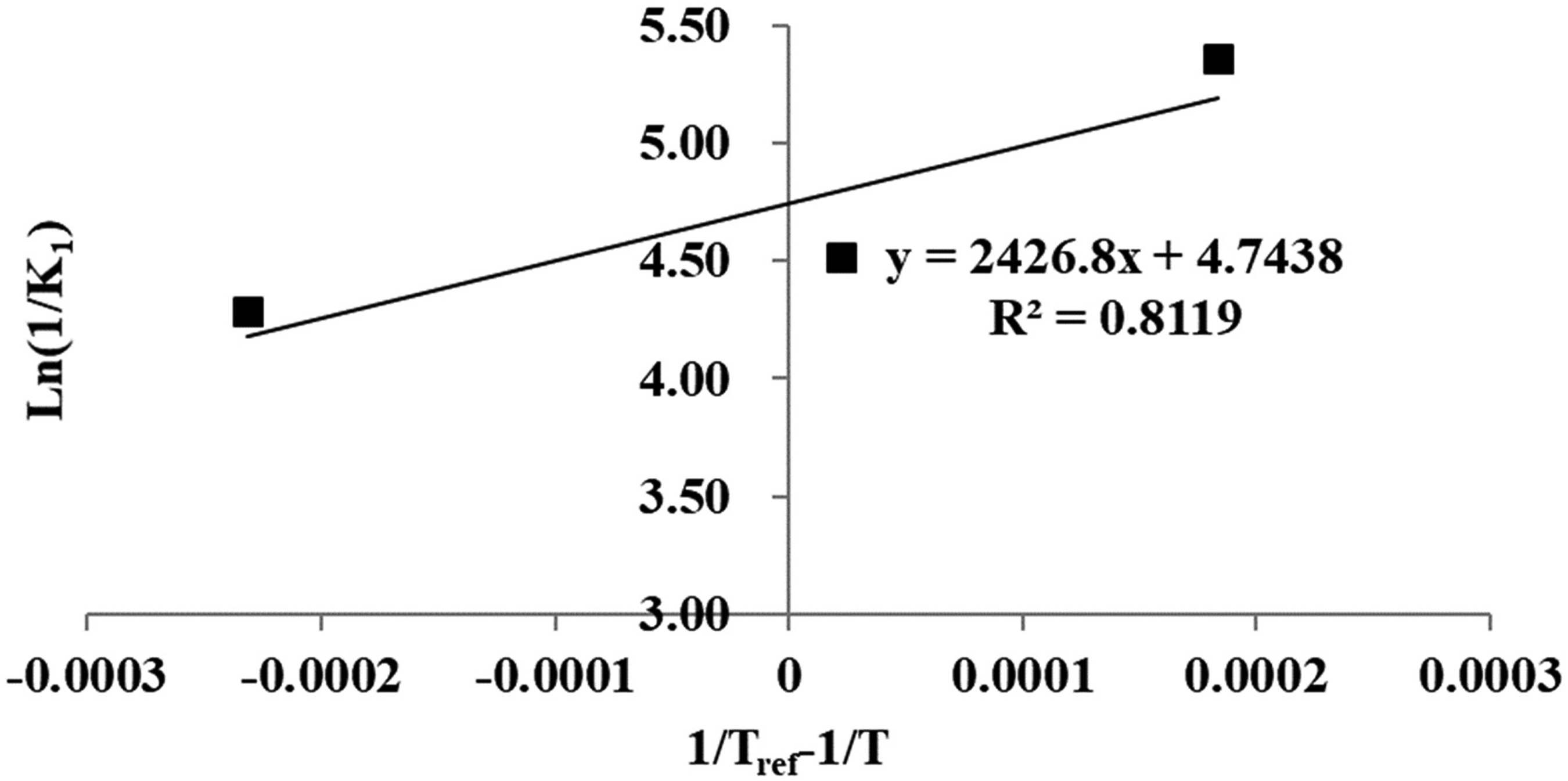
A linear regression analysis based on the Arrhenius-type relationship for the activation energy during soaking at 4, 25, and 40 °C.
Thermodynamic parameters of water absorption in black peanut at different soaking temperatures.
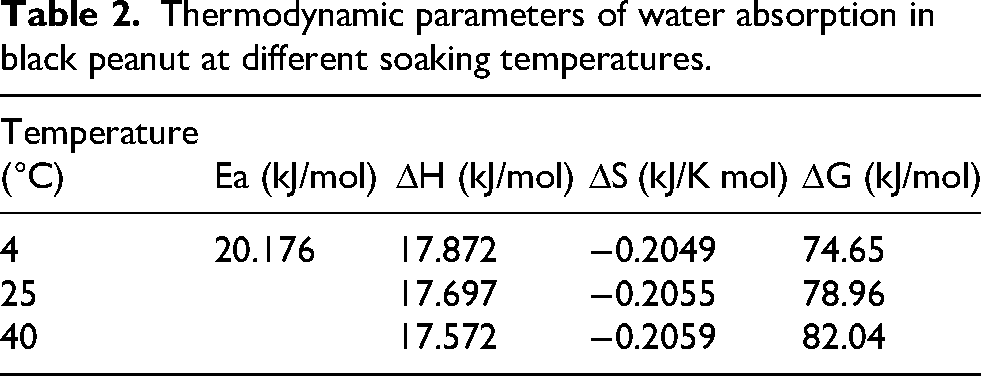
Table 2 also illustrates the effects of soaking temperature change on enthalpy (ΔH), entropy (ΔS), and Gibbs free energy (ΔG) in BPK. The positive ΔH values indicated that the moisture absorption in peanut kernels is an endothermic process requiring energy input (Shafaei et al., 2016). Notably, while the calculated ΔH values in this study were positive, several previous studies have reported negative enthalpy values (Jideani and Mpotokwana, 2009; Montanuci et al., 2013; Shafaei et al., 2016). According to equation (8), the ΔH is calculated as Ea-RT, where R represents the universal gas constant (8.314 J/mol/K). A possible explanation for these inconsistencies is the misapplication of R as 8.314 kJ/mol/K. For example, Jideani and Mpotokwana (2009) reported an Ea of 37.83 kJ/mol for Botswana Bambara varieties (Zimbabwe Red) at 25 °C, with a calculated ΔH of −2439.74 cal/mol. Similarly, Montanuci et al. (2013) found an Ea of 123.9 kcal/mol for barley at 10 °C, with a ΔH of −556.26 kcal/mol, while Shafaei et al. (2016) demonstrated an Ea of 154.354 kJ/mol for Sadri bean at 5 °C, with a ΔH of −2158.187 cal/mol. However, recalculating ΔH using the correct unit of R produced 8.457 kcal/mol (35.351 kJ/mol), 6.484 kcal/mol (27.146 kJ/mol), and 6.484 kcal/mol (27.146 kJ/mol), respectively.
As the soaking temperature increased, the calculated entropy (ΔS) values showed a slight but non-significant increase, remaining negative (Table 2). In contrast, the ΔG values increased with rising soaking temperature in BPK (Table 2). These findings support that peanut kernels absorb energy from their surroundings when Ea, ΔH, and ΔG are positive (Shafaei et al., 2016).
Effects of different soaking and steamed softening conditions on hardness in BPK
The Japan Care Food Conference and the Food Industry Research and Development Institute in Taiwan introduced the Universal Design Foods concept and the Eatender labeling system for elder-friendly foods, respectively (Wong et al., 2023). These systems classified food into four categories based on hardness: Easy-to-chew (< 5 × 10⁵ N/m2), Gum-chewable (< 5 × 10⁴ N/m2), Tongue-crushable (< 2 × 10⁴ N/m2), and no chewing required (< 2 × 10⁴ N/m2) (FIRDI, 2020).
The initial hardness of BPK was approximately 19.49 × 10⁵ N/m2 (Figure 6), indicating that peanuts are naturally firm. Hardness, which reflects the force required to deform a sample, is correlated with lower resistance during chewing (Bourne, 2002). The hardness of BPK decreased with increasing soaking time and temperature, followed by steaming (121 °C for 20 min) (Figure 6). Notably, after soaking at 4 °C for 1–8 h, the hardness remained at its highest level (∼10 × 105 N/m2) (Figure 6), indicating that low-temperature soaking is ineffective in softening BPK. In contrast, soaking at 25 °C and 40 °C for 8 h reduced hardness by approximately 50% compared to 4 °C soaking (Figure 6). At 25 °C soaking for 8 h, followed by steaming, the hardness of BPK decreased to 4.68 × 10⁵ N/m², meeting the easy-to-chew standard (Figure 6). Furthermore, a negative correlation was observed between moisture content and hardness across different soaking temperatures and durations, particularly at higher temperatures (Figure 7).
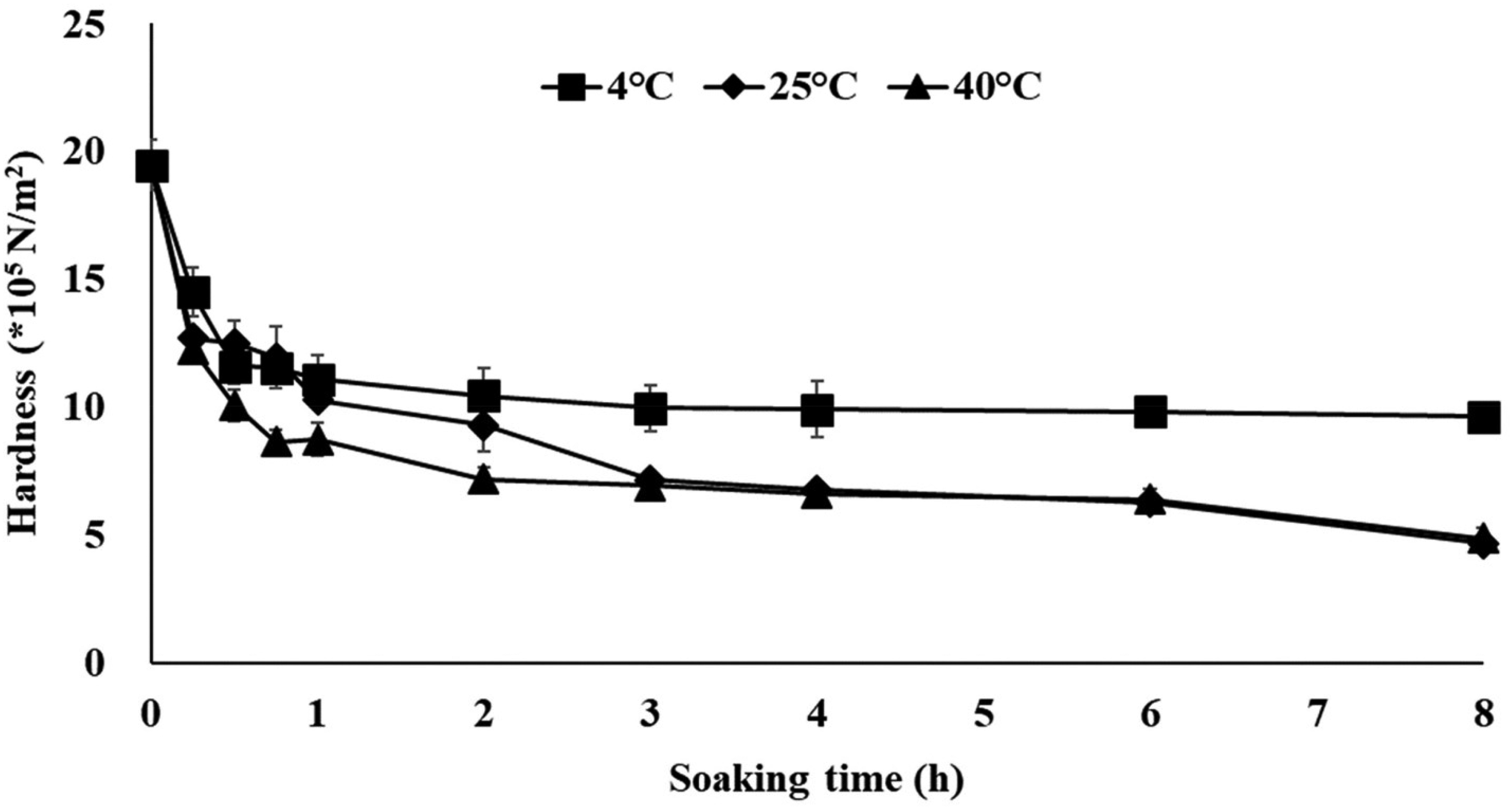
Effects of diverse soaking times and temperatures followed by steamed softening treatment at 121 °C for 20 min on the hardness of black peanut kernels.
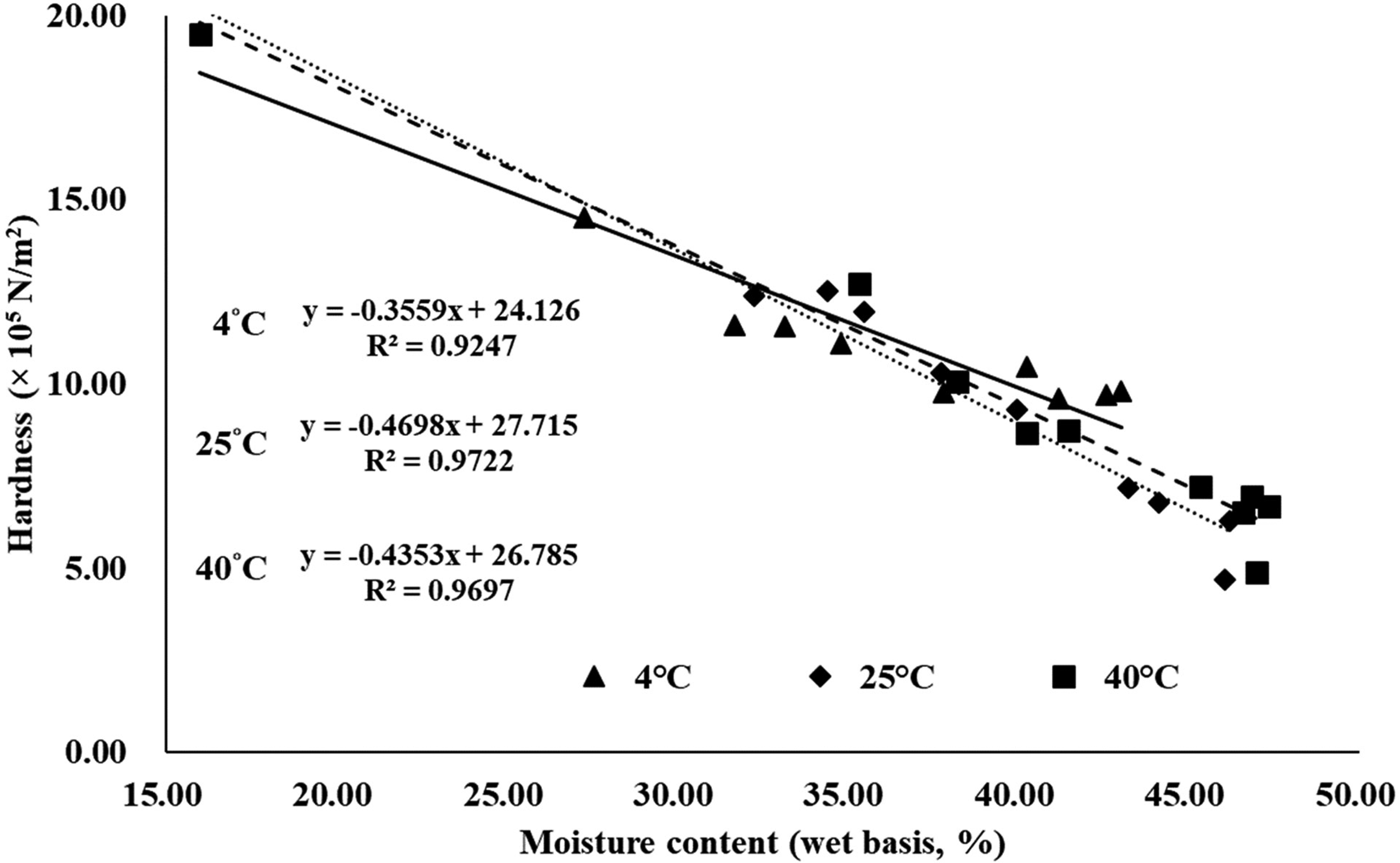
The correlation coefficient between moisture content and hardness in black peanut kernels pre-soaked at 25 °C for 8 h and steaming at 121 °C for 20 min.
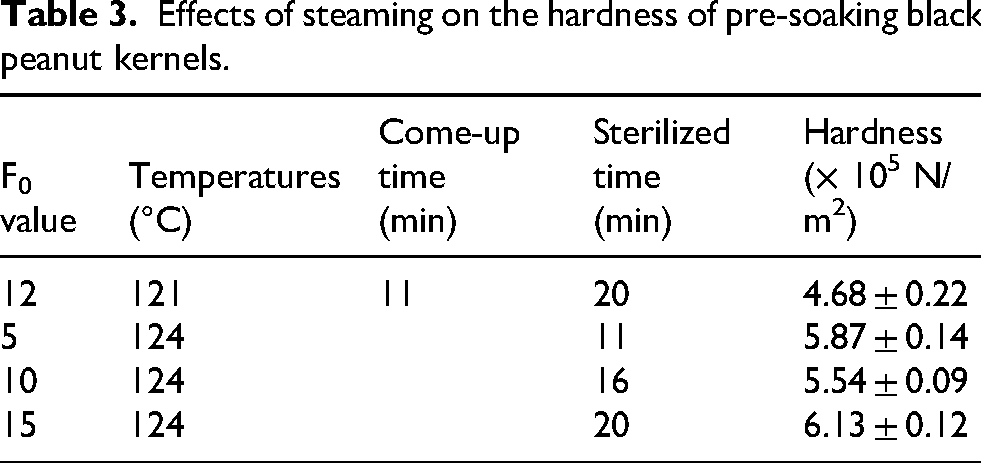
The F0 value represents the thermal lethality time required for sterilization, indicating the equivalent heating time (in minutes) at 121.1 °C needed to eliminate all microorganisms in food (Pursito et al., 2020). US FDA regulations (21 CFR Part 113) have stated that an F0 value exceeding 3 is typically required to ensure commercial sterility by inactivating Clostridium botulinum spores. Herein, we examined the effects of different F0 values (5, 10, and 15) at 124 °C with different thermal times on the hardness of BPK pre-soaked at 25 °C for 8 h. Figure 2B illustrates the changes in retort temperature, sample temperature, and F0 values over time under different steamed conditions. As also shown in Table 3, the hardness of BPK at 124 °C, with come-up time and holding of 22, 27, and 31 min corresponding to F0 values of 5, 10, and 15, respectively, remained above 5 × 10⁵ N/m², indicating that increasing the steaming temperature to 124 °C did not further soften BPK. This phenomenon is likely due to the saturation of water absorption during soaking, which limits additional softening. Moreover, higher steaming temperatures may induce structural changes in peanuts, such as starch gelatinization, which may contribute to hardening rather than softening. Therefore, optimizing steamed softening conditions is essential to balance food safety and textural properties, particularly for developing elderly-friendly food products.
Effects of steaming on the hardness of pre-soaking black peanut kernels.
Conclusion
Overall, this study demonstrated that the water absorption capacity of BPK increased with longer soaking times and higher temperatures. The Peleg model was effective in predicting the moisture content during soaking. The positive values of Ea, ΔH, and ΔG indicated that an endothermic reaction occurred during the soaking process. Pre-soaking, combined with appropriate steamed softening conditions, significantly reduced BPK hardness. Also, the complex interplay between steaming temperature, time, and F0 value on the hardness of BPK is emphasized. Therefore, this study successfully developed a ready-to-eat and easy-chewing BPK product tailored to older adults with chewing difficulties by optimizing pre-soaking and steamed conditions.
Footnotes

Author contributions
Dr CL Liu and Dr ML Huang performed the experiments and collected data. Miss YY Chen and Mr CF Yu conducted data interpretation. Dr CL Liu and Dr ML wrote the draft manuscript. Dr CM Yang supervised the work and edited the manuscript. All authors read and approved this manuscript submitted to Food Science and Technology International.
Funding
The authors disclosed receipt of the following financial support for the research, authorship, and/or publication of this article: This research was supported by 1Z1110761 from the Small Business Innovation Research (SBIR), Ministry of Economic Affairs, Taiwan.
The Small Business Innovation Research (SBIR), Ministry of Economic Affairs, Taiwan (grant number 1Z1110761).
Declaration of conflicting interests
The authors declared no potential conflicts of interest with respect to the research, authorship, and/or publication of this article.