






Abstract
Barley is an underutilized crop with considerable potential for enhancing food security and sustainability. Hull-less barley is a nutrient-dense cereal grain rich in β-glucan and dietary fiber; however, its broader application in food systems is constrained by the presence of antinutritional factors and certain functional limitations that affect processing and bioavailability. This study investigated the effects of acid (1% HCl) and alkali (1% NaOH) treatments on two hull-less barley varieties (PL 891 and BHS 352), with emphasis on nutritional composition, antinutrient reduction, functional behavior, thermal transitions, and microstructural attributes. Both treatments improved dietary fiber and β-glucan content, with PL 891 increasing from 15.59% to 19.98% and 3.52% to 5.05%, respectively. Alkali treatment proved more effective in reducing antinutritional factors, such as tannins, decreased by 59%, phytic acid by 21%, and trypsin inhibitor activity by 42%, thus enhancing mineral bioavailability. While antioxidant activity and total phenolic content improved more prominently in acid-treated samples, alkali treatment led to superior functional attributes. Thermal analysis showed elevated gelatinization temperatures and higher enthalpy, reflecting enhanced thermal stability. Peak viscosity values reached 3450 cP in alkali-treated BHS 352, indicating improved gelling and hydration potential. Scanning electron microscope and Fourier transform infrared spectrometer analyses confirmed granule disruption, protein unfolding, and hydrogen bond rearrangement, contributing to better water interaction and digestibility. These findings highlight the potential of chemically treated hull-less barley flours as functional, health-promoting ingredients in value-added food applications, advancing sustainable nutrition in line with global development goals.
Introduction
Barley (Hordeum vulgare L.) is one of the oldest domesticated cereal crops, cultivated over 10,000 years ago in the Middle East and Northeast Africa. It belongs to the Poaceae family and ranks as the fourth most widely produced cereal globally, following wheat, maize, and rice (Rajkumar et al., 2023). Historically, it played a vital role in the diets of ancient civilizations such as Egypt and Greece. However, in the present day, more than 70% of global barley production is used for animal feed, 21% for malting and brewing, and less than 6% for direct human consumption (Tricase et al., 2018).
In recent years, barley has attracted interest for its nutritional profile, particularly its richness in β-glucan, dietary fiber, B-complex vitamins, tocotrienols, and tocopherols (Zhang et al., 2023). Among its cultivars, hull-less barley retains most of the bran and germ, offering greater nutritional density and easier processing as it eliminates the need for dehulling (Moza and Gujral, 2016). However, its utilization in food systems remains limited due to the presence of antinutritional factors such as phytic acid, tannins, and trypsin inhibitors, which impair mineral bioavailability. Additionally, high levels of viscous β-glucans and insoluble fibers reduce starch and protein digestibility by restricting enzymatic action and water uptake (Kaur et al., 2024).
Climate change poses increasing challenges such as erratic rainfall and rising temperatures, underlining the need for resilient crops. Barley, being drought- and salinity-tolerant as well as fast-maturing, is well suited for cultivation in marginal agro-ecological zones globally (Tanto Hadado et al., 2009). In several high-altitude and arid regions across Asia and other parts of the world, hull-less barley has traditionally been used in roasted flour, fermented flatbreads, and beverages, reflecting both its cultural importance and its functional potential as a staple grain (Sharma et al., 2011).
Traditional processing methods such as soaking, germination, and fermentation effectively reduce antinutritional compounds and improve digestibility in cereal and legume grains (Kaur et al., 2024). For example, germination for 72 h has been shown to increase starch and protein digestibility, elevate gelatinization temperatures, and reduce phytate and trypsin inhibitor levels in barley and pulses (Muñoz-Llandes et al., 2023). However, these methods fail to significantly alter deeper physical and chemical characteristics like starch gelatinization behavior, thermal stability, pasting rheology, and microstructural organization at the granule or molecular level. As a result, more targeted and robust treatments such as controlled acid and alkali processing are required to simultaneously enhance the structural, functional, and compositional attributes of hull-less barley flour (Rathod et al., 2023; Wang et al., 2020).
Chemical treatments, particularly acid and alkali applications, have been shown to disrupt polysaccharide matrices, reduce antinutritional factors, and modify protein–starch interactions in various grains and legumes (Duan et al., 2023; Hatamikia et al., 2019). Alkaline processing can enhance protein solubility, emulsification capacity, and hydration behavior by unfolding protein structures and altering surface charge (Momen et al., 2021). These modifications have direct implications for improving viscosity, thermal stability (gelatinization enthalpy), and functional traits such as water absorption and gel formation: key factors in food formulation, texture, and digestibility (Eiamwat et al., 2016; Hatamikia et al., 2019; Momen et al., 2021). However, comprehensive studies assessing how such chemical treatments affect the structural, compositional, thermal, and rheological properties of hull-less barley are still limited, leaving a gap in understanding their potential as functional ingredients in value-added and sustainable food systems.
Therefore, this study investigates the impact of acid (0.1 N HCl) and alkali (0.1 N NaOH) treatments on two hull-less barley varieties (PL 891 and BHS 352), focusing on their antioxidant activity, mineral bioavailability, antinutritional factor reduction, thermal transitions (gelatinization temperature and enthalpy), pasting behavior (viscosity, breakdown, setback), and microstructural changes. Functional properties such as water absorption, solubility, emulsifying capacity, and swelling index were also evaluated to assess their applicability in food systems. This study aims to establish a structure–function relationship that supports the use of treated hull-less barley flours as nutrient-dense, thermally stable, and rheologically adaptable ingredients in sustainable food product development, aligning with UN Sustainable Development Goal (SDG) 2: Zero Hunger.
Material and methods
Procurement and preparation of raw materials
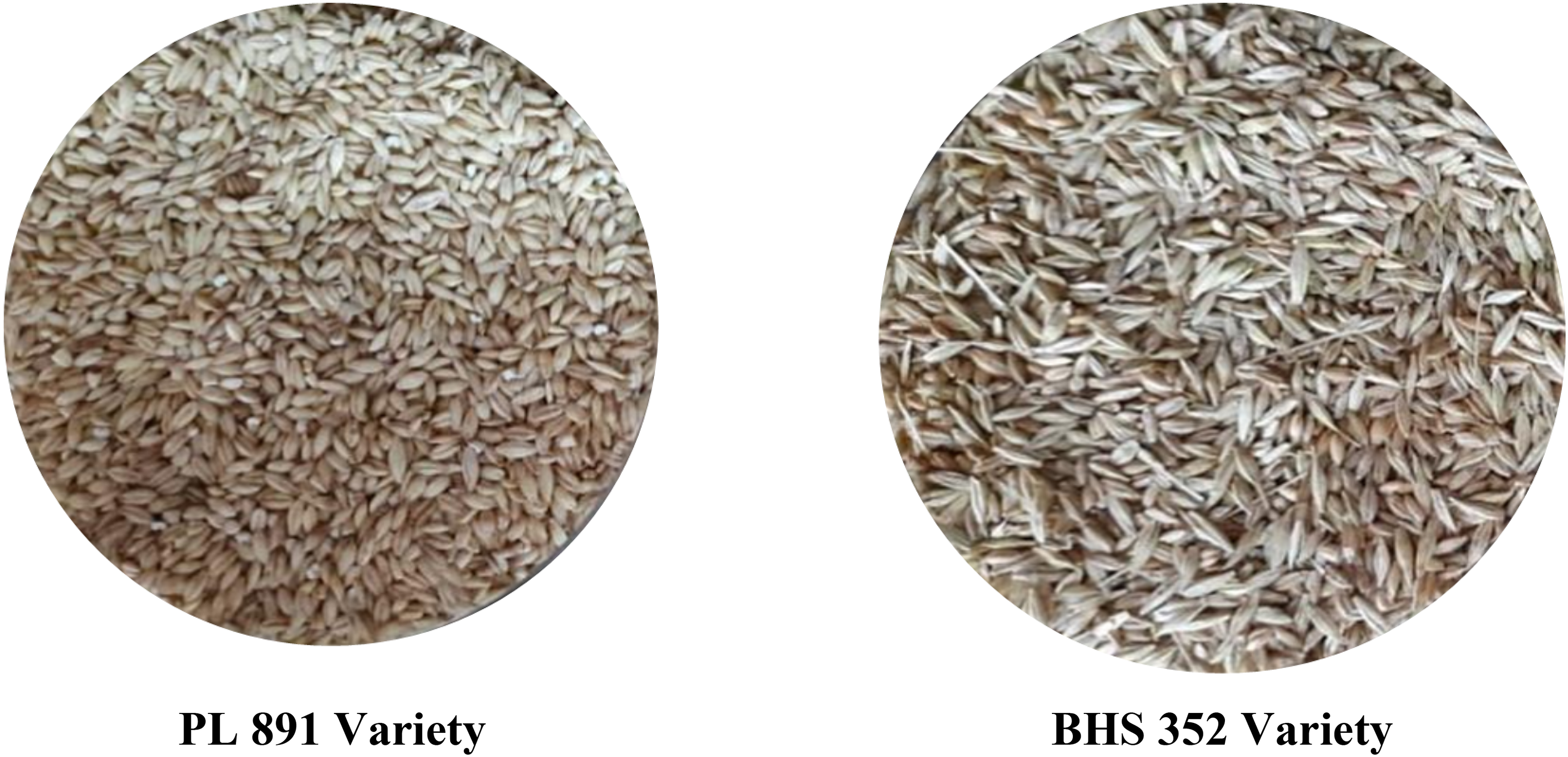
Hull-less barley varieties PL 891 and BHS 352 (as shown in Figure 1) were procured from the Department of Plant Breeding and Genetics, Punjab Agricultural University, Ludhiana, India, for their local adaptability and nutritional potential. Grains were dried in a hot air oven (Memmert UFE 500, Germany) at 50 ± 2 °C to a 10 ± 2% moisture content. The dried grains were milled using a MICROACTIVE® Florence Plus Flour Mill (India) and sieved through a 60-mesh (∼250 µm) sieve to obtain uniform flour for analysis.
Chemicals
All the chemicals used in this study were of AR grade and procured from Finar Chemicals (Ahmedabad, India) and Sisco Research Laboratories Pvt. Ltd (Mumbai, India).
Treatments and milling
Acid and alkali treatments were applied to hull-less barley grains (500 g batches) following the protocols of Lamsal et al. (2008) and Karim et al. (2008), with the following modifications. Unlike the original methods, which targeted either starch suspensions (Karim et al., 2008) or wheat kernel tempering (Lamsal et al., 2008), the current study applied treatments directly to intact barley grains. Specifically, grains were soaked in 0.1 N HCl or 0.1 N NaOH (1:5 w/v) for 8 h at 25 ± 2 °C with intermittent stirring to enable uniform penetration of chemicals. Post-treatment, grains were thoroughly rinsed to neutral pH to eliminate residual acid/alkali, dried in a hot air oven at 50 ± 2 °C for 12 h (instead of air-drying or refrigeration), and milled using a MICROACTIVE® Florence Plus Flour Mill (India). The resulting flour was sieved through a 60-mesh (∼250 µm) sieve for uniform particle size. These modifications were necessary to tailor the protocols for whole grain processing and to facilitate flour-based functional and compositional analyses.
Proximate analysis
Proximate composition of control and treated hull-less barley flour samples was determined following standard AOAC, 2000. methods. Results were expressed as mean ± standard deviation (SD).
Antioxidant activity and phenolic content
The antioxidant activity of the grain extracts was assessed using the 2,2-diphenyl-1-picrylhydrazyl (DPPH) free radical scavenging method as described by Kruma et al. (2016). Briefly, 0.5 ml of plant extract was added to 3.5 ml of a freshly prepared DPPH solution (0.004 g in 100 ml methanol; ≈0.101 mM). The mixture was incubated in the dark at room temperature for 30 min, and the absorbance was recorded at 517 nm.
Total phenolic content (TPC) was determined using the method described by Kaur et al. (2022). Briefly, 0.5 ml of extract was mixed with 2.5 ml of tenfold diluted Folin–Ciocalteu reagent and 2.5 ml of 7.5% sodium carbonate. The mixture was incubated at 25 °C for 30 min, and absorbance was measured at 765 nm.
Antinutritional factors
Antinutritional factors were quantified using standard protocols: trypsin inhibitor activity (Kakade et al., 1974), phytic acid (Kikunaga et al., 1985), saponins (Mir et al., 2016), and tannins (AOAC, 1984). All results were expressed on a per 100 g flour basis.
Mineral composition
Mineral content (Na, Mg, P, K, Ca, Fe, Zn, Mn, Cu) was analyzed using Inductively Coupled Plasma Optical Emission Spectroscopy (ICP-OES, Optima 8000, PerkinElmer, USA) following microwave-assisted digestion as per Association of Official Analytical Chemists (AOAC) 999.11 (AOAC, 2005). Samples were digested using a closed-vessel microwave system (Multiwave PRO, Anton Paar) with nitric acid and hydrogen peroxide. ICP-OES was operated in axial mode with a plasma power of 1500 W, nebulizer flow rate of 0.8 L/min, auxiliary gas flow of 0.2 L/min, and plasma gas flow of 15 L/min. Sample uptake was maintained at a suction speed of 1.5 ml/min using a SeaSpray nebulizer and cyclonic spray chamber. Calibration was done using multi-element standards, and results were reported as mg/100 g of flour on a dry weight basis.
Functional properties
Functional properties were determined using established procedures: Bulk density using AACC, 2000, water solubility index (WSI), water absorption Index (WAI), water and oil absorption capacity, foaming capacity and foam stability and emulsifying capacity were determined using methods described by Kheto et al., 2023, and in vitro protein digestibility (Rawat and Saini, 2023). Results were expressed as mean ± SD.
Total dietary fiber
Total dietary fiber (TDF) was determined enzymatically using an AOAC (2000) approved TDF Assay Kit (Sigma-Aldrich, USA). Dried, fat-free flour samples were gelatinized with heat-stable α-amylase and enzymatically digested with protease and amyloglucosidase to remove protein and starch. Ethanol was added to precipitate the soluble dietary fiber. The residue was then filtered, washed with ethanol and acetone, dried, and weighed. TDF was calculated as the weight of the residue minus the weight of protein and ash.
β-Glucan determination
To analyze β-glucan content, approximately 0.5 g of barley flour samples were weighed and placed into polypropylene tubes with known moisture content. An aliquot (1.0 ml) of aqueous ethanol (50% v/v) was added to each tube to aid in sample dispersion, followed by 5.0 ml of sodium phosphate buffer (20 mM, pH 6.5). The tubes were stirred, incubated in a boiling water bath for 2 min, stirred again, and incubated for an additional 3 min. After cooling to 40 °C, 0.2 ml of lichenase (10 U) was added to each tube. The tubes were capped, stirred, and incubated at 40 °C for 1 h. The volume in each tube was adjusted to 30.0 ml with distilled water, mixed thoroughly, and filtered through a Whatman No. 41 filter circle. Aliquots (0.1 ml) were transferred to test tubes, with sodium acetate buffer (50 mM, pH 4.0) added to the reaction blank, and β-glucosidase (0.2 U) in 50 mM acetate buffer (pH 4.0) added to the reaction tubes. The tubes were incubated at 40 °C for 15 min, followed by the addition of GOPOD Reagent (3.0 ml) and another incubation at 40 °C for 20 min (McCleary and Mugford, 1997). Absorbance was measured at 510 nm, and β-glucan content was calculated using the equation:

Fourier transform infrared spectroscopy
Fourier transform infrared (FTIR) spectra of control and treated barley flour samples were recorded using an FTIR spectrometer (Thermo Scientific, Nicolet 6700). Prior to analysis, samples were dried in a hot air oven at 50 °C overnight to eliminate residual moisture, which can interfere with IR absorption. Spectra were obtained using KBr pellet technique by mixing 2–6 mg of dried sample with spectroscopic-grade KBr and compressing into pellets. Measurements were performed in the range of 4000–400 cm−1 at a resolution of 4 cm−1, with a scan rate of 32 scans per sample to improve signal-to-noise ratio (Kaur et al., 2022).
Thermal properties of hull-less barley flour
The thermal properties of barley flour samples were evaluated using a differential scanning calorimeter (DSC) (Mettler Toledo, Switzerland). Approximately 1 g of hull-less barley flour was moistened with 2 ml of distilled water and allowed to equilibrate for 1 h, ensuring a final moisture content of approximately 70%, as described by Yu et al. (2015). A small portion of the equilibrated sample was transferred into a pre-weighed aluminum pan and hermetically sealed. An empty sealed aluminum pan was used as a reference. The samples were heated from 30 °C to 130 °C at a constant rate of 10 °C/min under a nitrogen atmosphere. The thermal transitions, including onset temperature (To), peak temperature (Tp), and enthalpy change (ΔH), were determined from the resulting thermograms.
Pasting properties of barley flour by rapid visco analyser
The pasting behavior of raw and chemically treated hull-less barley flours (PL 891 and BHS 352) was assessed using a rapid visco analyzer (RVA 4500, Perten Instruments, Sweden), following American Association of Cereal Chemists (AACC) Method 61–02 (AACC, 2000). Barley flour samples (native, acid-treated, and alkali-treated) were analyzed using the standard aluminum canister and paddle stirrer accessory provided with the instrument. No pre-standardization for protein or ash content was applied, as the objective was to evaluate the intrinsic impact of chemical treatments on the pasting profiles. The recorded parameters included peak viscosity, hold (trough) viscosity, final viscosity, breakdown, and setback. Each sample was analyzed in triplicate, and results were expressed as mean ± SD. This analysis provided insights into the starch gelatinization, paste stability, and retrogradation behavior of chemically modified barley flours.
Farinographic properties
The farinographic properties of raw and chemically treated hull-less barley flours (PL 891 and BHS 352) were evaluated using a Brabender Farinograph (Model: Brabender® Farinograph-E, Duisburg, Germany), following AACC Method 54–21.01 (AACC, 2000). Samples included untreated control, acid-treated, and alkali-treated flours for both varieties. The flours were not pre-standardized for protein or ash content, as the aim was to assess the inherent effects of acid and alkali treatments on the rheological behavior of the barley flours.
Key parameters recorded included:
Water absorption (%): Amount of water required to reach a dough consistency of 500 FU. Dough development time (min): Time taken to reach maximum consistency. Stability time (min): Duration during which maximum dough consistency was maintained. Degree of softening (FU): Difference in dough consistency 12 min after reaching peak development.
All tests were performed in triplicate, and results were expressed as mean ± SD. Farinographic data provided insights into the influence of acid and alkali treatments on dough consistency, mixing tolerance, and hydration behavior of the barley flours.
Scanning electron microscopy
Microstructural features of control and treated flours were examined using a scanning electron microscope (SEM) (Model S-3400N, Hitachi, Japan). Samples were mounted on aluminum stubs using carbon tape, sputter-coated with gold (∼15 nm thickness) using a Quorum Q150R ES sputter coater and observed under high vacuum mode. Imaging was conducted at an accelerating voltage of 15 kV, with a working distance of 10–12 mm, and magnifications ranging from 500× to 3000×, to assess starch granule morphology, surface structure, and granule integrity.
Statistical analysis
All experiments were conducted in triplicate. Data were expressed as mean ± SD and analyzed using one-way analysis of variance with Duncan's multiple range test (P ≤ 0.05) using SPSS Version 22.0. Regression analysis was performed using Microsoft Excel 2007.
Results and discussion
Milling barley grains
Flour extraction rate is a key parameter in cereal grain processing, as it reflects the efficiency of conversion from whole grain to usable flour. It also influences the nutritional and functional properties of the final product. In this study, the flour extraction rate of hull-less barley was evaluated to understand how acid and alkali treatments affect the milling behavior of two varieties- PL 891 and BHS 352. As shown in Table 1, the flour extraction rate was highest in untreated (raw) samples of both varieties, with PL 891 recording 86.90% and BHS 352 at 84.80%. Both acid and alkali treatments led to a statistically significant reduction (P ≤ 0.05) in flour yield, with the lowest yield observed in alkali-treated BHS 352 (83.40%). Among treated samples, acid-treated PL 891 retained a relatively higher yield (85.00%) than its alkali-treated counterpart.
Flour extraction rate of hull-less barley varieties under different treatments.
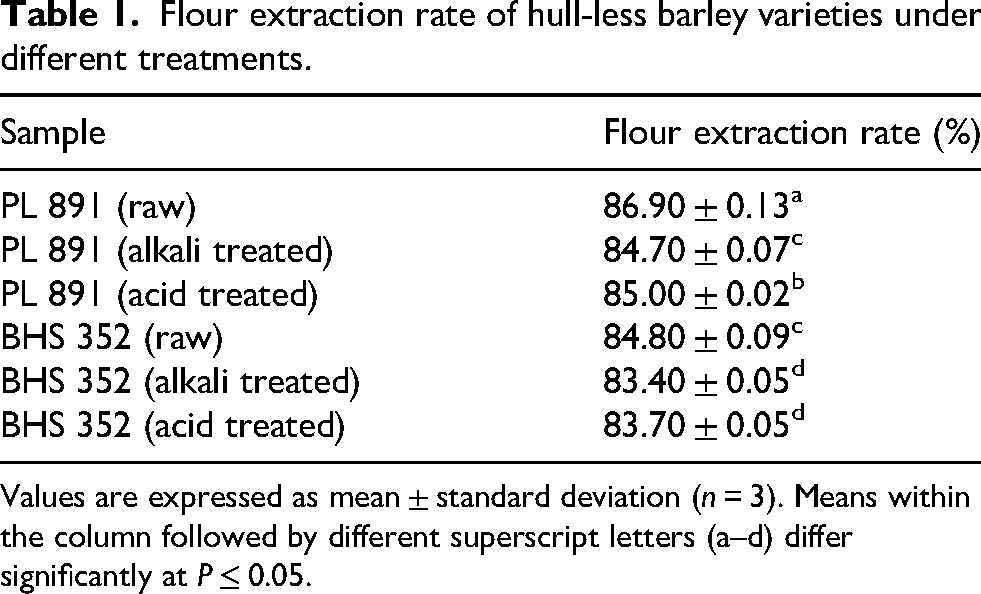
Values are expressed as mean ± standard deviation (n = 3). Means within the column followed by different superscript letters (a–d) differ significantly at P ≤ 0.05.
The decline in extraction rate is likely due to physical and chemical changes during treatment, particularly moisture-induced grain shrinkage and the leaching of soluble endosperm components during soaking. This may also lead to partial disintegration of the endosperm, reducing total flour recovery. Similar results were reported by Abdel-Gawad et al. (2016), who observed lower yields in chemically treated cereal grains due to solubilization and loss of outer layers. Despite the modest reduction in yield, a key advantage of hull-less barley lies in its dehulling-free milling process, which enables complete grain recovery without the need for abrasive peeling. This results in the retention of bran-rich fractions, which are typically high in minerals, phenolics, and dietary fiber. Thus, the flour produced from chemically treated hull-less barley remains nutritionally dense and functionally suitable for developing value-added health products.
Proximate composition of processed hull-less barley flour
The proximate composition of barley flour is a critical indicator of its nutritional quality and functional potential. In the present study, acid and alkali treatments significantly (P ≤ 0.05) affected all proximate parameters of hull-less barley varieties PL 891 and BHS 352 (Table 2). Moisture content increased slightly in treated samples, with the highest in acid-treated PL 891 (9.70%), likely due to structural changes enhancing water retention. Protein content improved notably after treatments, with PL 891 showing a rise from 12.03% in raw flour to 13.77% in alkali-treated samples, attributed to the leaching of soluble carbohydrates and release of bound proteins (Yilmaz et al., 2018). Fat content reduced marginally in treated flours, possibly due to the removal of surface lipids during soaking. Ash content remained stable in PL 891 but increased in BHS 352 after treatment, indicating varietal differences in mineral retention. Both crude fiber and dietary fiber contents increased significantly, with maximum dietary fiber (19.98%) recorded in alkali-treated PL 891, owing to concentration effects and loosening of non-starch polysaccharide complexes. Enhancement in β-glucan content was a key outcome, with the highest value (5.05%) in acid-treated PL 891, reflecting improved extractability after partial hydrolysis of the cell wall. A slight reduction in total carbohydrate content was observed, corresponding to losses of soluble starches and sugars during treatment. Overall, acid and alkali treatments improved the nutritional profile of barley flour, particularly enhancing protein, fiber, and β-glucan levels, supporting their potential use in functional food formulations.
Proximate composition of processed hull-less barley flour.

Values are expressed as mean ± standard deviation (n = 3). Means within each row followed by different superscript letters differ significantly at P ≤ 0.05.
Effect of acid/alkali treatments on antioxidants and total phenolics of barley flour
The antioxidant activity of hull-less barley flours was significantly enhanced by acid and alkali treatments in both PL 891 and BHS 352 varieties, as shown in Table 3. In PL 891, antioxidant activity increased from 30.44% inhibition in the raw flour to 43.51% in acid-treated and 35.51% in alkali-treated samples. A similar pattern was observed in BHS 352, where antioxidant activity rose from 29.50% in control to 40.50% and 35.75% in acid- and alkali-treated flours, respectively. The higher DPPH radical scavenging activity in acid-treated flours indicates improved availability of antioxidant compounds.
Effect of acid and alkali treatments on antioxidant activity and total phenolic content of hull-less barley flours.
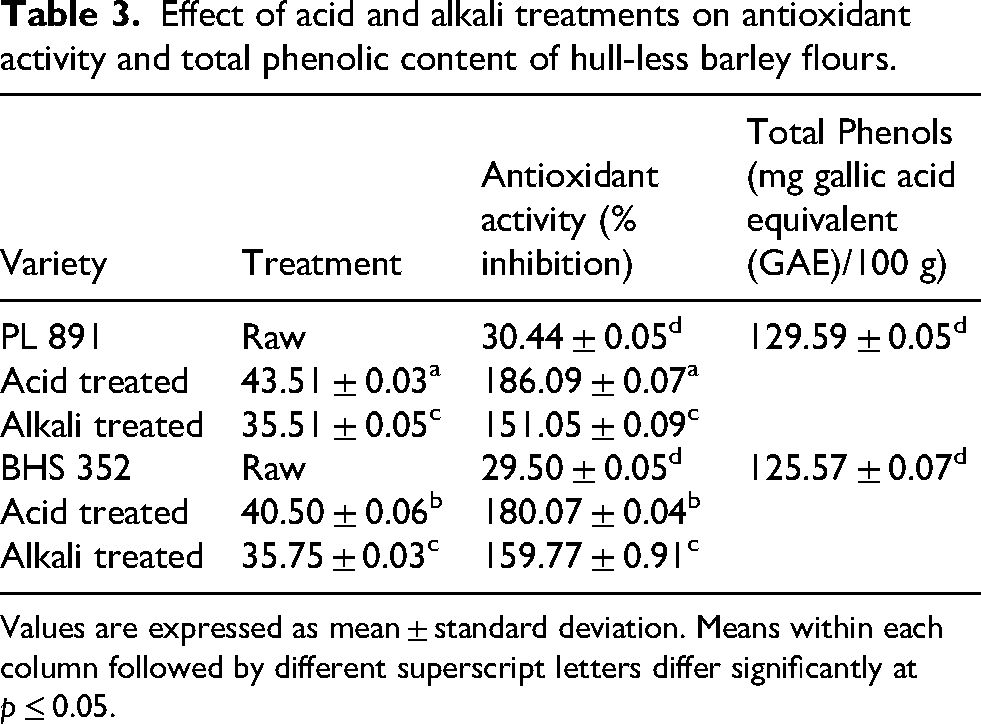
Values are expressed as mean ± standard deviation. Means within each column followed by different superscript letters differ significantly at p ≤ 0.05.
Acid treatment likely facilitated the release of bound phenolic compounds by hydrolyzing ester and glycosidic linkages, thereby increasing the pool of free phenolics with enhanced radical-scavenging activity. This is consistent with the known mechanism where acidic hydrolysis converts phenolic glycosides into their more bioactive aglycone forms. Yang et al. (2021) reported a similar enhancement in antioxidant activity in acid-treated tartary buckwheat due to increased availability of aglycones. In the present study, TPC significantly increased following acid treatment, from 129.59 mg gallic acid equivalent (GAE)/100 g in control to 186.09 mg in PL 891, and from 125.57 to 180.07 mg GAE/100 g in BHS 352. Although alkali treatment also elevated TPC values (151.05 and 159.77 mg GAE/100 g in PL 891 and BHS 352, respectively), the effect was less pronounced, suggesting that acidic conditions were more effective in liberating phenolic compounds from the barley matrix.
These changes confirm that chemical treatments effectively enhance the phenolic composition of barley flour. The increased TPC closely mirrors the trend in antioxidant activity, reinforcing the strong correlation between phenolic content and radical scavenging potential (Kähkönen et al., 1999). Although alkali treatments also enhanced antioxidant parameters, the effects were consistently more pronounced with acid treatment across both varieties. Overall, the results suggest that acid and alkali milling treatments are promising tools for improving the antioxidant profile of hull-less barley flour, with acid treatment demonstrating superior efficiency in enhancing both DPPH inhibition and phenolic content.
Effect of processing on antinutritional factors
Antinutritional factors such as tannins, saponins, phytic acid, and trypsin inhibitors are known to impair nutrient absorption and digestibility by forming complexes with proteins and minerals. Reducing these compounds is essential for improving the nutritional quality of barley-based products. In this study, both acid and alkali treatments significantly reduced anti-nutritional factors in hull-less barley flour across both PL 891 and BHS 352 varieties (Table 4). Tannin content, which interferes with protein and iron absorption, decreased markedly following treatment. In PL 891, tannins were reduced from 171.60 mg/100 g in the control sample to 107.86 mg/100 g and 70.06 mg/100 g in acid- and alkali-treated flours, respectively. Similar trends were observed in BHS 352. Alkali treatment proved particularly effective, likely due to its ability to disrupt polyphenolic structures and facilitate leaching during rinsing. Saponin content, associated with bitterness and known to damage intestinal lining at high concentrations, also declined post-treatment. Acid-treated PL 891 showed a moderate reduction, whereas alkali treatment resulted in more substantial removal. Wu et al. (2024) similarly reported the superior effectiveness of alkali over acid in reducing saponin levels. The amphipathic nature of saponins, rendering them soluble in both aqueous and alcoholic solvents, contributes to their susceptibility to chemical soaking treatments (Timilsena et al., 2023).
Antinutritional factors of raw and treated hull-less barley flour.
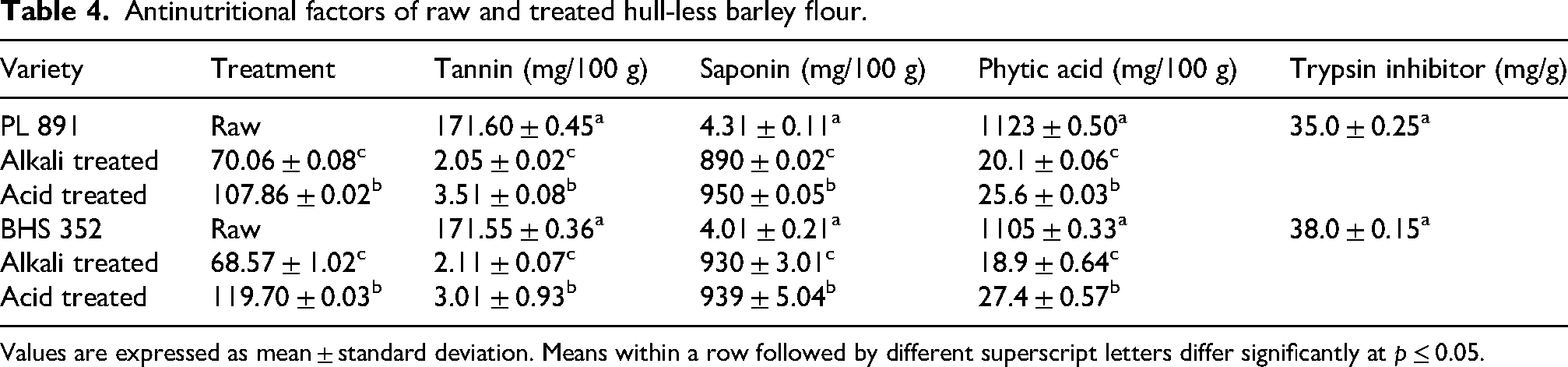
Values are expressed as mean ± standard deviation. Means within a row followed by different superscript letters differ significantly at p ≤ 0.05.
Phytic acid, a key mineral-binding antinutrient, was significantly reduced in both varieties after processing. For instance, in PL 891, phytic acid decreased from 1123 mg/100 g in control to 950and 890 mg in acid- and alkali-treated flours, respectively. This reduction is consistent with previous findings that acidification or alkalization can hydrolyze phytate compounds or disrupt phytate–mineral complexes (Ochanda et al., 2010; Metzler-Zebeli et al., 2014). Trypsin inhibitor activity, which impairs protein digestion, was also lowered significantly. In PL 891, trypsin inhibitor levels dropped from 35 in the control to 25.6 (acid) and 20.1 mg/g (alkali). BHS 352 followed a similar trend. The reduction in protease inhibitors enhances the digestibility of barley protein and improves its potential as an ingredient in functional food applications. Overall, both acid and alkali treatments effectively diminished all four tested antinutritional factors, with alkali treatment demonstrating slightly greater efficacy. These findings support earlier reports that alkaline and acidic environments disrupt or deactivate antinutrients by hydrolyzing complex compounds or enhancing their solubility and leaching (Nadiha et al., 2010; Kheto et al., 2024). By mitigating the presence of tannins, phytic acid, saponins, and trypsin inhibitors, chemical treatments enhance the bioavailability of minerals and proteins, improving the nutritional and functional value of hull-less barley flour in food product development.
Effect of treatments on mineral composition of hull-less barley flour
Mineral composition is a key determinant of the nutritional quality of cereal flours. In this study, acid and alkali treatments significantly influenced the mineral profile of hull-less barley varieties PL 891 and BHS 352 (Table 5). Treated flours exhibited enhanced levels of sodium, magnesium, potassium, calcium, iron, and zinc, indicating improved release of minerals from the grain matrix. The increase in magnesium and potassium, particularly in acid-treated PL 891, could be linked to the breakdown of phytate-mineral complexes during processing. Alkali treatment was more effective in increasing calcium content, likely due to weakening of cell wall structures under alkaline conditions. Trace minerals like iron and zinc also improved post-treatment in both varieties, supporting enhanced mineral bioavailability. However, a slight reduction in copper content was noted, possibly due to its higher solubility and loss during washing, consistent with earlier findings (Kuan et al., 2011). Overall, acid and alkali treatments positively influenced the mineral composition of hull-less barley flour by enhancing the availability of key macro- and micro-minerals, reinforcing their potential in developing nutrient-rich functional food products.
Mineral composition (mg/kg) of raw and treated hull-less barley flours from PL 891 and BHS 352 varieties.
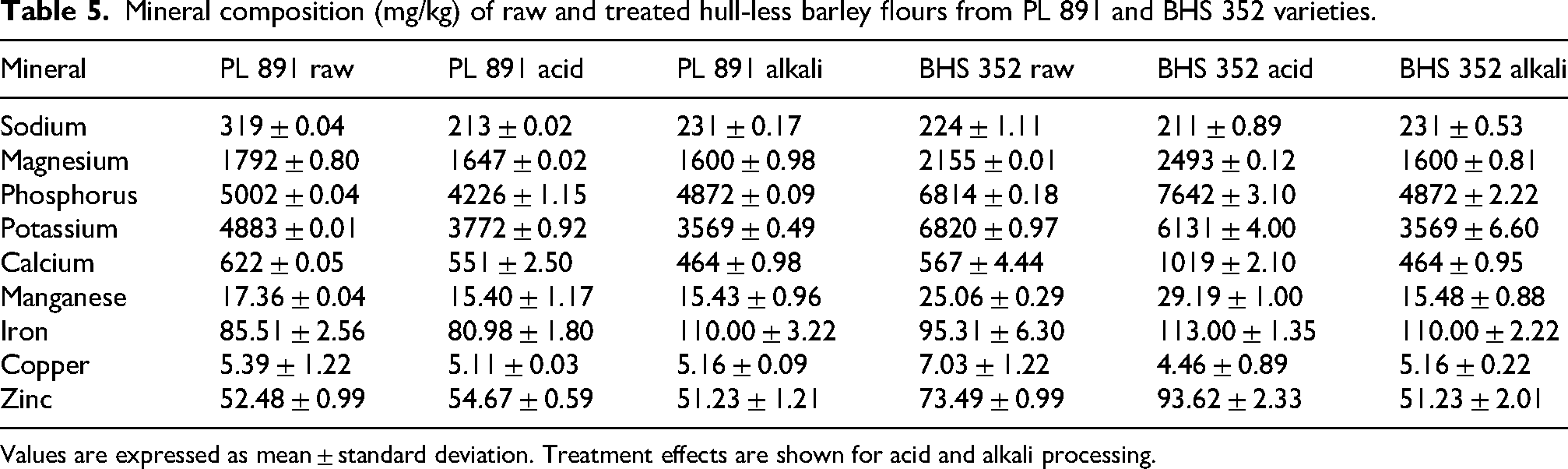
Values are expressed as mean ± standard deviation. Treatment effects are shown for acid and alkali processing.
Effect of treatments on functional properties of hull-less barley flour
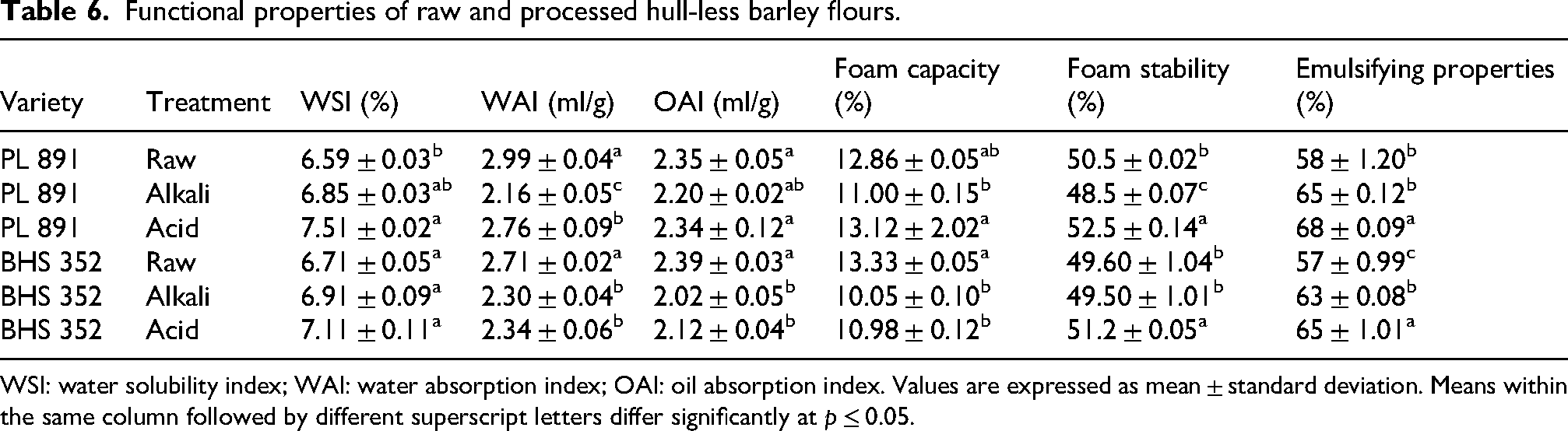
Functional properties are critical for determining the suitability of cereal flours in diverse food applications, particularly influencing hydration, emulsification, and textural behavior. In this study, the impact of acid and alkali treatments on key functional attributes of hull-less barley flours (PL 891 and BHS 352) were evaluated (Table 6). WSI increased significantly in treated flours, with PL 891 showing an increase from 6.59% (control) to 7.51% (acid-treated), and BHS 352 rising from 6.71% to 7.11% in acid-treated samples. This enhancement is attributed to partial hydrolysis of polysaccharides and disruption of the starch–protein matrix, improving the solubility of flour components (Singh, 2001).
Functional properties of raw and processed hull-less barley flours.
WSI: water solubility index; WAI: water absorption index; OAI: oil absorption index. Values are expressed as mean ± standard deviation. Means within the same column followed by different superscript letters differ significantly at p ≤ 0.05.
Similarly, WAI improved in treated samples, likely due to cell wall loosening and greater exposure of hydrophilic groups within starch and fiber fractions (Ørskov and Greenhalgh, 1977). In contrast, oil and water absorption capacities slightly decreased after chemical treatments, possibly due to protein denaturation or surface changes reducing binding sites. Foaming capacity and stability were notably reduced in alkali-treated flours, with PL 891 decreasing to 11%, while acid-treated flours retained foaming comparable to controls. This reduction may be linked to structural alterations in proteins affecting foam-forming ability (Abirached et al., 2015).
Emulsifying properties, however, improved in both acid- and alkali-treated flours. Protein unfolding and increased surface activity facilitated better emulsion formation and stability, aligning with findings of Saleh et al. (2015) and Liu et al. (2023). These enhancements are valuable in products like sauces, batters, and meat analogs. Overall, acid and alkali treatments significantly modified the functional profile of hull-less barley flours. While oil absorption and foam stability decreased, improvements in WSI, WAI, and emulsifying behavior suggest potential for these treated flours in specific food formulations, depending on desired product characteristics.
Thermal properties of processed barley flour
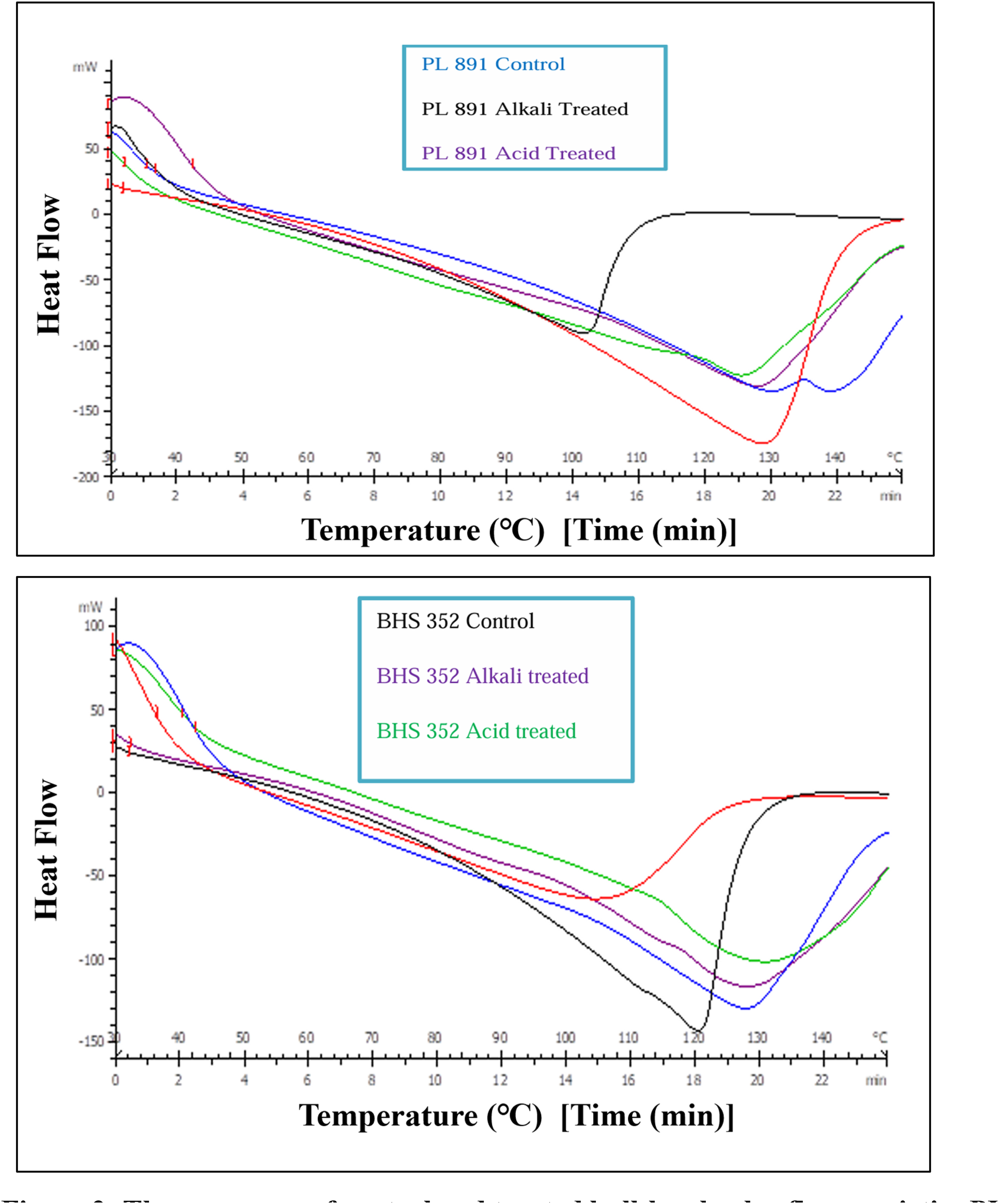
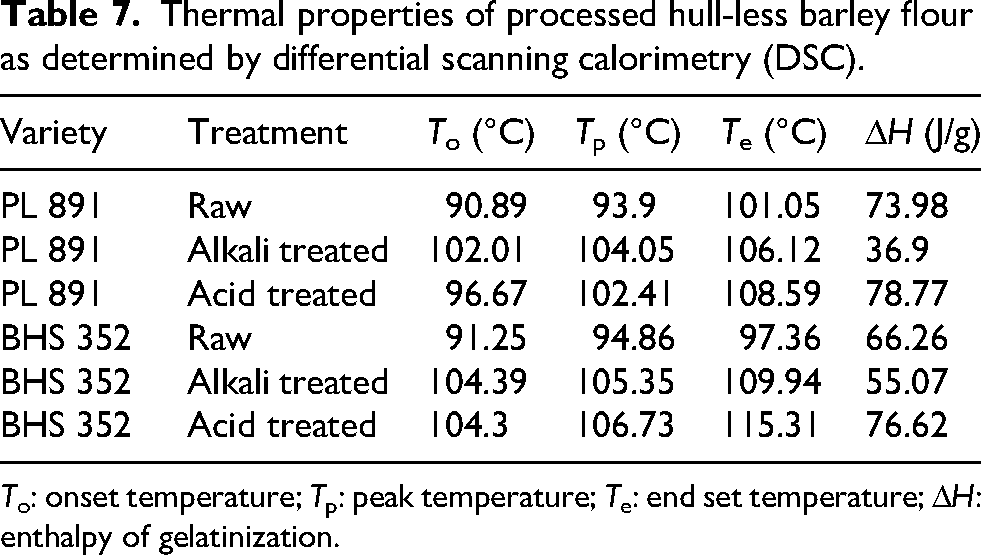
The thermal behavior of control and treated hull-less barley flours was evaluated using DSC to elucidate the effects of acid and alkali treatments on gelatinization characteristics (Table 7, Figure 2). Control flours of PL 891 and BHS 352 exhibited lower onset (To) and peak (Tp) temperatures, indicating weaker crystalline regions and lower thermal stability. In contrast, both acid and alkali treatments significantly increased To and Tp values across both varieties, with maximum Tp recorded in acid-treated BHS 352 (106.73 °C) and alkali-treated BHS 352 (105.35 °C). This elevation in gelatinization temperature suggests an enhancement in crystalline order and molecular interactions, requiring greater thermal energy for disruption.
Hull-less barley varieties PL 891 and BHS 352.
Thermograms of control and treated hull-less barley flour varieties PL 891 and BHS 352.
Thermal properties of processed hull-less barley flour as determined by differential scanning calorimetry (DSC).
To: onset temperature; Tp: peak temperature; Te: end set temperature; ΔH: enthalpy of gelatinization.
The observed thermal stabilization may be attributed to two primary mechanisms: (i) Acid-induced hydrolysis, which partially removes amorphous starch regions, leading to a higher relative proportion of crystalline domains; and (ii) alkali-mediated protein unfolding and aggregation, which enhances starch–protein crosslinking, thereby reinforcing the structural matrix. These alterations reduce water penetration efficiency and increase the energy required to disrupt the starch granules.
Enthalpy change (ΔH), reflecting the energy required for gelatinization, varied significantly among treatments. Acid-treated flours exhibited higher ΔH values (78.77 J/g in PL 891 and 76.62 J/g in BHS 352), indicating a denser and more ordered starch matrix post-treatment. This might be due to the realignment of amylose and amylopectin chains and enhanced hydrogen bonding within crystalline regions. Conversely, the lowest ΔH was observed in alkali-treated PL 891 (36.90 J/g), suggesting structural loosening due to partial gelatinization, granular swelling, or depolymerization of starch chains under alkaline pH.
These findings are consistent with microstructural (“Farinographic properties” section) and FTIR (“Microstructure of hull-less barley flour” section) analyses, which showed treatment-induced modifications in granule morphology and protein secondary structures. Additionally, changes in pasting behavior (“Pasting properties of processed hull-less barley flour” section) and functional properties (“Effect of treatments on functional properties of hull-less barley flour” section), such as improved water absorption and higher peak viscosities, further validate the structural modifications influencing thermal transitions. Overall, these results confirm that acid and alkali treatments alter the molecular organization of barley starch and proteins, enhancing thermal stability and modifying gelatinization behavior, which is advantageous for thermally processed food applications.
Pasting properties of processed hull-less barley flour
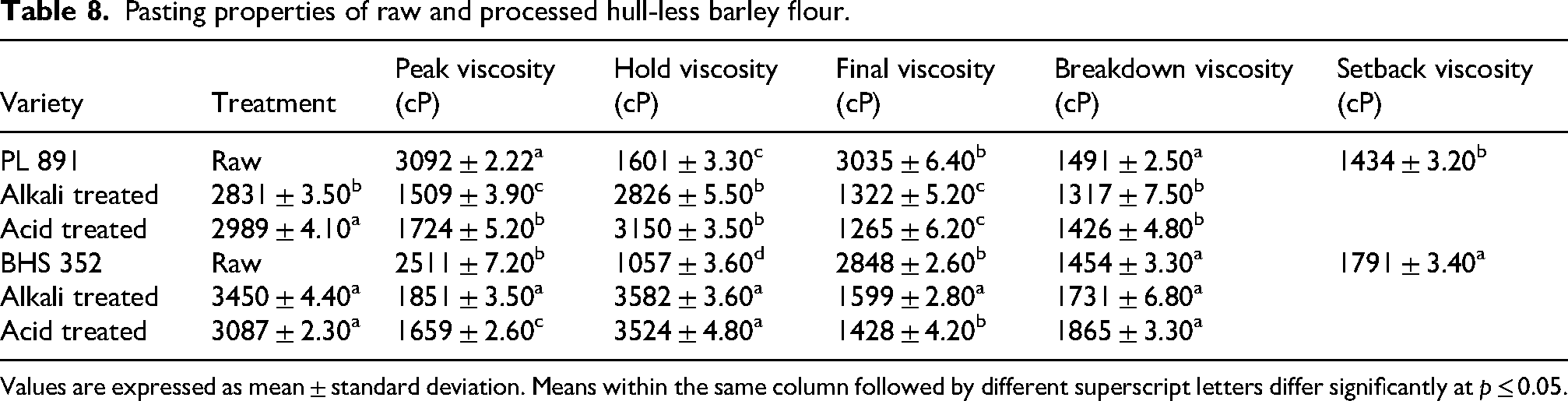
Pasting behavior reflects the swelling, rupture, and gel formation of starch granules during heating and cooling, directly impacting the processing and sensory quality of flour-based food products. Viscosity is a critical functional attribute, as it influences the energy density of flour slurries and the final texture of the product. Flours exhibiting good gelling behavior typically demonstrate higher peak viscosities due to increased swelling and water absorption capacity (Agume et al., 2017). Pasting properties of control and treated hull-less barley flours were assessed using a RVA (Figure S1), and the results are presented in Table 8. A characteristic viscosity profile was observed in all samples, confirming starch-dependent thickening during the heating cycle. Control and treated flours of both PL 891 and BHS 352 showed statistically significant differences (P ≤ 0.05) in peak, hold, final, breakdown, and setback viscosities. Among these, peak viscosity defines the point of maximum swelling before rupture, reflecting the flour's water-binding capacity. It plays a vital role in determining the suitability of flours for food products like porridges, soups, and dough-based systems (Danbaba et al., 2012). In the present study, the peak viscosity varied widely, from 2511 cP in BHS 352 raw flour to 3450 cP in its alkali-treated counterpart. The lowest peak was observed in PL 891 control, while the highest was recorded in alkali-treated BHS 352, indicating stronger swelling and higher hydration ability in this condition.
Pasting properties of raw and processed hull-less barley flour.
Values are expressed as mean ± standard deviation. Means within the same column followed by different superscript letters differ significantly at p ≤ 0.05.
The RVA pasting curves also suggested the possible existence of starch–starch or starch–protein crosslinks in treated flours, which increase resistance to shear during heating (Taggart, 2004). In alkali-treated samples, pasting curves became broader and more stable, indicating better paste strength. This aligns with previous findings where alkali treatment was shown to improve bulk density, water absorption, swelling power, and emulsion stability, although often accompanied by decreases in turbidity and oil absorption (Eiamwat et al., 2016). In a previous study, potassium carbonate at low concentrations (0.2–0.4%) improved the peak viscosity of composite starch-wheat noodles, indicating a positive correlation between alkali concentration and viscosity enhancement (Zhang et al., 2022). In their study, higher concentrations of alkali led to better farinograph stability, even when farinograph absorption initially decreased due to salt addition. Similarly, Saleh et al. (2015) demonstrated that sequential acid, alkaline, and enzymatic treatments on legume flours resulted in reduced pasting viscosities (except for setback), indicating considerable alterations in rheological profiles.
Breakdown viscosity, the difference between peak and hold viscosities, reflects the susceptibility of swollen starch granules to disintegration under continuous heating and shear. In the present study, breakdown viscosity ranged from 1265 (PL 891 acid-treated) to 1599 cP (BHS 352 alkali-treated). A lower breakdown value suggests better resistance to mechanical stress and thermal degradation, as seen in acid-treated samples of PL 891 and BHS 352. Final viscosity, which indicates the ability of starch to re-associate into a gel structure during cooling, ranged from 2826 to 3582 cP. Alkali- and acid-treated BHS 352 exhibited the highest final viscosities, implying stronger gel network formation upon cooling. This observation supports the use of treated barley flour in products requiring high consistency and post-cooking viscosity, such as weaning foods or thickened beverages. A similar trend was observed by Dattatray et al. (2019), who reported that pressure- and heat-treated flours displayed higher final viscosities than germinated flours, which had a looser network and lower cooling-set tendency.
Setback viscosity, calculated as the difference between final and hold viscosity, reflects the retrogradation potential of starch during cooling and is associated with textural changes and potential staling. In this study, setback values ranged from 1317 (PL 891 alkali-treated) to 1865 cP (BHS 352 acid-treated). High setback viscosity, as described by Adeyanju et al. (2025), may result in firmer gels but also indicates a higher tendency to retrograde, which can negatively affect digestibility and shelf-life. From a nutritional and functional standpoint, low setback viscosity suggests improved digestibility and a lower tendency for the product to undergo post-cooking hardening. Wang et al. (2018) also linked low setback values in infant cereals to be crucial for enhancing processing performance, as they hamper the adverse effects of starch retrogradation, which can negatively impact mouthfeel and nutrient release. Retrogradation causes the reassociation of starch molecules, which leads to firmer textures, hinders digestibility, and sensory acceptance. Additionally, Scott & Awika (2023) emphasized that the benefit of low retrogradation is desirable for enhancing the processing performance and improving overall mouthfeel and nutrient release. In conclusion, the pasting properties of hull-less barley flour were significantly improved by both acid and alkali treatments, with alkali-treated BHS 352 showing the most substantial enhancements in viscosity and stability. This improvement may be attributed to alkali-induced weakening of hydrogen bonds and partial unfolding of protein structures, which enhances starch granule swelling and water absorption during pasting. Moreover, NaOH treatment can disrupt non-covalent interactions in the starch–protein matrix, leading to greater solubilization of amylose and an increase in paste viscosity and thermal stability (Scott & Awika (2023)). These treatments influence starch structure and functional behavior during heating and cooling, offering potential for customizing flours to meet specific product requirements in the food industry.
Farinographic properties
The farinographic performance of raw, acid-treated, and alkali-treated hull-less barley flours (10%–40%) was evaluated to understand their dough-handling behavior (Table 9). The results reflect the intrinsic rheological behavior of the treated barley flour, without any blending with wheat flour. Water absorption increased progressively with the treatment severity and concentration level of barley flour, with the highest value (65.4%) recorded for BHS 352 alkali-treated flour at 40%. This trend closely aligns with the enhanced β-glucan and dietary fiber content (“Proximate composition of processed hull-less barley flour” section), and elevated WAI (“Effect of treatments on functional properties of hull-less barley flour” section), suggesting greater water-binding capacity due to cell wall disruption and solubilization of polysaccharides.
Effect of incorporation of different levels of processed hull-less barley flour on farinographic properties.
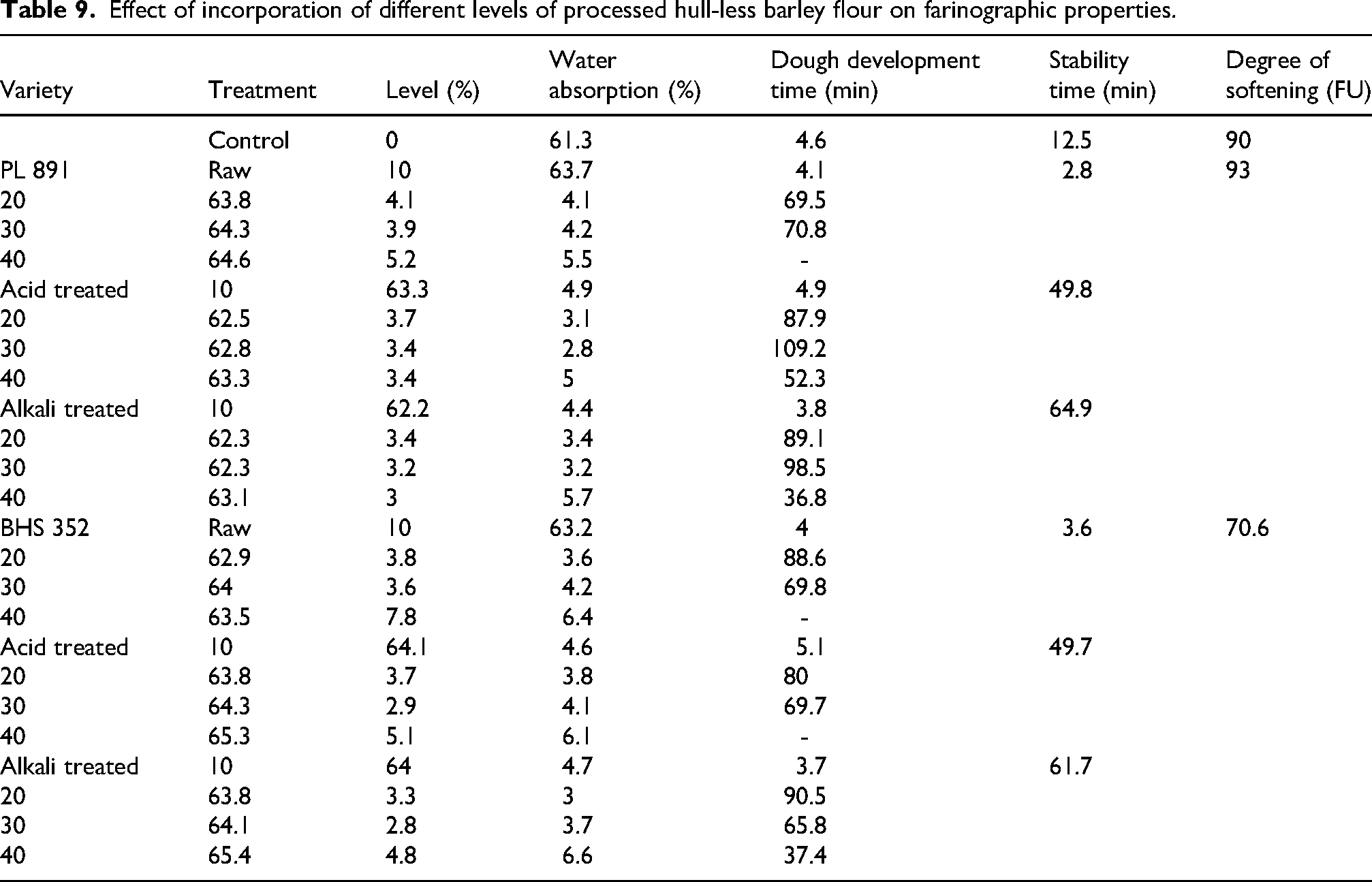
Dough development time showed variation depending on the treatment and concentration. Raw flours exhibited fluctuating development, likely due to unmodified fiber interfering with continuous network formation. However, alkali-treated samples maintained more stable development profiles, attributable to partial solubilization of fiber and enhanced hydration dynamics, as supported by SEM observations ( “Microstructure of hull-less barley flour” section). Acid-treated flours demonstrated moderate performance, indicating controlled denaturation without over-weakening the dough matrix.
Dough stability improved significantly in treated flours compared to raw samples, particularly in alkali-treated PL 891 and BHS 352 at higher substitution levels. This enhanced stability is consistent with improved pasting profiles (“Pasting properties of processed hull-less barley flour” section) and may be attributed to reinforced starch–protein interactions and higher gelatinization resistance. These treatments likely altered hydrogen bonding and reduced enzymatic susceptibility, thereby sustaining dough integrity under mechanical mixing.
The degree of softening, a measure of dough strength under extended mixing, was markedly lower in alkali-treated samples, especially PL 891 (36.8 FU) and BHS 352 (37.4 FU), at the 40% level, indicating improved viscoelasticity and stronger dough consistency. In contrast, raw flour exhibited higher softening values, reflecting weaker network formation and lower hydration synergy. In summary, chemical modification significantly enhanced the farinographic properties of hull-less barley flours, with alkali treatment offering the most promising results in terms of water absorption, stability, and resistance to breakdown. These improvements are closely aligned with thermal (“Thermal properties of processed barley flour” section), pasting (“Pasting properties of processed hull-less barley flour” section), and structural (“Microstructure of hull-less barley flour” Section) observations, confirming the integrated effects of acid and alkali treatments on the functional dough behavior of barley flour.
Microstructure of hull-less barley flour
SEM was used to examine the microstructural differences between control and chemically treated hull-less barley flours from PL 891 and BHS 352 varieties. SEM enables high-resolution visualization of starch granules, cell wall components, and the impact of processing on endosperm structure. These microscopic changes are often correlated with functional properties such as pasting, water absorption, and digestibility. In the control samples of both PL 891 and BHS 352 (Figure 3, top row), the starch granules appeared spherical to oval, smooth-surfaced, and tightly packed, with well-preserved granular architecture. At higher magnifications (2000× to 3000×), the granules remained largely intact, and the surrounding protein matrix appeared minimally disrupted. The surface topography was clean and compact, suggesting native starch granules with high crystalline stability and lower enzymatic accessibility. The acid-treated samples (middle row) exhibited pronounced structural disruption. Starch granules became partially degraded, irregular in shape, and showed signs of fragmentation. Cracks and pits were visible on the granule surfaces, particularly in PL 891, indicating partial hydrolysis of the amorphous regions. Some granules showed collapsed or disintegrated structures, especially at 1500× magnification. These observations align with earlier findings that acid treatments cleave glycosidic linkages, especially in hemicellulose and non-starch polysaccharides, leading to a more porous matrix (Duan et al., 2024). The resulting morphological breakdown improves water solubility, thermal response, and enzyme accessibility.
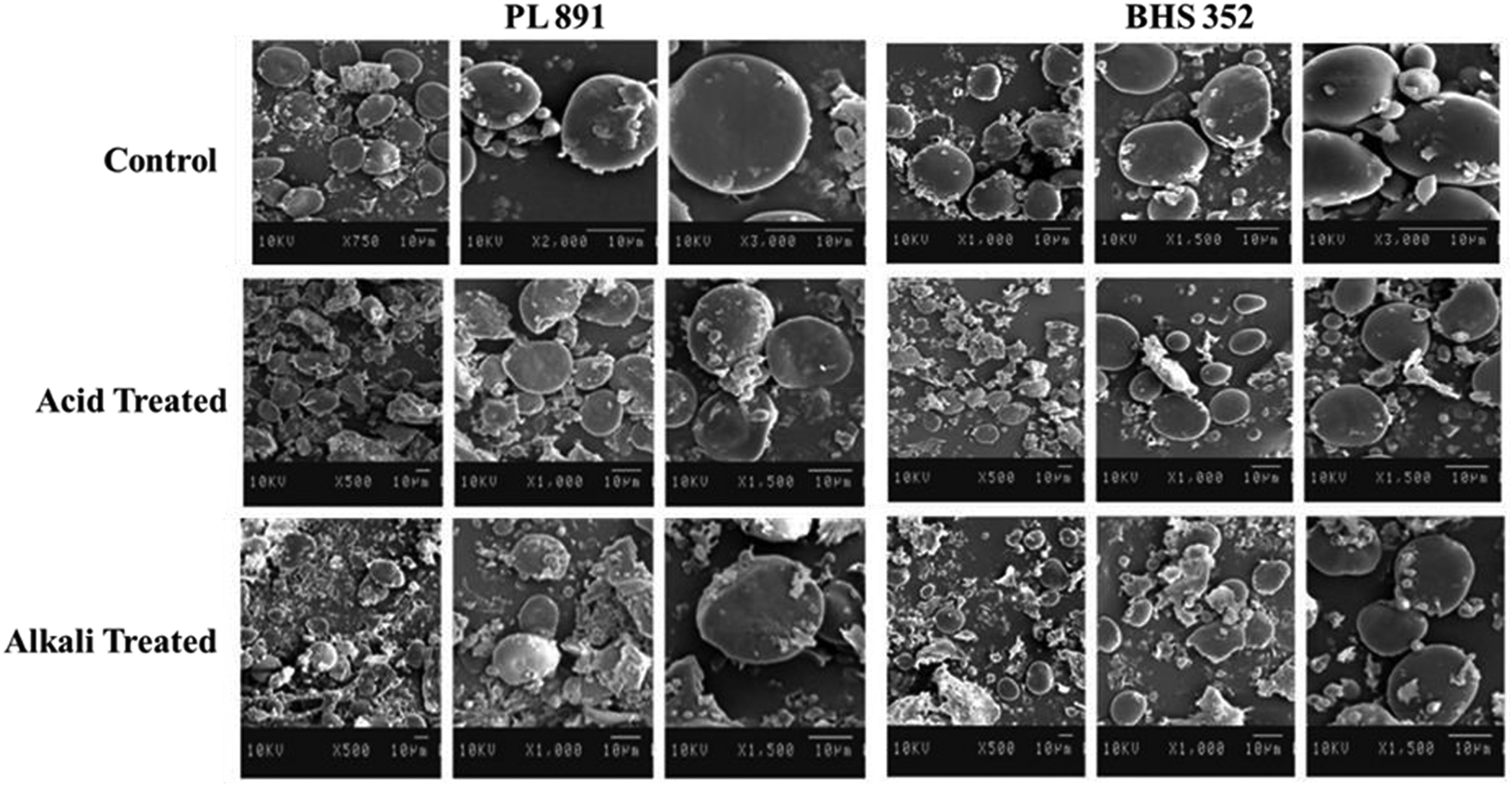
Microstructures of control and treated (acid and alkali) hull-less barley flour.
The alkali-treated samples (bottom row) displayed even greater alteration in granule morphology. Granules in both varieties became swollen, distorted, and less defined, with rough, uneven surfaces. In BHS 352, granules appeared embedded in a porous and disorganized matrix, especially at lower magnifications (500×–1000×), indicating disruption of the starch–protein network. The smoother, rounded edges observed in untreated samples were replaced by irregular contours and surface roughness, suggesting enhanced swelling and partial gelatinization. These findings are consistent with the work of Nadiha et al. (2010) and Wang and Copeland (2012), who reported that alkaline treatments disrupt hydrogen bonding and crystalline zones, promoting structural relaxation and increased hydration capacity. Across both treatments, numerous micropores were observed, which were more prominent in acid-treated PL 891 and alkali-treated BHS 352. These structural voids reflect deep penetration of the treatment media and a breakdown of endosperm compactness, which can facilitate improved water diffusion, gelatinization, and enzymatic action. Such increased porosity is beneficial for processing and digestibility.
These observations correspond well with previous work by Mariotti et al. (2006), who documented similar microstructural changes in thermally processed cereals. They emphasized that a disordered matrix and disrupted starch–protein interface are associated with improved hydration and pasting performance. Moreover, Roskhrua et al. (2014) reported that alkaline treatment led to reduced starch crystallinity and enhanced resistance to shear, further supporting the functional significance of these SEM findings. In conclusion, the SEM micrographs provide compelling visual evidence that acid and alkali treatments significantly alter the microstructure of hull-less barley flour. The granule degradation, surface erosion, swelling, and increased porosity directly support the enhanced thermal, pasting, and functional properties observed in other analyses. These structural modifications reinforce the value of chemical treatments in improving the technological functionality and nutritional performance of barley-based ingredients.
FTIR analysis of chemically treated hull-less barley flour
FTIR analysis provided insight into the structural modifications induced by acid and alkali treatments in hull-less barley flours (PL 891 and BHS 352) (Figure S2). Characteristic absorption bands between 4000 and 400 cm−1 confirmed changes in functional groups related to carbohydrates, proteins, and lipids. A broad O–H stretching band at ∼3290 cm−1, present in raw flours, became sharper in treated samples, indicating altered hydrogen bonding. Acid-treated samples showed a distinct amide B peak (∼3050 cm−1), reflecting protein structural changes. Enhanced amide I (∼1650 cm−1) and amide II (∼1545 cm−1) bands in alkali-treated samples further confirmed protein unfolding. The appearance of a C = O stretching band (∼1740 cm−1) in treated flours indicated lipid modification or ester bond formation. In the fingerprint region (1200–900 cm−1), sharper bands corresponding to C–O, C–C, and β-glycosidic linkages suggested partial starch depolymerization and improved β-glucan availability (Nikonenko et al., 2005). A minor broad signal around ∼2000 cm−1 was also observed, which does not correspond to any major functional group in barley components. This peak may be attributed to atmospheric water vapor, which is known to exhibit characteristic bands in this region—particularly near 1760 cm−1—potentially causing overlapping or shoulder features on nearby carbonyl peaks. Such contributions are commonly observed in ambient air FTIR measurements, especially when the instrument is not continuously purged with dry air or nitrogen (Socrates, 2004).
These structural changes support previous findings on improved functional properties (“Effect of treatments on functional properties of hull-less barley flour” section), enhanced thermal stability (“Thermal properties of processed barley flour” section), modified pasting behavior (“Pasting properties of processed hull-less barley flour” section), and microstructural disruption (“Farinographic properties” section). Alkali treatment likely promotes the cleavage of ester linkages and depolymerization of cell wall polysaccharides, enhancing the extractability of β-glucans and water-binding groups, while acid hydrolysis disrupts glycosidic bonds and protein–tannin complexes, leading to a more porous and reactive flour matrix. These structural alterations explain the observed improvements in water absorption, solubility, and phenolic release. Overall, FTIR results confirmed that acid and alkali treatments induced significant molecular rearrangements, enhancing the functional and nutritional potential of hull-less barley flour.
Overall, the results demonstrate a clear interrelation between the structural, functional, and nutritional transformations induced by acid and alkali treatments. The disruption of starch granules and protein unfolding observed via SEM was mirrored by increases in water absorption, emulsifying capacity, and pasting viscosities, particularly in alkali-treated samples. These structural modifications facilitated enhanced hydration and swelling behavior, leading to improved functional attributes. Concurrently, the breakdown of antinutritional compounds and improved extractability of polyphenols and β-glucans suggest that chemical treatments enhanced the accessibility of bioactive compounds, contributing to higher antioxidant activity and mineral bioavailability. The increased gelatinization temperatures and enthalpy values from DSC corroborate the denser, reorganized starch structures, reinforcing the flour's thermal and textural stability. Thus, these interconnected changes validate the efficacy of chemical treatments in improving the techno-functional and nutritional potential of hull-less barley flour.
Conclusion
This study demonstrated that acid (1% HCl) and alkali (1% NaOH) treatments effectively modified the nutritional, functional, thermal, rheological, and structural characteristics of hull-less barley flours (PL 891 and BHS 352). Both treatments notably enhanced dietary fiber and β-glucan content, especially in PL 891, where β-glucan increased from 3.52% (control) to 5.05% (acid-treated). Improved antioxidant activity and TPC, along with significant reductions in tannins, phytic acid, and trypsin inhibitors, suggest enhanced mineral bioavailability in the treated flours. Functionally, alkali treatment in particular improved water absorption, emulsifying capacity, and solubility: properties critical for dough development, batter systems, and beverage formulations. The increased gelatinization temperatures, higher enthalpy, and elevated peak viscosity values indicated greater thermal stability and thickening capacity, which are desirable for bakery, soup, and ready-to-eat products. SEM and FTIR results supported these enhancements by confirming granule disruption, protein unfolding, and altered molecular interactions. These findings highlight the strong potential of chemically treated hull-less barley flour as a functional ingredient in value-added food products such as high-fiber baked goods, health beverages, and gluten-reduced or plant-based formulations. Future research should focus on optimizing treatment conditions and validating performance in real food systems to enable industrial-scale applications. Importantly, this study aligns with the United Nations SDGs particularly SDG 2 (Zero Hunger), SDG 3 (Good Health and Well-Being), and SDG 12 (Responsible Consumption and Production), by promoting the valorization of climate-resilient, underutilized crops for improved human nutrition, sustainable agriculture, and innovative functional food development.
Supplemental Material
sj-docx-1-fst-10.1177_10820132251370817 - Supplemental material for Impact of acid and alkali treatments on the nutritional, functional, and structural properties of hull-less barley flour
Supplemental material, sj-docx-1-fst-10.1177_10820132251370817 for Impact of acid and alkali treatments on the nutritional, functional, and structural properties of hull-less barley flour by Mahamudu Sasamalo, Nisha Chhabra, Amarjeet Kaur, Samandeep Kaur and Nitin Kumar in Food Science and Technology International
Footnotes

Author Note
Samandeep Kaur are now affiliated with the School of Engineering and Technology, National Forensic Sciences University, Gandhinagar, Gujarat, India.
Funding
The authors received no financial support for the research, authorship, and/or publication of this article.
Declaration of conflicting interests
The authors declared no potential conflicts of interest with respect to the research, authorship, and/or publication of this article.
Supplemental material
Supplemental material for this article is available online.
References
Supplementary Material
Please find the following supplemental material available below.
For Open Access articles published under a Creative Commons License, all supplemental material carries the same license as the article it is associated with.
For non-Open Access articles published, all supplemental material carries a non-exclusive license, and permission requests for re-use of supplemental material or any part of supplemental material shall be sent directly to the copyright owner as specified in the copyright notice associated with the article.
