







Abstract
Blueberries are valued for their rich content of antioxidants and bioactive compounds but are highly perishable due to their fragile structure and high moisture content. This study investigated the effectiveness of ultrasound (US) and hot water (HW) treatments, applied individually and sequentially, in maintaining quality and extending the shelf life of fresh blueberries. Fruits were subjected to HW immersion (50°C, 5 min), US treatment (28 kHz, 10 min), or a combined HW + US treatment, then stored at 4 ± 1°C for 14 days. Quality parameters, including microbial load, firmness, surface color (Lab*), total phenolic content, antioxidant activity, and sensory attributes, were evaluated. The combined HW + US treatment showed superior effects compared with individual treatments and the control, achieving greater microbial inhibition, reduced firmness loss, delayed color degradation, and higher retention of phenolics and antioxidant activity. Sensory analysis further confirmed improved appearance, texture, and odor. Overall, the integration of ultrasound with mild heat treatment represents an eco-friendly and scalable postharvest technology that preserves bioactive compounds and sensory quality, offering a sustainable solution for the fresh produce industry.
This is a visual representation of the abstract.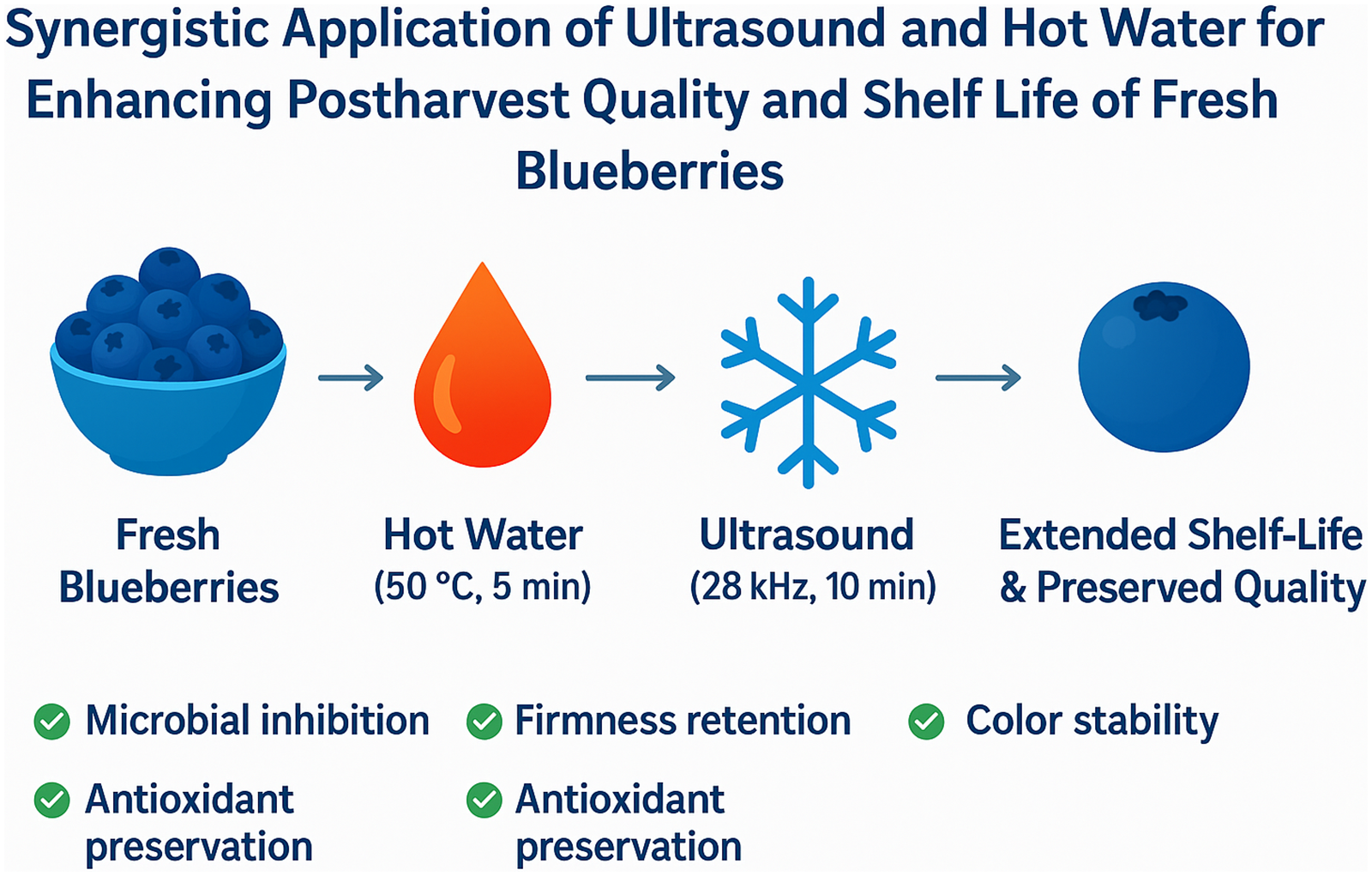
Keywords
Introduction
Consuming fresh fruits and vegetables is strongly recommended for maintaining a healthy lifestyle, and blueberries have gained special attention because of their high levels of bioactive compounds, particularly phenolics, flavonoids, and anthocyanins, which provide potent antioxidant activity. Despite these health-promoting attributes, blueberries are considered highly perishable and show rapid postharvest deterioration, mainly due to fungal infections—especially mold-related decay—and tissue softening that compromises their quality and market value (Alvarez, Ponce & Moreira, 2018). Their delicate structure, high moisture content, and minimal processing render them susceptible to microbial contamination throughout harvesting, handling, transportation, and storage (Gazula et al., 2019; Huang & Chen, 2014; Sheng, Tsai, Zhu & Zhu, 2019). Microbial spoilage not only compromises food safety but also accelerates pigment degradation, antioxidant loss, and textural breakdown, leading to reduced marketability and consumer acceptance (Yildiz & Aadil, 2022). Consequently, developing effective, safe, and sustainable postharvest treatments to maintain blueberry quality and extend shelf life has become an important research focus.
To ensure extended shelf life and maintain desirable sensory and nutritional qualities, highly perishable fruits like blueberries require the implementation of effective postharvest interventions. Conventional approaches, such as freezing/thawing followed by drying, can increase fruit surface permeability and facilitate processing, but often compromise final product quality (Zielinska, Sadowski & Błaszczak, 2015). Consequently, alternative, safe, and environmentally friendly technologies are being explored. Among these, hot water (HW) treatment has emerged as a reliable method for controlling postharvest fungal decay. By inactivating germinating spores and inhibiting germ tube elongation, HW reduces microbial contamination while preserving the nutritional and sensory quality of fruits (Yang et al., 2020; Vilaplana, Hurtado & Valencia-Chamorro, 2018; Hu et al., 2011; Di Francesco, Mari & Roberti, 2018).
Ultrasound (US) is another non-chemical physical technology increasingly used for microbial control in the food industry. The cavitation effect generated by US produces intense mechanical forces that compromise microbial cell membrane integrity and induce oxidative stress, effectively inhibiting the proliferation of microorganisms (Guo et al., 2020; Li et al., 2017). Additionally, US can reduce enzymatic browning, enhance antioxidant retention, and preserve fruit texture (Yildiz, Izli & Aadil, 2020). However, single US treatments are often insufficient to eliminate high microbial loads, necessitating combination with other technologies such as heat, pressure, essential oils, or disinfectants to maximize efficacy (Luo & Oh, 2015; Condon-Abanto et al., 2016).
Although combined postharvest treatments have attracted increasing interest, studies investigating the synergistic effects of HW and US on fresh blueberries remain scarce. Therefore, this study aimed to evaluate the individual and combined effects of HW and US treatments on microbial load, physicochemical properties, antioxidant capacity, and sensory quality of blueberries during refrigerated storage. The findings provide insight into a sustainable, additive-free approach for improving the postharvest stability of highly perishable fruits.
Materials and methods
Preparation of blueberry samples
Fresh, mature blueberries (Vaccinium spp.) were obtained from a local market in Iğdir, Turkey (39°43′N, 44°02′E). Because the fruit was obtained from a commercial retail source, specific cultivar information was not available, but the berries were morphologically consistent with highbush blueberry (Vaccinium corymbosum L.), the predominant commercial variety available in the area. Only blueberries of uniform size, shape, and color, and with no mechanical damage or fungal decay, were selected.
Treatment application
To evaluate the individual and combined effects of thermal and non-thermal preservation methods, blueberries were subjected to HW, US, and combined ultrasound plus hot water (US + HW) treatments. Untreated samples immersed in deionized water at room temperature served as the control group (Yildiz & Aadil, 2022). Four treatment groups were established as follows:
Control (C): Immersion in deionized water at 25°C for 5 min. HW treatment: Immersion in water at 50°C for 5 min US treatment: Blueberries were exposed to an ultrasonic treatment in a Wise Clean WUC-A02H bath operating at 28 kHz and 50 W. The bath was filled with deionized water, and samples were sonicated for 10 min at 25°C. To ensure even distribution of ultrasonic energy, the fruits were placed in perforated stainless steel holders that allowed thorough interaction with the sound waves. Combined ultrasound + Hot water (US + HW) treatment: HW treatment followed immediately by US treatment
After treatments, all samples were air-dried at room temperature for 10 min, packed in perforated polyethylene terephthalate (PET) containers, and stored at 4 ± 0.5°C for up to 14 days. Samples were withdrawn for analysis at 0, 7, and 14 days of storage.
Color analysis
Color parameters (L*, a*, b*) were measured using a Konica Minolta CR-400 colorimeter under D65 illumination. For each sample, 10 color readings were taken at different points on the surface of each berry to account for surface heterogeneity, and mean values were calculated (Yildiz, 2018).
Texture (firmness) measurement
Firmness was determined using a Textura Analyze (TA.XT Plus, Stable Micro Systems Ltd, UK) texture analyzer with a 2-mm probe. Maximum penetration force (N) was measured for 10 berries per treatment at each storage interval (Nowak, Zielinska & Waszkielis, 2019). Among the various texture parameters available, firmness was selected as the primary mechanical quality indicator in this study, as it is the most widely used, practically relevant, and sensitive metric for assessing postharvest structural integrity and softening in blueberries. Firmness directly reflects cell wall degradation and turgor loss during storage, making it a reliable proxy for overall textural quality and consumer acceptability (Nowak et al., 2019; Yildiz & Yildiz, 2025).
Microbiological analysis
To determine the microbial load, 25 g of blueberry tissue was homogenized with 225 mL of sterile saline solution (0.85% NaCl) in a stomacher for 2 min, resulting in a 10−1 dilution. Serial decimal dilutions (10−1 to 10−4) were then prepared in sterile saline. Appropriate dilutions were plated in duplicate on selective media: total aerobic mesophilic bacteria (TAMB) were enumerated on Plate Count Agar (PCA) after incubation at 30°C for 48 h, while yeast and mold counts were determined on Potato Dextrose Agar (PDA) at 25°C for 72 h. Microbial counts were expressed as log CFU/g fresh weight (Yildiz & Yildiz, 2025).
Total phenolic content
Total phenolic content (TPC) was determined using the Folin–Ciocalteu colorimetric method (Igual, García-Martínez, Martín-Esparza & Martínez-Navarrete, 2012). For extraction, 5 g of blueberry tissue was homogenized with 50 mL of 80% (v/v) methanol and centrifuged at 5000 × g for 10 min at 4°C. The supernatant was collected and used for analysis. Measurements were performed in triplicate (n = 3, biological replicates), and results were expressed as mg gallic acid equivalents per 100 g fresh weight (mg GAE/100 g).
DPPH radical scavenging activity
The ability of blueberry extracts to act as antioxidants was assessed using the 2,2-diphenyl-1-picrylhydrazyl (DPPH) radical scavenging assay, a well-established and dependable technique for measuring the efficiency of bioactive compounds in neutralizing free radicals. Blueberry extracts were prepared as described in Section 2.6. The antioxidant capacity was assessed using the DPPH radical scavenging assay (Cemeroglu, 2007). Briefly, 100 µL of the blueberry extract was combined with 3.9 mL of 0.1 mM DPPH solution freshly prepared in methanol. The mixture was briefly vortexed to ensure complete homogenization and then incubated in the dark at room temperature for 30 min, preventing photodegradation of the DPPH radical and allowing sufficient time for the reaction to reach equilibrium. After incubation, the decrease in absorbance at 517 nm was measured using a UV–Vis spectrophotometer, providing a quantitative indication of radical scavenging activity. The antioxidant capacity was calculated as the percent reduction of DPPH radicals, based on the difference in absorbance between the sample solution and a control containing only DPPH, providing a measure of the extract's free radical scavenging efficiency (Cemeroglu, 2007).
Sensory evaluation
A panel of 10 trained evaluators was employed to assess the sensory quality of blueberry samples, with particular focus on appearance, texture, and off-odor, at storage intervals of 0, 7, and 14 days. To ensure reliable and impartial assessments, all sensory evaluations were performed in separate sensory booths under standardized lighting conditions and at room temperature, minimizing potential external influences. Each panelist assessed the samples using a 9-point hedonic scale, where 1 corresponded to “dislike extremely” and 9 to “like extreme.” This scale enabled the panel to systematically evaluate key sensory attributes, including visual appeal, texture, and any off-odors, providing a quantitative measure of overall consumer acceptance throughout the storage period (Cao et al., 2010a).
Statistical analysis
All analyses were performed in triplicate. Data were analyzed using one-way ANOVA followed by Fisher's Least Significant Difference test (p < 0.05). Statistical analyses were performed using JMP software (Version 7.0; SAS Institute Inc., Cary, NC, USA). Results are expressed as mean values accompanied by their corresponding standard deviations (mean ± SD).
Results and discussion
Effect of treatment and storage on color characteristics
Color is a critical quality parameter that significantly influences consumer perception and purchasing decisions, particularly in fruits and vegetables, as it serves as a visual indicator of attributes such as ripeness, freshness, and overall acceptability (Aadil et al., 2013; Zia, Khan, Zeng, Sehrish Shabbir & Aadil, 2019). In blueberries, color is largely determined by anthocyanins and other pigments in the skin, which are highly sensitive to degradation caused by enzymatic activity, oxidation, and microbial spoilage during post-harvest storage (Li et al., 2020; Matiacevich, Silva, Osorio & Enrione, 2012). The color analysis of blueberries in this study revealed a gradual decrease in L* values over the 14-day storage time. This decrease, reflecting surface darkening, was most pronounced in the control samples (from 44.3 ± 1.2 to 38.7 ± 1.7) (Table 1). In contrast, the US + HW-treated samples retained the highest L* values throughout storage, reaching 45.3 ± 1.2 at the end of the period, indicating that the combined treatment effectively preserved surface brightness and minimized oxidative darkening or cellular deterioration. The partial decrease in L* observed in treated samples may be associated with slight cell membrane disruption caused by ultrasound, which could lead to limited pigment leaching (Yildiz et al., 2020). The results are consistent with previous reports showing that hot water or ultrasound treatments can help maintain L* values, while their combination enhances color preservation (Kim et al., 2011; Nowak et al., 2019).
Changes in color parameters (L*, a*, b*) of blueberries during storage (mean ± SD)
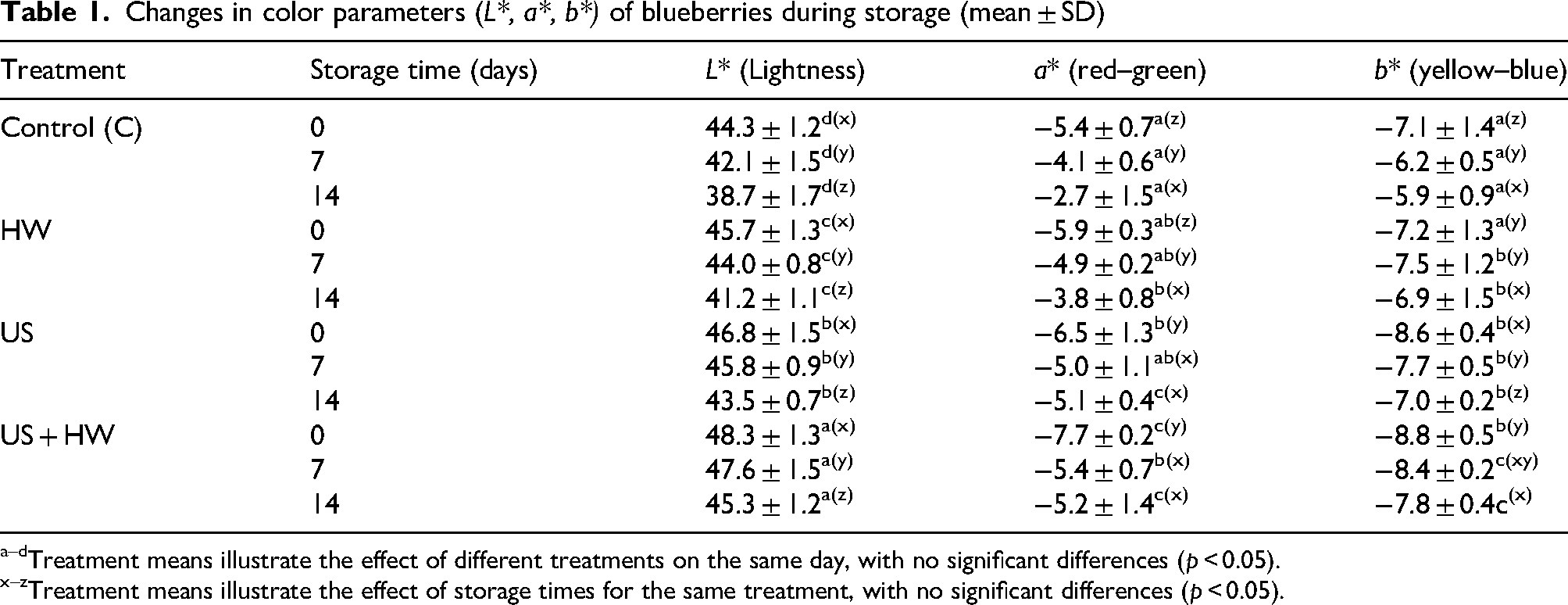
Treatment means illustrate the effect of different treatments on the same day, with no significant differences (p < 0.05).
Treatment means illustrate the effect of storage times for the same treatment, with no significant differences (p < 0.05).
Analysis of a* value, representing the red–green balance, showed significant increases in all treatment groups during storage, indicating a shift from blue toward red hues. The control group exhibited the largest change, with a* values increasing from −5.4 ± 0.7 to −2.7 ± 1.5, which may reflect structural deterioration of anthocyanin pigments (Li et al., 2020). The US-treated samples showed a smaller increase, from −6.5 ± 1.3 to −5.1 ± 0.4 (Table 1), suggesting that ultrasound can partially inhibit enzymatic and oxidative reactions that lead to pigment degradation (Matiacevich et al., 2012).
Regarding b* values, which indicate yellow–blue tones, a general decrease was observed across all treatments, reflecting a loss of the characteristic blue color. This decrease was particularly evident in the control and US groups, varying from −7.1 ± 1.4 to −5.9 ± 0.9 and from −8.6 ± 0.4 to −7.0 ± 0.2, respectively (Table 1). In contrast, HW and US + HW treatments better maintained b* values, with the US + HW group showing a statistically non-significant change from −8.4 ± 0.2 to −7.8 ± 0.4 (p < 0.05), highlighting the superior preservation of blue pigmentation. These findings indicate that the combination of ultrasound and hot water effectively stabilizes anthocyanins and other color-related compounds during storage (Li et al., 2020).
Overall, the US + HW treatment provided the most favorable outcomes for maintaining color parameters, particularly L* and b* values, suggesting it is a highly effective approach for preserving the visual quality, brightness, and color stability of blueberries during refrigerated storage. These results are supported by the literature, which demonstrates that mild heat and ultrasound treatments can mitigate enzymatic browning and pigment degradation in blueberries (Zhu et al., 2017; You et al., 2024). In summary, the color characteristics of pretreated blueberries in this study are consistent with previous reports and confirm the effectiveness of the combine treatment in preserving the visual quality of the fruit (Bei, Yu, Zhou & Yagoub, 2024; Herceg et al., 2013).
Changes in texture (firmness) profile during storage
Firmness is a key quality attribute in fruits and vegetables because it directly reflects the structural integrity of the tissue and strongly influences the susceptibility of the produce to microbial spoilage, mechanical damage, and sensory deterioration (Yildiz, 2024). In this study, both the pretreatment applied to the samples and the duration of storage significantly affected the firmness of blueberry fruits, which was quantified as the maximum force required to penetrate the skin, measured in Newtons (N) (Figure 1). In the control group, which did not receive any pretreatment, a pronounced decline in firmness was observed over the storage period, decreasing from 1.8 N on day 0 to 1.3 N by day 7 and further dropping to 0.9 N on day 14. This gradual softening is primarily attributed to natural enzymatic activities, such as the action of pectinases and cellulases, as well as water loss from the fruit, both of which lead to the disintegration of cellular walls and tissue structures. As the fruit softens, its susceptibility to microbial invasion and spoilage increases, accelerating the deterioration of sensory attributes such as texture, juiciness, and mouthfeel. Maintaining firmness is therefore essential not only for extending the shelf life of blueberries but also for preserving consumer acceptance, handling tolerance, and marketability. These findings highlight the importance of effective postharvest treatments in slowing the loss of structural integrity and mitigating quality degradation during storage.
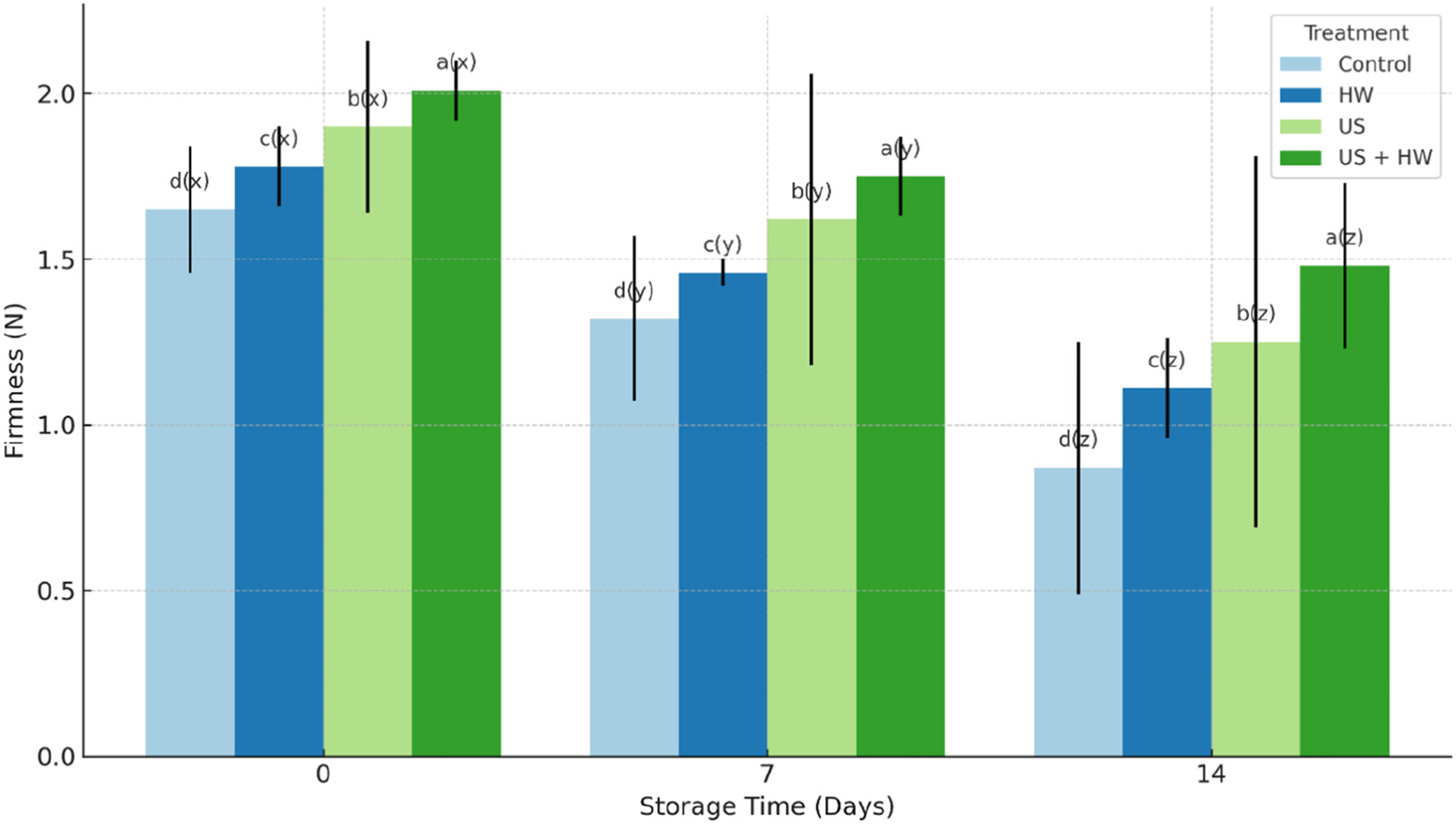
Changes in firmness (N) of blueberries during storage at 0, 7, and 14 days under different treatments: control, hot water (HW), ultrasound (US), and combined ultrasound + hot water (US + HW). Data are expressed as mean ± standard deviation (n = 3). Lowercase letters (a–d) indicate significant differences between treatments at the same storage time, while letters in parentheses (x, y, z) denote significant differences over storage time within the same treatment (p < 0.05). This figure illustrates the impact of pretreatment and storage duration on the mechanical integrity of blueberry tissue.
The blueberries treated with HW exhibited slightly better retention of firmness compared to the untreated control, with measured values of 1.8 N, 1.4 N, and 1.2 N on days 0, 7, and 14 of storage, respectively. Although the hot water treatment initially appeared to mitigate softening, this protective effect gradually decreased over the storage period. The temporary enhancement in firmness can be explained by the partial inactivation of cell wall–degrading enzymes, such as pectinases and cellulases, by the applied heat, which slows down structural breakdown and helps maintain tissue integrity during the early stages of storage (Yildiz & Yildiz, 2025). Despite this initial benefit, the continued decline in firmness over the 2-week period indicates that heat treatment alone is not sufficient to fully preserve the mechanical properties of blueberries. Over time, residual enzymatic activity, water loss, and natural metabolic processes contribute to progressive softening, highlighting the need for complementary preservation strategies to maintain texture and overall fruit quality throughout storage.
The blueberries treated with US demonstrated a more gradual decline in firmness over the 14-day storage period, with values decreasing from 1.9 N on day 0 to 1.6 N on day 7 and 1.3 N by day 14. Compared to both the untreated control and hot water-treated samples, ultrasound was more effective in maintaining the mechanical integrity of the fruit. This improvement can be attributed to ultrasound's ability to disrupt microbial cells and partially inhibit the activity of cell wall–degrading enzymes, such as pectinases and cellulases, which are responsible for tissue softening (Zhang et al., 2022). By slowing down enzymatic degradation, ultrasound helps preserve turgor pressure within the cells, maintains tissue stiffness, and delays the onset of structural breakdown. Additionally, ultrasound may enhance the permeability of cellular membranes in a way that temporarily stabilizes the fruit matrix, further contributing to the retention of firmness. These combined effects indicate that ultrasound treatment is a promising approach for extending the postharvest quality and shelf life of blueberries by preserving their texture over extended storage periods.
The blueberries subjected to the combined ultrasound and hot water (US + HW) treatment exhibited the highest firmness values among all tested groups, with measurements of 2.0 N, 1.7 N, and 1.4 N recorded on days 0, 7, and 14 of storage, respectively. This dual treatment provided the most effective preservation of mechanical integrity over time, although the difference in firmness between the US-only and US + HW treatments was not statistically significant (p < 0.05). The enhanced firmness retention observed with the combined treatment can be attributed to the synergistic effects of both interventions: hot water partially inactivates cell wall–degrading enzymes, while ultrasound contribute to the stabilization of tissue structure by maintaining cell wall stiffness and internal turgor pressure. By mitigating enzymatic activity and supporting the structural integrity of the fruit matrix, the combined treatment effectively slows softening and prolongs postharvest quality. These findings are consistent with previous reports indicating that ultrasound helps preserve texture by reinforcing cell wall strength and sustaining turgor, thereby maintaining firmness during storage (Cao, Hu & Pang, 2010b; Pieczywek, Kozioł, Konopacka, Cybulska & Zdunek, 2017; Zhang, Zhao, Lai, Chen & Yang, 2018). Taken together, the use of combined US + HW treatment shows strong potential for maintaining the quality of blueberries during storage, effectively prolonging shelf life while preserving their desirable texture and structural integrity.
No apparent physical defects were observed on the external surface of the treated blueberries; however, it is likely that microstructural changes occurred within the fruit tissue, contributing to the differences in firmness and overall texture observed among the various treatments. These delicate structural changes in the blueberry tissue may result from the partial or complete suppression of critical enzymes involved in cell wall degradation, particularly polygalacturonase and pectin methyl esterase. These enzymes play a major role in breaking down pectin, a key component of the middle lamella and primary cell wall, and their reduced activity directly contributes to slowing the softening process and maintaining tissue integrity during postharvest storage (Yildiz & Yildiz, 2025). Although direct microscopic or ultrastructural analyses were not conducted in this study, the observed maintenance of firmness in the US + HW–treated samples suggests that the combined application may have induced morphological modifications at the cellular level, such as stabilization of cell walls, reinforcement of middle lamellae, or the formation of micropores, which can help preserve turgor pressure and maintain tissue stiffness. These microstructural adaptations are thought to indirectly enhance the mechanical integrity of the fruit, reducing susceptibility to deformation and damage under handling or storage conditions (Zhou, Chen, Chitrakar & Fan, 2024). Supporting evidence from previous studies indicates that ultrasound-assisted treatments can lead to structural changes in the cell wall composition, including alterations in pectin networks, cellulose arrangement, and overall cell wall density, which contribute to the preservation of firmness (Qian et al., 2021; Pieczywek et al., 2017). Furthermore, the synergistic effect of hot water with ultrasound may enhance enzyme inactivation and simultaneously stabilize cellular architecture, thereby prolonging the shelf life and maintaining the quality of blueberries. Taken together, these observations suggest that the US + HW treatment helps to limit the loss of firmness through a combination of biochemical and physical mechanisms, including enzyme suppression, cellular restructuring, and increased tissue porosity, which collectively improve structural resilience and extend the postharvest longevity of the fruit.
Overall, the observed gradual decline in firmness across all treatment groups underscores the combined influence of intrinsic enzymatic activity, including the action of cell wall–degrading enzymes, and progressive moisture loss on the texture of blueberries during storage. These natural processes lead to softening, increased susceptibility to mechanical damage, and higher potential for microbial spoilage, highlighting the importance of effective postharvest interventions. The results of this study demonstrate that pretreatment strategies, particularly US alone or in combination with hot water (US + HW), are effective in slowing the loss of firmness and preserving the structural and textural integrity of blueberries under refrigerated conditions. By partially inactivating softening-related enzymes, maintaining turgor pressure, and potentially inducing favorable microstructural modifications, these treatments contribute to the retention of desirable mechanical properties over time. Among the treatments evaluated, the US + HW combination consistently provided the highest firmness values and exhibited superior protection of fruit tissue, suggesting it is one of the most promising approaches for maintaining the quality, consumer acceptability, and shelf life of blueberries during storage. These findings have important implications for postharvest handling and processing, offering practical strategies to enhance fruit durability and extend marketability.
Microbial load of blueberries under different treatments
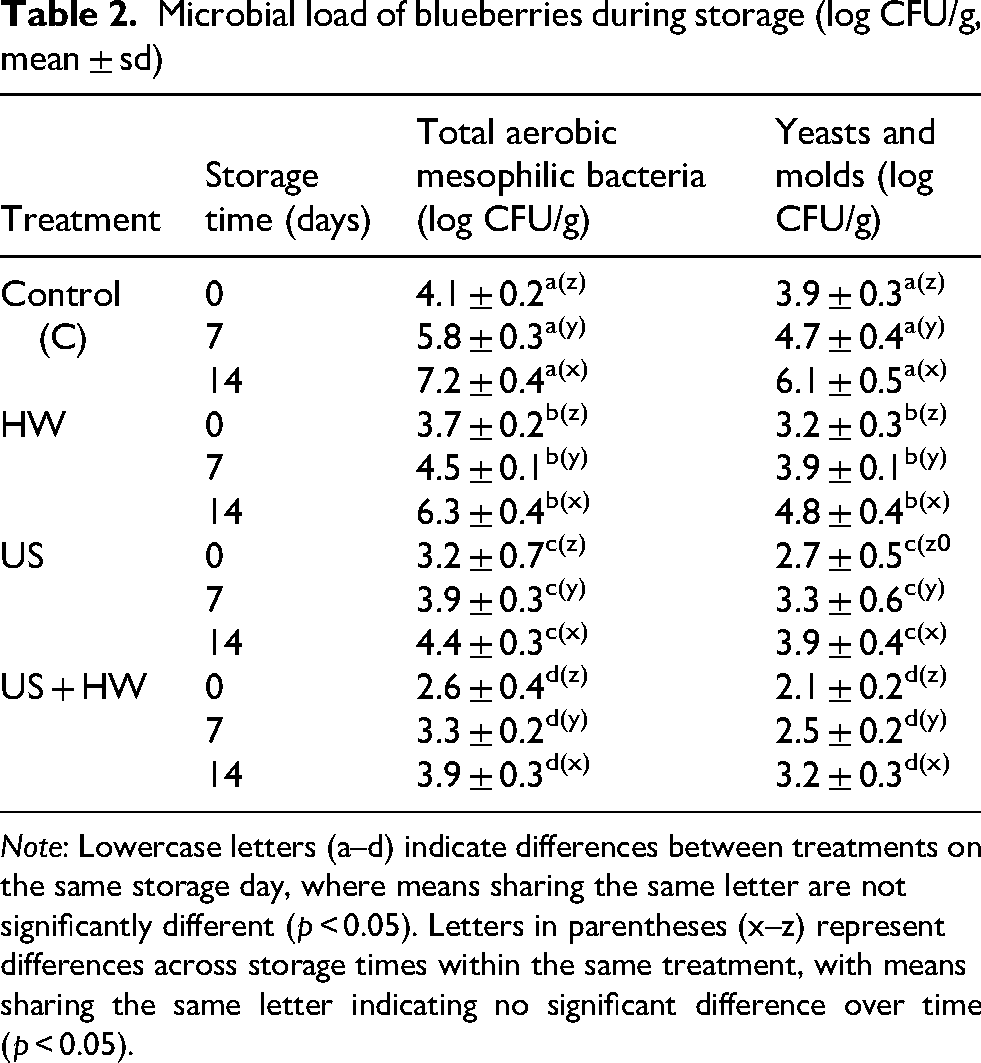
Maintaining microbiological stability is critical for ensuring the safety, quality, and shelf life of fruits and vegetables. In this study, total aerobic mesophilic bacteria (TAMB) and yeast–mold counts of fresh and pretreated blueberries were monitored during a 14-day refrigerated storage period (Table 2). The TAMB counts varied significantly depending on the applied treatment and storage duration. In the control group, bacterial load increased sharply from 4.1 ± 0.2 log CFU/g on day 0 to 7.2 ± 0.4 log CFU/g by day 14, representing the highest bacterial proliferation among all groups. This trend demonstrates that cold storage alone is insufficient to fully suppress bacterial growth in untreated samples, highlighting potential food safety concerns. The nutrient-rich matrix and high moisture content of blueberries create an ideal environment for microbial proliferation during storage (Saud, Xiaojuan & Fahad, 2024).
Microbial load of blueberries during storage (log CFU/g, mean ± sd)
Note: Lowercase letters (a–d) indicate differences between treatments on the same storage day, where means sharing the same letter are not significantly different (p < 0.05). Letters in parentheses (x–z) represent differences across storage times within the same treatment, with means sharing the same letter indicating no significant difference over time (p < 0.05).
Both HW and US treatments effectively limited bacterial growth compared to the control, with the most pronounced reduction observed in the combined US + HW treatment. In this group, TAMB counts were 2.6 ± 0.5 log CFU/g on day 0 and increased only to 3.9 ± 0.3 log CFU/g by day 14, illustrating the superior antimicrobial performance of the combined treatment. The hot water treatment primarily reduces microbial load by exploiting the heat sensitivity of surface bacteria and limiting their metabolic activity through protein denaturation and enzyme inactivation (Zhu et al., 2017). Ultrasound, in turn, disrupts microbial cell integrity via cavitation-induced shear forces and oxidative stress, damaging bacterial cell walls and membranes and inhibiting essential enzymatic functions (Yildiz & Yildiz, 2025; Onyeaka, Miri, Hart, Anumudu & Nwabor, 2023). The synergistic effect of US and HW creates a highly unfavorable environment for bacterial growth, effectively enhancing microbiological safety and extending the shelf life of blueberries. These outcomes are in agreement with a body of previous research that has underscored the effectiveness of combining ultrasound treatments with mild heat applications as a postharvest strategy to enhance the microbial safety and quality of fresh produce. By simultaneously applying mechanical energy through ultrasound and thermal inactivation, such combined treatments have been shown to reduce bacterial, yeast, and mold populations while preserving key sensory and structural attributes of fruits and vegetables, thereby extending shelf life and maintaining consumer acceptability (Broekman, Pohlmann, Beardwood & de Meulenaer, 2010; Pinheiro, Alegria, Abreu, Gonçalves & Silva, 2016; Sun et al., 2023). This approach leverages the synergistic effects of both treatments: ultrasound can disrupt microbial cell walls and interfere with enzymatic activity, while mild heating can further inactivate spoilage organisms and delay tissue degradation. Collectively, these mechanisms contribute to improved postharvest stability, supporting the use of US + HW as a promising intervention for maintaining both the safety and quality of perishable horticultural products.
Yeast and mold growth followed a similar trend. In the control group, initial yeast and mold counts of 3.9 ± 0.3 log CFU/g increased to 6.1 ± 0.5 log CFU/g by day 14, indicating significant spoilage and loss of sensory quality. The ability of molds to grow at low temperatures contributes to this increase, demonstrating the limitations of refrigeration alone for fungal control [42]. In blueberries treated with hot water, yeast and mold counts rose from 3.2 ± 0.3 log CFU/g on day 0 to 4.8 ± 0.4 log CFU/g by day 14. While HW treatment initially inactivates fungal spores, residual moisture and favorable conditions during storage can allow regrowth, suggesting that heat alone may be insufficient for long-term fungal control (Yildiz & Yildiz, 2025). Ultrasound treatment limited yeast and mold growth more effectively, with counts increasing only from 2.7 ± 0.5 to 3.9 ± 0.4 log CFU/g over the storage period. This effect is likely due to cavitation-induced inactivation of fungal spores, inhibition of germination, and suppression of fungal metabolism via oxidative stress (Liu et al., 2023).
Of all the treatments tested, the combination of US + HW was the most effective at limiting fungal proliferation, as evidenced by the minimal increase in yeast and mold populations. Counts rose only slightly from 2.5 ± 0.2 log CFU/g at the start of storage (day 0) to 3.2 ± 0.3 log CFU/g after 14 days, indicating that the dual treatment successfully suppressed microbial growth and maintained microbiological stability over the storage period. Similar antimicrobial effects of combined ultrasound treatments have been reported in fresh-cut cucumbers, where localized temperature and pressure increases from cavitation significantly reduced aerobic bacteria and yeast–mold counts (Fan, Zhang & Jiang, 2019). Likewise, ultrasound has been shown to suppress spoilage microorganisms in cherry tomatoes (Wang et al., 2015) and, when combined with other preservation strategies, markedly decreases yeast and mold loads (Li et al., 2021a; Li, Zhang, Sun & Mu, 2021b; Ramadhani & Khairunnisa, 2023). Collectively, these findings confirm that the US + HW treatment effectively suppresses both bacterial and fungal proliferation, substantially reducing overall microbial load and demonstrating its potential as a chemical-free, efficient method to enhance the microbiological safety and shelf life of fresh blueberries.
Total phenolic content (TPC) and DPPH radical scavenging activity
Phenolic compounds are vital bioactive constituents that play a central role in mitigating oxidative stress within fruit tissues and in maintaining structural stability during storage. The research aimed to examine the impact of postharvest interventions—HW, US, and their combined application (US + HW)—on the biochemical quality of blueberries during 14 days of refrigerated storage. Changes in TPC and DPPH-based antioxidant activity were assessed to determine the effectiveness of these treatments in preserving bioactive compounds, reducing oxidative degradation, and maintaining the functional and nutritional properties of the fruit over time. In the control samples, TPC showed a marked decline, dropping from 210.5 mg GAE/100 g FW at the beginning of storage to 167.2 mg GAE/100 g FW by day 14. This considerable reduction reflects the inherent vulnerability of phenolic compounds to oxidative degradation and enzymatic activity under conventional cold storage conditions, highlighting the necessity of postharvest interventions to preserve the bioactive and functional properties of blueberries. In contrast, blueberries treated with US + HW exhibited the highest retention of bioactive compounds, with TPC values decreasing only from 245.3 mg GAE/100 g FW to 210.8 mg GAE/100 g FW, preserving 85.9% of the initial phenolic content. A similar trend was observed for antioxidant activity measured by DPPH radical scavenging. While the control group exhibited a notable decline from 63.5% to 39.2%, US + HW-treated samples retained 75.5% of their initial antioxidant capacity, decreasing from 79.5% to 60% (Figure 2). The observed results demonstrate that applying the combined US + HW treatment can significantly slow the degradation of phenolic compounds and sustain antioxidant activity in blueberries. Since these bioactive compounds are key contributors to the fruit's nutritional value, oxidative stability, and health-promoting effects, their preservation through such postharvest interventions is essential for maintaining both fruit quality and consumer benefits over extended storage periods.
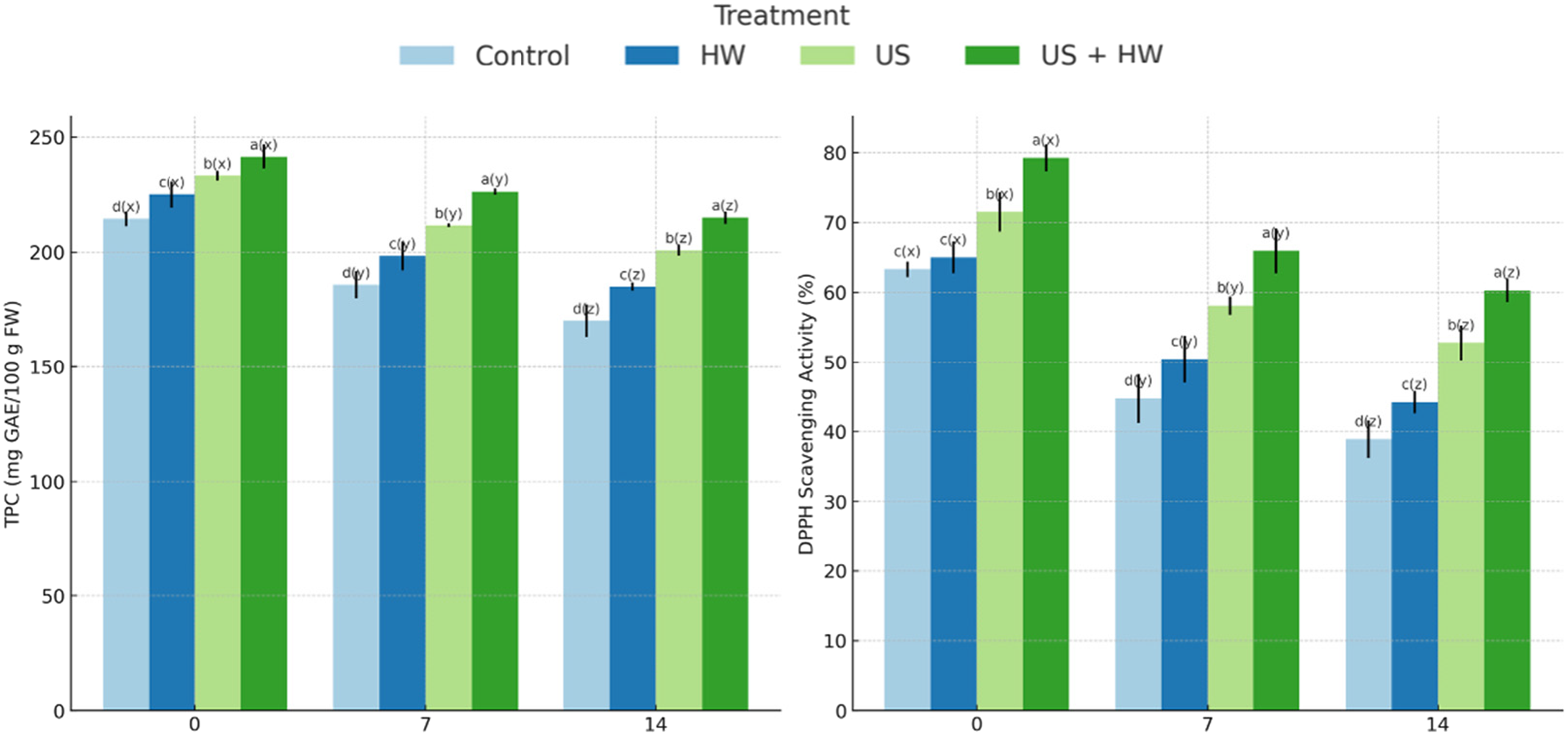
Total phenolic content (TPC) and DPPH radical scavenging activity of blueberries during storage (0, 7, and 14 days) under different treatments: control, hot water (HW), ultrasound (US), and combined ultrasound + hot water (US + HW). Values are expressed as mean ± standard deviation (n = 3). Different lowercase letters (a–d) indicate significant differences among treatments at the same storage time, while different letters in parentheses (x, y, z) denote significant differences across storage times within each treatment (p < 0.05).
The enhanced effectiveness of the combined US + HW treatment can be explained by the synergistic interaction between the mechanical effects of ultrasound and the thermal effects of mild heat. Ultrasound induces cavitation, creating micropores and microchannels in the cell wall and membrane structures, which can improve mass transfer and facilitate better retention of bioactive compounds such as phenolics. At the same time, brief hot water exposure at 50°C for 5 min may have transiently reduced the activity of oxidative enzymes, including polyphenol oxidase (PPO), thereby potentially limiting enzymatic degradation of phenolic compounds and oxidative deterioration, consistent with previous reports demonstrating PPO inactivation by mild heat treatment in berry fruits (Zhu et al., 2017; Zhou et al., 2024). The integration of these two treatments works in concert to protect cellular structures, maintain turgor pressure, and stabilize intracellular bioactive compounds, resulting in a more effective preservation of antioxidant capacity and phenolic content than when either ultrasound or hot water is applied individually (Zhou et al., 2024; Yildiz & Aadil, 2022). By combining physical and thermal mechanisms, the US + HW approach not only minimizes biochemical degradation but also enhances postharvest quality, supporting its potential as a practical intervention for maintaining the nutritional and functional properties of blueberries during storage.
Furthermore, hot water treatment may complement ultrasound by transiently reducing enzymatic activity, particularly PPO, as previously demonstrated in heat-treated berry systems (Zhu et al., 2017), while ultrasound strengthens the cell wall structure and promotes controlled permeability. The temporary micropores generated by cavitation not only enhance phenolic retention but may also improve their bioavailability, allowing better preservation of both nutritional and sensory qualities during storage (Guo et al., 2020; Yildiz & Aadil, 2022; Zhou et al., 2024; Shu et al., 2024). The US + HW-treated blueberries demonstrated a clear advantage over other treatments, preserving 85.9% of total phenolic content and 75.5% of antioxidant activity. These findings highlight the potential of this additive-free, environmentally sustainable approach as a promising industrially feasible strategy to extend the shelf life of blueberries while maintaining both their nutritional and sensory attributes (Iñiguez-Moreno et al., 2023; Yildiz & Yildiz, 2025).
Sensory quality evaluation
Sensory attributes, including appearance, texture, and odor, are critical indicators of fruit quality and strongly influence consumer acceptance. Table 3 presents the sensory evaluation scores for blueberry samples subjected to HW, US, and US + HW treatments at days 7 and 14. The results indicate that both the type of pretreatment and storage duration significantly affected sensory quality. For appearance, the control group experienced a substantial decline, with scores decreasing from 6.3 ± 0.5 on day 7 to 4.2 ± 0.7 on day 14. This reduction is likely due to color fading, tissue softening, and the development of surface roughness during storage (Liu et al., 2022). In contrast, blueberries treated with the combined US + HW method maintained a high appearance score of 8.1 ± 0.4 at day 14, indicating that the synergy of ultrasound and mild heat effectively preserves surface integrity and visual freshness. These findings are consistent with previous reports showing that mild thermal and ultrasonic treatments can maintain color stability and delay visible spoilage symptoms on fruit surfaces (Iñiguez-Moreno et al., 2023).
Sensory evaluation scores of blueberries during storage (mean ± sd)
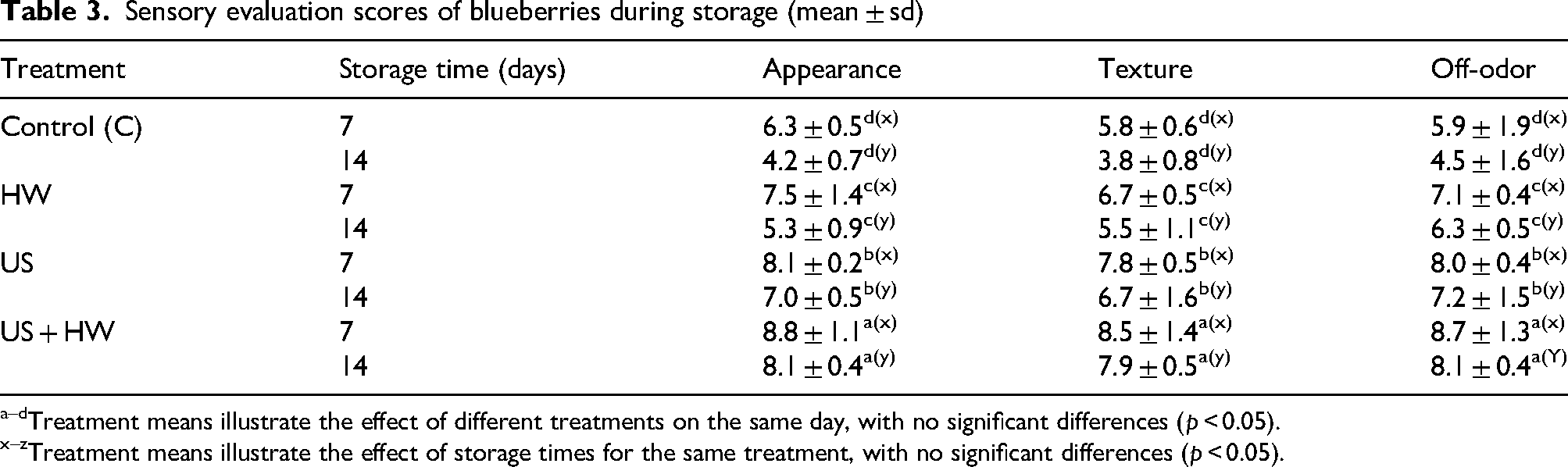
Treatment means illustrate the effect of different treatments on the same day, with no significant differences (p < 0.05).
Treatment means illustrate the effect of storage times for the same treatment, with no significant differences (p < 0.05).
Texture is another critical quality attribute affecting consumer acceptance. In the control group, texture scores declined from 5.8 ± 0.6 on day 7 to 3.8 ± 0.8 on day 14, reflecting progressive softening and disruption of cellular integrity (Liu et al., 2022). The US + HW-treated blueberries, however, exhibited the highest texture scores, reaching 7.9 ± 0.5 at day 14. This improvement can be attributed to ultrasound's strengthening effect on cell walls, combined with hot water's ability to suppress enzymatic softening, thereby delaying textural deterioration (Shu et al., 2024. The results suggest that the combined treatment helps maintain the firmness and structural resilience of the fruit, complementing the instrumental texture data discussed earlier.
Off-odor is a key indicator of microbial spoilage and overall product acceptability. In the control group, off-odor scores decreased from 5.9 ± 1.1 on day 7 to 4.5 ± 1.6 on day 14, suggesting noticeable sensory-level deterioration due to microbial growth and metabolic byproducts (Liu et al., 2022). Conversely, the US + HW-treated blueberries maintained consistently high odor scores of 8.1 ± 0.4 on both day 7 and day 14. This result demonstrates that the suppression of microbial proliferation achieved by combined ultrasound and hot water treatment not only enhances microbiological safety but also preserves favorable sensory characteristics, including aroma and freshness (Liu et al., 2022).
Overall, the sensory evaluation indicates that the US + HW treatment is the most effective approach for preserving the physical and organoleptic qualities of blueberries during refrigerated storage. The combined treatment consistently outperformed individual HW or US applications across appearance, texture, and odor parameters, aligning with previous findings (Shen et al., 2021; Yildiz & Aadil, 2022; Yildiz, Yildiz, Khan & Aadil, 2022). These results highlight the potential of US + HW as a practical, additive-free strategy to maintain consumer-preferred quality and enhance acceptance throughout the fruit's shelf life.
Sensory and biochemical quality enhancement in blueberries via combined mild processing
The application of pretreatments during blueberry preservation has a profound effect not only on physical and microbiological quality but also on sensory attributes by protecting biologically active compounds such as phenolics. In this study, the relationship between TPC, antioxidant capacity (DPPH), and sensory scores—including appearance, texture, and odor—was systematically examined. Among the treatments, US + HW (ultrasound + hot water) demonstrated a superior ability to simultaneously preserve both chemical and sensory qualities. Phenolic compounds play a critical role in preventing oxidative deterioration of fruit tissues, contributing to the maintenance of color stability and overall visual quality (Zhu et al., 2017; Li et al., 2020). In blueberry samples where TPC levels were maintained at higher levels, particularly in the US + HW group, sensory quality losses such as color fading, textural softening, and the development of spoilage-related odors were minimized. This observation highlights that phenolic compounds contribute not only to the nutritional value of blueberries but also to the maintenance of key sensory attributes (Yildiz & Izli, 2019; Yildiz et al., 2020).
Furthermore, the literature indicates that ultrasound treatment delays polyphenol oxidation by stabilizing cellular structures, providing synergistic benefits for both phenolic preservation and sensory acceptance (Zhang et al., 2022). In this context, samples with higher antioxidant capacity, as reflected by DPPH measurements, exhibited more vivid color, firmer texture, and stronger characteristic aroma. These improvements were perceptible during sensory evaluation, demonstrating that biochemical quality directly reinforces visual, textural, and olfactory appeal (Iñiguez-Moreno et al., 2023).
In summary, the combined US + HW treatment effectively optimizes the preservation of phenolic compounds and antioxidant capacity while simultaneously enhancing sensory quality, offering a distinct advantage in terms of consumer acceptance. These findings underscore a strong positive correlation between biochemical integrity and perceived quality, emphasizing that mild, additive-free processing technologies can effectively reinforce both nutritional and sensory attributes in fresh blueberries (Shu et al., 2024; Shen et al., 2021). Such synergistic preservation approaches present a promising avenue for extending shelf life while maintaining the overall quality and consumer appeal of high-value soft fruits.
Conclusions
This study highlights the synergistic efficacy of combined US and HW treatments as a promising postharvest preservation strategy for blueberries. The integrated US + HW approach effectively maintained key physicochemical attributes, suppressed microbial proliferation, and preserved sensory quality throughout refrigerated storage. Notably, this dual-treatment consistently outperformed individual US or HW applications by mitigating firmness loss, color degradation, and oxidative deterioration, while sustaining total phenolic content and antioxidant capacity—critical indicators of nutritional and functional quality. These findings reinforce the potential of non-thermal, additive-free preservation technologies that align with clean-label and sustainability trends in fresh produce processing.
The demonstrated ability of US + HW to extend shelf life without reliance on chemical preservatives offers a scalable and eco-friendly solution for the fresh fruit industry, particularly for highly perishable commodities like blueberries. By leveraging the mechanistic interplay between ultrasonic cavitation and mild thermal effects, this approach enhances produce quality through targeted cellular modulation and enzymatic inactivation. Future research should focus on integrating detailed microstructural analyses and kinetic modeling to elucidate the mechanistic basis of quality retention, enabling precise process optimization and customization. Moreover, exploring the applicability of this combined treatment across diverse fruit matrices and its compatibility with emerging digital monitoring technologies could accelerate industrial adoption, promote innovation in supply chain management, and support the development of sustainable preservation strategies for high-value fruits. Future studies should incorporate direct measurement of PPO activity and other cell wall-degrading enzymes to further elucidate the mechanistic basis of phenolic retention and color stability observed in combined US + HW treatments.
Footnotes
Highlights
•Ultrasound and hot water treatments were applied to fresh blueberries. •Combined HW + US reduced microbial growth most effectively. •Firmness, color, and antioxidant activity were better preserved. •Sensory quality improved in appearance, texture, and odor. •Eco-friendly, scalable method for postharvest blueberry preservation

Funding
The author received no financial support for the research, authorship, and/or publication of this article.
Declaration of conflicting interests
The author declared no potential conflicts of interest with respect to the research, authorship, and/or publication of this article.