







Abstract
Cacti are highly adaptable plants with outstanding biological, ecological, nutritional, and economic potential. Their unique morphology and water-storage capacity allow them to grow in arid regions, making them strategically important for agriculture. The aim of this review was to highlight the potential of cacti and their components for use in the production of functional foods for human nutrition, both as part of conventional food products and as components of edible coatings and biodegradable films. The review focuses on the potential for use in the human diet of the cactus Opuntia ficus-indica, the most widely cultivated and used cactus globally. Cactus mucilage has been recognized as a natural prebiotic and a biodegradable polymer with promising applications in food packaging, contributing to both improved nutritional quality and enhanced environmental sustainability. Bioactive compounds from O. ficus-indica, including polyphenols, flavonoids, betalains, and soluble fiber, promote health by regulating the composition of the gut microbiota and exhibiting antioxidant activity. The integration of cactus-derived ingredients into modern food systems represents a convergence of traditional knowledge and modern food science, offering eco-friendly and health-focused solutions. Despite promising results, further research is needed for optimizing fortified foods and confirming the clinical efficacy of cacti in humans.
Introduction
Cacti are succulent, flowering plants distinguished by their diverse forms, fleshy water-storing stems, spines that are modified leaves, and unique structures called areoles, from which the spines develop. Belonging to the family Cactaceae within the order Caryophyllales, cacti exhibit remarkable diversity, comprising approximately 1750 species. This diversity is expressed in their morphology, including shape, size, and overall appearance. Owing to their capacity for water storage, cacti are able to thrive in arid environments that are inhospitable to most other plants. Cacti root systems efficiently absorb and store water, while the stem performs photosynthesis and minimizes water loss thanks to its shape and protective surface structures. A dense covering of spines or hairs provides additional insulation and protection from adverse environmental conditions. Leaves are highly reduced, often forming only small scales or structural bases that create ribs or tubercles bearing areoles, from which spines and bristles arise. Cactus flowers are generally solitary, and fruits are typically fleshy berries containing multiple seeds (Prisa, 2022).
The natural distribution of cacti spans North and South America, as well as the islands of the West Indies, with Mexico and the southwestern United States exhibiting particularly high species richness. A notable exception is Rhipsalis baccifera, the only cactus species whose natural range extends beyond the Americas, occurring in Africa, Madagascar, and Sri Lanka. Cacti, originally native to the Americas, are now widely cultivated in Central and South America, Asia, and Southern Europe. Today, they are grown commercially in countries such as Brazil, Argentina, Algeria, and Spain. Despite this predominantly New World distribution, numerous cactus species have been introduced to other regions through human-mediated dispersal, while long-distance seed transport by migratory birds may also have contributed to their transoceanic spread (Prisa, 2022). It is believed that the first cactus (Opuntia ficus-indica) was brought to Europe by Christopher Columbus when he returned to Lisbon in 1493 (Griffith, 2004).
Although most cacti are inedible, certain species have held cultural and practical significance for the indigenous peoples of the Americas since ancient times, providing food, water, medicine, fuel, and building materials. The fleshy fruits of certain cactus species, such as Opuntia, known as prickly pears in English and “tunas” in Spanish, and the young, flat stem segments, or pads, called “nopales” in Spanish, are widely consumed in Mexican and broader Latin American cuisine and at present are increasingly gaining popularity worldwide (Figure 1).
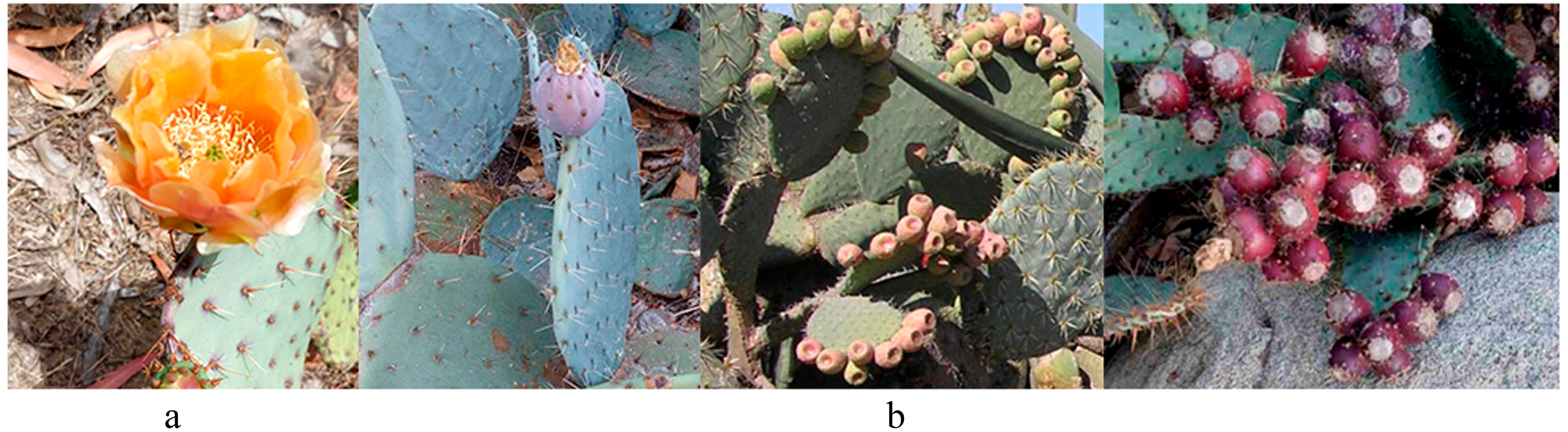
Cactus flower (a) and nopal cladodes with fruit (b) (taken by the authors).
Some cacti contain psychoactive alkaloids, primarily mescaline, which can produce hallucinogenic effects. The most well-known example is the peyote cactus (Lophophora williamsii), traditionally used by the Aztecs (around 1520) in religious and spiritual ceremonies, as well as for medicinal purposes to treat various ailments (Doesburg-van Kleffens et al., 2023).
Cacti were often regarded as sacred, with fruits symbolizing divine gifts and the plant itself representing endurance and protection. In Aztec legend, an eagle perched on a cactus devouring a snake marked the location to found their city—a motif that endures today as a national symbol of Mexico.
Today, cacti are used as human food, animal feed, for soil-erosion control and clean fencing, and their processing waste serves as a raw material for biofuel production (Inglese et al., 2017). As it was highlighted by Hans Dreyer, Director of FAO's Plant Production and Protection Division, cacti, particularly certain Opuntia species, have gained importance as a crop due to climate change and the increasing risk of drought (FAO, 2017). Besides being a food source, cacti store large amounts of water in their shoots (up to 180 tons per hectare), making them an essential crop for arid regions. In Mexico, prickly pears are grown on small farms and collected from the wild over more than 3 million hectares; per capita consumption of nopalitos reached 6.4 kg in 2017 (Inglese et al., 2017), and in 2021 the country produced 868,956 tons of cladodes and 462,209 tons of cactus fruits (Pérez-López et al., 2023). Brazil cultivates over 500,000 ha of cacti for forage, while North Africa and Ethiopia's Tigray region also grow them extensively, with about 360,000 ha in Tigray (half under management). Currently, the key agricultural subspecies Opuntia ficus-indica is naturalized in 26 countries worldwide outside its native region.
The aim of the present review was to highlight the potential of cacti and their constituents for use in the production of functional foods.
Literature search method
A literature search was systematically conducted in the PubMed, Scopus, Web of Science, and Google Scholar databases. The search strategy used “cacti” as the primary keyword, combined with terms related to applications in human nutrition, including chemical composition, antimicrobial activity, functional foods, nutrition, cactus flour, preservation, edible coatings, and biodegradable packaging materials. Records were screened based on titles and abstracts, and full texts of potentially eligible articles were retrieved and assessed for relevance. Additional studies were identified through manual screening of the reference lists of included original research articles and review papers.
Chemical composition of cactus
The chemical composition of cactus plants varies substantially depending on species (cultivar) and environmental conditions. In addition, different plant parts show distinct nutrient profiles. Numerous studies report considerable variation even within cactus pads (nopal cladodes), influenced by genetic traits, growing season, plant maturity, pad position, soil type and fertility, planting density, harvesting practices, and environmental stress. These factors affect protein, fiber, mineral content, and other biochemical constituents. Generally, young pads contain more moisture, whereas older pads or those harvested later in the season tend to accumulate more fiber and polyphenols (Dubeux et al., 2021).
The chemical composition of the cactus Opuntia ficus-indica, whose fruits are traditionally consumed in many countries and used in functional food preparation, has been extensively studied. Research has focused not only on the edible fruit pulp commonly included in the human diet, but also on processing by-products such as peels and seeds, as well as on the cladodes.
Chemical compositions of different parts of the cactus have their own characteristics. Although absolute values may vary, general trends in composition remain consistent across all tissues. Albergamo et al. (2022) reported the proximate composition of cladodes, fruit pulp, peel, and seeds from the Tunisian O. ficus-indica. Prickly pear seeds were richest in proteins (17.34%) and lipids (9.65%), making them the most nutrient-dense fraction. Cladodes, however, exhibited the highest ash (18.58%) and crude fiber content (28.39%), indicating greater mineral and dietary fiber levels. Prickly pear peel and pulp contained the most carbohydrates (74.34% and 65.23%, respectively), whereas cladodes had the lowest. Moisture was greatest in the peel (16.57%) and lowest in the seeds (3.39%). Overall, seeds stand out for their protein and fat content, cladodes are valuable for fiber and minerals, while prickly pear peel and pulp are the most carbohydrate-rich components.
In line with these findings, cladodes typically show higher levels of protein and minerals, reflecting their physiological role as metabolically active tissues, while prickly pear fruit tends to accumulate more carbohydrates and fiber as an energy-rich part of the plant. Fat remains only a minor component in both, without significant variation (Monteiro et al., 2023).
The fatty acid profiles of O. ficus-indica products also varied by tissue (Albergamo et al., 2022). Seeds contained the highest proportion of polyunsaturated fatty acids (PUFA) (61.7%), mainly linoleic acid (C18:2 ω-6), while cladodes were rich in α-linolenic acid (C18:3 ω-3, 19.6%), resulting in a low ω-6/ω-3 ratio (1.89), which is considered nutritionally favorable (Stabnikova and Paredes-López, 2024). In contrast, seeds showed an extremely high ω-6/ω-3 ratio (211.8), reflecting a predominance of ω-6 fatty acids. Pulp and peel were intermediate in both PUFA content and ω-6/ω-3 ratios (15.3 and 4.3, respectively). Health indices suggest seeds have the most favorable hypocholesterolemic/hypercholesterolemic ratio (H/H is 7.95) and lowest atherogenic index (AI is 0.49), whereas cladodes provide valuable omega-3 benefits.
The total polyphenol content varied significantly among the different tissues of O. ficus-indica. Seeds contained the highest levels (4785.36 mg GAE (Gallic Acid Equivalent)/100 g dw), followed closely by cladodes (4235.27 mg GAE/100 g dw). Pulp showed moderate polyphenol content (2581.68 mg GAE/100 g dw), while peel had the lowest levels (108.36 mg GAE/100 g dw). Thus, seeds and cladodes represent the richest sources of polyphenols, highlighting their potential as natural antioxidants, whereas peel contributes minimally to polyphenol intake (Albergamo et al., 2022).
In a study by Monteiro et al. (2023), cladodes contain up to 3333 mg/100 g dw of polyphenols and up to 833 mg/100 g dw of flavonoids, while prickly pear fruit contains lower amounts, up to 1250 mg/100 g dw of polyphenols and up to 375 mg/100 g dw of flavonoids. These values confirm that cladodes are the most significant sources of bioactive compounds in O. ficus-indica, contributing substantially to its antioxidant potential, whereas the fruit provides comparatively lower levels.
Opuntia spp. fruits are rich in betalains, water-soluble pigments that provide natural color and possess strong antioxidant activity. Only a limited number of fruits and vegetables contain these compounds; beetroot is the most recognized source, known for producing betanin, a red-purple betalain widely used as the food colorant E162. O. ficus-indica fruits represent another valuable edible source of betalains. While beetroot contains approximately 50 mg betanin/100 g, purple cactus pear can contain up to 100 mg of betanin/100 g (de Wit et al., 2020; Sigwela et al., 2021). Betanin was not found in O. ficus-indica cladodes, but its content in prickly pear fruit was 83–625 mg/100 g dw (Monteiro et al., 2023). Meanwhile, betalains act as bioactive food ingredients with demonstrated antioxidant, antimicrobial, and anticancer properties, underscoring their significance for health-promoting foods and nutrition.
O. ficus-indica tissues have a rich mineral composition. Сladodes are richer in minerals than the fruit, with higher levels, mg/100 g dw, of calcium, 520–1420; magnesium, 520–850; potassium, 3000–4300, and iron, 5–20. Prickly pear fruit contains lower mineral levels, mg/100 g dw, of calcium, 275–400; magnesium, 150–375; potassium, 2200–3300, and iron 3–15 (Monteiro et al., 2023).
Besides that, cactus tissues contain high levels of vitamins. Thus, the content of vitamin A, in cladodes and fruits of O. ficus-indica, µg/100 g dw, varied from 500 to 1667 and 83–500; content of vitamin C and tocopherol, mg/100 g dw, consisted of 90–417 and 83–500; 5–25 and 3–12.5, respectively (Monteiro et al., 2023). Overall, cladodes are the main source of vitamin A and E, while both tissues provide substantial vitamin C.
Cactus pear cladodes contain a specific compound called mucilage, a natural heterogeneous hydrocolloid composed mainly of high-molecular-weight (about of roughly 3.67 × 10⁶ g/mol) heteropolysaccharides. The polysaccharide fraction of cactus mucilage includes L-arabinose, D-galactose, L-rhamnose, and D-xylose, along with galacturonic and glucuronic acids. For example, in Opuntia mucilage the contents of arabinose, galactose, rhamnose, and xylose were reported as 67.5%, 6.27%, 5.43%, and 20.41%, respectively (Trachtenberg and Mayer, 1981). Cactus mucilage also contains small amounts of proteins, essential amino acids, fatty acids, phenolic compounds, and minerals. Mucilages extracted from the cladodes of seven Brazilian cacti were shown to contain high levels of carbohydrates (39.77–87.68%), proteins (4.27–14.76%), and minerals, particularly Ca (2.90–15.65%) (de Andrade Vieira and de Magalhaes Cordeiro, 2023). The authors also identified arabinose and galactose as the main monosaccharides in the polysaccharide fraction. Due to its hydrophilic nature, cactus mucilage exhibits a high water-binding capacity, making it a potential natural thickener and stabilizer in food applications. In addition, it exhibits high viscosity and good emulsifying properties, which make it useful as a food additive in dairy and bakery products to improve texture and stability, as well as a component of edible coatings and eco-friendly packaging materials (de Andrade Vieira and de Magalhães Cordeiro, 2023; de Medeiros et al., 2024; Procacci et al., 2021).
Cactus-derived compounds for enhancing food safety
It has been shown that extracts obtained from cactus tissues contain natural bioactive compounds, primarily polyphenols, which exhibit antimicrobial activity and can inhibit the growth of foodborne pathogens. In particular, Opuntia ficus-indica cladode extracts showed inhibitory effects against Gram-negative bacteria (Escherichia coli ATCC 25922, Salmonella enterica ser. Typhimurium ATCC 14028, Enterobacter aerogenes ATCC 13048) and Gram-positive bacteria (Enterococcus faecalis ATCC 29212, Staphylococcus aureus ATCC 25923 and ATCC 35556).
The minimum inhibitory concentration (MIC) values against Staphylococcus aureus ranged from 0.7 to 1.5 mg/ml for immature cladodes and from 1.0 to 2.0 mg/ml for mature cladode extracts (Blando et al., 2019). The authors proposed the application of cactus extracts for controlling foodborne pathogens and enhancing food safety.
The minimum bactericidal concentrations (MBC) of extracts from eight Opuntia ficus-indica cultivars against foodborne pathogens Campylobacter jejuni, Vibrio cholerae, and Clostridium perfringens ranged from 1.1 to 12.5, 4.4 to 30.0, and 0.8 to 16.0 mg/ml, respectively (Sánchez et al., 2014).
In the study by Ramírez-Moreno et al. (2017), oil extracted from O. ficus-indica seeds exhibited antibacterial activity against Escherichia coli ATCC 10536, Staphylococcus aureus ATCC 13565, Listeria monocytogenes CCUG 15526, and Pseudomonas aeruginosa ATCC 1544, as well as antifungal activity against Candida albicans ATCC 10231.
Overall, these findings demonstrate that Opuntia ficus-indica–derived extracts and seed oil represent promising natural antimicrobial agents with broad-spectrum activity, supporting their potential application as functional ingredients for improving food safety and extending the shelf life of food products. Nevertheless, despite their nutritional and functional value, some cactus species, particularly those belonging to the Opuntia (nopal) genus, may contain anti-nutritional compounds such as oxalates and phytates, as well as tannins, which at high concentrations may reduce mineral bioavailability (Reda and Atsbha, 2019). These compounds are found primarily in prickly pear cladodes and, to a lesser extent, in seeds. Their concentrations vary considerably depending on species and plant part, while common processing methods such as peeling, soaking, boiling, or fermentation can reduce their content.
Cactus applications in functional nutrition
Among current trends in food production, particular attention is drawn to the use of plant biomass and its components (Stabnikova et al., 2021). In this context, the use of new plant sources, including cacti, for producing foods with enhanced nutritional properties has become an object of active research and technological development (Monteiro et al., 2023).
Indigenous peoples living in deserts and arid regions have used cacti as a food source for thousands of years. In Mexico and throughout Latin America, the fruits of the prickly pear (tunas) and the young cladodes (nopales) are still widely used in cuisine, traditional medicine, and livestock feed. For example, in Mexico alone, more than 88 cactus species are consumed as food (Segura et al., 2018). The fruits and young cladodes (nopalitos) of the prickly pear (Opuntia ficus-indica) and numerous other large Opuntia spp. are typically consumed as a vegetable eaten fresh or processed into juices, jams, and jellies after carefully removing all spines (Monteiro et al., 2023; Sáenz, 2000; Ventura-Aguilar et al., 2017) (Table 1).
Species of cacti and their traditional use in human nutrition in Brazil (adapted from Monteiro et al., 2023).
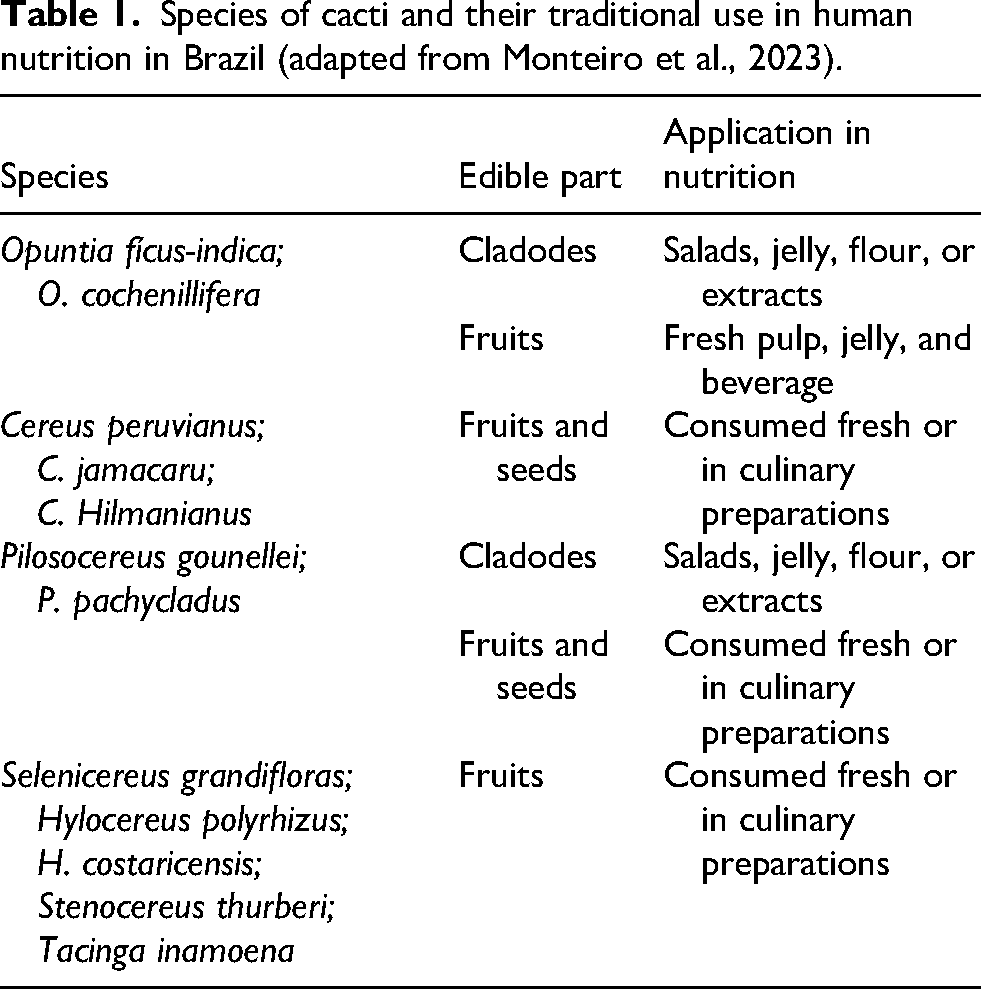
In 2021, Mexico alone produced 868,956 tons of cladodes and 462,209 tons of Opuntia ficus-indica fruits. The fruits of the Moonlight cactus, commonly known as dragon fruit or pitaya (Selenicereus and Hylocereus genera or their hybrids), are edible and highly valued, and are cultivated in many regions of Asia, Central America, and Israel. The fruits of several other cacti species, including Stenocereus, Pilosocereus, and Cereus, are also consumed locally or commercially either fresh or processed into juices, jams, and fermented beverages. The study conducted by de Lucena et al. (2013) showed that cacti are widely used by residents of the São Francisco community (Paraíba, Brazil) not only fresh but also in the preparation of biscuits, candies, puddings, and cakes. The current trend in cactus food application has recently shifted toward their processing and the isolation of individual components, such as mucilage, fiber, pigments, and antioxidants, for use in various food preparations (Das et al., 2021; Sáenz, 2000) (Figure 2).
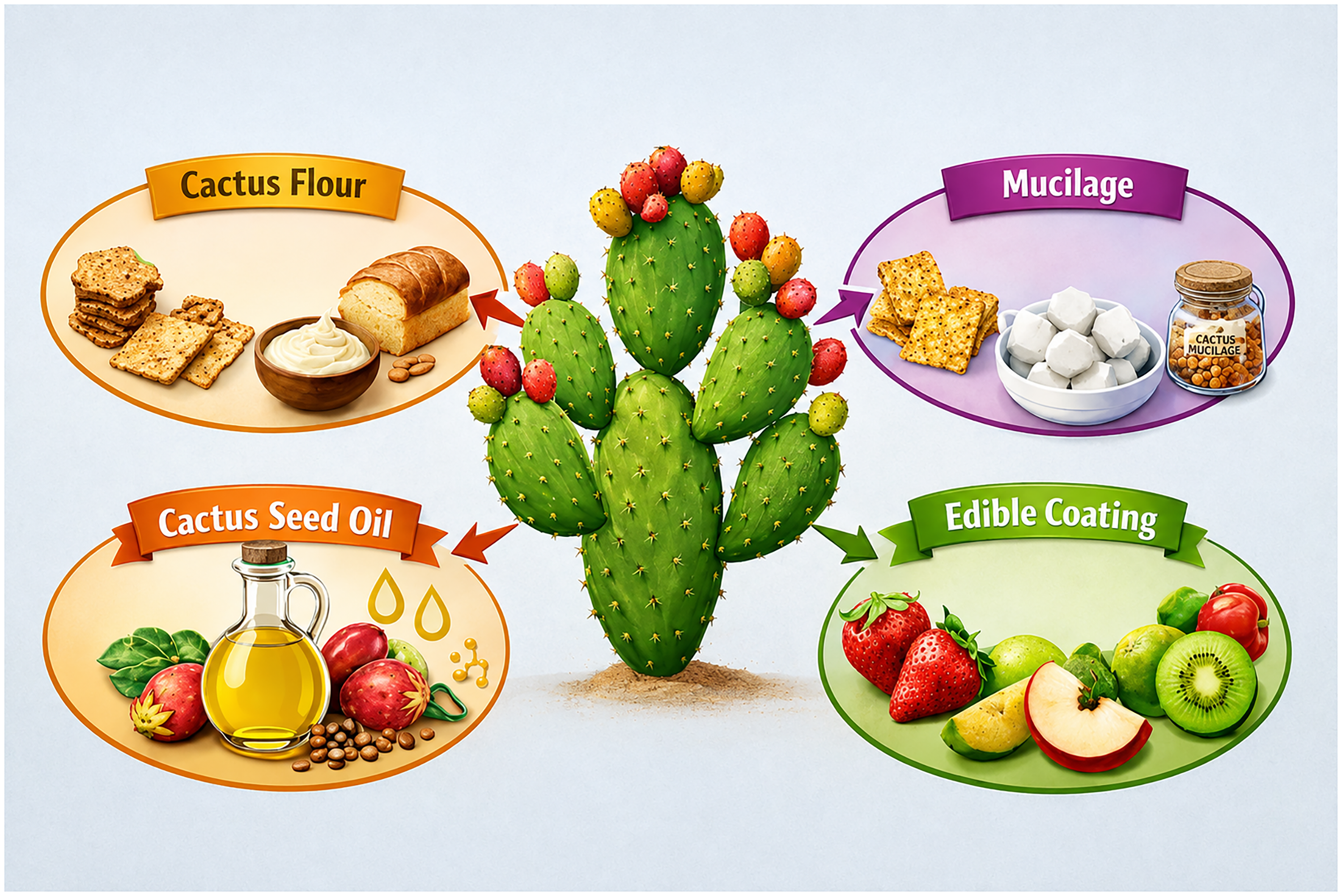
Cacti as novel edible resources for human nutrition.
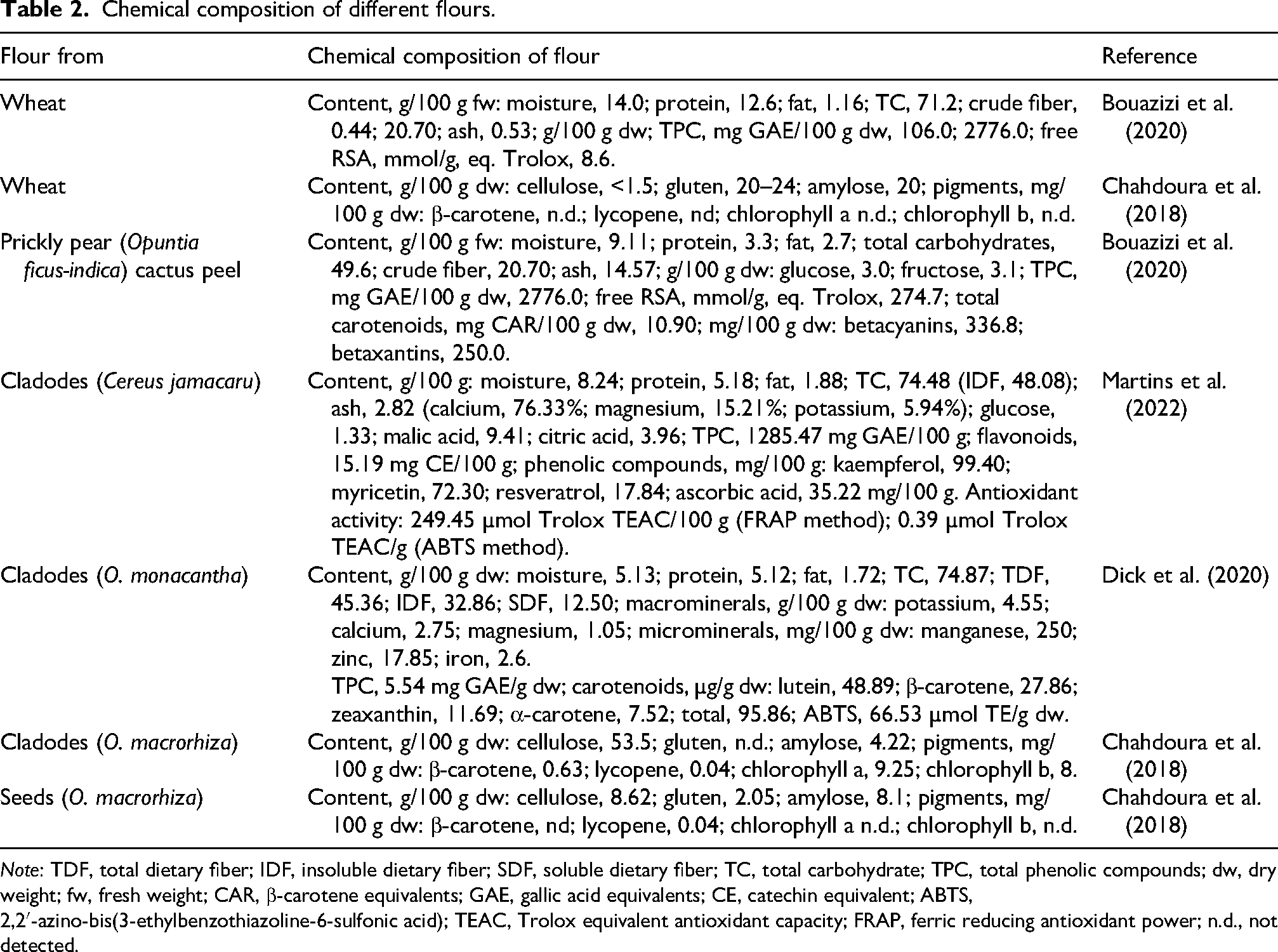
Very popular product from cacti is cactus flour, which is recommended to substitute part of wheat flour in production of bakery. Cactus flour produced from different parts of the plant, including cladodes, fruit peel, and seeds, has a rich nutritional composition and has been proposed as a value-added ingredient for use in food processing (Table 2).
Chemical composition of different flours.
Note: TDF, total dietary fiber; IDF, insoluble dietary fiber; SDF, soluble dietary fiber; TC, total carbohydrate; TPC, total phenolic compounds; dw, dry weight; fw, fresh weight; CAR, β-carotene equivalents; GAE, gallic acid equivalents; CE, catechin equivalent; ABTS, 2,2′-azino-bis(3-ethylbenzothiazoline-6-sulfonic acid); TEAC, Trolox equivalent antioxidant capacity; FRAP, ferric reducing antioxidant power; n.d., not detected.
Comparative analysis of the data presented in Table 2 showed that cactus flour is: (a) an exceptionally rich source of dietary fiber (20.7–53.5%), greatly exceeding wheat flour (1.5%); (b) significantly richer in minerals, as the ash content of prickly pear peel (O. ficus-indica) reached 14.57% compared to 0.53% in wheat flour; (c) a valuable source of phenolic compounds (554–2776 mg GAE/100 g dw) versus 106 mg GAE/100 g dw in wheat flour; (d) characterized by extremely high antioxidant activity; and (e) contains betacyanins, betaxanthins, and carotenoids, pigments that are absent in wheat flour. It was also shown that flour from O. macrorhiza cladodes does not contain gluten, which makes it suitable for the production of gluten-free bakery products (Chahdoura et al., 2018). Although cactus flour generally contains less protein than wheat flour, flour made from O. macrorhiza seeds has a protein content comparable to that of wheat. Thus, it is evident that incorporating cactus-derived additives into food products represents a promising strategy for enhancing nutritional value and creating functional foods enriched with bioactive compounds and dietary fiber.
However, an analysis of Italian consumer demand for functional pasta enriched with Opuntia ficus-indica highlights the need to increase consumer awareness of the product's nutritional value, as consumer acceptance largely depends on perceived health benefits (Parmieri et al., 2021). At the same time, the findings indicate that the functional product must retain the sensory and physical properties characteristic of the traditional one.
Application of cactus-based additives in food formulation
Effect of cacti flour addition on nutritional and technological characteristics of functional bakery and dairy products.
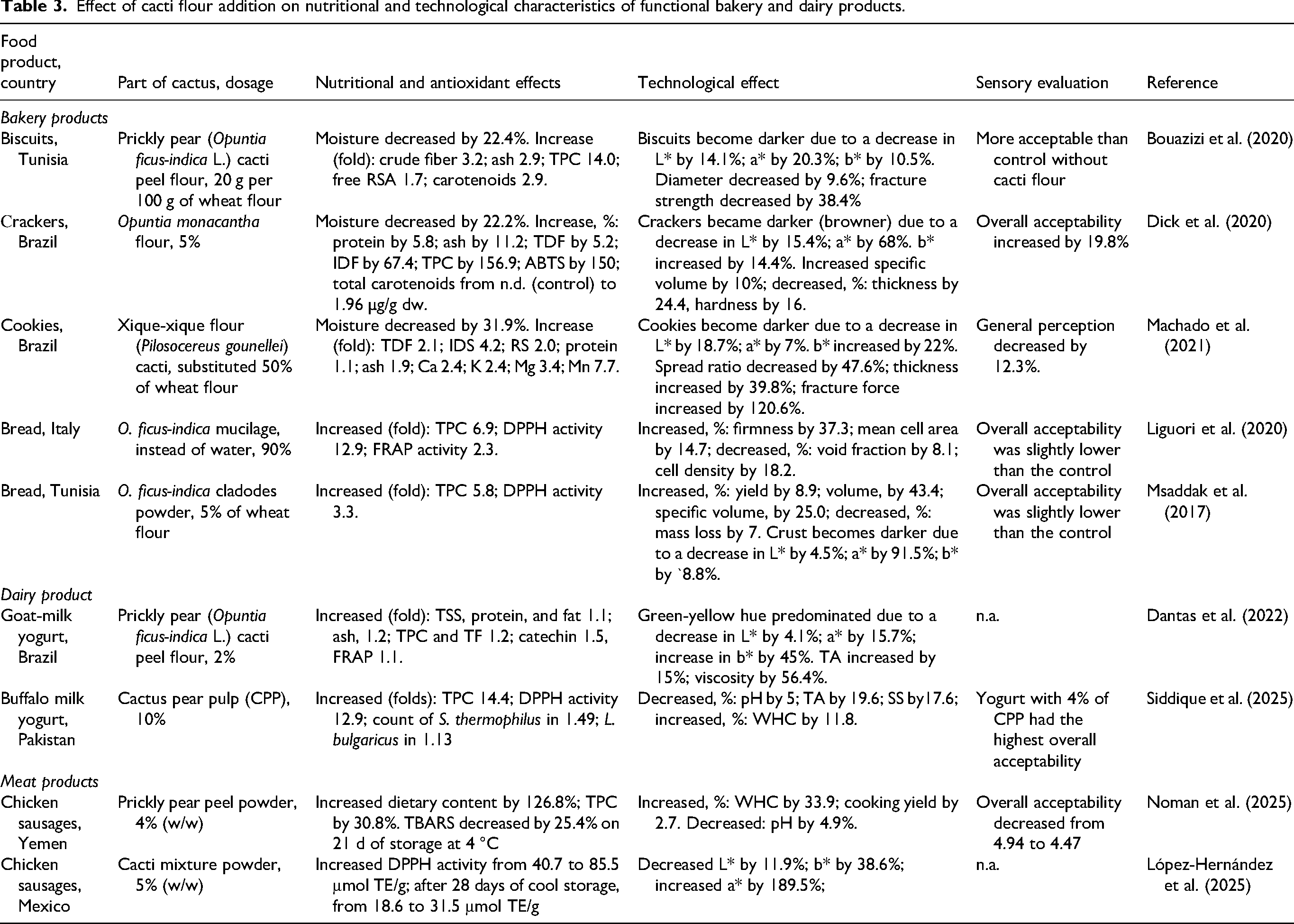
TDF, total dietary fibers; IDS, insoluble dietary fibers; RS, resistant starch; TPC, total phenolic content; TF, total flavonoids; TSS, total soluble solids; AA, antioxidant activity; RSA, radical scavenging activity; TA, titratable acidity; SS, syneresis susceptibility; WHC, water-holding capacity; n.a., not applicable; L*, lightness (brightness); a*, (+red/−green); b*, (+yellow/−blue).
The addition of 20 g of prickly pear (O. ficus-indica) peel flour per 100 g of wheat flour in biscuit formulations enhanced the nutritional properties of the product, particularly by increasing ash and fiber contents, as well as total phenolic compounds and radical scavenging activity (Bouazizi et al., 2020) (Table 2).
The replacement of 20% of wheat flour with a mixture of 15% cladode flour and 5% seed flour from Opuntia macrorhiza reduces the overall gluten content of the product, as cladode flour is gluten-free and seed flour contains three times less gluten than wheat flour (Chahdoura et al., 2018). Reduced gluten levels in cookies are beneficial for individuals with celiac disease, gluten intolerance, or gluten sensitivity. Texture profile analysis showed that cakes became harder as the proportions of cladode and seed flours increased. Nevertheless, cakes enriched with these cactus-derived flours demonstrated higher consumer acceptability compared to those made solely with commercial wheat flour.
Addition of 5% cladode flour (Opuntia monacantha) in formulation of gluten-free crackers made from mix of sour cassava starch (60%), rice flour (30%) and wholegrain buckwheat flour (10%) resulted in decrease of moisture content, and increase of the content of protein, ash, total dietary fibers, insoluble dietary fibers, total phenolic compounds, antioxidant activity, as well as overall acceptability (Dick et al., 2020). Sensory evaluation showed that South African cakes remained acceptable with up to 25% cladode flour, while higher substitution levels (75–100%) caused significant declines in color, texture, taste, and overall acceptability (de Witt et al., 2015).
Flour from Pilosocereus gounellei, obtained from the central stems (cladodes without peel and pulp) and milled to 100 mesh, was used to replace 50% of wheat flour in cookie formulations. This substitution enhanced the nutritional value and produced a more compact dough structure (Machado et al., 2021) (Table 3). Incorporation of O. ficus-indica cladode powder at 5% into a flat wheat bread formulation increased total phenolic content and antioxidant activity, while remaining acceptable according to the overall sensory score of 3.02. However, further increases in the additive dosage led to a deterioration of product quality indicators (Msaddak et al., 2017) (Table 3).
Several studies have explored the use of cactus-derived ingredients in dairy products. For instance, Dantas et al. (2022) investigated the addition of xique-xique flour, as characterized by Machado et al. (2021), to goat-milk yogurt at concentrations of 1% and 2%. The results showed that incorporating xique-xique flour improved the yogurt's nutritional profile, increasing its mineral content, total phenolic compounds, and antioxidant activity (Table 3).
The incorporation of cactus pear pulp into buffalo milk yogurt stored at 4 °C for 21 days increased pH, decreased titratable acidity, and significantly enhanced water-holding capacity while simultaneously reducing syneresis (Siddique et al., 2025). At the same time, the total phenolic content and DPPH scavenging activity increased, and the viable count of lactic acid bacteria (LAB) showed a substantial rise in cactus pear pulp -fortified yogurt samples on the first day of storage (Table 3). All these changes were dose-dependent, exhibiting increasing or decreasing trends as a function of storage time. Sensory evaluation demonstrated that yogurt containing 4% pulp received the highest acceptability score, whereas a higher level (10%) negatively affected the sensory profile.
Сactus-derived ingredients have been shown to inhibit lipid oxidation, stabilize color, and partially replace synthetic additives such as nitrites in meat products. The addition of prickly pear (O. ficus-indica) peel powder to chicken batter improved the nutritional and functional properties of sausages by increasing dietary fiber content and antioxidant potential, while enhancing oxidative stability during storage. Moreover, peel incorporation positively affected technological properties, such as water-holding capacity and texture, with only a slight reduction in overall sensory acceptance (Table 3) (Noman et al., 2025).
López-Hernández et al. (2025) showed that incorporation of a mixture of 75% cactus berry (Myrtillocactus geometrizans) and 25% red prickly pear (Opuntia ficus-indica) powders at 5% (w/w) into chicken sausages increased the initial antioxidant activity and maintained higher values after 28 days of refrigerated vacuum storage (Table 3). The cactus mixture limited lipid oxidation and color deterioration during storage with effectiveness comparable to nitrites, indicating the potential use of cactus powder as a natural colorant and antioxidant ingredient in the development of health-oriented meat products (Stabnikova et al., 2024).
The feasibility of incorporating cactus flour into traditional national beverages has been demonstrated. For example, de Waal et al. (2015) reported that indigenous fermented “Platpit” beer from South Africa, made from maize or sorghum with 25% of the flour replaced by O. ficus-indica cladode powder, achieved consumer acceptance comparable to that of the control beer.
Cacti functional ingredients. Beyond the use of cactus flour to enhance nutritional value, cacti provide diverse functional ingredients for food formulation. The consumption of juice prepared from fresh cladodes of nopal cactus (O. ficus-indica) has gained wide popularity among health-oriented consumers in Mexico (Hernández-Anguiano et al., 2016).
The addition of O. ficus-indica peel extract (0.005 % w/w), containing total phenolics of 1512.58 mg GAE/100 g dry matter, as a natural antioxidant in margarine, was tested as a replacement for the commonly used vitamin E (0.01%). This low concentration of cactus peel extract increased the Rancimat induction time from 14.58 ± 0.24 h in the control to 15.69 ± 0.43 h, demonstrating a reduction in lipid oxidation even at half the concentration of vitamin E typically incorporated. Margarine produced at pilot scale with cactus peel extract showed extended shelf life, while its physicochemical, sensory, and microbial characteristics remained within standard international ranges (Chougui et al., 2015).
Prickly pear extract shows strong antioxidant activity and can be applied in meat products to inhibit lipid oxidation; encapsulation is recommended to prevent direct interactions with the food matrix and enhance stability (Rodrigues et al., 2023). Thus, Moraga-Babiano et al. (2026) proposed to use encapsulated prickly pear peel extract as a natural antioxidant and colorant in beef burgers packaged under modified atmosphere. The encapsulated extract significantly reduced lipid oxidation and improved color stability during refrigerated storage without adversely affecting product quality.
Ammar et al. (2017) reported that maceration of olive oil with O. ficus-indica flowers at 5% (w/w) resulted in an increase in monounsaturated and polyunsaturated fatty acids by 1.44% and 0.37%, respectively. During storage at 60 °C for 60 days, phenolic losses were ∼70% in the control oil and ∼65% in the enriched oil, and the enriched oil showed a slower increase in peroxide value under accelerated oxidation conditions.
Manzur-Valdespino et al. (2020) demonstrated that powder obtained from cactus pear (O. ficus-indica) fruit residues (mesocarp and pericarp), rich in fiber and phenolic compounds, can be incorporated into dietary supplement tablets, showing high total phenolic content (649–734 mg GAE/100 g) and notable antioxidant activity (DPPH inhibition of 20–24%).
Therefore, cactus-derived ingredients, including flours, mucilage, pulp, and extract, improve the nutritional, technological, and sensory properties of bakery, dairy, and meat products. In the bakery, partial replacement of wheat flour enhances dietary fiber, minerals, phenolic compounds, and antioxidant activity, while affecting dough and product structure, firmness, spread, and color; at appropriate levels, sensory acceptability is maintained or improved. In dairy products, cactus flours or pulp increase minerals, bioactive compounds, and antioxidant activity, improve water-holding capacity, reduce syneresis, and support microbial stability, with moderate additions yielding the highest consumer acceptability. These multifunctional properties make cactus ingredients a sustainable option for developing functional and nutrient-enriched foods.
Mucilage, a hydrocolloid that develops a gel structure upon hydration, is a valuable product derived from cactus cladodes, primarily from the Opuntia genus. Besides, while the cladodes are the main commercial source of cactus mucilage, the fruits, peels, and seeds serve as supplementary sources depending on the intended use and extraction method. Cactus mucilage can be used as a thickening agent, emulsifier, and stabilizer, offering a natural alternative to synthetic additives in bakery and dairy products.
For example, mucilage extracted from O. monacantha has been shown to be suitable for the preparation of gluten-free crackers, effectively replacing commercial gums when used at a 2% level (Dick et al., 2020). Liguori et al. (2020) demonstrated that replacing 90% of water with O. ficus-indica mucilage in wheat bread preparation did not affect the fermentation process or the final product quality, but enriched the bread with bioactive compounds and improved its antioxidant and nutritional properties. The sensory rating of the mucilage-enriched bread was only slightly lower than the control, indicating a similar level of acceptability. Cactus mucilage has been proposed as a gelatin substitute in confectionery products: in Turkish delight, it can successfully replace gelatin at levels up to 50% without affecting consumer acceptance, whereas in marshmallows, it provides good initial foaming but produces unstable foams during storage, making it unsuitable as a full replacement, though potentially useful as a temporary foaming aid (de Witt et al., 2015).
Because cactus mucilage contains significant amounts of insoluble polysaccharides, it has been suggested that it may act as a prebiotic by selectively stimulating the growth of beneficial gut bacteria, such as Bifidobacterium and Lactobacillus (Cruz-Rubioet al., 2021; Guevara-Arauza et al., 2012). Utilization of cactus mucilage is particularly important because most cladodes remaining after fruit harvest are treated as waste and returned to the soil. Their use in various industries, including food production, therefore represents a valuable form of resource recovery and waste reduction (Zegbe et al., 2015).
Сactus seeds can be used for oil extraction (Ali et al., 2022; Ennouri et al., 2005; Karabagias et al., 2020). Although the oil content in prickly pear cactus (Opuntia ficus-indica) seeds is relatively low (typically ranging from 5% to 15% of the seed weight) prickly pear seed oil (PPSO) has attracted considerable interest due to its valuable composition, which makes it a promising ingredient for food applications. Cactus seed oil is characterized by a rich composition, as confirmed by numerous studies (Ciriminna et al., 2017; Khémiri et al., 2019; Regalado-Rentería et al., 2020). Several investigations have examined the fatty acid profile of prickly pear seed oil, typically using gas chromatography of methyl esters as the primary analytical method. PPSO is distinguished by its high content of unsaturated fatty acids (80–88%), predominantly linoleic acid (49.3–78.8%), oleic acid (12.8–25.3%), vaccenic acid (4.3–6.3%), and linolenic acid (0.23–1.1%). The major saturated fatty acids present in the cactus seed oil are palmitic (9.3–14.3%) and stearic (2.2–4.3%) acids (Al-Naqeb et al., 2021).
Studies have shown that oil extracted from cactus seeds collected from five different regions in Morocco, the major producer of cactus seed oil, contains 5.4–9.9 g of oil per 100 g of seeds. The oil is rich in unsaturated fatty acids, particularly monounsaturated oleic acid (C18:1, 20.5 g/100 g) and omega-6 polyunsaturated linoleic acid (C18:2, 62.3 g/100 g), which together account for 80–84% of the total fatty acids (Ali et al., 2022). The main saturated fatty acid is palmitic acid (C16:0), present at 12.70 g/100 g of oil. PPSO also contains 180 mg/kg of tocopherols, with γ-tocopherol comprising up to 90% of the total tocopherol content. Its phenolic profile includes (mg/kg of oil): vanillin, 8.16; tyrosol, 6.70; ferulic acid, 2.99; pinoresinol, 2.09; vanillic acid, 1.70; and cinnamic acid, 1.36. The phenolic extract of prickly pear seed oil exhibits a strong antioxidant capacity, demonstrating DPPH radical-scavenging activity of up to 97.86% (Ali et al., 2022).
Karabagias et al. (2020) identified 221 volatile compounds in PPSO, including acids, alcohols, aldehydes, esters, hydrocarbons, ketones, and others, which contribute to the oil's rich aroma profile. The authors also reported a high in vitro antioxidant activity (84%) and a total phenolic content of 551 mg gallic acid equivalents per liter. Based on these findings, they suggested that PPSO could be effectively utilized as a valuable by-product in various food systems, serving as a flavoring agent, antioxidant, and nutritional ingredient.
Thus, cactus seed oil and mucilage provide antioxidant-rich, functional ingredients for bakery, dairy, and confectionery products, offering nutritional benefits and sustainable valorization of by-products.
Fermented cactus raw material. Various parts of cacti can serve as substrates for microbial processes, resulting in a variety of food products. In Mexico, cactus fruits are widely used to produce traditional fermented beverages via the spontaneous action of indigenous microorganisms. One representative example is colonche, an ancient pre-Hispanic low-alcohol beverage produced from the sugar-rich pulp of cactus fruits, particularly prickly pear (tuna). Commonly referred to as “cactus wine,” colonche is characterized by a sweet–tart flavor and slight natural effervescence (Ojeda-Linares et al., 2020).
Wine produced from cactus pear (O. ficus-indica) fruit juice using Saccharomyces cerevisiae yeasts was characterized by a total acidity of about 12 g/L (as tartaric acid), an alcohol content of approximately 9% (v/v), and a high antioxidant capacity (∼235 mg Ascorbic acid equivalent/L). The resulting product exhibited good sensory acceptance of 7.74, indicating the suitability of cactus pear fruit as a raw material for wine production and its potential for value-added processing (Tsegay et al., 2018).
It is possible to produce fermented beverages from cactus pear (O. ficus-indica) cladode pulp using lactic acid bacteria. For example, fermentation with Lactobacillus plantarum and Lactobacillus brevis strains resulted in a drink enriched in γ-aminobutyric acid, antioxidants, vitamin C, and carotenoids, demonstrating the potential of LAB-fermented cactus products as functional beverages (Filannino et al., 2016). The application of probiotic lactic acid bacteria, such as Lactobacillus plantarum, to ferment cactus pear (O. ficus-indica) juice enables the production of functional beverages with preserved bioactive compounds and enhanced health-promoting properties (Verón et al., 2017).
Cactus for edible films and coating applications
Edible coatings are applied to fruits, vegetables, and other food products to extend shelf life, reduce moisture loss, delay ripening, prevent microbial spoilage, and improve overall quality. The base of edible films and coatings is biopolymers, particularly polysaccharides such as chitosan and sodium alginate. Therefore, cactus mucilage, composed mainly of heteropolysaccharides, is a promising substance for incorporation into edible biopolymer-based coatings to protect food from spoilage. Such coatings can extend shelf life, preserve product quality, enhance antimicrobial properties, and improve nutritional value. One of the key characteristics of cactus mucilage is its high water-retention capacity, which, together with its valuable natural constituents, makes it an attractive material for use in protective coatings for food products, especially berries, fruits, and vegetables. Thus, mucilage obtained from the stems of Opuntia ficus indica was used as a pure coating material for strawberry (Del-Valle et al., 2005). It was shown that strawberries dipped in cactus mucilage for 30 s and stored at 5 °C for 9 days maintained greater firmness, while their original color and natural taste remained unchanged (Del-Valle et al., 2005) (Table 4).
Use of Opuntia ficus-indica mucilage as an edible coating material.
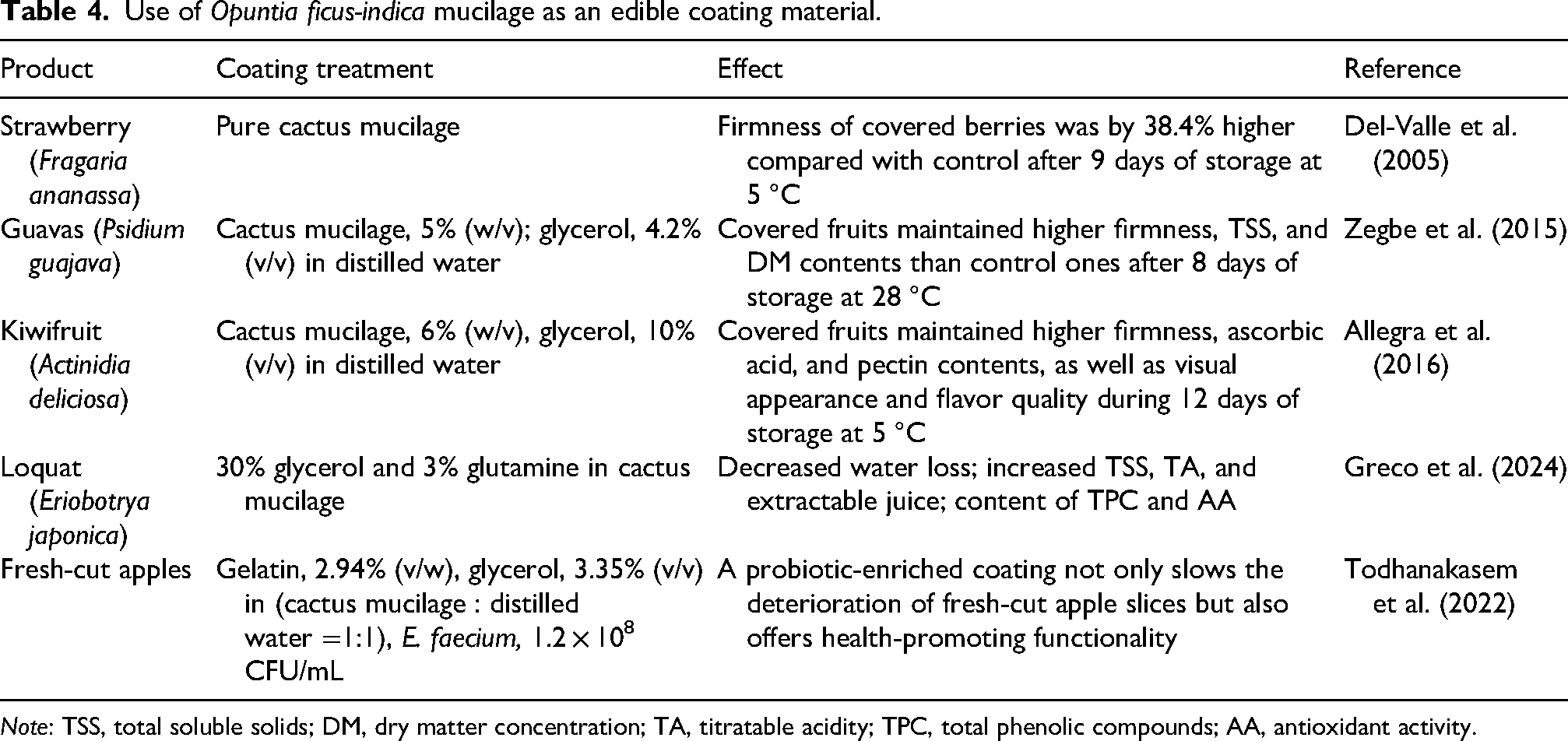
Note: TSS, total soluble solids; DM, dry matter concentration; TA, titratable acidity; TPC, total phenolic compounds; AA, antioxidant activity.
Mucilage is effective on its own, but mucilage-based coatings enriched with active additives generally provide stronger and more stable protection of fresh products. Thus, adding ascorbic acid to O. ficus-indica mucilage allowed not only for reduced moisture loss but also for better preserved color, nutritional value, and organoleptic qualities. According to Liguori et al. (2021), strawberries coated with mucilage containing ascorbic acid retained firmness, color, and antioxidant activity more effectively than fruits treated with mucilage alone, achieving higher overall organoleptic scores throughout cold storage.
The application of a coating containing cactus mucilage and glycerol as a plasticizer (dipping for 30 s) on guavas, a highly perishable fruit with a short postharvest life, helped slow firmness loss by reducing moisture loss (Zegbe et al., 2015) (Table 4). After 8 days of storage at 28 °C and 20% relative humidity, hardness loss was 98.9% in the control fruits and 71.1% in coated fruits; total soluble solids (TSS) decreased by 17.4% and 7.4%, respectively; and dry matter content increased by 33.2% and 43.6%, respectively. Interestingly, water loss appeared higher in the mucilage-coated fruit, likely due to the hydrophilic nature of the polysaccharides, which may limit the barrier's effectiveness against moisture loss. Overall, the authors concluded that cactus mucilage-based coatings can effectively prolong the shelf life of guavas.
A similar trend was observed for packaged kiwifruit slices coated by dipping them in O. ficus-indica mucilage for 60 s: after 12 days of storage under passive atmosphere at 5 °C, coated slices retained significantly higher firmness and exhibited lower weight loss compared with untreated slices. In addition, cactus mucilage coating had a notable positive impact on the visual appearance and flavor of the kiwifruit slices throughout the storage period (Table 4) (Allegra et al., 2016).
Incorporation of 30% glycerol and 10% L-glutamine into an edible O. ficus-indica mucilage coating for loquat (Eriobotrya japonica), a fruit highly susceptible to physical and mechanical damage, improved the preservation of its quality even after 11 days of storage at 5 °C (Greco et al., 2024). Such quality parameters as total suspended solids, titratable acidity, and extractable juice content were higher by 12.8%, 38.9%, and 15.3%, respectively, in coated fruits compared with uncoated samples. At the end of cold storage, water loss in untreated samples was 2.7-fold higher than in coated fruits. The application of coating also resulted in a 23.8% increase in total phenolic content and a 61.2% rise in antioxidant activity compared with control fruits (Table 5). From day 6 to the end of storage, the sensory score of coated samples remained, on average, 1.5 times higher than that of uncoated fruits, confirming the effectiveness of the edible coating as a postharvest preservation strategy.
Addition of the probiotic strain Enterococcus faecium FM11-2 to an O. ficus-indica mucilage-based edible coating for fresh-cut apples not only minimized weight loss but also reduced overall quality deterioration, while simultaneously offering potential health benefits due to the incorporated probiotics (Todhanakasem et al., 2022). However, probiotic viability decreased markedly during storage (from an initial 106–108 CFU/g to approximately 103 CFU/g after 7 days at 4 °C), indicating that optimization is necessary to improve probiotic survival (Table 4).
The potential use of O. ficus-indica mucilage coatings to extend the shelf life of cherries (Prunus avium) (Christopoulos et al., 2022), figs (Ficus carica) (Allegra et al., 2017), and yam tubers (Dioscorea spp.) (Morais et al., 2019) has been reported. Although O. ficus-indica remains the most extensively studied species, other cacti have also been investigated as alternative sources of mucilage and bioactive compounds. Mucilage-producing species include, among others, the cochineal cactus (Nopalea cochenillifera), the wheel cactus (Opuntia robusta), mandacaru (Cereus jamacaru), apple cactus (Cereus hildmannianus), xique-xique (Pilosocereus gounellei), facheiro (Pilosocereus pachycladus), and palmatória (Tacinga inamoena) (Bernardino-Nicanor et al., 2018; De Andrade Vieira and De Magalhaes Cordeiro, 2023; de Medeiros et al., 2024; Soares et al., 2021).
Summarizing the above, cactus mucilage-based edible coatings can extend the shelf life of fresh berries, fruits, and vegetables by preserving their physical and sensory properties, thereby reducing postharvest economic losses. Incorporating additional ingredients, such as L-glutamine, ascorbic acid, or probiotic bacteria, further enhances the coatings’ physical characteristics and functional benefits for the food products.
However, cactus mucilage has recently attracted attention as a promising material for novel industrial applications due to its unique physicochemical properties. In recent years, the extensive use of synthetic polymers in industry and households has increased environmental pollution, as these materials do not decompose naturally and gradually break down into microplastics, posing risks to aquatic and soil ecosystems (Stabnikova et al., 2025). A sustainable solution is the development of packaging materials based on natural biopolymers. Films incorporating cactus mucilage have been studied mainly for fruit and vegetable preservation, helping to extend shelf life and maintain product quality. At the same time, a growing body of research has explored its potential as a fully biodegradable alternative to conventional petroleum-based packaging (Alves et al., 2025; Gheribi and Khwaldia, 2019).
Despite the promising functional properties of cactus mucilage, its large-scale industrial application remains challenging due to difficulties associated with extraction efficiency, high viscosity, microbial stability, and standardization of product quality (de Carvalho Coelho et al., 2025). In addition, the composition and physicochemical properties of mucilage may vary depending on cactus species, plant age, environmental conditions, and processing methods. Therefore, further optimization of extraction, stabilization, and processing technologies is required to support its wider commercial utilization in food systems.
Cactus for medical application
Although the value of the chemical composition of edible cacti is not in doubt and numerous in vitro and animal studies demonstrate positive effects of cactus extracts on certain health-related parameters, there is still no convincing evidence from clinical trials in humans. In traditional medicine, cactus pear fruit has been used to address multiple health conditions, including ulcers, dyspnoea, glaucoma, liver disorders, wound healing, and fatigue. Opuntia pads were commonly applied topically as poultices to relieve rheumatism, arthritis, burns, and wounds, and boiled pads were used as eye washes. The pad juice helped soothe skin injuries, infections, and snake bites, while flower infusions served as diuretics and remedies for chest complaints. In Mexico and among Hispanic communities, pads and juice were also used for mouth sores, gum infections, dysuria, and as a folk treatment for diabetes (Brinker, 2009; Nazareno, 2015).
Current clinical evidence on the health benefits of prickly pear (Opuntia spp.) demonstrates some positive, but modest, effects in terms of antioxidant activity, modest improvement in lipid profiles and blood pressure, and possible glucose regulation under certain conditions (Onakpoya et al., 2015).
However, data are limited: many studies are heterogeneous, with varying designs, durations, and participant compositions, so the results should be interpreted with caution (Das et al., 2021). Until larger, high-quality randomized trials are conducted, prickly pear can be considered a potentially beneficial dietary component, but should not be considered a proven “therapeutic agent.”
Conclusion
Cacti are exceptionally versatile plants, offering significant biological, ecological, nutritional, and economic benefits. Among the many species, Opuntia ficus-indica is the most widely cultivated and valued as a source of food, water, animal feed, and raw materials for industrial processing. Its fruits, cladodes, and seeds contain valuable nutrients such as dietary fiber, minerals, polyphenols, vitamins, and bioactive compounds, including betalains, which can be used as a natural dye in food production. The cladodes and seeds are particularly rich in antioxidants and fiber, and the fruits are an important source of natural pigments and carbohydrates. Cactus mucilage has strong water-retaining and emulsifying properties, allowing it to be used as a natural stabilizer and thickener in food products, as well as a component of edible coatings and biodegradable packaging. Prickly pear extracts exhibit significant antimicrobial activity, opening up opportunities for improving food safety. The addition of cactus flour and fruit peel enhances the nutritional value of baked goods by increasing the fiber, mineral, and antioxidant content, including pigments absent in wheat flour. The absence of gluten in many cacti also makes them attractive for gluten-free recipes. However, despite their considerable potential, the wider industrial application of cactus-derived ingredients, particularly mucilage, still faces challenges related to large-scale extraction, high viscosity, microbial stability, variability in composition, and product standardization. Therefore, further optimization of processing and stabilization technologies is needed to support their broader commercial utilization in food systems. Overall, cacti are not only a traditional food resource but also a promising raw material for the development of functional foods and innovative ingredient production technologies.
Footnotes
Acknowledgments
We thank Talia Hernandez-Perez for her technical assistance. This project was partially supported by Secretaría de Ciencia, Humanidades, Tecnología e Innovación, Mexico.

Author contributions
Olena Stabnikova: writing—review and editing. Viktor Stabnikov: writing—original draft. Octavio Paredes-López: conception, editing. All authors read and approved the final manuscript.
Funding
The authors received no financial support for the research, authorship, and/or publication of this article.
Declaration of conflicting interests
The authors declare no competing interests.