







Abstract
The purpose of this study was to investigate for the first time the effect of the enrichment in white or red grape pomace stabilized by high hydrostatic pressure on the characteristics of dry-cured sausages containing additives (75 mg kg−1 sodium nitrite and 0.25 g kg−1 L-ascorbic acid). Both pomace types had no marked effect on the general parameters, microbial counts, and volatile compounds of the sausages. 0.5% of either pomace did not affect the instrumental colour (p > 0.050), whereas 1.5% increased b* and decreased a*, respectively. At 0.5%, the white pomace did not affect oxidation, but the red pomace increased lipid oxidation similarly to the double additive dosage, as did the white pomace at 1.5%. The red pomace at 1.5% increased lipid and protein oxidation. Despite this increase, the values remained low and hexanal (an oxidation indicator) was not detected. Therefore, the results reveal that the delay in oxidation previously reported in free-additive dry-cured sausages with grape pomace does not occur when additives are also added and oxidation is low. Under those circumstances, the pomace addition (especially the red pomace and the higher dosage) can promote oxidation, as does a high synthetic additive dosage.
Keywords
Introduction
Grape pomace is a by-product produced in large quantities in the winery industry. It is attracting increased attention for human and animal nutrition due to its content in some nutrients (such as dietary fibre) and bioactive compounds (such as phenols) (García-Lomillo and González-SanJosé, 2017), which can be beneficial for the food industry (Almanza-Oliveros et al., 2024).
In the winemaking process, white wine is produced through fermentation of the juice, whereas for red wine the crushed grapes are fermented. The pomace from both processes contains large quantities of water, nutrients and enzymes, which favour fermentation, spoilage and the loss of bioactive compounds. To stabilize it, the pomace is commonly dried, although other strategies have been essayed (García-Lomillo and González-SanJosé, 2017). Drying and freeze-drying can lead to some phenol loss, and they may not be sufficient to ensure complete stability (García-Lomillo and González-SanJosé, 2017). The extraction of the bioactive compounds prevents the instability issues, although solvents may be required and there is not an integral use of the pomace. In recent years, the combination of thermal blanching (to inactivate the polyphenoloxidase, responsible for phenol losses) and high hydrostatic pressure (HHP) (to decrease the microbial counts) has been proposed to stabilize both white and red grape pomace (Martín-Mateos et al., 2023; Ramírez et al., 2023). This stabilized pomace has been used to enrich free-additive meat products, such as pork burgers (Martín-Mateos et al., 2023), frankfurters (Martín-Mateos et al., 2025) and dry-cured sausages (Carrapiso et al., 2024; D'Arrigo et al., 2024), with an improvement in the oxidative status. However, food safety and colour development were a concern in the free-additive dry-cured sausages (Carrapiso et al., 2024; D'Arrigo et al., 2024). This could be solved by including some commonly used additives (such as sodium nitrite) to deal with those issues. Therefore, it would be advisable to investigate if the HHP-stabilized grape pomace has any detrimental and/or beneficial effects (aside from the enrichment in bioactive compounds) when it is applied in the production of dry-cured sausages containing additives commonly used in the industry to ensure food safety.
The aim of this study was to investigate for the first time the effect of using HHP-treated white and red grape pomace at 0.5% and 1.5% to produce dry-cured sausages with commonly used additives on some general parameters, the microbial counts, the instrumental colour, the oxidative status, and the volatile compounds, and to compare it with the effect of including a high additive content.
Materials and methods
Pomace production
White (cv Cayetana, Pardina, and Montúa) and red (cv Tempranillo) grape pomace (10 kg each) provided by a local company (Santa Marta de los Barros, Badajoz, Spain) was vacuum-packaged and kept at ‒18 °C. The thawed pomace was blanched at 103 °C for 1 min in an Exhauster unit (Chaconsa, Murcia, Spain), vacuum-packaged, kept at ‒18 °C for 24 h and crushed to a fine powder using an ultracentrifugal mill (Restsch ZM200, Haan, Germany). The powder was vacuum-packaged, with approx. 75 g per bag (polyamid polyethylene 20/100, oxygen permeability of 50 cm3 m−2 24 h−1 and 0% relative humidity, 120 µm thickness, Eurobag). The bags then underwent high hydrostatic pressure (600 MPa, 5 min) at 16 °C in a semi-industrial machine (6000/55, Hiperbaric, S.A., Burgos, Spain)
Salchichon production
Six types of sausages (positive control, low additives, low white pomace, high white pomace, low red pomace and high red pomace) were produced on the same day using minced pork (60% lean pork, 40% fresh bacon), garlic (7.8 g kg−1), salt (20 g kg−1), nutmeg (1 g kg−1), white and black pepper (1 g kg−1 each), sodium nitrite (75 mg kg−1, Panreac, Barcelona, Spain), and L-ascorbic acid (0.25 g kg−1, Laffort, Guipuzcoa, Spain). The additive content was doubled in the positive control, and treated white or red pomace was added to the low and high white pomace and red pomace types (0.5% and 1.5% w/w, respectively, Martín-Mateos et al., 2023). After mixing (120 rpm for 5 min and 0.5‒0.7 bar (Vacuum Mixer, Talleres Cato SA, Barcelona, Spain), the batters were kept at 5 °C for 1.5 h and stuffed into dry natural pork casings (45‒50 mm diameter) previously soaked. The sausages were matured in an industrial dryer (12‒14 °C, 85% relative humidity, and 28 days). The final weight loss was in the 47.7‒49.4% range (Figure 1). Each batch included five sausages, with a total of 30 sausages.
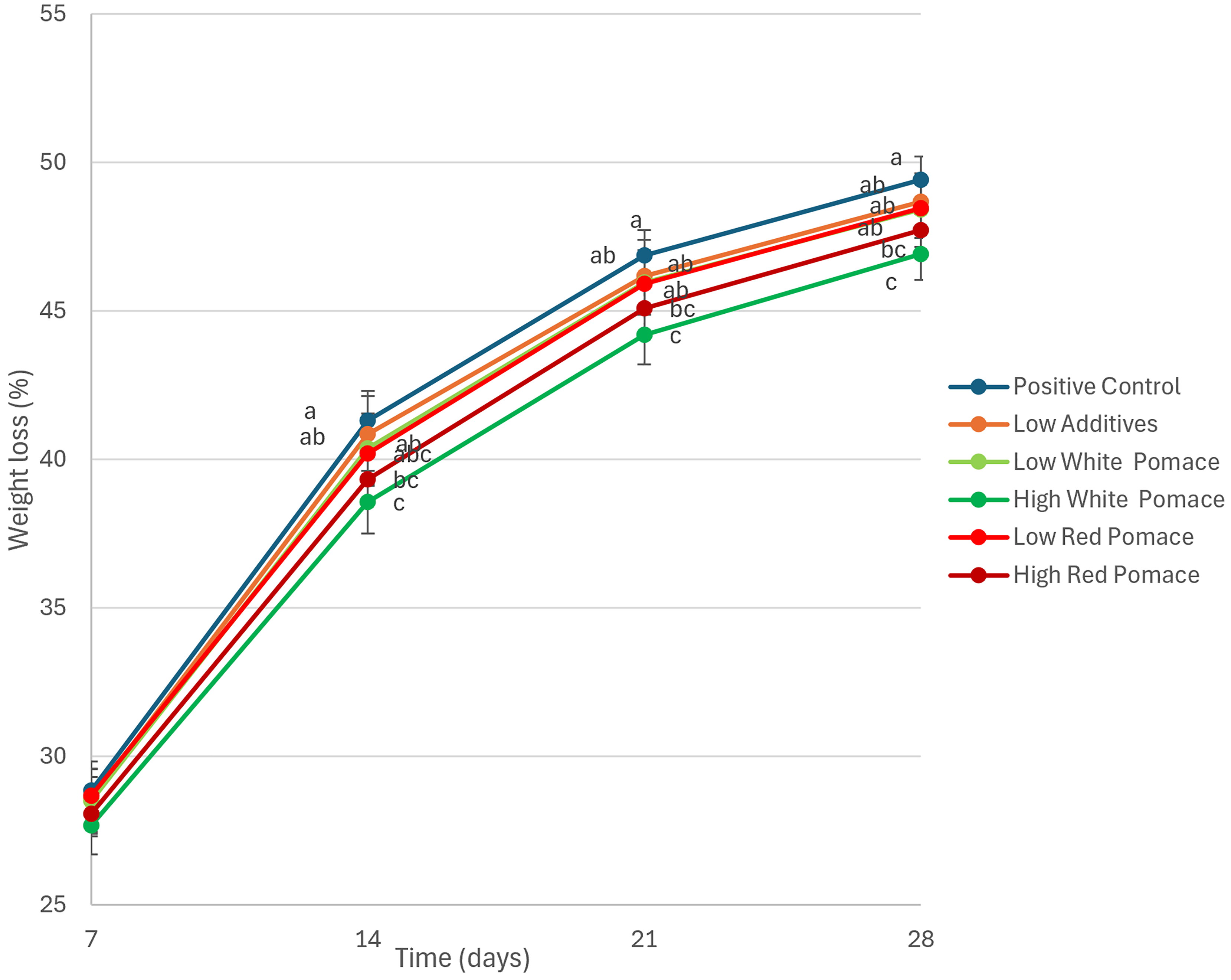
Weight loss during ripening. Different letters in the same ripening day indicate significant differences in the Tukey's test.
Pomace analyses
Three vacuum-packaged bags per pomace type were sampled before processing, after thermal blanching and after the HHP treatment to determine the polyphenoloxidase activity (D’Arrigo et al., 2024; Ramírez et al., 2023). Additionally, 10 g per bag was sampled aseptically and homogenized for 1 min with 90 ml of peptone water (Merck, 1.07043, Darmstadt, Germany) in a Stomacher® 400 Circulator laboratory blender (Seward, West Sussex, UK). Moreover, 1 ml of serial decimal dilutions in sterile peptone water was then poured or spread onto total count and selective agar plates. The mesophilic aerobic (Plate Count Agar (Merck, Darmstadt, Germany, 1.07881), 30 °C for 72 h), Enterobacteriaceae (VRBG Agar, Merck, Darmstadt, Germany), 37 °C for 24 h), moulds and yeasts (Chloramphenicol Glucose Agar, 25 °C for 3‒5 days) counts were determined. The detection limits were 10 log CFU g−1.
pH and water activity (aw) were assessed using a Crison pH25 + pHmeter (Crison, Barcelona, Spain) and a Novasina Labmaster-aw meter (Novasina AG, Lachen, Switzerland), respectively. The content of moisture and protein (AOAC, 2016), fat (Folch et al., 1957) and fibre was determined (Villanueva and Barragán, 1985). The phenolic compounds were measured (Lima et al., 2005) with gallic acid as the reference standard. The antioxidant activity was measured in triplicate using ABTS (Sigma-Aldrich, Madrid, Spain) and Trolox (Sigma-Aldrich) (Carrapiso et al., 2024).
For the volatile compound analysis, 5 g of the treated pomace (or 2 g of the ground dry-cured sausages) were weighed into 20 ml vials. Moreover, 20 μl of a 4-methyl-1-pentanol methanolic solution (306 μg ml−1) was added. After 5 min at 37 °C in a CombiPAL autosampler (CTC Analytics, Zwingen, Switzerland), a 1-cm 50/30 μm DVB/CAR/PDMS SPME fibre (Supelco, Bellefonte, PA, USA) was exposed to each vial headspace for 30 min at 37 °C and inserted into the injection port (270 °C) of a Varian CP-3800 gas chromatograph with a Varian Saturn 2200 MS mass spectrometer (Varian Inc., Palo Alto, CA, USA) and a HP-5 capillary column (30 m × 0.32 mm × 0.25 μm; Agilent Technology, Santa Clara, CA, USA). Helium (1 ml min−1) was the carrier gas. The oven temperature was held at 35 °C for 10 min, raised to 250 °C (7 °C min−1), and held for 5 min. The transfer line, trap and manifold were at 280, 200 and 60 °C, respectively. Electronic impact (70 eV) and one scan s−1 over the 40‒300 m/z range were used. The compounds were identified by comparison of their mass spectra and linear retention indexes (LRI) with those of standards (Sigma–Aldrich, St Louis, MO, USA) or with mass spectra from the NIST library using the Agilent MSD Chemstation E.02.01.1177 software and/or published LRI (Linstrom and Mallard, 2021).
The results were expressed as wet base.
Dry-cured sausage analyses
The protein, fat and moisture content, aw and pH were determined as described for the pomace. The protein and fat content were determined only in the positive control group due to the little variability caused by the pomace (Carrapiso et al., 2024). The other parameters, as well as the nitrite content (ISO and 2918:1975), were determined in all the dry-cured sausages.
The mesophilic aerobic and moulds and yeasts counts were assessed as described for the pomace. The psychrophilic (Plate Count Agar, Merck, 1.07881, 7 °C for 10 days), Lactic Acid Bacteria (Man Rogosa Sharpe Agar, Scharlau, Barcelona, Spain, 37 °C, 72 h), anaerobic sulfite-reducing bacteria (and when needed, specifically Cl. perfringens) (Tryptose Sulfite Cycloserine Agar, Merck, 1.10235, 37 °C, 24 h), Staphylococcus aureus (Baird Parker Agar, Merck, 1.05406, 37 °C, 24–48 h), total coliforms and E. coli (Chromocult Agar (Merck, 1.10426), 37 °C, 24–48 h) were determined in the fresh batters and the dry-cured products. The detection limits were 1 log CFU g−1, except for S. aureus (2 log CFU g−1).
L*, a* and b* (CIELab colour space) were measured using a Minolta CM-5 spectrophotometer (Minolta Camera, Osaka, Japan) with autocalibration (measuring area: 30 mm3; 10 ° illuminant: D65 angle; SCI). The Hue angle (h°= tan (b*/a*) −1) and Chroma (C* = (a* 2 + b* 2) 0.5) were calculated. Two measurements per dry-cured sausage were recorded on 1-cm thickness slices (the mean was calculated).
The thiobarbituric acid reactive substances (TBARS) values (Sorensen and Jorgensen, 1996) and the carbonyls (using 2,4-dinitrophenylhydrazine, DNPH) (Oliver et al., 1987) were assessed. The volatile compounds were determined as described for the pomace.
Statistical analysis
A one-way analysis of variance and Tukey's test were performed. The Pearson correlation test and a principal component analysis were also applied. The IBM SPSS Statistics 27.0.1.0 software (IBM Corp., Chicago, IL, USA) was used.
Results and discussion
Characterization of the treated pomace
The results from the pomace analyses are shown in Tables 1 to 3. The polyphenoloxidase was completely inactivated after the thermal blanching in both pomace types, and most microbial counts were under the detection limits after the HHP treatment (Table 1). These results are in line with previous studies (D’Arrigo et al., 2024; Ramírez et al., 2023; Sánchez-Ordóñez et al., 2025).
Polyphenoloxidase (PPO) activity (%) and microbial counts (log CFU g−1) during the pomace stabilization.
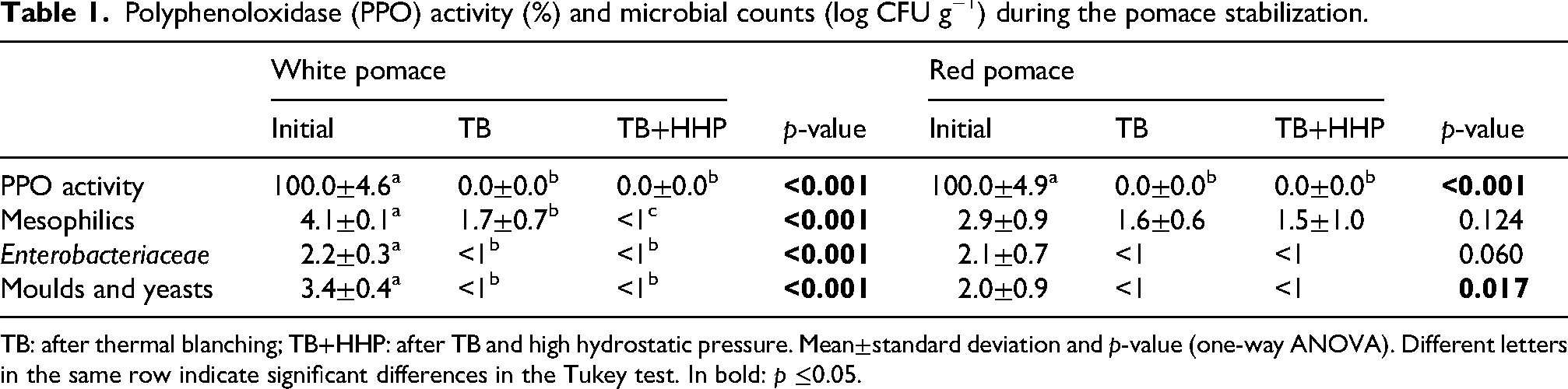
TB: after thermal blanching; TB+HHP: after TB and high hydrostatic pressure. Mean±standard deviation and p-value (one-way ANOVA). Different letters in the same row indicate significant differences in the Tukey test. In bold: p ≤0.05.
Parameters of the treated grape pomace.
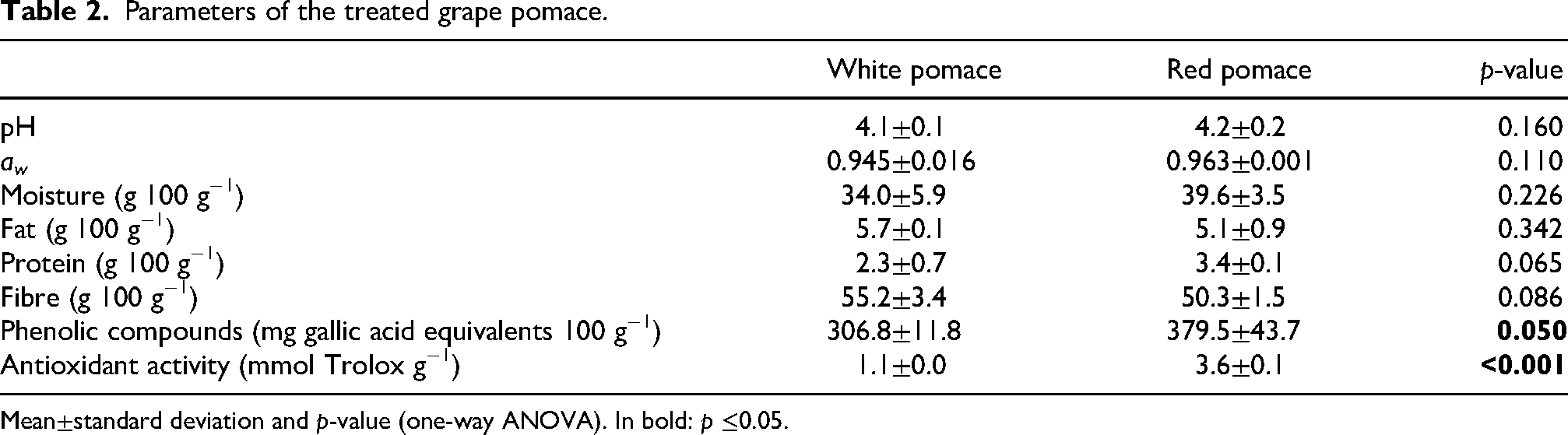
Mean±standard deviation and p-value (one-way ANOVA). In bold: p ≤0.05.
Parameters of the dry-cured sausages with high additive content (positive control), and low additive content without pomace (low additives) and with it at low (0.5%) and high (1.5%) levels.
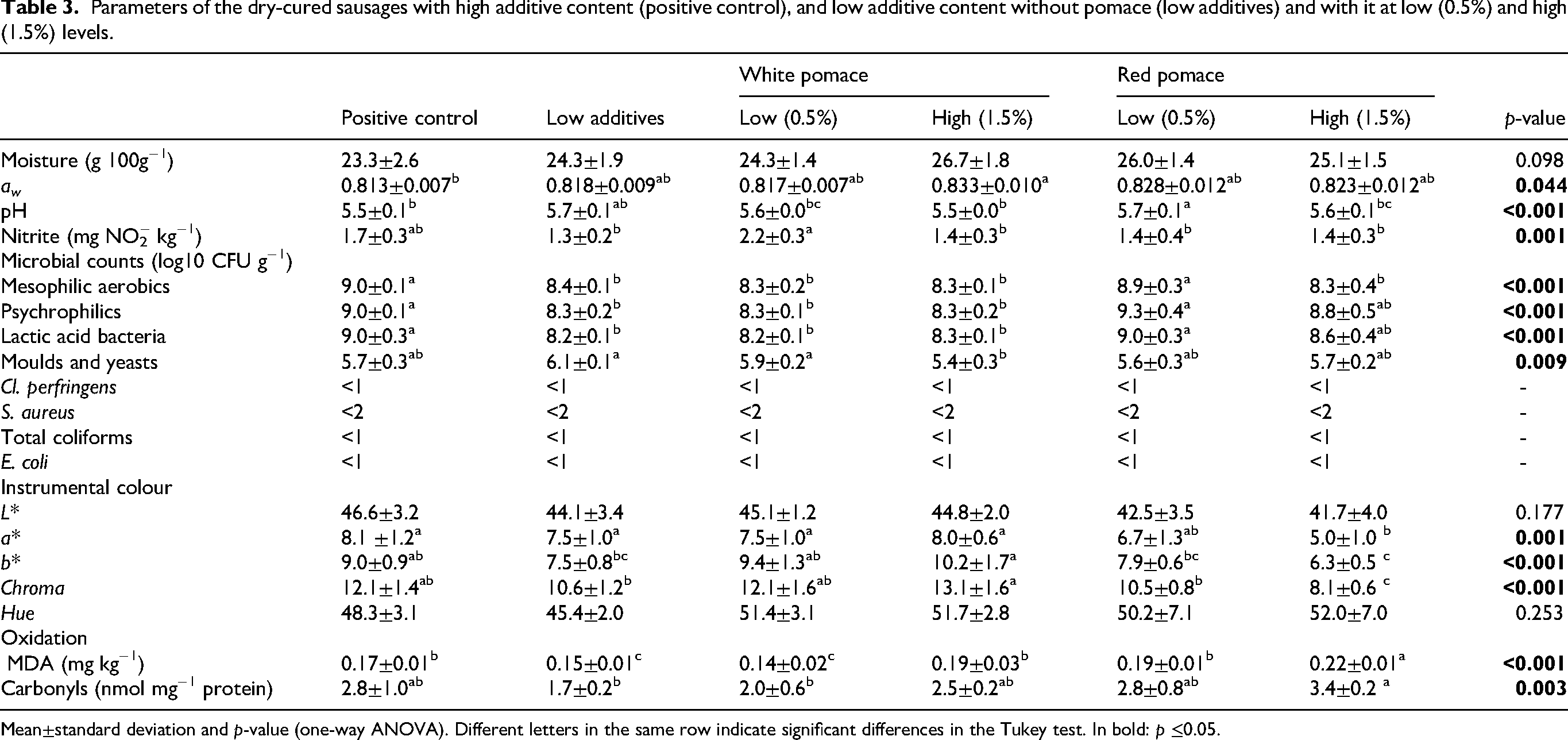
Mean±standard deviation and p-value (one-way ANOVA). Different letters in the same row indicate significant differences in the Tukey test. In bold: p ≤0.05.
The pH, aw, and the proximate composition values (Table 2) were within the usual range (Antonic et al., 2020), without differences between the white and red pomace types. The phenolic content (Table 2) was also within the usual range (Antonic et al., 2020). The red pomace had higher values for both the phenolic content (slight differences) and the antioxidant activity (huge differences) than the white one (Table 2). This does not match our previous results (Martín-Mateos et al., 2025), which reported the opposite trend. The lack of coincidence might be related to the high variability in grape pomace composition and its phenolic content (Antonic et al., 2020). The higher content of phenols (with antioxidant activity) in the red pomace (Table 2) might have been involved in the higher antioxidant activity. In addition, the differences in the phenolic profile (the red pomace includes anthocyanins, absent in the white pomace (Martín-Mateos et al., 2023; Sánchez-Ordóñez et al., 2025)) might have contributed to the differences in the antioxidant activity.
Regarding the volatile compounds, 30 and 27 of them were identified in the white and red pomace, respectively. Moreover, 10 volatile compounds were more abundant in the white pomace and eight in the red one (Supplementary Table S1).
To sum up, the treated pomace had no polyphenoloxidase activity and low microbial counts. Both pomace types were similar in pH, aw, and the proximate composition; however, they differed in the phenolic content, the antioxidant activity and the volatile profile.
Effect of pomace addition on the general parameters and microbial counts of the sausages
The analysis of variance (ANOVA) revealed significant differences between the six sausage groups in most parameters. However, the effect of the pomace addition was not marked according to the pairwise Tukey's test (Table 3). The low additives group only differed from any pomace-containing groups (with the same additive dosage) in the weight loss on days 14, 21 and 28 when 1.5% white pomace was included (Figure 1), in the nitrite content when 0.5% white pomace was included, in the mesophilic, psychrophilic and lactic acid bacteria counts when 0.5% red pomace was added, and in the moulds and yeasts counts when 1.5% white pomace was added (Table 3).
The content of protein (37.3 ± 1.5 g 100 g−1), fat (28.7 ± 5.2 g 100 g−1) and moisture, aw, and pH (Table 3) were within the usual ranges for similar products (Barbieri et al., 2021). The lack of effect of the pomace addition on moisture, aw and pH reveals that the pomace did not influence heavily the water retention and the acid build-up throughout the ripening process. The additive dosage (positive control vs low additives) did not affect those parameters either. Our results match previous studies reporting no effect of white or red pomace addition to free-additive dry-cured sausages (D'Arrigo et al., 2024; Carrapiso et al., 2024), although a decrease in pH caused by red pomace on additive-free dry-cured sausages was also reported (D'Arrigo et al., 2024). This lack of coincidence might be related to the presence of additives, which could have hindered the growth and acid production of lactic acid bacteria (LAB) during ripening.
The nitrite content decreased sharply during ripening, the initial difference between the positive control and the other groups (150 vs 75 mg kg−1 sodium nitrite added, respectively) vanishing. This is attributable to the high reactivity of nitrites (Higuero et al., 2020). The only effect of the pomace on the nitrite content was an increase when 0.5% white pomace was used (Table 3). This suggests that the white pomace might have hindered the reactions leading to the nitrite depletion throughout ripening and the growth of the microorganisms involved.
As for the microbial counts, the pathogens and coliforms were under the detection levels in all the dry-cured sausage groups (Table 3), even though S. aureus and coliforms were detected before ripening (2.1–2.3 and 4.5 log CFU g−1, respectively). This confirms that ripening decreases the counts of some pathogens (McQuestin et al., 2009). The mesophilic, psychrophilic, LAB, and moulds and yeasts counts (Table 3) were within the usual ranges (Barbieri et al., 2021). The pomace only affected them when 0.5% red pomace was used (the mesophilic and psychrophilic microorganisms and LAB counts increased, the effect being comparable to using the high additive dosage) or when 1.5% white pomace was added (the moulds and yeasts counts decreased) (Table 3). The significant effect of 0.5% red pomace is partially in line with our parallel study on free-additive sausages (D'Arrigo et al., 2024), which reported higher LAB counts but no effect on the mesophilic and psychrophilic counts. The drop caused by 1.5% white pomace in the moulds and yeasts was the only evidence of any effective antimicrobial activity. Previous results on additive-free dry-cured sausages showed no effect of a similar pomace on them (Carrapiso et al., 2024). The differences with previous studies suggest that the additives included in this study might have modulated the effect of the pomace.
To sum up, the only effect of the pomace addition appeared with white pomace at the low dosage (the nitrite content increased) or high dosage (weight loss and moulds and yeasts counts decreased), or with red pomace at the low dosage (the mesophilic, psychrophilic and LAB counts increased).
Effect of pomace addition on the instrumental colour and oxidation of the sausages
The ANOVA showed differences in most parameters (Table 3). Although the white pomace at 0.5% had no effect on them (low additive vs low white pomace), at 1.5% it increased b*, C* and lipid oxidation, yielding higher values than the positive control group. 0.5% red pomace had no effect on any colour parameters, although it increased lipid oxidation. Finally, 1.5% red pomace decreased a* and C*, and increased lipid and protein oxidation (Table 3).
Regarding the instrumental colour, 0.5% of either white or red pomace had no effect, whereas at 1.5% the white pomace caused an increase in b* (and the derived parameter C*) and the red pomace caused a decrease in a* (and C*). Therefore, 1.5% white or red pomace may have a detrimental effect on colour consumers’ perceptions. Our previous studies reported no effect of adding red (D'Arrigo et al., 2024) and white pomace (Carrapiso et al., 2024) to free-additive dry-cured sausages on a* and b*, which suggests that the detrimental effect might only occur in the presence of additives. The drop in a* suggests that 1.5% red pomace might have interfered with the colour development reactions or with colour stability. Regarding b*, the similar increase caused by 1.5% white pomace and the high additive dosage suggests that either natural or synthetic additional antioxidant compounds were not beneficial.
Neither the white nor the red pomace was effective at decreasing lipid and protein oxidation. The low white pomace sausages reached similar values to the low additive sausages. Conversely, the other pomace-containing sausages, as well as the positive control ones, showed higher values for lipid oxidation. Additionally, the high red pomace sausages had increased protein oxidation (Table 3). Despite the increase, the oxidation values remained low, all the groups reaching much lower values than those found in previous studies on similar sausages without additives (Carrapiso et al., 2024; D'Arrigo et al., 2024). The increase in oxidation is not in line with our previous studies on free-additive dry-cured sausages, which reported a beneficial effect on lipid and/or protein (Carrapiso et al., 2024; D'Arrigo et al., 2024). This different trend reveals that the potential benefits of the grape pomace might vanish when additives are also added and oxidation is low. Under those circumstances, the additives included in all the groups were sufficient to hinder oxidation, rendering the additional antioxidants (from the pomace and the higher additive dosage) without the possibility of effectively displaying their antioxidant activity and acting as prooxidants. In this respect, both phenols and nitrite can act as anti and pro-oxidants in meat products depending on factors such as the dosage (León-González et al., 2015; Villaverde et al., 2014). Further research would be advisable to establish if this pro-oxidant activity in products with low oxidation values may be overall beneficial or detrimental for the dry-cured sausage sensory quality and consumers’ response. In addition, the results highlight the importance of adjusting the additive and pomace dosage to limit any detrimental effect.
The results from the principal component analysis show that lipid (MDA) and protein oxidation (carbonyls) were related, with large scores in the principal components (PC) 1 and 2 (Figure 2(a)), both parameters being correlated (r: +0.530, p = 0.003). The low and high red pomace and the positive control groups were placed in the positive semiaxis of PC 1 (Figure 2(b)), in which lipid and protein oxidation, the LAB, psychrophilic and mesophilic counts, pH and the final weight loss reached large positive scores (Figure 2(a)), whereas the low additives and the low white and high white pomace groups were plotted in the negative PC1 semiaxis, where a*, b*, and C* reached large negative scores. The low and high red pomace and the high white pomace groups were plotted in the positive semiaxis of PC2, where MDA, aw, moisture and carbonyls reached large positive scores (Figure 2(a)). Conversely, the positive control, low additives and low white pomace groups were plotted in the negative PC2 semiaxis (Figure 2(b)), where the moulds and yeasts counts and the final weight loss reached large negative scores (Figure 2(a)). Overall, the white pomace groups were more similar to the non-pomace groups than the red pomace groups.
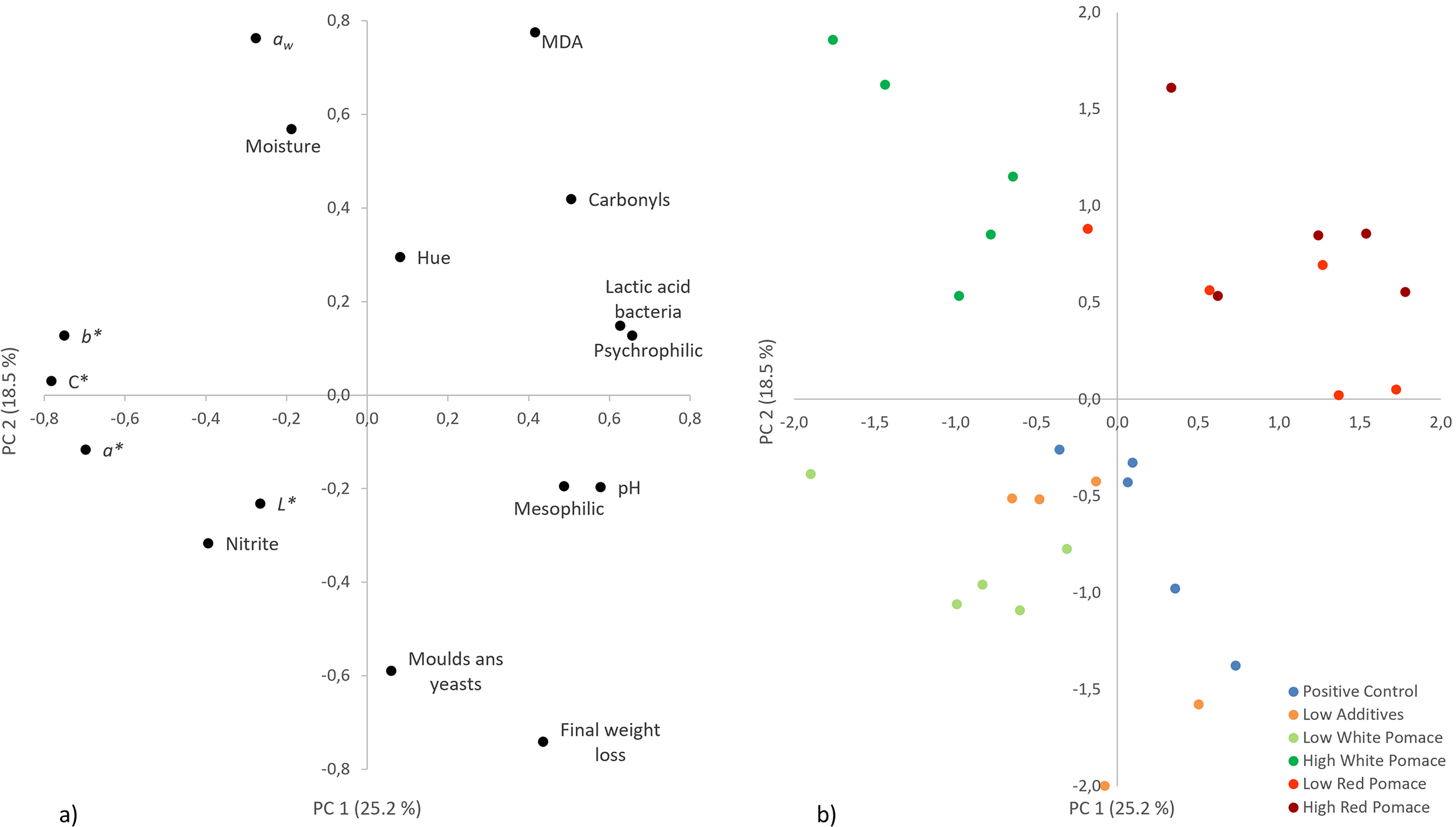
Projection of the variables (a) and samples (b) onto the space defined by the first two principal components extracted from the variables in Table 4 and the final weight loss.
To sum up, at 0.5%, the white pomace did not affect the instrumental colour or oxidation of the sausages, and the red pomace only affected lipid oxidation, increasing it similarly to the high additive dosage. However, at 1.5%, the white pomace increased b*, C* and lipid oxidation similarly to the high additive dosage, and the red pomace decreased a* and C* and increased lipid and protein oxidation. This reveals that the benefits of adding white and red pomace to free-additive dry-cured sausages (Carrapiso et al., 2024) vanish when additives are also used. Therefore, the usage of pomace to produce additive-containing sausages may not be advisable in the industry because of the lack of benefits for their colour and oxidative status.
Effect of the pomace addition on the volatile compounds of the sausages
Overall, 53 compounds were identified in the dry-cured sausages (Table 4). Eleven of them were also identified in the white and red pomace (Table S1). Acetic acid was the only compound identified in both pomace types and in the pomace-added sausages, but not in the pomace-free sausages. Hexanal, an oxidation indicator in dry-cured meat products, was not identified (Table 4) despite appearing in both pomace types. This matches a parallel study on dry-cured sausages with a similar formulation (D'Arrigo et al., 2024). The lack of hexanal is in line with the low values found for lipid and protein oxidation (Table 3) and confirms that additional antioxidants (such as pomace phenols or a higher dosage of synthetic additives) might not be beneficial to hinder oxidation, as discussed in the previous section.
Volatile compounds (μg kg−1) isolated from the dry-cured sausages.
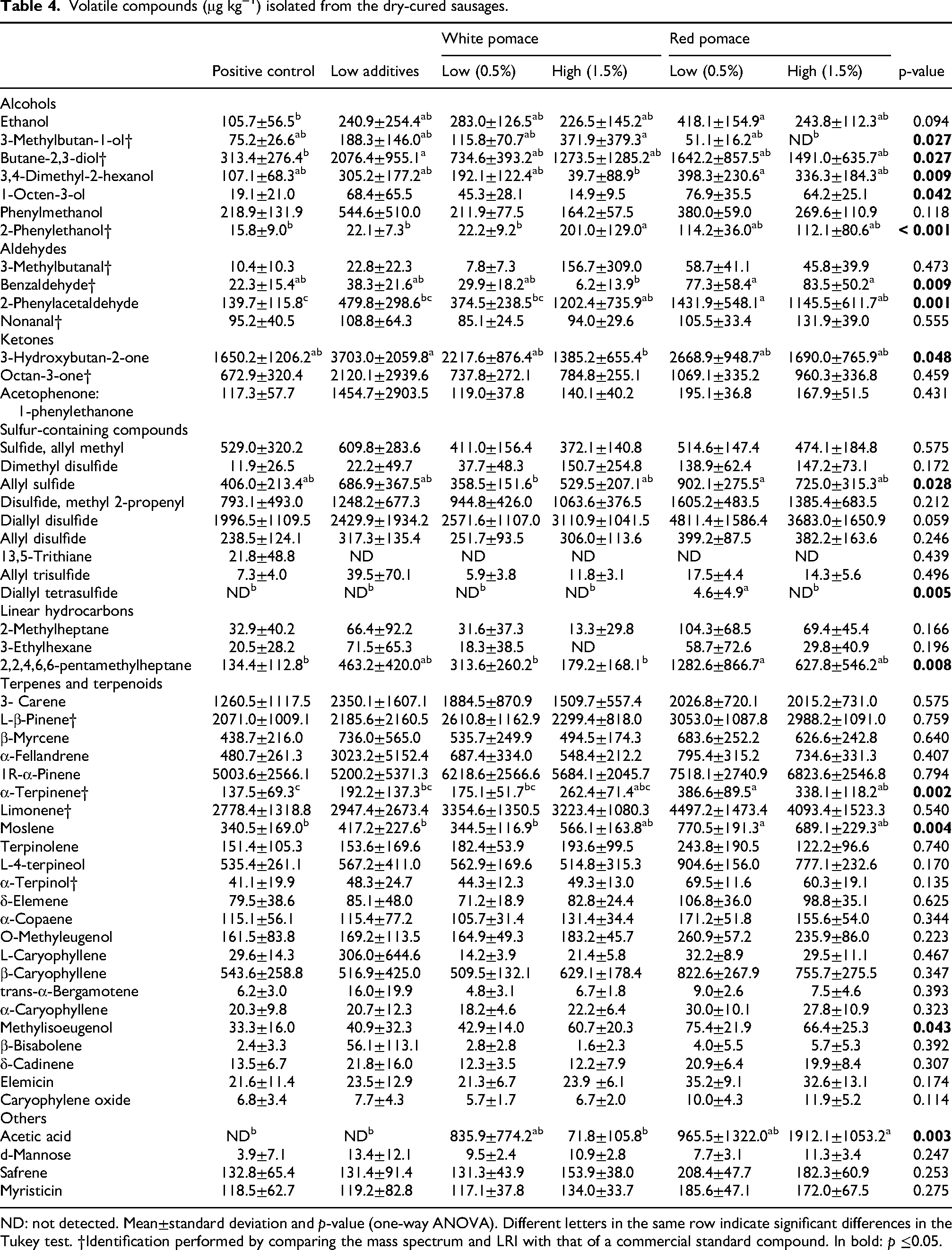
ND: not detected. Mean±standard deviation and p-value (one-way ANOVA). Different letters in the same row indicate significant differences in the Tukey test. †Identification performed by comparing the mass spectrum and LRI with that of a commercial standard compound. In bold: p ≤0.05.
The ANOVA revealed significant differences in 16 compounds, only seven being affected by the pomace addition according to the Tukey's test (Table 4). The white pomace at 0.5% had no effect on any compounds, whereas at 1.5% it decreased 3-hydroxybutanone and increased 2-phenylethanol. The red pomace at 0.5% increased four compounds, whereas at 1.5% it only increased acetic acid (Table 4).
Regarding the white pomace, the only effect appeared when it was added at 1.5% (3-hydroxybutanone decreased and 2-phenylethanol increased). Both compounds can be formed through fermentation: 3-hydroxybutanone through the pyruvate metabolism (mainly involving LAB) and 2-phenylethanol through phenylalanine reactions (mainly involving yeasts) (Longo and Sanromán, 2006). The opposite trend in those compounds, in whose production are involved different microorganisms, suggests that the white pomace might have facilitated the activity of some microorganisms while hindering others during ripening. In addition, the 2-phenylethanol content present in the pomace may have contributed to the increase in the sausages; however, the small percentage of pomace added only contained approx. 9% of the final content found in the dry-cured sausages. Both compounds have low sensory thresholds (Rychlik et al., 1998) and, therefore, variations in them might affect the sausage flavour.
Regarding the red pomace, at 0.5% it increased the content of four compounds (2-phenylacetaldehyde, diallyl tetrasulfide, α-terpinene and moslene), which did not increase with 1.5% pomace. This suggests that the pomace did not cause a direct increase in them (in fact, only 2-phenylacetaldehyde was present in the pomace). Instead, the 0.5% red pomace may have favoured some reactions leading to the formation or the increased release of those compounds. Moreover, 2-phenylacetaldehyde is generated through amino acid degradation and lipid oxidation (Hidalgo and Zamora, 2019) and has a low sensory threshold (Rychlik et al., 1998). Diallyl tetrasulfide, α-terpinene and moslene are components of garlic and spices (Kilic-Buyukkurt et al., 2023) and may contribute to the sausage flavour. 1.5% red pomace may not have provided the conditions for an increase in the availability of those compounds. Instead, it caused an increase in acetic acid. Although acetic acid was absent in the free-pomace sausages and abundant in the pomace, the pomace was not its main source since it accounted for only 1.8% of the final content, which indicates that acetic acid was also formed during sausage ripening. Acetic acid has a low sensory threshold (Rychlik et al., 1998) and, therefore, variations in it might have some repercussions on consumers’ responses.
The limited effect of including either the white or red pomace in dry-cured sausages with additives on the volatile compounds matches our previous results in free-additive sausages (D'Arrigo et al., 2024; Carrapiso et al., 2024). Although the effect was limited, the fact that some odorants were affected implies that it might affect flavour perception and, therefore, consumers’ responses.
Conclusion
The results reveal that the delay in oxidation previously reported in free-additive dry-cured sausages with grape pomace does not occur when additives are also added and oxidation is low. Under those circumstances, the pomace addition (especially the red pomace and the higher dosage) can promote oxidation, as does the use of a high synthetic additive dosage. The high effectiveness of the additives against oxidation rendered the additional antioxidants (either natural or synthetic) harmful in terms of lipid and protein oxidation. Additional research would be advisable to establish if this pro-oxidant activity is reversed when the sausages undergo pro-oxidant conditions, such as slicing and storage.
Supplemental Material
sj-docx-1-fst-10.1177_10820132261461428 - Supplemental material for Effect of white and red grape pomace on dry-cured sausages containing additives
Supplemental material, sj-docx-1-fst-10.1177_10820132261461428 for Effect of white and red grape pomace on dry-cured sausages containing additives by Ana Isabel Carrapiso, Miriam Sánchez-Ordóñez, Jonathan Delgado-Adámez, María Jesús Martín-Mateos and María Rosario Ramírez-Bernabé in Food Science and Technology International
Supplemental Material
sj-docx-2-fst-10.1177_10820132261461428 - Supplemental material for Effect of white and red grape pomace on dry-cured sausages containing additives
Supplemental material, sj-docx-2-fst-10.1177_10820132261461428 for Effect of white and red grape pomace on dry-cured sausages containing additives by Ana Isabel Carrapiso, Miriam Sánchez-Ordóñez, Jonathan Delgado-Adámez, María Jesús Martín-Mateos and María Rosario Ramírez-Bernabé in Food Science and Technology International
Footnotes
Acknowledgements
We thank O. Fariña for her technical assistance.
ORCID iDs

Ethical considerations
Not applicable.
Consent to participate
Not applicable.
Author contributions
A.I. Carrapiso: data curation, formal analysis, investigation, methodology, visualization, writing – original draft, writing – review and editing. M. Sánchez-Ordóñez: data curation, methodology, writing – review and editing. J. Delgado-Adámez: methodology, supervision, writing – review and editing. M.J. Martín-Mateos: data curation, supervision, writing – review and editing. M.R. Ramírez-Bernabé: conceptualization, funding acquisition, investigation, writing – review and editing.
Funding
The authors disclosed receipt of the following financial support for the research, authorship, and/or publication of this article: This work was supported by the Junta de Extremadura and FEDER funds [IB20073] (project ‘Valorisation of the by-products of the oenological industry through alternative technologies to conventional ones to improve the preservation of meat products’), by MCIN/AEI/10.13039/501100011033 [M. Sánchez-Ordoñez's Grant PRE2021-097662] and by ‘ESF Investing in your future’.
Declaration of conflicting interests
The authors declared no potential conflicts of interest with respect to the research, authorship, and/or publication of this article.
Data availability statement
The datasets produced during the current study are available from the corresponding author on reasonable request.
Supplemental material
Supplemental material for this article is available online.
References
Supplementary Material
Please find the following supplemental material available below.
For Open Access articles published under a Creative Commons License, all supplemental material carries the same license as the article it is associated with.
For non-Open Access articles published, all supplemental material carries a non-exclusive license, and permission requests for re-use of supplemental material or any part of supplemental material shall be sent directly to the copyright owner as specified in the copyright notice associated with the article.
