






Abstract
This study investigates the effects of cold atmospheric pressure plasma treatment on the bioactive composition, microbial stability, and physicochemical quality of grape juice. Samples were treated for 1–4 min, and changes in total phenolic content (TPC), antioxidant capacity (DPPH and cupric ion reducing antioxidant capacity [CUPRAC] assays), pH, Brix, titratable acidity, and color parameters (L*, a*, b*) were measured. Microbial analyses, including total mesophilic aerobic bacteria (TMAB) and yeast–mold counts, were conducted both immediately after treatment and during 28 days of refrigerated storage at 4 °C. Plasma treatment reduced TPC from 221.0 to 156.0 mg GAE/L and CUPRAC antioxidant activity from 4.26 to 2.06 µmol TE/L after 4 min. After 28 days of refrigerated storage, yeast–mold counts reached 4.54 log CFU/mL in the control sample, whereas no detectable growth was observed in the sample treated with plasma for 4 min. The TMAB were not detected either before or after plasma treatment. Kinetic modeling revealed that first-order kinetics provided the best fit for TPC degradation and antioxidant capacity, while microbial inactivation also followed a predictable logarithmic decline over treatment time. A treatment duration of 2–3 min preserved over 70% of antioxidant activity and caused minimal changes in quality while effectively reducing yeast and mold growth (by 0.81–1.32 log compared to the control) during refrigerated storage. These results suggest that cold plasma shows promising potential as a nonthermal processing method for fruit juice, with the ability to enhance microbial safety and maintain quality parameters with limited nutrient loss.
Keywords
Introduction
Fruit juices are highly consumed functional beverages worldwide due to their richness in highly nutritious bioactive substances such as vitamins, antioxidants, and phenolic compounds. However, thermal processing, commonly applied to ensure microbial safety and extend the shelf life of these products, can lead to the loss of heat-sensitive components such as aroma, color, vitamin C, and phenolic compounds, especially as the exposure time to high temperatures increases (Zia et al., 2024). This can negatively affect the nutritional and sensory quality of fruit juice. Traditional pasteurization has also been reported to cause significant reductions in vitamin C content (Polak et al., 2024). Furthermore, the literature reports that the total phenolic content (TPC) and antioxidant activity of fruit juices tend to decrease after thermal processing (Ozkan et al., 2025). Therefore, in line with increasing consumer demand, interest in minimally processed products is growing, and research is intensifying on alternative processing techniques that minimize heat-related quality degradation. Maintaining antioxidant capacity and nutritional value is emerging as a key objective in current fruit juice technologies (Lopes et al., 2023; Umair et al., 2025).
Due to traditional heat treatments leading to quality loss, nonthermal technologies are gaining increasing attention in the processing of heat-sensitive products such as fruit juice. These technologies help preserve nutritional value and sensory properties by eliminating exposure to high temperatures while providing microbial inactivation. In this context, the effects of methods such as ultrasonication, high-pressure processing, and pulsed electric field have been extensively studied in recent years (Umair et al., 2025). In particular, cold plasma technology stands out as a promising nonthermal alternative for effectively inactivating microorganisms and preserving product quality using reactive gas species generated under atmospheric pressure (Zhang et al., 2022; Pan et al., 2019). Cold plasma–activated particles such as ions, free radicals, electrons, and reactive oxygen/nitrogen species (RONS), formed under conditions close to ambient temperature, enhance the microbial safety of heat-sensitive foods while minimizing changes in nutritional and sensory properties (Fernandes and Rodrigues, 2021; Dinç et al., 2025a). Furthermore, the naturally acidic nature of fruit juices supports the stability of these plasma-derived reactive species, contributing to increased antimicrobial efficacy (Ozen et al., 2025). This technology can be flexibly implemented using different gas mixtures and discharge types (dielectric barrier discharge and plasma jet), thus offering an advantageous option for industrial-scale applications (Shill and Sit, 2025).
Scientific investigations into the effects of cold plasma applications on different fruit juices have revealed various results regarding microbial inactivation as well as product quality and bioactive components. In apple juices, cold atmospheric pressure plasma application has shown that it can provide stability in TPC and antioxidant capacity without significantly altering basic physicochemical properties such as pH, total soluble dry matter, and viscosity in short processing times (Ozen et al., 2025). Similarly, studies in mixed fruit juices have reported that cold plasma causes less degradation or preserves TPC and antioxidant activities compared to thermal processing (Şahinoğlu and Gözükirmizi, 2024). However, specific research findings focusing on the physicochemical quality parameters, anthocyanin sensitivity, and storage behavior of grape juice with cold plasma application are relatively limited in the literature; existing studies are mostly directed towards apple, tomato, and mixed fruit juices (Xu et al., 2017; Dasan and Boyaci, 2018; Liao et al., 2018). The components of a food matrix can be sensitive to different processing conditions (Mundanat et al., 2025). Grape juice was specifically chosen for this study due to its immense economic and agricultural significance in Türkiye, particularly in the Marmara region, which is a major hub for viticulture. Furthermore, grape juice, with its high phenolic and anthocyanin content, has a particularly delicate structure that is highly susceptible to quality degradation during conventional processing (Paun et al., 2022).
There are still significant gaps in the current literature on this subject. Existing studies have mostly focused only on immediate microbial inactivation. Quality changes and kinetic modeling during the storage process, which are critical for industrial applications, have been largely overlooked. Especially in sensitive products such as grape juice, there is a need for detailed studies that explain the long-term effects of process parameters. In this context, this study aims to evaluate the effects of different cold plasma treatment times on microbial inactivation, physicochemical parameters, and bioactive components in grape juice, along with the storage process. Furthermore, it aims to make a unique contribution to the literature by comparing the obtained data with thermal treatment and performing kinetic modeling.
Materials and methods
Grape juice production
Grape juice production was conducted in the Tekirdağ Viticulture Research Institute facilities. Vitis vinifera L. grapes grown in the Marmara Region (Tekirdağ, Türkiye) were used as the raw material. Upon harvesting, the grapes were washed and subsequently destemmed. Following the crushing process, the resulting must underwent a preliminary heat treatment. The must was then pressed using a pneumatic press and left to settle overnight in vertical tanks to facilitate sediment removal. The supernatant was then kept at −2 °C to allow for the crystallization of tartaric acid as tartrate salts (detartarization). Approximately 90% of the resulting crystalline structure was removed using fine plate filters.
The clarified grape juices were divided into six groups: untreated (Control), thermal pasteurization (Thermal), 1-min cold plasma (CP 1), 2-min cold plasma (CP 2), 3-min cold plasma (CP 3), and 4-min cold plasma (CP 4). Thermal pasteurization was carried out by heating the juices at 85 °C for 5 min using a water bath. The distribution of samples across different conditions is illustrated in Figure 1. All samples were stored at 4 ± 2 °C prior to analysis. No additives were introduced to the juice at any stage.
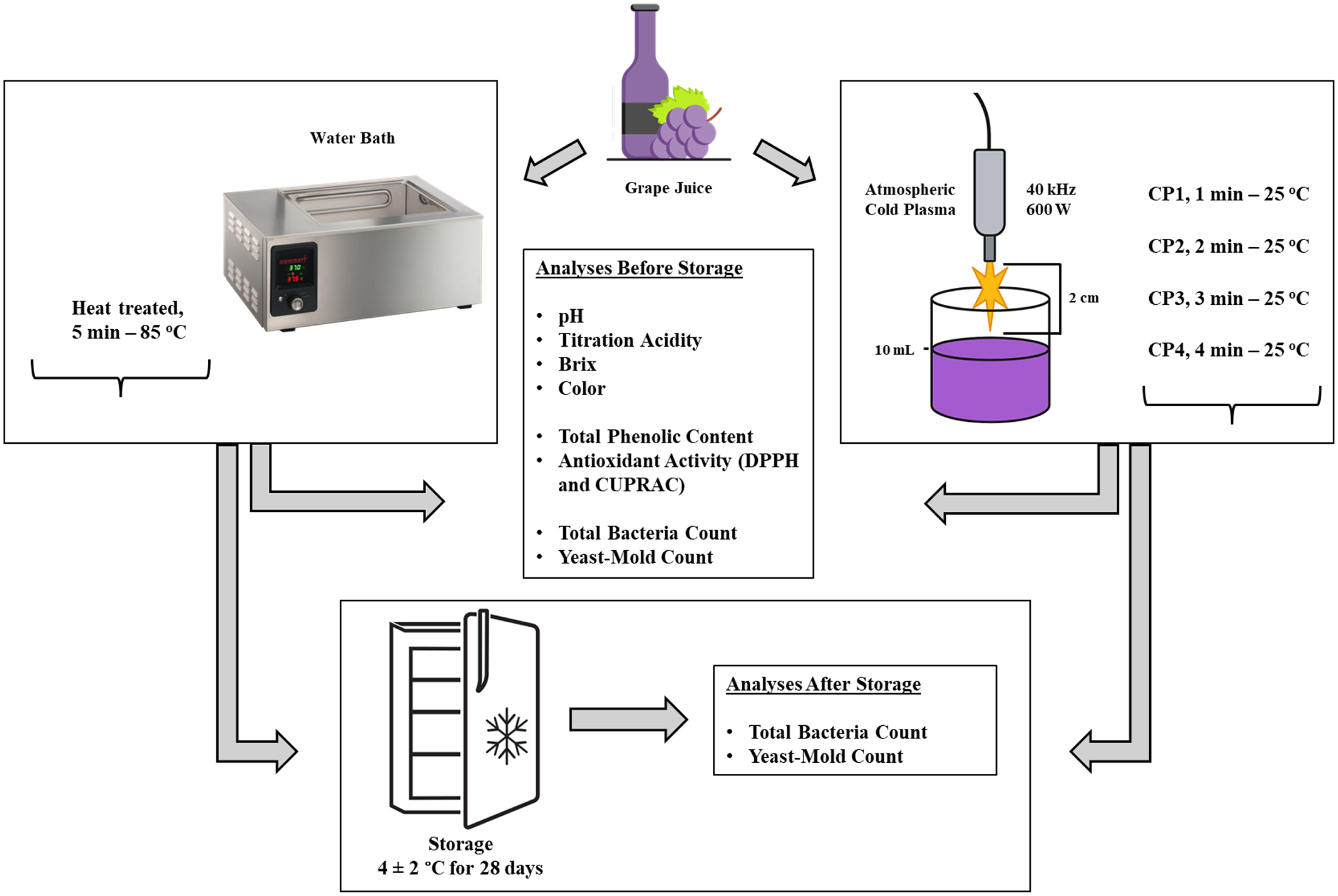
Schematic overview of the cold plasma and heat treatment and analysis workflow.
Cold atmospheric pressure plasma treatment
In this study, an atmospheric pressure cold plasma jet (Plasmatek A5, 600 W) in the laboratory of Tekirdağ Namik Kemal University was used. The cold plasma was operated at a frequency of 40 kHz and 600 W power, and dry air was supplied at a rate of 5 L/min. Cold plasma was applied for different durations (1, 2, 3, and 4 min). For each experiment performed at a room temperature of 25 °C in atmospheric air, 10 mL of juice sample was evenly spread into sterile sample containers. The juice samples were subjected to plasma treatment immediately after preparation. The distance from the plasma head tip to the samples was fixed at 2 cm. To prevent any increase in sample temperature during treatment and to ensure that only the effects of cold plasma were evaluated, the sample containers were placed in ice molds throughout the plasma application. As a result, the sample temperatures did not exceed 25 °C during the cold plasma treatments. The containers were aseptically sealed after treatment. Each treatment was performed in three replicates. Following the treatments, the grape juice samples were transferred into sterile, airtight containers and stored at 4 ± 2 °C for 28 days. Grape juices were analyzed for pH, titratable acidity (TA), Brix, total phenolic matter, antioxidant activity, color, and sensory analysis on the first day to evaluate the immediate, direct effects of the treatments. Microbiological analysis of the grape juices was carried out on days 1 and 28 of cold storage. The whole experiment was repeated twice, and the analyses were performed in triplicate.
Determination of pH
Before the measurements, the pH meter (Mettler TOLEDO, USA) was calibrated using three calibration buffers (pH 4, pH 7, and pH 10). Then, pH determination was performed by immersing the pH probe into the grape juice samples. This method was applied according to AOAC Official Method 981.12 (AOAC, 2000).
Determination of water-soluble dry matter (Brix)
The refractometric method was used to determine the amount of water-soluble dry matter in grape juice. The water-soluble dry matter values (oBrix) of the grape juice samples were measured with an Abbe refractometer (OPTIKA, 2WAJ, Italy). To determine the Brix values, a few drops of grape juice from each sample were placed on the prism, and the readings were recorded at 20 °C.
Determination of total titration acidity
Titratable acidity analysis was performed according to AOAC Official Method 942.15. The grape juice samples were titrated with a 0.1 N NaOH solution under pH meter guidance. The titration process continued until the sample pH reached 8.2. Titratable acidity was calculated based on the amount of NaOH consumed during titration, and the results were evaluated in terms of tartaric acid equivalent and expressed as a percentage (%) of tartaric acid (AOAC, 1995).
Color analysis
The color of the grape juice samples was measured using a Konica Minolta Chroma Meter CR-5 (Konica Minolta, Japan) color meter, and the results were given as L*, a*, and b* values. The total color difference (ΔE*) between control and treated samples was calculated using the following formula (equation (1)):

Preparing the extraction of the samples
For preparing the extraction, a 5 g sample was mixed with 25 mL of an 80% methanol solution and homogenized. The mixture was then incubated overnight at +4 °C in a shaking incubator to enhance the extraction of bioactive compounds. After centrifugation at 7200 rpm at 4 °C for 10 min, the liquid obtained was filtered with Whatman No. 1 and stored at +4 °C for the evaluation of bioactive properties (Shiban et al., 2012). All final bioactive compound concentrations and antioxidant capacities were calculated by factoring in the dilution ratio during this extraction step and are expressed per liter (L) of the original grape juice.
Analysis of the TPC
Total phenolic content analysis of the samples was performed using Folin–Ciocalteu reagent. A 100 μL sample filtrate was taken, 500 μL of Folin–Ciocalteu reagent and 7.5 mL of distilled water were added, mixed, and kept for 1 min. Then 1 mL of saturated Na2CO3 solution was added to bring the total volume to 10 mL. At the end of 60 min, the absorbance was read at 720 nm against the reagent blank sample. The absorbance values were calculated with the standard curve drawn with gallic acid solution, and the amounts of phenolic substances were given as mg GAE/L (Cemeroğlu, 2018).
Antioxidant activity analysis with DPPH assay
Antioxidant activity of grape juice samples was determined using the DPPH (2,2-diphenyl-1-picrylhydrazyl) radical scavenging assay. A DPPH solution was prepared in methanol and adjusted to obtain a stable absorbance at 517 nm. For the analysis, 600 µL of DPPH solution was mixed with different volumes of sample extract (20–100 µL), and the total volume was completed to 6 mL with methanol. The reaction mixtures were incubated in the dark at room temperature for 15 min, and absorbance was measured at 517 nm against a control solution prepared without the sample extract. Antioxidant activity was expressed as percentage DPPH radical inhibition (Brand-Williams et al., 1995).
Antioxidant capacity analysis with cupric ion reducing antioxidant capacity assay
Antioxidant capacity of the samples was determined using the CUPRAC (cupric ion reducing antioxidant capacity) method developed by Apak et al. (2006). Briefly, 0.1 mL of sample extract was diluted to 1 mL with methanol, followed by the addition of 1 mL each of CuCl₂ solution (0.01 M), neocuproine solution (7.5 × 10⁻³ M), and ammonium acetate buffer (1.0 M, pH 7.0). The reaction mixture was vortexed and incubated at room temperature for 30 min. Absorbance was measured at 450 nm against a reagent blank. Antioxidant capacity was calculated from a Trolox calibration curve and expressed as µmol Trolox equivalents per liter (µmol TE/L).
Total aerobic bacteria count
After homogenizing the fruit juice sample, serial dilutions were prepared, and 0.1 mL of the dilutions was inoculated onto Plate Count Agar medium using the spread plate method. The inoculated petri dishes were incubated at 30 °C for 48 h, and the colonies were counted. This analysis was conducted according to the ISO 4833-1 method (ISO, 2013). Results were expressed as log CFU/mL. Microbial analyses were performed both after plasma treatment and following 28 days of storage at refrigeration temperature.
Yeast–mold count
Fruit juice samples were first homogenized and subjected to serial dilutions. From each dilution, 0.1 mL was transferred onto Potato Dextrose Agar plates using the spread plate technique. The plates were then incubated at 25 °C for 72 h to allow yeast and mold colonies to develop. Microbial counts were carried out in triplicate, and the results were reported as log CFU/mL of juice. This procedure was performed following the ISO 21527-1 guideline (ISO, 2008).
Sensory analysis
The grape juice samples were evaluated by a panel of 10 semitrained panelists consisting of department researchers familiar with sensory evaluation. Sensory evaluation was conducted for color, taste, odor, aroma, and overall acceptability using a 5-point hedonic scale, where 1 indicated “very bad” and 5 indicated “very good.” The evaluation was carried out in a well-lit, quiet room. Samples were served at refrigeration temperature (4 °C) in transparent glasses, coded with random three-digit numbers, and water was provided to the panelists for palate cleansing between samples. Panelists participated voluntarily in the sensory evaluation.
Statistical analysis
One-way analysis of variance was performed using the JMP 5.0.1 (SAS Institute) program. Significant differences between the results were determined by the Tukey multiple comparison test at p < 0.05. All reported data represent the combined results of the two independent experimental repetitions.
Kinetic modeling
The kinetics of changes in TPC, antioxidant activity, and yeast and mold counts, under atmospheric pressure cold plasma treatment, were evaluated as a function of different treatment durations. To model these changes, zero-order (equation (2)) and first-order (equation (3)) reaction kinetics, commonly used for such degradation processes, were applied, based on the approaches described by Visuthiwan and Assatarakul (2021) and de Vilela Silva et al. (2023):



Results and discussion
Physical and chemical properties
The results of pH, titration acidity, Brix, and color (L*, a*, b*) values of grape juice samples are given in Table 1. A significant decrease in pH was observed in all cold plasma–treated samples, and this decrease became more pronounced with increasing treatment time, particularly after treatment durations longer than 2 min. After 3 and 4 min of treatment, the pH decreased from 3.90 to 3.65 and 3.61, respectively. There was also no statistical difference between control and thermally treated samples. Similarly, Illera et al. (2019) determined that the pH of apple juice decreased proportionally with the cold plasma treatment time. Xiang et al. (2018) found that the pH value of commercial apple juice decreased from 3.96 to 3.34. Liao et al. (2018) also observed a pH decrease after 30 kV DBD treatment and found that the pH of commercial apple juice decreased from approximately 3.71 to 3.66 after only 40 s of treatment. This effect was explained as being due to the plasma-induced formation of chemical species such as hydrogen peroxide and other reactive oxygen and nitrogen species (ROS and NOS), that contribute to the acidity of liquid samples (Thirumdas et al., 2018). Furthermore, an increase in acidity after 2 min may indicate that a high concentration of ROS and NOS has formed after this time.
Effects of cold atmospheric pressure plasma and thermal treatment on the physical–chemical properties of grape juice.
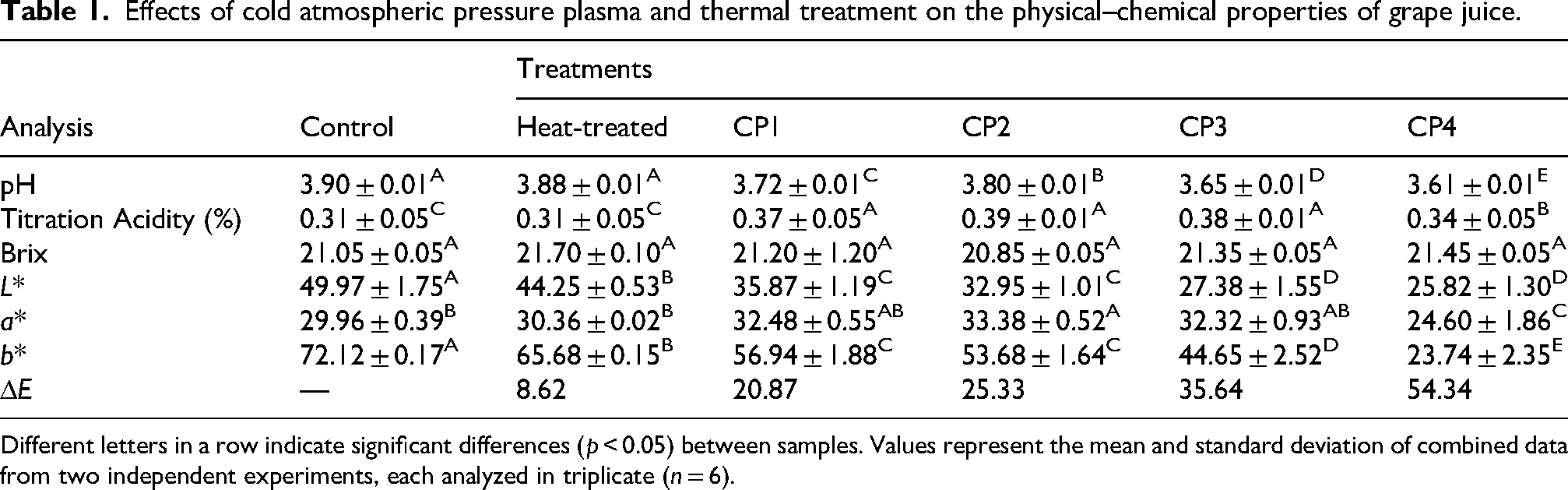
Different letters in a row indicate significant differences (p < 0.05) between samples. Values represent the mean and standard deviation of combined data from two independent experiments, each analyzed in triplicate (n = 6).
Titratable acidity values of grape juice samples ranged between 0.31% and 0.39% (Table 1). Similar to the pH results, no statistically significant difference was observed between the control and thermally pasteurized samples. Titratable acidity increased after 1 and 2 min of CAP treatment and subsequently decreased at longer treatment durations. The sample with the highest acidity value was CP2 (0.39%). A similar alteration in TA was reported by Pankaj et al. (2017) after high-voltage atmospheric pressure cold plasma treatment. The initial increase in acidity may be attributed to the formation of plasma-induced reactive species, while the subsequent decrease at longer treatment times could be related to the degradation or neutralization of organic acids during prolonged plasma exposure.
The Brix values of control, heat-treated, and cold plasma–treated samples ranged between 20.85 and 21.70. Neither thermal pasteurization nor plasma treatment caused any significant change in the Brix values of the samples. This indicates that these processing conditions did not affect the soluble solid compositions of the grape juice, such as sugar and salt.
Significant changes in color parameters were observed depending on the duration of the treatment applied to each juice. The lightness value (L*) of the juice decreased only after 1 min of plasma treatment. This value was maintained after 2 min of treatment but decreased further in juices treated for 3 and 4 min. This indicates that the juice was subjected to pronounced browning due to plasma treatment. The L* value of the thermal pasteurization sample was also lower than that of the control sample, while it was higher than that of the plasma-treated samples.
Another important value related to browning in juice is redness (a* value). Table 1 clearly shows the difference in this value between the different treated samples. 1, 2, and 3 min of plasma treatment caused an increase in a* value, while the longest treatment (4 min) significantly decreased this value and shifted it toward the green region. Thermal pasteurization did not cause a significant change in the a* value of the juice. The b* values of the samples were ordered from highest to lowest: control > thermal > CP1 = CP2 > CP3 > CP4. The b* value representing yellowness showed a statistically significant decreasing trend depending on the treatment time. This indicates that the longer the plasma treatment, the more gradual the reduction in yellowness and the shift toward bluish tones in the juice.
In all treatments, the ΔE value was higher than 3, indicating that the change in color was perceptible (Misra et al., 2014) and clearly noticeable visually. While the ΔE value was lowest in the sample subjected to thermal pasteurization, it increased depending on the duration of plasma treatment, and the highest ΔE value was detected in the sample subjected to plasma treatment for 4 min. Pankaj et al. (2017) reported that the L* value did not change with 80 kV cold atmospheric pressure plasma application applied to white grape juice, while the a* and b* values increased depending on the duration. In addition, the ΔE value was found to be higher in all plasma treatments compared to thermal treatment. In the literature, apple juice was treated with a plasma jet device and DBD plasma for very short times (2 min or less). After both treatments, the juice turned brown due to the increase in a* and b* values and the decrease in lightness. Consequently, high total color differences were reported, consistent with the findings of the present study (Dasan and Boyaci, 2018). These results suggest that plasma-induced color changes are strongly dependent on treatment conditions and food matrix composition. Therefore, further studies are recommended to elucidate the underlying mechanisms responsible for color alterations in different food systems subjected to cold plasma treatment.
Bioactive properties
Total phenolic content and antioxidant activity in cold atmospheric pressure plasma-treated juice were compared with untreated and thermally pasteurized juice, and these results are shown in Table 2. It can be observed that the plasma treatment time significantly affected the TPC. The sample with the highest phenolic content was the thermally treated sample with 246.00 mg GAE/L, followed by the control sample with 221.00 mg GAE/L. This increase in the thermally treated sample may be attributed to the enhanced extractability of phenolic compounds due to heat-induced cell wall disruption (Bas-Bellver et al. 2024). Depending on the increase in plasma treatment time, TPC decreased. However, the effect of 3 and 4 min of application time was statistically insignificant. Air plasma processes produce many reactive oxygen species and ozone during discharge (Dinç et al., 2025b). Phenolic compounds are known to be highly susceptible to ROS attack, especially through the degradation of aromatic rings in their structure (Stalter et al., 2011). In particular, reactive oxygen species such as hydroxyl radicals (•OH), atomic oxygen (1O₂), and ozone (O₃) attack the aromatic ring of phenolic compounds, leading to hydroxylation, cleavage of the benzene ring, and formation of smaller oxidation products such as quinones, carboxylic acids, and other aliphatic derivatives, thereby reducing the measurable TPC (Amiri et al. 2025). Different results have been reported in the literature on the effect of plasma treatment on the TPC content of foods. Pankaj et al. reported that increasing the plasma time in white grape juice caused a significant decrease in the total phenolic and flavonoid contents of grape juice in parallel with the results of our study (Pankaj et al., 2017). Similar degradation of phenolic compounds after plasma treatments has also been reported in lettuce and orange juice (Almeida et al., 2015). In contrast, Herceg et al. (2016) studied the effect of cold plasma treatment on pomegranate juice and reported that plasma treatment increased the TPC by 33.03% compared to the untreated sample (Grzegorzewski et al., 2011).
Effect of cold atmospheric pressure plasma and thermal treatment on bioactive properties of grape juice.
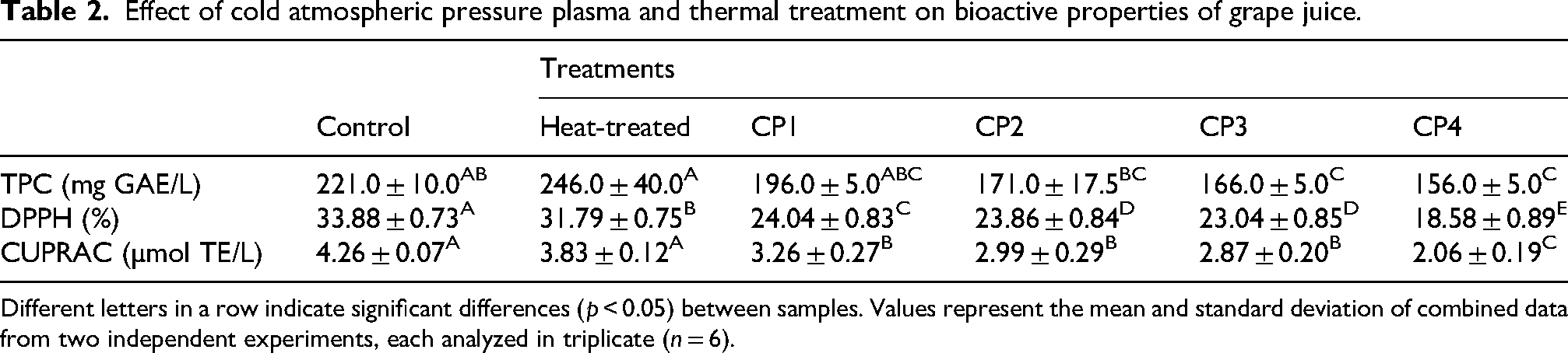
Different letters in a row indicate significant differences (p < 0.05) between samples. Values represent the mean and standard deviation of combined data from two independent experiments, each analyzed in triplicate (n = 6).
When the DPPH free radical scavenging and antioxidant capacity of the samples were examined, antioxidant activity showed a very similar trend to the changes observed in TPC. Antioxidant capacity decreased with treatment time, but the effects of 2- and 3-min treatments were similar. At 1 min of treatment, the DPPH % inhibition decreased from 33.88% to 24.04%, while after 4 min of treatment, this value decreased to 18.58%. This decrease can be primarily attributed to the reduction in total phenolic compounds observed after plasma treatments, as phenolics are major contributors to the radical scavenging capacity of fruit juices. Indeed, phenolic compounds, together with other antioxidant constituents such as ascorbic acid, are among the major contributors to the free radical scavenging and antioxidant capacity of fruit juices (Bolling et al., 2013). Thermal pasteurization also caused a slight decrease in the %DPPH value. Similar trends were obtained according to the antioxidant capacity calculated by the CUPRAC method, but there was no difference between the samples treated with 1, 2, and 3 min of plasma treatment. In previous grape and blueberry juice studies, a decrease in both DPPH free radical scavenging and antioxidant capacity after plasma treatment was observed with increasing treatment time, similar to this study (Pankaj et al., 2017; Hou et al., 2019).
Microbiological quality
The effect of plasma and heat treatments on the microbiological quality of grape juices during storage is presented in Table 3. Total bacterial count is widely used as an indicator of the microbiological stability of food products. During the 28-day storage period, the total mesophilic aerobic bacteria counts remained below the detection limit of the applied method in all samples. Similarly, no yeast–mold colonies were detected one day after plasma and thermal treatments. Importantly, the initial count in the untreated control sample on day 1 was also below the quantification limit. This low initial microbial load is a direct result of the preliminary processing steps, such as the initial heat treatment of the must and fine filtration, applied during the juice preparation. However, at the end of the 28th day of storage, 4.54 log CFU/mL yeast–mold colonies were detected in the control sample, while the number of colonies decreased in the plasma-treated samples depending on the treatment time. In the 4-minute cold plasma–treated sample, no yeast–mold colonies were detected even at the end of the 28th day, and a similar effect was observed with thermal treatment.
Changes in total bacteria and yeast–mold counts of grape juice on first day and during storage (log CFU/mL).
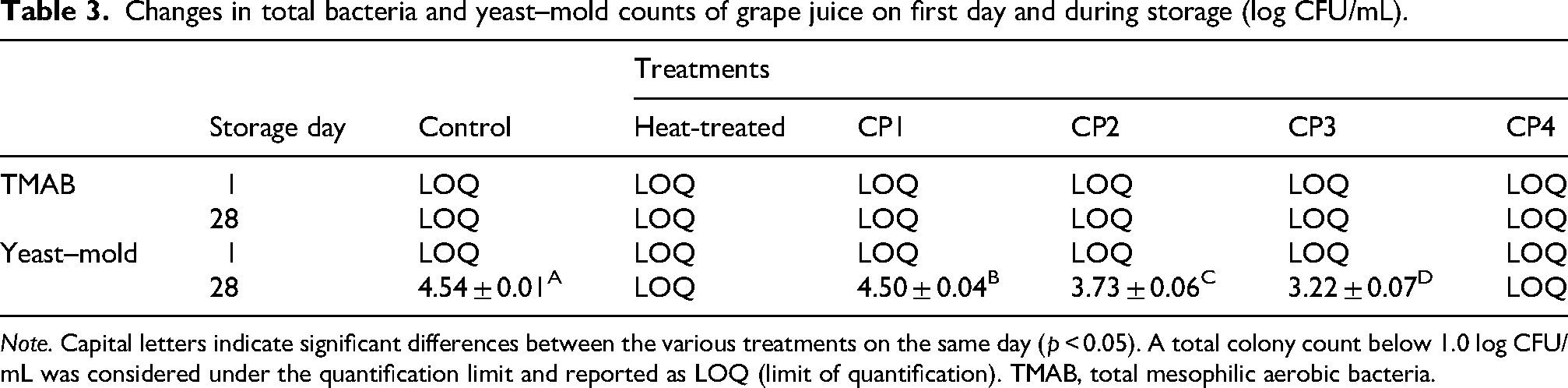
Note. Capital letters indicate significant differences between the various treatments on the same day (p < 0.05). A total colony count below 1.0 log CFU/mL was considered under the quantification limit and reported as LOQ (limit of quantification). TMAB, total mesophilic aerobic bacteria.
These findings demonstrate the sustained effectiveness of cold atmospheric pressure plasma treatment in controlling yeast and mold populations during refrigerated storage. While yeast–mold counts increased significantly in the untreated control samples, plasma treatment for 4 min achieved the complete suppression of microbial growth during storage, comparable to conventional thermal pasteurization. Similar observations have been reported for NFC tomato juice treated with cold plasma (Starek et al., 2020). Moreover, previous studies indicate that cold plasma treatment provides effective microbial control with minimal impact on product quality during cold storage (Mehta et al., 2019; Mehta and Yadav, 2020; Umair et al., 2019; Chutia et al., 2020; Farooq et al., 2023).
When air is used as a plasma process gas, reactive atoms, charged particles, RONS, and UV photons are generated, all of which can inactivate microorganisms to varying degrees (Mai-Prochnow et al., 2014). The RONS interact with macromolecules such as lipids, amino acids, and nucleic acids, causing changes that lead to microbial death or damage. In addition, charged particles accumulate on the surface of the cell membrane and cause it to rupture. UV photons also alter the DNA of microorganisms (Smet et al., 2016). The use of air in the system is much more cost-effective than other types of gas. Most juice studies have used air as the processing gas, which is a cheap and effective way to inactivate microorganisms while maintaining product quality (Niemira, 2012). These mechanisms explain the effective reduction of yeast and mold populations observed in the present study during refrigerated storage.
Kinetic model
In kinetic modeling, the effects of cold atmospheric pressure plasma on phenolic compounds, antioxidant activity, and yeast–mold populations were evaluated. Among the tested models, first-order kinetics provided the best fit for TPC and antioxidant activity data, whereas the zero-order model described yeast and mold counts more accurately. These results indicate that the degradation behavior depends on the nature of the parameter evaluated (Table 4). This was especially evident for TPC (R2 = 0.942) and CUPRAC antioxidant capacity (R2 = 0.915), suggesting that the degradation of these bioactive components follows a logarithmic decline over time. These findings may reflect the mechanism by which RONS and ozone—generated during plasma treatment—attack phenolic rings, initiating oxidative degradation (Stalter et al., 2011). The relatively rapid decline observed in the early stages of treatment may be attributed to the abundance of reactive species at the beginning of the process, which likely accelerates the initial breakdown.
Kinetic parameters of the degradation of TPC, antioxidant activity, and yeast–mold count in grape juice subjected to cold atmospheric pressure plasma treatment.
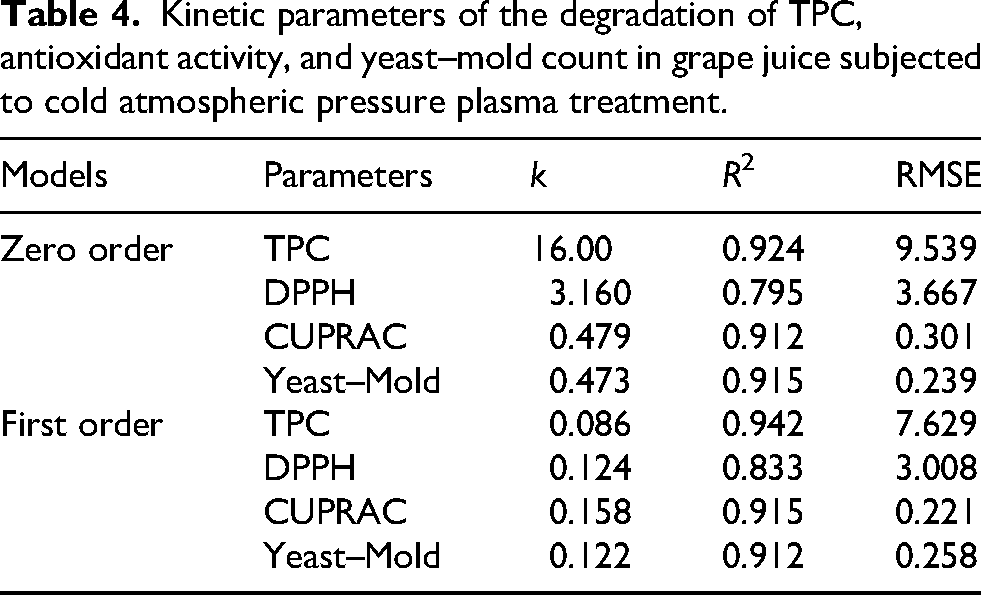
In contrast, yeast and mold populations exhibited a linear reduction with treatment time, consistent with zero-order kinetics, with complete inactivation achieved after 4 min of treatment. This zero-order behavior indicates that the rate of the lethal or preventive effect is constant and independent of the initial microbial load. This likely reflects a steady generation and continuous delivery of plasma-induced reactive species (such as RONS and UV photons) that accumulate at a constant rate over the treatment duration, leading to irreversible cellular damage that effectively prevents subsequent growth and spore germination during storage. This indicates that plasma not only ensures microbial safety but also exhibits predictable inactivation kinetics over time, consistent with the findings reported by Pipliya et al. (2023). These trends are clearly illustrated in Figure 2, where first-order kinetic curves show a closer fit to the experimental data for TPC (A) and CUPRAC (C), while the DPPH data (B) also display a pattern more consistent with first-order behavior, though with slightly lower correlation coefficients. The decline in yeast and mold counts (D) also aligns well with zero-order kinetics, supporting the reliability of the applied model.
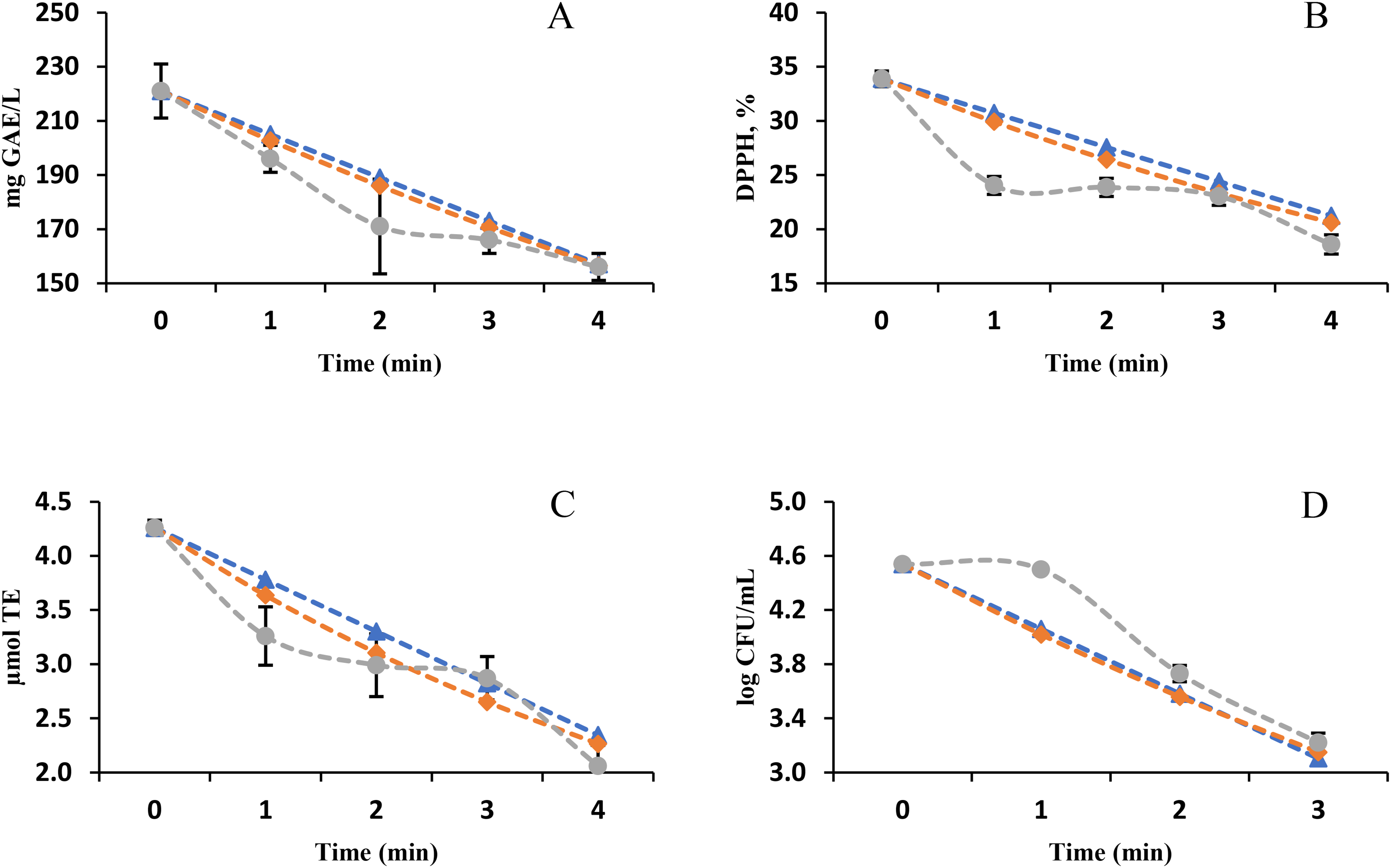
A graphical plot of zero-order (▴), first-order (◆) kinetic models and actual data (●) describing the degradation of TPC (A), antioxidant activity by DPPH assay (B), antioxidant capacity by CUPRAC assay (C), and total yeast–mold count (D).
The kinetic parameters obtained suggest that cold plasma treatment must be optimized to balance the preservation of bioactive compounds with microbial inactivation. Treatment duration of 2–3 min appears to provide an effective compromise, minimizing losses in TPC and antioxidant capacity while still ensuring significant microbial reduction. The relatively low-rate constants (k) and RMSE values for these durations further support this as a potentially optimal treatment window. These findings underscore the importance of using kinetic modeling not just for evaluating end results but also for establishing data-driven process controls (Visuthiwan and Assatarakul, 2021). Integrating both numerical (Table 4) and visual (Figure 2) outputs enhances the interpretability of kinetic behavior and provides a more comprehensive understanding of plasma's impact on juice quality. Such an approach may offer a practical framework for maintaining quality and extending the shelf life of fruit juices treated with cold plasma.
Sensory properties
Sensory analysis is generally considered an important criterion for the evaluation of the quality of fruit juices, as it helps product development by measuring consumers’ perceptions of the product. In this context, sensory evaluation was applied to determine the effects of thermal and cold plasma treatments applied for different durations on the organoleptic properties of grape juice compared to the control. The results of the sensory analysis are shown in a radar chart in Figure 3 and revealed that there was no significant difference between the plasma and thermal treated samples and the control, except for the color parameter. It can be said that the browning detected in the color measurements with increasing plasma treatment time decreased the color appreciation. Overall, all samples exhibited high overall acceptability. The results obtained are in agreement with Matan et al., who found that the application of atmospheric pressure radio discharge plasma pretreatment had no negative effect on the sensory characteristics of pitaya fruit (Matan et al., 2015).
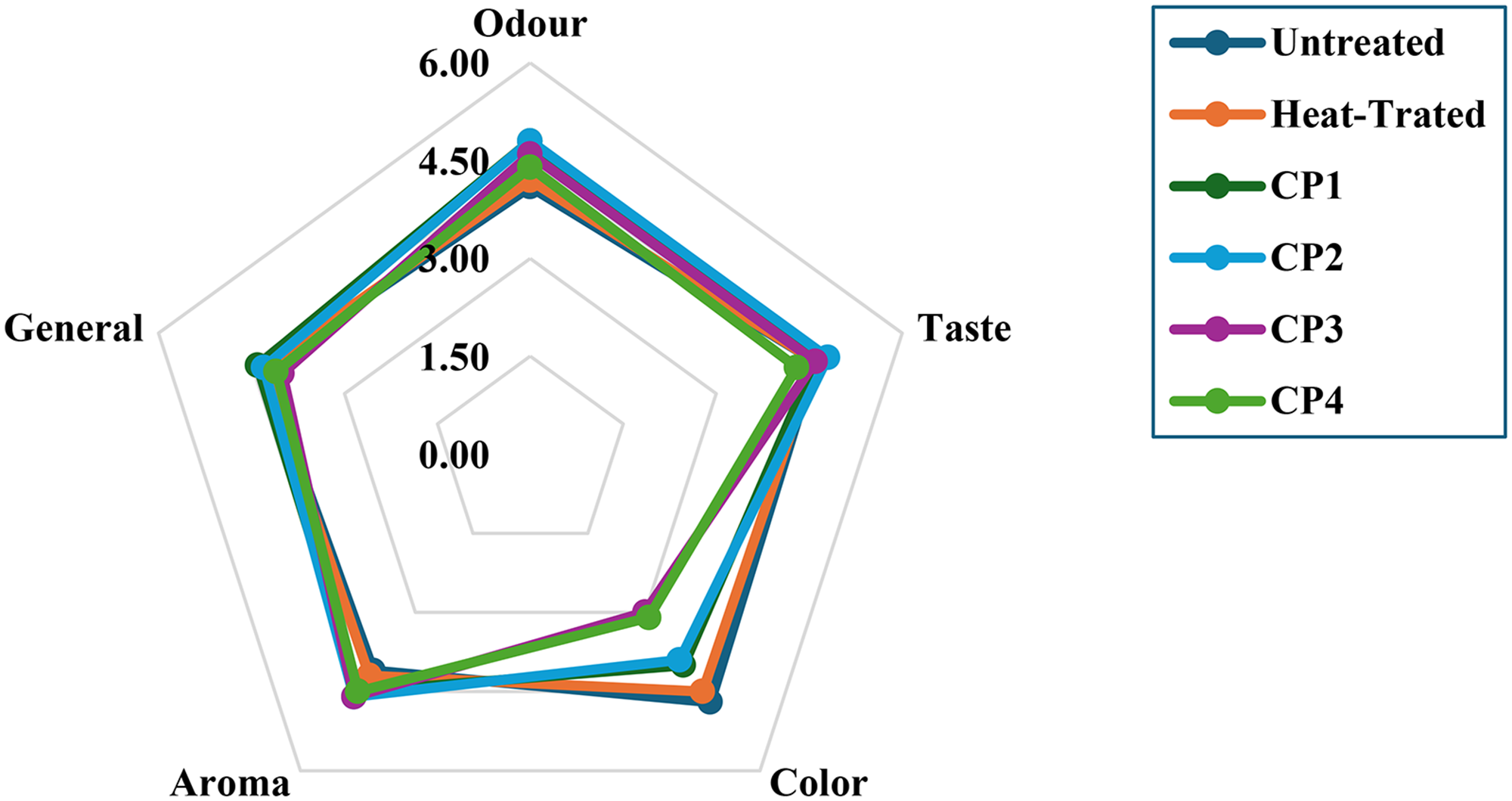
Radar graph of sensory evaluation scores.
Conclusions
This study demonstrated the effectiveness of cold atmospheric pressure plasma as a nonthermal preservation method for grape juice, focusing on its ability to inactivate microorganisms while preserving key quality attributes. The findings indicate that treatment durations of 2–3 min can offer a favorable balance—ensuring microbial safety while retaining most of the juice's antioxidant properties and phenolic content. Compared to conventional thermal processing, this nonthermal approach minimizes nutrient degradation and may help meet the growing consumer demand for minimally processed, functional beverages.
Beyond its immediate applications, this research contributes to the broader field of nonthermal food preservation technologies, supporting efforts to extend shelf life without chemical preservatives. The predictable kinetic behavior observed for both bioactive compound degradation and microbial inactivation further supports the applicability of this technology for process optimization and industrial control. However, the observed changes in juice color and the potential structural alteration of phenolic compounds suggest that further investigation is needed.
Future studies should examine the effects of varying plasma gases, treatment durations, juice matrices, and storage conditions (including the continuous monitoring of physicochemical and bioactive changes during prolonged storage) to optimize processing parameters for industrial use. Additionally, evaluating the bioavailability of bioactive compounds posttreatment could provide deeper insight into nutritional implications. Overall, this study presents cold plasma as a promising tool in food processing and offers a foundation for more comprehensive research into its mechanisms and applications.
Footnotes

Author contributions
Aleyna Tali was involved in project administration; Muhammed Talha Akbulut in investigation, formal analysis, data curation, methodology, writing—original draft, and writing—review and editing; Ozlem Ntougkiantzi in methodology and formal analysis; Ahmet Sukru Demirci in investigation, conceptualization, and writing—original draft.
Funding
The authors disclosed receipt of the following financial support for the research, authorship, and/or publication of this article: This research was supported with a Grant (2209-A—Research Project Support Programme for Undergraduate Students) from the Scientific and Technological Research Council of Turkey (TUBITAK).
Declaration of conflicting interests
The authors declared no potential conflicts of interest with respect to the research, authorship, and/or publication of this article.
Data availability statement
The data that support the findings of this study are available on request from the corresponding author. The data are not publicly available due to privacy or ethical restrictions.