






Abstract
Edible coatings represent a promising preservation technology with significant potential to protect food products from microbial contaminants, extend postharvest shelf life, and add value to crops such as kiwifruit. These coatings offer the advantage of direct application to the food surface by dipping, spraying, or brushing, thereby creating a modified atmosphere. Chitosan is an edible coating formulated from naturally derived biodegradable materials, characterized by high antimicrobial activity, biocompatibility, and low toxicity. However, the impact of chitosan on the sensory and physicochemical quality of minimally processed (MP) and stored kiwi remains insufficiently explored. The present study aimed to investigate the effects of different chitosan doses (S0,5%, S1%, and S1,5%) compared to a control on the sensory quality and physicochemical properties of MP kiwifruit. Over an 8-day storage period, a trained panel evaluated sensory attributes (appearance, aroma, flavor, and texture), and physicochemical parameters (titratable acidity [TA], total soluble solids [TSS], RATIO, Vitamin C, and firmness) were monitored. Samples treated with S0.5% and S1% chitosan exhibited the highest stability, showing minimal changes in both sensory and physicochemical profiles. Conversely, the S1.5% dose negatively impacted sensory characteristics—similar to the control—resulting in reduced color uniformity, aroma intensity, and typical flavor. Furthermore, this sample showed a decrease in sweetness and an increase in overripe notes, along with a loss of firmness and Vitamin C. While all chitosan treatments increased TSS and showed a smaller increase in RATIO than the control, TA remained stable at all doses. These results suggest that chitosan doses up to 1% are an effective post-harvest strategy for maintaining the quality and extending the shelf life of MP kiwifruit.
Plain language summary
A natural way to preserve the freshness and quality of sliced “Hayward” kiwifruit
Kiwifruit is well known for its flavor, vitamin C content, and high nutritional value, but minimally processed kiwifruit is highly perishable. Chitosan coating is usually used to maintain its quality during storage. The sensory and physicochemical characteristics of kiwi slices were studied with different doses of chitosan during storage. Chitosan coating was found to sustain firmness and mitigate quality deterioration compared with untreated samples. These data support the use of chitosan as a natural preservative to extend the shelf life of fresh-cut kiwi while maintaining its sensory quality attributes.
Introduction
In the past few years, fresh-cut products have emerged as a key category in modern food systems due to increasing consumer demand for healthy, convenient, and ready-to-eat options. This consumer demand has created a growing interest among scientists and manufacturers developing techniques to preserve the quality of minimally processed (MP) products and extend their shelf life (Faisal et al., 2025).
Minimal processing often triggers physiological and biochemical changes typical of senescence, such as tissue softening, an increase in the production of CO2 and ethylene. These changes result in loss of mass and flavor (Yousuf et al., 2021). Once cut or MP, fresh fruits are susceptible to chemical, physical, and microbiological changes, which favor the leaching of nutrients into the environment. This makes them more accessible to microorganisms, and several outbreaks of foodborne illnesses, which are linked to freshly cut produce. Additionally, the final product is influenced by several factors, including postharvest processing, packaging type, and cultivar. (Iturralde-García et al., 2022; Hussain et al., 2021).
Kiwifruit is a climacteric fruit, highly sensitive to ethylene and characterized by high perishability; its shelf life at room temperature typically ranges from 1 to 2 weeks, depending on the total soluble solids (TSS) at harvest (Vivek and Subbarao, 2018). It is well known for its flavor, vitamin C content, and high nutritional value. Demand for kiwifruit has increased in recent years, but year-round production and supply to meet this demand inevitably require proper post-harvest management (Kumarihami et al., 2021).
Considering the demands of both consumers and industry, edible coatings are a promising preservation technology, with great potential to protect food products from microbial contaminants and extend the shelf-life. They have been applied to meats such as fish and chicken, obtaining very good results (El Sheikha et al., 2022a; El Sheikha et al., 2022b). They have also been used in post-harvest storage and have added value to many crops (Perez-Vazquez et al., 2023; USDA, 2016), including kiwifruit (Kumarihami et al., 2022; Dutta et al., 2009; No et al., 2007).
An edible coating is a thin, consumable layer that is applied directly to the food material's surface by dipping, spraying, and dripping/brushing to create a modified atmosphere (Jiao et al., 2019; Solano-Doblado et al., 2018). They are produced from natural-derived and biodegradable materials (polysaccharides, proteins, composites, etc.).
Nowadays, chitosan has become one of the best-known and widely used polysaccharides for developing edible films and coatings due to its high antimicrobial properties, biocompatibility, biodegradability, and non-toxic nature (Muñoz-Tebar et al., 2019). The non-toxicity and safety of this material, the low processing cost, and the feasibility make edible coatings a good alternative to plastic packaging (Fortunati et al., 2017; Tezotto-Uliana et al., 2014). As the food industry increasingly adopts sustainable practices, the use of biopolymer-based packaging is poised to grow, contributing to a reduction in plastic waste and promoting healthier ecosystems (Mafe et al., 2024).
Due to its exceptional properties, chitosan has been extensively utilized as an edible coating for various horticultural products, including peeled litchi, sliced mango, longan, table grapes, tomatoes, fresh blueberries, and red bell peppers. Furthermore, these coatings have been applied across several kiwifruit species, such as Actinidia arguta, A. deliciosa, A. chinensis, A. malandra, and A. kolomikta (Kumarihami et al., 2021). However, research regarding the efficacy of chitosan in maintaining the quality of fresh-cut “Hayward” kiwifruit remains limited (Vivek and Subbarao, 2018), and even fewer studies have integrated sensory analysis to evaluate this MP fruit. While consumer preferences for fresh-cut “Hayward” kiwifruit have been documented (Vivek and Subbarao, 2018; Vivek et al., 2021), the specific effects of chitosan on the sensory profile during storage of MP “Hayward” kiwifruit have yet to be investigated.
The use of analytical methods has been essential to characterize the most important physicochemical (PQ) parameters of fruit quality. But sensory analysis is an important tool for determining how consumers perceive these attributes (Felts et al. 2019; Belisle et al., 2018). Descriptive sensory analysis serves as a bridge between consumer perception and measurable product attributes. The results of this methodology comprise a complete description of the products (Porto Cardoso and Bolini 2008) and provide the basis for determining the sensory characteristics that are important for acceptability.
The present study aimed to investigate how different doses of chitosan affect the sensory quality and physicochemical properties of MP kiwifruit stored, and to study the relationship between these two profiles.
Materials and methods
Plant material
The kiwifruit (Actinidia chinensis var. deliciosa) cv “Hayward” was harvested in April and May 2018 at a farm located in Batán (38°00′00″S 57°43′00″W), General Pueyrredón district, Buenos Aires, Argentina. Fruit was harvested at physiological maturity, with soluble solids content ranging from 6.5 to 7.5 °Brix and a dry matter content of 16%. Then, the fruit underwent a curing process to promote healing of the pedicel wound resulting from detachment from the mother plant, which occurred within 48 h of harvest.
Sample preparation and treatment
Eighty kiwis were randomly selected for the sensory and physicochemical assay.
The fruit was disinfected using a NaClO treatment at a concentration of 300 ppm, adjusted to pH 6.5, under constant stirring, and maintained at 4–6 °C (Moreno et al., 2019). Minimal processing involved peeling with a knife, disinfection with 70% ethanol, washing with distilled water, and cutting into 7 mm-wide crosswise slices.
They were then randomly separated for each of the 4 treatments that were applied: 0.5% chitosan (S0.5%), 1% chitosan (S1%), 1.5% chitosan (S1.5%) (Sigma Chemical Co, USA) (w/v; lactic acid 1%), and 150 ppm NaClO, without chitosan and used as a control sample (CS).
In the fruit and vegetable industry, it is usually used in concentrations between 50 and 150 ppm in whole or cut fruits (Artés et al., 2007; Artés and Allende, 2005). The selection criteria for chitosan doses depend on the food matrix, but vary between 0.5 and 2% (Contreras-Oliva et al., 2012; López-Mata et al., 2012; Arellano Alvarez, 2011). After obtaining the slices, each treatment was applied by immersing the slices for 2 min in deep, large-capacity, clean, and dry trays, with constant stirring and an immersion solution temperature of 4 °C. The slices were drained and dried on plastic racks and placed in low-oxygen-barrier bags (Cryovac-PD960-OTR: 6000–8000 cm3/m2/24 h). These bags were heat-sealed, labeled with the treatment applied, and stored at 4 °C for subsequent analysis. It was considered three storage times (0, 4, and 8 days).
The samples for the sensory test were prepared at the Departamento de Evaluación Sensorial de Alimentos of the Instituto Superior Experimental de Tecnología Alimentaria (DESA-ISETA) (9 de Julio, Buenos Aires, Argentina), and the samples for the physicochemical determinations were prepared at the Laboratorio de Poscosecha y Calidad de Frutas y Hortalizas of INTA EEA Balcarce, Buenos Aires, Argentina.
Methodology
Ethical statement
This study received approval from the ethical committee of the Instituto Superior Experimental de Tecnología Alimentaria (ISETA).
Sensory profile
Sensory profiling was carried out by a panel of ten assessors, who were selected and trained following the guidelines of ISO-8586–1 (2012): “Sensory analysis—General guidance for the selection, training, and monitoring assessors.” They all registered a minimum of 100 h of experience in discrimination and descriptive tests. The appearance, aroma, flavor, and mouth texture of the four samples were evaluated following the guidelines of ISO-13299 (2003): “Sensory analysis. Methodology–General guidance for establishing a sensory profile.”
The samples were tested in DESA-ISETA, a sensory laboratory equipped with individual booths, daylight-type fluorescent lighting, an air extractor, and controlled temperature.
All assessors completed one training session before the sample measurement. This session involved the selection of sensory descriptors based on a literature review (Cozzolino et al., 2020), the selection of reference standards, and then discussion in an open session to reach consensus (Rogers, 2017). Table 1 presents the reference materials used for each descriptor, along with their corresponding definitions.
Descriptor definitions and references used in the training sessions.
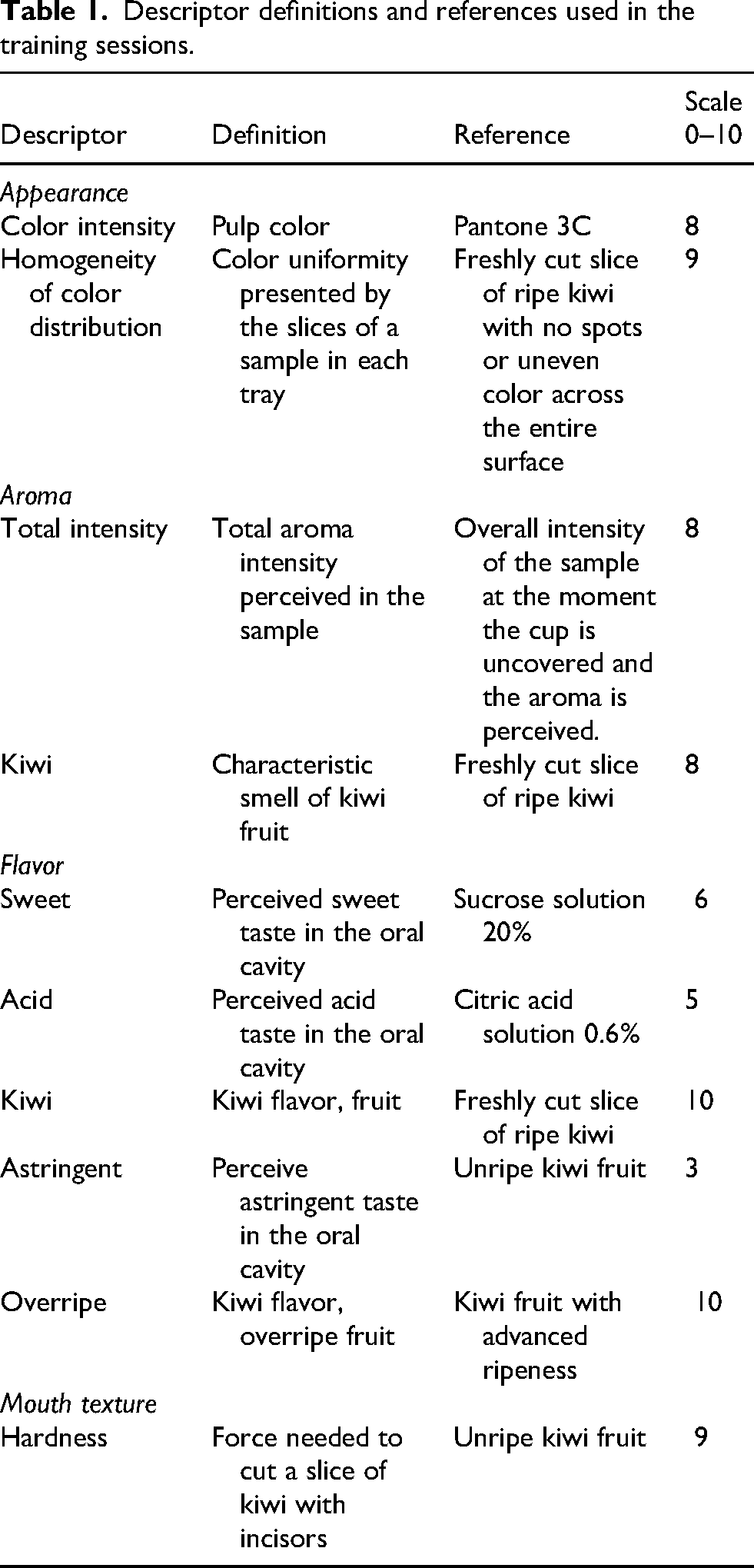
Measurements of the four samples were conducted on day 0, right after the training session, and subsequently on days 4 and 8 of storage. Samples evaluation up to day 8 was carried out based on microbiological analyses previously conducted.
To evaluate appearance, four kiwifruit slices from each treatment were placed in disposable plastic trays labeled with a random three-digit code. The evaluation was performed in a color chamber under standardized D65 (daylight) illumination, in accordance with ISO-3668 (1998), “Paints and varnishes—Visual comparison of the color of paints”. The color references were obtained from the Pantone® color chart (Pantone, 2005). To evaluate the other attributes, samples were presented in 180 mL disposable plastic cups with covers, labeled with a random three-digit code. Each assessor received two slices to evaluate the aroma; then one slice was used to evaluate the flavor, and the other to evaluate mouth texture. Samples (S0,5%, S1%, S1,5% and CS) were measured in duplicate at each storage time. The order of presentation was randomized among assessors, and water was provided to cleanse the palate between samples.
Physical–chemical determinations
The homogenized juice for the determinations, except for firmness, was obtained from three kiwi slices.
Titratable acidity (TA)
The juice was diluted 1:10 and titrated with 0.1 N NaOH solution to reach pH 8.1 using an automatic RADIOMETER COPENHAGEN TITRALAB 90 (Radiometer Medical APS, Bronshoj, Denmark) (Mitcham et al., 2003).
Total soluble solids (TSS)
This was determined in 1 mL of juice. An ATAGO Palette 3442-E04 digital refractometer (Atago Co. Ltd, Tokyo, Japan) (Borsani et al., 2009) with automatic temperature compensation was used.
RATIO
It was determined according to the relationship between SST and AT (Borsani et al., 2009)
Vitamin C content (VIT C)
Determined by Ultra-High Performance Liquid Chromatography with a high-resolution Mass Spectrometry detector (UPLC-MS-MS) using a 1.7 µm ACQuity UPLC BEM column. The result was expressed as mg of ascorbic acid/100 g of fresh weight (Liu et al., 2016).
Determination of slice firmness
Firmness was measured on the total number of slices in each bag, analyzed by sample and time. Firmness was measured on each slice at the pericarp (pulp) using an INSTRON 4442 universal testing machine (Instron Corporation, USA), equipped with a 7.9 mm diameter rounded cylindrical probe (Borsani et al., 2009). The test was performed at a crosshead speed of 3 mm s−1 and a penetration depth of 2.5 mm, following standard procedures for instrumental texture analysis in fruit (Abbott, 1999). The maximum force exerted by the equipment before the first discontinuity in the force -depth curve was taken as an indicator of the mechanical strength (firmness) of the kiwi samples. The results were expressed in Newtons (N).
Statistical analysis
The sensory descriptors and the physical-chemical determinations were analyzed by two-way analysis of variance (ANOVA) to study the influence of treatment (samples), the storage time, and their interaction. Means were compared using Fisher's least significant difference (LSD) at a 5% significance level.
A principal component analysis (PCA) was performed on the covariance matrix of the averaged data of the samples, considering the storage time (Meilgaard et al., 2016). The PCA was performed to establish relationships between the sensory descriptors and the four samples.
Partial least squares (PLS) is a technique of multivariate regression analysis (Meilgaard et al., 2016). It was used to evaluate the quality of kiwifruit slices treated with chitosan and control sample, using a cross-validation model, based on sensory and physicochemical analyses. From the sensory data, flavor and hardness attributes were considered since they have a direct relationship with the physicochemical parameters evaluated.
Statistical analyses were performed using the software package Genstat (VSN International Ltd, Hemel Hempstead, UK).
Results and discussion
Sensory profile
Chitosan coatings at concentrations of 0.5% and 1% effectively preserved the sensory attributes of MP kiwifruit samples throughout the 8-day storage period (Table 2). Conversely, the 1.5% chitosan treatment (S1.5%) negatively impacted the sensory profile, resulting in characteristics similar to those of the CSs. Specifically, the application of this higher concentration (1.5%) led to a reduction in color uniformity, overall aroma intensity, and typical kiwifruit aroma. Furthermore, these samples exhibited decreased sweetness and acidity, a decline in kiwifruit flavor intensity, and a concomitant increase in overripe off-flavors. By the end of the storage period, the 1.5% treated samples had entirely lost their astringency and demonstrated a significant reduction in hardness.
Average sensory scores for appearance, aroma, flavor, and texture mouth descriptors for treatment×storage time interaction.
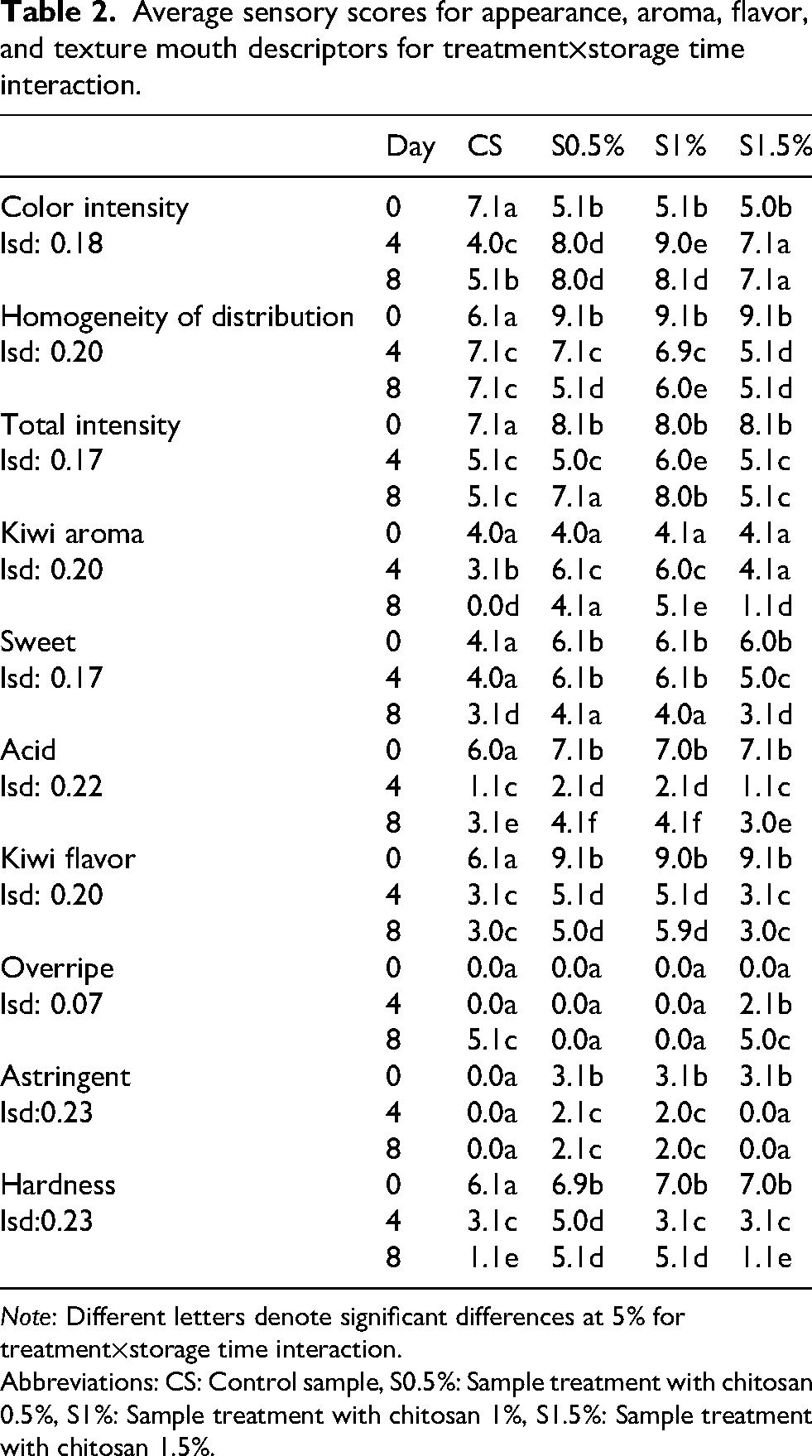
Note: Different letters denote significant differences at 5% for treatment×storage time interaction.
Abbreviations: CS: Control sample, S0.5%: Sample treatment with chitosan 0.5%, S1%: Sample treatment with chitosan 1%, S1.5%: Sample treatment with chitosan 1.5%.
These results align with the findings of Vivek and Subbarao (2018), who reported that chitosan coatings effectively preserve fresh-cut kiwifruit by delaying senescence and maintaining key sensory attributes, including color, odor, flavor, texture, and overall acceptability. Notably, their study demonstrated that the application of 0.8% and 1.0% chitosan coatings enhanced the sensory quality of fresh-cut kiwifruit treated with a combination of ultrasound and sodium hypochlorite (NaOCl) during 10 days of storage at 5 °C.
Relationships between the sensory descriptors and the stored samples
The PCA results (Figure 1) complemented the ANOVA findings, providing a comprehensive graphical representation of the sensory profile. The first two principal components accounted for 85% of the total variance, with PC1 and PC2 explaining 65% and 20%, respectively. PC1 was primarily defined by color uniformity, overall aroma intensity, sweetness, acidity, kiwifruit flavor, overripe flavor, astringency, and firmness, whereas PC2 was characterized by color intensity and kiwifruit aroma. At day 8 of storage, the CSs and those treated with the highest chitosan concentration (S1.5%) were strongly associated with the overripe descriptor, separating them distinctly from the other attributes. Conversely, on day 0, all chitosan-treated samples were closely positioned near color intensity, overall aroma intensity, kiwifruit flavor, and acidity. The attributes of astringency, firmness, and sweetness were associated with these initial samples, as well as with the control (CS) at day 0 and the S0.5% and S1% samples at day 8. These latter groups exhibited weaker associations after 4 days of storage, an intermediate period during which they were additionally characterized by color uniformity and kiwifruit aroma.
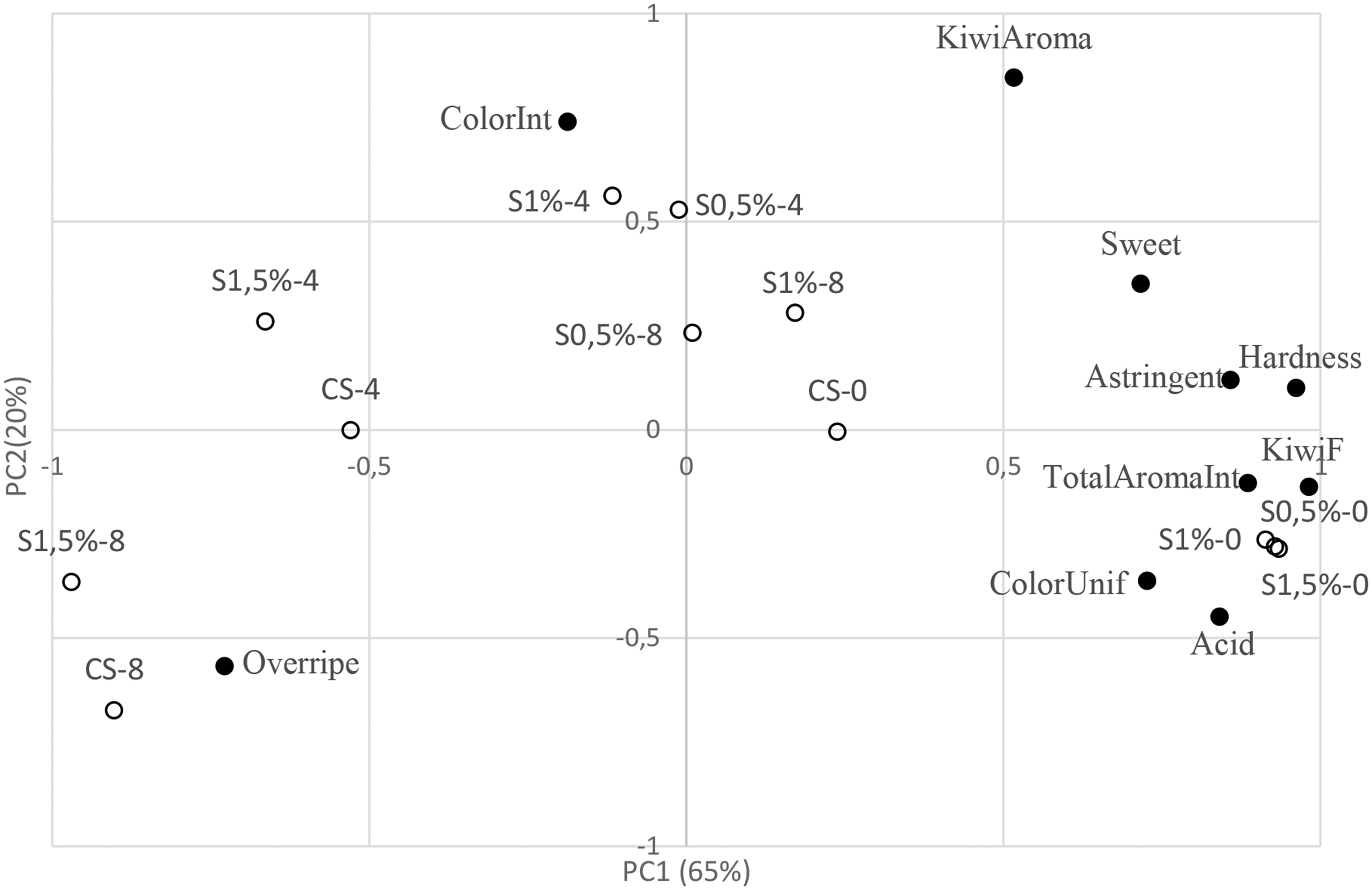
Graphical representation of the principal component analysis of samples, showing the sensory descriptors analyzed with the first two principal components. Abbreviations: ColorUnif: color uniformity, ColorInt: color intensity, TotalAromalInt: total aroma intensity of, CS: control sample, S0.5%: sample treatment with chitosan 0.5%, S1%: sample treatment with chitosan 1%, S1.5%: sample treatment with chitosan 1.5%.
Physicochemical analysis
This study demonstrated that the S0.5% and S1% samples exhibited the least pronounced changes in the evaluated physicochemical parameters, which is consistent with the sensory analysis findings. TSS, TA, and the RATIO are critical attributes associated with the palatability of ripe fruit, serving as key maturity and ripening indices in quality assessments (Vázquez-Cuecuecha et al., 2023).
Generally, TSS content in fruit increases during storage; however, chitosan coatings have been reported to delay this accumulation and minimize the reduction in TA during the postharvest storage of kiwifruit. A more rapid decline in acidity has been associated with accelerated senescence (Kumarihami et al., 2021). In the present study, the chitosan-treated samples exhibited an increase in TSS, whereas a decrease was observed in the CS over time (Table 3). Throughout the storage period, no significant changes in TA were detected across any of the applied chitosan doses. Consequently, the RATIO increased over time for all three treatments, albeit at a lower rate than that observed in the CS. Kumarihami (2022) reported that TA gradually decreases during storage, which is a typical feature of climacteric fruit ripening, such as in kiwifruit. Notably, this typical behavior was exclusively observed in the CS in this study.
Average sensory scores for physicochemical determinations for treatment × storage time interaction.
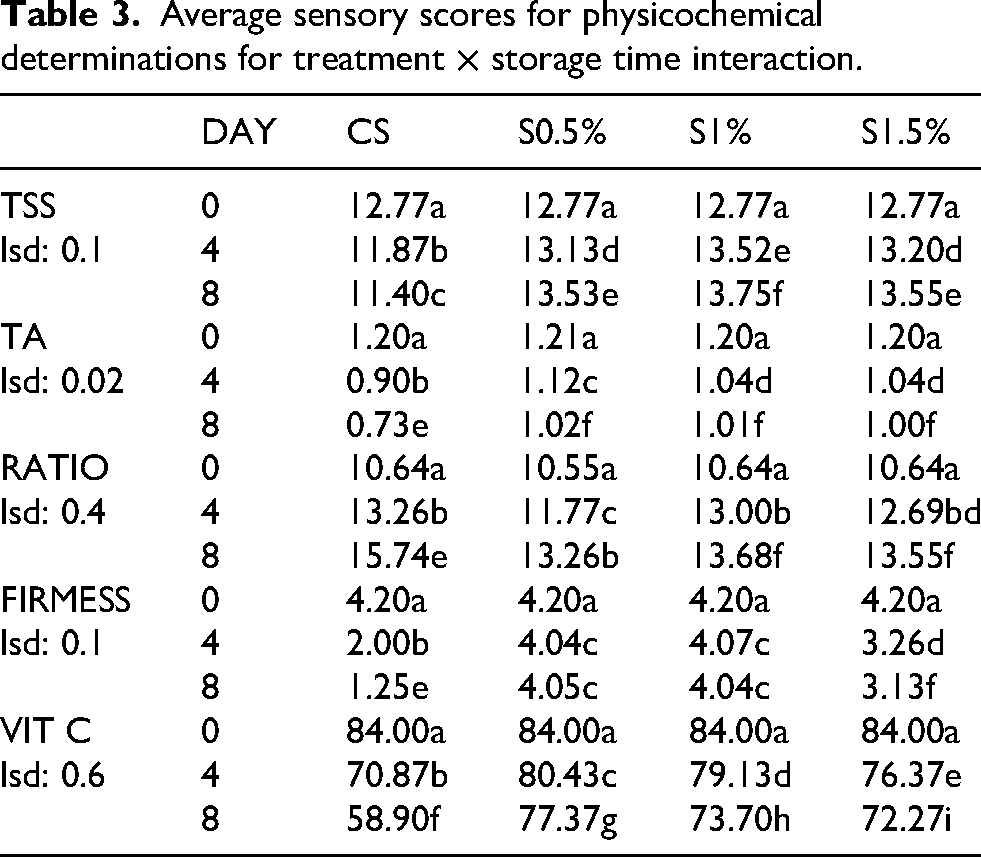
Vivek and Subbarao (2018) observed higher TSS levels in uncoated fresh-cut kiwifruit (cv. “Hayward”) than in chitosan-coated counterparts. Furthermore, storage of these uncoated samples resulted in a rapid decline in TA values compared to those treated with chitosan. The highest TA retention was recorded in the 1% chitosan-coated samples after 10 days of storage at 5 °C, whereas the lowest levels were detected in the uncoated control at the end of the storage period. Similarly, the TSS content of coated and uncoated Actinidia melanandra samples (commonly known as purple or red kiwifruit) showed no significant changes during the first 4 days; however, after 14 days of storage, the TSS content in the uncoated samples was significantly higher than that of the coated treatments (Kaya et al., 2016). Comparable trends have been reported for other commodities, including papaya, strawberry, peach, tomato, and guava (Hong et al., 2012; Ali et al., 2011; Han et al., 2004). Interestingly, in the present study, the different chitosan doses did not significantly alter TA among themselves; however, this trend sharply contrasted with the CS, which exhibited a significant reduction in TA over time.
Kiwifruit is an excellent source of vitamin C (ascorbic acid), which constitutes its most distinctive nutritional attribute. During ripening, ascorbic acid content gradually decreases due to oxidative degradation. In the present study, samples treated with the highest chitosan concentration (S1.5%) exhibited the lowest vitamin C content during storage; however, the CSs demonstrated a more pronounced decline in this parameter. Notably, the lowest rate of vitamin C degradation was observed in the S0.5%. These findings align with those of Vivek and Subbarao (2018), who reported that variations in vitamin C retention depend on the applied chitosan concentration. In their study, a reduction in ascorbic acid was effectively inhibited by 0.8% and 1.0% chitosan coatings compared to both the control and 0.6% chitosan-treated samples during a 10-day storage period at 5 °C. Similarly, Drevinskas et al. (2017) observed that chitosan applications delay vitamin C degradation during shelf life in three cultivars of Actinidia kolomikta. Consistent with these observations, Kaya et al. (2016) reported comparable protective effects on ascorbic acid retention in A. melanandra fruit during postharvest storage.
Consumer perception of kiwifruit quality is strongly influenced by firmness, which is considered a critical determinant of overall acceptance. During senescence, kiwifruit firmness decreases rapidly, contributing significantly to its limited postharvest life and heightened susceptibility to microbial decay. This typical softening behavior was observed in the CSs and, to a lesser extent, in the S1.5%, whereas the samples coated with 0.5% and 1.0% chitosan exhibited a delayed loss of firmness. Consistent with these findings, Vivek and Subbarao (2018) reported a similar preservation of firmness in fresh-cut kiwifruit. Furthermore, the efficacy of chitosan coatings in delaying softening and maintaining tissue integrity has been documented in other commodities, including papaya and sweet cherry (Martínez-Romero et al., 2006).
Relationship between sensory characteristics and physicochemical parameters
Although instrumental methods can accurately quantify physicochemical parameters such as TSS, TA, and texture, they fail to fully capture the complex sensory experience of flavor. Flavor perception is governed by a multifaceted interplay of sweetness, acidity, and volatile aroma compounds that remain difficult to quantify objectively through instruments alone (Petruccelli et al., 2023). Consequently, while instrumental measurements characterize specific physical attributes, comprehensive sensory properties must be assessed through the direct interaction between the food matrix and the human subject (Farina et al., 2016).
In the present study, PLS regression analysis successfully elucidated the relationships between sensory attributes and instrumental physicochemical measurements, providing insights into which parameters—or combinations thereof—predict relevant sensory attributes in treated samples across different storage periods. The resulting correlation map (Figure 2) was constructed using correlation coefficients among the variables. The total data variance was primarily explained by the first two latent variables, with PLS1 accounting for 66% and PLS2 for 14%. As illustrated in Figure 2, all positive flavor descriptors (excluding overripe flavor) and sensory hardness were positively correlated with VIT C content, TA, and instrumental firmness. These attributes were closely associated with all three chitosan-treated samples at day 0 of storage. Conversely, TSS—which was associated with the 1% chitosan-treated sample after 8 days of storage—exhibited a negative correlation with these positive sensory attributes. The overripe flavor descriptor was prominently identified in the 1.5% chitosan treatment (S1.5%) after both 4 and 8 days of storage. Overripe flavor is intimately linked to the physiological and physicochemical alterations that occur during advanced fruit ripening. Accordingly, the RATIO was positively correlated with this negative descriptor. The progressive increase in the RATIO during storage was driven by a concomitant rise in TSS and a decline in TA, a phenomenon typical of prolonged kiwifruit storage (Ghasemnezhad, 2013).
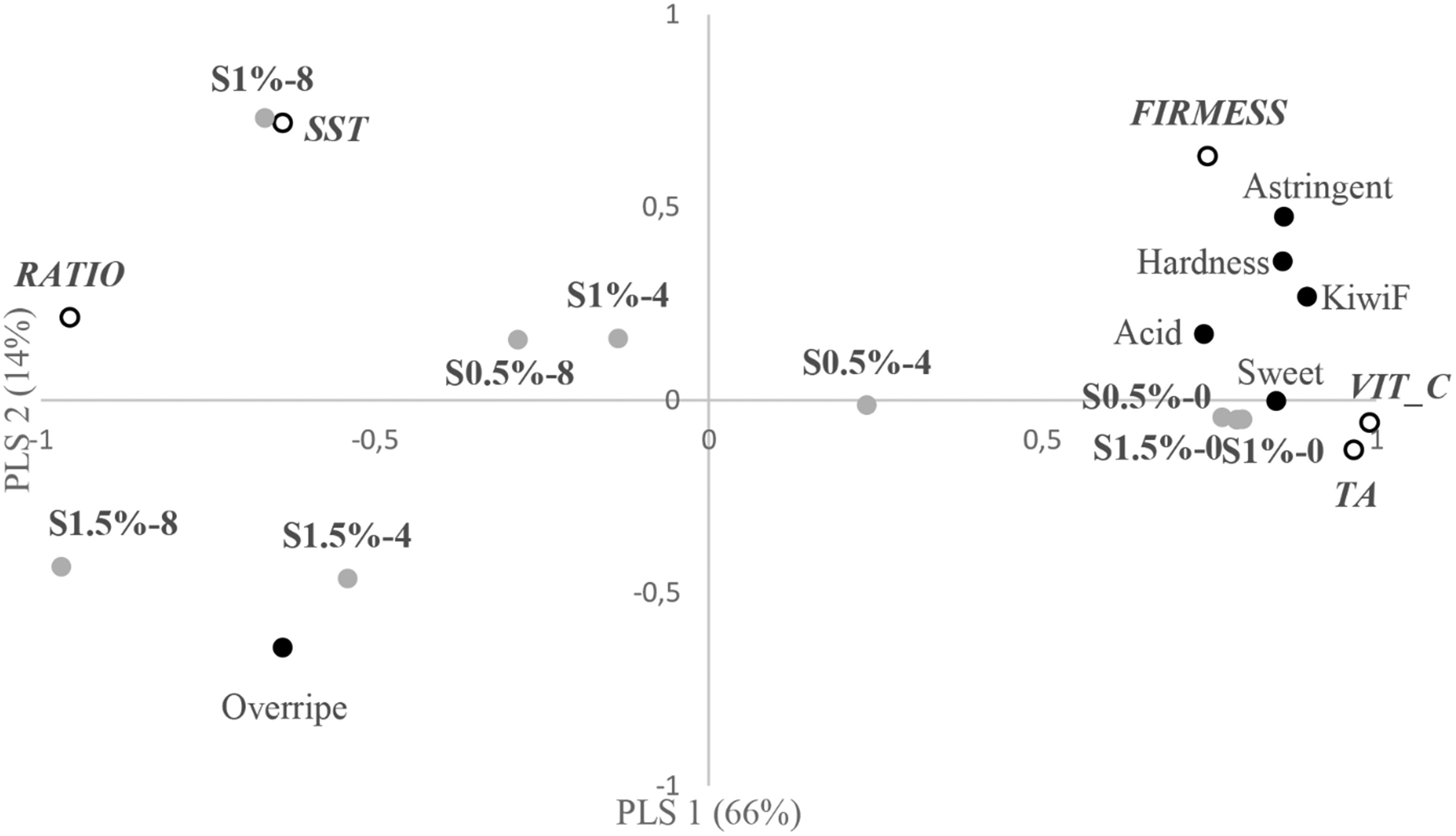
Graphical representation of partial least squares regression (PLS) of samples, showing the sensory descriptors and physicochemical parameters with the first two dimensions. Abbreviations: KiwiF: kiwifruit flavor; VIT C: vitamin C; TA: titratable acidity; S0.5%: sample treatment with chitosan 0.5%; S1%: sample treatment with chitosan 1%; S1.5%: sample treatment with chitosan 1.5%.
Conclusion
The growing consumer demand for chemical-free, nutritious, and ready-to-eat foods with an extended shelf life has driven food scientists to investigate innovative preservation technologies. Prolonging the shelf life of food while maintaining its nutritional value and microbial safety yields significant benefits for both the food industry and consumers. In the case of MP kiwifruit, the application of chitosan at the two lower concentrations (0.5% and 1.0%) represents a promising strategy for extending quality retention during postharvest storage. From a sensory perspective, the commercial shelf life of this fruit may ultimately be constrained by a loss of hardness and the development of off-flavors, as demonstrated in the present study. Furthermore, the observed correlations between specific quality parameters—namely, the RATIO with overripe flavor, and instrumental firmness with sensory hardness—offer novel insights that could enhance the experimental design and data interpretation of future research. To build upon these findings, future research incorporating consumer-acceptability trials is essential to establish the optimal chitosan concentration and define the sensory shelf life. Crucially, distinct changes identified by a trained panel over time do not inherently translate into a reduction in overall consumer acceptance, highlighting the necessity of validating analytical sensory data with consumer-targeted studies.
Footnotes

Ethical approval and informed consent statements
Ethical review and approval were waived for this study, but appropriate protocols were implemented to ensure the protection of the rights and privacy of all assessors throughout the test. This included providing complete information about the study requirements, obtaining verbal informed consent, and ensuring the confidentiality of personal data.
Consent for publication
Not applicable
Author contributions
Gugole Ottaviano, Fernanda: data curation, formal analysis, investigation, methodology, writing—original draft, writing—review and editing. Moreno, Ayelen: data curation, investigation, methodology. Lopéz Osornio, Mercedes: data curation, investigation methodology, writing—review and editing. Pereyra, Alejandra: conceptualization, data curation, investigation, supervision, writing—review and editing. Garitta, Lorena: conceptualization, data curation, formal analysis, investigation, methodology, supervision, writing—original draft, and writing—review and editing.
Funding
The authors received no financial support for the research, authorship, and/or publication of this article.
Declaration of conflicting interests
The authors declared no potential conflicts of interest with respect to the research, authorship, and/or publication of this article.
Data availability statement
Research data are not shared