






Abstract
Cupuassu (Theobroma grandiflorum) is a fruit native to the Amazon, whose pulp is the most economically valuable product due to its unique sensory and nutritional properties. Knowledge of its thermophysical properties, particularly thermal diffusivity, is essential for designing effective heat treatments. The objective of this study was to determine the thermal diffusivity of cupuassu pulp from experimental data using an inverse method. Experiments were conducted by heating the pulp in an aluminum capsule from 10 °C to 80 °C in a thermostatic water bath, with a thermocouple positioned at the center of the sample. The Biot number of heating process exceeded 50, indicating dominant internal conductive resistance and justifying the adoption of a first-kind (Dirichlet) boundary condition in the two-dimensional transient heat conduction model. Thermal diffusivity (α) was estimated by solving the model using the finite difference method and fitting the predicted temperatures to the experimental data through Root Mean Square Error (RMSE) minimization via an exhaustive parameter search. To avoid solving a nonlinear partial differential equation, α was treated as locally constant within each time step and iteratively updated based on the temperature field from the previous time step. Four models were evaluated to describe the temperature dependence of the diffusivity: constant, square-root, linear, and power-law. Temperature-dependent models provided superior predictive performance, with the power-law model: α(T) = A + BT3/2, yielding the best fit (RMSE ≈ 0.1 °C) and randomly distributed residuals. In addition, the α model was validated using two independent datasets, confirming its robustness for predicting heat transfer during thermal processing of cupuassu pulp.
Introduction
The cupuassu (Theobroma grandiflorum) is a fruit native to the Amazon region and is part of the same genus as cacao. In Brazil, the states of Pará, Amazonas, and Bahia are primarily responsible for the country's production of this fruit (da Silva et al., 2024; Rosa et al., 2024). The pulp of cupuassu has significant economic potential due to its distinctive aroma and flavor, making it suitable for various applications in the food industry. The pulp is mainly used as an ingredient in beverages, sweets, and ice cream, while the fruit itself is rarely eaten fresh because of its strong acidity (Barbosa-Carvalho et al., 2024; Castro Alves et al., 2025; Mar et al., 2024). Additionally, cupuassu pulp is a rich source of bioactive compounds, including flavonoids and ascorbic acid, as well as insoluble fibers, which are beneficial for human health (Acosta-Vega et al., 2023; Rosa et al., 2024).
The main method of processing cupuassu is the production of frozen fruit pulp. The process begins with washing the fruits, followed by manually breaking them open to extract the pulp and seeds. A depulping machine is then used to separate the pulp from the seeds. After separation, the pulp is pasteurized, packaged, and frozen for storage (Pereira et al., 2018; Rosa et al., 2024). The thermal processing enhances food safety, reduces post-harvest losses, extends the availability of the fruit beyond the harvest season, and facilitates its commercialization to different regions of the country (Araújo et al., 2004; Singh et al., 2025).
Knowledge of the thermophysical properties of cupuassu pulp enables the application of mathematical models to predict transient heat transfer during thermal treatments. Such understanding is crucial for the design, monitoring, and optimization of the fruit pulp processing (Muramatsu et al., 2017). One important property is thermal diffusivity (α, m2 s−1), which describes how quickly heat propagates through a material relative to its capacity to store heat while heating or cooling (Bergman et al., 2011). Araújo et al. (2004) determined the α values of cupuassu pulp with different solids contents (12 °Brix, 9 °Brix, and partially reduced insoluble solids) during heating from 25 to 60 °C. They reported values of 1.31 × 10⁻⁷, 1.32 × 10⁻⁷, and 1.27 × 10⁻⁷ m2 s-1 for each respective pulp sample. Although the composition of fruit pulps generally remains unchanged during thermal treatment, temperature variations can significantly impact on thermal diffusivity (da Silva et al., 2020). However, the influence of temperature on the α value of cupuassu pulp has not yet been investigated, indicating a need for further research.
Thermal diffusivity of food materials can be determined using different experimental approaches (Cruzalegui and Siche, 2025). Among these, the inverse method is one of the most widely applied techniques, as it combines transient temperature measurements with the numerical solution of the heat conduction equation and parameter estimation procedures (Reddy et al., 2022). In this approach, temperature is monitored as a function of time at a specific location within a sample of known geometry during heating or cooling, typically with the material contained in a metallic holder and exposed to a surrounding fluid (air or water) as the heat transfer medium. Under these conditions, a convective thermal resistance is established at the sample surface, and the boundary conditions are defined according to the relative magnitude of internal (conduction) and external thermal resistances, commonly evaluated using the Biot number (Bi). When the external resistance is negligible compared to the internal resistance (Bi ≫ 1), a first-type (Dirichlet) boundary condition may be assumed; otherwise, a third-type (Robin or convective) boundary condition must be applied (Bergman et al., 2011). The transient heat conduction equation is then numerically solved and fitted to the experimental temperature data through an optimization procedure, in which thermal diffusivity is estimated by minimizing the deviation between predicted and measured temperatures (da Silva et al., 2018b, 2023a, 2023b; Mari et al., 2018; Muramatsu et al., 2017, 2020; Wang et al., 2022). This methodology has proven particularly effective for assessing the temperature dependence of thermal diffusivity in fruit pulps such as cashew, coconut, papaya, and tomato (da Silva et al., 2018a, 2020, 2022; Greiby et al., 2014).
In this context, this study aimed to establish an expression for the thermal diffusivity of cupuassu pulp as a function of temperature using an inverse method with experimental heating data, and validated it with independent measurements obtained under different process conditions. In addition, the proposed α model was compared with values reported for other fruit pulps and with the Choi and Okos model. Understanding the thermal properties of cupuassu pulp allows for accurate predictions of heat transfer, which can help in determining the appropriate thermal processing conditions for this product.
Material and methods
Sample
The cupuassu pulp produced by the Agricultural Cooperative of Tomé-Açu (CAMTA—PA, Brazil) was used in this study. The material was purchased at the local market in Marabá-PA and kept frozen at −18 °C until use. The moisture content, pH, and soluble solids content (°Brix) of the pulp were determined in this study using the gravimetric method of oven drying at 105 °C for 24 h, a digital pH meter (AKSO, AK90, Brazil), and an analog refractometer (with 0.2 °Brix accuracy), respectively (Castro Alves et al., 2025). The values of moisture content (87.9 ± 0.6%), pH (3.5 ± 0.1), and soluble solids content (12.4 ± 0.9 °Brix) of the cupuassu sample are consistent with those reported in the literature by Barbosa-Carvalho et al. (2024), which were 83.07 ± 0.14%, 3.46 ± 0.02, and 12.80 ± 0.17 °Brix, and by Rogez et al. (2004), which were 87.9 ± 0.5% and pH = 3.4 ± 0.1.
Experimental procedure
The cupuassu pulp was thawed at room temperature (26–28 °C) and then placed into a cylindrical aluminum capsule with a height of 50 mm, a diameter of 65 mm, and a wall thickness of 0.3 mm. The capsule was filled with pulp, and a rubber ring was used to seal the lid and prevent mass loss during the experiment. A type K thermocouple was positioned at the center of the sample (Tc), and a second thermocouple was fixed to the outer surface of the aluminum capsule wall (Ts) (Figure 1(b)). The thermocouple used to monitor the surface temperature was positioned on the outer wall of the capsule to avoid thermal disturbance caused by inserting an additional sensor inside the sample chamber. The thermocouples were connected to a data logger (TASi, TA612C, China) programmed to record temperature data every 10 s (Figure 1).
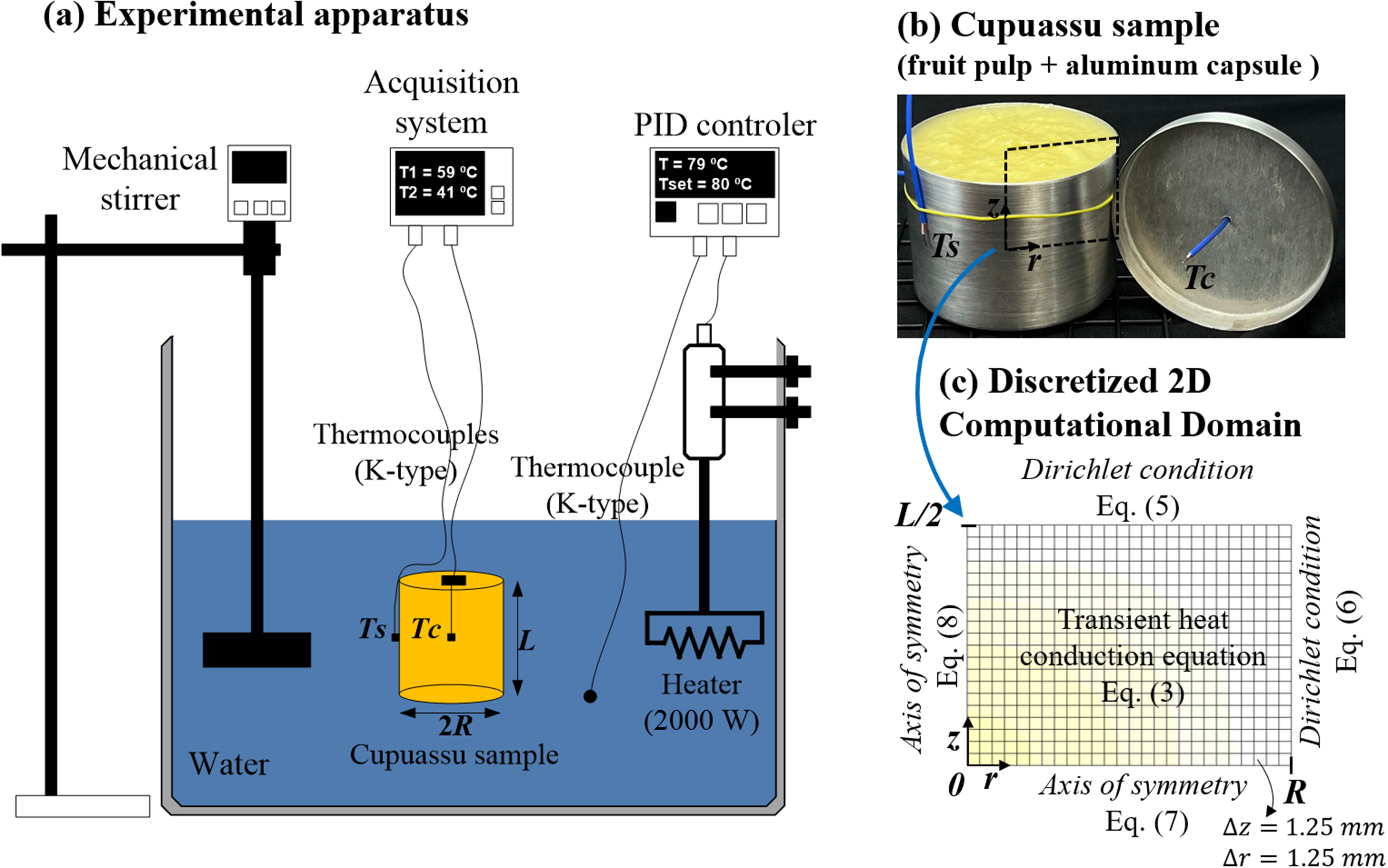
(a) Schematic representation of the experimental apparatus used for heating cupuassu pulp. (b) Photograph of the cupuassu sample, showing the aluminum capsule, thermocouples, and fruit pulp. (c) Discretized two-dimensional computational domain with the governing equation and boundary conditions.
For the heating procedure, the sample was first kept at rest in a thermostatic bath (Quimis, Q214M2, Brazil) at 10 °C until thermal equilibrium was reached (approximately 60 min). This condition was considered met when the temperature difference between Tc and Ts was less than 0.5 °C. Subsequently, the sample was subjected to a heating process for 60 min at 80 °C in a tank containing 10 dm3 of water, equipped with a Proportional-Integral-Derivarive (PID) temperature controller and a mechanical stirrer (Nova Ética, M-210, Brazil) (Figure 1(a)). During the experiment, the water was kept under intense agitation to ensure thermal homogeneity of the bath, and the aluminum capsule was suspended in the water to allow uniform heat transfer across its entire surface. At the end of each experiment, the pulp mass was measured again to verify that no mass loss had occurred during the experiment. The heating experiments were repeated three times using independent samples to ensure the reliability of the results. The experimental procedure was based on works of da Silva et al. (2022) and da Silva et al. (2018a, 2018b).
The experimental results (Texp) are reported as mean values with associated uncertainties (average value ± uncertainties), as defined in equation (1) (García-López and Álvarez-Tey, 2022; Teleken et al., 2026):

Convective heat transfer coefficient
The convective heat transfer coefficient (

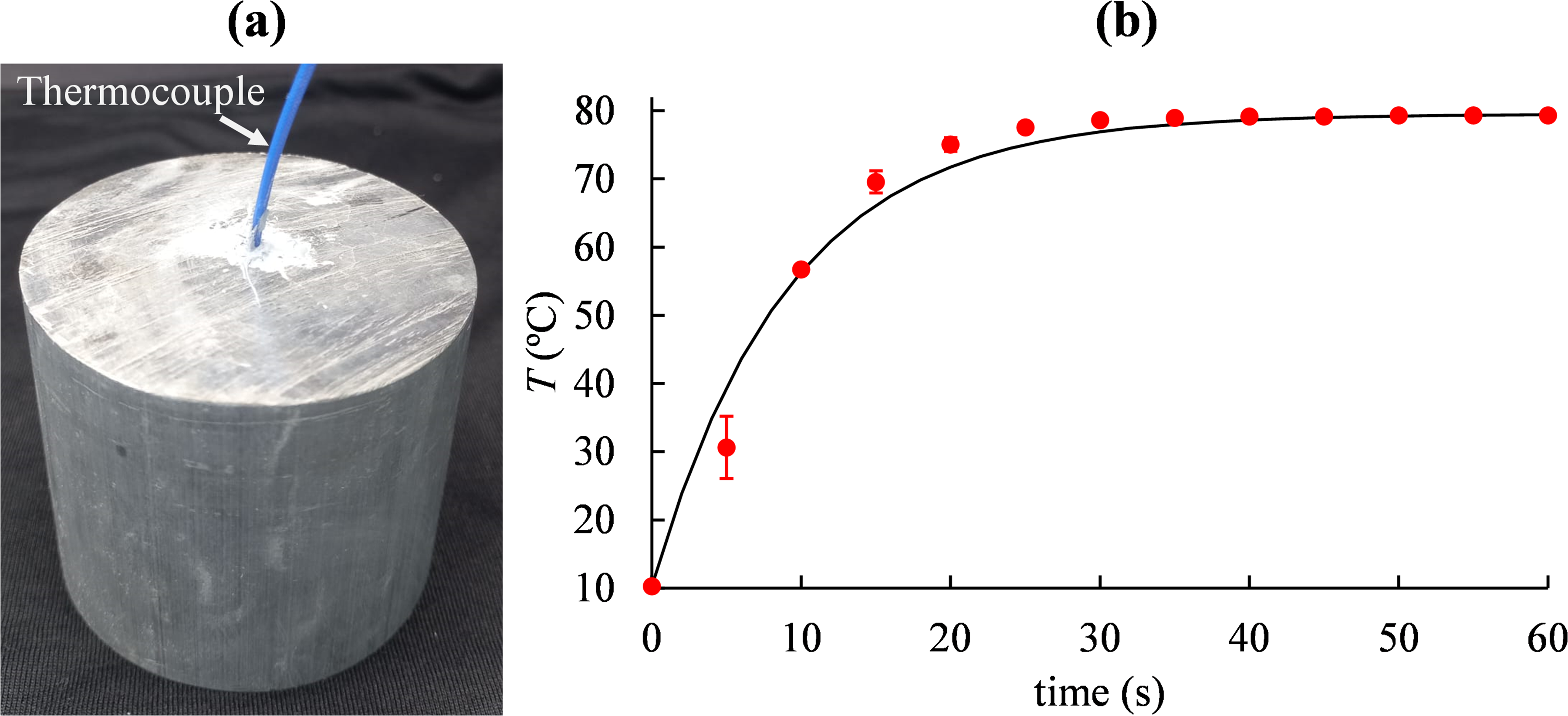
(a) Aluminum cylinder used for h estimation; (b) experimental temperature measurements (symbols: average value ± standard deviation) compared with the curve fitted using equation (2) (black line).
Heat transfer modeling in cupuassu pulp
The heating of cupuassu pulp was modeled assuming heat transfer by conduction (Fourier's law) in axial (z-coordinate) and radial (r-coordinate) directions of the sample (Figure 1(c)). The two-dimensional (2-D) transient heat conduction equation, expressed in cylindrical coordinates, for an isotropic medium and with no source term, can be written as (da Silva et al., 2022):

As the initial condition, the temperature was assumed to be uniformly distributed within the cupuassu sample (equation (4)). For the boundaries, Dirichlet conditions were imposed at the cylinder surface (equations (5) and (6)), while Neumann conditions were applied along the axis of symmetry (equations (7) and (8)) (Figure 1(c)).





The Biot number of the heating process (
Four models were employed to describe the dependence of the thermal diffusivity coefficient on temperature: constant (equation (9)), square-root (equation (10)), linear (equation (11)), and power-law with exponent 3/2 (equation (12)).




Numerical solution
The mathematical model (equations (3)–(8)) was numerically solved using the Implicit Finite Difference Method. The computational domain was discretized with a mesh of Δz = 1.25 mm and Δr = 1.25 mm, resulting in 567 nodal points (Figure 1(c)). For the discretization, the thermal diffusivity was assumed to be constant within each node during a given time step. However, its temperature dependence, as expressed in equations (10) to (12), was incorporated by updating its value locally at each node of the computational mesh using the temperature field from the previous time step (Δt = 1.0 s), i.e.,
The algorithm was implemented in Scilab (https://www.scilab.org/), and the numerical code was validated by comparing its results with the analytical solution obtained from the product of the infinite cylinder and flat plate formulations, as reported by Bergman et al. (2011) for the particular case of equations (3) to (8) with a constant thermal diffusivity and infinite Biot number. The analytical solution was evaluated using the first 15 terms of the series. Good agreement between the numerical and analytical solutions at the cylinder center (Tc) is shown in Figure 3 (average error < 0.064 °C), confirming the accuracy of the numerical code.
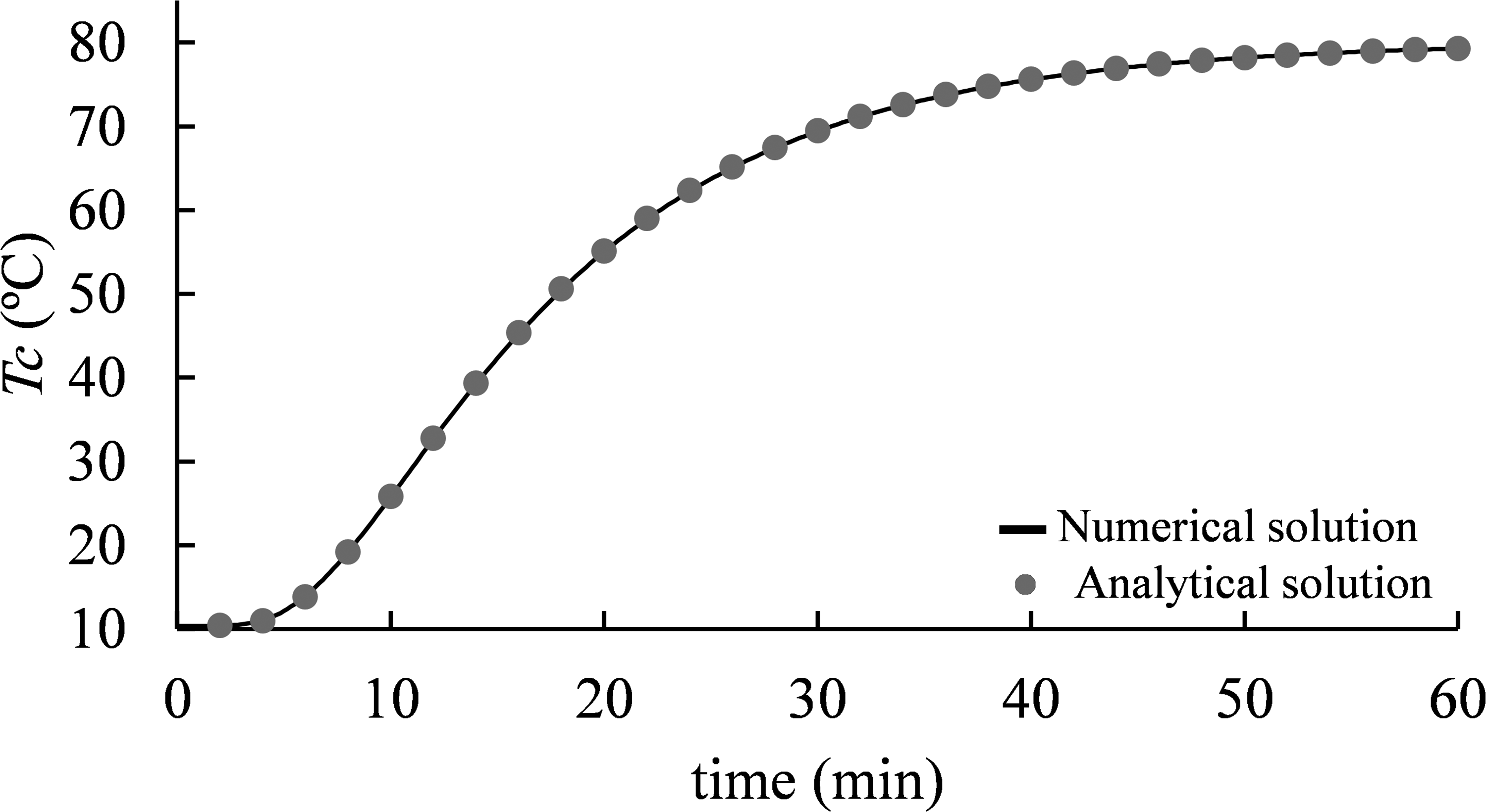
Comparison between the numerical solution (solid line) and the analytical solution (gray symbols) for heat conduction in the finite cylinder.
The parameters of the equations (9) to (12) were estimated using an exhaustive optimization method (Cabral et al., 2021; Moura et al., 2025; Porciuncula et al., 2013). The mathematical model was solved by varying the parameters incrementally within the ranges shown in Table 1, and the values that minimized the Root Mean Square Error (

Values of the range of parameters used in the exhaustive optimization method.

Range and increment step of parameter A were the same for all models.
Predictive ability of the model
The predictive ability of the heat transfer model was evaluated using two independent sets of experimental data that were not employed in parameter estimation. To this end, new experiments were carried out under different process conditions (initial temperature of 25 °C and bath temperature of 60 °C) and with a cylindrical aluminum capsule of different dimensions (height: 70 mm, diameter: 80 mm, wall thickness: 0.3 mm). The experimental procedure followed the methodology previously described in the Experimental procedure section . The coefficient of determination (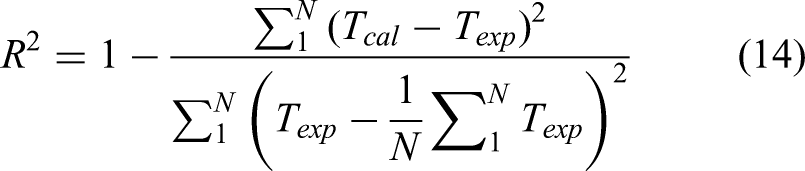
Results and discussion
Determination of thermal diffusivity of cupuassu pulp
Figure 4(a) presents the experimental temperature data at the center (Tc) and surface (Ts) of the cupuassu pulp sample during heating from 10 °C to 80 °C. The calculated uncertainties (equation (1)), all below 2 °C, confirm the good reproducibility of the measurements. The heating curves of the fruit pulp exhibited a sigmoidal profile, typical of transient heat conduction phenomena, resulting from variations in the temperature gradient during the process. At the beginning (
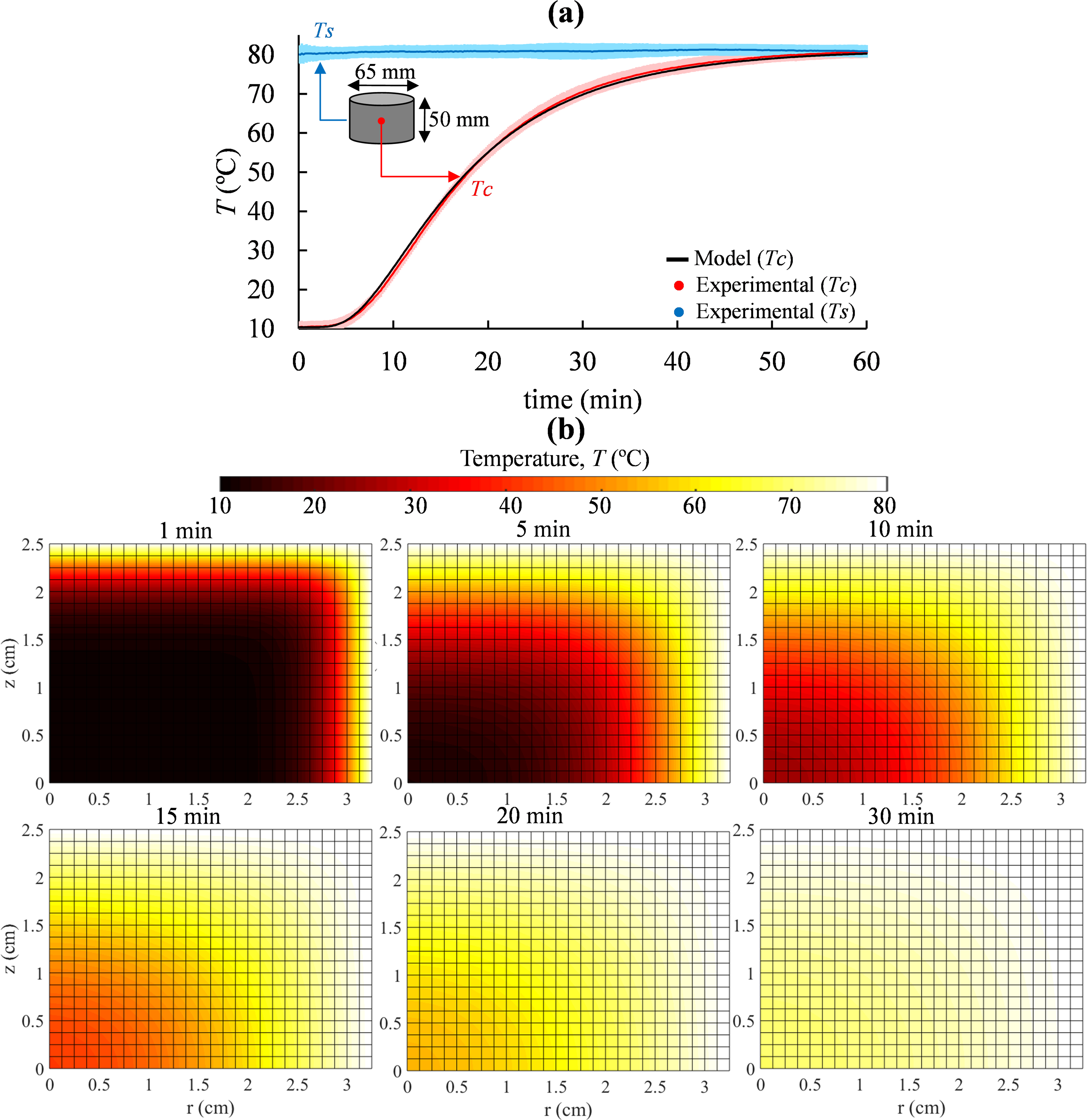
(a) Experimental temperature profiles at the center of the cylindrical container filled with cupuassu pulp (Tc, red symbols: average value ± uncertainty) and at the external wall (Ts, blue symbols: average value ± uncertainty). The solid black line denotes the model prediction considering a constant thermal diffusivity (α = 1.52 × 10⁻⁷ m2s−1). (b) Simulated temperature distribution at different heating times.
Figure 4(a) also shows the good agreement between the heat transfer model, assuming constant thermal diffusivity (equation (9)), and the experimental data. However, the model slightly overestimates temperatures during the initial stage (up to ∼18 min and 51 °C) and underestimates them thereafter (residuals showed in Figure 5(b)), the same behavior also observed when calculated the heat process of papaya, green coconut, and cashew pulps assuming constant thermal diffusivity (da Silva et al., 2018a, 2020, 2022). These deviations suggest that thermal diffusivity of cupuassu pulp increases with temperature, which is consistent with other fruit pulps. In water-rich foods, this behavior results from the combined effects of rising thermal conductivity and decreasing density, which outweigh the increase in specific heat (Rao et al., 2005).
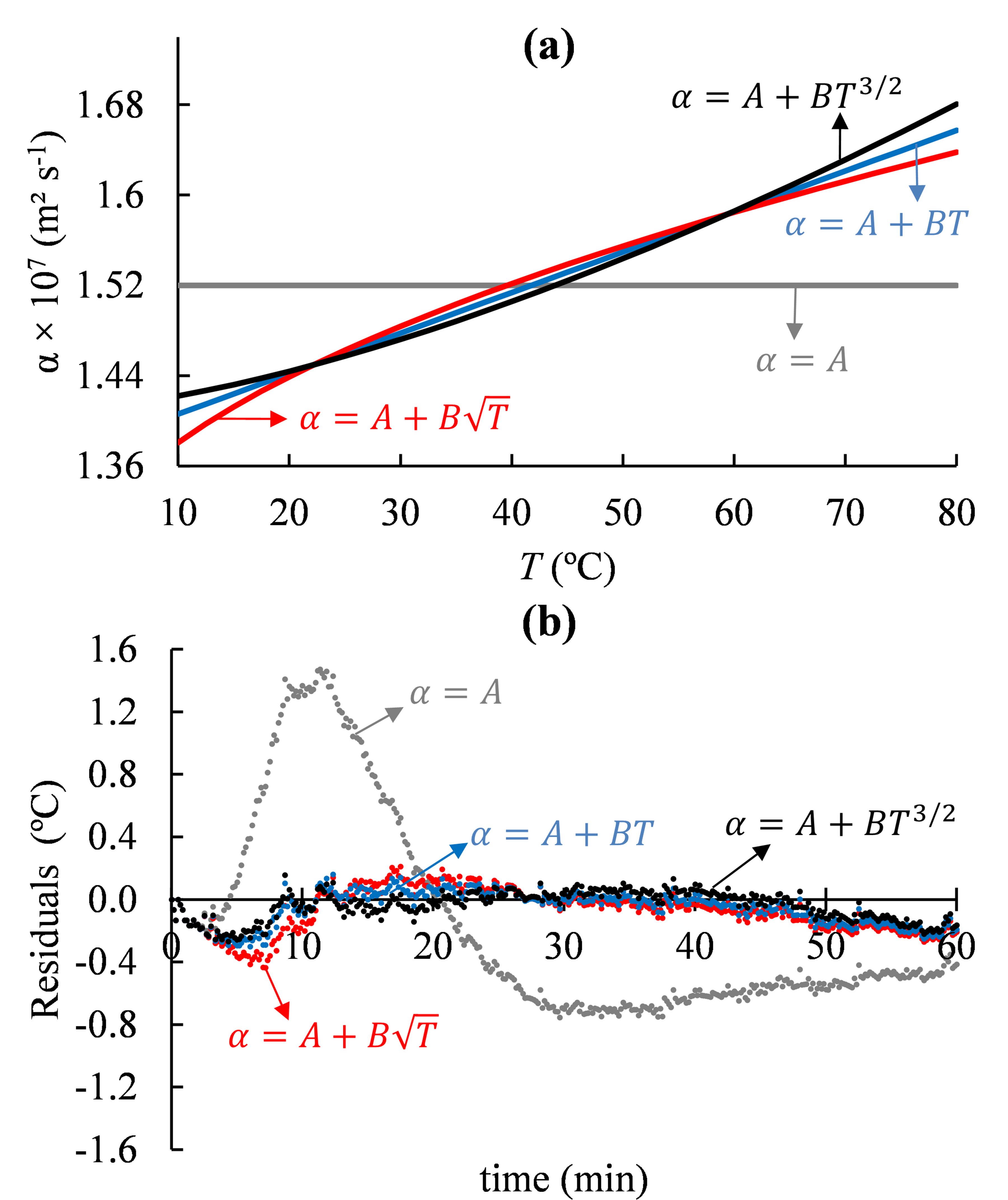
(a) Thermal diffusivity of cupuassu pulp as a function of temperature modeled using constant, square-root, linear, and power-law equations. (b) Comparison of experimental temperature data with the predictions of each model at the center of the cupuassu sample (Residuals =
Incorporating the temperature dependence of α significantly improved the heat transfer model accuracy, reducing the Root Mean Square Error (RMSE) from approximately 0.7 °C with the constant α model (equation (9)) to about 0.1 °C with the temperature-dependent models (equations (10)–(12)), as summarized in Table 2. Figure 5 illustrates both the variation of α with temperature for the different models evaluated in this study (a) and the corresponding simulation errors of the temperature at the center of the container (
Optimized parameters of the different functions used to represent the thermal diffusivity of cupuassu pulp as a function of the local temperature.
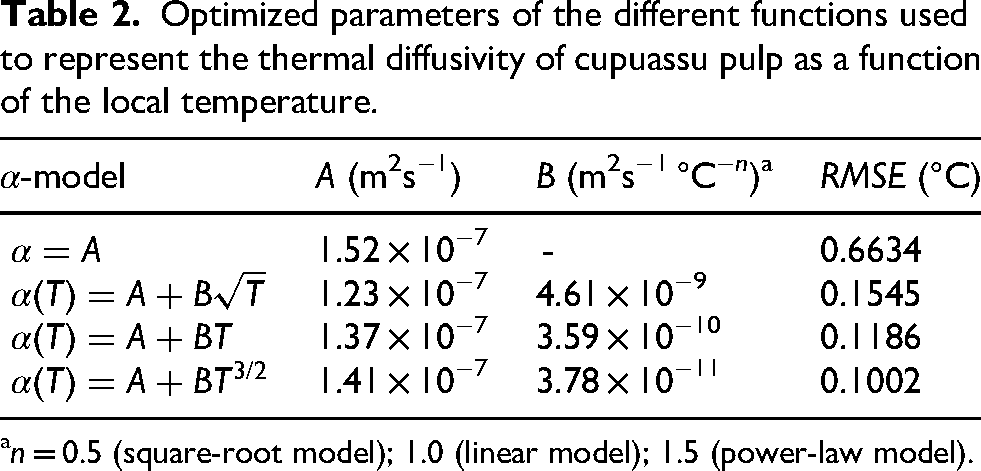
n = 0.5 (square-root model); 1.0 (linear model); 1.5 (power-law model).
Influence of experimental uncertainties on thermal diffusivity estimation
A sensitivity analysis was carried out to assess the influence of the uncertainties in the experimental surface (
The estimated thermal diffusivity as a function of temperature obtained using the original and perturbed surface temperatures (±0.5 °C) is shown in Figure 6. The maximum variation in thermal diffusivity within the experimental uncertainty range was approximately 8% at the highest temperature investigated (80 °C), while the functional temperature dependence of α remained unchanged. These results indicate that the inverse estimation procedure is sensitive but robust under realistic boundary condition uncertainties.
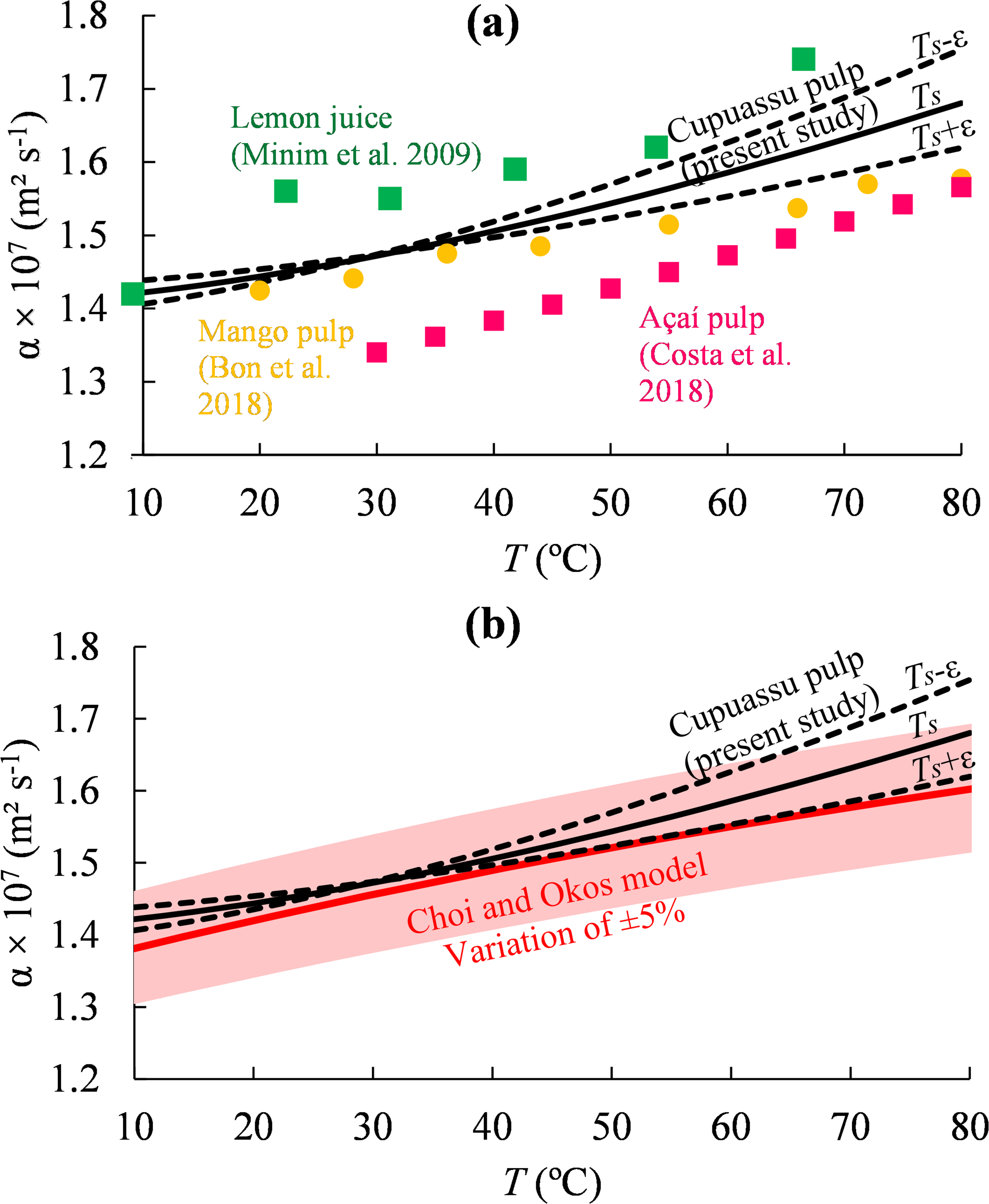
Thermal diffusivity of cupuaçu pulp as a function of temperature. Black lines represent the present results, compared with (a) experimental data for different fruit pulps (symbols) and (b) the predictive model of Choi and Okos (red line). The solid line corresponds to the fit obtained using the reference surface temperature (Ts), and the dotted lines show the variation in the estimated diffusivity when Ts ± 0.5 °C was considered.
Thermal diffusivity of cupuassu pulp compared to other fruit pulps and predictive model
The values of thermal diffusivity of cupuassu pulp vary from 1.42 × 10⁻⁷ m2s−1 at 10 °C to 1.68 × 10⁻⁷ m2s−1 at 80 °C according the power-law model (best α model—Table 2). These values and their temperature dependence are consistent with those reported for other fruit pulps with similar moisture content (∼90%), including lemon (Minim et al., 2009), mango (Bon et al., 2010) and açaí-berry (Costa et al., 2018), under comparable temperature conditions (Figure 6(a)). Araújo et al. (2004) reported thermal diffusivity values for cupuassu pulp ranging from 1.27 to 1.32 × 10⁻⁷ m2s-1 for pulps with moisture content between 85 and 87% during heating. While these values are of the same order of magnitude as those obtained in the present study, it is essential to account for the influence of temperature on thermal diffusivity to achieve a more accurate representation of the heating process, as highlighted in the previous section.
The power-law α model of cupuassu pulp was also compared with the predictive model of Choi andOkos, calculated according to the definition: 


In which
Predictive performance of the α model for cupuassu pulp
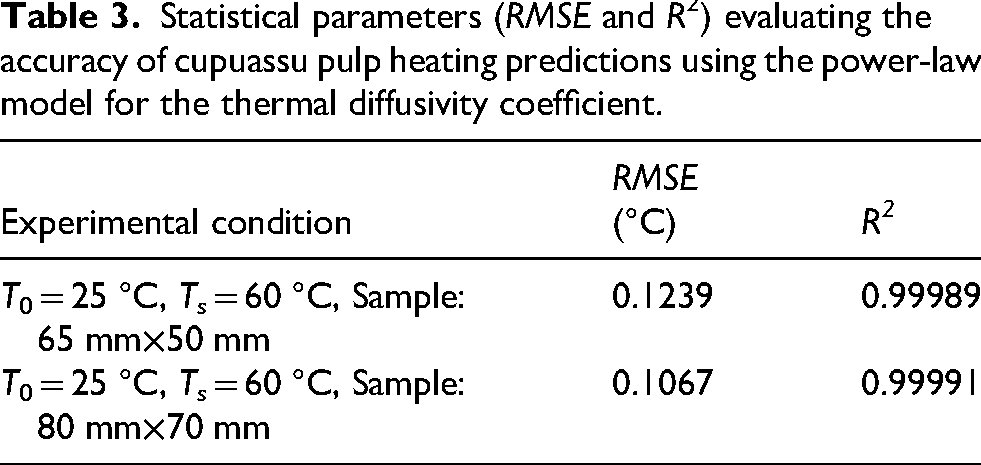
Using the variable thermal diffusivity determined in this study, it was possible to simulate the heating kinetics at the central point of cupuassu pulp under different conditions used for parameter estimation. The pulp was heated from 25 °C to 60 °C in two cylindrical aluminum capsules with the following dimensions: (a) height = 50 mm, diameter = 65 mm; and (b) height = 80 mm, diameter = 70 mm. Figure 7 shows the comparison between the temperatures predicted by the power-law α model (equation (12)) and the experimental data. The model's accuracy is confirmed by the high determination coefficients (R2 > 0.999) and low root mean square errors (RMSE<0.13 °C), as summarized in Table 3. The thermal diffusivity model for cupuassu pulp developed in this work can improve the understanding of heat transfer during thermal treatments, especially during pasteurization, contributing to better process design, enhanced energy efficiency, and improved quality and safety of the final product.
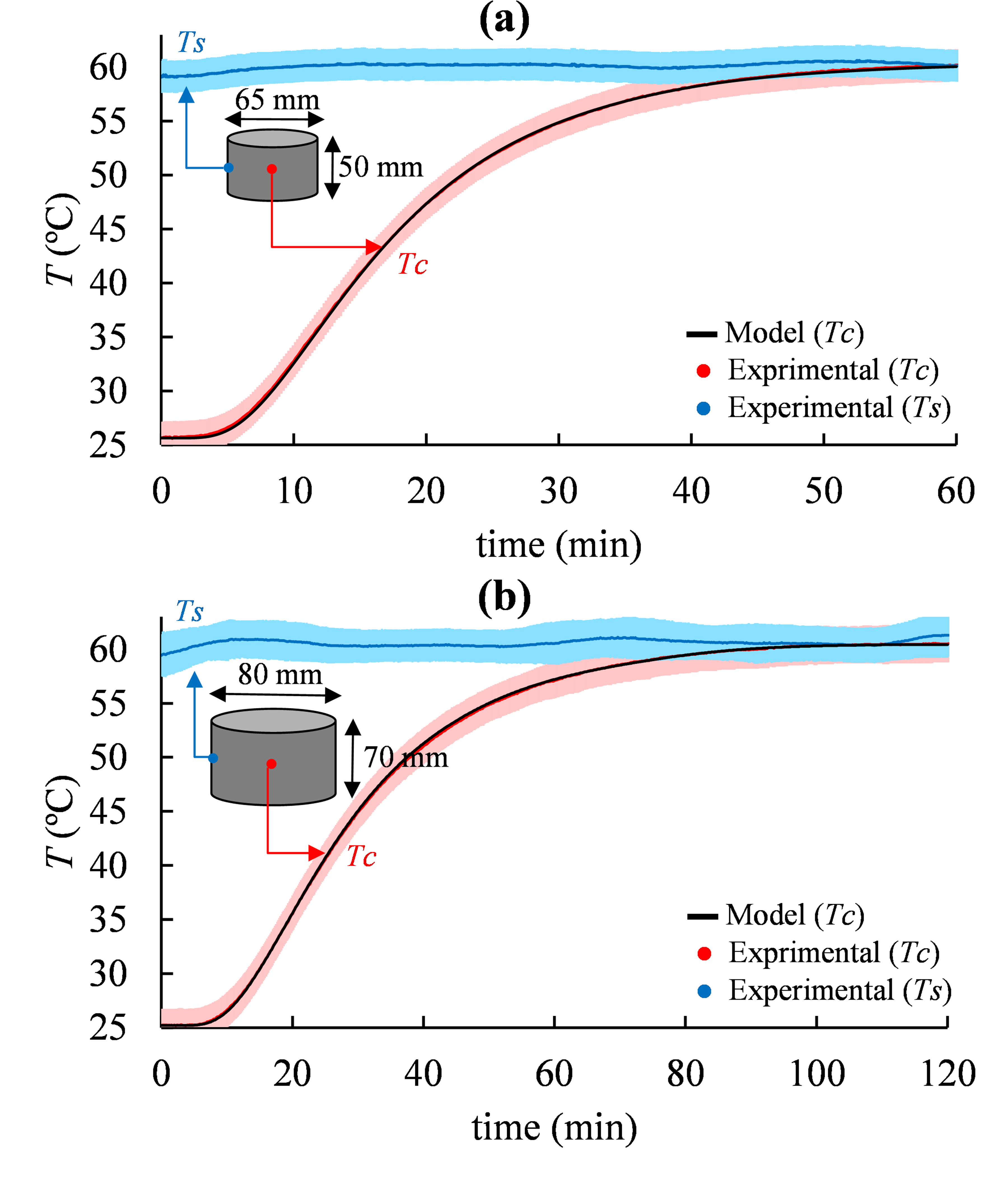
Center temperature (Tc, °C) of cupuassu pulp: comparison between power-law α-model predictions (black solid lines) and experimental data (red symbols, average value ± uncertainty) in aluminum capsules with diameter 65 mm × height 50 mm (a) and diameter 70 mm × height 80 mm (b).
Statistical parameters (RMSE and R2) evaluating the accuracy of cupuassu pulp heating predictions using the power-law model for the thermal diffusivity coefficient.
Conclusion
Four models were evaluated to describe the thermal diffusivity of cupuassu pulp during the heating process using an inverse method. The temperature predicted by the heat conduction equation, employing the constant diffusivity model, exhibited the poorest fit with the experimental data. This model showed a large and non-uniform distribution of residuals when compared to temperature-dependent models. The thermal diffusivity of cupuassu pulp increases with temperature, and the power-law model demonstrated the best statistical performance within the studied temperature range (10–80 °C). It showed good agreement with the Choi and Okos model predictions, with a difference of less than 5%, and exhibited excellent predictive capacity (R2 > 0.999, RMSE < 0.13 °C) across two independent validation datasets. Understanding the temperature dependence of the thermal diffusivity of cupuassu pulp allows more accurate prediction of heat transfer, which is essential for designing and optimizing safe and efficient heat treatments of this product.
Footnotes
Acknowledgments
The authors thank CNPq (Brazil) for financial support through a scholarship awarded to Brenda M. S. Barboza.

Ethical approval and informed consent statements
Not applicable.
Author contributions
Jhony T. Teleken was responsible for the conceptualization, numerical analysis, writing of the original draft, supervision, and writing—review and editing. Brenda S.M. Barboza performed the experiments and data analysis. Suélen M. de Amorim contributed to the data analysis and writing of the original draft.
Funding
The authors received no financial support for the research, authorship, and/or publication of this article.
Declaration of conflicting interests
The authors declared no potential conflicts of interest with respect to the research, authorship, and/or publication of this article.
Data availability statement
All data supporting the findings of this study are included in the manuscript.
Declaration of generative AI and AI-assisted technologies in the writing process
While preparing this work, the authors used AI tools GrammarlyMT and ChatGPT/OpenAI to review the text for grammar and clarity. After using this tool, the authors evaluated and refined the content as needed, taking full responsibility for the publication's content.