







Abstract
Bodyweight misperception results from the desire to achieve an ideal body emphasized by cultural mores and societal norms. It is sustained by the desire to be cultural compliant, especially for ethnic minority women such as Chinese American females. Through cultural beliefs, these women’s self-perceived weight status is distorted, which strengthens the impact of bodyweight misperception in their daily life as poor physical health, distressed psychosocial health, risky and unsafe health practices and behaviors, and diminished quality of life. Evidently, bodyweight misperception promotes maladaptive health behaviors. However, bodyweight misperception is barely captured in the current science about women’s health, and is minimally explored in research about Chinese American females’ desire and efforts to achieve the ideal body type. Therefore, the purpose of this literature review was to explore (1) body weight perception, (2) the factors associated with it, and (3) the negative health consequences triggered by it, in Chinese American females. Studies confirm that Chinese American females shape their body weight perception by internalized cultural ideals, acculturative stress, mass media, and social pressures. They overestimate their body weight more than underestimate it as evident by frequent weight-loss attempts. This internalized bodyweight misperception affects their physical and psychological health, with undesirable consequences on their quality of life. Home health care professionals interact closely with patients from diverse cultural backgrounds; remaining culturally sensitive is crucial in their practice. Knowledge from this literature review emphasizes the need for culturally appropriate weight management strategies for the delivery of competent home health care to Chinese American females.
Keywords
Introduction
Traditionally, bodyweight misperception has been observed as a prevalent occurrence among both adults and adolescences in the Western modern society.1-3 Conceptually, it is the discordance between the desired body weight and the actual body weight when comparing the self-report weight and the actual body mass index (BMI).4,5 Bodyweight misperception is prevalent among adults in the United States, with almost 50% underestimating their body weight and a little over 20% overestimating their body weight. 6 Clearly, there is a dislike of one’s body weight with a preferential desire for a smaller body weight than the reality.
Currently, the incidents of bodyweight misperception are being observed beyond the Western culture and infiltrating others such as the Chinese in the past decade. In fact, bodyweight misperception is a growing health issue among the Chinese population living inside and outside of mainland China. With Chinese American adults in New York City, one third of the 162 participants (32%) misperceived their body weight. 7 Of 902 adult female college students in mainland China, 46% demonstrated bodyweight misperception. 8 Bodyweight misperception has been evident in 40% of 3,923 Chinese adolescents 9 and 65% of adolescent girls surveyed in mainland China. 10 Likewise, normal weight adolescent girls in Taiwan and Hong Kong were more likely to overestimate their body weight than boys, 11 or be dissatisfied with their body size. 12
There is this growing displeasure with one’s body weight in the Chinese culture, which is associated with psychological and physical conditions such as anxiety, low self-esteem, depression, and harmful weight management behaviors,4,8,10 all of which are factors that may potentiate quality of life (QoL) impairments. Moreover, these findings indicate a possible relationship between bodyweight misperception and its effects on health status and health behaviors. Unfortunately, Chinese American females (CAFs) are often not included in mainstream research exploring bodyweight misperception, which could be problematic because various culture-bound characteristics may play complex roles in determining an individuals’ body perception.13,14
The purpose of this literature review was to explore the meaning of bodyweight misperception for CAFs by (1) providing an overview about body weight perception, (2) identifying contributing factors of bodyweight misperception, and (3) describing its effects on physical and psychological health status. As home health care professionals work with a variety of ethnically and culturally diverse populations; this knowledge could contribute to appropriate weight management strategies that emphasize the provision of culturally competent care in home health settings.
Definition of Bodyweight Misperception
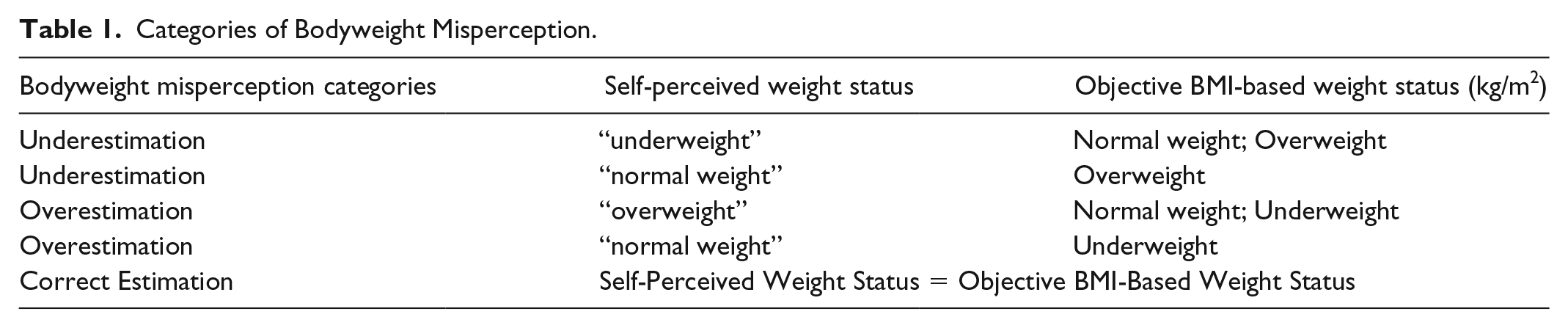
When a person reports a desired body weight category that does not match with the calculated BMI, he or she is considered as having bodyweight misperception. Conversely, if a person reports a desired bodyweight category that matches with the calculated BMI category, he or she is considered as having concordant weight perception. Bodyweight misperception is classified into two categories: “Weight overestimation”–a perceived body weight higher than the measured BMI category; and “weight underestimation”–a perceived body weight lower than the measured BMI category. The magnitude of the bodyweight misperception, especially in terms of the sub-categories, can be determined by a categorizing scale1,10,15 (Table 1).
Categories of Bodyweight Misperception.
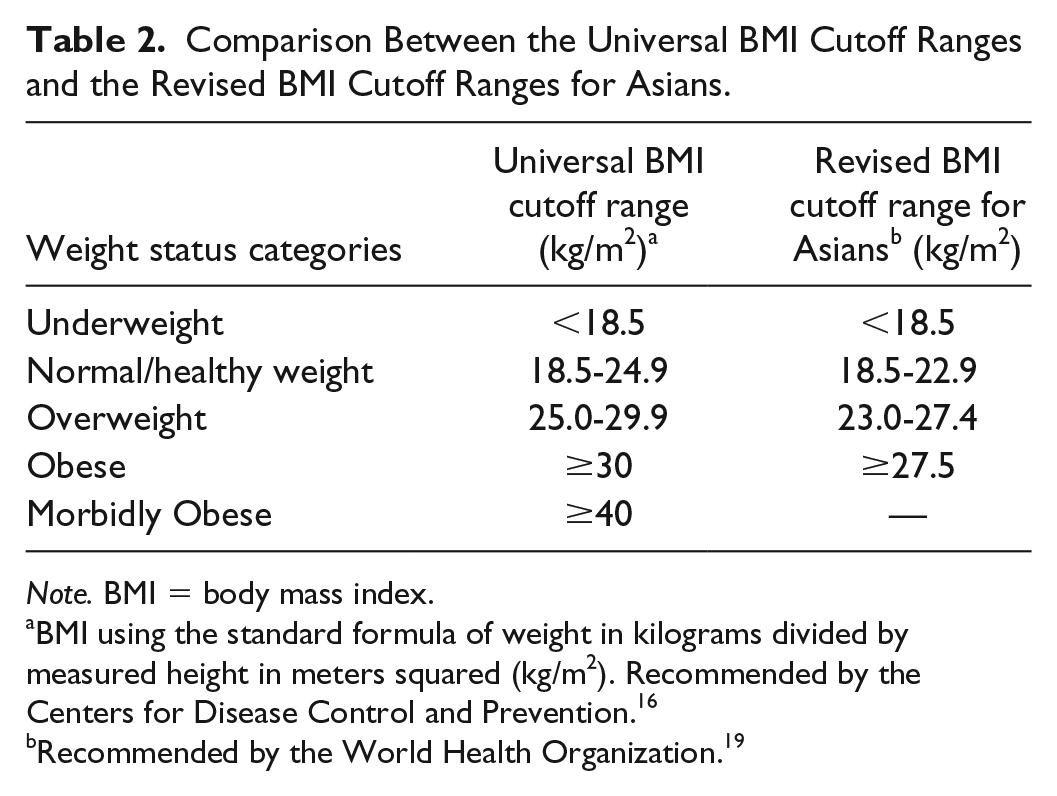
The formula for the standardized BMI is the weight in kilograms divided by measured height in meters squared (kg/m2). A BMI of 18.5 to 24.9 kg/m2 equates to healthy/normal weight, whereas a BMI less than 18.5 kg/m2 reflects underweight, a BMI of 25-29.9 kg/m2 equals overweight with a BMI of 30 kg/m2 or greater classified as obese (Table 2). 16 However, the standardized BMI is not suitable for Asians. Asians have a high propensity for developing visceral fat, which is not reflected in the conventional BMI cut point for measuring body composition. 17 Therefore, a revised classification scale has been devised specifically for persons of Asian descent (Table 2).18,19
Comparison Between the Universal BMI Cutoff Ranges and the Revised BMI Cutoff Ranges for Asians.
Note. BMI = body mass index.
BMI using the standard formula of weight in kilograms divided by measured height in meters squared (kg/m2). Recommended by the Centers for Disease Control and Prevention. 16
Recommended by the World Health Organization. 19
Overview of Body Weight Status and Perception Among Chinese Female
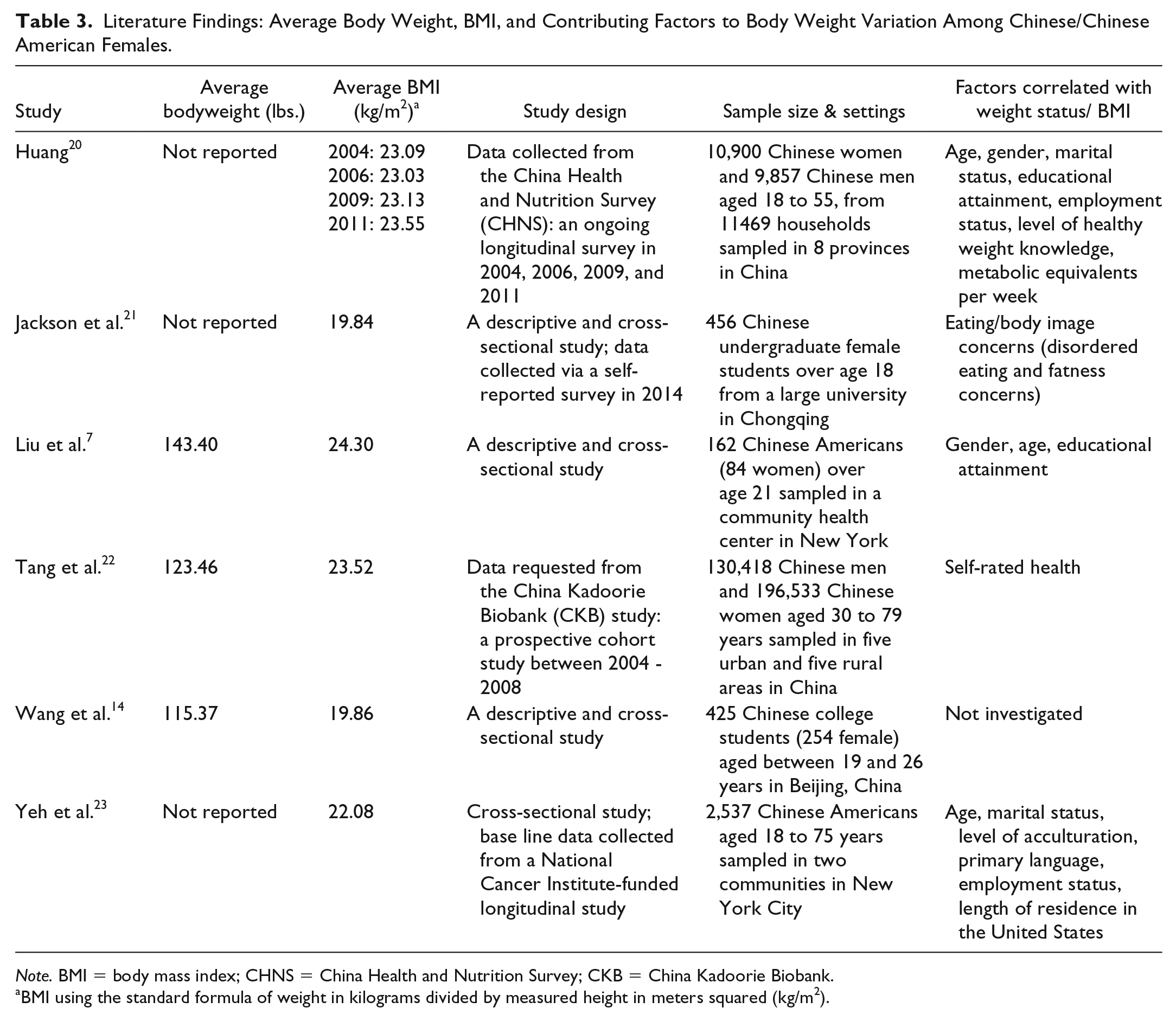
Factors contributing to body weight variation for Chinese female adults (Table 3) include age,7,20 marital status,20,23 educational attainment,7,20 and subjective health status. 22 These factors often occur in patterns and over a certain period of time resulting in them being possible predictors for Chinese females’ bodyweight misperception. For Chinese females with bodyweight misperception (Table 4), overestimation was more commonly observed than underestimation in both adults and adolescents.7,8,10 The act of weight-loss attempts was the most frequently reported predictor of bodyweight misperception.8,10
Literature Findings: Average Body Weight, BMI, and Contributing Factors to Body Weight Variation Among Chinese/Chinese American Females.
Note. BMI = body mass index; CHNS = China Health and Nutrition Survey; CKB = China Kadoorie Biobank.
BMI using the standard formula of weight in kilograms divided by measured height in meters squared (kg/m2).
Literature Findings: Bodyweight Misperception Among Chinese/Chinese American Females.
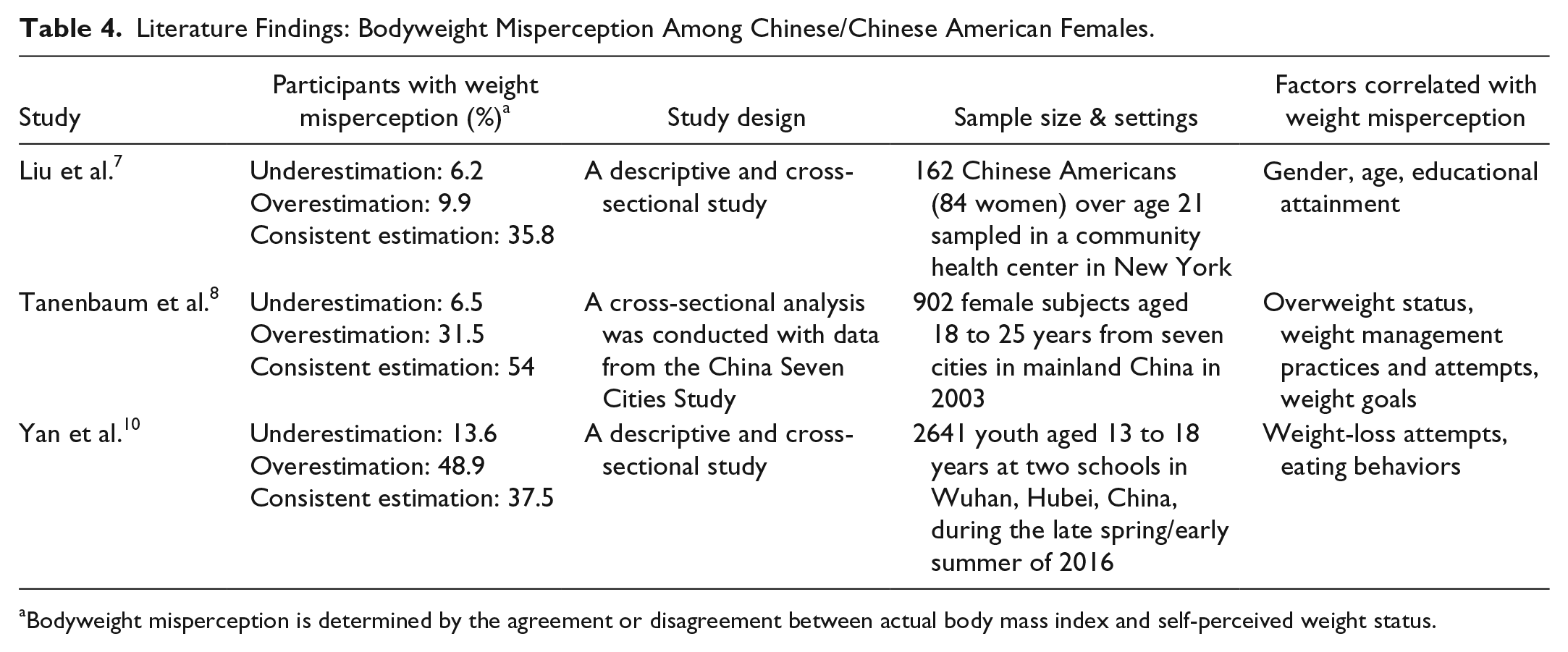
Bodyweight misperception is determined by the agreement or disagreement between actual body mass index and self-perceived weight status.
Societal and Cultural Contributing Factors
Internalization of Cultural Ideals
Cultural ideals may have shaped CAFs’ perception and attitude toward their weight status. 13 The Eastern culture values a substantially heavier physique as it symbolizes auspiciousness, family fertility, and prosperity in females; wealth, wellness, and happiness in males; and the family’s high social status in children. 24 Therefore, it is not uncommon for Asian Americans, especially the first-generation immigrants, to underestimate their body weight.24,25 In fact, overweight adults in China reported a higher level of self-perceived health status than those of normal weight. 26 In addition, each distinct culture has its own standard for physical attractiveness; thus, a person’s desired body weight and body image are reflective of the cultural preferences rather than an accurate measure of one’s body weight.27-29
Mass Media Influence
The pursuit of the ideal physical appearance portrayed in the mass media has clearly become an emerging problem among the generation of Chinese females (adolescents and adults).8,14,25,30,31 While the traditional cultural beliefs still thrive in some rural and less developed parts of mainland China, these traditional ideals are gradually being replaced by a partiality for a slimmer physique in females due to urbanization and the influence of the mass media.8,32 This shift in cultural beliefs and the ideal physical appearance are attributable to the impact of marketing an unrealistic and unattainable ideal physical appearance through mainstream advertisement/media, social media, and modern pop culture.14,33 Chinese female adolescents are constantly exposed to the waiflike body type as the ideal physical appearance promoted in the modern beauty industry and media, which significantly facilitates their susceptibility to body image dissatisfaction and its outcome—bodyweight misperception.14,21
Acculturation Stress
Acculturative stress is conceptualized as the continuous stressful experience associated with the challenges and difficulties immigrants encounter while adapting to the host culture.27,34 CAFs (and women of other Asian cultures) experience unique stressors during acculturation such as gender role strain and model minority labels, exacerbating body image dissatisfaction and bodyweight misperception. 13 These established acculturative stressors lead to eating disorders, body dissatisfaction, and bodyweight misperception among ethnic minority groups in the United States.35,36 Parental and family acculturation have been described as a contributing factor to bodyweight misperception for adolescents from Asian immigrant families. 37 It is hypothesized that the family dynamics become distressed from the incongruent pace of acculturation between parents and children. Consequently, the newer generation minorities have a higher susceptibility to a distorted perception of body image attributed to family conflicts. 37 Thus, the impact of acculturative stress on the well-being of ethnic minorities is quite robust and potentially a significant contributor to bodyweight misperception.
Social Pressure
The underlying mechanisms leading to bodyweight misperception manifest as a series of experiences influenced by social pressure.25,30,32,21,38,39 Specifically, individuals’ self-evaluation of their body is often distorted by the societal subjective and unrealistically high expectations and the internalized appraisal of one’s attributes defined by external stimuli within social settings. 39 Chinese Americans share common values and customs with other Asian cultures, which include collectivism, communitarianism, and emphasis on discipline and social order.26,38,40 CAFs might feel stressed to adhere to the predominant Western ideal body image as they adapt to the American culture, especially Chinese immigrants coming from cultures that accentuate connecting with the community.24,26 Communally bounded CAFs reside in a homogenous society so that their concept of “self” is derived from social desirability, other’s perceptions, and cultural norms.27,21,39 As such, CAFs are apt to compare themselves to their acquired or viewed images of the host culture’s ideal physical appearance that establishes these females’ desired physical appearance and attractiveness; and, in turn, these females develop body image dissatisfaction driven by their bodyweight misperception.8,27,36
Consequences of Bodyweight Misperception in Chinese Females
Bodyweight misperception has a devastating impact on anyone’s physical and psychological health, which is enormously evident in Chinese females. For Chinese adolescent girls, bodyweight misperception leads to psychological distress such as anxiety, 14 depressive symptoms, and perceived stress. 25 Furthermore, Chinese adolescent girls feel compelled to “take action” with unhealthy weight-loss practices with the determination to address their dissatisfaction with their bodies—all influenced by bodyweight misperception.8,10,11,14,41
Both weight underestimation and overestimation have undesirable consequences on an adult’s awareness of the aspects for health-related QoL.3,5,42 Adults with bodyweight misperception have an impaired QoL, engage in unhealthy lifestyle practices, develop an impaired self-perceived health status, and achieve a body weight such as obesity that contributes to the onset of chronic diseases.5,20,43 In fact, bodyweight misperception was a significant indicator of obesity for elderly Chinese Americans because they would underestimate their body weight although the BMI indicated that they were “obese.” 7 Chinese Americans do not have a higher prevalence of obesity when compared with other minority groups; however, they have an increased susceptibility to chronic diseases such as cardiovascular disease and diabetes mellitus, 40 which are interdependent with weight perception and weight control practices—easy outcomes with bodyweight misperception.7,41
For females of diverse ethnic backgrounds such as Chinese Americans, bodyweight misperception is attributed to the unique cultural perceptive and daily stressors in their lives. Social and cultural factors contributing to bodyweight misperception for CAFs include internalization of cultural ideals, mass media influence, acculturative stress, and social pressure. A model illustrating the relationship between the contributing factors, bodyweight misperception, and health consequences is developed based on the aforementioned literature findings (Figure 1). This model may serve as an assessment guideline for home health care professionals to determine CAFs’ body weight perception, physical health, and psychosocial health from a cultural and social perspective.
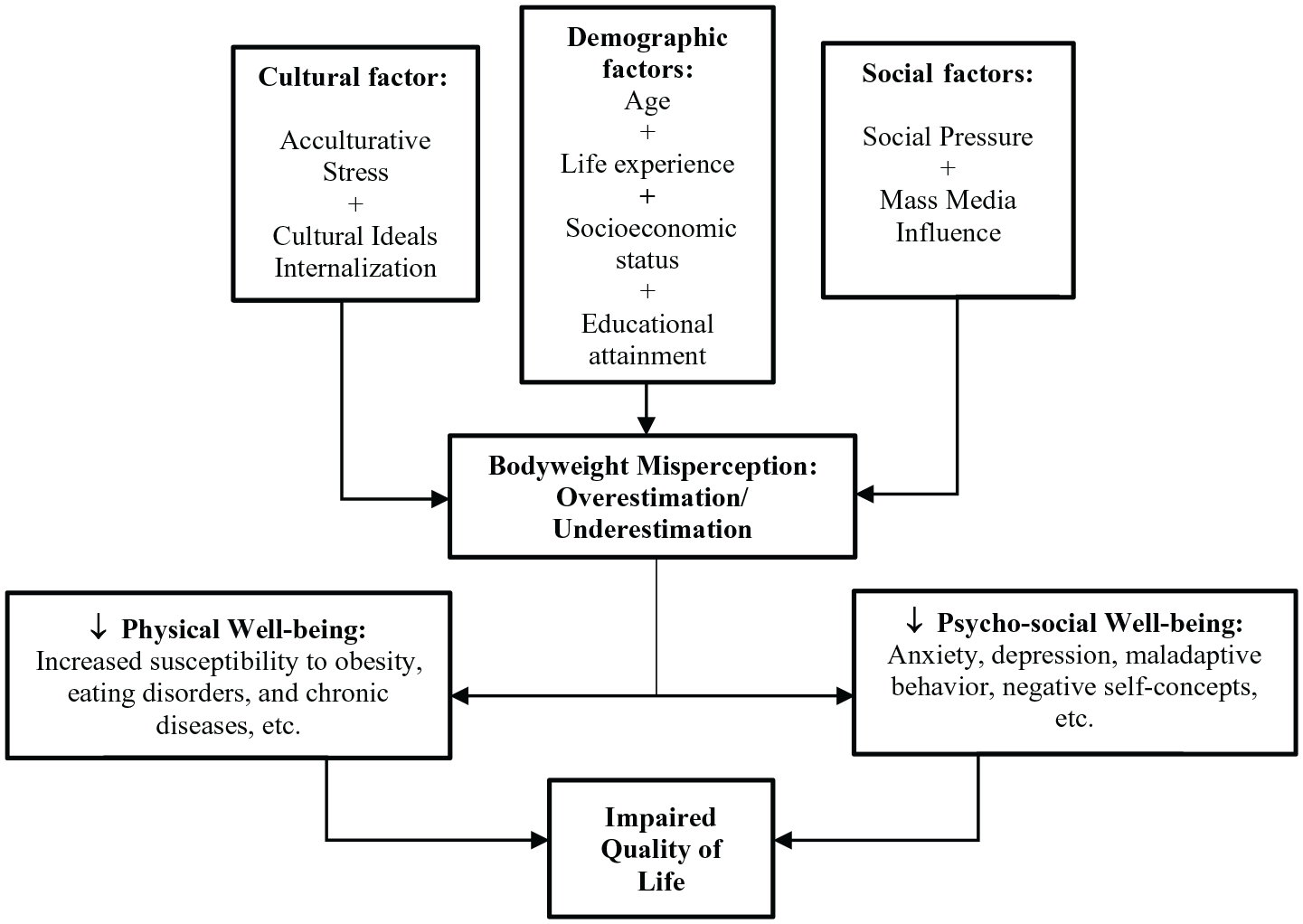
Relationship of bodyweight misperception, associated factors, and the consequences.
Application of Findings
CAFs have a distinct set of cultural beliefs which influence how they perceive health and illness.13,14,41 In order to tailor interventions that support healthy weight perception and attainment among this population, understanding how the internalization of cultural ideals, the influences of mass media, acculturative stress and social pressure are reflected on body weight perception are necessary. Potential weight management interventions for CAFs could incorporate cognitive-behavioral therapy, acculturative stress management strategies, and culturally appropriate nutrition and physical activity programs.44,45
Bodyweight misperception can impact a person’s lifestyle and health-related behavior, which are crucial determinants of health.5,42 Both underestimation and overestimation of one’s body weight pose a high risk for poor physical health and psychosocial dysphoria.8,14,25,41 For instance, the leading indicator of health status, a measurement of the Health-Related Quality of Life (HRQoL) concept, can be negatively impacted from the effect of bodyweight misperception on overall physical, psychological well-being, life-satisfaction, and quality of living, dimensions of HRQoL. 46 Bodyweight misperception maintains a controlling effect on the overall health status that is measured as a decrease in the generic QoL instrument “EQ-5D,” which has a composite score for the five dimensions of HRQoL. 47 In home health settings, the EQ-5D can be included as a health outcome measurement tool to evaluate the multidimensional effects of body weight perception on both physical and psychosocial health.5,43
Accuracy of body weight perception should be promoted among CAFs. For instance, older generation Chinese Americans should be educated about the relationship between body weight status and chronic health conditions such as malnutrition and obesity. Furthermore, as BMI might not be the most accurate indicator to measure body composition among Asian Americans, a more reliable scale for measuring weight status such as bodyfat percentages may be used for weight assessment in this population. 48
Home health care professionals are uniquely situated to assist in the gratification of an ethnically diverse patient’s physical, emotional, and spiritual needs through mutual trust. Home health care professionals, particularly nurses, often interact closely with the patients across the continuum of care. Home health nurses must offer culturally competent care, by developing an awareness of cultural differences and performing cultural assessment during the provision of home health care.
Perceptions and attitudes toward body weight and weight management practices could also depend on a person’s life experience, socioeconomic status, and educational attainment. 20 It is therefore imperative for home health care professionals to gain a better understanding of CAFs’ concepts of health and illness, realizing that perception of weight status may vary among each individual within the same cultural group.
Conclusion
There are several main concepts surrounding weight perception among CAFs. Life stressors, cultural idealization, and social pressure play significant roles in determining an individual’s self-perceived weight status. As overweight and bodyweight misperception are becoming more prevalent health issues in the United States, encouraging appropriate weight management practices and realistic body weight perception are prioritized to ensure the overall well-being of the United States’ diverse population. In addition, current interventions on health weight management need to be culturally sensitive so that persons who respect their culture (i.e., CAFs) can receive adequate weight management. Future studies should continue to examine the unique culture-specific factors that influence CAFs’ body weight perception, as well as their perceived barriers to weight management. Additional efforts should be made to promote accurate weight perceptions, weight management, and the proper management of chronic conditions associated with body weight status among CAFs.
Footnotes
Declaration of Conflicting Interests
The author(s) declared no potential conflicts of interest with respect to the research, authorship, and/or publication of this article.
Funding
The author(s) received no financial support for the research, authorship, and/or publication of this article.
