







Abstract
Background:
Growing pressure to reduce hospital length of stay has made Medicare-certified home health agencies (HHAs) essential for preventing readmissions. Despite record demand, high clinician turnover remains a critical barrier to care delivery.
Aim:
To explore the perspectives of Registered Nurses (RNs), Licensed Practical Nurses (LPNs), Physical Therapists (PTs), Physical Therapy Assistants (PTAs), Occupational Therapists (OTs), Certified Occupational Therapy Assistants (COTAs), and Speech-Language Pathologists (SLPs; n = 372) on key operational aspects of home health practice and examine how satisfaction with these factors correlates with overall job satisfaction.
Methods:
A cross-sectional online survey was disseminated nationally via professional association forums and social media between March 11 and April 15, 2025. The survey assessed 5 components: scheduling, traveling, environment, documentation, and overall job satisfaction using a 5-point Likert scale, along with questions on discipline, work location, OASIS completion, and documentation mode. Reliability was assessed using McDonald’s omega (ω = 0.754). Spearman’s rho correlation analysis examined associations between operational components and job satisfaction.
Results:
Of 372 responses (179 PTs/PTAs, 78 OTs/COTAs, 71 RNs/LPNs, 44 SLPs), scheduling received the highest satisfaction ratings while documentation received the highest dissatisfaction. All 4 operational components correlated significantly with job satisfaction (df = 370): documentation (ρ = 0.575, P < .001), scheduling (ρ = 0.490, P < .001), traveling (ρ = 0.481, P < .001), and environment (ρ = 0.305, P < .001).
Conclusion:
Documentation burden, scheduling autonomy, and travel demands are the strongest operational drivers of home health clinician job satisfaction. Targeted improvements in these areas may meaningfully support workforce retention in Medicare-certified HHAs.
Introduction
Home health is a unique setting where a patient receives health care services such as skilled nursing (SN), physical therapy (PT), occupational therapy (OT), and speech therapy (ST) in their own home environment. This type of care was initially introduced to assist with management of healthcare utilization by providing continuity of care and support in patients’ homes, thereby reducing hospital length of stay and preventing re-admissions. 1
In the past few years, the availability of post-acute services such as home health care have considerably reduced the average length of stay at hospitals even as the admission and readmission rates in hospitals have remained stagnant.2,3 However, as the geriatric population (adults aged 65 and older) continues to grow in the United States, a corresponding rise in hospitalization rates is anticipated. 4 This will further place an increased demand on post-acute care services such as home health to meet patients’ needs and reduce readmission rates.
In addition to assisting with patient continuity of care at home, home health services also provide benefits including patient comfort, family involvement, and attainment of functional goals and outcomes. 5 Thus, rehabilitation via home health services is often a preferred service delivery model for patients and families. 6 Furthermore, with advancement in medical procedures, certain surgeries such as arthroplasty are now being performed on an outpatient basis with referral for immediate rehabilitation with home health services, resulting in reduced healthcare utilization and improved patient outcomes. 7
Several home health agencies (HHAs) are now available which claim to offer a wide range of services with skilled clinicians across disciplines following hospital discharge. Per Centers for Medicare & Medicaid Services (CMS) guidelines, hospitals and/or physician offices should provide patients with a list of available HHAs in the area. 8 To assist patients and families in decision making, CMS has established patient survey star ratings using the Home Health Consumer Assessment of Healthcare Provider and Systems (HHCAHPS) survey, 9 which has been shown to improve quality of care and empower patients in their selection of agencies. 10
Home health therapy referrals have increased considerably with the pressure to reduce healthcare utilization and hospital length of stay (LOS). Despite the growth in the number of home health agencies and implementation of star ratings, finding a quality HHA that offers all necessary services has become increasingly challenging due to high staff turnover rates. 11 While working in the home health setting offers benefits such as autonomy, scheduling flexibility, and work-life balance, it also comes with challenges such as professional isolation, inadequate resources, and occasionally unsafe or hazardous home environments. 12
A review of the literature was conducted to identify studies addressing job satisfaction, workforce retention, and operational challenges in home health care settings. The following databases were searched: PubMed, CINAHL, and Google Scholar. Keywords included: home health, job satisfaction, clinician turnover, workforce retention, nursing home health, allied health home care, documentation burden, scheduling flexibility, and rural home health.
Existing literature documents significant workforce challenges in home health care globally. Studies have demonstrated that high clinician turnover in home health is associated with documentation burden, geographic isolation, and limited organizational support.11-17 Nursing-specific research has highlighted scheduling instability as a key predictor of turnover. 14 Allied health literature further identifies role ambiguity, inadequate resources, and limited peer interaction as drivers of dissatisfaction.15,16 Despite this body of work, a notable gap exists: no prior study has simultaneously measured satisfaction across multiple clinical disciplines (nursing, PT, OT, SLP) in Medicare-certified HHAs using a single instrument. The present study addresses this gap.
The present study was conducted to gain insight from clinicians with experience in the home health setting employed in Medicare-certified HHAs on the benefits and challenges of working in this setting, using a 5-point rating survey. This study aims to identify reasons for the high turnover rate among home health clinicians and provide recommendations to address staffing and retention barriers.
Methods
The Winchester Medical Center institutional review board approved the study, including the survey and informed consent (IRB approval number: 20250301, MAR 2025). The informed consent was provided to each participant prior to completing the survey. The survey was drafted by both authors and reviewed by 2 additional home health clinicians. Feedback was discussed and incorporated.
The survey included questions on clinician discipline, work location, completion of start of care (OASIS) assessment, mode of documentation, and a Likert-style scale to rate 5 key components relevant to home health practice. The 5 key components included 4 operational variables—scheduling, traveling, environment (patients’ home), and documentation—and a fifth component of overall job satisfaction. The 5-point rating scale included: 1 = very dissatisfied, 2 = dissatisfied, 3 = neutral, 4 = satisfied, and 5 = very satisfied. The 5 survey domains were selected based on recurring themes identified in the home health workforce literature, clinical experience of the authors, and input from the 2 practicing home health clinicians who reviewed the instrument. The survey comprised approximately 10 items and could be completed in an estimated 5 to 8 minutes.
The survey was sent to clinicians with current or former experience in home health settings in Medicare-certified HHAs. These clinicians included Registered Nurses (RN), Licensed Practical Nurses (LPN), Physical Therapists (PT), Physical Therapy Assistants (PTA), Occupational Therapists (OT), Certified Occupational Therapy Assistants (COTA), and Speech-Language Pathologists (SLP). This study focused on clinicians who directly develop and implement home health treatment plans; social workers and home health aides were therefore excluded. However, given the significant role both groups play in home health care, particularly home health aides, who account for a substantial share of visit volume, their exclusion is acknowledged as a limitation. The survey was created using Microsoft Forms and disseminated nationally using professional forums and social media home health groups, including the authors’ place of employment, the American Physical Therapy Association (APTA) home health newsletter, American Speech-Language-Hearing Association (ASHA) Special Interest Groups, and the American Occupational Therapy Association (AOTA) forum. Data collection was conducted from March 11, 2025 to April 15, 2025.
Data Analysis
Data were collected via Microsoft Forms and exported to Microsoft Excel for summarization. Responses were totaled and converted into percentages for comparison. A descriptive quantitative analysis included comparisons of satisfaction levels across the 5 key components. Discipline-level breakdowns are presented in tabular form (Tables 1-6). A reliability analysis of the survey was conducted using McDonald’s omega test. Spearman’s rho correlation analysis was conducted with job satisfaction as the dependent variable to examine associations with the 4 operational components (df = 370). Spearman’s rho was selected as it is appropriate for ordinal Likert-scale data and does not assume a normal distribution. Comparisons across disciplines were descriptive in nature.
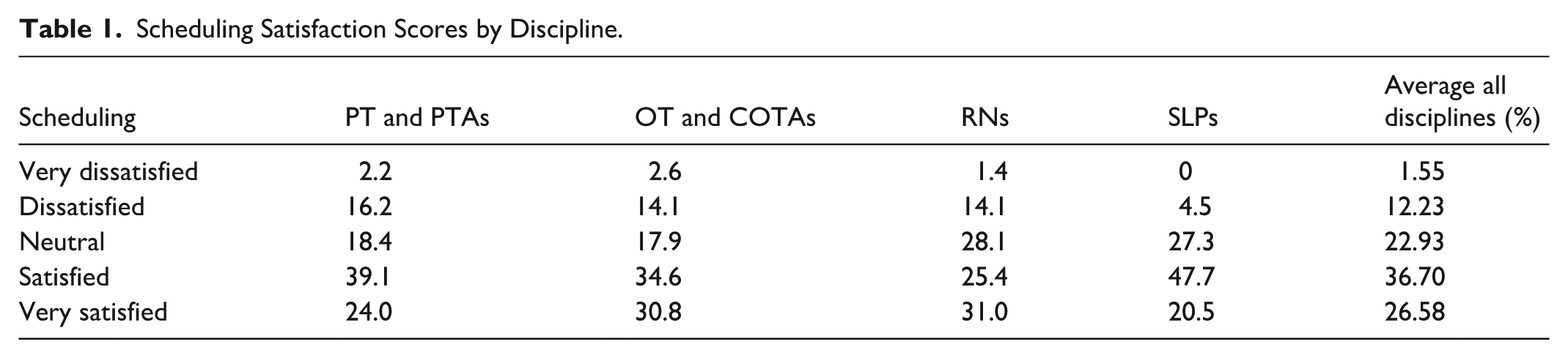
Scheduling Satisfaction Scores by Discipline.
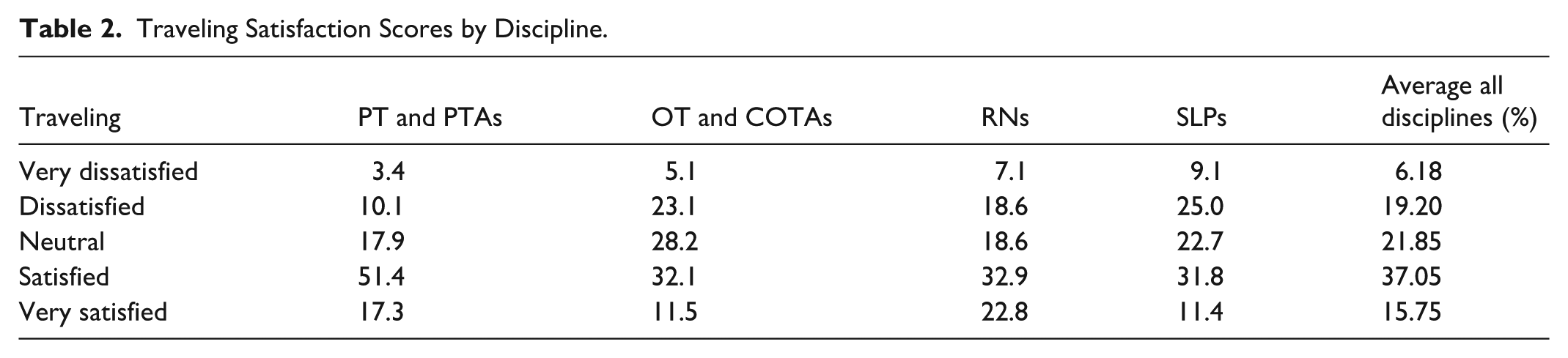
Traveling Satisfaction Scores by Discipline.
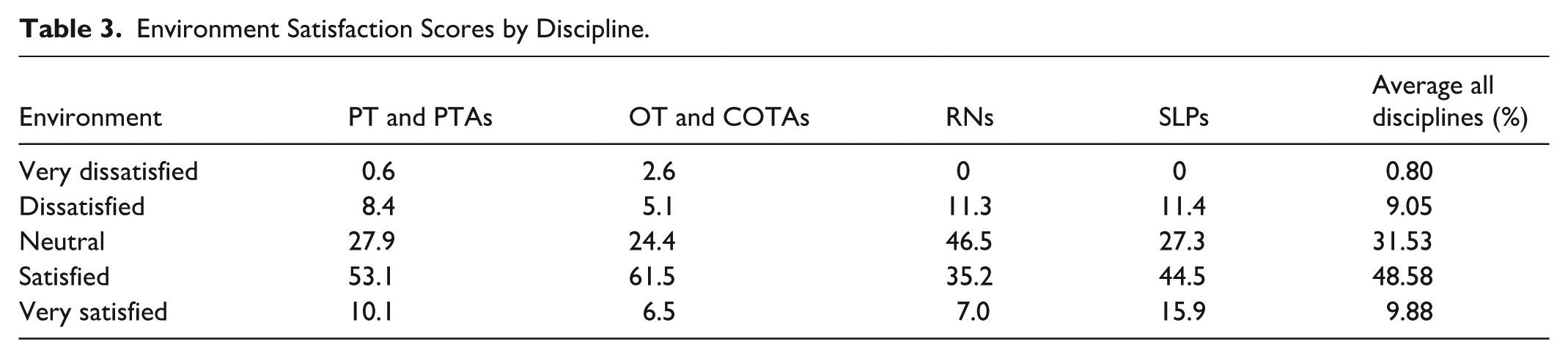
Environment Satisfaction Scores by Discipline.
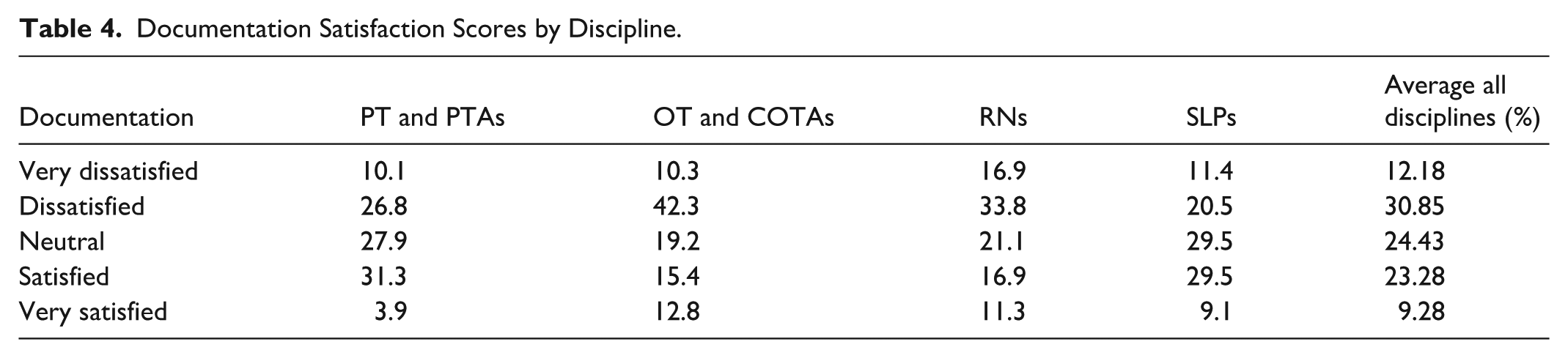
Documentation Satisfaction Scores by Discipline.
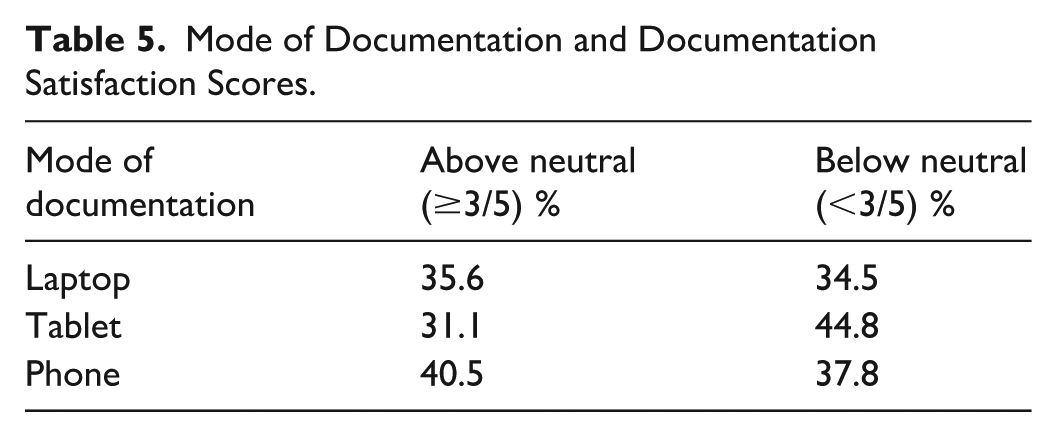
Mode of Documentation and Documentation Satisfaction Scores.
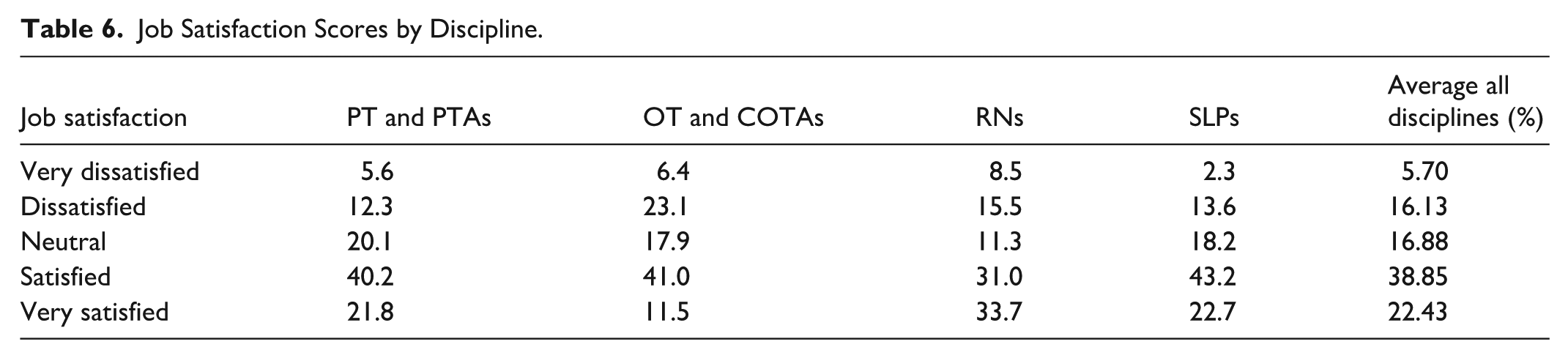
Job Satisfaction Scores by Discipline.
Results
Over the course of 1 month, a total of 372 responses were collected via the nationally disseminated online survey. Of the 372 responses received, 179 were from PTs and PTAs, 78 from OTs and COTAs, 71 from RNs and LPNs, and 44 from SLPs. A total of 233 clinicians reported completing Start of Care (OASIS) documentation (Figure 1).
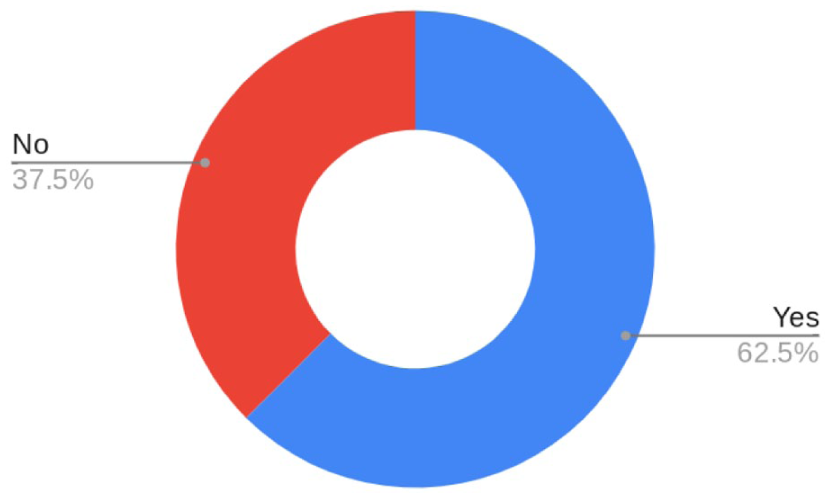
Start of care clinicians.
Tablets were reported as the primary mode of documentation by 66% of clinicians, followed by laptops at 23% and phones at 10% (Figure 2). Work location data were collected; however, most respondents provided only the state of employment rather than specific urban/rural classification, precluding a meaningful rural/urban subgroup analysis. This is noted as a limitation.
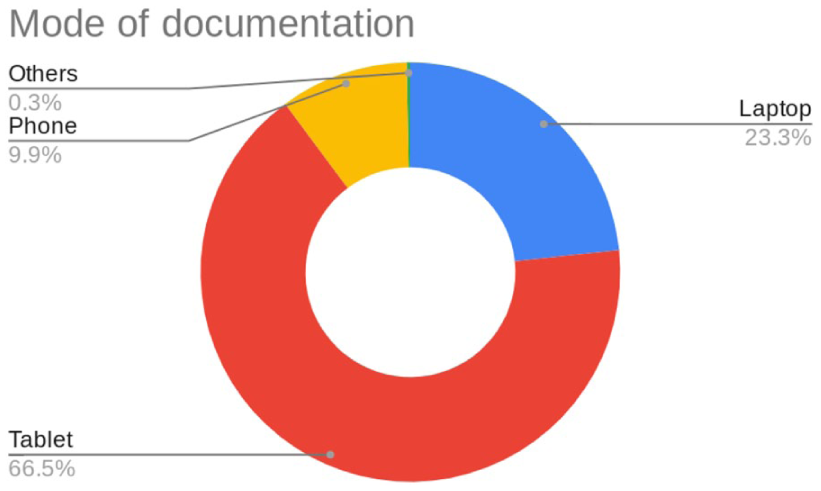
Mode of documentation.
Comparison of Satisfaction Levels Across Home Health Components
Clinicians rated their satisfaction with each component using the 5-point Likert scale described above. Results by discipline are presented in Tables 1 to 5, along with discipline-level comparisons.
Scheduling
Overall, 36.7% of clinicians reported being “Satisfied” (4/5), 26.5% “Very Satisfied” (5/5), and 22.9% “Neutral” (3/5). PT/PTAs and OT/COTAs reported comparably high satisfaction rates, while RNs showed a higher proportion of neutral responses (28.1%). SLPs reported the highest satisfied-or-very-satisfied rate (68.2%) of any discipline.
Traveling
Overall, 52.8% of clinicians expressed satisfaction with traveling (ratings of 4 or 5) and 21.85% were neutral. OT/COTAs and SLPs showed the highest dissatisfaction rates (28.2% and 34.1% combined dissatisfied/very dissatisfied, respectively), potentially reflecting larger geographic territories served by these disciplines.
Environment
All disciplines reported overall satisfaction with working in patients’ homes, with an average of 48.57% satisfied and 9.87% very satisfied. 31.5% indicated a neutral response. RNs reported a notably higher rate of neutral responses (46.5%) compared to other disciplines, which may reflect more complex or variable home environments encountered in nursing practice.
Documentation
Documentation received the highest level of dissatisfaction among all components, with 30.85% of clinicians reporting dissatisfaction and 12.17% reporting being very dissatisfied. OT/COTAs reported the highest combined dissatisfaction (52.6%), followed by RNs (50.7%), PTs/PTAs (36.9%), and SLPs (31.9%).
A further analysis examined whether mode of documentation was related to satisfaction with this component. Clinicians who documented via phone reported the highest satisfaction, followed by laptop and then tablet users, despite tablets being the most commonly used device (66%). Additionally, comparison between SOC and non-SOC clinicians revealed only minor differences: 42.9% of SOC clinicians were dissatisfied or very dissatisfied versus 39.0% of non-SOC clinicians.
Job Satisfaction
Across all disciplines, the majority of clinicians reported overall satisfaction with home health employment, with work-life balance as a key identified factor. On average, 38.85% were satisfied and 22.43% were very satisfied, while 16.88% were neutral. Dissatisfaction levels were comparatively lower (16.13% dissatisfied; 5.70% very dissatisfied). RNs reported the highest rate of very satisfied responses (33.7%), while OT/COTAs had the highest combined dissatisfaction rate (29.5%).
A Visual representation of the average percentage of survey ratings of different aspects of Home health is depicted in Figure 3.
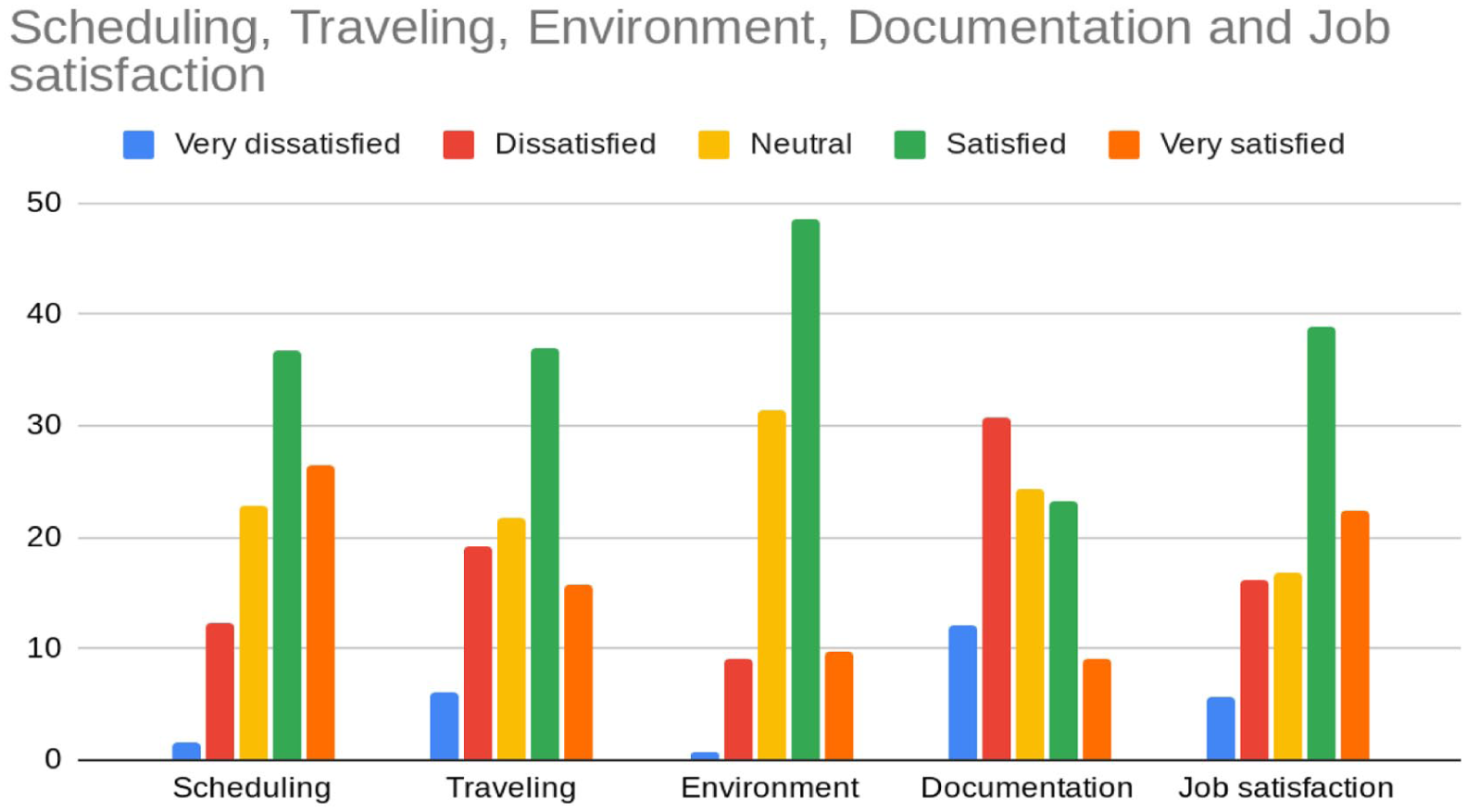
Visual representation of average percentage of survey ratings of different aspects of Home health.
Statistical Analysis
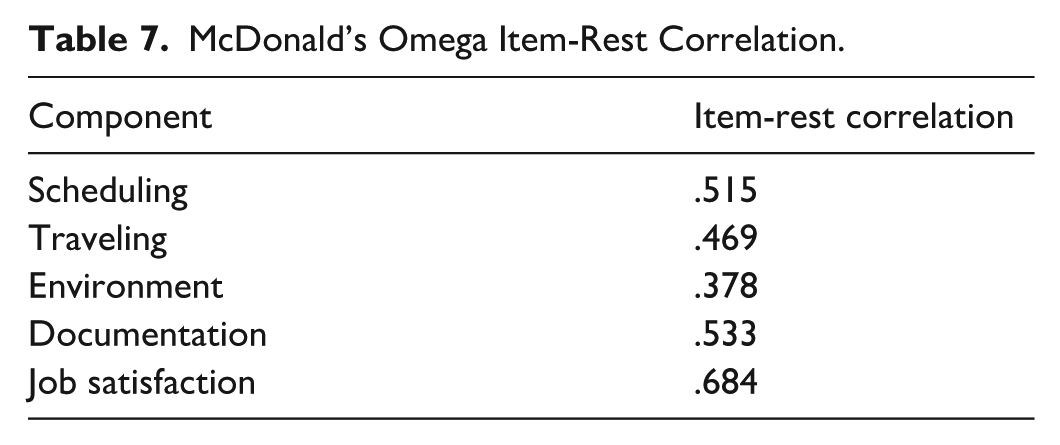
A reliability analysis using McDonald’s omega yielded a value of ω = 0.754, indicating acceptable reliability. Item-rest correlations showed positive contributions from all items (Table 7).
McDonald’s Omega Item-Rest Correlation.
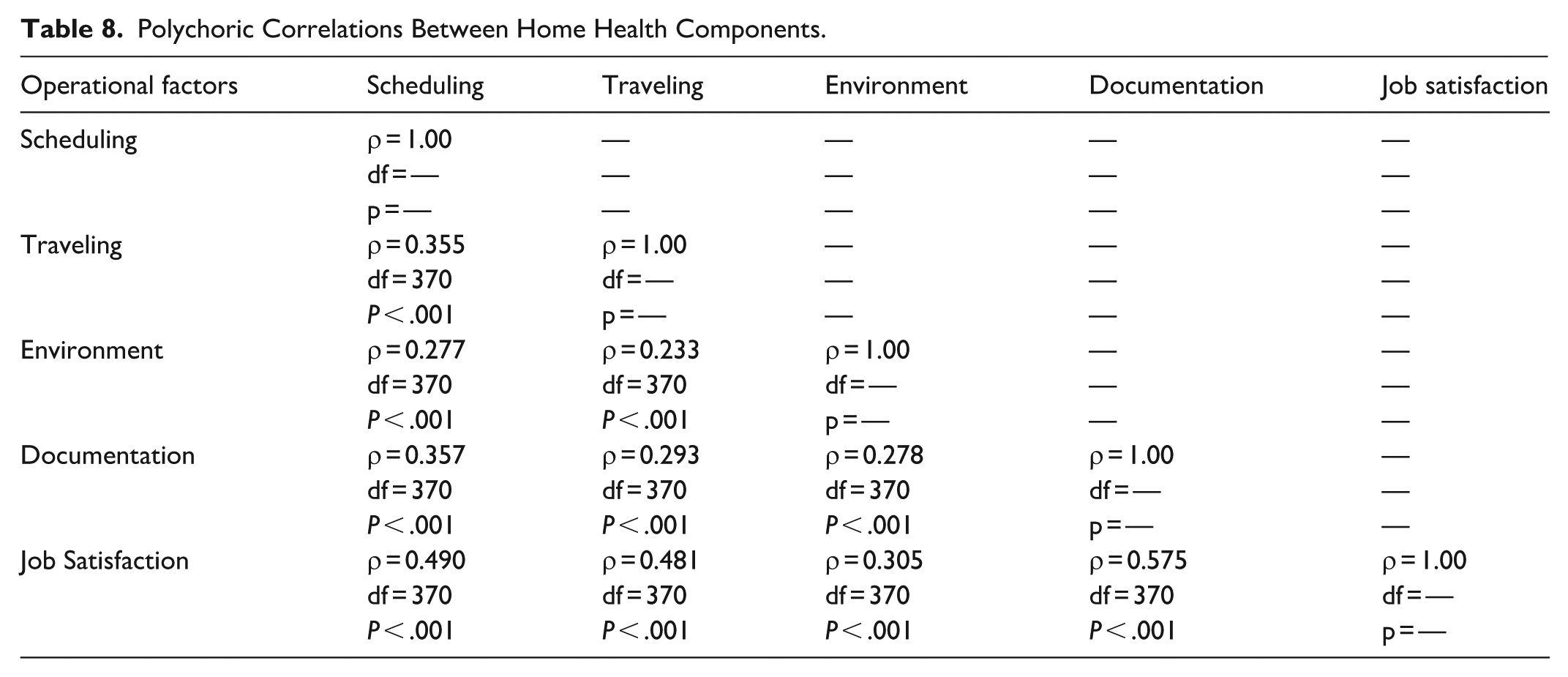
Spearman’s rho correlation analysis (df = 370) revealed statistically significant positive associations between all 4 operational components and overall job satisfaction (all P < .001). Documentation satisfaction demonstrated the strongest correlation with job satisfaction (ρ = .575, P < .001), followed by scheduling (ρ = .490, P < .001) and traveling (ρ = .481, P < .001). Environment demonstrated the weakest correlation (ρ = .305, P < .001), though this remained statistically significant. These results indicate that higher clinician satisfaction with documentation, scheduling, and travel demands is most strongly associated with increased overall job satisfaction. The full correlation matrix is presented in Table 8.
Polychoric Correlations Between Home Health Components.
Discussion
Home health care services play an important role in assisting patients in transitioning from hospital to home by providing required medical care and rehabilitation services from skilled clinicians. 1 However, in recent years, there has been a high turnover rate among home health clinicians, 11 creating a barrier to meeting the growing geriatric patient population’s discharge needs. 4 This study aimed to explore the satisfaction levels of home health clinicians across 5 key components of home health practice: scheduling, traveling, environment, documentation, and job satisfaction.
The survey was successfully disseminated nationally and received 372 responses from a diverse group of clinicians including PTs, PTAs, OTs, COTAs, SLPs, RNs, and LPNs employed in Medicare-certified HHAs. Social workers and home health aides were not included, which limits the generalizability of findings to all clinician types in the HHA workforce.
Highest dissatisfaction was reported for documentation, with over 40% of clinicians rating themselves as dissatisfied or very dissatisfied. OT/COTAs reported the greatest dissatisfaction (52.6%), suggesting documentation burden may be especially pronounced for this discipline. A further comparison between SOC and non-SOC clinicians showed minimal difference, suggesting documentation burden is not limited to the OASIS-completing subset. Mode of documentation showed some variation, with phone-based documentation associated with slightly higher satisfaction despite being the least-used device. The high prevalence of tablet use paired with lower satisfaction warrants additional investigation.
In contrast to documentation, scheduling, traveling, and environment received higher satisfaction ratings. Highest satisfaction was noted for scheduling, reflecting the autonomy home health clinicians have in planning their daily schedule and achieving work-life balance. The patient environment component was also rated positively, with the majority of clinicians satisfied or very satisfied, suggesting the unique opportunity to provide care in a patient’s home is perceived as rewarding.
Traveling received a high number of neutral responses, though more than half of clinicians reported satisfaction with this aspect. Notably, SLPs showed greater dissatisfaction with travel than other disciplines, potentially reflecting the typically larger geographic territories they serve. This aligns with prior literature documenting rural SLP shortages and service area challenges. 16
Polychoric correlation analysis identified documentation (ρ = .575, P < .001), scheduling (ρ = .490, P < .001), and traveling (ρ = .481, P < .001) as the strongest correlates of overall job satisfaction. Environment demonstrated a comparatively weaker but still statistically significant correlation (ρ = .305, P < .001). These patterns are consistent with current literature that have identified administrative burden and geographic demands as key drivers of home care clinician attrition, suggesting that findings from this U.S. Medicare-certified HHA context may have broader applicability.14,15
Shortages in healthcare clinicians have been predicted across disciplines in the next decade. A recent microsimulation study projected a shortfall of 9120 full-time equivalent physical therapists by 2037. 13 A study by Bergman et al (2016-2019) showed a 30% turnover rate for home health RNs and 25% for LPNs. 14 OT needs in the United States are projected to exceed the available supply of practitioners, 15 and SLPs in rural areas already face notable shortages. 16 Concurrently, prior epidemiological studies have shown a 1.8% to 3.1% annual increase in the rate of elderly individuals becoming homebound. 17 These converging trends underscore the urgency of improving clinician satisfaction and retention.
This study recommends that home health agencies focus on strengthening documentation systems, preserving scheduling autonomy, and managing travel demands through support tools and resources. Just as the HHCAHPS serves as a valuable tool for patients selecting agencies, the internal rating approach used in this study can help agencies identify root causes of clinician burnout and guide targeted improvements.
Limitations and Scope for Further Studies
This study included quantitative analysis of key factors related to job satisfaction of home health clinicians in Medicare-certified HHAs. Although correlations between operational variables and job satisfaction were identified, the cross-sectional survey design precludes causal inference. Most responses indicated generally positive overall job satisfaction, which did not fully explain the high industry turnover rate; qualitative research exploring the underlying reasons would provide valuable complementary insight.
Social workers were not included among the clinician categories surveyed. Given their integral role in the home health care team, future research should include social workers and examine their satisfaction and retention experiences. Additionally, home health aides were not included in this study; as they constitute a significant proportion of home health visits, their exclusion limits the completeness of the workforce picture presented. Future studies should address both populations.
Formal inferential statistics using Spearman’s rho correlation were conducted (df = 370), and all 4 operational components demonstrated statistically significant associations with job satisfaction (all P < .001). While rural/urban work location data were collected, insufficient geographic specificity in responses precluded a meaningful subgroup analysis; future studies should collect more precise location data to explore these differences.
While some differences were noted in satisfaction ratings across disciplines, this study was not designed to explore those differences in depth. An in-depth comparative analysis across therapy disciplines (OT, PT, and SLP) has been reported separately. 18 Further research comparing nursing and therapy disciplines in greater detail is warranted.
Finally, qualitative research is needed to better understand why phone-based documentation yields higher satisfaction and why tablet use, despite being the most common mode, is associated with lower satisfaction rates.
Conclusion
This study represents the first survey to simultaneously examine the perspectives of multiple home health disciplines including PTs, PTAs, OTs, COTAs, SLPs, RNs, and LPNs regarding their satisfaction with operational components of practice in Medicare-certified HHAs. We identified that 3 of the 4 operational components examined scheduling, documentation, and traveling have the strongest correlation with overall job satisfaction. Documentation yielded the highest dissatisfaction ratings across disciplines. Based on these results, this study provides evidence-based recommendations for improving home health recruitment and retention through targeted improvements in documentation systems, scheduling autonomy, and travel management.
Footnotes
Acknowledgements
We extend our sincere gratitude to Nikita Sharma for their invaluable assistance in reviewing the survey instrument. We also thank Akshay Sawant for expert guidance on statistical analysis. We are deeply indebted to all survey participants whose contributions made this research possible.

Ethical Considerations
This study was conducted in accordance with the ethical standards of Winchester Medical Center and approved by the Institutional Review Board (IRB Approval Number: 20250301, MAR 2025).
Funding
The authors received no financial support for the research, authorship, and/or publication of this article.
Declaration of Conflicting Interests
The authors declared no potential conflicts of interest with respect to the research, authorship, and/or publication of this article.
Data Availability Statement
The datasets generated and/or analyzed during the current study are available from the corresponding author on reasonable request.*