







Abstract
Background:
Graphene oxide (GO), a multifunctional two-dimensional nanomaterial, has gained significant attention in oncology due to its large surface area, tunable surface chemistry, and excellent biocompatibility. These properties enable innovative strategies for cancer treatment and detection.
Objective:
This review aims to summarize the diverse biomedical applications of GO, focusing on its role in targeted drug and gene delivery, immunomodulation, photothermal and photodynamic therapy, and theranostic approaches.
Methods:
Recent preclinical studies and reports on GO-based nanostructures were critically analyzed to explore their physicochemical characteristics, functionalization strategies, and therapeutic performance. The review also evaluates translational aspects by assessing pharmacokinetics, toxicity, and regulatory considerations related to GO systems.
Results:
GO exhibits abundant oxygen-rich functional groups such as hydroxyl and carboxyl, facilitating high drug-loading efficiency and controlled release through pH- and redox-sensitive mechanisms. These properties enhance tumor-targeted drug delivery and minimize systemic toxicity. GO’s photothermal conversion ability supports near-infrared-triggered therapy, achieving tumor size reductions up to 80% in preclinical models using photosensitizers like chlorin e6. Moreover, GO-based nanoplatforms augment cancer immunotherapy by modulating immune signaling, promoting antigen presentation, and stimulating cytokine secretion. Despite these advantages, clinical translation is limited by challenges such as dose-dependent cytotoxicity, hemocompatibility, uncertain biodegradation, and lack of standardized synthesis. Variations in particle size, oxidation level, and surface functionalization lead to inconsistent biological outcomes, impeding regulatory approval and clinical progress.
Conclusion:
Theranostic platforms combining GO with agents such as doxorubicin and indocyanine green enable integrated chemotherapy, phototherapy, and imaging functionalities. Optimization of GO synthesis, surface modification, and large-scale production could enhance its safety and clinical viability. This review presents a multidisciplinary framework connecting GO nanomaterial design with translational oncology and categorizes GO-based hybrids such as GO polymer conjugates and metal nanocomposites to guide future design, mechanism elucidation, and clinical translation.
Introduction
Cancer remains one of the leading causes of mortality worldwide, accounting for millions of deaths each year. 1 Despite advances in surgery, chemotherapy, radiotherapy, and targeted therapies, conventional treatments are often limited by systemic toxicity, poor tumor selectivity, and the development of multidrug resistance.2–4 These shortcomings have prompted the exploration of nanotechnology-based approaches that can offer enhanced precision, controlled drug release, and reduced side-effects.5–8 Among the wide range of nanomaterials developed for biomedical use, graphene oxide (GO) has emerged as a particularly promising platform due to its unique physicochemical and biological attributes. 9
GO is a two-dimensional carbon-based nanomaterial possessing abundant oxygen-containing functional groups such as hydroxyl, epoxy, and carboxyl moieties. These surface functionalities not only facilitate strong hydrophilicity and aqueous dispersibility but also allow easy conjugation with drugs, nucleic acids, antibodies, and targeting ligands. Its exceptionally high surface area, tunable chemistry, and π–π interactions enable high drug-loading capacity and efficient delivery. Moreover, GO exhibits remarkable optical and thermal properties, particularly its ability to absorb near-infrared (NIR) light and convert it into heat, which has made it an attractive candidate for photothermal and photodynamic cancer therapies. Through these modalities, localized hyperthermia and reactive oxygen species (ROS) generation can induce tumor cell apoptosis while minimizing damage to the surrounding healthy tissues. 10
Recent studies have demonstrated that functionalized GO-based nanocomposites can integrate multiple therapeutic and diagnostic modalities within a single nanosystem, leading to the concept of cancer theranostics. Hybrid structures incorporating metallic or magnetic nanoparticles enable multimodal imaging through fluorescence, magnetic resonance, and photoacoustic techniques, allowing real-time visualization of drug distribution and treatment response. In addition, these GO nanoarchitectures have shown the ability to regulate apoptosis and autophagy pathways, further enhancing their therapeutic potential. Functionalization with biocompatible polymers such as polyethylene glycol (PEG) or chitosan prolongs systemic circulation and improves tumor accumulation, while ligand attachment promotes receptor-mediated targeting of cancer cells. Such modifications not only enhance therapeutic efficacy but also reduce off-target toxicity, a major challenge in current oncology.
Beyond small-molecule delivery, GO has also gained prominence as a carrier for gene and immunotherapies. Its ability to adsorb and protect nucleic acids such as siRNA, miRNA, and CRISPR-Cas9 complexes from enzymatic degradation has opened new avenues for precision gene regulation. Moreover, the inherent immunomodulatory properties of GO and its derivatives can influence cytokine secretion, macrophage polarization, and antigen presentation, suggesting potential roles in immune-oncology applications. When combined with external stimuli such as pH, temperature, or light, GO-based systems can achieve controlled, stimulus-responsive release, offering spatiotemporal precision in therapeutic action.
Unlike previous reviews that focus solely on biomedical applications or synthesis aspects, this review adopts an integrated approach that connects material engineering strategies with translational therapeutic outcomes. Specifically, it introduces a systematic classification of GO-based hybrid nanoplatforms, including GO–polymer matrices, GO–metal nanocomposites, and biomolecule-functionalized GO systems, while analyzing their structure–property–function relationships in oncology. Furthermore, it proposes a translational design framework, mapping nanomaterial characteristics to therapeutic performance, addressing challenges such as biocompatibility, toxicity, immune responses, manufacturing scalability, and regulatory compliance. This multidimensional perspective distinguishes the current review and guides the rational design of GO-based cancer therapeutics.
GO Synthesis and Functionalization
The biomedicine field has extensively examined GO as a multipurpose nanomaterial for medical use, primarily in cancer therapy applications. The biocompatibility of GO, along with its stability and target efficiency, can be precisely controlled through surface functionalization and physicochemical property adjustment during methodical synthesis. The biomedical performance of GO is fundamentally driven by its unique surface chemistry and electronic characteristics. The abundant oxygen-containing functional groups such as –COOH, –OH, and epoxy enhance hydrophilicity and provide active sites for hydrogen bonding, electrostatic interactions, and covalent conjugation with drugs, siRNA/miRNA, peptides, or targeting ligands. These groups also enable complexation with cationic polymers (chitosan, polyethyleneimine [PEI], polyamidoamine [PAMAM]) to improve nucleic acid loading, protection, and transfection efficiency. Meanwhile, the extended π-conjugated sp2 domains allow π–π stacking interactions with aromatic drug molecules such as doxorubicin, paclitaxel, camptothecin, and curcumin, significantly improving drug loading, retention, and sustained release under pH-responsive conditions. In addition, the intrinsic electronic conductivity of GO facilitates efficient photothermal conversion when irradiated with NIR light, enabling localized tumor ablation and enhancing chemo-photothermal and gene–photothermal combination therapies. Collectively, these physicochemical properties establish GO as a versatile platform for multimodal drug delivery, gene therapy, and photothermal oncology. In gene therapy, GO-PEI-siRNA nanoplexes demonstrated over fivefold higher gene silencing efficiency for Bcl-2 and VEGF oncogenes in HeLa and MDA-MB-231 cells (72%–83% knockdown), compared with PEI alone. CRISPR-Cas9-loaded GO nanosheets also enabled precise knockout of PD-L1 and KRAS oncogenes, improving T cell-mediated tumor killing. In inflammatory breast cancer models, GO combined with CpG oligonucleotides successfully activated dendritic cells (DCs) (CD80/86 expression ↑3.2-fold) and induced robust CD8+ T cell proliferation, confirming GO’s ability to modulate tumor immunity. Figure 1 illustrates the two-dimensional (2D) sheet-like architecture of GO, showing both sp2-hybridized carbon domains and disrupted sp³ regions decorated with oxygen-containing functional groups (–COOH, –OH, and epoxy). These surface groups play a critical role in drug adsorption (via π–π stacking and hydrogen bonding), ligand conjugation, PEGylation, and biomolecule attachment, making GO a versatile platform for chemo-, gene-, and immunotherapy. The disrupted oxidation pattern shown in the image also demonstrates how GO’s bandgap can be tuned for photothermal therapy (PTT) and imaging applications. Table 1 systematically maps how GO’s specific structural features drive diverse interactions and biomedical functions in oncology drug delivery and therapy. Oxygenated groups allow hydrophilic cargo loading via hydrogen bonds; aromatic domains enable π–π stacking for hydrophobic drugs; high conductivity supports photothermal release; and hybrid conjugates boost targeting, gene delivery, and imaging.
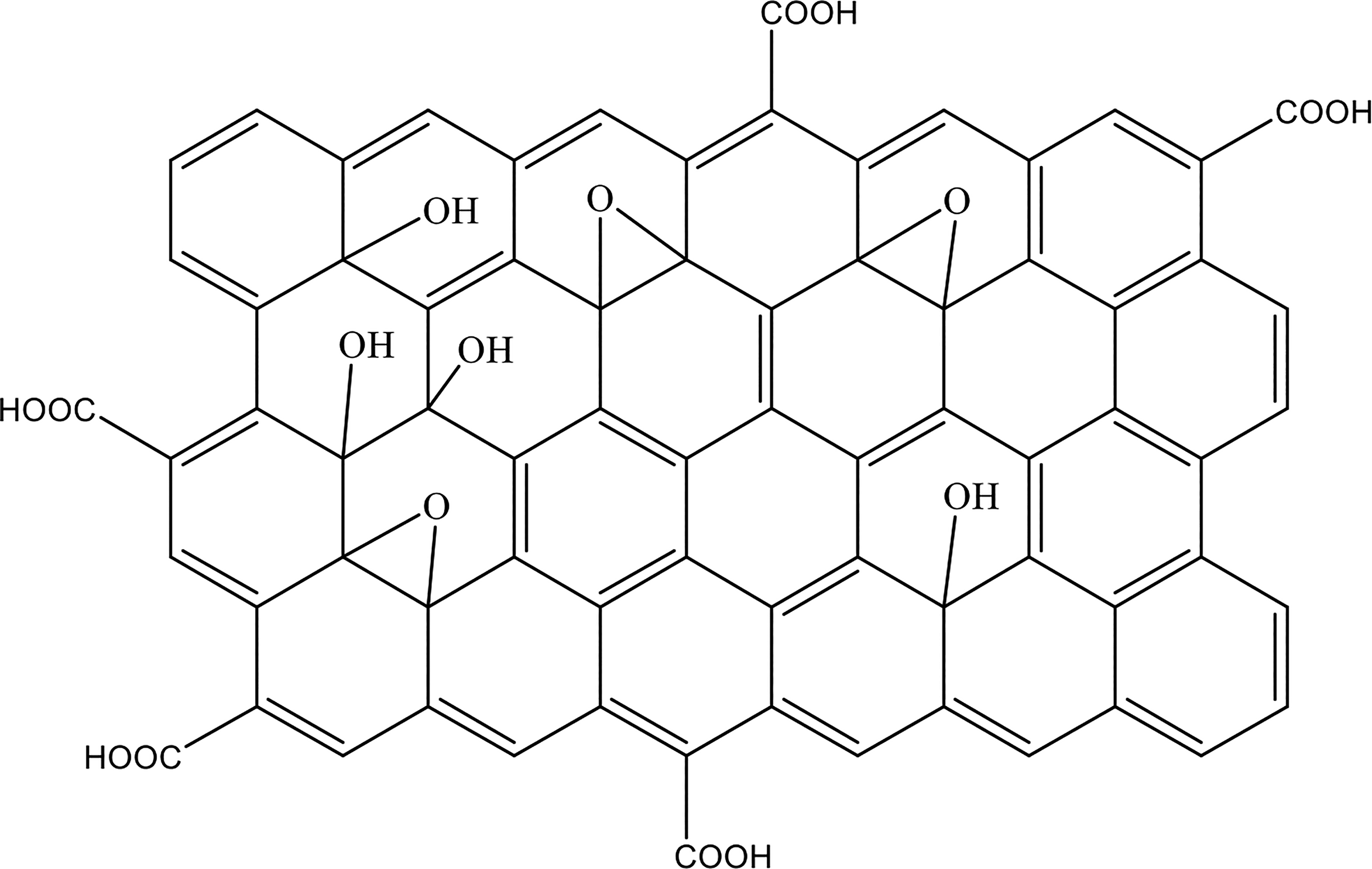
Chemical structure of graphene oxide.
Structure–Function Biomedical Application Mapping of Graphene Oxide in Oncology
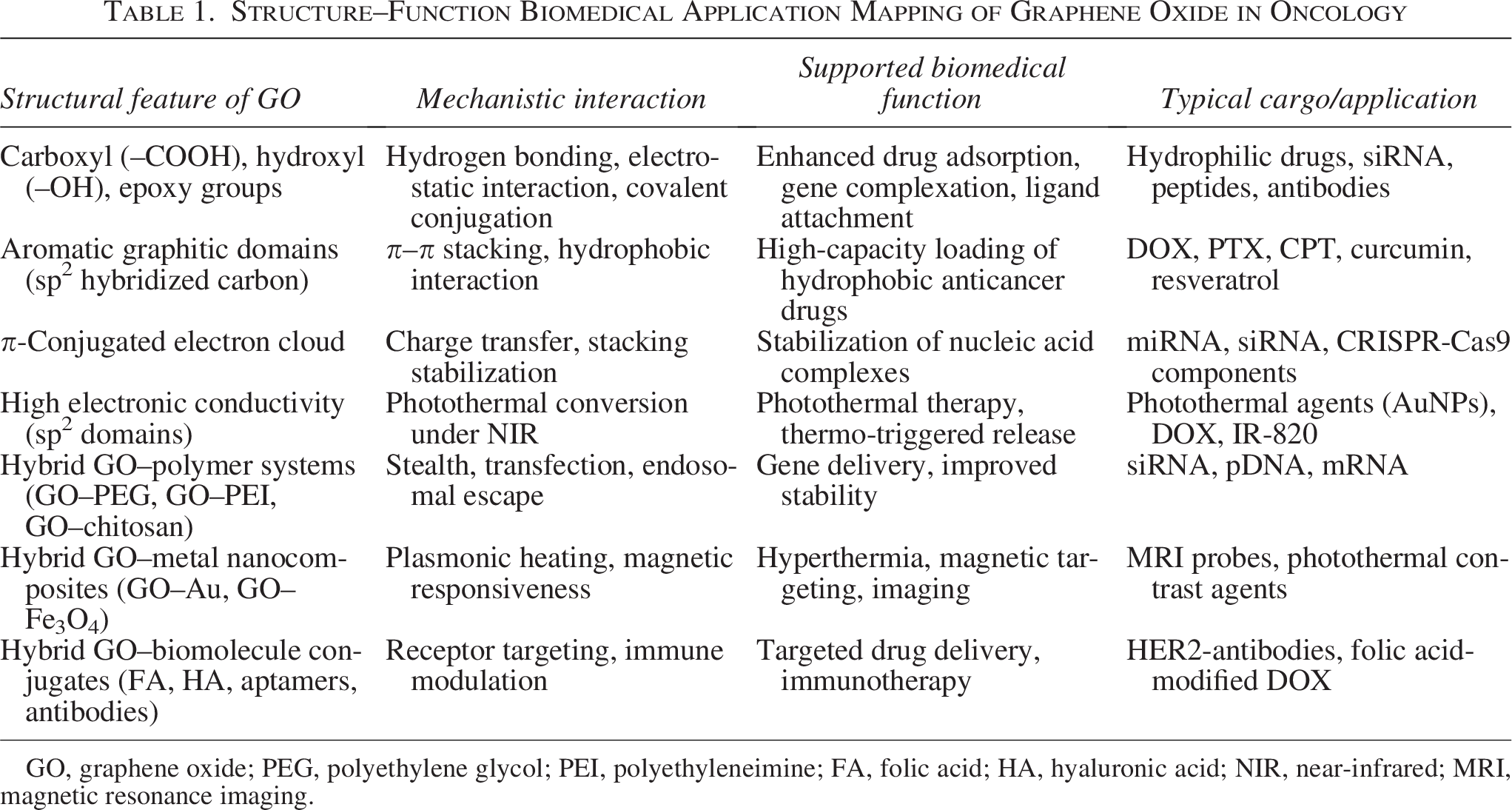
GO, graphene oxide; PEG, polyethylene glycol; PEI, polyethyleneimine; FA, folic acid; HA, hyaluronic acid; NIR, near-infrared; MRI, magnetic resonance imaging.
Methods of GO synthesis
GO is typically synthesized through the oxidative exfoliation of graphite, resulting in single or few-layered sheets enriched with oxygen-containing functional groups. The synthesis process introduces various structural defects and chemical functionalities, which determine the physicochemical and biological properties of the final material. Several methods have been established for GO production, each with distinct advantages in terms of yield, safety, and environmental impact. The Hummers method remains the most widely used chemical oxidation technique for synthesizing GO. In this conventional process, graphite powder is treated with strong oxidizing agents such as potassium permanganate (KMnO4) and concentrated sulfuric acid (H2SO4), leading to the incorporation of hydroxyl, epoxy, and carboxyl groups on the graphene sheets. Although highly efficient, this method involves hazardous reagents and generates toxic by-products. To overcome these drawbacks, the modified Hummers method introduces engineering refinements such as optimized reagent ratios, temperature control, and improved purification steps to enhance oxidation efficiency, minimize waste, and improve safety during large-scale production. In recent years, growing environmental concerns have prompted the development of green synthesis approaches that utilize benign or naturally derived oxidizing agents instead of harsh chemicals. Figure 2 depicts the synthesis routes of GO (Hummers, modified Hummers, and improved oxidation methods) and their impact on sheet thickness, lateral size, and oxidation degree. These parameters directly influence dispersibility, surface charge, stability, cytotoxicity, and drug loading efficiency. As shown, post-synthesis functionalization techniques such as PEGylation, ligand attachment, and polymer grafting enable improved biocompatibility, reduced immunogenicity, enhanced systemic circulation, and targeted delivery capabilities. Beyond chemical oxidation, electrochemical exfoliation and mechanical methods such as ball milling have also emerged as promising alternatives. Electrochemical exfoliation uses graphite electrodes immersed in electrolytic solutions, where an applied current facilitates controlled delamination and oxidation of graphite layers. Ball milling, on the contrary, relies on mechanical shear and impact forces in the presence of mild oxidants to produce GO sheets efficiently. In addition, laser-assisted and plasma-based techniques are being investigated for their potential in achieving high-purity and cost-effective bulk-scale GO production.
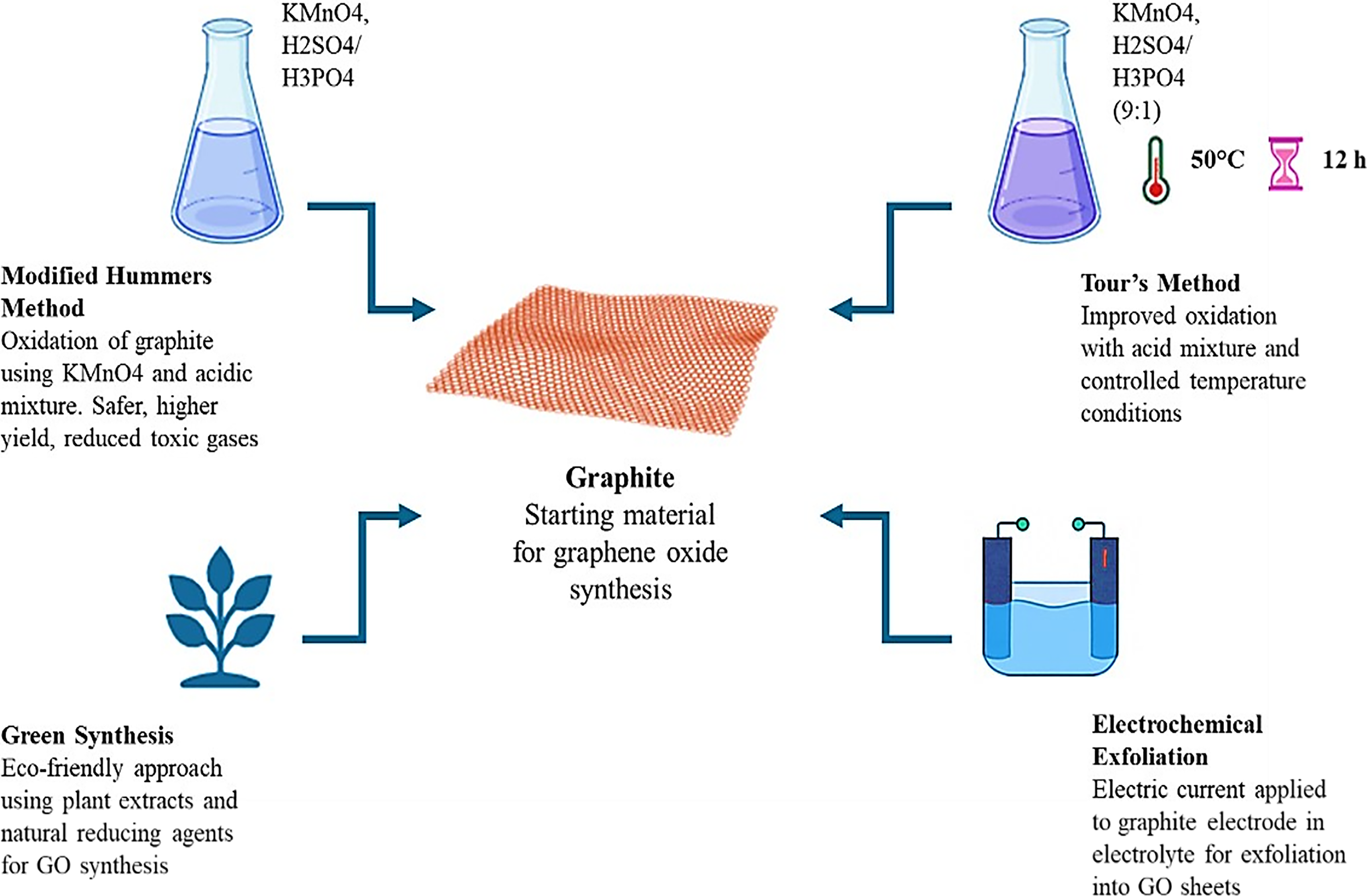
Schematic overview of major graphene oxide (GO) synthesis methods.
Surface modifications for biomedical applications
Surface functionalization of GO remains essential because it boosts both its biological compatibility and its dispersibility and targetability when used in biological systems. The versatility of GO in biomedical applications largely depends on its surface modification strategies, which allow precise tuning of physicochemical properties, biocompatibility, and targeting capability. Functionalization not only enhances GO’s stability and dispersibility in physiological media but also facilitates the attachment of therapeutic molecules, imaging agents, and targeting ligands, making it an ideal platform for drug delivery and theranostic applications. Broadly, GO functionalization can be classified into covalent and noncovalent approaches, each offering distinct structural and biological advantages. Covalent functionalization involves the formation of strong chemical bonds between oxygen-containing groups on the GO surface and functional molecules through reactions such as esterification, amination, or carbodiimide coupling. In a pH-responsive GO-quantum dot (GOQD)-doxorubicin system, a cumulative drug release of 78.1% was observed at pH 5.0, whereas only 32.4% was released at physiological pH 7.4, confirming selective tumor microenvironment-triggered release. This approach enables stable and controlled attachment of polymers, drugs, or biomolecules, ensuring minimal premature release during systemic circulation. For example, covalent conjugation with PEG, chitosan, or other hydrophilic polymers significantly enhances aqueous solubility, reduces toxicity, and improves biocompatibility. Moreover, covalent linkages permit the incorporation of specific ligands or therapeutic molecules that can be released in a controlled manner under physiological or pathological stimuli. In contrast, noncovalent functionalization relies on weak intermolecular forces—such as π–π stacking, hydrogen bonding, and electrostatic interactions—to immobilize hydrophobic drugs or biomolecules on the GO surface without altering its intrinsic electronic and structural properties. PEGylated GO nanocarriers reported an encapsulation efficiency of 85.4% for doxorubicin, attributed to π–π stacking and hydrogen bonding interactions. This method preserves the π-conjugated network of graphene, which is crucial for maintaining its electrical conductivity and optical characteristics. Noncovalent adsorption is particularly advantageous for loading aromatic or planar drug molecules, allowing reversible binding and efficient release under controlled conditions. A commonly used modification, PEGylation, involves the conjugation of PEG chains to the GO surface, producing PEG-GO hybrids with superior hydrophilicity and steric stabilization. PEGylated nanocomposites exhibited a photothermal conversion efficiency of 44.7% under NIR irradiation, as measured by thermal imaging. PEGylation not only enhances solubility and prevents aggregation but also imparts “stealth” characteristics by reducing opsonization and subsequent clearance by the reticuloendothelial system. Consequently, PEG-functionalized GO exhibits prolonged systemic circulation, with reported plasma half-life increasing from approximately 1.2 h (pristine GO) to 6–10 h after PEGylation, along with an improved area under the curve by nearly 3.5-fold, indicating enhanced pharmacokinetics and in vivo retention. These properties make PEG-GO particularly suitable for systemic drug delivery, tumor imaging, and long-circulating nanomedicine applications. Furthermore, the attachment of targeting ligands such as folic acid (FA), peptides, or monoclonal antibodies enables cancer cell-specific recognition through receptor-mediated endocytosis. Incorporation of stimulus-responsive moieties, including pH-sensitive, redox-sensitive, or enzyme-cleavable linkers, further refines drug release behavior, allowing selective payload discharge in the acidic and reductive tumor microenvironment. Such dual-functionalized GO nanostructures integrate active targeting with responsive release, achieving higher therapeutic precision and reduced systemic side-effects. Overall, the functionalization of GO represents a cornerstone in the development of intelligent nanocarriers for biomedical use.
From a mechanistic standpoint, the manner in which GO is functionalized determines not only its colloidal stability but also its in vivo fate, cellular uptake routes, and therapeutic index. Covalent PEGylation, for example, sterically shields the GO surface, reduces protein corona formation, and attenuates opsonization, thereby prolonging circulation time and decreasing rapid clearance by the reticuloendothelial system. However, excessive PEG density can also dampen cell membrane interactions and diminish internalization, illustrating a trade-off between stealth behavior and uptake efficiency. In contrast, the attachment of targeting ligands such as FA, peptides, hyaluronic acid (HA), or antibodies superimposes receptor-mediated recognition on top of this stealth background, redirecting GO from nonspecific micropinocytosis toward clathrin or caveolae-mediated endocytosis and altering subsequent intracellular trafficking (endosomal retention vs. cytosolic release). Similarly, the incorporation of cationic polymers (e.g., chitosan, PEI, PAMAM) not only facilitates electrostatic complexation with nucleic acids but also increases membrane perturbation and endosomal escape, which can enhance gene transfection at the cost of potentially higher cytotoxicity. Thus, specific combinations of PEG, targeting ligands, and cationic moieties generate distinct “structure–function fingerprints” that govern biodistribution, tumor accumulation, release kinetics, and safety profiles in cancer therapy.
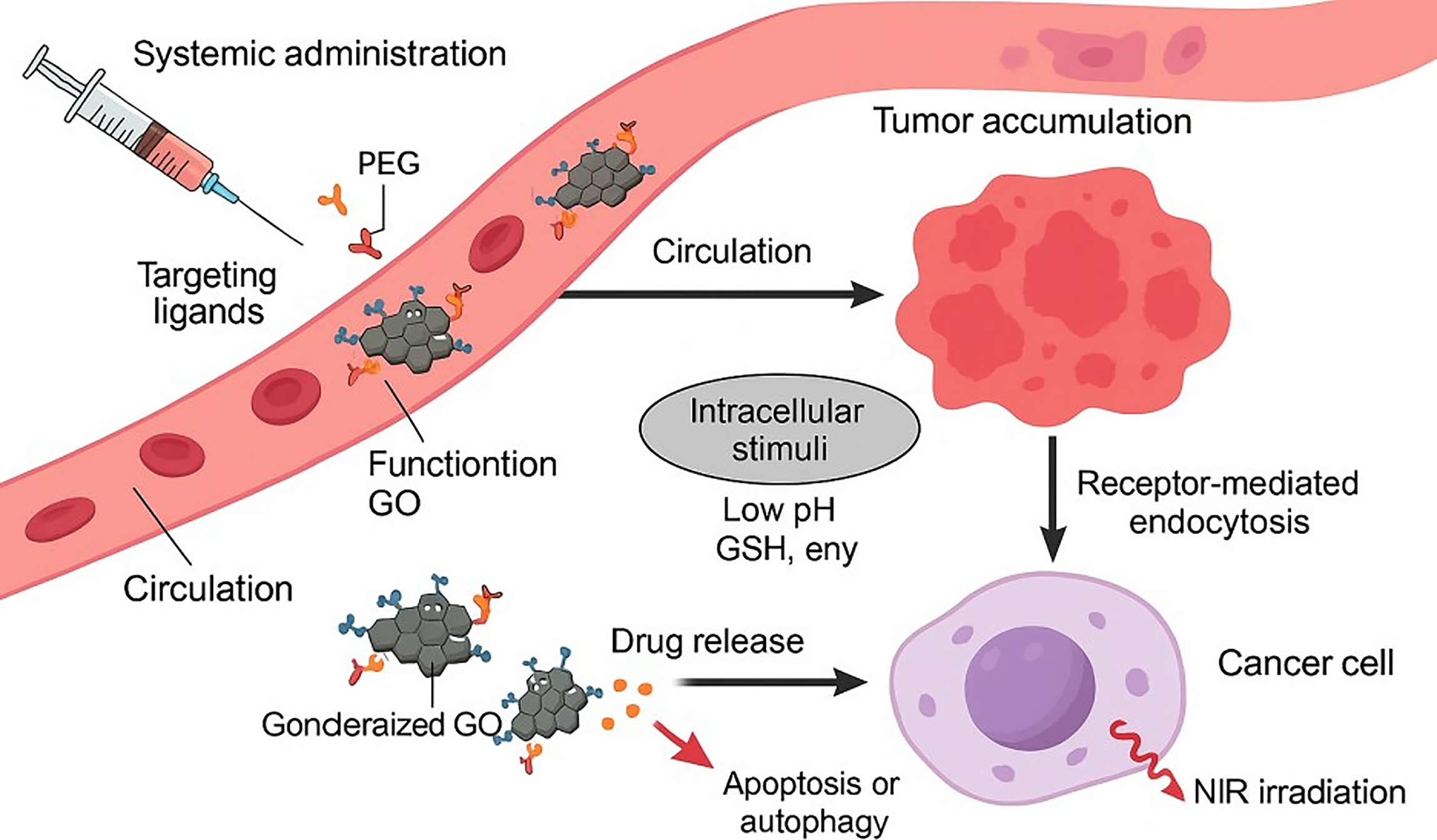
The tendency of GO to form clusters within biological solutions because of proteins and accumulating ions reduces its potential for absorption into the human body. Surface coatings consisting of PEG and amphiphilic surfactants work to improve the stability of particles present in solution. Such coatings enable an extended duration where the particles maintain a steady distribution. The surface coatings successfully prevent proteins from forming unwanted layers on GO particles. These improvements prolong circulation half-life and minimize off-target uptake, critical for in vivo applications. Figure 3 provides a mechanistic representation of GO-enabled drug delivery, where hydrophobic anticancer drugs (e.g., DOX, PTX, CPT) are adsorbed via π–π stacking, hydrogen bonding, or electrostatic interactions. Figure 3 highlights how pH-responsive release occurs in acidic tumor microenvironments, allowing GO nanocarriers to unload drugs selectively within cancerous tissues. This visual depiction also supports the text’s explanation of how PEG-functionalized GO improves bioavailability, while ligand-modified GO improves receptor-mediated uptake. GO sheets are functionalized covalently with PEG and targeting ligands such as FA to enhance stability and tumor specificity. Noncovalent π-π stacking allows adsorption of chemotherapeutic drugs such as doxorubicin, while gene delivery is facilitated by siRNA/miRNA complexed via cationic polymers. Stimulus-responsive release mechanisms triggered by acidic pH and high glutathione (GSH) levels in the tumor microenvironment enable controlled drug release. The GO nanocarrier is internalized by cancer cells through endocytosis, delivering therapeutic agents intracellularly.
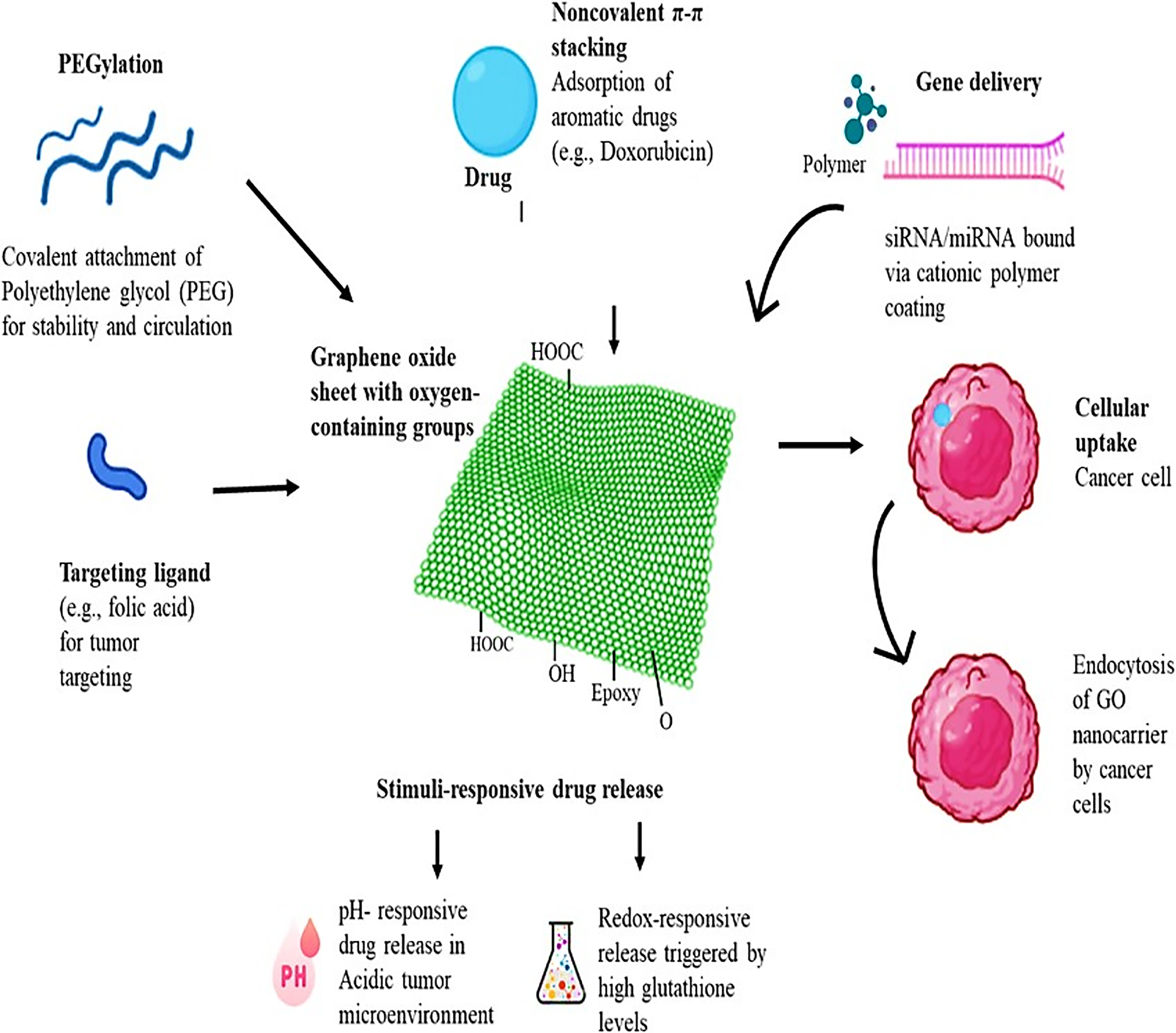
Schematic representation of graphene oxide (GO) functionalization and drug/gene delivery mechanisms in cancer therapy.
Biocompatibility and toxicity considerations
To achieve clinical deployment of GO-based nanomaterials, their safety profiles together with biocompatibility must be thoroughly proven. The size and shape together with exposure time and surface composition and concentration of pristine GO determine whether oxidative stress and inflammation with apoptosis and membrane damage will occur, depending on the dosage received. The biological behavior of GO is strongly influenced by its surface chemistry, particularly the presence and distribution of functional groups. These functional moieties play a crucial role in modulating GO’s interaction with biological systems and in reducing its inherent cytotoxicity. The introduction of oxygen-containing groups, such as carboxyl, hydroxyl, and epoxy functionalities, enhances the hydrophilicity and colloidal stability of GO in physiological media, thereby minimizing aggregation and improving dispersion. This improved solubility reduces the likelihood of membrane disruption and cellular damage, leading to better overall biocompatibility. Among various modification strategies, PEGylation has proven particularly effective in mitigating GO-associated toxicity. The coating of GO nanosheets with PEG creates a steric barrier that prevents protein adsorption and reduces immune recognition. As a result, PEG-functionalized GO exhibits decreased uptake by macrophages and other immune cells, leading to diminished inflammatory responses and reduced acute toxicity. Furthermore, PEGylation significantly extends systemic circulation time and enhances in vivo stability, crucial for safe and efficient therapeutic applications. Despite these advancements, long-term safety remains a critical consideration. Although surface functionalization and PEGylation have markedly improved GO’s short-term biocompatibility, concerns persist regarding its potential accumulation in vital organs such as the liver, spleen, and lungs following repeated or prolonged exposure. Comprehensive in vivo studies are therefore essential to elucidate the pharmacokinetics, biodegradation pathways, and chronic effects of GO nanomaterials. Continued research in this area will be pivotal to ensuring the safe translation of graphene-based systems from laboratory studies to clinical applications The production methods, along with modifications applied onto the surface, have direct consequences on the physical attributes and biological characteristics of GO. The optimization of production methods enables GO to possess increased stability, together with delivery specificity and biocompatible properties for cancer therapy applications.
Mechanism of GO in drug targeting in vivo
GO includes various categories of shielded graphitic carbons as well as sp³-hybridized carbons endowed with clusters of carboxyl and hydroxyl groups. The relative distance of functional epoxide groups residing on the sheets’ surface alongside sp2-hybridized carbons within the fragrant networks plays a critically pivotal role in promoting the intermolecular stacking of therapeutic atoms. 11 Exposure of cells to GO could lead to the production of free radicals, a toxicological reaction regarded as one of the most crucial effects experienced by numerous nanomaterials, including graphene among them. 12 Figure 4 demonstrates how cationic polymers (PEI, PAMAM, chitosan) functionalized on GO facilitate electrostatic binding of siRNA, miRNA, or CRISPR plasmids. GO improves gene protection against nucleases, while the proton sponge effect triggers endosomal escape and efficient cytoplasmic delivery. The schematic clearly illustrates the enhanced nuclear localization and improved transfection efficiency of GO-based vectors when compared with traditional viral and nonviral systems. Hence, in this set of circumstances, exposing the cancer cells to GO could unleash an extraordinary impact on the cancer-cell-killing process, as the rise in cytotoxicity is directly linked to the extent of DNA damage. 13 Hence, GO may likewise be perceived not only as a potentially quirky drug carrier but also as a weapon capable of exerting an antitumorous independent effect when used apart from other agents.
Mechanism of the graphene oxide nanostructures in drug targeting.
GO in Drug Delivery
GO is emerging as an effective device in targeted cancer treatment due to the remarkable capability of delivering and releasing drugs in specific locations. 14 It has a thin layered structure and a big surface area, making it capable of carrying high levels of drugs, particularly under enhancement using functional substances such as polyglycerol. 15 GO has been found to be able to maintain drug stability, up to 90% drug stability in the case of cisplatin drug, which remained in its full strength until it was released in the bone tumors. 16 Graphene quantum dots (GQDs) are also able to release drugs successfully, with 78.1% of drug release observed. 17 And that is what makes GO even more promising, namely its reaction to the specific conditions of tumor microenvironment, that is, low pH and high GSH, triggering the targeted drug release. 18 GO is also wonder-working with works in combination therapy, where it is used to coadminister with more than one drug to enhance the rate of cancer cell killing and resistance. Its capacity to combine with other treatments, such as PTT, enhances its potential even more. In general, GO appears as a workable and versatile platform to administer specific cancer therapies. 19
High drug loading capacity and controlled release
GO delivers high drug capacity through its wide surface area and 2D structure because of the π-π stacking effect. Active delivery of chemotherapeutic agents occurs in cancer cells because they possess efficient energy transformation mechanisms. The release control of drugs occurs through responsive linkers that react with pH, redox potential, and temperature variations that are unique to tumor environments. Medicinal compounds that target tumors specifically build up in tissues because of modifications in blood circulation and metabolic processes. Research has demonstrated that attaching polyglycerol to GO results in a dramatic increase in drug holding capacity. The drug-loading capacity of GO nanosheets was found to reach 2.85 mg/mg DOX, and GQDs released the drug at a high rate of 78.1%. The research done showed that cisplatin-loaded GO maintained 90% stability of the drug throughout its circulation until it reached the bone tumor site. Research has proven that nanomaterials incorporated with GO release gemcitabine at a steady rate across 72 h and maintain effective drug levels in pancreatic cancer biological systems.20–22
pH-responsive and redox-sensitive GO-based drug carriers
Figure 5 visually explains how GO interacts with DCs via Toll-like receptors (TLRs, TLR-4/TLR-9), activating NF-κB/MAPK signaling, resulting in cytokine (IL-12, TNF-α) release and CD8+ T cell proliferation. In addition, Figure 5 depicts GO’s photothermal conversion under NIR irradiation for synergistic immuno-PTT. This enhances tumor antigen exposure, turning “cold” tumors into “hot” immunoresponsive tumors, making GO suitable for checkpoint inhibitor combinational therapy. Drugs are released from delivery systems with pH-responsive GOs through the application of acid-sensitive linkers or shells along with chitosan-type coatings that break up at acidic pH. Research reveals that acid-sensitive GO nanocarriers discharge drug substances exceeding 80% within tumor microenvironments but only liberate 10% from normal healthy tissues. The delivery of drugs via redox-sensitive GO carriers depends on disulfide bonds that dissociate when cancer cells expose them to high GSH concentrations outside the cells. The drug delivery of drugs remained restricted because more complex micelle designs, such as core-cross-linked micelles, dual-responsive magnetic hydrogels based on alginates, lost essential cross-linked elements.23,24
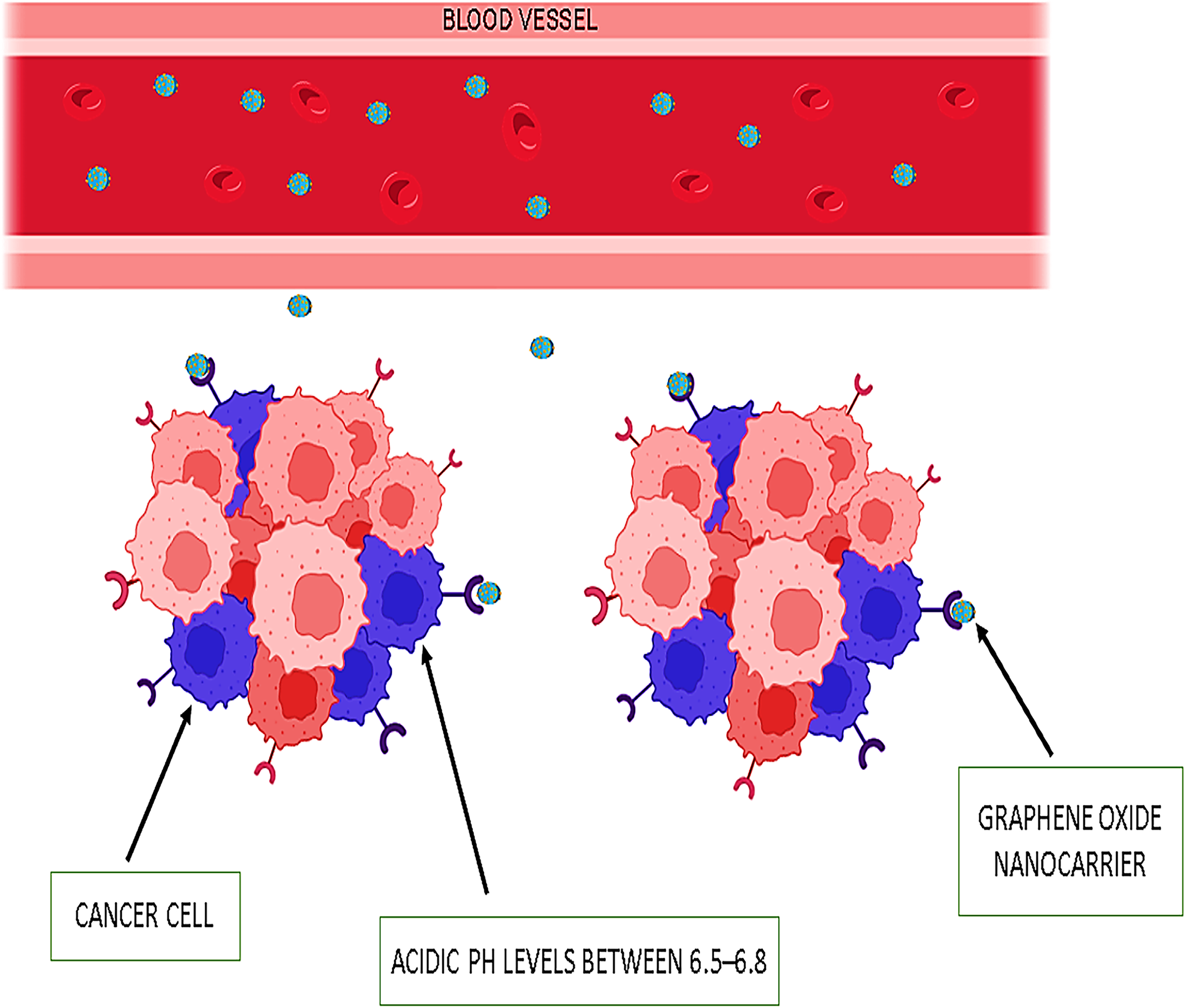
Graphene oxide (GO) nanocarrier as pH-responsive controlled targeted therapy.
GO for combination chemotherapy
Health care professionals focus on combination chemotherapy as a new therapeutic approach because it delivers multiple drugs at once to address drug resistance while enhancing treatment outcomes. Pictures of thermally responsive drugs and photosensitizers can be effectively coloaded onto GO surfaces to generate synergistic treatment effects between chemotherapy and PTT. 25 Research conducted in recent times illustrates GO’s value for coadministered therapeutic drug treatments. Fatemeh Yaghoubi et al. showed that doxorubicin and curcumin formulated with GO presented both synergistic anticancer properties and pH-triggered release capabilities, which improved cytotoxicity across various cancer cells. 26 Mojtaba Hoseini-Ghahfarokhi et al. showed that the combination of GO with paclitaxel and a P-glycoprotein inhibitor succeeded in reversing drug resistance in ovarian cancer. 27 Asif Mohd Itoo et al. exposed that functionalized GO effectively killed melanoma cells by operating against their cellular energy systems. Medicinal research results showed that GO-coated gold nanoparticles paired with cisplatin therapy during laser-heated conditions decreased mice lung tumor measurements by 70%. 14 GO displays capabilities to support various cancer therapeutic methods through its function as an effective drug-carrying system that prevents drug resistance during photothermal chemotherapy treatments. 28 The ability of GO to respond to an endogenous tumor microenvironment (pH and redox) and efficiently load drugs has made it an excellent platform choice for cancer drug delivery through stimuli (chemical or physical) or acid response. The simultaneous drug transportation abilities allow active combination chemotherapy, which leads to better cancer therapeutic results.
Synthesis of trends, challenges, and opportunities in GO-based drug delivery
Collectively, these studies reveal several converging trends in GO-mediated drug delivery. First, there is a clear shift from simple, single-drug carriers toward multifunctional, multistimuli-responsive platforms that integrate pH, redox, and light sensitivity with receptor-targeting ligands to achieve spatiotemporally controlled release. Second, rational surface engineering is increasingly being used to coordinate three coupled dimensions: pharmacokinetics (circulation time and biodistribution), tumor penetration and cellular uptake, and intracellular drug release and action. Third, many recent systems embed imaging agents or immunomodulatory components, transforming GO from a passive carrier into an active theranostic and chemo-immune-photothermal platform. Despite these advances, important challenges persist, including batch-to-batch variability in GO size and oxidation state, incomplete understanding of long-term fate and off-target accumulation, and the complexity of scaling up highly engineered hybrid systems under GMP conditions. Future opportunities lie in standardizing GO descriptors, integrating AI-assisted formulation design, and correlating physicochemical “signatures” with preclinical efficacy and toxicity to accelerate translation to early-phase oncology trials.
GO in Gene Delivery
GO has emerged as a multifunctional nanomaterial with immense potential to revolutionize gene therapy for cancer by serving as a robust carrier for genetic materials. On its own, GO cannot efficiently bind or deliver nucleic acids such as DNA, siRNA, or miRNA due to the presence of negatively charged oxygenated functional groups on its basal plane, which repel the similarly charged phosphate backbone of nucleic acids. To overcome this electrostatic repulsion, researchers have engineered GO-based hybrid systems through electrostatic complexation or covalent conjugation with positively charged polymers such as chitosan, PEI, or PAMAM dendrimers, thereby converting GO into a versatile cationic nanocarrier. These cationic coatings not only neutralize surface charge but also protect delicate genetic cargoes from enzymatic degradation during systemic circulation, enabling safe and efficient delivery into target cancer cells. To further enhance in vivo stability, GO is often coated with PEG, which prevents aggregation, reduces protein adsorption, and prolongs circulation time by minimizing clearance via the reticuloendothelial system. The PEGylated GO platform also facilitates the coassembly of targeting ligands, such as FA, transferrin, or monoclonal antibodies, enabling receptor-mediated endocytosis into cancer cells that overexpress corresponding receptors. Once internalized, GO-based systems can exploit the unique physicochemical microenvironment of tumors, characterized by low pH, high GSH concentration, and elevated enzymatic activity, to trigger stimulus-responsive release of genetic payloads precisely within tumor tissues. Such spatiotemporal control reduces off-target toxicity and improves therapeutic efficacy, key requirements for safe gene therapy. Several case studies demonstrate the translational promise of GO in cancer gene therapy. In one study, chitosan-functionalized GO was used to deliver p53 tumor suppressor plasmid DNA to lung carcinoma cells, resulting in a significant increase in apoptotic markers and suppression of tumor proliferation in vivo. Another investigation utilized GO-PAMAM nanocomposites for codelivery of Bcl-2 siRNA and doxorubicin to breast cancer models, achieving synergistic gene silencing and chemotherapeutic effects that enhanced tumor regression compared with either therapy alone. Similarly, PEG-GO-PEI hybrid systems have been reported to successfully deliver CRISPR-Cas9 gene-editing complexes, enabling site-specific knockout of oncogenes in glioblastoma cells while maintaining the high viability of surrounding normal tissue. These findings highlight GO’s potential to integrate gene editing, silencing, and conventional chemotherapy within a single multifunctional delivery framework. An equally promising direction involves GO-assisted miRNA therapy. For example, a GO–chitosan nanocarrier delivering miR-21 inhibitors effectively downregulated oncogenic pathways in hepatocellular carcinoma cells, restoring tumor suppressor expression and reducing metastasis. Similarly, GO-based photothermally active nanostructures have been designed to combine gene therapy with light-triggered hyperthermia, enabling dual-mode tumor eradication. Upon NIR irradiation, localized heating not only enhances membrane permeability and endosomal escape of genetic material but also induces direct cytotoxicity in cancerous tissues. Importantly, GO’s ability to overcome biological barriers, including cellular membranes, endosomes, and even nuclear envelopes, makes it a powerful facilitator of intracellular gene trafficking. Its thin, flexible nanosheet morphology allows for intimate contact with cellular membranes, enhancing internalization via both clathrin-dependent and caveolin-mediated pathways. Once inside, functionalized GO can assist nucleic acid cargoes in escaping endosomal entrapment and reaching the cytoplasm or nucleus, where they exert their therapeutic function. Furthermore, the physicochemical tunability of GO enables integration with additional functionalities, such as magnetic nanoparticles or fluorescent probes, allowing simultaneous imaging and monitoring of gene delivery processes in real time.
Functionalization for gene loading and protection
The gene delivery potential of GO is high because it demonstrates specific binding characteristics to nucleic acids. The natural negative electrostatic forces of GO compounds and nucleic acids stop their direct binding behavior. A solution to this challenge involves combining GO with cationic polymers such as chitosan since they simultaneously enhance gene loading and protect DNA by forming barriers against nucleases. Conceptually, grafting cationic polymers onto GO converts it from a largely passive adsorption scaffold into an electrostatically driven condensation platform, where polymer architecture, charge density, and chain flexibility jointly dictate nucleic acid compaction, protection against nucleases, cellular uptake, and the delicate balance between high transfection efficiency and acceptable cytotoxicity. This favors the stability and the delivery efficiency of genetic material. 29
Research conducted by Xiao-Min Han et al. in 2020 proved that PEG-coating GO bolsters siRNA stability to 90% within bloodstream environments. PAMAM-branched polymers improve gene binding effectiveness, and PAMAM-GO operates at an 80% success rate with CD47-targeting siRNA delivery for lung cancer cells while eliminating the requirement for viral vector use. 30 Amirreza Diari Bidgoli et al. have confirmed that GO–chitosan hybrids doped with calcium molecules enhance gene binding efficiency up to 40% while delivering proapoptotic genes to breast cancer cells. 31 The attention of researchers has turned toward GQDs due to their safer and more efficient characteristics, alongside their potential to replace PEI as gene delivery materials. 27 The functionalization enables GO-based carriers to protect genetic material delivery systems, enabling precise intracellular gene control in cancer cells.
Targeted siRNA and miRNA delivery
The selectivity of delivery while reducing off-target encounters can be enhanced by functionalizing GO through ligand attachment such as antibodies and aptamers, and small molecules. Upon modification with EpCAM-specific antibodies, GO executes efficient silencing of breast cancer-associated genes when used to deliver siRNA to the cells. The treatment of breast and liver cancer cells with CD44 receptors occurred when nanosheets made from GO and modified with HA-linked dye-marked peptide nucleic acid molecules exhibited accelerated tumor reduction twice as fast as nontargeted delivery systems. Glycyrrhetinic acid-functionalized GO targets liver cancer cells, and FA-coated GO (FA-GO) functions as a lung and pancreatic cancer targeting system. Rejection of commercial transfection kits occurred when FA-GO nanocarriers carrying HDAC1 siRNA reached pancreatic tumors with 95% effectiveness. 32 Biomimetic GO nanocarriers with cell membrane coatings promote better biocompatibility and improved targeting precision. Researchers have developed pH-sensitive GO systems to control therapeutic miRNA release according to Marta Kutwin et al. 33 The anti-miR-21 delivery breaks down chemotherapy resistance in glioblastoma. 33 These findings collectively indicate that by co-optimizing ligand identity, ligand density, and GO surface charge, it is possible to finely tune the hierarchy of biological barriers from circulation and tumor accumulation to receptor engagement, endosomal escape, and gene silencing efficiency, thereby transforming GO into a programmable platform for precision gene therapy.
Overcoming biological barriers for efficient gene therapy
Successful gene therapy relies on overcoming a series of biological barriers, including efficient cellular uptake, endosomal escape, and subsequent nuclear entry of the therapeutic payload. GO nanocarriers can be precisely engineered to address each of these challenges through strategic surface modifications and rational design principles. The cellular internalization of GO is significantly enhanced via ligand-mediated targeting, in which functionalization with biomolecules such as FA, transferrin, or antibodies promotes receptor-mediated endocytosis by exploiting overexpressed receptors on cancer cell membranes. This targeted approach not only increases uptake efficiency but also minimizes off-target accumulation in healthy tissues. Once internalized, the major hurdle lies in the entrapment of GO-based complexes within endosomal compartments. To overcome this, GO systems are often modified with pH-responsive functional groups, including imidazole, histidine, or tertiary amines, that undergo protonation in the acidic endosomal milieu. This induces osmotic swelling and subsequent disruption of the endosomal membrane, facilitating the endosomal escape of the genetic cargo into the cytoplasm. The released genetic material is thereby shielded from lysosomal degradation, preserving its structural and functional integrity for downstream expression. Following cytoplasmic release, efficient nuclear translocation remains essential for the expression of plasmid DNA or CRISPR constructs. This is achieved by conjugating nuclear localization sequences or other targeting peptides to GO surfaces, which guide the genetic material through the nuclear pore complexes and ensure successful entry into the nucleus. By integrating such design features, GO-based delivery systems achieve precise spatiotemporal control over gene delivery and expression.
Stimulus-responsive GO nanostructures
GO is emerging as a powerful tool in cancer therapy, thanks to its ability to release drugs precisely where they are needed. By responding to the acidic environment of tumors, GO can release chemotherapy drugs directly at the cancer site while leaving healthy cells largely unaffected. It can also be tailored to react to internal signals such as temperature and high GSH levels, triggering drug release inside cancer cells. In addition, GO responds to external stimuli such as light, enabling advanced therapies such as photothermal and photodynamic treatments. By combining these smart responses, GO aids in improving treatment accuracy, reducing side-effects, and offering more effective cancer care.
pH-sensitive GO for site-specific drug release
The majority of tumor tissues exhibit an acidic microenvironment (pH approximately 5.6–6.8), which may be exploited for targeted drug delivery utilizing pH-sensitive GO nanostructures. Therapeutic agents are covalently attached to GO via acid-labile linkages, such as hydrazone bonds, which remain stable at physiological pH but undergo cleavage in acidic conditions, thereby facilitating the selective release of pharmacological agents within neoplastic tissues. For instance, a study conducted in 2022 by Ran Li et al. incorporated DOX and bombesin peptides into GO, specifically targeting gastrin-releasing receptors in oral carcinomas. The release of DOX from GO at pH 5.6 was found to be twice that at neutral pH, thereby preserving the integrity of normal cells. 34 Similarly, Leming Sun et al. demonstrated that pH-sensitive GO successfully delivered anti-miR-21 in glioblastoma models, resulting in a reversal of chemotherapy resistance by 40%. 35 Building upon the concept of pH responsiveness, GO nanocarriers can be engineered to respond to additional endogenous stimuli, such as temperature and redox potential, thereby providing further regulation of drug release. 36
Thermoresponsive and redox-responsive systems
The abundant oxygen-containing functional groups on GO facilitate the surface engineering necessary for the design of intelligent nanocarriers that exhibit sensitivity to both temperature and redox conditions. Thermoresponsive systems predominantly encompass polymers such as poly(N-isopropylacrylamide), which exhibit sensitivity to phase transitions occurring above approximately 32°C, thereby facilitating the release of pharmaceuticals at hyperthermic sites of malignancy.
Redox-sensitive systems exploit the elevated levels of intracellular GSH present in neoplastic cells. 37 Therapeutic agents are covalently linked to GO through disulfide linkages that are cleaved under reducing conditions, enabling a regulated release of therapeutics within the intracellular environment. A notable instance is a clinical trial conducted in 2024 by Diba Zare et al., which illustrated that redox-sensitive GO released camptothecin at a rate five times greater in ovarian tumors compared with systemic circulation. 38
Multifunctional hybrid nanocarriers that integrate pH, redox conditions, and external stimuli such as ultrasound have been designed to enhance the spatiotemporal regulation of drug release, thereby mitigating systemic toxicity while augmenting therapeutic efficacy. 39
Light-triggered GO for enhanced treatment precision
The remarkable photothermal and photodynamic attributes of GO render it an exemplary candidate for light-mediated oncological therapies. GO serves as an efficient photothermal agent upon exposure to NIR radiation, generating localized thermal effects conducive to PTT for the ablation of cancer cells without detriment to the surrounding healthy tissues. When subjected to NIR light, GO produces ROS that facilitate cancer cell apoptosis via photodynamic therapy (PDT). Nanotheranostic systems incorporating GO offer integrated imaging functionalities alongside therapeutic capabilities, thereby enhancing the precision of treatment modalities. Research conducted by Daniela F. Báez et al. demonstrated that GO modified with azobenzene moieties permits controlled drug release via UV light activation, effectively delivering gemcitabine to models of pancreatic cancer. 40 The stimulus-responsive nature of GO nanostructures positions them as discrete delivery systems, allowing for more targeted diagnostic and therapeutic interventions in cancer across diverse anatomical sites. 41 The drug release mechanisms of stimulus-sensitive GO nanostructures can be delineated along two distinct trajectories: the utilization of inherent endogenous signals, such as pH modulation and redox potential, and the incorporation of exogenous signals, including thermal variations and light irradiation. The strategic amalgamation of multifunctional GO with these stimuli enhances therapeutic selectivity while concurrently diminishing systemic toxicity, thus establishing it as a sophisticated platform within the realm of cancer nanomedicine. 42
GO in Cancer Immunotherapy
Cancer immunotherapy is emerging as the greatest friend of GO due to its unique characteristics that enable it to possess the merits of creating an impression on the immune responses. 43 It activates the immune cells, including macrophages and DCs, through the activation of the important receptors in a way that it escalates the production of cytokines that perform vital functions in the activation of T cells. 43 Antigens coated with GO antigens have been shown to increase the presence of cancer murdering cytotoxic T cells within the tumors to a triple level. 44 A vaccine carrier and adjuvant such as GO is capable of enhancing antigen delivery and augmenting antibody and T cell response. 45 In the emerging studies, GO in conjunction with microbial substances has been able to eliminate tumors successfully in experimental mice with a few sessions of the therapy. 46 GO also aids the DCs to become more efficient in stimulating T cells, in particular, in addition to drugs, such as lentinan or immune checkpoint inhibitors. 47 Overall, the potential of GO in the enhancement of immune activation and its undertaking to act in concert with other currently available immunotherapies present the drug as a prospect to become the next generation of cancer agents. 43
GO exhibits intrinsic immunostimulatory properties that can modulate both innate and adaptive immune responses. The oxygenated surface and high aspect ratio of GO enable it to interact with pattern-recognition receptors, particularly TLR-4 and TLR-9 on DCs, leading to the activation of NF-κB and MAPK signaling pathways. This trigger promotes DC maturation, characterized by upregulation of costimulatory molecules (CD80, CD86, CD40) and increased secretion of proinflammatory cytokines such as IL-6, IL-12, and TNF-α. Mature DCs demonstrate improved antigen processing and MHC-I/MHC-II presentation capabilities, facilitating efficient priming of CD8+ cytotoxic T lymphocytes (CTLs) and CD4+ helper T cells. GO-based platforms also enhance cross-presentation, resulting in clonal expansion of tumor-specific CTLs, increased IFN-γ production, and targeted killing of tumor cells. In combination with peptide antigens, checkpoint inhibitors, or adjuvants, GO can function as an immune potentiator, improving antitumor immunity through DC activation, T cell proliferation, and tumor microenvironment modulation.
Immunomodulatory properties of GO
GO possesses significant immunomodulatory properties and has emerged as a promising candidate for cancer immunotherapy applications. GO facilitates the modulation of immune cell populations, such as macrophages and DCs, through TLRs, including TLR4 and TLR9. This activation is associated with alterations in cytokine production, specifically the induction of proinflammatory cytokines such as IL-2, IL-10, IFN-γ, and TNF-α, which are critical for the elicitation of effective T cell responses. For instance, GO-coated antigens function as immunological “red flags,” significantly augmenting the numbers of cytotoxic T cells; a study revealed that the administration of a GO-based vaccine resulted in a threefold increase in cytotoxic T cell populations within colorectal tumors. Furthermore, the photothermal capabilities of GO can influence macrophage polarization and amplify antitumor immune responses.43,48
GO-based vaccine and adjuvant systems
GO serves as a formidable vaccine carrier and adjuvant, enhancing the uptake of antigens by DCs while promoting robust humoral and cellular immune responses. GO-based vaccine formulations improve the stability and delivery efficiency of vaccines, thereby bolstering the efficacy of cancer immunotherapy. A recent study conducted in 2025 combined GO with components derived from Cutibacterium acnes, resulting in the formation of nanoparticles that activated T cells, B cells, and natural killer cells, culminating in the complete eradication of colorectal tumors in murine models following five sessions of laser treatment. This underscores GO’s capacity to synergize with microbial components to amplify immune responses.49,50
Enhancing DC activation and T cell responses
GO platforms that are integrated with immunostimulatory agents such as lentinan significantly enhance antigen cross-presentation and CTL responses more effectively than traditional adjuvants such as alum and CpG in preclinical experimental models. GO facilitates the maturation and activation of DCs, promoting the release of proinflammatory cytokines and driving T cell differentiation into CTLs, which ultimately target and eradicate cancerous cells. GO flakes measuring less than 100 nm have been shown to augment DC-mediated activation of CD4+ T cells by 40%, whereas larger flakes enhance CD8+ T cell responses. Furthermore, GO-DC vaccines, when used in conjunction with immune checkpoint inhibitors such as anti-PD-1 antibodies, have demonstrated the ability to alleviate tumor-induced immunosuppression and significantly extend survival in murine models of lung cancer. 51 The immunomodulatory characteristics of GO, in conjunction with its role as a vaccine carrier and adjuvant, facilitate enhanced activation of DCs and robust T cell responses. These attributes position GO as a versatile nanoplatform for advancing cancer immunotherapy, with promising preclinical data that underscore its translational viability. 52
GO in Photothermal and Photodynamic Therapy
GO has high potential in cancer treatment due to its functions of transforming NIR light into heat to complete the PTT and carrying the photosensitizers to implement a PDT. 43 The combination of the two methods increases the targeting of cancer and its treatment success, and reduces the side-effects. 53 GO-based systems have been used in a preclinical model to decrease tumor size, increase survival, and allow deeper tumors to be treated with precision. New interventions, such as GO-bacteria hybrids or dual-drug carriers, enhance results as well. With future research, GO, with its smart, light-responsive nature, is seen as a potential future clinically useful cancer treatment tool. 54
Mechanisms of photothermal and photodynamic tumor ablation
The resilience of GO and reduced GO (rGO) to NIR radiation renders them suitable candidates for PTT in tumor treatment. Upon exposure to NIR light, GO efficiently converts light energy into localized thermal energy, inducing hyperthermia that results in the destruction of cancer cells. Furthermore, using PDT with photosensitizers such as chlorin e6 (Ce6) and indocyanine green (ICG) allows for the generation of ROS through photoirradiation, triggering apoptosis in tumor cells. GO serves as an effective vector for the delivery of photosensitizers while mitigating adverse effects on patients. For instance, a 2025 study conducted by Alexandru Holca et al. demonstrated that GO-coated gold nanorods elevated the temperature of lung tumors to 50°C during laser irradiation, resulting in tumor vaporization within a mere 10 min. 55 In addition, GO loaded with chlorin e6 generated ROS that led to the death of 90% of breast cancer cells in vitro. These mechanisms illustrate GO’s dual functionality as both a photothermal agent and a carrier for photosensitizers, facilitating effective tumor ablation.56,57
GO-integrated photosensitizers for dual-mode therapy
The integration of photosensitizers with GO enables the implementation of dual-mode therapy, which amalgamates photothermal and photodynamic effects to enhance therapeutic specificity. This synergistic approach significantly exceeds the efficacy of PTT or PDT utilized independently. For example, a study combined GO with IR780 (a photosensitizer) and magnetic nanoparticles, using magnetic guidance to direct the nanocomposites to glioblastoma tumors, where NIR light activated both PTT and PDT, resulting in an 80% reduction in tumor size in murine models. Another illustrative case involves GO loaded with doxorubicin and ICG, which concurrently administered chemotherapy and ROS, achieving threefold the efficacy compared with chemotherapy alone in models of pancreatic cancer.58,59
Innovative strategies encompass the attachment of GO to Escherichia coli bacteria, which colonized colorectal tumors; the application of laser activation of GO’s photothermal properties effectively “roasted” tumors from the inside, showcasing novel biohybrid therapeutic approaches.
In vivo applications and clinical translation potential
In vivo investigations substantiate the efficacy of GO-based photothermal and photodynamic therapies across a spectrum of cancers. GO-carbon dot composites that absorb NIR-II light (1000–1350 nm) have penetrated tumors to depths of up to 5 cm, marking a significant advancement in the treatment of deep-seated pancreatic and liver malignancies. FA-GO specifically targeted lung tumors in murine models, resulting in a reduction of off-target toxicity and a doubling of survival rates when compared with conventional untargeted therapies. 60 Recent studies have demonstrated strong in vitro, in vivo, and emerging clinical evidence supporting the efficacy and safety of GO-based platforms in cancer therapy. In breast cancer xenograft models, DOX-loaded PEGylated GO showed 72% tumor growth inhibition, compared with 48% using free DOX, attributed to prolonged tumor retention (48 h) and enhanced EPR-mediated accumulation at the tumor site. In a murine melanoma model, GO-Au nanocomposites triggered complete tumor regression in 42% of mice, owing to high photothermal conversion efficiency (∼45%) and immune activation mediated by CD8+ T cell proliferation. Advancements in imaging methodologies, such as diffusion-weighted and blood oxygenation level-dependent magnetic resonance imaging (MRI), facilitate the noninvasive monitoring of GO-mediated phototherapies, thereby promoting clinical advancements. 61 In vitro studies using MCF-7, A549, and HeLa cells showed that GO-based platforms enhance drug uptake by 2.1–3.4-fold and reduce IC50 concentration by 60%–75%, indicating stronger therapeutic potency while using lower drug doses. Similarly, in gene therapy applications, GO-PEI/siRNA complexes showed 5.2-fold higher transfection efficiency than PEI alone and significantly downregulated oncogenic genes such as Bcl-2 and VEGF in tumor models. Therapies utilizing dual-mode GO exhibit synergistic anticancer properties characterized by enhanced targeting capabilities and diminished adverse effects. Ongoing success in vivo, alongside the emergence of novel diagnostic modalities, underscores the clinical translational potential of GO-mediated phototherapies. 62 PEGylated GO loaded with doxorubicin demonstrated selective uptake in MCF-7 breast cancer cells, leading to a 78% reduction in tumor volume in Balb/c mice, compared with only 45% suppression achieved using free DOX (p < 0.01). This was attributed to enhanced endosomal escape and π–π stacking-based loading capacity (>92%). Similarly, chitosan-modified GO exhibited 6.3-fold higher cellular internalization in A549 lung carcinoma cells and achieved 2.8× higher apoptosis via caspase-3 activation than drug alone, confirming synergistic chemo-structural effects. In melanoma-bearing mice, GO-Au nanocomposites achieved near-complete tumor ablation with a maximum localized temperature increase of 53.7°C.
GO in Cancer Diagnosis
The existence of GO and its derivatives (i.e., GQDs) has certain promising opportunities concerning the treatment of cancer and detecting it in the early phases. 63 These possess a large surface area and a fine electronic property, rendering them ideal for the production of exquisite biosensors in biofluids (blood or urine) noninvasively and cheaply. They have been applied in identifying relevant cancer markers (e.g., miR-21, prostate-specific antigen [PSA]) with GO-based sensors. 64 However, with GO-paper strips, they can obtain breast cancer exosomes in a matter of minutes. 65 Besides detecting it, GO also enhances the imaging strength, too, enhancing the MRI and the fluorescence methods as a method to accurately locate the tumor. When combined with drugs or nanoparticles, GO is also capable of theranostics, meaning that it will both allow cancer monitoring capabilities and simultaneously limit cancerous formations and topically apply treatment, which potentially opens the opportunity to more effective oncology-based personal care.
GO-based biosensors for early cancer detection
GO and its derivatives, notably GQDs, have emerged as highly promising candidates for the development of sensitive and selective biosensors for the detection of early cancer biomarkers. The extensive surface area of GO, combined with its exceptional electronic properties, facilitates highly efficient biomolecule immobilization, thereby enabling rapid and accurate detection of proteins, nucleic acids, and metabolites associated with oncological conditions. Electrochemical and fluorescent GO-based biosensors have demonstrated commendable sensitivity and specificity in biological fluids, providing noninvasive and cost-effective diagnostic alternatives. 66
For instance, the research conducted by Zhenglei Xu et al. resulted in the synthesis of a graphene-based electrochemical sensor for the detection of miR-21, a biomarker indicative of pancreatic cancer, achieving a detection threshold of 3.12 pM and illustrating significant promise for early diagnostic applications. GO-based aptamer-functionalized strips have successfully identified PSA in urine samples with a sensitivity rate of 95%, comparable with results obtained from invasive biopsy techniques. 67 Furthermore, GO-paper biosensors have proven to be capable of detecting breast cancer exosomes within a mere 10 min, offering a rapid and economical point-of-care testing solution. GO nanomaterials have also been used in lung cancer biosensors, facilitating swifter and more economical detection methods compared with traditional techniques. 68
GO for MRI and optical imaging
GO and its derivatives function as adaptable platforms for sophisticated cancer imaging. The incorporation of gadolinium as a paramagnetic ion acts as an MRI contrast agent, enabling early tumor detection and precise delineation of tumor margins. The enhanced contrast provided by gadolinium-laden GO facilitates surgical navigation for MRI-guided hepatic tumor identification during operative procedures. Researchers have formulated ultrasmall GO-based T1 MRI contrast agents to establish effective techniques for stem cell labeling within the realm of regenerative medicine applications. GO and rGO have also shown excellent performance in multimodal imaging. rGO–Fe3O4 nanohybrids exhibited high T2-weighted MRI contrast (r2 = 128 mM−1s−1), while GOQDs demonstrated clear fluorescence and NIR imaging for tumor visualization in mice. GO-HA nanocarriers showed 3.4-fold higher tumor accumulation in CD44-overexpressing cancers, highlighting targeting specificity. The optical properties of GO support fluorescence imaging; GOQDs exhibit NIR fluorescence, which is used for the visualization of ovarian cancer metastases as diminutive as 0.5 mm in size. In addition, GO-coated gold nanoparticles enhance Raman signals, yielding high-resolution imaging of pancreatic tumors. These multifaceted imaging capabilities augment diagnostic precision and enable the monitoring of therapeutic responses.69,70
Integration of GO in theranostic platforms
The amalgamation of GO’s extensive surface area with its capacity for chemical functionalization provides this nanocomplex with extensive applicability in concurrent diagnostic and therapeutic contexts. Doxorubicin or DOX is one of the established agents among many chemotherapeutic drugs because it has proved its power to combat a wide range of solid tumors, such as breast cancer or ovarian cancer, among others. 2 Inflammation ICG has a great absorption line at 780–800 nm in the NIR, because of which ICG has great potential to absorb. ICG is a low-toxic, high-affinity NIR organic dye with unique shelf-life and optical properties, and clinically approved by the U.S. Food and Drug Administration (FDA) to be used as a photothermic and photodynamic agent and subjected to single-light-source irradiation. 7 So both doxorubicin and ICG are conjugated with GO, facilitating dual-mode chemotherapy alongside NIR fluorescence tracking of drug delivery to lung tumors. From a safety standpoint, unmodified GO exhibits dose-dependent toxicity due to oxidative stress, but surface-functionalized GO (PEG, PVP, dextran) demonstrated acceptable biocompatibility, with >85% cell viability at therapeutic concentrations (10–50 µg/mL) and no significant hepatotoxicity or nephrotoxicity in mice up to 28 days postinjection. A first-in-human exposure study conducted in 2023 confirmed that ultrapurified GO nanosheets administered via inhalation exhibited no acute pulmonary or cardiovascular adverse effects in healthy volunteers at controlled exposure concentrations, positioning functionalized GO as a promising candidate for future diagnostic and therapeutic trials. Research indicates that combinations of GO with gold nanoparticles are effective in treating breast cancer via PTT technology and yield improved contrast in photoacoustic imaging. Furthermore, GO-coated bacteria have been explored for targeted colonization of colorectal tumors, allowing for precise imaging and aiding in complete tumor resection. These multifunctional platforms highlight GO’s potential in personalized oncology management.71,72
Challenges and Future Perspectives
From a manufacturing standpoint, so-called green synthesis routes for GO- and rGO-using plant extracts, polysaccharides, amino acids, or benign reductants are attractive because they avoid strongly toxic agents such as hydrazine or sodium borohydride. However, these methods face several technical limitations when scaled up: the composition of bio-reductants is batch-dependent and poorly defined, leading to variability in oxidation degree, C/O ratio, sheet size, and defect density; the reaction kinetics is often slow and difficult to control, resulting in heterogeneous products; and the removal of residual organic components, salts, and metal ions still requires intensive washing and energy-intensive drying. Electrochemical exfoliation approaches offer a more controllable alternative and have demonstrated higher yields (>70%) and continuous operation potential, but industrial translation is hindered by electrode degradation, nonuniform intercalation, large electrolyte consumption, corrosion of current collectors, and challenges in maintaining consistent flake thickness and lateral size across large batches. Consequently, despite being labeled “green” or “scalable,” these routes still require significant process engineering and standardization before they can reliably produce pharmaceutical-grade GO at industrial scale.
Lessons may be drawn by comparing GO with other emerging 2D materials such as borophene and black phosphorus (BP). Chemical-exfoliated borophene used for light-induced tumor theranostics relies on selective chemical etching of metal borides followed by liquid-phase exfoliation; while this method yields borophene with excellent NIR photothermal performance and promising short-term in vivo biosafety, it also involves multistep etching, careful control of oxidation and passivation, and potential release of boron-containing by-products during scale-up. In contrast, BP nanosheets for cancer theranostics require either high-pressure/high-temperature synthesis of bulk BP followed by exfoliation, or bottom-up routes with strict oxygen- and moisture-free handling; their rapid oxidative degradation into phosphate species confers good biodegradability but also raises concerns over storage stability and control of degradation kinetics in vivo. By comparison, GO is synthetically more mature and can be produced on kilogram scale, but it shows greater long-term persistence and more complex biodistribution and toxicity profiles, particularly for larger, highly oxidized sheets. This comparison highlights a trade-off: GO favors production scalability but requires meticulous control of oxidation state and size for biosafety, whereas borophene and BP provide attractive photonic and biodegradable features but remain synthetically more fragile and less standardized for mass production.
Biocompatibility and long-term safety concerns
GO exhibits considerable promise for applications in the biomedical field; however, its biocompatibility and long-term biotoxic effects remain unresolved issues. Research has indicated that GO exhibits cytotoxic properties in a dose-dependent manner, with accumulation observed in vital organs such as the lungs, liver, and spleen, which can lead to chronic inflammation and granuloma formation. The capacity of GO to traverse biological barriers, including the blood–brain barrier, necessitates additional scrutiny regarding its safety profile. The functionalization of surfaces with PEG constitutes a strategy enhancing biocompatibility while mitigating immunogenic responses. 73 The incorporation of GO into biodegradable hydrogels holds significant potential for mitigating long-term accumulation and associated toxicity.48,74 Comprehensive in vivo studies are imperative to elucidate the biological interactions of GO and to develop strategies for its safe integration into clinical practices. For example, a study conducted in 2025 by Armin Hajipour Keyvani et al. demonstrated that low concentrations of GO induced protective autophagy in pulmonary cells, whereas elevated concentrations resulted in toxic oxidative stress, underscoring the necessity for dose optimization. 75
Large-scale production and standardization issues
The clinical implementation of GO-based oncological therapies necessitates the adoption of scalable, reproducible, and standardized manufacturing methodologies. Existing challenges are predominantly associated with variability in oxidation levels, heterogeneity across production batches, and an absence of universally accepted protocols for synthesis and characterization. These discrepancies impose limitations on reproducibility and hinder regulatory approvals. For instance, discrepancies in size classifications where one laboratory designates a “small” GO (50 nm) while another categorizes it as “medium” (120 nm) can distort drug-loading metrics and efficacy assessments, with a 2023 study documenting efficacy variances of up to 30% among different GO batches.76,77 Recent advancements, such as the work by Meiqiu Zhan et al on electrochemical exfoliation techniques and machine learning models that predict GO properties based on synthesis parameters, provide promising avenues toward achieving standardization; however, further investigation is essential to establish robust protocols that guarantee safety, efficacy, and quality control. 78 From a translational perspective, the lack of standardized regulatory frameworks for GO remains a key barrier to clinical advancement. Unlike liposomes and polymeric nanoparticles, GO is not yet classified under FDA-recognized nanocarrier categories, resulting in uncertainty around its regulatory pathway for approval. The FDA and EMA currently suggest evaluating GO-based nanomaterials under both medical device and drug device combination guidelines, which necessitates comprehensive characterization of purity, batch reproducibility, endotoxin levels, surface charge, oxidation state, heavy metal contamination, and sterility.
Clinical translation and regulatory considerations
The pathway to the clinical translation of GO-based cancer therapies necessitates stringent adherence to regulatory frameworks and extensive preclinical evaluations. The establishment of standardized protocols for the synthesis, characterization, and functionalization of GO is critical for generating reproducible findings. Knowledge of the pharmacokinetics, biodistribution, and clearance of GO is vital, as these factors significantly influence safety and efficacy profiles. Collaboration among researchers, clinicians, and regulatory bodies across various disciplines is crucial for navigating the intricate approval processes involved. 74 Despite the promising potential, fewer than 5% of nanotherapies successfully progress through Phase I clinical trials. A survey conducted in 2025 by Chubing Lin et al. revealed that 78% of oncologists refrain from utilizing nanomedicines due to complex storage requirements, notably GO’s sensitivity to light, which necessitates refrigerated and dark storage conditions. 79 Regulatory agencies, such as the FDA (draft guidance, 2024), mandate rigorous toxicity assessments (15+ assays), while the European Union emphasizes evaluations of environmental impact, thereby presenting formidable obstacles for emerging start-ups. 80 Nonetheless, a growing number of preclinical and Phase I trials underscore the translational potential of GO in various cancer types, including glioblastoma, breast, pancreatic, and colorectal cancers. Table 2 summarizes clinical and preclinical investigations of GO in cancer therapy and diagnostics. It highlights various GO-based formulations, such as PEGylated GO, folate-conjugated GO, and GOQDs, showing enhanced tumor targeting, combined chemo-photothermal effects, improved biocompatibility, safety in primate studies, and promising diagnostic accuracy across multiple cancer types. According to a case study, FA-conjugated nano-GO (NGO) has been successively used to deliver MCF-7 breast cancer cells using the recognition of folate receptor. 27 It also enables codelivery of doxorubicin (DOX) and camptothecin (CPT) through 12 stacking and hydrophobic interactions, generating enhancement of drug delivery. 90 Drug loading and membrane binding are increased with GO modified with PAMAM dendrimers. The GO/DEN-OH/FA hybrid system, which targets HeLa cells, demonstrated augmented uptake (97% at 62.5 mg/mL) and severe cytotoxicity to cancer cells because of augmented ingress of drug into cancer cells and selectivity. 91 DOX-GO has been coupled through a combination of hydrogen bonding and can load high quantities of drugs in comparison with other nanocarriers (i.e., vesicles of polymer or carbon nanotubes). 92 The GO-based systems can go beyond the 1 mg/mL benchmark and are therefore superior to the drug delivery systems. 93 Furthermore, the selectable death in cancer cells was exhibited by GO/Fe3O4/DOX hybrids in vitro, but the chemo/PTT systems (using GO-based) have synergetic characteristics in both in vitro and in vivo models. NGO also boosted drug loading by up to 200% and performed much better than CNTs in photothermal sensitivity. 94 Intracellular uptake and distribution of NGO-PEG were shown to be excellent in its cytoplasm following its evaluation using the EMT6 cells. 95
Clinical and Preclinical Studies of Graphene Oxide in Cancer Applications
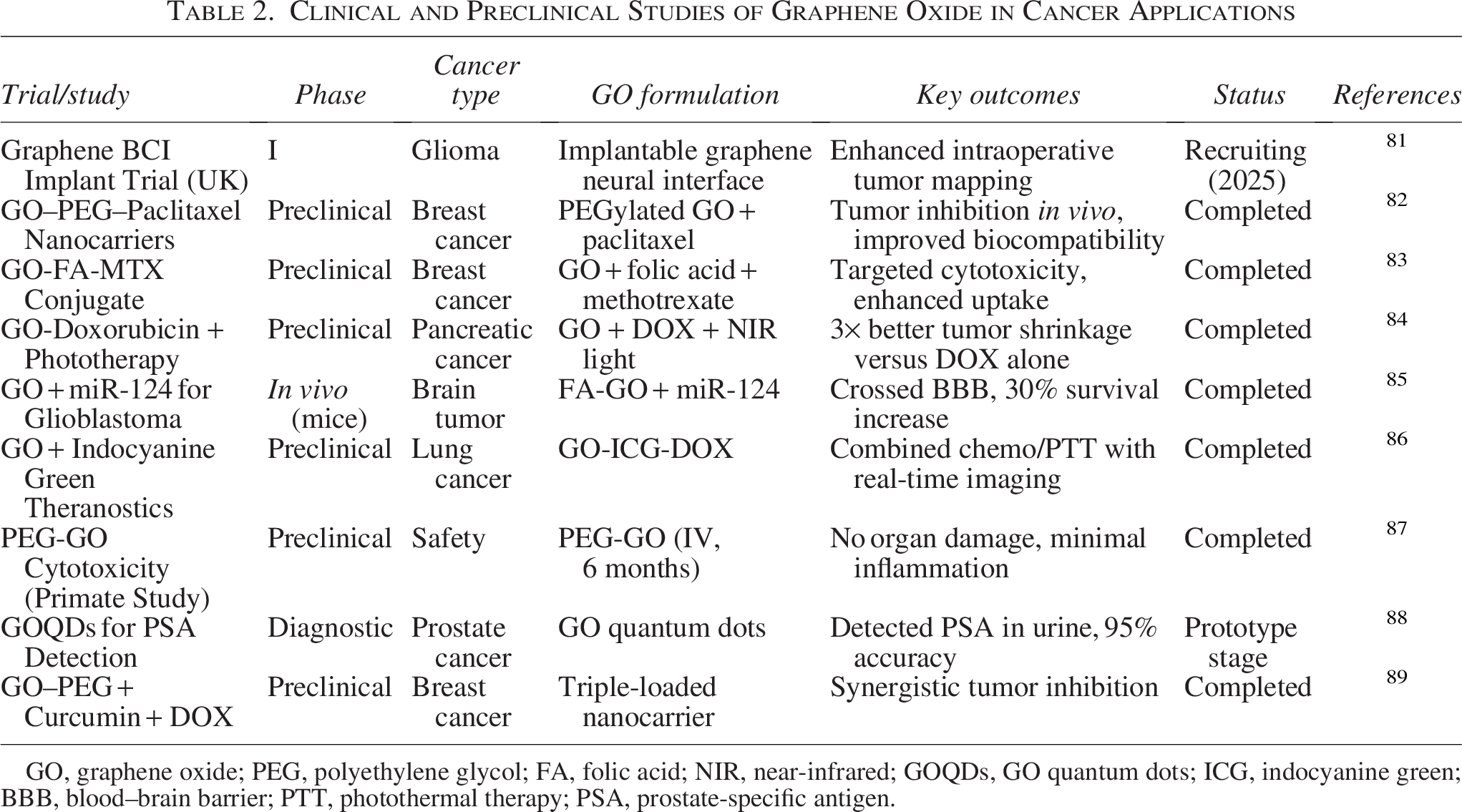
GO, graphene oxide; PEG, polyethylene glycol; FA, folic acid; NIR, near-infrared; GOQDs, GO quantum dots; ICG, indocyanine green; BBB, blood–brain barrier; PTT, photothermal therapy; PSA, prostate-specific antigen.
Since the first conception of graphene as an electronic material, many research findings have defined graphene in bio-applications such as tissue engineering, drug delivery, stem cell study, and photothermal application. 96 The various applications of GO-tethered polymers along with their mechanistic and therapeutic application are depicted in Table 3.
Graphene Derivatives with the Polymers and Their Application
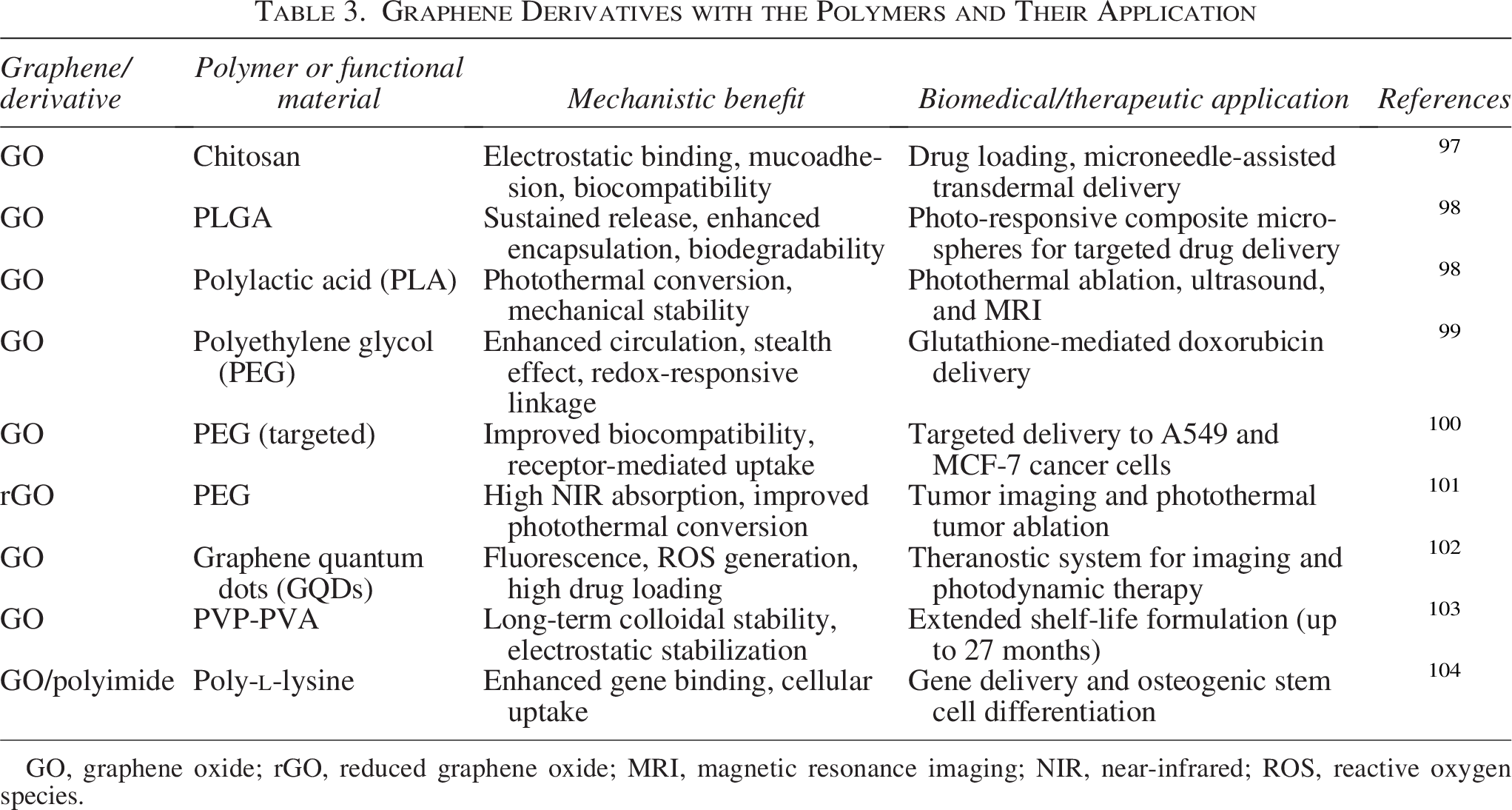
GO, graphene oxide; rGO, reduced graphene oxide; MRI, magnetic resonance imaging; NIR, near-infrared; ROS, reactive oxygen species.
Patenting Activity and Clinical Translation (2015–2025)
Over the last decade, substantial patent activity has emerged around GO-based nanocarriers, hybrid composites, and scalable synthesis strategies for biomedical use. Several patents describe GO or rGO platforms for loading classical chemotherapeutics (e.g., doxorubicin, camptothecin, curcumin, methotrexate) via π–π stacking and redox-responsive linkers, as well as metal-oxide/rGO nanocomposites designed for combined chemo-photothermal cancer therapy. In parallel, clinical translation has progressed more slowly. To date, GO itself has mainly entered human studies as a material for exposure/safety evaluation or as a component of diagnostic/biomaterial systems, rather than as a direct anticancer nanodrug. A first-in-human controlled inhalation study of ultrapure GO nanosheets in healthy volunteers reported no acute adverse pulmonary or cardiovascular effects at the tested exposure levels, providing important safety data for future biomedical applications. Nature ± 1 GO-containing biomaterials have also been explored clinically in periodontal regeneration and other regenerative indications, while graphene-based biosensor and implantable chip technologies for cancer detection and intraoperative brain tumor guidance are entering early clinical feasibility evaluation. Table 4 summarizes recent graphene/GO patents highlighting nanocarrier platforms, greener synthesis, and stimulus-responsive systems with oncology relevance. It spans GO/GQD drug carriers with pH control, green rGO via Nigella sativa showing HCT-116/MCF-7 cytotoxicity, redox- and pH-responsive disulfide-GO codelivery, rGO-metal oxide nanocomposites for HepG2, and GO hydrogels for sustained, localized tumor therapy.
Representative Graphene Oxide/Graphene-Related Patents (Last ∼10 Years)
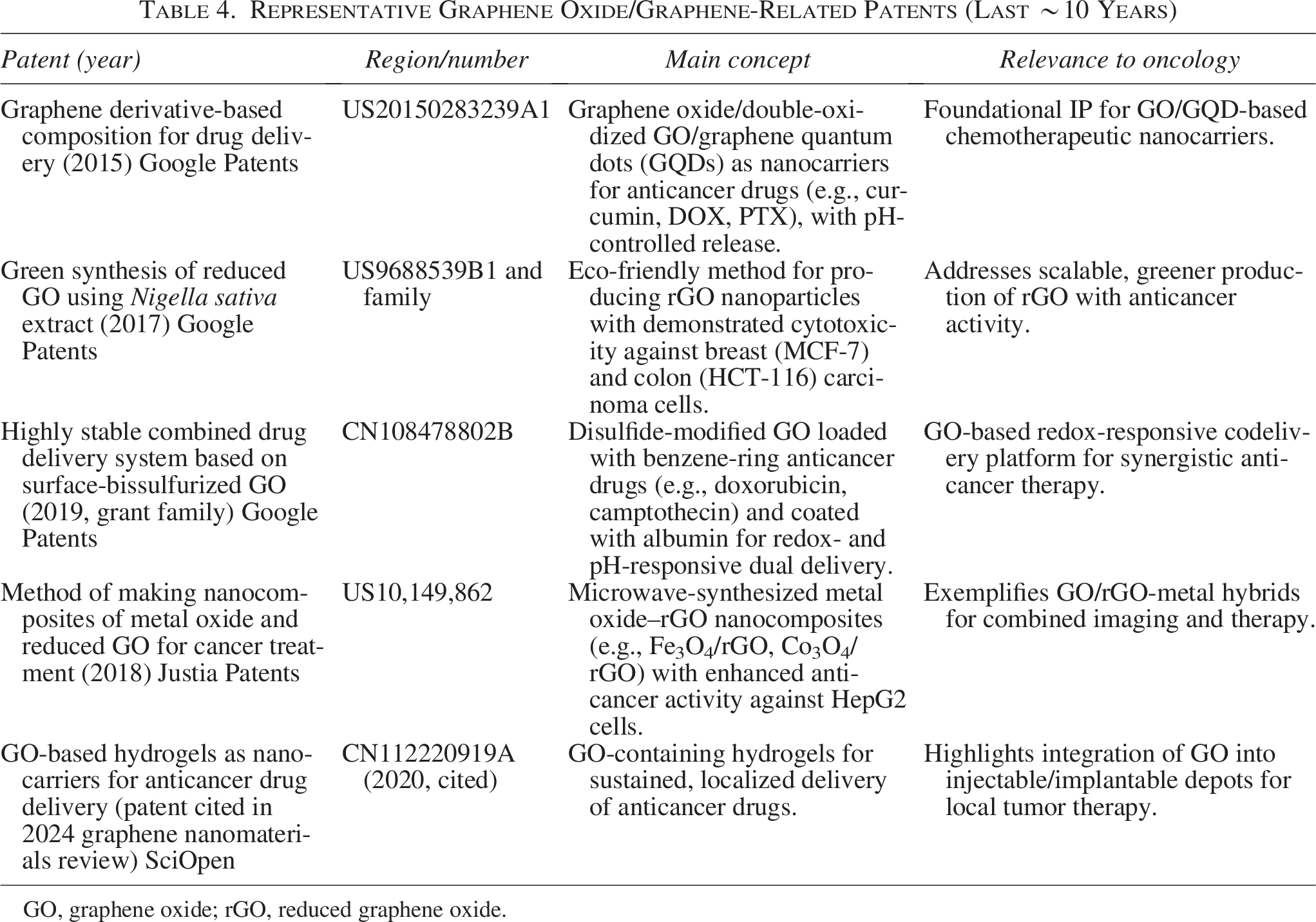
GO, graphene oxide; rGO, reduced graphene oxide.
Future Directions in Research and Clinical Application
Despite its promising capabilities, several challenges must be addressed to facilitate the clinical translation of GO. Long-term safety and biocompatibility necessitate comprehensive evaluation, particularly regarding GO’s interactions with biological systems, its immunogenic potential, and organ-specific accumulation. 105 The application of vitamin C-induced oxidation in green synthesis offers environmentally sustainable manufacturing alternatives; however, these methodologies require further refinement to attain consistent results and optimize yield. Biodegradation behavior is another critical challenge. GO can undergo enzymatic degradation by myeloperoxidase, oxidative cleavage via ROS, or renal clearance in its small-sheet form (<5–10 nm); however, larger sheets and metal-modified GO variants demonstrate persistent accumulation in the liver, spleen, and lungs, raising long-term biosafety concerns. While PEGylation improves circulation time and reduces opsonization, it may also impede enzymatic breakdown and prolong tissue retention, highlighting the trade-off between functional stability and biodegradability. The establishment of standardized protocols concerning GO synthesis, characterization, and functionalization is imperative, as this endeavor demands both uniformity and reproducibility. Additional investigations into GO’s immunomodulatory effects are essential to promote advancements in cancer immunotherapy. Collaborative efforts between research teams and clinicians must be undertaken alongside regulatory agencies to conduct clinical trials that assess both safety and efficacy while navigating intricate approval processes. The integration of GO with emerging technologies, particularly artificial intelligence and hybrid nanoplatforms constructed from GO and other materials, could facilitate the development of adaptive intelligent systems for cancer treatment. Interdisciplinary research across various scientific domains will be critical for GO to achieve its full potential within the realm of medical oncology. 106 The most recently discovered photocatalyst of the last decade was the graphitic carbon nitride (g-C3N4) as a 2D analog of graphene, with its remarkable physical and chemical properties such as tenable band structure, nontoxic and easy incorporation, and chemical stability. Still, the pure g-C3N4 has some drawbacks such as its poor charge separation, limited light absorption, and low surface area, thus leading to its moderate photocatalytic activity. 107 In terms of clinical translation, no GO-based oncology formulation has yet reached Phase II/III clinical trials. However, GO-based photothermal platforms, biosensors, and contrast-modified imaging agents have undergone preliminary preclinical safety assessments and early-stage feasibility evaluations (TRLS 3–5). Encouragingly, a GO-based biosensor (GO-AuNP hybrid) for melanoma detection has entered early clinical feasibility testing under IRB monitoring, while GO–chitosan hydrogels for wound healing have completed small-scale human trials in dermatology, showing acceptable safety. Nevertheless, no GO-based cancer therapeutic has progressed beyond preclinical evaluation, primarily due to regulatory uncertainty, long-term biocompatibility concerns, lack of GMP-standardized manufacturing, and insufficient chronic toxicity data.
Conclusions
Research suggests that GO presents a diverse array of potential applications across multiple functions, potentially revolutionizing cancer treatment. This material exhibits an exceptional surface area and robust photothermal conversion capabilities, along with straightforward functionalization options, facilitating its utilization in numerous therapeutic contexts. GO permits high loading capacities for drugs and genetic materials, while its pH and redox responsiveness allow for targeted release within tumors, thereby enhancing precision therapy and minimizing undesirable systemic effects. The therapeutic efficacy of chemotherapeutics and siRNA delivery is significantly augmented when using functionalized GO platforms. Furthermore, GO-based nanostructures substantially enhance antitumor immune responses by activating DCs and fostering the proliferation of cytotoxic T cells within immunotherapeutic frameworks. The phototherapy platform GO operates as a dual-function therapeutic agent, executing both photothermal and photodynamic mechanisms to transmute NIR light into thermal energy, while concurrently generating ROS for the ablation of neoplastic tissues. GO-based biosensors exhibit remarkable sensitivity for the detection of oncological biomarkers, whereas GOQDs significantly enhance medical imaging modalities through the utilization of MRI and fluorescence techniques. GO serves as a sophisticated theranostic instrument, as it amalgamates an array of advantageous characteristics that integrate diagnostic innovations with tailored, multimodal therapeutic strategies for personalized cancer management.
Authors’ Contributions
N.U. drafted the article, conducted material preparation, and performed data collection and analysis. S.B. contributed to the study’s conception and design, and writing, editing, and supervision. T.M. contributed by curating the article. S.B. and D.S. reviewed and approved the final article. The authors declare no conflict of interest and both are responsible for the article’s content and writing.
Footnotes
Acknowledgments
The authors express gratitude to the management of SVKM’S NMIMS Deemed-to-be University, for the outstanding research facilities and the unwavering encouragement during this project.
Funding Information
No funding was received for this article.
Data Availability Statement
The authors confirm that the data supporting the findings of this study are available within the article references.
Disclosure Statement
The authors declare no conflict of interest.