






Abstract
Background:
According to the WHO, the COVID-19 pandemic could have a negative impact on the mental health of individuals, such as an exacerbation of existing difficulties. Individuals with ADHD may be specifically challenged by the pandemic.
Aims:
To provide a systematic review of evidence regarding the COVID-19’s impact on mental health of individuals with ADHD during the COVID-19 lockdown.
Methods:
This registered review (PROSPERO ID CRD42021238770) adhered to Prisma guidelines. Systematic searches in electronic databases PubMed and PsycINFO were carried out. A total of 12 studies covering 3,028 subjects were included.
Results:
COVID-19 pandemic is associated with increased ADHD symptoms and psychological difficulties. Some studies reported that individuals experienced positive outcomes. The methodological quality of the studies was low to moderate.
Conclusion:
COVID-19 can affect the mental health of individuals with ADHD negatively, although methodological limitations should be considered. Further research should generate knowledge about long-term effects impact of the pandemic and about appropriate support.
Introduction
In December 2019 the first case of the coronavirus (COVID-19) was identified in Wuhan, China and during the spring of 2020 the virus spread to most of the world making it a pandemic. As of today (April 14th, 2021), 223 countries worldwide are affected by COVID-19 and 136,291,755 individuals have been infected with the virus (World Health Organization, n.d.-a). COVID-19 is the disease caused by the coronavirus SARS-CoV-2 which is similar to the coronaviruses that cause Middle East Respiratory Syndrome (MERS) and Severe Acute Respiratory Syndrome (SARS) (Petrosillo et al., 2020). COVID-19 is an infectious disease that affects the respiratory tract.
Mental Health in Individuals With ADHD
Inspired by the World Health Organization (n.d.-c) we consider mental health as being the maintenance of a balanced relationship between environmental, biological, and psychological factors. Based on this, mental health is defined as a state of well-being in which the individual has some inherent capacities and resources to deal with everyday events. The COVID-19 pandemic is viewed as an external factor that may affect the individuals’ general well-being and hence their mental health.
The COVID-19 pandemic and the resulting restrictions in the society can be conceptualized as environmental factors that may have a negative effect on the mental health of individuals (Galea et al., 2020; Pfefferbaum & North, 2020; Rajkumar, 2020; Torales et al., 2020; World Health Organization, n.d.-b). Risk factors such as uncertainty, excessive media exposure, closure of educational institutions and workplaces, lack of continuity of care, social isolation, boredom, and fear as well as financial loss can influence mental health (Galea et al., 2020; Golberstein et al., 2020; Huremović, 2019; Loades et al., 2020; Pfefferbaum & North, 2020; Torales et al., 2020; Wang et al., 2020). These risk factors can aggravate existing mental health problems as well as lead to new problems in individuals (Golberstein et al., 2020; Loades et al., 2020). Based on this, the pandemic might be expected to cause anxiety, depression, stress, rumination, loneliness, sleep difficulties, anger, abuse, and violence (Cluver et al., 2020; Galea et al., 2020; Huremović, 2019; Loades et al., 2020; Rajkumar, 2020; Torales et al., 2020; World Health Organization, n.d.-b). Studies have indicated that some individuals may be more vulnerable to the consequences of the COVID-19 pandemic, for example, individuals with a pre-existing mental illness who may experience an exacerbation of their pre-existing mental health difficulties (Pfefferbaum & North, 2020; Torales et al., 2020; Vindegaard & Benros, 2020).
Among the possibly vulnerable groups are individuals with ADHD. These individuals have a neuropsychiatric developmental disorder that is characterized by distraction of attention functioning, motor hyperactivity, and impulsivity (Roberts et al., 2014). In addition, individuals with ADHD have weak executive functions (EF), which play a central role for the denotations of higher-order mental processes that monitor human thoughts and behavior in an adaptive manner (Diamond, 2013; Solanto, 2014). The prevalence of ADHD is 3% to 5%, making it one of the most frequently diagnosed neuropsychiatric disorders (Roberts et al., 2014).
Due to the vulnerable mental health of the large group of individuals with ADHD it is relevant to investigate whether and how the pandemic might affect this group. The vulnerability might be a result of the individuals’ reduced adaptability to unfamiliar situations, making it difficult for them to cope (Helland et al., 2014). According to Cortese et al. (2020), individuals’ ADHD symptoms can be aggravated by a lack of routines and changes to social distance, as a consequence of which they may exhibit diverse behavioral problems as well as feelings of insecurity and frustration. Furthermore, the high levels of comorbidity (e.g., disruptive behavior disorder, substance use and, mood- and anxiety disorders), poor social and academic performance, and emotional dysregulation in individuals with ADHD makes it likely that COVID-19 related stressors will have an enlarged negative impact in this group of individuals (Barkley, 2014a; Pliszka, 2014; Steinberg & Drabick, 2015). Additionally, several studies (Hirvikoski et al., 2009; Lackschewitz et al., 2008) have shown that individuals with ADHD have an elevated physiological stress response and higher levels of self-reported stress compared to control groups.
Difficulties associated with growing up with ADHD are expressed differently throughout development. Emotional dysregulation has been linked to comorbidity among adolescents with ADHD (Barkley, 2014b; Steinberg & Drabick, 2015), making it an important predictive factor for mental health during COVID-19. Moreover, research indicates that individuals with ADHD experience more difficulty in recovering from periods of elevated stress levels, which may cause long-term consequences (Lackschewitz et al., 2008). At the same time, reviews of relevant literature (Marques de Miranda et al., 2020; Panda et al., 2021) have found positive outcomes in relation to the mental health of individuals with ADHD during COVID-19. Results of these studies suggest that children and adolescents with ADHD experienced improvements in their mood and behavior due to spending more time at home and finding this environment less challenging (Marques de Miranda et al., 2020; Panda et al., 2021). However, being a parent of a child with ADHD is often challenging, and mothers to children with ADHD have been reported to experience reduced quality of life (Liang et al., 2021) compared to mothers of typically developing children. The clinical status of the mother (e.g., inattention, depression, interpersonal problems) as well as family support was related to maternal quality of life. In addition to the core symptoms of ADHD, interpersonal relationships including conflictual parent-child interaction have been reported (Hinshaw, 2018). Given the nature of a lockdown, children and adolescents spend substantially more time at home together with their parents, while parents are expected to provide support for online schooling for their child in tandem with their own work obligations.
For all the above reasons, the COVID-19 pandemic may have a particularly substantial impact on the mental health of individuals with ADHD, who constitute a potentially vulnerable group. To our knowledge there is no prior research addressing whether and how ADHD symptoms can be affected by disease outbreaks or quarantine, and the COVID-19 pandemic may be viewed as a unique naturalistic experiment that provides rich data on aspects that would be unethical to investigate under normal circumstances.
The Objectives
For the above-mentioned reasons, it is of utmost importance for practitioners working with individuals with ADHD to understand the consequences of the COVID-19 pandemic. The present systematic review aims to investigate the impact of the COVID-19 pandemic on the mental health in individuals with ADHD. It is urgent to clarify this impact because of the importance of understanding how to support the individuals during and after the pandemic, in addition to preparing for similar incidents in the future (Galea et al., 2020; Prime et al., 2020).
Methods
Design
This systematic review was registered with Prospero (ID: CRD42021238770; Blaabjerg et al., 2021). Prior to the approval of the protocol, a pilot search was carried out to test our operationalization, search string, and understanding of the suitability of the inclusion and exclusion criteria for the preservation of the research question. Furthermore, this systematic review was conducted in accordance with the Preferred Reporting Items for Systematic Reviews and Meta-Analyses (PRISMA) guidelines (Moher et al., 2009).
Search Strategy
Literature searches were conducted through the electronic bibliographic databases: PubMed and PsycINFO. The following search string was used: Lockdown OR SARS-CoV-2 OR Coronavirus OR COVID-19 AND ADHD OR “Attention Deficit / Hyperactivity Disorder". Studies that fit the inclusion criteria were included in the systematic review if they were published before February 25th, 2021, when the last search was run. The inclusion and exclusion criteria are listed in Table 1.
Inclusion and exclusion criteria for studies.

Screening and Study Selection
The searches in the databases provided a total of 99 relevant references that were imported to RefWorks (ProQuest RefWorks, 2021). These were imported for title and abstract screening and after removal of duplicates a total of 65 articles remained. Titles and abstracts of studies were retrieved using the search strategy and those identified from additional sources were screened independently by three review authors to identify studies that potentially met the inclusion criteria outlined above. A total of 25 articles were included for further screening, while 40 articles were excluded for different reasons. Next, the full texts of these 25 potentially relevant studies were retrieved and independently assessed for eligibility by the review authors. Possible disagreements over the eligibility of studies were resolved by consulting with the last author. A total of 12 studies were ultimately included in this systematic review. For a detailed overview of the screening process, see Figure 1.

Flow diagram, PRISMA 2009.
Quality Assessment
Based on a systematic review of tools for assessing risk of bias in studies (Page et al., 2018), we assessed possible bias in the 12 included studies using the Risk of Bias Assessment Tool for Nonrandomized Studies (RoBANS) (Kim et al., 2013). This tool recognized different types of bias: selection bias, performance bias, detection bias, attrition bias, reporting bias, and other types of bias (Higgins et al., 2011; Kim et al., 2013). The three reviewers evaluated the studies independently considering the following aspects: (1) Selection of participants, (2) Confounding variables, (3) Measurement of exposure, (4) Blinding of outcome assessment, (5) Incomplete outcome data, and (6) Selective outcome reporting. Full agreement was reached through discussion. The quality of the individual studies was estimated based on an assessment of these different aspects.
Data Synthesis
This systematic review presents a narrative synthesis of the findings from the eligible studies. The results are structured around the following: Aim of study, study type, sample characteristics, measurements, type of mental health outcomes, and study quality.
Results
Methodological Features of the Included Studies
In this review we retrieved 12 eligible studies published in 12 different journals. The studies were conducted in nine different countries: England (n = 2), United States (n = 2), Australia (n = 2), Turkey (n = 1), Israel (n = 1), Italy (n = 1), India (n = 1), Canada (n = 1), and China (n = 1). The data in the studies were retrieved between December 2019 and August 2020. However, three of the studies (Laslo-Roth et al., 2020; Shah et al., 2021; Zhang et al., 2020) did not report the time of data collection. Information about this was gained through contact with the corresponding authors. Methodological details and results for the included studies are summarized in Table 2.
Summary of included studies, outcome measures, and results.
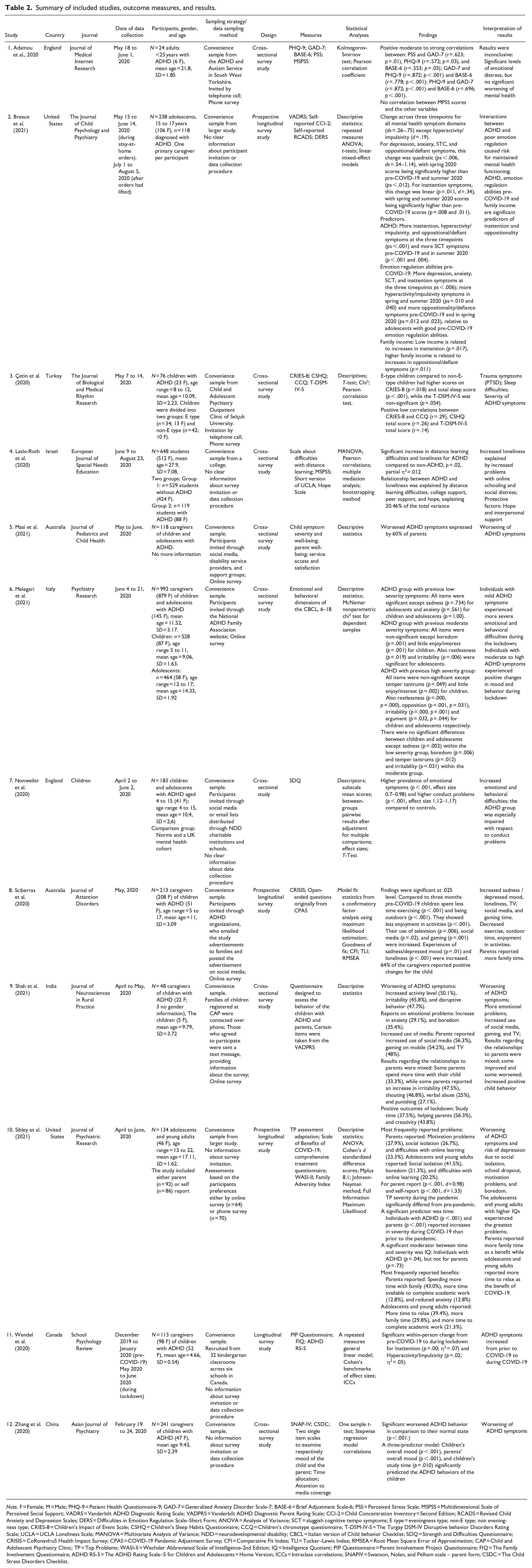
Note. F = Female; M = Male; PHQ-9 = Patient Health Questionnaire-9; GAD-7 = Generalized Anxiety Disorder Scale-7; BASE-6 = Brief Adjustment Scale-6; PSS = Perceived Stress Scale; MSPSS = Multidimensional Scale of Perceived Social Support; VADRS = Vanderbilt ADHD Diagnostic Rating Scale; VADPRS = Vanderbilt ADHD Diagnostic Parent Rating Scale; CCI-2 = Child Concentration Inventory = Second Edition; RCADS = Revised Child Anxiety and Depression Scales; DERS = Difficulties in Emotion Regulation Scale–Short Form; ANOVA = Analysis of Variance; SCT = sluggish cognitive tempo symptoms; E type = eveningness type; non-E type; non eveningness type; CRIES-8 = Children’s Impact of Event Scale; CSHQ = Children’s Sleep Habits Questionnaire; CCQ = Children’s chronotype questionnaire; T-DSM-IV-S = The Turgay DSM-IV Disruptive behavior Disorders Rating Scale; UCLA = UCLA Loneliness Scale; MANOVA = Multivariate Analysis of Variance; NDD = neurodevelopmental disability; CBCL = Italian version of Child behavior Checklist; SDQ = Strength and Difficulties Questionnaire; CRISIS = CoRonavIruS Health Impact Survey; CPAS = COVID-19 Pandemic Adjustment Survey; CFI = Comparative Fit Index; TLI = Tucker–Lewis Index; RMSEA = Root Mean Square Error of Approximation; CAP = Child and Adolescent Psychiatry Clinic; TP = Top Problems; WASI-II = Wechsler Abbreviated Scale of Intelligence-2nd Edition; IQ = Intelligence Quotient; PIP Questionnaire = Parent Involvement Project Questionnaire; FIQ = The Family Involvement Questionnaire; ADHD RS-5 = The ADHD Rating Scale–5 for Children and Adolescents = Home Version; ICCs = Intraclass correlations; SNAPIV = Swanson, Nolan, and Pelham scale – parent form; CSDC = The Child Stress Disorders Checklist.
The total of participants in this systematic review is 3028 individuals with ADHD or/and controls with the sample sizes ranging from 24 to 992. The age range across the studies is 4 to 27 years. Three studies included a non-clinical comparison group (Breaux et al., 2021; Laslo-Roth et al., 2020; Nonweiler et al., 2020). The retrieved studies were all quantitative using cross-sectional survey designs (n = 8) or longitudinal survey designs (n = 4). Data were collected through questionnaires. Seven studies (Masi et al., 2021; Melegari et al., 2021; Nonweiler et al., 2020; Sciberras et al., 2020; Shah et al., 2021; Wendel et al., 2020; Zhang et al., 2020) included caregiver reports, two studies (Adamou et al., 2020; Laslo-Roth et al., 2020) used self-reports and the remaining three studies (Breaux et al., 2021; Çetin et al., 2020; Sibley et al., 2021) used a combination of self-reports and caregiver reports. Given the situation of COVID-19, data were collected online with participants answering questionnaires through phone calls (n = 2) or online survey platforms (n = 4). One study gave participants the opportunity to answer either by phone or online. Five studies did not provide a clear report of their data collection procedure. All studies employed convenience sampling strategies: the authors reached out to the participants through websites and/or social media and/or e-mail (n = 4), phone call (n = 3), or research consent package (n = 1). Four studies provided no further information about the invitation procedure (n = 4).
Turning to the outcome measures employed to capture mental health issues, five studies (Adamou et al., 2020; Breaux et al., 2021; Çetin et al., 2020; Nonweiler et al., 2020; Wendel et al., 2020) used psychometric tools, which had been standardized and validated for their psychometric quality. In one of the studies (Melegari et al., 2021), the authors selected a restricted set of dimensions from a standardized questionnaire, whilst another study (Sciberras et al., 2020) selected specific items. The remaining five studies (Laslo-Roth et al., 2020; Masi et al., 2021; Shah et al., 2021; Sibley et al., 2021; Zhang et al., 2020) applied different types of non-standardized measures developed for the respective study. Half of the studies reported on the internal reliability of the employed standardized measures, and these are considered acceptable with Cronbach’s alpha coefficient values ranging from α = .65 to .96 (Breaux et al., 2021; Çetin et al., 2020; Laslo-Roth et al., 2020; Sciberras et al., 2020; Sibley et al., 2021; Wendel et al., 2020).
Mental Health Outcomes
Table 3 provides an overview of how the included studies conceptualized and constructed mental health. We divided the mental health outcomes into five domains: negative behavioral outcomes, negative psychological outcomes, negative social outcomes, other negative outcomes, and positive outcomes. Note that this division is artificial since the different outcomes are mutually dependent on each other.
Domains of mental health measured in included studies.
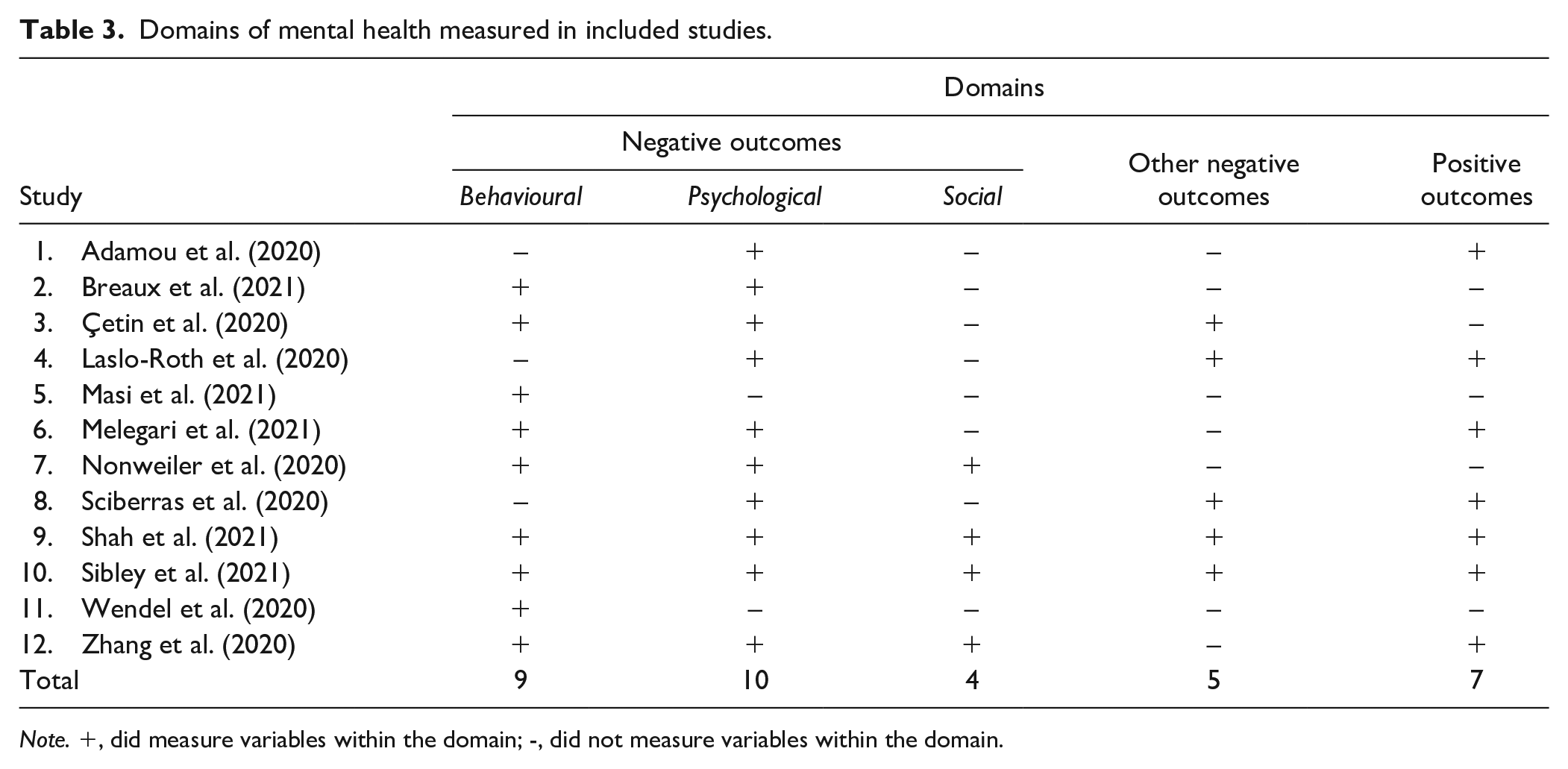
Note. +, did measure variables within the domain; -, did not measure variables within the domain.
Negative behavioral and psychological outcomes were the domains most frequently measured in the included studies (in 9 and 10 studies) followed by positive outcomes (in 7 studies). Only two of the studies included all five domains as outcome variables (Shah et al., 2021; Sibley et al., 2021) and two studies exclusively focused on the domain of negative behavioral outcomes (Masi et al., 2021; Wendel et al., 2020).
Negative behavioral outcomes
Behavioral outcomes involve symptoms of ADHD such as increased activity levels, inattention, impulsivity, restlessness, and disruptive behavior. The symptoms of ADHD are measured using VADRS (Breaux et al., 2021), T-DSM-IV-S (Çetin et al., 2020), SDQ (Nonweiler et al., 2020), an online questionnaire developed for the study (Masi et al., 2021), selected dimensions of CBCL (Melegari et al., 2021), an adaption of TP (Sibley et al., 2021), selected dimensions from VADRS (Shah et al., 2021), ADHD RS-5 (Wendel et al., 2020), and SNAP-IV (Zhang et al., 2020).
Negative psychological outcomes
Psychological outcomes include symptoms of depression, sadness, stress, anxiety, loneliness, and trauma among others. Adamou et al. (2020) examined emotional distress by measuring depression using PHQ-9, anxiety using GAD-7, and the participants’ perceived stress with PSS. Breaux et al. (2021) investigated psychological functioning by measuring cognitive tempo using CCI-2, depression, and anxiety with the RCARDS measurement and also emotion regulation abilities by employing DERS. Çetin et al. (2020) measured psychological trauma symptoms using CRIES-8. A short version of the UCLA measurement was employed by Laslo-Roth et al. (2020) in examining loneliness. Negative emotions such as sadness, boredom, little enjoyment, irritability, temper tantrums, and anxiety were measured using CBCL by Melegari et al. (2021). Emotional symptoms were measured by Nonweiler et al. (2020) using SDQ. Sciberras et al. (2020) used a modified version of CRISIS in examining sadness/depressed mood, stress, worrying, and loneliness. A modified version of VADRS was applied by Shah et al. (2021) to measure irritability, anxiety, angriness, and boredom. Sibley et al. (2021) investigated the risk of depression, boredom, and motivation using an adaptation of the TP assessment tool. Finally, Zhang et al. (2020) assessed stress using CSDC and mood state using a single item.
Negative social outcomes
Social outcomes involve peer and parent relationships, isolation, and parents’ mood state. Peer relationships were measured using SDQ (Nonweiler et al., 2020). Isolation was measured by Sibley et al. (2021) using an adaptation of the TP assessment tool. A self-made questionnaire by Shah et al. (2021) used a beskope questionnaire to examine the relationships between children with ADHD and their families. Lastly, Zhang et al. (2020) investigated parents’ mood state as a predictor of the children’s ADHD behavior using a single item scale.
Other negative outcomes
Sleep quality, exercise, school dropout, social media use, TV, and gaming time constitute the category of other outcomes that can indicate poorer mental health in individuals with ADHD. CSHQ was applied by Çetin et al. (2020) in an examination of sleep difficulties due to COVID-19 among the participants. In relation to education, Laslo-Roth et al. (2020) investigated difficulties with online schooling through the self-made questionnaire Difficulties with Distance Learning. Sibley et al. (2021) investigated school dropout using an adaptation of the TP assessment tool. Exercise, TV, social media, and gaming time were assessed using CRISIS (Sciberras et al., 2020) and a self-made measure including certain items from VADRS (Shah et al., 2021).
Positive outcomes
Positive outcomes comprise the areas of hope, perceived support, enhanced emotional mood and behavior, improved relationships, and better academic performance. Laslo-Roth et al. (2020) examined hope using Hope Scale and perceived social support using MSPSS. The latter was also employed by Adamou et al. (2020). More time with family as a positive outcome was measured with CRISIS (Sciberras et al., 2020) and the self-made measurement Scale of Benefits of COVID-19 (Sibley et al., 2021). This scale was also used in the examination of time to complete academic work and levels of anxiety (Sibley et al., 2021). Improved school performance and relationships with peers, parents, and siblings were assessed using a self-made measurement containing certain items from VADRS (Shah et al., 2021). With the use of CBCL, Melegari et al. (2021) examined positive changes regarding emotions and behavior during lockdown in different groups of individuals with varying severity of ADHD. Finally, Zhang et al. (2020) investigated the relation between ADHD symptoms and study time through time allocation of children’s activities.
Quality Assessment
Table 4 provides an overview of the quality assessment using the RoBANS appraisal tool (Kim et al., 2013). We evaluated the included studies as being of low (n = 9) and medium (n = 3) quality.
Quality assessment, RoBANS, 2013.

Note.
Synthesis of Results
This systematic review aimed to investigate the reported evidence on mental health in individuals with ADHD during the COVID-19 pandemic. In the following we present summaries of the effects of the studies given the design and means of analysis in each study.
Overall, the included studies suggest that the pandemic and the ensuring restrictions have negative as well as some positive consequences for the mental health of individuals with ADHD.
In terms of negative mental health outcomes, the pandemic and restrictions seem to have resulted in several negative psychological, behavioral, and social consequences. Most of the studies (n = 10) found negative psychological consequences including sadness/depressed mood, anxiety, boredom, and loneliness. Similarly, most studies (n = 9) identified negative behavioral outcomes with respect to symptoms of ADHD such as increased activity levels, inattention, impulsivity, restlessness, and disruptive behavior. Four of the studies found social consequences involving problematic peer and parents relationships, isolation, and parents’ negative mood state. For example, Sibley et al. (2021) found that social isolation, motivation problems, and boredom placed adolescents and young adults at risk of worsened ADHD symptoms and depression. Furthermore, Laslo-Roth et al. (2020) found that students with ADHD experienced a worsening of their ADHD-related symptoms but also felt lonelier due to online schooling and social distress. These findings indicate that COVID-19 related restrictions in the form of social distancing and online schooling can result in a worsening of these individuals’ overall mental health functioning.
A total of five studies found negative outcomes that were not directly related to mental health such as sleep quality, exercise, school dropout, social media use, and TV and gaming time. Since these factors may influence mental health, we grouped these into the domain of other negative outcomes. For instance, Sciberras et al. (2020) and Shah et al. (2021) reported some indicators for poorer mental health functioning in individuals with ADHD, as measured by less time exercising, less outdoor time, less enjoyment in everyday activities and an increased use of social media, TV and gaming. Also, Çetin et al. (2020) found positive correlations between the child’s trauma symptoms and its chronotype, sleep habits, and ADHD symptoms. This indicates that the pandemic may have a larger negative impact on individuals who stay up late and have more severe symptoms according to T-DSM-IV-S. This finding runs contrary to the findings of Melegari et al. (2021).
Finally, the COVID-19 pandemic seems to have had a positive impact on some individuals with ADHD. The positive consequences include the areas of hope, perceived support, enhanced emotional mood and ADHD related behavior, improved relationships, and better academic performance. As an example, Sciberras et al. (2020) found that 64% of caregivers reported positive changes for their child due to home confinement. In relation to this, Sibley et al. (2021) found increased family time to act as a buffer against the negative consequences of the COVID-19 pandemic. Moreover, the home confinement resulted in more time to complete academic work and a decrease in levels of anxiety for some individuals with ADHD (Sibley et al., 2021). Lastly, one study (Laslo-Roth et al., 2020) found that individuals’ sense of hope and perceived social support may function as a protective factor against loneliness. Contrary to these findings, Adamou et al. (2020) did not find associations between emotional distress and perceived social support.
Of particular relevance, Breaux et al. (2021) identified associations between ADHD and poor emotion regulation as being a risk factor for the maintenance of mental health functioning in the context of the pandemic. This finding highlights that individuals with ADHD are at higher risk from chronic stressors compared to typical controls, especially if they also have poor emotion regulation. At the same time, Breaux et al. (2021) found family income to be related to the child’s ADHD symptoms, specifically inattention and oppositional/defiant symptoms. This finding draws attention to the individual’s socioeconomic status (SES) as a predictor of these symptoms.
Another interesting finding concerns the severity of ADHD symptoms prior to the pandemic. Melegari et al. (2021) found that individuals who had low ADHD severity pre-COVID-19 experienced more emotional and behavioral difficulties, compared to individuals with moderate to high ADHD severity. Moreover, individuals with moderate to high ADHD severity experienced positive changes in mood and behavior during lockdown. This may indicate that the COVID-19 restrictions in society may be seen as protecting these individuals from social stress in everyday life. Another finding concerns the influence of IQ on the experience of difficulties arising during the pandemic. Sibley et al. (2021) found that adolescents and young adults with the highest IQ’s also were the ones who experienced the highest level of social isolation (41.5%), boredom (21.3%), and difficulties with online learning (20.2%). This emphasizes the need for awareness about the association between IQ and ADHD when considering future interventions during and after the COVID-19 pandemic.
A further important observation by Shah et al. (2021) is that the relationship between the child and its parents can be challenging during lockdown. Shah et al. (2021) documented that the parents sometimes showed inappropriate behavior toward the child, in that they shouted (25%), used improper language (25%), and punished the child (27.1%). This may reflect the frustrations experienced by the parents themselves during the pandemic bringing about a decrease in their mental capacity to cope with the challenges faced by their child. Also, it is relevant to highlight that two studies (Melegari et al., 2021; Sibley et al., 2021) investigated individuals with ADHD in different age groups and found no differences regarding negative or positive consequences during the pandemic. This could indicate that some aspects of the impact of the COVID-19 pandemic on mental health are the same across different age groups. Lastly, one study (Adamou et al., 2020) found that the pandemic did not necessarily affect the mental health of individuals with ADHD. Specifically, they found poor overall mental health in individuals with ADHD during the pandemic, but not to a greater extent than would be expected under normal conditions.
Discussion
This systematic review aimed to investigate the impact of COVID-19 on the mental health of individuals with ADHD by synthesizing and evaluating the existing evidence in the literature. We searched two electronic bibliographic databases and found a total of 12 studies that were eligible for data extraction. The findings from these studies showed that the pandemic seemed to affect the mental health of individuals with ADHD. Individuals in the included studies ranged from 4 to 27 years of age, and since symptoms and challenges associated with ADHD change across development it is difficult to draw strong conclusions about the interaction between age and COVID-19 effects. The impact of the pandemic was generally negative, and individuals experienced a range of behavioral and psychological challenges, for example severity of ADHD symptoms, depression, anxiety, loneliness, boredom, and emotional distress. Increased challenges within the domain of social competences were reported in terms of isolation and relationships with parents. These aspects, along with the negative impact of lack of peer exposure may be particularly acute for tweens and adolescents, while having less impact on younger children, young adults, and adults with ADHD. The severity of the individuals’ ADHD symptoms as well as their respective level of cognitive functioning seemed to explain some of the variability in the results. However, several other potentially important aspects were not addressed in the included studies, such as gender differences, differences between school-aged children attending special schools compared to those attending regular schools, and differences between individuals receiving or not receiving clinical services prior to the lockdown.
Interestingly, the results also showed some positive outcomes of the pandemic such as improved academic performance during online learning and improved peer relationships, although the results were mixed with respect to these issues.
Regarding the quality of the included studies, the results of the critical appraisal ratings showed that most studies were evaluated as low to moderate in quality. Of the included studies, only three studies (Breaux et al., 2021; Laslo-Roth et al., 2020; Nonweiler et al., 2020) employed a comparison group. The remaining studies can only speculate about whether the individuals with ADHD experience more mental health difficulties during the COVID-19 pandemic compared to other populations. Seven of the studies (Adamou et al., 2020; Çetin et al., 2020; Masi et al., 2021; Nonweiler et al., 2020; Shah et al., 2021; Sibley et al., 2021; Wendel et al., 2020) had a small sample size ranging from 24 to 183 individuals, which limits the confidence with which the studies can be interpreted due to lack of statistical power (Field, 2009).
When examining the studies, we identified two major confounding variables which had not been controlled for; medication had not been controlled for in six studies (Laslo-Roth et al., 2020; Melegari et al., 2021; Nonweiler et al., 2020; Shah et al., 2021; Wendel et al., 2020; Zhang et al., 2020) and SES had not been controlled for in seven studies (Adamou et al., 2020; Laslo-Roth et al., 2020; Masi et al., 2021; Melegari et al., 2021; Nonweiler et al., 2020; Shah et al., 2021; Zhang et al., 2020). The National Institute of Mental Health has found that medication is an effective treatment for individuals with ADHD to reduce symptoms and enhance mental health (National Institute of Mental Health, 2016). Moreover, a metanalysis has shown that children in low SES families are 1.85 to 2.21 times more likely to have ADHD than their peers in high SES families (Russell et al., 2016). Low SES can be associated with increased risks of child abuse, and the home may not be a safe place for all children with ADHD in the context of lockdowns. This evidence indicates that medication, SES, and various types of abuses are important variables that could have an impact on the mental health outcome and therefore should be considered. Furthermore, studies have reported reduced maternal health-related quality of life in mothers of children with ADHD (Liang et al., 2021), and this tendency combined with the lockdown and uncertainties related to the pandemic may create a severe risk for subgroups of children and adolescents with ADHD.
Some of the included studies used non-standardized questionnaires to measure the participants’ mental health (Laslo-Roth et al., 2020; Masi et al., 2021; Melegari et al., 2021; Sciberras et al., 2020; Shah et al., 2021; Sibley et al., 2021; Zhang et al., 2020) which had not been validated for their psychometric properties. This approach casts some doubt on the validity and reliability of the studies and results in a lack of normative data for the clinical group of individuals with ADHD. However, it should be emphasized that due to the novelty of the COVID-19 pandemic as a phenomenon, we agree that existing questionnaires would need revision to fit the current situation and that new measurements are needed.
Regarding the nature of the questionnaires, seven of the studies (Masi et al., 2021; Melegari et al., 2021; Sciberras et al., 2020; Shah et al., 2021; Sibley et al., 2021; Wendel et al., 2020; Zhang et al., 2020) applied retrospective reporting, typically asking participants to remember their mental health state prior to the pandemic. Retrospective reporting is cognitively demanding on respondents and participants experience challenges in remembering specific details, especially concerning topics that were not of importance to them at the time. Furthermore, individuals are prone to reporting past attitudes and feelings that are more consistent with their current situation and also with the current societal norms and values (Hipp et al., 2020; Kim et al., 2013). Overall, this results in a memory bias in the participants. It should, however, be noted that even though retrospective data tend to be unreliable at the individual level, they may be more consistent at the aggregate level (Hipp et al., 2020).
Several outcome measures consisted of self-reports from the caregivers, for example concerning their experience of the child’s behavior or mood. According to RoBANS (Kim et al., 2013) self-reported methods can cause a high risk of performance bias due to the inadequate measurement of the specific outcome. However, this may be an unavoidable issue given the difficulty of measuring mental health outcomes during the COVID-19 lockdown in real time. Another relevant consideration regarding caregiver reports is that they can be misleading because the caregivers themselves may be mentally affected by the COVID-19 pandemic and the subsequent lockdown, during which the caregiver’s child with ADHD must remain at home (Sciberras et al., 2020). On the positive side, it is the caregivers who know their child or adolescent the best. In the studies by Breaux et al. (2021) and Sibley et al. (2021), both the individuals with ADHD and their caregivers answered the questionnaires. This allowed a more holistic perspective of how the mental health of individuals with ADHD were affected during the COVID-19 pandemic.
Another important aspect to take into consideration when evaluating the results of this review is that most of the involved studies measured negative outcomes. Only investigating the negative effects of the continuum of mental health may hinder us from gaining knowledge of positive outcomes and protective factors of COVID-19 in individuals with ADHD. Interestingly, six of the seven studies that measured positive outcomes (Laslo-Roth et al., 2020; Melegari et al., 2021; Sciberras et al., 2020; Shah et al., 2021; Sibley et al., 2021; Zhang et al., 2020) found that the COVID-19 pandemic held certain advantages for individuals with ADHD. This is consistent with other reviews examining the impact of COVID-19 in relation to children and adolescents with and without behavioral abnormalities and their caregivers (Marques de Miranda et al., 2020; Panda et al., 2021). However, ADHD is a heterogeneous and complex disorder and the symptoms associated with it should be understood as existing on a spectrum. Individuals with ADHD may react differently to the COVID-19 situation depending on the severity of their symptoms. Only one of the included studies (Melegari et al., 2021) divided their ADHD participants into three subgroups depending on severity. This emphasizes the need for investigating the impact of COVID-19 on individuals with ADHD to determine precisely what support is required for various subgroups. Finally, eight of the studies (Adamou et al., 2020; Çetin et al., 2020; Laslo-Roth et al., 2020; Masi et al., 2021; Melegari et al., 2021; Nonweiler et al., 2020; Shah et al., 2021; Zhang et al., 2020) employed a cross-sectional survey design which limits our knowledge of causal relationships between the factors associated with ADHD symptoms (Field, 2009). That is to say, it is impossible to tell on this basis whether the individuals experience negative outcomes during the pandemic as a result of their ADHD diagnosis or as a result of COVID-19 related restrictions.
Despite the low and moderate quality of the included studies, all studies contributed important information regarding the impact of COVID-19 on individuals with ADHD. Since a situation like the COVID-19 pandemic is unpredictable, it limits the possibilities for obtaining adequate examinations of mental health before, during, and after the fact in individuals with ADHD. Therefore, the constraints under which the researchers were operating in examining COVID-19 and individuals with ADHD should be taken into consideration when assessing the results.
Strengths and Limitations
This systematic review added important knowledge to the field which can highlight practical implications about how practitioners should support individuals with ADHD during and after the COVID-19 pandemic. The impact of the pandemic on mental health in individuals with ADHD is a new domain of research in which a limited number of studies are available. In our search string we included the term “lockdown,” although the terms “quarantine” or “stay-at-home” may also have been appropriate terms to include. As mentioned above, there are several methodological limitations regarding the included studies, in particular that most studies used convenience sampling and focused on participants between 4 and 27 years of age. Thus, the included participants are not fully representative of the population of individuals with ADHD, and the large age range did not make it possible to provide recommendations regarding different developmental periods. The included studies reported on results from a total of nine different countries, and several of them differ substantially in their cultural practices, in the type of services that are provided for individuals with ADHD, and in the length of the lockdown. Furthermore, several studies (Masi et al., 2021; Melegari et al., 2021; Sciberras et al., 2020; Shah et al., 2021; Sibley et al., 2021) used the internet to collect data and thereby only reached individuals with an internet connection. Finally, there may be some cultural bias within the studies, but also in our evaluation of their results.
Recommendations
This systematic review summarized the available research on how the COVID-19 pandemic affects mental health outcomes in individuals with ADHD. The accumulated evidence highlights several important variables that may have an influence on the mental health of these individuals. At the same time, there are potentially major confounding variables including medication and SES and additional variables of importance such as emotion regulation, IQ, and the severity of ADHD symptoms within the individual person. Thus, we recommend that further research pays greater attention to these factors. Furthermore, as COVID-19 seems to have an impact on the mental health of children, adolescents, and young adults with ADHD during lockdown, further research should focus on the long-term consequences of the COVID-19 pandemic and explore the adult population. Based on our results we recommend that practitioners are aware of the diverse mental health consequences in individuals with ADHD due to the COVID-19 pandemic. Practitioners should inform, guide, and support individuals and their relatives through the repercussions of the pandemic, while monitoring their mental health closely: a recommendation, that is, in agreement with the recent guidelines from the European ADHD group (Cortese et al., 2020). Finally, the results of the current article can provide specific information about the vulnerability of the ADHD population during the COVID-19 pandemic and thereby act as a guideline in the event of similar incidents in the future.
Conclusion
According to the World Health Organization, the COVID-19 pandemic can be conceptualized as an environmental factor that may have a negative effect on the mental health of individuals (World Health Organization, n.d.-b). The pandemic’s potential to aggravate existing mental health problems makes it important to investigate its effect on individuals with ADHD. The findings of the current systematic review indicate that the COVID-19 pandemic and the accompanying restrictions could have a multifaceted impact on the mental health of individuals with ADHD, as the pandemic can at once affect behavioral, psychological, social, and other domains. For individuals with ADHD, a worsening of their behavioral and psychological symptoms is probable. Consequently, individuals with ADHD seem to experience an increase in ADHD symptoms and disruptive behavior together with emotional distress, boredom, and loneliness. Moreover, findings suggest that individuals with ADHD suffer from social consequences such as problematic peer/parent relationships and isolation, which could contribute to the deterioration of their mental health. Relevant indicators of aggravated mental health were reduced sleep quality and exercise and increased use of social media, TV, and gaming. However, the findings also indicate some positive consequences including enhanced emotional mood and ADHD-related behavior, improved relationships, and better academic performance. These contrasting findings may be attributable to the fact that individuals with ADHD constitute a heterogeneous group and consequently display different symptoms during the COVID-19 pandemic depending on, for example, emotion regulation, IQ and the severity of existing ADHD symptoms. Studies included in this review indicated a lack of methodological quality, especially in terms of lack of control groups, pre-pandemic measures, and the fact that the included outcome measures varied widely. Therefore the results should be interpreted with caution and further research is required to disentangle the positive and negative impact a pandemic-caused lockdown can have on the mental health of individuals with ADHD. Lastly, it should be noted that this systematic review cannot inform us about the long-term consequences of COVID-19, why further research should explore this post-pandemic.
Footnotes
Acknowledgements
The first three authors are listed in alphabetical order. The study formed part of their pre-thesis project for their Master Degree in psychology, which was supervised by the last author.
Declaration of Conflicting Interests
The author(s) declared no potential conflicts of interest with respect to the research, authorship, and/or publication of this article.
Funding
The author(s) received no financial support for the research, authorship, and/or publication of this article.
