






Abstract
Objective:
Estimate the prevalence and incidence of Attention Deficit Hyperactivity Disorder (ADHD) and analyze variations in its treatment across Spain.
Method:
Analyses were performed using IQVIA’s clinical practice RealWorld Database, the electronic medical records of some 1 million patients from 2013 to 2018. MPH treatment was assessed using the Defined Daily Dose (DDD), MPH sales were extracted from IQVIA’s Sell-Out database and the number of active psychiatrists from IQVIA’s OneKey Database.
Results:
Significantly higher ADHD prevalence and incidence (1) in children than in adults and (2) in males compared to females. 91% of patients take MPH. Regional variations in MPH consumption range from 247 Daily Dose per Inhabitant (DDI) per 100,000 inhabitants to 414.
Conclusion:
ADHD continues to be underdiagnosed and undertreated, particularly in adults, and more so in females. The lack of diagnostic tools for adults and the variations in treatment across the country need to be addressed.
Introduction and Objective
Attention Deficit Hyperactivity Disorder (ADHD) is a neurobiological disorder originating in childhood that involves a pattern of attention deficit, hyperactivity, and/or impulsivity (Catalá-López et al., 2017; Nogueira et al., 2014). Despite the symptoms of ADHD being clearly defined in children and teenagers, there are no diagnostic instruments to address ADHD in adults (Polyzoi et al., 2018).
Despite the fact that in most cases ADHD begin in childhood and persist into adulthood (Catalá-López et al., 2017; Nogueira et al., 2014), in the past it was thought that ADHD did not continue beyond adolescence (Wilens et al., 2004). According to several studies, the worldwide prevalence of ADHD in adults is estimated to be between 2% and 5% (Fayyad et al., 2007; Kessler et al., 2006; Kooij et al., 2005), and is considered to be underdiagnosed. In Spain there is little epidemiological information published on ADHD with up-to-date data. According to some publications, ADHD has a prevalence between 5% and 12% in children and adolescents (Catalá-López et al., 2017; Nogueira et al., 2014) and between 0.5% and 5% in adults (Nogueira et al., 2014; Pedrero Pérez et al., 2011), with an incidence of 4.6% to 10.8% (San Mauro Martín et al., 2014).
The fact that ADHD is most commonly diagnosed during childhood may lead to an underestimate of the number of adults also suffering from this disorder. Several observational and meta-analysis studies suggest that, at present, there is low recognition and an underdiagnosis of ADHD (Deberdt et al., 2015; Martinez-Raga et al., 2013; Polyzoi et al., 2018; Saiz Fernández, 2018). Reports indicate that fewer than 20% of adults with ADHD are currently diagnosed and/or treated by psychiatrists (Ginsberg et al., 2014). They may be diagnosed with ADHD as children but lose contact with psychiatric services for example, during the transition from childhood to adult healthcare practitioner, and are left with no access to treatment.
Among the reasons for this psychiatric disorder remaining unidentified in adult populations could be the lack of a defined diagnostic instrument, specifically addressing the detection of ADHD in adults, as well as the fact that mental health professionals, who mainly work with adult individuals, wrongly believe that ADHD does not affect them (Polyzoi et al., 2018; Rutledge et al., 2012). As a result, overall prevalence rates may be reduced by the underestimation of the prevalence of adult ADHD.
This underdiagnosis leads to an undertreatment in individuals with ADHD and, if the condition remains undiagnosed, untreated, or ineffectively treated, it has a detrimental effect on the person’s psychological well-being and quality of life (Asherson et al., 2012), at work, with the family and in society. ADHD is also associated with a higher use of healthcare services for example, related to increased risk of injuries and transport accidents, increased criminality, smoking, and substance abuse (Polyzoi et al., 2018). Those patients diagnosed with ADHD in their adult life often complain that if they had received treatment earlier on, their life would have been different (Deberdt et al., 2015; Kooij et al., 2010).
In relation to gender, the literature indicates that ADHD is more prevalent in males than in females (2:1 and 4:1, respectively) (Quintero, 2014). This results in many general practitioners (GP) and healthcare professionals not being aware of ADHD in females, so they tend not to refer them for treatment (Kooij et al., 2010; Rutledge et al., 2012).
Treatment for ADHD patients includes psychological and social interventions and pharmacotherapy (José Martínez-Raga, 2019). In Europe, psychostimulants such as Methylphenidate (MPH) and Dexamphetamine (D-AMP) are recommended as the first-line pharmacotherapy for adult ADHD (Kooij et al., 2019). A recent, systematic review (Cortese et al., 2018) of first choice, pharmacological ADHD treatment supported the use of MPH in children and adolescents, and Amphetamines in adults. According to Spanish Guidelines, the drugs that can be used in adults are MPH, Lisdexamphetamine (LDX), Guanfacine (GXR), and Atomoxetine (ATX).
Globally, evidence suggests that there continues to be significant underdiagnosis and undertreatment of ADHD, particularly in adults and especially in women. In Spain there is limited data on the estimated number of patients diagnosed and treated for ADHD, particularly in these specific groups, and the primary goal of this study is to estimate the number of patients diagnosed with ADHD, according to age group and gender, and to analyze the treatments assigned by medical professionals. The secondary goal is to assess the evidence of potential variations in the treatment of ADHD across Spanish autonomous communities.
Method
Study Design
The analyses were performed using the IQVIA clinical practice Real-World Database (IQVIA-RWD), based on electronic medical records, to identify the prevalence of ADHD and other epidemiological data.
The IQVIA-RWD contains longitudinal information of both primary and specialized care and covers an estimated population of 1,000,000 patients in Spain from 2013 to 2018.
Patients were included if they had a diagnosis of ADHD (coded 314.0–314.9 using ICD-9) and a cohort of patients diagnosed with ADHD during the study period was also included in the study.
Extracted variables: (1) Socio-demographic information (age, gender); (2) Date of diagnosis; (3) the medical specialist coding the ADHD diagnosis for the first time in the database; and (4) ADHD Treatments (2013–2018).
Estimated Prevalence of Diagnosed ADHD Patients and Estimated Incidence of Newly Diagnosed ADHD Cases Per Year
A descriptive, statistical analysis was developed using relative frequencies for categorical variables. The incidence was estimated based on new patients diagnosed during the study period (2013–2018) and the prevalence of the total number of patients diagnosed with ADHD in the database.
Prevalence and incidence were calculated for each year between 2013 and 2018. Analyses were based on the total estimated population of 1,175,503 ADHD patients in Spain contained in the IQVIA-RWD. The estimated ADHD prevalence rate was calculated by dividing the total number of patients with a registered diagnosis of ADHD in the IQVIA RWD per year, by the population registered in the database in Spain per year, and by age groups; children/young adults (1–18 years; n = 7,405) and adults (≥19 years; n = 1,292).
In order to detect if there were significant, gender-related differences at diagnosis, patients were further divided into male and female groups.
Regional Variation in the Treatment of ADHD
Two variables were considered of interest in assessing potential regional variation in the treatment of ADHD, namely the consumption of the Defined Daily Dose (DDD) of MPH per day per 100,000 inhabitants and the number of active psychiatrists per 100,000 inhabitants. The regional analysis was performed at the Autonomous Community (AC) level using data extracted between 2013 and 2018. Two distinct data sources were used as follows:
The pharmacy sales of MPH, in number of packages, was extracted from the IQVIA Sell-Out database for each year and region. The number of packages of MPH sold was then converted into DDD Sold, using the average maintenance dose for MPH, 30 mg per day, as per the World Health Organization (WHO, 2020). The following formula was applied to each pack of MPH to estimate the total number of DDD sold:
To enable a regional comparison, the mean number of DDD sold per year between 2013 and 2018 was divided by the mean population of each region during the period, and by 365 days, representing the daily dose per inhabitant (DDI), as expressed by the following formula:
Where patients were fully compliant and treated according to the WHO’s estimated DDD, this estimate was similar to the number of ADHD patients actively treated with MPH in each of the Spanish regions. Indeed, prevalence estimations based on drug consumption can be performed but should be considered as estimates of minimum prevalence (Sartor & Walckiers, 1995). A similar approach was used in the past to estimate the prevalence of ADHD in some Spanish regions (Criado-Álvarez et al., 2018).
As for the number of active psychiatrists by region, data was extracted from IQVIA’s OneKey Database to provide us with the number of active psychiatrists per AC from 2013 to 2018. OneKey is the most accurate, worldwide healthcare professionals (HCP) reference data, providing accessible and actionable insights on more than 15 million healthcare professionals and more than 1.5 million related healthcare organizations in 100 countries. Along with professional and organization data, OneKey also provides information about a professional’s working affiliations. As with the MPH sales, we have also calculated the mean number of active psychiatrists between 2013 and 2018 per region, presented as a ratio of active psychiatrist per 100,000 inhabitants.
The resident population per region was extracted from the Spanish National Institute of Statistics (November 2020).
After calculating mean DDI of MPH and mean active psychiatrists per region, we calculated the ratio between these two variables to estimate number of DDI of MPH per psychiatrist.
Similarly, if patients were fully compliant and treated according to the WHO’s DDD estimate, this ratio would serve as a proxy for the annual number of ADHD patients treated with MPH per psychiatrist.
MPH was selected for the analysis since data from the IQVIA-RWD has shown that it was the main treatment used for ADHD in Spain. Likewise, psychiatrists were chosen and analyzed as they were identified as the specialists with the highest share of ADHD patients.
Results
Prevalence and Incidence
During the study period, 8,697 patients with ADHD were identified from hospital consultations.
Regarding the incidence of ADHD, there was statistical difference between the groups: an estimated 373/100,000 in children/young adults and 13/100,000 in adults, with a similar pattern observed in prevalence, being higher in children/young adults, 490/100,000, than in adults, 100/100,000 (Figure 1).
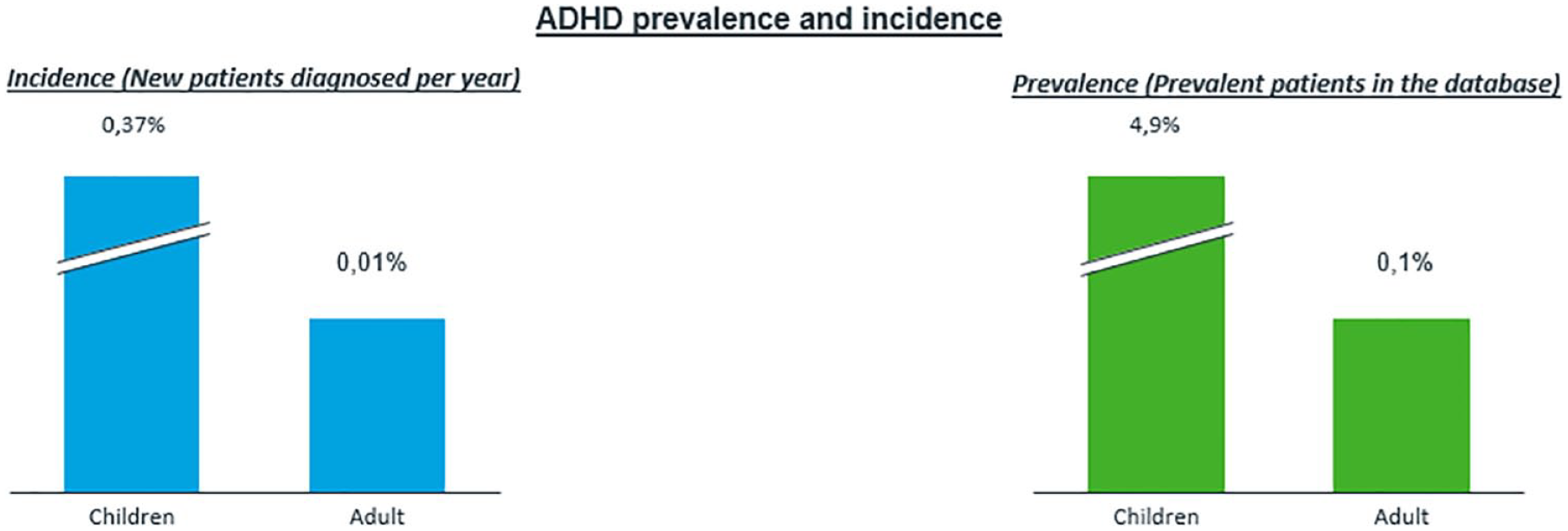
Incidence (new patients diagnosed per year) and prevalence of patients in the IQVIA database, according to age groups.
Regarding gender, from the total sample of patients diagnosed with ADHD, n = 8,697, 74% (n = 6,436) were male and 26% (n = 2,261) were female (Figure 2a).
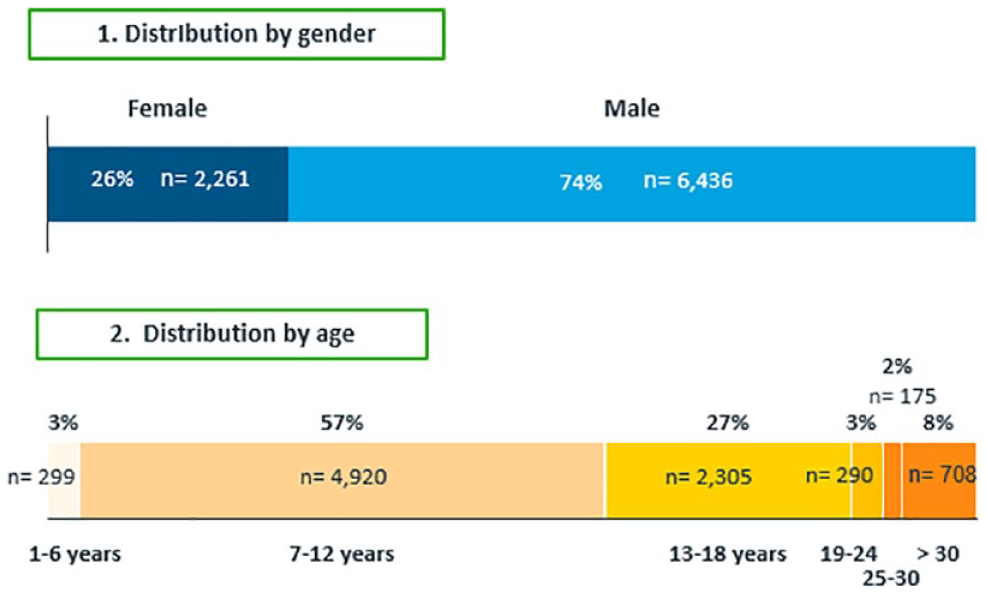
Distribution of patients diagnosed with ADHD by: (a) gender and (b) age.
The percentage and number of patients in the different groups are shown in Figure 2b. The rate of children and young adults diagnosed with ADHD is much greater than adults. Patients aged 1 to 18 were 87% of the total ADHD patient sample with more than 50% of patients diagnosed between 7 and 12 years of age.
Diagnosis
Figure 3 shows the percentage of diagnosed patients based on gender and age groups. In all age groups ADHD is diagnosed predominantly in males, however, the share of female patients diagnosed with ADHD gradually increases with age. In the age group of patients 1 to 6 years, just 15% are female, whereas in the >30 years group, the percentage of diagnosed females increases to 42%.
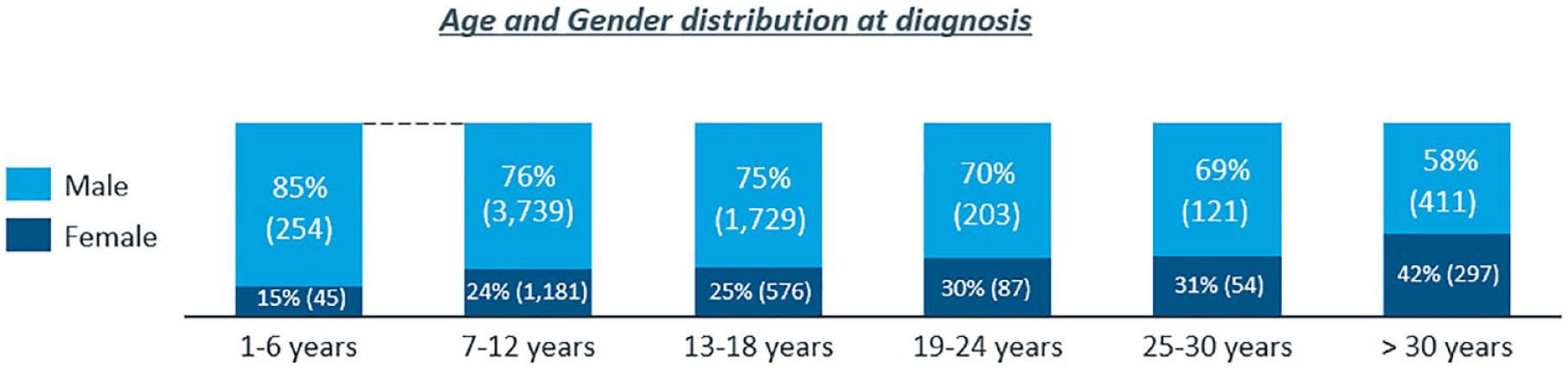
Distribution of patients at diagnosis according to age and gender.
Therefore, as age increases, the distribution between male and female patients becomes more balanced.
Treatment
The comparison of treatment groups in Figure 4 shows that in the 1 to 6 years group, the percentage of untreated to treated patients is quite close, 42% and 58% respectively. However, in the 7 to 12, 13 to 18, and 19 to 24 year groups, the number of treated patients increases to between 80% and 85%.
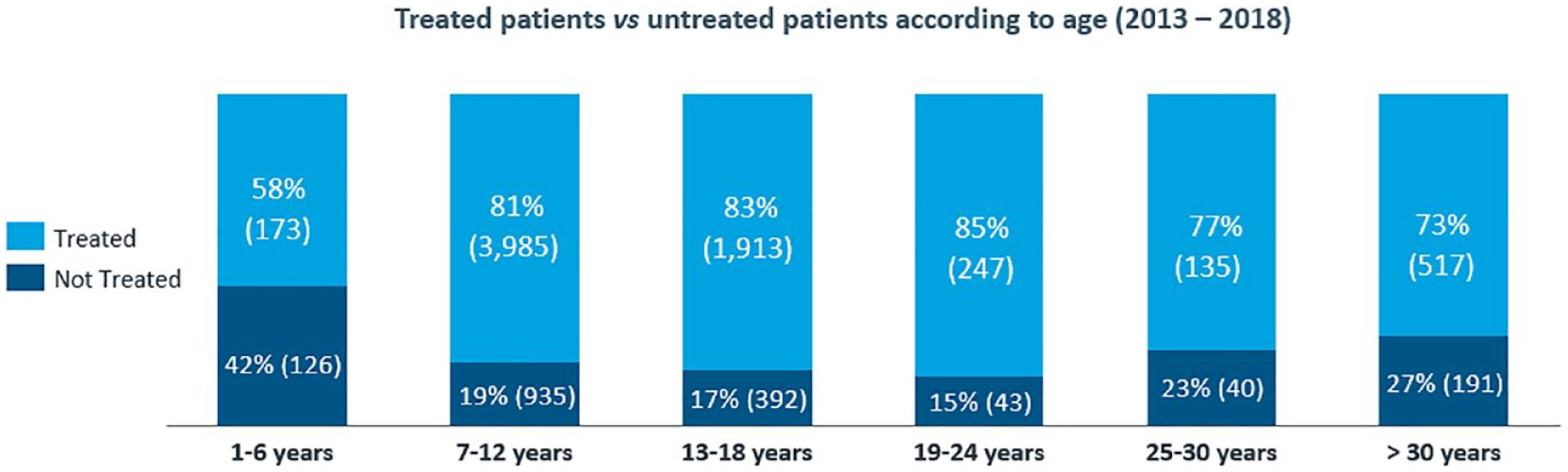
Distribution of treated patients versus not treated patients according to age.
Treatment in the 25 to 30 and >30 year groups: As per Figure 4, the percentage of treated patients in these two age groups is the lower, 77% of the 25 to 30 year olds and 73% of the >30 year olds, when compared to the percentage of treated patients in the 7 to 12, 13 to 18, and 19 to 24 age groups.
Amongst patients who were receiving some pharmacologic treatment (n = 6,970), almost all, 91% (n = 6,343), were taking MPH as first-line treatment. Only 9% (n = 627) were given a drug other than MPH as a first-line treatment: 6.8% (n = 473) ATX, 1.7% (n = 119) LDX, and 0.5% (n = 35) GXR.
Amongst patients who received MPH as first-line treatment, 12% (n = 761) switched to other second-line treatments: 6% (n = 381) switched to LDX, 5% (n = 317) to ATX, and 1% (n = 63) to GXR. The remaining 88% of patients (n = 5,582) maintained their MPH treatment.
Regional Variation in the Treatment of ADHD
Throughout the study period, mean annual sales of 41.9 million DDD of MPH were observed, corresponding to a mean of 247 DDI of MPH sold per 100,000 inhabitants in Spain. This ratio ranged from 127 DDI per 100,000 inhabitants in Murcia to 414 in Navarre (Figure 5).
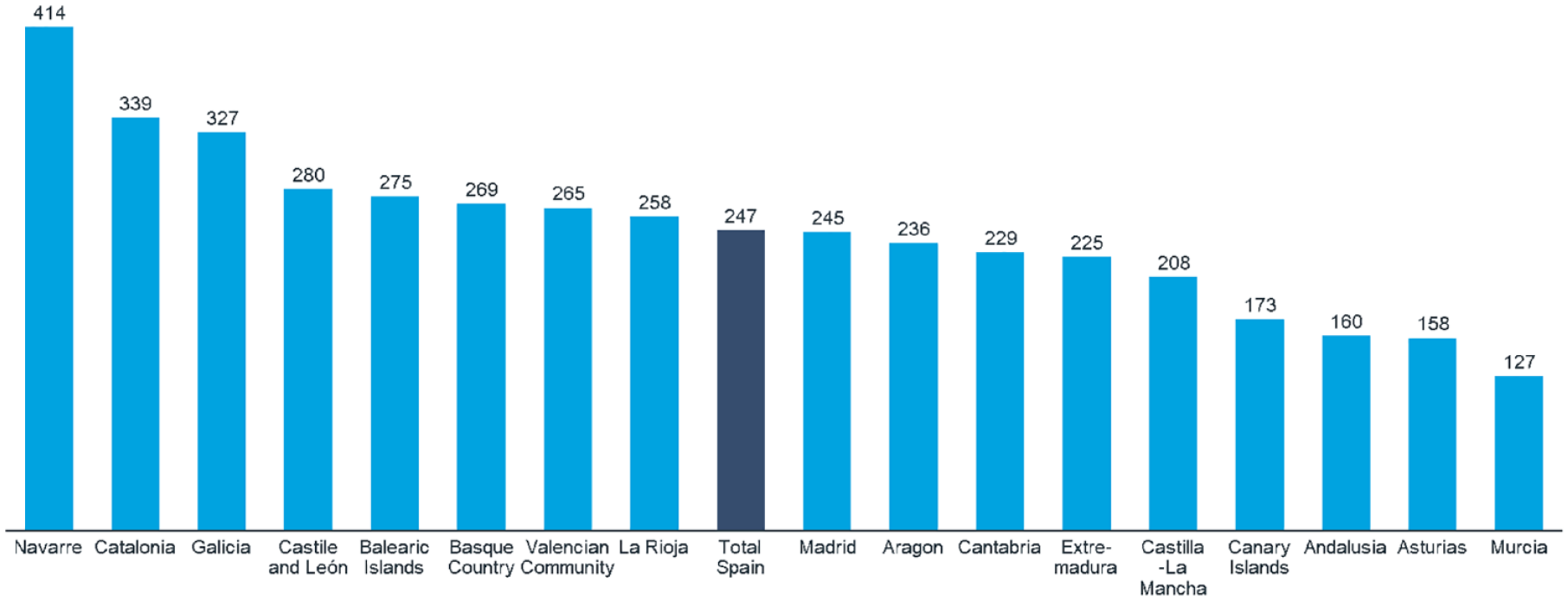
Mean DDI per 100,000 inhabitants, per region (2013–2018).
Similar regional variation was observed when analyzing the mean number of active psychiatrists per 100,000 people. In Spain, the mean is 9.1 active psychiatrists per 100,000 inhabitants with values ranging from 5.0 in La Rioja to 15.1 in Navarre (Figure 6).
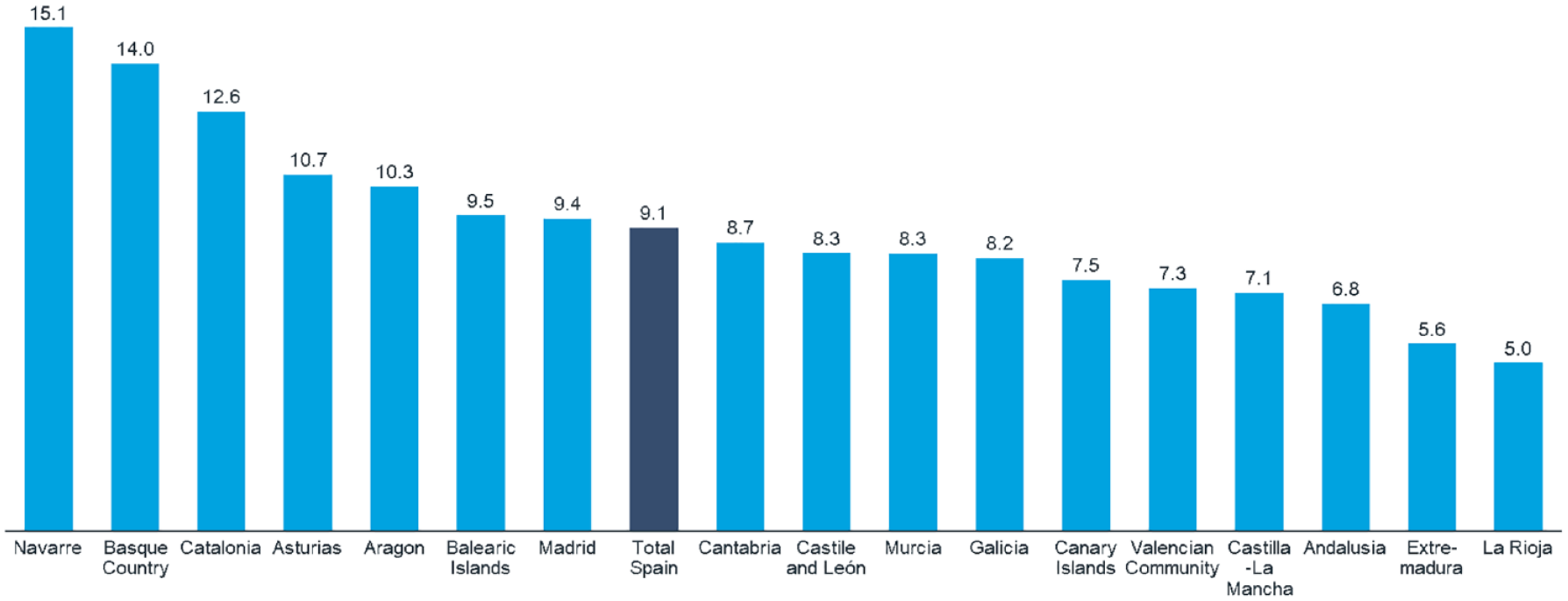
Mean active psychiatrists per 100,000 inhabitants, per region (2013–2018).
As for the mean DDI of MPH per active psychiatrist, the national mean stood at 27.1 DDI per psychiatrist, ranging from 14.8 in Asturias to 51.2 in La Rioja (Figure 7).
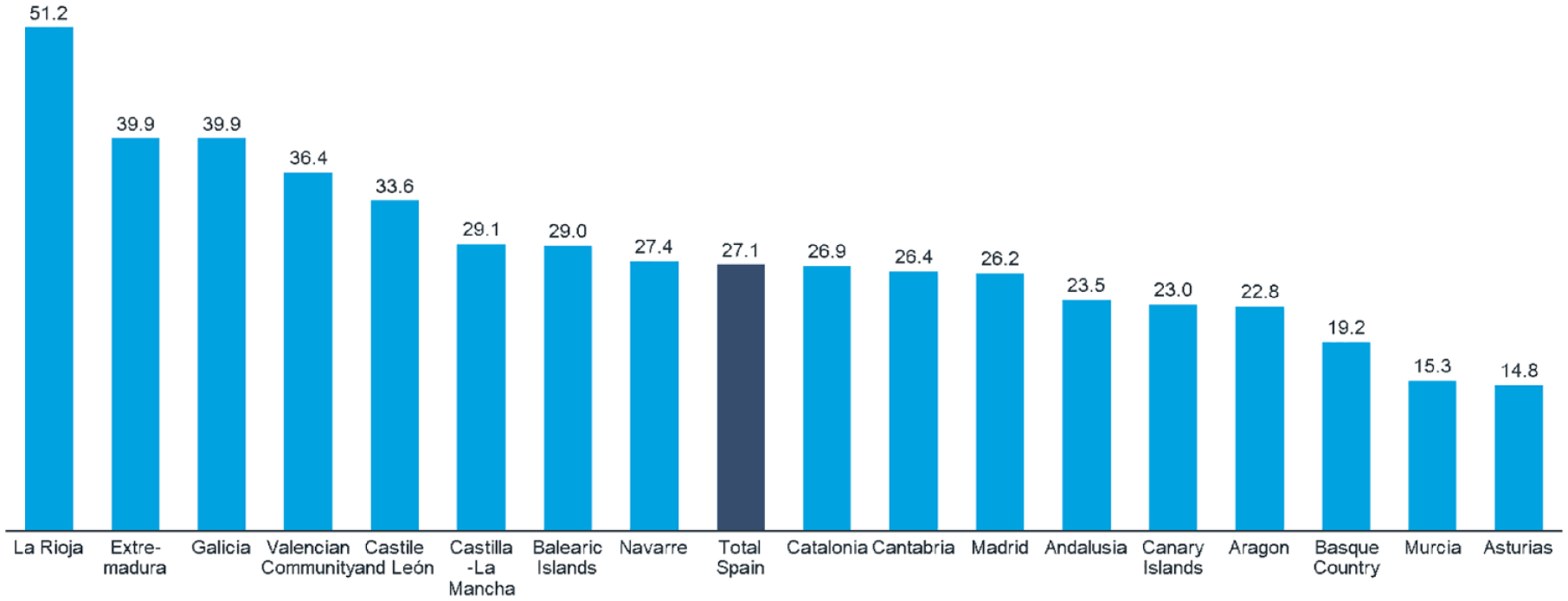
Mean DDI per active psychiatrist, per region (2013–2018).
Discussion
This Spanish, population-based study revealed information regarding the prevalence of diagnosed ADHD and the incidence of newly diagnosed cases between 2013 and 2018, as well as data on patterns of pharmaceutical treatment in this patient population.
Prevalence and Incidence
Based on current literature on ADHD in children and adults in Spain and Europe, we hypothesized that we would find important differences between the prevalence and incidence of ADHD in adults and children and our data supports this, showing significantly higher ADHD prevalence and incidence in children than in the adult population.
Our results estimate an ADHD prevalence of 4.9% in children while a systematic review (Catalá-López et al., 2012) in 2012 estimated that ADHD prevalence among children and adolescents in Spain was 6.8% (Catalá-López et al., 2012; Pérez-Crespo et al., 2020). This difference could be explained if we consider the different methodologies used in each study and the assessed population (sex, gender, diagnostic criteria, etc.). We also compared the result of our study, 4.9% prevalence in children, to a Europe-wide study (Wittchen et al., 2011), and found it to be consistent with that paper’s result where the prevalence was found to be 5% for 5 to 17 year olds.
In our study, the prevalence of ADHD in adults was estimated at 0.1%, substantially lower (by a factor of 50) than the 4.9% in children and adolescents. Several studies confirm that the prevalence of ADHD in children is much higher than in adults, however, if we compare our prevalence for adults, 0.1%, with other studies (José Martínez-Raga, 2019), we find different rates, 2.5% and 3%, which are higher in comparison to our prevalence. The same factors described in the previous paragraph could account for the variations between these study results.
Incidence was calculated on the basis of new patients diagnosed per year for which we obtained 0.37% for children and 0.01% for the adult population. A report (Wittchen et al., 2011) estimated the prevalence and incidence of ADHD among children in Catalonia from 2009 to 2017, with an incidence of 0.58%.
We also found data from other European studies that were not comparable to these incidences thus highlighting the difficulty of comparing studies where the parameters are different: time periods when the incidence calculations are made, geographical locations, or methodological variations. Furthermore, epidemiological studies about ADHD incidence are published less frequently than those of prevalence (Wittchen et al., 2011).
Diagnosis
Our analysis showed that there are significative differences in diagnosis when referring to gender and age. As expected, we found that most of the patients diagnosed with ADHD were male, 74% (n = 6,436); just 26% (n = 2,261) were female. This is consistent with the literature, where several ADHD studies have reported clear gender differences in ADHD diagnosis. In the Rucklidge 2019 study (José Martínez-Raga, 2019), boys, with an incidence of 9:1, tend to out-represent girls, 2:1. Many studies (Kooij et al., 2019; Quintero, 2014), support the idea that this difference in diagnosis between the sexes is due to under-recognition, and subsequently, underdiagnosis of ADHD in women and girls.
Several years ago, it was common to consider ADHD as being child’s disorder, however today there is strong evidence to indicate that, in the majority of the cases, ADHD persist into adult life (Kooij et al., 2019); hyperactivity might decrease but impulsivity and/or inattention can continue. Thus, a diagnosis in adults, based on the same evaluation criteria used for children can lead to an under recognition and underdiagnosis of this disorder in adult population. Unfortunately, data from this study suggests that ADHD is still perceived as a childhood disorder and many professionals may still be unaware of the existence of ADHD in adults, leading its under-recognition and under-diagnosis.
Our results suggest that most of the cases identified were <18 years, suggesting that most diagnoses are made in minors. As noted earlier, there is a significant difference between the percentage of children diagnosed 87% (n = 7,524) versus the percentage of adults diagnosed, 13% (n = 3,303).
Along the same lines, looking at gender (Figure 3), we observe that in general, the prevalence of diagnosis in men is significatively higher than in women.
If we consider the previously mentioned studies, we can affirm that our results are in agreement with their conclusions where there is a higher prevalence, by far, of ADHD in <18 years if compared with adult groups.
Treatment
Our study shows that 20% of all ADHD patients were not treated during the study period. The <7 years old patient group had the highest percentage of non-treated patients (42%) followed by the >30-year-old group (27%). However, several published studies report a much lower share of treated patients (Fayyad et al., 2017; Kooij et al., 2019; Sánchez Martínez & Guillén Pérez, 2018).
An international study conducted by the World Healthcare Organization (WHO) in 2017 (Fayyad et al., 2017) reported that despite adult ADHD being prevalent, and seriously impairing those that suffer from it, it is still greatly under-recognized and undertreated across countries and cultures.
Regional Variation in the Treatment of ADHD
This study has calculated a mean DDI MPH of 247 per 100,000 inhabitants in Spain. Substantial regional variations in MPH sales per inhabitant and the ratio of psychiatrists per inhabitant, suggest an unequal access to diagnosis and/or treatment of ADHD across the autonomous communities.
MPH has been an authorized drug for the treatment of ADHD in all Spanish ACs since the 80s (Sánchez Martínez & Guillén Pérez, 2018; Wittchen et al., 2011), and to the best of our knowledge, there are no specific regional restrictions in the prescription of MPH that would explain this variation. Given the predominance of MPH use, it is also unlikely that the observed variation is due to different treatment choices.
These findings are consistent with previous regional studies. A study conducted by Criado-Álvarez and Romo-Barrientos (2003) reported that in Spain there was variability in the use and consumption of MPH with a North-South gradient, with higher prevalence in the northern regions such Aragón, Catalonia, or Navarra when compared to southern regions such as Andalusia or Murcia. At the time of the study, the authors expected that the observed regional variability would be mitigated through time, with the drafting of new clinical practice guidelines and with the creation of child and youth mental health units or child neurology units, however, results from our study indicate that, 15 years on, these differences still exist.
A study conducted by Sánchez Martínez and Guillén Pérez (2018), showed that 10% of diagnosed pediatric patients received methylphenidate or atomoxetine in Murcia. This stands in contrast to the findings in the Basque Country (Infac, 2019), where 16% of patients received treatment. It has been also reported that the rate of MDH consumption has grown considerably in Castilla y León between 2005 and 2009 years. This would be in line our results, where Murcia seems to be the region with the lowest MDH consumption, in contrast to Castille and Leon or Basque Country (Treceño et al., 2012).
The variation in the mean number of active psychiatrists per inhabitant could partially contribute to the apparent undertreatment of ADHD in some regions. However, no solid conclusions can be drawn from this as other specialists play a role in ADHD, and not all psychiatrists specialize in the treatment of ADHD. Further studies are needed to identify the factors behind the variability in the use of MPH across regions.
Conclusions
Our findings, together with the bibliographical research, suggest that underdiagnosis and undertreatment of ADHD are still worrying issues, particularly in adults, and more so in females.
There are still patients who remain untreated in Spain, and this can have a severe impact on their lives. In the long-term, untreated ADHD can cause much suffering for these patients, leading to academic failure, substance abuse, criminality, accidents, etc.
The results also show that there is still a significant difference in the treatment of ADHD across the Spanish regions, with some autonomous communities presenting a prevalence of MPH treatment which is substantially below the national average and below international estimates.
A comprehensive overview of the prevalence and treatment of ADHD in adults in Spain may be needed to provide healthcare professionals and organizations with specific diagnostic criteria and resources to better manage ADHD patients in the future.
A lack of understanding and recognition of ADHD leads to an underdiagnosis and subsequent undertreatment of this disease. The combination of pharmacotherapy and psychotherapy is crucial for controlling the symptoms, without which patients have to deal with serious, sometimes life-threatening problems, that negatively affect their day to day functioning and erode their quality of life.
Limitations
As with all administrative database studies, this one has its limitations. The data here represents an estimated prevalence of diagnosed ADHD and an estimated incidence of newly diagnosed ADHD, and this should be kept in mind when making comparisons to other studies that have different methodologies and samples or have been based on data from different periods of time.
Another limitation is that IQVIA clinical practice Real-World Database does not allow the extraction of data by specific regions, so the analysis from this Database has been performed at a national level.
With regards to IQVIA Sell-Out database, it does not necessarily represent the total number of patients on MPH treatment, as neither noncompliance nor variations in doses were factored in. Despite the fact that MPH is the most common treatment for ADHD, and can provide information about the drug use in daily clinical practice, it does not allow for a direct measurement of ADHD prevalence.
Footnotes
Author Contributions
All the authors confirm sole responsibility for the following: study conception and design, data collection, analysis and interpretation of results, and manuscript preparation.
Declaration of Conflicting Interests
The author(s) declared the following potential conflicts of interest with respect to the research, authorship, and/or publication of this article: J.A.R.Q was on the speakers bureau and/or acted as consultant for Janssen-Cilag, Novartis, Shire, Takeda, Bial, Shionogi, Sincrolab, Novartis, BMS, Medice, Technofarma, Rubió, and Raffo in the last 3 years. He also received travel awards (air tickets + hotel) for taking part in psychiatric meetings from Janssen-Cilag, Rubió, Shire, Takeda, Shionogi, Bial, and Medice. The Department of Mental Health chaired by him received unrestricted educational and research support from the following companies in the last 3 years: Janssen-Cilag, Shire, Oryzon, Roche, Psious, and Rubió. V.R. was on the speakers’ bureau and/or acted as consultant for Takeda, Rubió in the last 5 years. She also received travel awards (air tickets + hotel) for taking part in psychiatric meetings from Rubió and Takeda.
Funding
The author(s) received no financial support for the research, authorship, and/or publication of this article.
