






Abstract
Introduction:
In the context of classical ballet, pain is widely accepted as part of the artistic journey. However, it can expose ballet students to health risks. The primary objective of this study is to analyze the perception and interpretation of pain among young adult female classical ballet students and, secondarily, to investigate musculoskeletal risks associated with injuries.
Methods:
A cross-sectional observational study was conducted with 59 young adult female classical ballet students (aged 18-35) between March and June 2025. The following instruments were administered: semi-structured questionnaire, Pain Catastrophizing Scale (PCS), Sport Readiness Questionnaire (MIR-Q), and McGill Pain Questionnaire (MPQ). Statistical analysis was performed using Jamovi software (version 2.4.14.0), employing t-tests for independent samples and Fisher’s exact test (P < .05).
Results:
A total of 59 students were reached. All participants reported that pain is viewed as intrinsic to the sport. Most believed, either fully or partially, that pain is a test of strength and endurance during ballet practice (81.3%), that pain also made them stronger (62.7%), that there would be no benefit to not feeling pain (62.8%), and 93.2% ignored the pain when they felt it. No significant levels of catastrophizing were found (PCS 21.3 ± 9.96). However, a higher daily frequency of weekly practical classes (P = .034) and more years of ballet practice (P = .016) were statistically correlated with a higher susceptibility to musculoskeletal injuries. The subjective aspects of pain did not vary according to the duration of practice (P > .05).
Conclusion:
There is a high prevalence of pain among adult classical ballet students; however, a new subgroup has been identified in which pain does not correlate with artistic progress. Higher weekly frequency of practice may indicate a greater risk of musculoskeletal injuries in ballet.
Key Points
Pain is highly prevalent in classical ballet, leading most students to ignore it during practice. However, a new subgroup does not equate pain with artistic progress.
Higher weekly class frequency and more years of practice were associated with greater susceptibility to risk factors for musculoskeletal injuries, indicating a relationship with intensity and exposure.
No elevated levels of pain catastrophizing were observed, and its subjective aspects did not vary with duration of practice among adult students.
Introduction
Classical ballet is recognized as a highly technically demanding discipline, which, consequently, can expose ballet students to various injuries throughout their dance careers. 1 Pain is defined as an unpleasant sensory and emotional experience associated with, or resembling that associated with, actual or potential tissue damage; it has a multifactorial etiology and is also related to the way in which the individual interprets a given stimulus. 2
In the context of classical ballet, painful stimuli are often perceived as inevitable, constant, and normal. 3 Although some dancers recognize the harmful potential of pain, it is widely accepted as an integral part of the artistic journey, associated with the development of performance and the achievement of professional goals. The acceptance of pain may be related to its repression as a coping mechanism, reinforcing cultural norms that normalize suffering as part of success in dance. 4
Although the scientific literature highlights the existence of cultural aspects of pain and injury in the context of classical ballet, there remains a scarcity of research exploring the painful experiences in ballet, particularly among adult classical ballet students, who represent a growing demographic. The study of this topic can contribute to the targeted mapping of the profile of ballet practitioners, consequently promoting prevention and intervention measures tailored to the specific reality of this group and the development of best health practices. Therefore, the main objective of this study is to analyze the perception and interpretation of pain among young adult female classical ballet students. Additionally, the study seeks to investigate musculoskeletal risks associated with injuries.
Methods
The present research is a descriptive and analytical cross-sectional study, conducted based on the STROBE (Strengthening the Reporting of Observational Studies in Epidemiology) guidelines. 5 The study was conducted in person at four pre-professional ballet schools in the state of Paraíba/Brazil, from March to June 2025. The research was duly submitted to and approved by the Institutional Review Board (IRB), and all participants signed an Informed Consent Form (ICF), under the Certificate of Presentation for Ethical Appreciation (CAAE) number 83827924.0.0000.5187 and opinion 7.177.759.
Participants
The study population consisted of female adult classical ballet students aged 18 to 35 who had been practicing classical ballet for at least one uninterrupted year. The participants were duly enrolled in pre-professional schools and had only practical training in their respective institutions. To participate in the study, the students had not previously been exposed to any formal instruction on the perception and conceptualization of pain or injury, in order to control for possible cognitive biases regarding the construct under investigation.
The exclusion criteria for study participation were: (1) individuals who withdrew from the study at any point during data collection, regardless of the reason; (2) individuals who did not answer all survey questions; (3) individuals with cognitive impairments that made it difficult to interpret the questions, thereby preventing data collection.
According to data provided by the ballet schools included in the study, when adding the total number of dancers meeting the aforementioned criteria who were enrolled in each school at the time of data collection, 81 individuals were identified. For the sample calculation, a sampling error of 7.5% and a confidence level of 95% were considered, indicating a representative sample of 59 individuals.
Procedures
In a first phase, a semi-structured questionnaire was administered, containing questions regarding: (1) age; (2) aspects related to classical ballet practice, such as years of practice, weekly frequency and presence of pain; (3) aspects related to a history of ballet-related injuries (Supplemental Material). The questions in this questionnaire regarding coping with pain were developed by selecting and adapting items from the validated Pain Appraisal Inventory (PAI) and Sports Inventory for Pain (SIP) scales.6,7
In a second phase, four tools validated in the literature8 -10 were administered: the Pain Catastrophizing Scale (PCS); the Sport Readiness Questionnaire (MIR-Q); and the McGill Pain Questionnaire (MPQ). The PCS assesses the experience of pain in relation to levels of catastrophizing. The total score ranges from 0 to 52, with a score of 30 or higher indicating a significant level of catastrophizing. 8 The MIR-Q is used to identify athletes with risk factors for musculoskeletal injuries through six objective questions to be answered with “Yes” or “No.” The number of “Yes” answers is directly proportional to the individual’s risk. 9
The MPQ is a multidimensional questionnaire that assesses the sensory, affective, evaluative, and other aspects of pain. It includes 77 words that can describe the experience of pain. The Pain Rating Index (PRI) is calculated as the sum of the values associated with each word, with a total score ranging from 0 (no pain) to 77 (severe pain). In addition, the MPQ includes a six-level Present Pain Intensity (PPI) scale: (0) No pain; (1) Mild; (2) Uncomfortable; (3) Distressing; (4) Horrible; and (5) Excruciating. 10
Participants were instructed to answer the questionnaires based on their individual perceptions of pain experienced exclusively during classical ballet practice classes. For the purposes of this study, pain resulting from any other physical or daily activities was not considered in the analysis. During the study, there was a single trained evaluator responsible for administering the questionnaires, reading and explaining the items to each ballet student, which made it possible to address any questions the interviewed students might have and avoid misinterpretation. The approximate time required to complete the questionnaires was 25 minutes.
Data Analysis
The collected information was transferred to a Microsoft Excel spreadsheet. The data were analyzed using the statistical software Jamovi, version 2.4.14.0, by an independent, blinded statistician. The sample characteristics were described using descriptive statistics, such as means, percentages, and standard deviations. The normality of the data distribution was verified using the Shapiro-Wilk test. For this analysis, a numerical classification system was developed to ensure the anonymity and confidentiality of the participants’ data.
Given the normal distribution, the t-test for independent samples was applied to compare the test results regarding the frequency of weekly practice and the total duration of classical ballet practice in years. To investigate the association between pain interpretation and perception with these same variables, Fisher’s exact test was used. A significance level of 5% (P < .05) and a 95% confidence interval were adopted in all analyses performed.
Results
A total of 59 students were reached. Of this group, the majority had 10 or more years of classical ballet training (27.1%), followed by ballet students with 1 to 2 years of experience (25.4%). The dancers practiced ballet predominantly twice a week (67.8%) and used pointe shoes (83.1%) (Table 1).
Characteristics Evaluated.
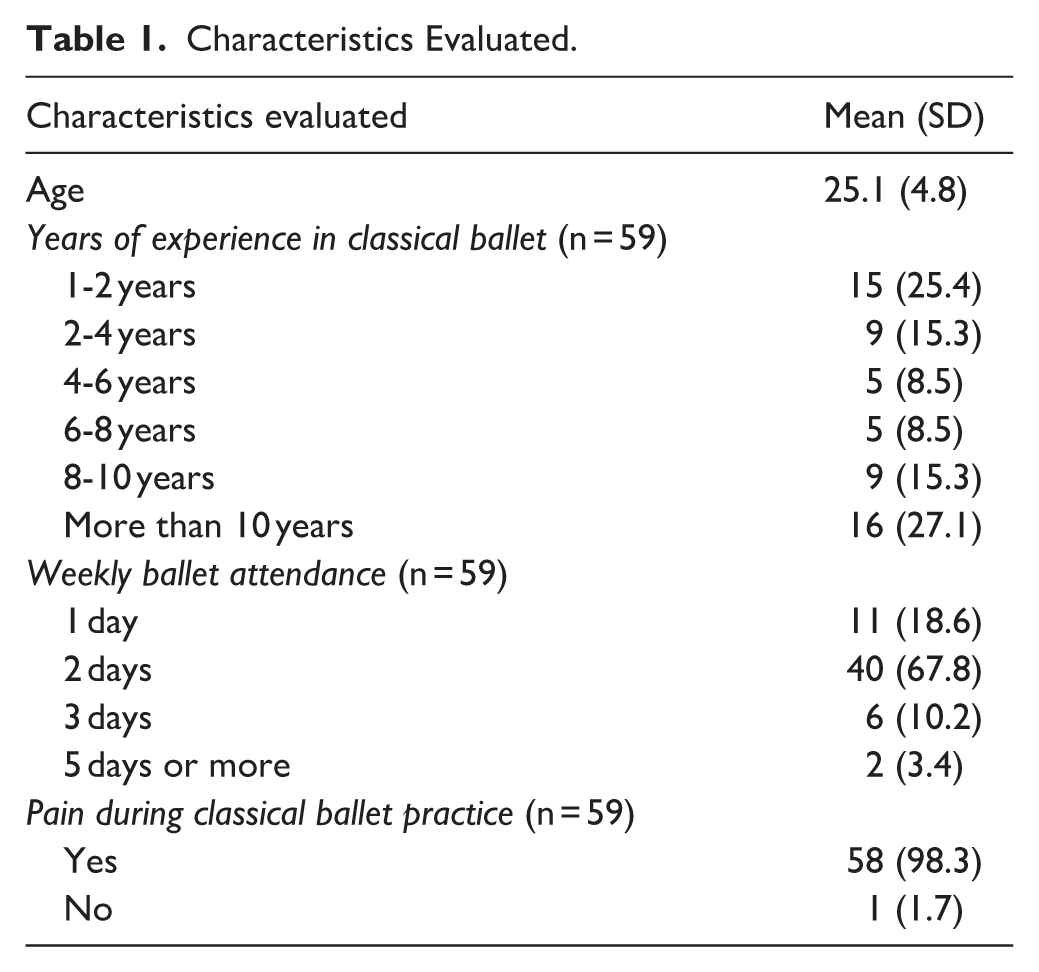
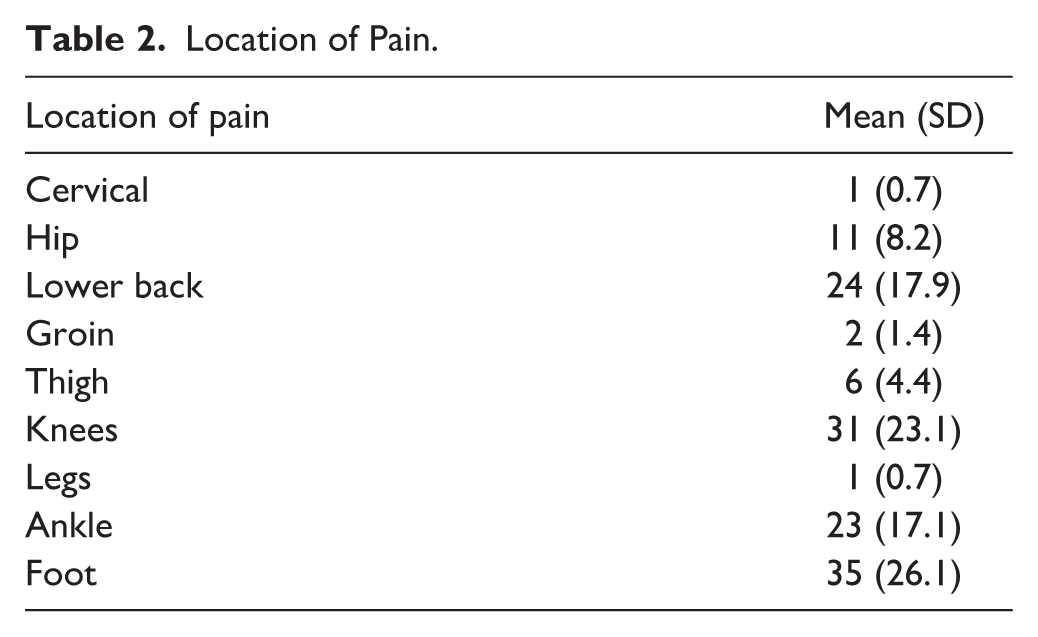
All interviewees reported having heard that pain is part of ballet. Among the dancers who had suffered injuries related to ballet practice (54.2%), 77.4% had to stop classes due to their injury. The main anatomical regions affected were the ankle (26.2%), the foot (22.9%), and the knee (18%), areas that also accounted for the highest percentage of pain during practice, along with the lower back (Table 2).
Location of Pain.
With regard to the perception and interpretation of pain, most of the interviewees considered that they fully understood the meaning of “pain” (45%). However, a large number of these students reported ignoring the pain entirely or partially when they felt it (93.2%), believed entirely or partially that pain is a test of strength and endurance during ballet practice (81.3%), that it made them stronger (62.7%), and that there would be no benefit in not feeling it (62.8%).
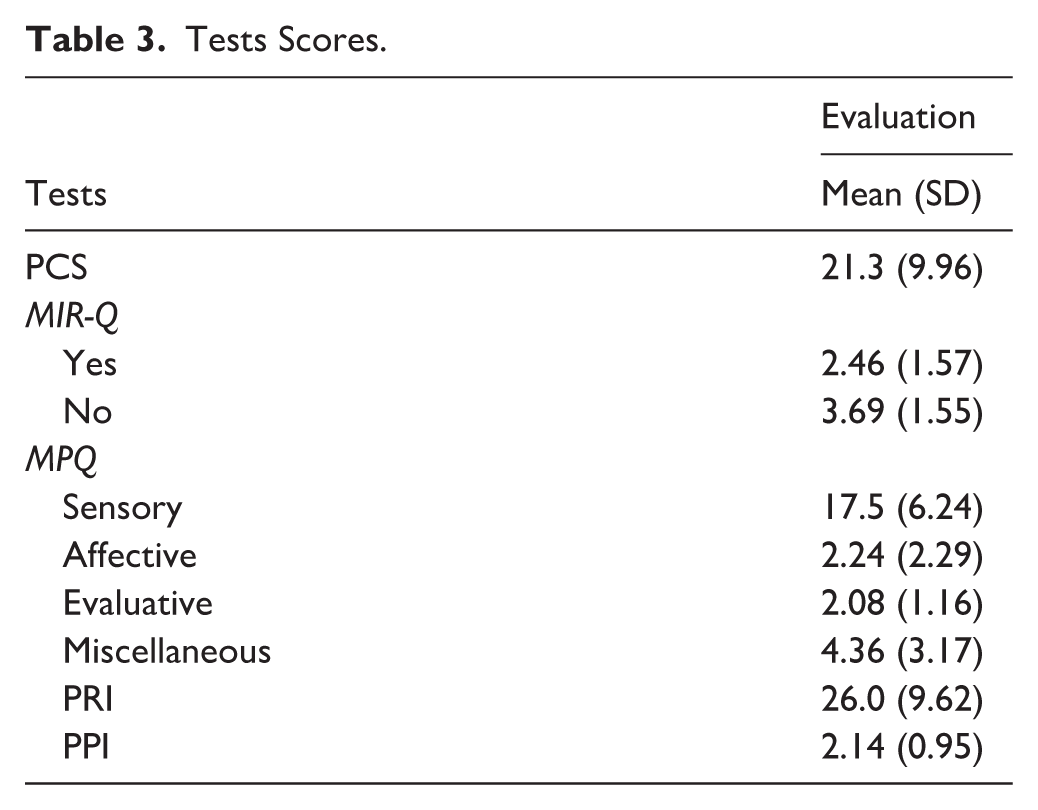
The dancers did not exhibit a clinically significant level of pain catastrophizing, given that the mean total PCS score was less than 30. Furthermore, at the time of the interview, the participants presented few factors indicative of probable musculoskeletal injury or risk of developing one, as evidenced by the higher mean number of “No” responses on the MIR-Q. The mean Present Pain Intensity (PPI) characterized the dancers’ pain as uncomfortable. Among the sensory, affective, evaluative, and miscellaneous aspects of pain, the sensory aspects were predominant (Table 3).
Tests Scores.
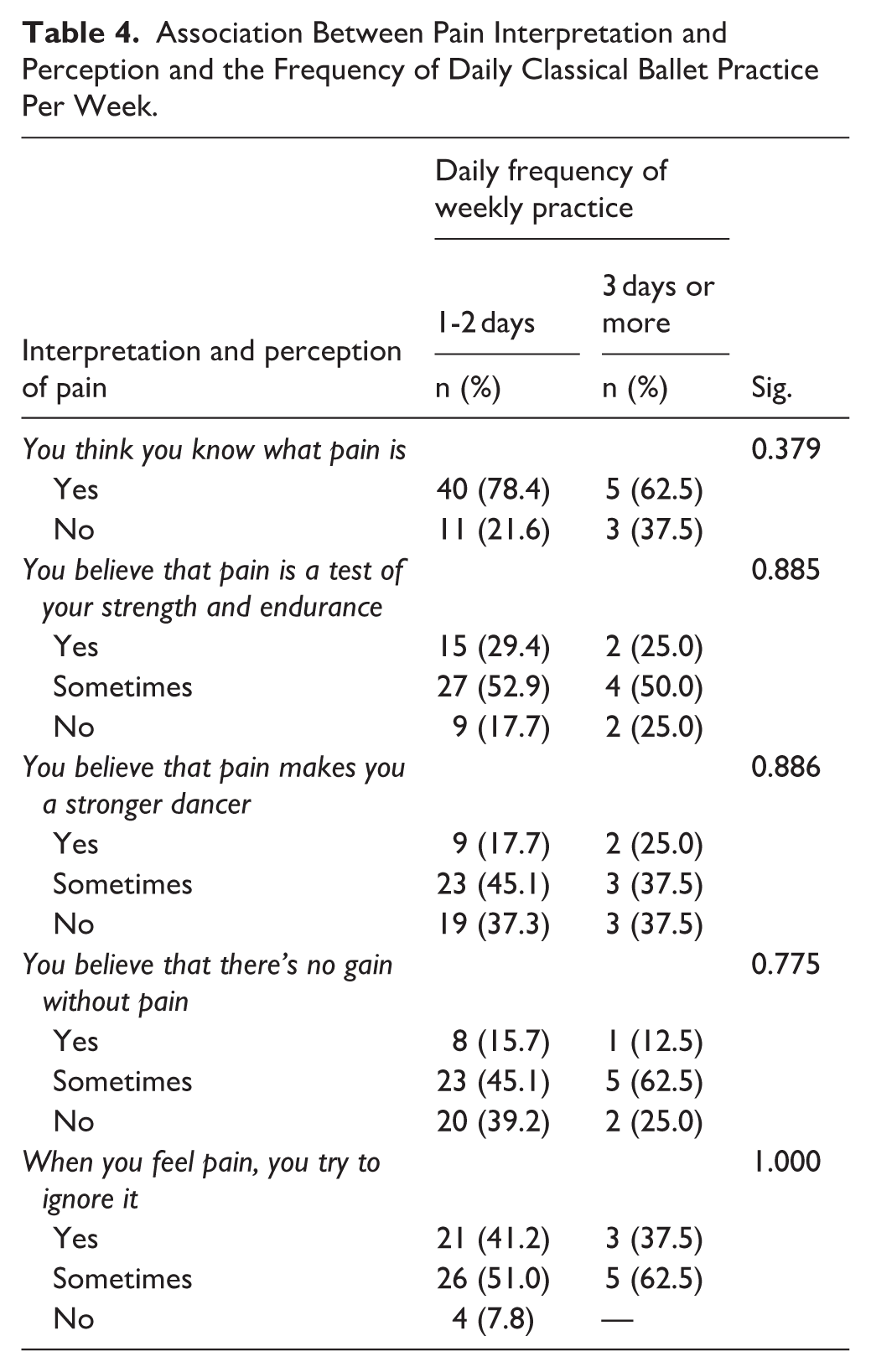
Pain-related factors were not statistically associated with the daily amount of practice during the week; specifically, when analyzing the association between pain interpretation and perception characteristics and the frequency of classical ballet practice during the week, no significant association was found between the variables (P > .05). Frequency did not emerge as a factor influencing different interpretations and perceptions, neither among the group of dancers who practiced the discipline once or twice nor among the group that practiced three or more times (Table 4).
Association Between Pain Interpretation and Perception and the Frequency of Daily Classical Ballet Practice Per Week.
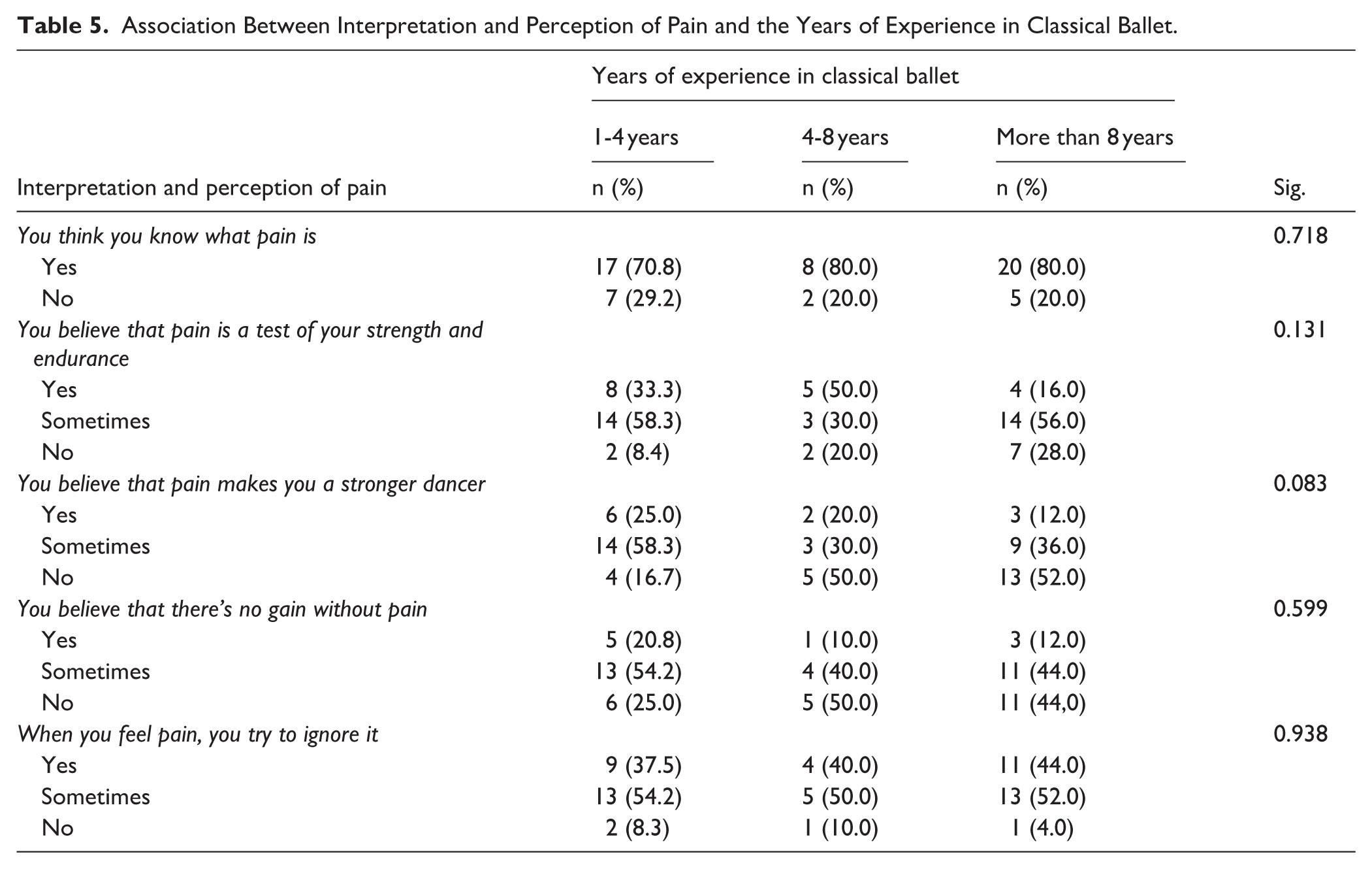
There was also no significant association between pain interpretation and perception characteristics and the length of experience in classical ballet (P > .05) (Table 5). In other words, similar to weekly frequency, the length of time an individual had been practicing ballet was not statistically related to their perceptions of pain in this discipline.
Association Between Interpretation and Perception of Pain and the Years of Experience in Classical Ballet.
Based on a comparative analysis of the tests administered to ballerinas who practiced one to two times a week versus those who practiced three or more times a week, a significant difference was observed for the MIR-Q, with a higher mean of negative responses among those who practiced ballet one to two times a week (P = .034) (Table 6). These data indicate a relationship between lower weekly practice frequency and a lower risk of musculoskeletal injuries.
Test Scores According to Daily Frequency of Weekly Practice.
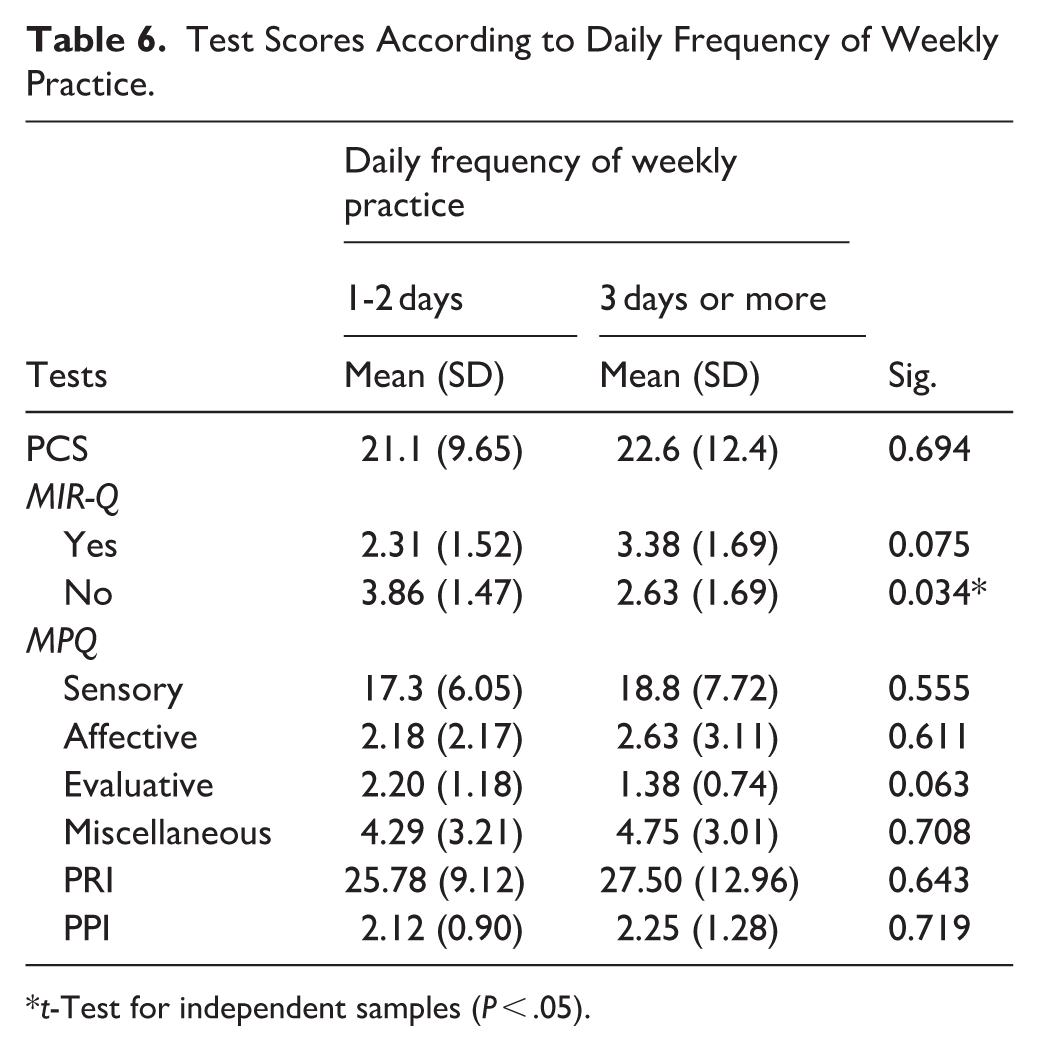
t-Test for independent samples (P < .05).
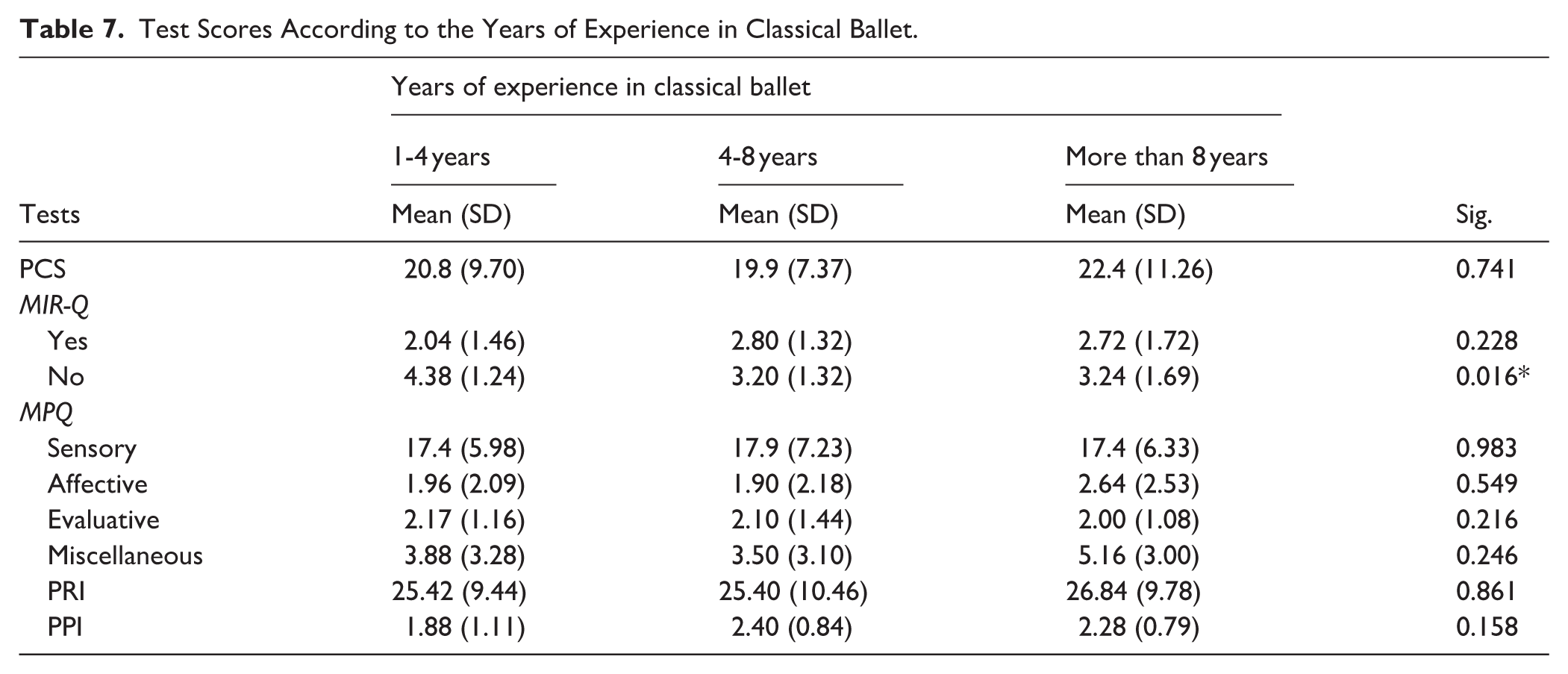
In addition, test results were compared among groups of dancers with varying total years of ballet experience, revealing a significant difference in negative responses on the MIR-Q, with a higher average “No” response rate among those with 1 to 4 years of ballet experience (P = .016) (Table 7). In this regard, ballet students with fewer years of training reported less exposure to factors associated with susceptibility to musculoskeletal injuries.
Test Scores According to the Years of Experience in Classical Ballet.
Discussion
Within the dance community, the practice of classical ballet involves coping with stressors such as pain. 11 In this regard, all students in the study reported being familiar with the concept of pain as an inherent part of ballet, suggesting that its presence, perception, and interpretation are directly linked to the practice of this art form.
Other studies have already highlighted these concepts as a cognitive coping strategy in the professional setting, as normalization allowed for continued practice despite harmful symptoms. 12 Pain is considered a multifactorial experience in which both physical and mental factors must be taken into account, 4 and, in this sense, continuing to perform and practice art despite physical and emotional pain as part of an existing culture is common in ballet. 3 The data from the present study corroborate this pattern: most students reported painful episodes during practice, and a significant proportion mentioned the habit of ignoring pain, either completely or partially, regardless of frequency and years in the discipline.
Once ingrained, culture-based concepts can emerge despite extrinsic factors affecting dancers, such as the frequency of practice. Current literature generalizes the experience of pain among ballerinas or ballet students as something that involves acceptance and the creation of a synonym between suffering and success.4,12 However, the data from this study showed that most classical ballet students believed only sometimes that pain made them stronger, regardless of the frequency and total years of practice. Although the number of students who did not believe that pain would improve their performance was not predominant, the existence of a group that only partially relates pain to success is an important finding.
Still on the topic of different ways of interpreting pain, catastrophizing emerges as a maladaptive mental response to pain that involves exaggerated negative thoughts, symptom magnification, heightened worry, and feelings of helplessness when dealing with pain, capable of causing disability and impaired performance in daily activities. 13 This aspect can significantly influence the relationship between the students and their continued participation in the activity.
Arbinaga and Bernal-López 14 observed high levels of pain catastrophizing when applying the PCS to professional dancers, contrary to what was found in this study, which reported non-significant levels of catastrophizing among the participating ballet students. This finding suggests that catastrophizing is not a universal determinant of the pain experience and raises the hypothesis that other cognitive and behavioral mechanisms may play a central role in the perception and management of pain. However, the difference in profile between the samples (professionals and students) may also be a factor influencing the results and reinforces the need for targeted future research.
Even with low levels of catastrophizing, most students reported ignoring the pain entirely or partially during ballet, continuing to practice despite the discomfort. Various studies highlight dancers’ reluctance to show discomfort while dancing; consequently, they tend to continue training and performing despite pain and injury, creating cognitive coping strategies that drive persistence in the ballet.11,15
Despite advances in the pursuit of healthier dance practices, recent evidence indicates that dancers remain exposed to high rates of musculoskeletal disorders resulting from practice, with pain being a frequently reported symptom. 16 These findings align with the results of the present study, in which the majority of the ballet students assessed reported experiencing pain during classical ballet practice, and a significant proportion reported a history of injuries associated with the ballet.
The literature on pain conditions among professional dancers or ballet students remains scarce, while studies on injuries, although more numerous, exhibit considerable methodological heterogeneity—particularly regarding the characterization of participants’ practice routines—which limits the comparability of the data. For example, Pádua et al 17 found that only 38.2% of a sample of classical dancers reported pain and 20.5% had a history of injuries, without, however, detailing the group’s practice routine. In contrast, in the present study, pain was reported by 98.3% of the ballet students, and 54.2% had a history of injuries related to the ballet, demonstrating substantially higher proportions, which can be attributed to the particularities of the group under investigation.
On the one hand, years of practice and weekly ballet frequency were not associated with the perception and interpretation of pain in this study, whether in terms of sensory, affective, evaluative, or catastrophic aspects, reinforcing a possible cultural generalization. 4 Contrary to this, previous evidence suggests that pain was more prevalent among dancers with higher training frequency, as well as among those with longer experience. 18
On the other hand, vulnerability to risks related to musculoskeletal injuries was found to be directly proportional to the students’ years of experience and frequency of practice, which aligns with the concept of the cumulative effect of repetitive exposure to the biomechanical demands of ballet.19,20 This finding is particularly relevant because it highlights a critical dissociation: while the perception and subjective interpretation of pain remain stable and culturally normalized regardless of the duration of practice, the objective physical risk of overuse injuries intensifies significantly with longevity in the discipline
This discrepancy suggests that technical advancement and greater experience do not result in more protective pain management, but rather in prolonged exposure to stressors under the guise of symptom masking. Therefore, it is imperative to implement educational support and continuous preventive monitoring, ensuring that students’ progression occurs in a sustainable manner while preserving their physical integrity.
Understanding the relationship between the perception, interpretation, and coping with pain among classical ballet dancers is essential for developing interventions that can mitigate musculoskeletal and psychological disorders in this population. The findings of the present study reinforce this perspective by showing that, even in the absence of high levels of catastrophizing, pain-suppressing behaviors remain present—which indicates that the vulnerability of this population is not expressed exclusively through negative cognitive pathways, but also through culturally ingrained patterns of symptom silencing.
This finding underscores the need for educational approaches tailored to the reality of ballet, including health education programs specifically designed for classical ballet students, with an emphasis on developing self-care strategies, promoting physical and emotional well-being, and encouraging early-stage seeking of specialized care. 18 Future research could evaluate the effectiveness of such programs on the health outcomes of this population, contributing to the establishment of a culture of safer and more sustainable dance practice.
Limitations
There is a need for studies that investigate the perception and interpretation of pain during classical ballet practice in a larger population, with the aim of strengthening the scientific evidence regarding this group. Furthermore, a limitation of the present study was that it analyzed classical ballet students from only one municipality in the state of Paraíba, thus suggesting the need for research involving individuals from different regions.
The development of studies that specifically assess the profile of different groups of classical dancers is also recommended, since the participants in this study are classical ballet students. The study also does not delve deeply into the causal factors that may be related to the presence of pain, such as perceptions resulting from traumatic injuries, the practice of other sports, or associated medical conditions.
Applications and Implications
By investigating aspects related to the perception, interpretation, and coping with pain among classical ballet students, this study offers relevant insights into the health needs of this specific population. Although the findings cannot be directly generalized to all classical ballet practitioners—given the particular characteristics of the evaluated cohort, composed of students—this specificity is, in itself, a point of value: the sample represents a group that has been little explored in the literature, distinct from the professional populations frequently studied, and whose patterns of pain perception deserve individualized attention.
In this context, the data obtained through the applied instruments—including the mapping of anatomical regions with the highest incidence of pain and injury—can inform health surveillance initiatives tailored to the specific needs of this population, guiding both researchers interested in further exploring the investigated variables and health and dance professionals in developing prevention and management strategies adapted to the profile of classical ballet students.
Conclusion
There is a high prevalence of pain among adult classical ballet students; however, a new subgroup of practitioners has been identified that does not equate pain with artistic progress—a finding that contradicts the established narrative that suffering is a prerequisite for success in dance. The way pain is perceived and interpreted during classical ballet practice was not related to factors such as weekly frequency or the individual’s years of experience in classical ballet; however, students who participate more frequently in classical ballet activities may be at greater risk of musculoskeletal injuries.
There is a scientific shortage of research focused on studying the various characteristics of dance related to pain. This gap compromises both the understanding of the reality experienced by dancers and the formulation of appropriate strategies for health education and injury prevention. Future studies with diverse samples are necessary to support effective interventions in the field of dance medicine and science.
Supplemental Material
sj-docx-1-dmj-10.1177_1089313X261461709 – Supplemental material for An Analysis of the Perception and Interpretation of Pain During Classical Ballet Practice: A Cross-Sectional Study
Supplemental material, sj-docx-1-dmj-10.1177_1089313X261461709 for An Analysis of the Perception and Interpretation of Pain During Classical Ballet Practice: A Cross-Sectional Study by Kinbelly Soares Nascimento, Rosalba Maria dos Santos, Ana Laura Lucena Cabral and Anna Kellssya Leite Filgueira in Journal of Dance Medicine & Science
Footnotes
ORCID iDs

Ethical Considerations
The research was duly submitted to and approved by the Ethics and Research Committee on Human Subjects at the State University of Paraíba, and the participants signed the Informed Consent Form (ICF), with Ethics Review Certificate number 83827924.0.0000. 5187 and opinion 7.177.759.
Funding
The authors disclosed receipt of the following financial support for the research, authorship, and/or publication of this article: This study was conducted with support from the National Council for Scientific and Technological Development (CNPq) through the PIBIC/CNPq-UEPB Undergraduate Research Program.
Declaration of Conflicting Interests
The authors declared no potential conflicts of interest with respect to the research, authorship, and/or publication of this article.
Supplemental Material
Supplemental material for this article is available online.
References
Supplementary Material
Please find the following supplemental material available below.
For Open Access articles published under a Creative Commons License, all supplemental material carries the same license as the article it is associated with.
For non-Open Access articles published, all supplemental material carries a non-exclusive license, and permission requests for re-use of supplemental material or any part of supplemental material shall be sent directly to the copyright owner as specified in the copyright notice associated with the article.
