






Abstract
Purpose
The purpose of this study was to investigate the feasibility and effectiveness of a gender-specific intervention targeted to adolescent males to reduce sexual risks.
Method
This study used a randomized clinical trial comparing a broad-based male empowerment curriculum with a no-treatment control group. The sample (N = 580) was recruited from schools and was implemented in community-based settings mostly in an after-school context. Assessments were conducted at baseline, postintervention, and 3 months follow-up time periods.
Results
There were significant differences between the two groups favoring the intervention group on several of the outcome indicators, including condom technical skills, attitudes toward women, social skills, peer assertiveness, and attitudes toward consent. Quality of implementation was rated high, and qualitative data suggest themes that reflect key lessons emphasized in the curriculum.
Conclusions
Gender-specific programs for adolescent males can help reduce indicators that are related to sexual risk reduction. More long-term follow-up is needed to assess impact on sexual behaviors. Efforts directed at male populations should continue to be researched for potential in reducing sexual risks.
Keywords
The overall U.S. teen birth rate has declined slightly in recent years; however, it remains one of the highest rates of all industrialized countries (Green et al., 2017). Half of all new HIV infections occur in young people who are 25 years old and younger. Youth make up almost half of the 20 million new sexually transmitted infection (STI) cases and more than 20% of new HIV diagnoses each year in the United States (Centers for Disease Control and Prevention, 2017). Certain minority groups are at particularly high risk, as the teen birth rate for Hispanic Americans and African Americans is twice as high as European American teen birth rates (Centers for Disease Control and Prevention, 2020). These risks are quite significant for high schoolers, with only 54.3% of sexually active teens using a condom at last intercourse (Szucs et al., 2020). Unplanned pregnancy and disease risks can be prevented with sexual risk education strategies.
Sexual education is still inconsistent across the United States, with national data reflecting a downward trend of sexual education programs in schools, churches, and community centers. Currently, there are 27 states requiring formal sexual education programs and fewer states requiring contraception education (n = 20; Guttmacher Institute, n.d.). Access to formal sexual education for minority groups is also a concern; a multivariable analysis by Farkas et al. (2015) found African American men were less likely than European American men to report receiving formal contraceptive education. Without proper educational programs, it seems unlikely we can have a significant impact in reducing teen pregnancy rates and STIs.
These concerns are highlighted when considering young adolescent males who are particularly vulnerable to negative outcomes associated with increased sexual risks. Nearly one in 10 (9.0%) males between the ages of 12 and 16 years became fathers before the age of 20 (Scott et al., 2012). Often unprepared, young adolescent males have limited knowledge of sexually transmitted diseases (STDs); lack the skill to use condoms appropriately, potentially leading to greater condom failures; and many lack the assertiveness skills to manage risky situations that may lead to undesired outcomes (Vargas et al., 2017). Knowledge of resources like emergency contraception is also limited for young males, with only half knowing how to purchase emergency contraception (Schrager et al., 2015). Young males also face a risk of legal action when procedures of sexual consent are not adhered to; these concepts are especially important for male-focused curricula to examine because age of consent can vary from 16 to 18 years across the United States (Drobac, 2005). Another social consideration supporting teen pregnancy prevention is that teen fathers are less likely to receive a high school diploma (Fomby et al., 2010). These health, social, and educational issues can create significant risk factors for the teenage male and suggest that a gender-specific approach targeted at adolescent males may lead to additional benefits (Brindis et al., 2005).
Male adolescents also face specific risk factors for adolescent pregnancy, including psychological emotions (low self-esteem), interpersonal interactions (early dating, traditional gender roles), social networks (peer rather than family orientation), and societal influences (mass media display of aggressive sexual images, early puberty; Commission on Positive Youth Development, 2005). Adolescent males exposed to these multiple risk factors, especially during a transition to high school, are at higher risk not only for teen pregnancy but also for other risky behaviors as well. Introducing concepts such as healthy relationships, consent, and norms around peer pressure to engage in sex are strong ways in which sexual education programs can target protective behaviors within a gender-specific framework. LeCroy et al. (2017) note that “risk and protective factors, the hallmark in preventive intervention, are better understood within a gender-specific framework” (p. 287).
Approaches to preventing teen pregnancy are often targeted toward young women, and this can lead to missed opportunities to engage males as partners in prevention. In a review of evidence-based prevention programs, all except one were either coed or exclusively for young women (see Fasula et al., 2019). A meta-analysis conducted by Juras et al. (2019) found that female-specific programs were more effective (b = 0.16) than mixed-gender curricula, which suggests the need to expand gender-specific teen pregnancy prevention research. However, this review included only one male-only program, Wise Guys (Murphy & Kisker, 2016). Furthermore, a review of sexual education programs with males found they are more focused on HIV/STI prevention rather than on teen pregnancy prevention, contraception, or consent (Jaramillo et al., 2017).
As yet, there has not been a body of peer-reviewed rigorous evaluations focusing on the male-specific risk and protective factors in teenage pregnancy. Prevention programs directed at males represent a significant gap in current research. Gender-specific curricula are needed for two critical reasons: first, risks differ by gender, and second, there is some evidence that gender-specific curricula are more effective. The purpose of this research was to rigorously examine the feasibility and effectiveness of a gender-specific prevention program, Guy Talk, for male high school students between the ages of 14 and 17 years to reduce sexual risks.
Methods
Research Design and Analytic Plan
This research is based on a randomized clinical study with participants randomized to either a prevention group or a no-treatment control group. We adhered to an intention-to-treat protocol and included all males randomized to groups irrespective of the number of sessions attended (Piantadosi, 1997). The effectiveness of the intervention was analyzed over the 3-month follow-up period. To compare differences in the outcome variables (i.e., condom technical skills, attitudes toward consent) between pretest, posttest, and at 3-month follow-up, repeated measures analysis of variance was used. Effect size estimates (Cohen’s d, d = M1 − M2/SD pooled) were calculated on the 3-month follow-up scores and are also included. Greenhouse-Geisser corrections were used to address violations of sphericity.
Survey nonresponse is a potential source of bias in a randomized experiment. Our analytic sample includes males who contributed three surveys: baseline, immediate posttest, and follow-up. The rate of attrition in the current study varied by wave. The attrition rate for the treatment group was .10 at posttest and .18 at 3-month follow-up. The attrition rate for the control group was .17 at posttest and .34 at 3-month follow-up. Differential rates of attrition across experimental conditions did not appear to be an issue.
Missing data were assessed for all variables, and multiple imputation was used to address the potential bias associated with missing data for two scale measures that had more than 5% missing data—condom technical skills and condom beliefs. In multiple imputation, a statistical model was used to create several data sets, each of which contained different imputed values. Multiple imputation is a robust approach and can be used with a variety of statistical models (see Jakobsen et al., 2017). Subsequent analyses were run on each of the imputed data sets, and results were combined. The coefficients were aggregated appropriately across the data sets (Raghunathan & Dong, 2011). Impact analyses were estimated using both the raw, unimputed data and the multiply imputed data for the scales as sensitivity tests. The results reported are based on raw data as no differences were noted when compared with the imputed data.
Participants
Study participant recruitment inclusion criteria included self-identified males 14 to 17 years old, primarily high school freshmen who had expressed interest in participation. Study sites included 13 high school campuses and three community-based youth-serving organizations in southern Arizona that accepted the offer to participate in the research. The program was primarily administered as an after-school program for males between the ages of 14 and 17 years. To increase program participation, monetary incentives were provided to participants at program completion and at the 3-month follow-up periods. The incentives included $20.00 at pretest, $20.00 at posttest, and $50.00 at follow-up. The study location was a southwest urban region, and the schools targeted for the study were located in primarily low-income areas. Most of the school sites represented low-income areas (with a large percentage of Hispanic American youth), where it was determined the intervention would have the largest impact. Participants signed an assent form, and parents signed an informed consent for participation in the study. An institutional review board approved the study procedures, and they adhered to the Declaration of Helsinki. The study was consistent with the CONSORT (Consolidated Standards of Reporting Trials) protocol. Of the eligible adolescents, 580 enrolled in the study and were randomly assigned to study conditions (see Figure 1). Assignment to study conditions used a random allocation sequence that was conducted by the research staff.
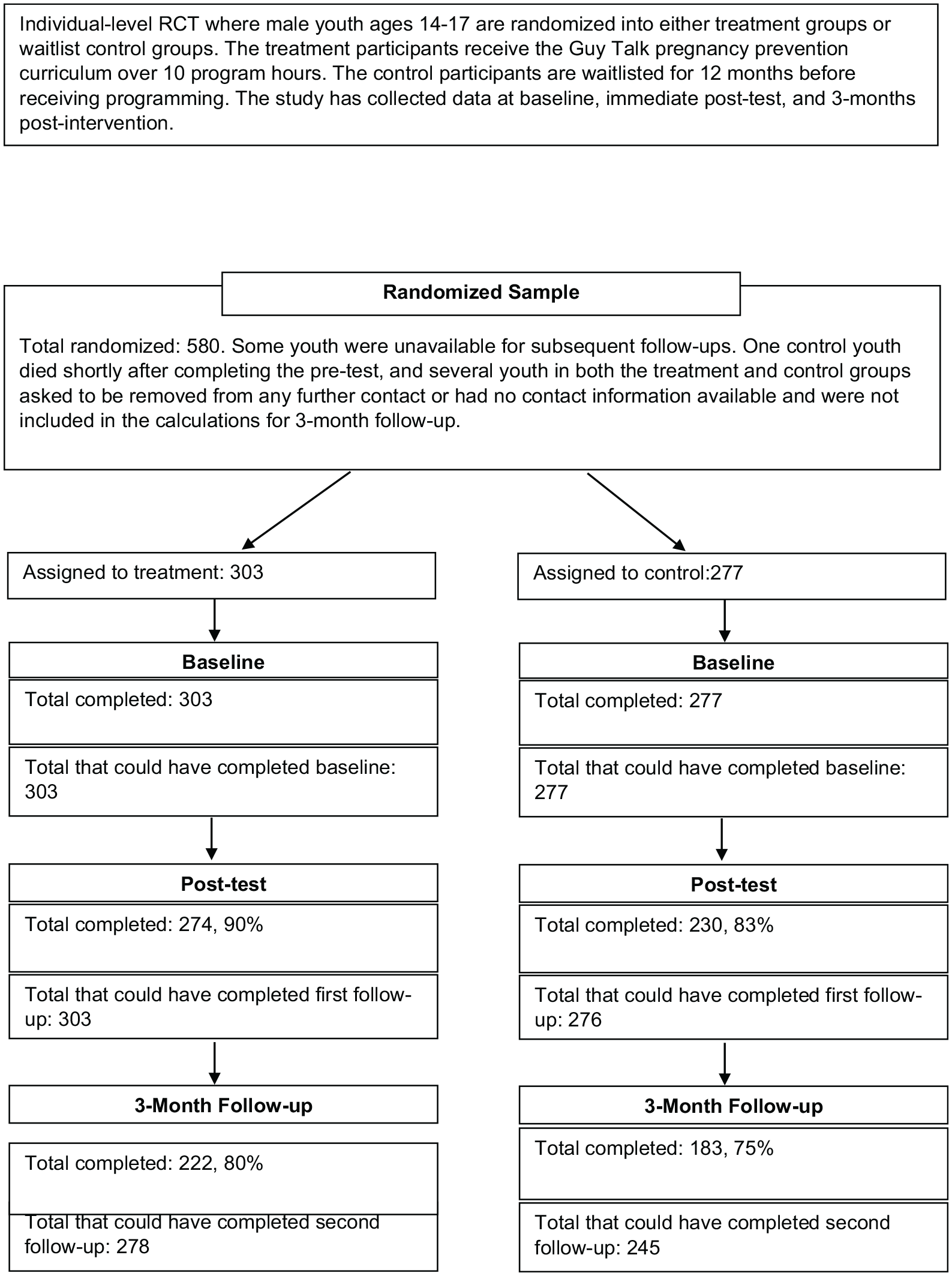
Guy Talk CONSORT diagram.
Intervention Description
In designing a prevention program, it is crucial to understand the multiple dimensions of adolescent sexuality, how adolescents perceive risky behaviors, and the evidence from programs designed to change behavior. Guy Talk builds on our earlier efforts at gender-specific programming and addresses effective engagement as a critical program feature missing in other programs that work with adolescent boys. The program is based on a research-based, developmentally appropriate, skill-building curriculum tailored to the gender-specific concerns of adolescent males.
Both precocious sexual behavior and inappropriate sexual behavior are among adolescent behaviors recognized as “problematic behaviors” and are among the problem behaviors expected to be affected by the Guy Talk program. The curriculum includes various elements designed to promote the “sexually healthy adult” based on the Guidelines for Comprehensive Sexuality Education (Sexuality Information and Education Council of the United States, 2004). Many of these characteristics reflect responsible practices around sex (e.g., developing and maintaining meaningful relationships, making informed choices about family options and relationships). Many of these features are not exclusive to healthy sexuality but are generalizable skills that intercede in the risk for other problem behaviors (e.g., avoidance of exploitative or manipulative relationships, identifying and living according to one’s own values, taking responsibility for one’s own behavior).
Guy Talk is designed for delivery to groups of 10 to 15 teen males by a trained adult male facilitator and is intended to be delivered in settings including, but not limited to, high schools, youth clubs, and social service sites. The curriculum is organized for delivery in 10 hours covering the five units or topics: being a guy in today’s society, relationships, health, taking charge of your choices, and constructing positive futures. The delivery format included 1 or 2 days per week depending on the requirements of the implementation setting. The curriculum content consists of developmental tasks considered critical for the healthy psychosocial development of adolescent males in contemporary society, including (1) understanding gender-role expectations; (2) managing emotions and feelings; (3) building positive peer groups, friendships, and leadership skills; (4) managing relationships; (5) establishing independence through responsible decision making; (6) understanding healthy sexuality; (7) learning to obtain help and access resources; and (8) developing life skills for the future (see LeCroy & Milligan Associates, 2020, for more details).
In addition to targeting males in pregnancy prevention efforts, Guy Talk is also innovative in its integration of technology, as both delivery strategy and subject area. The program was designed to use technology to support program delivery, participant engagement, and participant access to community resources. During classroom lessons, students could access a Guy Talk website, or they could access the website outside of the classroom sessions for resources such as where to access birth control.
The website includes program activities to provide engaging workbook activities, medically accurate information about sexuality, and information about local resources. Furthermore, the curriculum recognizes the increasing role of technology in adolescent risk taking through behaviors such as sexting and cyberbullying.
Control Description
The control condition was a no-treatment wait-list control group. Because the experiment was in a community setting, the condition of randomly assigning participants to a treatment or no-treatment condition was less acceptable than using a wait-list control group.
Facilitator Training
Male facilitators were hired to conduct the intervention condition. All facilitators were trained on the intervention curricula. The facilitators were young men recruited from the community, and while most were seasoned professionals, some were college students with experience working with adolescents. All facilitators participated in a 2-day training where the lessons were practiced with feedback and modeling. Throughout the intervention implementation, facilitators received supervision and support from the implementing agency program supervisor. Over the course of the implementation, nine facilitators were engaged. Most of the groups were coordinated by two full-time facilitators and two to three part-time facilitators. The age range of the facilitators was 22 to 50 years; most were between 20 and 30 years old. The facilitators were ethnically diverse, with five Hispanic Americans, three European Americans, and one not known.
Outcome Measures
Intervention efficacy was assessed using multiple measures related to sexual risk reduction. The primary outcome measure was condom technical skills (Jemmott et al., 1998). The measure included seven items rated on a 5-point Likert-type scale from not at all to a lot (α = .94). A sample item was “How confident are you in your ability to unroll a condom down correctly on the first try.”
The survey included items related to sexual behavior; however, the sample of sexually active participants was not large enough to produce reliable information, so the data are not analyzed in this manuscript.
Secondary outcomes examined the impact of the gender-specific content for adolescent males. These psychosocial mediators were based on past literature and relevant theory applied to Guy Talk. The measures included a 5-point (strongly disagree, disagree, neither, agree, strongly agree) Likert-type scale about beliefs about condoms (Jemmott et al., 1998; α = .63), for example, “Condoms are hard to use.” This commonly used measure assesses negative or misinformed beliefs about the use of condoms. A modified version of the Sexual Consent Scale (selection of five consent statements) included 5-point Likert-type attitude statements about obtaining consent (Humphreys & Brousseau, 2010; α = .68), for example, “I wouldn’t ask for sexual consent verbally because it would feel too awkward.” This measure taps an individual’s beliefs and attitudes about obtaining sexual consent with partners. A 14-point Likert-type scale for social skills self-efficacy (α = .97; Sabatelli et al., 2005) asked about the degree of confidence on a Likert-type scale (including not at all, a little, some, and very), for example, “Say no to peer pressure to have sex I don’t want.” A 10-point Likert-type scale on attitudes about women was also included (α = .91; adapted from Whatley, 2008—reduced to 10 items), for example, “Women try to get what they want by being manipulative.” Two measures were created for this study: perceptions of masculinity, which is a 5-point Likert-type scale (strongly agree to strongly disagree; α = .83), for example, “If a guy turns down sex it means he is less of a man” and attitudes toward sexual control, which is a 5-point Likert-type scale (strongly agree to strongly disagree; α = .83), for example, “Girls always get turned on when a guy is rough with them.” These measures were included to further examine the extent to which the intervention might affect a desire for sexual control and a stereotypical attitude about masculinity. Two measures, attitudes toward condoms (DiClemente et al., 2009) and a modified version of contraceptive self-efficacy (Levinson et al., 1998), did not obtain acceptable reliability (α = .63 and .51, respectively) and are not included in the analysis. All secondary measures of outcomes with a higher score represent a desired result or a gain on the measure. A validity question was used in the survey to determine if participants were answering the questions accurately (“I frequently get phone calls from celebrities”).
Results
Baseline Equivalency
Baseline statistics were used to examine sociodemographic variables between the two study conditions. Student’s t tests for continuous variables and chi-square statistics for categorical variables were used to test for differences between the two conditions. Comparisons of the groups at baseline (see Table 1) indicated that there were no significant differences between intervention and control groups on ethnicity, race, or age, which provides evidence of successful randomization.
Demographics and Baseline Equivalence Between Groups.
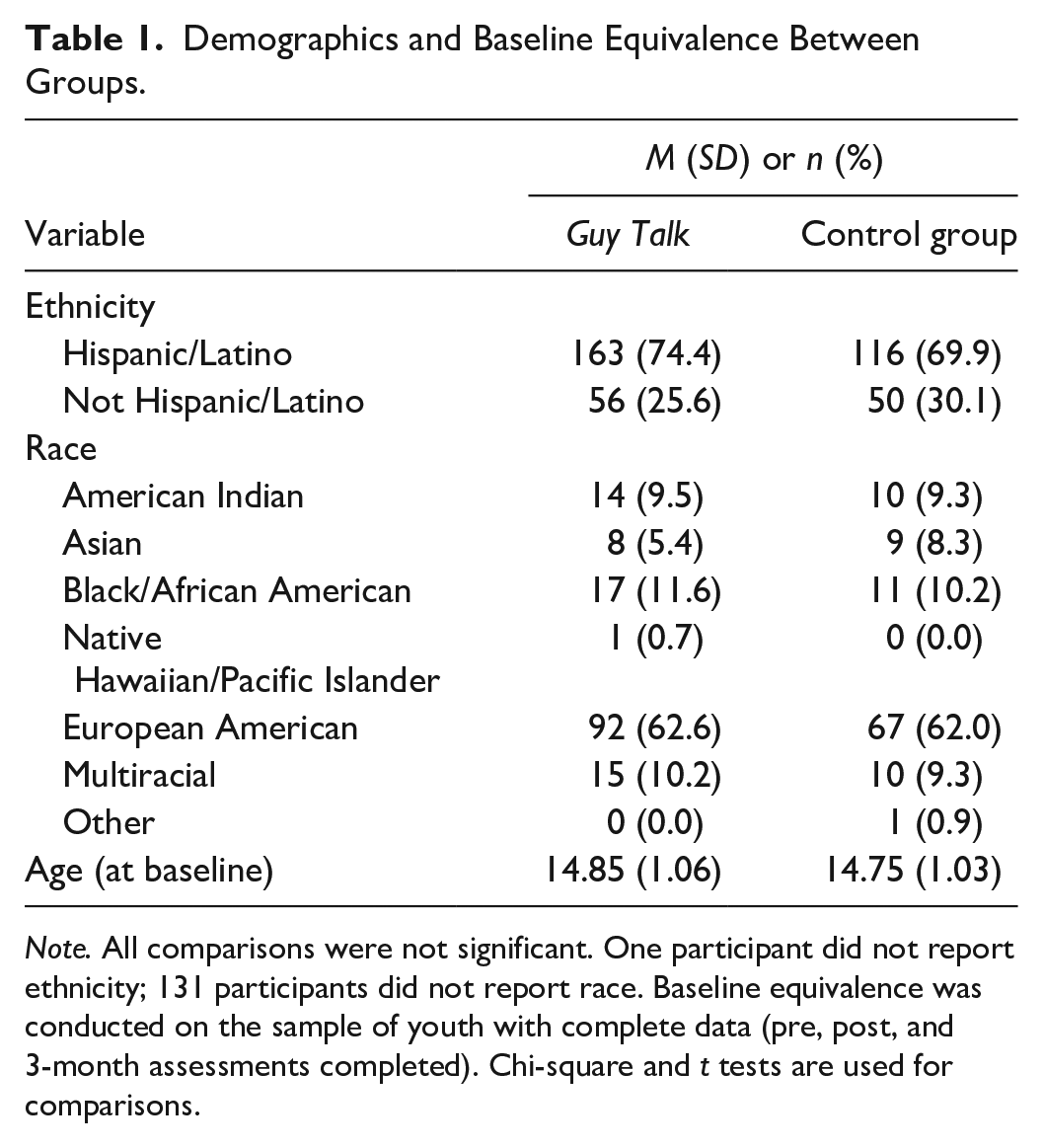
Note. All comparisons were not significant. One participant did not report ethnicity; 131 participants did not report race. Baseline equivalence was conducted on the sample of youth with complete data (pre, post, and 3-month assessments completed). Chi-square and t tests are used for comparisons.
Implementation/Fidelity of the Intervention
The implementation evaluation examined four key areas related to successful program implementation: (1) adherence to program model, (2) quality of program implementation, (3) external context related to implementation, and (4) receptiveness to curriculum lessons. The fidelity framework was based on key aspects for understanding intervention fidelity (see Dane & Schneider, 1998). These factors were examined using the different data collection tools. Fidelity monitoring logs were used to capture the date, time, and length of a given session, to report on whether each activity in a session was implemented according to the curriculum and to rate participant engagement. Observations were conducted by research assistants on 10% of all program sessions for the intervention condition, and an overall quality of implementation was scored from low to high on a 5-point scale. Examples of items being rated include, “How clear were the program implementer’s explanations of activities?” and “To what extent did the participants appear to understand the material?” A fidelity process report was also completed to report on any contextual factors that may have affected program implementation. Overall, fidelity monitoring showed that high percentages of activities were completed as expected (92.4%), with overall observation quality rated high with an average rating of 4.5 out of 5 (SD = 0.77).
Receptiveness to the curriculum lessons was assessed with open-ended questions of program participants regarding their satisfaction and experience in the program. This was important because there are few programs being administered to adolescent males, and it was important to assess the feasibility of offering a program for practicing healthy masculinity to adolescent males. Table 2 presents qualitative data obtained in response to the question, “What was the most important thing you learned in Guy Talk?” Five themes emerged from the comments: condom use (“I learned how to be careful putting on a condom”), safe sex (“all the forms to protect yourself from getting someone pregnant and avoiding a disease”), relationships (“how to treat your peers and partners”), male development (“I learned not to follow society’s expectations and make myself who I want to be”), and consent (“that you have to build an environment of consent”). The comments suggest that participants learned the importance of using condoms, practicing safe sex, developing healthy relationships and healthy masculinity, and obtaining consent.
Qualitative Comments About the Most Important Learning in Guy Talk (Selected Comments).
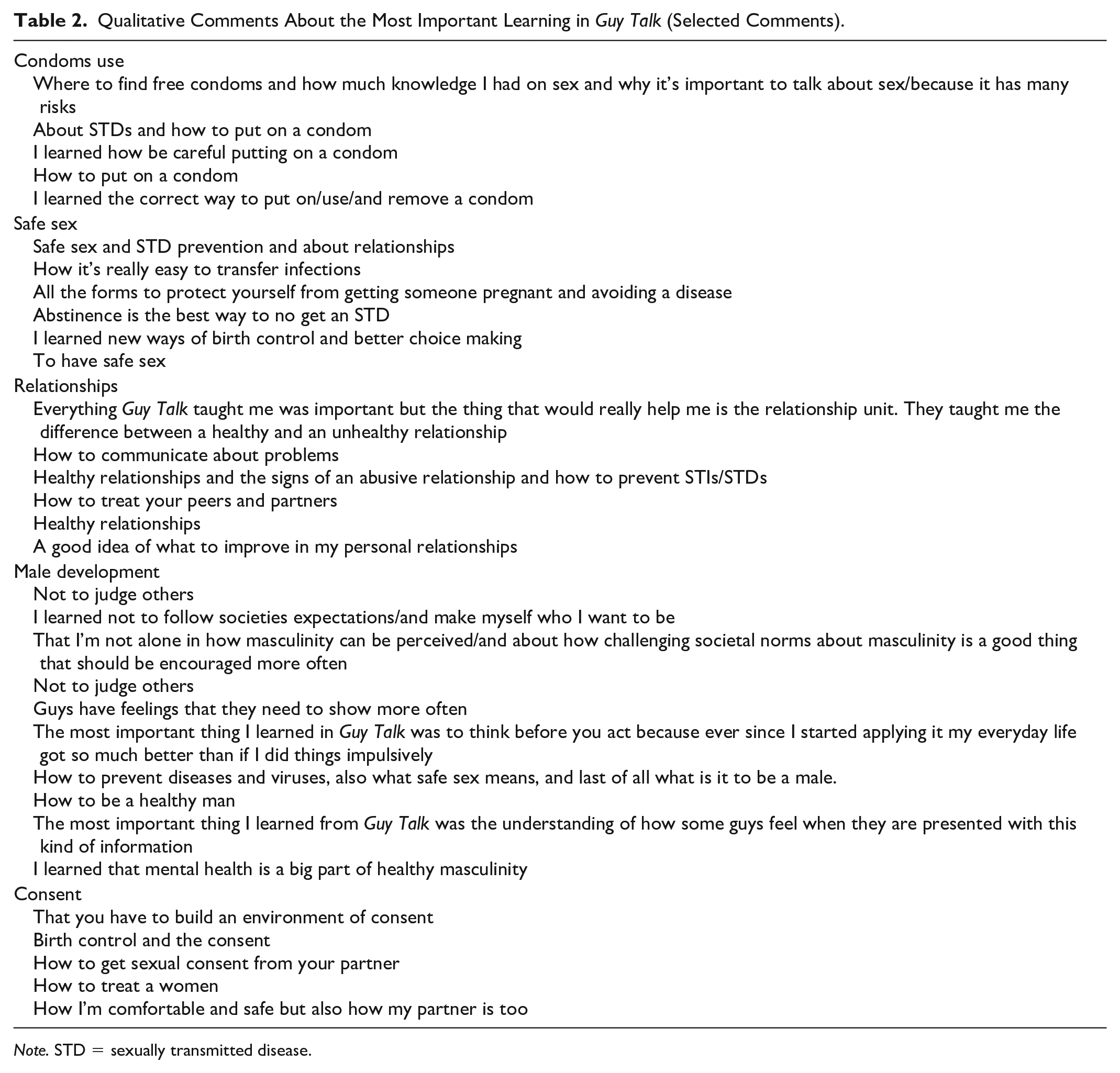
Note. STD = sexually transmitted disease.
Impact of the Intervention
The results of the repeated measures analysis of variance are displayed in Table 3. In addition to a significant within-participants effect (F = 27.53, p < .001), there was a significant time × group interaction for condom technical skills (F = 11.93, p < .001, d = .62) at the 3-month follow-up assessment such that the intervention group experienced greater increases in condom technical skills (see Figure 2). Similar results emerged for attitudes about women: In addition to a significant within-participants effect (F = 36.27, p < .001), there was a time × group interaction approaching significance (F = 2.59, p = .07, d = .25) such that the intervention group experienced small increases in positive attitudes toward women. For social skills, there was a significant within-participants effect (F = 60.04, p < .001) and a significant time × group interaction (F = 17.80, p < .001, d = .15). Participants’ scores decreased rather than increased; however, the decrease was greater for the control group than the treatment group. For peer assertiveness, the results revealed a significant within-participants effect (F = 39.86, p < .001) and a significant time × group interaction (F = 12.21, p < .001, d = .16), showing improved assertiveness with peers. And finally, for the measure of consent, the results found an impact from the intervention with a marginally significant between-participants effect (F = 2.47 p < .10, d = .17), documenting some gain in attitudes toward asking for consent. There were no significant between-group findings on two measures: condom beliefs and perceptions of masculinity.
Guy Talk Program and Comparison Mean Scores and Repeated Measures Analysis of Variance.
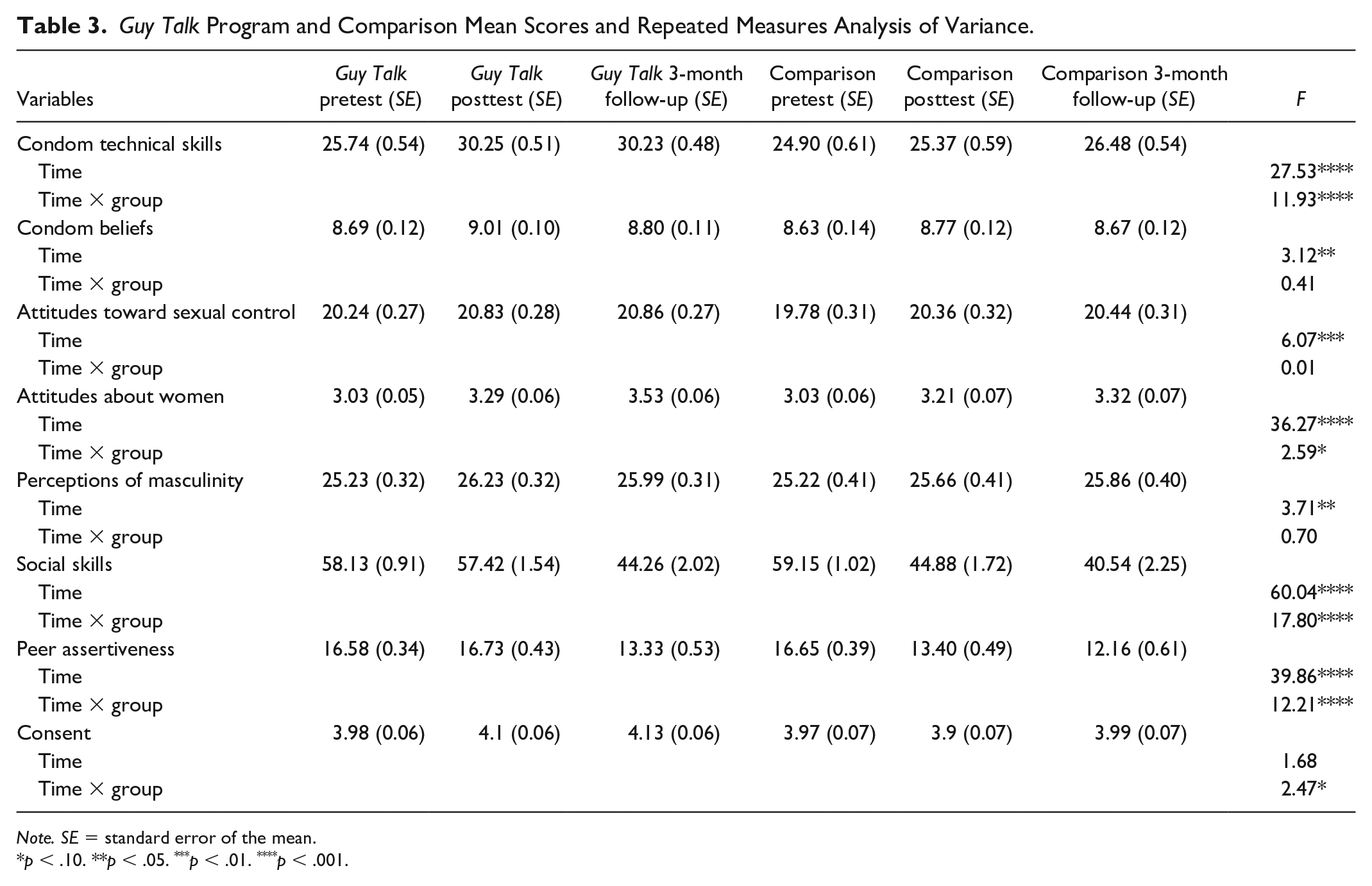
Note. SE = standard error of the mean.
p < .10. **p < .05. ***p < .01. ****p < .001.
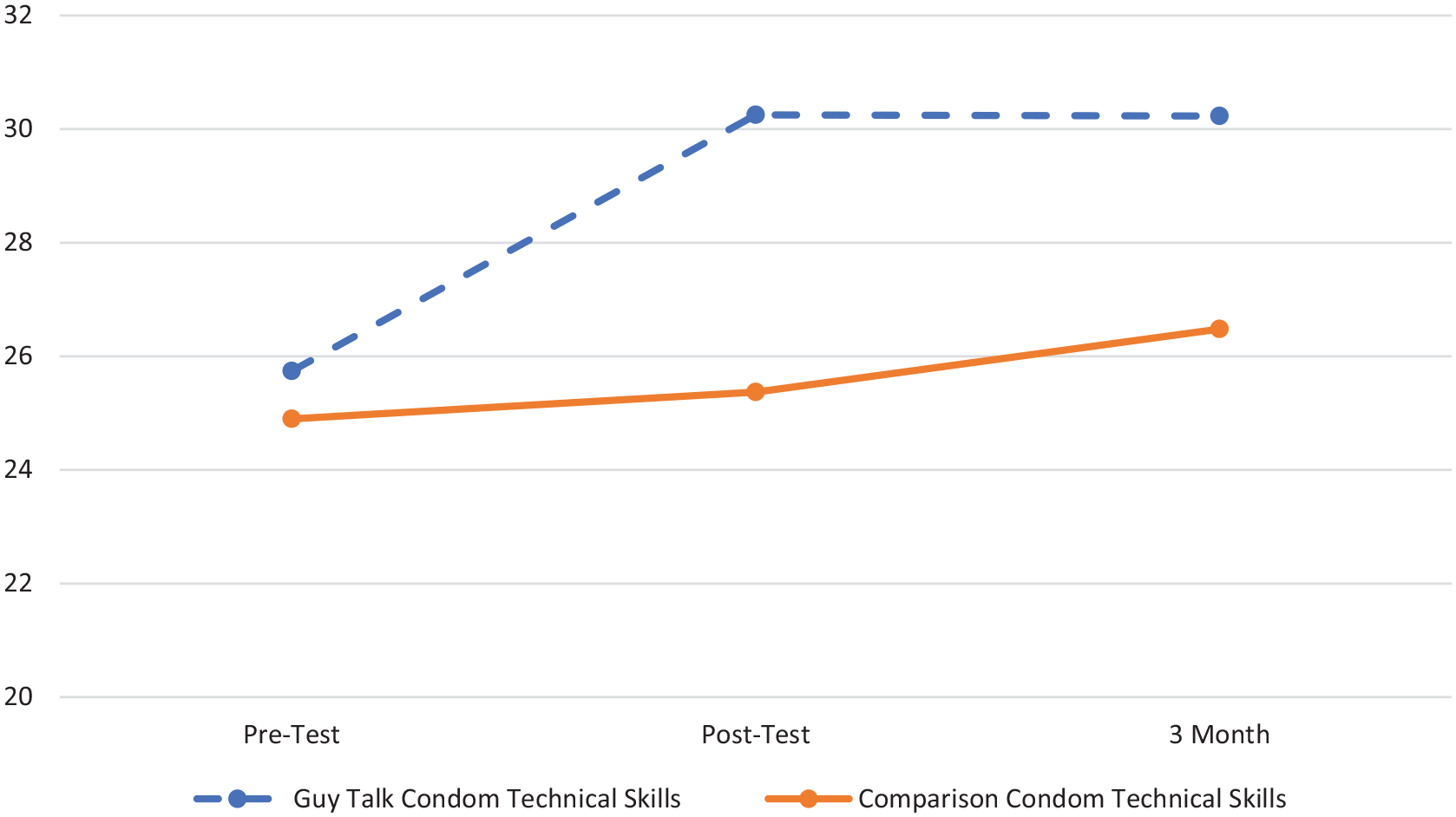
Comparison of condom technical skills: Pretest to 3-month follow-up.
Discussion and Conclusion
This study assessed the effects of the Guy Talk, a gender-specific curriculum, implemented in southern Arizona with a large Hispanic American population. This study utilized a randomized control trial with a sample of 580 high school males between the ages of 14 and 17 years to access program feasibility, gender-specific programming, and potential impacts. The program produced several positive outcomes among adolescent males on indicators of sexual risk reduction and secondary outcomes. On a key primary outcome—condom technical skills—males in the intervention group showed a significant gain compared with the no-treatment control group, and this gain persisted at the 3-month follow-up (d = .62).
The study found that compared with the control group, participants in the Guy Talk program showed improved outcomes on peer assertiveness, beliefs about women, and acceptance of consent actions. Some of these outcomes did not maintain at the 3-month follow-up assessment. In general, the outcomes that were more skills based appeared to show better outcomes than measures of attitudes. Both treatment and control groups showed within-participants change on many of the outcomes. It is possible that the spillover from the treatment group to the control group affected these findings since the randomization occurred within the same schools. There were no significant differences between the treatment and control groups on two of the outcome measures—perceptions of masculinity and attitudes toward sexual control. These concepts may have been poorly measured and lacked validity, or the program may not have had a direct influence on these outcomes.
Guy Talk is one of the few teen pregnancy prevention programs with a curriculum designed for teenage males that has completed a rigorous evaluation (for a review, see Fasula et al., 2019). One similar program, Wise Guys, has been evaluated (Gruchow & Brown, 2011). This program focused on younger males and found significant impacts compared with a control group on knowledge and desirable attitudes toward sex. Guy Talk and Wise Guys programs contribute to Juras et al.’s (2019) conclusion that gender-specific programs are more effective than mixed-sex programs—although this finding was based on female-only as opposed to male-only programs. Some researchers have suggested that more intensive skill-building opportunities and a more supportive social environment that addresses gender and peer influences may lead to better outcomes (Coyle et al., 2004; DiClemente et al., 2009; LeCroy et al., 2017). DiClemente et al. (2009) commented that a gender-tailored framework and building solidary for African American females was important to the success of their program. Similar social processes may be in play for adolescent males who expressed interest and enthusiasm in discussing male issues such as negotiating consent and addressing negative male stereotypes.
The Guy Talk program aimed at having a broad appeal to adolescent males. The curriculum is a broad approach designed to tackle a number of sexual and male adolescent issues including contraception, STD education, consent, peer pressure, and positive male development. Discussions of peer pressure and masculinity were rated highly on student feedback surveys, highlighting the benefits for male-specific programing that created male-focused conversations. The success of male-specific programing will depend on a combined focus on protective factors, positive male development, and sexual risk reduction. Creating a comfortable environment for students was one of most liked factors reported by participants, and this likely stems from a combination of effective facilitator training and the male-specific environment, allowing students to learn and discuss sexual topics without feeling shy or uncomfortable around peer females. The Guy Talk program also presented an engaging multimedia-curated content that included an accompanying website for additional content and resources. These factors were included to promote deeper engagement and learning of the material. While these more indirect factors are difficult to measure, their impact on key factors of sexual risk reduction and their ability to strengthen protective factors may have assisted the Guy Talk program in obtaining positive results.
Limitations of the study included using outcomes limited to self-report assessments, measures with limited validity, issues of bias, and disruptions in program implementation. The program was administered by using federal funds, and the U.S. Department of Health and Human Services halted the 213 million dollars of funding for the last 2 years of the 5-year grant period. A class action lawsuit led to a ruling that the grant funds were illegally terminated, and the funds were restored (Kay, 2018). The impact of this was that the 12-month follow-up assessments outlined in the original study design could not be completed and only data at a 3-month period would be possible to use in the outcome analysis. Furthermore, the disruption affected recruitment and implementation. In this study, participants are nested within group leaders and schools, and these factors could influence the findings.
Additional research is needed to assess the long-term impact of sexual risk reduction of Guy Talk participants. The research for male-specific teen pregnancy prevention programs is still limited. It will be important to evaluate more gender-specific programming to identify the best practices and educational tools to create effective teen pregnancy prevention interventions.
Implications for Practitioners
In summary, this study found that a gender-specific program for early adolescent males can help reduce indicators that are related to sexual risk reduction. This study was a community-based implementation (primarily after-school implementation), and our efforts to obtain community support and good participation provide an example for successfully implementing sexual risk reduction programming in schools and community settings for adolescent males. The implementation of this program discovered that males were interested and motivated to participate in this program, and as a result, male-specific programs may have the potential to reach a larger population and contribute to sexual risk reduction. Also, such programs may extend their impact on related objectives such as obtaining proper consent, promoting healthy relationships with others, and challenging negative male stereotypes.
Footnotes
Acknowledgements
The authors would like to acknowledge the staff of Child & Family Resources who implemented the program.
Declaration of Conflicting Interests
The authors declared no potential conflicts of interest with respect to the research, authorship, and/or publication of this article.
Funding
The authors received financial support for the research, authorship, and/or publication of this article: This research was partially supported by the Office of Adolescent Health Population Affairs, U.S. Department of Health and Human Services (Grant No. TP2AH000032-03-00).
