






Abstract
Almost a third of US children ages two to nineteen are deemed overweight or obese, and part of the problem is the habitual decision to consume high-calorie, low-nutrient foods. We propose that the school lunchroom provides a “teachable moment” to engage children in making healthful choices. We conduct a field experiment with over 1,500 participants in grades K to 8 from low-income households in the Chicago Heights, Illinois, School District and then evaluate the impact of small nonmonetary incentives on the selection of milk in the school lunchroom. At baseline, only 16 percent of children select white milk relative to 84 percent choosing chocolate milk. We find a significant effect of incentives, which increase white milk selection by 2.5 times, to 40 percent. One concern with incentives is that they may decrease intrinsic motivation to eat healthy, called “crowd-out of intrinsic motivation.” However, we do not find evidence of “crowd-out”; rather, we see some suggestive evidence of the positive habit forming effect of incentives.
Obesity is a major public health concern, leading to many chronic conditions such as high blood pressure, diabetes, cardiovascular disease, and certain cancers (Pi-Sunyer 1993). Obesity among children is of particular concern—17 percent of youths in the United States have body mass indices at or above the recommended 95th percentile (National Institutes of Health 1998; Ogden et al. 2002, 2010). American children consume less than 20 percent of the recommended amount of whole grains and just 10 percent of the recommended amount of dark green and orange vegetables and legumes (D. Just, Mancino, and Wansink 2007). Lack of proper nourishment, such as not meeting the recommended daily requirements for fruits and vegetables, affects health and hampers growth among children and can also contribute to lack of concentration and energy, resulting in poor performance in school (Weinreb et al. 2002; Jyoti, Frongillo, and Jones 2005; Whitaker, Phillips, and Orzol 2006). Importantly, children from low-income families are at higher risk (Neumark-Sztainer et al. 1996; Cole and Fox 2008). 1
A major component of the obesity problem is the decision by individuals to habitually consume high quantities of low-nutrient, high-calorie foods and beverages. Poor eating habits are often learned in the home, which may create a cycle of unhealthy behaviors (De Bourdeaudhuij 1997; Dowda et al. 2001; Campbell et al. 2007). We propose that the school lunchroom provides a “teachable moment” for policy makers to reach children and improve food choice. The National School Lunch Program is an especially good place to reach low-income children, who are eligible for Free and Reduced Lunch and often eat the school-provided lunch. While one could simply dictate what foods go on a child’s plate in this setting, research finds that children who choose foods on their own consume more than if they were required to take the foods (Hanks, Just, and Wansink 2013; Hakim and Meissen 2013). 2
We designed a field experiment to investigate the impact of nonmonetary incentives on children’s milk choices—chocolate milk or white milk—in the school lunchroom. We decided to use milk choice as our outcome variable of interest not because it is the most nutritionally important decision that children make (we make no claim to be nutritionists), but because by virtue of sugar content, white milk is superior to chocolate milk, 3 and children have a clear preference for chocolate over white, so there is room to “nudge” behavior through our interventions.
In our experiment, we randomize children to either a baseline condition or an incentive condition where they can receive a glow-in-the-dark bracelet (valued at about US$0.20) for selecting the healthier option. Incentives are a cornerstone of economics and have been used successfully to encourage healthy food choice among children (List and Samek 2015). We carried out the field experiment over a series of nine days (two weeks) with over 1,500 students in grades K to 8 across seven different elementary schools. We recorded the selection of milk as children went through the lunch line.
We find that at baseline, only 16 percent of children select the healthier white milk relative to 84 percent choosing chocolate milk. We find a significant effect of incentives, which increase white milk selection to 40 percent. After interventions are taken away, 25 percent of those previously treated continue to select white milk, providing suggestive evidence of the longer-term benefits of incentives, and no evidence of any negative effects.
The remainder of this article proceeds as follows. In the next section, we summarize the related literature on experiments in school lunchrooms and provide an overview of possible impacts of incentives on school lunchroom choices. We then present the design and procedures of our field experiment, followed by our main results. The final section concludes.
Background
Related Literature
The school cafeteria has been used in field experiments to investigate the effects of changing food presentation (Hanks, Just, and Wansink 2012; Wansink and Just 2011; Smith et al. 2013), taking advantage of marketing techniques by giving foods “attractive names” (Wansink et al. 2012), point-of-purchase prompts (Schwartz 2007), and the effects of monetary incentives (Belot, James, and Patrick 2013; D. R. Just and Price 2013b).
While many of these techniques have shown promise, incentives have been the most successful at improving food choice. For example, in a study with a group of six- to eighteen-year-olds, List and Samek (2015) raised the proportion of children selecting and consuming fruit versus a cookie from 20 percent to 80 percent by offering a small nonmonetary incentive linked to fruit consumption. D. R. Just and Price (2013b) found similar effects on side dish consumption in the school cafeteria. In Cooke et al. (2011), incentivizing consumption of a disliked vegetable increased liking and consumption of the vegetable among K to first graders three months later. Raju, Rajagopal, and Gilbride (2010) investigated the impact of incentives, competition, and pledges on fruit and vegetable consumption among first to eighth graders and found that incentives worked best. Incentives have also been effective in encouraging healthy behaviors among adults, such as weight loss (Volpp et al. 2008; Cawley and Price 2011, 2013), smoking cessation (Volpp et al. 2009), and patient compliance with healthy behaviors (Giuffrida and Torgerson 1997).
Finally, researchers have evaluated the “Food Dude” program, which includes peer-modeling videos combined with rewards, and found it to be effective for kids ages four to eleven both in Europe and in the United States (Lowe et al. 2004; Horne et al. 2009; Wengreen et al. 2013). However, while “Food Dude” program includes both social interaction and incentives, the effect of the two components has not been measured separately.
Incentives
The standard price effect in economics would predict that incentives work to modify behavior. In this case, introducing an incentive for choosing white milk would cause an increase in the selections of white milk relative to chocolate milk. However, as pointed out by Gneezy, Meier, and Rey-Biel (2011), incentives may not always have the standard price effect. In the short run, incentives that are “too small” may cause a crowd-out of intrinsic motivation, leading to a decrease in the incentivized behavior. For example, this result was shown in the study of Gneezy and Rustichini (2000), who found incentives to decrease performance. Incentives that are large enough will still lead to improvements.
After the intervention is removed, standard theory would suggest that milk choices would return to the pre-intervention levels. However, crowd-out theory has a different prediction: incentives could lead to decreases in white milk choice even relative to pre-intervention levels. Crowd-out could occur because students take the incentive as a signal that choosing white milk is too difficult, that it is not an attractive choice, or if students believe that their choice of an incentivized white milk sends the wrong signal to others about their motivations (Deci, Koestner, and Ryan 1999; Gneezy, Meier, and Rey-Biel 2011). Extrinsic incentives may crowd out the intrinsic motivations resulting in a decrease in the desired behavior (Gneezy, Meier, and Rey-Biel 2011). Contrary to the prediction of crowd-out, the theory of habit formation (Becker and Murphy 1988) would instead have the long-run prediction that incentives will increase the levels of white milk choice post-intervention, above pre-intervention levels. Our experiment is designed to test both the impacts of incentives during and after the intervention. Because the intervention is short, we propose that we are unlikely to observe habit formation. However, we can at least explore whether the intervention introduced crowd-out.
Experiment Design and Procedures
The School Lunchroom
The field experiments were conducted in the school lunch program in Chicago Heights School District 170 with seven schools, grades K to 8, and a total of 1,604 children participating. Chicago Heights has 31,000 residents with a mean household income of US$14,963. Over 90 percent of students in these districts qualify for the National Free or Reduced School Lunch. We find that in these schools, about 50 percent of students are overweight and 23 percent are obese by World Health Organization standards. 4 These districts have significant populations of minority students, including African American (37.5 percent) and Hispanic (23.8 percent) students. 5
During a typical lunch period, as children go through the cafeteria line, they receive the requisite main menu item, required side items, and then proceed to select milk (see figure 1). According to guidelines set by the US Department of Agriculture (USDA), schools are required to provide students with two milk options; while options are left to the district, many districts choose to provide a white and a chocolate milk option. We learned from the lunchroom administrator in the district that chocolate milk is chosen as an option by administrators, despite its greater sugar content, because most children prefer it. However, lunchroom administrators are eager to learn how to encourage students to take the white milk rather than the chocolate milk.

The lunchroom.
Students (and their parents) knew that they were in an experiment but did not know what the experiment was about. Specifically, prior to the experiment, we visited the lunchroom and explained to children that their choices would be recorded and that they may be eligible for prizes but did not provide any additional information about the purpose of the experiment or the treatments. The children’s parents also received letters by mail informing them that students’ choices would be recorded and that they may receive prizes and were able to opt their child out of the study if they wished by returning the form to their teacher. 6 Only those students whose parents did not decline participation, and who assented, are in the data set.
Experimental Design
We randomized students at the lunch period level to one of two different groups—a Control group and a Treatment (or an Incentive) group. The procedures for both groups were nearly identical and are described in the Appendix. At the beginning of the lunch period, we put name tags on children to identify them. Then, children walked through the lunch line to collect their meal (which did not involve a choice) and then made their choice of milk. In the Control group, none of the choices were incentivized. In the Treatment group, we stuck a glow-in-the-dark bracelet (valued at about US$0.20) onto all the white milk cartons, while the chocolate milk was not incentivized. After children left the lunch line, research assistants recorded the milk selected next to the child’s name as they exited the lunch line. After lunch was over, children left their trays on tables and research assistants weighed the milk remaining.
We are interested in evaluating milk choice after the intervention is removed. Therefore, we visited each lunchroom nine times (see table 1 for the schedule). The first time we visited the lunchrooms, we observed milk selection and consumption, without changing the environment. However, we noted that due to the students’ preference for chocolate milk, cafeteria workers usually set out a greater amount of chocolate milk than white milk. Therefore, on day 2, we changed the environment by providing an equal amount of chocolate and white milk at all times and again observing selection and consumption. On days 3 to 7, we maintained the environment created on day 2 but for the Treatment group included the bracelets on all the white milks. Our incentives were glow-in-the-dark bracelets that have a shelf life of twenty-four hours (e.g., when the “glow” fades), so we do not anticipate diminishing marginal utility for bracelets over treatment days.
Schedule.
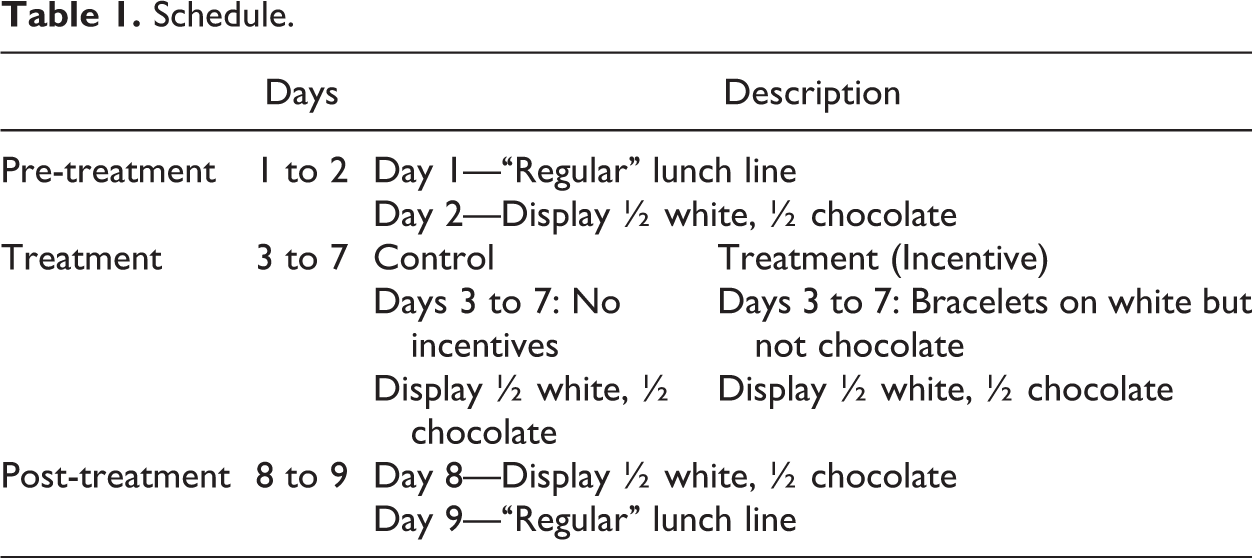
Finally, to investigate the impact of our program after incentives are taken away, we ended with two observation days, during which the bracelets were again removed. Day 7 involved equal amounts of chocolate and white milk at all times, while day 8 involved the original environment with more chocolate milk than white milk.
Results
Baseline Characteristics of Participants
Table 2 provides a summary of the number of children who participated in each treatment, with additional descriptive statistics. We have data on 1,604 children, constituting 5,389 observed milk choices (not all children were present on all days). About half of children in the experiment were female, and children ranged in age from K through eighth grade. In the sample, about 59 percent of children are Hispanic, 37 percent are African American, 3 percent are white, and the remainder are multiracial. 7 Randomization was done at the school level with three schools in the Control group and four schools in the Treatment group, 8 so we are unbalanced on some demographic characteristics, for which we thus control in the analysis in our subsequent analysis.
Number of Observations.
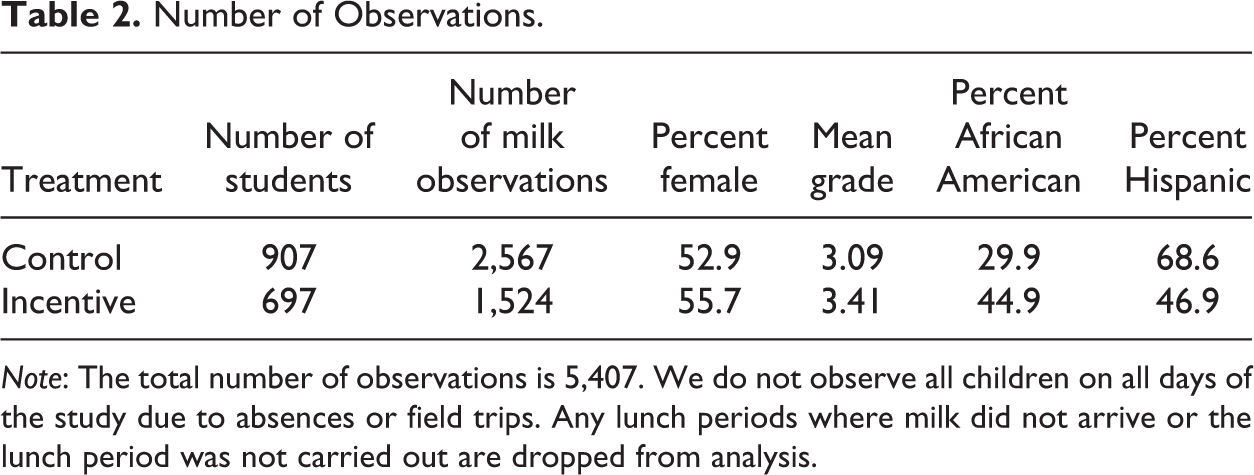
Note: The total number of observations is 5,407. We do not observe all children on all days of the study due to absences or field trips. Any lunch periods where milk did not arrive or the lunch period was not carried out are dropped from analysis.
The pre-treatment days 1 to 2 show that the proportion of children selecting white milk was comparable by treatment—18.9 percent in Control and 14.1 percent in Incentive. Chi-square tests of proportions do not indicate any statistically significant differences between treatments on selection, either for the first pretreatment day or the second (p values = .32 and .14, respectively). The proportion of white milk selected does not change significantly from day 1 to day 2 (paired t-test p value = .53).
Effect of Incentives on Milk Choice
We first investigate the impact of the incentives on white milk choice while they are in place. Figure 2 presents the proportion of children selecting white milk in each treatment, including all days over time. Averaging across all treatment days, we find strong and significant effects in the Incentive treatment as compared to control: choice of white milk increases to 40 percent in the Incentive treatment relative to 21 percent in the Control group (Wilcoxon–Mann–Whitney nonparametric two-way comparison tests using white milk choice averaged by individual in Incentive versus Control yield p value < .01). We also observe a significant difference when treating the lunch period level (randomization level) as an independent observation (p value = .03). This brings us to our first result:
Table 3 presents statistical models that largely confirm Result 1. We estimate a random-effects logit model with dependent variable white milk choice (= 1 if white milk is chosen and = 0 if chocolate is chosen). The variable Incentive Dummy represents the treatment effect. Only days 3 to 7—the treatment days—are included in the regression, and we also include a period trend, Period. Specification (1) displays the overall result, specification (2) introduces some demographic controls (Grade, Female, African American, and Hispanic), and specification (3) includes demographic interaction terms (Grade × Incentive, Female × Incentive, African American × Incentive, and Hispanic × Incentive).
Logit Regressions on Selection of White Milk during Intervention.
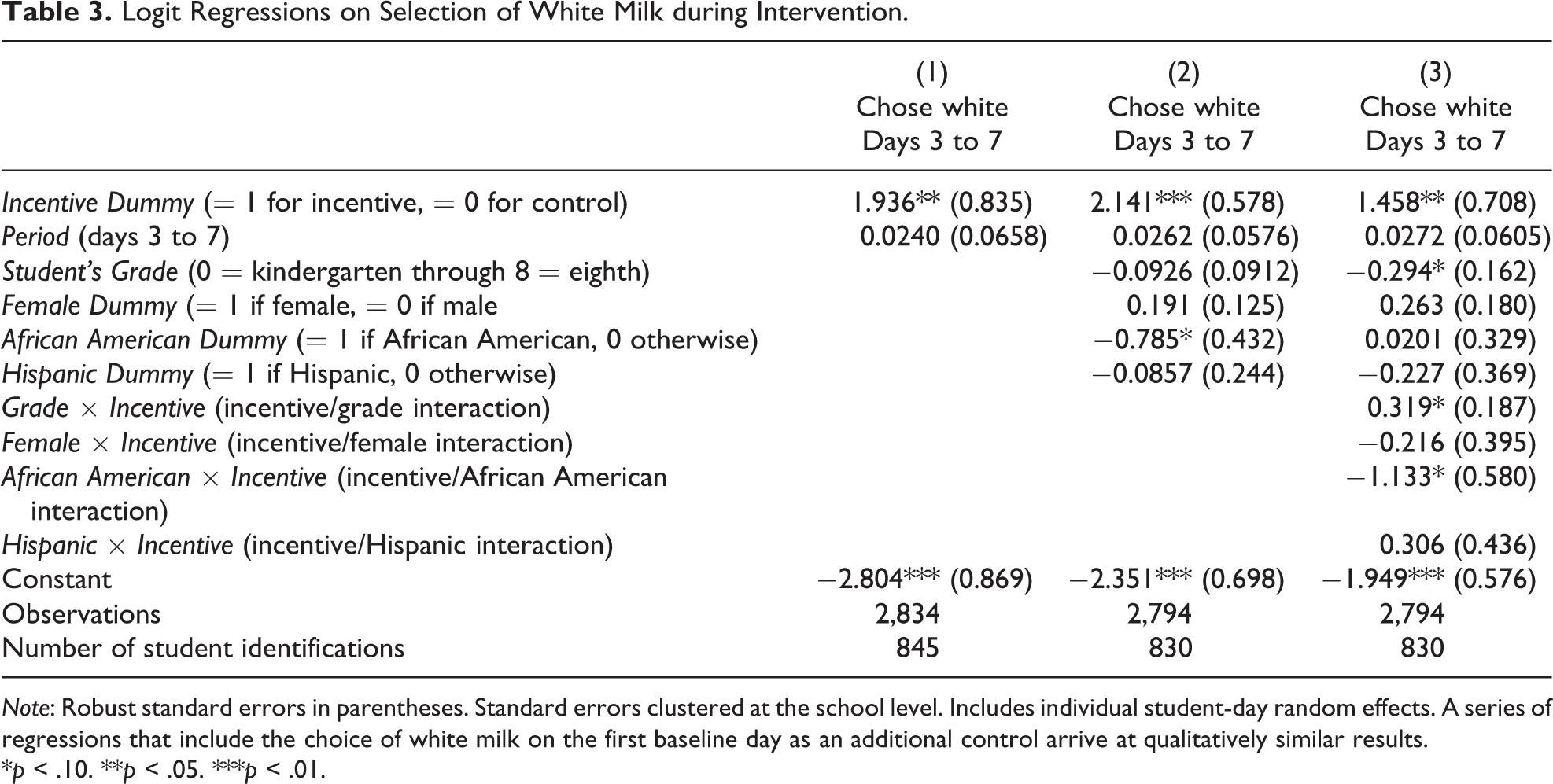
Note: Robust standard errors in parentheses. Standard errors clustered at the school level. Includes individual student-day random effects. A series of regressions that include the choice of white milk on the first baseline day as an additional control arrive at qualitatively similar results.
*p < .10. **p < .05. ***p < .01.
A positive and significant coefficient on Incentive in all specifications confirms Result 1 that incentives significantly increase the choice of white milk. In specification (2), we see that for the most part different demographic characteristics do not predict greater or less likelihood of selecting white milk. The only exception is the negative and marginally significant coefficient on African American Dummy, suggesting that African American children in our sample are somewhat less likely to select white milk. We also observe interesting results with regard to the interaction between demographics and treatment. Older children are more affected by the incentive, as evidenced by the positive and marginally significant coefficient on Grade × Incentive. African American children are not as affected by the incentive as Caucasian or Hispanic children, since the interaction term African American × Incentive is negative and significant at the 10 percent level. Since African American children are generally less likely to select white milk, it could be that they are less likely to be on the margin of choosing white versus chocolate and may need a higher incentive. More work is needed to understand how demographic characteristics affect the impact of incentives.
Results Following the Intervention
Next, we investigate the effect of incentives once the intervention is taken away. Unlike in List and Samek (2015), who investigated the use of nonmonetary incentives in after-school programs, our school lunchroom setting allows us to observe the same children on a regular basis, which increases the inference we can draw from the postintervention results. As displayed in figure 2, we see that white milk choice declines after the incentive is taken away, but we still observe a higher white milk choice in the posttreatment days for Incentive as compared to for the Control group. In particular, while Treatment group children are selecting white milk about 25 percent of the time, Control group children are selecting white milk only 18 percent of the time. A one-sided t-test rejects any evidence of crowd-out; that is, the white milk selection in the treatment group is not lower than the control group (p value = .05 for the t-test and the nonparametric Wilcoxon–Mann–Whitney test). However, we cannot reject that the Treatment group is different from the Control group at conventional levels (the two-sided p value = .11), so it is hard to say whether we have observed any habit formation either.

White milk selection by day and treatment.
We turn to a regression to extend our results, reported in table 4. We again use a logit random effects regression, this time focusing on just the two days after the intervention is removed (days 8 to 9). The regression tells a similar story as the two-sided tests. The coefficient on Incentive is positive and insignificant in specifications (1) and (2) and negative and insignificant in specification (3). No interesting interaction effects are observed.
Logit Regressions on Selection of White Milk after Intervention.
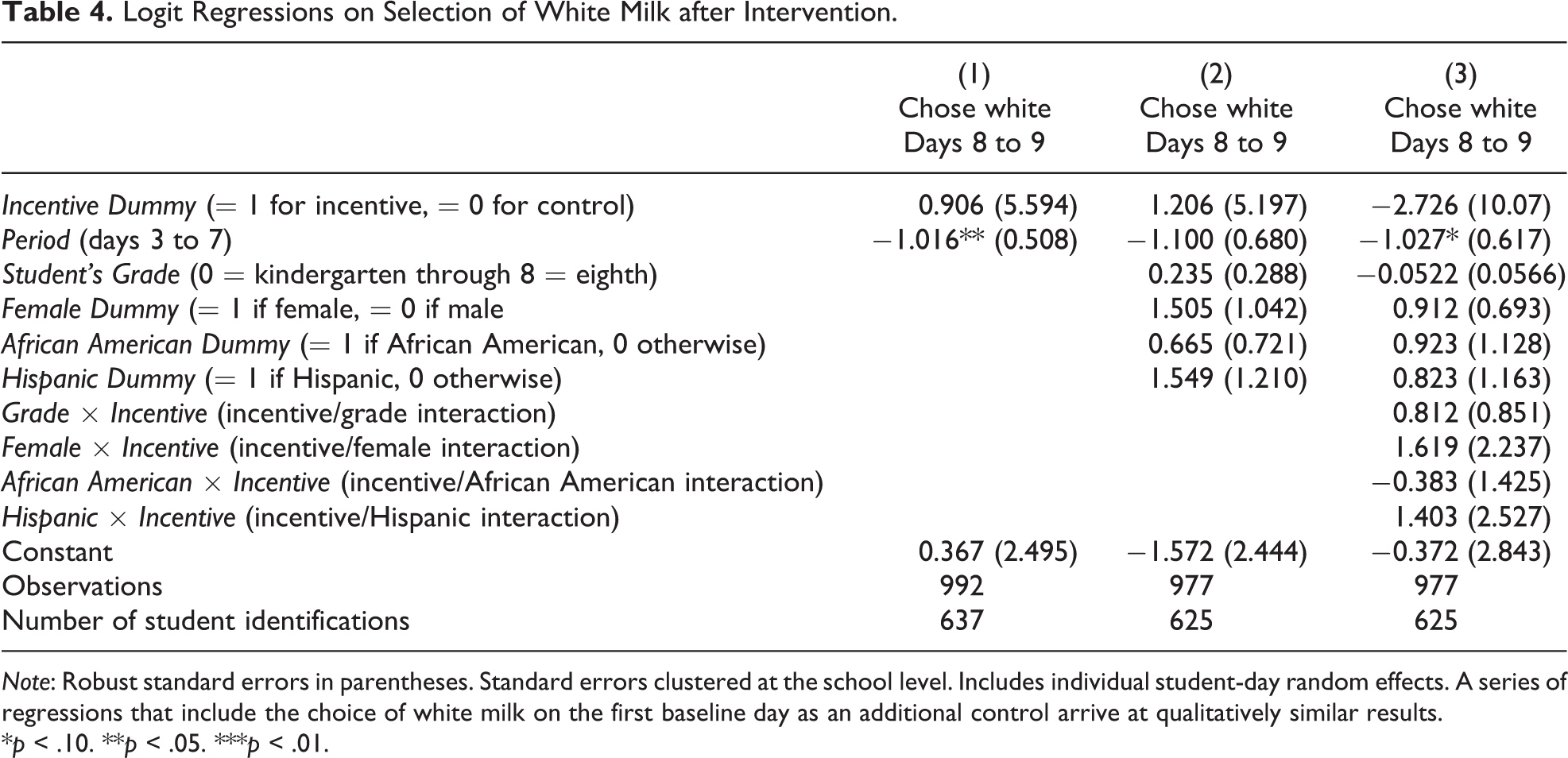
Note: Robust standard errors in parentheses. Standard errors clustered at the school level. Includes individual student-day random effects. A series of regressions that include the choice of white milk on the first baseline day as an additional control arrive at qualitatively similar results.
*p < .10. **p < .05. ***p < .01.
We thus conclude that there is no evidence for crowd-out of intrinsic motivation in our data, rather the standard price effect is more likely as coefficients on Incentive Dummy are insignificant. In addition, we see some suggestive evidence in favor of habit formation, though more work is needed with longer-term interventions to know for sure whether incentives can lead to healthy habits and the persistence of these effects. This brings us to the second result:
Milk Consumption
One possible limitation of incentivizing selection is that students may select white milk but not consume it. Here, we investigate whether this is the case. Figure 3 provides a graph depicting overall consumption of milk over each day of the study, by treatment. Across all days, we observe an overall consumption rate of 63 percent (SD = 37.6 percent) in the Control treatment and 64.2 percent (SD = 37.6 percent) in the Incentive treatment. This consumption rate is in line with related work, which shows that around 40 percent of school lunch is wasted (D. Just, Mancino, and Wansink 2007). In the Control treatment, consumption is higher conditional on selecting chocolate milk (65.8 percent, SD = 36.5 percent) relative to selecting white milk (50.4 percent, SD = 39.1 percent). The same is true in the Incentive treatment, whereby consumption is 68.8 percent (SD = 35.1 percent) for those selecting chocolate milk and 53.7 percent (SD = 40.7 percent) for those selecting white milk. In summary, these numbers do not give cause to worry that the Incentive treatment reduced consumption rates, since indeed overall consumption is slightly higher in the treatment group.

Overall milk consumed.
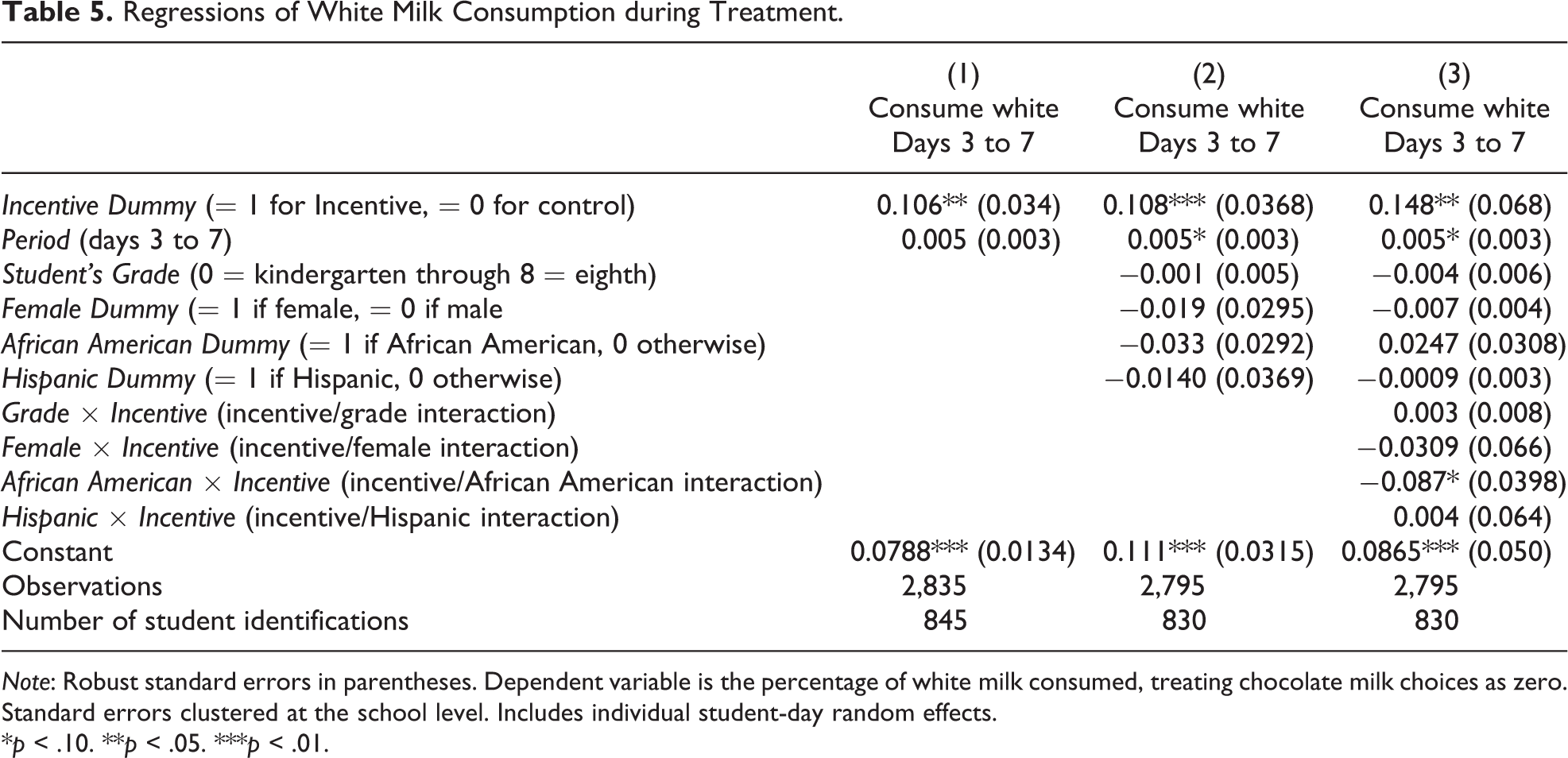
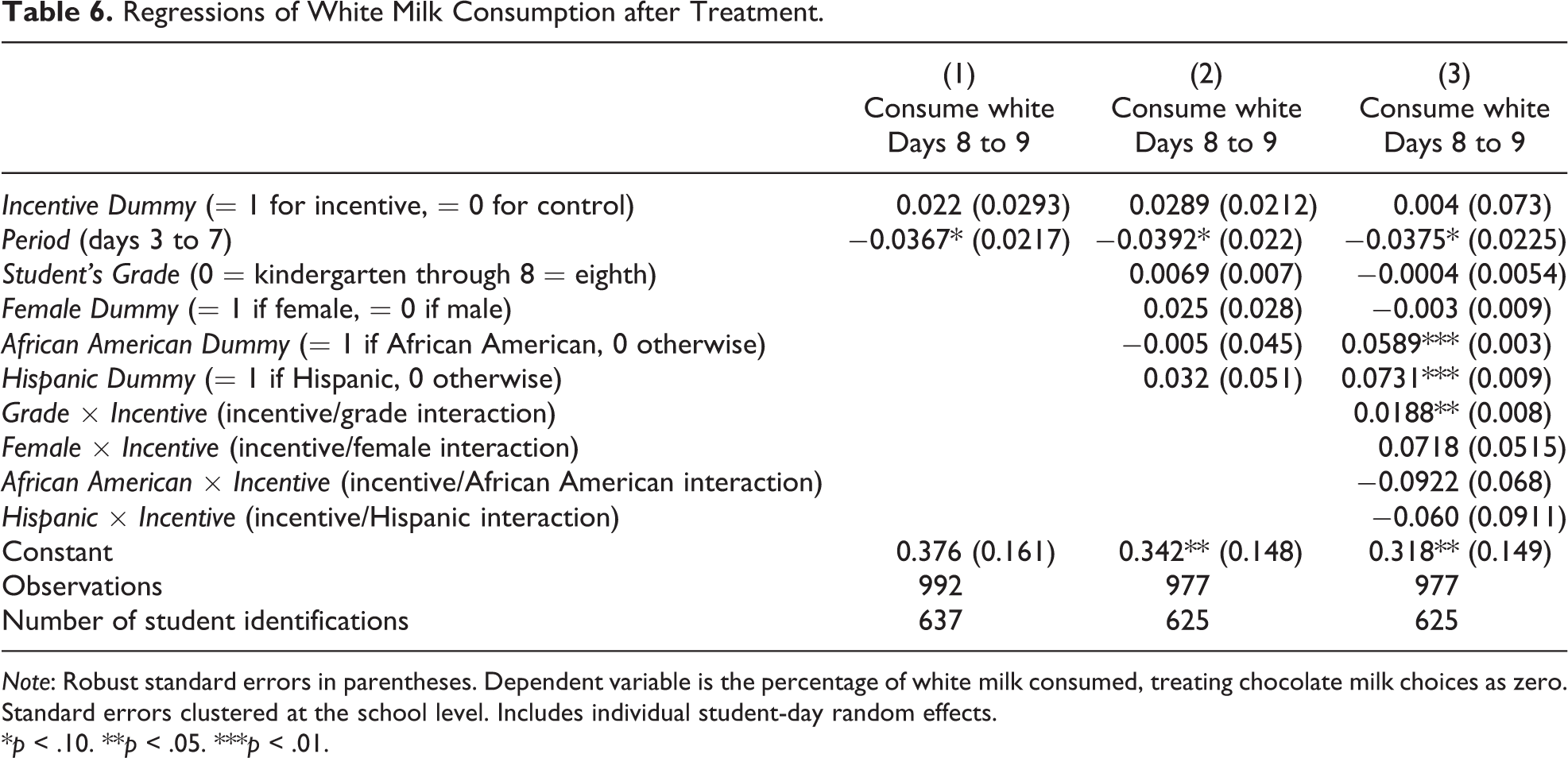
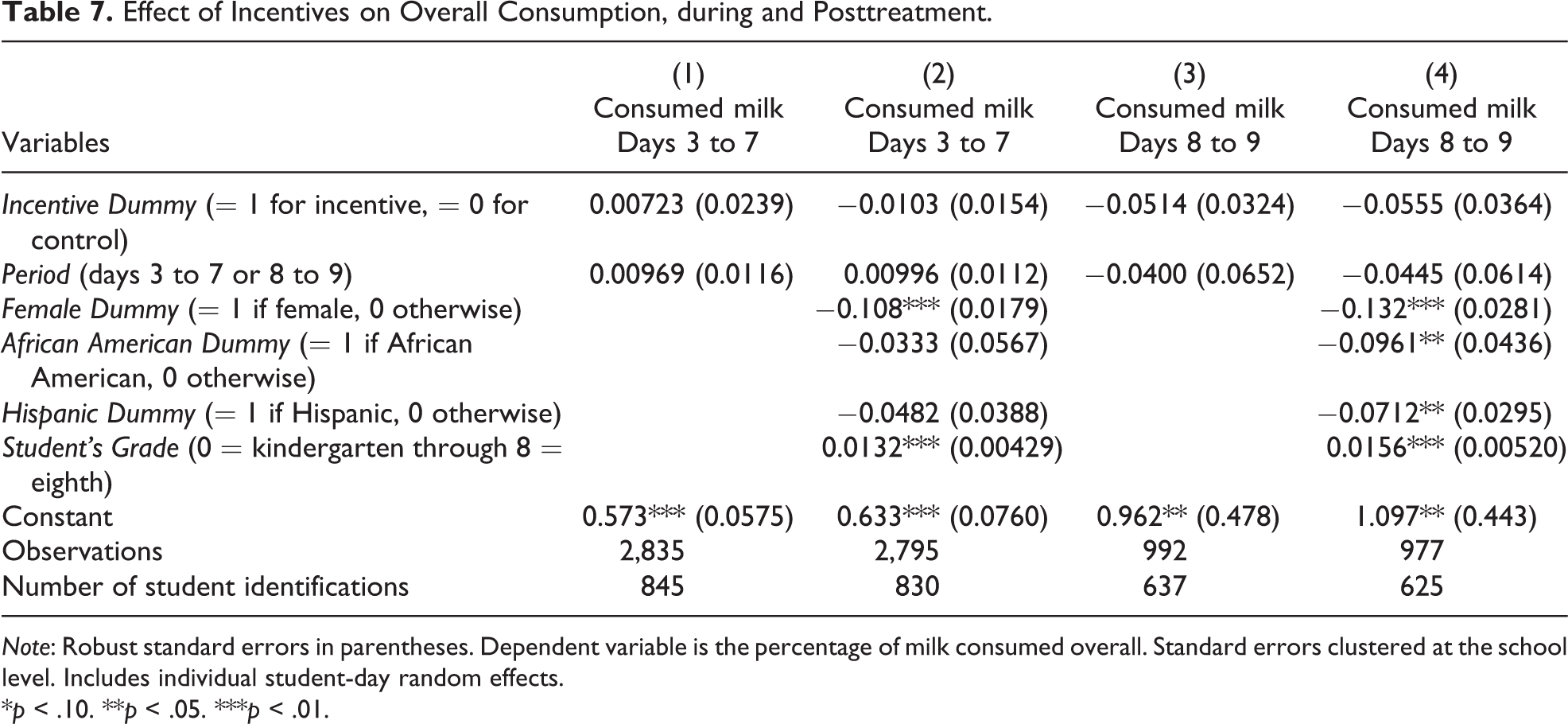
As a robustness check for our milk selection results, tables 5 and 6 provide regressions that use percentage of white milk consumed as the dependent variable, treating chocolate milk choice as zero. We observe similar treatment effects as in the selection data—notably, positive and statistically significant coefficients on the Incentive Dummy variable in table 5. The Student Grade coefficient is no longer significant, potentially because while younger children are more likely to choose white milk, they are also less likely to consume more milk overall. Indeed, there is a positive correlation between grade and percentage consumed, with students in grades K to 3 consuming between 57 percent and 64 percent of milk and students in grades 4 to 8 consuming between 62 percent and 70 percent of milk overall. A supplementary regression in table 7 uses overall milk consumed (white or chocolate) as the dependent variable both during (specifications 1 and 2) and after (specifications 3 and 4) treatment, finding no impact of the Incentive treatment on milk consumption (and therefore waste). This brings us to the final result:
Regressions of White Milk Consumption during Treatment.
Note: Robust standard errors in parentheses. Dependent variable is the percentage of white milk consumed, treating chocolate milk choices as zero. Standard errors clustered at the school level. Includes individual student-day random effects.
*p < .10. **p < .05. ***p < .01.
Regressions of White Milk Consumption after Treatment.
Note: Robust standard errors in parentheses. Dependent variable is the percentage of white milk consumed, treating chocolate milk choices as zero. Standard errors clustered at the school level. Includes individual student-day random effects.
*p < .10. **p < .05. ***p < .01.
Effect of Incentives on Overall Consumption, during and Posttreatment.
Note: Robust standard errors in parentheses. Dependent variable is the percentage of milk consumed overall. Standard errors clustered at the school level. Includes individual student-day random effects.
*p < .10. **p < .05. ***p < .01.
Discussion and Conclusion
We set out to discover low-cost, scalable nudges to improve child food choice and consumption during a teachable moment: the school lunch line. Our sample consisted of over 1,500 children from low-income households in the Chicago Heights, Illinois School District, who may be at highest risk for poor nutrition. We were motivated to investigate the impact of incentives valued at about fifteen cents each. Moreover, we were interested in learning whether and how incentive programs affect children after the incentive is removed.
We found a large and significant positive impact of incentives: the introduction of a small nonmonetary incentive for choosing white milk in the school lunch line increased the likelihood of selecting white milk by 2.5 times and also increased white milk consumption. This result is in line with recent work on the power of incentives, including D. R. Just and Price (2013b), Belot, James, and Patrick (2013), and List and Samek (2015). The related studies provided incentives following the decision to choose healthy; on the other hand, our study is the first to incorporate incentives directly into the decision by affixing the incentive directly onto the milk carton. Providing the incentive in this way could be more cost effective, since affixing a bracelet to a milk carton is relatively less time intensive than tracking decisions made by children and providing rewards later.
Our experiment was conducted in a school district with a high proportion of students who qualify for the National Free or Reduced School Lunch (over 90 percent) as well as a high proportion of minority students. As with all field experiments conducted in one particular setting, we may ask whether our results are externally valid. Given that related work conducted independently of ours also finds positive short-term effects of incentives (e.g., D. R. Just and Price 2013b; Belot, James, and Patrick 2013), we propose that the impact of incentives may be a relatively universal phenomenon. However, replication studies should investigate whether the effects of incentives extend to schools with different socioeconomic and demographic composition. Moreover, an understanding of what kinds of incentives are most effective across socioeconomic or demographic characteristics would allow policy makers to provide targeted incentives.
Importantly, we investigated the impact of incentives after the incentive was taken away. While List and Samek (2015) consider long-term impacts, finding some evidence for the positive impact of incentives in inducing the formation of healthy habits, their estimates can be considered a lower bound since many children in their after-school program are not present every day. On the other hand, our school lunchroom setting, with more regular attendance, is a great environment to study long-term effects.
We found no evidence that incentives crowd-out intrinsic motivation to choose the healthier white milk, as may be predicted by some theories (e.g., Deci et al. 1999). On the other hand, we found some suggestive evidence for habit formation, as children continued to choose the healthier white milk for a short time after the incentive was taken away. These results speak to the possibility of using a short-term intervention that includes incentives, without necessarily hurting long-term outcomes. One limitation of our study is that we did not follow the children beyond a few days postintervention. Since habits may fade over time, future work should consider how persistent possible habit-forming effects of incentives are by introducing a longer postintervention data collection period.
An open question is whether the provision of incentives for milk choice may cause students to expect incentives for other healthy choices. If students begin to expect incentives for other behaviors and do not receive them, this may lead to negative “spillovers” and would result in worsened health outcomes. On the other hand, if students do not associate incentives for milk choice with an expectation of incentives for other behaviors, then the provision of incentives should only affect the targeted behavior and may lead to short-term improvements in that behavior.
While a series of papers have now documented the powerful effect of incentives on child food choice in the school lunch line, several questions remain unanswered and are left to future work. For purposes of calculating the costs and benefits of incentive programs for policy applications, it will be useful to know whether higher valued incentives increase the likelihood of choosing healthy and whether lower valued incentives do worse. The feasibility and availability of funding for an incentive program should also be explored. As a reference, the price of milk during the study in our district was around US$0.20 to US$0.22 per carton, the USDA reimbursement amounts for a carton of milk was US$0.23 for participants in the Special Milk program, and schools around the country charge between about US$0.50 and US$0.55 for a carton of milk. 9 At US$0.15, the incentive was priced high relative to the wholesale price and reimbursement rates for milk but was only 30% of the milk prices faced by students in the lunch line. To further our understanding of the possible habit-forming ability of incentives, future work should also investigate how the length of intervention affects habit formation, and whether and how quickly habits regress over time.
Footnotes
Appendix
Acknowledgments
We thank the Cornell Center for Behavioral Economics and Child Nutrition Programs for funding of this research. We thank participants of the Murphy Institute Behavioral Economics Conference for helpful comments. We thank Justin Holz, Tristin Ganter, Andrew Kramer, Christa Gibbs, Alannah Hoefler, Dustin Pashouwer, and Kevin Sokal for excellent research assistance.
Declaration of Conflicting Interests
The authors declare no potential conflicts of interest with respect to the research, authorship, and/or publication of this article.
Funding
The authors disclosed receipt of the following financial support for the research, authorship, and/or publication of this article: The authors received financial support from the Cornell Center for Behavioral Economics and Child Nutrition Programs.