







Abstract
The Expert Panel for Cosmetic Ingredient Safety (Panel) assessed the safety of Hydroxy Tetramethylpiperidine Oxide and Tris(Tetramethylhydroxypiperidinol) Citrate as used in cosmetic formulations. These ingredients are reported to function as an antioxidant and a light stabilizer, respectively. The Panel considered the available data and concluded that Hydroxy Tetramethylpiperidine Oxide and Tris(Tetramethylhydroxypiperidinol) Citrate are safe in cosmetics in the present practices of use and concentration described in this safety assessment.
Keywords
Introduction
This is a safety assessment of Hydroxy Tetramethylpiperidine Oxide and Tris(Tetramethylhydroxypiperidinol) Citrate as used in cosmetic formulations. According to the web-based International Cosmetic Ingredient Dictionary and Handbook (Dictionary), Hydroxy Tetramethylpiperidine Oxide is reported to function as an antioxidant, and Tris(Tetramethylhydroxypiperidinol) Citrate is reported to function as a light stabilizer, in cosmetics. 1 In 2014, the Expert Panel for Cosmetic Ingredient Safety (Panel) published a safety assessment of a related ingredient, citric acid, and 32 inorganic citric acid salts and alkyl citrate esters, concluding that these ingredients are safe in the present practices of use and concentration in cosmetics. 2
Hydroxy Tetramethylpiperidine Oxide and Tris(Tetramethylhydroxypiperidinol) Citrate are structurally related as piperidine nitroxides. Therefore, these cosmetic ingredients have been reviewed together in this assessment.
This safety assessment includes relevant published and unpublished data that are available for each endpoint that is evaluated. Published data are identified by conducting an exhaustive search of the world’s literature. A listing of the search engines and websites that are used and the sources that are typically explored, as well as the endpoints that the Panel typically evaluates, is provided on the Cosmetic Ingredient Review (CIR) website (https://www.cir-safety.org/supplementaldoc/preliminary-search-engines-and-websites; https://www.cir-safety.org/supplementaldoc/cir-report-format-outline). Unpublished data are provided by the cosmetics industry, as well as by other interested parties.
Much of the data included in this safety assessment was found on the European Chemicals Agency (ECHA) website.3,4 Please note that the ECHA website provides summaries of information generated by industry, and it is those summary data that are reported in this safety assessment when ECHA is cited.
Chemistry
Definition and Structure
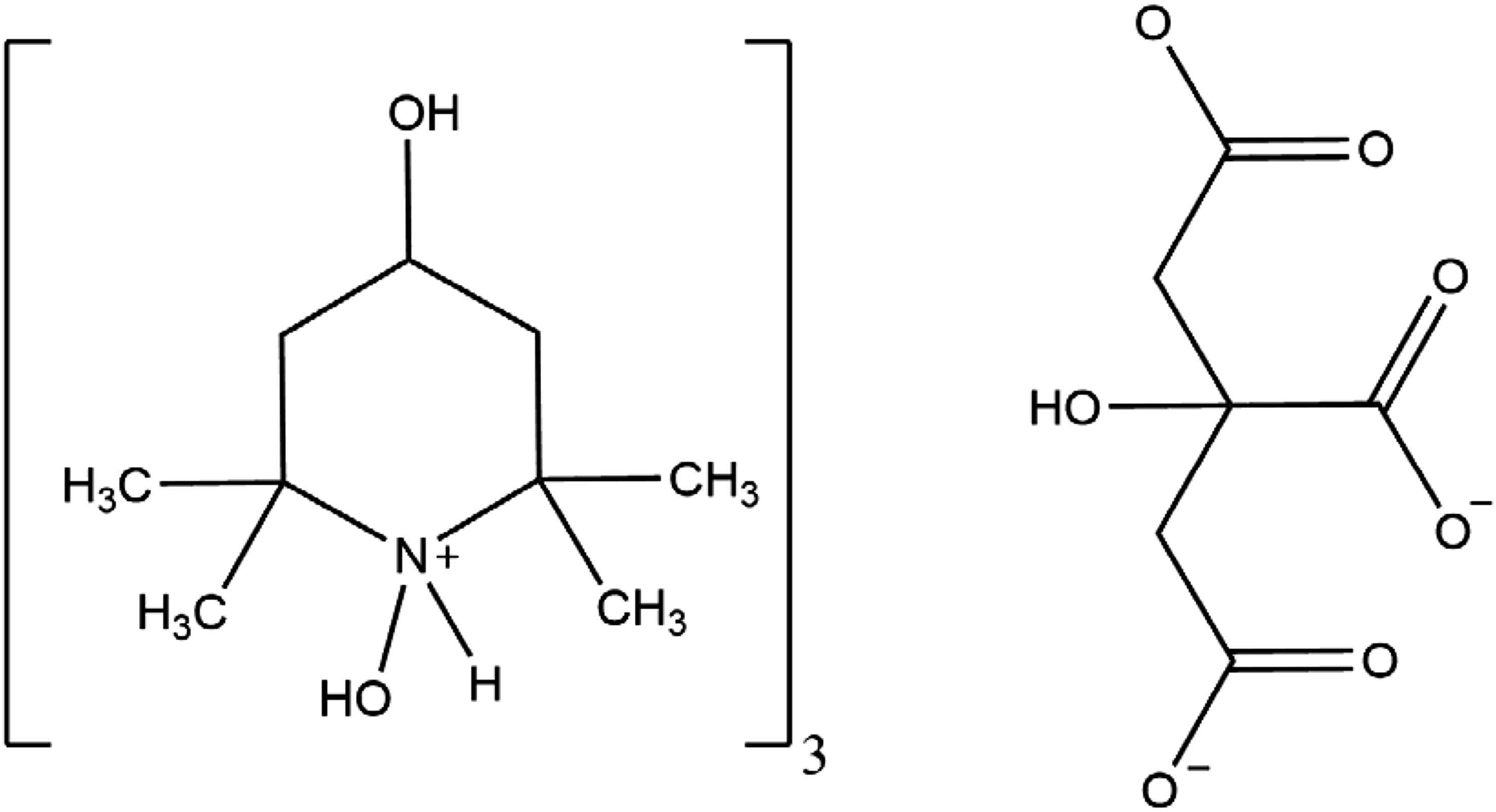
Hydroxy Tetramethylpiperidine Oxide (CAS No. 2226-96-2) is an organic compound and Tris(Tetramethylhydroxypiperidinol) Citrate (CAS No. 220410-74-2) is a salt. These piperidine nitroxides conform to the structures shown in Figures 1 and 2, respectively.
1
Hydroxy Tetramethylpiperidine Oxide. Tris(Tetramethylhydroxypiperidinol) Citrate.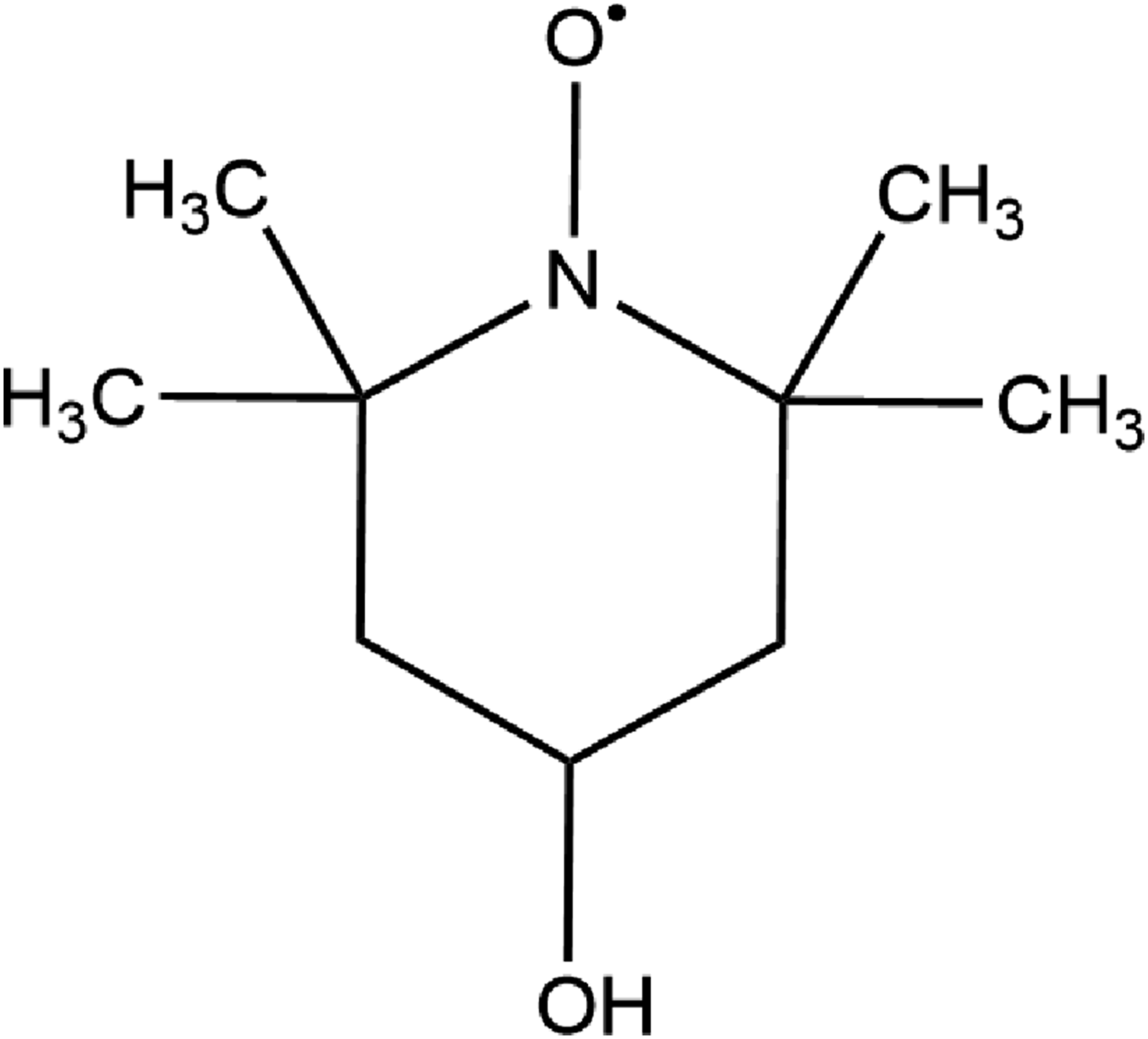
Chemical Properties
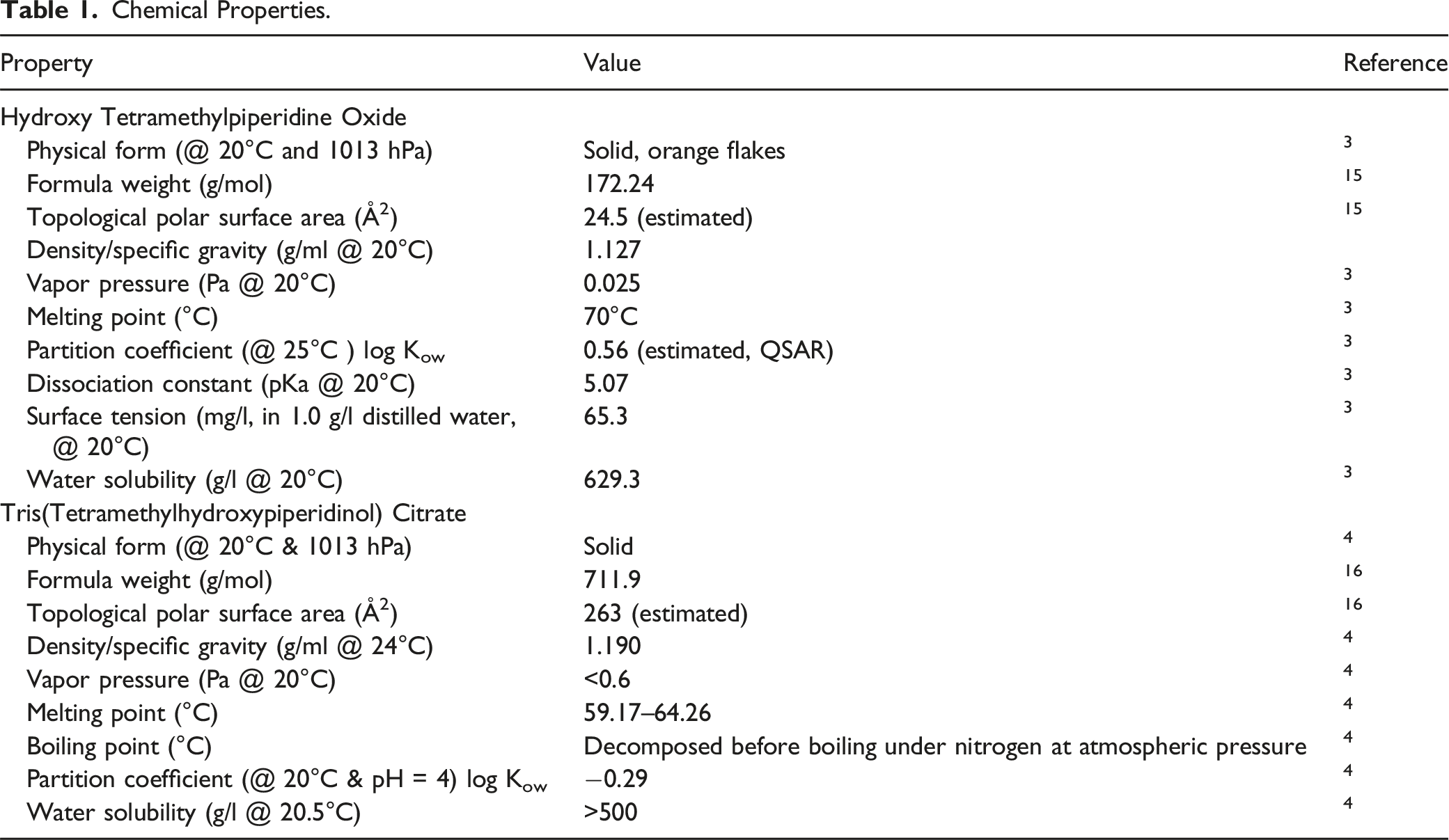
Chemical Properties.
Method of Manufacture
A general synthesis mechanism for Hydroxy Tetramethylpiperidine Oxide involves derivation from triacetoneamine. 5 Method of manufacture data were not found, or received, for Tris(Tetramethylhydroxypiperidinol) Citrate.
Impurities
Impurities data were not found in the published literature, and unpublished data were not submitted.
Use
Cosmetic
The safety of the cosmetic ingredients addressed in this assessment is evaluated based on data received from the US Food and Drug Administration (FDA) and the cosmetics industry on the expected use of these ingredients in cosmetics. Use frequencies of individual ingredients in cosmetics is collected from manufacturers and reported by cosmetic product category in the FDA Voluntary Cosmetic Registration Program (VCRP) database. Use concentration data are submitted by the cosmetic industry in response to a survey, conducted by the Council, of maximum reported use concentrations by product category.
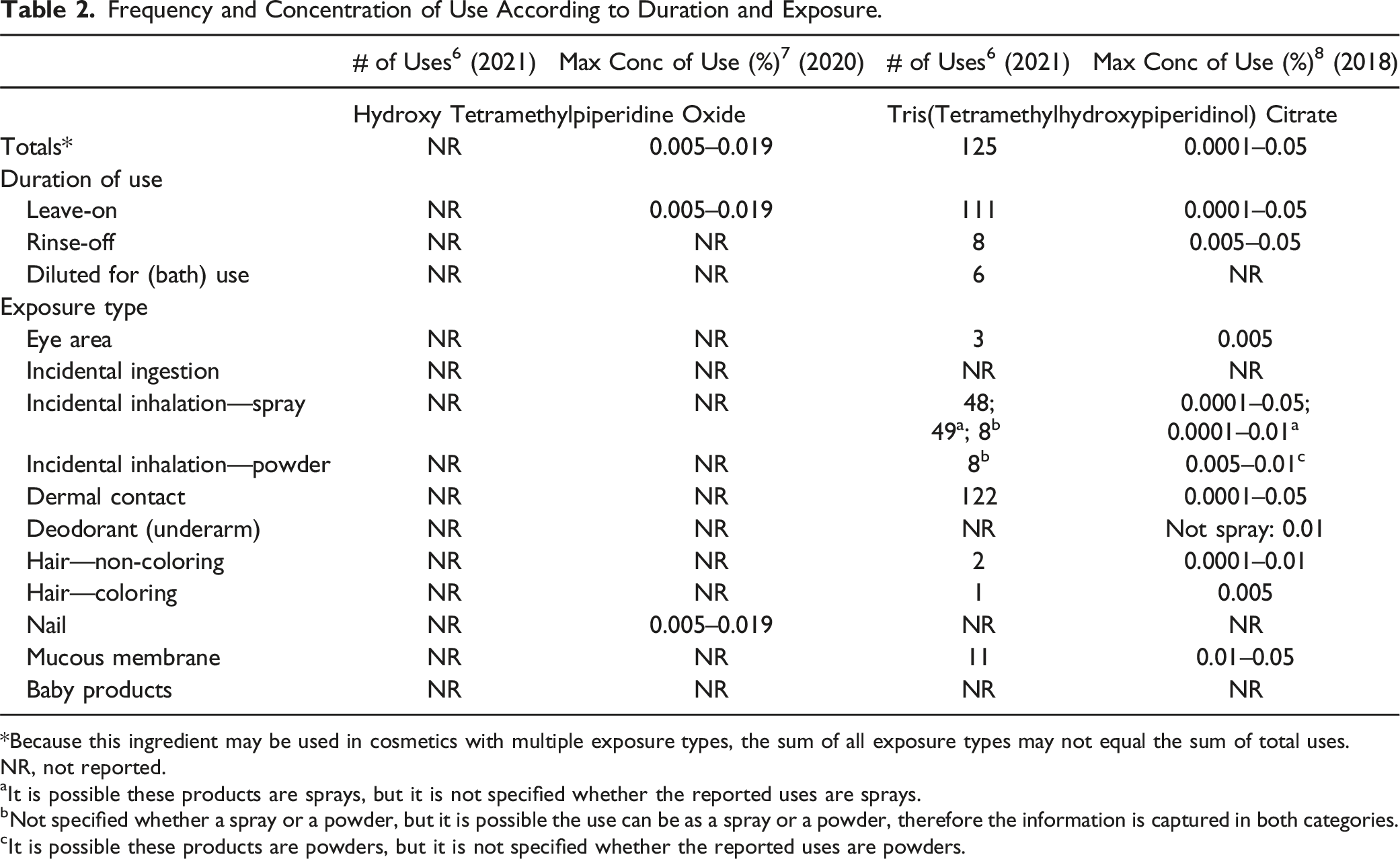
Frequency and Concentration of Use According to Duration and Exposure.
*Because this ingredient may be used in cosmetics with multiple exposure types, the sum of all exposure types may not equal the sum of total uses.
NR, not reported.
aIt is possible these products are sprays, but it is not specified whether the reported uses are sprays.
bNot specified whether a spray or a powder, but it is possible the use can be as a spray or a powder, therefore the information is captured in both categories.
cIt is possible these products are powders, but it is not specified whether the reported uses are powders.
Tris(Tetramethylhydroxypiperidinol) Citrate is used in formulations applied to the eye area, at up to 0.005% in eye lotions. It is also used in products which allow for mucous membrane exposure, such as in bath soaps and detergents, at reported maximum concentrations of 0.05%.
Additionally, Tris(Tetramethylhydroxypiperidinol) Citrate is used in cosmetic sprays and could possibly be inhaled; for example, Tris(Tetramethylhydroxypiperidinol) Citrate is reported to be used up to 0.05% in cologne and toilet waters. In practice, 95% to 99% of the droplets/particles released from cosmetic sprays have aerodynamic equivalent diameters >10 µm, with propellant sprays yielding a greater fraction of droplets/particles <10 µm compared with pump sprays.9,10 Therefore, most droplets/particles incidentally inhaled from cosmetic sprays would be deposited in the nasopharyngeal and thoracic regions of the respiratory tract and would not be respirable (i.e., they would not enter the lungs) to any appreciable amount.11,12
Hydroxy Tetramethylpiperidine Oxide and Tris(Tetramethylhydroxypiperidinol) Citrate are not restricted from use in any way under the rules governing cosmetic products in the European Union. 13
Non-Cosmetic
Data for the non-cosmetic use of Tris(Tetramethylhydroxypiperidinol) Citrate were not found. Clinically, Hydroxy Tetramethylpiperidine Oxide has been noted for its potential to function as a nitroxide, to provide protection against radiation and oxidative stresses, both in vitro and in vivo. 14
Toxicokinetic Studies
Toxicokinetic studies were not found in the published literature, and unpublished data were not submitted.
Toxicological Studies
Acute Toxicity Studies
Acute Toxicity Studies.
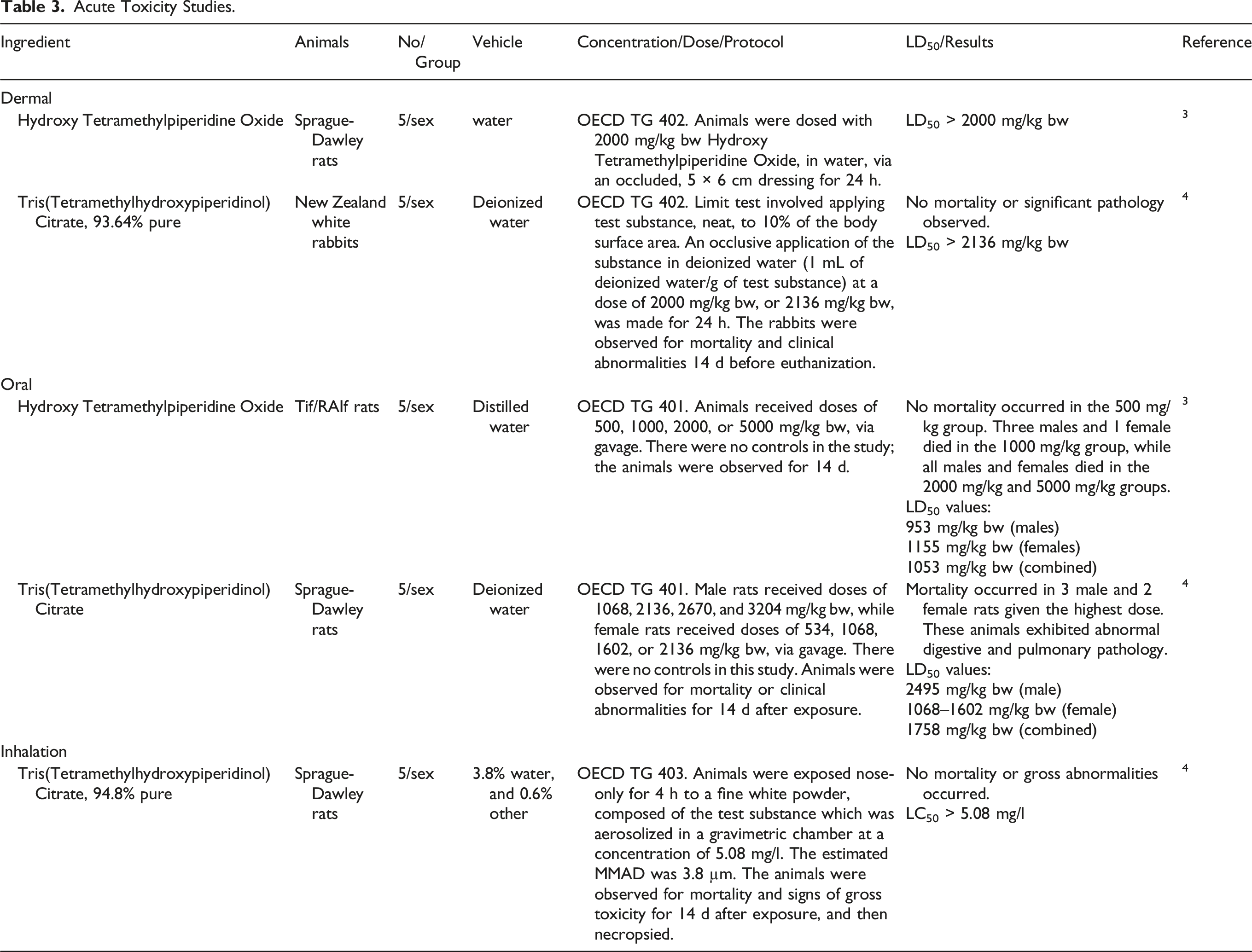
The dermal LD50 of Hydroxy Tetramethylpiperidine Oxide was determined to be >2000 mg/kg bw in male and female Sprague-Dawley rats. 3 The dermal LD50 of Tris(Tetramethylhydroxypiperidinol) Citrate was determined to be >2136 mg/kg bw in male and female New Zealand white rabbits. 4
The oral LD50 of Hydroxy Tetramethylpiperidine Oxide was determined to be 953 mg/kg bw in males, 1115 mg/kg bw in females, and 1053 mg/kg bw in both sexes (combined) in Tif/RAIf rats. 3 In an acute oral toxicity study of Tris(Tetramethylhydroxypiperidinol) Citrate, the LD50 was determined to be 2495 mg/kg bw in males, between 1068 and 1602 mg/kg bw in females, and 1758 mg/kg bw in both sexes (combined) in Sprague-Dawley rats. 4
In an acute inhalation study, performed in accordance with Organisation for Economic Co-operation and Development test guideline (OECD TG) 403, no mortality or gross abnormalities occurred when male and female Sprague-Dawley rats were exposed (nose-only) to aerosolized Tris(Tetramethylhydroxypiperidinol) Citrate, at a concentration of 5.08 mg/l, with a mass median aerodynamic diameter (MMAD) of 3.8 µm, for 4 h. 4 The LC50 was determined to be >5.08 mg/l.
Short-Term Toxicity Studies
Oral
Hydroxy Tetramethylpiperidine Oxide
In accordance with OECD TG 407, groups of 6 male and 6 female Sprague-Dawley rats were administered 0 (vehicle; water), 8, 40, 200, or 1000 mg/kg bw/d Hydroxy Tetramethylpiperidine Oxide, via gavage for 28 d, and then killed. 3 Two additional recovery groups, consisting of 6 males and 6 females that were administered either the vehicle or the highest dose for 28 d and, were kept alive and observed for 14 d after treatment. No mortality occurred and no abnormalities were reported during the recovery period. In the normal test groups (non-recovery groups), salivation was observed in all animals in the 1000 mg/kg group at varied timepoints of dosing, and in 1 male in the 200 mg/kg group toward the end of dosing. Males and females in the high dose group exhibited a decrease in blood cell count and hemoglobin, which persisted during the recovery period. Spleen and liver weights were increased in both sexes for the 1000 mg/kg group as well, but only persisted in females during recovery. Blackened spleens were noted in both sexes of the 1000 mg/kg/d group, and was reversible upon recovery. Upon necropsy, a dose-dependent increase in congestion and hemosiderin-laden cells in the spleen and hepatocyte swelling was observed in the 200 mg/kg females, and both sexes in the 1000 mg/kg group. The no-observed-adverse-effect-level (NOAEL) was determined to be 40 mg/kg bw/d, under the conditions of this study.
Tris(Tetramethylhydroxypiperidinol) Citrate
In accordance with OECD TG 407, groups of 5 male and 5 female Sprague-Dawley rats were exposed to 0 (vehicle; water), 100 (low), 500 (mid), or 1000 (high-dose) mg/kg bw/d Tris(Tetramethylhydroxypiperidinol) Citrate in deionized water via gavage for 28 d , and then killed. 4 Two additional groups of 5 males and 5 females were dosed with 0 or 1000 mg/kg/d for 28 d, and then observed post-exposure for 14 d, serving as recovery groups. No mortality occurred during the study. Dose-dependent abnormalities, such as salivation and apparent blood around the facial area, neck and forelimbs, were identified in the males and females dosed with 500 and 1000 mg/kg bw/d. Clinical pathology findings showed a slight increase of serum bilirubin in high-dose male rats, and a statistically significant slight decrease in red blood cell counts (except in mid-dose animals), hemoglobin, and hematocrit in females. Spleen weights were increased in the mid- and high-dose male rats, and there was a minimal to mild increase in the congestion of red pulp of the spleen in several of the male and female rats of the high-dose group. These effects were reversible during the recovery period. The no-observed-effect-level (NOEL) was determined to be 100 mg/kg bw/d.
Subchronic Toxicity Studies
Dermal
Tris(Tetramethylhydroxypiperidinol) Citrate
The dermal toxicity of Tris(Tetramethylhydroxypiperidinol) Citrate (97.3% pure) was evaluated in a 90-d study in Wistar Han rats, in accordance with OECD TG 411. 4 The test substance was administered as a suspension in 0.5% carboxymethylcellulose aqueous solution, and open applications of 0, 50, 150, or 500 mg/kg bw/d were made to the clipped skin of groups of 10 male and 10 female rats. The coverage area was approximately 10% of body surface area (i.e., 45–50 cm2 in males and 30–35 cm2 in females). The animals were killed at the termination of dosing. An additional 2 groups of 5 males and 5 females received open applications of 0 or 500 mg/kg bw/d of the test substance for 13 wk, and were observed for 4 wk post-dosing as recovery animals. The application sites were not wiped after dosing, and were only cleaned in the instance of excess residue with purified water; ingestion was not prevented. There were no premature deaths. Scabs were noted at the application site during dosing in 2/15 males and 3/15 females dosed with 500 mg/kg bw/d and 1/10 females in both the 50 and 150 mg/kg bw/d groups. Chorioretinopathy, noted in 2 males and 1 female dosed with 500 mg/kg bw/d, was considered age- and strain-related, and not a test article-related adverse effect. Low glucose and high urea concentrations were noted in animals from the 500 mg/kg bw/d group, while low potassium and white blood cell count was observed in animals in the 50 mg/kg bw/d group. The effect on glucose and urea were reversible; however, the effects on white blood cell count and potassium concentrations persisted. An increase in spleen weight and congestion was observed in males and females, but similar congestion was observed in the controls, and the increased weight was reversed in the 500 mg/kg bw/d group of animals following the recovery period. Minimal acanthosis of the epidermis occurred in males and females across all dosing groups, however, it was considered negligible due to similarities in controls. Based on the results of this study, the NOAEL for cutaneous application of the test substance was determined to be 150 mg/kg bw/d.
Developmental and Reproductive Toxicity Studies
Oral
Hydroxy Tetramethylpiperidine Oxide
In accordance with OECD TG 414, groups of 22 female Wistar rats were used to evaluate the effects of Hydroxy Tetramethylpiperidine Oxide upon maternal toxicity, as well as embryonic and fetal development. 3 Pregnant dams were dosed from day 6 to 21 of gestation, via gavage, with 0, 40, 125, or 400 mg/kg bw/d of 98.4 % Hydroxy Tetramethylpiperidine Oxide, in polyethylene glycol. Body weight, appearance and behavioral changes were determined daily during pregnancy, and dams were killed on day 21 of gestation. Mouth rubbing, salivation, and paddling, observed upon immediate administration, and stained fur and minimal sores, observed later post-administration, were considered incidental and not related to the test substance. No adverse effects on maternal reproductive parameters, body weight, food consumption, and post-mortem findings were observed. Several statistically significant changes were observed in the 400 mg/kg dams, including increases in hemoglobin, red blood cell, and reticulocyte count, accompanied by relative increases in spleen weights and aspartate and alanine aminotransferase activity. Kidney dilation, noted in litters from all groups, was statistically significant in the litters of the 400 mg/kg dams; however, in the absence of a dose-response relationship, was not considered toxicologically significant. The NOAEL was determined to be 125 mg/kg/d for maternal toxicity, and 400 mg/kg/d for fetal toxicity.
Genotoxicity Studies
Genotoxicity Studies.
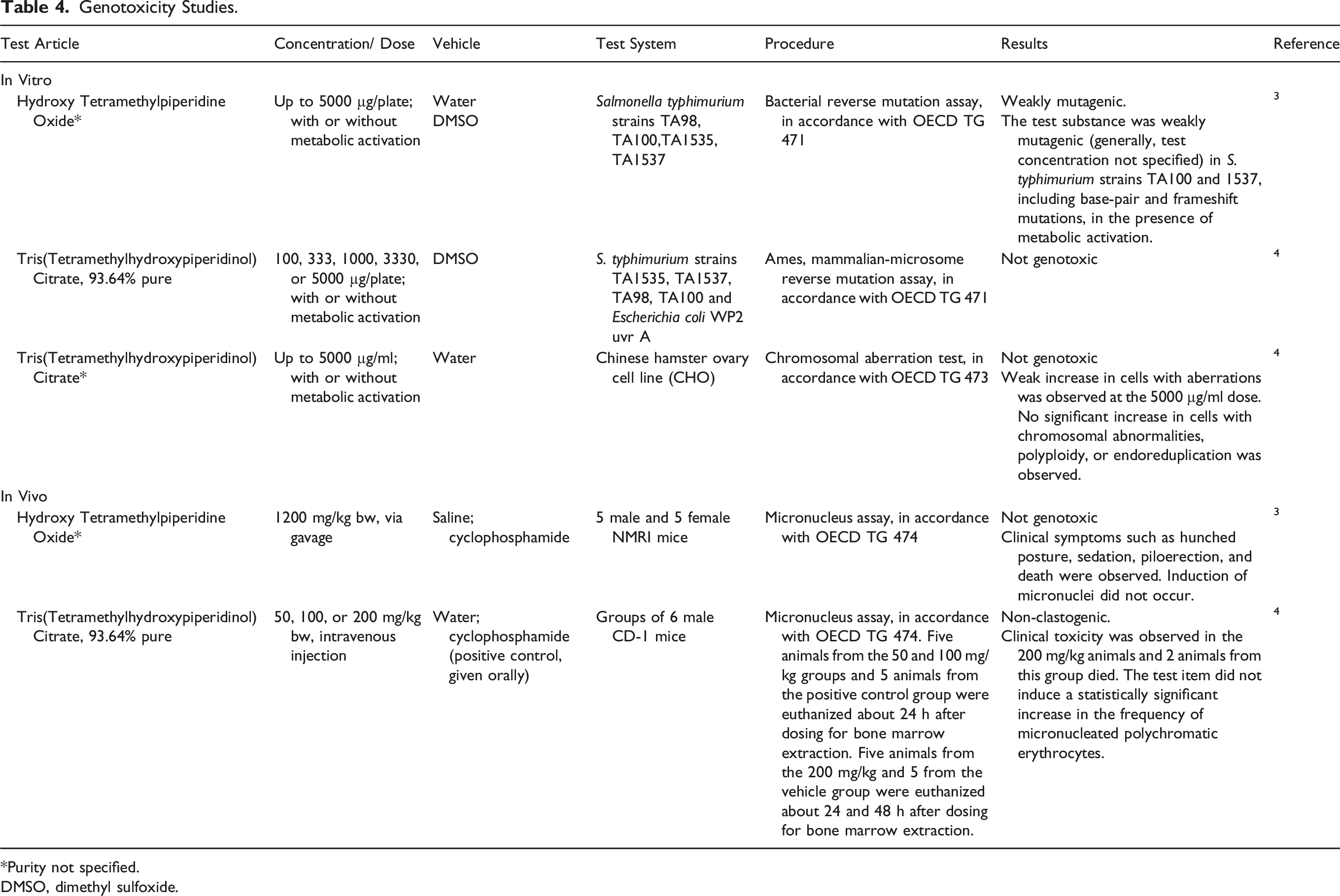
*Purity not specified.
DMSO, dimethyl sulfoxide.
In a bacterial reverse mutation assay, Hydroxy Tetramethylpiperidine Oxide was weakly mutagenic when tested at up to 5000 µg/plate in Salmonella typhimurium strains TA100 and 1537, in the presence of metabolic activation. 3 In an Ames test, Tris(Tetramethylhydroxypiperidinol) Citrate did not cause an increase in the mean number of revertants per plate in strains of S. typhimurium and Escherichia coli WP2 uvr A, when tested at up to 5000 µg/plate, either in the presence or absence of metabolic activation. 4 In a chromosomal aberration test of Tris(Tetramethylhydroxypiperidinol) Citrate tested at up to 5000 µg/plate in Chinese hamster ovary (CHO) cells, there was a weak increase of cell aberrations at the highest dose, in the non-activation assay, and the test substance was not considered genotoxic. 4
In vivo micronucleus tests were performed with mice. No genotoxicity was observed with 1200 mg/kg bw Hydroxy Tetramethylpiperidine Oxide (administered by gavage), 3 or with up to 200 mg/kg Tris(Tetramethylhydroxypiperidinol) Citrate (administered intravenously). 4
Carcinogenicity Studies
No carcinogenicity studies were found in the published literature, and unpublished data were not submitted.
Dermal Irritation and Sensitization
Dermal Irritation and Sensitization Studies.
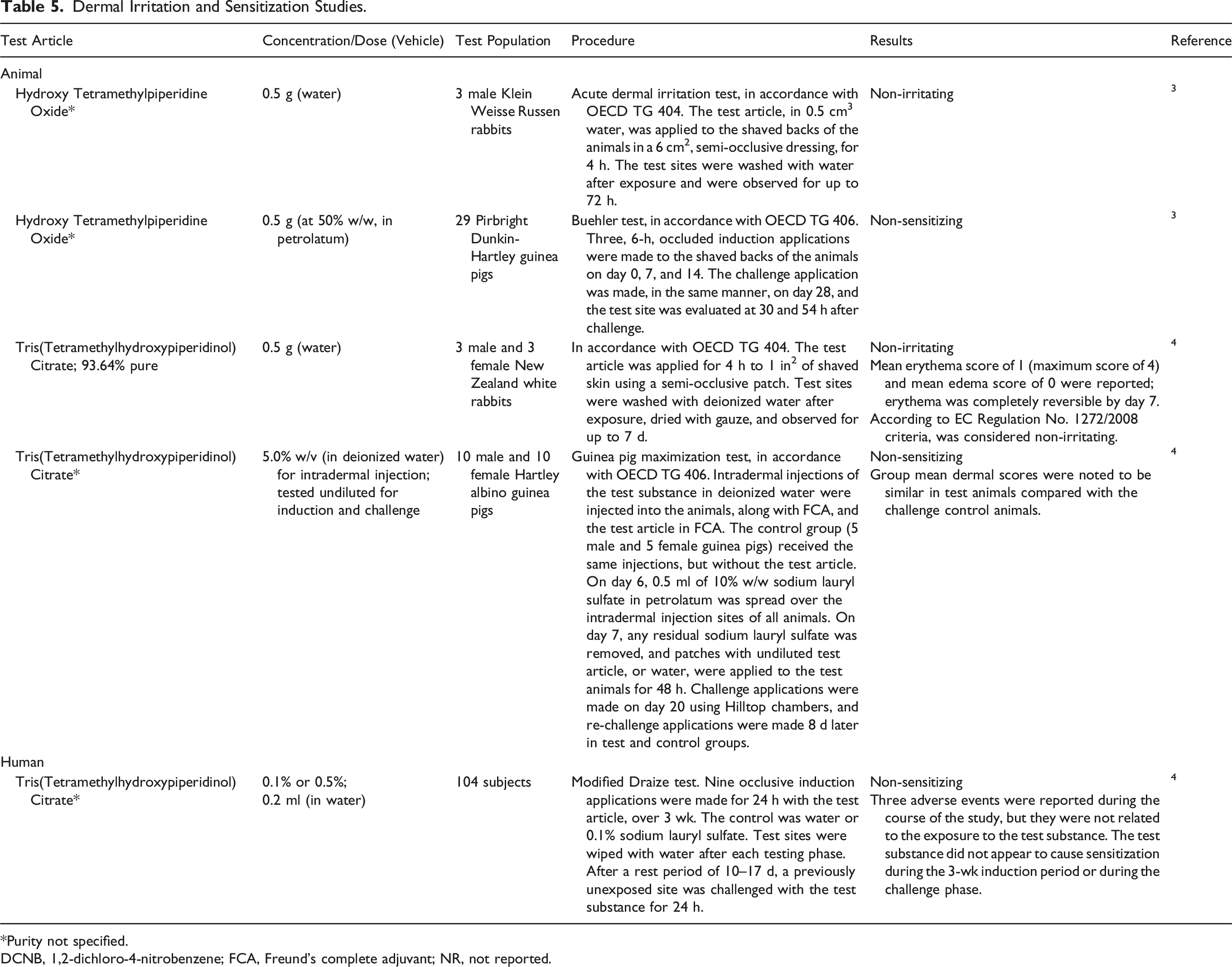
*Purity not specified.
DCNB, 1,2-dichloro-4-nitrobenzene; FCA, Freund’s complete adjuvant; NR, not reported.
Hydroxy Tetramethylpiperidine Oxide, at a dose of 0.5 g, did not cause dermal irritation when applied semi-occlusively to male Klein Weisse Russen rabbits for 4 h, and did not cause sensitization in Pirbright Dunkin-Hartley guinea pigs, tested at the same dose, in a Buehler test. 3 Tris(Tetramethylhydroxypiperidinol) Citrate was deemed non-irritating when applied to male and female New Zealand white rabbits for 4 h at a dose of 0.5 g using a semi-occlusive patch, and, non-sensitizing when injected at 5.0% w/v in deionized water during induction, followed by a topical, undiluted application, in male and female Hartley albino guinea pigs in a maximization test. 4
In a modified Draize test, up to 0.5% Tris(Tetramethylhydroxypiperidinol) Citrate was dermally tested in 104 human subjects. Adverse events were considered unrelated, and the test substance was deemed non-sensitizing. 4
Ocular Irritation Studies
Animal
Hydroxy Tetramethylpiperidine Oxide
The ocular irritation potential of Hydroxy Tetramethylpiperidine Oxide was evaluated in the eyes of 3 male Klein Weisse Russen rabbits, in accordance with OECD TG 405. 3 An undiluted dose of 0.1 g Hydroxy Tetramethylpiperidine Oxide was instilled into the eye (control not used) for 24 h, after which it was washed with saline. The treated eyes were scored after 24, 48, and 72 h of exposure. Due to an average conjunctiva score of 2.67 (out of 3 max score), average chemosis score of 2 (out of a 4-max score), and 5 of the 12 scored reactions being irreversible, the test material was deemed a Category 1 substance, causing serious and irreversible damage to the eye.
Tris(Tetramethylhydroxypiperidinol) Citrate
The ocular irritation potential of Tris(Tetramethylhydroxypiperidinol) Citrate (93.64% pure) was evaluated in the eyes of 3 female New Zealand White rabbits, in accordance to OECD TG 405. 4 Each rabbit received a 0.027 g (0.1 ml weight equivalent) dose of the undiluted test article, instilled into the conjunctival sac of the right eye, while the other eye remained untreated and served as the corresponding control for each animal. Test and control eyes were examined for signs of irritation for up to 10 d following dosing. The mean irritation score was 0.78 (maximum score of 3), and irritation was fully reversible 72 h to 10 d after exposure. Based on EC Regulation No 1272/2008 (CLP) criteria, the test item was considered non-irritating to rabbit eyes.
Summary
According to the Dictionary, Hydroxy Tetramethylpiperidine Oxide is reported to function as an antioxidant, while Tris(Tetramethylhydroxypiperidinol) Citrate is reported to function as a light stabilizer, in cosmetics. In 2021, VCRP data were not available for Hydroxy Tetramethylpiperidine Oxide; Tris(Tetramethylhydroxypiperidinol) Citrate was reported to be used in 125 formulations. According to Council survey data, Hydroxy Tetramethylpiperidine Oxide is reported to be used at a maximum concentration of 0.019% in nail bases and undercoats (2020), and Tris(Tetramethylhydroxypiperidinol) Citrate at 0.05%, with the highest reported concentration of use reported for cologne and toilet waters and in bath soaps and detergents (2018).
The dermal LD50 of Hydroxy Tetramethylpiperidine Oxide was determined to be >2000 mg/kg bw, in 10 Sprague-Dawley rats exposed to an occlusive patch of 2000 mg/kg bw for 24 h. In an acute dermal toxicity study, 10 New Zealand white rabbits were exposed to an occlusive patch of up to 2136 mg/kg bw of Tris(Tetramethylhydroxypiperidinol) Citrate for 24 h. The dermal LD50 was determined to be >2136 mg/kg bw.
In an acute oral toxicity study, groups of 5 Tif/RAIf rats received 500, 1000, 2000, or 5000 mg/kg bw Hydroxy Tetramethylpiperidine Oxide, via gavage. No mortality occurred in the 500 mg/kg group. Three males and 1 female died in the 1000 mg/kg group, while all males and females died in the 2000 mg/kg and 5000 mg/kg groups. The oral LD50 for both sexes (combined) was determined to be 1053 mg/kg bw. In an acute oral toxicity study, groups of 5 Sprague-Dawley rats received up to 3204 mg/kg bw (highest male dose) and 2136 mg/kg bw (highest female dose) of Tris(Tetramethylhydroxypiperidinol) Citrate, by gavage. Three males and 2 females that received the highest dose died prior to scheduled necropsy. The oral LD50 for both sexes (combined) was determined to be 1758 mg/kg bw.
In an acute inhalation toxicity study, 10 Sprague-Dawley rats were exposed to aerosolized 94.8% pure Tris(Tetramethylhydroxypiperidinol) Citrate (estimated MMAD 3.8 µm), at a concentration of 5.08 mg/l, nose-only, for 4 h. The acute inhalation LC50 was determined to be greater than 5.08 mg/l.
In an oral study, groups of 6 male and 6 female Sprague-Dawley rats received 0, 8, 40, 200, or 1000 mg/kg bw/d Hydroxy Tetramethylpiperidine Oxide via gavage for 28 d. Two additional recovery groups, consisting of 6 males and 6 females that were administered either the vehicle or the highest dose, were kept alive and observed for 14 d after treatment. Among sacrificed rats, the 1000 mg/kg group had decreased blood cell count and hemoglobin, increased spleen and liver weights, and blackened spleen was observed. A dose-dependent increase in congestion and hemosiderin-laden cells in the spleen and hepatocyte swelling was observed in the 200 mg/kg females, and both sexes in the 1000 mg/kg group. The NOAEL was determined to be 40 mg/kg bw/d. In another 28-d oral toxicity study, groups of 5 male and 5 female Sprague-Dawley rats received up to 1000 mg/kg bw of Tris(Tetramethylhydroxypiperidinol) Citrate via gavage. Two additional groups of 5 males and 5 females were dosed with 0 or 1000 mg/kg/d for 28 d, and then observed post-exposure for 14 d, serving as recovery groups. In the rats that were sacrificed, dose-dependent abnormalities, such as salivation and apparent blood around the facial area, neck and forelimbs, were identified in the males and females dosed with 500 and 1000 mg/kg bw/d; a statistically significant, slight decrease in red blood cell counts, hemoglobin, and hematocrit was seen in females. Spleen weights and congestion also increased, but these effects were reversible during the recovery period. The NOEL was determined to be 100 mg/kg bw/d.
In a 90-d dermal toxicity study, groups of 10 male and 10 female Wistar Han rats were exposed to an open application of up to 500 mg/kg bw/d, 97.3% pure, Tris(Tetramethylhydroxypiperidinol) Citrate. An additional 2 groups of 5 males and 5 females received open applications of 0 or 500 mg/kg bw/d of the test substance for 13 wk, and were observed for 4 wk post-dosing as recovery animals; no premature deaths occurred. Scabs were noted at the application site during the treatment; lower glucose and higher urea concentrations were observed in the 500 mg/kg group, while lower white blood cell count and potassium concentrations were observed in animals from the 50 mg/kg group. The effect on glucose and urea was reversible; however, the effects on white blood cell count and potassium concentrations persisted. Based on the results of this study, the NOAEL was determined to be 150 mg/kg bw/d.
In a developmental toxicity study, groups of 22 female Wistar rats were mated, and dosed with up to 400 mg/kg bw/d of 98.4% Hydroxy Tetramethylpiperidine Oxide, via gavage, from day 6 to 21 of gestation. Statistically significant increases in hemoglobin, red blood cell, and reticulocyte count, accompanied by relative increases in spleen weights, aspartate, and alanine aminotransferase activity were observed in the 400 mg/kg dams. In the absence of a dose-response relationship, kidney dilation in pups from the 400 mg/kg litters was not considered toxicologically significant. The maternal NOAEL was determined to be 125 mg/kg/d, while the fetal NOAEL was determined to be 400 mg/kg/d.
Hydroxy Tetramethylpiperidine Oxide was weakly mutagenic in a bacterial reverse mutation assay, tested at up to 5000 µg/plate. Tris(Tetramethylhydroxypiperidinol) Citrate was not mutagenic in the Ames test, or in a chromosomal aberration assay using CHO cells, when tested at doses up to 5000 µg/plate. In micronucleus assays performed with mice, Hydroxy Tetramethylpiperidine Oxide (1200 mg/kg bw via gavage) and Tris(Tetramethylhydroxypiperidinol) Citrate (up to 200 mg/kg bw, administered intravenously) were not clastogenic.
Hydroxy Tetramethylpiperidine Oxide, at a dose of 0.5 g, did not cause dermal irritation when applied semi-occlusively to Klein Weisse rabbits for 4 h, or sensitization, when tested at the same dose in a Buehler test, using Pirbright Dunkin-Hartley guinea pigs. Tris(Tetramethylhydroxypiperidinol) Citrate, at a dose of 0.5 g, was considered non-irritating to the skin of 6 New Zealand White rabbits following semi-occlusive application to a 1 in2 patch of shaved skin for 4 h. Undiluted Tris(Tetramethylhydroxypiperidinol) Citrate was not considered a sensitizer, when topically applied, following an induction injection of 5.0% w/v of the test article in deionized water, in a guinea pig maximization test. In clinical testing with 104 subjects, 0.5 % Tris(Tetramethylhydroxypiperidinol) Citrate was not a sensitizer.
Hydroxy Tetramethylpiperidine Oxide caused irreversible eye damage when instilled in the eyes of rabbits, at an undiluted dose of 0.1 g. Tris(Tetramethylhydroxypiperidinol) Citrate was considered non-irritating to 3 New Zealand White rabbit eyes. The mean irritation score was 0.78 (maximum score of 3), and irritation was fully reversible between 72 h and 10 d.
Discussion
Hydroxy Tetramethylpiperidine Oxide and Tris(Tetramethylhydroxypiperidinol) Citrate are structurally related as piperidine nitroxides. Therefore, these cosmetic ingredients have been reviewed together in this assessment. Data for a few toxicological endpoints were either not available, or minimal, for the ingredient Tris(Tetramethylhydroxypiperidinol) Citrate. The Panel considered that Hydroxy Tetramethylpiperidine Oxide and Tris(Tetramethylhydroxypiperidinol) Citrate are essentially the same compound, in oxide and citrate salt forms, respectively. Therefore, the Panel felt that data on Hydroxy Tetramethylpiperidine Oxide could be used to substantiate the safety of both ingredients.
Although Tris(Tetramethylhydroxypiperidinol) Citrate is reported to function as a light stabilizer, the Panel discussed that its chemical structure does not have a chromophore and that it is known to act as a free radical scavenger. Hence, it would not be expected to pose phototoxicity concerns.
Initial concerns about the lack of carcinogenicity data were mitigated by sufficient data supporting weak genotoxic potential. Additionally, although the Panel noted very limited information on methods of manufacture and a lack of information on impurities for these ingredients, the description for a general synthesis of Hydroxy Tetramethylpiperidine Oxide and the high purity indicated for Tris(Tetramethylhydroxypiperidinol) Citrate (93.64–97.3%), in conjunction with the lack of adverse effects in a 90-d dermal toxicity study in which the NOAEL was 150 mg/kg bw/d, mitigated this concern. The safe dermal toxicity profile demonstrated in this report, in addition to a log Kow value of −0.29, indicating minimal dermal penetration, reassured the Panel of safety.
Tris(Tetramethylhydroxypiperidinol) Citrate is reported to be used in products that could possibly be inhaled. For example, this ingredient is used in colognes and toilet waters at concentrations up to 0.05%. Acute inhalation toxicity data (i.e., acute studies in rats) indicated no adverse effects. The Panel noted that in aerosol products, most droplets/particles would not be respirable to any appreciable amount. Furthermore, droplets/particles deposited in the nasopharyngeal or bronchial regions of the respiratory tract present no toxicological concerns based on the chemical and biological properties of these ingredients. Coupled with the small actual exposure in the breathing zone and the concentrations at which the ingredients are used, the available information indicates that incidental inhalation would not be a significant route of exposure that might lead to local respiratory or systemic effects. A detailed discussion and summary of the Panel’s approach to evaluating incidental inhalation exposures to ingredients in cosmetic products is available at https://www.cir-safety.org/cir-findings.
Conclusion
The Expert Panel for Cosmetic Ingredient Safety concluded that Hydroxy Tetramethylpiperidine Oxide and Tris(Tetramethylhydroxypiperidinol) Citrate are safe in cosmetics in the present practices of use and concentration described in this safety assessment.
Footnotes
Author’s Note
Unpublished sources cited in this report are available from the Director, Cosmetic Ingredient Review, 555 13th St., NW, Suite 300W, Washington, DC 20004.
Author Contributions
The articles in this supplement were sponsored by the Cosmetic Ingredient Review.
Declaration of Conflicting Interests
The author(s) declared no potential conflicts of interest with respect to the research, authorship, and/or publication of this article.
Funding
The author(s) disclosed receipt of the following financial support for the research, authorship, and/or publication of this article: The articles in this supplement were sponsored by the Cosmetic Ingredient Review. The Cosmetic Ingredient Review is financially supported by the Personal Care Products Council.